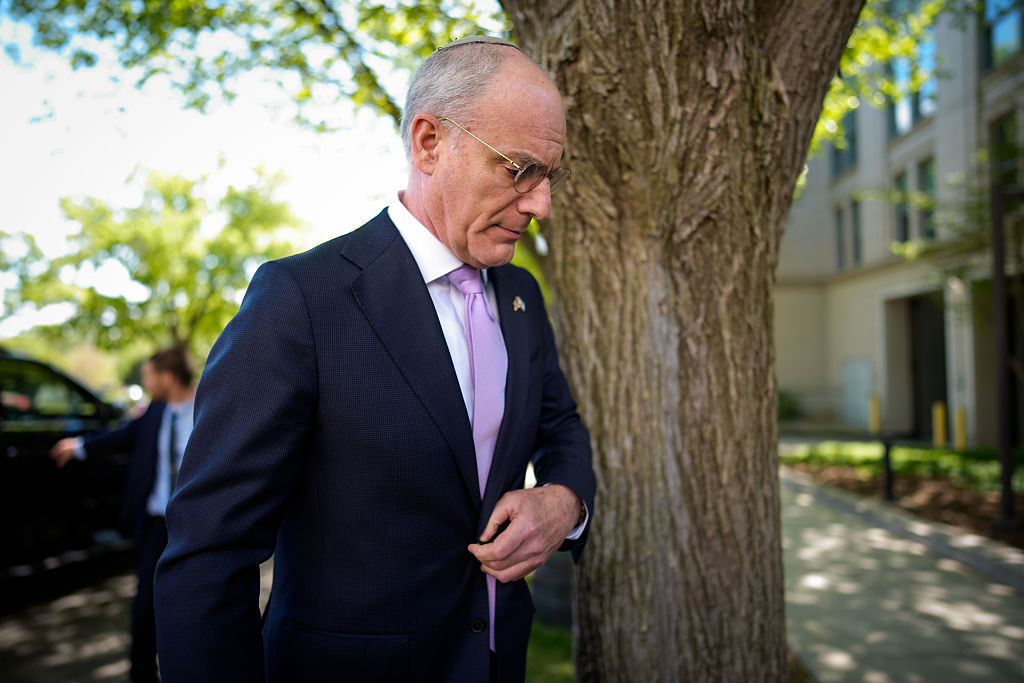

California State Assemblymember Jesse Gabriel, a Democrat, provided the Jewish community with an update on the Ethnic Studies Model Curriculum (ESMC) during a February 24 webinar.
Speaking with Tye Gregory, executive director of the San Francisco-based Jewish Community Relations Council (JCRC), Gabriel began the webinar by stating that a recent article in Tablet about the ESMC was inaccurate and out of context.
“We had a deeply problematic first draft,” he said, arguing that the first draft contained “anti-Israel, anti-Semitic content,” which was “absolutely unacceptable.” Gabriel pointed out that the first draft was written “by a small group of people with some very problematic views,” so much so that The Los Angeles Times editorial board slammed it and California Governor Gavin Newsom, a Democrat, apologized for it. “We were able to push pause on that process and get it restarted,” Gabriel said.
The current iteration of the ESMC no longer has any pro-Boycott, Divestment and Sanctions (BDS) material and now has two lesson plans about the Jewish experience and teaches the International Holocaust Remembrance Alliance (IHRA) definition of anti-Semitism. Gabriel pointed out that the draft’s latest revisions have caused the original authors to ask for their names to be taken off of it. “That to me is one marker for how much the curriculum has changed from that really problematic first draft,” Gabriel said.
Additionally, Gabriel said that guardrails are being implemented to ensure that the state Department of Education will go after local school boards that adopt the first version of the ESMC. It’s important to explain to people that “we can’t have content that promotes bigotry and discrimination against Jews,” Gabriel said.
The final ESMC draft, which has a March 31 deadline to be approved by the State Board of Education, needs to be created by a consensus “that honors 90-95% of California,” Gabriel argued. He also said that he hopes “we can get to a good place with this curriculum” and believes that “this is the end of the beginning.”