
The sign in the library at the Los Angeles Jewish Home reads, “Silence is appreciated in the Library,” but on one recent stormy Sunday, the place was positively abuzz with activity.
Six residents of the senior living home and six teens from the Jewish Educational Trade School (JETS) sat in a row, each in front of a computer monitor. More teens loitered around, and elders sat in plush leather armchairs, waiting for their turns at the computer.
The seniors brought binders and notebooks with biographical details about relatives, and as they spelled out place names and birth dates, the students keyed the data into geni.com, a genealogy website.
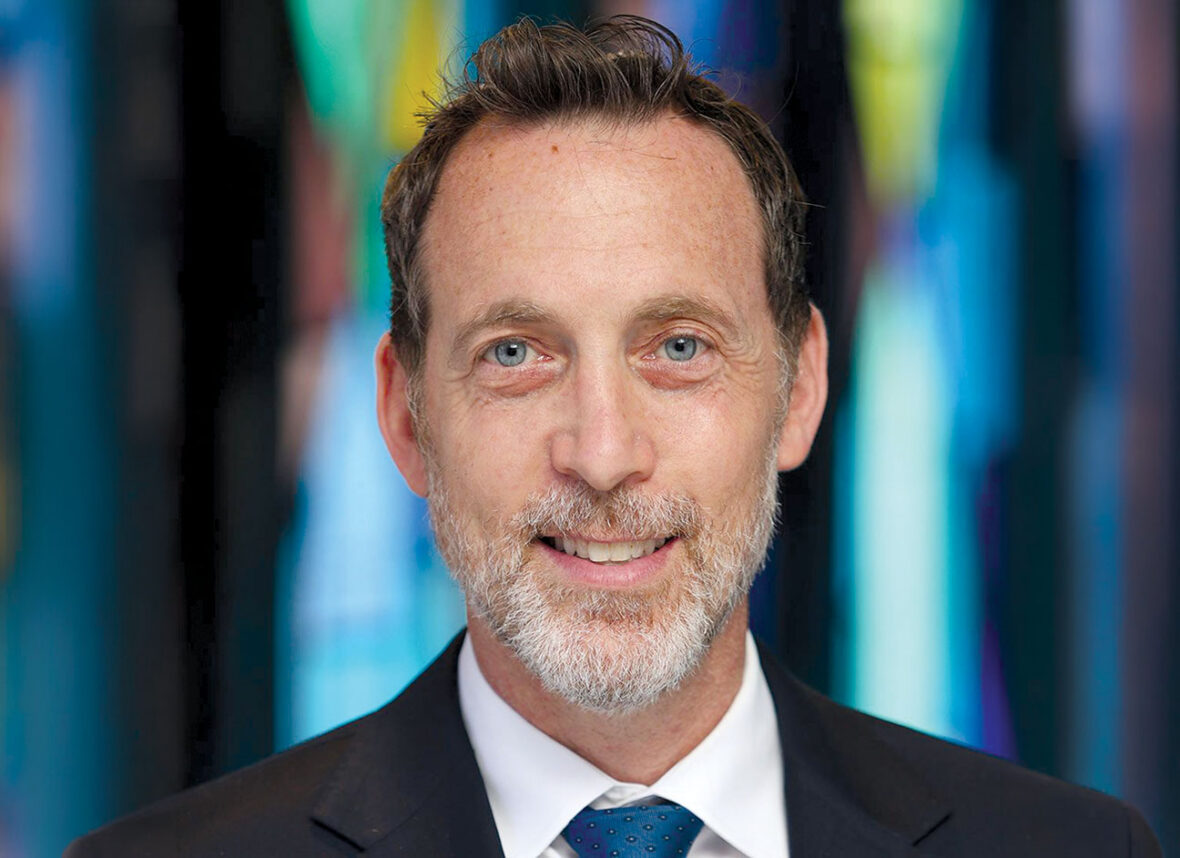
For the students, the Jan. 22 afternoon get-together was a capstone, of sorts. They’d spent eight weeks learning about genealogy in a not-for-credit seminar taught by E. Randol Schoenberg, an attorney who made a name and a fortune reclaiming Jewish-owned art looted by the Nazis. As their final project, the students volunteered to help the seniors upload information that connects them to a global Jewish family tree.
“Teenagers are tech savvy, but it’s the seniors who want to put up their family trees,” said Rabbi Naftali Smith, the principal of JETS, who accompanied the teens to the Jewish Home.
For the seniors, such as Joe Levoff, 86, who was born in Shanghai, the session provided an opportunity to explore their roots. “I’m always interested to know where I came from, how far back I can go,” he said.
The idea undergirding Jewish genealogy, Schoenberg explained, is that Jews really are one big family.
“It’s like this giant, connected puzzle where we’re all related,” he said.
Geni.com illustrates that fact by allowing users to search for their connections with anybody whose family history is logged on the website. So, for instance, it turned out that Levoff’s student mentor was also his aunt’s nephew’s ex-wife’s second cousin’s ex-husband’s first cousin’s husband’s great nephew, according to geni.com.
But here’s the catch: You can find connections only if you’ve added enough information about yourself to link you to the global network of connections already uploaded to Geni’s World Family Tree. Schoenberg curates about 152,000 of these profiles.
So by helping the seniors log their data, the students were linking them to a network that includes, in theory, every Jew in recorded history. Some lucky seniors had enough information during the two-hour session to plug them into this massive family tree.
The students had only recently experienced this phenomenon themselves.
Oran Gabriel Sherman, 16, said Schoenberg helped him find his great-grandfather in Russia. Sherman hadn’t known he had any Russian ancestry. The search had even turned up a photo of his great-grandfather — “He’s a good-looking guy,” he said — that shocked him.
He showed the photograph to his grandmother. “She was amazed herself,” he said.
Another JETS student, Isser Brikman dutifully typed as Dorothy Scott, 94, the senior home’s resident chaplain, leaned forward and spelled names of places and people in a commanding staccato. For Scott, whose childhood ended when her family was displaced by the Holocaust, the exercise carried an extra weight.
“We, the children, don’t know anything about who we are,” she said.
Schoenberg considers the event a success, and is looking to repeat the seminar at JETS or other schools.
“This was totally experimental,” he said. “It worked.”