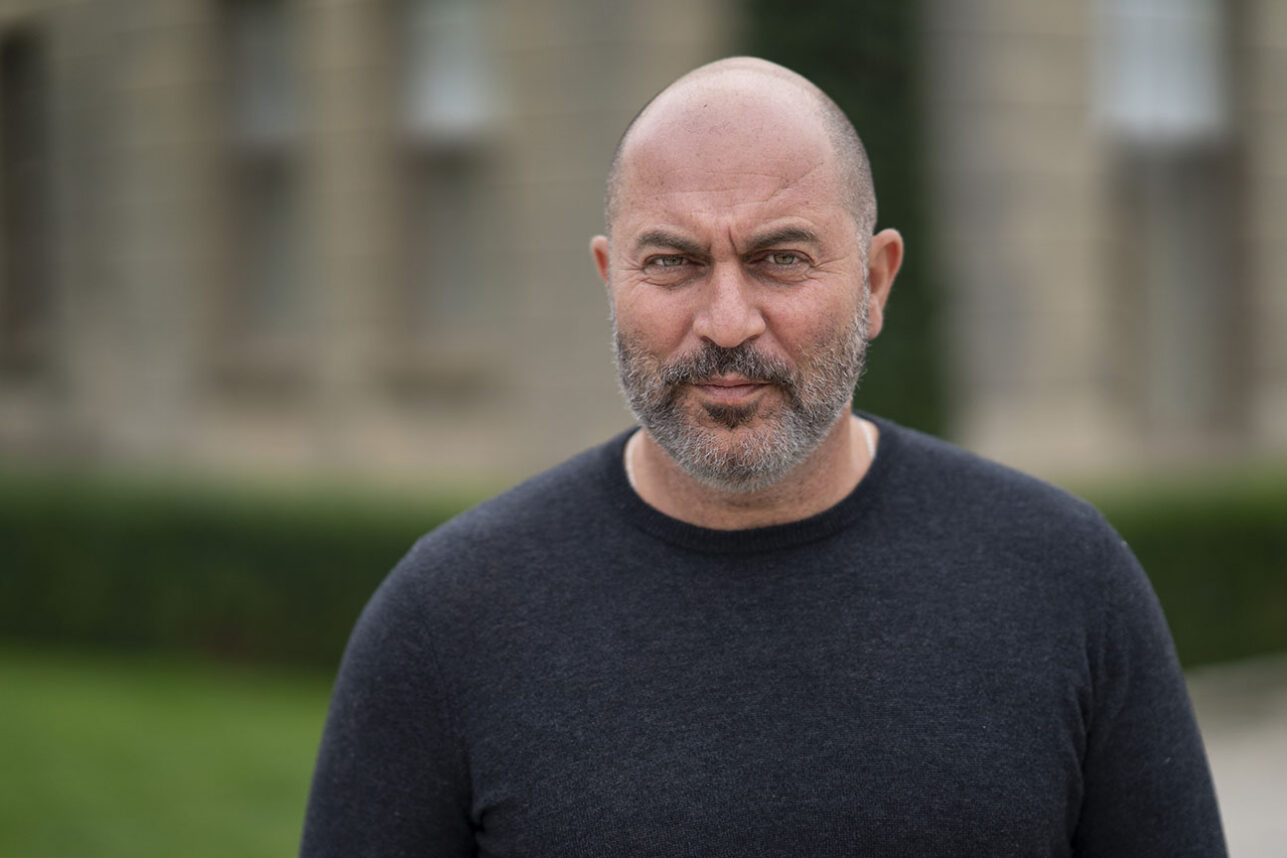
Palestinian peace activist Ali Abu Awwad shared the stage with an Israeli settler on May 28 as part of his ongoing attempt to accomplish what some might consider the unbelievable.
“I couldn’t imagine that one day, I would be standing next to a settler, talking about any hope,” he said, “but sometimes we don’t reach solutions in life because we believe that we can’t do them.”
Listen to their stories – story continues after the video.
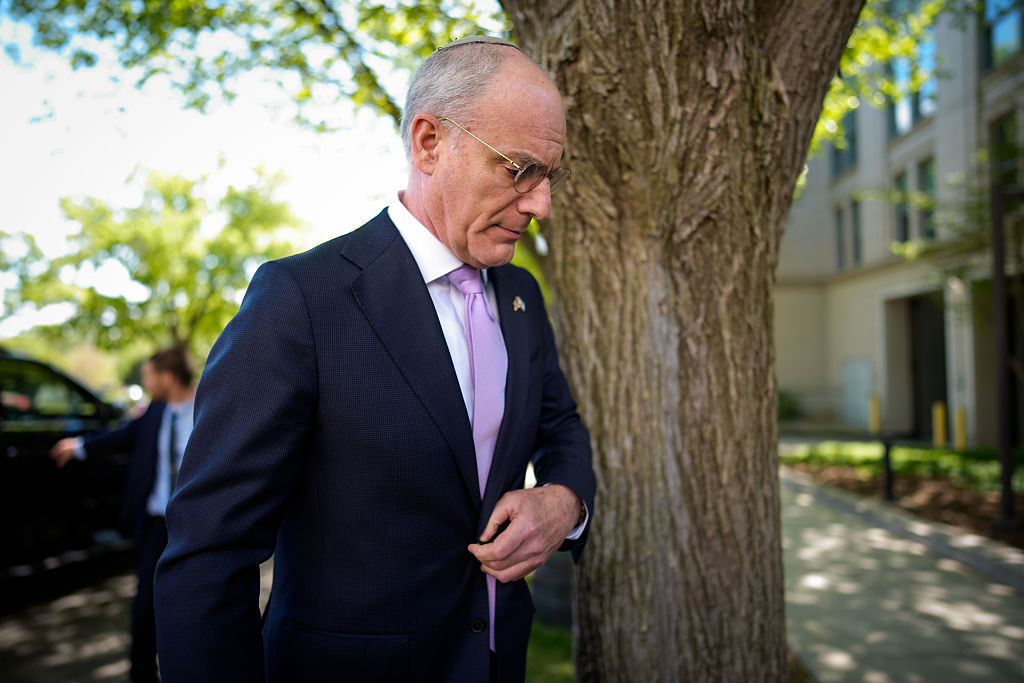
Awwad, who teaches nonviolent resistance as a means for pursuing peace, was joined by Zionist settler and Orthodox Rabbi Hanan Schlesinger. Together, they headlined the Painful Hope Tour, which took place at the Pico Union Project near downtown Los Angeles.
Schlesinger, who divides his time between Texas and the West Bank settlement Alon Shvut, serves as the founder and executive director and community rabbinic scholar for the Jewish Studies Initiative of North Texas. He is active in promoting peace initiatives in Texas and Israel.
He and Awwad are part of Friends of Roots (friendsofroots.net), a collaborative effort between Jews and Palestinians in the West Bank. It brings together local children from both sides of the conflict through after-school programs and summer camps that promote fun and friendship. Friends of Roots also runs a leadership program that unites 65 Israeli leaders who dedicate their lives to tolerance education.
Schlesinger told his story first during the local event: Born and reared in Israel, he found a profound disconnect between Israelis and Palestinians. He talked about the first time he left his settlement and ventured over to see Awwad after previously meeting at an event in the United States.
“Until a year and a half ago, I’d never met a Palestinian,” he said. “I opened the front door and walked 20 minutes to the Palestinian vineyards, fields and orchards that surround my house to meet the neighbor that, until then, didn’t exist for me.”
As for Awwad, he told the audience about how, before turning to nonviolence, he was sentenced to 10 years in prison for being part of a militant cell as a young man. Three years into his sentence, he held a hunger strike, demanding to see his mother, who was also detained. It was then that he realized nonviolence was far more effective than its alternative. His sentence was reduced, and he was released after the Oslo Accords.
“It’s OK to be angry and act nonviolently,” he said. “Violence will not erase the anger. The pain will not disappear. But nonviolence is the management of that anger. When we act nonviolently, we celebrate our existence.”
After the event, Schlesinger commented to the Journal about the cognitive dissonance that affects those who struggle with the possibility of peace between Israel and Palestine.
“What I see today is just so different from what I saw a year and a half ago. We ask ourselves, ‘Which reality is true?’ The truth is that they are all true. Each reality comes to us differently depending on what assumptions we come with. Sometimes we don’t even know what those assumptions really are. What you have to do is examine these assumptions. Think of the drawing that, if you look at it one way, you see a woman, but if you look at it another way, you see a vase. You wonder, ‘Which is it really?’ It really is both!”
Awwad said the evening at the Pico Union Project gave him hope and strength.
“We are dealing with a very complex subject in a very crazy reality over there,” he said. “This event shows that people want a solution.”
Friends Noor-Malika Chishti, a Muslim, and Rachel Landsman, an Orthodox Jew, were moved by what they heard. Both women are members of the West Los Angeles Cousins Club, a group of Muslim and Jewish women that meets monthly in the spirit of peaceful sisterhood.
“We really believe that to know one another is to love one another,” Landsman said. “The path of reconciliation and nonviolence is what I’ve been waiting to hear.”
Audience member Oren Rehany, an Israeli-born writer, actor and producer who has been living in Los Angeles for 12 years, said the only way peace will happen is through the efforts of everyday people like Schlesinger and Awwad.
“Politicians are probably not the ones who are going to make peace happen. Grass-roots movements like this one will make the change,” Rehany said. “This grass-roots style of education gives me a lot of hope as an Israeli. The only thing Schlesinger and Awwad are attacking is the demonization of either side of the conflict.”