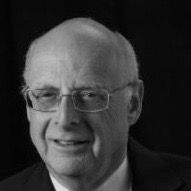
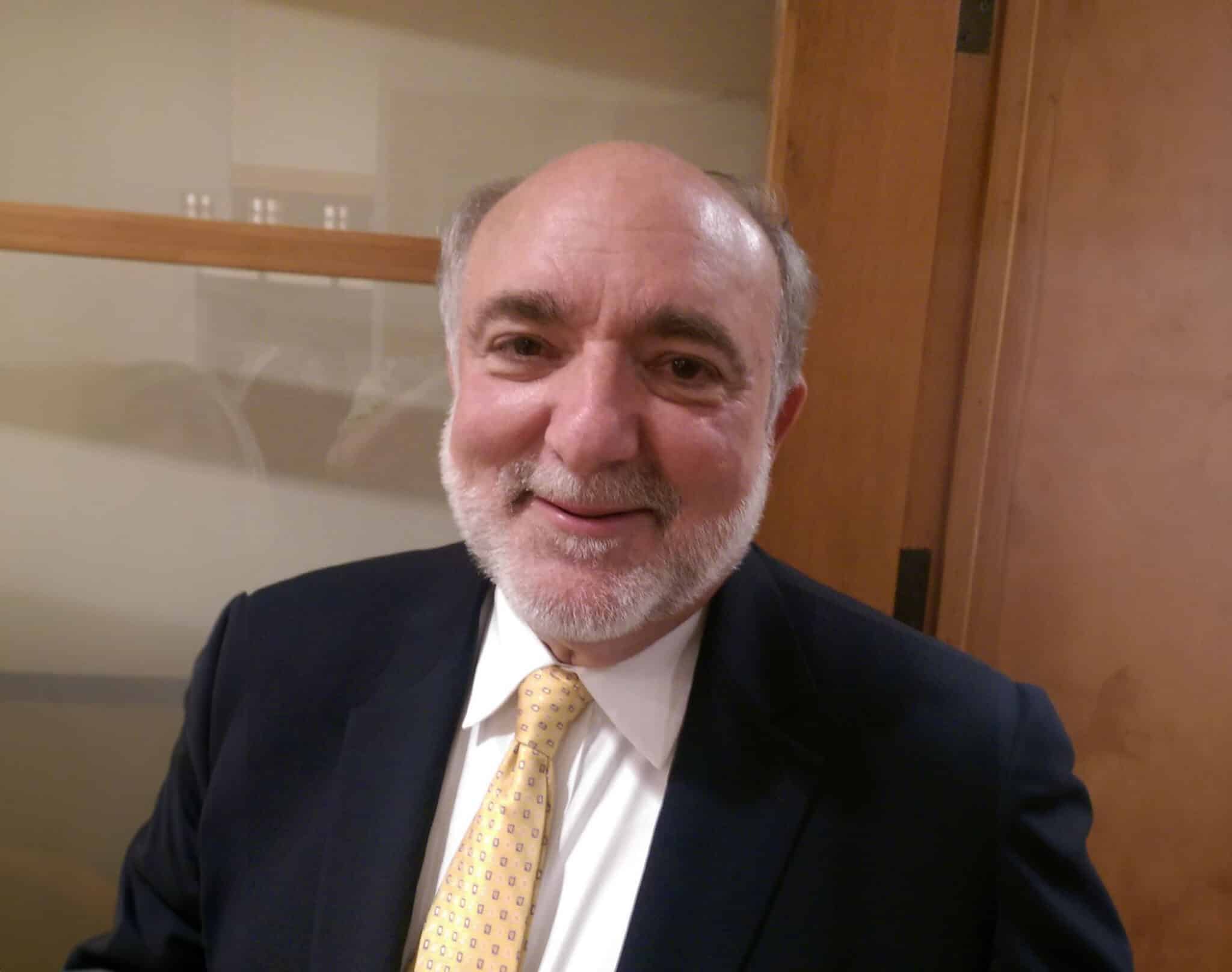
A conversation with David Ellenson, whether in person, by phone or via email, was always an emotional uplift. Beyond asking thoughtful and probing questions, his parting messages were always reassuring and supportive. One could be “in conversation” with David, even if you were not formally in dialogue with him. His ideas and his warm and affirming personality were always imprinted on your mind. His insights did not begin or end when one was directly engaging him. David was conducting a living dialogue, always to be continued, always affirming.
Upon reflection, as we mourn his sudden passing, Rabbi Dr. David Ellenson (1947-2023) was always in conversation. David’s circle of colleagues, students and friends covered the universe of the Jewish world. He appeared to be engaged in multiple and simultaneous conversations with his extensive audiences of learning partners. He relished being in such a discourse, enjoying its diversity as well as its complexity.
Despite being trained and engaged as a Reform rabbinic leader for much of his distinguished career, his academic pursuits took him into the world of 19th Century German Orthodoxy and modern Jewish thought and history. He possessed an extraordinary command of Jewish tradition. His academic tablet included a keen understanding of modern Jewish religious movements, while being able to explore many of the existential questions surrounding American Jewish life. David could comfortably discuss the intricacies of the debate surrounding religion and state in Israel, as the Jewish State represented something particularly and uniquely significant to Ellenson, with all of its warts and challenges!
His journey to Reform Judaism did not come naturally, as he was born and raised in an Orthodox family. Growing up Newport News Virginia, David transcended both his personal religious background and Southern family roots, from which he would never fully separate, to emerge as a defender and interpreter of Reform Judaism. Operating in a diverse academic environment, through his many books and hundreds of articles he made a major contribution to American Jewish religious thought.
When I wrote for Jewish Insider about his leadership as Hebrew Union College-Jewish Institute of Religion’s (HUC-JIR) President between 2001-2013, I focused on his vast set of connections:
In no small measure Ellenson’s network of relationships, both within and outside of the institution, has served him well as he brought to the office of the president a host of personal and academic connections and friendships that would benefit the presidency. These relationships would both provide support and comfort to him in his most difficult moments.
We should remind ourselves that David came to this role without any significant institutional leadership experience. At his essence, Ellenson was an academic, where intellectual inquiry and the love of teaching essentially defined his identity.
David would graduate from the College of William and Mary in 1967. Rabbi Dr. Ellenson received his Ph.D. from Columbia University in 1981, and was ordained by HUC-JIR in 1977. From 1979 until his appointment to the HUC Presidency in 2001, David would be on the Los Angeles faculty of HUC-JIR, directing the College’s Jerome H. Loughheim School of Judaic Studies, the undergraduate Jewish Studies program for USC.
At a time when HUC had been facing major financial challenges, Ellenson, as its new leader, would play a central role in advancing the institution’s fundraising position. This would be accomplished not only by accelerating its annual campaign but by also significantly growing its endowment. He deserves credit for numerous new initiatives, programs, and institutes.
The Ellenson Presidency marked the appointment of new faculty on each of the HUC-JIR campuses, the expansion of intercampus cooperation and shared learning opportunities across the campuses through the implementation of new technology.
During the most critical times of tension within the Middle East, David would affirm the College-Institute’s abiding commitment to the Jewish State and its people. Further, he would seek to strengthen and expand the range of academic and professional programs being offered on HUC-JIR’s Jerusalem campus as a way of asserting the school’s role and the presence of Reform Judaism in Israel.
Upon leaving office, David had occasion to reflect on his commitment to Hebrew Union College:
“My soul is bound to this institution and to the holy mission that animates it,” he told the Jerusalem Center for Public Affairs. “It has been the greatest privilege to devote my life to this school.”
Rabbi Ellenson enjoyed an extensive academic and communal existence beyond HUC, often teaching at major universities, serving as a scholar-in-residence for national organizations as well as local congregations. His more recent work at at Brandeis University’s Schusterman Center of Israel Studies (2015-2018) or the array of other honors and appointments were representative of his ability to operate in all spheres of the Jewish world.
Returning to where we began, as a collector of friends and students, he was always personally and emotionally connected to his constituencies. Friendships along with his profound loyalty and deep connections to his Chaverim (partners)defined his humanity. Some years ago, David was set to give to the widow of his dear departed colleague and friend, Rabbi Michael Signer a special memorial honor at our spring HUC graduation. Standing next to him, David turned to me in tears, asking if I might read this special tribute, overcome as he was by the meaningfulness of the moment and the personal memories coming full force at him!
On reflection, as I reread his prior emails and messages to me, I was struck by his words, always upbeat, and his loving invitation to move our conversations forward.
And so it will be, my friend and teacher, the dialogue will continue!
Steven Windmueller is Emeritus Professor of Jewish Communal Studies at the Jack H. Skirball Campus of HUC-JIR, Los Angeles.