fbpx

Netanyahu Says West Bank Annexation ‘Remains on the Table’ Following Israel-UAE Agreement

"There is no change in my plan to apply sovereignty, our sovereignty, in Judea and Samaria."
[additional-authors]
August 14, 2020
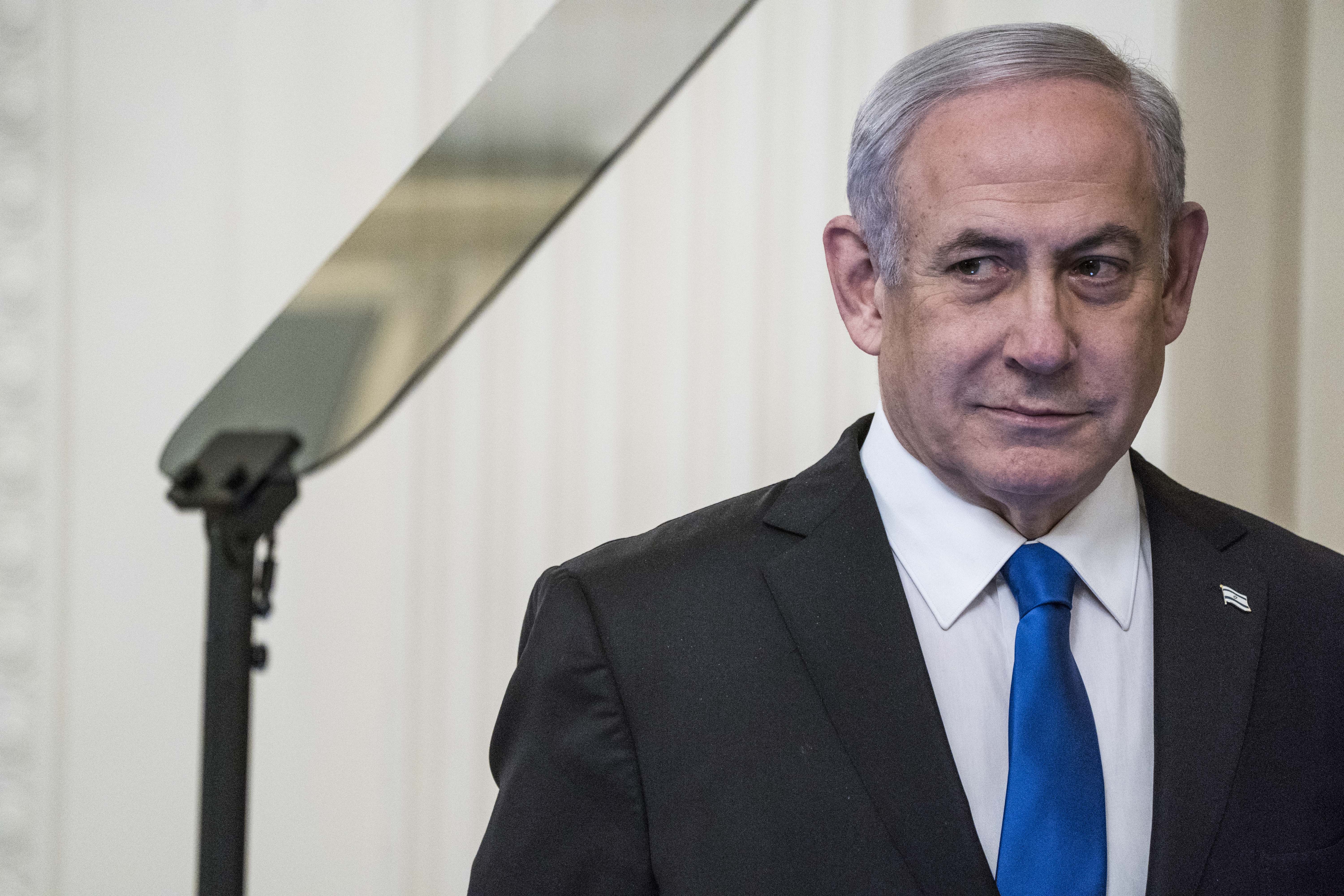
Israeli Prime Minister Benjamin Netanyahu listens as U.S. President Donald Trump speaks during a joint statement in the East Room of the White House on January 28, 2020.(Photo by Sarah Silbiger/Getty Images)

(JTA) — Is it on the table, or off?

Israeli Prime Minister Benjamin Netanyahu said his plan to annex part of the West Bank “remains on the table,” despite agreeing to suspend the move as part of an agreement to establish formal ties with the United Arab Emirates on Thursday.

“There is no change in my plan to apply sovereignty, our sovereignty, in Judea and Samaria, in full coordination with the U.S. I’m committed to it, this hasn’t changed. I was the one who put sovereignty in Judea and Samaria on the table. This issue remains on the table,” Netanyahu said at a news conference in Jerusalem after the agreement was announced.

He did note that President Donald Trump asked that “Israel wait temporarily” to move ahead with annexation, Netanyahu said, adding he intends to comply.

Hours later, Trump said at a news conference in Washington that the plan is “off the table.”

“Right now all I can say: It’s off the table. I can’t talk about some time into the future, that’s a big statement, but right now it’s off the table,” Trump said in response to a journalist’s question on the plan’s current status.

But Trump turned to David Friedman, his administration’s ambassador to Israel, to confirm his description.

“Is that a correct statement, Mr. Ambassador?” Trump asked of Friedman, who was with him at the briefing room.

“Yes, the word ‘suspend’ was chosen carefully by all the parties,” Friedman said. “‘Suspend,’ by definition, look it up, means temporary halt, it’s off the table now but it’s not off the table permanently.”

The Abraham Accord agreement announced Thursday lays the framework for agreeing to diplomatic ties between Israel and the United Arab Emirates. It is only the third such agreement signed by Israel and an Arab country (after Egypt and Jordan).


Did you enjoy this article?
You'll love our roundtable.

Editor's Picks

Latest Articles

Bringing Israeli Doctors Back

ScienceAbroad works with two groups in medicine: physicians who leave Israel for fellowships and Israeli students who attend medical school in Europe.

The Antizionist’s Dilemma

It’s not easy being an antizionist these days. Especially if you’re determined to live in accordance with your most important moral imperative: the denigration of the world’s only Jewish state.

How the Supreme Court Adapted Parshat Shoftim

The Torah offers a better model than avenging and avoiding. It offers a safe opportunity for parties to meet and peacefully explain their perspectives, which might have been misunderstood. They can offer apologies and, where necessary, make amends for harms caused.

Can One Be a Non-Observant Orthodox Jew?

The tradition has always been bigger than any one person’s grip on it. What draws me is simple: I think these texts are a good part of why we are still here as a people. I want to know them and, in my own way, embrace them. Orthodox is where I turn.

Lies, Damned Lies and the Right Side of History

One question alone matters these days: Does this fact strengthen my tribe, or is it bad for it? If bad, it must be suppressed, denied, explained away. The higher truth is the narrative that serves the cause, the quest of the righteous and true.

Life Lessons in Old Age

Hardship and joy are present at every step. There is no time when it will be all good, so focus on the good and carry on. There are always moments to savor and appreciate.

Is Mamdani Helping Bibi?

By explicitly linking Mamdani’s efforts to rising levels of antisemitism, Netanyahu was able to frame himself as a defender of Israel against growing international hostility.

More news and opinions than at a Shabbat dinner, right in your inbox.