Jacob Wexler, a Jewish mill owner, lived in the Polish town of Ludwigpol with his wife, Chana, and their daughter, Mira, until the outbreak of World War II. In 1939, the Soviet army arrived from the east and took everything the Wexlers possessed. Two years later, the German army stormed in from the west, killed Jacob and crammed Chana and Mira and the town’s other Jews into a ghetto.
The Wexler family story might have ended there — another statistic among the 6 million Jews murdered by the Nazis during the Holocaust. However, anticipating the fate in store for them, Chana and Mira, together with Jacob’s brother Joseph, escaped from the ghetto and found shelter for the next two years with longtime Christian friends, the Weglowski family.
What in normal times would have been an instance of heartwarming hospitality between two families of different faiths turned into a daily gamble of life and death.
During the war, any Polish family sheltering Jews was killed by the Nazis, together with the hidden Jews. In this case, however, both families survived the war and later were aided financially by the American-based Jewish Foundation for the Righteous (JFR).
On Aug. 17, the foundation will present online a documentary on the two families and their survival titled “The House of Two Families.” The online series of films concludes Aug. 24 with a profile of JFR’s president, Roman Kent, who survived Auschwitz and three other concentration camps.
There is no dearth of Jewish organizations supporting worthy causes, and the Jewish Foundation for the Righteous is hardly the best known or best funded. However, the question of moral courage at the heart of the foundation’s mission is a challenging one. It is a timeless and universal self-confrontation, tested in everyday life but rarely posed in such stark relief — at least in recent history — than during the Holocaust.
How could ordinary men and women offer shelter to an unknown and often despised Jew on the run from the Nazis, knowing that they were thereby risking the lives of an entire family? What kind of person or character does it take to take a stand against the beliefs and prejudices of the surrounding society?
The late Rabbi Harold Schulweis mulled a related question while observing his children watching a television show on the Holocaust. Would his children grow up, he pondered, believing that all the world hated the Jews and would kill them if given the opportunity? Schulweis, then senior rabbi at Valley Beth Shalom in Encino, was a man of great heart and mind who analyzed the accomplishments but also the shortcomings of the Jewish community. Even more remarkably, when he detected shortcomings, he set about enlisting allies to remedy the situation.
Together with Janice Kamenir-Reznik, an attorney and one of his congregants, in 1986, Schulweis founded what was initially called the Foundation for Righteous Christians to identify and sustain those non-Jews who had risked everything to aid Jews during their darkest hour. His new project was not always well received. Critics complained that emphasis on the non-Jewish rescuers would somehow diminish the enormity of the Holocaust. Others argued that the number of the righteous was pitifully small compared with the mass of those who perpetrated or acquiesced in the Holocaust.
Schulweis addressed the first concern in an article in the Baltimore Jewish Times. “By their risk of life and limb, these rescuers offer the most persuasive refutation of those who hide behind the ‘I-was-just-a-cog-in-the-wheel’ argument,” he wrote. “Here is not theoretical preaching, or hypothetical morality, but hard evidence of real acts by real people. There was and always is an alternative to passive complicity with evil. Here are case histories of human beings, who could find ample rationale to avert their eyes and plead impotence, but who could not live the lie.”
They also are rarely recognized by society. By contrast, there is universal praise and respect for real or exaggerated heroism in wartime battles. I am a combat veteran of World War II and Israel’s War of Independence (not to mention a U.S. Army recall during the Korean War and a cushy stateside assignment editing an Army newspaper). Yet I firmly believe that the courage of any one of the Righteous Gentiles — men, but especially women — far outweighs that of a dozen generals covered with ribbons from chin to navel.
Today, the organization Schulweis founded has been renamed the Jewish Foundation for the Righteous, with its headquarters in West Orange, N.J. Although World War II and the Holocaust ended 75 years ago, JFR currently extends financial and other assistance to some 214 aged and needy Righteous Gentiles in 18 countries, according to Stanlee J. Stahl, the organization’s executive vice president. At its founding, JFR identified and aided eight rescuers, a number that eventually rose to 1,800, Stahl told the Journal. Since then, JFR has provided them more than $39 million in assistance. In addition, the organization has trained a cadre of 600 master teachers through its Holocaust Teacher Education Program. It also sponsored the publication in 2015 of “How Was It Possible? A Holocaust Reader,” edited by Peter Hayes.
Like others who have met and talked with gentile rescuers, Stahl was struck by their denial that they had done anything out of the ordinary. She said, “When asked what made them risk their lives to save what were often complete strangers, their answers generally came down to, ‘How could I not?’ ”
The same attitude and response is found in the 1987 documentary “Weapons of the Spirit” by Los Angeles filmmaker Pierre Sauvage. The film chronicles the story of 5,000 French citizens (mostly farmers) in the remote mountain hamlet of Le Chambon who sheltered an equal number of Jewish refugees during the Nazi occupation.
It was the constant quest of Rabbi Schulweis to spread knowledge of such deeds throughout the Jewish and non-Jewish worlds. “Altruism, courage, moral heroism are, by definition, rare,” he wrote. “For the sake of thirty-six righteous, the world is sustained; for the sake of thirty righteous non-Jews, the Talmud declares, the nations of the world continue to exist.”
“The House of Two Families,” will screen at 5 p.m. on Aug. 17 on Facebook.
For the first time in many months, I experienced sheer joy — despite living in a country that is so divided and flooded by negativity, fear and insecurity, as well as growing numbers of those testing positive and dying from a horrific virus and facing the consequences of a disastrous financial crisis.
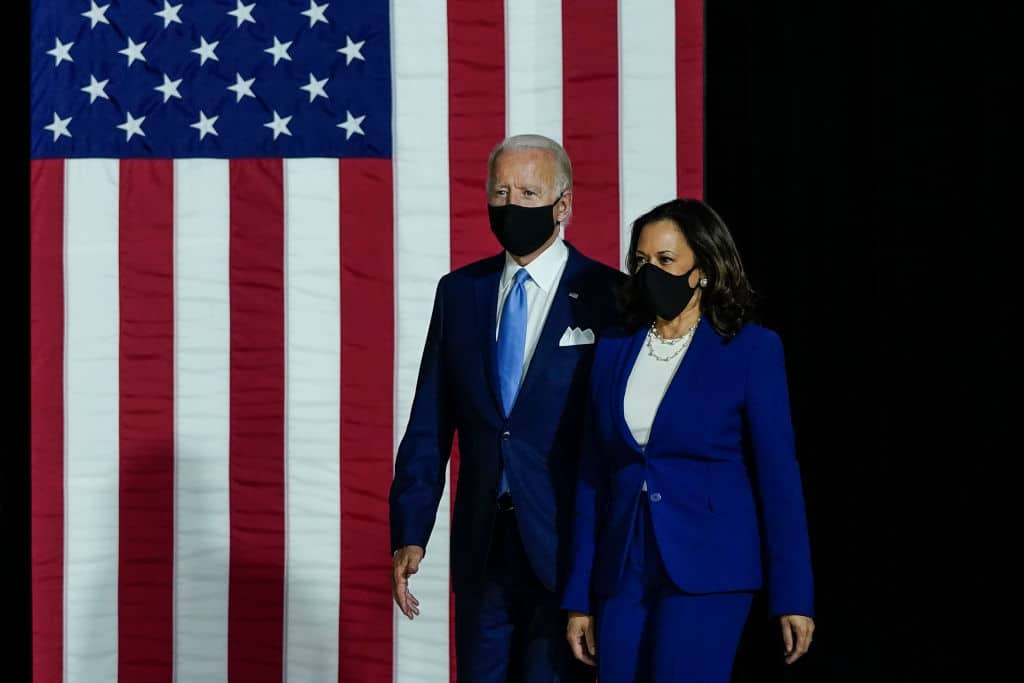
Despite this reality, an overwhelming sense of happiness and hope filled me when I heard Joe Biden chose Sen. Kamala Harris (D-Calif.) to be his running mate as vice president of the United States. Being the first black woman to have this honor is a great historical moment. For young girls and women of color, it must seem an enormous achievement and recognition of how far we’ve come in this country.
I also realized these two people — together — radiated a wholeness. It is the expression of the male and female energy reflected in the kabbalistic tree of life, the Etz Chayyim. It is a model that incorporates three columns: one on the left, one on the right and one in the center. The right side is male energy, representing loving kindness, assertion and action. The left side is female energy, representing strength, judgment, boundary setting and containment. The center is the balance point that represents the harmonious integration of both sides. It also is the place of foundation and generativity, where both sides connect to create a partnership and a sense of intimacy reflected in their friendship and level of respect and honor for the other. On a deeper, more mystical level, it represents the Divine presence in the world through the expression of our ethics, values and behavior toward one another.
Neither Biden nor Harris is perfect, but as a partnership … they are a mighty pair.
The tree, as the emanation of Divine presence, expresses both male and female divinity; what Jewish mysticism describes as Kaddosh Baruch Hu (the Holy One, blessed be He), the transcendent God, and Shekhinah (Divine indwelling), the imminent God. The physical world we live in also is a counterpart to the heavenly world; the kabbalists say, “so above, so below” and “so below, so above.”
Well, “below” we have a partnership that represents this model: Biden and Harris, the male and the female, a combination of loving kindness and action, and judgment and boundary setting. They have the potential to bring the U.S. back to some semblance of harmony, balance and elevated functioning.
Harris is this representation, theShekhinah we need now — someone with strength, resilience, positivity and judgment, and the ability to stand up for what this country needs and what individuals are fighting for: dignity. Biden brings compassion and empathy, something our present leadership abundantly lacks; the man and father who traveled back and forth daily from Washington to Delaware during his years as a senator after his wife and daughter died in a tragic accident, to tuck in his children at night and make breakfast for them in the morning. This kind of compassion and giving is the building block for caring for the people in this country.
We currently have a man in the Oval Office who neither has compassion nor loving kindness, nor the ability to set boundaries and limits upon himself. He lacks the basic building blocks for mature and intelligent leadership. In fact, he probably has the arrested development of a young child. It is sad for him and his family, but it is dangerous for us. Loss of financial stability, loss of health and, worst of all, loss of life are the results of his inability to lead effectively, morally, intelligently and maturely.
Neither Biden nor Harris is perfect, but as a partnership of male and female, with strength of character, wisdom and experience of years, and humane, compassionate action, they are a mighty pair. This country and the world are in great need of recovery. The universe aches for an expression of divine attributes, to lift us and bless us.
It is a joy to feel joy. It is good to have hope. It is comforting to feel the universe sing a new song.
Eva Robbins is a rabbi, cantor, artist and the author of “Spiritual Surgery: A Journey of Healing Mind, Body and Spirit.”
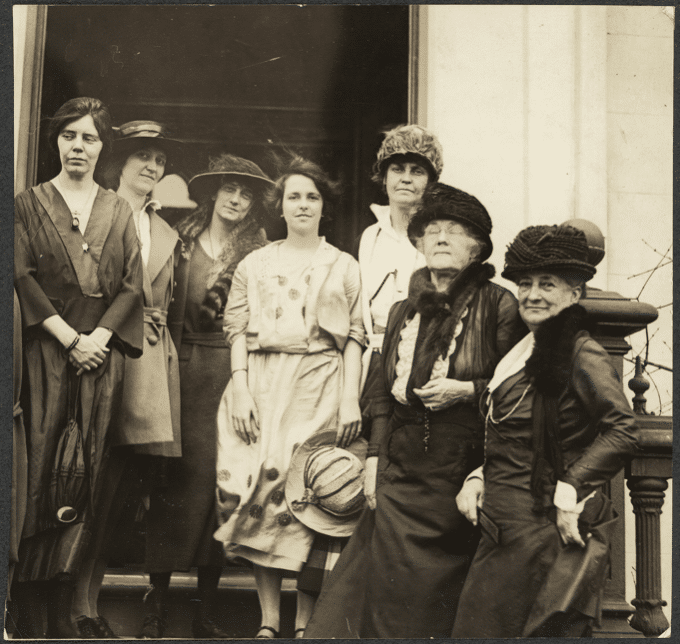
Aug. 18 marks the centennial of the ratification of the 19th Amendment to the U.S. Constitution, guaranteeing women the right to vote. Certified on Aug. 26, 1920, it was the culmination of a 72-year battle beginning with the 1848 Seneca Falls Convention in upstate New York, where the women’s suffrage movement was launched.
Since the Colonial period, married women were legally nonentities under the coverture laws. Their property, wages and custody of children were controlled by their husbands. They didn’t have the right to sue or to sign a contract.
Suffragists understood that the vote was key to achieving equality. They endured ridicule, imprisonment and violence in their struggle. Nevertheless, they persisted until enfranchisement was won. Unfortunately, from Jim Crow laws of the past to the more recent purging of voter rolls, the right to vote has been challenged through the years and continues to this day.
“During this pandemic, obstacles to voting by mail are a form of voter suppression,” Ellen Carol DuBois, UCLA History and Gender Studies professor emeritus whose most recent book is “Suffrage: Women’s Long Battle for the Vote,”told the Journal. “Because women usually change their names when they marry and tend to work longer hours, voter ID laws and confining when and how people can vote hurt women in particular.”
While Elizabeth Cady Stanton, Susan B. Anthony and Sojourner Truth are some of the more celebrated suffragists, there’s a long list of important but lesser-known activists, including Jewish women. Among them were Gloria Steinem’s grandmother Pauline Perlmutter Steinem — Toledo’s first female elected official; Rose Schneiderman — New York City factory worker turned trade union leader; and Montana’s Belle Fligelman Winestine — aide to the first Congresswoman, Jeannette Rankin.
“Social justice is one of the foundations of our tradition,” Sally Priesand, the first female ordained rabbi in America, told the Journal. “Anyone raised with Jewish values knows the importance oftikkun olam. I’d like to think that Jewish suffragists were inspired by their religious background.”
Although suffragists filled their ranks, not all Jewish women’s groups, such as the National Council of Jewish Women (NCJW), formally supported the 19th Amendment. (Suffragist leaders were invited to speak at NCJW conventions, however, and several chapters held pro-suffrage programs and donated money to suffrage groups.) Hadassah, founded in 1912, took six years to get on board and send a pro-ratification telegram to President Woodrow Wilson.
Anti-Semitism within the suffrage movement, where leadership was overwhelmingly white and Protestant, might have been one reason some groups hesitated.
Still, Jewish women were accepted in mainstream suffrage organizations (unlike their African American sisters, who largely were excluded and formed separate clubs). And while there was occasional pushback against the anti-Semitism, Jewish suffragists were committed to working for the cause despite leaders who made bigoted remarks. Above all, they had their eye on the prize.
Here’s a closer look at four Jewish suffrage heroines:
circa 1860: Ernestine Louise Rose (1810-1892). Polish born reformer. Only child of a rabbi, 1826, age 16, fought in Polish courts her arranged betrothal, lived alone in Berlin from age 17, supported herself inventing & selling perfumed paper. Settled in England ’29, became friend & follower of utopian socialist, Robert Owen, married William E. Rose & they lived in US from ’36. Worked & lectured with Susan B. Anthony and others for women’s rights. (Photo by Hulton Archive/Getty Images)
ERNESTINE ROSE (1810-1892)
Long before Betty Friedan, Bella Abzug andGloria Steinem, there was Ernestine Rose, considered the first Jewish feminist. And she had chutzpah (the good kind).
Born in Poland, Rose was educated in religious studies by her father, a rabbi.
After her mother died, her father arranged a marriage without the 16-year old’s consent. The contract included a clause forfeiting the inheritance from her mother to her fiancé if she backed out. Alone, in the dead of winter, the young girl made her way to a civil court to sue and — she won.
“She reminded me of the biblical daughters of Zelophehad, who successfully stood up for their inheritance rights,” Priesand said. “It shows that change comes about when those discriminated against demand it.”
Before she left home at 17, Rose gave most of the money to her father and used the earnings from her invention of a room deodorizer to help pay for her travels throughout Europe. In London, she became a follower of Robert Owen, a utopian socialist, and married fellow Owenite William Rose.
Soon after the couple settled in New York City in 1836, Rose submitted a petition to the state legislature in support of women’s property rights. Canvassing lower Manhattan, she managed to persuade only five people to sign, but that didn’t stop her. It was the first petition in New York by a woman and for women. Perhaps galvanized by her own inheritance fight, she devoted herself to the cause until these rights were secured.
“Social justice is one of the foundations of our tradition. Anyone raised with Jewish values knows the importance oftikkun olam. I’d like to think that Jewish suffragists were inspired by their religious background.” — Rabbi Sally Priesand
Rose was a Jewish atheist, an immigrant with an accent, whose first language was not English. Yet she was a brilliant orator and became a sought-after speaker on abolition, education, religious freedom and women’s rights — earning her the title “Queen of the Platform.” Susan B. Anthony was an admirer, and they went on lecture tours together.
A leader in the suffrage movement, Rose attended numerous conferences and served as president of the 1854 National Women’s Rights Convention. She believed women’s rights should not be predicated on the Bible but instead on the inalienable rights of humankind. Additionally, DuBois explained, for Rose, the point wasn’t to figure out what God wanted but instead to determine what actions people should take to achieve social justice.
DuBois pointed out that Judaism is a religion of law whereas Christianity is one of creed, and Rose, educated in the Torah and Talmud, stressed law as central to reaching gender equality. “On the issue of marriage, crucial to the denial of equal rights for women, Rose thought it should be a legal contract rather than a holy sacrament,” said Dubois, who also is a board member of the Ernestine Rose Society.
In a religious Christian America, Rose’s message sometimes was met with jeers and threats. She never wavered. She had disavowed Judaism and all religion, but when the editor of a free-thought newspaper wrote a series of editorials attacking Jews, she was quick to respond in defense of the Jewish people.
In 1869, the Roses returned to England, where they lived out their final years.
Anthony recognized Rose as one of three foremothers of the suffrage movement and hung her picture on her wall.
Priesand recalled reading an editorial written during the trailblazer’s lifetime: “It said talking about suffragists without mentioning Ernestine Rose is like doing the play ‘Hamlet’without Hamlet.”
Selina Solomons’ “How We Won The Vote” Photo by Wikimedia Commons
SELINA SOLOMONS (1862-1942)
There were two approaches to winning the vote for women: a nationwide push and a state-by-state fight. Selina Solomons was a key player in the California campaign. The oldest of seven, Solomons came from a San Francisco middle-class family of community leaders.
Her mother, Hannah Marks Solomons, was a well-known educator, and her father, Gershom Mendes Seixas Solomons, was one of the founders of San Francisco’s
Congregation Emanu-El. His was from a distinguished Sephardic family that included his grandfather, Gershom Mendes Seixas, the first American-born Jewish leader of a congregation. Seixas was known as the“Patriot Rabbi” because of his stance on the Revolutionary War and was invited to participate in George Washington’s first inauguration.
An upstanding citizen in public, behind closed doors Selina’s father was addicted to absinthe and ultimately left the family. Despite the setback, the children went on to become leaders in their fields, including Adele, a child psychiatrist, and Theodore, an explorer.
Solomons’ passion was women’s rights, and as the author of “How We Won the Vote in California: A True Story of the Campaign of 1911,” she became the foremost chronicler of the California women’s fight for the vote.
Selina Solomons’ passion was women’s rights, and as the author of “How We Won the Vote in California: A True Story of the Campaign of 1911,” she became the foremost chronicler of the California women’s fight for the vote.
California suffragists lost their first campaign in 1896. In 1910, progressive Republicans had come to power, and in early 1911, the suffragists successfully lobbied them to place a referendum before the voters. With only eight months to organize, they adjusted their strategy.
The earlier proposition fared poorly in Northern California, so they focused on Southern California. The liquor industry, powerful opponents, campaigned in the cities, so they concentrated on the rural areas.
Solomons wrote in her book, “Automobile tours were conducted … throughout the interior. The College League had a special car called the Blue Liner, which held college girls who performed various ‘suffrage stunts’ for the edification … of the country-folk.” Coeds and cars, a novelty at the time, attracted the suffragists’ target audience — male voters.
The women mounted a publicity blitz, flooding the public with billboards, posters and handbills. “California Women Win the Vote!” a film by Martha Wheelock and Marita Simpson, described suffragists throwing flyers from a hot air balloon over a Los Angeles park.
There were parades, pageants and plays, including Solomons’ “The Girl From Colorado,” which according to The San Francisco Call newspaper, was “the first suffrage drama to have been written by the California advocates of political equality.”
Solomons had her own take on one of the reasons the 1896 campaign failed: The women’s clubs, dominated by elites, never reached out to working women. New recruits were needed, and what better way to a woman’s heart than through her stomach.
In 1910, Solomons opened the Votes-for-Women Club, where shop girls and shoppers alike were served a nutritious meal — a nickel a dish — with a generous helping of suffrage literature, lectures and entertainment. She hoped those who came to eat would stay to organize for the vote. Many did.
Solomons spearheaded the precinct campaign, walking in previously ignored working-class neighborhoods. Alerting the press ahead of time, she also staged a protest with clubmembers at the voter registrar’s office that displayed the placard: “All Citizens Must Register.” Denied their request to register, the women demanded to know whether or not they were citizens. Stunts like these demonstrated to the public how absurd it was to deny women the vote.
The suffragists’ efforts were rewarded. On Oct. 10, 1911, Proposition 4 passed by an average of one vote per precinct. California became the sixth state to enfranchise women and that state’s campaign became a standard for other states. Was Solomons’ club the model for the Suffrage Cafeteria that later opened in New York City? It’s possible, filmmaker Wheelock said: “I think it’s safe to say her book was informative to the East Coast campaigns.”
The San Francisco Callreported on a Thanksgiving victory banquet held at the Hotel Bellevue. Male speakers were mansplaining how women should use their newly won vote. According to the paper, the mayor of Berkeley “made a stirring appeal to attack the problems of politics as women, with the mother instinct dominant.” In her speech, suffrage leader Lillian Harris Coffin responded, “I think we women have learned what the ballot is.”
Solomons captured how most of the suffragists felt when she told the dinner guests: “October 10 was the greatest day of my life, in the life of my city, of my state, I might say, of the world.”
Maud Nathan; Photo by Wikimedia Commons
MAUD NATHAN (1862-1946)
A personal tragedy set New York City socialite Maud Nathan on the path to becoming a champion of suffrage.
She was a descendant of pre-Revolutionary War Sephardic Jews, who founded America’s first synagogue, Shearith Israel, in 1654. Many notable names on the family tree include Supreme Court Justice Benjamin Cardozo, poet Emma Lazarus and great-grandfather Gershom Mendes Seixas — the same great-grandfather of Selina Solomons.
Wealth and a distinguished family didn’t shield Nathan and her siblings from a painful childhood. When their father lost his fortune in the economic crash of 1873, the family moved to Wisconsin. The transition didn’t go well, and the father returned to New York. After their mother committed suicide in 1878, the children moved back with their father.
At 17, Nathan married her wealthy, 35-year old first cousin, Frederick Nathan, and began the life of a society wife. When their only daughter died at the age of 8 in 1895, Nathan’s friend suggested she pour her energies into social activism to overcome her inconsolable grief. Nathan became involved in several community-minded organizations, most notably the Consumers’ League of New York, which strived to improve the working conditions of women in stores and factories. She served as its president for 20 years.
Nathan, who started the Sisterhood of Shearith Israel in 1896, a year later became the first woman to address an American synagogue (Shearith Israel). Her talk urged congregants to fight racism and social injustice.
“[An editorial] said talking about suffragists without mentioning Ernestine Rose is like doing the play ‘Hamlet’without Hamlet.” — Rabbi Sally Priesand
When lobbying the state legislature on behalf of working women, Nathan realized she wasn’t taken seriously because she couldn’t vote. She then turned her attention to suffrage and joined the National American Woman Suffrage Association (NAWSA), and later, the International Woman Suffrage Alliance (IWSA).
A gifted speaker (in several languages) and a prolific writer, contributing articles and letters to the editor published in leading publications, Nathan was a powerful advocate. A talented organizer, she came up with the idea of the 24-hour speech marathon given by a tag-team of suffragists in the most populated areas of the city.
She participated in demonstrations and marches, always fashionably dressed to counter the “mannish” suffragist stereotype. Her husband heartily supported her cause. One of the founders of the Men’s League for Woman Suffrage, he was derisively called “Mr. Maud Nathan” by reporters.
President Wilson praised her eloquence, and in 1912, Theodore Roosevelt, who ran for president that year on the National Progressive Party ticket, appointed her the head of the suffrage committee of his party.
As public as Nathan was on the side of suffrage, her younger sister Annie Nathan Meyer, was just as vocal against it. They weren’t Cain and Abel exactly, but the enmity between them was palpable and amplified by the press.
Meyer’s position was perplexing, given she was a founder of Barnard College, a women’s school. But to Meyer, motherhood was a protected class, and she objected to the argument that suffrage would cure the nation’s problems.
Some historians question Meyer’s sincerity and speculate she simply was jealous of her sister’s prominence. After all, when the 19th Amendment was adopted, Meyer joined the League of Women Voters. Their rivalry, however, is emblematic of how controversial suffrage was — pitting sister against sister.
Anita Pollitzer; Photo by Wikimedia Commons
ANITA POLLITZER (1894-1975)
The Pollitzers of Charleston, S.C., were active members of Kahal Kadosh Beth Elohim, the birthplace of American Reform Judaism. Civic engagement was part of the family DNA. All three Pollitzer sisters were suffragists, but it was the youngest, Anita, who rose to national leadership.
Majoring in art and education, Pollitzer befriended fellow student Georgia O’Keeffe at Columbia University and introduced her work to photographer Alfred Stieglitz — changing the art world forever. (Pollitzer later wrote a memoir about her friend, which was published posthumously.)
Pollitzer put aside her own art career after graduating in 1916 to join the National Woman’s Party (NWP), considered the “militant” wing of the movement and headed by Alice Paul.
Paul had made her mark when she, along with Lucy Burns, organized the 1913 suffrage parade down Pennsylvania Avenue with thousands participating. It was the first-ever major march on Washington, D.C.
While NAWSA, under the leadership of Carrie Chapman Catt, followed the two-prong strategy for winning the vote, the NWP was laser focused on passing a federal amendment. Suffragists from both groups lobbied Congress for its needed two-thirds approval of the measure.
Paul shook things up further by picketing the White House — another first.
For two years starting in 1917, through World War I and — like Black Lives Matter protests — during a pandemic, the “Silent Sentinels” quietly held placards targeting President Wilson, who refused to endorse the amendment. They were heckled, assaulted, jailed and, during hunger strikes, force-fed.
In 1918, Pollitzer was one of these brave “Silent Sentinels” on the Capitol steps, protesting the Senate’s failure to act on the suffrage amendment. (The House of Representatives had already passed the measure in January.) Pollitzer and her cohorts were pushed, shaken and roughly yanked down the steps by the police. They were arrested but didn’t serve time.
“The petite [Anita] Pollitzer might appear an ingenue, but gullibility was not one of her traits, and gumption was. The combination of a vivacious brunette who could knowledgeably talk shop … enchanted more than a few flinty backroom characters ….” — Elaine Weiss in “The Woman’s Hour: The Great Fight to Win the Vote”
Sympathy for the suffragist cause grew after the public learned about the brutal mistreatment of the peaceful protestors. That, plus the help patriotic women gave to the war effort, and Catt’s careful cultivation of President Wilson, prompted him to switch positions and call on Congress to pass the amendment.
Finally, in 1919, both houses of Congress approved the amendment but celebrations would have to wait. To become part of the Constitution, three-quarters of the states now needed to ratify.
Pollitzer’s political savvy and lively personality made her an ideal lobbyist. Paul sent the young woman to lobby members of Congress to pressure their state governments and to individual states to talk directly to state lawmakers.
“The petite Pollitzer might appear an ingenue, but gullibility was not one of her traits, and gumption was,” wrote Elaine Weiss in “The Woman’s Hour: The Great Fight to Win the Vote.” “The combination of a vivacious brunette who could knowledgeably talk shop … enchanted more than a few flinty backroom characters….”
By 1920, 35 of the necessary 36 states had ratified the amendment; Tennessee remained the suffragists’ last best hope. If Tennessee came through, women nationwide would be able to vote in the November presidential election.
Pollitzer was dispatched there to work her magic. Twenty-four-year-old Harry Burn, the youngest-elected Tennessee legislator, was one of her targets.
The Nashville campaign was called War of the Roses because the “suffs” wore yellow flowers and the “antis” wore red.
Pollitzer and her colleagues were dismayed to see Burn wearing a red rose when he entered the chamber onthat fateful day but then surprised everyone by casting the critical vote to ratify.
Silent Sentinels; Photo by Wikimedia Commons
His mother had sent him a note: “… be a good boy and help Mrs. Catt put the ‘rat’ in ratification.” He later told reporters, “… a mother’s advice is always safest for a boy to follow ….” Did Pollitzer tee him up for his mother’s final push?
“According to Anita’s nephew, William Pollitzer, the family lore was Anita had dinner with Harry Burn the night before the vote,” Amy Thompson McCandless, dean of the graduate school and professor of history at College of Charleston, told the Journal. “I imagine he wasn’t immune to her charm.”
Pollitzer later married press agent Elie Edson (keeping her last name) and went on to be Paul’s handpicked successor as chair of the NWP. She spent a lifetime fighting for the ERA and women’s rights worldwide.
In the end, it’s fun to think it was a nice Jewish girl from the South who carried the 19th Amendment over the finish line.
Adrienne Wigdortz Anderson is a freelance writer who lives with her family in the Conejo Valley.
(JTA) — In the middle of her first speech as Joe Biden’s running mate, Sen. Kamala Harris disclosed her favorite nickname.
“My family means everything to me. And I’ve had a lot of titles over my career, and certainly, vice president will be great, but ‘momala’ will always be the one that means the most,” she said Thursday in Wilmington, Delaware.
Harris’ two step-children deserve the credit for that mashup of “mom” and “Kamala,” CNN reported last year.
Despite the fact that their father — Harris’ husband, Douglas Emhoff — is Jewish, it’s unclear if they realized their nickname for their stepmom is the exact pronunciation of an endearing Yiddish word: “mamele.”
Mamele, which uses the affectionate Yiddish diminutive -le, literally means “little mama” and is a term of endearment for moms.
Regardless of the intent behind it, the nickname symbolizes how close Harris is with her husband and stepkids. If Harris is elected vice president, Emhoff would become the country’s first Jewish presidential or vice presidential spouse.
Happy birthday to our daughter, Ella. My heart is whole and my life is full with you in it.
Their courtship story began in 2013, when Harris’ friend Chrisette Hudlin set them up on a blind date. Harris, now 55, was then California’s attorney general. Hudlin was a public relations consultant, and Emhoff was (as he still is) an entertainment lawyer. He was also divorced with two kids from a previous marriage.
In Harris’ memoir, “The Truth We Hold,” she said Emhoff sent this awkward text before they met up: “Hey! It’s Doug. Just saying hi! I’m at the Lakers game.”
“Then I punctuated it with my own bit of awkwardness — ‘Go Lakers!’— even though I’m really a Warriors fan,” Harris wrote.
Then, the morning after their first date, Emhoff got candid.
“I’m too old to play games or hide the ball,” he said in an email to Harris. “I really like you, and I want to see if we can make this work.”
The two were married by 2014. The wedding incorporated Jewish and Indian traditions (Harris’ father is Jamaican and her mother was Indian) — Emhoff broke a glass, and Harris gave him a traditional Indian garland to wear.
Since then, both Harris and Emhoff have gotten sappy about each other on social media.
Happy Birthday @KamalaHarris! You are always there for us with a big hug, bright smile, infectious laugh and just the right words, all with delicious food and an amazing soundtrack! We love you so so much (and are VERY proud of you)! Doug, Cole & Ella. pic.twitter.com/7evystcTz1
Emhoff has been known to gush about Harris’ cooking.
When I have some time off the campaign trail, I love to be in the kitchen whipping up something new for my family. See what @douglasemhoff and I were cooking the other day. pic.twitter.com/rmjRRPkYBX
But the best quotes that Harris has given about their relationship involve Emhoff’s parents, who lived in Brooklyn and New Jersey before moving to California.
In a January 2019 talk at the 92nd Street Y in New York City, Harris describes meeting her in-laws for the first time. When her interviewer asks if Emhoff’s parents still live in New Jersey, Harris says “They are in California now, but New Jersey is very much in them.”
The Anti-Defamation League (ADL) published a report on Aug. 14 highlighting various instances of anti-Semitism that occurred during the recent Days of Resistance protests, which included chants of how “Zionists have got to go.”
The Days of Resistance protests, which were organized by groups like Students for Justice in Palestine, Jewish Voice for Peace, Al-Awda and American Muslims for Palestine, occurred from Aug. 7-9 in at least eight cities throughout the United States, the report states. The report acknowledged most of the protests didn’t feature anti-Semitic rhetoric, “a notable segment crossed the line into extremism and antisemitic tropes, including expressions of support for terrorist groups or allegations that Zionists control the Middle East or U.S. law enforcement.”
One of the examples cited in the report was during the New York protest, participants started to chant, “Hey-hey, ho-ho, Zionists have got to go” and, “From the river to the sea, Palestine will be Arab” in Arabic. A few protesters also held Hezbollah and Popular Front for the Liberation of Palestine flags, and a speaker called for Palestinians to take “up the armed struggle of revolution because they have no other choice.”
The Las Vegas protest featured a speaker alleging that Zionism undermines Judaism and urged people to “fight tirelessly side by side with all marginalized peoples until Israel is eliminated from the river to the sea,” which was met with applause from the crowd, the report said. The Dearborn, Mich., protest, the report said, featured a speaker alleging that Zionism “privileges white-skin Ashkenazi Jews at the expense of dark-skinned African Jews, Sephardi [and] Mizrahi Jews. So when we say that Zionism is white supremacy, Zionism is racism, we aren’t saying they’re like each other, they are the same thing.”
The report stated that the extremist rhetoric used at some of these protests “has the effect of upsetting and antagonizing American Jews, as polls reveal that a majority of this community considers a connection to Israel a part of their cultural, social or religious identities.”
In July, the ADL published a report highlighting instances of anti-Semitism occurring at the Days of Resistance protests against Israeli annexation of parts of the West Bank. Some of the examples listed included chants of “Death to America, Death to Israel” and “Genocide in ’48, we don’t want your two states.”
In the days leading up to 9/11, Amos Hermon — then-head of the Jewish Agency for Israel’s Jewish Students Delegation — welcomed a delegation from the United Nations World Conference Against Racism (WCAR). Also known as Durban I, Hermon said he prefers to call it the “Festival of Hate Against Israel.”
On that September day, the road from the airport to the venue in Durban, South Africa, was lined with activists holding swastika-daubed placards with venomous slogans accusing Israel of apartheid and genocide.
“We were in the eye of the storm of international hatred against Israel,” Hermon recalled. “It was awful.”
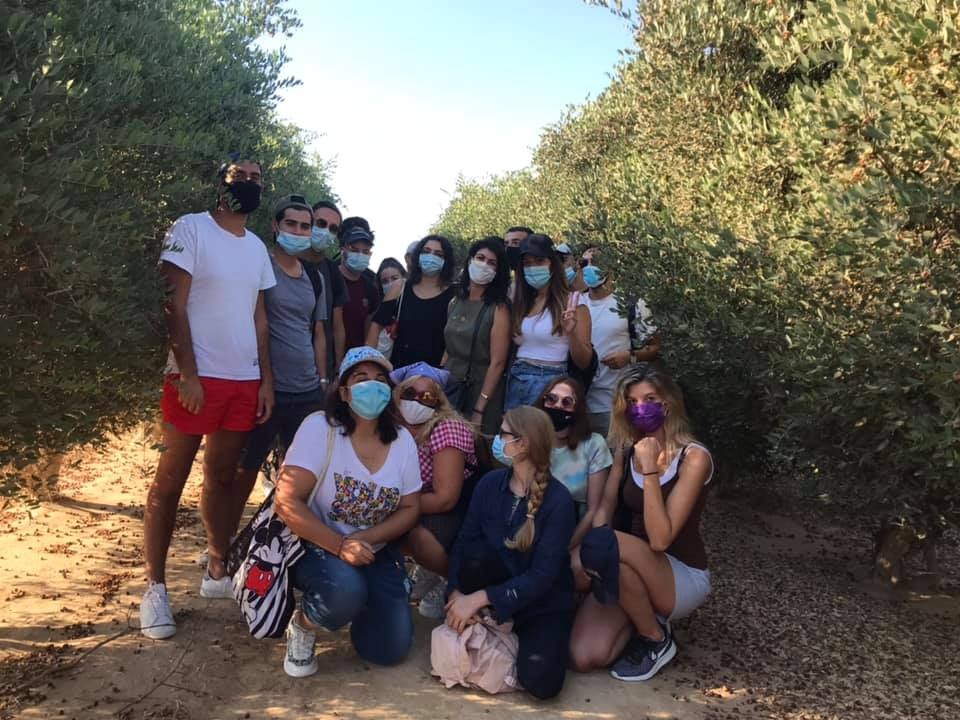
Nearly two decades later, Hermon is still at the forefront of Jewish leadership as the CEO of Israel Experience, the Jewish Agency’s educational subsidiary and Israel’s largest incoming tourism company. Israel Experience brings 30,000 young Jews to the country every year through groups like Masa and Birthright. He points to the ebbing of Jewish identity in the Diaspora as the chief motivation for his work. “After you see the problems facing Western Jewish communities, you understand it needs to be your life’s mission to work on them.”
Connection to Israel, he continued, is a primary function in building Jewish identity. He believes too many Jewish students on campuses, especially on the West Coast, are ill-equipped to deal with pro-Palestinian or boycott, divestment and sanctions (BDS) groups. “They are either apathetic or they don’t have the knowledge to fight back, or they don’t want to fight,” Hermon said. Experiencing Israel firsthand allows them “to see the conflict, not read the conflict,” he added.
The company took drastic measures to ensure that the incoming students adhered to the health ministry’s standards, including installing cameras and “corona trustees” to ensure that participants did not violate the mandatory two-week quarantine.
Still, at times Hermon is despondent about whether his work is making a difference. “I don’t know if we are succeeding. Fewer young people are coming to Israel. Jewish communities are getting smaller and anti-Semitism on campuses is going up.”
And the pandemic wasn’t exactly a boon for Hermon’s business. Earlier this month, his organization made headlines for all the wrong reasons with the release of a statement by the health ministry that 17,000 foreign students — 5,000 of whom were from Israel Experience — were being allowed into the country. The news sparked an outcry and a media circus, as lawmakers on both sides of the fence hurled accusations of “murder” and “anti-Semitism” at one another.
“They accused us of being ‘virus spreaders.’ We were so angry and so ashamed to have to explain it to the Jewish communities [overseas],” Hermon said.
The Israel Experience took drastic measures to ensure that the incoming students adhered to the health ministry’s standards, including installing cameras and “corona trustees” to ensure that participants did not violate the mandatory two-week quarantine upon arrival. Hermon said not a single participant who was either already in Israel or who had arrived since the outbreak in mid-March had contracted COVID-19.
He also believes some of the animosity surrounding the incident stems from the fact that strengthening Israel-Diaspora relations has never been a top priority for the Israeli government or its citizens. “Unfortunately, there [is] too [much] tsuris here,” he said. “They don’t understand that having a Diaspora that is supportive and building Jewish leadership has critical impact [on Israel] both in times of war and peace.”
Kentucky Chabad of Bluegrass Co-Director Rabbi Shlomo Litvin responded to neo-Nazi flyers permeating his central Kentucky neighborhood with flyers that preached tolerance, and the Chabad said it plans to launch educational initiatives about Judaism.
The Lexington Herald-Leader reported that the flyers stated in all capital letters, “WHITE POWER BLOOD AND SOIL BLOOD AND SOIL JEWS WILL NOT REPLACE US BLACKS WILL NOT REPLACE US MEXICANS WILL NOT REPLACE US WE STAND IN DEFENSE OF THE WHITE RACE.” Ronald Murray, vice president of the neo-Nazi organization 14 First The Foundation, told the Herald-Leader that his organization is responsible for the flyers and its members distributed around 150-250 flyers in central Kentucky on Aug. 11.
Litvin told the Herald-Leader that he has begun distributing flyers that counter the neo-Nazi flyers’ message.
“[The flyers] said, you matter, you are irreplaceable, and we’re glad that you are part of our community,” Litvin said.
He also told WKYT, “Our reply to being told to leave is to be prouder, to be more open and more vocal about our role in the community. We’re very proud to be a part of the community. I love Lexington and I love Kentucky, and there is nothing that is going to make us leave.”
Litvin told the Herald-Leader that on Aug. 10, a man who said he was responsible for the flyers called Litvin and yelled at him about how “my Jewish privilege is not going to protect me.” Litvin has reported the incident to police.
The Chabad of Bluegrass issued a statement saying that it planned to launch educational initiatives about Judaism in an effort to combat hate.
“Education is the greatest weapon against hatred,” Chabad of Bluegrass Co-Director Shoshi Litvin said. “The Rebbe [Rabbi Menachem Mendel Schneerson] said many times that education should not just be about math and science, but about morals and values. Through this, we can build a more loving society.”
Welcome back to the longest orientation meeting
in the history of orientation meetings. I hope someone
is writing all this down, because he is still talking.
He is still telling us about all the things we’ve
already done, and all the things we should make sure
to do, and the very fine points about how we should
go about doing them. You’ll never have to guess
how much of your fruit should go to the poor every
seventh year, or how much of your fruit you should
bring to Jerusalem and only eat in Jerusalem,
and if you’re concerned that transporting a lot of
fruit to Jerusalem is going to be an issue, not to
worry, there’s a backup plan where you can sell your
fruit locally, which the restaurants love putting on their
menus. We only serve locally sourced produce, they’ll say
and you’ll go there, and pay extra because it feels good to
read that, and you’ll use the proceeds of your locally grown
and locally sold fruit to buy food in Jerusalem, and then
you’ll eat that food in Jerusalem, and then, according
to this text, which is being written down, you’re good,
you’re covered so, I wouldn’t worry about it.
What I might worry about, though, is the choice between
two mountains, Gerizim and Ebal. Because, half of us
are going up one, and the other half the other.
Half of us will say a blessing and the other half a curse.
And we’ll be reminded that it’s always one or the other
and which one it is, is often a direct result of the
choices we make. And we have been making this decision,
this same decision, since we built a golden calf, since we
stole our brother’s birthright, since another brother
killed another brother, since the forbidden fruit went
into our mouths, since, essentially, forever. So make sure
you climb up the right mountain, lest you get kicked
out of the garden again, or burst into flames again
(it’s been known to happen, check the earlier chapters).
Since everything from your first breath to your last
is about this choice, this red pill or blue pill, this fork in
the road, this Gerizim or Ebal. Behold, your promised land
is a yes or no away. The other side of the river is coming.
Rick Lupert, a poet, songleader and graphic designer, is the author of 23 books including “God Wrestler: A Poem for Every Torah Portion.”
Could the Catholic Church have done more to save Jews during the Holocaust? The documentary ‘Holy Silence’ provides some answers, revealing the Vatican’s actions and inactions leading up to and during World War II. The film will be shown free of charge online from Aug. 15-22, sponsored by the Jewish Film Institute and the United States Holocaust Memorial Museum.
“I had not really anticipated making another Holocaust-related film after finishing my earlier film, ‘50 Children: The Rescue Mission of Mr. and Mrs. Kraus,’” producer-director Steven Pressman told the Journal. “At the time, I was thinking, okay I’ve been immersed in this very dark, horrible period of history for a while now, so maybe it’s time to move on to something else. But I had also been hearing a little bit about the Vatican and the Holocaust from some folks who work at the U.S. Holocaust Memorial Museum in Washington, whom I had gotten to know while making ‘50 Children.’ In particular, they had been involved for some time in various efforts to gain access to Vatican archives, and I found myself getting a little more drawn into some of the longstanding issues and controversy surrounding the Vatican’s response to the rise of Adolf Hitler and his pursuit of the Final Solution. Ultimately, I decided there was still a pretty dramatic story to tell about this part of history all these decades later.”
To broaden the story, Pressman focused a lot of his research on American figures who tried to influence the Vatican’s response to Nazi policies toward Jews as Hitler role to power. He also traveled to Rome and the Vatican twice, interviewing historians and scholars for their insights.
Pope Pius XII – portrait – pope from 2 March 1939 to 1958 – 2 March 1876 – 9 October 1958 (Photo by Culture Club/Getty Images/ Courtesy of PerlePress Productions)
“I was determined from the very outset of this project NOT to make a film that could be easily dismissed as some kind of ad hominem attack on the Vatican and the Catholic Church,” Pressman said. “The film, to be sure, definitely has a point of view, and for the most part casts a pretty critical eye particularly when it comes to the silence of Pius XII. On the other hand, a lot of the film also focuses on the much lesser known figure of his predecessor, Pius XI, who was on the verge of issuing a papal encyclical that would have strongly denounced Hitler and anti-Semitism. “I’m hoping that people who see this film—including those who have already made up their mind about Pius XII—realize that there were others in the Catholic Church who were wily ling to stand up to Hitler. Sadly, those efforts never really came to fruition.”
The story has particular resonance today, Pressman believes. “This issue of silence in the face of evil, and the obligations that we all have to speak up against evil—that’s something that still confronts us just as it confronted those who were called upon to speak out against Nazism, Fascism and anti-Semitism in the 1930s and 1940s,” he said. “Pius XII, for his part, insisted that silence was the better path and that speaking out would have endangered even more Jewish lives. I think that has proven to be a very difficult argument to sustain, whether we’re talking about the world as it existed 80 years ago or so many of the social injustice issues that exist today.”
Pressman had begun showing “Holy Silence” on the festival circuit when the COVID-19 pandemic hit and the film world went virtual. Future release plans are in flux, but will include a PBS broadcast beginning in November.Meanwhile, he’s in production on a documentary about the Jewish family that owned and preserved Monticello, Thomas Jefferson’s home near Charlottesville, Va.
Pressman ends “Holy Silence” with a quote from Elie Wiesel: “Neutrality helps the oppressor, never the victim. Silence encourages the tormentor, never the tormented.”
“I want viewers to come away from this film thinking about the moral costs of remaining silent when everything around them otherwise demands strong words and actions,” he said.
“There is no change in my plan to apply sovereignty, our sovereignty, in Judea and Samaria, in full coordination with the U.S. I’m committed to it, this hasn’t changed. I was the one who put sovereignty in Judea and Samaria on the table. This issue remains on the table,” Netanyahu said at a news conference in Jerusalem after the agreement was announced.
He did note that President Donald Trump asked that “Israel wait temporarily” to move ahead with annexation, Netanyahu said, adding he intends to comply.
Hours later, Trump said at a news conference in Washington that the plan is “off the table.”
“Right now all I can say: It’s off the table. I can’t talk about some time into the future, that’s a big statement, but right now it’s off the table,” Trump said in response to a journalist’s question on the plan’s current status.
But Trump turned to David Friedman, his administration’s ambassador to Israel, to confirm his description.
“Is that a correct statement, Mr. Ambassador?” Trump asked of Friedman, who was with him at the briefing room.
“Yes, the word ‘suspend’ was chosen carefully by all the parties,” Friedman said. “‘Suspend,’ by definition, look it up, means temporary halt, it’s off the table now but it’s not off the table permanently.”
The Abraham Accord agreement announced Thursday lays the framework for agreeing to diplomatic ties between Israel and the United Arab Emirates. It is only the third such agreement signed by Israel and an Arab country (after Egypt and Jordan).