fbpx

August 14, 2020

Writers, Producers Neil Cohen and Zack Norman on The Journey to Get ‘Chief Zabu’ Released

After three decades and just in time for the 2020 U.S. Presidential election, indie film “Chief Zabu” was finally released this months to Vudu, Amazon, Google and Apple iTunes. The socio-political comedy was inspired in part by a then-emerging real estate mogul named Donald Trump, who in mid-1980s New York City already had earned a reputation for an outsized ego and political designs.

The long, circuitous route of the film begins well before 1986 when creative hyphenates Zack Norman (comic, writer, director, producer and actor) and Neil Cohen (writer, director, producer and illustrator) wrote a screenplay after Norman – born Howard Zuker — attended a meeting for private investors hosted by the political leadership of a newly-constituted nation applying for United Nations membership. Made in 15 days on a budget of less than $200,000, “Chief Zabu” was poised for its big screen debut in the fall of 1987.

In fact, no less than Life Magazine had published a double-page spread on the making of the movie as illustrative of the city’s growing indie-film industry. However, one week before its release date, the film’s distributor filed for bankruptcy, cancelling all distribution plans. Legal machinations consumed several more years, and eventually Norman and Cohen had moved on separately to many other projects.

On Aug. 13, 2020, I had the pleasure of interviewing both Neil Cohen – also the author of the recently-optioned book “American Gargoyles” – via Zoom, as embedded below. Included in our discussion was the role that “Mystery Science Theater 3000” played in making “Chief Zabu” an underground classic even without the film being released. You can also expect to hear great discussion about independent filmmaking, classic New York painters, and gratitude.


More on “Chief Zabu” can be found here, here, here and here.

Writers, Producers Neil Cohen and Zack Norman on The Journey to Get ‘Chief Zabu’ Released Read More »

We Can’t Just Talk About it, We Need to Fix the Criminal Justice System

Over the past 30 years, our nation has built an edifice of intolerance, unkindness and lack of direction around our criminal justice system, which reflects poorly on us and has devastating consequences to our social fabric. We know we have the human instinct to punish. The question we must ask ourselves is whether we possess the human instinct to forgive.

The school-to-prison pipeline is well documented. People are imprisoned for increasingly longer sentences, families are broken up and communities lose their continuity. The United States has the highest incarceration rate in the developed world. California spends 7.4% of its annual budget on prisons, the state Department of Finance reports. If one could point to positive metrics upon release from prison, perhaps one could make an argument that the system works. But rehabilitation is hardly a factor.

Our criminal justice system and how we view crime and punishment is a model of cruelty and indifference to humanity. I suggest the key to our collective safety is not length of incarceration but the quality and purpose of that incarceration.

Punishment has several somewhat-interrelated purposes:

    • The specific deterrence of the individual (that person can’t commit the crime again and locking up him or her keeps us safe)
    • General deterrence of others (by seeing the punishment, others will not commit a similar act)
    • Retribution (people “deserve” to be punished)
    • Societal statements of an underlying morality that somehow “purifies” society (i.e., telegraphing society’s purity by punishing those who have transgressed)

All these are the traditional justifications for why we imprison people. They don’t address what happens in prison, and how people can emerge as productive members of society.

Dating to Hammurabi’s Code (circa 1754 B.C.E.), “an eye for an eye” doesn’t mean “take at least an eye.” Rather, it means the punishment can be no greater than the crime committed. Yet, our criminal justice system removes people from society for prolonged periods of time that only sometimes are related to the gravity of the crime. What else can explain the “three strikes” rule, significant jail time for drug-related crimes, or the length of mandatory sentencing guidelines? All this points to a society seemingly unconcerned with rehabilitation and hellbent on retribution.

Added to the problem are systemic reasons why so many are incarcerated for long periods of time.

Our criminal justice system and how we view crime and punishment is a model of cruelty and indifference to humanity.

Our focus on “law and order” rather than “to protect and to serve” makes police officers feel they are there not to be part of the community they are serving. Instead, they are being told to protect “us” from “them.” On a bright front, there are police officers whom I have met who are making differences in reducing crime, and dealing with helping young people traumatized by violence. Until more police officers are seen as part of the community rather than policing the community, I fear we will find it difficult to make our cities safer, and the underserved and mentally challenged better understood and served.

We have a public-prosecutors system that rewards prosecutors for wins and for extracting the greatest sentences. Often, extenuating circumstances, legitimate alibis and scientific exoneration are not even part of the program. Plea-bargaining with defendants who cannot receive adequate defense leads everyone —particularly the poor — to accept a sentence even when it would be in his or her best interest not to do so.

Even if one is worried about recidivism, what is accomplished by housing 50-something people in horrible conditions when statistics show that by that age, crimes generally aren’t committed?

The idea that victims’ relatives should be allowed to speak to the judge at sentencing is absurd. It’s not about “victims’ rights.” The victims should be compensated by society for their losses (or in civil court for some form of restitution). There is no place for “piling on” because relatives tell tearful stories. 

Prosecutors should not be permitted to speak against the parole at parole hearings. The hearings themselves are not about punishment — that’s already been meted out. These hearings should determine whether the person is sufficiently rehabilitated.

We are in a moment when rethinking our objectives in criminal justice is in order. Perhaps we have evolved such that we no longer crave the retributive punishment that satisfies base human attributes to inflict pain. Perhaps the statement we should be making is that we care about the crime, but we also care about the person. We need to refocus on rehabilitation and job training. We need our justice system to be one of fairness and moving forward — not merely a system of long-term incarceration. Some of this is fueled, of course, by prison guards’ unions and the corporate jail system, both areas in need of examination and reform.

Finally, let’s acknowledge that many crimes are not crimes at all; they are illnesses. People who are addicts are not in full control of themselves. We should treat them as ill, not as criminals, and should fashion rehabilitation accordingly.

The idea that victims’ relatives should be allowed to speak to the judge at sentencing is absurd.

We throw around prison sentencing guidelines and prison terms as if they’re Monopoly money. Should a particular crime bear a three-year prison term? Or 20? Or life? Does society get more “bang for the buck” from more years behind bars?

It seems to me that the denial of someone’s liberty for any time is a meaningful punishment. None of us would want to spend a month in prison, much less a year. Even a few years is more than enough to separate convicted criminals from society. So let’s shorten terms.

It seems prison is about three things: deter other crimes, satisfy ourselves that the person will not commit a similar crime in the future, the person can reenter society and be productive.

We spend far too little time on understanding these last two.

There are a number of things we can do to reduce prison populations and redirect dollars where they can be of greater help.

We need our justice system to be one of fairness and moving forward — not merely a system of long-term incarceration.

All crimes that do not involve murder, rape or the attempt of either, or use of a deadly weapon in the commission of a felony, have a three-year maximum term. That’s it. Spend all the money that would have been spent on longer periods of incarceration on job training and counseling. At the end of three years, it is incumbent upon a third-party arbiter to make the case that either the person is not rehabilitated or it is reasonable to assume he or she are at high odds to commit a similar crime again. If not, away they go.

    1. All crimes that involve the use of drugs (versus its sale) carry a maximum one-year term. All users should be in a drug rehabilitation program while imprisoned. All these people, upon release, would be subject to periodic review and continued treatment.
    2. With respect to more serious crimes, consider early release, particularly after age 35. Most crimes are committed by young men. Although much is not known about the reasons, some researchers suggest that until the risk-reward center of the brain is fully developed at age 25, criminal behaviors are more likely. The Marshall Project, a nonprofit news organization covering the U.S. criminal justice system, notes that criminal careers don’t last very long. Alfred Blumstein of Carnegie Mellon University, a leading criminology researcher, has determined that most criminal careers have a life of five to 10 years. The commission of violent crimes pretty much ends in the mid-30s. So why are there people aging and dying in prison?

What can you do? Vote to let felons vote. It will be on the ballot in November. After they’ve paid their debts to society, let’s mark it “paid in full.” Let’s not require them to identify as criminals for the rest of their lives. After a year out and “clean,” former felons should be just like you and me. Also on the ballot in November is the elimination of the cash bail system. Bail should be based on ensuring those with flight risk can’t flee, not on whether someone has the bail money.

Society needs to address some of the inherently unfair aspects of police questioning, police misconduct and a system that rewards prosecutors for overreach. Something must be done to fix the system so we can be safe, suspects receive a fair shake, felons are rehabilitated and we can improve, rather than ruin, lives.


Glenn Sonnenberg is the former president of Stephen Wise Temple and is on the boards of the Jewish Federation, the Children’s Institute, Wayfinder Family Services, Bet Tzedek and Center Theatre Group.

We Can’t Just Talk About it, We Need to Fix the Criminal Justice System Read More »

The Bagel Report

Bubbies Meet Bagels

The Bagels have met their match: the Bubbies who Know Best. Two journalists meet three matchmaking grandmothers who have opinions about dating, chemistry, who should make the first move– and having reasonable expectations in relationships, and having the humility to know what they don’t know. Plus, talking about diversifying the Jewish experience beyond Ashkenormativity, onscreen and off, and pronouncing Shtisel every possible way (except the right one).
 
Esther spends time on the Bubbies Know Best Podcast
 
Check out the Bubbies here.

Bubbies Meet Bagels Read More »

OB-GYN Chavi Eve Karkowsky on Working With High Risk Pregnancies in a Pandemic

Dr. Chavi Eve Karkowsky is a high-risk obstetrician in New York City and the author of “High Risk: Stories of Pregnancy, Birth, and the Unexpected,” released this spring. 

In the book, Karkowsky discusses her career in women’s health, working in underserved communities, the modern medical system and prenatal genetic testing — of particular interest in Ashkenazi Jewish communities. 

Also Ashkenazi, Karkowsky wrote most of the book while living in Israel. Today, she’s back in the U.S. and on the front lines of the COVID-19 crisis. She spoke with the Journal about her book, and treating patients during the pandemic. 

Jewish Journal: Why did you decide to write the book?

Chavi Eve Karkowsky: I’m in the room for some of the most compelling stories in human existence. These are stories you don’t hear about in literature. These are the depths of despair and the heights of joy and they need to be explored more. Women, including friends, tell me they wish someone had told them what giving birth would be like. We are unprepared, even for uncomplicated deliveries. Birth can be a little bit traumatic and we don’t have a way to process it later. It contributes to people feeling lonely. They think they’re alone but they’re not. [Additionally], people are making policies and laws that are ignorant and dangerous. They don’t understand the full ramifications of [them]. If they came to work with me for a few days, they could understand what’s going on. This book is [a way to] take everyone to work with me. 

JJ: What was your birth experience like the first time?

CEK: I have four kids. My kids are all fine and I’m fine. At the same time, it was also very frightening, which is not an unusual experience. For people in this business, we see how it can go wrong and we know what the line is between great joy and tragedy. 

JJ: Why did you decide to pursue this field? 
CEK:
When I was a medical student, I did OB-GYN and loved the adrenaline rush. I liked that I could do surgery. I really work at the intersection of complicated medical problems and I understand how the body works at a complicated time. I have the maternal and fetal well-being to worry about, and what medications might work and might not work. There are some really dramatic moments. It’s the perfect job for me.

JJ: What types of high-risk pregnancies are most common?  

CEK: I see a lot of hypertension and diabetes in pregnancy. Anything that happens to people happens to women, and anything that happens to women happens to pregnant women. [I see] lupus and breast cancer … anything can happen in these 40 weeks and if it does, it’s my job [to take care of it]. 

[Here in New York] we started testing everyone admitted for COVID. During the peak of the pandemic, all of our patients tested positive, even if they had not left the house for weeks. We said, “Oh my gosh, it’s everywhere.”

JJ: What was it like working in an ultra-Orthodox hospital in Israel? 

CEK: Care in Israel is very different, but I loved it. I had the usual issue with the medical licensure. It’s almost impossible if you’re not a citizen. I worked there with a permit. They were incredibly welcoming. In Israel, there are a lot more midwife deliveries. The hospital I worked at had a low C-section rate. [The ultra-Orthodox women] felt very strongly about not having the surgery, which is a risky proposition if you have 10 to 14 kids. Even women who were not ultra-Orthodox would come there because they wanted the less interventional childbearing.

JJ: Did they avoid C-sections for religious reasons? 

CEK: It wasn’t unusual to be delivering someone’s 12th baby. They really want to preserve and have as many children as they want. Once you start doing three, four, five, six, seven C-sections, it can become risky and limit how many kids you have. If that’s your goal, it makes sense to avoid C-sections.

JJ: Why is modern prenatal genetic testing important for the Ashkenazi community? 

CEK: They may have been more likely to marry cousins. There is a lot of scientific research on Ashkenazi Jews and there are a lot of diseases where they could be carriers. Most of us should be tested before we have children. We need ways to figure it out so we don’t have that heartbreak. The testing can allow for more options.

JJ: How has COVID-19 affected your patients?

CEK: It’s been very intense here in New York. We’re doing telehealth and in-person visits because patients are sick from the usual things, but we’re taking care of an enormous number of COVID pneumonia patients. It’s very scary because no one knows about COVID. It’s very time-sensitive. It’s scary to go to work sometimes. 

JJ: Have babies been born with COVID-19?

CEK: It does not seem to go into the placenta. Even if it does, it’s a mild version most of the time. We started testing everyone admitted for COVID. During the peak of the pandemic, all of our patients tested positive, even if they had not left the house for weeks. We said, “Oh my gosh, it’s everywhere.” We haven’t seen a lot of newborns with it or even if they do have it, it’s not serious. We try to maintain breastfeeding and bonding. Maybe mom wears a mask. There’s damage separating a mom and her baby, so we’re really balancing what’s important.

OB-GYN Chavi Eve Karkowsky on Working With High Risk Pregnancies in a Pandemic Read More »

david suissa podcast curious times

Pandemic Times Episode 78: How Big Is the UAE Deal?

New David Suissa Podcast Every Monday and Friday.

Consul General of Israel to the Pacific Southwest Hillel Newman discusses a major development in the Middle East.

How do we manage our lives during the coronavirus crisis? How do we keep our sanity? How do we use this quarantine to bring out the best in ourselves? Tune in every day and share your stories with podcast@jewishjournal.com.

Pandemic Times Episode 78: How Big Is the UAE Deal? Read More »

NYC DSA Chapter Asks City Council Candidates If They’ll ‘Pledge to Not Travel to Israel’

New York City’s Democratic Socialists of America (NYC DSA) chapter’s questionnaire included a question asking city council candidates if they will “pledge to not travel to Israel,” which various Jewish groups have condemned as anti-Semitic.

The question states, “Do you pledge not to travel to Israel if elected to City Council out of solidarity with Palestinians living under occupation? Even though foreign policy falls outside the purview of municipal government, gestures like travel to a country by elected officials from a city the size and prominence of New York still send a powerful message, as would the refusal to participate in them.”


The NYC DSA later explained in a statement that City Council members “are regularly taken on an expenses-paid trip to Israel,” which is what prompted the topic on the questionnaire, and it’s not opposed to people taking personal trips to Israel.

Jewish groups denounced the question.

“We live in a world where scores of countries actually & flagrantly persecute minorities and serially abuse human rights: China, Russia, Iran, Turkey, etc. Why is the only nation that troubles @NYCDSA the Jewish state?” Anti-Defamation League CEO Jonathan Greenblatt tweeted. “Double standards are a hallmark of #antisemitsm.

“Litmus tests that prohibit candidates from traveling to Israel or force them to delegitimize the only Jewish state in the world through BDS [boycott, divestment and sanctions], certainly don’t solve problems or advance the cause of peace, but do reveal a deep, ugly bias. Hostility helps no one but the bigots.”

The American Jewish Committee similarly tweeted, “Of all the countries in the world, @NYCDSA has chosen to target only one — Israel, the Jewish state. This reeks of bigotry and New Yorkers will not stand for it. NYC-DSA: apologize and rescind this deeply offensive questionnaire immediately.”


The Simon Wiesenthal Center described the NYC-DSA’s question as “straight from Stalinist and Nazi-era Jew hatred.”

“Their racist bigotry should disqualify candidates,” the Jewish group added. “Await condemnation from Mayor and all NYC leaders.”

StandWithUs Director of Combating Anti-Semitism Carly Gammill called on all NYC-DSA endorsed candidates to condemn the chapter.

“NYC DSA’s hateful agenda would ban council members from visiting Israel even to see friends and family or connect with Israelis as people,” Gammill said in a statement. “Why are anti-Israel extremists so desperate to prevent political leaders from seeing the region for themselves? Because they’re trying to dehumanize Israelis and dismantle Israel as a Jewish and democratic state.”

She added: “We call on all candidates endorsed by the DSA to unequivocally denounce this antisemitic litmus test.”

New York political leaders also condemned the DSA chapter’s question.

“Last week a DSA leader wouldn’t say if Israel had a right to exist. Now this,” Rep. Max Rose (D-N.Y.) tweeted. “This is anti-semitism. Plain and simple.”

The Jewish Caucus of the New York City Council called the DSA chapter’s question “rank anti-Semitism” in a statement.

“It exceeds even the demands of the notorious Boycott/Divest/Sanctions (BDS) movement against the Jewish people, which every mainstream Jewish organization in the United States has appropriately labeled anti-Semitic and which the New York City Council itself condemned by resolution in 2016 and all ‘efforts to delegitimize the State of Israel and the global movement boycott, divest from, and sanction its government and people,’ ” the statement read. “No political organization should etch into its platform such blatant anti-Semitism as a pledge not to visit the Jewish state, and no candidate for public office should seek support for an organization that does.”


The NYC DSA chapter issued a statement on Aug. 13 addressing the controversy.

“Members of the City Council are regularly taken on an expenses-paid trip to Israel that functions primarily as a political junket to foster ties between local officials and the Israeli state,” the statement read. “It is the only country that Councilmembers are regularly taken on delegations to visit for this purpose. Yet, Palestinians have lived under military occupation and siege, been displaced from their homes and denied freedom of movement for decades.”

It added that the question was if candidates would respect Palestinians’ call to boycott Israel “to end the occupation and discrimination.”

“New York has a large Palestinian community, and elected officials in NYC should represent those communities just as much as they represent others,” the statement concluded. “We are in no way opposed to trips in a personal capacity to visit family or for other personal reasons.”

NYC DSA Chapter Asks City Council Candidates If They’ll ‘Pledge to Not Travel to Israel’ Read More »

A Granddaughter’s Intuition: A Life Well Lived

How did she know? I’m a nurse, I work with the elderly on a regular basis, but how did my wife know so much more than I did about this?

A few weeks ago, Adi’s grandfather said something monumental, though I didn’t realize it at the time. He wanted to visit the cemetery where his wife of 70 years was buried. I was well aware that in the years since 2016 when she died, he found the thought of visiting her too sad, and this would be the first time he would take the emotional journey to finally see her. Great, I thought. He’s finally ready, enough time has passed, this is important. But then Adi said something that caught me completely off-guard. “I am preparing myself for the reality that after he goes to the cemetery, he will have a sharp decline and die soon.” I was confused. Why would that be? He was 99 years old, but amazingly, he was mostly independent. The whole point of him not going for years was that it made things too sad, the time passing had allowed him to feel like he could handle it, so I didn’t forsee any sort of decline. I’m familiar with Broken Heart Syndrome, which is really Stress Cardiomyopathy, but it doesn’t usually happen, right? That’s the stuff of sad romance novels. But a granddaughter’s intuition is far more powerful than whatever knowledge this nurse could have predicted, because she was right.

The visit was good, Adi sang the songs her Grandma Nette “Bubbles” loved to hear, and her Grandpa shed tears while smiling and watching me keep Natalia – one of 6 great-grandchildren – distracted on the side. Natalia was named after Nette, whose Hebrew/Yiddish name was Nacha; and whenever Mal would see Natalia he would smile and say “Nachala” because she was his Nacha. Buried next to his wife was his only sibling, Julia. On the other side of his wife an empty spot for him one day. When we got home he was tired, as expected. This was Thursday, July 23. The next day he was exhausted. I told Adi that was normal after his first outing in 4 months, and the emotions it stirred up. She said, “I hope you’re right”. The following morning, Shabbat, July 25, Adi’s mother Dale showed up at 9am to catch us before our weekly social distance walk with friends, to tell us an important update. Her father – Adi’s Grandpa Mal – had said he will need a nurse to help him from now on, that he was not able to dress himself anymore. 

Let us pause and go back in time for a moment, and understand the significance of this 99 year old man, making a common request for assistance…

Malvin Ross was born and raised with his older sister Julia in Detroit, Michigan. As a teenager he met Nette, the love of his life, who also grew up in Michigan. During those teenage years he played many sports including baseball, tennis and gymnastics. In fact he was awarded a college baseball scholarship, but those plans changed when America joined the 2nd World War. Mal enlisted, and lied to his parents that he was drafted, and spent the years of the war in India and China as a part of the historic Flying Tigers. 
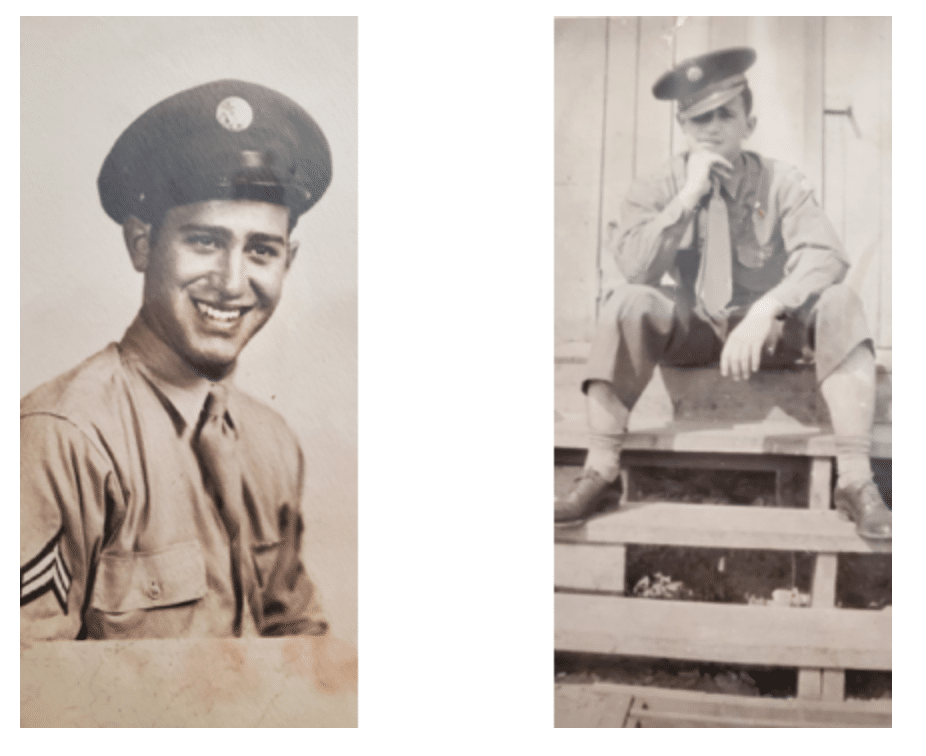
When he returned home after the war, he and Nette began the start of a 70 year marriage, with a love that you could feel by being in their presence. 

pastedGraphic.png

He worked as a valet at the famous Friars Club, meeting and getting tipped by a laundry list of celebrities of yesteryear. He considered going back to school, as the war had prevented that; in fact he was highly interested in veterinary school, but decided instead to begin earning money for his family which was just beginning. 

pastedGraphic_1.png

He opened a pet supply store, which he ran every day until retirement at age 65. Because it was in Brentwood, his clientele included huge stars for decades; in fact looking through his rolodex you might think he was a Hollywood agent. He loved to talk about who was nice, who was pretty, and who was cheap and a bad tipper!

He and Nette raised their 2 daughters Dale and Teri in the Mar Vista area, and spent their retirement with weekly visits to Norms and square dancing. He loved his cactus garden, something I can even remember seeing him on his hands and knees tending to when I met him in his 90s. He also loved watching the Dodgers, and frequently went to games with his sister Julia and her husband Phil. Any time I would see him he would bring up the Dodgers and complain about their lack of winning the World Series since 1988. He would continue to worship Nette, who he called Bubbles, and frequently told people, “I don’t deserve her”. He was always as proud as could be when it came to his grandkids and great-grandkids.

pastedGraphic_2.png

So this man I have briefly described, a WWII veteran, a proud man who needed to be strong-armed by his family to move out of his 3-story townhouse when he and Nette were each in their 90s, and stairs were already an intimidating hazard. This is a man who did not want to move out of his elderly living facility when COVID19 started, even though they were recommending everyone who had a family they could live with do so for safety reasons – but he did not want to be a burden on anyone else. This is a man who I needed to convince with great efforts to allow me – the nurse husband of his granddaughter – to shower him 3 times a week. “I’m fine, I don’t need the help, you’re just gonna hurt your bad back” were frequent things I would hear throughout the process. Each time I finished he would tell me, “You’re getting faster and better at this each time”, so that although he would object to the help, he wanted me to always know he appreciated it. I would let him dress himself as often as I thought he could handle it, because I wanted him to feel as independent as possible, but I would also help when it seemed difficult. The balancing act of maintaining his pride while still keeping him safe was one that we were each practicing on a daily basis. Providing dignity and a sense of autonomy to someone while keeping them healthy and safe is not always as simple as you would hope. I have to do this on a regular basis at work by telling people of sound mind that they cannot get up without assistance or an alarm will sound on their bed. Some accept it, and some find it extremely condescending, which sadly, it may very well need to be.

This same proud man, on Saturday morning July 25, was bringing up the need to have a nurse on a regular basis. This was newsworthy. Adi looked at me with a knowing glance, since it had been less than 48 hours since the cemetery visit. We went on our walk. A few hours later, we returned to find Adi’s parents Dale and Mark sitting on the front lawn steps waiting for us. Grandpa Mal had fallen an hour after this conversation, and been taken by Dale’s sister Teri to the hospital. Adi cried, and said to me, “I knew it”. I had nothing more to say, so I hugged her. The test results were good, there was nothing fractured or sprained in this 99 year old veteran. Just a bad bruise on his left side. He was back home, telling us how surprised and relieved he was that nothing was broken. “I was positive that it was much worse, and that I’d be staying at the hospital for the rest of my life, I’m so lucky” he told me. The steep decline continued. I was used to showering him 3 times a week, but he had been relatively easy to get around the house, and required no heavy lifting. I had been helping a family member, not a patient. Now he had transitioned to something I was more sadly familiar with, a man who needed all of the help. Getting up, down, dressing, undressing, eating, bathroom needs, his life had shifted in the way that all of us should be so lucky as to not happen until age 99. Many days were spent sleeping 23 of the 24 hours. Some days he could help walk and follow directions, other days I had to haul him at the expense of my bad back. Caregivers were being arranged, but the process was much slower due to the pandemic. Adi’s father is highly immunocompromised, so the plan was to bring Grandpa Mal to Adi’s Aunt Teri and Uncle Todd, where someone could work. But still COVID testing and caregiver availability meant August 12th would be the date. That’s when he could move and finally get that assistance. Because what I failed to mention is that each and every day that Adi’s father and I would change him, he would ask me when a stranger could start. His pride was still there, and if he needed help it should at least come from a paid employee. It pained him to see his son-in-law and grandson-in-law doing the heavy lifting. So Wednesday, Aug. 12 was drilled into his head, that’s when it would happen.

But things took even more of a turn for the worse a week ago. Early in August, his confusion and weakness became so challenging that I didn’t think my experience alone would be enough; we needed help sooner. My friend from work found us a caregiver who could start as soon as a new COVID-19 test cleared him. Friday evening the results were in. Great. An ambulance was arranged for Shabbat morning Aug. 8. That morning as I got him cleaned and dressed with Adi’s father, and he looked away as usual hating that we were the ones doing it; we told him it would be the last time with us. He would be going to his daughter Teri where a paid professional was waiting to help him. “Oh good!” he immediately said. Such relief was evident. They arrived to pick him up, I said goodbye with Natalia, his Nachala. Unbeknownst to me, Adi got a photo of this moment, of which I’m grateful. Although this is not that photo, just a few weeks earlier, this shot gives you a sense of the joy his Nachala still brought him on a daily basis.

pastedGraphic_3.png

The next few days he was taken care of well, and got to spend invaluable time with his daughter Teri, son-in-law Todd, and granddaughters Samantha and Mikki, but he was mostly sleeping, and far less alert. The hospice doctor saw him in person for the first time on Aug. 11, and gave the bad news that he was likely to only live another 2-4 weeks. That night, at 3:15am on Aug. 12, the same day we had previously told him that he was moving, Malvin Ross died in his sleep. The hospice doctor explained that he may have had small strokes months ago, which led to the decline. Given the information that his sharp decline occurred immediately after visiting the cemetery for the first time, the doctor said that any form of stress can create a decline if someone has had strokes or narrowing of arteries. “PTSD can have life-threatening results in much of the elderly as a result” he told us. This may or may not have been the cause, but one thing I know is that my wife – the non-medical professional – could see all of this most clearly. Her grandfather had been pressured to move from his home for safety reasons. He had then in March been pressured to move in with all of us for safety reasons. His visit to his wife at the cemetery was a choice he could make for himself…and when he left her grave that day, his decision was made up. He was ready to make his final move.


A Granddaughter’s Intuition: A Life Well Lived Read More »

Why the U.S. Must Confront Iran, With or Without the United Nations

The United States has put forward a United Nations Security Council resolution this week to extend the arms embargo on Iran — an effort that should be supported by all committed to stability in the Middle East. In the event this measure fails, Washington should not hesitate to pursue a snapback of sanctions on Tehran.

The UN’s arms restrictions are tied to Security Council Resolution 2231, which endorsed the nuclear deal with Iran. Like other provisions of the agreement, these restrictions have a fast-approaching expiration date — one whose arrival in October will be “a huge political success” that allows the regime to “easily buy and sell weapons,” according to Iran’s own president.

This “success” is about to unfold, even though Iran has already flagrantly flouted nuclear and arms restrictions imposed by the deal, as well as UN restrictions on arming Hezbollah in Lebanon and Houthi insurgents in Yemen.

As a bipartisan majority of U.S. representatives have warned, the embargo’s lifting “could have disastrous consequences for US national security” and that of regional partners, including Israel and the Gulf states. After all, the Iranian regime has long demonstrated its commitment to violently expanding its influence and attacking U.S. interests throughout the Middle East, even while subject to an embargo.

As a bipartisan majority of US representatives have warned, the embargo’s lifting “could have disastrous consequences for US national security” and that of regional partners, including Israel and the Gulf states.

Iranian arms have been funneled to some of the greater Middle East’s most ruthless killers, including Hezbollah, Bashar al-Assad, Hamas, Palestinian Islamic Jihad, Shiite militias in Syria and Iraq, the Taliban and the Houthis. Since last summer, Iran and its proxies have only continued pursuing their ambitions by force, killing three Americans and a British service member in Iraq, attacking tankers near the strategically important Strait of Hormuz, downing a U.S. surveillance drone and striking Saudi oil facilities.

For all this belligerence, Iran has been hampered by the embargo in its efforts to acquire advanced capabilities. The Defense Intelligence Agency (DIA) noted in November that “Tehran continues to face significant procurement obstacles” under the embargo, with many countries “unwilling” to sell it military equipment. It stands to reason that the embargo’s end will only intensify the threat posed by Iran, which will be allowed to “purchase new advanced weapon systems from foreign suppliers to modernize its armed forces, including equipment it has largely been unable to acquire for decades,” according to the DIA.

These may include Su-30 fighter jets, Yak-130 jet trainers and T-90 battle tanks from Russia, among other systems. Iran also will likely seek to bolster its naval forces that continue harassing US vessels and seizing tankers in international waters.

Such purchases could intensify the regional arms race, contributing to destabilization and heightened tensions. Additionally, concerns have been raised that Iran could reverse-engineer the technologies it procures in order to facilitate domestic manufacturing. Moreover, without an international embargo, governments may be deterred from disrupting Iranian transfers to clients and proxies.

The international community should not reward Iran’s misbehavior and repeated violations of UN resolutions by lifting the arms embargo. The Security Council should pass the U.S. resolution to extend arms restrictions on Iran. If the measure is vetoed by Russia or China — which stand to profit from lucrative arms sales to Iran — Washington should pursue a snapback of UN sanctions. This might be done with the help of European partners, which, despite their commitment to the nuclear deal, have acknowledged both its violation by Iran and that the embargo’s lifting would have “major implications for regional security and stability.” Alternatively, the U.S. could trigger the snapback mechanism unilaterally, based on the State Department’s given rationale.

The international community should not reward Iran’s misbehavior and repeated violations of UN resolutions by lifting the arms embargo.

Washington should likewise pursue measures outside of Turtle Bay, including preparing to aggressively impose unilateral economic penalties in response to arms sales to Iran and firmly broadcasting this intent to both friends and competitors like Russia and China. This could complement a broader push to counter Iranian belligerence by extending and intensifying sanctions against Tehran, heightening the regime’s internal tensions in order to encourage its collapse.

The U.S. should concomitantly work with its allies and partners to ramp up maritime interdiction efforts targeting Iranian arms, and threaten the use of force against ground arms shipments in the Middle East. It could also extend greater support to allies on the frontlines of beating back Iran. For instance, Washington could upgrade bilateral intelligence sharing with Israel and facilitate Israeli cooperation with Gulf partners against Iranian arms transfers to Yemen, as laid out in 2018 by a JINSA task force led by Adm. James Stavridis.

The world’s top state sponsor of terrorism, whose victims extend across and beyond the Middle East, does not need more, and more lethal, arms. America must act decisively to confront this threat, for its own security and that of the entire region.


Admiral Kirkland H. Donald, USN (ret.) is former director, Naval Nuclear Propulsion Program and a member of the Jewish Institute for National Security of America’s (JINSA) Gemunder Center Eastern Mediterranean Policy Project. Vice Admiral John Bird, USN (ret.) is former commander of U.S. 7th Fleet and a member of JINSA’s Gemunder Center Iran Policy Project. They are both members of JINSA’s Board of Advisors.

Why the U.S. Must Confront Iran, With or Without the United Nations Read More »

Obituaries: Aug. 14, 2020

Renee Algazy died July 21 at 84. Survived by daughters Diane “Dina” (Jeremy) Stuhl, Laura Jane Lewis; son Mark (Tina); 5 grandchildren; 1 great-grandchild. Malinow and Silverman

Shirley Cohen died July 11 at 100. Survived by daughter Lesley (Cliff) Cohen Lee; son Frederic (Antoinette); 5 grandchildren; 2 great-grandchildren. Mount Sinai

Morris L. Cone died July 15 at 85. Survived by daughter Beth Kramer; son James; 2 grandchildren; sisters Alice Oser, Carol (Matthew) Cohen. Mount Sinai

Linda Rose Esserman died July 18 at 60. Survived by daughter Emily; son Jake; mother Tobey Gurewitz; brother Alan Gurewitz. Mount Sinai 

Robert Friedman died July 14 at 83. Survived by daughters Sherry Harbour, Laurie Petok. Mount Sinai

Robin Goldblatt died July 6 at 48. Survived by mother Phyllis; father Burton; sister Lori; brother Keith. Mount Sinai

Diane Goldstein died July 8 at 67. Survived by husband Stanley; son Aaron; sister Nancy Hunt. Mount Sinai

Phyllis Arlene Goldstein died July 21 at 97. Survived by daughters Carol Nevitt, Barbara (John) Pastier-Goldstein, Mary Ann (David); 4 grandchildren; 1 great-grandchild. Mount Sinai

Francis Jabson died July 18 at 81. Survived by wife Tobi; 1 grandchild. Hillside

Robert Kittner died July 7 at 89. Survived by wife Phyllis; daughters Susan Tipton, Ellen, Lynn Gemotte; 2 grandchildren; 1 great-grandchild. Mount Sinai

Lillian Klein died June 9 at 97. Survived by daughters Roberta, Karen Klein-Kaiser; 1 grandchild. Mount Sinai

Jean Kraus died July 18 at 90. Survived by daughters Renee Mizrahi, Lori (Ronald) Leparulo; sons Philip (Vera), Lloyd (Tima); 10 grandchildren; 2 great-grandchildren. Mount Sinai

Stanley J. Landsman died July 18 at 84. Survived by wife Helene; daughter Michey Singer; son Larry (Isabelle); stepdaughter, Marcie (Susan) Heydow; stepson, Jeffry (Linda) Kaye; 10 grandchildren; 4 great-grandchildren. Mount Sinai

Marion E. Leon-Doten died July 10 at 85. Survived by husband Stefan Doten; daughters Susan Strohbach, Rose Leon; sons Daniel Sovetky, Ralph Sovetky; 4 grandchildren; sister Dai Leon. Mount Sinai

Ira Levy died July 4 at 96. Survived by daughters Rebecca Rosser, Karen (Barry) Topol, Gail (Vince) Silis; 2 grandchildren. Mount Sinai

George Lindenbaum died July 27 at 84. Survived by wife Eleanor; son David (Jill); 2 grandchildren. Malinow and Silverman

Evelyn Mastrov died July 17 at 99. Survived by niece Debra (Rick) Lebby. Malinow and Silverman

Golda Milman died March 29 at 97. Survived by son Boris Leyderman; daughter Lyubov Vasilyeva; 2 grandchildren; 3 great-grandchildren. Chevra Kadisha

Rozia Nicberg died July 10 at 95. Survived by husband Elliot; daughter Adina Kraim; 2 grandchildren; 4 great-grandchildren. Mount Sinai

Shirley Politzer died July 16 at 84. Survived by daughter Hayley (Mike); 2 grandchildren; sister Renee. Hillside

Marjorie Cerf Platt died July 11 at 98. Survived by daughters Nancy (Len) Platt Jacoby, Cynthia (Michael) Platt Flagg; stepdaughter Susan (Jack) Platt Baggley; 16 grandchildren; 27 great-grandchildren. Mount Sinai

Larry Quint died July 18 at 66. Survived by sister Eilene (Bruce) Bernfeld. Mount Sinai

Morton Saperstein died July 20 at 91. Survived by wife Elaine; daughter Shari (Jerry); son Rick (Caroline); 4 grandchildren. Malinow and Silverman

Enid Denise Stagg died July 10 at 65. Survived by husband Barry; sons Ashley, Matthew; 2 grandchildren; brother Randy Okun. Mount Sinai

Elliot Jacob Sturman died July 14 at 64. Survived by wife Ann; sons Joshua (Marie), Daniel; sisters Deborah (Arthur), Esther (Gavi) Rabi; brother David. Mount Sinai

Leon Sturman died July 8 at 81. Survived by wife Datya Ansell; son Jason; brother Marty (Sara); 4 grandchildren. Mount Sinai

Lillian Tanowitz died July 15 at 88. Survived by sons Jack H. (Laurie), Lee; 4 grandchildren; 4 great-grandchildren. Mount Sinai

Lisa Caryn Tudzin died July 16 at 58. Survived by husband Michael; daughters Sarah, Hannah; mother Marian Schwartz; father Peter Schwartz. Mount Sinai

Richard Jay Weisdorf died July 25 at 84. Survived by wife Joyce Mauriello; daughter Jordana; son Jay (Tracy): 1 grandchild; sister Wilma Engel.

Paula Winer died July 14 at 86. Survived by daughter Lauren (Trevor) Shand; sons Richard (Lynn), Tony, Dennis (Lisa) Warner. Mount Sinai

Adele Zaslow died July 16 at 92. Survived by daughter Beverly; son Jan (Olivia). Mount Sinai

Melvin Zumoff died July 14 at 89. Survived by wife Lynda; son Erik Weinberger; 3 grandchildren. Mount Sinai

Obituaries: Aug. 14, 2020 Read More »

Love in the Time of Pandemic

On Aug. 2, my brother and (now) sister-in-law got married. The wedding had been postponed since May but the bride and groom decided not to let any more time go by to celebrate their love. If you had asked the couple six months ago to describe their dream wedding, I’m sure masks, an extremely limited guest list, no reception, no hugging, socially distanced seats, and a backyard location would be far from the listed details.

And yet, if you asked them to convey the emotion and meaning of the day, there would be no difference in description. Their wedding was pure love: two people dedicated to journeying through life together, best friends destined to support each other through times of uncertainty and times of ease. My brother’s eyes overflowed with tears as he watched his bride walk toward him. And as he cried tears of joy, hope and embrace, we cried with him. We were witnessing a moment unparalleled in time, in which one half of a soul was joining another.

“Shir haShirim” reminds us, “Many waters cannot quench love; neither can floods drown it.” I recited these words before the bride and groom and never felt their meaning more than in that moment. This pandemic has nothing in the face of true love. Not by COVID-19, not by quarantine, not by masks, not by an abundance of hand sanitizer, not by a completely changed venue, date or time of day. Where there is love, there is a way.

May we see many more moments when love conquers all.

Amen.

Love in the Time of Pandemic Read More »