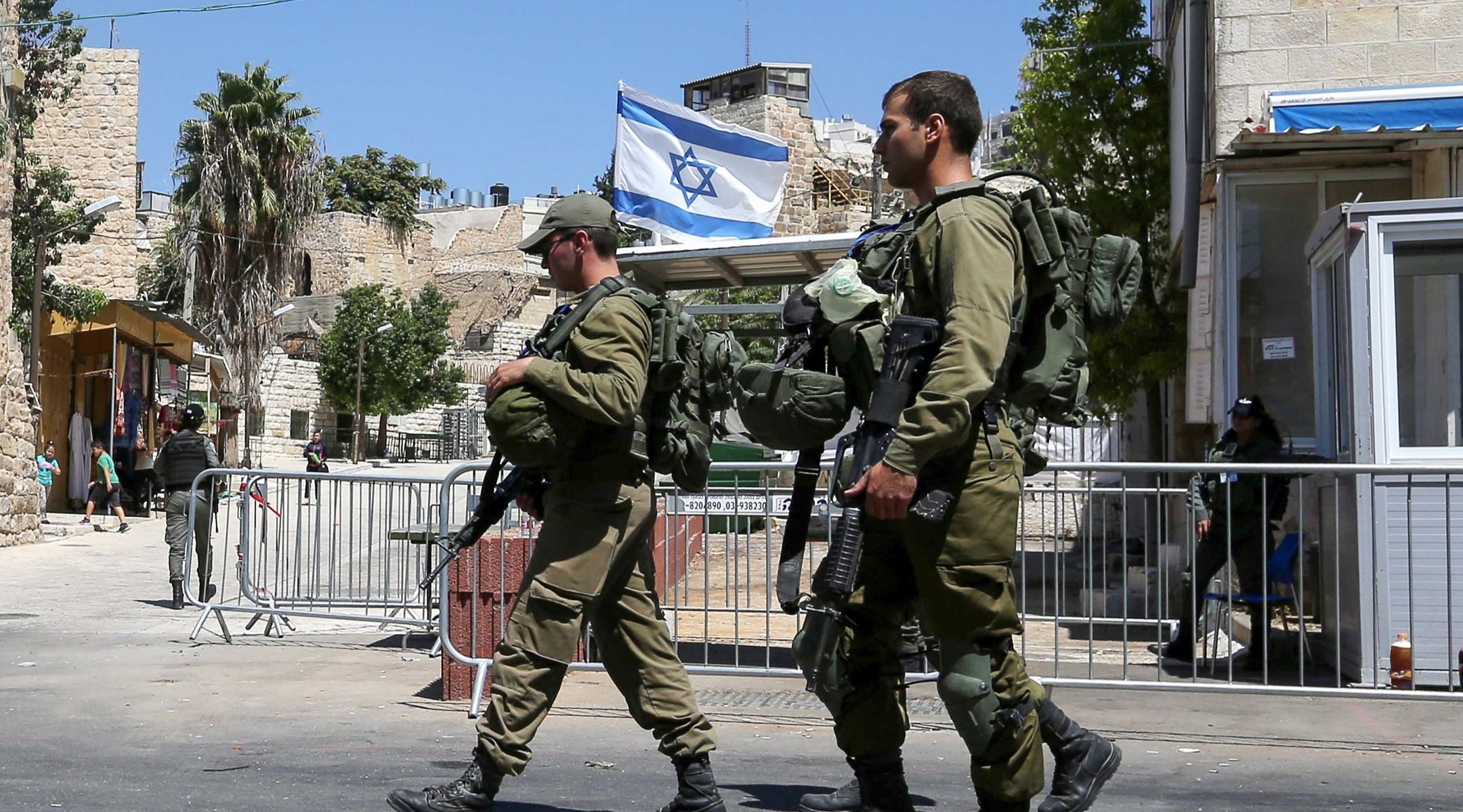
The coronavirus crisis has done nothing to slow the Israeli government’s settlement activities in the West Bank, the head of the Palestinian Authority’s Colonization and Wall Resistance Commission (CWRC) told The Media Line in an exclusive interview.
According to CWRC head Walid Assaf, over the past 10 days, applications for more than 900 housing units were submitted for approval to planning authorities, including 55 units whose construction was approved to start immediately. This was in addition to completing construction in the Rehelim settlement, south of Nablus, he said.
Speaking to The Media Line, Assaf accused the Israelis of taking advantage of the PA’s coronavirus state of emergency to expand West Bank outposts while creating new ones.
“Three settlement outposts were added in the past 15 days at three different locations: in the northern Jordan Valley, south of Nablus and close to Turmus Ayya village, near Ramallah,” he said. “Twenty-seven were built in the previous three years.”
He added that since the COVID-19 crisis began, Israel has been putting in place a series of measures to serve its “colonial project” by creating permanent sites.
“Moreover,” he said, “the Israeli Civil Administration has sent demolition notices to Palestinians, in the Aghwar region [in the Jordan Valley] in particular, and in Area C [of the West Bank], in general. At the same time, it has refused to receive any papers from the residents’ lawyer regarding the notices.”
Since the COVID-19 crisis began, Israel has been putting in place a series of measures to serve its “colonial project” by creating permanent sites.
Assaf says the Israeli military carried out home demolitions and served eviction notices while people were under strict instructions to remain inside, “which reflects the moral dimension of the Israeli occupation, in which the greatest number of demolitions in recent months has occurred in the past two weeks.”
He says that attacks by settlers against Palestinians had also increased in frequency and severity, especially near Burin village, southwest of Nablus.
“Sometimes these settlers carry out the demolition of Palestinian homes themselves in Area B, supported by their army,” he charged.
Assaf also accuses Israel of willfully encouraging the pandemic.
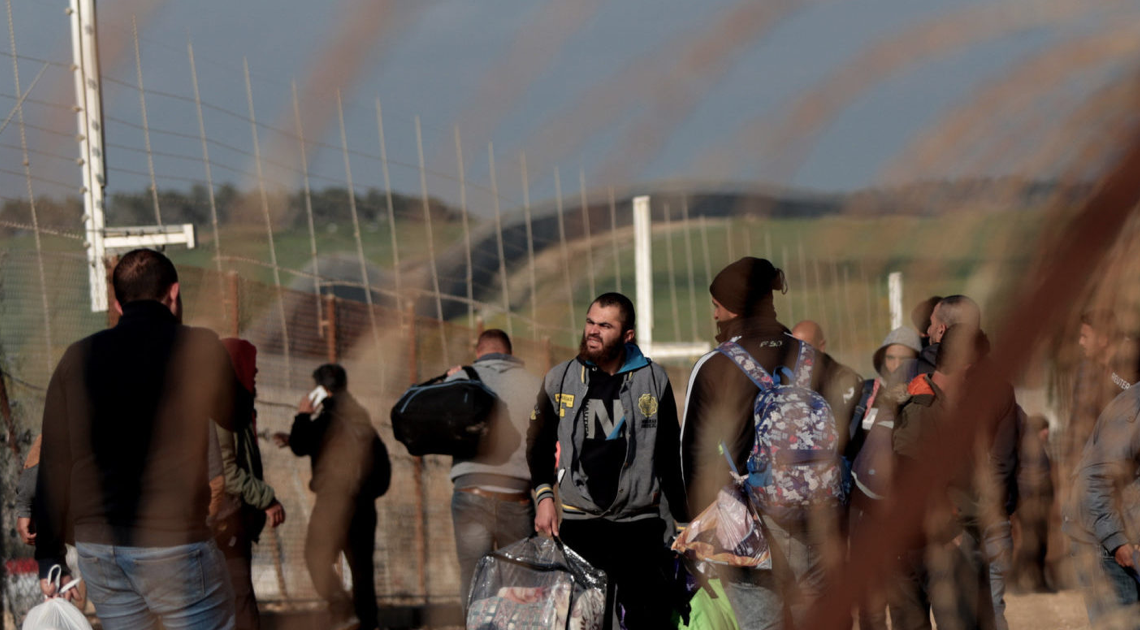
“Israel [recently] opened all gates of its separation wall in a move to spread the virus among Palestinians through workers [returning from jobs in Israel],” he said.
The so-called Oslo II Accord, signed in September 1995 by Israel and the PLO, divided the West Bank into three zones. Area A was to be administered by the PA. Area B was to be administered by both the PA and Israel, with the former overseeing civil affairs and the latter security. Area C, which contains the Israeli settlements, was to be administered solely by Israel.
“Instead of stopping all settlement activities in the West Bank during this humanitarian crisis, Israel has chosen to use it to complete the settlement project and the displacement of Palestinians,” Assaf continued.
“Israel has prioritized its colonial and economic interests over its [own] people’s health,” he continued. “[It] still hasn’t applied a [full] curfew [inside its own borders], and the number of cases [of coronavirus in Israel] is increasing rapidly on a daily basis.”
Bashar Azzeh, a leading analyst and member of the National Council of the Palestine Liberation Organization, told The Media Line that, according to information made available by the CWRC, Israel had crossed all red lines in terms of human rights.

“Building settlements is illegal in normal times, let alone now,” he said.
“Mankind is in crisis. Every country is working to limit the spread of the virus, which doesn’t recognize borders, while Israel is expanding illegal settlements using [Palestinian] workers, putting their lives at risk,” Azzeh charged.
“Mankind is in crisis. Every country is working to limit the spread of the virus, which doesn’t recognize borders, while Israel is expanding illegal settlements using [Palestinian] workers, putting their lives at risk,” Azzeh charged.
Settlement officials referred The Media Line to the Israeli government for a response. The Prime Minister’s Office refused to comment, and the IDF Spokesperson’s Unit said it was not authorized to speak on the matter.
Gonen Ben-Itzhak, a former official in the Mossad, Israel’s external intelligence agency, called the developments “unbelievable.”
“I said from the start that the novel coronavirus is good for the occupation,” he told The Media Line.
Awwad Qasem, head of documentation for the CWRC, told The Media Line that on March 1, plans were approved for Sha’ar Hashomron, south of Qalqilya, to become the largest Israeli industrial area in the West Bank, with about 2 million square meters for hi-tech and industry.

“This represents abusive exploitation of the situation in the West Bank during the coronavirus pandemic,” Qasem said. “The whole world is defending humanity and human existence while the Israeli occupation continues with its colonialist policies on our Palestinian lands.”
Elias Zananiri, vice chairman of the PLO’s Committee for Interaction with Israeli Society, told The Media Line that Israel was exploiting the crisis to satisfy right-wing figures in the current government.
“In the end, regardless of the reasons, any steps to stabilize settlements will hammer the last nail into the coffin of… the process of ending the conflict,” he stated.