1.
I am just coming back from a short event at President Reuven Rivlin’s House, a short event with a history: a year ago, the President, for the first time, “hosted leaders from the Reform, Conservative, Orthodox and secular movements at his residence” for an official event. It was a few days before Tisha Be’Av and the four rabbis\scholars were tasked with teaching the participants a text that has something to do with the date and the lessons we ought to learn from it as a people.
Last year the president said: “One could disagree with the positions and opinions of members of the Reform or Conservative movements, but one could not deny their dedication or the clear voice with which they speak in support of the State of Israel, here and around the world. We must not forget for a moment that fierce debates are the sincere and genuine expression of a concern for us all – Orthodox, Reform, Conservative, and secular – for the present day, and for the future of the Jewish people”.
It was a bold move, an important move, that produced a very nice event.
2.
A year later, the president and his team decided to go through it again. And this is not an obvious decision. Last year, there was some criticism, there was a last minute cancelation, there was some drama. Still, it was decided to repeat this important act of unity. The President’s House once again teamed up with The Jewish People Policy Institute (hence my involvement) to organize this event. The President once again invited a Reform rabbi (Dalia Marx), a Conservative rabbi (Avi Novis Deutch), an Orthodox rabbi (Yirmi Stavisky), and a secular educator (Noam Dan) to teach. Prof. Eliezer Schweid was invited to also give a lecture.
They were all fantastic. The short lectures were lively. They offered a collection of viewpoints and sources. President Rivlin spoke about the need to argue cogently, yet amicably. The President did not ask everyone to pretend that everyone agrees. “Debates are to be held with respect and yet with forcefulness, with persistence and yet with attentiveness.” The head of the Jewish Agency Natan Sharansky spoke about the necessity of compromise (and mentioned the Western Wall). It was not very long, and not at all forced; not too light headed but also not too heavy. It was – this might sound bombastic, but it is also true – Judaism at its best.
3.
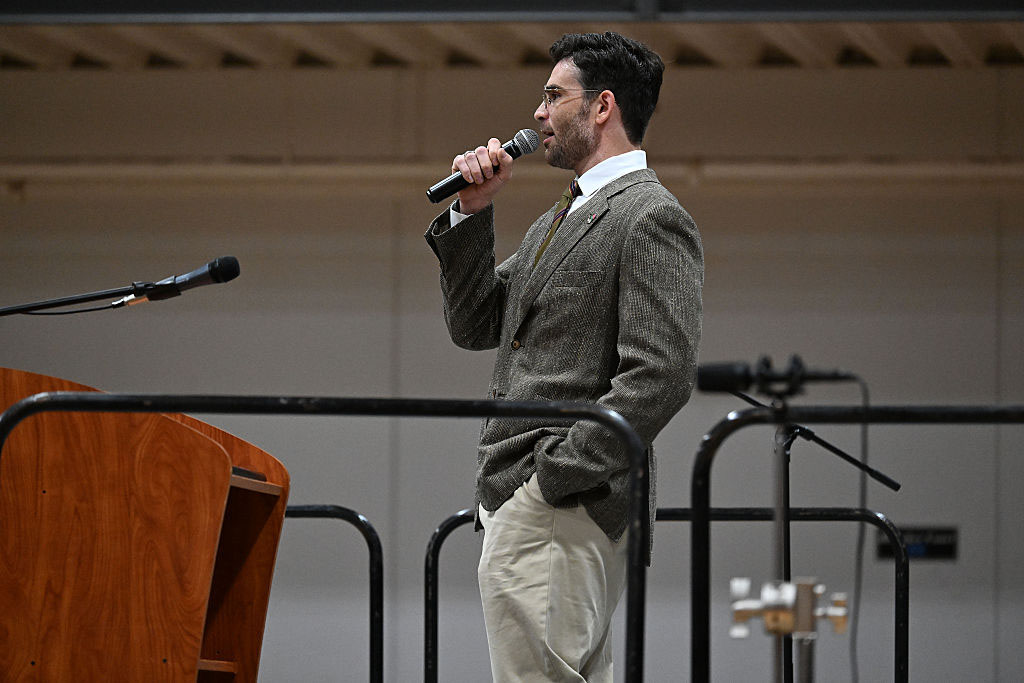
I was the moderator and spoke very briefly. My main message was as follows: the second year – namely today – is more important than the first year. True, last year had the taste of being pioneers in doing something that official Israel does not bother to do – accept all Jewish streams as peers for a Jewish conversation. True, last year was a novelty, it was sailing into unchartered waters.
But the second year is more important, because the second year had turned this event from a rarity, from a gesture, into a routine. And nothing about Jews coming together to study ought to convey the feeling of a rarity or a gesture. Jews coming together to study, to share what they have in common – texts, history, culture, calendar – ought to be normalcy. And this second-time event signifies normalcy.
4.
There are times, and there are things, that Jews find hard to do together. They cannot always pray together – because some have mixed seating and some don’t, some have one prayer book and some have another. They cannot always educate together – because some have a certain set of values, and others have another, some have certain sensitivities to tradition, and others have another.
There are things that Jews find very easy to do together: bicker over policies and politics, argue, complain, make accusations. The Reform are dismayed by Orthodox domination, the Orthodox are dismayed by Reform deviation from tradition, the Conservative don’t understand why they are often confused with Reform, the secular aren’t even counted in Jewish conversations, as if all they have to contribute is silent support for the Orthodox (if they are traditional secular) or for the progressive (if they are completely secular).
The event at the President’s House, the way I understand it, has a simple aim: to remind the Jews that besides all of those many important things on which they disagree, there are also many things that they share. And the event is about turning the sharing of these things a normal thing.
Not: Wow!!! Orthodox, Reform, Conservative, and secular Jews shared a podium!!!
But rather: Orthodox, Reform, Conservative, and secular Jews shared a podium.
As they did today.