US President Donald Trump warned that Washington would respond militarily if Iranian authorities killed demonstrators, as anti-regime protests spread across multiple cities in Iran and have already become deadly.
In a post on Truth Social, President Trump said the United States was prepared to act if protesters were harmed by the Iranian government. “If Iran shoots and violently kills peaceful protesters, which is their custom, the United States of America will come to their rescue,” he wrote. “We are locked and loaded and ready to go. Thank you for your attention to this matter! President DONALD J. TRUMP.”
The warning came amid reports that four people were killed on Wednesday and Thursday during protests in several Iranian cities. The demonstrations are part of a broader wave of unrest in opposition to the Islamic Republic’s leadership.
Iranian officials rejected President Trump’s remarks, framing them as a threat to national security. Ali Shamkhani, an adviser to Iran’s supreme leader, responded on X, saying: “Any interventionist hand that attacks Iran’s security under any pretext whatsoever will be exposed to a response. Iran’s security is a red line.”
The exchange followed a recent meeting between President Trump and Israeli Prime Minister Benjamin Netanyahu at President Trump’s Mar-a-Lago resort, where the two discussed Iran’s military capabilities and the possibility of further action to prevent Tehran from restoring its ballistic missile and nuclear programs.
Both leaders have described the 12-day confrontation with Iran in June as a significant success, while Netanyahu has indicated that additional strikes could still be necessary if Iran attempts to rebuild its capabilities. President Trump, speaking after the meeting, said the United States would again dismantle Iran’s nuclear program if Tehran moves to restore it, while also expressing a preference for reaching a negotiated nuclear agreement.
A US official said President Trump would likely support a “second round” of strikes if Washington determines that Iran is taking concrete and verifiable steps to revive its nuclear program, though disagreements over how to define such reconstitution could complicate decision-making.
Iranian President Masoud Pezeshkian also responded to news of the talks, warning against any future attacks. “Answer of Islamic Republic of Iran to any cruel aggression will be harsh and discouraging,” he wrote on X.
Jewish Federation Los Angeles brought together nearly 200 elected, civic, interfaith and community leaders for its 2025 Annual L.A. Leaders Hanukkah Celebration. Guided by this year’s theme, “United in Light, Together We Shine,” the LAFederation honored the community’s shared resilience, strength and unity in the face of adversity. Through music, reflection and a renewed commitment to shared leadership, the program celebrated the light created when Jews and their allies stand together.
Attendees also gathered in remembrance, honoring the lives lost in the recent antisemitic attack in Sydney, Australia, while reflecting on a particularly challenging year for Angelenos — from the devastating wildfires and rising antisemitism and hate, to food insecurity and other crises impacting the most vulnerable. The celebration featured a communal menorah lighting and powerful stories honoring individuals and organizations who leaned in to support their neighbors in moments of need.
Elected officials that turned out included State Assemblymember Jesse Gabriel (D-Encino); LA County District Attorney Nathan Hochman; L.A. County Supervisors Hilda Solis, Holly Mitchell and Kathryn Barger; Beverly Hills Vice Mayor Craig Corman; and Beverly Hills Councilmember Mary Wells. Federation CEO Rabbi Noah Farkasand Senior Vice President of Community Engagement Joanna Mendelson also attended.
American Jewish University Chief Operating Officer Amy Latzer. Courtesy of AJU
American Jewish University (AJU) has named Amy Latzer its new chief operating officer, a pivotal role that will help power AJU’s mission to build a vibrant Jewish future — driving the operational excellence, innovation and community engagement that make the organization’s work possible.
Latzer brings nearly two decades of executive leadership experience within complex, mission-driven organizations. She has a record of strengthening operations, modernizing systems, guiding teams through transformative growth and aligning institutions around bold strategic priorities —skills that will be instrumental as AJU builds a dynamic, future-focused platform for Jewish life, learning and leadership.
In her new position, Latzer will oversee all operational and administrative functions of AJU, including finance, human resources, facilities and auxiliary services, financial aid and oversight of AJU’s Brandeis-Bardin Campus. She will partner with AJU President Jay Sanderson and senior leadership to advance strategic goals, elevate organizational systems and culture and support AJU’s long-term vision.
“Amy is an extraordinary leader with the discipline, vision and heart to help AJU build a powerful future,” Sanderson said. “Her ability to transform systems, strengthen teams and amplify mission will play a defining role as we reimagine what AJU can be for the next generation.”
Before joining AJU, Latzer served for 19 years as the chief operating officer of 211 LA, one of the country’s leading information and referral systems. During her tenure, she spearheaded major operational and technology modernizations, guided multimillion-dollar budgets, expanded community services and forged strategic partnerships.
Her connection to AJU’s mission is personal: her daughter attended Camp Alonim, AJU’s beloved summer camp, giving Latzer firsthand appreciation for the transformative impact of the Brandeis-Bardin Campus and the generations of community shaped there.
“I am honored to join AJU at such an energizing and transformational time,” Latzer said. “This institution’s commitment to innovation, education and community resonates deeply with me. I look forward to working with the exceptional teams across AJU to strengthen our operations and support the University’s bold vision for the Jewish future.”
From left: Mary Kohav, Adeena Bleich, Shonda Walkovitz, Mayor Sharona Nazarian and Judi Lieb attend the 2025 Mayors Summit Against Antisemitism. Courtesy of JAHM-LA
Local civic leaders and community organizations were recognized at the 2025 Mayors Summit Against Antisemitism, hosted by the Combat Antisemitism Movement (CAM) in New Orleans from Dec. 2-4.
Among this year’s honorees was Jewish American Heritage Month–Los Angeles (JAHM-LA), which, in partnership with the Jewish Historical Society of Southern California, received CAM’s national Jewish Heritage Award for its innovative “Light the Path” initiative — a multi-year cultural and civic program leading up to the 2028 Olympic and Paralympic Games.
The award stems from CAM’s national Jewish American Heritage Month contest which invites Americans of all backgrounds to celebrate the contributions of Jewish Americans to the nation’s history, culture, and civic life.
Light the Path, co-founded by Mary Kohav and Adeena Bleich, is designed to illuminate the Jewish contributions that helped shape Los Angeles — from athletics and civic leadership to cultural innovation and urban planning.
“As we prepare for 2026 and our theme ‘Jewish Champions,’ we’re committed to honoring the athletes, leaders, and everyday heroes whose courage and creativity have shaped our city,” Bleich, also the co-founder of JAHM-LA, said.
Another LA-based organization honored at the CAM conference was Shonda Walkovitz and Judi Lieb’s Challah and Soul, which was recognized for its work strengthening ties between Black and Jewish communities through food, storytelling and education. Their recent inaugural Soulful Seder, which blended Black and Jewish cuisines and traditions, was highlighted as an example of a program fostering unity, healing and shared celebration.
Attendees included Beverly Hills Mayor Sharona Nazarian, who emphasized the importance of collaboration across cities and institutions. “One of the most impactful parts of the summit was the opportunity to build partnerships that strengthen our collective efforts against hate, discrimination, and antisemitism,” she said.
Dec. 19 was the 11th yahrzeit of the beloved Rabbi Harold Schulweis, and in the days leading up to the anniversary, Rabbi Ed Feinstein, who currently leads the Valley Beth Shalom community, reflected on the man who had an outsized influence on his thinking.
It was a Shabbat night in 1970 when Feinstein first encountered Rabbi Schulweis. The young Feinstein had worked that entire summer at Camp Ramah, earning a grand total of 75 dollars. The 16-year-old Feinstein decided to blow it all on one date. “I was crazy in love with one girl, and I invited her out to the Malibu Sea Lion restaurant. We had a table by the ocean. Then we were going to the Hollywood Bowl for a Gershwin concert. I put my arm around this girl, and I said ‘What would you like to do now?’ She said ‘It’s Selichot. Let’s go to shul.’”
This was not what he had in mind.But she told him “There’s this new rabbi in the Valley who’s supposed to be very good. He came with a good deal of notice.”So they drove out to the Valley. Feinstein was a member of United Synagogue Youth and had been to the temple often. “This was a sleepy suburban synagogue,” he said. There wasn’t much going on here.” But that night, there were 1,500 people in shul that night. “It was packed. It was like a High Holy Day. Packed to the back.” And when Rabbi Schulweis walked in in, the place was “just electric. I still remember the first sermon he gave here. … His oratory, his ideas, and the way that he presented Judaism, all of that was so powerful. I like to joke I fell in love twice that night.” His date that night was 14-year-old Nina, now Rabbi Nina, his wife of 47 years, and the second woman to be ordained by the Conservative movement.
Reflecting on that first sermon, Feinstein said “it was the way he spoke. His oratory was beyond what he said. His power, his conviction. This tradition had a moral truth, and that moral truth was urgent, important, and it needed to shape our lives. This is the kind of teacher he was.”
Shulweis’ impact on Feinstein was so strong that when Feinstein went off to college, he and his father engineered a secret deal. The elder Feinstein “used to sneak a tape recorder into shul, and he would send me the tapes of Rabbi Schulweis’s sermons.”
After college, the Jewish Theological Seminary and a short time in the Dallas community, Rabbi Feinstein returned home to lead Camp Ramah. One afternoon on the VBS campus, Rabbi Schulweis invited him into his office. “He said ‘What are you going to be when you grow up?’ I said ‘I’m a camp director.’ He said ‘No you’re not. You can’t do that forever.’ So he invited me to come work with him. I came here in ’93 as the second rabbi, and succeeded him in 2004, and I was with him through his passing in 2014.”
The year 2025 would have been Schulweis’ 100th birthday. “This was an extraordinary soul,” Rabbi Feinstein said. “A deeply courageous rabbi who did not feel himself down by the inhibitions that held back other rabbis. He really knew there was a moral truth that needed to be conveyed.”
What are Rabbi Feinstein’s strongest recollections from their earliest meetings? “Remember I am talking about the ‘60s and ‘70s. I had long hair and strange ideas. And here was a rabbi who said, ‘The moral truth you are looking for is found in the Jewish tradition. You don’t have to leave Judaism to be able to understand what’s happening to society, to understand the revolution that needs to happen in the world. We were all revolutionaries, us young kids. But here was a guy who said that revolution can be expressed in a Jewish language because that Jewish language is ancient. It gave us permission to dream, it gave us permission to imagine what the Jewish community could look like. Rabbi Schulweis gave us permission to imagine what the world community could look like.
“Other rabbis were principally concerned with preserving the Judaism that was, the Judaism of yesterday.Rabbi Schulweis was committed to a Judaism of tomorrow.He wasn’t going to talk about why we don’t do what we should have been doing before. He was going to talk about what we can do tomorrow. He was forward thinking, courageous in that way. That made him very unique.”
Rabbi Feinstein said his mentor made magic as soon as he landed from Oakland, his only previous post: “There were 1,500 people in shul the first night that Nina and I were here, and there were 1,500 people here every Friday night for the next 10 years or so.”
Rabbi Feinstein glowed as he reflected on how Valley Beth Shalom was packed on Friday nights. The service throbbed with music and was full of Rabbi Schulweis’ teaching. Later he introduced Israeli dancing. “We had a guy with an accordion,” Rabbi Feinstein said.“If you were a Jewish teenager like me and you wanted to meet girls, this is where you came on a Friday night. It was a happening in the life of the LA Jewish community.”
He added, “I wouldn’t have been a rabbi without Rabbi Schulweis. I had so many doubts, so many questions, so many challenges. He said ‘Your questions are what qualify you to be a rabbi.’ He said it’s more important to be a keeper of questions than to be someone who has found the answers. He said questions matter more.”
Fast Takes with Rabbi Feinstein
Jewish Journal: What is your favorite Shabbat moment?
Rabbi Feinstein: First, it was growing up in my parents’ home and the big discussions we had over four-course desserts. When my own kids were small, telling jokes, singing songs, telling stories. Now I get to sit with my grandson and my granddaughter on my lap. That’s the best there is.
JJ: Did you ever consider a nonrabbinic career?
RF: Sure. I looked at law school, at academics. I thought of becoming a professor of Jewish studies, maybe becoming a high school teacher.
JJ: Your favorite memory?
RF: Summers at Camp Ramah because they gave me a sense of my capacity to shape for others, to shape a community.
In his book “Assimilation versus Separation: Joseph the Administrator and the Politics of Religion in Biblical Israel,” Aaron Wildavsky examines Joseph’s career. Wildavsky, who had a distinguished career as a professor of political science, uses his academic background to critically review Joseph’s leadership and values.
At the end of the book, Wildavsky compares Joseph and Moses, and concludes that Moses is the “anti-Joseph”; Joseph’s life story teaches us “the path not taken,” a seductive but flawed model of leadership.
Without question, Joseph’s and Moses’ lives go in opposite directions. Joseph enters Pharaoh’s service and brings great prosperity to the Egyptian state. Moses rebels against Pharaoh, and with the plagues and the splitting of the Red Sea, brings Egypt to the brink of destruction. Moses destroys the very institutions Joseph built up.
Joseph creates the Egyptian system of slavery. During the seven years of plenty, he monopolizes all of Egypt’s food for the state. By the middle of the seven years of famine, Joseph has acquired all of Egypt’s wealth for Pharaoh; in their desperation to get food, all of Egypt offers to become Pharaoh’s slaves. Joseph accepts, and now slavery becomes an Egyptian institution.
Wildavsky argues that this precedent enabled a future pharaoh to enslave the Jews. Joseph made Pharaoh all-powerful, and that power is ultimately used to enslave his own family.
Joseph brings his brothers down to Egypt, the first step to exile and slavery. In stark contrast, Moses brings the Jews freedom from slavery and leads them back to their homeland.
Joseph and Moses take very different views of their adopted countries. Joseph names his children Ephraim and Manasseh; their names mean “God has made me completely forget my hardship and my father’s home” and “God has made me fertile in the land of my affliction.” Joseph takes pride in forgetting his father’s home, and finding success in Egypt. He embraces his Egyptian identity.
Moses names his children Gershom and Eliezer; their names mean “I have been a stranger in a foreign land” and “The God of my father was my help, and delivered me from the sword of Pharaoh.” Moses gives names that remind him of his Jewish roots. He feels like a stranger when exiled from his Jewish brothers and sisters back in Egypt, and the very reason he had to be saved from “Pharaoh’s sword” was because he killed an Egyptian taskmaster who was attacking a Jew.
One final contrast comes in terms of their character. Even as a child, Joseph dreams of being a leader, and so when Pharaoh plucks him from prison to lead an entire empire, Joseph doesn’t hesitate. Moses, on the other hand, is too humble to take the helm. When asked to lead the Jewish people, Moses refuses God no fewer than seven times.
These contrasts lead Wildavsky to conclude that Joseph’s story “warns against the corrupting influence of power gained through assimilation into pagan ways.”
In other words, Joseph succeeds because he adapts himself to the established order of power. Wildavsky sees this as a moral compromise. Moses, on the other hand, challenges Pharaoh’s slave state the moment he witnesses its horrors.
Wildavsky is correct that the stories of Joseph and Moses are meant to be read side by side and compared. But this comparison offers not only contrasts; there are multiple similarities between Joseph and Moses’ stories, both in narrative detail and in language. Among them is that both marry the daughters of local priests. Both outwit the sorcerers in Pharaoh’s court. Both are cast away at a young age and left to die.
But the most direct connection is that Moses carries Joseph’s legacy. At the end of Vayechi, the Torah tells us:
“And Joseph said to his brethren, ‘I am dying; but God will surely visit you, and bring you out of this land to the land of which He swore to Abraham, to Isaac, and to Jacob.’ Then Joseph took an oath from the children of Israel, saying, ‘God will surely remember you, (pakod yiphkod) and you shall carry up my bones from here.’”
What is remarkable is how Moses uses very similar language when he first meets the Jewish leadership. God tells Moses: “Go and gather the elders of Israel together, and say to them, ‘The Lord God of your fathers, the God of Abraham, of Isaac, and of Jacob, appeared to me, saying, “I have surely remembered you [pakod pakaditi] and seen what is done to you in Egypt”’”
Before his death, Joseph says that God will surely remember the Jews in their exile; hundreds of years later, Moses will repeat that promise verbatim.
Moses is completing Joseph’s mission. In fact, Moses is the one who fulfills the oath made to Joseph: “And Moses took the bones of Joseph with him, for he had placed the children of Israel under solemn oath, saying, ‘God will surely remember you, [pakod yiphkod], and you shall carry up my bones from here with you.’”
Moses is very different than Joseph. But Moses is no “anti-Joseph”; he is Joseph’s successor.
Still, one must grapple with Wildavsky’s arguments: How can two leaders that are virtual opposites be part of the same mission?
How can two leaders that are virtual opposites be part of the same mission?
To answer that, one must first recognize that there is more than one type of leadership, and that authentic leadership shifts according to circumstances.
Moses, the uncompromising fighter for freedom and truth, might seem like the ideal leader. But not every leader is able to battle against Pharaoh. In times of exile the community is in a much weaker position. A good leader must respond accordingly. And that is what Joseph does. By doing so, he becomes a role model for future leaders in exile. Centuries later, Mordechai and Esther will follow Joseph’s playbook.
Joseph is the right leader for his time and situation—and so is Moses. Both need to ensure that the Jewish people survive and eventually achieve their destiny. But they need to take very different paths. Leadership must adapt to the circumstances one is in.
True leaders never lose their passion for their mission. Moses exemplifies this. He even demands that God do more for the Jewish slaves. But they also need to adapt to the needs of the times. And that is what Joseph does, working hand in hand with Pharaoh to ensure his family is safe during a famine and beyond.
Joseph and Moses live different lives at different times with different leadership styles. But one thing is exactly the same: a shared passion for a vibrant Jewish future.
And that is why both are true Jewish leaders.
Rabbi Chaim Steinmetz is the Senior Rabbi of Congregation Kehilath Jeshurun in New York.
Beyond the Slopes, Southern California’s Refined Mountain Sanctuary. This guide is for couples, families, solo travelers, sports teams, and retreat leaders who want a curated Big Bear escape instead of a crowded, hit-or-miss weekend.
Many people get Big Bear Lake wrong. They arrive on a random winter weekend, book whichever cabin looks good online, (often disappointing) then spend the trip in traffic, waiting for tables, and paying peak prices for average conditions. Big Bear rewards strategy. The right timing, the right lodging location, and informed planning turn this accessible mountain town into one of Southern California’s most quietly refined winter escapes. From immersive alpine adventures to intimate lodge stays, from family-friendly snow play to solo midweek resets, restorative retreats and romantic weekends, the experience shifts with your choices. This guide shows you how to plan each version well.
In this issue.
Big Bear at a Glance.
What Big Bear IS (and Isn’t).
The Ultimate Long Weekend: When to Visit This Winter.
For Families: Stress-Free Mountain Fun
For Couples: Romance & Privacy
For Solo Travelers: Restoration & Reflection.
For Groups & Retreats: Shared Experiences.
Meet the new Big Bear High Altitude Training Center (HATC).
For Non-Skiers (And What If There’s No Snow?)
For Adventure Seekers: High-Adrenaline Experiences
Resort Comparison: Which Mountain is Right for You?
Getting there.
The Bottom Line: What Makes Big Bear Special
In the next issue: Accommodation recs, favorite shops and restaurants, how to book VIP packages (private chefs, wine tastings, ski delivery, personal training), and insider booking tips to level up your visit.
Big Bear at a Glance.
Drive Time: 2-3-ish hours from LA, San Diego, Central Coast
Peak Season: January-February for fresh powder | March-April for spring skiing Best Long Weekend: February 14-17, 2025 (Valentine’s Day + President’s Day = 4 days!)
California’s most authentic mountain escape sits just a few hours away. Refreshingly unpretentious. Utterly transformative. Before you know it, you will be soaking in a private hot tub with champagne chilled, surrounded by snow-covered… well everything, and a mountain community that knows exactly when to show up with impeccable service.
What Big Bear IS (and Isn’t).
Big Bear is an intimate mountain community that offers as much luxury and privacy as you desire, with as much warmth and connection as you need. Let’s be clear: You won’t find Olympic-scale ski runs or international resort glitz, and that’s exactly the point.
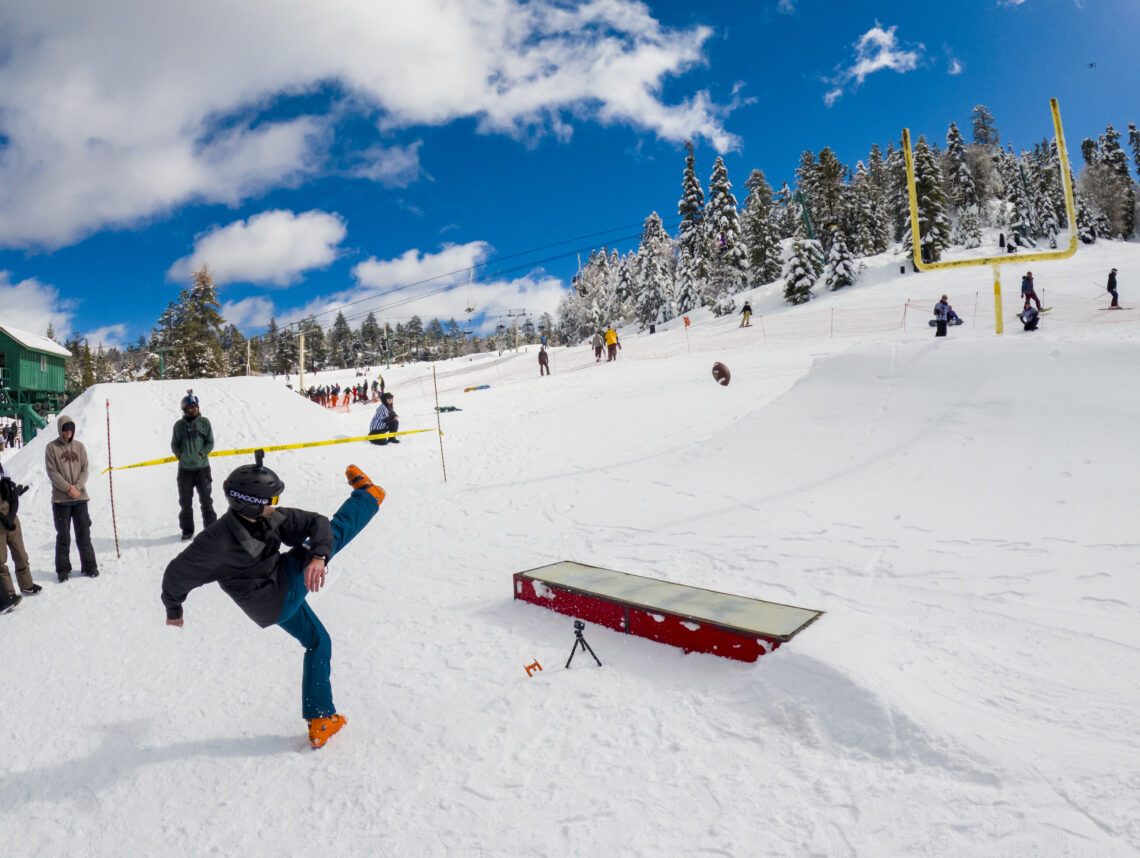
Craving an adrenaline rush? Hit the terrain parks and ziplines. Need slow mornings meant for sleeping in and casual strolls through The Village in search of good coffee and the occasional boutique find? That’s there too. Big Bear embodies “townsizing” – the latest micro-trend where travelers are redefining traditional vacations by choosing small towns over crowded destinations. It’s about the experience rather than checking boxes on an itinerary. Big Bear gives you permission to just be.
You’ll find private estates with chef’s kitchens and mountaintop dining with stunning lake views, but also local diners where the waitress knows everyone’s order. It’s that rare destination where you can have champagne in a hot tub at sunset, then grab beers at a honky-tonk bar where being ignored by the staff means you’ve officially become a regular.
Accommodations span the full spectrum: From newly renovated boutique hotels offering concierge service, daily housekeeping, and waterfront dining, to private cabins and mountain estates providing the autonomy of full kitchens and secluded hot tubs. Choose hotel luxury for a fully serviced experience, or cabin privacy for flexibility, however many properties blur the line, offering both resort amenities and residential-style space.
You will find:
Concierge services: Private chefs, freshly ground coffee and wine tastings delivered to your cabin, ski equipment drop-off and picked up, personal training, mobile spa services, Just ask your advisor for these VIP packages.
Flexible stays for all budgets: Ultra-luxe private estates for romance, families or groups (think bridal parties or showers with your besties, and/or wellness retreats), or budget-conscious cabins for those who want to experience Big Bear without the price tag.
Community that reads the room: Helpful when you need guidance, and respectful when you want solitude.
Accessible luxury: A few hours’ drive from LA, or a plane ride. Big Bear has it’s own high-elevation airport for private planes, not large commercial jets. Want to skip the drive? Let them know, they will come get you!
The Ultimate Long Weekend: When to Visit This Winter.
The 4-Day Escape:
February 14-17, 2025
Here’s the gift the 2025 calendar is giving you: Valentine’s Day falls on Friday, February 14, rolling directly into President’s Day weekend with Monday, February 17 off. This natural 4-day escape works whether you’re planning a romantic proposal, retreat, solo time, or family ski adventure.
Why mid-February is peak season: The mountain has optimal snow conditions, early-season ice buried under fresh powder, snow making systems at full capacity, temperatures cold enough for consistent quality. This is when everything clicks.
Book NOW: Most properties book 4-6 weeks in advance. Restaurant reservations fill 3 weeks out. Lift tickets should be purchased online immediately.
Also consider: MLK Weekend (January 18-20, 2025) for a great 3-day getaway with fewer crowds and lower rates than peak February.
Beyond the Holiday Rush: Create Your Own Long Weekend.
Prefer solitude over buzz? Any weekend can become your personal mountain retreat. Take a random Friday or Monday off, and suddenly you have the mountain largely to yourself. Lift lines disappear, restaurant reservations are easy, and accommodation rates drop 20-30%. Mid-week visits (Tuesday-Thursday) are even quieter.
For travelers who plan their travel around spring break and the Easter or Passover holidays, late March through early April offers a quieter, warmer version of Big Bear. Natural snowfall is lighter later in the season, and conditions depend on recent storms or snowmaking, but Big Bear still offers skiing, village time, wellness, and outdoor activities for every travel style. These months combine seasonal events, open mountain amenities, and lingering winter conditions into a softer close to the season.
For Observant Jewish Families:
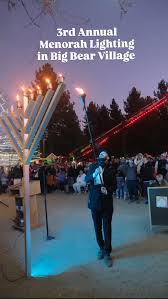
Big Bear and the surrounding mountains have a welcoming Jewish presence that makes seasonal travel feel more inclusive. Chabad of Lake Arrowhead & Big Bear hosts community programming including the annual Menorah Lighting and Chanukah celebration in The Village, with festive activities, music, and family-friendly moments to mark the Festival of Lights each holiday season. While Big Bear does not have a full-time synagogue or large permanent Jewish community, Chabad serves locals and visitors alike and can help with holiday information, prayer needs, and guidance on kosher dining or services. chabadonthemountain.org
For kosher observant visitors, options on the mountain itself are limited, so plan ahead and consider packing or arranging meals before you arrive. For nearby kosher food and meal services within driving distance, you can source supplies or meals in the Los Angeles. Many families also arrange kosher catering or meal delivery from LA before their trip so that Shabbat, holiday meals, and everyday dining are covered while in Big Bear.
There are several vegan restaurants in Big Bear but none that are kosher specifically. In the next issue I will provide links to those restaurants.
If you are planning an event and need kosher catering, there are caterers who can accommodate that.
For Families: Stress-Free Mountain Fun.
Why Big Bear works for families: Kids progress at their own pace, parents can relax because learning slopes are visible from lodges, and if someone needs a break, you’re minutes from your cabin, not trapped on a mountain.
Your Experience:
Cabins with full kitchens (cook gourmet meals in sweatpants vs. 90-minute restaurant waits) or have a chef prepare them.
Private estates with multiple bedrooms and one central family room with fireplace for games and family time.
Snow Valley for beginner-friendly dedicated learning areas.
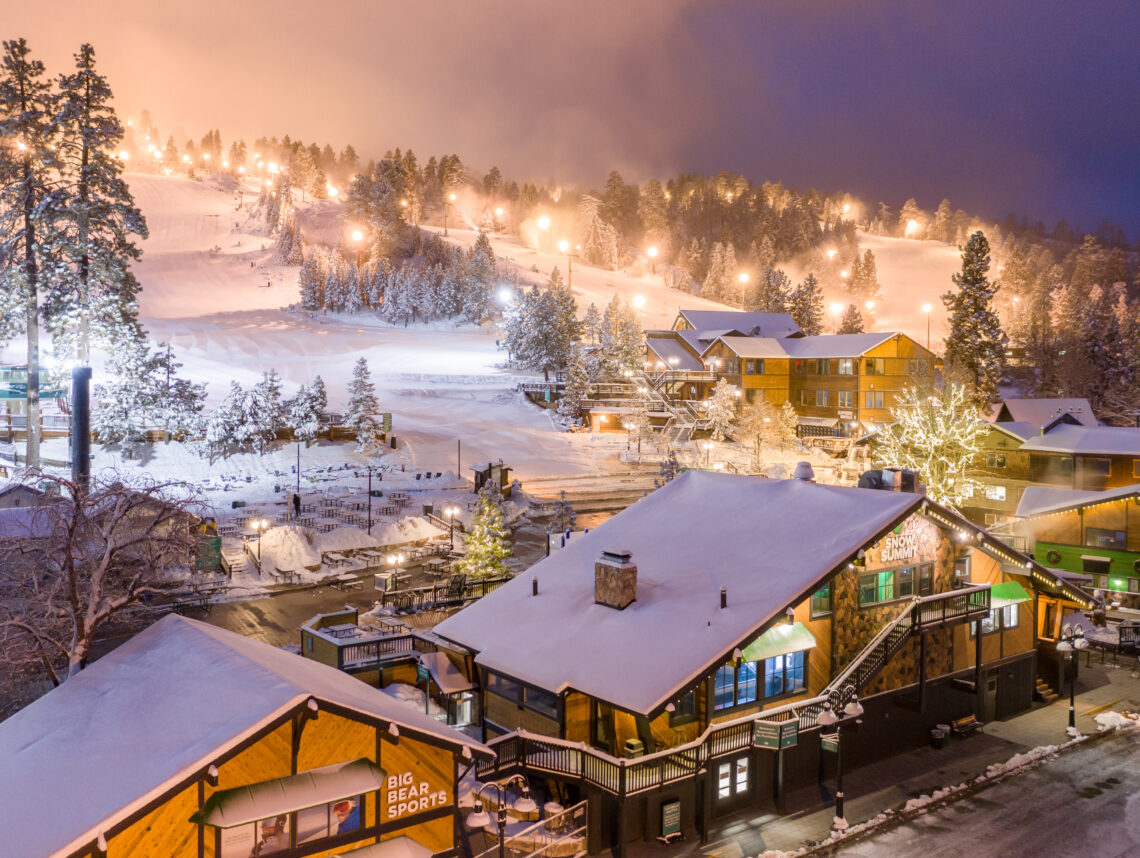
Snow Summit for mixed skill levels with stunning lake views.
Night skiing (starting Dec 26) at Snow Summit and Snow Valley.
A variety of activities throughout Big Bear for those who don’t ski or those low/no ski days. Scroll down for a list.
Pro Tip: Book accommodation with full kitchens and have your morning coffee on your private deck. Watching the sun rise over the lake, tops any restaurant experience, and gives you flexibility when kids have energy crashes. Book ski lessons for the kiddos while you take pics or book a photographer for those special memories!
For Couples: Romance, Privacy and Those Views!
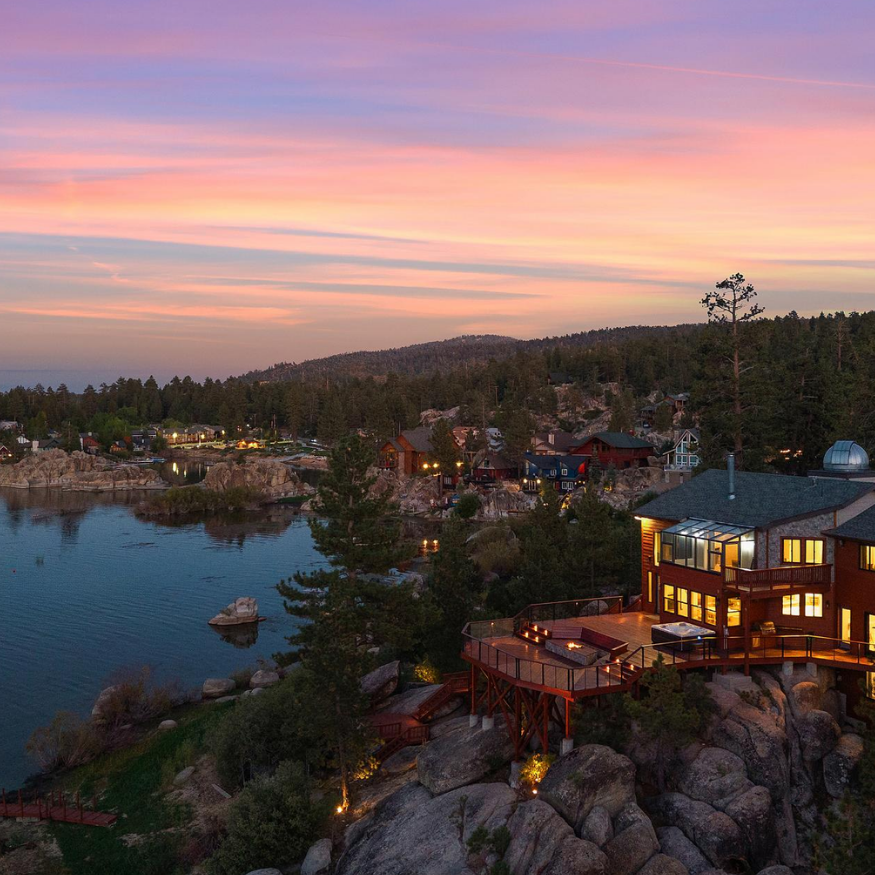
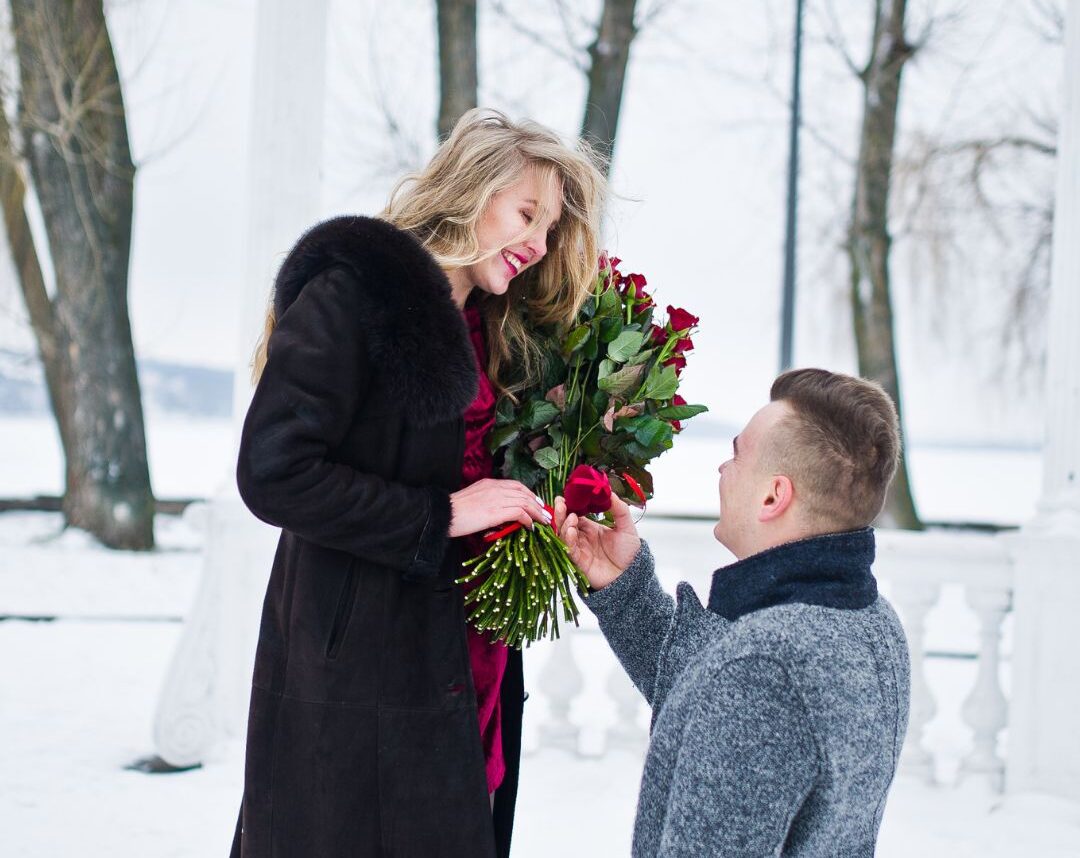
Why Big Bear works for romance: Big Bear makes romance easy. Think panoramic lake views from 8,200 feet, snow-draped pine forests, and sunsets that set Big Bear Lake ablaze in coral and amber, creating proposal or wedding backdrops worthy of the moment! Naturally cinematic, no staging required. This is where you slow down, celebrate each other, with the only decision being champagne before dinner or after.
Your Experience:
Private cabins with hot tubs overlooking snow-covered hills.
Boutique lodges or hotels with French château vibes and heated pools.
Lakeside dining with live piano (book early for best reservations).
Mountaintop dining at 8,200 feet with lake views.
Scenic ski runs on Snow Summit.
Mobile spa services just for you.
The Proposal Moment: Time it for 5-6 PM on Valentine’s Day at Snow Summit’s scenic overlooks when sunset hits the lake perfectly. Book a photographer through your advisor or cabin host (they know the discreet pros). Bury champagne in a snowbank while you’re skiing for a perfectly chilled celebration or have someone keep it on ice.
Followed by dinner at a lake view restaurant with a pianist playing something jazzy, and by the time the first pour of Château Latour meets the lakeside breeze, your phone will be the last thing on your mind.
For Groups & Retreats: Reset, Wellness, Renewal or Team Building .
Why Big Bear works for groups:
Varied terrain for different skill levels for hiking or skiing, a huge variety of activities & resort options, different types of accommodations (hotels & cabins sleeping 8-14 or multiple connected cabins), and flexible budgets. Perfect for corporate retreats, wellness retreats, weddings, family reunions, and sports teams seeking high-altitude training and bonding time.
Your Experience:
Retreats centered around art, wellness, and nature with socially oriented amenities providing opportunities to foster connections or maintain solitude, your choice.
Accommodations with community rooms and massive fireplaces which serve as headquarters for group gatherings.
Night programming such as fire pit conversations, dinners together prepped by a chef so you don’t have to cook, game nights, or live entertainment.
Activities: Split mornings by skill level across different resorts, regroup for mountaintop lunch, scatter for afternoon adventures (slopes, spa, or Village exploring), then gather for evening rituals.
Meet the newBig Bear High Altitude Training Center (HATC).
Nestled in the picturesque mountains of Big Bear, California, there is a “one-stop shop” for physical excellence. HATC is a game-changer for sports teams, endurance athletes, MMA fighters, and wellness retreats looking to combine altitude training with a mountain getaway.
Elevation training benefits (7,000+ ft altitude)
Full-service gym, with specialized MMA/boxing training, yoga studio for mental and physical balance.
Advanced recovery tools such as cryotherapy,
A golf simulator.
Perfect for: College sports teams, professional athletes, corporate wellness retreats.
Nearby resort access for team building + training combo Proximity to resorts for after-training recreation.
Big Bear’s secret weapon: If snow isn’t cooperating or you’re not a skier, you’re not stuck. The resort’s powerful snow making covers 400+ acres even in low-snow days, but beyond that, the valley offers genuine depth.
Aside from the activities below, there are annual fun community events you may want to join in as well. Signature annual events include Oktoberfest, the Big Bear Turkey Trot, Polar Plunge, Big Bear Lake International Film Festival, the Big Bear Triathlon, Fourth of July fireworks, Christmas in the Village, and seasonal resort festivals and concerts.
For Solo Travelers: Restoration and Reflection or just Quiet Time to Work.
Why Big Bear works for solo adventures or nomads: The community is intuitive, authentic, never intrusive. You can be as social or solitary as you want and that choice shifts day by day without explanation.
Personal insight: I drove to Big Bear on the anniversary of my father’s passing, needing a place to write, reflect, and simply be. What I found was a transformative rhythm, evenings lost in my journal or a book, listening to jazz and the crackle of fire. Mornings restored by rekindling that fire with my coffee while the world slowly stirred. The mountain air cleared my mind and the community offered quiet compassion without intrusion. True luxury is finding exactly what your soul needs.
Your Experience:
Reliable Wi‑Fi in cabins and cafés so you can deep-focus by day and unplug by night.
Mountain homes with fireplaces, kitchens, and views that turn ordinary evenings into slow, intentional rituals.
Meditative morning skiing or snowshoeing through forest silence before the lifts and roads wake up.
Lakeside journaling spots at Boulder Bay where water and mountains meet in one still, grounding view.
Local coffee shops and wine bars where conversations start naturally when you’re ready to be social.
Wellness touches like customized facials and mobile spa treatments brought right to your door.
For Adventure Seekers:
Your Experience:
Bear Mountain: SoCal’s largest terrain parks with high-performance halfpipes
Advanced runs: Black diamond terrain at both major resorts
Night skiing (starting Dec 26): Ski under stars at Snow Summit and Snow Valley
Action Zipline Tours: Soar through pine forests
Big Bear Ropes Course: High-altitude challenge in the trees
Helicopter tours: Bird’s-eye view of San Bernardino peaks
Off-road ATV adventures: Bounce through national forest trails
Big Bear Speedway: Go-kart racing with mountain views
Resort Comparison: Which Mountain is Right for You?
Resort
Best For
Vibe
Terrain
Night Skiing
Snow Summit
Intermediates, families, scenic lovers
Relaxed, view-focused
20% beginner, 60% intermediate, 20% advanced
Yes (Dec 26+)
Bear Mountain
Advanced skiers, terrain park enthusiasts
High-energy, park-focused
15% beginner, 40% intermediate, 45% advanced
No
Snow Valley
Beginners, young families, first-timers
Supportive, non-intimidating
30% beginner, 50% intermediate, 20% advanced
Yes (Dec 26+)
Quick Decision:
Kids under 10 learning → Snow Valley
Want lake views → Snow Summit
Never skied before → Snow Valley
Live for terrain parks → Bear Mountain
Getting there. Road Update: All Routes to Big Bear Now Open
Highway 330 → 18 (Running Springs): White-knuckle switchbacks that’ll make your passengers grip the door handle, but the payoff is spectacular. When the 330 merges into the 18, the landscape opens up a little then comes that final sweeping turn where Big Bear Lake suddenly reveals itself, blue and endless against snow-dusted peaks. Worth every hairpin.
Highway 18 (Lucerne Valley): High desert drama meets alpine ascent. Stark Joshua tree vistas give way to granite formations and pine forests. Plus, you’re right on the doorstep of Southern California’s best hiking spots. The Pacific Crest Trail access, Holcomb Valley, Gold Mountain.
Highway 38 (Redlands/Angelus Oaks): The less stressful drive. Wind through orange groves into San Bernardino National Forest, with the tiny mountain hamlet of Angelus Oaks marking your entry into alpine territory. Softer curves, forest canopy, the most forgiving grade if altitude affects you.
Choose your route: 330 for drama, 18 for exploration, 38 for stress free.
Getting to Big Bear
The Bottom Line: What Makes Big Bear Special
Your alpine sanctuary sits just a few hours from everyday life. Big Bear does not try to match Tahoe’s scale or international resort status. It has become something more, an exclusive mountain community where where you choose your pace, your privacy, and your level of service. From fully hosted stays to simple, self-guided escapes, the experience adjusts to you. From private chefs and ski delivery to quiet days that need nothing at all.
Whether you are planning a proposal, a family ski trip with your children, a solo reset, or a group retreat, Big Bear offers a rhythm that rewards presence over performance.
Coming Up in Part 2. January 2026.
In our next guide, we’ll share:
Specific accommodation recommendations for every budget and travel style.
Favorite restaurants, coffee shops, and wine experiences with insider tips.
Best boutiques and shops worth your time in The Village
How to book VIP packages: private chefs, wine tastings, ski equipment delivery, personal training, mobile spa services
Exact booking strategies to secure the best properties for your vacation or weekend.
Hidden gems locals don’t want you to know about (but we’re telling you anyway)
If you need more info about Big Bear and cannot wait for the next edition, feel free to reach out to me at Contact@luxetravelpartner.com.
Ready to book your next travel adventure? Contact me today to craft your personalized experience. With exclusive local partnerships, insider itineraries, and seamless logistics handling, I’ll transform your destination into your next unforgettable reality. Reach out to me at the email below. Alternatively, complete the form with your dates and interests for your (and or your loved one’s) upcoming trip. These memories will warm your heart for years to come.
Complete the form below for more information about booking your trip, or email me at Contact@luxetravelpartner.com. You can also find more information about my agency at www.luxetravelpartner.com.
What does it mean to have lived
to have truly lived?
I jumped off a crane once.
Bungee cords kept me alive
For a brief moment
gravity didn’t exist.
It takes all my fingers to count the
countries I’ve set foot in.
Those same feet hovered over
the graves of dead kings and poets.
Silver bullets have moved me
across the entire earth.
Floating cities revealed the secrets
of glaciers and whales
and kept me well fed along the way.
I’ve seen the rise and fall of
buildings and dignity. I’ve paid
more than I should for things.
My eyes have surveyed civilization
from the highest points.
I loved and continue to love.
I made more of me to
keep the whole thing going.
I pet every cat that would let me.
I didn’t tell my son what he should do
like Jacob did his.
I figure, he’ll figure it out.
I think I’m writing my own story
but the future poets who survey the results
who hover their feet over my grave
will be the ones who know did he live, did he truly live?
Rick Lupert, a poet, songleader and graphic designer, is the author of 29 books including “God Wrestler: A Poem for Every Torah Portion.” Visit him at www.JewishPoetry.net
During a reunion at Habonim Dror’s Camp Tavor in Chicago, a woman approached Michelle Azar and told her she had a fascinating life story. Azar jokingly replied, “I have a show about it – ‘From Baghdad to Brooklyn.’”
At the time, the actress and singer, who is married to Rabbi Jonathan Aaron, didn’t actually have a show, but the comment sparked the idea of creating a solo performance to tell the story of her parents. “My father is Iraqi and my mom’s side is from Poland, so I was always aware, growing up, that my family’s background is distinctly different,” she said. “While I was at Habonim Dror, we were asked to investigate our origin. Many [of the children] were Israelis, but I felt I had a different story.”
Azar’s parents do indeed have a different love story. Back in the day, most Jewish couples met and married within their own community and country of origin. But when Shaul Azariahu met Marsha Singer, who grew up in Brooklyn to an immigrant family from Poland, it was love at first sight. The couple married just two weeks later.
“My father finished his IDF service and then he was working for El Al just to get a ticket to America so he could marry a rich girl, but then he met my mother,” said Azar. “She wasn’t rich, but she had a beautiful voice, and he fell in love with her energy. My poor mom had to tell her mom that she was moving to Chicago right after the huppah, because my dad got a job in Chicago.”
Azar’s parents are still happily married nearly 60 years later, and their love story no doubt inspired her to follow her heart.After earning a BFA in Drama from New York University, Azar followed a Zionist calling and moved to Israel, where she met her husband. The couple decided to get married within two weeks, though they waited a year before having their huppah. “I think I was also the same age as my mom was when she met my father.”
The couple eventually returned to the United States, where Azar built a career in television and film – including appearances on “NCIS: Los Angeles” and “How to Get Away With Murder” – while remaining deeply connected to Judaism and Israel.
A few years ago, as Azar and her husband were listening to live music, she heard an oud – an Arabic lute – and found herself weeping. The oud’s origins trace back to ancient Mesopotamia (modern-day Iraq) and Persia, evolving from even older instruments such as the Persian barbat and becoming central to Middle Eastern music.
“I realized that it was a portal for me. Music has the ability to help us feel vulnerable, connected to something without words,” said Azar. “So I started investigating and learning about the two different sides of my heritage.”
Azar said she delved into the past, listening to Umm Kulthum’s music and reading her grandmother’s journal. “My Bubbe, Ada Pickelney, was born in Ratchke, Poland, and was a very shy and nervous child. Her mother died on the boat to Ellis Island when Ada was 13 years old, and she and her youngest brother finished the journey to meet their father in New York City alone.”
Through the journal, Azar learned about Ada’s fear of her father, which led her to live with her sisters in Brooklyn, where she found solace in academia and acting.
In her one-woman show, Azar portrays her grandmother as well as her mother, father and herself. In the playbill, Azar describes herself as someone who learned how to sing and dance before she could talk or walk. “From an early age,” he bio reads, “she knew she felt most alive when performing or immersing herself in anything Jewish.”
Azar wove her grandmother’s journal writings into the performance alongside music, movement and song, blending the sound of the oud and Umm Kulthum with her own Hebrew singing and Eastern European melodies.
“My mom and my grandma were singers,” Azar said. “I do a mashup of ‘Fiddler on the Roof’ and the love story of how she met this otherworldly Iraqi Israeli man. We all have different cultures living within us.”
Azar will perform on Jan. 15 at Temple Emanuel, where her husband serves as the rabbi. She will then go on tour with “All Things Equal,” a show about the late Supreme Court Justice Ruth Bader Ginsburg, and plans to bring her solo show back to Los Angeles.
“From Baghdad to Brooklyn” will also feature Yoni Battat, an oud player who will be in town to perform at the Pico Union Project Jan. 18. “He brings such an incredible life to it and authenticity because of his whole background,” Azar said. “And he sings too, which is incredible.”
That idea — of multiple identities coexisting within one person — is something Azar hopes resonates beyond the stage.
More recently, those questions have become deeply personal. Azar spoke about a moment involving her daughter, who is currently in an MFA program. At a campus event, a Jewish author presented a sharply critical talk about Israel. “The sources she cited were Al Jazeera and TikTok,” said Azar. “It just absolutely infuriated me. She was promoting this in front of tons of people, Jewish and non-Jewish, very avid listeners.”
Sitting in the audience, her daughter felt compelled to speak — not in protest, but in search of dialogue. “She wanted to find like-minded people to talk about the shared history that feels completely missing from the narrative.” That moment underscored both the urgency and the fragility of Jewish storytelling today — especially when foundational histories are left out of public discourse. “My father’s family came from Jerusalem, was kicked out and ended up in Iraq and they were always trying to get back,” she said. “That is enormously true. And the fact that that story is completely removed from so many conversations, that’s a problem.”
Ultimately, “From Baghdad to Brooklyn” is not about finding answers, Azar emphasized, but about sparking a conversation. The 50-minute show blends stories, songs, movement and humor to create what she hopes is a tender space, one where people can rest, listen and recognize themselves in one another.
“We have to slow down and learn who each other is. We just need to hear each other’s story, to humanize each other.”









 Why Big Bear works for groups: