fbpx

September 21, 2025

Book of Life – A B’Sefer Chayim Poem

I know about books.
I know about empty pages
yearning for words before
you can call it a book.

I know about this empty book
You’re filling with names.
May I suggest my name be included?
it only has to appear once.

I am the author of the deeds
that help You decide.
But You are the One with
the biggest pen.

Let the writing be
permanent until the pages fade
for Your annual re-writing
Or do you keep a library of

all the years – an Encyclopedia
Book of Life-ica? Can you
check out past editions to
see how people did?

You have the final word.
Let me be that word. I hope my
cumulative score is enough.
What would happen if

You just wrote my initials?
I could live with that.
And that’s the point.
I want to live with that.

In this book
In this world
In this life.
Inscribe me.


Rick Lupert, a poet, songleader and graphic designer, is the author of 29 books including “God Wrestler: A Poem for Every Torah Portion.” Visit him at www.JewishPoetry.net

Book of Life – A B’Sefer Chayim Poem Read More »

The Real Free Speech Martyr is Charlie Kirk, Not Jimmy Kimmel

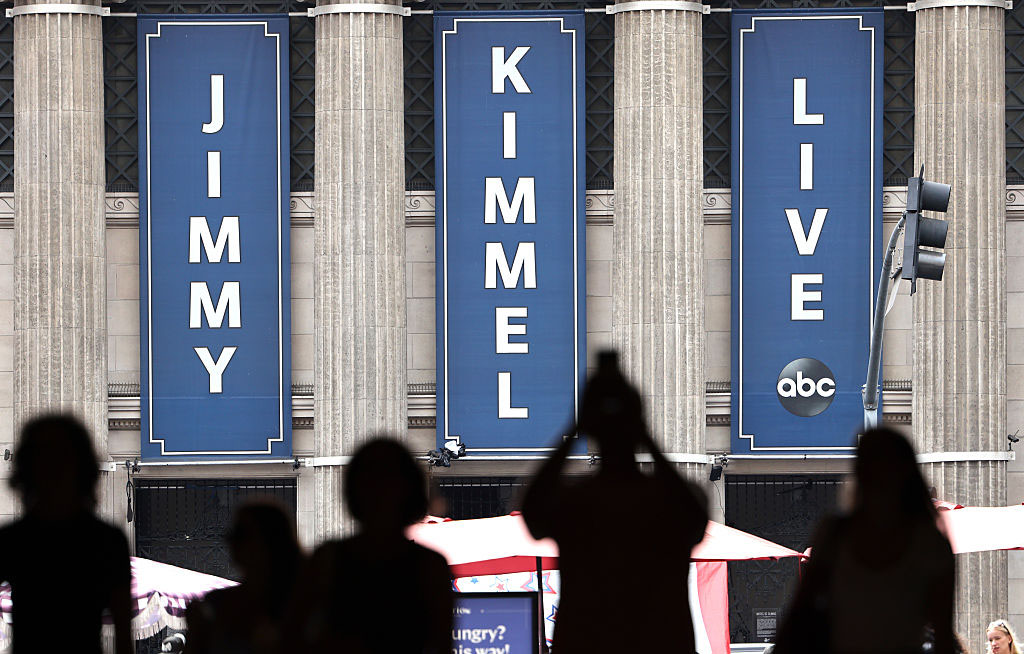
In the firestorm over Jimmy Kimmel’s suspension from his late-night talk show, which has turned him into a free speech martyr, virtually everyone is ignoring Kimmel’s approach to speech itself.

Kimmel was suspended by ABC after blowback from his comments suggesting that the accused shooter of Charlie Kirk was actually “MAGA” rather than a leftist sympathizer (an obvious and misleading falsehood). ABC is a private company and has every right to can Kimmel, especially given that some local affiliates had already pulled the show. The problem is that ABC, and its corporate owner Disney, clearly looked like they were reacting to political pressures, which was a terrible optic. They shouldn’t be shocked, then, by the pro-Kimmel “free speech” firestorm they have unleashed.

This free speech brouhaha, however, has covered up an essential truth about speech and comedy: Comedians with blatant political agendas betray their own profession and tend to be tedious and boring. The whole beauty and power of comedy is that it takes on all comers—left or right, religious or secular, Democrat or Republican, you name it—without fear of upsetting people. What is sacred is the joke.

What seemed sacred to Kimmel, however, in his monologues and his choice of guests, was whether he agreed with their politics.

This year, according to media watchdog NewsBusters, Kimmel welcomed 13 left-leaning guests and no Republicans. The portion of Kimmel’s jokes and gags targeting conservatives surged — from 88% in 2023 to 97% this year.

Kimmel made 1,128 jokes targeted at President Trump in 2025 alone, compared to a grand total of 26 for President Biden. Over the last couple of years, Kimmel has had 58 guests from the Democrat side and only 2 from the conservative/Republican side.

He’s hardly alone with his late-night partisan obsession. Stephen Colbert’s ratio was 176 to 1; Seth Myers 68 to zero; Jimmy Fallon 41 to 2 and The Daily Show 157 to 9.

So, when I hear “free speech hero” to describe Kimmel, forgive me if I must curb my enthusiasm.

What’s noteworthy about Charlie Kirk is that even his biggest critics have acknowledged that he was fearless in engaging with the “other side.” Over more than a decade, across hundreds of college campuses, he showed up time and time again to engage with a mostly leftist audience, many of whom despised his views. And he used facts and arguments rather than the partisan yelling we see on cable TV or the smug put-downs we see on late-night.

Through these courageous engagements, Kirk embodied the highest ideal of liberty, the ideal that honors free and open expression.

So, I ask you, who is the real free speech hero?

The Real Free Speech Martyr is Charlie Kirk, Not Jimmy Kimmel Read More »

Rosh Hashanah and the Cyrus Accords: Vision and Hope for a New Middle East

The coming of Rosh Hashanah brings ancient themes deeply woven into the human experience—renewal, introspection, and the undying hope for a better tomorrow. Observed by millions of Jews around the world, Rosh Hashanah marks not only the passage of time, but also the opportunity to reflect on the past and set intentions for the year ahead. In the midst of global uncertainties and regional challenges, the spirit of this holiday resonates far beyond the boundaries of the Jewish community, offering a universal message of optimism and the possibility of transformation.

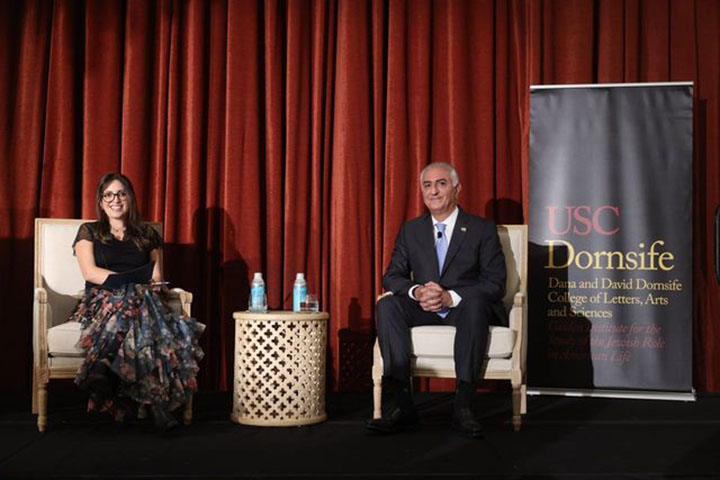
This year, the themes of vision and hope found tangible expression on the campus of the University of Southern California, where Crown Prince Reza Pahlavi of Iran delivered the inaugural address of the Raymond and Dina Levy Distinguished Speakers Series for the USC Casden Institute. The event, which drew an audience of students, scholars and community members, was a remarkable occasion: a leader-in-exile, standing at a crossroads of history, sharing his perspective on the future of Iran and its place in the world. In an impassioned speech titled “A Story of Two Ancient Peoples: From Cyrus the Great to the Cyrus Accords,” Reza Pahlavi articulated a vision that echoes the very spirit of Rosh Hashanah—a yearning to turn the page, to embrace reconciliation, and to imagine a new beginning for an ancient land enriched by the majesty of its diverse population with profound reflection on the rich heritage and cultural contributions of the Iranian-Jewish community.

Central to Crown Prince Reza Pahlavi’s message at USC was his endorsement of the “Cyrus Accords”—a bold proposal for peace between Iran and Israel. Named after Cyrus the Great —  the ancient Persian king celebrated for his respect for diversity and his role in the return of the Jewish people to their homeland — the Cyrus Accords symbolize a future in which enmity gives way to partnership, and historic divides are bridged by courage and foresight. Pahlavi’s vision is not merely political; it is deeply human, calling for dignity, mutual respect, and the recognition of shared destinies in a Middle East too often scarred by conflict. In his address, the Crown Prince emphasized that lasting peace requires both honesty about the past and hope for what might yet be achieved.

Pahlavi’s vision is not merely political; it is deeply human, calling for dignity, mutual respect, and the recognition of shared destinies in a Middle East too often scarred by conflict.

In conversation with award-winning writer Tabby Refael, known for her insightful and probing interviews, the Crown Prince delved into the complexities of Iranian society, the challenges of exile, and the hope that drives movements for freedom and reform. Refael’s questions, informed by her own experience as an Iranian-Jewish refugee and profound social analyst, brought into focus the human stories behind headlines, inviting the audience to engage not only with policy but with the personal journeys that shape history. Their exchange served as a reminder that visionary change is often born of candid conversation and the willingness to listen with empathy.

As Rosh Hashanah invites us to reflect and renew, so too does the conversation ignited at USC point toward the transformative power of hope in shaping the Middle East. The holiday’s shofar—a call to awaken the heart—finds its echo in Pahlavi’s appeal for a future defined not by old grievances, but by shared dreams held by all of Iran’s native populations that have suffered greatly under the tyrannical rule of the Islamic Republic.

In a region where peace has long seemed elusive, the Cyrus Accords proposal stands as a testament to the enduring belief that, with vision and perseverance, even the most entrenched divisions can be overcome. The Jewish New Year’s themes of self-examination, forgiveness, and anticipation of better days provide a spiritual framework for imagining the region anew. In this sense, the intersection of Rosh Hashanah and Reza Pahlavi’s advocacy is more than coincidence—it is a convergence of hope, a reminder that history bends toward renewal when guided by courageous hearts.

In a region where peace has long seemed elusive, the Cyrus Accords proposal stands as a testament to the enduring belief that, with vision and perseverance, even the most entrenched divisions can be overcome.

Hundreds of students, faculty and community members watched as Reza Pahlavi, standing on a stage far from his homeland, spoke of bridges yet to be built and promises yet to be fulfilled. As the season of Rosh Hashanah renews its message of hope, we are all called to believe in the possibility of a new dawn for the Middle East—one founded on dialogue, vision, and the enduring power of the human spirit. In the words that close Alexandre Dumas’ “The Count of Monte Cristo”:

“Until the day when God will deign to reveal the future to man, all human wisdom is contained in these two words — wait and hope.”

At this turning point in history, may we each carry forward the wisdom to wait with patience and to hope with conviction, believing that renewal and peace remain within our collective grasp.


Lisa Ansell is the Associate Director of the USC Casden Institute and Lecturer of Hebrew Language at Hebrew Union College-Jewish Institute of Religion Los Angeles.

Rosh Hashanah and the Cyrus Accords: Vision and Hope for a New Middle East Read More »

Nihilism, the New Normal

A young man of politically conservative leanings and Christian faith offers to debate students who hold fixed progressive, nonsectarian viewpoints. It has the makings of a civics lesson par excellence—the First Amendment in all its star-spangled glory.

One problem, however. Universities have swapped higher learning for an improbable pairing of Marxist-Islamist indoctrination. What’s there to debate? Best to just shut him up with a bullet to the throat.

Yes, that happened—in America—to Charlie Kirk. The marketplace of ideas has now fully devolved into a brainless hellscape of last rites.

It gets worse. Far too many Americans—politicians, celebrities and left-wing ideologues—celebrated Kirk’s horrifying death. He got what he deserved. Imagine sharing ideas that may have the capacity to change minds. Extolling the virtues of God and country at a time when it is chic to denigrate both.

America is a racist, homophobic and Islamophobic nation—and Israel is a genocidal one—and we won’t hear otherwise. There is a cost to having a contrary opinion.

Just look around. Nihilism is the new normal. Violence the governing ethos. Moral outrage the default position. Shouting down and screaming “Shame!” the latest in social etiquette. We no longer agree to disagree. Consent to woke protocols or face the consequences of cancellation—or the latest trend, assassination! The extreme left has now raised the ante.

We no longer agree to disagree. Consent to woke protocols or face the consequences of cancellation—or the latest trend, assassination! The extreme left has now raised the ante.

And the right has adopted some of the same tactics. Expressing the wrong opinion about Charlie Kirk might result in a different kind of termination—public school and college educators, healthcare professionals, political pundits, workers at the New York Stock Exchange, Office Depot and even late-night talk show host Jimmy Kimmel have lost their jobs. Roseanne Barr and Gina Carano are no longer standing alone on Hollywood’s Walk of Infamy.

Stephen Colbert is gone, too. Years of tedious jokes about Donald Trump and leveraging laughs at the expense of MAGA Republicans—and hosting only Democratic lawmakers—now looks like not a great career move. And what’s even worse—this kind of stale, low-brow and below-the-belt material was never funny. Could Greg Gutfeld have joked about George Floyd and stayed on the air—even at Fox? Maybe conservative comedians know that men wearing dresses and scoring TKOs against female boxers is idiotic, but not funny.

These lessons are not easily learned. The Boston Globe made the mistake of running an editorial titled “We need more Charlie Kirks.” Blue state readers in Massachusetts obviously disagreed.

Even more shocking is the normalization of political assassinations itself. The killing of Kirk opened up other possibilities. Over half of those surveyed had no qualms about President Trump meeting such a violent end. Slightly fewer felt the same way about Elon Musk. One-third of university students support resorting to violence to silence a speaker. More than half support preventing their fellow students from even hearing a disfavored opinion.

If you’re Jewish, or a Zionist (often they are the same), your free speech options are even more constrained. In a recent global survey, 78 percent of Jewish students now conceal their religious identity and 81 percent keep their Zionism to themselves. Around the world, slogans like “From the River to the Sea!” and “Long Live the Intifada!” are regarded as justice, not incitement. Hamas and Hezbollah are heroes. Bloody hand pins are paraded on red carpets. And Jewish deaths are no tragedies.

Kirk, who was himself a Zionist, was shown the same treatment.

We are embarking on the golden age of political violence. Sacco and Vanzetti, American anarchists of yesteryear, have new acolytes. The social justice “warrior” was supposed to be a figure of speech, not a military doctrine.

Blood is everywhere and Americans are not squeamish. Why should they be? Look what they have been witnessing and cheering on for over a decade. What was once hidden under a rock or found lurking on the dark web now shamelessly seeks the spotlight.

Blood is everywhere and Americans are not squeamish. Why should they be? Look what they have been witnessing and cheering on for over a decade.

Two assassination attempts against Donald Trump. Supreme Court Justice Brett Kavanaugh targeted in his home. Governor Josh Shapiro’s house set on fire. Congresswoman Nancy Pelosi’s husband gets his head bashed in. The CEO of United Healthcare gunned down in Manhattan; his assailant hailed as a folk hero waging war against American capitalism. Another anti-corporate vigilante discharges a weapon at the offices of the National Football League.

Police precincts, and squad cars, going up in flames. Street fights that require the National Guard. Storefronts of luxury retailers reduced to shattered glass by masked smash-and-grab vandals. Gang members, drug traffickers and terrorists given the green light to ply their trades in America. Widespread upheavals and building takeovers at the finest universities in the country.

The desecration of federal monuments and Jewish houses of worship. The torching of the American flag. New York City, the epicenter of global finance and Jewish pride, flirting with the prospects of electing an avowed Marxist, antisemitic mayor.

Get ready for a dystopian Big Apple. Thrill-seeking New Yorkers are about to weather a municipal death wish. Occupy Wall Street is about to achieve a takeover. In the 1970s, the slogan was “The Bronx is Burning.” This time we might see Manhattan in flames.

How could we have allowed it to get so bad? Glorifying terrorists and assassins; excusing lawbreakers, gang members and thieves. Selectively applying constitutional protections. Black Lives Matter arsonists went unpunished; January 6 trespassers were over-punished. Jews subjected to genocidal threats and ancient blood libels; “transgender” males asserting sovereignty over women’s bathrooms and finish lines. European cartoonists murdered for satirizing Muhammad.

Up until recently, these culture wars largely took the form of a civil war without shots fired. No longer. Bullets are flying from indiscriminate trigger happiness.

Half the country can’t stand the other, and little effort is being made to meet halfway. The center doesn’t seem to exist. All is engulfed by extremes.

Hillary Clinton wishes she could take back “deplorables,” but she meant what she said. Somewhere along the way the Democratic Party developed a contempt for the white middle and working class. They saw racism everywhere and discounted all racial progress. They pitted persons of color against “evil” white oppressors.

An entire vocabulary was censored by Orwellian linguists. The American experiment was denounced as one great failure. Meanwhile, red state patriots judged coastal elites to be tone-deaf traitors to the American cause.

And then there is the matter of Muslims and their vision for America. When a Dearborn, Michigan resident complained about naming a street for a Hezbollah terrorist, the mayor of the city with a Muslim majority population replied, “You’re an Islamophobe. And although you live here, I want you to know, as mayor, you’re not welcome here.”

We’re doomed.


Thane Rosenbaum is a novelist, essayist, law professor and Distinguished University Professor at Touro University, where he directs the Forum on Life, Culture & Society. He is the legal analyst for CBS News Radio. His most recent book is titled, “Beyond Proportionality: Israel’s Just War in Gaza.

Nihilism, the New Normal Read More »