fbpx

September 18, 2025

AJRCA Accreditation, Autism in Entertainment, iCenter Workshop

The Chaplaincy Education Program of the Academy of Jewish Religion, CA (AJRCA) has received full accreditation from the Association for Clinical Pastoral Education (ACPE).

According to AJRCA leadership, the accreditation is “a milestone that enables the institution to certify both chaplains and CPE educators … With this new accreditation, AJRCA can now train not only board-certified Jewish chaplains but also Clinical Pastoral Education (CPE) educators — the mentors and supervisors who will shape the next generation of spiritual care providers across the country and around the world.”

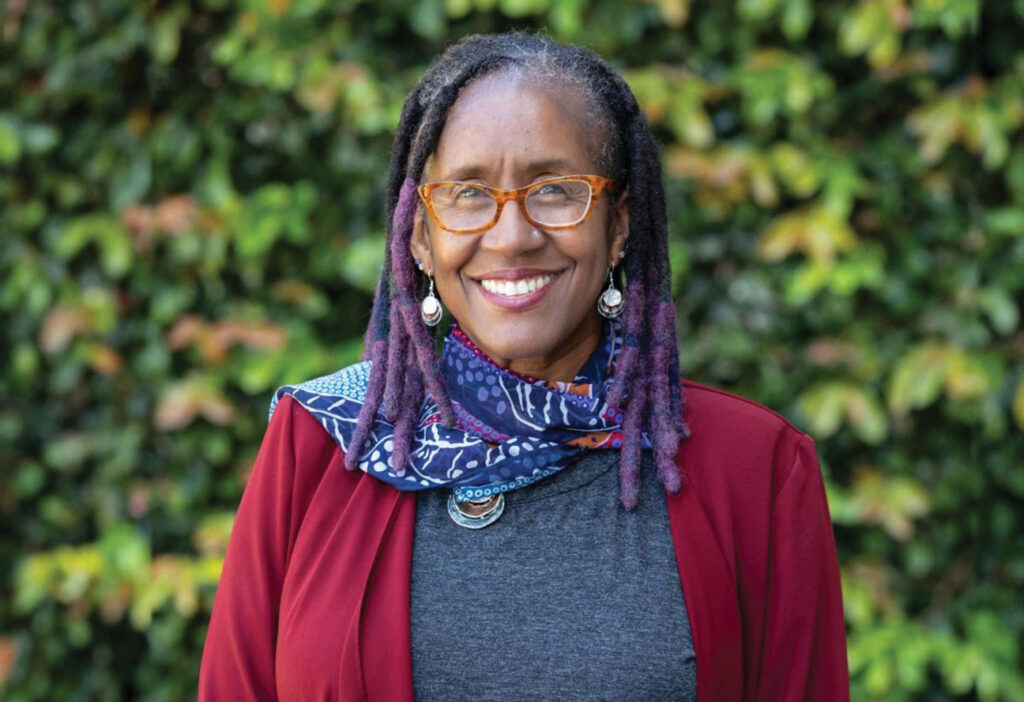
“We are immensely proud of this achievement, which reflects the dedication of our faculty, staff, and students,” AJRCA President and CEO Rabbi Joshua Hoffman said. “Under Rev. Dr. Trina Williams’ expertise, our Chaplaincy Education Program has become a beacon of spiritual leadership, preparing chaplains to address the evolving needs of today’s diverse communities with compassion and wisdom.”

“This milestone empowers us to widen our lens — not just training individual chaplains, but shaping the educators who will guide countless others,” Williams said.

Chaplains serve during life’s most vulnerable moments. They’re active in a variety of spaces where people seek meaning, comfort and connection, including hospitals, hospices, prisons, elder care centers, universities, cruise ships and corporate workplaces.

Since 2021, AJRCA has been based at Loyola Marymount University. The institution currently serves 65 students internationally and boasts more than 225 alumni leading as rabbis, cantors, chaplains, and educators nationwide.


From left: Comedians Willie Hunter, Jeremiah Watkins, Dani Bowman and Nic Novicki performed at the Autism in Entertainment benefit at the Laugh Factory. Courtesy of Laugh Factory

Laugh Factory, famous for its live comedy credibility, as well as its 38-year tradition of free High Holy Day Services, recently held the inaugural Autism in Entertainment (AIE) benefit extravaganza on Sept. 7. The production, entitled “Extraordinary: A Fun-Raiser,” featured an eclectic, mid-afternoon mix of stand-ups, such as “Autistic Thunder” Joshua Meyrowitz, and additional in-person performances from AIE educational partners and individual members. 

Noteworthy appearances included Spectrum Laboratory co-founder Jason Weissbrod, and his improv troupe, The Spec-Ond City Players; a screening of filmmaker Alex Astrella’s mini-documentary; and an onstage scene enactment of the original Miracle Project musical “Out of Our Heads.”

 AIE is the offspring of non-profit Orange County Asperger’s Support Group. AIE Founder Judi Uttal was beyond excited about the successful event, which raised much-need operating funds atop the promised ‘Fun’ of the show’s title. 

“There were neurodivergent individuals involved in every aspect of this production,” Uttal said. “We practiced what we preach! Employment is our main goal, and it is always a pleasure to watch our members shine.”

 Laugh Factory President David Fuhrer echoed Uttal’s effervescence. “We welcomed this opportunity to give a platform to performing artists on the autism spectrum. We are proud of our partnership with AIE and admire the work they do,” he said.

 Screenwriter, and advocate Atsuko Tsuji summarized the affair, saying: “The talent was fantastic! The backstage allies and supportive audience of family and friends were a special kind of awe-inspiring. I quite enjoyed the hilariously relatable real-life material from comedian Alice Payne, herself a self-aware mom to a son on the spectrum. The message of Alex Astrella’s film — ‘How can we be so alike and so different? — hit home and appropriately underscored the inclusive spirit of the day.” 


The recent iCenter workshop at Temple Israel of Hollywood. Courtesy of Jason Edelstein

Carl Schrag and Max Pivo of The iCenter recently appeared at Temple Israel of Hollywood for professional development with the faculty of the Briskin School. The workshop focused on fostering open discourse among faculty by creating space for a wide range of perspectives on Israel-related issues and modeling respectful and reflective dialogue across differences. It also emphasized creating cultural touchpoints through which faculty members can enhance their personal connections to Israel through poetry, art, and other cultural expressions. Finally, they highlighted the importance of enhancing the presence of Israel in the school environment through a collaborative mapping exercise and team-based planning for meaningful, visible, and integrated Israel experiences.

The iCenter supports the largest network of Israel educators across North America with a focus on day schools, public schools, summer camps, synagogues, youth groups and universities.

AJRCA Accreditation, Autism in Entertainment, iCenter Workshop Read More »
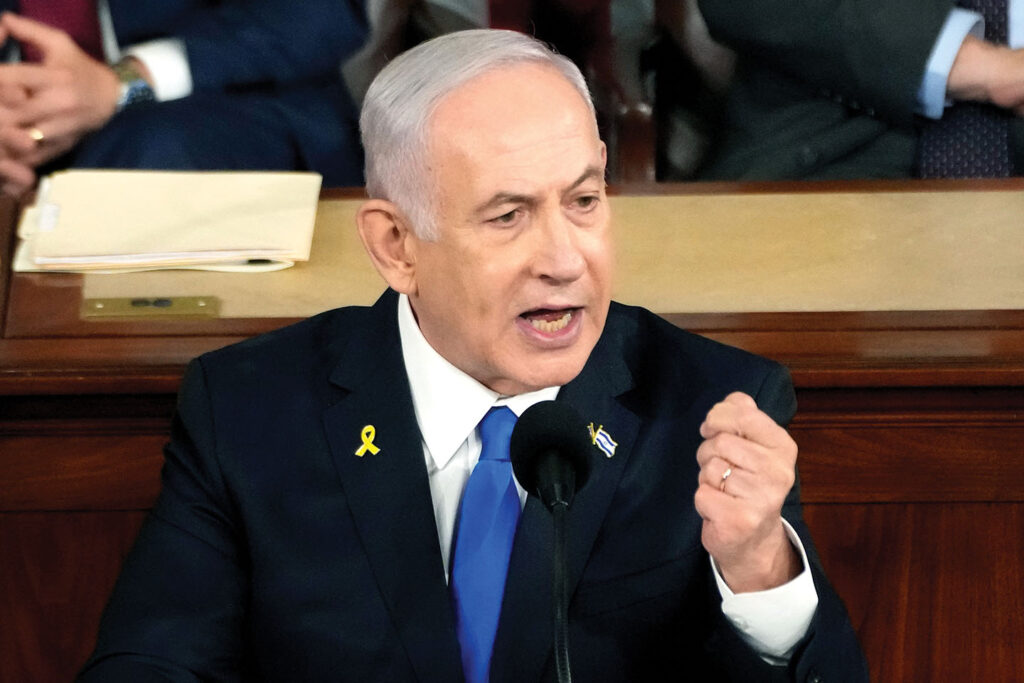
Athens, Sparta and Jerusalem: Why Netanyahu’s ‘Super Sparta’ Shouldn’t Surprise Us

Over the past few days, Benjamin Netanyahu has stood before journalists and articulated a vision that startled many and comforted few. He warned of a coming era of economic and diplomatic isolation, urged Israel to brace for embargoes and boycotts, and declared that the Jewish state would need to become a “Super Sparta.” In the same breath, he insisted Israel must remain an Athens as well, a society of innovation, intellectual brilliance, cultural confidence, even as it girds itself like Sparta for a long siege.

To his critics, I imagine this sounded like desperation dressed in classical allusion. To his admirers, it must have been realism at last. Acknowledgement that the Western world is moving on, that Israel must depend only on itself. But to students of Zionist history, none of this was shocking. Netanyahu was not inventing a new philosophy, he was restating an old one. The tension between Athens and Sparta, openness and fortification, building and defending, has been with the Jewish people from Tanakh through Jabotinsky and into the present moment.

The prime minister’s remarks, covered widely in the Israeli and international press, included four essential claims. First, Israel faces intensifying economic and diplomatic isolation: European governments flirting with sanctions, arms suppliers reconsidering their commitments, trade channels narrowing. Second, Israel must cultivate radical self-reliance, developing domestic defense industries, ensuring supply chains independent of hostile actors. Third, the metaphor of Sparta captures the discipline and resilience he envisions, while Athens symbolizes Israel’s intellectual, technological, and cultural vitality. Fourth, this dual posture will come at a cost — austerity, sacrifice, and vigilance— but survival demands nothing less.

What alarmed observers was less the policy than the candor. For decades, Israeli leaders have insisted the country is simultaneously secure and globally integrated. To describe Israel as a potential Sparta, even a Super Sparta, is to admit the fragility of those ties.

And yet, in 1923, in his essay “On the Iron Wall,” Vladimir Ze’ev Jabotinsky argued that the Arabs of Palestine would never consent to Jewish sovereignty. “It is utterly impossible to obtain the voluntary consent of the Palestinian Arabs,” he wrote, “for turning Palestine into a country with a Jewish majority.” Zionism, therefore, could succeed only by building an “iron wall which they will be powerless to break down,” a power so unassailable that resistance became futile. Only then, he insisted, would peace become possible.

A companion essay, “The Ethics of the Iron Wall,” insisted this realism was not immoral. On the contrary, self-defense was the precondition for eventual reconciliation, because only after strength was undeniable would compromise be conceivable.

In other words, Jabotinsky combined two truths: the need for power, and the promise of peace. Netanyahu’s Super Sparta echoes this. He is warning that, once again, Jews cannot depend on the benevolence of outsiders. Our survival depends on what we can build and defend with our own hands.

Jabotinsky combined two truths: the need for power, and the promise of peace. Netanyahu’s Super Sparta echoes this. He is warning that, once again, Jews cannot depend on the benevolence of outsiders. Our survival depends on what we can build and defend with our own hands.

This, too, is not an innovation of Revisionist Zionism. It is a biblical inheritance. In the book of Nehemiah, the exiles return to a shattered Jerusalem and begin to rebuild. They face mockery and opposition from neighbors. Nehemiah rallies them to both construction and defense. “They who built up the wall, and they who carried the materials, every one of them with one of his hands worked at building, and with the other hand held a weapon.”

Yuval Levin, in a 2024 address at the Jewish Leadership Conference hosted by Tikvah and later published by Mosaic, seized on this image. Speaking largely about the American experience, renewal, he argued, always requires two simultaneous postures: institution building and vigilant defense. “The task before us is not only to build but also to defend what we build, to work with one hand while the other holds a weapon.”

Nehemiah’s lesson complicates the debate about Netanyahu’s Sparta. Sparta alone would be too narrow, Athens alone too exposed. The biblical model is both — not alternating, but simultaneous.

Athens, in Netanyahu’s metaphor, stands for openness, creativity, and intellectual flourishing. That, too, has biblical roots. Proverbs and Ecclesiastes probe questions of wisdom and meaning like ancient philosophy seminars. Job stages a dialogue about justice that rivals Socratic disputation. Isaiah imagines nations streaming to Jerusalem, for Torah shall go forth from Zion. The Song of Songs is sheer poetry, unabashed beauty.

Israel has always had Athens within it — a place of learning, culture, universal vision. Even the prophets, fierce in judgment, were also poets, seers of possibility, dreamers of new worlds.

Israel has always had Athens within it — a place of learning, culture, universal vision. Even the prophets, fierce in judgment, were also poets, seers of possibility, dreamers of new worlds. But alongside Athens, we have Sparta.

But alongside Athens, we have Sparta. Joshua conquering Canaan, Judges rallying militias, David fighting Philistines, Nehemiah erecting literal walls, all testify that survival in a hostile landscape requires arms and vigilance. Psalm 125 compares Jerusalem to mountains that surround and protect. Zechariah imagines God Himself as a wall of fire around the city. Defense is not an embarrassment to the tradition — it is inscribed within it.

The danger, of course, is that Sparta overwhelms Athens. That is what happened historically. Sparta’s rigidity bred stagnation and eventual decline, while Athens’ openness allowed for innovation but also for vulnerability. The Jewish genius has been to combine them, Athens and Sparta fused in Jerusalem.

In invoking Super Sparta, Netanyahu is not so much innovating as invoking Jabotinsky and Nehemiah. He is reminding Israelis that international legitimacy can be fickle, that alliances shift, that boycotts and embargoes are not theoretical. The task is not to despair but to prepare. Build the walls, develop the industries, ensure deterrence.

His addition of Athens is equally important. Israel cannot afford to become only Sparta, a garrison state devoid of imagination. It must remain a global center of technology, art, Torah, philosophy, or it ceases to be the Jewish state as envisioned by prophets and sages.

And yet, metaphors matter. To call for Super Sparta risks making austerity, suspicion, and isolation into virtues for their own sake. Jabotinsky insisted that the Iron Wall was temporary, a means to eventual peace. Nehemiah rebuilt walls in order to reopen the Temple, restore worship, renew covenant, not to hunker down forever. If Israel confuses means with ends, it may entrench an isolation that corrodes its Athens and disfigures its Jerusalem.

History also complicates the Sparta metaphor. Sparta was never fully isolated — it relied on allies and tribute. Its vaunted discipline masked dependence. The lesson for Israel is that even the toughest Sparta needs partners, trade and openness. A Sparta without Athens is a Sparta doomed.

The Jewish story is one of trowels and swords, prophets and soldiers, Athens and Sparta. To be a people that endures requires building institutions, cultivating wisdom, and defending both with vigilance. From Nehemiah’s walls to Jabotinsky’s iron wall, from Netanyahu’s speeches to Israel’s daily realities, the challenge is the same: how to keep both hands busy, one constructing, the other guarding.

Our task is not to become Sparta or Athens but to be Jerusalem: strong enough to withstand siege, wise enough to teach nations, humble enough to know that building and defending are always simultaneous.

Netanyahu has offered the metaphor of Super Sparta. Jewish history suggests a deeper one: Jerusalem, the city that is both fortified and luminous, both mountain-ringed and word-radiating. Our task is not to become Sparta or Athens but to be Jerusalem: strong enough to withstand siege, wise enough to teach nations, humble enough to know that building and defending are always simultaneous.


Adam Eilath is the Head of School at Wornick Jewish Day School in Foster City, California. He is proud to lead a talented team of educators who are committed to raising the next generation of leaders steeped in the Jewish tradition.

Athens, Sparta and Jerusalem: Why Netanyahu’s ‘Super Sparta’ Shouldn’t Surprise Us Read More »

Shofar Blowing in the Wind

With ambiguity that’s rich
the shofar with a pious pitch
produces a most puzzling sigh
that seems from depths of hearts to cry
to God to listen to our prayer
for something Abraham did not dare
to ask Him: to agree to spare
the life of Isaac as He’d done
for Sodomites.

                         For Sarah’s  son
a prayer for pity he made none,
which may have caused the death of Sarah,
say rabbis of a later era,
although God with a captured ram
replaced the son of Abraham,
so that the scales of His harsh sentence
might weigh well with our wept repentance,
reversing sins when our hearts hear
the blowing winds of each new year.


Gen. 22:12-13 states:

יב  וַיֹּאמֶר, אַל-תִּשְׁלַח יָדְךָ אֶל-הַנַּעַר, וְאַל-תַּעַשׂ לוֹ, מְאוּמָה:  כִּי עַתָּה יָדַעְתִּי, כִּי-יְרֵאאֱלֹהִים אַתָּה, וְלֹא חָשַׂכְתָּ אֶת-בִּנְךָ אֶת-יְחִידְךָ, מִמֶּנִּי. 12 And he said: ‘Lay not your hand upon the lad, neither do anything unto him; for now I know that you are a God-fearing man, because you did not withhold your son, your only son, from Me.’
יג  וַיִּשָּׂא אַבְרָהָם אֶת-עֵינָיו, וַיַּרְא וְהִנֵּה-אַיִל, אַחַר, נֶאֱחַז בַּסְּבַךְ בְּקַרְנָיו; וַיֵּלֶךְ אַבְרָהָםוַיִּקַּח אֶת-הָאַיִל, וַיַּעֲלֵהוּ לְעֹלָה תַּחַת בְּנוֹ. 13 And Abraham lifted up his eyes, and looked, and behold behind him a ram caught in the thicket by his horns. And Abraham went and took the ram, and offered him up for a burnt-offering instead of his son.


Gershon Hepner is a poet who has written over 25,000 poems on subjects ranging from music to literature, politics to Torah. He grew up in England and moved to Los Angeles in 1976. Using his varied interests and experiences, he has authored dozens of papers in medical and academic journals, and authored “Legal Friction: Law, Narrative, and Identity Politics in Biblical Israel.” He can be reached at gershonhepner@gmail.com.

Shofar Blowing in the Wind Read More »

This Rosh Hashanah, Synagogues Should Stick to Judaism

Recent events have America on edge. The cold-blooded murder of conservative activist Charlie Kirk by a leftist trans activist has sharply divided Americans. The Jewish community is a mirror of the country. Some Jews see a direct link between leftism and trans activism with the murder while other Jews deny that any such link exists.

The temptation to be right often causes people to forget about doing right. Harsh labels such as “Nazis,” “fascists,” and “Hitler” are thrown at people solely for disagreeing. This trivializes people including my father who survived the Holocaust. When my dad was running for his life during World War II, Donald Trump was not chasing him. Trump does not even have a mustache.

Human beings jump to conclusions, but they need to own it. My self-restraint was tested when a woman approached me wearing a HAMAS t-shirt. Something seemed odd given that it was a rainbow HAMAS t-shirt. Verbally tearing this woman to pieces would have provided the briefest amount of joy followed by a lifetime of embarrassment. She moved her hand holding her beverage, revealing that her supposed HAMAS t-shirt actually said BAHAMAS.

Not all endings are that happy and amusing. Yet as we Jews prepare to beg God to give us another year’s inscription in the book of life, we really could help our own causes. Synagogues

In particular can employ a simple yet very effective strategy for navigating political minefields this Rosh Hashanah.

Rabbis can just shut up about politics and stick to Judaism.

It cannot be this easy, except for the fact that it really is.

Keep your political traps shut. Stick to Judaism.

Sure, rabbis can explain that while murdering Charlie Kirk and trying to murder Donald Trump is bad, they were guilty of saying things that hurt the feelings of crazed murderers.

Or, rabbis can just cram their political notes in their own mouths and swallow them. They can then gargle with a glass of sanity and stick to Judaism.

They can resist the urge to lecture us about climate change and “Palestinian” rights.

There really is enough Torah to cover an entire year. Imagine if the Torah were divided into over 50 separate portions. Synagogues could discuss an entire Torah portion every week!

Americans already spend one-third of our lives sleeping and another third doing life’s drudgeries for a few pittances of currency. Many of our remaining hours meant for sports and culture are already infected with politics. Is it too much to enjoy a politics-free Rosh Hashanah?

Rabbi David Wolpe once asked his Sinai Temple congregation to turn off their cellphones during his sermon. After expressing his joy that everyone was there, he had the crowd laughing by intoning, “If you can’t go two hours without your cellphone, you really need to be here.”

Giving up addicting things is not supposed to be easy. Try being a soda drinker attempting to give up sugar. Diet Coke tastes awful. Thank God someone created Coke Zero.

Try being a football fan in 2025 when Rosh Hashanah falls during Monday Night Football. God gave life to the person who created VCRs and then DVR machines. Watch the game Wednesday night. If someone ruins it by telling you the score, they can apologize on Yom Kippur or during Tashlich.

The stock market is at an all-time high. It will be tough, but many Jewish traders take Yom Kippur off. God usually rewards us by making Yom Kippur a light trading day with little action.

If people can give up their cellphones, soda, football and stock trades, they can give up politics for 50 hours.

The world will not end if this happens. The Israeli Defense Forces will take necessary actions without American Jewish meddling disguised as input.

Jews love to talk, but not everything requires a national conversation. People constantly insisting that “Doing nothing is not an option” would not know. They have never tried. Doing and saying nothing are often spectacular options.

On Rosh Hashanah 5,786, America’s rabbis can regale us with stories of Jews that go back thousands of years. Rabbis do not need to bore us with their lack of expertise on geopolitical events of the last 10 minutes that may be obsolete by Sukkos and Simchas Torah.

Ordained Jews can give speeches about Jews for Jews. They can stick to Judaism.


Eric Golub is a retired stockbrokerage and oil professional living in Los Angeles.  

This Rosh Hashanah, Synagogues Should Stick to Judaism Read More »

Rebuilding Lives with Dignity: Ogen’s Lifeline for Israelis in Crisis

-Advertorial-

Behind Israel’s headlines lies a quieter crisis: the struggle for financial dignity. Inflation is rising, banks are tightening, and thousands of Israelis are left without a safety net. The war and its aftermath have only deepened these pressures. Families are working harder but falling further behind. Small businesses are ready to rebuild but cannot access the credit they need. Nonprofits are stretched as they care for communities under strain.

For more than 30 years, Ogen, Israel’s trusted nonprofit social lender, has provided families, entrepreneurs, and nonprofits with economic stability, financial guidance, and the tools to rebuild with dignity. Loans are repaid with pride and reinvested to help the next borrower, multiplying their impact. At the heart of this model is Ogen’s blended financial platform, which transforms donations into accessible credit. By offering interest-free and social loans to those excluded from banks, Ogen creates opportunities where traditional institutions cannot.

From Despair to Renewal

Each Ogen loan restores hope. When the war broke out in 2023, farmers Maya and Sharon Cherry almost shut down their operation. With their Ogen loan they expanded their crops instead, building a greenhouse that allowed them to grow even more produce. Just days after the Iran attack began in June, restaurateur Khier Diab almost lost his bakery, with no customers. With immediacy, he was able to receive a loan and mentor to revive his business. When northern residents were evacuated, Kalphon Avraham Gee feared he had no home to return to. Back home, he found it unlivable until an Ogen loan enabled urgent renovations, restoring his house to a home. Reservist Oriel Har-Noy, a father of three from Mevo Horon, returned after 50 days of service to find that the rise in costs made his final mortgage payment out of reach. While searching for help, he discovered Ogen, whose loan enabled him to close the mortgage and keep his family secure. Entrepreneur Loti Rosenthal knew she needed support for her business, but didn’t know how to do it. With Ogen’s mentorship program she learned to pivot, doubling her income and even hiring new employees. 

Maya and Sharon Cherry tend to the crops in their field

A Ripple Effect

A family avoids crushing debt. A small business protects jobs. A nonprofit serves thousands more. With repayment rates among the strongest anywhere, every donation becomes a renewable lifeline, helping not once, but again and again.

This is the ripple effect of Ogen’s blended finance model. A single loan does more than uplift one borrower. A family loan can reduce household debt by more than half, allowing parents to plan for the future. A small business loan supports not just the owner but also employees and local suppliers. Each repayment is reinvested into a new loan. Ogen’s method of financial inclusion, serving those that are unbanked and underserved, not only empowers all people of Israel to strive, but lays the foundation for sustainable growth and opportunity nationwide.

Serving All of Israel

Ogen serves all parts of Israeli society – Jewish and Arab, secular and religious, new immigrants and longtime residents all have access to its programs. Families can access up to $14,000 in interest-free loans, businesses up to $185,000 in affordable credit, and nonprofits even more. Each loan comes with counseling and mentorship to ensure lasting stability.

By focusing on financial dignity and empowerment, Ogen builds bridges across diverse communities, strengthening Israel’s social and economic fabric.

Restoring Dignity

Hardship is about more than money. It affects a family’s sense of security, a business owner’s confidence, and a community’s ability to plan for the future. By replacing anxiety with independence, Ogen helps parents focus on their children rather than on overdue bills, gives business owners the courage to invest in growth, and allows nonprofit leaders to imagine new ways of serving their communities.

Equally important is the pride borrowers take in repayment. Every payment made is a sign not of dependence but of renewal. By paying back their loans, families and businesses know they are helping create the same opportunity for someone else. This cycle of repayment and reinvestment ensures that dignity remains at the center of Ogen’s mission.

Why Ogen, Why Now

For the Cherry family in Be’er Milka, Khier in Tamra, Kalphon in Kiryat Shmona, Oriel in Mevo Horon, Loti in the Haredi sector, and tens of thousands more, Ogen has already made the difference between despair and renewal. The challenge now is scale. With support, Ogen can meet the growing need.

Together, we can rebuild Israel’s future with resilience and respect – one loan and one life at a time.

Please visit: support.ogen.org/buildingfutures

Rebuilding Lives with Dignity: Ogen’s Lifeline for Israelis in Crisis Read More »

Raphael Lemkin Coined the Term “Genocide.” Now, His Family Says, the Term Is Being Distorted

Raphael Lemkin, a Polish Jewish lawyer born in 1900, narrowly survived the Holocaust. He lost dozens of members of his family, including his parents. After experiencing this tragedy and seeing the absolute worst of mankind, he coined a new term, “genocide,” to describe the targeted destruction of the Jewish people and other groups.

“Generally speaking, genocide does not necessarily mean the immediate destruction of a nation, except when accomplished by mass killings of all members of a nation,” Raphael wrote. “It is intended rather to signify a coordinated plan of different actions aiming at the destruction of essential foundations of the life of national groups, with the aim of annihilating the groups themselves.”

Now, in the aftermath of the October 7 massacre and the ongoing war in Gaza, the term genocide has been co-opted by anti-Israel protestors all over the world, as well as a surprising source: The Lemkin Institute for Genocide Prevention, a non-profit with a mission to “[connect] the global grassroots with the tools of genocide prevention.”

According to Joseph Lemkin, a surviving relative and attorney, “The Institute fueled misinformation days after October 7, claiming Israel’s defensive measures were genocidal. I believe reference was made that Israel was annihilating the Palestinians. The Institute’s silence in the face of thousands of rockets being launched from Gaza to Israel is deafening and tells us all we need to know.”

Indeed, on its website, the non-profit has issued an “Active Genocide Alert” for the war in Gaza, stating on April 8, 2024, “The Lemkin Institute is horrified by the dire situation transpiring in the West Bank. During what has already been a devastating six months of conflict in Gaza, the Israeli military and far-right settlers have used the cover of war to conduct continuous attacks on Palestinians in the West Bank, often leading to death and forced displacement. These attacks have been underreported in the mainstream Western press, which has also failed to tie Israel Defense Force (IDF) and settler violence in the West Bank and East Jerusalem to the genocide being committed in Gaza.”

Joseph took action by responding with cease-and-desist letters; he also sent letters with his concerns to Governor Josh Shapiro’s office, as well as to other Pennsylvania officials, since The Lemkin Institute is located there.

“I believe the word is being misused and abused for anti-Zionist purposes,” Joseph said. “Genocide has a precise legal definition. That definition has no application to a country defending itself from terror attacks on all of its borders, from protecting its citizens from thousands of rockets each year. It has no application to a defense force that warns civilians via text messages and leaflets to make sure they are out of harm’s way. It is because Israel is the only Jewish state that the term is abused in such an awful way.”

The Institute also condemned Israel for killing Ismail Haniyeh, a Hamas leader, and allegedly called Hezbollah a victim of Israel’s “terrorism.”

“The improper use degrades Raphael’s legacy, particularly as a fervent Zionist,” said Joseph. “He would want to have nothing to do with the Institute and would certainly not allow his name to be used for anti-Zionist purposes.”

The improper use degrades Raphael’s legacy, particularly as a fervent Zionist.”

Joseph has sought out counsel for help contending with the tarnation of Raphael’s legacy. A lawsuit is “definitely an option being considered,” and he seeks to have the Lemkin name stripped from the Institute.

“Moreover,” he said, “we hope to have such institutes who purport to be academic institutions educate themselves on what Raphael stood for and educate themselves on the real meaning of the heinous crime of genocide.”

For Joseph, this is about more than making sure the word “genocide” is being used correctly. It’s also personal.

“My dad was the sole survivor from his family,” he said. “Both parents and one brother were slaughtered at Auschwitz, and two brothers perished as underground fighters.  They knew what genocide was along with the 60 other Lemkins killed by the Nazis. My dad was close with Raphael. He helped support him financially in life and even in death.  Raphael died a pauper, and my dad raised funds for him to have a proper Jewish funeral and was one of the few at his graveside funeral. My family hopes that we can protect Raphael and his legacy, just as my dad did.”

Raphael Lemkin Coined the Term “Genocide.” Now, His Family Says, the Term Is Being Distorted Read More »

Kimmel Is Out, But Intifada Is Still In: Hollywood’s Hypocrisy on Political Violence

Jimmy Kimmel was fired by ABC for his comments on the air about Charlie Kirk’s assassination. The celebration of Kirk’s death from segments of our society reveals a disturbing rot in our social fabric, an unraveling of the basic moral fibers that hold our society together.  Jimmy Kimmel should not have made light of or in any way attempted to rationalize the murder of Charlie Kirk.  Hollywood’s condemnation of Kimmel, however, is deeply hypocritical.

For two years celebrities have been calling to “globalize the intifada.” The term “intifada” refers specifically to two Palestinian uprisings — one in the 1980s and the other in the early 2000s — that were defined by violent acts of terrorism in Israel, such as bus bombings, attacks on pizza parlors, and the killing of innocent civilians.  These acts were explicitly political.  They were often committed under the guidance or encouragement of the PLO and were intended to exert pressure on the Israeli government to change official political policies.

When celebrities shout to “Free Palestine from the River to the Sea,” they are not calling for a negotiated two-state solution: they are invoking an Arabic slogan whose literal and original translation calls for Palestine to be Arab.  The cheer isn’t just a catchy rhyme — it is calling for the violent eradication of the State of Israel.

When celebrities shout to “Free Palestine from the River to the Sea,” they are not calling for a negotiated two-state solution: they are invoking an Arabic slogan whose literal and original translation calls for Palestine to be Arab.

Hollywood loves to brand itself as a bastion of free expression, tolerance, and justice. But when it comes to antisemitism, the industry reveals a glaring double standard.  There have been virtually no career or public opinion consequences to the myriad Hollywood stars who have used their platforms to spread anti-Israel and anti-Jewish disinformation.

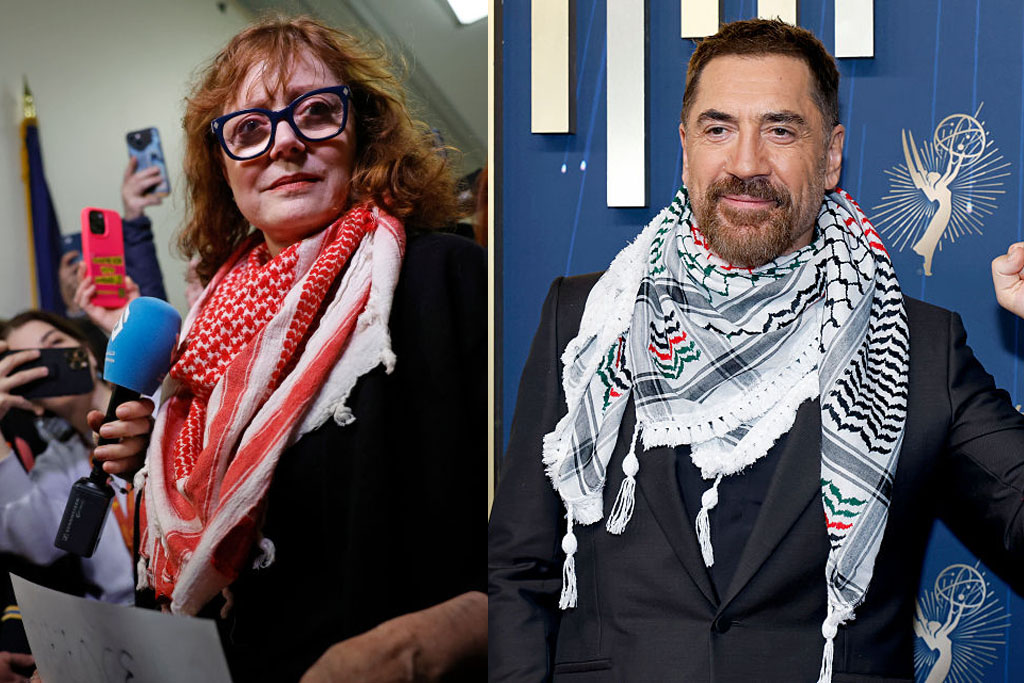
Just after the Hamas terrorist attacks of October 7, 2023, Susan Sarandon spoke at a rally and said that American Jews were “getting a taste of what it feels like to be Muslim in this country.”  Sarandon was suggesting that American Jews somehow deserved violence.  She was briefly dropped by her agency, but was signed by another within months.  She faced no career blowback.  There was no exile from Hollywood’s elite parties.

Mark Ruffalo has been claiming that Israel is committing a “genocide” since 2021, well before the current Israel/Hamas war.  Ruffalo’s repetition of Hamas talking points is not just factually inaccurate — it paints Jews as war criminals and human rights abusers.  Ruffalo was rewarded for his comments with a starring role in the Avengers series.  He is painted in Hollywood as a “human rights activist.”

Just last week, at this year’s Emmys awards, actor Javier Bardem wore a keffiyeh on the red carpet and raised his hand in a fist of defiance declaring that he cannot “work with someone who justifies genocide in Gaza.” His statements were an endorsement to blacklist and boycott Israeli or “Zionist” artists.  Bardem was not fired or cancelled.

Statements like “globalize the intifada” collapse an immensely complex conflict into a jingle. They flatten centuries of Jewish history and trauma.  They paint Israel, and by proxy all Jews, as the singular villain.  Accusing Israel of “genocide” is not just hyperbolic, it is incendiary.

Jimmy Kimmel referred to the man accused of killing Charlie Kirk as a “MAGA extremist.” Now Kimmel is fired.  Charlie Kirk was an ardently Zionist Christian, but he was not a Jew.  When speech in Hollywood endangers Jews, frames Jews as genocidal, and excuses terrorism against Jews, then somehow it is not political incitement, it is just celebrities speaking “their truth.”

Antisemitic incidents have skyrocketed in the United States since October 7, 2023. Jewish students have been assaulted on campuses, Jewish-owned businesses vandalized, and Jewish neighborhoods targeted by protests that veer into intimidation.  Speeches from celebrities glorifying intifada help legitimize Jew-hatred around the world and give cover to extremism.

Free expression is essential in a democracy.  No one should call for the censorship of ideas.  But there must be accountability when speech crosses into incitement of political violence.  This accountability must be applied evenly.  If calling a murderer “MAGA’” is a fireable offense, then surely calling for global condemnation and ostracization of Jews deserves equal scrutiny.

The question isn’t whether Jimmy Kimmel deserved to lose his platform. The question is why has Hollywood looked away for the last two years when celebrities call for political violence against Jews.


Julie Marazouk is an attorney, author, and the founder and principal of Marzouk Evolve Advocacy Consulting

Kimmel Is Out, But Intifada Is Still In: Hollywood’s Hypocrisy on Political Violence Read More »

When Good People Do Something

Iryna Zarutska was murdered by a life-long criminal on the Charlotte, North Carolina transit system. The assailant stabbed her in the neck and proceeded to walk through the train car brandishing the murder weapon, reportedly saying, “I got that white girl.”

As troubling as the video footage of the stabbing is, the most disturbing aspect is what happened just after the attack. Zarutska can be seen putting her face in her hands, weeping, until she slumps over and dies a minute and a half later.

During this time, multiple riders are visible playing on their phones and ignoring the tragedy that’s unfolding. Just before her life slipped away, one rider finally attempted to staunch the bleeding but it was too little, too late.

The news of this story brought back memories of a terror attack in Israel exactly seven years ago. Ari Fuld, a long-time advocate for Israel, was stabbed in the neck by a terrorist at a mall in the Gush Etzion region. Ari also tragically succumbed to his injuries, but he did not go quietly. He fought until his last breath, managing to neutralize the terrorist despite his mortal wound, and saved many lives in the process.

Ari’s heroism is evident because rarely does the victim become the savior. Some suggest that he may have survived had his wound been immediately treated. But instead he protected those around him at the greatest cost.

Living in Israel, we are often called on to help in different ways. I recently had to fill in for a colleague on short notice. Usually when officiating a wedding, couples are in touch months in advance to arrange every last detail. But this couple’s rabbi suffered a family tragedy in the days leading up to the event and, according to Jewish law, he was unable to work for the seven days following the burial.

His brother had been murdered in the Ramot shooting on the outskirts of Jerusalem that left around 20 injured and took the lives of six. Like most terror attacks in Israel, the murderers were neutralized by armed citizens. But this time things were different.

The two heroes who saved so many lives were Haredi (Ultra Orthodox) — one was an off-duty soldier, and the other was a citizen with a gun license. With all the tensions in Israel surrounding Haredim dodging army service, the news couldn’t have made us prouder despite the tragic circumstances.

The contrast to the murder of Iryna Zarutska highlights the stark difference between Israel and the rest of the West. Of course, Zarutska did no wrong, being an innocent victim of a schizophrenic’s rage. No one expected her to tackle her assailant as Ari Fuld did. But how could the other riders have done nothing in the face of such evil?

Of course, Iryna Zarutska did no wrong, being an innocent victim of a schizophrenic’s rage. No one expected her to tackle her assailant as Ari Fuld did. But how could the other riders have done nothing in the face of such evil?

One could argue that there was good reason no one subdued the killer. A similar case occurred on the New York subway system in 2023. When a person with the same mental condition as Zarutska’s killer began threatening the lives of riders, Daniel Penny put the assailant in a submission hold, accidentally leading to his death. Penny was charged with second-degree manslaughter and criminally negligent homicide.

Although ultimately acquitted, outcomes like these may deter bystanders from acting in cases such as Zarutska’s. However, those sitting near her, who didn’t even attempt to stop the bleeding, have no excuse.

From the outside, much of the West appears morally confused. All the wrong things are being celebrated. Race overshadows individuals’ character and actions. In the Daniel Penny case, the media’s focus was on Penny being white and the assailant being black. In the Iryna Zarutska case, the story was ignored because the victim was white. The news cycle must always serve the narrative.

From the outside, much of the West appears morally confused. All the wrong things are being celebrated. Race overshadows individuals’ character and actions.

In all of the above incidents there were good and bad actors. The focus needs to shift back to right and wrong. And those who do right to protect those around them should be lauded and those who threaten or commit acts of violence need to be chastised, irrespective of skin color or narrative. Rewarding decent behavior encourages others to stand up and do the right thing.

Israel has suffered an onslaught of attacks due to the war in Gaza. Many claim that our behavior indicates national moral failings. But the world is wrong. Israel is a nation of action. It’s a nation of love and concern for its fellow citizens that both protects life and celebrates it — whether it’s those who defend the innocent or those who step in when a colleague is in need; whenever terror strikes, we all do what’s necessary. However, this should not just be Israel’s story, it must be the aspiration of every free society. When good people do something — whether in Israel, New York or Charlotte — then none of us are truly alone.


The writer is a rabbi, a wedding officiant, and a mohel who performs britot (ritual circumcisions) and conversions in Israel and worldwide. Based in Efrat, Israel, he is the founder of Magen HaBrit, an organization protecting the practice of brit milah and the children who undergo it.

When Good People Do Something Read More »

A Tale of Two Sunday Evenings in California

This past Sunday evening, I witnessed a stark contrast that perfectly encapsulates the divide within American Jewish identity today. In one room, the Jewish American Summit in Los Angeles gathered 700 people, Jews and non-Jews, liberals and conservatives alike, united in support of Israel and authentic Jewish values. Simultaneously, across town at the Emmy Awards, we saw the opposite: a performative rejection of Jewish connection to Israel, delivered with the hollow prefix “as a Jew.”

At our summit, Senator John Fetterman, a Catholic, and Bill Maher, a self-described liberal atheist, both of whom spoke passionately about standing with Israel and the Jewish people. They both demonstrated more understanding of Jewish values and Israel’s ethical conduct than many who claim Jewish identity while undermining Israel’s right to defend itself.

Maher pointed out something rarely acknowledged in mainstream media: Israel has conducted this war with unprecedented ethical restraint, resulting in the lowest civilian-to-combatant casualty ratio in modern urban warfare. He didn’t hesitate to call out Qatar’s $2 billion campaign to indoctrinate American university campuses, creating the antisemitic atmosphere we now witness. These are facts, delivered by allies who recognize truth regardless of political alignment.

Meanwhile, at the Emmy Awards, Hannah Einbinder took the stage and made a statement aimed at effectively divorcing “American cultural Judaism”, the only Judaism she apparently knows, from Israel. This exemplifies what I call the “As a Jew” disease: individuals with minimal connection to Jewish tradition or knowledge making public statements that undermine Israel or Jewish values while using their Jewish heritage as a shield.

This performative distancing isn’t new. For some in Hollywood, donning keffiyehs or signing anti-Israel statements appears to be a career-advancing rebellion. But make no mistake, these actions align them with the terrorists and perpetrators of the October 7th massacre, a slaughter these same celebrities rarely acknowledge.

One room celebrated Jewish identity through understanding and solidarity; the other showcased the shallow performance of rejecting one’s people for applause.

Jerry Seinfeld recently called the “Free Palestine” movement the modern equivalent of the KKK, recognizing that antisemitism is simply racism dressed in political clothing. He’s right. When you attend pro-Israel rallies, you see singing, dancing, and celebration of life. At pro-Palestinian demonstrations, you often encounter burning flags, Molotov cocktails, violence, and raw hatred.

What explains this dichotomy? Those at our summit, Jewish or not, understand that Judaism is built on a foundation of love, as established by Abraham. We stand for our principles, defend our people, but ultimately build rather than destroy.

Contrast this with the document recently circulated in Hollywood, a racist manifesto that advocates refusing to work with anyone connected to Israel. This is not social justice; it’s discrimination based on national origin and religion.

The “As a Jew” phenomenon represents a troubling trend: those with the thinnest connection to Jewish tradition often speak the loudest against it. They position themselves as moral authorities precisely because they’ve distanced themselves from Jewish communal life. Their Judaism exists primarily as a credential for criticizing Israel.

We face an information war where facts compete with AI-generated images and emotional manipulation. Qatar-funded propaganda has infiltrated our universities and media, with Al Jazeera, now openly controlled by Qatar’s royal family, serving as its mouthpiece.

The summit speakers recognized this reality. Both Fetterman and Maher, representing different backgrounds but united in moral clarity, refused to accept the false narratives that dominate campus protests and Hollywood statements.

True allies don’t need Jewish ancestry to recognize right from wrong. They understand that Hamas, not Israel, is responsible for civilian casualties in Gaza. They acknowledge that Israel targets terrorists while Hamas targets civilians and uses them as human shields, often forcing them to stay in harm’s way on pain of death. They recognize that Israel provides humanitarian aid while Hamas steals it.

Those who stand on stages declaring “as a Jew” while distancing themselves from Israel aren’t speaking from Jewish knowledge or values. They’re performing for an audience that rewards Jewish self-rejection, often with likes and shares on social media.

Our tradition teaches that all Jews are responsible for one another. This doesn’t mean agreeing on everything, but it does mean understanding that our fates are intertwined. Those who believe they can separate “good Jews” from “Zionists” misunderstand both Judaism and history.

The summit showed that support for Israel transcends political identity. Liberal Democrats stood alongside conservatives in recognizing Israel’s right to defend itself against terrorism. They understood that this isn’t about politics, it’s about morality.

I’m grateful for authentic allies who stand with us not because it’s popular, but because it’s right. And I pray that those Jews who distance themselves from Israel in pursuit of approval will one day recognize that true courage means standing with your people, especially when it’s difficult.

Judaism is a living tradition of ethics, community, and resilience that has survived millennia, and we will survive Hannah Einbinder and all the other “As a Jew” voices too.


Steven Burg is the CEO of AISH, a global Jewish institute, and the Chairman of Aish Ha’am, a new party in the World Zionist Congress. Prior to Aish, he was Eastern Director of the Simon Wiesenthal Center, where he oversaw the Museum of Tolerance in New York City and contributed to the center’s fight against antisemitism. You can find out more about him here: https://rabbiburg.com/

A Tale of Two Sunday Evenings in California Read More »

Fallujah and Gaza City: Why Israel Cannot Stop Short of Victory

History is a brutal teacher. Sometimes the lessons it offers are so bloody, so devastating, that nations ignore them only at their peril. One such lesson was written in the ruins of Fallujah, Iraq, in 2004, where the U.S. military fought two of the fiercest urban battles since Vietnam. And today, as Israel fights for its survival against Hamas, those lessons should be studied carefully. For just as Fallujah was the heart of the Sunni insurgency, Gaza City is the fortress of Hamas. If Israel falters—if it stops short of capturing and breaking Gaza City—it risks condemning itself to endless rounds of bloodshed.

The First Battle of Fallujah: A Half-Measure That Backfired

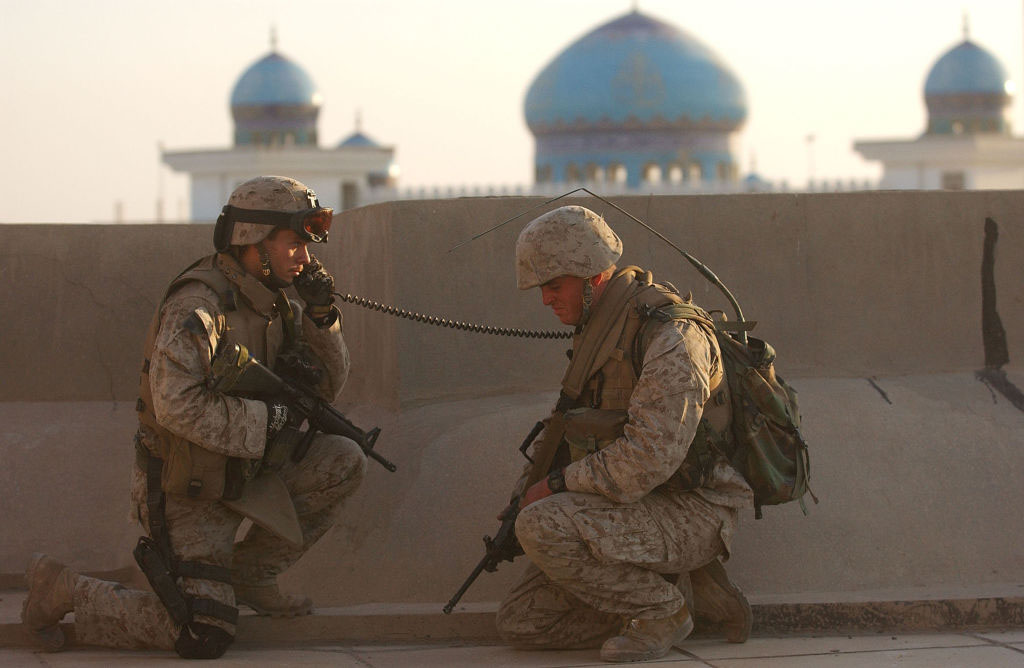
In March 2004, four American contractors working for Blackwater were ambushed in Fallujah. Their bodies were burned, mutilated, and hung from a bridge over the Euphrates. The grotesque images were broadcast worldwide. The American public was outraged. President George W. Bush ordered the Marines into Fallujah with the mission of reasserting control.

The Marines were among the finest combat troops in the world, but they faced a nightmare. Fallujah was a dense, ancient city of 300,000, its narrow streets and alleys perfect terrain for guerrillas. Insurgents from Al Qaeda in Iraq—then led by Abu Musab al-Zarqawi—were dug in. They had prepared kill zones, fortified houses, and mined streets.

The U.S. launched Operation Vigilant Resolve. Within days, Marines had surrounded and penetrated the city. But the fighting was vicious, and Al Jazeera beamed images of civilian casualties across the Arab world. International outrage swelled. Washington blinked. After just three weeks, the Marines were ordered to halt.

Control of the city was handed over to the so-called Fallujah Brigade, a hastily assembled force of former Iraqi military officers. As retired Marine Gen. Anthony Zinni later observed, “You can’t outsource victory to proxies who don’t share your determination. That’s not strategy—it’s surrender.”

The result? Disaster. The Fallujah Brigade disintegrated within days, handing weapons and ammunition to the insurgents. The city became the uncontested capital of jihad in Iraq. Suicide bombings escalated. Zarqawi grew in prestige. American weakness had emboldened the enemy.

The lesson: in counterinsurgency, half-measures are worse than doing nothing at all.

The Second Battle of Fallujah: The Price of Victory

By November 2004, the U.S. had no choice. Fallujah had become a symbol of American impotence and a factory of death. So, with overwhelming force, the U.S. launched Operation Phantom Fury (known to Iraqis as al-Fajr, “The Dawn”). More than 10,000 American, British, and Iraqi troops assaulted the city.

The fighting was apocalyptic. As one Marine officer put it, “We didn’t take the city by finesse. We took it by overwhelming violence of action.” Gen. James Mattis, then commander of the 1st Marine Division, explained the logic: “The enemy has chosen the ground of urban combat. It will be tough. But we will not give Fallujah up to the terrorists. We will clear the city, block by block, and show them there is no safe haven.”

By the time it was over in December, much of Fallujah lay in ruins. More than 100 coalition troops were dead, over 600 wounded. Insurgent deaths were estimated between 1,200 and 2,000. Civilian casualties, though impossible to count, were significant. Yet militarily, the operation succeeded. Fallujah was retaken. Zarqawi’s network was shattered, his prestige tarnished. The insurgency continued elsewhere, but Fallujah no longer served as its capital.

As Gen. David Petraeus would later reflect, “The second battle showed that once you commit to urban warfare, you must see it through. It is messy, it is bloody, but there is no substitute for victory.”

Gaza City Is Hamas’ Fallujah

Israel today stands at the same crossroads the U.S. faced in 2004. For Hamas, Gaza City is what Fallujah was to Al Qaeda in Iraq: the nerve center, the arsenal, the propaganda tool, and the spiritual symbol of defiance. Beneath its hospitals, mosques, and schools lies a spiderweb of fortified tunnels, command posts, and weapons caches.

Hamas’ leaders are not hiding in Rafah. They are in Gaza City. Its destruction and its capture are essential if Israel hopes to dismantle Hamas as a military and governing force. Without Gaza City, Hamas cannot claim survival. With it, they can.

As former Israeli Defense Minister Yoav Gallant said: “Gaza City is the beating heart of Hamas. To defeat them, we must cut out the heart.”

The Cost of Stopping Short

Imagine if Israel pauses its offensive now, leaving Gaza City in Hamas’s hands. What happens? Hamas survives. Its leaders emerge from the tunnels. They proclaim victory: “The mighty Israeli army could not conquer us!” Recruitment surges in Jenin, Nablus, Beirut, and beyond. Iran rejoices. The Arab street cheers. And Israel, despite its battlefield successes, is seen as weak.

This is exactly what happened in Fallujah after April 2004. The insurgents walked taller, the jihad spread wider, and the U.S. paid the price in blood just months later.

Prime Minister Benjamin Netanyahu has been blunt: “We cannot stop halfway. Hamas will exploit any pause to rearm and strike again. If Gaza City is left standing as their sanctuary, then all our sacrifices will have been in vain.”

The World’s Double Standard

Here lies the grotesque hypocrisy. When America leveled Fallujah, much of the world shrugged. Yes, there was criticism—but no one declared the U.S. illegitimate, no one launched global boycotts, no one suggested America should surrender to Al Qaeda. The world accepted that the U.S., attacked by terrorists, had the right to crush them.

Yet Israel, facing Hamas after the barbarism of October 7, is held to an impossible standard. Israel is told to fight a “clean war” against an enemy that hides under baby incubators and fires from schoolyards.

As one senior IDF officer said privately: “They want us to fight Hamas without touching Gaza. That’s like asking the Marines to take Fallujah without entering the city. It’s a fantasy.”

Urban War Is Always Ugly

Make no mistake: the conquest of Gaza City will be awful. Civilians, used by Hamas as human shields, will die, despite Israel’s warnings and evacuations. Soldiers will die, fighting in stairwells, tunnels, and shattered alleys. The images will be broadcast endlessly to vilify Israel. International condemnation will rise to a fever pitch.

But war is not judged by appearances. It is judged by outcomes. The U.S. did not retake Fallujah by caring about CNN’s coverage. It did so by focusing on victory, knowing that hesitation had already cost lives. Israel must do the same.

As Gen. Mattis famously told his Marines in Fallujah: “Be polite, be professional, but have a plan to kill everybody you meet.” That is the grim reality of urban war. And it is the only way to destroy Hamas in its fortress.

Fallujah’s Final Lesson

Fallujah taught America two lessons: first, never attack unless you are prepared to finish; second, if you must fight in the city, fight to win.

Israel now faces its Fallujah. Gaza City is not just another battlefield. It is the fortress of Hamas, the symbol of their defiance, the center of their power. To leave it standing is to leave Hamas alive.

As Gen. Petraeus warned, “Half-measures in urban warfare do not save lives. They only postpone defeat.” Israel cannot afford to postpone anything.

For in the Middle East, as in Iraq, the only way forward is through.


Rabbi Shmuley Boteach is the author of “Kosher Hate” and “Judaism for Everyone.” Follow him on Instagram and X @RabbiShmuley.

Fallujah and Gaza City: Why Israel Cannot Stop Short of Victory Read More »