If you besiege a city for many days, to wage war against it in order to capture it, you must not destroy its fruit trees by wielding an ax against them… ~ Deuteronomy 20:19
When at war
if you must go to war
treat the fruit trees
better than the people.
This is our law.
The tree is not fleeing us
so we let it be.
It almost makes sense
except that war
never makes sense.
When you move into a house
with a historic rose garden
don’t cut down the rose garden
You are there to build upon –
not tear down.
Tell this to anyone relevant
even though their
bullet-ridden ears
do not want to hear it.
When we moved into
this house we promised
to leave the roses
as they were. We are a blip
in this space and our mark
will not be made by
tearing out or cutting down.
War will not come from our lips.
No one ever need flee.
Rick Lupert, a poet, songleader and graphic designer, is the author of 29 books including “God Wrestler: A Poem for Every Torah Portion.” Visit him at www.JewishPoetry.net
Denmark’s prime minister, who has been denouncing Israel and threatening to organize sanctions against it, now has confessed that her country committed horrific crimes against people it conquered—crimes which fit the textbook definition of genocide.
Danish Prime Minister Mette Frederiksen last week condemned Israel’s pursuit of Hamas terrorists in Gaza as “very violent” and “unacceptable.” She said Denmark is considering extending recognition to the non-existent “State of Palestine.”
Frederiksen also said that Denmark intends to take advantage of its term as head of the European Union to punish Israel for defending itself. She said she is now conferring with other EU members to impose “political pressure and sanctions” against both individual Israelis and “Israel as a whole.”
The Danish prime minister even implicitly compared Israel’s pursuit of Hamas killers and gang-rapists to the Russian invasion of Ukraine.
In one of those ironic twists that seem to crop up a lot lately, Frederiksen’s blasts at Israel happened to coincide with new revelations about horrific abuses committed by Denmark against the indigenous Inuit people of Greenland.
The violent Danish conquest of Greenland was led by Erik the Red, a killer and slaveowner who had been banished from Iceland in the 10th century CE and went looking for new lands to plunder. Needless to say, Erik and his fellow-settlers did not ask permission from the native Inuits who had preceded them to Greenland by some 5,000 years.
Denmark’s abuse of the Inuits did not end with stealing their country. The Danes also stole some of their children.
Three years ago, Prime Minister Frederiksen acknowledged it was “heartless” and “inhumane” that the Danish government took 22 Inuit children from their families in 1951 and sent them to Denmark as part of an experiment in forced assimilation.
The prime minister said she was sorry about that, and awarded a token compensation payment of 250,000 kroner ($37,200) to each of the last six surviving victims.
After that episode, a government commission began investigating Denmark’s overall treatment of the Inuits. Three years have passed, and the commission reportedly is preparing to release its findings.
Apparently to get out ahead of the forthcoming report, Prime Minister Frederiksen last week issued another apology, this time for an even more widespread horror: from the 1960s to the 1990s, Danish doctors, acting at the instruction of their government, implanted birth control devices in an estimated 4,500 Inuit women and girls—some of them just 12 years old—without their knowledge or consent. That was half of Greenland’s population of fertile females. The purpose of the implantations was to limit the size of the Inuit population.
The prime minister did not use the word “genocide” in her remarks. But the government policy that she acknowledged amounted to exactly that.
“Genocide” is defined as actions that are “committed with intent to destroy, in whole or in part, a national, ethnical, racial or religious group,” including “imposing measures intended to prevent births within the group.”
In her statement, Prime Minister Frederiksen also alluded to what she called “systematic discrimination and other failures and mistreatments.” She did not elaborate. Presumably the commission will.
It’s been 425 years since William Shakespeare penned the immortal line in Hamlet, “Something is rotten in the state of Denmark…”
Today, what’s rotten in the state of Denmark is the integrity of the country’s leaders. They point an accusing finger at Israel, while only belatedly and grudgingly acknowledging their own country’s genocidal actions—and failing to pay a single krone of restitution to the 4,500 victims of Denmark’s forced birth control policy.
What an upside-down world this is! A country that is not committing genocide is falsely accused of doing so, while a country that admits committing acts which are unquestionably genocidal simply mutters “sorry” and gets away without any consequences.
Dr. Medoff is founding director of The David S. Wyman Institute for Holocaust Studies and author of more than 20 books about Jewish history and the Holocaust. His book The Road to October 7: Hamas, the Holocaust, and the Eternal War Against the Jews will be published on October 1, 2025, by The Jewish Publication Society / University of Nebraska Press.
Mark Twain’s novel “The Adventures of Huckleberry Finn,” published in 1884, is sometimes banned because of its constant use of the horrific term “nigger,” yet it is the least racist book imaginable. In fact, it is anti-racist.
It is the story of a rebellious young boy in the pre-Civil War South who runs away from a sad family life. He was raised in a racist society and assumes its prejudices as if they are natural and normal. The use of the racist word for Blacks is the clear signal that Huck, in spite of his rebelliousness, is very much the product of his society.
He meets a Black man, a runaway slave named Jim, during his travels and the two runaways end up forming a bond. For the first time in his young life, Huck sees not a “nigger,” not a Black man, but a man. He plays a mean trick on Jim when they are well into their travels and it makes Huck “feel so mean I could almost kissed his foot to get him to take it back.”
Huck expresses his transformative experience, his moral awakening, after a series of struggles with his conscience: “It was fifteen minutes before I could work myself up to go and humble myself to a nigger – but I done it, and I warn’t ever sorry for it afterwards, neither. I didn’t do him no more mean tricks, and I wouldn’t done that one if I’d knowed it would make him feel that way.” No, the ugly term is not dropped but the attitude has been completely changed. He feels guilty and ashamed for hurting the feelings of a man he has come to like and respect. He sees Jim, for the first time, as someone with feelings and dignity – a fellow human being like himself. It is a dramatic moment in the novel, a pivotal moment that demonstrates the capacity for hatred and racism, learned from earliest childhood and deeply embedded in society, to be overcome and surpassed. It is a moment of lucidity that illuminates the novel and expresses a truth about the possibility of human nature to change and adapt.
One of the great strengths of literature is the creation of character. Huck enters our consciousness as a real person, someone you feel you know, however different from our life and our experience. That’s the point of literature –for the reader to see the world from someone else’s perspective, an insight into a different world that has the potential to transform us.
That is the core of this novel, its meaning and its greatness. Twain achieves that outstanding outcome by making the character of Huck believable. The character of Huckleberry Finn jumps off the page: the vocabulary is the vocabulary of the South of that era, the behavior is that of a youth who is searching for something he has yet to discover and an adventure that has many twists and turns that keep the reader entertained and engaged.
The novel ends on a relatively happy note in the sense that Jim does win his freedom, but Twain was wise enough to limit his ambition. The society is not changed but one boy has been changed. The magic of Twain is that the impossible is shown to be possible. If one person is subject to radical change and a Black man, a slave, in antebellum America, is respected and humanized, then it is possible for anyone to do the same.
The magic of Twain is that the impossible is shown to be possible. If one person is subject to radical change and a Black man, a slave, in antebellum America, is respected and humanized, then it is possible for anyone to do the same.
The novel takes place in various locations as Huck and Jim travel the Mississippi River to the free states. The journey on the river is also Huck’s moral journey from ignorance to enlightenment, from darkness to light, from prejudice to compassion. The journey takes him to the center of himself, a journey of self-discovery. Huck discovers much about human nature, and about himself. He may be very young – his age is not mentioned – but he learns from his experience.
Mark Twain was, in a sense, Huckleberry Finn. He was raised in Hannibal, Missouri, and shared the same prejudices as the people of his hometown. In 1860, a river captain told him about a Jew who saved a slave girl from death, and that incident may well have been responsible for his examining his own prejudices because Twain held positive views on Jews as well as Blacks. He called Jews “the world’s intellectual aristocracy” and, in 1909, his daughter, Clara, was engaged to a Russian-Jewish pianist. He called his essay “Concerning the Jews” “my gem of the ocean.” In the essay, he portrays the Jews most favorably: “He [the Jew] has made a marvellous fight in the world, in all the ages; and he has done it with his hands tied behind him…All things are mortal but the Jew; all other forces pass, but he remains. What is the secret of his immortality?”
So, Huck’s journey was Twain’s journey, but it extended beyond humanizing the Blacks to the Jews as well. Mark Twain was a most admirable man who used his great talent to expose the corrosive force of hatred and to demonstrate, in the most moving literature, the possibility for the individual to see beyond petty and dangerous small-mindedness, to summon conscience and generosity of spirit. Twain rose above the base and the negative and inspired others. He set an example in his own life and in his writing.
Mark Twain was a most admirable man who used his great talent to expose the corrosive force of hatred and to demonstrate, in the most moving literature, the possibility for the individual to see beyond petty and dangerous small-mindedness, to summon conscience and generosity of spirit.
Many years later, Nelson Mandela succinctly expressed the same idea of hope and possibility: “No one is born hating another person because of the colour of his skin, or his background, or his religion. People must learn to hate, and if they can learn to hate, they can be taught to love, for love comes more naturally to the human heart than its opposite.” In these dark times, it is important to remember Mark Twain and his creation, Huck Finn, and the possibilities they represent.
Dr. Paul Socken is Distinguished Professor Emeritus and founder of the Jewish Studies program at the University of Waterloo.
This past July, Leo Terrell stepped onto the stage at the Israel on Campus Coalition National Leadership Summit, the largest pro-Israel student gathering in the United States. As he stood before the crowd, he explained why he was wearing a red baseball cap. It was not the signature MAGA hat supporting his boss, President Donald Trump, but one with the words “Hadar Goldin” on them.
“He was a member of the IDF, and in 2014, during a ceasefire, he was murdered and kidnapped, and he has been in the possession of Hamas for 10 years,” he said. “I met his mother and his twin brother. Hadar Goldin should never be forgotten. We have an obligation to make sure he’s returned home. A mother has a right to bury her son.”
Whenever Terrell makes a public appearance, he wears the hat.
Photo courtesy of Leo Terrell
“I want people to know his name,” he declared in a social media post. “I want to tell his story – because he and the other hostages have to be returned.”
Terrell isn’t Jewish. He’s Black, practices the Baptist faith, and worked as a civil rights attorney and media commentator for more than three decades. However, after seeing the horrors of what happened on October 7, Terrell, who was a contributor at Fox News at the time, started to speak up.
“It was a loss of humanity,” he told the Journal. “You saw innocent people being murdered, raped, and brutalized because they were Israeli. Because they were Jews. For one day in this country, we were all united that this was wrong. But that changed on October 8, which I found to be very offensive. Never in my life had I seen hatred towards the Jewish people.”
Terrell kept speaking up, and this past January, President Trump nominated him as Senior Counsel to the Assistant Attorney General for the Civil Rights Division and the chair of the Department of Justice’s Task Force to Combat Antisemitism.
“I love this country, and I think President Trump is the right president for the current time we’re in,” he said. “He gave me the opportunity to work here with a great Attorney General, Pam Bondi.”
Since taking on the role, Terrell said it’s been a 24/7 job. Along with posting nonstop on X and retweeting pro-Israel, pro-Jewish accounts, he was tasked with visiting and assessing 10 universities, including Columbia, Harvard, and UCLA, that have experienced a surge in antisemitism since October 7.
“There has been 20 years of indoctrination at the college and university level,” Terrell said. “You have foreign money coming into this country. These universities are well financed, and there are conditions to bring in antisemitic professors. What you see now is that these universities are a breeding ground for the hate and antisemitism.”
Now, the DOJ is also focusing on K-12 public schools.
“The curriculum is so offensive, and we have received so much information and documentation about what is being allowed in public schools,” said Terrell, a Los Angeles native. “The teachers unions are antisemitic in my opinion, and they control the public schools, including the ones in California. They turned their backs on Jewish students and allowed this type of hate to fester. It’s everywhere.”
The purpose of the task force is to examine what’s happening at schools and take away funding if necessary. Terrell could not disclose the DOJ’s specific plans for dealing with public schools, but he said, “these schools are on notice. They have been notified that they should be looking at the way they treat Jewish students. There will be investigations.”
Though many Jewish parents have chosen to take their children out of public school and put them into private Jewish schools, Terrell wants to ensure that they have a choice going forward. Simply leaving is not the solution.
“All parents should have the right to send their kids to public schools,” he said. “They should be able to send to their school of choice, public or private, without being fearful of hate speech or some type of retaliation because of protected class status.”
The same applies to universities.
“If you’re a Black student, I don’t think you’d be afraid of going on the Columbia University campus and seeing someone wearing a Ku Klux Klan robe,” he said. “But Jewish people have that fear. Black and brown people and women have no problem going to public schools – but Jews do. It’s now popular to hate Jewish people. It’s OK to be antisemitic. There needs to be swift justice legally and criminally.”
Taking away funding from institutions plagued by antisemitism has been one effective tactic. Another is to bring about hate crime charges against individuals when applicable.
“When I got my job here, fighting antisemitism by way of hate crime charges was not a priority, and I found that to be outrageous,” he said. “With all these things going on since October 7, how many hate crime charges were filed by the local DA in LA, Boston, Chicago, or New York? None. It wasn’t a priority. They kept calling it ‘freedom of speech.’ No. I know what freedom of speech is. Assaulting and intimidating citizens because of their ethnicity and religious beliefs? That is not freedom of speech.”
When Yaron Lischinsky and Sarah Milgrim, the two Israeli embassy staffers, were shot and killed in Washington, D.C. in May, the DOJ brought federal hate crime and first-degree murder charges against the alleged killer.
“That is a deterrent,” said Terrell. “Take money away, bring hate crime charges, put people in jail. Take away their liberty. That’s what you will see from President Trump and Attorney General Bondi.”
The Jewish community has been baffled by the amount of antisemitism, especially after October 7, the worst massacre of Jewish people since the Holocaust. Terrell is equally as stunned.
“When you look at Canada, the UK, and France, it’s almost like, what in the hell is going on here?” he said. “A consensus of people are saying it’s OK to hate Jews and Israelis. And this is not just a Jewish issue: this is an American and Western civilization issue. As a civil rights attorney all my life, there is this obligation to stand up.”
Terrell acknowledged how Jews and Blacks marched together to end segregation and bring about equal rights for the Black community.
“I am glad to be the Black face of this task force because if anyone knows the history of this country, they’d know that Jews were at the forefront of the Civil Rights Movement,” he said. “They were co-founders of the NAACP and walked with Black Americans in the ‘60s. Two Jewish activists (Andrew Goodman and Michael Schwerner) were murdered in 1964 because they were working on behalf of the movement.”
While Terrell has been bombarded with reports of antisemitism since starting – and witnessed the worst of humanity – he has also found inspiration within the Jewish community.
“I’ve gone to so many memorials and Jewish-related activities, and you can really see the cohesiveness of the community,” he said. “You can feel it at every event. They are all together. They are unified. I could feel the warmth inside my body when experiencing the closeness and love.”
Terrell, who has photos of hostages on the wall of his office, has not yet been to Israel.
“I’ve been invited so many times it’s unbelievable,” he said. “I plan to go. It warms my heart every day when I do this job, but there is so much work to be done. I thank President Trump and Pam Bondi for allowing me to do it.”
So, what gives Terrell hope in these challenging times?
“I can see the possibility of eradicating antisemitism and getting back to some sense of normalcy, where Jewish Americans will not have to fear hatred as they walk down the street.”
“I can see the possibility of eradicating antisemitism and getting back to some sense of normalcy, where Jewish Americans will not have to fear hatred as they walk down the street,” he said. “If I commit myself and this administration commits itself and puts those guardrails up, the Jewish community will be in the same situation afforded to all Americans. That’s the ultimate goal. We’re going for nothing short of that.”
Leo Terrell encourages anyone who has experienced or witnessed antisemitism to file a report with the DOJ by visiting civilrights.justice.gov.
I don’t have a knack for keeping plants alive. Often, I add too much water, or most of the time, forget to water the plant until it is just too late.
Sometimes, I pretend the plant will grow in environments in which it is clearly impossible: no sunlight or window in sight. Determined to try harder, I purchased a plant that supposedly only needs watering once a month and moreover, bought a special indoor grow light to nourish the plant in windowless rooms. Instead of putting the plant in places where growth is bound to fail, I decided to change the conditions and try again.
Teshuvah translates as repentance or return. A return to the ways God intended us to follow and a turning away from the paths that cause us to fall. Maimonides explains that real teshuvah, true repentance, occurs when we put ourselves in the same situation and resist engaging in the same habit. However, in which ways have we changed our environment leading up to that moment? If we find that we relentlessly gossip, perhaps we need to switch up the social scene in which we place ourselves. If we are prone to eating after 10pm, perhaps we add in mental distractions in the evening hours. If we always react to frustrating moments with anger instead of patience, perhaps we create a mantra to recite internally before speaking.
In other words, we must give ourselves the tools to grow…if we want to grow.
The indoor plants need extra elements to survive. Why wouldn’t we examine our souls and offer the same gifts to ourselves?
May it be a season of change and a season of growth…for my plant and for ourselves.
Shana Tovah
Rabbi Nicole Guzik is senior rabbi at Sinai Temple. She can be reached at her Facebook page at Rabbi Nicole Guzik or on Instagram @rabbiguzik. For more writings, visit Rabbi Guzik’s blog section from Sinai Temple’s website.
Here is the reason you may see this aged Jew mix
dissent into the discourse of the hermeneutics
of suspicions Eward Said’s disciples weave
for westerners. Denial hardly is naïve,
but based on an immunity to Fleurs
du Mal, a malady that this emeritus physician’s
spiritual antibodies all resist, on Paul Ricoeur’s
hermeneutics casting settler colonialist suspicions,
as does the Book of Numbers on herwomeneutics
of the sotah, foreplaying Molly Bloom’s
climactic enthusiasm, and how anti-Zionistic professors mix
cockamamie cocktails in historical classrooms.
As America’s universities catch fire and its Jewish students grow more fearful, the field most likely to have something to say has remained silent—or worse. How did it go wrong?
For the past several weeks, national and even international attention has been locked on the chaos brought to American college campuses by anti-Israel demonstrations that have become increasingly bold in flouting the authorities, harassing fellow students, and echoing Hamas slogans. Less attention has been paid to the professors who teach those students, yet no small number of professors have gotten involved, sometimes to comfort Jewish students, far more often to join the protesters or to complain about efforts to restore order.
Middle East-studies departments have been well represented, almost exclusively in the anti-Israel camp, but Jewish-studies faculty have largely sat out of the conversation. Some may find this strange. At a time of crisis for the Jewish people, and especially for Jewish university students, it would seem that those who have dedicated their lives to studying Jewish history, Jewish culture, and Jewish religion would have the most to contribute….
The neologism “herwomeneutics of suspicion” in the last verse of this poem implies that Molly Bloom’s soliloquy with which James Joyce concludes Ulysses, might be regarded as Molly’s response to her husband’s “herwomeneutics of suspicion,” a link towards which I had previously suggested in “Molly Bloom and her Jealous Jewish Husband, Leopold” which the Jewish Journal has previously published. https://jewishjournal.com/spiritual/poetry/382117/molly-bloom-and-her-jealous-jewish-husband-leopold/
Gershon Hepner is a poet who has written over 25,000 poems on subjects ranging from music to literature, politics to Torah. He grew up in England and moved to Los Angeles in 1976. Using his varied interests and experiences, he has authored dozens of papers in medical and academic journals, and authored “Legal Friction: Law, Narrative, and Identity Politics in Biblical Israel.” He can be reached at gershonhepner@gmail.com.
Jennifer Stempel is a recipe developer, cooking instructor and author of “With a Needle and Thread: A Jewish Folktale from Cuba,” a children’s book that will be out in October.
A classically trained storyteller and writer, Stempel frequently taps into her mixed Cuban and Jewish heritage to weave tales that engage, inspire, and enlighten.
“With a Needle and Thread” is about a grandmother and granddaughter – and how a piece of clothing transforms through lifecycle events. It puts a lens on the small Jewish community – the island of Santiago de Cuba, where Stempel’s family is from – and the unique ability they have to “MacGyver” life.
“Whenever they are faced with a situation, where they don’t have what they need to accomplish whatever goal, they figure it out” Stempel explains. “They use what they have, they are really resourceful [and] inventive.”
In Spanish, it’s called “lo que sea.”
“This story showcases those qualities in a very Jewish way,” Stempel says.
This MacGyvering translates to the kitchen, as well as to other aspects of life. And while food is not a main focus, there is food in the book.
“It would not be a book that I write if there isn’t at least a little bit of food,” she says. “Food is very much a passion of mine – it always has been – and I find that it is the great uniter.
Stempel is also founder of The Cuban Reuben blog.
“When I first started it, the emphasis on the posts really were showcasing how – not just in my. Identity, but also in the food that I eat – do these two cultures sort of meld as one?” she explains. ”So the Cuban sandwich and a Ruben sandwich to me were like the Cuban side and the Jewish side coming together … my first post was the Cuban Reuben sandwich, which combined [both].”
While the blog is not currently active, there are plenty of delicious recipes, including one for guava and cheese pastry. The recipe is below.
Jennifer Stempel talks about lo que sea and “With a Needle and Thread,” her love of food, and how she embraces her Jewish and Cuban heritage. She also shares some of her favorite recipes and how she MacGyvers in the kitchen to make meals from what she has on hand.
Guava and cheese are the stars of the classic Cuban breakfast pastry.
Ingredients
1 Tbsp. powdered sugar
1 egg, whisked
1 tsp. water
1 box of frozen puff pastry dough, thawed
1 8-oz bar of cream cheese
1 package of guava paste
1 Tbsp. coarse sugar
Instructions
Preheat the oven to 400 degrees.
Create an egg wash by combining the whisked egg and the water in a small bowl. Set aside.
Sprinkle powdered sugar on a flat surface, and lay out puff pastry dough on top.
Cut dough into 12 equal squares, and place them on a parchment-lined baking sheet.
In the middle of 6 of the squares, add 1 heaping Tbs. of guava paste and top with 1 heaping Tbs. of cream cheese (Note: The amount of filling depends on personal taste). Brush the perimeter of these squares with egg wash.
On the other 6 squares, score the top with 3-4 lines, lengthwise, careful not to slice all the way to the top and bottom of the square. Top with the previous 6 squares. Press edges to seal.
Optional: You can now add an extra horizontal score on each end of the dough to add in extra puffing.
Brush the top dough with egg wash, sprinkle with coarse sugar, and bake for 20-25 minutes, or until golden brown and fully puffed.
Let stand on the baking sheet for 3 minutes, and then cool on wire rack.
Note: To make mini-pastries, cut each of the 6 squares in 4, and fill accordingly. Bake for 10-15 minutes, or until puffed and golden.
Debra Eckerling is a writer for the Jewish Journal and the host of “Taste Buds with Deb.” Subscribe on YouTube or your favorite podcast platform.Email Debra: tastebuds@jewishjournal.com.
At a time when thousands of Angelenos struggle to afford rent, groceries and other basic needs, Jewish Family Service LA (JFSLA) is launching the Community Impact Network, a training program designed to empower a new generation of young leaders to help tackle the city’s most pressing social issues.
“For young people in search of a way to give back, the Community Impact Network will help them make an immediate, positive difference in the lives of our city’s most vulnerable community members,” said JFSLA CEO Eli Veitzer. “We’re equipping a new generation of leaders to make real, measurable and immediate change – because everyone deserves access to food, housing and the dignity that social services provide.”
Crafted in the spirit of tikkun olam, the Community Impact Network is a 10-month leadership program designed to guide young adults to create social impact, giving them the skills to enact meaningful change through hands-on experience in social services, leadership and advocacy.
Applications are open until Sept. 8 to join the inaugural cohort of the program, which consists of six in-person evening sessions and a dinner, led by nonprofit professionals, subject matter experts, JFSLA leadership and policymakers. The meetings will cover a variety of issues facing Los Angeles, offering training in human services, advocacy and social changemaking.
“The goal is for participants to grow as community leaders, while learning how to drive impact, advocate effectively and understand what it means to serve on a nonprofit board or committee,” said Davina Cohanghadosh, JFSLA’s Senior Public Policy Associate, who heads the program. “We’re creating a group of like-minded young adults who are ready to create positive change on a local level.”
Beyond educational sessions, participants will gain real-world experience through event planning and leading community-wide initiatives, including JFSLA’s Tools for School classroom supplies drive and the Young Leaders Chanukah event. The program includes participation in a two-day lobbying summit with the Jewish Public Affairs Committee of California (JPAC) in Sacramento, meeting with legislators to push for policies that advance social justice.
For over 170 years, JFSLA, the city’s oldest charity, has been a cornerstone of support for Angelenos in need. Addressing challenges such as homelessness, mental health care, food insecurity, domestic violence and poverty, JFSLA offers a comprehensive network of services tailored to meet the needs of diverse communities across Los Angeles.
The Community Impact Network builds on that legacy by empowering a new generation of young professionals to lead with compassion.
“When rising housing costs, homelessness and economic pressures weigh heavily on many, it is easy to feel discouraged,” Cohanghadosh said. “The Community Impact Network offers a solution – a way for young professionals to give back and engage with their communities through advocacy and outreach. This next generation of leaders has the drive to transform Los Angeles and create real change. JFSLA is giving them the resources and mentorship to make it happen.”
The first Community Impact Network program runs from October 2025 until June 2026. Open to young adults in their 20s and 30s from all career paths and backgrounds. A fee of $500 covers the cost of materials, dinners, attendance at JFSLA’s Annual Gala and the JPAC summit lodging and registration. Full scholarships are available to ensure accessibility.








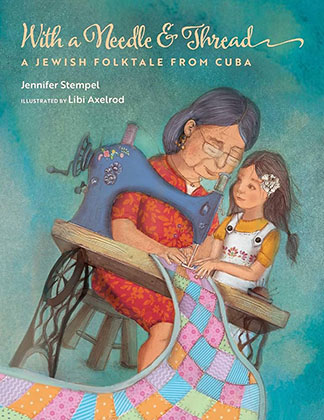 “With a Needle and Thread” is about a grandmother and granddaughter – and how a piece of clothing transforms through lifecycle events. It puts a lens on the small Jewish community – the island of Santiago de Cuba, where Stempel’s family is from – and the unique ability they have to “MacGyver” life.