fbpx

June 18, 2025

Return of Iran’s Royal Family Would Be Game Changer

As David Ben-Gurion famously said, “In Israel, in order to be a realist, you must believe in miracles” and what we are witnessing unfold in Iran in real time, despite the tragic casualties Israel has suffered, is nothing short of a modern miracle disguised in an Israeli air force uniform. In times of crisis, the solutions often require bold action and transformative change. With the rising tensions in the Middle East and the fate of Israeli hostages hanging precariously in the balance, one unconventional idea stands out: the restoration of Iran’s royal family. While it may seem disconnected at first glance, the return of the monarchy in Iran could provide the only realistic pathway to securing the safe release of hostages, offering a route based on diplomacy, pragmatism and the redefinition of Iran’s role in the region.

The Islamic Republic’s foreign policy has long been rooted in an antagonistic ideology, particularly against Israel. This stance has deeply influenced Iran’s regional alliances and proxies, including groups responsible for hostage situations. Further, the royal family’s return would signify a dramatic departure from this hardline approach, replacing it with a foreign policy grounded in pragmatism, modernization and open diplomacy. Unlike the current regime, a royalist government would have no vested ideological interest in prolonging antagonism with Israel. Thus, this shift would enable Iran to act as a neutral mediator, using its influence to negotiate the release of hostages rather than fueling the conflict.

During the reign of the Pahlavi dynasty, Iran maintained amicable relations with Israel, fostering economic ties and strategic collaborations. These historical ties could be revived under a royalist Iran, creating an environment of trust and cooperation. Moreover, such a transformation would position Iran as a credible intermediary capable of leveraging its influence over regional actors to secure the safe return of hostages. In addition, the monarchy’s history of cooperation with Israel would not only facilitate dialogue but also signal to the world Iran’s commitment to peaceful resolutions over confrontation.

Iran’s current regime provides substantial backing to militant groups, many of which have been implicated in hostage-taking and violent escalations. The restoration of the royal family would likely result in a withdrawal of support for these proxies, suffocating their financial and logistical lifelines. This would diminish their operational capacity and create pressure to release hostages as a gesture of goodwill to a changing political landscape. Furthermore, a royalist Iran would prioritize rebuilding its economy and international reputation over entanglements with extremist factions, reinforcing its role as a stabilizing force rather than a destabilizing adversary.

The return of the monarchy could also pave the way for direct diplomatic engagement between Iran and Israel. Such a dialogue would be unprecedented in recent decades and could bring new opportunities for resolving hostage crises and other pressing issues. With a royalist government at the helm, Iran could serve as a bridge for peace, fostering negotiations that prioritize humanitarian outcomes over political posturing.

Diplomatic relations with Israel would provide a platform for transparent discussions, increasing the likelihood of cooperation and the safe release of hostages.

The restoration of the monarchy in Iran would not only impact its relationship with Israel but also contribute to broader regional stability. By distancing itself from radical ideologies and embracing a balanced foreign policy, Iran could spearhead initiatives that prioritize humanitarian values, including the resolution of hostage crises. This would set a powerful precedent, encouraging other nations to adopt similar approaches and shifting the regional narrative toward peace and cooperation.

While the idea of restoring the royal family is compelling, it would undoubtedly face resistance from entrenched factions within Iran and the broader region. However, the urgency of the current crisis and the potential for transformative change provide a strong rationale for pursuing this path. The safe release of Israeli hostages depends on a paradigm shift in the region’s geopolitical dynamics. A royalist Iran, with its focus on diplomacy, modernization and neutrality, offers the best hope for achieving this outcome, creating a future where such crises are less likely to occur.

The return of the royal family in Iran is more than a symbolic gesture; it is a strategic necessity in the face of an escalating regional crisis. By redefining Iran’s foreign policy and fostering collaboration with Israel, the monarchy could create the conditions necessary for the safe release of hostages and the long-term stabilization of the Middle East. In this moment of uncertainty, the restoration of the monarchy represents a beacon of hope, offering a path forward that prioritizes humanity, diplomacy and peace over division and conflict. The stakes have never been higher, and the need for bold action has never been more pressing. “Zan Zendegi Azadi”, or “women, life and freedom” are at long last on the horizon for the people of Iran and we must stand with them in solidarity as they reclaim the political and spiritual control of their homeland despite the road of uncertainty that will inevitably lie ahead.


Lisa Ansell is the Associate Director of the USC Casden Institute and Lecturer of Hebrew Language at Hebrew Union College-Jewish Institute of Religion Los Angeles.

Return of Iran’s Royal Family Would Be Game Changer Read More »
To Feel with our Brethren

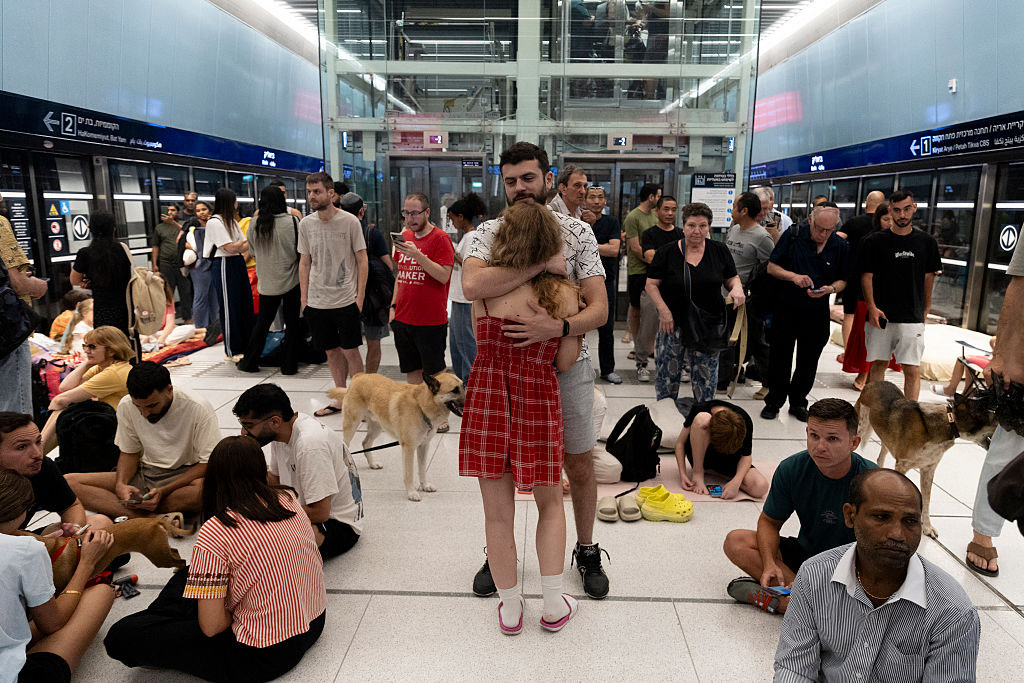
So many of us have had the good fortune to never have experienced living amidst the sights and sounds of war. To hear the explosions of bombs and see the smoke and fire of their impact is unknown to America since the Civil War. Yes, targeted and horrific destruction on 9/11 and an unbelievable Oklahoma disaster have occurred, but as a whole we as a people have lived in a kind of calm and predictability that our people in Israel have not known. The ongoing reality of hyper-vigilance is most devastating to being a fully functioning human being. It undermines equanimity and a sense of wholeness and seems to be the backdrop to daily life in Israel. 

Since Oct 7 the shock of truly being that vulnerable, along with the grief of so much carnage and death, must be an overwhelming cloud to live under. The result of meting out the blasphemous enemies and danger that lurks in the hidden recesses of Gaza and surrounding countries also brings a double-edge sword, a feeling of abominable strength and mighty warriors, as well as the constant awareness of unnecessary deaths of innocent civilians, the unintended consequences that war brings. In the eyes of the world, we are both the innocent and the guilty. That is a war no one can win, one Jews have known in their kishkes full well for a very long time.

So once again fear and uncertainty rise to the surface. In order to be safe and secure, being the aggressor seems to be necessary. Life, liberty, and the pursuit of happiness comes at a horrific price in Israel – it means quelling the capacity of the enemy’s ability to destroy Israel. The irony that the enormous stress and anxiety of living becomes part having to protect oneself. When will the people of Israel truly live with Shleymut, wholeness, and Shalom, peace?

And yet the enormous accomplishments our people have achieved is astounding. Whether in the sciences, technology, agriculture, intellect, art, and music, Israel stands amongst others of the world, despite the trauma and impact on their psycho-emotional-spiritual lives. The Haggadah teaches “we must experience being ‘as if,’ ‘ki ilu,’ we are the slaves of Egypt who became free.” The principle of “ki ilu” means having empathy so you can feel what another feels, truly “walking in their shoes.” 

At this moment I sit here feeling “as if” I too am hunkered down, perhaps in a safe room or together with neighbors or family, trying to stay safe, praying for an end to the terrifying reality of war and for the safety of all those in a small country just wanting to live in harmony and fulfillment of the Gdly gifts we each have received. “I will give to you the land…for an everlasting possession…” is Gd’s promise. Now we pray we can keep it and live in it in peace!

At this moment I sit here feeling “as if” I too am hunkered down, perhaps in a safe room or together with neighbors or family, trying to stay safe, praying for an end to the terrifying reality of war. 

In such harrowing moments we must feel “as if,” we too are like those bullied and threatened, attempting to find a solution that will secure the safety and longevity of a tiny country that just wants to fulfill the dreams of its people – to live with purpose and meaning and express the Gd spark that each possesses. A nurse who comes to our home to assist my husband said the other day, “my family in Iran are overjoyed at what Israel is doing for maybe this will lead to new leadership and a better life.” Perhaps bringing our people a sense of security will also liberate others.

Even in the midst of American turmoil, challenges, and disharmony, our hearts are full of sadness and concerns, empathizing with our fellow Jews on the brink of “life and death,” the existential reality so potent in Israel. We feel “as if,’“we were once slaves and now “as if” we might truly become free.

A Prayer in Times of Uncertainty

Ribbono Shel Olam,

At a moment when our people need a steady rock, a ‘Tzur,’ to cling to.

Fill each of us with Your Holy Presence and with the light of hope.

                  Guide us towards good counsel and wise decisions.

Bless us with inner strength and resilience in such moments of unknowns,

                  And the need to surrender to one another for support and care.

Be an inspiration for trust and faith, Emunah,

                  And embrace us all with Shleymut, wholeness, and Shalom, peace.

Baruch Atah Adonai v’At Shechinah, Who hold us and lift us in moments of uncertainty.


Eva Robbins is a rabbi, cantor, artist and the author of “Spiritual Surgery: A Journey of Healing Mind, Body and Spirit.”

To Feel with our Brethren Read More »

The Logic Behind a Preemptive Strike

Imagine this: there’s a man who lives just down the street. He’s already sent killers to your house. Your children, your neighbors — many were maimed, tortured, raped, kidnapped, murdered. The killers didn’t act alone. The man trained them, funded them, watched as they filmed their crimes with crazy-eyed glee. He’s tried to kill on his own, but without success. Now he’s building a weapon so catastrophic he’s promised — repeatedly and publicly — to use it. And you’ve just learned it may be ready in a matter of months.

You appeal to the authorities. They hold meetings. They issue strongly worded statements. But nothing changes. The man keeps building. He keeps threatening. And eventually, after exhausting every warning, you act.

This is the situation Israel faces — and why it struck Iran.

In Jewish law, there is a principle called rodef — the “pursuer.” If someone is coming to kill you or another innocent person, and there’s no other way to stop them, you are not only permitted but required to intervene — even with lethal force. It’s not about vengeance. It’s about saving lives. Crucially, rodef doesn’t apply only to the defense of oneself. It includes the obligation to protect others — your family, your community, even strangers — if they’re in danger.

This isn’t some narrow, tribal ethic. It’s a universal principle. When someone has both the intention and the means to do irreparable harm, waiting becomes a form of moral failure. Action, though difficult, becomes a duty.

And what’s extraordinary here is that tiny Israel — just a sliver of land on the eastern edge of the Mediterranean — is doing what the entire Western world should have done long ago. Iran’s pursuit of nuclear weapons and its open threats to annihilate another nation are not just an Israeli problem. They are a global one. Israel, invoking rodef, is not only protecting itself. It is standing in the breach for millions who either cannot or will not act.

In April of this year, Iran showed the world what it’s willing to do.

On the night of April 13th, Iran launched the largest direct attack on Israel in modern history. Over 300 projectiles — drones, cruise missiles and ballistic missiles — were fired at Israeli cities, military bases and civilians. The assault was coordinated with Iranian proxy forces in Iraq, Syria, Lebanon and Yemen.

Thanks to Israel’s defense systems — and the assistance of the United States, Jordan and the United Kingdom — almost all of the incoming weapons were intercepted. Still, a few made it through. A young Israeli Bedouin girl was critically injured. Military installations were damaged. The worst was narrowly avoided. But the message from Tehran could not have been clearer: we are coming for you.

This wasn’t a spontaneous outburst. It was the culmination of years of threats, arms buildups, and proxy wars — all directed at the Jewish state. Iran’s leadership has never been vague about its intentions. “Death to Israel” is not a metaphor. It is policy.

Iran has enriched uranium to near-weapons-grade levels. It has blocked inspections, hidden nuclear sites underground, and accelerated its missile development. All while continuing to arm terrorist proxies and call for Israel’s destruction.

Under any moral framework, Iran is not just dangerous—it is an active and ongoing rodef.

Israel’s strike was not an act of aggression. It was an act of prevention. It targeted Iran’s nuclear infrastructure, command centers, and terror-linked networks — operational hubs tied directly to its machinery of violence and death.

Remarkably, many in the region who have suffered under Iran’s regime understand this more clearly than Western observers. A large number of Iranians — especially the young, the exiled, the silenced — have taken to social media not to condemn Israel, but to thank it. Syrians, too, who watched their country ravaged by Iran’s proxy war on behalf of Assad, know exactly who bears responsibility. These are not outliers. They are part of a growing majority who see Israel not as the aggressor, but as the one nation willing to confront a murderous regime that has brought ruin to its own people and chaos to its neighbors.

Some will still criticize Israel. That, too, is predictable. There are always those who demand an impossible level of “restraint” from the world’s only Jewish state — even in the face of existential threat. And yet, it should be plain to see: this tiny nation is taking upon itself the danger that faces the entire Western world.


Peter Himmelman is a Grammy and Emmy nominated performer, songwriter, film composer, visual artist and award-winning author. 

The Logic Behind a Preemptive Strike Read More »

It’s All About the Saudis

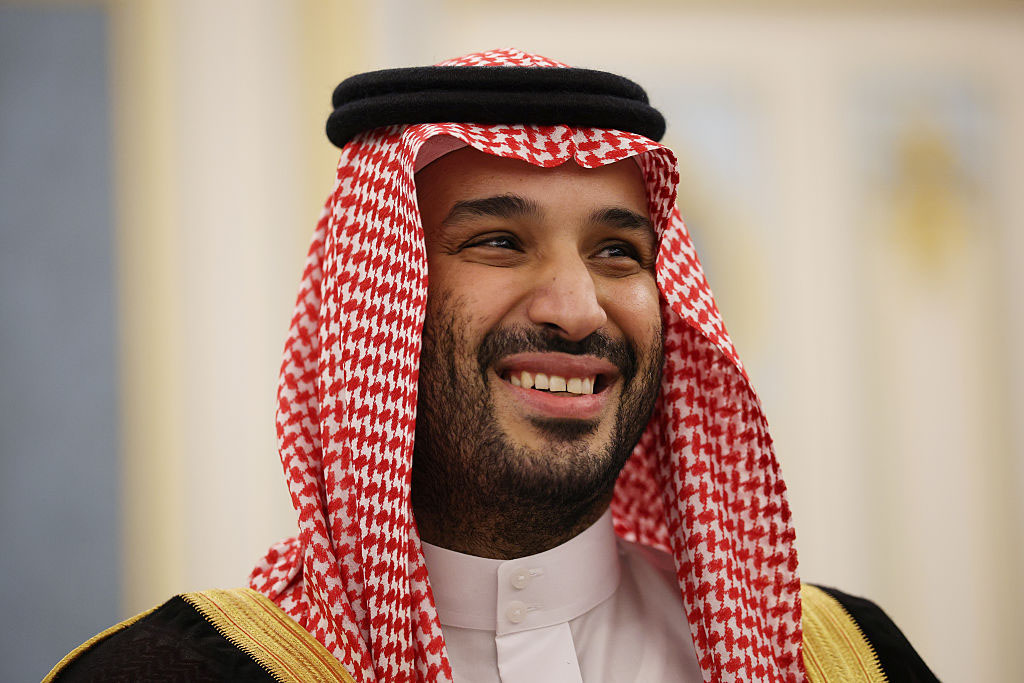
The most important person in the Middle East right now is not Benjamin Netanyahu or Ayatollah Ali Khamenei. It is not the head of the IDF or the Islamic Revolutionary Guard. It is not Donald Trump or Vladimir Putin or Xi Jinping. Rather, the individual most likely to determine the long-range success or failure of Israel’s war with Iran may be Mohammed bin Salman, the Prime Minister of Saudi Arabia. 

Israel still knows that an expanded version of the Abraham Accords that includes Saudi Arabia is a necessary linchpin for regional peace. Iran recognizes that ongoing belligerence with the Saudis is no longer a luxury they can afford. The country has clearly become Trump’s favorite partner in the Middle East, as evidenced by the president’s recent visit to the country and affectionate relationship with MBS. Saudi Arabia now sets the tone not only for the other Gulf States but other regional powers such as Jordan and Egypt who are equally suspicious of Iran. Increasingly, all roads lead to Riyadh.

The initial Saudi response was unsurprisingly harsh, denouncing the Israeli attacks as blatant violations of Iran’s sovereignty and international law. It was the first Arab state to issue a condemnation, stating the attacks “undermine [Iran’s] sovereignty and security.” Bin Salman phoned the Iranian president to express condolences for their casualties and reaffirm Saudi solidarity with Iran and the broader Islamic world. 

Some of that antagonistic messaging was for the purpose of domestic politics within Saudi Arabia. But Riyadh’s strong reaction may also reflect its recent warming ties with Tehran — particularly since the 2023 China-brokered rapprochement — and its desire to preserve those gains. On the other hand, it’s clear that MBS does not trust Iran and that his recent arms agreement with Trump is specifically designed to provide the Saudi military with the necessary weaponry to protect itself against Iranian aggression. Saudi Arabia benefits greatly from having a foot in both camps.

It’s clear that MBS does not trust Iran and that his recent arms agreement with Trump is specifically designed to provide the Saudi military with the necessary weaponry to protect itself against Iranian aggression. 

The question is how MBS decides to balance these competing interests, especially when the two countries who represent those interests are now at war. It is no exaggeration to say that despite Israel’s pronounced military and economic advantages over Iran, Saudi Arabia could ultimately determine the war’s outcome. Should they decide to reinforce their public criticism of Israel with other types of assistance to Iran, they would lead most of the rest of the Arab world along with them. Even a military juggernaut such as Israel could not maintain its offensive against Iran in the face of unanimous Arab opposition.

But the Saudis could also decide that public statements can be balanced by a quieter thumb on the scale to help Israel thwart a nemesis that has been an irritant to both countries for many years. MBS has mastered the art of this type of geopolitical ambiguity in the past and he may see an opportunity here to rid himself of his most annoying headache without a direct confrontation. Allowing Israel to do his dirty work for him, even while denouncing their aggression, could give him the best of both worlds.

This path could also draw Trump more decisively into Israel’s camp. The American president has been on both sides of this matter ever since Israel’s preparations became too obvious to ignore early last week. After making sure that his warnings to Netanyahu against the attack were widely reported, Trump then seemed to switch sides once he saw that the initial Israeli airstrikes had been successful. Faced with the choice of being seen either as incapable of stopping Netanyahu or as secretly supporting Israel’s strategy, Trump established a tenuous middle ground in which he praised the attacks as helpful to U.S-Iran negotiations. But it was then reported that Trump worked to dissuade Netanyahu from an assassination attempt on Khamenei over the weekend. It’s reasonable to assume that if MBS decides to surreptitiously help Israel in this fight, Trump will feel comfortable becoming more vocal on behalf of the Jewish state too.

There is no way of knowing whether the Saudis were informed of last Friday’s operation before it took place. But despite the potential risk involved, it’s not hard to see why such a call may have been in Israel’s long-term interests. As Saudi Arabia goes, so goes the war.


Dan Schnur is the U.S. Politics Editor for the Jewish Journal. He teaches courses in politics, communications, and leadership at UC Berkeley, USC and Pepperdine. He hosts the monthly webinar “The Dan Schnur Political Report” for the Los Angeles World Affairs Council & Town Hall. Follow Dan’s work at www.danschnurpolitics.com.

It’s All About the Saudis Read More »

New ICC Poll Reveals Strong Majority of Americans Believe in Israel’s Right to Defend Itself Against Iran

A new poll conducted by Schoen Cooperman Research on behalf of Israel on Campus Coalition revealed that a strong majority of Americans are supportive of Israel’s recent actions in Iran.

The survey, which was taken by 800 U.S. adults, showed that over 80% agree it is critical to stop Iran from obtaining nuclear weapons; an equal percentage view a nuclear-armed Iran as a serious threat to U.S. national security. Additionally, 62% believe the U.S. should back Israel’s efforts to dismantle Iran’s nuclear capabilities, and 57% of Americans support Israel’s strike on Iran’s nuclear facilities. A majority, 51% percent, see Israel’s actions as self-defense, while only 28% see them as aggression.

“These results reflect a clear American consensus: over 80% recognize the critical need to prevent Iran from obtaining nuclear weapons, and Israel has the right to protect itself from this existential threat,” said Jacob Baime, CEO of ICC, which is a pro-Israel organization for Jewish and non-Jewish Zionists on college campuses nationwide. “Operation Rising Lion is a precise and necessary response to a regime that threatens Israel’s existence and global stability. Americans recognize that Israel’s actions safeguard not only its own security but also U.S. interests.”

“Operation Rising Lion is a precise and necessary response to a regime that threatens Israel’s existence and global stability.” – Jacob Baime

The survey comes at a time when figures on both sides of the political spectrum, from Tucker Carlson and Candace Owens to Dave Smith and Cenk Uygur, are publicly calling out Israel for its actions and warning that this could be the beginning of World War III. ICC and Schoen Cooperman’s findings reveal that these are fringe opinions and Americans are in favor of Israel protecting itself.

The poll also showed significant public engagement, with 70% of Americans reporting they have followed news about the Israel-Iran conflict closely. This shows heightened awareness of Iran’s nuclear ambitions.

Iran has been aggressive towards both the U.S. and Israel in the decades since the Iranian Revolution of 1979, when it became the Islamic Republic of Iran. According to President Trump, Israel struck at the right time, saying on Tuesday, June 17 that Iran was “very close” to having a nuclear weapon. The Trump Administration has not yet decided to become actively involved in the conflict.

However, what is clear is that most Americans think that Israel is taking the correct steps.

“Americans understand the seriousness of the threat that Iran poses, as majorities support Israel’s actions against Iran and believe that Israel’s attack was an act of self-defense,” said Carly Cooperman, CEO of Schoen Cooperman Research. “The American public is united around preventing Iranian nuclear proliferation and sees Israel as furthering American interests by taking action to do so.”

New ICC Poll Reveals Strong Majority of Americans Believe in Israel’s Right to Defend Itself Against Iran Read More »

The Non-Banality of Evil: Iran Edition

In December 2024, Iranian authorities introduced a law that, according to Amnesty International, “permits the imposition of the death penalty for peaceful activism against Iran’s discriminatory compulsory veiling laws.” In other words, if you’re a female peace activist marching on the streets of Tehran and your hair covering isn’t quite right, you may be executed.

That is evil, yes, but who ever uses that word?

Indeed when we argue over the existential threat of a nuclear Iran or bemoan the brutal oppression of its people, we use a lot of fancy words and ideas, but rarely do we use the word “evil.” 

If we agree, for example, that the Iranian regime is evil but we hate Trump and everything he does, we won’t dare support his efforts against that regime.

That is Trump Derangement Syndrome, but there is also Israel Derangement Syndrome and America Derangement Syndrome and Jewish Derangement Syndrome.

All those syndromes came together in the aftermath of President Trump’s historic decision to bomb three Iranian nuclear facilities.

Millions of armchair pundits jumped on social media to tell us why it was a dumb decision, how it threatened a third world war, why it was illegal, why Iran wasn’t really building the bomb, why it was all Israel’s fault, and so on.

No one used the word evil.

Leading the way was Senate Minority Leader Chuck Schumer (D-N.Y.) — long a hawk on Iran— who blasted Trump’s decisive action for “sidestepping Congress.” What did he have in mind? A weekslong debate in Congress that would give the mullahs all the lead time they’d need to diffuse any attack?

Schumer never used the word evil, either.

The journalist Hannah Arendt coined the phrase “the banality of evil” while reporting on the trial of Adolph Eichmann, a Nazi SS officer, in Jerusalem. That phrase has become so iconic I sometimes wonder if the word “banality” has taken the edge off the word. Is that why we so rarely use it — because evil is banal?

The good people of Iran have been subjected to the evil of ideological fanaticism ever since the mullahs took over in 1979. It’s an evil that tells us it wants to destroy the Jewish state and the West, all in the name of how they interpret their religion.

There’s nothing banal about such evil.

Evil is the hardwired motif that runs through everything Iran has done in the region.

What do you call building a “ring of fire” around the world’s only Jewish state in order to burn it out of existence?

What do you call arming and sponsoring terror proxies in Lebanon, Gaza, Syria, Iraq and Yemen and racing to build a nuclear bomb with the ultimate intent to commit genocide against Jews?

What do you call becoming the world’s #1 sponsor of terror, suppressing dissent at home and wreaking havoc elsewhere?

Of course you call it evil, but no one will actually say it. They’ll argue over geopolitics or how to make win-win deals or how “regime change” is too explosive to mention even though the regime is evil. 

There is one group that does understand evil and not surprisingly, it’s the group with the most skin in the game: Israelis.  Maybe that’s why in a country where people disagree about everything, the great majority of Israelis support the war against an evil regime.

Recognizing evil is not a substitute for complex debate over complex problems. Rather, it’s a moral starting point.

“Iran is ruled by a theocratic dictatorship detested by the overwhelming majority of its people,” Mideast expert Dan Perry wrote on his Substack. “No one asked ordinary Iranians whether they wanted to bankroll Hezbollah, the Houthis, or Assad’s brutal regime in Syria — or to spend billions chasing nuclear weapons while their economy crumbles.”

That kind of evil is not all we need to know about Iran, but it’s fundamental. Regardless of all the news we hear about “ceasefires” and “nuclear deals,” recognizing evil is indispensable because it keeps our eye on the essential. Of all the “whys” over why we fight, fighting evil is indeed the biggest why. 

Just ask the women of Tehran.

The Non-Banality of Evil: Iran Edition Read More »