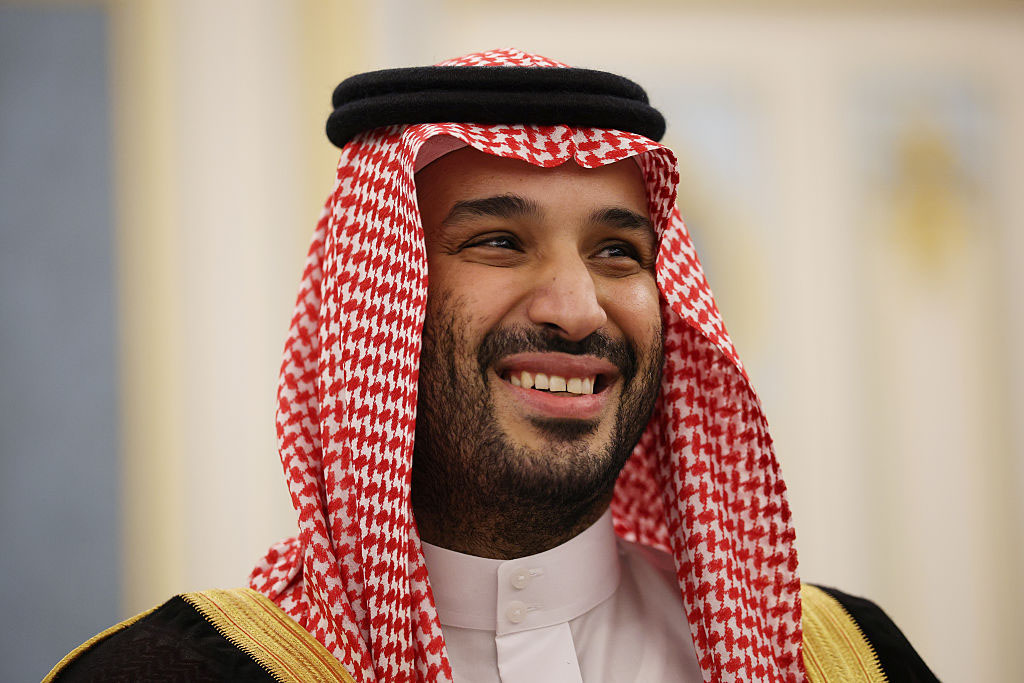
The most important person in the Middle East right now is not Benjamin Netanyahu or Ayatollah Ali Khamenei. It is not the head of the IDF or the Islamic Revolutionary Guard. It is not Donald Trump or Vladimir Putin or Xi Jinping. Rather, the individual most likely to determine the long-range success or failure of Israel’s war with Iran may be Mohammed bin Salman, the Prime Minister of Saudi Arabia.
Israel still knows that an expanded version of the Abraham Accords that includes Saudi Arabia is a necessary linchpin for regional peace. Iran recognizes that ongoing belligerence with the Saudis is no longer a luxury they can afford. The country has clearly become Trump’s favorite partner in the Middle East, as evidenced by the president’s recent visit to the country and affectionate relationship with MBS. Saudi Arabia now sets the tone not only for the other Gulf States but other regional powers such as Jordan and Egypt who are equally suspicious of Iran. Increasingly, all roads lead to Riyadh.
The initial Saudi response was unsurprisingly harsh, denouncing the Israeli attacks as blatant violations of Iran’s sovereignty and international law. It was the first Arab state to issue a condemnation, stating the attacks “undermine [Iran’s] sovereignty and security.” Bin Salman phoned the Iranian president to express condolences for their casualties and reaffirm Saudi solidarity with Iran and the broader Islamic world.
Some of that antagonistic messaging was for the purpose of domestic politics within Saudi Arabia. But Riyadh’s strong reaction may also reflect its recent warming ties with Tehran — particularly since the 2023 China-brokered rapprochement — and its desire to preserve those gains. On the other hand, it’s clear that MBS does not trust Iran and that his recent arms agreement with Trump is specifically designed to provide the Saudi military with the necessary weaponry to protect itself against Iranian aggression. Saudi Arabia benefits greatly from having a foot in both camps.
It’s clear that MBS does not trust Iran and that his recent arms agreement with Trump is specifically designed to provide the Saudi military with the necessary weaponry to protect itself against Iranian aggression.
The question is how MBS decides to balance these competing interests, especially when the two countries who represent those interests are now at war. It is no exaggeration to say that despite Israel’s pronounced military and economic advantages over Iran, Saudi Arabia could ultimately determine the war’s outcome. Should they decide to reinforce their public criticism of Israel with other types of assistance to Iran, they would lead most of the rest of the Arab world along with them. Even a military juggernaut such as Israel could not maintain its offensive against Iran in the face of unanimous Arab opposition.
But the Saudis could also decide that public statements can be balanced by a quieter thumb on the scale to help Israel thwart a nemesis that has been an irritant to both countries for many years. MBS has mastered the art of this type of geopolitical ambiguity in the past and he may see an opportunity here to rid himself of his most annoying headache without a direct confrontation. Allowing Israel to do his dirty work for him, even while denouncing their aggression, could give him the best of both worlds.
This path could also draw Trump more decisively into Israel’s camp. The American president has been on both sides of this matter ever since Israel’s preparations became too obvious to ignore early last week. After making sure that his warnings to Netanyahu against the attack were widely reported, Trump then seemed to switch sides once he saw that the initial Israeli airstrikes had been successful. Faced with the choice of being seen either as incapable of stopping Netanyahu or as secretly supporting Israel’s strategy, Trump established a tenuous middle ground in which he praised the attacks as helpful to U.S-Iran negotiations. But it was then reported that Trump worked to dissuade Netanyahu from an assassination attempt on Khamenei over the weekend. It’s reasonable to assume that if MBS decides to surreptitiously help Israel in this fight, Trump will feel comfortable becoming more vocal on behalf of the Jewish state too.
There is no way of knowing whether the Saudis were informed of last Friday’s operation before it took place. But despite the potential risk involved, it’s not hard to see why such a call may have been in Israel’s long-term interests. As Saudi Arabia goes, so goes the war.
Dan Schnur is the U.S. Politics Editor for the Jewish Journal. He teaches courses in politics, communications, and leadership at UC Berkeley, USC and Pepperdine. He hosts the monthly webinar “The Dan Schnur Political Report” for the Los Angeles World Affairs Council & Town Hall. Follow Dan’s work at www.danschnurpolitics.com.