fbpx

May 21, 2025

Israel’s Yuval Raphael Finishes Second at Eurovision

Israeli singer Yuval Raphael placed second in the 2025 Eurovision Song Contest, held May 17 in Basel, Switzerland. Her song, “New Day Will Rise,” is an operatic pop ballad with a music video that references concertgoers fleeing the Hamas attacks on the Nova Music Festival. She herself survived the Oct. 7, 2023 festival massacre, where she hid in a bomb shelter for eight hours. Following her father’s advice over the phone, she played dead. Of the roughly 50 people in the shelter, only 11 survived.

Nineteen months later, Raphael, 24, would be representing Israel at Eurovision.

Survivors of the massacre and family members of those who were murdered were in attendance to support Raphael at the St. Jakobshalle Arena.

During her performance at the Eurovision Finals, Raphael wore a black jumpsuit designed by Israeli fashion designer Victor “Vivi” Bellaish. Following her performance, there was widespread speculation online that the black sleeves were a reference to Batman — which has been associated with the Bibas brothers, two young Israelis who were murdered by Hamas. Bellaish told Mako News that the symbolism was unintentional. “The effect created was beyond what I could have imagined, sometimes the universe does its own styling.”  

Eurovision was first held in 1956, and Israel has been participating since 1973. Israel has won four times and hosted the contest three times. 

“New Day Will Rise” was written by Israeli singer-songwriter and composer Keren Peles, who co-wrote “Hurricane,” Israel’s 2024 entry. The first verse and each chorus of the song are in English, the second verse is in French and the bridge after the second chorus is in Hebrew. Raphael’s stage setup featured a crystal-bedecked spiral staircase, which was a subtle reference to a famous photo of Theodor Herzl on the balcony of the Grand Hotel Les Trois Rois in Basel at the Fifth Zionist Congress in 1901. 

Raphael finished just behind the winner, Austrian singer JJ performing “Wasted Love.” After the results were announced, Raphael told Israel’s KAN11 that “[JJ] deserves it,” and described JJ’s voice as “incredible.”

Eurovision’s scoring is a combination of jury votes from each participating country (who cannot vote for their own country), and a public televote. For the jury vote, Israel finished 14th out of 25 with 60 points. Azerbaijan’s jury was the only one that ranked Israel number one, giving Israel 12 points. Israel awarded its own top jury score of 12 points to Greece.  

The public televote points are allocated based on whoever has a plurality of public votes from that particular country. People are allowed to vote up to 20 times each. Israel received the top ranked public vote from 12 countries: Australia, Azerbaijan, Belgium, France, Germany, Luxembourg, Netherlands, Portugal, Spain, Sweden, Switzerland, United Kingdom and “The Rest of the World” vote. Israel received partial points from the public in 22 other countries. The public vote from three nations— Armenia, Croatia and Poland — did not give Israel any points. Still, Raphael and Israel earned 297 televote points — the most of any contestant in the competition. 

Just before 4:00 p.m. Los Angeles time, Israel’s total vote tally was revealed to be 357, temporarily vaulting Raphael to the top spot. In the last two minutes of the show, only Austria’s and Switzerland’s public votes were left to be revealed. The Switzerland performers looked disappointed when they learned they had received zero public votes — which left Israel at the number one spot. The final public vote to be revealed was Austria, which needed 100 public points to win. They received 178, bringing their total to 436 and clinching the win.

The show aired on Saturday evening in Israel, where missile sirens blared following rocket attacks from Yemen. Nobody was injured and no damage was reported. 

Raphael received death threats during the week leading up to the finals. During her live performance, two people, identified by officials as a Dutch couple, attempted to rush the stage. One of them threw paint at a crew member, but no injuries were reported and the incident was not visible on the live broadcast. In Spain, immediately before Raphael’s performance, the national public broadcaster displayed the message: “When human rights are at stake, silence is not an option. Peace and Justice for Palestine.” Spain’s televoters later awarded Israel their full 12 points.

On May 11, during Eurovision’s turquoise carpet event, a man made a throat-slitting gesture toward Raphael, and Israeli broadcaster KAN — which sponsors Israel’s Eurovision contestant — filed a complaint with local police. At Raphael’s May 16 dress rehearsal, six individuals with flags and whistles attempted to disrupt her performance and were removed by security. On the night of the finals, protesters outside the 8,000-seat arena in Basel called for Israel to be disqualified. On-site reporters described the atmosphere as much calmer than the protests for Eden Golan’s Eurovision participation in Malmö, Sweden last year. 

The Journal spoke with an anonymous Eurovision insider. They told The Journal Israel’s support was likely from voters who would not normally pay any attention to Eurovision, but turned out specifically for Israel. That trend appeared to hold true in Los Angeles, where over 50 people gathered for a watch party at Casita Del Campo restaurant in Silverlake. 

The watch party was organized by three local Jewish community platforms: Shalom SoCal, Mish Mish LA, and a popular WhatsApp group, “LA Jewish Events.” Katie Guastini, who runs ShalomSoCal, has been a Eurovision fan since 2023. She hosted a small Eurovision watch party at her house in 2024. 

“This year, we have people from everywhere, which in LA is a big deal — people coming to Silverlake from Brentwood, Venice, Westwood, the Valley, Agoura Hills. There’s a need for this kind of community and everyone is so excited.” When disappointment washed over the crowd as Austria was crowned winner, Guastini was the first to reassure everyone, shouting, “Hey, remember, we got number two.” Attendees were already saying that even though Eurovision won’t be in Tel Aviv next year, Los Angeles should have a massive watch party in 2026. 

Until then, you will undoubtedly hear live performances of “New Day Will Rise” at pro-Israel events — “Hurricane” was a popular tune this past year. Sarah Seltzer, a Los Angeles-based violinist with a degree in music theory, offered analysis of the composition and performance. “Compared to last year’s Eurovision song, ‘Hurricane,’ I think that this one is a lot more harmonically complex and interesting. For someone like Yuval Raphael, who hasn’t had a professional career before this, she did a great job negotiating a lot of those modulations. Given everything — the song worked really well.” Seltzer said that she expects singers covering “New Day Will Rise” to have a fun time putting their own twist on the song. “I can hardly wait for all the people to post their covers and new harmonies over it,” Seltzer said. 

Back in Israel, Raphael returned to a hero’s welcome by a raucous crowd of supporters at Ben Gurion Airport. She used the moment to put a spotlight not on herself, but on people still being held captive by Hamas terrorists. “I feel like we had a huge, huge victory, but we will never have a victory until all of our hostages return home,” Raphael said. 

Israel’s Yuval Raphael Finishes Second at Eurovision Read More »

Israel’s ‘Just War’ Explained

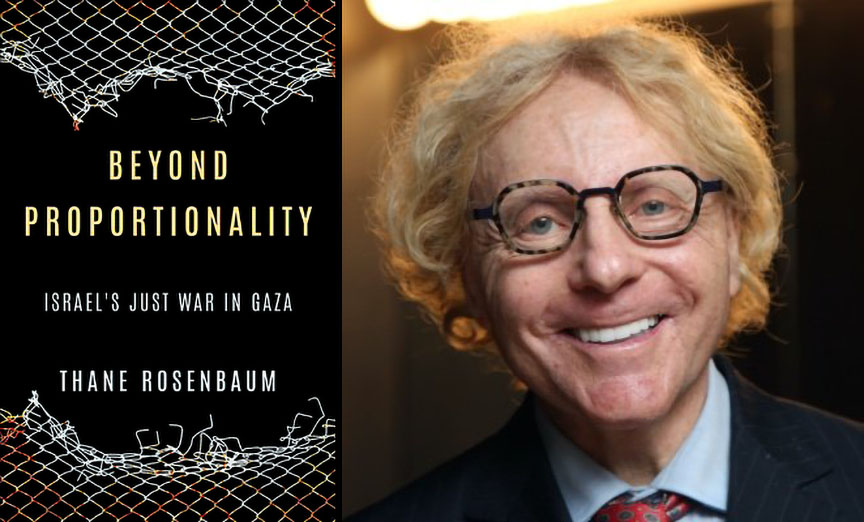
As my children donned their uniforms while going off to defend Israel, America, the West, after Oct. 7, I told them: “The morality of this war is clear. You do whatever you need to do to protect yourself, your buddies, your homeland.  I am not speaking now as a father, an Israeli, or a Jew – but as an American historian. I’ve studied how America fought in World War I and World War II, in Iraq and Afghanistan. Hamas started this war with a vicious attack. That puts the moral onus on them. If you shoot your officer in the head accidentally – it’s on Hamas. If you have to kill a hostage being used as a human shield – it’s on Hamas. If Palestinian civilians are killed or injured – it’s on Hamas.” Explaining Just War theory I said: “Hamas’ evil imposed a ‘supreme emergency,’ and Israel has the right to fight with supreme measures in self-defense.” If time weren’t linear, I could go back and also give them Thane Rosenbaum’s timely new book, “Beyond Proportionality: Israel’s Just War In Gaza.”

This is a must read on both sides of the Atlantic, written by the multi-dimensional talented novelist and lawyer, Thane Rosenbaum. Thane is a friend whom I met through our common love of Israel, the Jewish people, true liberalism, this Journal and its extraordinary publisher. Israelis must understand the rules of war, because the world is targeting us, and, even more important, because we and our kids want to fight as legally and ethically as possible. 

Ultimately, Israeli soldiers respect military ethics for altruistic and selfish reasons. Few delight in others’ suffering: ours is a culture of life fighting Hamas’ death cult. More important, our soldiers judge themselves for their own souls’ sake. When they look in the mirror, they need to know they fought honorably, despite intolerable circumstances.

At the same time, if even one of Rosenbaum’s fellow New Yorkers reads this book and stops throwing thunderbolts of judgment from the comforts of the Upper West Side, Rosenbaum’s efforts will have been worth it. In fact, he writes: “This is the reason I have written this book — to disentangle lies from truth, myth from fact, and to bring some clarity to the legal norms of warfare that are constantly misapplied and invoked against Israel whenever it is forced to defend itself against terrorism.”

This book should be read by the haters and the silenced majority, to justify Israel’s actions – and explain how America fights and will be compelled to fight future wars too. It’s also essential reading for anguished, apologetic “April 1 Zionists.”

On April 1, 2024, Israeli drones mistakenly targeted a World Central Kitchen Aid convoy, killing seven aid workers. Many Americans – including some Zionists who defend Israel and support the war – asked “why did Israel kill those humanitarians?” Allies’ inability to understand the “fog of war,” the unfortunate reality that so much firepower kills many people mistakenly, was terrifying. I worried less about Israel’s reputational hit. I worried more about Western critics’ inconsistency, cowardice, and moral confusion. 

As an historian, I focused on the date of the misunderstood deaths, “April 1.” One student noted, “that’s April Fool’s Day too.”

War is Hell. War is inherently immoral. By definition, soldiers violate the normal rules of “thou shalt not kill” and “love thy neighbor” – to counter and conquer a compelling threat. Seeking morality in war is like seeking a Hamasnik pacifist (or feminist or antiracist or humanist or liberal).

Similarly, demanding what most reporters call “proportionality” in war is equally futile, like playing the Super Bowl to tie. You win a war by overwhelming your opponent with, ahem, disproportionate force. 

This confusion is why Rosenbaum’s argument is so important.  He writes as a prominent lawyer and law professor, who has taught human rights law, along with legal humanities and law literature. He currently directs the Forum on Life, Culture, & Society, hosted by Touro College, and is a Legal Analyst for CBS News Radio. 

Rosenbaum distinguishes between body counts and moral accounting. “Death tolls can be lopsided without violating the rules governing proportionality,” he explains. “That’s because proportionality assessments are focused more on what an army was aiming at and less on the results.” 

True, dead is dead. But civilian prosecutors consider motive, sifting between premeditated murder, involuntary manslaughter and self-defense. Similarly, militarily, there is a dramatic difference between invading peaceful kibbutzim and villages on Oct. 7, raping, torturing, kidnapping and killing young and old in the most brutal ways and unintentionally killing Gazan civilians, especially as Hamas terrorists hide behind them and often pretend to be civilians – in life and in their exaggerated death counts. 

Rosenbaum’s clarity resists today’s popular sloppiness and moral idiocy. This crisp, well-organized, elegantly-argued book shows how misconceptions form – and propagandists exploit mass laziness. So just as the security need to keep Israelis and Palestinians apart sometimes, feeds the lie that Israel is guilty of apartheid – despite there being no race-based Israeli legislation – the accusation that Israel is fighting “disproportionately” builds on the confusion that what counts is the body count rather than combatants’ intentions.

“For proportionality purposes,” Rosenbaum writes, “what matters most is the military value of the target. Once a target is identified as highly valuable and a military necessity, is there a formula that guides a nation in making its proportionality assessment? How many are allowed to be killed before an army is required to walk away? In Gaza, body counts are abysmally inaccurate, if not wholly fabricated. Is Israel bound by the math skills of its adversary?”

These are only a few of Rosenbaum’s annoyingly on-target questions. Regarding the world’s demand that Israel feed its Gazan enemies, he writes: “Nations under siege are not usually well fed. What happens when aid is hijacked by terrorists and never makes it to benefit the civilian population?” Moreover, “Does it make sense that Israel should be feeding and hydrating its enemy?” Why “isn’t Hamas legally and morally responsible for the care of its own people? What about the use of civilians as human shields and the willingness of civilians to serve in that capacity?” And “Who counts as a civilian, and when do civilians who voluntarily choose to provide material aid to an enemy lose their protected status?” 

Then, returning to his proportionality analysis, he bravely wonders: “Must Israel and Gaza yield the same number of civilian casualties? Is that what it means to conduct a fair and proportionate war?”

After noting how quickly activists accused Israel of “genocide” even as it was bleeding, Rosenbaum returns to the meaning of the word and standard legal precedents. “A genocide in Gaza,” he writes, “would require a showing that the Palestinian people were the very targets of Israel’s war strategy — the premeditated intention to eliminate the people and not just the terrorists who govern them.”

Applying the standard legal analysis to this insane war of HaMosques, Hamospitals, and killergartens, catapults Rosenbaum to a sweeping conclusion. Juxtaposing urban warfare’s complexities onto the international community’s harsh legal judgments against Israel, Rosenbaum finds the current legal machinery inadequate.  We keep expecting today’s barbarians to respect rules tradition-minded “officers and gentlemen” set. 

Rosenbaum keeps relying – refreshingly – on research and precision. He demonstrates that the oft-cited Geneva Convention “never anticipated the special situation presented in Gaza.” These were, in fact, “four separate treaties that protect victims of war and soldiers who are taken hostage,” written following World War II. These agreements “understood civilians in the ordinary sense. Most Gazans, however, are decidedly not ordinary civilians.” Many actively assist Hamas. When civilians fight, “even in capacities that do not require them to fire weapons, they may have intentionally surrendered their civilian status.”  

Furthermore, “What the Geneva Conventions had in mind are ‘innocent’ civilians, which has little to do with the wearing of uniforms. … Civilians can serve a deadly purpose without weapons” or military bling.

Rosenbaum calls this asymmetric warfare “Fourth-Generation Warfare.” Nation-states will keep facing “rogue nonstate actors,” treating one set of civilians as “natural targets while the other, as noncombatants, are protected.” Terrorists brazenly defy every norm while the world holds Israel to absurdly high standards – standards America and its allies did not have to meet in Iraq or Afghanistan, and which the mainstream media ignored. Hamas targets Israeli civilians purposefully – yet Israeli soldiers are targeted legally when they kill Gazans mistakenly.

Terrorists brazenly defy every norm while the world holds Israel to absurdly high standards – standards America and its allies did not have to meet in Iraq or Afghanistan, and which the mainstream media ignored.

The double standard is inherent to this kind of civilizational conflict. That’s why the rules need updating for the sake of America and all rule-abiding democracies. Rosenbaum goes even more politically incorrect – yet historically accurate – by connecting the dots. Beware, he says, the aggressors are increasingly Islamists exploiting Western ideals and hospitality, while the victims are Westerners blinded by their hospitality, bound by those ideals.

A third major theme flows from the way Israel is singled out, pilloried for not living up to unrealistic expectations, then demonized. How could it be, honest readers will wonder, that a country invaded by genocidal forces on Oct. 7 was so quickly accused of committing genocide against its invaders – Westerners once called it “self-defense.” Clearly, to many haters, including “indoctrinated students, progressive activists, and social justice warriors” in the West, the real crime is Israel’s very existence.

“Terrorism comes with its benefits,” Rosenbaum sighs. “A blanket pardon. Accountability to no one. The lowest of expectations on how to fight fairly. Yet, Israel’s self-defense is held to the highest standards of wartime scrutiny. Nearly every move it makes raises all manner of global condemnation.”

Rosenbaum is a recovering liberal. Originally a normie, decades ago he was just living his life until he had his Herzl Moment realizing how unfair the world was to the Jewish State. That background sharpens Rosenbaum’s abilities to sniff out his former allies’ hypocrisies.  He quotes The Washington Post, NBC News and NPR, which during Hamas’ rampage, rationalized the evil by exaggerating “worsening tensions,” a “punishing blockade and occupation,” a “brutal siege” – despite Israel’s 2005 withdrawal from every inch of Gazan territory. If, in 1980s America, a conservative was a liberal who’d been mugged – and in Israel after Arafat’s War of Terror in the 2000s, a conservative was a liberal who’d been bombed – Rosenbaum turned because he was a liberal who dared defend Israel’s right to defend itself.

Alas, even those world leaders who shortly after Oct. 7 understood Israel’s need to respond to the massacre, still granted “a nebulous, nonspecific” right of self-defense “with a catch: Israel was free to retaliate, but not if it meant killing Palestinians, including terrorists. … Collateral damage of any degree in Gaza causes instant fury. Military necessity doesn’t seem to matter. No amount of proportionality will be accepted.” 

That leaves Israel in “a Kafkaesque quandary. It “has the right to enter into wars so long as there are no Palestinian casualties of those wars” – even as Hamas tries to maximize the number of Palestinian casualties, then further pads the death count. Israel’s wartime conduct is so circumscribed, “any action taken in its own defense is summarily a war crime.” 

Where could such perverse double standards and ideological traps come from?

Revealingly, this ideological assault on the Jewish state uses “much the same imagery” of medieval haters. You can smell the common Jew-hatred in the Dreyfus trial that helped shape Herzl’s Zionism, in Israel’s trials, in medieval Jewish traumas imposed by Christians and Muslims. Hear the echoes: in the “heightened emotions, irrational arguments, distorted histories, the rejection of obvious truths, forged documents, falsified facts, misapplied laws, antisemitic stereotypes, and worldwide anti-Jewish rage.”

That lens illuminates the world’s moral confusion. 

That’s how Thane Rosenbaum, Esquire, builds his case, from one sharply-etched, spot-on chapter title to another. He starts with “’J’accuse!’ — The Case Against Israel,” showing how the world is “Judging a Nation, and a People, as Guilty — Regardless of the Facts and Law.” That makes Gaza “A War of Moral Confusion” because “Casualties of War Are Not Victims of Genocide.” He urges: “Listen to What They Say and Watch What They Do: When A Nation’s Enemy Is Committed to Eternal Warfare” and details “The Singular Dilemma of Fighting a War in Gaza: The Relentless Gaze of the Globe.” 

By Chapter 5, Rosenbaum asks expansively: “Do the Laws of Armed Conflict Apply to Terrorists Who Surround Themselves with Civilians?” He exposes “The Proportionality Trap: Why Death Tolls in War Need Not Add Up Equally.” Smelling Jew-hatred, he chronicles “When Global Politics and An Ancient Prejudice Hijack International Law” and concludes: “Civilians Voluntarily Serving As Human Shields Lose Their Innocence.” 

Bothering to assess the facts too, he exposes media bias, revealed, “When Body Counts and Death Tolls Can’t Be Trusted.” After addressing the moral, diplomatic, and political complexities involved in “The Duty to Provide Humanitarian Aid,” he wonders “What Happens the “Day After?” And, summarizing his thesis, he calls his conclusion: Beyond Proportionality: Why Israel Must Set Aside the Laws of War to Establish Deterrence.”

As I write, our “revolving door” kids and neighbors are deploying once again, en masse, despite having served hundreds of days apiece, hoping to free hostages – while liberating Gazans and Israelis from Hamas’ grip. And most Israelis understand that no country is perfect, including Israel. Yet Israel isn’t perfectly evil either, as its enemies claim.

The book would have been even better had Rosenbaum incorporated more gritty, frontline accounts of what one Israeli Air Force commander briefing me called “HaDilemmot,” the many day-to-day dilemmas Israel’s fighters navigate. Rosenbaum could have described firsthand how Israel’s military sifts targets, calls off justified strikes, even sometimes relinquishes the element of surprise to minimize civilian damage. He could have helped Israelis reassess some mistakes that inevitably occurred amid “the fog of war,” and, yes, a post-Oct. 7 fury. Deeper reportage would help us all sit with the impossible “dilemmot” – for example, destroying a six-story apartment building would play as a “war crime” in The New York Times, but Israel’s split-second decision not to destroy it meant a sniper popped out and killed two 20something soldiers. 

Still, the valiant, unapologetic, ever-on-target Thane Rosenbaum has done these everyday heroes a great service. It’s easy to fear, amid this anti-Israel firestorm, that this is one more Wicked Son publication spitting in the wind, trying to reverse an anti-Israel tide that has become today’s hot trend. But by telling the truth, delivering a rigorous legal and moral analysis, standing tall against the prevailing winds, Rosenbaum remains on the right side of history.  He’s joined Israel’s young heroes in the battle of their lives, of our lives. It’s a fight for truth, for justice, for accuracy, for – dare I say it – proportionality – and yes, for Israel’s survival as the front line in the war against terrorist barbarism and for Western civilization.


Professor Gil Troy, a Senior Fellow in Zionist Thought at the JPPI, the Jewish People Policy Institute, the Global ThinkTank of the Jewish People, is an American presidential historian. His latest books, “To Resist the Academic Intifada: Letters to My Students on Defending the Zionist Dream” and “The Essential Guide to October 7th and its Aftermath” were just published.


Israel’s ‘Just War’ Explained Read More »

Sleepless in Our Homeland

It’s 2:53 a.m. I’ve woken up six times since closing my eyes at 11:00 p.m., and no—it’s not the jet lag. I know exactly what’s keeping me awake.

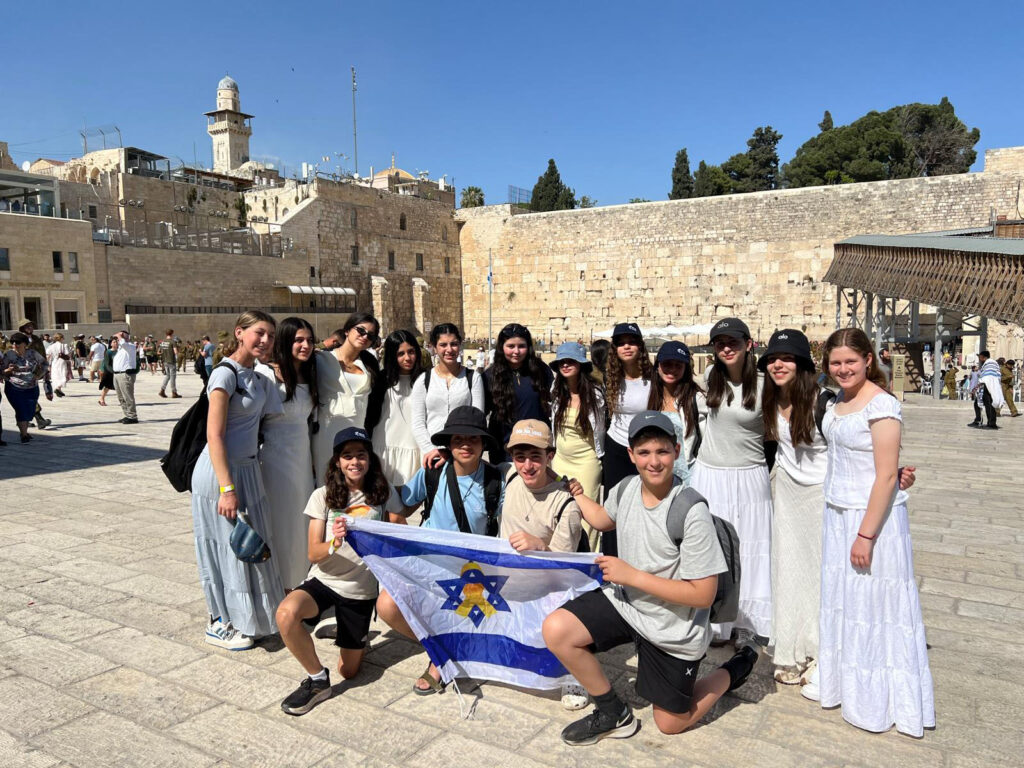
I’m in Israel with 16 eighth-grade students from Sinai Akiba Academy, many experiencing their ancestral homeland for the first time. We arrived with excitement, loaded our bags onto the bus, and began the drive to a kibbutz by the Kinneret.

Our guide, Hillary, welcomed us warmly. She hadn’t led a teen trip in almost two years — since the war began. Her joy at being with kids was palpable, but reality quickly set in.

“Usually, I begin by pointing out historic landmarks,” she said, her voice catching. “But today, we need to start with something else: how to stay safe.”

She asked what drills they do at school. Without hesitation, they replied: fire, earthquake, active shooter. How easily they said it — a normalized response to a horror no child should practice surviving.

Hillary explained what to do during an air raid siren. Our driver would pull over. Students must crouch low on the floor, close to a wall, hands over their heads. We wait 10 minutes for the Iron Dome to work and debris to settle before continuing.

At the kibbutz, we met Shai. “If you hear a siren, stay calm. Injuries happen when people panic. Walk quickly. Don’t run.”

Here at Deganya, we have 60 seconds to reach safety — a luxury compared to other parts of Israel. I saw it in their faces: this was becoming real. They weren’t just hearing about it anymore.

Before bed, we ensured every child knew the quickest route from their rooms to the safe room. We walked them through it calmly in the darkness.

It’s now 3 a.m., and I still haven’t slept. It’s not the time difference. It’s the weight of responsibility. I need to be first out the door if the siren wails. I need to be ready to guide them, to calm them, to protect them.

And this is just day two.

Imagine being a parent who lives like this every day — for the last 587 days. Imagine being a child who hears sirens in their sleep.

Yet despite the fear, it’s also miraculous to be here.

Imagine being a parent who lives like this every day — for the last 587 days. Imagine being a child who hears sirens in their sleep. Yet despite the fear, it’s also miraculous to be here.

We’re singing Am Yisrael Chai from jeeps climbing through the Golan Heights. We’re walking the sun-drenched streets of Tzfat. We’re breathing life back into cobblestone alleys and shuttered galleries that haven’t had visitors since the war began. We’re dancing on the Kinneret to Israeli music.

In these moments, I see these children falling in love — not just with the land and people, but with the feeling of belonging to something bigger than themselves. Something they’ve always been taught about but are now truly beginning to feel.

To witness that awakening is a privilege I’ll carry with me always.

But I won’t lie — it’s terrifying too. Not because I feel unsafe. As someone told us when we first arrived: “Welcome to the safest place in the world.” And I believe him.

What keeps me up is the weight of their parents’ trust. Unlike Israeli children, our kids have yet to experience an air raid siren. How do we protect them and help them feel safe? We can only do this if we’re awake and the first ones there!

So — is it worth it?

I see the answer forming in our students’ eyes. I see it in strangers who thank us simply for being here. We are reminding Israelis they are not alone.

I think it’s worth it. But ask me again in 10 days — when our students are safely home, wrapped in their parents’ arms.

Until then, I pray.

May it be Your will, Adonai our God and God of our ancestors, that we walk in peace, that we are guided in peace, that we return in peace.

I pray this traveler’s prayer from the deepest place in my heart — for my students. For every child in Israel who leaves for school each day and, by God’s grace, returns. For every IDF soldier defending our right to exist, and for the parents waiting by the door for their safe return. For the 58 precious souls still held captive in the tunnels of Gaza.

Tachzireinu leshalom. Bring them home. Now. In peace.


Avi Taff is the Sinai Akiba Academy School rabbi and an associate rabbi at Sinai Temple in Los Angeles 

Sleepless in Our Homeland Read More »

Don’t Let Your Anxiety Consume You

Growing up, I was always anxious. I worried about getting good grades in school, making friends, and looking pretty. 

In my college years, my anxieties ballooned and became much more existential. I was anxious about what I was going to do after graduation, whether I was living up to my potential, and why I was put on this earth. 

I would lie in bed at night, thinking about my worries of the day, the worries of tomorrow, and the worries of my life. 

I was an atheist, with no God to turn to. I didn’t know it at the time, but my lack of connection to a Higher Power was very bad for my soul. Without faith and trust in God, I was held captive by my anxiety. Even when one problem resolved, another would immediately pop up. I could never just relax.  

I finally reached rock bottom my senior year of college. I was failing my prestigious internship at “The Daily Show with Jon Stewart,” a boy I loved broke my heart, and I was doing so poorly in my class on Middle East politics that I had to drop out. I spent most nights staying up until 4 a.m. crying my eyes out, wondering why I was going through such misery.

I decided to go to therapy, where I learned coping skills like deep breathing techniques. While it would help temporarily, it wasn’t enough. In fact, it wasn’t until I went from being an atheist to a believer later that year – and started my conversion to Judaism – that I truly started seeing a difference when it came to my anxiety. 

In my conversion classes, I learned about emunah and bitachon, faith and trust, in Hashem. I discovered that even when things didn’t seem to be going my way, Hashem had a plan, and I needed to trust that He knew what was best for me.  

In my conversion classes, I learned about emunah and bitachon, faith and trust, in Hashem. I discovered that even when things didn’t seem to be going my way, Hashem had a plan, and I needed to trust that He knew what was best for me. 

I looked back at what had happened right before my breakdown, and I was so grateful things played out the way they did. 

I failed at my internship because the entertainment industry was way too cutthroat for me. 

I was glad that boy left me, because I then met Daniel, my husband and soulmate. 

My Middle East politics professor was anti-Israel, and because of him, I had also become anti-Israel during my time in his class. 

Hashem was saving me from going down the wrong path in so many ways. 

Sometimes in life, we can see why Hashem orchestrated things a certain way – and sometimes we can’t. But it’s up to us to push aside our anxiety and have faith and trust that it’s all part of His plan.

This is a muscle we need to strengthen every single day. It can be incredibly difficult, especially when tragedy strikes. I never want to come off as dismissive or Pollyannaish or tell someone that something horrific was for the best. 

But I’ve been on both sides. I’ve had bad things happen to me when I didn’t believe in Hashem, and bad things happen to me when I did. Let me tell you: It’s much more comforting to have faith. It’s totally fine to be angry at Hashem, to ask questions, to scream, “Why!” up at the heavens. I’ve done that plenty since Oct. 7.

I also believe there is an afterlife and much more than we can see and comprehend. Souls are eternal and Hashem’s love for us is limitless. Knowing these things makes me much less anxious. 

These days, I still worry, but it’s not incessant. I have moments when I get stressed, but I don’t let it ruin my day.

The next time you find yourself feeling anxious, I urge you to say the following: “I know that what you’re doing is for the best, Hashem. Please give me the strength to get through it.”

Then release that worry and move on. Once you know that Hashem is there for you, that He wants you to thrive and succeed in life, then your anxiety won’t be able to consume you anymore.


Kylie Ora Lobell is an award-winning writer and Community Editor of the Jewish Journal. You can find Kylie on X @KylieOraLobell or Instagram @KylieOraWriter.

Don’t Let Your Anxiety Consume You Read More »

Tips On Romance

“Birds do it, Bees do it, even educated fleas do it. Let’s do it — let’s fall in love.”

Romance doesn’t only occur under the covers, on top of them, or in the backseat of a Volkswagen — unless you have gymnastic abilities. I remember hearing about the mile-high club, where people make love in airplane bathrooms. If that were me, I’d need a wheelchair to get off the plane.

I am told dating and meeting a spouse is much more complicated now than when I was on the prowl. When my parents dated, it was even easier. A guy might approach a woman and say, “Hey, Toots, want to go out?”  Then she’d give him the up and down, and if she liked what she saw, she’d say, “Yup.” He would jot down her number, and bingo, four kids. My parents got married at 21. I was 38 when I took the plunge. Why did I wait till 38? Because at 37, I was still six years old.

Now that my wife is semi-retired, we have more time together. Even if I wanted to contact one of my old girlfriends, they are either in senior living homes or comas. So, to sustain a long-term marriage and romance, you must look for other things to do to fill those romantic eight minutes and nine seconds.

We have some elderly friends who offer sage advice: “Do everything you want to do now, or you might regret waiting.”  So, we are planning trips to places we’ve never been to and returning to places we’ve always loved. Because we are not 18, we need to do more than grab a backpack and a few protein bars, fly off to Europe, sit on the steps of the Trevi Fountain, and feed pigeons. We need to plan. 

But not all these trips have to be lengthy and costly. Romance can now be a trip for frozen yogurt where we share a single cup while using separate spoons to prevent the spreading of germs. Recently, we had a night out where we saw two women called The Shevesters, who sing songs in Yiddish. We understood about five words of the songs, but loved every minute of our date night. 

Another day, we drove 45 miles to Balboa Island, California. We walked three miles around the island and had lunch; before heading home, we sat on a bench and shared a frozen banana dipped in chocolate from a local stand.  

On some longer trips, we have visited Europe, Iceland, Hawaii, Panama and its outer islands. We have gone to my old stomping grounds in New York City, and I have shown my wife where I was mugged. We have taken in plays and visited with our kids. We have ridden the Maid of the Mist at Niagara Falls, gone to Cooperstown to the Baseball Museum, and to Jamestown to the Comedy Museum. 

You may not think it is romantic, but on many trips, we tour the places where the Jewish people were either thrown out or murdered. Strangely, it brings us closer together, and isn’t that what romance is supposed to do?  Even visiting the sick may not be romantic, but it could bring you closer.   

You may not think it is romantic, but on many trips, we tour the places where the Jewish people were either thrown out or murdered. Strangely, it brings us closer together, and isn’t that what romance is supposed to do?  

We occasionally go away for Shabbat and stay with friends. Of course, even after 10 trips, we always consider returning to Israel.  

We enjoy walking in our neighborhood, holding hands, and chatting until we get into a fight. Putting out a few bowls of popcorn and watching a movie at home with friends is also one of our favorites.  

Noticing what’s different about your partner and telling them lets them know you are paying attention.  My wife still asks my opinion on a new dress or top. I’ll show her my new boxer shorts and the colored socks I bought. Don’t forget to thank your partner more than you want to. No thank you has ever gone to waste. 

All these things are romantic.

If they don’t work for you, you can step up and suggest fun and romantic things to do. Be ready to go places simply because your partner wants to go there. Also, don’t forget to do your best to keep those eight minutes and nine seconds alive as long as possible.


Mark Schiff is a comedian, actor and writer, and hosts, along with Danny Lobell, the “We Think It’s Funny” podcast. His new book is “Why Not? Lessons on Comedy, Courage and Chutzpah.”

Tips On Romance Read More »

Using Ethnic Studies to Malign Jews May Get Harder

Even once the war in Gaza has concluded, its foul residue here in the United States will still remain. Antisemitism certainly did not appear in this country as a result of the Oct. 7 terrorist attacks, but many American Jews were caught off-guard by the persistent strength and resilience of the animosity toward our community. Many of us believed that anti-Jewish hatred had been banished to the shadows of the political extremes in the modern era, and we were startled by both by its breadth and depth.

One of the fronts on which this fight was waged long before Oct. 7 has been the argument in California over ethnic studies. Teaching the state’s high school students about cultural and ethnic diversity attracts widespread support among voters. But the particulars about how these sensitive topics are presented in the classroom have become much more controversial. The content of these classes has turned out to be an especially fertile ground for familiar antisemitic tropes, and ongoing tensions in the Middle East have provided a convenient excuse for those who despise both the Jewish state and the Jewish people to ratchet up their invective to even higher levels. Unsurprisingly, the Gaza war has provided an opportunity for them to further intensify their propaganda efforts.

For many years, the Jewish Legislative Caucus has led the fight to exclude antisemitic content from ethnic studies courses. After Governor Newsom signed legislation creating a mandate for high schools to offer ethnic studies, the stakes became even higher. To his credit, Newsom has worked with the Jewish caucus to discourage (although not forbid) the inclusion of such content in class materials. But the most determined advocates for the most virulent types of anti-Jewish content, led by advocates for the so-called Liberated Ethnic Studies curriculum, are tenacious and resourceful, so variations of their curriculum continue to spread throughout the state.

But two separate events occurred in the state capitol last week that have combined to place considerable obstacles in the path of those who would kidnap an ethnic studies course to further antisemitic sentiment. The first was a barely-noticed line item in Newsom’s revised budget proposal, which contained no funding for the ethnic studies mandate. When Newsom signed the original legislation establishing the ethnic studies requirement, the bill stated that the classes would only be offered “upon appropriation.” In other words, the legislature and governor would need to provide funding to pay for the creation and implementation of this new mandate. 

Because Newsom’s new budget does not offer any money for the class, the mandate will not take effect when the school year begins this fall. While many schools and school districts already offer these classes (some of which are drawn directly from the Liberated Ethnic Studies curriculum mentioned above), the lack of a requirement will slow the spread of ethnic studies in California schools. The governor’s advisors cite the state’s rapidly growing budget deficit as the reason for the lack of funding, but it’s easy to see how a potential presidential candidate might want to avoid a fight as fractious as this one. This maneuver delays the fight and therefore gives Judaism’s defenders a chance to better prepare themselves for it.

The other sign of progress came from the Jewish Caucus, whose members joined forces with their colleagues in the Black, Latino and Asian Pacific Caucuses to sponsor legislation strengthening protections for K-12 public school students against antisemitism and discrimination. The Jewish Caucus had previously been concentrating its efforts specifically on the debate over ethnic studies, but recognizing that antisemitism has become a more encompassing challenge in the state’s schools, a more comprehensive legislative remedy is a much smarter approach. Even more importantly, the ferocity of the opposition to a bill designed to solely address questions surrounding ethnic studies made passage extremely unlikely. A more all-encompassing approach has already gained broader support in the legislature, and its passage will provide greater protection for Jewish students in all aspects of their education.

The fight against antisemitism is never-ending. But a key battleground here in California now looks more hopeful.


Dan Schnur is the U.S. Politics Editor for the Jewish Journal. He teaches courses in politics, communications, and leadership at UC Berkeley, USC and Pepperdine. He hosts the monthly webinar “The Dan Schnur Political Report” for the Los Angeles World Affairs Council & Town Hall. Follow Dan’s work at www.danschnurpolitics.com.

Using Ethnic Studies to Malign Jews May Get Harder Read More »

Hamas Sends College Students Congratulatory Letters to Mark End of the School Year

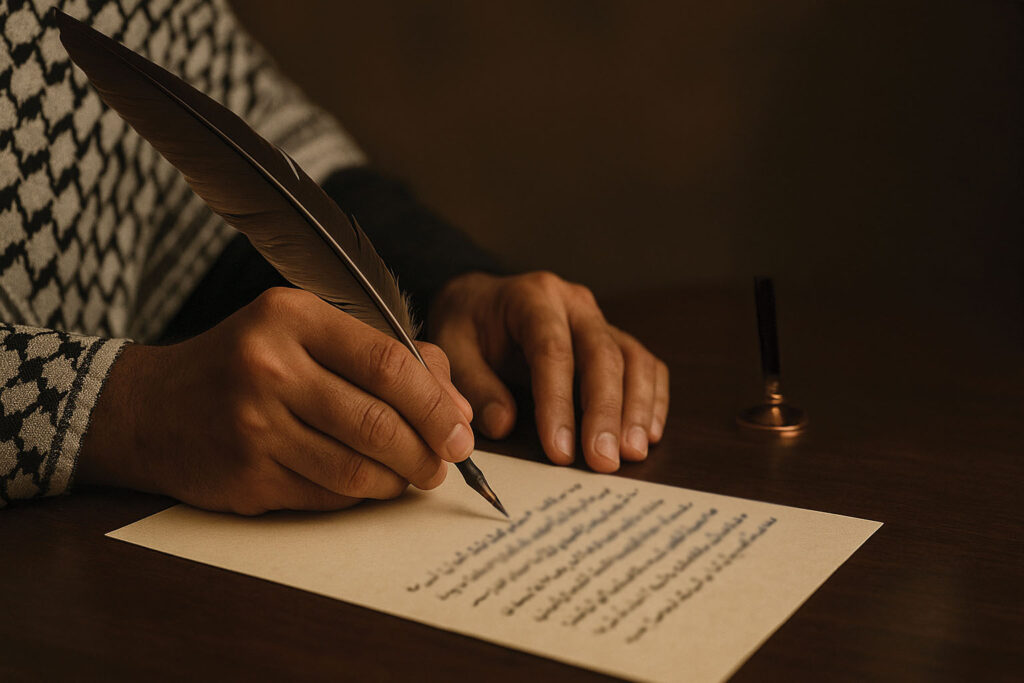
Dear Mr. and Mrs. Tam, 

Greetings on behalf of Harakat al-Muqāwama al-Islāmiyya, or the “Islamic Resistance Movement.” In your cursed America, you might know us as Hamas. 

We are writing to you because presently, it would be, as you Americans say, a big “no-no” for us to engage in direct correspondence with your daughter [INSERT DUPED INFIDEL NAME HERE], given her commendable activism on behalf of us rapists fighters in Gaza. 

Your illegitimate government has classified us as a terrorist organization when all we did was protect thousands of Palestinian babies who were born in hospitals by providing each facility with its own supply of rockets and long-range missiles. How is protecting babies by enabling them to be born in hospitals containing rockets and armed fighters a valid reason to classify us as terrorists?

On a happier note, allow us to congratulate you and [INSERT DUPED INFIDEL NAME HERE] on another year of hard work, long hours at the library and irreversible indoctrination against her own country, as well as the Zionist entity, and you know who (it starts with a “J” and ends with two more letters that help spell the apt word, “Eww”). 

Speaking of libraries, you should be especially proud of [INSERT DUPED INFIDEL NAME HERE]. We heard that she chained herself not once, but twice to the doors of the biggest campus library. We hope you informed her that despite millennia of Chinese ancestry, she (and you) are actually native to the land that you know who claim is theirs. Did you know that there were ancient Chinese settlements in Palestine dating back thousands of years? Doesn’t it sound true? 

By any chance, is your daughter interested in spending the summer in Gaza as a Hamas concubine, brutalized servant or a documentarian for the BBC? Please let us know. We are in the process of applying for nonprofit status in the United Kingdom and can therefore only offer nonprofit rates, but we are able to offer her 3 shekels, 2 USD or 3 Jordanian dinars per hour (please don’t look up current currency rates). With the recession you are about to have, we think those rates are fair.  

By any chance, is your daughter interested in spending the summer in Gaza as a Hamas concubine, brutalized servant, or a documentarian for the BBC? Please let us know. 

Wishing you a prosperous summer, one that is hopefully not too hot (we understand that one of your wise congresswomen has exposed the fact that you know who is behind the weather, and climate change in general).

All our best, 

Khalil and a second unnamed individual from Hamas


Dear Mr. and Mrs. Jimenez, 

Due to certain unjust decisions by your government that have classified us as an overseas terrorist organization, we feel it is better to write to you, rather than to your son, [INSERT DUPED INFIDEL NAME HERE], to thank him for everything he has done for our modest little group of impassioned young men in Palestine who are fighting for oppressed people everywhere, especially women and LGBTQWhatever. 

Could you have imagined that the same child who was once a happy little boy riding his tricycle in the park would grow up to punch a campus security officer, violently tear down an American flag on the quad, trample it with his $3,900 Air Jordans, and replace it with our own glorious Palestinian flag, and then physically block many revolting Zionists from accessing campus spaces? 

Indeed, we are so proud of [INSERT DUPED INFIDEL NAME HERE] for doing our bidding advocating for our cause with so little effort on our part. We always knew American students were special. They may not show as much potential as European, Canadian or Australian students, but give us (and Qatar) another five years or so and you will be amazed at their progress. 

Wishing you an uneventful summer, 

Your friends at Hamas


Dear Mr. Atkins,

First, please allow us to recognize all of your hard work and sacrifice as a single father. We, too, were rendered single fathers after accidentally forcing our wives (and a few of our children) to stand in front of us when the Zionist army was shooting at us in Gaza. 

We are writing to recognize your son, [INSERT DUPED INFIDEL NAME HERE], for his outstanding leadership as co-president of the Palestinian x Marxist Students United on his campus. We know that his late mother served as an American servicewoman but allow us to assure you that she would have been undoubtedly thrilled to have known that her son has grown up into such a courageous, America-hating, think-for-yourself Marxist. 

And though, as a result of his Marxism, your godless son is anathema to our entire existence, we know a good partnership when we see one, and we are still extending him (and you) an invitation to visit us in sunny Gaza sometime next spring. If you receive a similar invitation from Houthi leaders, given your son’s public devotion to them as well, perhaps we may persuade you to visit us first, seeing as how the Sana’a airport in Yemen is temporarily closed for renovations. 

Please send our best regards to your son and also remind him to accept the collaboration invitation on Khaled’s last Instagram reel because it’s been over three weeks and our leadership’s existence is somewhat fragile at the moment. 

Best,

Khaled and the entire team at Harakat al-Muqāwama al-Islāmiyya


To the Jew family in California named Shapiro, 

Despite your loathsome existence, we nevertheless feel compelled to reach out to you to thank your daughter, [INSERT NAME OF HILARIOUS JEW WHO IS WORKING TOWARD HER OWN DEMISE HERE], for all of her tireless efforts since Oct. 8, 2023 in invalidating, erasing and distorting 3,300 years of her family history in less time than it takes to fry a batch of fresh falafel (that’s our food and you stole it).

To be clear, we are not recognizing that your family lineage has existed for 3,300 years or that your ancestors have any valid claims to our land, a land we love so much that we set it on fire earlier this month. We are simply saying that if your people even existed for that long, your ancestors would be very proud of your daughter for invalidating their entire lives and millennia of dreams, as well as their suffering.

Hamas is well-known for its inclusivity, and that includes victims people like your daughter. If she has any other friends from Jew families, we could really use more faces (and names) like hers in front of the camera, at colleges or on the street. We are also happy to help erase any lingering connections she may have with relatives who keep filling her head with lies about her family history. In fact, if you are interested, would you like to send her grandmother to Gaza next month and we will take care of your elderly loved one for you? Hamas has an excellent track record when it comes to our treatment of elderly Zionists.

Let us know before Rosh Hashanah. We’re always so busy around that time of year. 

May you burn in eternity, but your daughter be cloned efficiently.

From,

Hamas

Author’s note: Shortly after sending these letters, Hamas realized that its head receptionist had neglected to delete the strikethroughs, or to personalize each letter by writing the student’s exact name. As punishment, the writer responsible for the publicly embarrassing mistake will be forced to walk through a Canadian university unarmed and draped in not one, but several Israeli flags around his back.


Tabby Refael is an award-winning writer, speaker and weekly columnist for The Jewish Journal of Greater Los Angeles. Follow her on X and Instagram @TabbyRefael.

Hamas Sends College Students Congratulatory Letters to Mark End of the School Year Read More »