
A Moment in Time: “Los Angeles Fires – God is with our Presence”
|
|
A Moment in Time: “Los Angeles Fires – God is with our Presence” Read More »

|
|
A Moment in Time: “Los Angeles Fires – God is with our Presence” Read More »
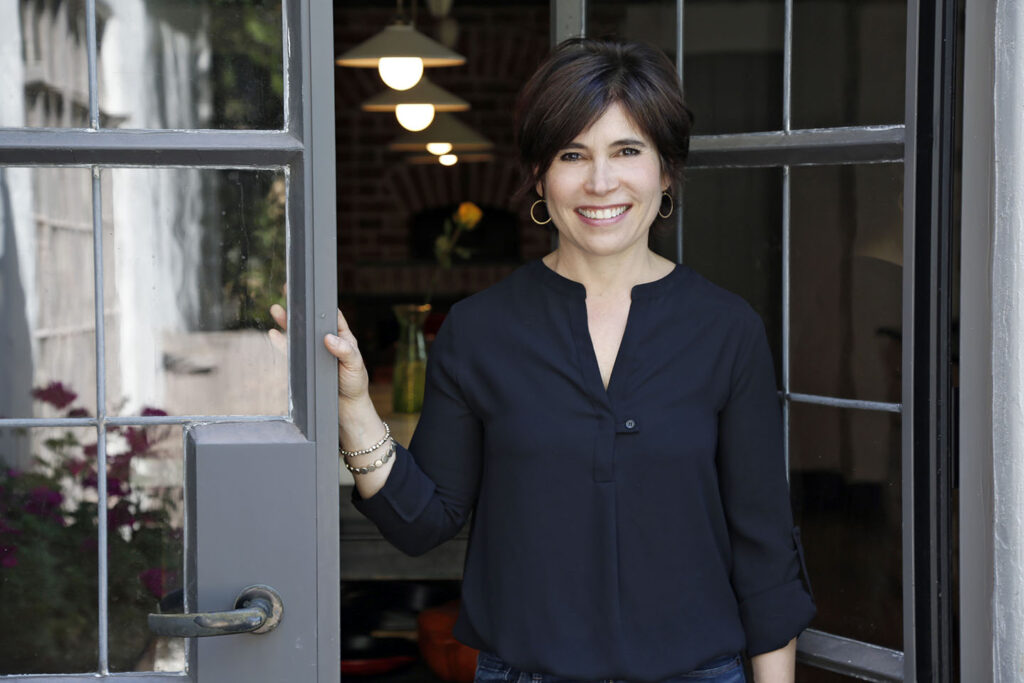
A welcoming kitchen is the heart of a home, especially one that focuses on entertaining.
“Entertaining has been such a big part of my family; people gathering in the kitchen and talking and spending time together,” Annie Kantor, owner of Modern Metal, told the Journal. “It’s with that sort of value and with those occasions in mind that I redesigned my house and out of that sprung my business.”
When Kantor was remodeling her family home, she said she obsessed about the details.
“Along with tile and switch covers and light fixtures, I saw a vent in my entryway, and I thought I should have something really beautiful there,” she said. “I scoured antique markets for some beautiful old brass vent covering [and] couldn’t find anything the right size.”
A textile designer by training, Kanter translated an old textile design into metal and had a vent cover made in that design. This inspired her business, selling vent covers, screen dividers, fencing, gates and building facades.
Decorating for entertaining is all about creating a beautiful space that exudes warmth and keeps a flow, so people can walk around easily.
“I don’t really have doors on the whole main floor of our house because … wanted to encourage socialization,” she said. “And we designed [the kitchen] in a way so that people could really gather, because everybody ends up in there anyway.”
She added, “One of the first things I bought when we started our remodel was a [10-foot long] antique table, … it embodies everything I want when I think of entertaining [with] a design element.”
Kantor believes a home should be used and accessible, not just a showroom, so she chose surfaces that could be used and drinking glasses that could be replaced.
“We don’t care if there are rings on [the wood table],” she said. “We bought maybe 80 Ikea wine glasses [10 years ago], [so] we don’t pull out the paper or the plastic whenever we have a party, and [if] something breaks, we don’t worry.”
Kantor attributes her love of entertaining to her upbringing.
“My mother and my grandmother both always had a house with revolving doors, lots of guests, lots of friends,” she said.
Her grandmother lived in Palo Alto and she always had a random Stanford student join the table.
“We had some of her artist friends … we had exchange students and of course, anybody in our temple community who didn’t have a place to go, so it was just always a welcoming house, inclusive,” Kantor said.
Personal, meaningful elements include your meals. When she hosted Thanksgiving last year, Kantor asked the family members, who were coming from different places, for their favorite Thanksgiving recipe.
“[Entertaining] doesn’t have to be something that you design,” she said. “It can be how you make somebody feel [by] having a recipe that gives them comfort.”
This philosophy works both ways. One of Kantor’s favorite recipes is a noodle kugel that her friend Anne Schmitz, who is from the Italian D’Agostino family in New York, makes for Yom Kippur break fast.
“It’s very dense and rich, and it’s the topping on top of it [that makes it special],” Annie said. “The funny part is, like any really good [recipe], it’s a little bit of this and a little bit of that, and it can vary every time.” The recipe is below.
Cooking is like design; you bring yourself into the final product.
“Anything that has meaning is what will bring your personality into your home,” Kanter said. “I have a wall [of photos] when you walk into my foyer.”
Kantor doesn’t display the best, frame-worthy pictures there; she selects the ones that highlight memories.
“One of the pictures is a photo of my [two] daughters’ feet, wearing these Roman sandals,” she said. “Our whole family knows, when we see it, it captured a moment on a family trip to Rome [where] my girls had a massive, three-day fight over Roman sandals.”
That photo captures a memory. It’s a very personal touch with a great story behind it.
Learn more about Annie Kantor at ModMetalDesigns.com.
For the full conversation, listen to the podcast:
Adapted from “The Joy of Cooking”

1 pound egg noodles
4 cups sour cream or Greek Yogurt
2 lbs cottage cheese
2 lbs cream cheese
6 large eggs
1 cup sugar
4 tsp vanilla
2 tsp cinnamon
1 tsp salt
Topping:
1 cup packed dark brown sugar
1 cup chopped walnuts and coconut (1/2 and 1/2)
4 tbsp flour
4 tsp cinnamon
4 tbsp softened butter
1/8-1/4 tsp of salt
Cook wide egg noodles according to package directions, but don’t overcook.
Noodles notes: If I can only find golden grain, I use them. Ideally, if you can find some kind of heavy German egg noodle, the texture is much more interesting. I don’t rinse the noodles; I just let them cool in the colander.
Beat the rest of the kugel ingredients with an electric mixer or whisk for several minutes.
Notes: I use Greek yogurt instead of sour cream. You can also use ricotta for part of the cottage cheese; I’ve never done all-ricotta, but I’m sure it would be good. I sometimes add a dash of nutmeg depending on the crowd.
Add the mixture to the noodles and place in a greased Pyrex pan.
Stage 1: For the first hour, cook it at 325 degrees. It should look solid and slightly brown when you take it out to add the topping.
This is an ideal place to stop if you are doing it ahead of time. Refrigerate it, and do the second stage later. Do not mix it without baking it because the noodles suck up the moisture and it comes out too dry.
Stage 2: For the topping, I use half coconut and half pecans. You can use whatever kind of nuts you like, depending on the crowd; pecans just caramelize nicely. Toast nuts and coconut separately at 325 for about 8 to 10 minutes before mixing into topping; keep an eye on them, it may take less time.
In a small bowl, mix the topping ingredients together with a fork and spread over the kugel.
If you have broken up the cooking of the kugel into stages, get it a little warmed up before you put the topping on. I don’t think it has to come up to 325 internally but it should be close.
Bake kugel at 325 for another 30 minutes. If I think it needs to be browner, I turn the oven up to 350 or 375 for the last 10 minutes.
Debra Eckerling is a writer for the Jewish Journal and the host of “Taste Buds with Deb.” Subscribe on YouTube or your favorite podcast platform. Email Debra: tastebuds@jewishjournal.com.
Annie Kantor: Modern Metal, An Entertaining-Friendly Home and Kugel Read More »

One hundred can have many meanings, but at Yeshiva University (YU), they were three of a kind. President Dr. Ari Berman announced that more than $100 million had been raised to celebrate YU’s 100th Hanukkah dinner. And the milestone was attained in barely 100 days.
The school is closing on one more ambitious goal. Three years after launching YU’s Capital Campaign, $520 million has been raised en route to its target of $613 million.
At the Hanukkah dinner, attended by more than 500, the families who have played outsized roles in YU’s 138-year history were saluted. Speakers emphasized the need for underwriting scholarships to support the next generation of Jewish leaders, which simultaneously keep Yeshiva University healthy and the community, too.

Contributions have surged in recent years, especially since Oct. 7. “Hanukkah illuminates the idea that the seeds of redemption are sown in darkness,” Dr. Berman said. “For over 100 years, Yeshiva University has been a beacon of light, rooted in academic excellence and a values-based education.
“Even in the face of profound challenges,” he said, “we rise with courage and conviction to meet this unprecedented moment in history, empowering our students to bring hope, strength, and moral clarity to our society and our world. Tonight, we celebrate the unwavering dedication of those who make this vision possible and the promise of a brighter tomorrow for us all.” The evening’s honorees spanned a cast of longtime pillars of YU’s community for their commitment to Jewish education. Leaders said their generosity has left a permanent mark on the school.
Chella Safra, a longtime member of YU’s Board of Trustees and Chair of the Moise Y. Safra Philanthropic Foundation, was awarded an honorary doctorate in recognition of her leadership. The Wilf family, prominent in the philanthropic, sports and business worlds, were presented with the Centennial Medallion. The family also announced a $36 million gift to YU.
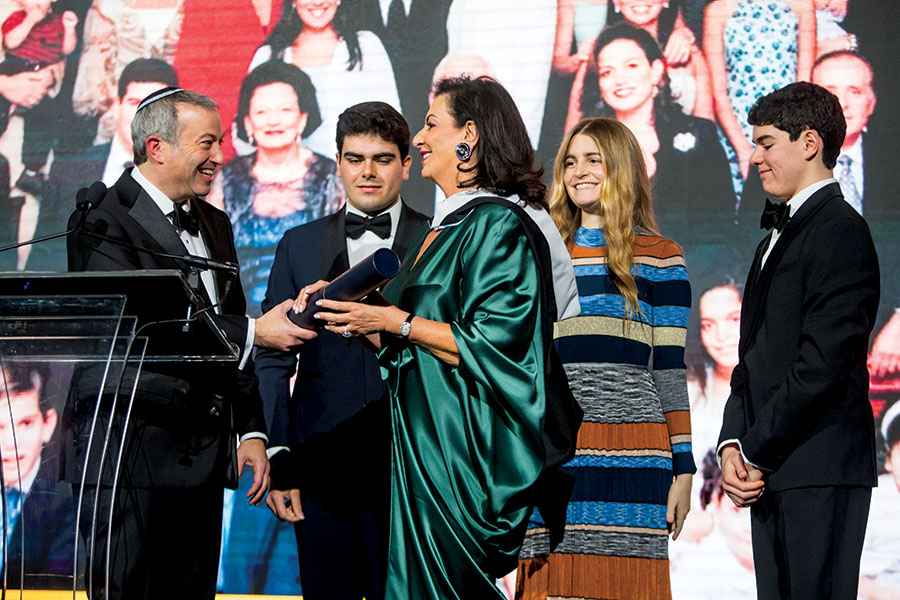
At the Hanukkah dinner, co-chair Daniel Loeb announced an extra $1 million gift toward the campaign. Other gifts included a $6 million contribution from Chella Safra and her family — $1 million for student scholarships and $5 million to endow a new university professorship, plus a $5 million endowment from Bill Ackman.
An $11 million donation from Zahava and Moshael J. Straus was announced. It will enhance YU’s distinguished honors program, the Zahava and Moshael J. Straus Center for Torah and Western Thought, and $15 million from the Morris Bailey and Joseph Jerome families to support the launch of the Yeshiva University’s new College of Dental Medicine. Together, YU leaders said, these contributions demonstrate the power of philanthropy to further the University’s mission of nurturing Jewish leadership and influence.
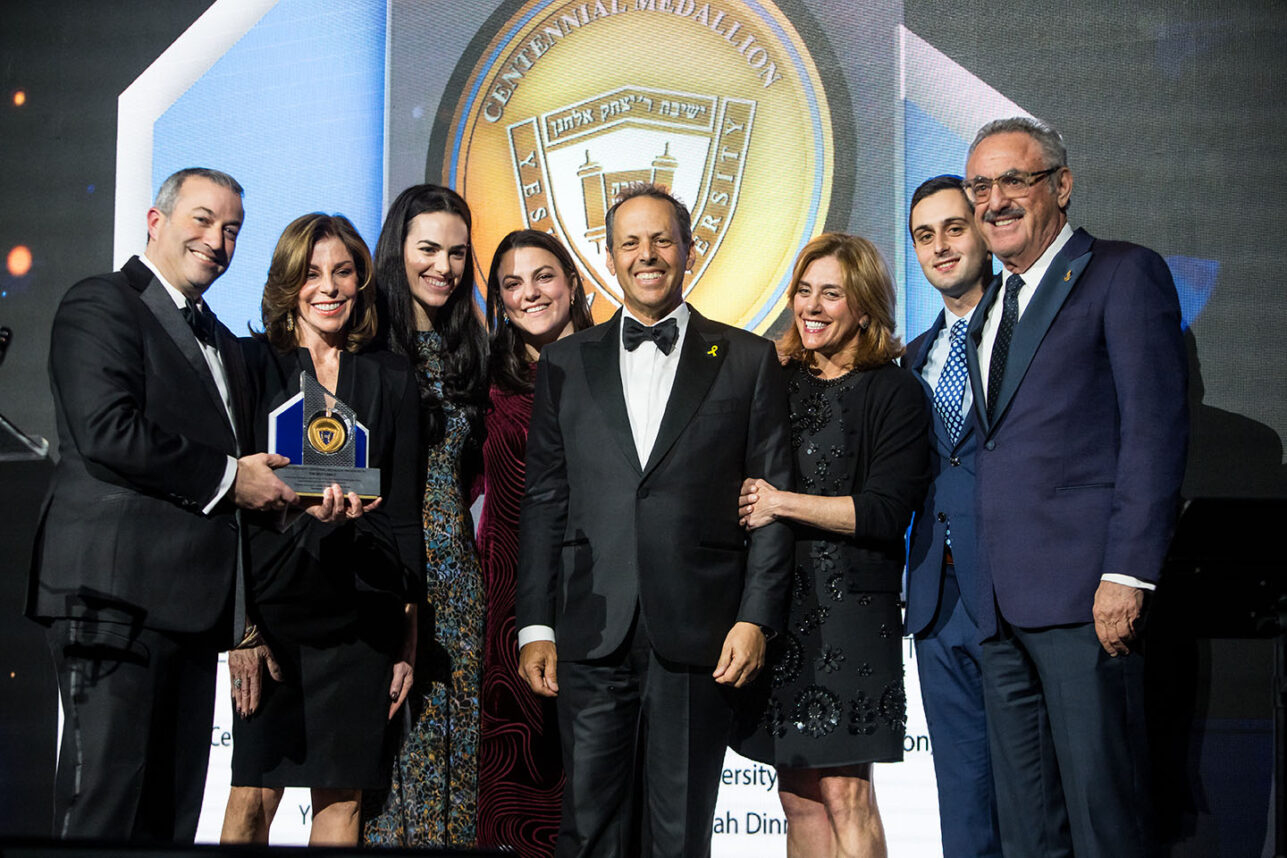
These gifts brought the total raised beyond $100 million since the September kickoff. They formed the most successful Hanukkah Dinner Campaign in YU’s history. Cumulatively, these donations represent particular triumphs for Dinner Chairs Mitchell Julis, Daniel Loeb and Anita Zucker; Honorary Chairs Ingeborg and Ira Rennert, and Honorary Co-Chairs Harry Adjmi, Shari Redstone, Terry Kassel and Paul Singer.
YU Hanukkah Dinner Celebrates Fundraising Milestone Read More »

A Night of Heroism, held on Dec. 9 at the Museum of Tolerance, marked the opening of a week dedicated to celebrating courage and resilience. Organized by Bnei Akiva, the religious Zionist youth movement, the event offered stories of bravery, from a bereaved mother who lost her son on Oct. 7, to young soldiers who were injured on that fateful day. It was part of the group’s school program that included a campaign to bring orphaned children from Israel to Camp Moshava Alevy, Bnei Akiva’s summer camp in the San Bernardino Mountains.
Several heroes of Operation Swords of Iron were part of the featured panel: Shilo and Uriel, two members of Bnei Akiva in Israel who served in combat units and sustained severe leg injuries, Brigadier General Amir Avivi and Micha Koubi, a former Sayeret Matkal fighter and Shin Bet agent. The panel also included Galit Valdman, a bereaved mother whose son, Major Ariel Ben-Moshe, was killed defending Kibbutz Re’im. Erez Goldman, executive director of Israel Bonds in the southwest region, whose U.S.-born children enlisted in the IDF, asked Valdman what advice she would give parents of children wishing to serve in the IDF. The mother of six, including three IDF soldiers, responded succinctly, “Let them.” Her words carried profound weight. On Oct. 7, Valdman’s youngest son, Shavit, called her as he traveled to Gaza, unaware that his older brother was already there. That evening, Shavit learned his brother had been killed. He asked his mother if he should return home, but she urged him to stay and fight. Hours later, Shavit was severely injured. Reflecting on these events, Valdman shared, “Underneath the makeup, there are grief, tears and sadness, but first and foremost, I am a proud mother of a Jewish hero.”
Valdman emphasized that her revenge lies in the continuation of life — the lives her son saved, the upcoming marriage of her son Koren, her grandchildren and future generations. She quoted former Prime Minister of Israel Golda Meir: “We have no other country; we have nowhere else to go.”
Koubi spoke of his memories of interrogating Yahya Sinwar, the Hamas leader. Sinwar was captured by Israel in 1989 and was sentenced to four life sentences. “I interrogated him for 80 hours. He told me how he killed 12 Palestinians just because he suspected them of collaborating with Israel,” said Koubi. “And by the way, they weren’t collaborators. That’s why they nicknamed him ‘the butcher of Khan Yunis.’”
Koubi described how during a search of Sinwar’s home, he found Hitler’s “Mein Kampf” and plans detailing the massacres that occurred Oct. 7. “I wrote extensively about the interrogation, which significantly aided intelligence efforts, though it failed to prevent Oct. 7,” Koubi said.
The audience was moved by Shilo and Uriel’s (whose last names were withheld for security reasons) accounts of their injuries and rehabilitation. Despite enduring constant pain, both expressed a desire to return to mentor children at Bnei Akiva’s summer camp. Shilo described the harrowing moment he was shot in the knee during combat in Gaza, recalling how he crawled to safety under enemy fire until another soldier evacuated him.
The evening was co-moderated by Etan Lerner and E.J. Schwarzbaum, students from Shalhevet and YULA respectively, who grew up attending Camp Moshava Alevy. Founded in 2013, the camp has inspired Jewish youth in North America, combining summer activities with Torah study and Jewish values. Graduates have gone on to lead Jewish organizations across North America and Israel. Mark Rosenbaum, board president of Bnei Akiva Los Angeles, spoke about the camp’s unique combination of outdoor activities, Torah study and community service. The Dovid Oved Retreat, where the camp is located, serves year-round as a venue for Jewish community events and celebrations.
During the event, a surprise presentation honored Valdman with a Torah scroll inscribed with the names of over 600 soldiers who fell in the war. The first name on the list — her son Ariel. The Torah was commissioned by Eyal Dahan, an Israeli-American who lives in Los Angeles. Dahan’s son, Daniel, had served under Ariel.
Valdman embraced Daniel warmly, visibly moved by the young man who was likely one of the last people to see her son alive. “It was a great honor to serve alongside Ariel,” said Daniel. “He was unstoppable. We didn’t know how we were going to continue without someone so significant like him. I remember seeing Galit speak so powerfully and proudly. She is a fighter and it gave us strength to continue fighting.”
“We didn’t know how we were going to continue without someone so significant like him. I remember seeing Galit speak so powerfully and proudly. He is a fighter and it gave us strength to continue fighting.” – Daniel Dahan
The delegation from Israel also engaged with the local Jewish community throughout the week, participating in church events, an evening at the IAC Shepher Community Center, and visits to Jewish schools where they shared their stories of resilience and heroism.
Revital Danker, Bnei Akiva’s new CEO and former Israeli Consulate consul, spearheaded the event and the delegation’s visit to Los Angeles, ensuring the inspiring stories of these heroes reached a wide audience.
A Night of Heroism: Stories of Courage, Resilience and Sacrifice at Bnei Akiva Event Read More »
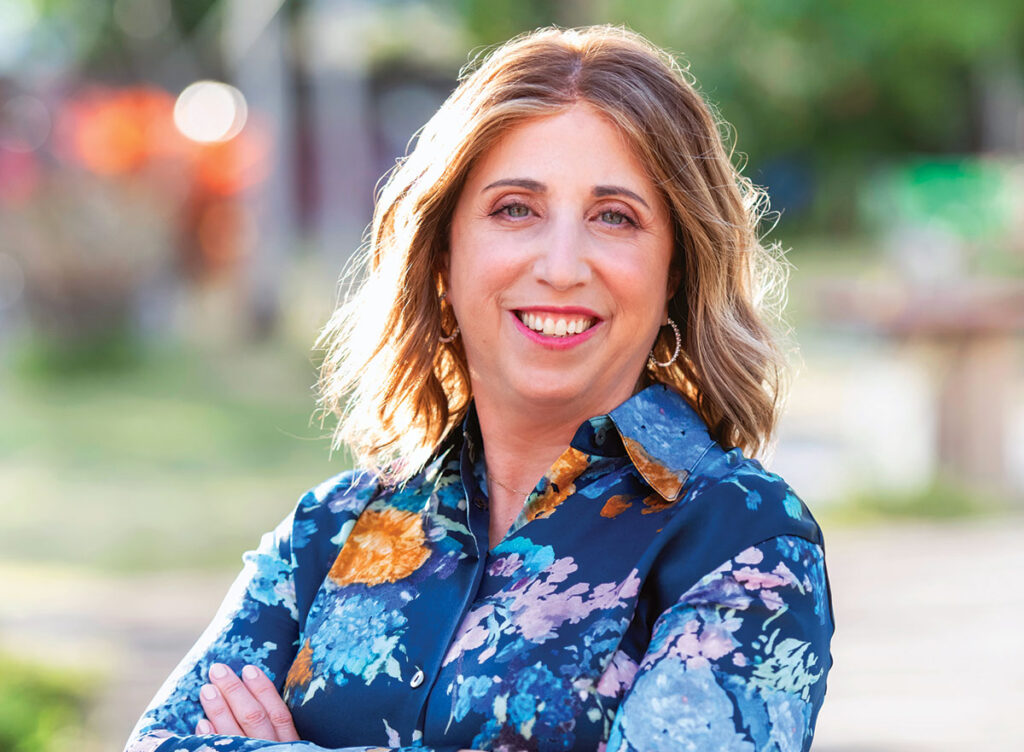
Nicki Salfer’s near-death experience and the painful stillbirth she endured led her to embark on a new path in life — one that has helped tens of thousands of children and their parents.
 Twenty years ago, after suffering a stillbirth, Salfer founded Tree of Knowledge, an educational service for students with special needs. She details this journey in her new memoir, “Fire! Ready… Aim!” and is pledging part of the proceeds from her book tour to Yad Sarah Center in Jerusalem. The center provides free or low-cost therapy and wellness services to women who have experienced stillbirth, supporting an average of 22 women each month. Salfer hopes to help more women suffering this profound loss find healing at Yad Sarah Center.
Salfer was born in Israel to American parents who had made aliyah, but when she was four years old, her grandfather was sick, and the family returned to the U.S. to be near him. They ended up staying. When Salfer was 19 years old, she got married and had two children, a girl and a boy. Then, during her third pregnancy in 1998, something went terribly wrong.
Following a difficult pregnancy, a few days before her due date, she was rushed to the hospital in Cleveland, Ohio and underwent a C-section. Despite being assured that everything was fine, the baby didn’t survive.
“It was a full abruption of the uterus — the placenta separated. Normally, when that happens, you bleed, but I had no blood coming out. It was all coming up and exploded inside of me,” she said.
This near-death experience and the loss of her baby prompted Salfer to reevaluate what she wanted to do with her life. At the time, along with her husband, Rabbi Dr. Mordechai Salfer, she was managing an office supply company and a tutoring business, but she felt unfulfilled.
“I wanted to do something more meaningful in this world,” she said. “I didn’t want to focus on helping women who had experienced the same thing like me because it was too painful, but I wanted to help children with special needs. That’s what led me to found Tree of Knowledge.”
Opened in 1999, Tree of Knowledge was the first school in Ohio designed for children unable to physically attend school. The school served four distinct groups: Children receiving in-home or hospital instruction because they were too sick to attend regular school; special-needs Orthodox Jewish children who attended Orthodox Jewish day schools in the morning and came to Tree of Knowledge for a delayed-start program; inner-city students who attended all day and a combination of students from all these groups.
Today, Tree of Knowledge has chapters in Miami, Cleveland, New York and New Jersey; a new one will open in Los Angeles soon.
The Centers provide a large array of services including counseling, tutoring, physical therapy, occupational therapy, social-emotional learning, parental support and more. These services are offered free of charge to parents and are fully funded by the government and school districts.
“We work with kids from birth to college,” Salfer said. “For some, it’s a very short-term experience — like when a child gets sick for example and our services become a lifeline until they can return to regular school. For others, especially those dealing with mental health challenges, we support them all the way through high school.”
Salfer, a psychologist with a BA in business and a master’s in Special Education and in Jewish Education, began writing her book 20 years ago. It was a work in progress, starting with that fateful day in 1998 when she nearly lost her life. The book explores her out-of-body experience, the founding of her nonprofit organization, the birth of her third child, Bracha (blessing in Hebrew), her journey through motherhood and how a young Jewish politician in Ohio, Josh Mandel, helped her raise money.
When Mandel was deployed to Iraq in 2007, she promised to send him letters, which she included in the book.
When Mandel was deployed to Iraq in 2007, she promised to send him letters, which she included in the book. Through these letters, Salfer tells the story of Tree of Knowledge — fascinating, humorous, at times frustrating and challenging and at times hopeful and encouraging — delivered in a captivating way that anyone who has ever started a non-profit can relate to.
“I made a promise to myself to write a book that would give hope to others at the forefront of education, fighting for a good cause,” Salfer writes in her book.
Salfer has three children and is already a grandmother. The damage to her uterus allowed her to have only one more child; it was too risky to have more.
“I had so much scar tissue and they had to make a choice — if they put back the uterus, they knew it wouldn’t be functional. It still looks bad. Every time a doctor does an ultrasound, they say, ‘What is that?’”
She admitted that it wasn’t easy living in an Orthodox community, married to a rabbi and having “only” three children. “I lived in a neighborhood where the average family had 10 kids. People were wondering why I don’t have more.”
While it raised eyebrows and whispers among people in her community, in the secular world people didn’t hesitate asking her directly, why she doesn’t have more kids. Don’t all Orthodox women have a football team at home? “It was painful at first,” she said, “but not anymore.”
Founding Tree of Knowledge and helping 25,000 children and their families each year helped her heal that pain long ago.
“Fire! Ready….Aim!” is available for purchase on Amazon

KTLA published a report on Jan. 2 finding that a UCLA alumnus, who was not named in the article, rescinded their “multi-million dollar bequest” to UCLA over the university’s handling of the anti-Israel encampment.
KTLA unearthed that information as part of a public records request regarding emails from then-Chancellor Gene Block’s office during the time period of the encampment. The alumnus cited in the report wrote to the university on April 29, “We as donors have amended our Living Trust by removing UCLA as a financial recipient. UCLA has now lost our multi-million dollar bequest.” The report noted that “many correspondences concerned the decision to move classes to remote learning as the protests continued on campus. Just what decision-making was going on behind the scenes isn’t known — or wasn’t included in this batch of documents related to our public records request.”
The Free Press documented a two-day event in November that a Jewish student at Columbia University described as a “museum of terror” at the Alpha Delta Phi — the university’s literary society — building.
The student, Shoshana Aufzien, told The Free Press that the event featured, among other things, “a pool table covered with tools, such as wrenches, hammers, ropes, and wire cutters — all of which were used by anti-Israel protesters to break in to and occupy Columbia’s Hamilton Hall last April.” Next to the tools were headbands adorned with the logo for the Popular Front for the Liberation of Palestine (PFLP) terror group. There was also a poster showing a hang glider used by members of Hamas on the Oct. 7, 2023 massacre with the words, “on that day, the people of Gaza drifted into the sky like a host of colorful dragonflies.” The Free Press also obtained video from the event showing Nerdeen Kiswani, who heads the anti-Israel group Within Our Lifetime, saying that “as long as Israel exists, it’s a genocide against the Palestinian people” and that “a Zionist-free NYC is the only way that we can ensure that our universities don’t have the power to kick us out and silence us and to continue to fund Israeli genocide on our watch.” Alon Levin, a friend of Aufzien’s who also attended the event, told The Free Press he witnessed the Columbia University Apartheid Divest (CUAD) legal team lead “resistance training” to attendees on “how to covertly protest,” in the words of The Free Press.
Aufzien and Levin filed a complaint to the Department of Education’s Office of Civil Rights over the event. A university spokesperson told The Free Press: “This event took place off campus in a house independently owned and operated by a group known to Columbia as the Association of Graduates of the Columbia Chapter of ADP. Upon learning of the event, the University notified law enforcement, the national Alpha Delta Phi Society leadership and a representative of the owner of the ADP house. We immediately launched an investigation, which is ongoing. We will uphold our policies with respect to any actions by Columbia affiliates who violate them. As we have said repeatedly, it is absolutely unacceptable for any member of the Columbia community to call for, promote, or celebrate the use of terror or violence.”
Members of the American Historical Association (AHA) passed a resolution on Jan. 5 accusing Israel of committing “scholasticide” in the Gaza Strip in its ongoing war against Hamas.
According to InsideHigherEd, “scholasticide” is defined as “the intentional eradication of an education system.” The resolution accuses Israel of decimating education in Gaza and called for a ceasefire and for the AHA to form a committee aimed at rebuilding education in Gaza. The resolution passed by a vote of 428-88; per InsideHigherEd, it will go to “the association’s elected council, which can accept it, veto it or refuse to concur. That last option would send the resolution to the association’s roughly 10,450 members for a vote.” A majority vote is needed in order for it to pass in that scenario.
A professor at Kent State University, who is also an imam, called the Oct. 7, 2023 “a miracle” in sermons.
Campus Reform reported that that the professor, Nader Taha, said in a December sermon that “in Al-Aqsa Flood [Hamas’s name for the Oct. 7 massacre], we have seen miracle, after miracle, after miracle.” Taha also said in a Nov. 2023 sermon that Israel continually disgraced the Al Aqsa Mosque, “so your brothers and sisters in Gaza responded. The faces of the children of Israel will be so humiliated – Allah says that. What do you want more than the humiliation of faces than what you have seen nowadays?” Campus Reform cited footage from MEMRI TV highlighting Taha’s remarks.
The university issued a statement condemning Taha’s remarks as being “antisemitic” and “abhorrent” and that “the remarks were not made on a Kent State campus, nor as part of any official event or program.”
Campus Watch January 9, 2025 Read More »
Neil was in his teens when he met his mentor, Dr. José Nessim. Dr Nessim was a renowned obstetrician/gynecologist, who delivered generations of babies and treated women from many backgrounds, including the wives of the Saudi royal family. He was also the visionary founder of the Sephardic Educational Center, with its mission to preserve the wealth of Sephardic knowledge and culture and to empower the next generation. For his whole adult life, Neil has been dedicated to preserving his legacy and ensuring the continuation of the many projects of the SEC.
One of the most practical lessons that I learned from our beloved Doc was his mantra on the importance of eating a salad with ten different colors every day. As encouragement, he would say “You will live a long life!”
Most days, I take salads to work. I chop lettuce and add Persian cucumbers and cherry tomatoes. I buy bags of shredded carrots and purple cabbage. I add chicken or fish leftover from dinner. Or I add canned tuna or salmon. Or I’ll open a can of garbanzo or white beans and add some to my salad. If I’m lucky, my daughter will have made quinoa and I add a little for extra protein. Kalamata olives and roasted nuts always add interest and flavor.
My favorite add in for salads are roasted vegetables, especially roasted cauliflower and roasted butternut squash. The caramelized sweetness of the roasted veggies plays perfectly against the fresh, crispy greens.
Last week, Sharon hosted a family celebration with a beautiful grazing table artfully crafted by her talented cousin Daniella (@eventsbyella2). There was a creamy tomato soup, cheesy quiche, a huge pavlova covered in bright berries and Alexandra’s fresh cream and pastel pink frosted chocolate cake.
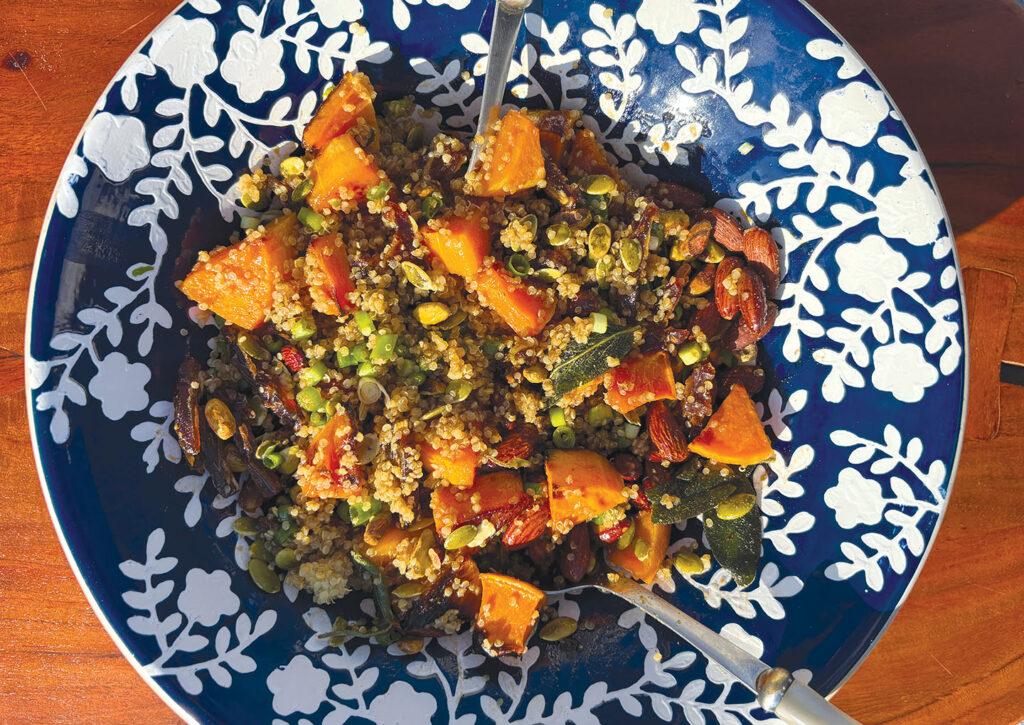
Among the cheeses and crackers and exotic fruits, a warm winter quinoa salad called my name. I went back for seconds twice and I told our friends that they had to try it.
The salad was such an unexpected mix of nutty quinoa, creamy, roasted sweet butternut squash, crunchy, salty mixed nuts and sweet cranberries, with a tangy ginger dressing.
My kinda salad!
Sharon is a master salad maker. At her Shabbat table, she serves lots of beautiful salads as the first course—her southwestern bean and corn salad, her Asian noodle salad garnished with roasted broccoli, her purple cabbage and fennel salad studded with ruby red pomegranate. No wonder Neil always stops eating after the first course.
—Rachel
Before I was a Sephardic Spice Girl, guests would randomly anoint me “Salad Queen”. It’s a title I wear with pride because salads are my favorite thing to make. For me, it’s like creating an edible masterpiece, a work of art.
Great salads have the perfect balance of textures and flavors —crispy greens, creamy avocado, crunchy nuts, soft tomatoes. They have a harmony of color—black beans and yellow corn contrast with orange pepper & green cucumber; purple cabbage with shaved green Brussels sprouts and dark red cranberries; red, green, orange and yellow heirloom cherry tomatoes glisten nestled in bright green, Italian parsley, flecked with soft lilac purple onion.
Dressings should always have a touch of fat (extra virgin olive oil, mayo), a splash of acid (fresh lemon juice, red wine vinegar), a dash of heat (garlic powder, mustard, chili) and of course, salt and pepper.
Let your imagination run wild.
Last week, my guests were practically at my doorstep and my cousin Daniella was getting nervous that my salads weren’t ready (in my defense, salads are always better freshly prepared).
My daughter Alexandra was agonizing over the texture of the frosting for her cake. Then Daniella urged my daughter, Gabriella to be more aggressive in stirring the iced tea in the beautiful glass urn. Sure enough, the strong stirring with a metal spoon resulted in a crack in the glass and a flood of sticky tea all over my kitchen floor. And I still had to do my hair and make-up!
Needless to say, this warm winter quinoa salad was thrown together really quickly.
For this week’s recipe, I sautéed a small bunch of sage to add a citrusy, minty depth and I subbed the cranberries with fleshy Medjool dates for extra caramel sweetness.
The winter flavors and the indulgent ingredients of the salad are enhanced with a sweet, salty, spicy sesame oil and ginger dressing.
We’re pretty sure that when you make this delicious salad you won’t have any leftovers. But if you do, they’re just perfect to take to work the next day.
—Sharon
Sesame Ginger Dressing:
1/3 cup sesame oil
1/4 cup maple syrup
1/4 cup soy sauce
1/2 tsp garlic powder
1/2 tsp ginger powder
Salt and pepper, to taste
Whisk ingredients together.
For the Salad:
3 cups cooked quinoa
2 cups butternut squash, peeled and diced into 1″ cubes
1/2 cup extra virgin olive oil
1 Tbsp maple syrup
1 Tbsp extra
virgin olive oil
12 sage leaves
1 cup roasted, salted almonds
1/2 cup roasted, salted pistachios
1/2 cup roasted sunflower seeds
1/3 cup dates, pitted & chopped
1/2 cup scallions, thinly chopped
Preheat oven to 425°F.
Cook quinoa according to package directions.
Line a baking sheet with parchment paper. Arrange squash in a single layer and drizzle with olive oil and maple syrup.
Roast squash for 10 to 15 minutes, until fork tender and edges are golden brown.
Warm olive oil in a small frying pan over medium high heat, then add Sage leaves and sauté until slightly crispy. Set aside.
In a large bowl, add quinoa, roasted, butternut squash, sage, almonds, pistachio, pumpkin seeds and green onion.
Serve warm or cold.
Sharon Gomperts and Rachel Emquies Sheff have been friends since high school. The Sephardic Spice Girls project has grown from their collaboration on events for the Sephardic Educational Center in Jerusalem. Follow them
on Instagram @sephardicspicegirls and on Facebook at Sephardic Spice SEC Food. Website sephardicspicegirls.com/full-recipes.
A Warm Winter Quinoa Salad Read More »
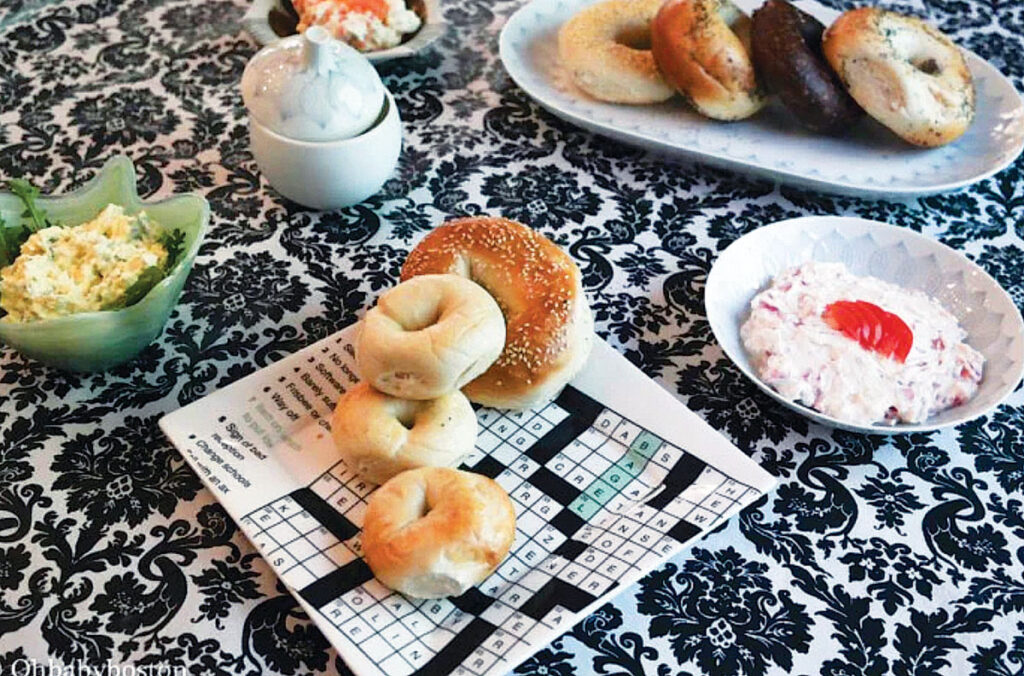
National Bagel Day is January 15. To switch up your bagel routine, here are some super schmears to try.
The idea for Beth Nydick’s green goddess bagel spread was born on a random Tuesday morning in 2015. She found herself staring into my fridge at 7 a.m., thinking, “There has to be a better way to start my day than the same vegan butter routine.”
Nydick was a food blogger at the time and, while she created recipes for a living, neglected her own breakfast for years. “That morning, I had a bunch of herbs from a photoshoot and half an avocado, so I started experimenting,” she said. “Hundreds of test batches later — my kids became very willing taste-testers — this spread has become my signature at family brunches.”
Nydick added, “Now, I keep containers of herbs growing in my garden. There’s something deeply satisfying about snipping fresh chives while I sip a Matcha latte.”
Green Goddess Bagel Spread with Seeds and Sprouts
Makes about 2 cups
Base Spread:
1 cup Greek yogurt (or lactose-free yogurt)
1/2 ripe avocado
1/4 cup fresh basil leaves
1/4 cup fresh parsley
2 Tbsp fresh dill
2 Tbsp fresh chives
1 small garlic clove
1 Tbsp fresh lemon juice
1 Tbsp extra-virgin olive oil – optional
Sea salt and fresh pepper to taste
Seed and Sprout Topping:
2 Tbsp raw pumpkin seeds
2 Tbsp sunflower seeds
1 Tbsp hemp hearts
Fresh cucumber, thinly sliced
Radish, thinly sliced
Extra virgin olive oil for drizzling
In a food processor, combine Greek yogurt, avocado, herbs, garlic, lemon juice, and olive oil. Pulse until smooth and creamy, scraping down sides as needed. Season with salt and pepper to taste.
In a dry skillet over medium heat, lightly toast pumpkin and sunflower seeds until fragrant, about 3-4 minutes. Let cool.
Assembly: Spread a generous layer on toas-ted whole grain or everything bagels. Top with cucumber and radish slices. Sprinkle with toasted seeds and hemp hearts. Finish with a light drizzle of olive oil and fresh cracked pepper.
Storage: Keep spread in an airtight container in the refrigerator for up to 3 days. The color will stay bright green if you press plastic wrap directly onto the surface of the spread.
Leah Klein, a recipe developer and freelance writer, has a way to make four schmears from two blocks of cream cheese. Whether your tastes are salty, savory or sweet, there is something you will enjoy.
Salted Lemon and Smoked Salmon Schmear
1 Lemon, zested
1/4 tsp salt
1 tsp of good quality olive oil
2 Slices of smoked salmon, minced
4 oz, or 1/2 block of cream cheese, room temperature
In a small bowl, put the room temperature cream cheese.
Zest one lemon onto the block of room temperature cream cheese.
Add the salt and tsp. olive oil to the cream cheese and mash it together with a fork. Slice the smoked salmon into long, thin strips and then slice them again into little cubes. Once the zest is thoroughly mixed into the cream cheese, carefully mix in the minced smoked salmon. Serve immediately or chill and serve.
Vegetarian Tomato Schmear
This can be made vegan with vegan mayonnaise and vegan cream cheese.
1 Plum tomato
1/2 tsp Kosher salt
2 Tbsp of mayonnaise
2 Cloves of garlic
1/4 tsp black pepper
1/4 small white onion, minced
4 oz., or 1/2 block of cream cheese, room temperature
Take the seeds and core out of the plum tomato. Cut the tomato in half and finely dice it into small cubes. Sprinkle kosher salt over the diced tomato. Spoon mayonnaise into a small bowl; with a rasp or smallest side of a box grater, grate garlic into the mayonnaise. You can also use a garlic press. Mix garlic into the mayonnaise. Add the room temperature cream cheese into the garlic mayonnaise. Mash it all together with a fork until it is uniformly mixed. Mince white onion and mix the onion into the cream cheese and then carefully stir in the minced tomato and black pepper. Serve immediately or chill and serve.
Eggs and Arugula Schmear
2 hard boiled eggs
1/2 tsp. kosher salt
1/4 cup of sour cream
4 oz, or 1/2 block of cream cheese, room temperature
1/2 tsp Dijon mustard
1/4 tsp black pepper
3/4 cup baby arugula
Hard boil two eggs. With a cheese grater, grate the 2 hard boiled eggs into a bowl. Add in salt, sour cream and mustard, then mix together. With a fork, mash in the cream cheese. Toss in black pepper (freshly ground if possible).
Chop about 1 cup of baby arugula, for or 3/4 cup of chopped arugula. I like to hold a small bunch of leaves and with kitchen shears, snip the arugula into the egg and cream cheese mixture. Stir together gently until combined. Serve immediately or chill and serve.
Sweet Schmear with Ginger & Marmalade
The last 1/2 block of cream cheese can be left plain or you can play a little with it for something sweet. I chose to add sugar and ginger.
1 – 1 1/2 Tbsp Citrus Marmalade
4 oz, or 1/2 block of cream cheese, room temperature
1/4 inch slice of ginger
Pinch salt
Grate the ginger, ideally on a ginger grater, or the knobbly side of a box grater. Mix all the ingredients together until uniform.
Schmear Recipes to Celebrate Bagel Day Read More »