fbpx

December 5, 2024

Community Advocacy Through Jews of NY Leads to Staffer Suspension

Jews of NY, a popular Instagram account, made it clear: antisemitic acts will no longer go unpunished. This message was powerfully conveyed in a recent post.

“Thanks to you all, justice has been served, sending a clear message: Antisemitism has consequences! Thank you, Mayor Adams, for hearing us,” read the post, which was accompanied by a screenshot of a New York Post headline: “Adams staffer who tore down Israel hostage poster has been indefinitely suspended without pay.”

The story began in early November, when Jews of NY co-posted with Stop_antisemitism about Nallah Sutherland, a special events coordinator for the Mayor’s Office of Special Projects and Community Events. Sutherland, 25, was recorded tearing down an Israeli hostage poster from a light pole on the Upper East Side, ripping it up and tossing it into a trash bin.


View this post on Instagram


A post shared by StopAntisemitism (@stop_antisemitism)

In the video, an eyewitness – perhaps the one recording – asks, “Is there a reason you’re taking those down? Those were hostages. They were taken by terrorists.”

Instead of responding, Sutherland walks toward the man and swipes at his phone, momentarily knocking it out of focus.

“That’s assault, actually. You know that, right?” the man says. Sutherland simply smirks, turns her head away from the camera and walks away.

The incident sparked outrage across social media, but Sutherland wasn’t fired and received a mild punishment. She was ordered to take “multicultural training” and a disciplinary note was added to her permanent work file.

Yoav Davis, founder of Jews of NY, felt the community outrage and decided to post a video addressing Mayor Adams directly.

“Hey Mayor Adams…..We thought it could be a good opportunity for your administration to set a clear example to all New Yorkers that such hateful behavior is completely unacceptable. Instead, we were deeply disappointed to learn that the only disciplinary action taken was that this employee had to attend multicultural training.”

He also added: “As the mayor of one of a cities with one the largest Jewish communities in the world, you have the responsibility to firmly reject antisemitism and hatred in all its forms.”

Mayor Adams’ response came the following day, on December 2, when it was announced that Sutherland was indefinitely suspended without pay.

Davis, who launched Jews of NY over eight years ago, said that originally, he wanted to post stories about the vibrant Jewish community in New York. “The idea was to celebrate the community and have a place on instagram that’s positive and showcases the different types of Jews. We are so diverse, and there are so many different types of Jews in New York and so many beautiful things in terms of life of the Jews of New York, from Ashkenazi to Mizrahi, from Russian to Greek.”

He started by posting stories about Jewish restaurants, events and holidays, but then when antisemitic incidents kept happening in the city, he began posting such stories as well. In the past year, since October 7, there were many more stories of antisemitism and several videos of people ripping posters. Despite the public outrage, most of those individuals faced no consequences and continued with their lives uninterrupted.

Sutherland’s actions, however, had significant repercussions. She lost her comfortable job, where she earned $61,135 annually. As part of her role, she had helped organize celebrations hosted by the mayor at Gracie Mansion and other locations, honoring the city’s diverse ethnic communities.

Davis was raised in Israel to parents who made aliyah from the U.S. He moved to New York 10 years ago, after serving in the IDF in the high profile IDF Spokesperson unit and later working in the TV industry as a director and format developer. Today, his company Davis Media helps major brands, NGOs and businesses create original content and manage social media. Davis worked directly with notable personalities such as Joan Rivers and Noa Tishby.

In a phone interview with the Journal, he said that the Jewish community needs to be vigilant and active in the face of antisemitism.

“The second we see any antisemitic behavior, first of all, document it, video it and make record of it so we can prove this is happening. Secondly, we need to demand justice, and we need to speak up and not accept this behavior. Antisemitism must always be completely unacceptable, any form, type or shape of it. Just like any other minority, hate against Jews should never be disregarded or normalized.”

Community Advocacy Through Jews of NY Leads to Staffer Suspension Read More »

Dionysus and Apollo

Dionysus and Apollo
are the paradigms to follow,
never minor, mainly MAGAs.
in Bible generations’ sagas.

One at one time we can tend,
their contrast the color of its trend,
when for the talent of the other
we do not feel we have a druther.

Although they’re contradictory,
each can provide a victory,
often with a lot of hype
when fruit it bears is fresh and ripe,

Dionysus: always very
like a mango, peach or berry,
sweet and succulent and tempting,
caution like a wind pre-empting.
For mangoes, even for a peach,
never does he dare to reach,
though in most moments of the day
cast as the hero of this play.

Apollo far more like an apple,
his inner core compelled to grapple,
and after eaten to discard,
like receipts of a credit card.

Sometimes he’s a special treat,
tart first, then extremely sweet,
but the flavor rarely gushes
from Apollo, far less luscious
than the Dionysian flavor
which more people rush to savor.

My pseudo-Hippocratic oath:
all efforts to combine them both
should be rejected, rotten ruse;
their tempting pleasures tend to bruise
each other. Dangerous to swallow
both together, with Apollo
presiding as our playful priest,
providing to what God has leased
to us, our flimsy, fleeting lives,
support for our spirit when it strives,

like my poetic utterances,
my wonderbread and butterances,
minor key for word-bred generations,
major keyed by my genes’ variations.


The last two lines of this poem are based on the Hebrew word for “generations” which also denotes the stories on which biblical sagas are based, as in Gen. 37:2:

אֵ֣לֶּה ׀ תֹּלְד֣וֹת יַעֲקֹ֗ב יוֹסֵ֞ף בֶּן־שְׁבַֽע־עֶשְׂרֵ֤ה שָׁנָה֙ הָיָ֨ה רֹעֶ֤ה אֶת־אֶחָיו֙ בַּצֹּ֔אן וְה֣וּא נַ֗עַר אֶת־בְּנֵ֥י בִלְהָ֛ה וְאֶת־בְּנֵ֥י זִלְפָּ֖ה נְשֵׁ֣י אָבִ֑יו וַיָּבֵ֥א יוֹסֵ֛ף אֶת־דִּבָּתָ֥ם רָעָ֖ה אֶל־אֲבִיהֶֽם׃

This, then, is the line of Jacob: At seventeen years of age, Joseph tended the flocks with his brothers, as a helper to the sons of his father’s wives Bilhah and Zilpah. And Joseph brought bad reports of them to their father.

My poem provides a midrashic suggestion to the question: Was the Apollo Belvedere inspired by 1 Sam. 20:35-36?

On 11/30/24, a Shabbat that precedes the new moon, we predicted the appearance on its morrow of the first day of the next Hebrew month, the ninth month of the year which is called Kislev, and read in the haftarah that follows the parsha of the Torah — the sidra — part of a story that is told in 1 Samuel 20. The reading starts with the following text in 1 Sam 20:18-23, whose translation by the KJV I quote below:

18 Then Jonathan said to David, Tomorrow is the new moon: and thou shalt be missed, because thy seat will be empty.

19 And when thou hast stayed three days, then thou shalt go down quickly, and come to the place where thou didst hide thyself when the business was in hand, and shalt remain by the stone Ezel.

20 And I will shoot three arrows on the side thereof, as though I shot at a mark.

21 And, behold, I will send a lad, saying, Go, find out the arrows. If I expressly say unto the lad, Behold, the arrows are on this side of thee, take them; then come thou: for there is peace to thee, and no hurt; as the Lord liveth.

22 But if I say thus unto the young man, Behold, the arrows are beyond thee; go thy way: for the Lord hath sent thee away.

23 And as touching the matter which thou and I have spoken of, behold, the Lord be between thee and me for ever.

Like the mental image of the youthful Jonathan holding his bow and arrow, Apollo stands holding his. By coincidence, the Wall Street Journal published an article about the Apollo Belvedere. In “The Apollo Belvedere: New Life for a Marble God,” WSJ, 11/29/24, A.J. Goldmann writes:

https://www.wsj.com/arts-culture/fine-art/the-apollo-belvedere-new-life-for-a-marble-god-0df4a43c

The Apollo Belvedere—chiseled in the second century, excavated from a ruin over a millennium later, and installed at the Vatican in the early 16th century—has come to be regarded as the epitome of classical beauty.

A Roman marble copy of a Greek bronze original from circa 330 B.C., the Apollo Belvedere has inspired masterpieces by Dürer (Adam in his 1504 engraving of “Adam and Eve”) and Canova (“Perseus Triumphant,” 1800-01) all the way through to De Chirico’s metaphysical canvas “The Song of Love” from 1914. In the 18th century, the pioneering German art historian Johann Joachim Winckelmann declared the sculpture “the highest ideal of art among the works of antiquity that have escaped its destruction.

Reading the article after hearing the haftarah in shul inspired me to imagine the Apollo Belvedere to have been inspired by the story that is told in 1 Samuel 20. I pondered also whether the Greek Apollo Belvedere might be imagined as a most loving Jew, Jonathan, the son of King Saul and the best friend of a man who was destined to replace his father:  the future King David.

When the Apollo Belvedere was exhumed from the ruins of an ancient Roman home on the Viminal Hill in Rome in 1489, its left hand and much of the right arm were missing. Two decades later, Pope Julius II installed the statue in the Octagonal Court, the nucleus of the pontifical antiquities collection. Giovanni Angelo Montorsoli, a disciple of Michelangelo’s, was commissioned to replace the statue’s broken arms in 1532 and 1533. His interventions have provoked mixed reactions, especially among 20th-century art historians. The limbs he added were removed in 1924, only to be reintroduced in 1999. A fig leaf, added in the mid-16th century at the request of Pope Paul IV, was removed in the late 20th century.

Poets and philosophers from Goethe to Byron and Schopenhauer to Pushkin have swooned over this youthful, naked god, depicted in a balletic contrapposto after having fired an arrow, his weight shifted onto his right leg and his left arm outstretched.

With his serene and somewhat haughty gaze, Apollo checks whether his arrow has hit the mark. (The exact moment being depicted is a matter of some debate; art historians have proposed that Apollo’s target might be the serpent Python or the giant Tityos.) Winckelmann, in language that borders on the erotic, described Apollo’s face as “an image of the lovely gracefulness of youth and the beauty of blooming years, combined with pleasing innocence and soft charm.”


Gershon Hepner is a poet who has written over 25,000 poems on subjects ranging from music to literature, politics to Torah. He grew up in England and moved to Los Angeles in 1976. Using his varied interests and experiences, he has authored dozens of papers in medical and academic journals, and authored “Legal Friction: Law, Narrative, and Identity Politics in Biblical Israel.” He can be reached at gershonhepner@gmail.com.

Dionysus and Apollo Read More »

A Moment in Time: “As a Jew, I Will ….”

Dear all,

I read a blog recently in which a person shared, “As a Jew, I condemn Israel”. His post went on to vilify Israel for all the reasons we have become all too accustomed to seeing over the past 14 months.

Unfortunately, this blogger selected to identify as a Jew – and he presented himself as though he represents Judaism as a whole.

I am reminded of wisdom of Maimonides, who taught that we are Jews both by descent as well as ascent. In other words, we can identify as Jews because we descend from Jews. But we also must identify as Jews by making positive Jewish choices each day, ascending so to speak.

And so we consider “As a Jew – I am committed to …. What?”

Perhaps:

As a Jew, I will educate myself about Judaism.

As a Jew, I will support causes that strengthen Judaism.

As a Jew, I will donate to organizations that uphold Jewish values.

As a Jew, I will build (and not destroy) connections to Israel.

As a Jew, I will continue to question – in order to learn rather to be defiant.

As a Jew, I will participate in Jewish Holy Days and Festivals.

As a Jew, I will always use empathy for all humanity.

As a Jew, I will cry when Jews around the world cry, and I will dance when Jews around the world celebrate.

And finally, as a Jew, I will honor each moment in time that resonates with Jewish soul.

With love and shalom,

Rabbi Zach Shapiro

A Moment in Time: “As a Jew, I Will ….” Read More »

Center for Jewish Food Ethics Launches “Shalom Begins on Your Plate”

The Center for Jewish Food Ethics (CJFE) is looking to shift Jewish communal food culture. CJFE encourages communities to adopt sustainable food policies, while practical strategies to help them do so.

“Food isn’t just about nourishment and nutrition,” CJFE Co-Executive Director Jonathan Jaffe Bernhard told the Journal. “The food choices that we make have implications beyond just feeding ourselves.”

CJFE Co-Executive Director Jonathan Jaffe Bernhard

There are health, ethical and sustainability implications, not to mention overall wellbeing.

Through its inaugural video initiative, “Shalom Begins on Your Plate,” the organization is highlighting the ways in which plant-based eating better aligns with Jewish values. As industrial animal agriculture is a primary driver of environmental threats such as deforestation, pollution, and climate-warming emissions, CJFE said this effort grows more urgent by the day.

The goal of the campaign is to increase awareness and adoption of more sustainable food practices.

“Eating gives us agency in this world to make a difference and to make an impact,” Bernhard said. “Each time we sit down, we can make a difference; each bite we take … gives us power.”

“Shalom Begins on Your Plate” features encouraging words from rabbis Eliot Baskin, Sharon Brous, Laura Duhan-Kaplan, Adam Grossman, Sandra Lawson and Alexandria Shuval-Weiner about the transformative power of food choices. The six of them are part of the more than 200 rabbis and cantors who signed a clergy statement callingupon Jewish institutions to move towards more plant-based eating.

In the video the rabbis talk about three guiding principles, related to a contemporary understanding of kashrut: what is fit and proper to eat. Bal Tashchit is avoiding unnecessary, wasteful destruction of the earth’s resources; Tza’ar Ba’alei Chayim relates to the compassionate treatment of all living creatures; and Shmirat haGuf encourages everyone to care for their bodies and the food they consume.

CJFE is a recently formed merger between Jewish Veg and the Jewish Initiative for Animals, which had similar missions.
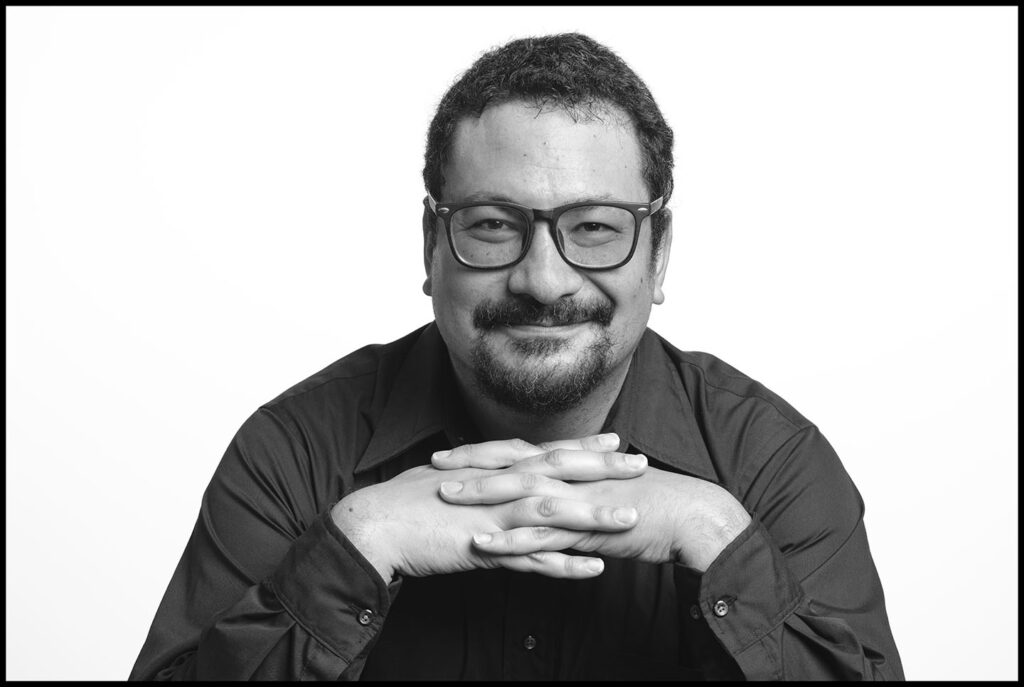
“We’re more powerful in alignment,” Bernhard said. “We’re trying to take from those organizations the best elements and really forge something [transformative].”

Jewish Veg started the aforementioned clergy statement campaign, of which they hope to add another 100 signatures by the end of the year.

“It’s not a matter of you can’t eat meat – we’re not saying that,” Bernhard said. “We’re here to help the people at institutions … give people some more choices, some more information, some more awareness … [so they can] figure it out for themselves.”

Encouraging more plant-based options is not about taking things away from your life, it’s adding vegetables, it’s adding knowledge about the impact of what you chose to eat. When you know where your food comes from, and how it fits with Jewish values, you can make informed decisions that are in alignment with who you are and what you believe.

Bernhard said they want people to watch “Shalom Begins on Your Plate,” share it and engage in conversations. The video is available on YouTube and on the CFJE website.

“See what it brings up,” he said. “We want Jewish clergy to take action by also sharing it, but also signing the clergy statement that goes with it, so we can increase the number of clergy [along with] the momentum, the awareness and the conversation.”

If you are involved with a Jewish institution, whether it’s a synagogue, school or summer camp, and are interested in adopting more sustainable food policies, contact CJFE about working with them.

“Our tradition calls us to be stewards of the earth, of the other animals with whom we share it, and of our bodies,” Bernhard said. “Each of these responsibilities resonates in the mitzvot, the sacred opportunities life grants us.”

Learn more at jewishfoodethics.org


Center for Jewish Food Ethics Launches “Shalom Begins on Your Plate” Read More »

David Chiu: The Braid, Tastes of Tradition and Katie Chin’s Latkes

Recipes are a bridge between generations and cultures.

“Tastes of Tradition,” a new video series from The Braid theater company, invites the audience into the kitchens of five diverse Jewish families.

“One thing that we at The Braid notice is that food and storytelling, especially for us Jews, are  inseparable,” David Chiu, communication manager at The Braid and producer of the video series, told the Journal. “Think about the Seder; it is all about stories and eating, and every food has a story behind it.”

In the snackable videos (they are about two-and-a-half minutes each) mothers and fathers cook with daughters and sons – and in one case three generations cook together – and share cherished recipes and invaluable time together.

The series is on brand for The Braid, a vibrant cultural hub for connection, creativity and sharing stories that reflects the diversity of the Jewish experience. When they took their salon shows online during the pandemic, the food that accompanied in-person performances was sorely missed.

“As we started expanding our offerings beyond theater to digital, we noticed that some of our best hits on YouTube were food related,” said Chiu.

After noticing the success of a challah video they did with Instagram chef Sivan Kobi of Sivan’s Kitchen, Chiu said they went to the Jews of Color Initiative and pitched the idea of doing an intergenerational food series.

“We wanted to tap into our community, but it’s not going to be a typical cooking show,” he said. “We’re going to include the recipes for people who want to learn them, but [since] The Braid is all about stories, it’s about the family stories behind the recipes.”

Featured in the series are Kobi and her Iraqi Jewish mother, Yafa, who prepare kitchri, and Chinese-American celebrity chef and cookbook author Katie Chin and her teenage daughter Becca, an Asian American Jew, who make latkes with Asian-inspired dipping sauces. Chin’s recipe is below.

Also,  graphic novelist Emily Bowen Cohen, a Muscogee (Creek) Nation member, joins her son Maccabee and mother-in-law Beth to make fry bread for Hanukkah; award-winning comic and educator Joshua Silverstein, who is black and Jewish, and his 16-year-old stepson, Ami, make allergy-friendly hamantaschen for Purim; and Kimberly Dueñas, co-founder of Jewtina y Co, and her father Solomon, a crypto-Jew from El Salvador who kept his Jewish identity hidden for years due to the legacy of the Spanish Inquisition, prepare challah.

“To me, the most powerful thing about food is that it’s passed down and …  even if you don’t  pass down Shabbat traditions or other religious things,  there’s something that you take from your family related to food,” said Chiu, who is a Chinese American Jew.

“I find that also true on my Chinese side,” he said. “I don’t have the same cultural knowledge that my dad has.”

When Chiu went off to college, he wrote to his dad, asking him how to cook.

“He sent me all these recipes, which was hard for him because he’s an immigrant and he never wrote anything down,” Chiu said. “But his recipes became my way of connecting with him and his culture.”

One thing Chiu noticed in doing this intergenerational cooking series is that the younger generations are taking treasures from their parents and grandparents. The families are genuinely communicating and bonding.

“It made me realize how, and even in these incredibly accomplished families, we don’t take that moment to say, ‘Thank you for keeping this tradition alive,’ or ‘I’m proud of what you’re doing and keeping our family’s history and tradition alive,’” he said. “It’s really meaningful and food really is a great way to center it.”

Food, he explained, is more than just the feeding.

“That’s also true in Chinese culture as well,” he said. “The table is what brings the family together, the table is what welcomes the stranger, the table is what keeps friends together.”

He added, “For me, the food is as much about the people you’re sharing it with as the recipes themselves.”

The Braid is launching “Tastes of Tradition” in Santa Monica on December 7. Learn more about the event and watch the videos, starting December 16, at The-braid.org/tastes.

For the full conversation, listen to the podcast:

Watch the interview:

Katie Chin’s Double Happiness Latkes

Serves 4

Prep Time: About 30 minutes; Cook Time: About 30 minutes

Katie Chin’s Latkes with Asian Inspired Dipping Sauces (Photo by Daphna Shull)

Ingredients

Latkes:

1 1/4 pounds large potatoes, preferably baking potatoes peeled

3 scallions, finely chopped (white & green parts)

1 egg

1 teaspoon salt

1/4 to 1/2 teaspoon ground white pepper

2 tablespoons all purpose flour

1/2 teaspoon baking powder

1/2 cup vegetable oil, more if needed

Tangy Dipping Sauce:

1 teaspoon toasted sesame seeds

1 garlic clove, minced

1 scallion, finely chopped (white & green parts)

¼ cup soy sauce

2 tablespoons white vinegar

2 teaspoons toasted sesame oil

1 teaspoon sugar

Honey Sriracha Sauce:

6 tablespoons butter

1/3 cup honey

1/4 cup Sriracha sauce

1 tablespoon soy sauce

1 lime, juiced

Directions

Using a coarse grating disc of a food processor or large holes of a hand grater, grate the potatoes. Transfer to a colander. Squeeze the mixture by handfuls to press out as much liquid as possible; discard the liquid.

Put the grated potatoes in a bowl. Add the scallions, egg, salt, pepper, flour and baking powder.

Heat 1/2 cup (125 ml) oil in a deep heavy 10- to 12-inch (25 x 30 cm) skillet. For each pancake, add about 2 tablespoons of potato mixture to the pan. Flatten with the back of a spoon to make 2 1/2-in (6.3 cm) pancakes.

Fry over medium heat for 4 to 5 minutes. Using 2 pancake turners, turn them carefully. Fry the second side for about 4 minutes, or until the pancake is golden brown and crisp. Drain on a plate lined with paper towels.

Stir the potato mixture before frying each new batch. If all the oil is absorbed during frying, add 2 or 3 tablespoons more oil to the pan. Set aside and keep warm with foil.

While latkes are resting, make the dipping sauces.

Tangy Dipping Sauce: Whisk all of the sauce ingredients in a bowl.

Honey Sriracha Dipping Sauce: Heat the butter on medium heat until melted. Add the remaining glaze ingredients, stir and bring to a boil. Let boil for 1 minute. Lower heat and simmer for 3-5 minutes.

Serve latkes with both sauces and enjoy!!


Debra Eckerling is a writer for the Jewish Journal and the host of “Taste Buds with Deb.Subscribe on YouTube or your favorite podcast platform. Email Debra: tastebuds@jewishjournal.com.

David Chiu: The Braid, Tastes of Tradition and Katie Chin’s Latkes Read More »

Print Issue: Making L.A. Great Again | Dec 6, 2024

CLICK HERE FOR FULLSCREEN VERSION

Print Issue: Making L.A. Great Again | Dec 6, 2024 Read More »

Sephardic Torah from the Holy Land | Hanukkah, 1948

With the month of Kislev underway, we turn our attention to Hanukkah, our holiday of light and heroism.

December, 1948. The State of Israel is seven months old, recovering from the War of Independence that claimed 6,500 lives. The heroes who defended Israel – the men and women of the newly established Israel Defense Forces – were the first Jews since the Maccabees to take up arms and defend Jewish independence in the Land of Israel. I take personal pride that my father z”l – whose name was Nessim (miracles – because he was born on Hanukkah) – was one of those IDF fighters, in the elite Palmach unit.

Sephardic Chief Rabbi Benzion Uziel was eager to light Hanukkah candles with these heroes and express his praise and gratitude to them.

Here are excerpts of his address to a gathering of IDF soldiers in December 1948 (I wonder if my father was in the crowd that night?):

“This year marks the first time in centuries that we are celebrating Hanukkah and kindling Hanukkah lights as an independent nation in our ancestral homeland.

In the days of the Maccabees, and in our times, we experienced the rise of enemies who outnumbered us and sought to uproot us from our land. 2500 years ago, and again today, our people, and the nations of the world, have witnessed the miraculous wonder of God standing by our soldiers in battle, and – in the words of the Hanukkah prayer – help ‘deliver the strong into the hands of the weak, the many into the hands of the few.’

Praised be you, our mighty soldiers and heroes, who armed yourselves with faith and heroism, and renewed the splendid acts of the ancient Maccabees. Praised be our sacred fallen heroes who fell in this recent war of redemption. With their blood, they redeemed our land and our inheritance. May their memories forever be a blessing, and may their souls be bound up in the bond of eternal life, together with all of our nation’s righteous souls and heroes from past generations.

This year’s Hanukkah marks a double celebration. We have blended the memories of of our past with the great vision of our modern-day independence. This year the Hanukkah lights illuminate our souls in our own liberated Land of Israel.

To you, our heroic soldiers, I say hizku v’Imtzu – may you be blessed with strength and with courage. May we see the day when God will help rid us of all enemies. May our lives be illuminated by the bright flames of eternal redemption and peace.”

Thus spoke Rabbi Uziel before the very first modern-day Maccabees. 76 years later, his words ring true for today’s heroic IDF Maccabees.

Shabbat Shalom


Rabbi Daniel Bouskila is the international director of the Sephardic Educational Center.

Sephardic Torah from the Holy Land | Hanukkah, 1948 Read More »

How to Make a Tzedakah Box from an Old Album Cover

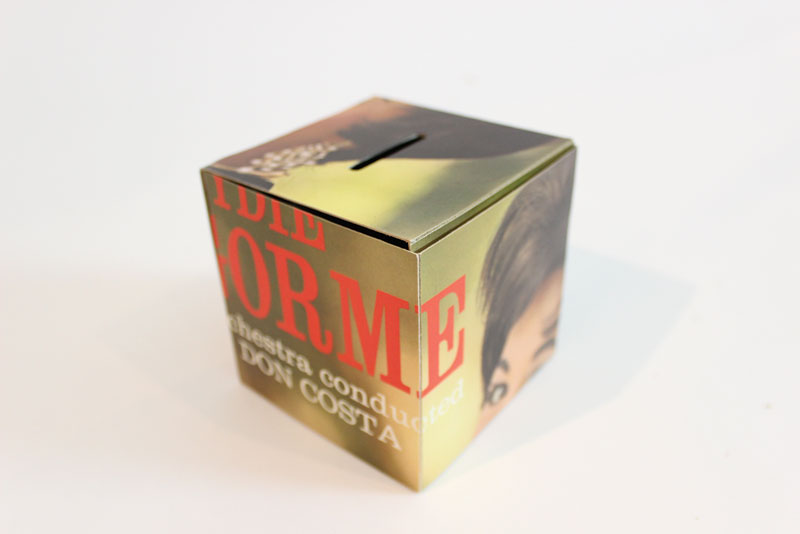
Making a tzedakah box is a fun craft activity for kids from eight to 80, and creating the box provides a valuable lesson in the importance of charity. This tzedakah box made from an up-cycled record album cover is eco-friendly, so it’s good for the community – and the environment. 

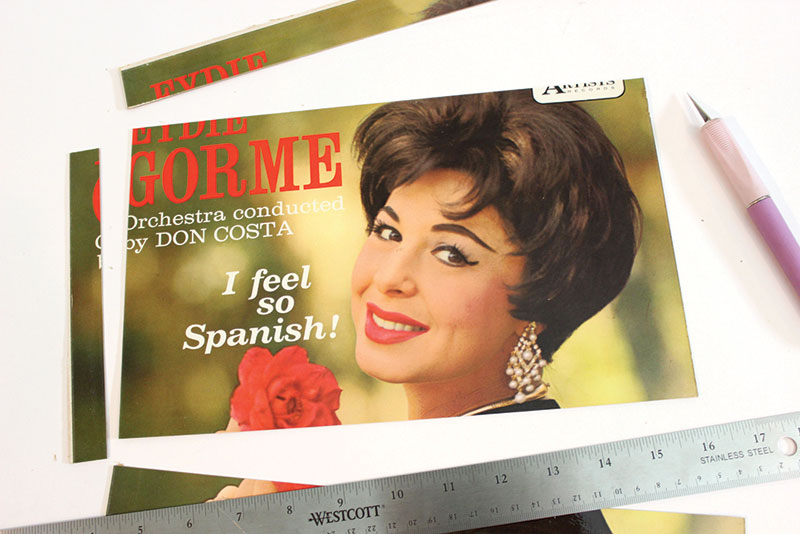
Of course, I don’t encourage you to sacrifice a prized record from your collection. Step away from that Beatles White Album. Instead, look in thrift shops and garage sales for old albums with interesting artwork. I actually found the Eydie Gorme album pictured here at the thrift store. It didn’t even come with the vinyl record inside, so the clerk gave it to me for free.

And yes, I have made a tzedakah box from a Neil Sedaka album cover – which proves that although breaking up is hard to do, making your own tzedakah box isn’t.

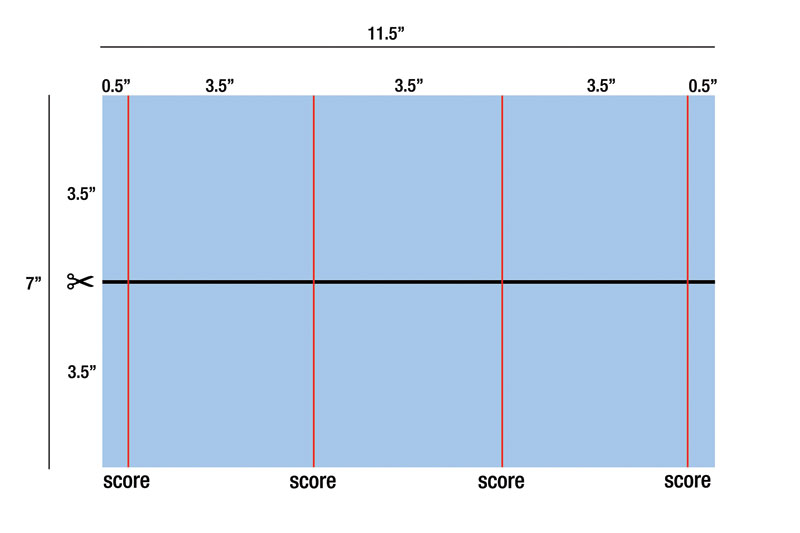
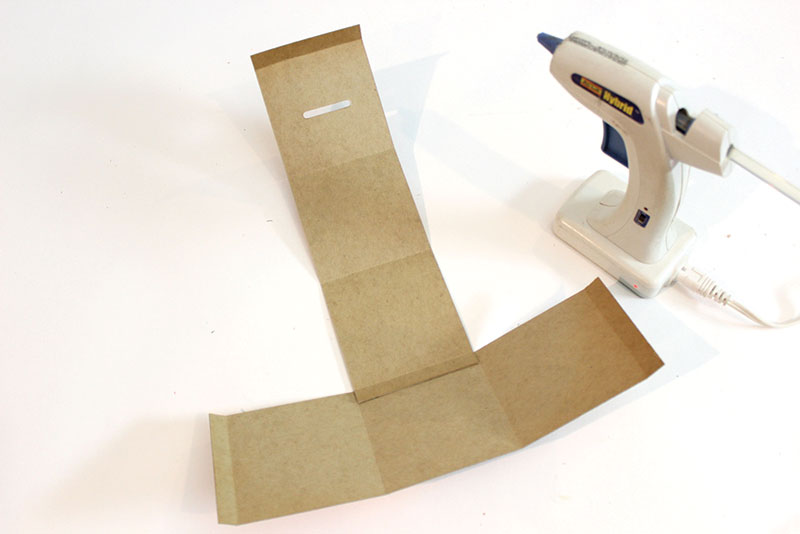
Follow this template in cutting the album cover. It indicates how large of a section to cut out of the album cover (11 ½” x 7”). The black line indicates where to cut this section in half, and the red lines indicate where to score the cardboard. 

1. To make a 3 ½” x 3 ½” box, cut an 11 ½” x 7” section from the cover with a hobby knife. Choose a section of the album cover with the most colorful graphics and type. (Warning: hobby knives [like X-Acto knives]are very sharp, so only an adult should use them.)

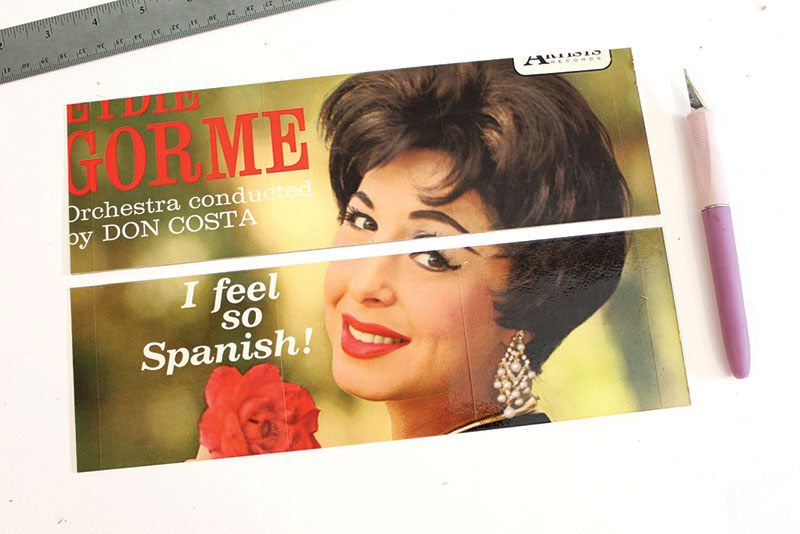
2. Scoring is the process of creating an indented line in the cardboard so you can make clean, defined folds. To make a score line, run a hobby knife along the straight edge of a ruler very lightly; you want the knife to only make a mark without cutting into the paper.  Following the red lines in the template, score the cardboard to create three 3 ½” sections with two ½” flaps at both ends. Then cut this piece in half lengthwise.

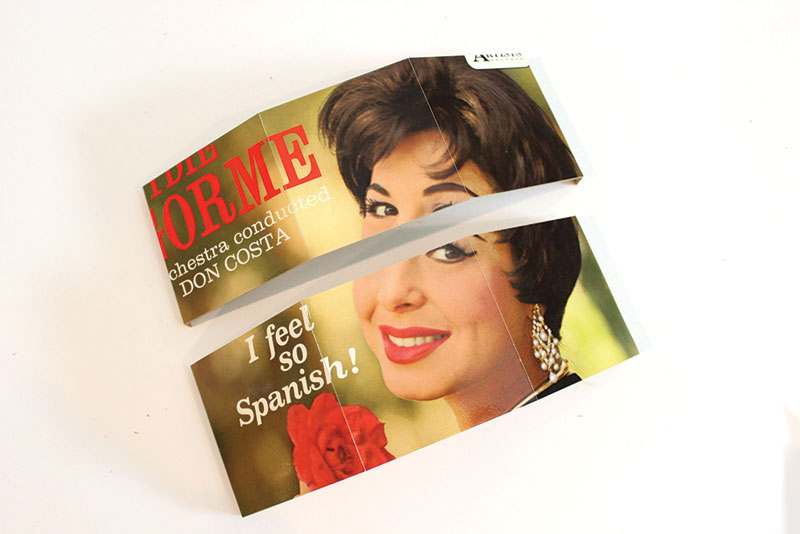
3. You will now have two pieces that are each 3 ½” x 11 ½”. Bend the cardboard where you scored it to reveal the six sides that will make up the box, plus the flaps to connect the two pieces. 

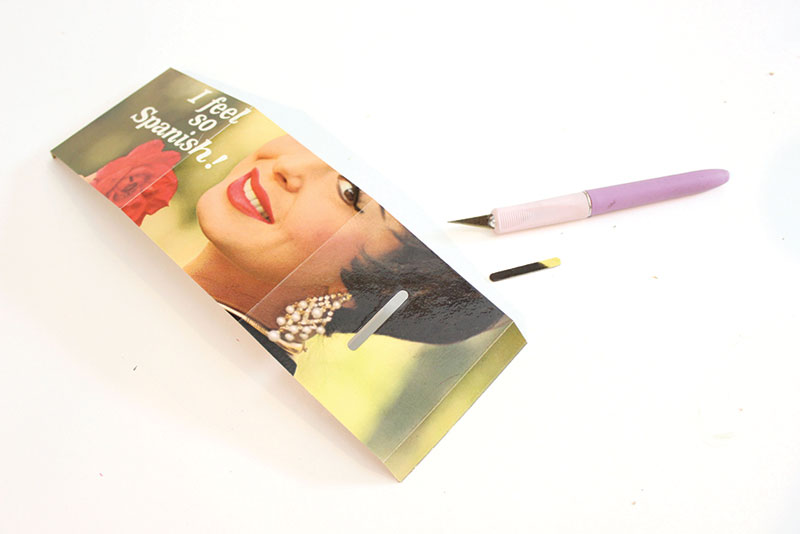
4. Pick one end of one of the pieces to be the top side of the box. The top always needs to be at the end with a flap piece so the box can be opened. Using a hobby knife, cut a slit in the middle to make a coin slot.

5. Hot glue the end flap of one piece to the edge of the middle section of the second piece. Make sure that the side with the coin slot is at the opposite end of the glued flap. (Another safety note: Keep kids away from the hot glue gun.)

6. Folding the box into itself, hot glue the two flaps on the second piece to the middle of section of the first piece. There will be two edges at the bottom of the box that are open and not connected by flaps. To prevent coins from falling out of these openings, cover these edges with duct tape. Finally, close the lid of the box. Don’t glue the flap to the top, or you won’t be able to open it again.


Jonathan Fong is the author of “Flowers That Wow” and “Parties That Wow,” and host of “Style With a Smile” on YouTube. You can see more of his do-it-yourself projects at jonathanfongstyle.com.

How to Make a Tzedakah Box from an Old Album Cover Read More »

JFSLA, Big Sunday Volunteers Distribute Thanksgiving Meals; Israel Film Festival

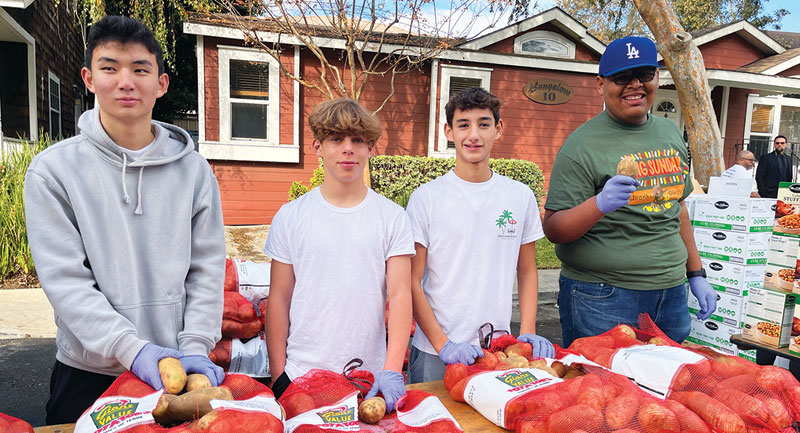
Every Thanksgiving, Jewish Family Service LA (JFSLA), the city’s oldest social service agency, plays an important role in ensuring that Angelenos have access to the groceries they need to have a Thanksgiving meal. This year, JFSLA staff and volunteers distributed Thanksgiving meal staples to 1,000 households across Los Angeles.

Year round, JFSLA’s SOVA Community Food and Resource Program ensures everyone in Los Angeles has access to fresh, healthy groceries, essential personal care items, and connections to additional resources that can support participants and their families. On Nov. 22, SOVA held its annual drive-thru Thanksgiving distribution at its two pantry locations in Pico-Robertson and Van Nuys.

“The work of SOVA extends beyond the holiday season, but Thanksgiving is a special time for our clients, staff, and volunteers,” JFSLA Director of SOVA Brittany Nazarian said.

With two food pantries and several pop-up pantries in the greater Los Angeles area, the SOVA Community Food and Resource Program serves as a lifeline for thousands of families throughout the year, offering a host of services, including groceries, care items, and connections to additional resources. In 2024 alone, SOVA distributed three million pounds of food to 23,000 Angelenos who visited SOVA pantries 57,000 times.

This year’s distribution served 1,000 households and more than 1,700 individual clients. Those who attended were given turkey, potatoes, yams, stuffing, cranberries, green beans and canned pie fruit–“everything needed for a Thanksgiving dinner,” according to JFSLA leadership.

“Access to food resources remains a pressing challenge, as over one million Angelenos face food insecurity,” Nazarian said. “JFSLA’s SOVA Community Food and Resource Program is proud to support our neighbors, whether it be at Thanksgiving or any time of year.” 

In total, 16 staff members and 30 volunteers helped pass out groceries at the two drive-thru centers, and a week prior, 40 volunteers came together to help pack and organize 1,900 bags of food.


Big Sunday’s recent Thanksgiving food drive in Studio City drew volunteers of all ages.

On Nov. 27, the spirit of gratitude and togetherness was in the air, with people of all ages turning out, as local nonprofit Big Sunday held its annual “13th Annual BIG Thanksgiving Stuffing Event – Festival of Gratitude.”

The event was held the day before Thanksgiving. More than 2,000 volunteers came together at the Radford Studio Center in Studio City to assemble packages of food for the less fortunate.

Big Sunday Executive Director David Levinson.
Photos by Ryan Torok

“We’re living in such an incredibly divided and divisive time, and such a dark time in so many ways, but this event, between recipients, volunteers, collectors, sponsors, donors, vendors, this one event is going to touch close to 20,000 people of all ages and backgrounds, and we’re just celebrating differences while finding common ground,” David Levinson, founder and executive director of Big Sunday, told The Journal. “[This is about] compassion and kindness and community. It’s great we’re feeding all these people, I’m so happy too, but what I’m happy about is we can all be here and enjoy one another.”

Longtime Big Sunday volunteer Dave Cooper showed up dressed as a dancing turkey. Regarding Big Sunday, “I consider this the heartbeat of Los Angeles,” Cooper said.

While a bluegrass band played, volunteers bagged chocolate chip and sugar cookies in an assembly line, designed holiday greeting cards and put together packages of food with fresh vegetables, canned goods and other holiday essentials. The recipients of the packages were given gift cards to help with the purchase of turkeys. 

A Los Angeles-based organization, Big Sunday started more than 25 years ago, with roots as a mitzvah day at Reform congregation Temple Israel of Hollywood. Today, it’s one of the most well-known nonprofits in the country, with a focus on connecting volunteers with opportunities to help.


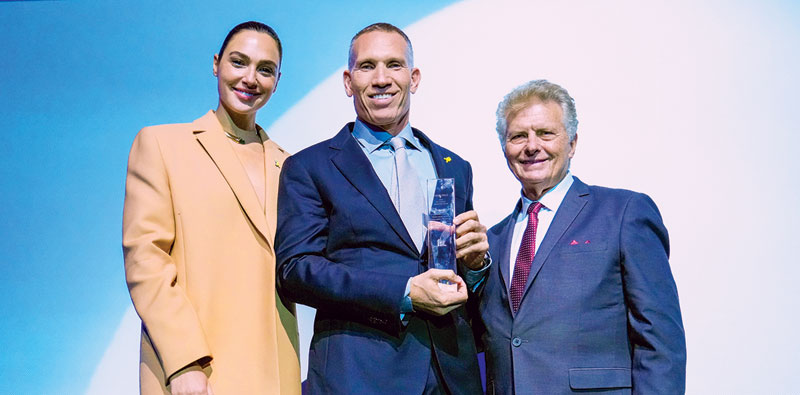
Actor Gal Gadot, Mattel CEO Ynon Kreiz and IFF Executive Director Meir Fenigstein.
Courtesy of Israel Film Festival

The Israel Film Festival’s (IFF) opening night gala was held at the Saban Theatre in Beverly Hills on Nov. 13

Among those joining IFF Festival Founder and Executive Director Meir Fenigstein were Mattel Chairman and CEO Ynon Kreiz, who was presented by actress and producer Gal Gadot with the 2024 IFF Industry Leadership Award.  Also in attendance was Consul General of Israel in Los Angeles Israel Bachar and writer/director Tom Nesher, whose film “Come Closer,” Israel’s Academy Award submission for Best International Film, had its West Coast Premiere at the festival event.

This year’s festival was held after more than two years of delays due to the pandemic and the ongoing war in Israel. It was held through Nov. 26. 

“We were proud to present during this year’s festival more than 40 new feature films, thought-provoking documentaries, and our new initiative of a student short film competition,” Fenigstein said.

JFSLA, Big Sunday Volunteers Distribute Thanksgiving Meals; Israel Film Festival Read More »

Setting the Record Straight on RFK, Jr. and Antisemitism

Many journalists, including some associated with major media outlets, are spreading a fictitious picture of Robert F. Kennedy, Jr. without taking the time to listen to him directly, and without researching the origins of often slanderous allegations against him. One especially concerning example has been the labelling of RFK Jr. as an antisemite.

To the contrary, when one takes the time to listen to RFK speak about his perspectives on Israel, and his understanding of the history of the Jews, it is abundantly clear that he is an ally of the Jewish people, with a uniquely strong understanding of the importance of Israel as a Jewish state. One of the best such speeches (from July 2023) can be found on X.com at https://x.com/robertkennedyjr/status/1684749896333574144.

For America in general, but particularly for Jews, the fact that media outlets seem so confused about this man is distressing. As a registered independent, as a Jew, and as a research scientist who is by no means a die-hard fan of any politician, I still feel obligated to state that it is detrimental to the Jewish people to be misled about a prominent political figure who is actually our ally.

Let’s expose the two main (false) arguments that have been put forth to label RFK as antisemitic: First, that he claimed COVID-19 was ethnically targeted to spare Ashkenazi Jews and Chinese people, and second, that he likened COVID-19 restrictions to living in Nazi Germany. 

The COVID-ethnicity matter originates from a scientific journal article in BMC Medicine, part of Springer Nature, entitled, “New insights into genetic susceptibility of COVID-19: an ACE2 and TMPRSS2 polymorphism analysis” by Yuan Hou of the Cleveland Clinic, Junfei Zhao of Columbia University and 8 more co-authors from the Cleveland Clinic (BMC Medicine 18, 216 [2020]). 

This peer-reviewed research found “unique genetic susceptibility across different populations” in the cell receptors associated with SARS-CoV-2 infection (COVID-19 disease).  Of the eight groups that were isolated, African American and Europeans had the greatest number of detrimental genetic variants of the cell receptors, while Ashkenazi Jews and Asians had significantly fewer variants. In other words, genomic differences across ethnic groups can be involved with variations in vulnerability to COVID-19 disease and severity. This is a published, scientific reality.

That was the whole point of RFK’s comments, in which he was referring to the above paper and other research of this nature. He said, “COVID-19, there is an argument that it is ethnically targeted. It attacks certain races disproportionately. Because of genetic differentials among different races of the ACE2 receptor, COVID-19 is targeted to attack Caucasians and black people. The people who are most immune are Ashkenazi Jews and Chinese. We don’t know if it was deliberately targeted or not, but there are papers out there that show the racial and ethnic differential impact of it.”  

Far from being antisemitic, RFK was giving a general warning about the reality of genetic research demonstrating that different ethnic groups have measurably varied and potentially exploitable susceptibilities to diseases. When one recognizes the existence of scientific studies that are the basis of RFK’s comments, and listens to his full message, it becomes clear that his statements are coming from a position that is fundamentally pro-human and anti-eugenics, and certainly not antisemitic. In reporting this story, many journalists did not present background information about the relevant published research.

As regards Nazi Germany, RFK brought it up in a speech at a rally during COVID. The rally was about opposing COVID mandates, but RFK was speaking much more broadly about the rise of technologies and infrastructures that reach a whole new level of control beyond what was possible during the Nazi regime. 

Here is some of what he said leading up to and including the “Hitler’s Germany” comment: “What we are seeing today is what I call turn-key totalitarianism. They are putting in place all these technological mechanisms for control, that we have never seen before. It’s been the ambition of every totalitarian state since the beginning of mankind, to control every aspect of behavior, of conduct, of thought, and to obliterate dissent.  None of them have been able to do it. They didn’t have the technological capacity. Even in Hitler’s Germany you could cross the Alps into Switzerland, you could hide in an attic like Anne Frank did. Today the mechanisms are being put in place that will make it so that none of us can run and none of us can hide.”

What part of this speech is antisemitic? One can debate the appropriateness of drawing comparisons to the conditions of Hitler’s Germany with current or potential future events, but these have nothing to do with antisemitism. For news reporters to clip and/or frame RFK’s speech to imply that he was comparing U.S. COVID policies to Nazi Germany, is simply false. Rather, RFK was expressing his concern about totalitarian control of citizens and his belief that the tools and placement of such control are expanding rapidly.

Claims that RFK is an antisemite are not based on reality. To verify this, one needs only to listen to his complete speeches directly. 

Claims that RFK is an antisemite are not based on reality. To verify this, one needs only to listen to his complete speeches directly. We must not let the mainstream media mislead Americans – certainly not Jews – into thinking he is antisemitic. My hope is that people will learn that RFK is a prominent political figure who has a deep understanding of the significance of Israel and the Jewish people. Going forward, he may have the potential to work for the benefit of Israel and the Jewish community. Please, let’s not shoot ourselves in the foot.

The Cleveland Clinic journal article may be found at https://doi.org/10.1186/s12916-020-01673-z


Beth L. Klein, Ph.D., is an astrophysicist in the Department of Physics and Astronomy at UCLA. 

Setting the Record Straight on RFK, Jr. and Antisemitism Read More »