The following are the descendants of Ishmael son of Abraham, whom Hagar the Egyptian, Sarah’s bondwoman, bore to Abraham. ~ Genesis 25:12
These are the names of our cousins
who bore more cousins, who bore more cousins.
This kept happening until the entire world
was full of our cousins and we forgot
we were related and all we could remember
was hate. These are the names of our cousins
who weren’t invited into the tent
who were sent into the desert
which may explain why they’re
still angry with us.
These are the names of our cousins Nevayot, Kedar, Adbe’el, Mivsam,
Mishma, Duma, Masa, Chadad, Teima, Yetur, Nafish and Kedmah.
There were twelve of them like
there would be twelve of us.
Tribed together with our own
names and gifts and blessings.
When you lay it all out, it’s obvious
how much we have in common –
our structure, our general neighborhood,
our Abraham. Would our common ancestor
our great, great, and so on, grandfather
have endorsed how we keep blowing each other up?
How we keep building on each other’s ruins?
Is this what he and Sarah had in mind
when they sent Ishmael away?
Ishmael was 137 years old when he died.
But he never forgot who he was.
Rick Lupert, a poet, songleader and graphic designer, is the author of 28 books including “God Wrestler: A Poem for Every Torah Portion.” Visit him at www.JewishPoetry.net
A family that cooks together creates beautiful memories, while having fun.
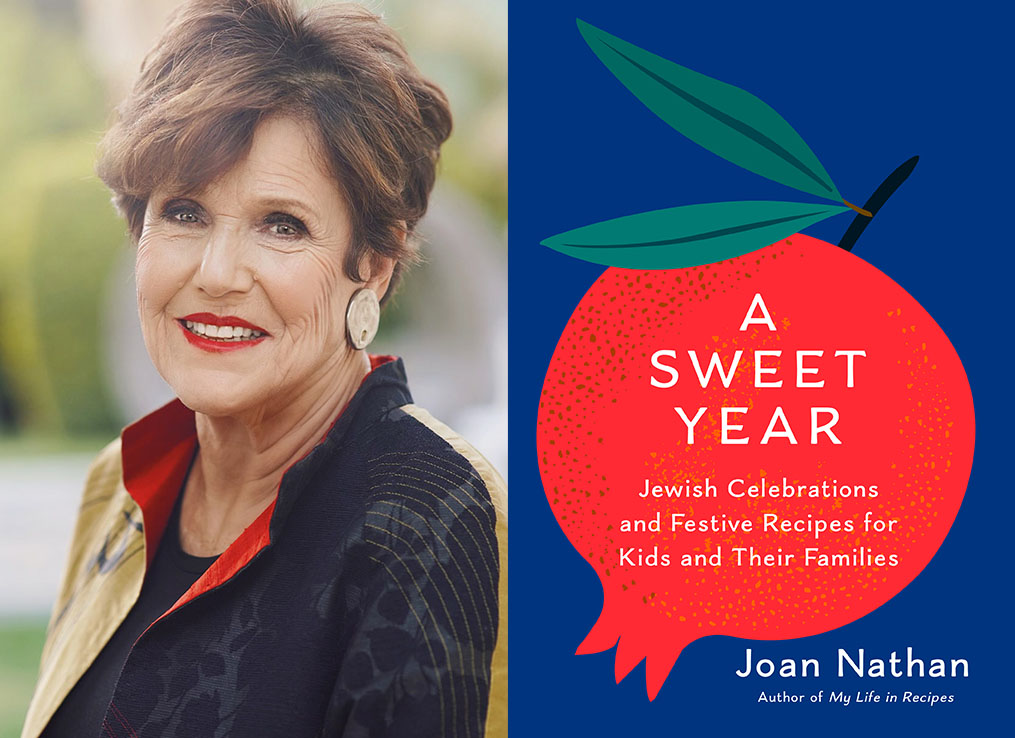
Joan Nathan’s latest, “A Sweet Year: Jewish Celebrations and Festive Recipes for Kids and Their Families,” is designed to do just that.
“Kids love to [cook and bake] because it’s like magic,” Nathan told the Journal. “And then you get to talk with them; it’s a way of connecting with kids.”
Nathan is the author of 12 books, including “My Life in Recipes,” as well as “Jewish Cooking in America” and “The New American Cooking,” both of which won James Beard Awards and IACP Awards.
“A Sweet Year” is a new version of Nathan’s “The Children’s Jewish Holiday Kitchen,” which originally came out in 1987 and had been updated twice. WIth more than 50 new photographs of dishes and of Nathan in the kitchen with her family, “A Sweet Year” includes sample menus and holiday crafts, as well as specific instructions within the recipes for adults and kids. As an example, and delicious treat, Nathan’s recipe for Apple Cake Eden is below.
“It originally started as a cooking class in my house when … I had three young kids and they brought their friends,” Nathan said. “We did these recipes [together], and I just noticed what I could do and what they could do…. and it works.”
Updated for modern times, the book features family-friendly recipes from rainbow-colored challah and banana strawberry pancakes to fruit noodle kugel apple honey cupcakes. It underscores the importance of putting away electronic devices and enjoying quality time in the kitchen.
“Everything is so quick; [people] can get any recipe online … their phone is attached to them,” Nathan said. “It’s really important to hold on to tradition, which you can through recipes.”.
The book is organized by holiday, and starts with the weekly celebration of shabbat, which Nathan called, “one of the beauties of the Jewish religion.” People who aren’t even Jewish are familiar with the Jewish sabbath; most are familiar with challah.
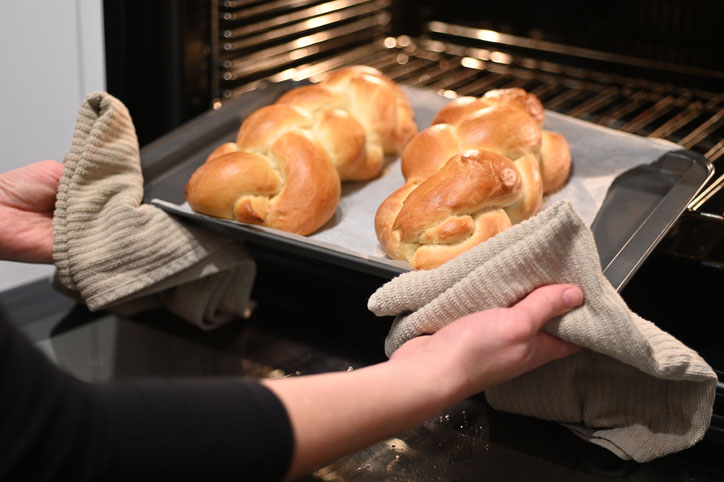
“There’s a joy in making challah; once you do it, it’s easier than going to a supermarket,” Nathan said. “And people love homemade challah, so I like to give it to people.”
For kids, making challah is a great exercise in imagination.
“I’ll have them mold it the way they want to,” she said. “And who cares if it’s not a three-braid challah – if it’s a Mario figure that they created – it doesn’t matter; the process is important.”
Creativity in the kitchen can also include designing a salad or even setting the table.
“I always try to let kids make place cards or set the table,” Nathan said. “They’re proud of themselves.”
Preparing food together is a beautiful bonding experience; the history of these recipes are priceless.
“The bible and the talmud are the base of Judaism, so we get all these old recipes from [them], even hummus is in the Bible,” Nathan said. “I think it’s fascinating that we have recipes that are so old, because they’ve been repeated for the sabbath and holidays for thousands of years.”
They might have become more sophisticated since the mid-1900s, when the steam engine came into being, she explained, but they weren’t so different for a long time. Nathan loves resurrecting old recipes.
“I don’t know about you, but I get a high every time I discover a new old recipe,” she said. “Believe me, all this is hard work, and I’m 81 years old, but I’m [thrilled when] people are excited about coming to my house for dinner.”
Cooking together is community, education and history.
“The Jewish holidays preserve the Jewish people,” she said. “We have a tradition that goes back thousands of years; we’ve got to maintain it in a modern way.”
One of the best ways to do that is to cook with kids.
“A Sweet Year” was released on November 19.
Apple Cake Eden
Photo by Gabriela Herman
This is a very simple and simply delicious cake, one of my favor-ites. I dubbed it Apple Cake Eden, but you can call it whatever you like. Just make sure that the children design an apple on top of the cake— or whatever they want! (They may have to change the name, however.)
Makes 1 cake, serving 6 to 8
INGREDIENTS
1¼ cups unbleached all-purpose flour
¼ teaspoon salt
1 teaspoon baking powder
½ cup unsalted butter, vegan spread, or coconut oil
Grated zest of 1 large lemon
1 large egg yolk
1 cup sugar
2 pounds (about 5) Granny Smith or other tart yet flavorful apples
1 teaspoon ground cinnamon
EQUIPMENT
9-inch springform pan
Measuring cups
Measuring spoons
Mixing bowl
Spoon
Dough cutter
Grater or food processor
Apple corer
Vegetable peeler
Sieve
Spatula
Parchment paper
Dull knife
Baking sheet
Adult with Child: Preheat the oven to 425 degrees, and line a 9-inch springform pan with parchment paper.
Child with Adult: Using either a food processor, or a bowl and your hands, mix the flour, salt, baking powder, and butter, vegan spread, or coconut oil until crumbly. Then zest the lemon, and add the zest with the egg yolk and ¼ cup of the sugar. Mold it into a ball, and set it aside.
Adult with Child: Using a vegetable peeler and an apple corer, peel and core the apples. Then, using a grater or the food processor or a mixture of both, grate the apples, and mix them with the remaining ¾ cup of sugar and the cinnamon. Transfer this mixture to a sieve over a mixing bowl, and let it sit for 20 minutes.
Child with Adult: Cut the dough with a dough cutter into two pieces, three-quarters and one- quarter of the dough. Take the larger part and press into the top and sides of the springform pan.
Child: With a large spoon, move the drained apples to the dough in the pan, using a spatula to flatten the apples. Then roll or press out the leftover quarter of the dough, and cut
it with a dull knife to make a decorative apple or whatever design you want; place it in the center of the apple-strewn dough.
Adult: Bake in the middle of the oven, on top of a cookie sheet (for spills), for 15 minutes, then reduce the oven to 350 degrees for another 30 minutes, or until the crust is golden.
Liz Hirsh Naftali’s book, “Saving Abigail: The True Story of the Abduction and Rescue of a Three-Year-Old Hostage” is an intimate and sobering account of one family’s horrific loss and the effort to find any semblance of hope. The book, released 11 months after the attacks of Oct. 7, 2023, follows the story of Abigail Mor Edan, who was only three years old when Hamas terrorists stormed her border community in Israel on that terrible Saturday. The attack left over 1,200 dead and 246 abducted.
Naftali is Abigail’s great-aunt. After Abigail’s parents were murdered in front of their children, Abigail was taken hostage by Hamas. Naftali made it her mission to bring her great niece home. “Abigail’s story, our story, is tragic, and it’s one of many tragic stories from Oct. 7, but it’s one that not only had the murder and the kidnapping but also the atrocity of what could happen,” Naftali told The Journal. “And then yes, [Abigail] was released, but she didn’t come ‘home.’ She had no house. Her parents were gone, they were murdered. And yes, she has a beautiful family and her sister and brother and she are going to be okay. They’re good.”
Naftali describes her journey as both a grieving family member and an advocate navigating the highest levels of international diplomacy. “I was so new to all this that I just started taking notes from the beginning,” she said of her writing process. “People said, ‘Take notes, keep a journal,’ and I kept lots of journals … even in meetings, some of the leaders would ask, ‘Why are you writing?’” These detailed records became the foundation for the 200 pages of “Saving Abigail.”
Though she was new to hostage advocacy, as a businesswoman and philanthropist, Naftali is no stranger to taking charge. As evidenced by her guests on The Capitol Coffee Connection podcast (including former Speaker of the House Nancy Pelosi (D-Calif.), House Majority Leader Steve Scalise (R-La.), and dozens more incumbent U.S. Senators and U.S. Representatives), nudging, grilling and advising government bureaucrats is something Naftali does with ease.
Naftali writes that the mass kidnapping of young children by terrorists was something few people in government — including, as it turned out, senior officials like National Security Advisor Jake Sullivan and CIA Director William Burns — had ever dealt with before. Special Presidential Envoy Roger Carstens, who had handled hostage cases for the U.S. State Department since 2020, admitted the situation was unlike anything he had encountered before. Carstens, she writes, “was hardly sanguine about the challenges of bringing Abigail. His office had a wall displaying the pictures of hostages he helped bring home … I also noticed that the gallery of photographs on Carstens’ wall didn’t include any pictures of three-year-old girls or, for that matter, any children at all.”
What made Abigail’s case even more extraordinary was the level of attention it garnered. President Joe Biden received daily updates on the hostages, including Abigail. “Knowing that Abigail’s fate was on the president’s desk every day gave me hope,” Naftali wrote.
Naftali also hopes this can be a book to be read by skeptics of the atrocities committed by Hamas against Jews. “I wanted people to understand, and as we saw stories of people who questioned the attacks even happened that day,” Naftali said. “People can make judgments, they can decide things. But what I put in there is the truth.”
“I wanted people to understand, and as we saw stories of people who questioned the attacks even happened that day … People can make judgments, they can decide things. But what I put in there is the truth.” – Liz Hirsh Naftali
For Naftali, the book was more than a recounting of events—it was a way to process deeply conflicting emotions. “When I did the audio [version], there were moments I cried so much saying it out loud that I had to take a break,” Naftali said. “To this day, when I speak and I talk about it, it’s not just, ‘Oh, I’m saying the story again.’ It’s taking my heart and the hearts of this family and Abigail and having to share it once again.”
“Saving Abigail” is both a tribute to Abigail’s survival and a call to action for anyone who can do what they can to bring home the remaining 101 hostages. The book stays remarkably nonpartisan, but she is not afraid to call out leaders by name. “Until these hostages come home, the Prime Minister [Benjamin Netanyahu], Ron Dermer, their whole team, everybody running that country, their legacy is based on Oct. 7, 2023. And I hope for them that they can bring home these hostages so the nation can move forward.”
Still, Naftali looks back at the past year and has a message for American Jews. “I say to American Jewry: I don’t care where you sit in terms of how religious you are or what side of the [political] aisle you are on, it is our obligation to come together to keep the hostages and Israel not a partisan piece, because Israel’s success is based on having Republicans and Democrats. But focus on the hostages’ release, which we have done very carefully, making sure that we have good relationships with both sides and we don’t take a side. But that is really important for the hostages.”
The book ends on September 1, 2024, the day that American Hersh Polin-Goldberg and five other hostages were found murdered in Rafa. It’s a brief epilogue that still feels as raw now as it did that day, nearly three months ago.
Still, Naftali has a vision for an updated epilogue sometime in the near future. “It’s an epilogue where Abigail and her siblings, five children and [caretaker] Hagar and her three children, and all these kids that I’ve met and seen who were either kidnapped or have parents who are still hostages, grandparents that are still hostages, that we fix this,” Naftali said. “We bring a world that will be better for them. And in this epilogue, it isn’t Abigail as an adult doing the work I’m doing for others, but it’s her saying, ‘I helped. I showed what resilience and hope is and that through this.’ And by the way, I hope that this epilogue is written sooner than later because it is really important for our country of America. It is really important for our country of Israel to countries that are allies and strongly, strongly related. It’s really important for that relationship that these hostages come home.
Abigail’s fifth birthday is on Sunday, November 23.
This week was one of challah bakes. Communities around the world came together to mix ingredients, knead dough, and learn how to braid challah in complicated configurations. The incomparable and brilliant Ms. Heather Lipman led the Sinai Akiba Academy bake, an annual treat for the entire community. Before she offered the blessing for the separation of challah, Judaic Studies teacher Ms. Marcelle Kasheri taught an important and powerful lesson:
Hannah, a woman who was childless and seemingly barren, prayed to God for a child. When her prayers were answered, she wove a coat for her little boy. Miraculously, as he grew, so did the coat. No extra stitches were needed. As he grew taller and wider, so did the coat. Ms. Kasheri explained that the magic ingredient of the growing coat was Hannah’s tears. Joyous and nostalgic tears, tears shed as she was creating this coat, astounded that her prayers of having a child had come true.
Ms. Kasheri reminded us that making challah has a similar kind of magic. The dough expands and rises as our prayers and tears enter the mixture. Prayers for health, prayers for healing, prayers for peace. Sometimes, a tear or two drops into the dough as a necessary sliver that our heart must be included in the process.
For thousands of years, women have gathered to make challah. But it’s not just a gathering that provides bread for the Shabbat table. Like Hannah, it’s a tradition that upholds the power of prayer. Like the growing yeast in the dough, we believe that with kavannah (intention) and lev (heart), our prayers rise to the Holy One. And each week, we continue the tradition, never losing hope, bolstered by the faith of the women that surround us.
Holy tears, heartfelt words, and a tradition that has sustained Jewish women for generations. This week and always, may our “challah prayers” be answered.
Shabbat Shalom
Rabbi Nicole Guzik is senior rabbi at Sinai Temple. She can be reached at her Facebook page at Rabbi Nicole Guzik or on Instagram @rabbiguzik. For more writings, visit Rabbi Guzik’s blog section from Sinai Temple’s website.
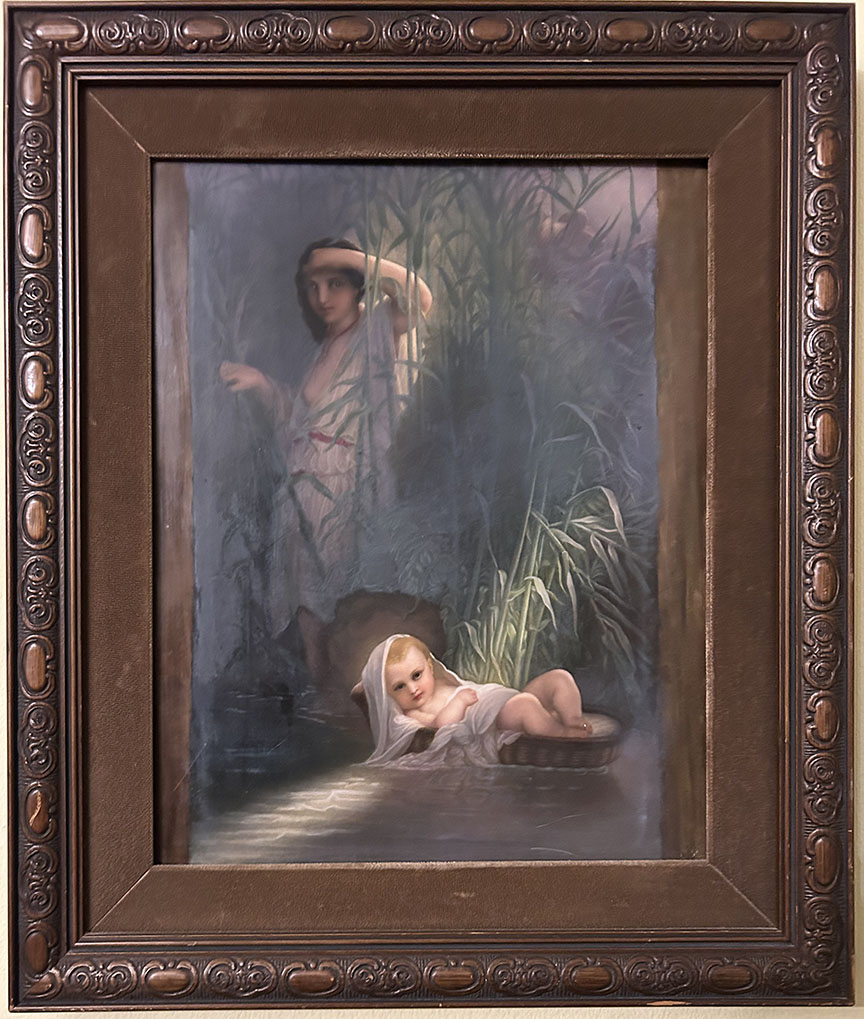
Moses’ mother wove a basket,
and put her infant into it,
and then into the Nile, a task it
Pharaoh’s decree made illegit,
because she feared the babe might drown,
which she prevented like all parents
who’d done the same, without renown,
for sons like Miriam’s and Aaron’s
young sib, enabled to survive,
as Aaron clearly had — perhaps
without those steps that kept alive
the future leader of all Jewish chaps —
steps taken by the Hebrew clan
of Moses’ mother; Miriam;
and Pharaoh’s daughter who foiled the plan
of deaths in Pharaoh’s dark dominium.
Abarbanel wrote Torah blogs
implying what I wrote above,
explaining that the plague of frogs,
the one that surely kids most love,
occurred because the loud noise they
made echoed bitter wails of woe
made by sad parents in dismay
when suffering the dreadful blow
caused when their little children drowned,
unlike the baby Moses who,
when by a miracle was found,
survived when Pharaoh’s daughter drew
him from the Nile. You’ll now read what
I’ve chosen in this verse to tell:
remember its midrashic plot
is by a Don, Abarbanel.
Due to the Spanish Inquisition
the Don was victim of a crack
in Judeo-Christianity,
a concept which some now repack
as “Abrahamic,” thus uniting
three faiths whose conflicts in the past
should not be minimized, still blighting
beliefs blessed by the Abrahamic cast.
The Inquisition paradigm
from one of them has long departed,
but with jihad, a most cruel crime,
one faith still makes Jews feel downhearted.
Inspired by Rabbi David Wolpe’s Off the Pulpit for Shabbat Bo 5766, 1/14/16 (Off The Pulpit):
Mothers
The word describing the basket in which Moses is placed as an infant is “tevah,” the same word used to describe Noah’s ark. Many commentators draw the parallel between the man who saved the world and the man who saved the Jewish people.
But who made the ‘tevah’? In Noah’s case, he made it at God’s direction to save himself. But in Moses’ case, it was made by his mother at her own initiative. She fashioned a sort of ark, not to save herself, but to save her child. Moses is then rescued by Pharaoh’s daughter. Perhaps the story is less about Moses and more about mothers.
For many of us, our mother is the one who placed us in the vessel that enabled us to float out into the world. She gave the ark a gentle push, offering it direction. As Jocheved did with Moses, our mother is one who both anticipated the danger and prepared the container to shelter and bring her child to safe shores. Moses survived and grew up to instruct the world; but his accomplishment was only possible because before he was born, Jocheved sat in hiding, waiting for his birth and weaving a basket.
Yet how useful a phrase like “Abrahamic religions” is as a help to achieving mutual understanding between Jews, Christians, and Muslims is questionable. On the one hand, as Jon Levenson observes, “To the extent that Judaism, Christianity, and Islam are focused on a belief in [one] God and a proclamation of him to the world, . . . the appeal to Abraham as a source of commonality and kinship among these three groups makes eminent sense.” On the other hand, as Levenson points out in qualifying this judgment, “the connection of Abraham with ongoing [Jewish, Christian, and Muslim] communities and their distinctive practices and beliefs” can become “a point of controversy among them, and not simply, as many would desire today, a node of commonality.”
This is if anything an understatement. True, there is no great controversy over Abraham between Judaism and Christianity, both of which revere the same Hebrew Bible and regard its stories as sacred truth; precisely this underlies the “Judeo-Christian tradition.” This is not the case, however, with Islam, which holds, in accordance with the Quran, that it was Ishmael, the progenitor of the Arabs, not Isaac, the progenitor of the Jews, who was Abraham’s beloved and nearly sacrificed son. Since in the eyes of Islam, Judaism and Christianity’s version of Abraham’s life is based on a fundamental lie, just as Judaism and Christianity regard the lie to be Islam’s, what is to be gained by calling them all “Abrahamic religions”? Far from uniting them in a shared belief, the story of Abraham divides them sharply.
But is this not what the Bible has been telling us about the sons of Abraham all along? Ishmael and Isaac, Jacob and Esau (whom rabbinic tradition identified with Christendom), Joseph and his brothers—like brothers everywhere, their closeness must vie with the envy and rivalry they feel. There is no bond stronger than a fraternal bond; no hatred greater than fraternal hatred; no quarrel more bitter than a quarrel over an inheritance. This is part of the story of Abraham and his descendants, too. It is also Abrahamic.
In “Where Did the Idea of Three ‘Abrahamic Faiths’ Come From? The incompatible narratives of Judaism and Islam, and what the Bible has to say about them,” Mosaic Magazine, 11/14/24,Philologos (Hillel Halkin) writes:
The belief that Abraham was the world’s first true monotheist is common to Judaism, Christianity, and Islam alike, making him a foundational figure in all three religions, though one occupying a more central place in the Jewish and Muslim narratives than in the Christian one. Nor is “Abrahamic” new as an English word, the phrase “Abrahamic covenant” having first occurred as far back as 1807 in a treatise titled Two Discourses on the Perpetuity and Provision of God’s Gracious Covenant with Abraham and His Seed.
Yet “Abrahamic” rarely appeared again until the second half of the twentieth century, the earliest contemporary use of it having possibly been in James Kritzeck’s 1965 book Sons of Abraham: Jews, Christians, and Muslims. Kritzeck, as observed by the University of Rochester professor of religion Aaron Hughes in his article “Abrahamic Religions: A Genealogy,” was a Catholic scholar influenced by Louis Massignon, a French Catholic intellectual who promoted Catholic-Muslim interchange. Massignon’s impact on the Catholic church was reflected in its 1965 promulgation Lumen Gentium, which spoke of a divine “plan of salvation” that included “all those who acknowledge the Creator,” foremost among them “the Mohammedans who, professing to hold the faith of Abraham, along with us adore the one and merciful God.”
Slowly at first and then picking up speed, “Abrahamic” has proliferated. Yet how useful a phrase like “Abrahamic religions” is as a help to achieving mutual understanding between Jews, Christians, and Muslims is questionable. On the one hand, as Jon Levenson observes, “To the extent that Judaism, Christianity, and Islam are focused on a belief in [one] God and a proclamation of him to the world, . . . the appeal to Abraham as a source of commonality and kinship among these three groups makes eminent sense.” On the other hand, as Levenson points out in qualifying this judgment, “the connection of Abraham with ongoing [Jewish, Christian, and Muslim] communities and their distinctive practices and beliefs” can become “a point of controversy among them, and not simply, as many would desire today, a node of commonality.”
This is if anything an understatement. True, there is no great controversy over Abraham between Judaism and Christianity, both of which revere the same Hebrew Bible and regard its stories as sacred truth; precisely this underlies the “Judeo-Christian tradition.” This is not the case, however, with Islam, which holds, in accordance with the Quran, that it was Ishmael, the progenitor of the Arabs, not Isaac, the progenitor of the Jews, who was Abraham’s beloved and nearly sacrificed son. Since in the eyes of Islam, Judaism and Christianity’s version of Abraham’s life is based on a fundamental lie, just as Judaism and Christianity regard the lie to be Islam’s, what is to be gained by calling them all “Abrahamic religions”? Far from uniting them in a shared belief, the story of Abraham divides them sharply.
But is this not what the Bible has been telling us about the sons of Abraham all along? Ishmael and Isaac, Jacob and Esau (whom rabbinic tradition identified with Christendom), Joseph and his brothers—like brothers everywhere, their closeness must vie with the envy and rivalry they feel. There is no bond stronger than a fraternal bond; no hatred greater than fraternal hatred; no quarrel more bitter than a quarrel over an inheritance. This is part of the story of Abraham and his descendants, too. It is also Abrahamic.
Gershon Hepner is a poet who has written over 25,000 poems on subjects ranging from music to literature, politics to Torah. He grew up in England and moved to Los Angeles in 1976. Using his varied interests and experiences, he has authored dozens of papers in medical and academic journals, and authored “Legal Friction: Law, Narrative, and Identity Politics in Biblical Israel.” He can be reached at gershonhepner@gmail.com.
One of the highlights of my recent time in Israel was a presentation in the library at the Hebrew Union College – Jewish Institute of Religion. The presentation itself (about Baruch Spinoza) was fascinating. But even more was the architecture of the space – specifically the ceiling above us.
Looking up, the design evoked the image of an eye.
Did this represent our eye exploring the world? Or was it the world looking at us?
Perhaps both?
It reminded me of teaching from our Mishna: “Know what is above you. There is an eye that sees and an ear that hears. And all your deeds are recorded in a book (Pirkei Avot 2:1).”
We have an awesome opportunity each day to see the world with compassion. We have an awesome opportunity each day to hear others with empathy. And we have an awesome opportunity to remember that everything we do makes a difference.
Each moment in time opens our eyes, ears, and hands with potential to make the world a better place.
What will you see, hear, and do today that will bridge our world with light?
These are stressful times here in Israel. War on two fronts, soldiers killed almost daily, 101 hostages still in Gaza, nonstop sirens and barrages of rockets, thousands still displaced from their homes, deep political divisions, no tourism, economic uncertainty. Trauma, PTSD and depression are widespread. Despite all resilient efforts for the semblance of a normal life – and Israelis are the best at that in the world – the circumstances make it challenging to just “chill and relax.”
Our first two days back here from our recent trip to Los Angeles included two visits to our bomb shelter, and the news of over ten soldiers and civilians killed. I found my stress levels particularly high, and as usual, I turned to my books to find an escape. I was preparing a lecture on various halakhic perspectives on hostage deals, and I opened volume 7 of Rabbi Haim David’s Halevy’s Aseh Lekha Rav responsa. Rabbi Halevy was one of the outstanding Sephardic rabbis, scholars and leaders of the 20th century. His rabbi and mentor was Chief Rabbi Benzion Uziel, and prior to Rabbi Uziel’s passing in 1953, Rabbi Halevy served as his special assistant.
Leafing through volume 7, where Rabbi Halevy’s lengthy position paper on hostage deals is found, I chanced upon something that has nothing to do with war or hostages. It’s a position paper about music.
From the time of the destruction of the Temple in Jerusalem, halakha prohibited listening to music. This relates to the fact that the Temple service was rooted in a symphony of musical instruments, and now that the Temple was destroyed, it is no longer appropriate to listen to music.
Rabbi Halevy explains why this is no longer enforced, ruling that it’s 100% permitted to listen to music. He encourages doing so as a means of relaxation. To illustrate his point, he brings a real life example:
“I saw with my own eyes how my master and teacher, Chief Rabbi Benzion Uziel would come home from a long day of work, sit in his armchair and relax by listening to music. Rabbi Uziel shared with me how calming, soothing and relaxing music is for him, and how one hour of music uplifts and strengthens him.”
Thinking about the tumultuous times Rabbi Uziel lived through in Israel – the years of the Holocaust, the War of Independence (6,500 soldiers killed – 1% of the population in the Yishuv), and the internal challenges of a small new state – I can only imagine what was on his mind as he came home to his armchair, gramophone and radio.
I learn so much from Rabbi Uziel about halakha and philosophy – and now – how to “chill and relax” in these stressful times. I only wish Rabbi Halevy told us what kind of music Rabbi Uziel listened to. I’ll leave that to our musical imagination.
Shabbat Shalom
Rabbi Daniel Bouskila is the international director of the Sephardic Educational Center.