fbpx

October 16, 2024

Sukkot’s Enduring Reminder

My backyard always seems like the perfect setting to build a sukkah. Mountain views surround on all sides; an ideal location that never fails to remind me of the beauty of the Galilee.

But there’s just one problem: Those perfect venues are also visible from two streets and the many curious onlookers that pass by each day. And as we found from erecting a sukkah at another rural property some years ago, some onlookers have misinformed opinions about Jews and Jewish holidays. 

So, this year my husband and I considered building our sukkah away from public view. And given recent events, I suspect we’re not the only Jews considering doing so.

The anti-Israel protests that have roiled cities across North America have shaken all of us. It’s also made many Jews question how and even if they should publicly celebrate their Jewish traditions. Should we build a sukkah out in the open if others might assail our values or our traditions? 

Of course, these aren’t new questions for Jewish communities, even for those who live in small, sleepy settlements like the one I live in. But they are questions that have been around for millennia.

The ancient rabbis recognized that sometimes outside factors will force us to weigh caution in the face of observing some age-old traditions, like lighting our menorah at Chanukah. Mishna Shabbat 21b, which lays out how one should celebrate the Jewish “Festival of Lights” states that “[it] is a mitzvah to place the Chanukah lamp at the entrance to one’s house on the outside, so that all can see it.” 

But the Talmud also provides an alternative option for times of risk: “[In] a time of danger … [the Jew] places it on the table [inside] and that is sufficient to fulfill his obligation.” 

Interestingly, when it comes to fulfilling the mitzvah of building and beautifying a sukkah that all can see from the street, the rabbis offer no similar alternative. Jews are commanded to construct and inhabit the sukkah during the week-long festival. The question of whether a uniquely Jewish holiday structure on your balcony or in your backyard could become a target for scorn from neighbors appears not to be a topic of concern for the rabbis, even for times of conflict, such as now.

I wonder if that may be because the sages considered the lights we kindle each Shabbat and each holiday among the most precious emblems of our existence as a community. Extinguish the visibility of this light and we lose faith that we are and can remain a community.  It’s incumbent upon each one of us to protect its continuity.

There has been no better example of that thinking than the last year, when we learned that it is our very belief in community during moments of hardship, danger or doubt that ensures our existence. Within minutes of hearing the news of the attacks on Oct. 7, Israelis across the country headed for the kibbutzim and towns to help victims and search for those left unaccounted for.

Many risked — and lost — their lives for the safety of others. Meanwhile, Jews across the world searched for ways to provide aid. Thousands volunteered for jobs so reservists could head to the front. It’s our belief in community, our willingness to place our traditions and ethics above uncertainty that cements our existence as a people.

It’s our belief in community, our willingness to place our traditions and ethics above uncertainty that cements our existence as a people.

The sukkah we build and whose ancestral history we celebrate each harvest season serves as a temporary reminder of where we came from. But its yearly appearance is also a reminder of the importance of maintaining a link with our beliefs, even when our temporary residence is but a hut in the garden or makeshift room on an apartment balcony.

This Sukkot, as before, my husband and I will be erecting our sukkah in our garden where others can see and appreciate its peaceful symbolism. We’ll find a place perfectly suited where we can celebrate Jewish traditions, just as ancient Jews did years ago, and like Israelis, still at risk under the canopy of war and uncertainty, will continue to do as well.


Originally published in JNS. Jan Lee is an award-winning editorial writer and former news editor. 

Sukkot’s Enduring Reminder Read More »
Blessed Be the Name of God’s Glory

Kippur, as in the name of Yom Kippur,
denotes atonement, a translation that as “at-one-ment,” can be read,
being for the sins that we’ve committed a great cure,
bilingually explaining why “Blessed is the name of God’s glory” can be said,
as all angels do allegedly, aloud,
after the first verse of shema when we’ve proclaimed that He is One,
all purified of sins to say this aloud allowed,
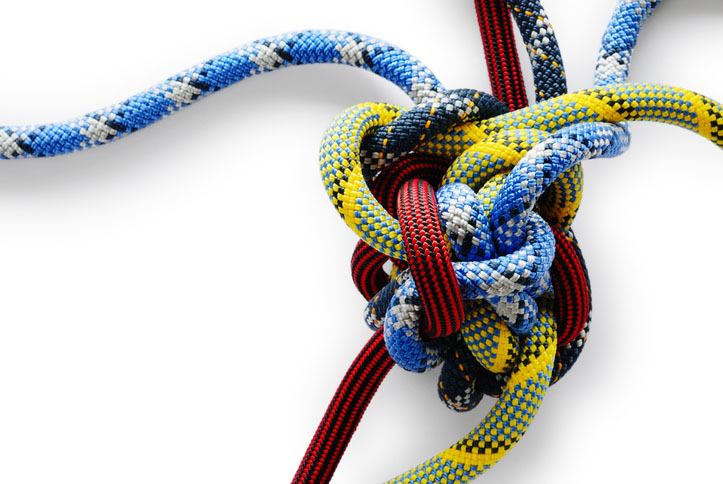
since on this day our sins will, by our God who’s One, be just like a Gordian knot undone.


In “A Day of At-One-ness: A Christian Translation: Yom Ha-kippurim: The Biblical Significance,” thetorah.com,  Baruch J. Schwartz writes:

https://www.thetorah.com/article/yom-ha-kippurim-the-biblical-significance

In English translations of the Torah, this day is called the “Day of Atonement.” This translation entered English Bibles centuries ago. And while the translators were all learned in the Hebrew tongue, they were also believing Christians—and so they naturally translated a Hebrew word according to its meaning in Christian theology. This expression—the Day of Atonement—is an example of this. The English word “atone” comes from tBlessed be the Name of God’s Glorywo words: “at” and “one.” To atone is to be “at one” with someone, to be of one mind and heart.[2] The early translators were saying that this is the day on which humans and God are reconciled—humans, who are constantly estranged from God, are finally reunited with Him in perfect fellowship.


Gershon Hepner is a poet who has written over 25,000 poems on subjects ranging from music to literature, politics to Torah. He grew up in England and moved to Los Angeles in 1976. Using his varied interests and experiences, he has authored dozens of papers in medical and academic journals, and authored “Legal Friction: Law, Narrative, and Identity Politics in Biblical Israel.” He can be reached at gershonhepner@gmail.com.

Blessed Be the Name of God’s Glory Read More »

American Film Convention

The first ever American Film Convention in Los Angeles is being held downtown from October 15 to October 17, 2024, and if you are interested in the filmmaking industry, I urge you to check it out!  It has dozens of workshops, talks, break-out sessions, networking opportunities and all kinds of help for the independent filmmaker and those that love them.  Tickets are still available, visit americanfilmconvention.com for more information.  You can visit my website joybennett.com as well to read more about it and see more photos, as I will be attending all three days this week.  Enjoy!

American Film Convention Read More »

A Bisl Torah – Fallen Sukkah, Resilient Spirit

Rabba Sara Hurwitz speaks about the surprising reference to the sukkah in the Birkat Hamazon, the blessing after the meal during the holiday of Sukkot. The blessing says, “May God establish for us the fallen sukkah of David.” She wonders why we reference the desire for a fallen sukkah. Isn’t that kind of request counter intuitive? Who wants to embody a fallen sukkah?

She asks us to look at the commentary by the Maharal of Prague, Rabbi Yehuda Loew of the 16th century. The Maharal explains that we should each desire to be a sukkah rather than a home. When a home falls, it is almost impossible to rebuild. And even when it is rebuilt, it often looks and feels completely different than before. But when a sukkah falls, it can easily go back up, still imbued with its original sense of holiness. The Maharal teaches that to be a sukkah is to embody a resilient spirit.

It is rare for a west coast sukkah to actually “fall down.” But it is unfortunately common for each of us to feel as if we have fallen. Setbacks occur at every stage of life. However they are presented, God has planted within us the ability to get back up. Understanding that as shaky as life is, just like the sukkah, we must stand again, filled with a God-given resilient spirit.

May God establish for each of us a fallen sukkah. A fallen sukkah that rouses your strength, vigor and knowledge that you too, will once again, get back up.

Chag Sameach and Shabbat Shalom


Rabbi Nicole Guzik is senior rabbi at Sinai Temple. She can be reached at her Facebook page at Rabbi Nicole Guzik or on Instagram @rabbiguzik. For more writings, visit Rabbi Guzik’s blog section from Sinai Temple’s website.

A Bisl Torah – Fallen Sukkah, Resilient Spirit Read More »

A Moment in Time: “How Can a Fragile Sukkah Inspire us toward Peace?”

Dear all,

As Ron and I assembled and decorated our Sukkah today, pieces kept falling down, vines got entangled, and we pricked ourselves with a safety pin (more than once).

Our liturgy teaches us that God spreads over us a “Sukkah of peace.”

I have to admit…. There was nothing all that peaceful about putting this together!

So why should this fragile structure be a symbol of peace in the first place?

It comes down to this…. We should never take peace for granted. We have to build it. We have to uphold it. We have to maintain it. We have to work for it. It won’t just happen on its own.

The Festival of Sukkot reminds us that in any given moment in time, we have an opportunity (and an obligation) to build structures of peace, however fragile they may be, in order to create goodness in the world.

With love and shalom,

Rabbi Zach Shapiro

A Moment in Time: “How Can a Fragile Sukkah Inspire us toward Peace?” Read More »

The Cliff-Hanging Symbolism of the Scapegoat

That highest of holy days, Yom Kippur, is nowadays focused on fasting, prayer, and spiritual introspection. But in ancient times it was actually about a goat sent down to fallen angels. Or offered to a Satanic demon. It’s a debate.

In the Bible’s description of the central ritual of Israel’s first commemoration of the festival, God instructs Moses’ brother Aaron, the high priest, to take two goats to the entrance of the Tabernacle, that ancient sanctuary in the wilderness. There he should “cast lots upon the two goats – one lot for the Lord, and the other lot for Azazel.”

The first animal is brought as a sacrifice to God on the altar. How to give the second goat to whatever Azazel is, on the other hand, has vexed commentators for millennia.

The Talmud understood the word to refer to a precipitous, craggy mountain, “azzaz” and “el” connoting something strong and mighty. The original scapegoat was, per this theory, to be pushed off a cliff – symbolically cleansing the Israelites of their guilt. (The biblical text, unlike the rabbis, leaves unspecified whether the goat was actually killed.)

The ancient sage Rabbi Yishmael added an esoteric element. Azazel was a portmanteau of Uzza and Azael, two fallen angels, who, in Genesis’ sixth chapter, slept with the “daughters of men,” and whose sinfulness brought about the flood survived by Noah. The sacrificing of the goat in this way was a pointed means of gaining repentance for sins of a sexual nature, like those of these primordial beings. 

According to Rabbi Eliezer in the midrashic collection Pirkei de Rabbi Eliezer, Azazel is actually a nickname for Satan. So as not to have that nefarious devilish accuser attempt to interfere with the effectiveness of our repentance, we send him the goat as grift. 

The medievalist Rashbam, parting with the rabbinic reading, posited that the goat wasn’t killed at all. Rather he was sent to graze with other wild goats, izzim. This, he notes, is similar to the ritual of a bird being sent back into the wild as a means of cleansing someone stricken with leprosy.

To the Rashbam’s contemporary, the more mystically included Nahmanides, the offering was a means of placating the heavenly forces that power our enemies, be they pagans, or the polemical disputants Nahmanides personally knew well, Christians. As he put it, “we should let loose a goat in the wilderness, to that ‘prince’ [power] which rules over wastelands, and this [goat] is fitting for it because he is its master, and destruction and waste emanate from that power, which in turn is the cause of the stars of the sword, wars, quarrels, wounds, plagues, division and destruction. In short, it is the spirit of the sphere of Mars, and its portion among the nations is Esau [Rome/Christianity], the people that inherited the sword and the wars, and among animals [its portion consists of] the se’irim (demons) and the goats.”

For the 19th-century German Rabbi Samson Raphael Hirsch, who had a penchant for wordplay, Azazel represented mankind’s headstrong obstinate inclination, az, which would expire and disappear azal. Thus Azazel “represents sensuality practiced as a matter of principle; and God has denied it any place in the destiny of man.”

While these mystical interpretations might not resolve the mysterious nature of the biblical instructions, their underlying symbolism still resonates. Amidst the personal and communal introspection on Yom Kippur, now, as back then, we take stock of our misdeeds and seek to rid ourselves of them. We pray for a favorable inscription in the Book of Life, hoping that the stain of our sins is forgiven and that our accusers, be they in the divine court or on Earth, not get the better of us. 

Ever the rationalist, Maimonides cautioned against overthinking Azazel. As he put it in the “Guide to the Perplexed,” “There is no doubt that sins cannot be carried like a burden, and taken off the shoulder of one being to be laid on that of another being. But these ceremonies are of a symbolic character, and serve to impress men with a certain idea, and to induce them to repent; as if to say, we have freed ourselves of our previous deeds, have cast them behind our backs, and removed them from us as far as possible.” In other words, it’s a metaphor.

As we now sit in our sukkah in the shadow of Yom Kippur, we consider the sacred scapegoat’s ultimate lesson — that where it was headed is less important than where we go on our own spiritual journeys.

As we now sit in our sukkah in the shadow of Yom Kippur, we consider the sacred scapegoat’s ultimate lesson – that where it was headed is less important than where we go on our own spiritual journeys.


Rabbi Dr. Stuart Halpern is Senior Adviser to the Provost of Yeshiva University and Deputy Director of Y.U.’s Straus Center for Torah and Western Thought. His books include “The Promise of Liberty: A Passover Haggada,” which examines the Exodus story’s impact on the United States, “Esther in America,” “Gleanings: Reflections on Ruth” and “Proclaim Liberty Throughout the Land: The Hebrew Bible in the United States.”

The Cliff-Hanging Symbolism of the Scapegoat Read More »