fbpx

July 10, 2024

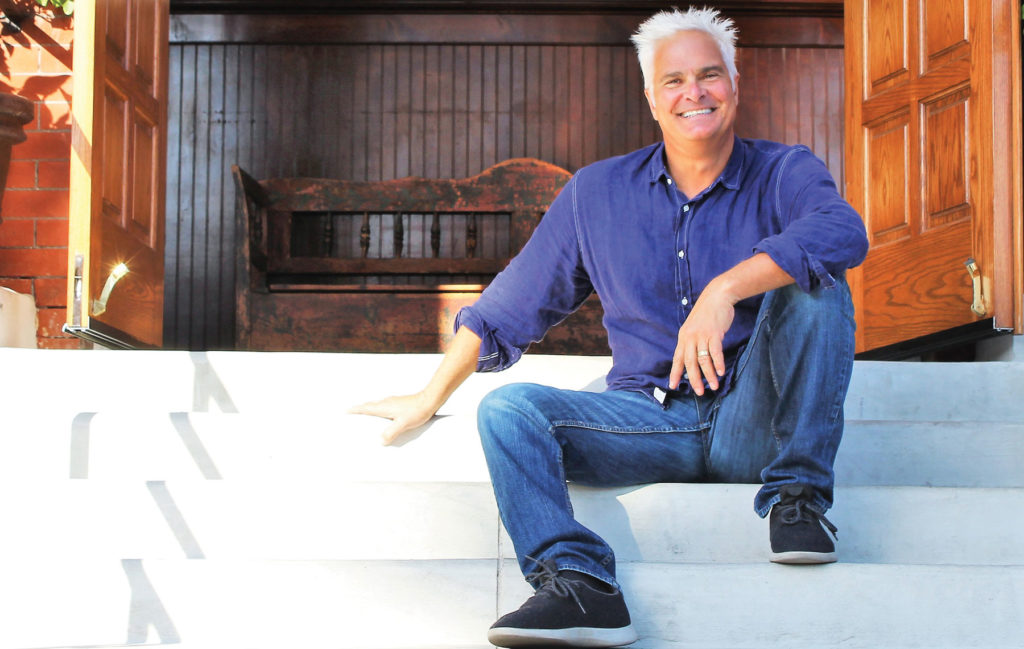
Craig Taubman: Pico Union Project, Nourishment and Spicy Asian Noodles

Singer and composer Craig Taubman is known for his Jewish liturgical, as well as popular contemporary, music. The founder of the Pico Union Project in downtown Los Angeles, Taubman is also passionate about food and nourishing the community.

  • “Food is deep: it’s cultural, it’s philosophical, it’s spiritual, it’s nourishing,” Taubman told the Journal. “It’s powerful [and you] can use food to build community, to build relationships [and] to feed people’s minds, hearts and souls.”

The Pico Union Project is a multi-faith cultural arts center located in the oldest synagogue in Southern California. It is dedicated to the Jewish principle to “love your neighbor as yourself.”

“We distribute a lot of food at the Pico Union Project,” he said. “But one of the most important things that we do is break bread every day [with] whoever is here.”

According to Taubman, every week they distribute fresh produce that would have been thrown away otherwise. PUP provides 19 people in the community with jobs. They offer cooking, nutrition and mental health classes, health services and more.

“The food’s great; the conversation is invaluable,” Taubman said. “Each time that we break bread together, we discover something new about each other, something powerful … we give the community the opportunity to flourish, and it’s usually around food.”

When asked about his earliest food memory, Taubman said he remembers the chicken livers his mom made when he was a kid. It was actually a topic of conversation during the Father’s Day meal, when Taubman, his brother and their wives took out his 90-year-old dad and 88-year-old mom to celebrate.

“I said to my mom, ‘Not only did I love [your chicken livers], but I remember the smell,” Taubman said. “I’m 66  years old; I remember the smell from more than 50, 55 years ago.”

That’s the power of food: the taste, smell, textures and of course the memories.

Taubman doesn’t just like to eat and feed people, he loves to cook. It’s another creative outlet.

“The people in my band that work with me, they say, ‘Craig, you never do the same thing once,” he said. That also applies to cooking.

“I don’t follow a recipe; I just taste it,” he said. One of Taubman’s favorites is cold Szechuan noodles. He actually has a recipe for it, which is below.

The secret, he said, is in the sauce. It’s basically sesame oil, peanut butter, salsa, chili oil, red peppers and garlic.

“Put it into a blender and you mix it up, and then you have to taste it,” he said.

Sometimes you need a little vinegar, sometimes you need a little bit of sugar.

“Blend it all together until it’s a little salty, a little sweet, a little smooth and a little tangy,” Taubman said. “Bathe all of the noodles inside [the sauce], so they’re all coated and it’s yummy.”

Learn more about Craig Taubman at PicoUnionProject.org and Craignco.com. Note: Those in LA can come and volunteer at PUP every Friday, and help distribute produce and food to about 400 families in the Pico Union area.

For the full conversation, including Taubman singing a food song, listen to the podcast:

Craig’s Cold Spicy Luckshun

WS photography/Getty Images

Cold Spicy Luckshun (Yiddish for noodles) is a simple and simply yummy dish. In 20 minutes, you will have a healthy and hearty meal that never disappoints! If possible, visit a local Asian market or the specialty section of your grocery store to pick up the spices and sauces.

Ingredients

Package of Asian noodles

1/2 tbsp. sesame oil

3 tsp. sugar

2 tsp. vinegar

1/2 tbsp. sesame paste

Spoonful of creamy peanut butter

a small pinch of salt

1 tbsp. light soy sauce

1 tbsp. Szechuan chili oil

2 garlic cloves finely chopped

Chopped scallions

Cucumber peeled and shredded

Bean sprouts

Thai basil

Smashed peanuts

Instructions

Cook noodles per instruction on the package.

Transfer noodles to cold water and mix with tablespoon sesame oil.

When noodles have cooled down, add cucumber and all the seasonings.

Mix well and, if possible, and let it sit in the refrigerator for an hour.

Take it out of the fridge, add some chili oil, and garnish with green onions, bean sprouts, basil and peanuts.

If you have some leftover chicken, you can slice in strips and add to the garnish.

Chī Chī Chī. Enjoy. B’tayavon. Bon Appetit. Buon Appetito.


Debra Eckerling is a writer for the Jewish Journal and the host of “Taste Buds with Deb.Subscribe on YouTube or your favorite podcast platform. Email Debra: tastebuds@jewishjournal.com.

Craig Taubman: Pico Union Project, Nourishment and Spicy Asian Noodles Read More »

The Heart Is a Lonely Hunter

Hunter Biden is the poster boy for crack cocaine. The bathtub shots of him smoking rock are perfect. Now, all cleaned up in tailored suits, shaven, healthy-looking, it’s hard to believe it’s the same gun-buying, hooker-loving, crack-smoking Hunter. He certainly looks different, but is he? I have no idea. Like his parents, I hope so. But you never know what’s churning inside the addict. I know because, like Hunter, I am an addict. 

Hunter and I are lucky to be alive. Seventy-four thousand plus overdose deaths from just Fentanyl in 2022. Seventy percent were male. Many were barely out of their teens. Some passed the first time they tried it. This number doesn’t include alcohol and other drugs. 

I’m closing in on 40 years of recovery, and people ask me if I still need help —  more than ever. I have so much more to lose. I didn’t have a wife and kids when I got sober. Sobriety gave me all that. When it comes to addiction, you are never safe or free. Like a rattler, it’s lurking, ready to strike and strike hard. It’s said that when you get sober, the only thing you must change is everything. I learned the disease of addiction is centered in the brain. It’s a disease that tells the person they don’t have a disease. It’s a disease that tells me it was everyone’s fault but my own. I caught some bad luck; if the cops didn’t see my busted taillight, I wouldn’t be in a jail cell sitting on a toilet with five others watching me.  

Thirty-five or so years ago, I told a guy who pulled into what I perceived as my parking space I was going to slit his tires and break his car windows if he did not pull out. I was sober for almost five years at that time. He did not pull out, and I did not slit his tires. Addicts are angry. Some even call it slowbriety. Sobriety is a slow process; it can take five years to get the cobwebs out of your brain. 

“Leave me alone” is the mantra of almost everyone with an addiction. So, for me to stay sober, I must change the way I think and react to life. I must become a part of life. Addicts must learn to pause when agitated.

“Leave me alone” is the mantra of almost everyone with an addiction. So, for me to stay sober, I must change the way I think and react to life. I must become a part of life. Addicts must learn to pause when agitated.

The most common denominator of most addicted people is a broken heart. Once the heart has been broken, the person is very fragile — many times for life. My wife or kids can say something that might hurt, sometimes on purpose, sometimes not, but I can become Humpty Dumpty and crack very quickly. Then all the king’s horses and all the king’s men can’t put me back together again. And if I don’t get put back together and rewire the short in my brain, I could become impossible to live with. That is a broken heart.

Hunter and I ordinarily would never mix. Politically, we’re opposed. But once I think I’m better than Hunter or some inner-city rockhead, that’s the beginning of the slide back. I was lucky I got off the elevator before it crashed into the basement and I needed to be pulled out.

So, how does one get sober and stay sober? There are many ways. Mine happens to be by going to meetings and talking to other alcoholics every day and having gratitude for the gift of sobriety. Without gratitude, every step has a fork in the road. A guide to help me navigate the rocky waters of life has saved me many times. For some, it’s a sponsor, a rabbi, a priest, or a good friend. It’s also the belief that there is a God, and He wants me to be sober so I can be of service. Must everyone who gets sober believe in God? No. But I think it helps. If I were Hunter, could I have stayed sober with all the pressure he is under? I don’t know. But if he called and asked me or any of my sober buddies for help, no matter where we stand politically, we would be there in the blink of an eye because helping others is how you get to keep your sobriety.


Mark Schiff is a comedian, actor and writer, and hosts, along with Danny Lobell, the ‘We Think It’s Funny’ podcast. His new book is “Why Not? Lessons on Comedy, Courage and Chutzpah.”

The Heart Is a Lonely Hunter Read More »

Searching for Nirvana

Israel’s greatest miracle might not be its survival against all odds, or the brilliance of its entrepreneurial start-up culture. In my mind it is the unusually high percentage of its population who say that they are very happy with their lives. No doubt the current nightmare will negatively impact their reported sense of contentment, but there is every reason to believe that the numbers will eventually rebound.

As a professor of economics, I am embarrassed to admit that members of my discipline typically dismiss the use of happiness as a measure of well-being. For them, the best indicator of a nation’s success is its wealth, not how its citizens feel about themselves.

That changed at least a bit when a path-breaking economist, USC’s Richard Easterlin, published the first in a long series of seminal articles around the theme “Does Money Buy Happiness?” One of Easterlin’s greatest contributions was the identification of what came to be known as the “Easterlin Paradox” — that while richer people in a particular country report that they are happier than their less affluent counterparts, residents of nations that have experienced even the most rapid increases in material well-being don’t seem happier on average than they did before. Why is that? According to Easterlin, individuals compare their incomes to others, especially to their parents when they were being raised, and to their friends and neighbors today. Their absolute income matters less than their relative position. In the immortal words of cultural critic H.L. Mencken, “A wealthy man is one who earns $100 a year more than his wife’s sister’s husband.” If a rising tide of prosperity lifts all boats together, a person’s relative status may remain unchanged, and hence that person might feel no better off than earlier.  

China provides a vivid example of this phenomenon. Beginning in the early 1990s, and lasting a quarter century, China experienced what was arguably the fastest economic growth ever recorded. However, the percentage of people who said that they were very happy failed to rise.  

So if economic growth isn’t a path to happiness, what is? Let’s look at the places that lead the world based on happiness surveys. The most recent one (which averaged over the years 2021 to 2023) ranked Finland first, followed by Denmark, Iceland, Sweden, and Israel. The U.S. was 23rd.

Some sociologists point to the homogeneity of the population within the highest ranked countries as a key explanation for their elevated level of overall satisfaction.  While diversity can be a source of tremendous vitality, it often comes at the price of community cohesion.  

But how do you explain Israel coming in fifth? While 73% of its residents are Jewish, Israeli Jews are anything but homogeneous. They are Ashkenazi, Sephardic, Mizrahi, and for more than half of Israel’s Jewish population, a mixture of several groups. Yet, somehow all that diversity doesn’t adversely affect their happiness score.

A number of commentators, including Dan Senor and Saul Singer in their book “The Genius of Israel,” have argued that the secret is that Israelis have an abiding commitment to their families and to each other. Part of their evidence is the amazing fact that more than 70% of Jewish Israelis sit down together for Shabbat dinner each week. Grandparents, parents, and children; friends and neighbors. As the authors put it, while Americans may celebrate with family once a year at Thanksgiving, Israelis do it weekly.

While Americans may celebrate with family once a year at Thanksgiving, Israelis do it weekly. Maybe more of us should try that here.  

Maybe more of us should try that here.  

We better try something. Economists estimate that over 80% of baby boomers ended up richer than their parents, a percentage that is similar to the experience of earlier generations. However, research from Harvard economist Raj Chetty suggests that only half of the members of more recent cohorts have achieved the same. Think about that for a minute: What is left of the American Dream when one out of two of our children and grandchildren end up with a lower material standard of living than we have had? If Easterlin is correct and they feel poor relative to us, that certainly doesn’t bode well for how they will feel about their lives. 

Finland, Denmark, Iceland, and Sweden are way too cold and dark in the winter, so forget about moving there to find happiness.  Instead, perhaps we can discover that nirvana is as close as the Shabbat dinner table.


Morton Schapiro is the former president of Williams College and Northwestern University.  His most recent book (with Gary Saul Morson) is “Minds Wide Shut:  How the New Fundamentalisms Divide Us.”

Searching for Nirvana Read More »

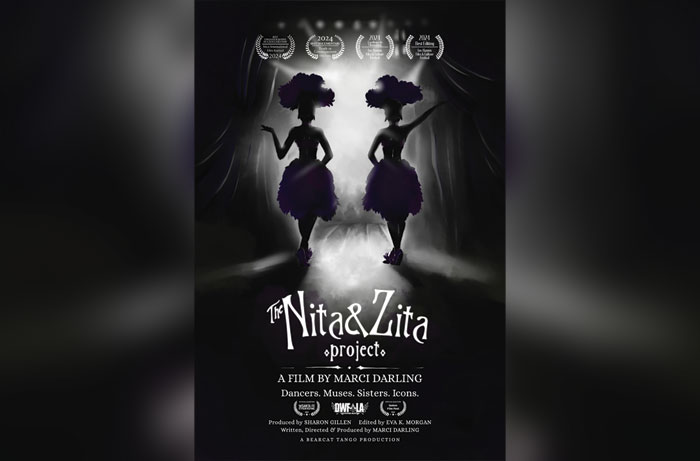
Documentary Revives the Forgotten Legacy of Burlesque Icons Nita and Zita

Nita and Zita were Jewish sisters born in Hungary who immigrated to the U.S. in the 1920s and performed acrobatic and contortionist burlesque acts around the world. When they retired in their 50s, they settled in New Orleans and painted their entire house with dots, small patterns and flowers. Upon their deaths, they were buried in the pauper’s section of the Jewish cemetery in New Orleans. Their headstones only bore their original names: Piroska Gellert (1904-1991) and Flora Gellert (1895-1985). There was no mention of their stage names or the fame they had gained during their lifetimes.

Director Marci Darling

This was a sad ending for two sisters who rose to fame but were forgotten in later life. Their neighbors thought of them as somewhat odd and their house stood out as especially eccentric and quirky, even by New Orleans standards. There is a good chance you wouldn’t have ever heard about them if not for Marci Darling, the director of the documentary about them, “The Nita & Zita Project,” which played last month as part of the Dances with Films Festival.

Darling traveled to New Orleans in the 90s, where she saw some of the sisters’ costumes hanging in a junk shop in the French Quarter. The only neighbor who attended their funeral entered their house afterward and found thousands of costumes made from found objects, which she then sold in a yard sale.

”They had some tattered costumes hanging from the ceiling at the shop and I just fell in love with the whole story of who these people were,” Darling said. She bought some pictures and costumes of the local legends and returned to Los Angeles, where she performed as a belly dancer, circus acrobat and burlesque dancer. Then, she and her dance partner Kim Murphy created an act paying tribute to Nita & Zita. The partners performed every Thursday night at the Viper Room in West Hollywood and traveled around the U.S. with their act. They performed for 10 years and then went their separate ways. Darling got married, had children, got divorced, wrote five bestselling books and a blog. Then, in 2018, Kim died about a year after getting married; she was only 44.

”Kim had struggled with bipolar disorder since the ‘90s on and off,” Darling said. ”This film is my homage to her. It was just a way for me to relive our Royal Palace years, which were my very favorite years in my life.”

The idea to make the film came about last year in the middle of the night. ”I literally woke up from a dream and was just like, ‘Oh, I know what I need to do,’ and it became a real obsession.” 

At first, Darling thought the project was going to be something short, like a reel on her phone. However, as she started researching the story of the long-forgotten sisters, the project took on a life of its own and became a full-length documentary.

”Once I started researching, many doors opened. I traveled to the New England Genealogical Society, the New York Library of the Performing Arts, Harlem, Transylvania. I visited Nita and Zita’s home in New Orleans and talked to the neighbors who still remembered them,” Darling said. 

”It was very lucky to be in this time where they’re digitizing a lot of things but there’s lots of stuff that’s not digitized yet. I had to go to New York and search through card catalogs. Then the New Orleans Historical Collection was like, ‘We have a big donation from them, several boxes of their items. Somebody pulled them out of the trash in New Orleans.’”

Darling happily started digging in – and what she found was gold. As more and more layers of the story were revealed to her, Darling was fascinated by what she found. 

”I learned a lot about Hungary between 1900-1922,” she said.. “The sisters decorated every single surface in their house, even the bathroom, because it reminded them of their childhood home. That’s what they did in Hungary and a lot of Eastern European countries. Their house was very dilapidated because they were caring for it by themselves. I totally understood that desire to make things beautiful even as they were falling apart.”

Through newspaper clippings, Darling was able to piece together a fascinating picture of the sisters. Their names were often spelled wrong, and their ages fluctuated significantly as they shamelessly deducted a decade or more to be perceived as younger. They used to rent out parts of their house to tenants and taught exercise classes for a short time. 

Throughout the years, there was an attempt to turn the house into a museum, but nobody could get the funding for it. ”It was finally bought by a son and his mom who wanted to preserve it,” said Darling. ”But they didn’t have the money to do what it takes. They then sold it to someone who promised to preserve it but didn’t.” 

When Darling visited the Gellerts’ graves, she felt sad to see their headstone only bearing their names, date of birth and death.

“I’m hoping that as the story gets more and more known, we will be able to turn their house into a museum.” – Marci Darling

Over 30 years after their deaths, Darling decided to give the sisters a proper farewell. She hired a 1920s band and said Kaddish over their graves. ”We brought little stones and glittered them up in New Orleans style, put jewels on them and wrote their names on them,” she said.. “We put them on their graves with tiny little shoes. I’m hoping that as the story gets more and more known, we will be able to turn their house into a museum or maybe put up a statue around New Orleans or the street where they once lived.”

Documentary Revives the Forgotten Legacy of Burlesque Icons Nita and Zita Read More »

Ivy League Students Call YU Home

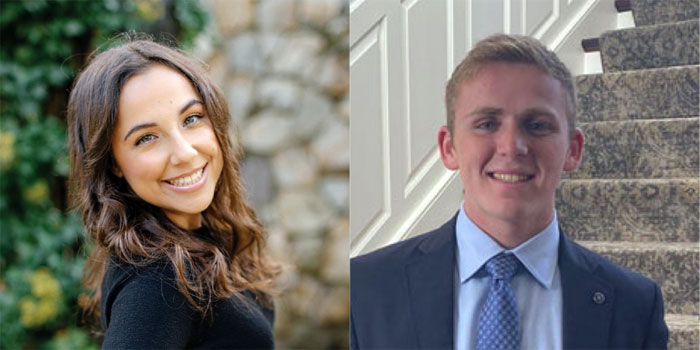
At 18, Ellie Nathan had her future mapped out: After making an early decision to attend Barnard College, she was set to pursue her pre-med dreams at an Ivy League school.

Then came Oct. 7, and college campuses across the country erupted in anti-Israel protests; protests that were particularly virulent at Barnard, and its across-the-street affiliate, Columbia University.

Nathan’s commitment began to waver; speaking with Jewish students on campus, she was appalled. “They told me, ‘People scream at you every time you walk across campus, but it’s not that bad, you get used to it. You just can’t take it too seriously,’ Nathan said. “Being verbally abused was part of their everyday routine. I couldn’t imagine living like that.” 

Learning about Yeshiva University’s extended transfer deadline, she seized the opportunity, and in fall 2024, the Long Island resident will start at Stern College for Women as a pre-med Honors student, joining many high school friends.

“Switching to YU feels right on so many levels,” Nathan said. “The Honors program is amazing, Stern’s 95% track record for getting girls accepted into medical school is unheard of, and I love that learning Torah is ingrained into the everyday schedule. That combined with the supportive environment of shared values made the decision so clear, and has given me a sense of clarity and peace I haven’t felt in a long time.”

Nathan and many others from Ivy League schools including Cornell, Penn, and Columbia, as well as from other universities such as BU, NYU and Michigan are making the move thanks in part to YU’s new Blue Square Scholars program, created with a $1 million grant from Robert Kraft to help the University take in transferring students who are switching to YU for its quality education and nurturing campus atmosphere. The program furthers the university’s efforts to support Jewish college students throughout the country, providing the necessary infrastructure to accommodate the best and the brightest who are drawn to the university’s values of Jewish idealism and taking a strong stand for Israel. 

“YU is a safe and welcoming home from the antisemitism many students on today’s campuses are facing,” Rabbi Dr. Ari Berman, President of Yeshiva University said. “No Jewish student should have to face the threats and intimidation. While we extend our hand to be of any assistance in supporting efforts by universities to protect their students, we proudly stand with all Jewish students by offering them a values-based, world-class education in a safe and supportive environment.”

“YU is a safe and welcoming home from the antisemitism many students on today’s campuses are facing.” – Rabbi Dr. Ari Berman, President of Yeshiva University. 

After Oct. 7, 19-year-old Eliana Samuels — who accepted an early decision to Columbia — also began to doubt her choice.

“The idea of being on a campus where I have to avoid certain people and places, where I’m afraid of getting hate-crimed, and where I can’t tell anyone that I’m a Zionist or Jewish because of what they might do to do me, was genuinely terrifying,” Samuels said .

It wasn’t long before she and her parents decided Stern was a much better option; she’ll begin at Stern College for Women as a pre-med Honors student in fall 2024. “I’m looking forward to being in a place where I can be myself and get a great education,” Samuels said. She’s particularly excited about the guidance Stern provides on her path to medical school, including class selection, research opportunities, and med school applications. “I thought I would have to fend for myself, but at Stern, there’s so much personal attention and support, especially for pre-med students.”

Zachary Magerman, who just completed his sophomore year at the University of Pennsylvania, was already considering a move to Yeshiva University before Oct. 7. For him, the subsequent anti-Israel protests at Penn and the administration’s lack of support highlighted a deeper issue: His values didn’t align with those of the university and its students. In fall 2024, Magerman, a psychology and cognitive science major, will join YU as a junior. 

Although active in Penn’s Jewish community, Magerman — who spent two years in yeshiva in Israel before beginning college — craved a stronger connection to Judaism and the values it represents. He thought YU was the perfect fit. “At YU, people care about making a difference, they’re focused on self-growth, and they strive for communal success and idealism through Torah life,” he said. “They share my own priorities.”

While Magerman is considering semicha or a master’s degree in psychology at YU, right now he is particularly excited by the unique opportunity to learn from Torah giants like Rabbi Hershel Schachter and Rabbi Itamar Rosensweig. 

“Coming to Yeshiva University is a testament to my own growth,” he said. “I’m ready to prioritize what really matters to me: making the world a better place, and fighting for and living the Torah’s timeless values in an institution that stands up for these ideals.”

Ivy League Students Call YU Home Read More »

Reinspiring the Jewish Mind

A couple of weeks ago, nearly 300 Jewish “influencers” descended upon New York City. They weren’t here to stop the violent riots, remove Islamist propaganda from our schools, or even to get the media to stop lying about Israel. No, they were here to celebrate themselves, a skill they excel at.

From the photos, it looked like every parent of a teen girl’s worst nightmare: heavily plasticized faces, vapid expressions, nonstop self-idolatry: Selfies, selfies, selfies! Many NYC parents have spent weeks in the ER, managing self-cutting and other suicide attempts. Indeed, the levels of suicide and depression among teen girls continue to spiral: One-third of teen girls in the U.S. have seriously considered attempting suicide. Hospitalization rates for self-harm have increased by 140% since 2010.

Rates of suicide and depression were steady until roughly 2010, when Instagram launched, and then the rates began to spiral. It doesn’t take an NIH doctor to explain why. Teen girls compare themselves 24/7 to cartoonishly filtered, overly Botoxed photos and videos on Instagram. Many of these young women call themselves “influencers.”

My 15-year-old son has another name for them: “Plastics.” He and his friends find this cohort of females not just unattractive but dull. They’ve watched their female friends become addicted to the hourly comparisons, with the mental health issues that follow.

All of which begs the question: Why would the Jewish nonprofit world think celebrating this is a good idea?

To be fair, not all of the 300 were vapid plastics. Some are actually writers, musicians, athletes, dancers and comedians. Some of them make brilliant videos. Why they would demean themselves with the word influencer I don’t know, but the truth is the weekend “summit,” called “Voices for Truth: Influencers United Against Antisemitism,” could have been easily focused on educated young Jews, and the impact would have been profound.

But intelligence is no longer trending in the Jewish Diaspora, it seems.

At the conference, Rep. Ritchie Torres (D-N.Y.) said that social media has allowed antisemitism to spread to unprecedented levels. That’s true, combined with activist education and activist journalism. If we could clone Torres, we’d have a fighting chance to confront this spiraling. But most “influencers” are not as educated as Torres, and even if they were, this war can’t be fought on social media alone.

Many “influencers” buy their followers and likes. Most followers of plastics are other plastics. So even if they managed to learn a few things — history, political analysis, geography — over the weekend, the effect would be limited. Many of the plastics say the pro-jihad side couldn’t find Israel on a map, which is no doubt true. But could they?

When I asked Rova Media co-founder Rabbi Dr. Ari Lamm why they don’t use plastics, he responded without a pause: “Not at the expense of our daughters. Not at the expense of life.” OpenDor Media also doesn’t use plastics and has produced groundbreaking videos.

Ironically, plasticizing, either through an excessive use of Botox or iPhone filters, is another form of over-assimilation — of self-erasure. Many of these women lambaste leftist Jews for remaining silent. But removing one’s Judean features — flattening precisely what makes us distinctive — is just as bad. Which is why you will rarely find Israeli women over-filtering their photos. They seem to intuitively understand that real beauty stems from the soul.

Many of these women lambaste leftist Jews for remaining silent. But removing one’s Judean features — flattening precisely what makes us distinctive — is just as bad. 

Using our brains

The question remains: Why is the Jewish nonprofit world so afraid of promoting our most prized (and envied) body part: our minds? Where is our Douglas Murray?

Islamist propaganda is now in our K-12 classrooms; the Muslim Brotherhood has multidecade plans; our cities allow daily violence against Jews. And yet we continue to focus on the least educated, who have enabled an epidemic of teen suicide.

There should be summits for writers, analysts, thinkers, lawyers, and policy makers. Since it was an activism of lies that helped cause the problem, we need to stop thinking that counteractivism is the answer. We don’t need propaganda; we have the truth — facts, history — on our side. What we need to do is return to a truth-based civil society, and I’m sorry to be blunt, but those who spend half of their days filtering their selfies are not the ones who are going to bring back a truth-based society.

There should be summits for writers, analysts, thinkers, lawyers, and policy makers. Since it was an activism of lies that helped cause the problem, we need to stop thinking that counteractivism is the answer. We don’t need propaganda; we have the truth — facts, history — on our side. 

I’ve spent the last decade trying to figure out why the Jewish nonprofit world funds so many unsuccessful ideas. I still don’t understand. But this latest one is not only not helpful, it promotes an epidemic of teen depression and the larger regression of women. 

And so, as a writer, editor, thinker I offer up here 12 summit ideas. The good news: Now that people like Bill Ackman and Marc Rowan are involved in the fight against antisemitism, we no longer have to wait for the nonprofit world to fix anything.

• Activist education. This is an essential starting point, but it’s also going to be the most difficult. The rot has deeply infested both educators and administrators. Heterodox Academy’s Jonathan Haidt, Rabbi David Wolpe, and Professor Steven Pinker could bring together everyone who has thought deeply about how to solve this multi-layered problem — and begin to solve it. 

• Activist journalism. This is an easier fix. Newsrooms on both the right and the left need to return to objective reporting. Most reporters today have no idea what that means. The Journal’s David Suissa and Alana Newhouse of Tablet could well lead this summit and create an action plan.

• Selective enforcement of law. On July Fourth, just days after the summit, jihadists burned the American flag in Washington Square Park and chanted “Death to America!” The NYPD did nothing. Outside of City Hall in Philadelphia, they set dozens of flags on fire. Some were arrested. Torres, Rep. Josh Gottheimer (D-N.J.), and former Rep. Lee Zeldin (R-N.Y.) could lead a summit that focuses on what needs to be done so that Jews do indeed get equal protection under our laws: selective enforcement needs to end.

• Partisan extremism. How to return to the essential principles of both classical liberalism and classical conservatism? How to reinvigorate the moderates, the center? Thane Rosenbaum could lead this summit.

• Religious extremism. The ADL’s Jonathan Greenblatt along with Canary Mission could focus on the biggest, least discussed problem: Islamism. Is hate and violence against Jews actively discussed in the mosques in the U.S.? Are there terrorism-enabling groups that are not on the U.S.-designated terrorist lists?

• Gen Z. Gen Z is more than ready to take the reins from millennials, who they correctly believe messed so much of this up. Teach them how to respond effectively, deal with activist teachers, argue proficiently, write op-eds, and deliver powerful speeches. Since Leon Wieseltier did this for so many young writers at The (real) New Republic, I can easily see him leading this summit.

• Legal response. The Lawfare Project’s Brooke Goldstein could bring together the top law firms in the country to discuss making use of every available legal response.

• Financial response. Ackman and Rowan could bring together major philanthropists to create a set of guidelines: When to pull funding; what to fund; etc.

• Documentary films. A documentary based on lies, “Israelism,” is now on Netflix. Videos can be great, but documentaries still have the imprimatur of “truth.” Documentary filmmakers like Gloria Greenfield of Doc Emet Productions and OpenDor Media could bring together film students to discuss ideas, implementation, and financing.

• Principles and values this country was founded upon. This shouldn’t need to be said but here we are: You can’t tell the morally depraved that they’re not following the values of this country if you intersperse that message with full or half-naked selfies. My Intellectual History professor from University of Pennsylvania and the founder of FIRE, Dr. Alan Kors, could bring together a group of scholars to teach what is no longer being taught.

• Judean ethnicity. The nonprofit world should have embraced the fact that Judaism is not just a religion but an ethnicity decades ago. The benefits would have been profound, not the least of which Jews would be able to proudly show our direct DNA connection to the land of Israel. Micha Danzig and his son, Yirmiyahu Danzig, have written extensively on the subject. They could easily lead a summit that finally teaches Jews the truth.

• Self-idolatry. Finally, how the self-idolatry of “influencers” and self-branding in general is destroying our souls. Olga Meshoe Washington of the Institute for Black Solidarity with Israel could easily lead this. Is there an inverse relationship between self-promotion and true brilliance? Absolutely. There always has been. But in the past relentless self-promoters were mocked, relentlessly. Today self-promoters are worshipped, literally. Despite their lack of originality or creativity. And because of this, women are now hired for how well they can deep-fake their photos on social media. 

Conferences aren’t the only way to re-inspire Judean minds, of course. Publications like Tablet, Sapir, Mosaic, and my own White Rose Magazine have tried to analyze today’s issues in a deep, nuanced way, as do many podcasts. Organizing a speaker series at your synagogue or community center is a great way to reinvigorate intellectual debate. Take a group to Israel to learn from every original source. And of course, there’s nothing like reading the works of Rabbi Jonathan Sacks to begin to revalue wisdom. 

And then of course there’s the world of creativity: Art, dance, theatre, poetry, music. Just like spirituality and reconnecting with our ancestral history, creativity ignites our souls and opens our minds to new ideas; creates the necessary space in our heads to process and reject bad ideas; allows us the essential pause to be able to reflect upon and fully understand what’s happening around us.

Creativity is often born from struggle. The Jewish struggle is arguably the oldest and perhaps the most difficult of any people; it has made our collective character stronger and our own creativity richer. It’s time to retap into that wellspring of ingenuity.

Effective social media

None of this is to say that the people who have used social media to make a real difference shouldn’t continue. Sites like Honest Reporting, StopAntisemitism, the Jew Hate Database, Safe Campus, and Jews in School are all doing invaluable work. Analysts like Natasha Hausdorff, Hen Mazzig, Emily Schrader, Eylon Levy, and Dumisani Washington are essential to deepen the discourse. Filmmakers/videographers like Zach Sage Fox and Joshua Buchalter are doing brilliantly creative work, as are comedians like Yechiel Jacobs and musicians like David Draiman, Westside Gravy, and Kosha Dillz. 

And as I always need to point out: This is in no way a missive against sexy women. My first book, “The Lipstick Proviso: Women, Sex & Power in the Real World” (Doubleday, 1997), was about how women don’t need to lose their femininity or sexuality to be equal to men. The problem today is precisely the opposite: Even very smart women feel like they have to post half-naked selfies every few days. Why? To feed male social media fetishes. Women have been reduced, again, to their (often fake) body parts.

In terms of fighting the hate and lies, the problem is also people who are using Israel and antisemitism to either increase their “following” or begin one. I’m sorry, that’s simply inexcusable. If someone has genuinely begun Israeli activism for nonnarcissistic reasons, but doesn’t have much expertise on the subject, here’s what I would suggest: Post the information itself. Whether in the form of a video of a protest or a news clip, social media does have the ability to share news quickly. We need more people to do this.

In terms of fighting the hate and lies, the problem is also people who are using Israel and antisemitism to either increase their “following” or begin one. I’m sorry, that’s simply inexcusable. 

But please: don’t post a photo or a video of yourself, especially a plasticized one, talking to your followers. Please understand that when someone who doesn’t have years of in-depth knowledge does this, you are taking the oxygen away from those who do. And please, especially if you’re trying to reach Gen Z, don’t call yourself an “influencer.” After years of having to endure every type of lie from their millennial “teachers,” they will immediately think you’re a fraud. And they would be right.


Karen Lehrman Bloch is editor in chief of White Rose Magazine.

Reinspiring the Jewish Mind Read More »

In Israel, Fear Has Different Ingredients


Yesterday, about 25 miles from where I’m staying in the northern Israeli city of Tzfat, a couple was killed when a rocket fired from Hezbollah in Lebanon struck their car. The couple, Noa and Nir Baranes, both aged 46, are from Kibbutz Ortal and are survived by three children.

When the driver who took us to Tzfat from Tel Aviv a few days ago mentioned that he was apprehensive about driving in the north “because of the bombs,” I didn’t realize how literally he meant it.

In Israel, fear is, above all, literal.

This is not to downplay the many other fears that dot our lives, from the fear of failure to the fear of loneliness to the fear of losing one’s livelihood. One of the greatest human fears, a rabbi once told me, is the fear that our lives have no meaning.

So yes, our lives are filled with genuine fears.

It’s just that in Israel, the fear that seems to stand out above the others is the fear that your body will be dismembered; the fear that some kind of rocket or terror attack may eventually reach your body, or your car, and tear it apart.

Whether you go about your life joyfully or somberly, this threat of physical danger always seems to hover in Israel, as if part of the thick summer air.

The on-the-hour news reports that provide their own soundtrack to an anxious nation keep this threat of danger always in play, especially on days when you hear about a couple getting hit by a rocket.

Of course, this threat of physical danger has dominated Israeli life since its birth. After all, what are the never-ending wars, terror attacks and rockets all about, if not the fear of bodily harm?

It’s one thing to be afraid of getting punched in the face in high school; it’s another to know you have 15 seconds to get to a bomb shelter from your high school prom.

Given that I’m just visiting, it’s difficult to describe my own relationship with this primal fear. In my case, it’s obviously temporary. I will soon be back to my Los Angeles neighborhood of Pico-Robertson where I will return to the familiar U.S. scenes of Jew-hating bullies on college campuses and city streets.

But what to make of this unique Israeli condition when fear is so connected to violence, and yet the country never stops moving forward?

How does one explain that despite these violent threats, Israel still ranks among the most successful of nations both economically and culturally?

How does one explain that even during wartime, Israel still ranks above the great majority of countries on the happiness scale?

Is it possible that this level of happiness is directly connected to the level of danger?

What if the awareness that an attack may hit you at any time connects to an extra hunger for life?

What if the very fragility of life in a war-torn nation makes you embrace the value of each minute?

In Israel, it seems as if happiness and a lust for life are the flip side of danger.

It’s true that because of the danger, many Americans and tourists are staying away from Israel at the moment. I get it. But being here during this anxious time, I also feel this weird sense of connection.

Maybe the sharing of a risk Israelis are so used to feeling, even for a short time, is my small way of saying “I’m with you.”

Oddly, this pervasive threat of physical danger that hangs in the thick summer air seems to have obliterated that spiritual fear I mentioned– the fear that our  life has no meaning.

When you know that a bomb can land on your car at any time, maybe your life has more meaning than you can handle.

In Israel, Fear Has Different Ingredients Read More »

Nova Festival Photographer’s Art Gallery Brings an Emotional, Healing Experience to LA

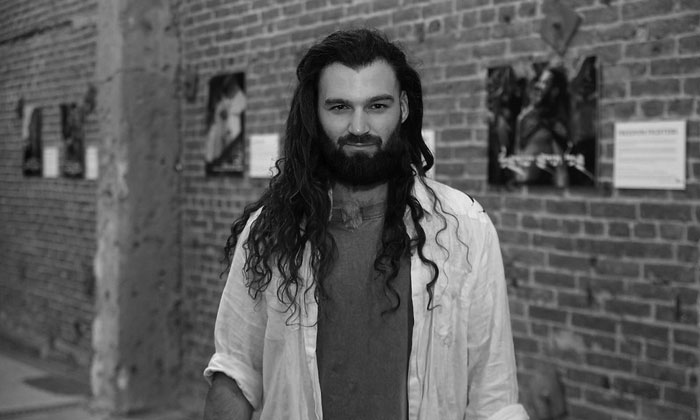
For two nights, nearly 800 people came to a Downtown L.A. art gallery to view a collection of photographs about Oct. 7, 2023 and Nova Festival culture and the trance music scene. The photographer and curator of the exhibit, 26-year-old Israeli Inor Roni Kagno, was also the main official photographer of the Nova festival.

The exhibit, “The Spirit of Nova Gallery” is made up of eighteen photographs, each accompanied by placards describing the scene and featuring quotes from Jewish texts and history. The photographs told a story and were meant to be viewed in-sequence, moving from right to left around the perimeter of the Tomer Peretz Gallery. Kagno has been a photographer of trance festivals in Israel and around the world for several years. At the Nova Festival, he oversaw a team of eight photographers, three of whom were under his direct supervision. One of those photographers, 21-year-old Yonatan Eliyahu, was murdered that day. 

“I cried only once in the first six months after the terror attack because my post-trauma healing was being highly, highly productive with all this stuff,” Kagno told the Journal. “I only cried at the grave of my photographer.” Kagno said the first time he cried since visiting the gravesite of Yonatan was when the photography gallery in Los Angeles began to take shape.

“I took a one-way ticket, came to L.A. without money, doing everything alone; only then did I start to cry,” Kagno said. “It’s a good cry because it’s a healing cry. I can cry from happiness to memorialize and to honor not only the people who died, but the whole nation that happened to tell the truth that nobody talks about. You need to understand, for us it was crazy — nobody [in the media] talked about the spiritual aspects that happened there, about these people and their lives. We were categorized as ‘just a party, just dancers,’ but it was much deeper. It’s one of the most deep experiences a person can experience in their life.”

On Oct. 8, Kagno posted a video to his Instagram showing what the festival looked like mere minutes before the attack. To date, it’s racked up 1.2 million views. That week, Kagno helped open a healing center to help Nova Festival survivors. On October 16, he uploaded another video, calling all festival survivors to come get assisted at the healing center to heal and unify. That video has garnered 1.6 million views. This propelled Kagno to become an unofficial spokesperson for the festival, doing interviews with international media outlets including NBC, The Washington Post, and BBC.  

At first, the plan for an exhibition was to show 400 of his best photographs in five rooms. Instead, he opted for a much simpler route with just 18. After having a soft opening in Westwood in mid-June, Kagno knew this was the way to go. Melanie Hendel, who attended the soft opening, was quite taken by Kagno’s exhibit.

“It was a room filled with heartfelt energy, joy and tears,” Hendel told The Journal. “It’s nearly impossible to look at his photographs and not cry or feel something that makes you go quiet. His photographs exude the spirit of people living life to its fullest. Juxtaposed with his artful curation of the story behind the photograph, either who the person was or what happened to them, or what they endured to survive or tragically die.”

“It’s nearly impossible to look at his photographs and not cry or feel something that makes you go quiet. His photographs exude the spirit of people living life to its fullest.” – Melanie Hendel 

“The Spirit of Nova Gallery” was originally supposed to be up for one night only — Sunday, June 30. But there was so much buzz on social media from the small group of attendees at the soft opening, that with less than a week before the opening, Kagno had to set up a second night on Monday, July 1.  

Walking into the gallery, there is a ten foot altar sprawled on the gallery floor made from white stones, nuts, beans, chickpeas and lentils surrounded by small candles. It symbolized land elements, fire and water. Sepi Makabi, a film producer working with Maman Nonprofit (which helped Kagno steer the event) called attention to the altar when introducing Kagno to the attendees.

“It’s an important message that we all need to meditate on,” Makabi said. “It is light—awakening our inner life and inner faith to find the miracles that are standing in front of us that will help us persevere and survive as a nation.’

The first photograph in the sequence of eighteen is “Israel Viking.” It features a shirtless bearded man with long blonde hair and blue jeans, eyes closed, standing under a multicolored awning at an earlier trance festival in Israel. The placard next to the photograph identified the man as 25-year-old David Newman, who was murdered while hiding in a dumpster while “performing a heroic act of protecting his girlfriend with his body on Oct. 7.” Newman’s aunt and uncle were in attendance on night two. 

The second photograph, “Awakening,”  features a woman in shadow with her arms raised to the sky during a sunrise; the Hebrew words “Shema Yisrael” are painted on the image. Ronit Wolfenson, a Los Angeles-based designer, purchased this print and plans to put it in her home office. 

“For me, it sends a really powerful message,” Wolfenson told The Journal. “I felt it, the moment that I read the writing about it [on the placard] and saw the photograph, I felt like I was there with all of them. So it’s a really, really powerful message for me.” Wolfenson started to tear up as she added, “I don’t think there’s a stronger prayer than that one.” The calligraphy of the Shema on that photograph was done by Israeli-American artist and writer Amir Magal. He was at the event, painting  Hebrew words and abstract Israeli flags on white hooded sweatshirts. 

Another attendee at the gallery purchased a print of a festival-goer covered in mud titled “Genesis.” Kagno approached the customer, Yaniv Fituci, and asked, “Do you know his name? It’s me.” Fituci was floored. 

“It’s so raw, the way he’s staring down the lens, but also it reminds me of trance culture,” Fituci told The Journal. “We’ve been going to trance festivals and parties for years. This is one of those moments where you’re just walking through the crowd and you kind of make eye contact with someone and then that moment passes. It’s really a fading moment.”

One purchaser told the Journal that their print is the first artwork they have purchased that memorializes the Oct. 7 attacks. Throughout the gallery, the attendees were a hearty mixture of members of the Jewish and trance communities. Writer and comedian Brian Morgan, a non-Jewish newcomer to the trance music scene, was moved to attend the “The Spirit of Nova Gallery” with one of his friends who used to live in Israel. Over the last six months, Morgan has attended more Shabbat dinners with his Jewish friends than ever before. The photograph he is drawn to most is titled “Light & Darkness.”

“I’m grateful for my friends in the Jewish community specifically who have helped guide me to deeper truths, when the media, the news, and the evils in this world pull and divide us,” Morgan said. “So together, we have to be willing to go through, as with the title of this photograph, ‘the light and the darkness.’”

Kagno hopes to take his photographs on the road around the U.S. and beyond. He welcomes anyone interested in bringing the memory of the Nova Festival to their city to contact him on his Instagram, where every post bolsters the festival’s purpose and keeps at the forefront the memory of those murdered.

“I’m trying to tell the story of what’s happened [before the massacre] with a positive light, to get people to remember what happened, but also get inspired,” Kagno said. “And to show this contrast of life and death, light and darkness, pain and resilience. I want people to come with an open mind. This exhibit is about remembering what happened, but also about finding inspiration and light in the aftermath.” 

To bring “The Spirit of Nova Gallery” to your city, contact Inor Roni Kagno on his Instagram, www.instagram.com/inorkagno


View this post on Instagram


A post shared by Inor Roni Kagno (@inorkagno)

Nova Festival Photographer’s Art Gallery Brings an Emotional, Healing Experience to LA Read More »

Rosner’s Domain | The Burden of Protest

It should be assumed that there is thought behind actions, and yet, questions must be asked about Israel’s protest movement: Why does it hold “days of disruption”? Why do so few Israelis feel that they have the right to block the road for the many? Last Sunday was such a day. A group of activists blocked an intersection; another blocked a main road; another slowed the traffic on purpose. Drivers were frustrated, late for meetings, late to events. Does anyone expect these drivers to become angrier with the government? Are they supposed to join the protest following such experience of deliberate delay? If that’s the purpose, we do not see such a trend. 

The actions of the protest movement — with its demands for holding new elections and for accepting a hostage deal — are not popular, and it’s not because of public trust in the government. The public doesn’t trust the government but still wonders about the connection between such feelings and sitting in traffic. The leaders of the protest movement have the responsibility to explain how their actions lead to their expected result. 

Explaining their frustration, their anger, their despair, their desire to make a change – that’s easy. For almost two years Israel has been run by drunken drivers. A significant portion of the public wants to see new elections, new leadership. This is not what needs to be explained. What needs to be explained is the connection between blocking an intersection and replacing the government. How does sitting in traffic on Route 90 advance Israel’s rescue from the crisis it is in? 

Most of the public is frustrated and angry, yet most of it does not feel a strong enough urge to go out and protest. Many explanations can be given for what may seem like a contradiction: inertia, laziness, lack of trust in the ability to change things, the sentiment that a time of war is not a time to demonstrate. There are many reasons, and the bottom line is this: Few participate or support the “days of disruption.” These aren’t the days of the vast protest against the legal reform. 

Hence the difficulty: There is a difference between a country that is “shutdown” by a decision supported by half the public, and a country that is “shutdown” because 10,000 people decided to shut it down in one way or another. The first case is a case that can be justified. The second case is a case that is difficult to justify. Since it is very easy to block a road, and very easy to disrupt the daily routine of hundreds of thousands of people, a decision to block a road has to meet some basic criteria: It has to be reasoned (cause – effect), it has to be a last resort (because it harms uninvolved citizens), it has to be based on broad support (to have legitimacy). 

Blocking a road by huge crowds for a specific reason for a limited time — such as the event Israel went through when Defense Minister Galant was sacked by the PM — is one thing. Blocking a road as a routine of a fringe minority is another matter. The police would and should treat such two incidents differently. The legal system would and should treat two such two incidents differently. 

In a democratic country there is always a right to protest, but there is not always a right to disrupt. Disruptors should take this into account. They need to understand that the police will use more force against blockades by the few, they need to understand that as the legitimacy of disturbances decreases, the legitimacy of forced evacuation, arrest, prosecution increases. Of course, none of this justifies police violence. But it does justify using more force to prevent a situation where any angry person, or disgruntled small group, would feel free to paralyze half the country. 

And there’s one last thing to remember as one asks the protest movement to tread carefully as it pursues its goals. There is an increasing discourse in certain groups on the right which contains more than a hint of a threat of counter-actions. The road blockers should ask themselves whether they are not provoking the public excessively, thereby increasing the chance that Israel will degenerate into violence. 

The road blockers should ask themselves whether they are not provoking the public excessively, thereby increasing the chance that Israel will degenerate into violence. 

It is easy to imagine this situation. Some hotheaded Israelis get stuck in the traffic jam. They get out of the vehicle. One picks up a stick, one swings a fist. It’s a sunny, sweaty afternoon. The blood is boiling, someone feels danger and makes a rash move, or just loses his temper, or feels that if he acts violently, he will be applauded by the other drivers behind him. This will be a difficult, socially dangerous moment. This could result in tragedy. A moment that Israel must strive to avoid. Avoid how? The police must deal with disturbances quickly, those trapped in traffic ought to drink water and relax. And the protesters must also be responsible: they need to refrain from excessive provocation. They need to remember provocation is something that not everyone handles with calm.

Something I wrote in Hebrew

Hezbollah’s leader Nasrallah may make the following calculation: To avoid war, he will be forced to implement a policy close to the one specified in Security Council Resolution 1701. It is hard to see how the Israeli government could send Israelis back to the north while settling for less than that … what will Nasrallah gain from war? Exactly what he gained in 2006. Because there is a difference between a decision designed to prevent a war, which needs to be implemented, and a decision that is made after a war, when everyone is exhausted, when there is a sigh of relief, and insistence on implementation is less robust.

A week’s numbers

All polls predict that if/when a new party is formed that includes former PM Naftali Bennett, former Defense Minister Avigdor Lieberman, former minister Gideon Sa’ar and former head of Mossad Yossi Cohen – it would be Israel’s largest party by a significant margin.

A reader’s response:

Gil Amrousi asks: “Does the public in Israel want to start a war with Lebanon?” Answer: With Hezbollah, not Lebanon. And there’s a chance it would regret it as soon as it starts, so one hopes the government will not make such a decision based on public opinion alone. 


Shmuel Rosner is senior political editor. For more analysis of Israeli and international politics, visit Rosner’s Domain at jewishjournal.com/rosnersdomain.

Rosner’s Domain | The Burden of Protest Read More »

Because A Terrorist Group Went After ‘Those Jews!’

Author’s Note: The following is meant to demonstrate cause and effect, and how the reprehensible actions of a savage terrorist group can unleash irreversible havoc and chaos, similar to a domino effect, if the dominos were steel and concrete buildings in which terrorists embedded themselves with civilians. 

Any resemblance to the classic 1975 children’s picture book, “Because a Little Bug Went Ka-Choo,” by Dr. Seuss (who used the pen name, “Rosetta Stone”), in which an adorable bug sneezes, creating a butterfly effect of events that quickly devolves into hysterical bedlam, is purely noncoincidental. Scout’s Honor. 

You may not believe it, but here’s how it happened. One fine fall morning, a terrorist group went after “those Jews” and attacked Israel. 

Because of that attack, 1,200 Israelis were murdered and hundreds were taken hostage. 

Because they were murdered, raped or kidnapped, Israel responded by vowing to annihilate the terrorist group, Hamas, and its collaborators. 

Because Israel decided to defend itself, thousands of people gathered in London to protest Israel. 

Because thousands of people immediately protested Israel, some protesters felt emboldened to openly support Hamas and proudly display signs that read, “Glory to the freedom fighters.”

Because so many protesters in London were unabashedly pro-Hamas, American antisemites who had previously declared they were merely “anti-Zionists” perked up their heads and began to take notice, particularly at universities. 

Because many antisemitic American students felt vindicated by openly pro-Hamas protesters in Europe and Canada, regime leaders in Iran began to smile. 

Because the Ayatollah smiled, Israel uselessly reiterated (again) that this war was a war not merely against Hamas, but against violent fanatics with direct ties to the Islamic Republic of Iran. 

Because Israeli messages tend to be useless in light of the sheer volume of lies, propaganda and brainwashing against the Jewish state, the media reverted to its old habit of dismissing Israel’s facts and arguments. 

Because the media’s knee-jerk reaction was to dismiss, overlook or even falsify Israel’s claims, overnight, the world believed that Israel bombed a hospital in Gaza and killed over 500 civilians.

Because the world believed the lie about the hospital, the Palestinian Health Ministry (Hamas) was again validated in its long-held belief that it could lie about anything related to Israel and the media would eat up and distribute those lies. 

Because the media continued to distribute the terror group’s lies, tens of millions of people worldwide turned against Israel. 

Because tens of millions of people turned against Israel, fanatical college students in the West understood that there has never been a better time to recruit their uninformed peers into an unprecedented campaign of blind hatred against the Jewish state. 

Because so many uninformed young Americans were quickly recruited to side against Israel, some young American Jews also decided they would be the face and voice of the anti-Israel movement. 

Because some young American Jews became the useful faces and voices of a brilliant propaganda campaign against Israel, the word “Zionism” increasingly became a dirty word to be used at one’s peril. 

Because Zionism became such a dirty word, an unprecedented campaign to publicly identify and alienate Zionists emerged in sectors ranging from academia and the arts to writing and publishing. 

Because Zionists were now “outed” as if they were subhuman, true Jewish liberals and defenders of freedom begged others to see that such tactics were anathema to liberty, democracy and Western values, and terrifyingly similar to the kind of prejudiced censorship found in the Middle East and Communist states and, most of all, in Iran. 

Because the Ayatollah in Iran understood that Iran’s 45-year campaign to render Zionism a dirty word was being embraced by everyone from purple-haired California college students to white-collar publishers in the U.K., he smiled. And Iran felt free to fire over 300 missiles and rockets against Israel.

Because Iran dared to fire over 300 missiles and rockets at Israel, and because most of them were miraculously shot down by Israel and a few surprising allies, many Jews doubled down on their Jewish pride and identity, and felt an even bigger stake in the future of Israel. 

Because Jews doubled down on Judaism and Zionism, antisemites worldwide responded with even more hate and violence because to an antisemite, a spirited Jew who insists on living is intolerable. 

Because Jews doubled down on Judaism and Zionism, antisemites worldwide responded with even more hate and violence because to an antisemite, a spirited Jew who insists on living is intolerable. 

Because a spirited Jew is intolerable to antisemites, Hamas refused to surrender, negotiate or release Israeli hostages, while continuing to embed itself in civilian areas, resulting in more Palestinian casualties which, for Hamas, was a highly desirable outcome because it knows the world will always blame Israel for any Palestinian death. 

Because the world always blames Israel for Palestinian suffering and can never hold Palestinians accountable for anything, a mini-army of bored college students launched a violent takeover of universities that targeted … yes, Jewish students!

Because these bored and hysterical antisemites poisoned an entire year of campus life, Jewish students and faculty doubled down on Zionism and Jewish pride, resulting in what may be described as a renaissance of Jewish pride and joy in America.

Because Jewish pride and joy have resurfaced worldwide, young IDF soldiers were reenergized in their efforts to destroy Hamas and free the hostages, resulting in a miraculous mission that brought home four captive Israelis. 

Because one of those freed captives, Noa Argamani, was photographed enjoying a bottle of Coca-Cola with her father, there was an immediate campaign to boycott Coke. 

Because antisemites realized that even Coke was not off-limits, they immediately rushed to shut down the absolutely harmless and somber Nova Music Festival Massacre Exhibit in New York. 

Because shouting pro-Hamas slogans outside the Nova exhibit seemed to have finally crossed a line, even several uber-progressive, anti-Israel House representatives who condemned the Nova protesters as being antisemitic are now the target of protesters, and are being accused of being “AIPAC puppets,” as antisemitic leftists now seem to be turning on each other. 

Because American representatives who previously accused Israel of genocide are now the target of hate and protests from within their own Leftist movements for having called out antisemitism, the Ayatollah is, at the moment, surprised and confused. Iran and the Palestinians were really counting on American progressives in power to stand unified against the only liberal democracy in the Middle East. 

So now the Jews are energized, the bored antisemites are getting a discount on tents for the next semester, and the Ayatollahs can’t figure out these American leftists. 

And all that happened. Believe me. It’s true.

Because … just because … a terrorist group went after “Those Jews!”


Tabby Refael is an award-winning writer, speaker and weekly columnist for The Jewish Journal of Greater Los Angeles. Follow her on X and Instagram @TabbyRefael.

Because A Terrorist Group Went After ‘Those Jews!’ Read More »