fbpx

July 3, 2024

Haredim Are Human Too

The State of Israel has no choice. This had been clear for a long time for those who bothered to think about the ultra-Orthodox challenge. The ultra-Orthodox community have no choice either. The state cannot carry on its back a growing sector that disconnects itself from duties and asks for a multitude of rights. 

The State of Israel has no choice, but everyone has dragged their feet. The state — because states tend to drag their feet. Only crises make a state abandon a bad habit. The ultra-Orthodox — because they are the last ones who can deal with the challenge. One day they will have to thank the High Court justices, and some brave Knesset Members in the coalition, for saving them from themselves.

Of course, these too dragged their feet: MKs, rabbis, all those leaders of movements of reconciliation and embrace — all of them needed a shake-up. This came in the form of a brutal October 7 attack, followed by a deceptive illusion — “They are enlisting! They are coming! They are showing up en masse! They understand!” Twitter, or maybe it was already called X, was abuzz with photos of this or that haredi celebrity reporting for duty. 

But after the burst of the illusion came disillusionment. Knesset members and rabbis who repeatedly refused to confront the ultra-Orthodox leadership — some because of political reasons (they needed their political support), but many because of their sincere, deep desire to avoid a confrontation between brothers — finally realized that there was no alternative. In the last few weeks, I have met many such MKs and rabbis. Yes, as the war is still ongoing, the Knesset is hard-working on this issue. Defense Minister Yoav Gallant reminded the Knesset on Monday that the IDF urgently needs 10,0000 more soldiers. So “there is no other choice” was a recurring theme in my many meetings on the haredi draft law. The country is engaged in a complicated dance whose aim is making sure that haredi youngsters will no longer be able to evade the most urgent mission of their generation.  

Knesset members and rabbis who repeatedly refused to confront the ultra-Orthodox leadership finally realized that there was no alternative. In the last few weeks, I have met many such MKs and rabbis.

All these legislators, rabbis, activists, those who managed to avoid confrontation, finally learned an important truth: Haredim are human too. Neither worse than everyone else, nor better. Humans, trapped like the rest of us in the maze of carrots and sticks. This is how we all are driven to action, this is how we must deal with the need to make a change. And it will take time, and there will be bumps on the road, but one should hope that this time Israel is on the path to correcting a historical error. For this to happen, some bad ideas need to be pushed out of the way. Such as the sloppy law drafted by Naftali Bennett and Yair Lapid — the law that the current government is currently using as cover for its reluctance to do what’s necessary; such as the pretentious outline for national service that Benny Gantz for some unfathomable reason continues to insist on; such as some compromise proposals that circulate in the Knesset and do not touch the core of the difficulty: the duty to serve in the military should be personal. Showing up for service should be rewarded. Absence should have a significant cost. The evader must have to grapple with a real social and economic dilemma. 

There is a growing understanding that this is what needs to be done, and the obvious political complications that stand in the way of it being done. Everything else is details. 

Of course, the fact that two weeks ago the High Court ended the draft exemption, that the public mood is clear, that political leaders and rabbis (not haredi rabbis) had an awakening does not yet mean that it is time to declare victory and move on. There will still be attempts to bypass, pressure, convince, neutralize any attempt to restructure the relations between the state and the haredi community. For several decades, Israel has been pouring in resources that have enabled the ultra-Orthodox leadership to build a complex construct of command and control. PM Benjamin Netanyahu did not initiate this process — PM Menachem Begin did, in the late Seventies. And Netanyahu was also not the only PM to insist on keeping this process going — Yitzhak Rabin and Shimon Peres did the same thing. In fact, all short-sighted prime ministers tried to solve their short-term problem — establishing a coalition — by creating a long-term problem – creating and maintaining a sophisticated ultra-Orthodox community-control structure. 

Perhaps this lesson has also been internalized, at least in some quarters. Neglecting challenges, assuming that they will somehow disappear, may end in tragedy. And don’t say “the haredi challenge and October 7 is not similar”. Of course it’s not, but also is. Had the IDF have more personnel on the border in October, who knows what might have happened to the invading force. If the IDF will not have more personnel in August, who knows what might happen on the northern border. Putting it more bluntly: for the fact that 60,000 young men did not enlist in the IDF we probably paid with blood. How much? We will never know. Where? We will never know. But we paid in blood. That’s the highest price a country pays for a chronic, unattended challenge.

Something I wrote in Hebrew

Writing on the Biden-Trump debate for Israelis I had this to say:

Biden had difficulty giving clear answers about his policy concerning Israel. As with the question of immigration, it was difficult for him, because the failure is obvious. During Biden’s days, wars erupted in several places, including our country. During Biden’s days, the US has failed to end these wars, including ours. So Biden did not exactly know what to say about what he intends to do concerning Gaza. Trump knew what to say: I will free Israel’s hands and let it win. Is this a serious answer? Maybe, maybe not. But it is a simple and clear answer. The type of answers with which to win debates.

A week’s numbers

A poll of close to 700 Israeli reservists conducted last week give a sense of what these people go through this year:
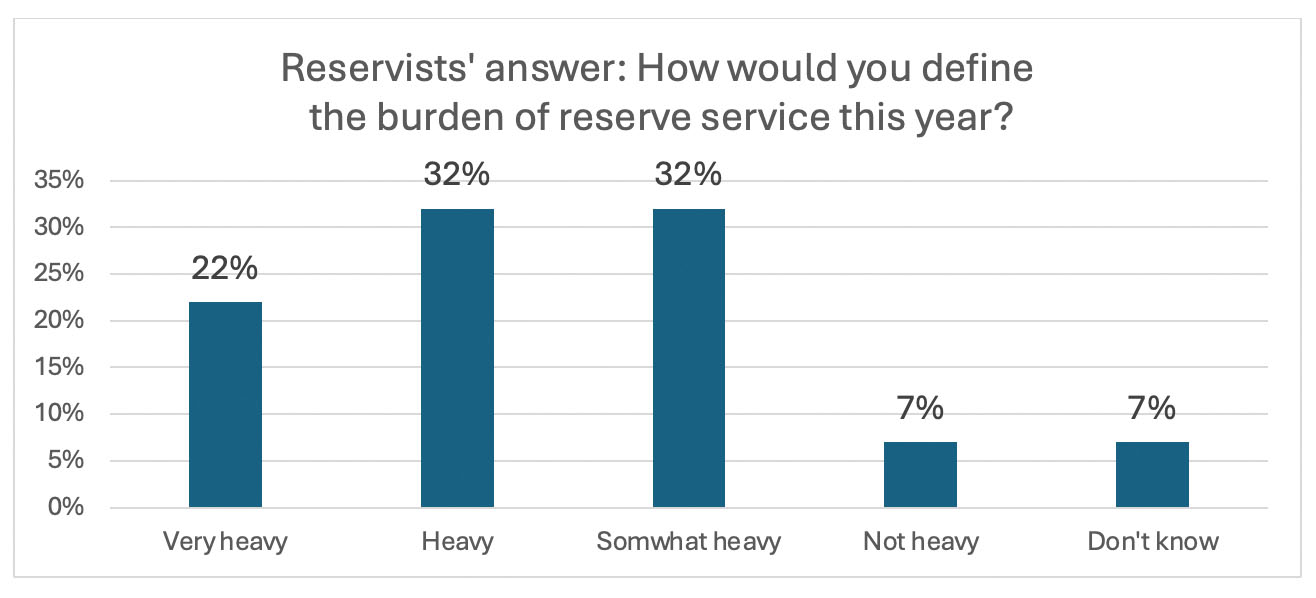
Screenshot


A reader’s response

Dalia Hershko writes: “I find it hard to understand if Israel is losing or winning the war. Can you help me understand this?” My answer: Israel wins many battles but hasn’t yet won the war. Winning the war means, as a minimum, having someone in charge of Gaza that isn’t Hamas, and we are not nearly there yet. 


Shmuel Rosner is senior political editor. For more analysis of Israeli and international politics, visit Rosner’s Domain at jewishjournal.com/rosnersdomain.

Haredim Are Human Too Read More »
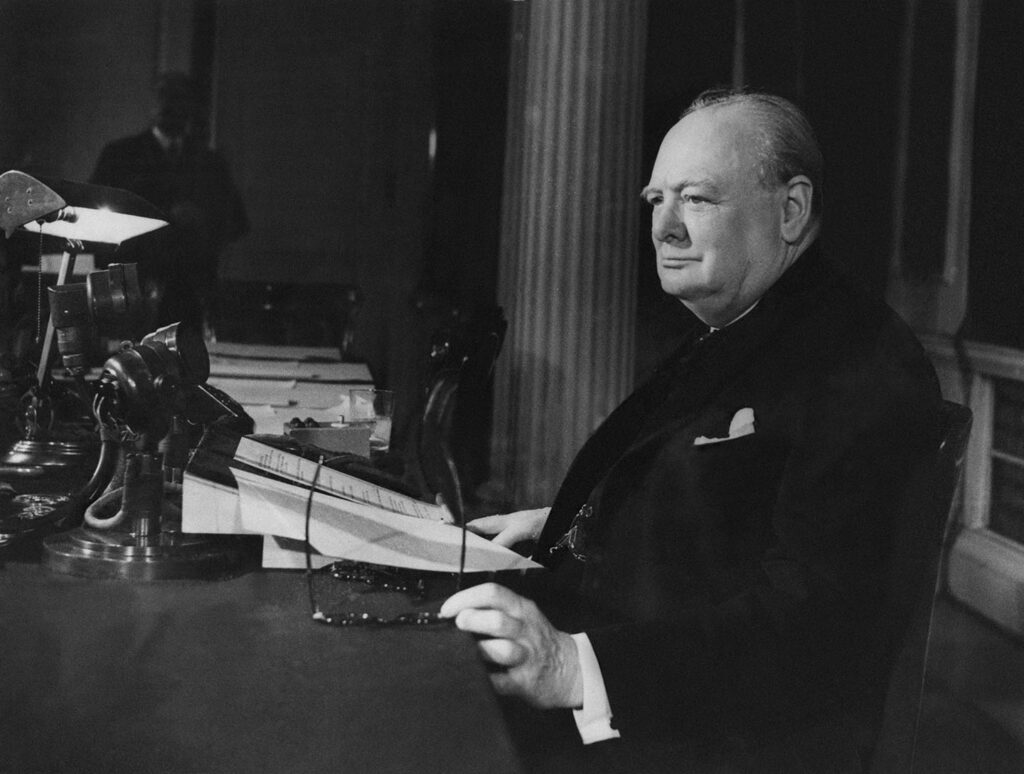
What Churchill Knew

As our friends across the pond prepare to welcome Keir Starmer as Britain’s new Prime Minister, England’s Jewish community braces for a Labour-led government. Though the political party has pledged it has reformed its recent antisemitic ways, observers are understandably cautious. Having just recently visited the U.K. with students from Yeshiva University’s Straus Center for Torah and Western Thought where we were met with anti-Jewish slurs from passersby in both Oxford University and the British Museum — sites thought to represent the intellectual pinnacle of Western academia and culture — one hopes that the new government can quickly reassure its Jewish subjects (and visitors) that their safety will be properly protected. 

One of the highlights of the trip, a four-day academic summer seminar that traced the history of England’s relationship with its Jews from Shakespeare to Churchill to today, was a conversation between Straus Center director Rabbi Meir Soloveichik and the Churchill historian and member of the House of Lords Andrew Roberts. As they highlighted, Churchill, the man most responsible for saving his country from the Nazi menace, appreciated the role Jews played both in the U.K. and in world history.

In a 1905 meeting in Manchester protesting Russian antisemitic pogroms, a young Churchill, then a politician on the rise, strongly condemned the persecution. He sharply rebuked Russia by citing an adage attributed to Benjamin Disraeli, the Jewish-born former Prime Minister he long admired: “The Lord deals with the nations as the nations dealt with the Jews.” Churchill sensed that the patterns of history have illustrated a remarkable Jewish resilience in the face of conquerors and empires whose determination to destroy the Jews has, instead, resulted in their own downfalls.

Later, while in a political exile so bereft of impact that the decade became known as his “wilderness years,” Churchill published an essay titled “Moses: The Leader of a People,” in The Sunday Chronicle on Nov. 8, 1931. In it, he argued that Moses was “one of the greatest human beings” ever, responsible for “the most decisive leap forward ever discernible in the human story.” Monotheism, for which Moses was its great lawgiver, was “an idea of which all the genius of Greece and the power of Rome were incapable.” And, crucially, the vision of the burning bush that spurred Moses to liberate the Israelites had left the world with the lesson that “there is nothing that man cannot do, if he will it with enough resolution.”  Almost three decades later, a retired Churchill would hand a copy of this essay to David Ben-Gurion, Israel’s first Prime Minister. At that time, Ben-Gurion, like Churchill before him, had returned to lead his nation once more, after having guided them through an existential war, embodying that Mosaic resolve. It was, Churchill knew, not only the miraculous power of survival, but the intellectual heritage of the West that was a credit to the Jews.

Amidst the harshness of Hitler’s forces’ swift sweep across Europe, Churchill, having been in office as Prime Minister a mere nine days, delivered his first speech as Britain’s leader on the BBC on May 19, 1940. He began “I speak to you for the first time as Prime Minister in a solemn hour for the life of our country, of our empire, of our allies, and, above all, of the cause of Freedom.” He then continued to describe the Nazis’ seemingly unstoppable march, how “behind us – behind the Armies and Fleets of Britain and France – gather a group of shattered States and bludgeoned races: the Czechs, the Poles, the Norwegians, the Danes, the Dutch, the Belgians – upon all of whom the long night of barbarism will descend, unbroken even by a star of hope, unless we conquer, as conquer we must, as conquer we shall.” Churchill concluded by turning to the story of the Hasmonean Jewish warriors, the few who had defeated the many and gifted the world the Festival of Lights. Quoting from the Book of Maccabees, he encouraged his countrymen with the ancient words of Judah Maccabee: “Arm yourselves, and be ye men of valour, and be in readiness for the conflict; for it is better for us to perish in battle than to look upon the outrage of our nation and our altar. As the Will of God is in Heaven, even so let it be.” Britain’s very survival as a free people had drawn from the heart of the Hanukkah story.

Later, the Nazis having been defeated and the State of Israel having been reborn, Churchill objected to the Labour Party’s Foreign Minister Ernest Bevin’s antagonism towards the Zionist project. “Whether the right honorable gentleman likes it or not,” Churchill said on the floor of Parliament, “the coming into being of a Jewish state in Palestine is an event in world history to be viewed in the perspective, not of a generation or a century, but in the perspective of a thousand, 2,000 or even 3,000 years. That is a standard of temporal values or time-values which seems very much out of accord with the perpetual click-clack of our rapidly changing moods and of the age in which we live. This is an event in world history.”

Churchill’s appreciation for the Jewish story, and the Jewish homeland, was made particularly poignant as our Yeshiva University group stood in the British Museum following that passing antisemitic harassment. We bumped into an IDF soldier who had gone to school with some of our students before his family’s aliyah. As we stood with him, we looked up to see reliefs depicting our ancestors exiled by the ancient Assyrians and marveled at how the once feared empire had crumbled to dust. As we then turned to a statue of Ramesses II, the tyrannical pharaoh of Egypt depicted in cracked rubble, we noted how miraculous it is that Moses’ descendants now move freely in their own land, with their own army. 

Churchill rightly understood the miraculous nature of the Jewish story. Whatever policies the new British government will bring, the Jewish people, wherever they reside, will continue marching forward with resolve and valor, by the will of God in Heaven.


Rabbi Dr. Stuart Halpern is Senior Adviser to the Provost of Yeshiva University and Deputy Director of Y.U.’s Straus Center for Torah and Western Thought. His books include “The Promise of Liberty: A Passover Haggada,” which examines the Exodus story’s impact on the United States, “Esther in America,” “Gleanings: Reflections on Ruth” and “Proclaim Liberty Throughout the Land: The Hebrew Bible in the United States.”

What Churchill Knew Read More »

Feeling the Spirit of July 4th in Israel

There were only 2,000 Jews living in the United States on July 4, 1776, when the Second Continental Congress unanimously adopted the Declaration of Independence, announcing the colonies’ separation from Great Britain.

The big day for the Jews, however, came 12 years later, on July 4, 1788, as the Constitution was being ratified. Jacob Raphael Cohen, cantor in Philadelphia’s only synagogue, marched arm in arm with a Christian minister, Rev. William White, chaplain of the Continental Congress.

As chronicled by Ron Rubin, emeritus professor of political science at City University of New York, this was a crowning moment. Dr. Benjamin Rush, a signer of the Declaration of Independence and a delegate to the Pennsylvania ratification convention, wrote:

“The clergy formed a very agreeable part of the procession. They manifested the connection between religion and good government. Pains were taken to connect ministers of the most dissimilar religious principles together, thereby to show the influence of a free government in promoting charity.

“There could not have been a more happy emblem contrived of that section of the new Constitution Article VI, prohibiting religious qualifications for holding office, which opens all its power and offices alike not only to every sect of Christians but to worthy men of every religion.”

If there has been one fundamental freedom that has benefitted the Jews in America, it is surely the freedom to practice our religion and express our Jewish identity as we see fit. Despite the ill wishes of antisemites who make so much noise, that freedom is still enshrined in our foundational texts.

It is also enshrined in the foundational texts of Israel.

It was never more apparent than last Friday night, as my friend and I were returning from a Shabbat dinner in the German colony. Friday night in the holy of Jerusalem, as you might expect, is Jewish on top of Jewish on top of Jewish. There are few cars on the road. Pretty much everyone is walking in honor of the Shabbat, either to a meal or to a synagogue.

On Shabbat, Jewishness perfumes the Jerusalem air.

So you can imagine our surprise when we smelled the odd aroma of a late night barbeque. It came from a park to our left. As we approached to get a better look, we saw a large group of adults and children speaking in Arabic and having a wonderful time. Some were dressed in Muslim garb.

Muslims enjoying a barbeque in Jerusalem on a Friday night!

My first thought, of course, was that it didn’t quite fit the spirit of Shabbat. But as I reflected a little more, it struck me that it did fit the spirit of freedom– the freedom of religion in a city open to all religions..

Indeed, as it says in Israel’s own Declaration of Independence:

“The State of Israel…will ensure complete equality of social and political rights to all its inhabitants; it will guarantee freedom of religion and conscience; it will safeguard the Holy Places of all religions.”

Has Israel walked the walk? Here are a few figures from the Foreign Ministry website:

  • The Muslim population of Israel has increased about ten-fold since the State was established; from some 156,000 in 1949 to over 1,454,000 today.
  • There are over 400 mosques in Israel, of which some 73 are located in Jerusalem. The number of mosques in Israel has increased about five-fold since 1988, when there were 80 mosques.
  • Approximately 300 imams and muezzins receive their salaries from the Israeli government. Israel provides the Korans used in mosques and funds Arab schools and many Islamic schools and colleges.

You can feel this freedom when you simply walk the streets of Jerusalem. The fact that Muslims stroll next to Jews, whether in malls or in the Old City, is taken for granted. It’s no big deal.

Yes, the horror of terrorism always hangs in the air; the horror of the remaining hostages in Gaza never leaves the consciousness. But what is remarkable is that despite all this darkness, despite all these existential threats, somehow, freedom of religion and freedom of expression have survived in this beleaguered country. That is also an Israeli miracle.

These freedoms hang in the American air as well, as the Jews know well, since we’ve been an integral part of the American story.

“America’s founding fathers believed that this new nation had the features of a New Zion or a Redeemer Nation,” Rubin writes. “Adopting a unifying Constitution was pivotal.”

In recent years, however, this unifying American spirit has been tainted by a demoralizing spirit of pessimism and cynicism. It’s naïve these days to talk about patriotism and loyalty to our nation’s founding ideals. It’s more fashionable or “progressive” to talk about the country’s irredeemable flaws.

But maybe that’s why we have special days like July 4th– so we can reflect not just on our flaws but on how far we’ve come. As we prepare to celebrate America’s birthday, let’s take a time out for gratitude for the freedoms we so often take for granted, in America and in Israel, including the simple freedom to enjoy a barbeque anytime we like.

Feeling the Spirit of July 4th in Israel Read More »

Woody Allen and the IDF

Marilyn Monroe was one of the screen’s great clowns. Her schtick, though tagged as sexual or provocative was actually an affectionate send-up of sexuality. 

Woody’s screen persona was also that of a clown, mocking a stereotype: Jewish Passivity. In all his films he is bumbling, physically inept, and out-of-phase in a (largely) Christian world. But he always gets the Girl.

Just as Marilyn, for all her charming doofishness, always gets the guy she wants.

These are ancient stereotypes — Woody’s the Schlemiel of Ashkenazi Jews, amended here, only by his eventual sexual triumphs. He may bumble his way through life, but he can laugh any woman into bed. Psychoanalytically, he asserts his masculine superiority to the supposedly more macho Christians he moves among.

The stories of Chelm, the City of Fools in Ashkenazi folklore, mocked Jewish intramural foolishness. Mythic encounters with the Goyim left the Jews baffled by their incomprehensible, dull, or doltish ways, but generally, a Jew came off the winner in most contests — if only in his superior understanding of the situation. 

Segregation and the Jim Crow South knew the Crime of Reckless Eyeballing, the very suspicion of which put a Black man at risk of his life. (See Emmett Till.) The Black Folklore of the Old South, of course, contained innumerable instances of Black contempt for White stupidity, and (variously modified) references to revenge.

The “Blue Tail Fly” was a minstrel song of the mid-19th century, repopularized at the beginning of the Folk Music Era by Burl Ives. Ostensibly about the death of the Master, thrown by a horse, bitten by the fly, and the singer/slave’s stoical reaction: “Jimmy crack corn and i don’t care, da Massa’s gone away.” The slave’s reaction, however, is clearly ironic, as it was he who killed his oppressor. Just as Woody gets the best of the Goyish World in which he is sentenced to move, by getting, not only The Girl, but the youngest and prettiest of the Christian girls — available to him, but not to their coreligionaries, who a) (in the film) want wit; and b) (in Life) are not rich and famous.

Today, this writer, in his waning seventies, was discussing etymology with a Jewish coeval. (Take that, Iowa Writers Workshop.) We were reminiscing about the Turbulent Sixties, and he mentioned Rizla Rice Paper — then used, I am told, to roll “joints.” “Yes,” I said, “a most interesting product name. It was composed of ‘riz,’ French for rice (being rice paper), the ‘la,’ definitive article in French ‘the,’ and the symbol of a modified Jerusalem cross or Croix-Patee.”  

He said, yes, he knew the whole thing, but the brand was pronounced, in toto, RizlaCrosse.

“No, no,” I responded, “LaCrosse had nothing to do with LaCroix: the word, in French, signified a shepherd’s crook — that form which was adapted by Native Americans into the game so beloved of the boarding schools.

“Ah, yes,” he said, “I attended such a school, and, of insufficient eye-hand coordination, was assigned to row on the third-string school team, but …” 

He continued but he had no need to do so, as I recognized from his tone an upcoming disclaimer. 

“I took French for six years, but when I got to Paris, found …”

“I’ve never been able to digest ____” 

“I’m Jewish, but I’m not that Jewish …”

These are our beloved admissions of a lack or gentle failure interesting to ourselves as proof of our curious and heartwarming (but not culpable) quiddity: The assertion of our lack of intent to compete with those we acknowledge as our betters.

My friend’s story continued: He had been placed in a boat or punt, or whatever, with the neer-do-wells and dolts, and told to row. The boat could not be made to go straight, and they all ended up in the drink.

Campers, firefighters, police, aviators, sailors, climbers, and others involved with actual danger, tell anecdotes about their ineptitude or salvation by chance. The stories are accepted by those similarly familiar with danger and effort, as homage to their final inferiority to fate, and to the dangers of inattention. But the Jewish tale of physical ineptitude, told as an entre-nous delight, is self-castigation.

The Jew, here, doesn’t Get the Girl, he doesn’t get over on the Goyim, there is no humor in it, unless one wants to misname the masochistic indictment funny. It’s never funny. It is the offer of commonality with the somehow impaired. 

Anyone can learn to use a hammer, to master basic carpentry, rowing, use of a firearm. Basic skills are no respecters of race or sex — and if a man mocked a woman for some genetic inability to perform them, he would be, rightly, censured as loathsome.

The “I don’t even know how to use a screwdriver” meme of the last century Diaspora Jews, is a bid for group inclusion. It is shared as a reminder that safety demands passivity. It comes at a horrendous price: The Jew professing passivity invites and encourages attack.

A passive-aggressive individual portrays inability and submission in order to exercise control. The Jew, alone among minorities, is self-denied even this (unfortunately effective) tool. He actually believes he is powerless against the Wider Culture in which he is enmeshed, and strives to appease it through a proclamation, first of his powerlessness, and, latterly, of his guilt – a last sick legacy of that still calling itself “Liberalism.”

The IDF, and the State of Israel itself are a challenge, not merely to the acculturated Jew’s self-image, but to his Worldview. His potential for safety, historically, for the 2,000 years prior to 1948, has consisted in passivity and anonymity. It’s a wrench for him to forgo the notional protections he has enjoyed, and to recognize them as merely fortuitous, when they weren’t imaginary. 

Such traumatic reappraisement is most usually undergone only by those who have Hit Bottom. But the horror of Oct. 7 did not bring Western Liberal Jews to that state, but only further into the service of adversaries who sided with the assassins, and call it Liberalism.

On Sunday, June 23, Jews going to a meeting at a shul in the Jewish Pico-Robertson neighborhood of Los Angeles were barred and battered by pro-Palestinian thugs. Police stood by, and Legacy Media reported it as a “clash of protesters.”

The Jews assaulted were protesting nothing; those denying their access to shul were, supposedly, “protesting” Israeli actions in Gaza, but the actual, dread content of their agit-prop was the assertion of shared Jewish Guilt for the actions of other Jews. Known, historically, as “The Blood Libel.” 

“From the River to the Sea, Palestine will be Free,” is a call for the death of Jews. And yet the LAPD was ordered to bar the Jews from the synagogue, and let the “protesters” rant and assault in peace.

The Diaspora meme; “I’m Jewish, but I’m not that Jewish,” has, again, been corrected by a mob’s screaming, “Yes. You are.” They’re quite right. That they are shrieking should not prevent us Jews profiting from the correction.

The Diaspora meme; “I’m Jewish, but I’m not that Jewish,” has, again, been corrected by a mob’s screaming, “Yes. You are.”

The Western World has concluded that murdering, raping, harassing, and calling for the death of Jews is permissible. It’s insufficient to suggest it ends in murder, it is an actual incitement to murder – a felony under federal law. It is a crime to solicit, command, induce or otherwise endeavor to persuade another person to engage in a crime of violence against person or property.

The assimilated Jew talks about “changing their minds,” or “raising their consciousness,” or “altering the narrative,” an aphasia equal to chattel slaves complaining, “Don’t they understand …?”

The antisemites do understand. It is the Liberal Jews who do not. As Golda said: “We want Peace, they want us dead. There’s little room for conversation.” Our existential challenge is not to change “their” minds, but to change our own, protect ourselves and our like, and demand our governments do the same, here and in Israel.

The hand wringing, saddened, Liberal, passive Jew’s 70-year-long run of safety was in an interregnum between two eras of atrocity. To whom is this arcane knowledge? The terrified child hugs the teddy bear; the New Holocaust Denier is the Jew who hugs The New York Times.


WOODY ALLEN AND THE IDF
by David Mamet
copyright © 2024 by D. Mamet

Woody Allen and the IDF Read More »

Remembering My Father’s Pain, and Joy

My father was big-hearted, laughed loudly at his own jokes, and was crazy in love with my mother from the day he first met her when she was 16 until his dying day 48 years later. He was a UCLA Bruins basketball fan zealous enough to follow the team on the road during their championship seasons during the late 1960s. But my older brother’s death at 17 from a car accident broke him emotionally.  

Born with a near total hearing loss, my father, Jack Rosenfeld, also struggled to make a living. He came of age decades before computers revolutionized our lives and before society found ways to include the disabled. His old-fashioned hearing aids dangled skinny cords from his earpieces to battery packs in his shirt pockets. The hearing aids often whistled loudly, which everyone could hear — except Dad.

As his daughter, I learned patience. I had to look directly at him when speaking, a beat slower and slightly louder than normal. I learned to love mysteries, too, because his favorite TV shows were “Columbo” and “Murder, She Wrote.” In our very small house, everybody else got to hear the shows too, whether we wanted to or not. I loved Columbo, too, so I didn’t mind.    

The death of my brother, Allan, engulfed my father in grief, a grief that sometimes erupted in explosive anger. His anger frightened me — a 9-year-old child — especially as I was often alone in the house with him while my mother was out. I’d wait in another room for the episode to pass, but sometimes I felt I had no choice but to try to calm him down. I looked up at my tragically sad father and spoke to him as calmly as possible. 

This personal history makes me a bit impatient when people use their own family dysfunction as an excuse for not achieving certain life goals or succeeding in relationships. Whose family is trouble- or trauma-free? We need to process pain, but often, the parents we blame most often may never have had a chance to heal their own emotional wounds. We are responsible for our own lives.     

I knew my dad loved me, as well as my sister and our mom, which made it easy for me not to judge him. His unstable employment, and inability to hear so much of what was happening around him, must have added to his frustrations. 

After Allan died, my dad refused to set foot in a shul except for special occasions, such as bar or bat mitzvahs and weddings. But he mellowed over time. Dad never uttered a word against my choice to become Torah observant when I married Jeff. He graciously accepted our having an Orthodox wedding (and paying for half of it) and our new, religious lifestyle. In fact, I was stunned — and admittedly alarmed — when Dad asked for everyone’s attention during the Kiddush at our shul in Venice, the Shabbat after our wedding. It was unprecedented for Dad to ask to speak publicly. What in the world was he going to say? 

I stood next to Jeff, holding his hand and my breath. I listened in awe as my father, who had spent years being angry at God, expressed heartfelt admiration for our community, a group of Orthodox Jews he had never met before, but who had celebrated his younger daughter’s wedding with unbridled joy. I was moved to tears. After he finished, the men gathered around to shake his hand, embrace him, and offer hearty mazal tovs. I treasure this memory of seeing my father filled with happiness. 

This week I will light the 31st yahrzeit candle for Dad. As the years go by, I remember him less for his emotional pain and more for his special qualities: The scrupulous honesty that led him to always count the change the waitress brought to the table, returning as little as ten cents if he found an error had been made in his favor. He was inadvertently funny, not understanding that you didn’t ask the hostess of the party you were attending, “Your hairstyle is so becoming. Is that a wig?” At moments like that, Mom wanted to fall through the floor. He often took me with him to visit an old friend of his who was paralyzed and could not leave the house. 

Touchingly, he’d plan my mother’s surprise birthday party — every single New Year’s Eve. It was hilarious hearing him shout on the phone to Mom’s friends about the party, friends who waited for the annual call with the party details and warning them, “Remember not to tell Libby! It’s a surprise!” Every year the friends played along, and every year my mom would act surprised. 

When Dad was losing his fight with cancer, he tapped into a spiritual reservoir and emotional calm I never knew he had. Privately, he urged me to encourage Mom to remarry, and gave me the list of pallbearers he wanted. He spoke of these things philosophically, with no self-pity or tears. I had not known he had this inner strength, and it moved me.

When Dad was losing his fight with cancer, he tapped into a spiritual reservoir and emotional calm I never knew he had. I had not known he had this inner strength.

One day as my mom and I sat at his hospital bedside, he predicted that I would soon have a daughter. He even had names picked out! This was remarkable, because the youngest of our three sons had just turned one year old and Dad had directly questioned our family’s rapid expansion. But he really must have known something I didn’t know, because exactly 48 hours before I got the call saying he had passed, I learned I was pregnant. The little girl he had prophesied arrived on time nine months later. We didn’t name her Muriel, though. (Sorry, Dad.)

Today, I believe that up in heaven Dad has peace and contentment. He’s long been reunited with my beautiful mother. They have six grandchildren and 16 great-grandchildren, three of whom carry the name Yaakov or Jacob, keeping his memory alive. 

May the memory of Yaakov ben Herbert have an aliya.


Judy Gruen is the author of “Bylines and Blessings,” “The Skeptic and the Rabbi,” and several other books. She is also a book editor and writing coach. 

Remembering My Father’s Pain, and Joy Read More »

Israel’s Future Depends on Unity

I have just returned from a week in Israel, where, together with a delegation from our Beverly Hills community, we visited countless places, met diverse people, and absorbed the atmosphere of a nation still reeling from Oct. 7, acutely aware that the challenges they face are far from over.

This was my fourth visit to Israel since that horrific day, and each time until now, I have been struck by the remarkable resilience and unity of purpose of Israel’s population, even as tensions between various groups simmer below the surface. 

But this time was different. While Israelis are still united in their resolve to destroy Hamas and resist external attempts to halt their prosecution of the war, on other matters, they are deeply divided, with tensions on full display.

Protests in Jerusalem near the Prime Minister’s residence are back in full swing, focusing on Bibi’s seeming inability to bring the remaining hostages in Gaza safely home — neither by negotiation nor by military means. But the backstory is more about broad dissatisfaction with Bibi’s leadership. 

The setting aside of political differences after Oct. 7 has been abandoned, and conflicts are back on display. Even within Bibi’s coalition, rifts are widening, and the government hasn’t fallen yet only because his coalition partners know a Bibi-led coalition emerging from an election is wishful thinking.

While we were in Israel, in a landmark ruling, Israel’s High Court of Justice unanimously mandated the drafting of Haredi yeshiva students into the military, ending the blanket exemptions that have been in place since 1948. The court declared a June 2023 government decision to delay drafting eligible Haredi men illegal and instructed the government to start conscription, although gradually.  

While Israelis are still united in their resolve to destroy Hamas and resist external attempts to halt their prosecution of the war, on other matters, they are deeply divided, with tensions on full display.

The real bombshell was the judges’ unanimous decision to bar state funding for any yeshiva whose students shun military service.

The court’s decision was widely anticipated. Last Shabbat, in a private gathering for our delegation, we heard a detailed prediction of the outcomes from Professor Yedidia Stern, President and CEO of the Jewish People Policy Institute (JPPI). Despite his Religious Zionist convictions, Professor Stern is sympathetic to Haredi ideals and concerns. As a libertarian, he believes it is not right to impose an integrated Israeli life on those who wish to live purely religious lives, even if they are citizens of Israel.

Nevertheless, he told us, the steady growth of the Haredi sector in Israel — currently 1.2 million out of a population of 10 million, with 7.5 million being Jews — makes the blanket exclusion of Haredim from military service, or any mandated national service, untenable in a country where every other Jew is expected to serve and where national service is a necessity. Unconditionally continuing to fund the Haredi community out of state funds, particularly when many who claim to be in full-time yeshiva study are not, is no longer sustainable.

Public reaction from Haredi leaders has been as expected. This week, Rabbi Dov Lando, the 94-year-old head of Bnei Brak’s Slabodka Yeshiva, visited the United States to urge American Haredim to help save Israel’s Torah institutions, now struggling with a combined $100 million shortfall resulting from the High Court ruling. “The authorities hate Torah scholars, and the situation is dire,” he thundered at a fundraiser, “there are already yeshivas that have closed down!”

Although the campaign organizers claim to have raised the full $100 million, next year’s shortfall will be closer to $300 million according to Professor Stern — and there is no way America’s Haredi community can fund its Israeli counterpart at such levels indefinitely. In any event, the solution doesn’t lie in the United States, it lies in Israel, where the seeds already exist for resolving the issue. 

The only thing lacking is bravery. According to one Israeli Haredi insider who spoke to me on condition of anonymity, Haredi leaders “are afraid to express their opinions openly … in their chumashim, the commandment ‘Do not fear any man!’ (Deuteronomy 1:17) has been erased.”

It is an open secret that out of the 12,000 annual exemptions, over half do not meet the standards of full-time Torah study, or even close. The past is the past, but right now, finding some form of military or national service for the thousands of Haredim who are not eligible for exemption is the only way out of the hole which the Haredi community has dug for itself, at least if it wants to remain a viable part of Israel’s present and future. 

According to the insider I spoke to, even Rabbi Lando has privately admitted that the current refusal by Haredim to compromise and find a solution is unmaintainable — but he claims not to have the strength to be the one who proposes and pushes for such a dramatic shift. In the meantime, American Haredim are being forced to pay the bill for Israeli Haredim kicking the can down the road.

A future of mutual respect and coexistence was on full display in Kibbutz Be’eri, where our group visited the synagogue, built in a joint effort between Rabbi Shlomo Raanan, a Haredi outreach rabbi who lovingly works with secular Israelis, and Rachel Fricker, a secular Israeli who lived in Be’eri for 33 years before terrorists overran her home on Oct. 7 and utterly destroyed it. Miraculously, she survived the terrorist attack and now lives in a hotel at the Dead Sea until her return to Be’eri, which remains uncertain.

Incredibly, the synagogue was left intact by the terrorists. It is a tiny space, but very warm and homey. In the weeks and months following Oct. 7, the shul became a haven for IDF soldiers who converged on Be’eri and the surrounding area. Rachel explained how tough it was to get the synagogue built in her secular kibbutz, but that she regularly spoke to God to seek His help as the project progressed.

In 2015, when the idea for a shul in Be’eri was first raised, members of our Beverly Hills community donated money so that it could be built. This was our first visit there, and the experience was overwhelmingly positive.

Rachel Fricker is an inspiration. So is Rabbi Raanan. And when they work together, these two forces of nature are an exponentially greater inspiration. They represent the future for Israel, in which Jews of every stripe and color see themselves as part of one whole, not as exclusive groups existing in isolation alongside each other. 

If every Haredi was like Rabbi Raanan, and every secular Israeli was like Rachel Fricker, Israel would become the unconquerable force we all know it could be. There are many like them, but right now they remain select individuals. If only these individuals could be the bridgeheads for their respective groups to join forces, no enemy could ever prevail over the united energy of an Israeli society dedicated to the common destiny of Jewish peoplehood.

Bottom line: Israeli Haredim must come up with a workable solution that finally casts the scourge of Haredi separatism to history. This is not the moment to widen the gaps. If Oct. 7 and the Gaza War have revealed anything, it is the importance of finding ways of working together and being united. It can definitely happen. Let’s pray that it does.


Rabbi Pini Dunner is the senior spiritual leader at Beverly Hills Synagogue, a member of the Young Israel family of synagogues.

Israel’s Future Depends on Unity Read More »

The Emperor Has No Clothes

The June 27 presidential debate was a watershed moment for America. In the words of Bari Weiss, writing hours after its conclusion, “rarely have so many lies been dispelled in a single moment.” The debate was a disaster for Biden, whose obvious cognitive decline was laid bare for the entire country to see. 

But videos depicting Biden’s struggles in painstaking detail have been circulating the Internet for months. Biden has been caught on camera looking confused while meeting major world leaders, attending significant global events, and delivering his own speeches. And he doesn’t just look a little out of sorts; he forgets entire sentences, he trails off, he needs to be led from place to place by his own wife, and sometimes he entirely freezes. 

The president’s deteriorating condition should have been blatantly obvious to even casual observers for months now. But to the left and its counterparts in the media, using your own eyes with Joe Biden was deemed an unforgiveable sin. Anyone who dared cast the slightest aspersion on the 81-year-old’s health was deemed a Trumper, an ageist, an idiot, or at best the victim of “deep fakes” and “right-wing misinformation.” I can attest to the fury — when I pointed out a video of Biden freezing up at a Juneteenth event and suggested that it could be a sign of a progressive central neurological disorder, something I’ve studied extensively during my training as a doctor, I was dismissed as a conservative shill and brushed off as “not a diagnostician,” as if the signs weren’t obvious even to someone with significantly less formal medical training. 

Rather than acknowledging what so many Americans can clearly see, the left instead has been running a concerted effort to deny reality. When the Wall Street Journal ran a piece interviewing 45 people about Biden’s age — and concluding that there are serious concerns — the administration and its media counterparts sprang to the defense, dismissing it as a hit job and even calling for a retraction. White House spokesman Andrew Bates called the age concerns “false claims” that undercut Biden’s stature as a “savvy” leader. Even as recently as the week before the debate, The New York Times ran a comprehensive piece entitled “How Misleading Videos Are Trailing Biden as He Battles Age Doubts,” in which three reporters analyzed different angles of footage from the president and concluded that the videos are “clearly manipulated to make him look old and confused.”  

Where is this “clear manipulation” argument now, after millions of Americans tuned into the debate and saw the president’s confusion for themselves? Well, it’s nowhere to be found in the major media, which turned on Biden in a second. The morning after the debate, The New York Times opinion page was lined with calls from every corner for the president to suspend his reelection campaign. Staunch Democrats such as Rachel Maddow hopped onto the morning news to point out Biden’s “weak” delivery after spending months assuring her viewers of his fitness for the presidential office. 

The clear takeaway from the left’s swift 180 is that we have been gaslit by people who obviously knew better. Rather than letting Americans believe their own two eyes, the left has been denying politically inconvenient reality — and smearing anyone who dares state the facts as insane. If not for Biden’s horrendous debate performance, they would have kept papering over his cognitive decline all the way until November. 

Now that his age-related struggles are on full display, however, it is time for Americans to yank our heads out of the sand and get back in touch with reality. Biden’s decline is an issue not because there is something inherently wrong with aging, but because he is running to continue being the commander-in-chief of our country at one of the most precarious times in recent global memory. If his feebleness is glaringly apparent to the American public, imagine how it looks to our enemies. Russian warships were spotted near Florida. Iran is on its ninth month of a bloody proxy terrorist spree. China is eyeing Taiwan with ever-growing hunger. This is not the time to have a president whose weakness readily presents itself for the world to see.  

Biden’s decline is an issue not because there is something inherently wrong with aging, but because he is running to continue being the commander-in-chief of our country at one of the most precarious times in recent global memory. 

The only language our foreign adversaries understand is strength, which is why we need a leader who projects it. Our country cannot afford to have a president who is weak in both policy and physical appearance. It is a national security threat, an embarrassment, and a danger to our standing on the world stage at a time when our stature matters more than ever. Despite the left’s best efforts, the emperor has been shown without his clothes — and now it’s up to the American public to react accordingly.


Dr. Sheila Nazarian is a Los Angeles physician whose family escaped to America from Iran. She stars in the Emmy-nominated Netflix series “Skin Decision: Before and After.“

The Emperor Has No Clothes Read More »

Award-Winning Israeli Director Talks About New Film About Love and Tragedy

“America,” the second film directed by Ophir Raul Graizer, has a lot to live up to.

His previous film, 2017’s “The Caretaker,” won seven Ophir Awards, Israel’s version of the Oscars, including “Best Picture” and “Best Director” for Graizer, and was Israel’s selection for the Academy Awards. But the film, about the affair between Thomas, a German and an Israeli man Oren, was produced on a microbudget and became a sleeper hit. “Even today, I still get messages from people all over the world on how it impacted them. It exploded and almost became a cult movie.”

Graizer said many people were advising him regarding the topic he should cover in his sophomore film. He was feeling the pressure, he said, but then COVID hit, and people had other concerns, and allowed him to work in peace. “America”is a startingly moving story about love, loyalty and friendship that will leave you thinking about the fragility of life and the beauty of finding a romantic partner that you are meant to be with.

Eli Greenberg (Michael Moshonov) is an Israeli swim coach living in Chicago; he returns to Israel for a to deal with the death of his father. While there, he runs into an old friend and swimming partner, Yotam (Ofri Biterman) and his beautiful Ethiopian fiancée, Iris (Oshrat Ingadashet) a florist. The three start spending time together, but Yotam has a terrible accident, which leaves him in a coma.

Oshrat Ingadashet in “America”

As time goes by, an attraction develops between Iris and Eli. Will they give into their passion?

Ingadashet delivers a stirring performance that is subtle but delivers the punches at exactly the right moments. It is no surprise she won “Best Actress” at The Jerusalem Film Festival.

Graizer said he changed the script due the talent of the actress.

“We saw about 35 or 40 great people for the role,” he said. “It was originally not written as an Ethiopian character; it was an Ashkenazi character. But when I saw her, I fell madly in love with her energy, her personality and her connection to the screenplay. We recreated the character and I think it brought the film to another dimension.”

The film becomes more complex as Yotam — who was thought to be in a permanent vegetative state — starts to improve. Graizer builds tension through a number of plot twists; the characters are with deft touches and visual metaphors. You learn of the discipline necessary to understand which flowers go together to create a proper bouquet and which will ruin it. Eli must gain the trust of his students; they need to know he will not allow them to drown.

Moshonov is excellent as a man who is haunted by a traumatic incident from his past; he wants to keep that past in the past and make a good life for himself in the present, while working through a moral dilemma. Moshonov balances the complexity of his character extremely well, as a man with ferocity burning behind an exterior of tranquility.

Why is the film called “America” if it mostly takes place in Israel?

“There is of course, the American Dream,” Graizer said. “But the word alone can represent anyone anywhere who dreams of a better life or to go to a better place or even to re-invent themselves in a different way. Of course, it is open to interpretation, but there is the idea of what we want to have, not simply in objects, but in happiness. We can look at a horizon and want to escape a difficulty or be in a better place.”

Given the political strife, both in Israel and America, there may be some who look at the question of loyalty posed in the film and find political messages in the film, which was completed two years ago. Are those interpretations valid? Graizer wouldn’t comment on politics, but admitted that the film’s major lesson is how things we think are permanent are often temporary.

“Sometimes life catches us at a time when we are unprepared and everything shifts and changes.”

Award-Winning Israeli Director Talks About New Film About Love and Tragedy Read More »

God’s Gang: How an Israeli is Leading the Charge for World Peace Through Cartoons

Spiritual experiences, the likes of which affect people so deeply that they change the course of their entire lives, often occur in the unlikeliest places. For Nimrod-Avraham May, a young, passionate Israeli marketeer, there was no burning bush or an angel admonishing him to “be not afraid.” Instead, there was a crowd of Disney executives desperately looking for something, anything, that might go toe-to-toe with a cute cartoon girl and her booted monkey, as well as a certain yellow sponge that had taken the world by storm in the mid-2000s. “On stage, I stood in front of 120 Disney executives coming from programming and marketing, and I told them, ‘Why don’t you make the Power Rangers an interfaith group? They’re fighting aliens, and you have diversity there already, so why don’t you show how different faiths can work together to save the world? It’s so obvious!’” The crowd erupted in applause.

Soon, Disney was starting to audition actors and actresses for the project. But then, abruptly, it all stopped.

Such began the eighteen-year journey to make “God’s Gang” a reality. Following the difficult blow at the hands of the Disney execs who yanked the cord on his passion project, May set off on a journey of enlightenment, studying kabbalah, Sufism, Buddhism, Sumerian scripts, even quantum physics. And what did he learn? “No matter how you build a religious tool kit,” May says, “when you go down into the basics of it, it all comes down to the values that have a humanitarian aspect. It’s kindness. It’s compassion. It’s being honest and truthful.” By the time the COVID pandemic shut down the world in 2020, May decided that “God’s Gang” needed to be made more than ever. “In April ’21, I got some small seed funding from a couple of friends of mine who pushed me and told me, ‘this is your time to do God’s Gang,’ and it just started rolling like magic,” May says.

With May’s years of experience and marketing savvy in children’s television, guided by a powerful spiritual conviction that’s instantly infectious, the project came together rather quickly. He was brimming with ideas about characters and stories, but he needed a professional writer to hone the concept and pen the pilot. So he went to his friend, Omri Marcus, acclaimed for his work on Israel’s satirical sketch show “Eretz Nehederet,” who introduced May to Rob Kutner, the multiple Emmy-winning scribe who’d cut his comedic chops on The Daily Show and Late Night with Conan O’Brien. According to Kutner, “Omri said, ‘I have a friend who’s doing this project, do you want to take a look at it? But I gotta tell you, it’s kind of crazy.’ And I think that was his way of saying that it might be too crazy for me. But then I just looked at the first page, and I said, ‘Oh, I get this, this is perfect, this is a great thing that should be.’” Now that May had a writer on board, the rest of the puzzle pieces of making an animated children’s show soon fell into place, and, in due course, the team created their pilot.

*  * *

“God’s Gang” is a little bit Scooby-Doo, a little bit Power Rangers, and a healthy dash of Charlie’s Angels, with a worldly sense of religious unity, a goofy sense of humor, a message of love and tolerance, and a solid dose of butt-kicking. At its core are the four protagonists, an unlikely alliance of ethnically diverse, interfaith heroes envisioned by May in front of those Disney execs so many years prior. There’s a barrel-chested Muslim (Sumuslim), a heavy metal-loving Indian woman (Taekwonhindu), a Black, karate-chopping Christian (Chris Cross), and, of course, a diminutive, quick-witted Ashkenazi Jew who specializes in analytics and ninjutsu (Ninjew). The gang travels around in a van, A-Team-style, called from a divine source to battle the various forces of evil in the world, crack jokes, work as a team and learn a few lessons along the way.

The two-part pilot eschews backstory and drops us right into the action. In the first installment, “Really Mad Scientists” cause havoc at an amusement park, spurring the gang into action and giving them an opportunity to use their signature fighting moves. Taekwonhindu can communicate with nature, while Sumuslim summons a Sheherezade-inspired storytelling trance that lulls foes into a hypnotic daze. Chris Cross literally turns the other cheek, using his face to return blows from assailants. And the Jewish character? The pint-sized Ninjew fights with tefillin nunchucks and tracks enemies with his Terminator-esque “ana-laser,” a nod to the centuries-old Talmudic tradition of scrutinizing religious texts. The second section of the pilot gives us an underwater adventure as God’s Gang battles nefarious extraterrestrials who hail from a foul smelling planet and plot to kidnap Earth’s whales to counter the stench of their home world.

The pilot is polished and professional, with surprisingly accurate fight choreography, compelling voice acting, humorous and thoughtful character design, slick animation and an undeniably infectious theme song. It’s charming and fun, exciting and lighthearted—basically, everything you don’t expect from religion. But it serves as a surprisingly effective platform for an animated show that aims to balance interfaith cooperation with martial arts, not to mention a huge dose of juvenile humor. Take, for instance, the alien Reptilios’ home world, “Stenchdonia,” which is literally a flatulent planet. At one point, a geologic toot erupts from the ground, causing one baddie to remark to another, “It wasn’t me! It was the planet!” Kutner was particularly proud of that zinger. “I posted on Facebook that I just got paid to write about a farting planet, and my day was complete at 10am,” he laughs.

Viewers might be curious as to why the Jewish creators of an interfaith show decided to cast one of their own as an undersized nebbish with a Woody Allen-inflected voice. Says May, “I have many friends asking me why he’s so small, and I told them, ‘Listen, if I made this arrogant, masculine Jew, people would immediately associate it with the IDF or whatever, and they would keep hating us. But even in the Star Wars universe, Yoda is the most powerful Jedi out there, right? And he’s the smallest one of all!”

“God’s Gang” has not yet been formally pitched to studios or buyers to turn the pilot and concept into a full-fledged television series, though the project has already garnered millions of views online from around the world. There are, of course, more than a few cynical detractors who nitpick the show from the safety of the comments section, but May, Kutner, and the rest of the considerable creative team behind the project continue to amass steam, thanks to May’s infectious enthusiasm for the underlying message of the show and his indefatigable passion to give “God’s Gang” the full series treatment.

“It’s interesting,” says Kutner, “because religion is supposed to be in theory something that brings people together, but it seems to have had the opposite effect. And now it seems like a TV show sometimes is the only thing that brings people together, especially a humorous one.”

“It’s interesting because religion is supposed to be in theory something that brings people together, but it seems to have had the opposite effect.”

“We’re all about good vibrations,” agrees May. “I want God’s Gang to be the happy place for people who are looking for hope, who believe in unity, who like good humor, good storytelling, action and adventure, and that’s the bottom line.”


Scott Gold is a food and entertainment writer in New Orleans who has written about everything from foie gras to Star Wars and all points between. He’s the author of the book “The Shameless Carnivore: A Manifesto for Meat Lovers,” and once served as “America’s Bacon Critic,” which the international Jewish press found amusing.


God’s Gang: How an Israeli is Leading the Charge for World Peace Through Cartoons Read More »

Is God An Antisemite?

Traveling in Normandy for the 80th anniversary of the D-Day landings, I chanced upon many Israelis in Paris who say my yarmulke  and walked over to say hello.

Not a single one wore a Yarmulke but baseball caps. “Europa malei antishemiyim – Europe is filled with antisemites.” So what, I asked. The one thing no one would call Israelis are cowards. “You guys are brave enough to fight Hamas but you’re too scared to go to the Louvre with a Yarmulke?”

“For 2000 years Jews have been murdered in Europe. They’re all antisemites.” For all the courage that Israelis exhibit – and there is no braver nation on earth – they still live in a Jewish bubble in the Middle East and when they venture out to a continent they are convinced detests Jews they want to avoid confrontation.

But what proves that Europe is antisemitic? Why, they have been murdering Jews for 2000 years, right?

By the same token, might we say, God forbid, that the Creator is none too fond of Jews as well? After all, isn’t He the one who allowed Jews to be murdered for two millennia?

Let me be clear. I do not BELIEVE in God. Rather, I am CERTAIN there is a God. I am certain that God is the Creator of heaven and earth, Master of the Universe, and Controller of all history. Maimonides said there is no commandment to believe in God but to  know that God exists.

I do know. It is a mathematical certainty. And October 7th did not shake my faith in God even one iota.

But it did do is have me question whether God likes Jews.

What God want from us Jews? Why is it that He has seemingly broken so many promises to us? He says He loves us. Yet he allows us to be gangraped, beheaded, disemboweled, slaughtered, and cremated. Might the Europeans not make the same argument? We love you to death!

Yes, He promised an ingathering of the exiles, and while the Messiah has not yet come, with the miraculous State of Israel that has largely occurred. But October 7th shattered the founding principle of a Jewish state, namely, that once Jews are in their land, protected by their own army, there would never again be mass murder of Jews or anything resembling a holocaust.

We waited for Israel for 2000 years. Did God have to shatter the promise of security in our land so decisively?

Many argue that God has a plan and good things are going to emerge from October 7th. Nissim Louk, father of martyred Shani, said in our public discussion in New York, where I dedicated a Torah to my mother and his daughter’s sacred Memory, that ”Shani” name means change and “great and positive change will result from this massacre.” Now, Nissim is a man of great faith. But whatever good may come of that horrible day, did it have to arise only as a consequence of his daughter being publicly defiled by monsters?

I cannot tell you how many thousands of people have told me that God had a great plan for the holocaust. Seriously? You mean, in some celestial sphere, far beyond our own limited understanding, the gassing of 1 million children is somehow a good thing?

Others say, Israel deserved what it got on October 7th because of irrational hatred Israelis harbor for one another. But Americans hate each other just as much, but women in Manhattan were not punished God forbid with gangrape at a Central Park concert.

And to those who say that we Jews are sinful and don’t keep the Torah, give me a break. There is no nation on earth so faithful as the Jews. Even after Auschwitz we continue to put on tefillin, eat kosher, and send our kids to Jewish day schools. No nation on earth has even approximated the loyalty of the Jews to God even when it seems He does not reciprocate.

Which brings me back to my original question. Is God an antisemite? Since there is no good reason not to like us, is God’s disfavor toward the Jews something akin to the United Nations or the European Union who just despise us irrationally?

And while I understand the amorality of the UN and the laughingstock it has become with countries like North Korea and Russia on its Human Rights Council, the same cannot be said of God who is the source of all morality. Must he Himself not act morally?

Abraham said to God, “Will the judge of the whole earth not himself practice justice?” Moses went even further, threatening God to abandon the Torah completely if God exterminated the Jews. “If you annihilate them, I beseech you, remove my name from the book You have written.”

I have no idea what God is up to with the global resurgence of antisemitism. Yes, humanity has freedom of choice and those who choose to hate the Jews – like the maggot Mullahs of Iran – are culpable for their hatred. But if God did not so will it, even amid their attempts at murdering Jews, they would not be able to harm a hair on baby in Nir Oz or Sderot.

Why has God allowed all this garbage to come back. Were six million Jewish martyrs not enough?

Next week is the 30th anniversary of the death of the Rebbe. In one of his last public addresses, the Rebbe spoke of the rape and murder of a young mother in Crown Heights. He looked up at the heavens and sparred with God before a global audience of listeners. “Zuchtz korbanos?” “Lord, do you need more sacrifices? “Ad Matai?” Will it ever be enough?

In the book of Deuteronomy Moses famously says, “the hidden things are for God. But the revealed things are for us and our children.” After October 7th, I have no idea what God is up to. With two sons at war in Israel, I shake and shudder, mourn and grieve, for every murdered IDF hero. Must another few thousands 20-year-old Jewish boys die before God’s thirst is quenched?

But none of that is my business. My job is to protest God’s seeming inaction, demand that He show himself in history – as He did on the day that four hostages were rescued and when the demonic president of Iran was roastedin a helicopter crash – and finally protect his people.

Is God an antisemite? My role is not to answer that question but to pray to him defiantly that He cease giving any party even a hint that this may be so.

I don’t understand why the world hates Jews. But My job is not to understand but to fight, to explain, to debate, and to win. My job is to be an Israelite, “he who wrestles with God.” My role is to keep the Sabbath whenever God seemingly allows it to be violated, as on October 7th. My job is to honor my wife and respect women even when God seemingly allows monsters to violate women. My six daughters’ mission is to light the Sabbath candles and dispel the darkness even when God seemingly extinguishes hope as He did on October 7th. And my job is fight for Israel and support the IDF even when God seemingly allows their lives to slip through His fingers.

No, God is not an antisemite. The very fact that the Jewish people still exist proves it. But it’s high time that he started showing His love rather than just talking about it.


Rabbi Shmuley Boteach of Englewood is the author of the newly published guide to fighting for Israel, “The Israel Warrior.” Follow him on Instagram and Twitter @RabbiShmuley.

Is God An Antisemite? Read More »