fbpx

March 14, 2024

Campus Watch March 14, 2024

Columbia Prof Shai Davidai Says University Has Launched Retaliatory Investigation Against Him

Columbia University Business School Assistant Professor Shai Davidai announced on March 8 that the university has launched an investigation against him and claimed the investigation is retaliation for his criticisms of the university’s handling of antisemitism on campus.

Davidai, a Jewish Israeli professor, told the Journal in a phone interview that he first received notice of the investigation a few weeks ago but waited until March 8 to release a statement on the matter to ensure his statement didn’t “interfere with the investigation.” While he couldn’t delve into the specifics of the investigation, he said that the investigation was launched by the university’s Office of Equal Opportunity and Affirmative Action (EOAA) which “typically looks at harassment based on protected class, so race, gender, nationality.” “Not only have not ever gone after any specific student, I’ve only focused on organizations that support terror and not based on any other thing,” Davidai told the Journal. 

A university spokesperson said in a statement to the Journal, “We do not comment on personnel matters. As a general matter, if the University receives a formal complaint, it will review and consider the complaint under established processes.”

UC Berkeley Prof Holds Sit-In Urging University to Better Fight Antisemitism

UC Berkeley Professor Ron Hassner, who directs the Helen Diller Institute for Jewish Law and Israel Studies, is holding a sit-in in his office until the university agrees to his demands that would improve the campus climate for Jewish students on campus.

The Jewish News of Northern California (The J) reported on March 8 that Hassner’s demands include taking action against anti-Israel protesters that have blocked the main entrance to entrance, reinviting former Israel Defense Force member Ran Bar-Yoshafat — whose planned lecture on Feb. 26 was shut down by pro-Palestinian protesters — to campus and apologize for canceling his event, and require antisemitism and Islamophobia training for new faculty members and student club leaders. Until then, Hassner will live (and teach) from his office with a light on in solidarity with the Jewish students on campus.

A university spokesperson told The J, “The administration is committed to confronting antisemitism.”

University of Exeter Students Throw Juice on Israeli Flag

Pro-Palestinian students at the University of Exeter reportedly accosted a group of students at a pro-Israel student group booth, throwing juice on the group’s Israeli flag and tearing up the group’s flyers.

The pro-Palestinian students allegedly blamed Jews for the Middle East being “messed up” and that Jews “belong to Europe,” not Israel. The pro-Palestinian students threw red juice on an Israeli flag in an apparent attempt to make it seem like blood was on the flag, but the juice splashed some of the Jewish students as well. Eventually the Jewish students fled the campus due to safety concerns.

A university spokesperson told The Jerusalem Post that they are investigating the matter.

Columbia President to Testify Before Congress on Campus Antisemitism

Columbia University President Minouche Shafik is scheduled to testify at the House of Representatives’ Committee on Education and the Workforce on April 17 about the university’s handling of antisemitism on campus.

“Some of the worst cases of antisemitic assaults, harassment, and vandalism on campus have occurred at Columbia University,” Rep. Virginia Foxx (R-N.C.), who chairs the committee, said in a statement. “Due to the severe and pervasive nature of these cases, and the Columbia administration’s failure to enforce its own policies to protect Jewish students, the Committee must hear from Columbia’s leadership in person to learn how the school is addressing antisemitism on its campus.”

The university said in a statement to The Hill, “Columbia is committed to combating antisemitism and we welcome the opportunity to discuss our work to protect and support Jewish students and keep our community safe.”

Swastikas Found in Connecticut High School Bathroom

A slew of swastikas were found in a bathroom at Middletown High School in Middletown, Conn. on March 7.

NBC Connecticut reported that Middletown Public Schools Superintendent Dr. Alberto Vázquez Matos wrote a letter to the community stating that “similar incidents” had occurred the previous week in Beman Middle School, which is also a part of the district. “Let me be clear: Middletown Public Schools will not tolerate hateful, derogatory, disparaging, or offensive language, symbols, or acts,” Vázquez Matos wrote. “There is no place for such behavior in our schools, not now, nor will there ever be.”

Campus Watch March 14, 2024 Read More »

Jonathan Glazer’s Words Were Baffling and Offensive

By now, everyone has heard that British filmmaker Jonathan Glazer made controversial remarks about Israel’s current war in Gaza while accepting the award for Best International Feature for his Auschwitz-focused movie, “The Zone of Interest,” at Sunday night’s Academy Awards ceremony.

But for those who haven’t heard, Glazer, who is Jewish, walked onstage at the Dolby Theatre in Hollywood to accept his award and as part of his speech said, “Right now, we stand here as men who refute their Jewishness and the Holocaust being hijacked by an occupation which has led to conflict for so many innocent people.”

Glazer’s comments were a response to Israel’s retaliatory war against Hamas in the Gaza Strip, following Hamas’ brutal Oct. 7 attack against Israel. 

But less clear was what he was actually saying.

On social media, one thing everyone — whether pro- or anti-Israel—agreed on was that Glazer’s phrasing was confusing. 

In fact, immediately after Glazer spoke, many people, according to their X posts, were rewinding the ABC broadcast so that they could listen more closely to his speech. And on social media, one thing everyone — whether pro- or anti-Israel—agreed on was that Glazer’s phrasing was confusing. 

In the end, Glazer’s comments were both baffling and offensive.

I didn’t think “The Zone of Interest” was a great movie. The premise — a Holocaust drama that doesn’t physically take the viewer inside the Auschwitz concentration camp but instead focuses on the idyllic household immediately next-door to the camp, a home inhabited by a Nazi commandant and his family — is an intriguing one. The filmmaker appears to have applied a tactic employed by Steven Spielberg when that director made his famous blockbuster, “Jaws” — that is, the less you show the shark, the scarier it is — to his depiction of the concentration camp. While viewers of “The Zone of Interest” are never taken into the camp, gun shots and screams, among other sounds, from the other side of the wall attempt to capture the horror. 

But the experience of watching the film left me with neither a deeper understanding of what the Jewish victims, whom we never see, endured, nor sufficiently repelled by the Nazi family with whom we’ve spent the entirety of the film. 

Except for a couple effective scenes, including an early one where the mother of the Nazi household models a fur coat in front of her bedroom mirror — the viewer implicitly understands the coat was confiscated from a Jewish inmate — one gets the sense that the filmmaker did not appreciate the gravity of the material he was working with when constructing the film.

Much like he didn’t appreciate the gravity of his ill-advised words on Sunday when he attempted to use his platform to criticize Israel’s war in Gaza.

It’s the latest example of Hollywood elite criticizing Israel as a form of virtue-signaling. A handful of attendees on Sunday night, including Mark Ruffalo, Billie Eilish and Ramy Youssef, wore red buttons at the ceremony to signal their support for a ceasefire.

And no one offered the narrative from the other side. That includes Spielberg, the Oscar-winning director and Hollywood royal who had the opportunity to push back on Glazer’s comments while presenting the award later in the evening for Best Director. 

Steve Geiger, founder of the Mensch Foundation, was one of many leaders in the community who was angered by Glazer’s remarks as well as by the applause the director’s remarks generated. He called Glazer’s message “totally inarticulate” and questioned why, all night long, “nobody mentioned the hostages, that they’re still being held there in Gaza.”

“Everybody has a right to their stupid opinion, but what do you mean ‘ceasefire’?” Geiger added. “Hamas is still shooting rockets. People in Israel are still at risk from these schmucks.”

Of course, there was no mention of Hamas culpability at Sunday’s ceremony. Five months since Oct. 7, there are those who’ve all but forgotten about the brutality committed by Hamas that tragic day.

But Glazer, of all people, should know: We never forget.


Ryan Torok is a contributing writer for the Jewish Journal.

Jonathan Glazer’s Words Were Baffling and Offensive Read More »

ADL Conference Leans Into Liberal Values

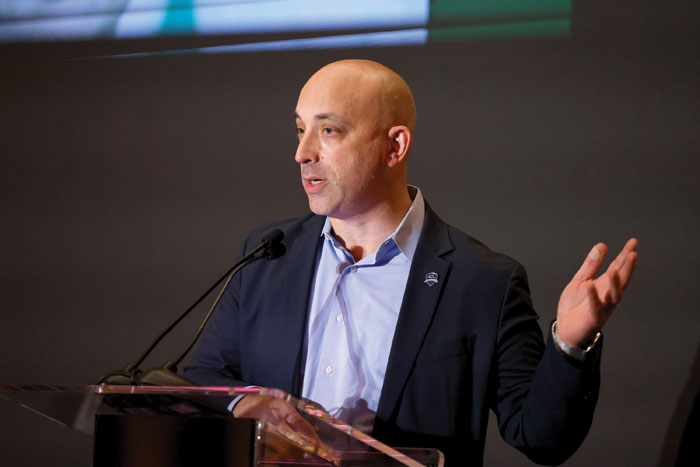
“You’ve all read these stories in The New York Times,” Jonathan Greenblatt, CEO of the Anti-Defamation League, said at the annual “Never is Now” conference. He was referring to biased reporting against Israel and the alarming rise in global antisemitism that followed Oct. 7.

In many ways, it was the most important line of the whole conference. It signaled that Greenblatt fully understands the damage that illiberalism and political bias have done to not just education but journalism; that returning to liberalism was essential to combat antisemitism. And most important: He was no longer afraid to call it out, even at The New York Times.

“We are living in an Oct. 8 world, and I firmly believe that we as a Jewish community cannot afford to be divided. We cannot allow the partisanship and the polarization that has poisoned so much of our society. We can’t allow it to do the same to us.” – ADL head Jonathan Greenblatt

He also signaled this non-partisan vibe by awarding Jared Kushner for the Abraham Accords. “We are living in an Oct. 8 world, and I firmly believe that we as a Jewish community cannot afford to be divided,” Greenblatt said. “We cannot allow the partisanship and the polarization that has poisoned so much of our society. We can’t allow it to do the same to us.”

The two-day conference featured Israeli President Isaac Herzog (by video); historian Deborah Lipstadt, the State Department’s antisemitism envoy; Rabbi David Wolpe; writer Dara Horn; Marc Rowan; and Daniel Lifshitz, an advocate for the hostages whose grandfather, Oded, is still in captivity. 

We heard about the unprecedented global surge in antisemitism that immediately followed Oct. 7, before Israel even began to respond; the brutality of the harassment; the depth of the lies and cowardice at our top-tier universities. But we also heard about the damage caused by biased — nonobjective — education, journalism, and nonprofits.

The overall theme of the conference: Jewish liberal values are at the foundation of this country. We now need to bring them back for both Jews and the country to survive. “Antisemitism is not just a threat to Jews but to democracy,” said Lipstadt.

“We are not OK,” Greenblatt began his “State of Hate” address to roughly 4,000 attendees.

“The world of Oct. 8 is one in which the perpetrators of the worst antisemitic massacre since the Holocaust are celebrated as heroes – not just in Ramallah or Beirut, but in London and New York and on campuses, including Harvard and Columbia.

“An Oct. 8 world is one in which prayers for the safety of hostages – men, women, children, the elderly — are met with vile hate-speech and moral confusion.

“An Oct. 8 world in which rape and sexual assault draw universal outrage, unless committed against Israeli women and girls.

“An Oct. 8 world in which college campuses are policed relentlessly for the smallest of microaggressions, but there seems to be no cop on the beat when the insults and threats are screamed at Jewish students in the quad, outside their fraternities, or even in the classroom.”

According to the ADL’s Center on Extremism, in just three months after Oct. 7, there were 3,291 antisemitic incidents in the U.S.

“Yes, it could happen here — because it is… because if we don’t insist on it, the consequences could be devastating. And that means we need to be clear-eyed about the threats we face — and have the determination to face them.”

One of the biggest threats is “that our opponents have worked tirelessly to muddy the message…to make what is morally clear, fuzzy … to lie and to gaslight about what’s happening. At times, it feels as if we are living in a Kafka novel.”

On this point Greenblatt couldn’t be clearer: “Anti-Zionism, plain and simple, means that Jews — alone among the peoples of the world — do not deserve freedom and self-determination in their homeland. Anti-Zionism is a negation of Jewish history, a denial of Jewish humanity.

“If your idea of expressing dissent against Israeli government policies is to attack Jews in America (or anywhere, for that matter), that doesn’t make you a de-colonizer, .a freedom fighter…or a progressive. It makes you a bigot.”

A major theme of the conference was that the main ideology to emerge under leftism — neo-Marxism — created an oppressor/oppressed narrative that just coincidentally neglects Jewish history and persecution. It also allowed the framework for Islamic terrorists to be seen as the ultimate victims. “The through line of antisemitism for thousands of years has been the denial of truth and the promotion of lies,” said Horn who, through her writing, has provided the intellectual framework for the left to return to classical liberalism.

“These lies are all part of the foundational big lie: that antisemitism itself is a righteous act of resistance against evil, because Jews are collectively evil and have no right to exist.” 

Taking pride in what we’ve accomplished and contributed to this country was another major theme of the conference. “No one can take that away from us – and it’s time we stopped letting people think that they can do so,” said Greenblatt. “The bottom line: There is not a part of American life that the Jewish community has not touched and impacted for good.”

“Americans need to learn who Jews are,” Horn said. “Our Torah gave the world the radical ideas of freedom and respect … and the refusal to bow to tyrants,” including “the tyranny of the majority.”

In presenting an award to Kushner, Greenblatt signaled that he was no longer going to bow down to the tyranny of partisanship. “I really don’t care how you vote, but the Abraham Accords are a groundbreaking achievement… The ADL is not a partisan organization. We are in this together.”

“Since Oct. 7, the Accords’ importance has loomed even larger as it has helped the Jewish state to maintain dialogue with an important contingent of the Arab world, despite the pushback across the Middle East and from other corners of the world.”

Not surprisingly, Kushner’s speech was also interrupted by hecklers. One yelled out “Ceasefire!” and another shouted that Kushner was a “warmonger.” In general, though, Kushner was well-received by the audience, drawing applause throughout his speech.

“We cannot let this be about politics,” Kushner said. “This is about the Jews. If Jews cannot look past their partisan beliefs to acknowledge positive efforts on behalf of the Jewish people, then we will be doomed.”

Greenblatt’s insistence that this was a pivotal moment ran throughout the conference. “The twisting of language … the moral cowardice…the blind eye toward antisemitism must end now.

“If not, you will hear our voices. You will see us outside your doors. And we will see you in court. Our donations that you relied on — gone. Our votes that you seek – forget about it. Our friendship or alliances — no more. In this Oct. 8 world, we will not be silent. We will not let our country be lost to the anti-Semites and bigots.

“We will not flee. We will fight. And we will win.”

What did it take for the ADL to double down on liberal values?  A combination of what Lipstadt referred to as “Oct. 7 denialism”; the silence of former allies; the willingness — eagerness — of progressives to believe Hamas’ lies; the “glee” of raging anti-Semites. Or perhaps finally seeing the damage that leftism — and remaining silent — has caused in our universities and media.

The more important question right now is: can the ADL lead the left back to liberalism, saving both ourselves and the country?

Through the Torah, we brought the world the essential values of truth, justice, freedom, and equality. And then those values informed the basis of the U.S. Constitution. The inversion of those values is precisely what’s enabling the “systemic lie,” as Horn puts it, of today’s antisemitism. 

And thus it makes sense that it’s going to be up to us to reteach both the left and the right the fundamental principles of classical liberalism. 

After the death of Moses, G-d tells Joshua: “Chazak v’ematz”: Be strong and courageous. It may seem counterintuitive, but it’s now time for us to lead again — to fight the tyranny of leftism. As Horn put it: “We’ve reached our Queen Esther moment.”


Karen Lehrman Bloch is editor in chief of White Rose Magazine.

ADL Conference Leans Into Liberal Values Read More »

Igniting a Fire of Jewish Identity

“Come with us to Israel,” my friend urged over the phone. “The temple’s doing a trip for B’nai Mitzvah families.” Our daughters, both singletons of single moms, had been friends since preschool. With my daughter’s bat mitzvah around the corner, there was no way I could take this trip right now. I’d have no reserves left. 

The next day, I received a call from the temple. “We hear you’re interested in joining us on the B’nai Mitzvah trip.” A full court press by my friend. “No, I’m sorry,” I replied, “I’m not in a position to do that right now.” The temple rep paused. “What if you purchase the plane tickets and the temple covers the rest?” Cornered by fate, it was a deal I couldn’t refuse. Three months later, in December 2022, my daughter Ruby and I boarded a plane to Israel.

Truth be told, I was not keen to go. I’d been to Israel as a child and carried treasured memories from that trip, but the idea of going back always felt, well, dangerous. A country forever on the brink of war did not seem like an ideal vacation destination. As a child in the late seventies, I half expected every bus I boarded to blow up. “Don’t pick up a stray pencil,” I’d been instructed. “It could be a bomb.” These were the possibilities drilled into our young minds at the temple day school I attended from preschool through sixth grade. I completed my bat mitzvah and confirmation, sang in the temple singing group and participated in Jewish youth activities. Nonetheless, I did not think much about my Jewishness. Surrounded by Jews in Miami, it was the air that I breathed. I sort of pushed it away. While many kids, including my own brothers, spent summers at high school in Israel, I opted for high school in Spain. 

When I enrolled at Dartmouth College, friends questioned why I’d chosen such a “WASPy school.” In fact, that was part of the appeal. I didn’t even apply to Penn: too many Jewish kids. Because the universe has a hilarious sense of humor, the first three people I met at Dartmouth were Jewish. My parents started calling it “Dartberg.” I never sought out the Hillel House nor participated in Jewish activities while there. None of my friends were Jewish. 

After graduation, I moved to Los Angeles to work in Hollywood at movie studios founded by Jews. It’s not uncommon to spot celebrities at High Holy Day services. Being Jewish here is considered an asset. Still, I never advertised my Jewishness. I didn’t think about it much at all. I stopped attending services for the better part of my 20s and 30s. 

Then I became pregnant with my daughter. Suddenly, I felt compelled to instill in her the same sense of belonging I’d had growing up. Judaism resonated with Ruby from the womb. While pregnant, I attended shabbat services where she danced inside my belly to the music. In kindergarten, she badgered me to join a synagogue. If she didn’t start Hebrew school pronto, how would she be ready for her bat mitzvah? Ruby attended Jewish camps and demanded we have shabbat dinners. Because of her, I returned to my roots. 

On our Israel trip, the scrappy ingenuity of Israelis captured my heart. They — we — had survived countless atrocities and persecution throughout history and yet still, we thrived. This tiny speck of a nation, surrounded by hostility and haters, represented the resilience of a people who valued life and love over all. I’d felt no real connection to Israel before, and now I considered it my homeland. My daughter talked about returning for Birthright.

Our group was led by an extraordinary guide with whom I became fast friends. On Oct. 7, when news of the massacre reached our shores, I reached out to him. “Are you ok?” I asked. “Yes,” he replied, “We are safe, however I’m worried about how to make a living now that tourism has shut down.” An idea popped into my head. This man’s charisma and expertise demanded an audience bigger than a tour bus. I encouraged him to consider a U.S. speaking tour. A month later, he spoke before large audiences throughout the Midwest and Canada. His second tour would begin in Los Angeles, where I live, and move across the country to my hometown of Miami. I agreed to produce the tour for him.

For the first time in my life, I announced my Jewishness out loud. As a result, I lost Instagram followers, friends and dates. It didn’t matter. 

Through the portal of this endeavor, I hurtled into a world of activism and demonstrative Jewish pride. I discovered a deep well of connection to fellow Jews. We clocked each other’s social media posts and wordlessly hugged in public. I’ve been embraced by people I barely knew at yoga class and by strangers in parking lots. We cried together, raged together. For the first time in my life, I announced my Jewishness out loud. As a result, I lost Instagram followers, friends and dates. It didn’t matter. The events of Oct. 7 activated my DNA and ignited a fire of Jewish identity I didn’t know was there. For weeks, I doomscrolled heart-wrenching footage and chilling antisemitic rhetoric. I knew I needed to speak up. It wasn’t a choice.

Then I remembered something alarming. A few years back, my daughter had wanted to do a DNA test. I did one too. Hers came back 50% Ashkenazi Jew, mine 100%. My instinctive reaction upon reading the report: “S—. Now we’re in a database.” I thought the test would identify countries. Instead, it branded our ethnicity. Of course. The Diaspora had scattered us across the globe. 

Sure enough, a few weeks after Oct. 7, news surfaced that the genetic testing company had been hacked to assemble a list identifying Ashkenazi Jews. I plunged further into a sense of panic and urgency. 

Producing the tour gave me a sense of purpose and provided the vehicle from which to educate others in the face of so much disinformation. Perhaps we’d never get in front of people who didn’t share our perspective. At the very least, we could arm Jews and allies with the tools to respond.

“I didn’t realize you were political,” said my brother. “It’s not political!” I fired back. Twelve hundred people were massacred, tortured and taken hostage. It could have been us. It might be us yet if we didn’t wake up. No one seemed familiar with the Hamas charter, clearly stating its objective like a Disney villain: Kill the Jews. Take over the West. 

Now, thanks to extremist PR geniuses who’d been planning this for decades, American students chanted slogans they didn’t understand, pitting their sympathies against Israel. The victims became the oppressors. The manipulation of Hamas spin doctors both impressed and enraged me. Kids earned their graduate degrees in Middle Eastern Studies overnight from TikTok University. I countered with posts of my own, stating facts reduced to Instagram memes. 

I couldn’t stop scrolling and posting. One friend asked if I’d lost my mind, another if I thought it made a difference. A few non-Jewish acquaintances who barely knew me checked in to express empathy, flooding my heart with relief and gratitude. Unfortunately, it also highlighted the fact that some of my closest friends had not shown the same concern. A few joked that they would hide me in their basement if it came down to it. Sadly, this was not a joke. Oct. 7 was the most well-documented atrocity in history and already, people were denying it ever happened. If Israel doesn’t win this war, we’re all screwed. 

The tour ended last week, and while the fire within me burns bright still, it’s at a simmer right now, conserving energy before the next battle. I pray it’ll be used instead to warm our home with Jewish tradition for years to come.


Pam Suchman is a writer and producer in film and television. Currently working on a book, she’s also published numerous articles.

Igniting a Fire of Jewish Identity Read More »

‘Be the Light’: The Second Installment Features Brett Gelman

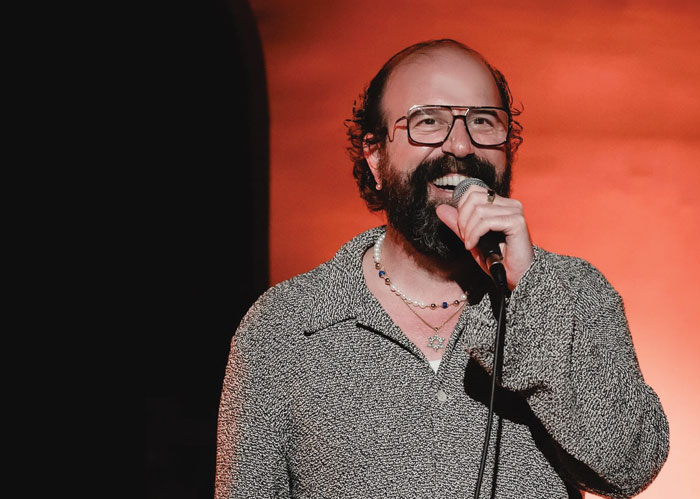
“Be the Light,” a mindful event and gathering for the Jewish community, held its second event in Los Angeles on Thursday, Feb. 29. The headliner was actor and comedian Brett Gelman of “Stranger Things,” and featured music, poetry and meditation that’s meant to heal and provide comfort during this difficult time. 

In his speech, Gelman talked about his pro-Israel advocacy post Oct. 7 and how comforting it is to be among Jews – even if it means going to many different events.

“We’re looking at Instagram all day, at all this propaganda that’s winning against us, and we’re like there’s this event. What is this event?” he said. “And then I get to the event and I’m like, ‘Oh my God, I love my people.’ I’m so glad I’m at this event.”

Since Oct. 7, Gelman has stood up for Israel on social media, posting videos and photos from his recent trip to the country with his fiancée, musician Ari Dayan. Despite some dates on his new book tour being cancelled, he’s more fired up than ever to support Israel and his community. At “Be the Light,” he talked about the woke campaign about Jews, which tries to frame the community as “white oppressors.”

“They play into this narrative that we are the white oppressor,” he said. “Even if you are white skinned, you are not white. Ask a f—ing Nazi. Ask a white supremacist. Ask Hamas. Oct. 7 didn’t happen because of whiteness. It happened because we are Jews.”

Dayan, who went on right before her fiancé, spoke about her grandfather, a Holocaust survivor who held in his pain and put on a strong face. She was proud that she could stand on stage as a Jew and continue her grandfather’s legacy. For the audience, she offered comforting words.

“Remember that you belong to a community, a family rather,” she said. “In your loneliest moments, know that you are loved and held by your Jewish brothers and sisters. Lean into your identity. Lean into your courage. Lean into your 3,700 years of history and resilience. As a people we have been here before and unfortunately, we will be here again. This is our struggle, but it is also our strength.”

Organized by filmmaker and actress Becky Tahel, producer and author Erez Safar and musician and creative director Nathan Ben David, the event also featured an opening meditation guided by an Israeli teacher.  Musicians Oshri, Acres of Wild, Cedars of Lebanon and Oolie performed songs, while Senior Educator for StandWithUs Charlotte Korchak and Debbie Lechtman of the popular pro-Israel Instagram page Roots Metals spoke. 

“It can feel really lonely, especially with the messages I receive,” Lechtman said. “One person kept emailing me and harassing me. But someone from Syria told me they were taught to hate Jews and Israelis, but because of my page, they eventually opened up their mind a bit. It wasn’t the first time I got this sort of message. When I am drowning in the hate, I try to remind myself of that.”

“Be the Light” events will be held around the U.S., and the next one in L.A. is slated for the summer. Due to security issues happening at Jewish events around the world, locations are kept secret, but anyone who wants to attend can look at what’s coming up on its website, lightofinfinite.com/be.  

Until the next gathering, Gelman, who closed out the night, has urged unity among the Jewish people.

“I don’t care if you’re Ashkenazi, you’re Sephardic, you’re Mizrahi [or] you’re Ethiopian … we are all Jews.” – Brett Gelman

“I don’t care if you’re Ashkenazi, you’re Sephardic, you’re Mizrahi [or] you’re Ethiopian … we are all Jews,” he said. “And we must band together.”

wecanbethelight.com

‘Be the Light’: The Second Installment Features Brett Gelman Read More »

Speaking with Bereaved Grandparents

I made aliyah as a single woman and after eight years met and married my Israeli husband, who had fought in the Jerusalem Brigade in 1967 to liberate Jerusalem. He was also deployed during the Yom Kippur War, first on the Jordanian front (that, thankfully, did not join in the fray) and later spent six months in the IDF’s temporary bases in Egypt.

By the time we met, I felt fully Israeli. 

The wish of every parent in Israel, when a child is born, is that by the time they are adults, there will be no more war.

But the need for an army is still here. We pray that they come home safely.

And then we of a certain age find ourselves not only making shiva visits to friends whose children have fallen in wars, but to our peers — grandparents.

That includes terror attacks. Deaths not on the battlefield, but on what were supposed to be the fields of ordinary life, doing ordinary things. A walk in the mountains. A ride on a bus. A visit to the mall. With friends in a coffee shop.

A family visit to a kibbutz. A music festival.

Grandparents have adopted their own nomenclature — not “sitting shiva” but “standing shiva,” as they are among the extended family and friends who are quietly helping out in the background of the shiva home and, most of all, giving emotional support to their children and grandchildren in mourning. 

It is heart-breaking.

In Israel today, even chance conversations begin with the words, “I hope all is well with your family.” 

On several occasions, the answer I received was not, “Baruch Hashem all is well,” but “Our son/grandson fell in Gaza …”

The only possible reply, in our sudden, jarring sense of helplessness in the face of the tragedy, is, “I’m so, so sorry.” And you add, “I am here for you.” 

The OneFamily organization was created in 2002, during the bloody second intifada in Israel. Michal Belzberg, daughter of the founders, Chantal and Marc Belzberg, decided to use the money intended for her bat mitzva celebration instead to help victims of terror. 

Today, Michal is a married 34-year-old with a son and a baby on the way. A nutritional consultant and yoga instructor, she remains an active volunteer at OneFamily. She spearheaded the annual “Team OneFamily” of bereaved, injured, volunteers, and staff who ran together in the annual Jerusalem Marathon that took place on March 8.

OneFamily reports that since Oct. 7, the number of people needing their help has more than tripled. In addition to trying to reach thousands of bereaved families, they assist the injured with bureaucracy, make shiva calls, help the displaced, and give support to their own staff and volunteers who are also devastated and overwhelmed by the sheer volume of shattered lives.

Grieving grandparents do not have the religious framework of shiva, nor do they fall under the government’s category of the bereaved. One Family decided to try to fill that void. 

Grieving grandparents do not have the religious framework of shiva, nor do they fall under the government’s category of the bereaved. One Family decided to try to fill that void. Their recent programming included meetings in Caesarea with those whose grandchildren fell in the Oct. 7 massacre or in the war.

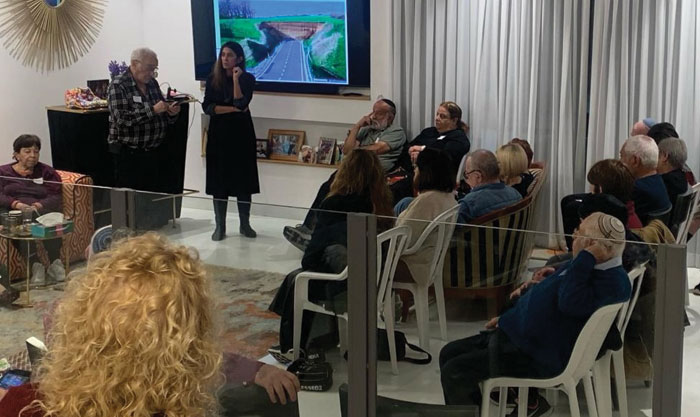
The grandparents met with Dr. Etti Avlin, a clinical social worker and psychotherapist who specializes in leading groups of those who have experienced trauma and mourning of loved ones. The name of the session is “From pain to hope – the double loss of grandparents.” The first meetings, “getting to know you” events, included the initial processing of the pain and loss, sharing, support and the creation of a peer group. 

These support meetings, accompanied by experienced social workers, will take place bi-monthly. 

A few grandparents speak

Eitan Cohen Moffat, 79 years old, a member of Kibbutz Kinneret, lost his grandson, Staff Sergeant Shahar Cohen Mivtach, 22, who was killed in combat in northern Gaza on Nov. 5. 

Eitan said that he went to Shahar’s parents and sat shiva, with “a ripped shirt and everything” for the entire week. 

“My grandson was gorgeous. His friends loved him so much. 

“I have fought in four wars. I have survived things no one should have. I have three daughters, seven grandkids … but Shahar was my oldest, the one who made me a grandfather. I was in the Armored Corps, and so was he; he had asked me to come and speak to his unit. We never had the chance, because war broke out. 

“When he had his bar mitzvah, I asked him if I could go up and have an aliyah with him as I had never had a bar mitzvah … so we did it together.

“When he had Shabbatot off, he would sometimes go to help his other grandmother, who is disabled.

“Shachar was in the first battalion to go in to Gaza and he was really happy about it. Ten days in, he was killed. 

“My daughter worries about us and introduced us to OneFamily. I went to the first event in Caesarea.

“In addition to losing our grandson (his years were the happiest in my life), our daughter is shattered. We have to give her support. She has a 17-year-old daughter and an 11-year-old son and tries to be there for them. The OneFamily meetings give us an opportunity to talk about what we are going through and we are reminded that we are not alone. We get hugs and love. Hearing the other grandparents’ stories helps. 

“After everything I have been through … losing my eldest grandchild is the hardest blow of my life. I ask him, Shachar, to help me. To give me the strength to help my family. He is with me every day.” 

Hagi (Hagar) Shizef lives in Kibbutz Beit Alfa. Her grandson, Dror Behat, 30-years-old, was murdered at the Nova festival. He was working at the event in stage set up.

“I am a widow, so I can’t share the grief with my husband. I’ve suffered a lot of grieving and loss in my life already. I have five daughters. 

“Dror was just the best kid in the world. All the grandparents say that they were the best kids. 

“It was very emotional to get the invitation to the grandparents’ event in Caesarea … somebody SAW us. First the media and all of Israel seems to get to bereaved parents, then to the friends … and only then eventually to the grandparents. 

“Not only have we lost our grandkids, but our children are bereaved; they are shattered. They need us. No one can stop us from crying all day, but OneFamily gives us tips on how to be supportive while grieving, and how to accept support and help, how to let outsiders in to help us. 

“At the meeting, everyone spoke about their loss. It’s really staggering to see the sheer number of grandparents. 

“Their staff and volunteers are so kind … I still volunteer at a school. I know first-hand that giving makes a difference.” 

As I was completing the writing of this, it was announced that OneFamily is one of five organizations that have been helping families of hostages, fallen soldiers and those who were murdered on Oct. 7, who will receive this year’s prestigious Genesis Prize.


Toby Klein Greenwald is an award-winning journalist, theater director and editor of WholeFamily.com.

Speaking with Bereaved Grandparents Read More »

Make Hamantaschen Note Cards for Purim

I often hear from readers that they’re inspired by my projects, but they don’t ever have the time to actually make them. 

Well, here’s a project for Purim that’s so easy, there’s no excuse not to try your hand at some craftiness. These are note cards in the shape of hamantaschen. The “filling” is the card itself, and the “cookie” part acts as the envelope.

These cards would be fun to give as party invitations or love notes. Stack several triangular filler pieces inside the “cookie” for an inventive notepad. You can even turn them into a Purim version of fortune cookies by writing jokes inside for people to enjoy.

So get out the paper and scissors. We’ve got some crafting to do.

What you’ll need:

Tan or orange cardstock or construction paper
Scissors
Cardstock or construction paper in other colors

1. Trace a circle on a piece of tan or orange cardstock or construction paper. I used a roll of masking tape with a 4-inch diameter. You can use a saucer, can or any other circular object you find around the house. Then cut out the circle with scissors.

2. Mark three points around the edge of the circle that are about equal distance to each other. I did not use a ruler — I just eyeballed it. You don’t have to be perfect. Then fold in using the points you indicated to create a triangle.

3. Cut triangles out of different colored paper or cardstock that will fit inside the outer part of the hamantaschen. Write your message and place it inside.


Jonathan Fong is the author of “Flowers That Wow” and “Parties That Wow,” and host of “Style With a Smile” on YouTube. You can see more of his do-it-yourself projects at jonathanfongstyle.com.

Make Hamantaschen Note Cards for Purim Read More »

Sinai Akiba Gala, Israel Excel Mission, Shai Davidai, Inclusion Shabbat

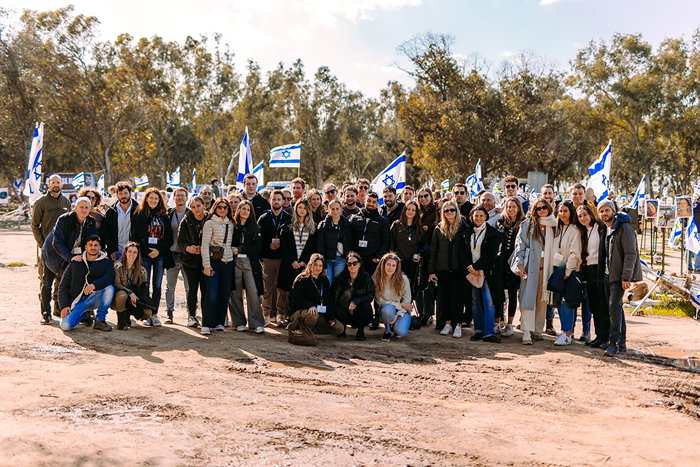
In early February, a Birthright Israel Excel mission with local community members took place.

Participants of the special and first-of-its-kind intergenerational trip to Israel included Birthright Excel Fellow Dylan Marmur and her mother, Alyson, who are from Los Angeles.

“While our goal as the Excel Fellowship is developing Jewish business leaders, connecting as a Jewish community with Israel is a cornerstone of the Excel experience,” Birthright Israel Excel Executive Director Idit Rubin said. “At this most difficult time for Israel, the instinct of the Excel community around the world is to stand by their Israeli peers, literally on the sacred ground in Israel. We conceived of this first-of-its kind intergenerational mission to Israel to enable our Excel Fellows to bear witness to the tragedy arm-in-arm with their Israeli peers and take in the remarkable resilience of the Israeli people, with the hope that will carry the nation forward—until we dance again.”

This highly impactful mission came following the Oct. 7 massacre and in response to a growing demand from parents of Birthright Excel participants to be more involved. During the recent trip, 16 fellows as well as seven parents visited Sheba Medical Center, kibbutz Kfar Aza and Israel Defense Forces (IDF) bases. They also met with IDF officers.

Birthright Israel Excel is a prestigious business fellowship for second, third and fourth-year college students across the world and who are pursuing careers across a wide spectrum of industries within business and technology. 


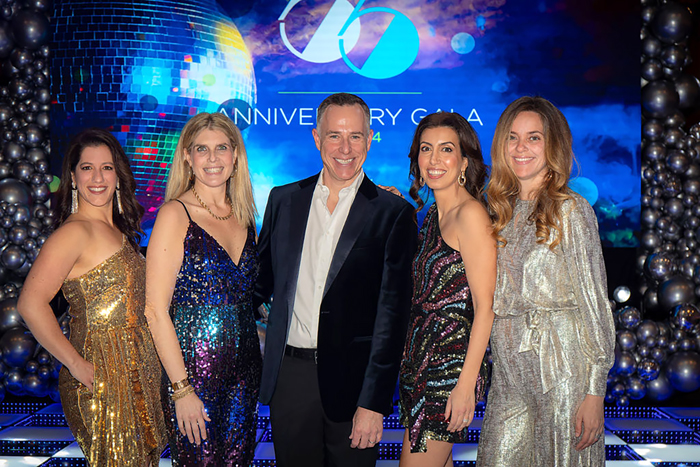
Honoree Rob Galperson (center), Sinai Akiba Academy Head of School Lauren Plant (second from left) and gala co-chairs. Courtesy of Sinai Akiba Academy

On March 2, more than 300 Sinai Akiba Academy (SAA) friends and fans attended the Studio 55 Anniversary Gala, celebrating the Jewish day school’s 55-year legacy of excellence in Jewish education.

The seventies-themed evening was organized by Gala Co-Chairs Liraz Harari, Elian Ohebshalom and Shelly Shapiro, whose vision and leadership helped the school raise nearly $500,000, part of which will go to the creation of a brand-new Marc Becker Patio, an outdoor learning space on Sinai Akiba’s fourth floor. Marc Becker, SAA class of 2000, passed away in 2023 after a tireless fight with cancer. In a statement, SAA said it looked forward to honoring his legacy on its campus for generations to come.

The school also honored SAA Board Chair Rob Galperson with the 2024 Leadership Award, recognizing his unwavering commitment to Sinai Akiba and the Sinai Temple community.

“This evening would not have been possible without the Gala committee,” the school said, “as well as all of the generous gala sponsors!”


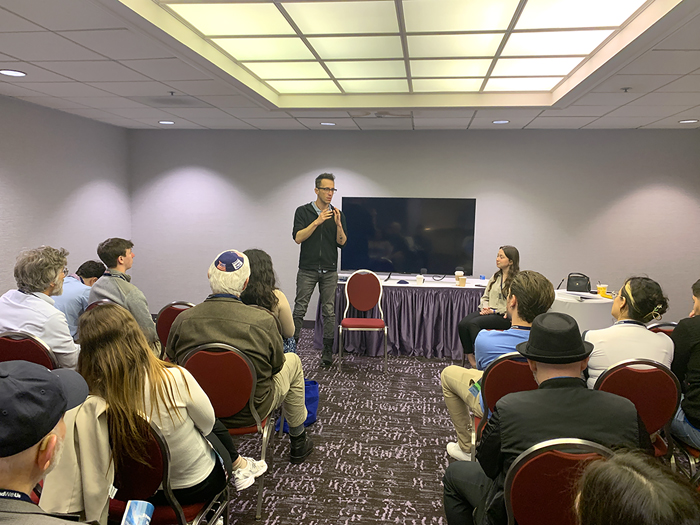
Shai Davidai speaks at the StandWithUs conference.Photo by Ryan Torok

Shai Davidai discussed the challenges of diversity, equity and inclusion before a group of high school and college students and community members at a recent StandWithUs (SWU) conference in Los Angeles. 

“We as Jews, as Zionists, fall through the cracks,” Davidai said.

Over the past several months, in the wake of the Oct. 7 attack against Israel, the Israeli assistant professor at Columbia University’s business school has emerged as one of the strongest critics of antisemitism at Columbia University. In October, a video of him denouncing the university went viral. In the video, he condemns the university for allowing “pro-terror student organizations” on campus. 

He appeared in L.A. earlier this month, when he was one of approximately 80 speakers at the SWU conference, which was held from March 1-3 at the Hilton LAX and drew about 500 college and high school students from around the world.

Davidai appeared in a conference breakout session with SWU Campus Strategist Shira Gould.


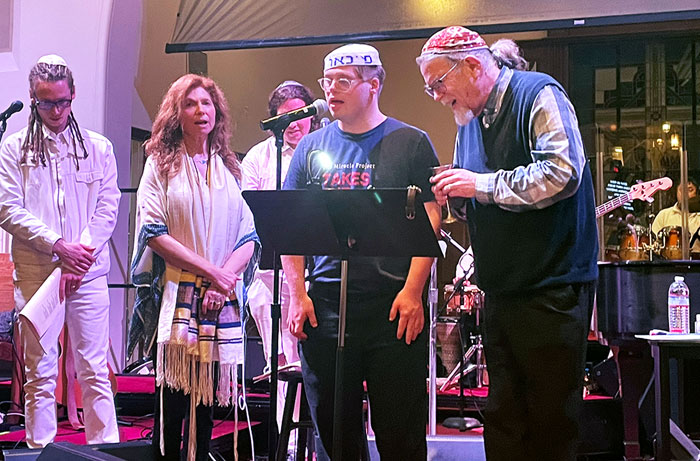
An Inclusion Shabbat service held at Nashuva. Courtesy of The Miracle Project

To conclude Jewish Disability Awareness, Acceptance and Inclusion Month (JDAIM), participants from The Miracle Project co-led Shabbat services along with the Nashuva Band on March 1 at Nashuva in Brentwood.

Participants included Neal Katz, who uses assistive technology to communicate his thoughts; Quinn Lohmann; singer Adin Boyer; Nashuva Rabbi Naomi Levy; Miracle Project Founder Elaine Hall; Nashuva President Brett Barenholtz; and Hazzan Mike Stein.

Nashuva Inclusion Shabbat with Elaine Hall and the Miracle Project is always an inspiration,” Rabbi Levy said. “We all seek acceptance, and we all want to understand one another and treasure one another in all our sacred uniqueness.”

HaMakom held a similar inclusion Shabbat service, commemorating JDAIM, on Feb. 23.

Sinai Akiba Gala, Israel Excel Mission, Shai Davidai, Inclusion Shabbat Read More »

Rabbis of LA | Rabbi David Block Teaches Melodious Way for Students to Relate to God

All 235 students of Shalhevet High School know singing is a crucial element in the life of Rabbi David Block, the youthful-looking head of school.

Especially during the Friday morning kumzitz. After the first class of the day, in anticipation of Shabbat, the classrooms empty into the hallway. Everyone sits on the floor while Rabbi Block plays his guitar, and every voice rings out. For about 40 minutes, the mood for Shabbat is established. “It is magnificent,” Rabbi Block said with obvious pride.

 “What I try to do is guide the students. I try to feel the song as well myself.” The challenge of performing “is that you are doing it for someone else. What I try to do when I am with these students is guide with them. I try to feel the song as well myself … It is my responsibility to curate the ebb and flow of the spiritual experience.”

Born into a musical household in New York, the rabbi described his grandfather as “an extremely talented musician. “He performed with a variety of symphony orchestras. He played almost every instrument, and he entertained American troops in World War II. My father also is a musician, but he did not pursue it professionally.”  

While acknowledging his musical background, the 35-year-old Block, in his eighth year at Shalhevet, did not aspire to be a performer. He said singing is one of the ways he connects spiritually, with God and with others. There’s also a community aspect to it.

Acknowledging that music can be used “for the most beautiful and transcendent experiences,” the rabbi also appreciates secular music. He grew up listening to classic rock because his mother was into the music from the ‘60s and ‘70s. “When I started playing guitar at a young age,” the rabbi recalled, his guitar teacher looked like a hippie.

But times and people change. “There is very little contemporary music I appreciate,” Rabbi Block said. “But not because the performers aren’t extremely talented. I just don’t have time to explore that world”

He admits to still loving classic rock. The father of three confesses to being a big Led Zeppelin fan. Simon and Garfunkel’s music resonates with him, too. Their songs “speak to my soul … Music itself can be absolutely transcendent,” but he adds that “what I try to connect with now is Jewish music.”

Do boys and girls experience music the same way? They “both react extremely viscerally – but differently,” Rabbi Block said. Women tap into singing much more quickly, he said. “Guys usually take a few more minutes. They also crave to let their neshama loose through singing. They often prefer faster music.” But boys and girls have much more in common than they are different. Music, in whatever form, is innately in the human soul to feel uplifted, said the rabbi.

“Giving channels for students to connect musically always will elicit a reaction of deep connectivity,” Rabbi Block said. He has found music to be an effective avenue for Jewish day schools in general. 

How better to bring students together? “Giving channels for students to connect musically always will elicit a reaction of deep connectivity,” Rabbi Block said. He has found music to be an effective avenue for Jewish day schools in general. 

Jewish education, he noted, made an earthquake-sized move, “to an extent.” Schools are aware that students don’t always feel a connection to God right away. When that happens, in his perspective, schools grow nervous. They want students to feel it, according to the rabbi, whereas in previous models educators cared much less about what students felt in that moment than do they know a certain piece of Torah? It has moved more toward ahava (love) of God and further from the traditional trajectory. “We have moved from awe or fear of God to love of God.” With this new attitude, the rabbi said, “now we are trying to balance a little.”

Rabbi Bloch believes his “primary job is to unlock and unleash the potential of our faculty and administration, and, really, our students.” Because Shalhevet has such a rich faculty, his job is “to help them create that experience for students.”

At his core, David Block identifies as a teacher. “My job is to help everyone else be the best they can be. I believe what we teach on the General Studies side is extremely important in the development of their religious experience.”  It’s not just about equipping them to have a very deep religious relationship, he adds. The most appealing part of his job is spending time with “people who are deeply committed to the same goals I am.”

What does it mean “to help students have a relationship with God? Are we doing it? Are there things we can change? How do we empower them more?”

Given Rabbi Block’s passion for singing – coupled with the fact that singing is not necessarily associated with traditional rabbaim – how did he land where he is? “Many rabbaim have committed themselves to teaching Torah,” he said. “I do see that as my primary responsibility.  It is all about the students.” He chose education to facilitate “an authentic, true, meaningful relationship between each individual student and God.”

Fast Takes with Rabbi Block

Jewish Journal: What is the best part of living in Southern California? 

Rabbi Block: I really love that nature is so close by. I love hiking, sometimes with my wife, often with friends. I am enamored with picturesque scenes so close to home. I am a big coffee guy. There are so many small coffee shops here in Southern California. I love having so any options.

J.J.: What book has stayed with you?

RB: Certain books make me reconsider things in the world, and one is “East of Eden” by John Steinbeck. It has required me to be extremely thoughtful about Judaism, about Torah interpretation, choices we make. 

J.J.: If you could have been born at a different time, when would you have chosen?

RB: As a religious Jew, I crave to know what it was like at Sinai.

Rabbis of LA | Rabbi David Block Teaches Melodious Way for Students to Relate to God Read More »

Children’s Book on Israel-Hamas War Sparks Controversy Amid Success

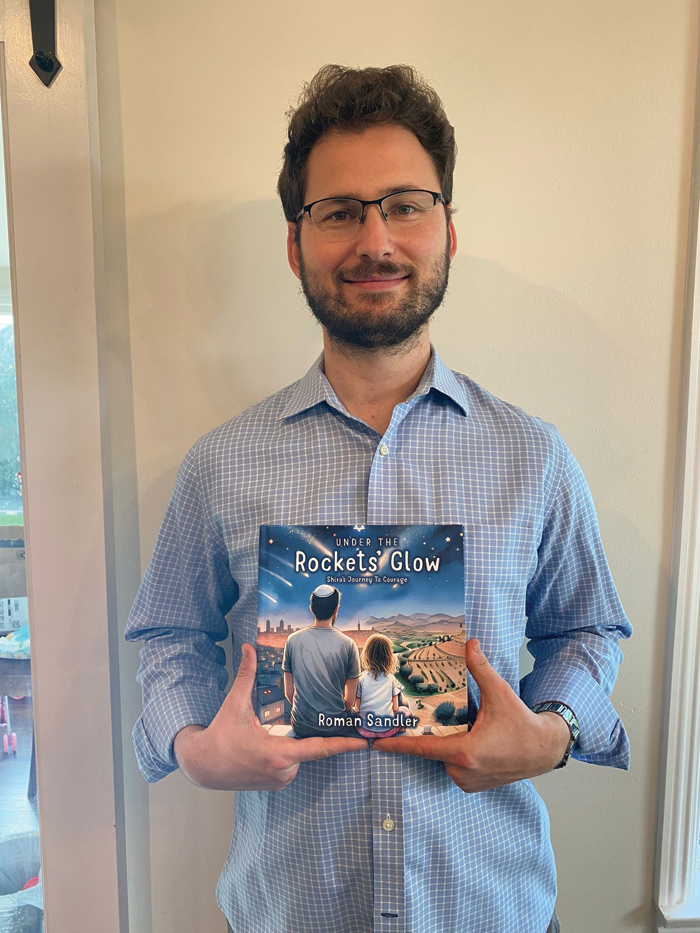
Roman Sandler wanted to write a book for his daughter Shira to explain the situation in Israel. Despite efforts to shield her from discussions revolving around the events of Oct.  7, the 5-year-old couldn’t escape the whispers, especially when visitors came over to their Los Angeles home. 

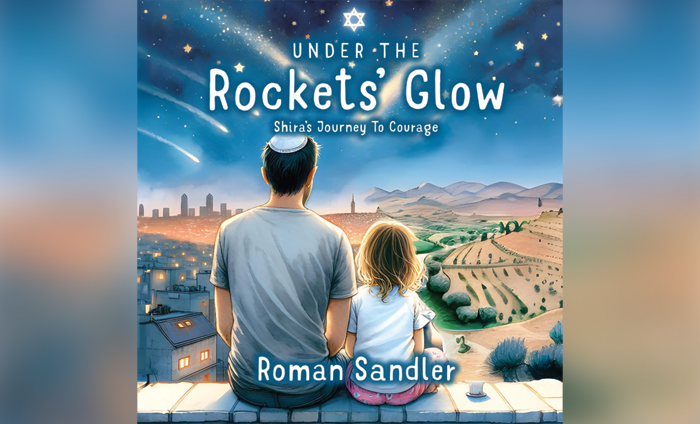
Determined to address her burgeoning curiosity, Sandler embarked on a nightly ritual after tucking Shira and his two-and-a-half-year-old daughter into bed: writing what would become “Under the Rockets’ Glow: Shira’s Journey to Courage.” This illustrated book introduces readers to Shira, who learns about her Jewish heritage through her father’s inspiring stories. Set against the backdrop of a bomb shelter in Israel, Shira discovers courage amid the cacophony of rocket fire.

Talking to the Journal, Sandler recounted how the idea to write the book came about: “My wife is Israeli, and we both have families in Israel. We would talk about the situation, and every time our daughter walked in the room, we would hush up because we didn’t want to scare her. At first, we just didn’t tell her anything, and then we understood we can’t keep this from her. She’s just wondering why we’re always getting silent whenever she is around. We realized we have to tell her something. We have to make it palatable in a way that she could understand without getting too scared.”

Sandler had never written a book. He’s an engineer at a medical technology company who liked to read his daughters bedtime stories when he came home from work. However, he found himself underwhelmed by the children’s books available. The storylines were not captivating, and the images left much to be desired. Slowly, the idea that he could craft something better began to take root in his mind.

“I was thinking, if I can write a kids’ book, why not one about something that can help my daughter understand the situation? … I didn’t want to go into the nuances of what happened on Oct. 7. I don’t think that’s age-appropriate, but I wanted Shira and other children who read the book to understand the context of what happened. That we’re Jewish and we have a very long history and experienced a lot of bad things, but with God’s help and the strength of our community, we have been able to get through them all. And so, we will be able to go through this too, and we shouldn’t be pessimistic.”

The book opens with Shira, a young girl who lives in Israel and is having trouble falling asleep because of the sound of rocket fire. To help her to sleep, her dad starts telling her stories from Jewish history. “It starts with our connection to the land of Israel and also stories of how we were persecuted in the past and emerge stronger,” he said. “It tells the story how God promised the land of Israel to Abraham, showing our kind of connection to the land thousands of thousands of years ago. It goes through the stories of David and how the Temple was destroyed and the Maccabees and how we spread into Diaspora and then it kind of weasels to our modern history. And how we got back to the land of Israel in 1948 and how we miraculously won the 1967 war.”

A few weeks after he began writing the book, it was ready for publication. Shira was thrilled with the book and that the main character was named after her. Sandler also used AI tools to create characters that resemble him and his daughter. He anticipated selling only a few dozen copies at most, but an unexpected endorsement pushed the book to the top of Amazon’s best-selling Jewish Children’s book list. “Mayim Bialik shared the book on her profile, which created a lot of love for it, but also created a lot of hate,” Sandler said. “It went viral from there.”

While many purchased the book, which was also translated into Hebrew, others seized the opportunity to label it as Jewish propaganda. The level of animosity, Sandler said, caught him off guard and left him feeling overwhelmed. Here he was, endeavoring to explain the situation to his daughter and other children, and some sought to distort its message. 

“They were disparaging the book, saying that it’s Nazi Zionist propaganda, that it’s trying to indoctrinate children into supporting genocide. Someone on TikTok basically rewrote the whole book to show that it’s not historically accurate. A lot of comments were saying, ‘Go on Amazon and write bad reviews about the book.’” Amazon is doing a decent job keeping a lot of those comments out, he said, because they are coming from unverified users, people who didn’t even read the book, but some are still up there. “Some were saying this cover shows Israelis just sitting and watching how Gaza is being destroyed even though obviously the bombs and rockets are targeting Israeli cities. It’s very painful for me that a book I wrote for Jews of all backgrounds turned into a political thing and to hate.”

Despite the backlash, Sandler, who welcomed a baby boy last week, remains gratified by the book’s success. To date, 1,400 copies have been sold, and soon the book will be available in Israel as well.

“It will make me happy if it will bring value to Israeli children who are going through this, hear rocket sounds at night and the alarm and need to run to bomb shelter.” – Roman Sandler

“It will make me happy if it will bring value to Israeli children who are going through this, hear rocket sounds at night and the alarm and need to run to bomb shelter,” he said. “My hope is that it will instill in them a sense of pride in their Jewish heritage and history and reassure them that we will prevail once more.”

The book is available on Kindle, Amazon and in stores, including Target and Walmart.

Children’s Book on Israel-Hamas War Sparks Controversy Amid Success Read More »