fbpx

February 29, 2024

The Words I Want to Read – A poem for Parsha Ki Tisa

But you shall demolish their altars, shatter their monuments, and cut down their sacred trees. ~Exodus 34:13

If you pay attention to the TV you’ll see
some of us are taking this idea too seriously.

An entire civilization of ites and all the things they made
are crumbling to the ground on top of tunnels

built to facilitate slipping us into the sea.
I use the word us purposefully.

We are all lumped together by association
whether we live where David walked,

or in places where the rain will slide mansions
into the ocean while simultaneously

droughting us out of existence.
The world is in too much peril to worry about

words made up to suit the climate.
I know, later in the text, we’re told to not

cut down the trees of our enemies
so I’m not sure why it’s okay to do it here.

My neighbor’s insurance company sent
him a letter saying he had to remove all the trees

between our homes for reasons only
insurance companies could possibly understand.

And we get along just fine. How could any of this
happen hardly a month after Tu b’Shevat?

All trees are sacred. All people too.
This is the text I insert into the text.

The words I want to read.


Rick Lupert, a poet, songleader and graphic designer, is the author of 27 books including “God Wrestler: A Poem for Every Torah Portion.” Find him online at www.JewishPoetry.net

The Words I Want to Read – A poem for Parsha Ki Tisa Read More »

Complaint: Berkeley School District “Knowingly Allowed” Antisemitic Bullying

A complaint was filed against Berkeley Unified School District (BUSD) on Wednesday alleging that the district “knowingly allowed” a hostile climate against Jewish and Israelis to fester at their schools.

The complaint was filed by the Louis Brandeis Center for Human Rights Under Law and the Anti-Defamation League (ADL) to the Department of Education’s Office of Civil Rights (OCR). The complaint lists the names of various teachers that have engaged in anti-Israel indoctrination that made Jewish and Israeli students feel “unsafe.” One example in the complaint is an art teacher at Berkeley High School (BHS) who has “spent significant class time imposing his antisemitic views on students by showing them violent pro-Hamas videos, projecting anti-Israel and antisemitic images during class.” These include “a projection of an image of a fist holding a Palestinian flag and punching through a Star of David” and “a picture on the outside of his door showing a young person with a keffiyeh around his neck, throwing a rock, under the words ‘WE GONNA FIGHT AGAINST APARTHEID!!’”

The complaint goes onto list three students who were so distressed by this art teacher’s anti-Israel propaganda they asked to be moved out of the class; in the class where all three were transferred, the teacher wore a “Free Palestine” patch, pins and stickers on her clothing during class.

Another alleged anti-Israel teacher at BHS is a history teacher who “recently required her students to respond to the following prompt in class: ‘To what extent should Israel be considered an Apartheid State?’” and showed “a one-sided anti-Israel video.” The teacher “could not find a video defending the Israeli side of the debate and that articles that opposed the apartheid narrative were ‘laughable,’” per the complaint. This teacher wrote a column for The Flipside, which describes itself as “an independent, non-profit publication dedicated to providing a forum for the unheard voices of our community,” that called “for ‘accountability’ of parents who complain about her teaching” and defended speaking “out against Zionist oppression”; further, she contended that BUSD should be standing by her rather than “trying to appease the Jewish families who object to her biased message,” according to the complaint.

BHS is not the only school in BUSD with alleged anti-Israel teachers. A history teacher at Willard Middle School allegedly gave “a hostile response” to a student’s presentation about her father being raised on an Israeli kibbutz. A second-grade teacher at Malcolm X Elementary School is accused of hanging a Palestinian flag outside the window of her classroom following the Oct. 7 attacks and required students to hang sticky notes stating “Stop Bombing Babies”; the teacher then placed the sticky notes “outside of the classroom of the only Jewish teacher in the school,” per the complaint.

A Jewish parent complained to the school about the teacher, prompting the teacher to confront the parent at a school event, where she allegedly said, “I know who you are, I know who your f—ing wife is and I know where you live.”

The complaint also documents alleged instances of Jewish and Israeli students being bullied by other students, including a Jewish student at Martin Luther King, Jr. Middle School being told “you have a big nose because you are a stupid Jew” and “I don’t like your people.” A student at a BUSD school remarked, “Of course it was the Jews” after a science teacher mentioned that two girls, both of whom were Jewish, had erred during an experiment. And a Jewish student who gave a presentation to his ethnic studies class about his Jewish ancestry received a note on his desk with the name of his project written on it, except that the word “Jewish” was scribbled out and replaced with “free, free Palestine.” The complaint also alleges that BUSD teachers and administrators supported pro-Palestinian walkouts and protests on campus during regular school hours.

Despite receiving multiple complaints from parents, BUSD has yet to take any “meaningful” action to ameliorate the hostile climate against Jewish and Israeli students on campus, the complaint alleges. The complaint calls for a series of remedies to address the matter, including BUSD issuing a statement condemning antisemitism and acknowledging the importance of Zionism to the Jewish identity; enforcing the district’s ban against hanging antisemitic material on campus; and having an independent investigator determine the extent of the antisemitic climate at BUSD schools.

“It is beyond deplorable that in a moment of rising anti-Semitism both here in the U.S. and abroad that teachers and administrators at BUSD are falling down in their obligation to protect Jewish students,” ADL CEO Jonathan Greenblatt said in a statement. “There is no more solemn or basic obligation than protecting our children from the moment when they walk into the doors of their schools, and to fail so monumentally that children feel forced to hide their Jewish identity for fear of reprisal is downright shocking. We must demand more from our educational leaders.”

“The eruption of antisemitism in Berkeley’s elementary and high schools is like nothing I’ve ever seen before.”  – Kenneth Marcus

Brandeis Center Chairman Kenneth Marcus similarly said in a statement, “The eruption of antisemitism in Berkeley’s elementary and high schools is like nothing I’ve ever seen before. It is dangerous enough to see faculty fanning the flames of antisemitism on college campuses, but to see teachers inciting hate in the youngest of grades while Berkeley administrators sit idly by as it continues to escalate by the day is reprehensible. Where is the accountability? Where are the people who are supposed to protect and educate students?”

BUSD Superintendent Enikia Ford Morthel said in a statement to the Journal, “Berkeley Unified stands against all forms of hate. This is a message we share widely and frequently in our school community. We acknowledge the difficult moment we are in and the pain some members of our community are experiencing due to the ongoing crisis in Israel and Gaza. We believe that classrooms are spaces where all students need to feel safe, seen, felt, and heard. We work to make these spaces responsive and humanizing for our diverse students, today and every day.

“The district continuously encourages students and families to report any incidents of bullying or hate-motivated behavior and vigorously investigates each and every report,” Morthel continued. “We stay in communication and work in collaboration with various members of our diverse community and have recently had focused conversations on these specific concerns. While we have not received official notification of the recent federal complaint, the district will work with the Office of Civil Rights in support of a thorough investigation. We remain committed to engaging with our community to ensure that BUSD is a district that lives up to its values of excellence, engagement, equity, and enrichment.”

Complaint: Berkeley School District “Knowingly Allowed” Antisemitic Bullying Read More »

A Bisl Torah – Leading by Empowering

The golden calf story bothers me. After escaping Egypt and the fiery vengeance of Pharaoh, the children of Israel are close to receiving God’s written instructions. Moses leaves the group to embark on this divine mission, only to return to find a scene of pure chaos. I don’t blame the recently freed Hebrew slaves. Before heading to receive the Torah on Mount Sinai, Moses and Aaron should have engaged in a vital conversation.

In full detail, God tells Moses to anoint Aaron and the priests. A pretty involved ritual. But God doesn’t tell Moses to anoint Aaron as a leader in his stead. That when Moses is absent, Aaron must see himself as the one gathering, comforting, admonishing and encouraging the people of Israel. With Moses gone, Aaron’s role collapses and he doesn’t condemn the debauchery occurring before him.

Ki Tisa (the name of the Torah portion) is translated, “When you elevate.” The beginning of the parsha speaks about the census, each person being counted as individual contributors. However, Aaron doesn’t receive his own pep talk. A moment when Moses should have pulled him to the side, reminding him of his greatness and commitment to God and the Jewish people. Often, we don’t realize our worth or leadership potential until someone surprises us, “You are the one needed for this moment.”

There is leading by example. This is leading by empowering. Moses missed his chance with Aaron. Perhaps the Torah gives us this story so we don’t make the same mistake.

Shabbat shalom


Rabbi Nicole Guzik is senior rabbi at Sinai Temple. She can be reached at her Facebook page at Rabbi Nicole Guzik or on Instagram @rabbiguzik. For more writings, visit Rabbi Guzik’s blog section from Sinai Temple’s website.

A Bisl Torah – Leading by Empowering Read More »

Waxing and Waning Like the Moon

Rabbi Nahman said: “I’m like the moon:

because I wax and wane in faith, unsteady.”

Augustine said: “God, do not make me good too soon,”

not when requesting this for God quite ready.


Unamuno said that those who think

that they believe in God but are without

a passion for Him that can grow or shrink,

experiencing no anguish and no doubt,


do not believe in God, but just believe

in the concept of Him, an idea

not rooted in those who do not take leave

of all their senses, which aren’t always clear.


Yet reciting Psalm one hundred four when there’s a moon that’s new

is customary for each faithful Jew, because its final word

is “Hallelujah,” this great word ensuring that by every Jew

thanksgiving is performed to God and we by gratefulness are stirred.


Rabbi David Wolpe wrote in his “Off-the Pulpit” sermon for Shabbat toldot, 5772:

What Do You Really Believe?

On Thanksgiving we are grateful for what we have and mindful of what others lack. It is a good time to ask — what do we really believe? Some people believe in a God who grants good to the one who prays most or behaves best. Such people might wish to read the book of Job, or look out the window; they will discover that ease and anguish are unevenly distributed in this world and follow no discernible pattern of reward. Others think God is completely arbitrary or absent. Such people might be mindful of the abundance of blessing that exists and how much we human beings are responsible for its poor distribution or unfair allotment. Then there are those who find themselves in the third camp — the bewildered believers. They are like Rabbi Nahman, who said he was a ‘moon man,’ that his faith waxed and waned. Surely Rabbi Nahman would have understood Miguel De Unamuno, the great Spanish philosopher and man of letters: “Those who believe that they believe in God, but without passion in their hearts, without anguish in mind, without uncertainty, without doubt, without an element of despair even in their consolation, believe only in the God idea, not God Himself.” Happy Thanksgiving.

I recalled this Thanksgiving-related poem on 2/26/27, after a Torah in Motion lecture by Dr. Beni Gesundheit on the Book of Psalms, in which he pointed out that the first appearance of the word  “Hallelujah” in this Book is made by the last word of Psalm 104:

יִתַּ֤מּוּ חַטָּאִ֨ים ׀ מִן־הָאָ֡רֶץ וּרְשָׁעִ֤ים ׀ ע֤וֹד אֵינָ֗ם בָּרְכִ֣י נַ֭פְשִׁי אֶת־יְהֹוָ֗ה הַֽלְלוּ־יָֽהּ  

May sinners disappear from the earth, and the wicked be no more. Bless the LORD, O my soul. Hallelujah.

Jews recite this Psalm on the first day of every month in a minor festival called Rosh Hodesh, celebrating the moon’s first appearance in this month.  During our current year, 5784, we celebrate Rosh Hodesh thirteen times instead of the usual twelve, because it is a leap year in which the joyful month of Adar occurs twice. We therefore perform the minor festival thirteen times, a number Jews unfortunately cannot consider to be lucky because Shabbat 156a informs us that the fate of Israel is not dependent on luck.


Gershon Hepner is a poet who has written over 25,000 poems on subjects ranging from music to literature, politics to Torah. He grew up in England and moved to Los Angeles in 1976. Using his varied interests and experiences, he has authored dozens of papers in medical and academic journals, and authored “Legal Friction: Law, Narrative, and Identity Politics in Biblical Israel.” He can be reached at gershonhepner@gmail.com.

Waxing and Waning Like the Moon Read More »

International Speaker & Audiobook Available: Feb News 2024

Feb News 2024 with Lisa Niver & We Said Go Travel:

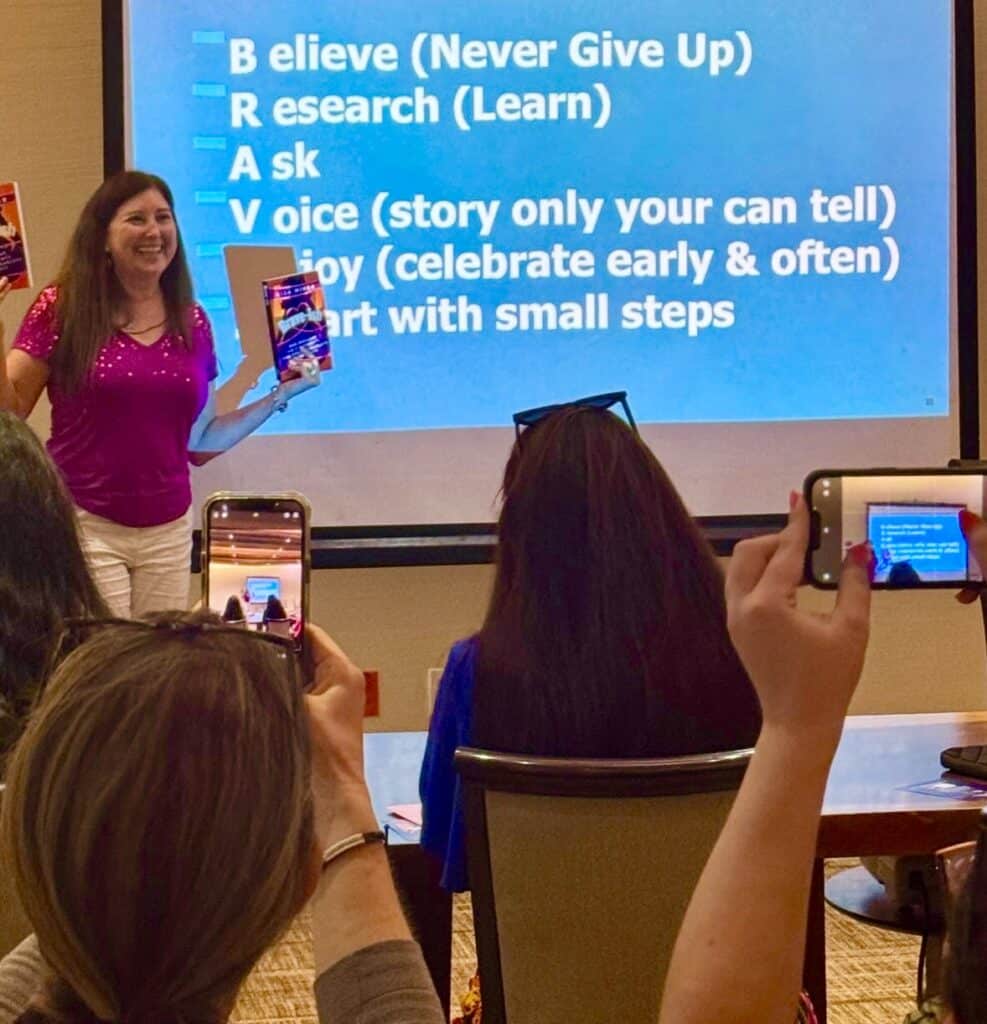
Thank you for your support for my Brave-ish book tour! I was honored to be invited to speak in Mexico at the Women’s Travel Fest.

I am THRILLED that the audiobook for my memoir, Brave-ish, is now available! You can find it everywhere you purchase audiobooks! AND!!! I am the narrator! Did you know that authors have to audition to narrate their books?!!?

THANK YOU KTLA TV LOS ANGELES for including me in your LIVE coverage from the Los Angeles Travel Show where I was speaking about bravery and signing my book at Vroman’s Bookstore booth.

Did you know I travel with a hula-hoop? Learn more from REACH TV:

EVENTS

Thank you to everyone from my hometown of Los Angeles who joined me at the LA Travel and Adventure Show. I loved signing my book for you at the Vroman’s Bookstore booth!

Thanks again to Women’s Travel Fest

Coming soon–meet me in Utah at the Women in Travel Summit in April!

Learn more about my events: click here and my articles here

NEW PRESS INTERVIEWS:

KTLA 5
KTLA LA travel show Erin Myer and Lisa Niver

Erin Myers Interviews Travel Expert Lisa Niver In The Brasil Booth

KTLA TV Los Angeles: Live from LA Travel Show Erin Myers interviews Travel Expert Lisa Niver in the Brasil booth about her memoir, Brave-ish, and where to travel next. Watch Interview
Conde Nast Traveler logo
Conde Nast Traveler podcast valentines

Women Who Travel Podcast: Your Love And Travel Stories

Women Who Travel Podcast: Your Love and Travel Stories: Tales of breakups, hookups, and more in honor of Valentine’s Day. What an honor for Lisa Niver’s “FLING AT THE FAIRMONT” to be included. “It’s fun, it’s candid, it’s certainly not hallmark.” Read Article
Henlit Central logo
HenLit Braveish 2024

Author Spotlight – Lisa Niver

HenLit Central focuses on ‘life and lit’ for women over 40. Please enjoy this author spotlight on their site about Lisa Niver and her memoir, Brave-ish. Read Article
Ronit Plank logo
Let's Talk Memoir Ronit Lisa Niver 2024

Let’s Talk Memoir – Episode 75 Ft. Lisa Niver – Ronit Plank

Thank you Ronit Plank for including Brave-ish on your podcast, “Let’s Talk Memoir” and interviewing Lisa about “Working with Developmental Editors and Book Coaches” Listen Podcast
Divorcing Well Magazine logo
Lisa Niver Divorcing Well Magazine

Journey To Healing And Empowerment: 5 Steps To Thrive After Divorce

Thank you to Divorcing Well Magazine for inviting me to share my “JOURNEY TO HEALING AND EMPOWERMENT: 5 STEPS TO THRIVE AFTER DIVORCE.” The emotional rollercoaster of going through a divorce was one of the most challenging experiences of my life. I hope these resources, will help others rebuild their lives with hope, resilience, and newfound strength.

THANK YOU for watching my podcast! It has now been seen and heard in 42 countries on 6 continents!

USA 🇺🇸  India 🇮🇳 Canada 🇨🇦  Ireland 🇮🇪Puerto Rico 🇵🇷  UK 🇬🇧   Italy 🇮🇹  Australia 🇦🇺 Philippines 🇵🇭 Singapore 🇸🇬  New Zealand 🇳🇿 Portugal 🇵🇹 Saudi Arabia 🇸🇦 Switzerland 🇨🇭 Hong Kong 🇭🇰   Mexico 🇲🇽  Japan 🇯🇵  Fiji 🇫🇯 Seychelles 🇸🇨 France 🇫🇷 Latvia 🇱🇻  Netherlands 🇳🇱  Kenya 🇰🇪  UAE 🇦🇪 Cambodia 🇰🇭 Israel 🇮🇱Guatemala 🇬🇹 Germany 🇩🇪 Uruguay 🇺🇾 Bangladesh 🇧🇩 Spain 🇪🇸 Panama 🇵🇦 Thailand 🇹🇭 Uganda 🇺🇬   Greece 🇬🇷  South Africa 🇿🇦 Costa Rica 🇨🇷 Bosnia and Herzegovina 🇧🇦  Sri Lanka🇱🇰Romania 🇷🇴 Pakistan 🇵🇰 Ghana 🇬🇭 WATCH my podcast, “MAKE YOUR OWN MAP: Are YOU ready to be BRAVE?” on Spotify, Apple Music, Amazon Music, YouTube PodcastGoogle Podcasts, Audacy, Audible, Anchor, PandoraiHeart Radio

WHERE CAN YOU FIND MY TRAVEL VIDEOS?

Here is the link to my video channel on YouTube where I have over TWO MILLION views on YouTube! (now at: 2,085,500) Thank you for your support! Are you one of my 4,240 subscribers? I hope you will join me and subscribe! For more We Said Go Travel articles, TV segments, videos and social media: CLICK HERE

Find me on social media with over 150,000 followers. Please follow  on TikTok: @LisaNiver, Twitter at @LisaNiver, Instagram @LisaNiver and on FacebookPinterestYouTube, and at LisaNiver.com.

My Podcast: “Make Your Own Map!”

Fortune Cookie SAID:

Keep moving forward, and watch your aspirations come to life

Even the smallest steps can lead to the biggest dreams. Believe in the journey.”

BRAVE-ish, One Break-up, Six Continents and Feeling Fearless After Fifty

International Speaker & Audiobook Available: Feb News 2024 Read More »

Print Issue: Hide No More | Mar 1, 2024

CLICK HERE FOR FULLSCREEN VERSION

Print Issue: Hide No More | Mar 1, 2024 Read More »

CyberWell Is Monitoring Online Antisemitism

Since Oct. 7, CyberWell, the first real-time database of online antisemitism, observed almost an 86% increase in online antisemitism across major social media platforms. In response, they have created notifications that flag offending posts, and are used by platforms to collectively act on over 50,000 pieces of content in a short period. 

CyberWell was founded by Tal-Or Cohen Montemayor in May 2022 as a nonpartisan nonprofit organization based in Israel. The online monitoring service uses AI and open-source intelligence techniques to create a picture of online antisemitism. “Our mission is to drive greater enforcement of content policies in the online landscape,” Cohen Montemayor told The Journal. 

Cohen Montemayor was born in Studio City and spent the first years of her life in Los Angeles before her family moved to Maryland. After graduating high school in 2009, she made aliyah with Garin Tzabaran, an organization which helps young Jewish adults to join the IDF.

Post-military service, Cohen Montemayor studied law but eventually transitioned from legal practice to her current role as an advocate against online antisemitism. She practiced hi-tech, corporate and finance law for a couple of years and then worked at “a boutique open-source intelligence firm that specialized in extremist movements in the United States, hate crimes and antisemitism in the darker corners of the internet.” Recognizing the urgent need for action in the face of escalating hate speech and misinformation, she founded CyberWell to address the digital landscape’s challenges. Since Oct. 7, her team has been very busy dealing with a surge of hatred toward Israel and Jews online.

“Our analysis highlights what the digital policies of these platforms fail to enforce.” 

“What’s really unique about CyberWell and why we are changing systematically the way that antisemitism operates online, is that we add an element of digital policy compliance to the work that we do,” Cohen Montemayor said. “It means that we’re not only monitoring online antisemitism across the major social media platforms Facebook, Instagram, TikTok, YouTube, and X in both English and Arabic, but our analysis highlights what the digital policies of these platforms fail to enforce.”

Cohen Montemayor said that her company successfully verified between 3,000 to 5,000 posts with antisemitic content every year. They are able to package and share the data with actionable recommendations rooted in digital policy compliance of the platforms themselves. This empowers the Trust & Safety teams at social media platforms’ to remove many more examples of antisemitic content that violate their policies and remove these surges in Jew-hatred at scale or consider policy shifts to accommodate modern trends of antisemitism. Since Oct. 7, CyberWell’s compliance alerts have “led to the removal of tens of thousands of antisemitic posts and the prevention of exponentially more examples of antisemitism from ever being posted through automated flag and removal measures on the platforms.”

These posts and associated reports significantly influence the strategic direction of policy and content moderation teams, resulting in the removal of tens of thousands of such posts annually.

According to Cohen Montemayor, Meta has made a series of important and impactful steps to try to address online antisemitism and pro-terror content in the last few weeks. “The first one was deplatforming [Iranian Supreme Leader Ali] Khamenei from Instagram and Facebook,” she said. “The second one was taking a closer examination at how the word Zionist is being used as anti-Jewish and anti-Israeli code word to promote antisemitism.”

CyberWell has identified several major narratives leveraged against “Zionists” that are rooted in classic Jew-hatred including that they “purposefully” target and kill children because of “who they are.” There is also language that they are pigs or the sons of monkeys and pigs — often coupled with classical anti-Jewish imagery — and that the Zionists are in some worldwide power conspiracy theory or covertly running governments all around the world. Many of these antisemitic narratives are not consistently red-flagged by the existing community standards and certainly not captured by content moderation enforcement in practice at Meta.

Once an antisemitic post is located, CyberWell reports it to the media platform, but until it’s removed and dealt with, the damage is already done and the hatred spreads. “Every social media platform has what’s called an internal strike system which is internal policy on how many times an account can violate the social media platform policy before being removed,” Cohen Montemayor explained. “YouTube is probably the most straightforward of these policies. If you violate their policy three times within 90 days, your account is suspended. It’s like the three strikes, you’re out concept. This strike policy varies platform by platform in terms of how these things are really implemented, but obviously since CyberWell is doing this monitoring of real time antisemitism, surges and natural outgrowth of what we do is also accountability for those accounts spreading antisemitism.”

Because people are able to evade policies, overt antisemitism remains a pervasive presence online. CyberWell’s research shows that social media platforms intervene against antisemitic content from regular accounts only 31% of the time. This statistic underscores the pressing need for platforms to prioritize technological advancements and enforce policies more effectively. With over 80% of Jews encountering online antisemitism, CyberWell endeavors to offer practical suggestions for the large-scale removal of such content, serving as both a catalyst and a guardian in the battle against online hate.

“Oct. 7 denial and distortion is the Holocaust denial of our time,” Cohen Montemayor emphasized. “The biggest difference is the technology that’s available to spread the misinformation and hatred. In Holocaust denial — which reached its peak in the ‘80s early ‘90s — it was in very fringe circles and the people who were part of the quote-unquote revisionists movement, were very limited to traditional sources of media. If they were ever invited for an interview they’d be challenged, they’d be debated, they’d be hung out to dry. When it comes to Oct. 7 denial and distortion, we saw not only a very purposeful campaign to spread misinformation and disinformation, but also we saw accounts that were located in the Middle East, getting disproportionate traction exposure.”

One example from the report highlights an account in Lebanon with only 3,000 followers that tweeted multiple times a day and garnered over 3 million views. “It’s not just an issue of the content of this denial campaign, but also the concerning level of traction and exposure it’s receiving,” Cohen Montemayor said.

If all of this seems discouraging, don’t lose hope. According to Cohen Montemayor, social media platforms are genuinely interested in enforcing their own rules; they simply lack the necessary expertise. 

With CyberWell’s assistance, there’s hope for finding a solution to address antisemitism in the digital era and eradicate it altogether. However, it’s also up to users of those platforms to take action. It’s crucial to report and flag each antisemitic post or any spreading misinformation. Even if it may seem ineffective initially, there’s power in collective action. If people refuse to ignore such posts or videos they come across, change will eventually prevail.


CyberWell Is Monitoring Online Antisemitism Read More »

Community and Resilience: Two Lessons for Purim

The lessons and traditions of Purim seem especially meaningful this year. As we navigate a post-October 7 world, there is profound wisdom to be found in the ancient Scroll of Esther. 

Megillat Esther tells the story of a people in exile, dependent and under threat. Dispersed across the provinces, “from Hodu to Cush” says the Megillah (from India to Ethiopia), the Jewish people are seemingly fractured and weak. In the course of the story, they discover the power of community. 

Separated by vast distances, they nonetheless come together in fasting and prayer. Removed from their roots in the Land of Israel, they discover their enduring connection to each other. And in the end, having escaped the king’s decree of death, they celebrate together. The megillah concludes with a letter from Mordechai and Esther to Jews around the world, charging them to establish the Purim holiday, and “to observe them as days of feasting and gladness, for sending delicacies to one another, and for giving gifts to the poor.” Here, the Megillah describes the essence of community – the sharing of each other’s joys, and the embracing of the less fortunate among us.

As CEO of Jewish Family Service LA, I witness the power of community every day. I see how the Los Angeles Jewish community stands by each other, supporting our last remaining Holocaust survivors in dignity, providing kosher home-delivered meals for our elderly and providing counseling support for struggling individuals and families. And I see how the Los Angeles Jewish community stands with our neighbors, ensuring that all Angelenos have access to critical support, whether it’s food at our SOVA Food Pantries, shelter at our domestic violence shelters or intensive case management for frail older adults to keep them safe and healthy in the community.

We live by values that transcend the fears and hurt of this moment and hold the promise of a different, better future. We lift ourselves up by uplifting others. We heal ourselves by giving from our hearts. No terrorist can take that away. 

But there is an even more profound lesson to take from the Purim story – the lesson of resilience. The Jewish people have endured and persevered from crisis to crisis with the same sense of pride and determination as Esther and Mordechai. Just as Mordechai refused to bow to Haman (both literally and figuratively), so too must Jewish Angelenos refuse to compromise our values. We will stand for what is good and right to protect and help our sisters and brothers wherever they are and lend a caring hand to all in need. We demonstrate what being in community means. We live by values that transcend the fears and hurt of this moment and hold the promise of a different, better future. We lift ourselves up by uplifting others. We heal ourselves by giving from our hearts. No terrorist can take that away. 

JFSLA is privileged to host weekly social gatherings for survivors of the Holocaust, called Café Europa. As I stood in the room last Tuesday, a performer was singing stirring Israeli music. Survivors were sitting, some singing along, some standing and even swaying a bit, their watchful caregivers close by. I saw community. I saw resilience. I saw the past. And I saw the future.


Eli Veitzer is the President and CEO of Jewish Family Service LA.

Community and Resilience: Two Lessons for Purim Read More »

Moses for President

Not thrilled with the prospect of a Biden-Trump rematch? You are far from alone. A Reuters poll found that two out of three Americans were “tired of seeing the same candidates in presidential elections and want someone new.”  

For the ancient Greek philosophers Socrates, Plato, and Aristotle, the ideal leader is a “philosopher king” – someone who possesses outstanding political skills and an abiding appreciation for the truth. The perfect candidate has no desire to serve in office, and does so purely out of patriotic duty. Among the leader’s preferred qualities are integrity, courage, a love of learning, temperance, selflessness, and a good memory.  

What, you may be wondering, is so crucial about memory? It is the key to being able to develop astute judgement based on a lifetime of experience.  Should memory begin to fade, it is time to turn over responsibility to a younger generation, a lesson that a number of recent political and judicial luminaries might have taken to heart.

Looking for that ideal candidate? Try Moses.  

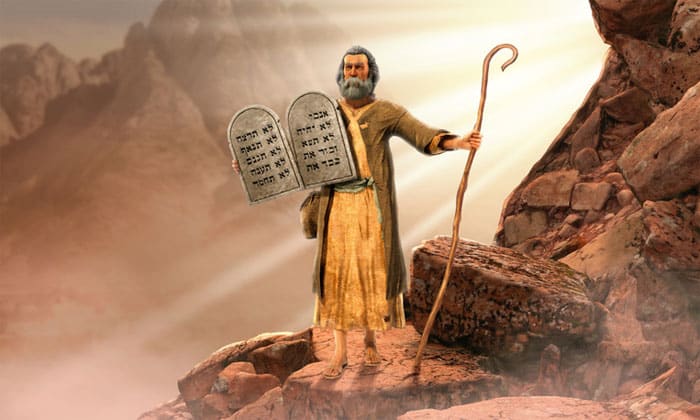
Moses begged G-d to find another person to perform the daunting task of leading the Israelites to freedom. But once he agreed to do so, he succeeded brilliantly. If Shakespeare was correct that some men are born great, some achieve greatness, and some have greatness thrust upon them, Moses was in the last category.  It wasn’t his idea or ambition to become a history-altering prophet, singled out by G-d to be the savior of the Jewish people, but that is what he became.  

And, as the ancient Greeks hoped for in a leader, Moses was able to grow into the job, gaining wisdom and learning from his mistakes.  When Korah told Moses that “You have gone too far!” (Numbers 16:3), Moses took seriously the admonition that he had raised himself above his community.  And when his father-in-law Jethro implored Moses to delegate judicial authority, ceding control to trustworthy deputies, Moses did exactly that.  Finally, when Moses realized that he was too old to continue in power, he addressed the Israelites, telling them that “I can no longer be active” (Deuteronomy 31:02), and graciously stepped down in favor of Joshua, his long-time mentee.

When Moses realized that he was too old to continue in power, he addressed the Israelites, telling them that “I can no longer be active,” and graciously stepped down in favor of Joshua, his long-time mentee.

Not that Moses was perfect. Are there any leaders who are?  But even after losing his temper and striking the rock twice, Moses seemed to have accepted the mystifyingly harsh penalty – that he would be allowed to view the promised land but never enter it – with remarkable magnanimity.   

So, what happens if we elect someone without the judgment, effectiveness, and humility of Moses? Will disaster necessarily ensue?  In recent decades, scholars have called into question the once popular “Great Man Theory” – a proposition that on occasion extraordinary individuals come along and change the course of history. They now typically believe that even giants such as James Watt, Thomas Edison, and the Wright Brothers were the servants of history rather than its architects. Same, they claim, for Napoleon, Alexander the Great, and Julius Caesar.

I suppose that this is something to keep in mind when you hear that the upcoming presidential election is the most important of our lifetimes. But while it is reassuring to think that the stakes may not be as great as we imagine, it is quite reasonable to assume that the outcome will matter in some manner, perhaps in highly consequential ways. After all, would the world really be what it is today without Roosevelt and Churchill being in a position to lead the Allies to victory in WWII, or if the headline writers had been correct and Dewey defeated Truman, the man who went on to boldly recognize the State of Israel at its creation?  

The best thing we can do is to vote for the candidate who most closely shares our values. So, as tempting as it may seem to fill out a protest write-in ballot for Moses, we will only have ourselves to blame should our troubled world take a turn to even greater upheaval.  

Still, it sure would be nice if whoever gets elected tries to emulate Moses, who enduringly models the noblest traits of leadership.


Morton Schapiro is the former president of Williams College and Northwestern University.  His most recent book (with Gary Saul Morson) is “Minds Wide Shut:  How the New Fundamentalisms Divide Us.”

Moses for President Read More »

Can We Fight Without Losing Our Souls?

I’ve met plenty of Israelis over the years who have fought in its many wars. But one in particular I can never forget — a first cousin who used to visit us in Montreal. He was the sweetest, kindest person you could meet, always looking for a reason to laugh. But while he loved to talk and schmooze, there was one subject he never talked about: his experiences in the army.

That we had to hear from others.

Evidently, it turns out my sweet, happy-go-lucky cousin was also a ferocious infantry fighter, known for his marksmanship. I remember being mystified by that contrast. How can a happy guy turn into a killer warrior? How does one reconcile such opposite versions of the same person?

There is, of course, the easy answer: There are moments in life when you do what you need to do. No matter who you are or how happy you may be, if you must fight, you fight.

But is it that simple?

I’ve been thinking a lot about this “need to fight” phenomenon since the darkest day of Israel’s history hit us on Oct. 7.

I’ve been wondering, in particular, to what extent external events can end up changing us. If we are forced to constantly fight because we have no choice, how long until the fight itself starts to define who we are?

The fight in Israel is marked by real war — soldiers risking their lives to eradicate terror; citizens mobilizing and volunteering to protect themselves and assist one another. The fight feels endless.

The fight in the Diaspora is more about activism — finding myriad ways to take on the alarming rise in Jew hatred that seems to accelerate by the day. It also feels endless.

In both cases, this is not a fight we went looking for.

When my daughter at NYU put up posters of hostages and got verbally assaulted by haters who tore the posters down, she wasn’t thinking: This is why I came to college. She’d much rather go to her dance class or hang out with friends at Hillel than confront haters. And yet, she loves Israel. She’s a proud Jew. Like thousands of other Jewish students across the country encountering hostility, she didn’t go looking for a fight. 

The fight has been forced on the Jewish students, just as it has been forced on Israel.

In my many visits to Israel, the vibe I typically felt was the very opposite of fighting. Lots of arguing, certainly. But it’s hard to imagine a society that is more in love with life. You feel it on the streets, in the restaurants and cafés and on the beaches — a vibrant energy, an affinity for drinking the pleasures of life.

But the dark side of life is never far away. Danger always hovers. Every Israeli knows that one terror attack can turn a joyous party into an immediate call to rise and fight.

Since Oct. 7, many of us in the Diaspora have been called to fight, or, more accurately, to fight back. The demonstrations against  Jews and Israel have become so ugly and pervasive — do we even have a choice?

The question is: Can we fight ugliness without becoming ugly ourselves? Can we fight hate without losing our creative spirit and our sense of optimism? Can we fight, in other words, without losing our souls?

A good starting point is through the simple art of positive expression.

As Rabbi Nicole Guzik said in her recent Shabbat sermon:

“We need you to publicly and positively self-identify as a Jew … This is who we are. And our mantra must be clear: I am a Jew and I’m not going anywhere. Because all of us—we, the Jewish people — are made for a moment like this.”

We’ve had many such moments throughout our history. Indeed, one of the miracles of the Jewish story has been an ability to go through centuries of struggle and oppression and still maintain a love of life, a love of learning, a love of tradition, a love of creating, a love of laughter, a love of engaging with humanity.

This will be our key test as we move forward in the wake of Oct. 7: to fight without changing who we are; to fight as proud Jews rather than angry Jews; to fight when we must, but to always find space for joy and sweetness.

Just like that happy sharpshooter from Israel.

Can We Fight Without Losing Our Souls? Read More »