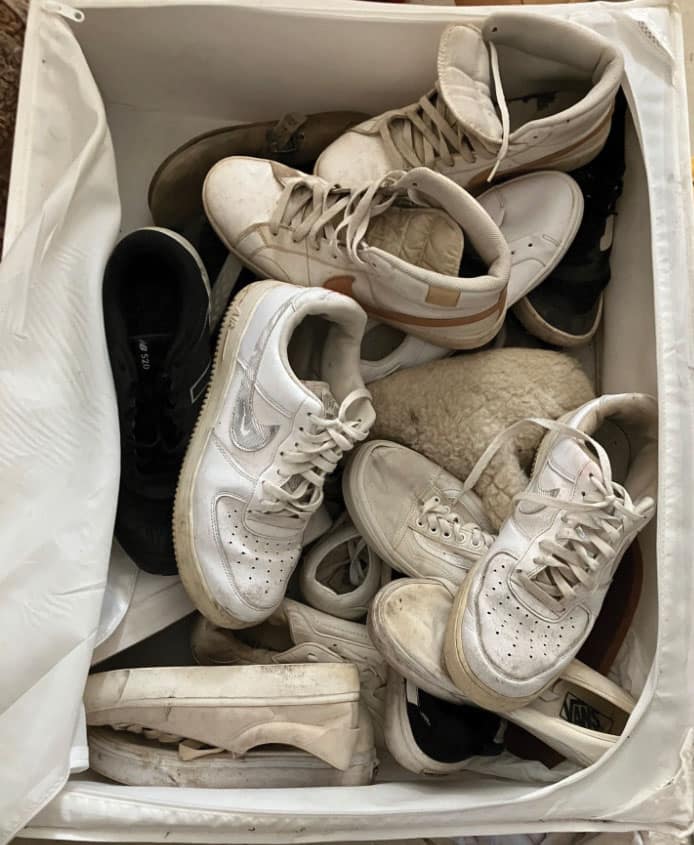
This week marks the first global International Holocaust Remembrance Day observed in the shadow of the October 7 massacres. My most recent visit to “Kikar Ha-Hatufim – Hostage Square” in Tel Aviv was Sunday January 14, marking the 100th day since the October 7 massacre, the 100th day of this war, and the 100th day of inhumane captivity for the hostages still in Gaza. One sign caught my eye, pictured here:

It reads: “Never Again? It’s been 100 days that we’ve been going through a Holocaust here.”
While Holocaust scholars and Israeli politicians debate the use of classic Holocaust language and imagery in discussing October 7, it’s clear to every Israeli that the trauma of the Hamas massacres has revived the trauma of the Shoah in Israeli society.
“We thought that after the Holocaust we’d never see such massacres of Jews again” commented a Holocaust survivor I met in Hostage Square, “yet right before our very eyes, in our own country, on our own land, southern Israel became Babi Yar on October 7.”
These words – “we thought we’d never see” – are reminiscent of similar words spoken 104 years ago in Israel:
“We thought our post-war world would never see such images again. Who would have believed that so shortly after this war, our world would again be witness to evil forces behaving with no empathy towards the elderly and no pity towards children, torturing and violating women while pillaging the property of the innocent. We are filled with pain by the saddening and disgraceful images of innocent souls whose bodies were as prey to the sharp teeth of the dark forces of evil. As human beings, we are filled with shame and disgrace as strange beasts disguised as ‘human created in the image of God’ behave this way.”
These images evoke the Holocaust, but they are Rabbi Uziel’s words on May 31, 1919, in response to the brutal pogroms against Jews in Ukraine. These pogroms are what historian Jeffrey Veidlinger calls “The Onset of the Holocaust.”
The parallels to October 7 are haunting, including the disturbing fact that many Israelis fear that the Hamas massacres are, indeed, “the onset” of more massacres to come.
Many different dates mark the Holocaust – January 27 (International Holocaust Remembrance Day), 27 Nissan (Yom Hashoah) and 10 Tevet (Yom Ha-Kaddish Ha-Klali), to name just a few.
But for this generation in Israel, there is only one date – October 7. That day is not “Holocaust Day,” rather “The Day that Revived the Holocaust.”
Never Again?
Rabbi Daniel Bouskila is the international director of the Sephardic Educational Center.
Weeks after Lana Zilberman Soloway became a rabbi at Congregation Or Ami, Hamas terrorists attacked Israel, and the Calabasas synagogue quickly learned it had hired a towering defender of Israel and the Jewish people. Since Oct. 7th, she said, she has talked to her community about the war “all the time.”
First, she said, “I am an Israeli … It’s a personal trauma. I know a lot of people affected in every possible way. I grew up in Netanya, but most of my adult life I spent in Jerusalem.”
The 41-year-old mother of three served in the IDF’s Intelligence Force in the Gaza Strip. “Therefore I know a lot of people in the kibbutzim on the outskirts of Gaza who suffered through and survived … I also know people who did not. I know people taken hostages. Finally, almost every family I know has a child, a spouse or another relative who was drafted.” To complete the portrait she said “I have been a peace activist for most of my adult life. So I also have connections on the other side.”
Born in Moscow, she made Aliyah with her parents when she was eight; Israel is her permanent home. When the rabbi returned home in November for a one-week visit, she found it “very painful to see my own country in turmoil.”
It might be impossible for anyone to track developments in Israel more closely than Rabbi Lana. She is in daily contact with family and friends in Israel. Her first act every morning and final effort each night is to monitor news out of Israel. “I try to be up-to-date on everything,” she said.
With the war’s four-month anniversary nearing, she notes it has been about Jews helping Jews. Speaking as a peace activist, Rabbi Lana said it was “unfortunate the Israeli government wasn’t really functioning before Oct. 7 and did not do much after. But the power of civic society has proven itself above and beyond.” Her Or Ami community in Calabasas has made a multitude of efforts raising money and providing needed clothes.
For most of her adult life, Rabbi Lana was an educator and tour guide; she was ordained only three years ago. So she knows the world from a wide perspective. “We talk about the war all the time in different areas with different age groups,” she said. “We have held vigils. We talk about the war with our kids, with our teens. Now this is intertwined with the rise of antisemitism. We teach broadly. I led a course on Israel being in conflict. Now we are doing a course on antisemitism.”
Rabbi Lana has hosted almost two dozen circles — some in person, some via Zoom — where community members share where they are: college students, religious schools, parents with young children. “I am an educator first,” she says. “I truly believe knowledge is power.”
The third piece of her commitment is maintaining direct relations with Israel. Or Ami senior Rabbi Paul Kipnes, the synagogue’s first fulltime rabbi, also visited Israel recently. On her visit, Rabbi Lana was shocked by the number of weapons Israelis were packing out in the open.
“I have lived in Israel my entire life,” she said, “and experienced first-hand many wars. I have been a soldier in Gaza myself. But I never have experienced so many weapons in civilian hands. People are afraid. They feel the government and the army completely failed them. They are unwilling to take a chance that, G-d forbid, this could happen again.” Israel is a country that does not trust its leaders, she said, a country of people who went through a colossal trauma “and they feel responsibility for protecting themselves and family members.” She found this deeply disturbing because “the more weapons you have in society, the more people can get hurt.”
“I am between two worlds,” she said. “I am 100% here, and at the same time, my Israeli heart has been shattered.”
As an Israeli, “I am between two worlds,” she said. “I am 100% here, and at the same time, my Israeli heart has been shattered.”
Rabbi Lana spoke of the irony of her arrival in Calabasas at this moment. “My community feels this is a besheret moment that I have arrived here now,” she said. “When my family and I decided to come here, we did not expect the world to turn upside down.But all things happen for a reason.”
What about the route from Jerusalem to Calabasas? While she was a tour director, she frequently was assigned to lead North Americans, often Reform congregations. “The first trip I was assigned to lead [Congregation Or Ami] in 2014 was kind of random,” she said. “We bonded, and we kept a close relationship all of these years.”
Rabbi Lana dropped in on Calabasas for the first time seven years ago when she was traveling to the West Coast for her company. “Rabbi Paul invited me to give a sermon on a Friday night,” she recalled. They renewed acquaintance last February when Kipnes invited her to be a scholar-in-residence. She stayed for a week. Meanwhile, Rabbi Lana said, “both he and the community asked if I would consider coming here for a few years. Here I am.”
Coming to America is temporary, she has made clear. “It’s definitely not immigration,” she declared. “It is schlihut. I am an emissary.”
It was not easy to say farewell to Israel, even temporarily. “My husband Daniel, an American citizen, made Aliyah in 2010, and we have been married almost ever since. Because of their father, our three children are American citizens. So I am the only non-American.”
The world is chauvinist, she concluded. “When people learned we were moving to America, they asked, ‘So what kind of job did Daniel get?’” Finally, on differences between Israel and America, she said “the respect women rabbis receive from congregants is much higher here.”
Fast Takes with Rabbi Lana
Jewish Journal: What is your favorite family activity?
Rabbi Lana: Being in nature, all together. It can be a hike, being at the beach, seeing blue skies, green trees, breathing the air together.
Jewish Journal: The most impressive book you ever have read?
Rabbi Lana: Yair Lapid, a Knesset member, once was a TV guy, like Jay Leno. He wrote a phenomenal book about his father, Tommy Lapid, a Holocaust survivor, “Memories of My Father.” Written in the first person, as if an autobiography.
Jewish Journal: Who has been the most influential person in your life?
Rabbi Lana: For sure, my father, who died when I was 23, and my rabbi, Tamar Elad Appelbaum.
It’s been nearly three months since Oct. 7th, and as more and more details come out about the brutality, the stories get harder and harder to read. The pure evil exhibited that day is impossible to comprehend. The murders, the tortures, the rapes, seemingly endless arrays of dehumanization – how can it be possible that there are so many human beings capable of these types of atrocities? I’m overwhelmed, not because I can’t relate to the barbarism, but because I can.
On Oct. 6th I had gone away with a friend. We turned off our phones and left the area.The goal was to disconnect and quiet our heads. We drove to the Cape for a few days, looking forward to some solitude near the water. We had turned on the television on Saturday afternoon to watch the Formula One race happening in Qatar that day. Little did we knowfrom the urgent newsbreaks that the horrific violence in Israel had likely been planned and funded by the billionaires attending the very same race. This was not the peaceful weekend we had planned. The sand and sea have always been calming factors for me, and I had been taking my first steps to try to heal.
Only two weeks before, on Thursday Sept. 21st, I was the victim of a violent sexual assault.It wasn’t by a gun-toting terrorist.It wasn’t by a masked stranger.It was by a man I voluntarily went out with after meeting on a dating site.He checked many of my boxes:Jewish, successful, charming, handsome. We had spoken several times over two weeks, seemingly getting to know each other on the phone as he continually lied about himself and his background. He told me that he was only attracted to smart, successful women, a detail that I would think about over and over as he did everything he could to make me feel powerless.
Some of the early details of the night are lost; the drug he apparently put into my drink caused memory loss.I know that I got into his car – something I never do on a first date.I have scant memories of being at a second location, but don’t remember getting there or leaving. What I do remember is most of the attack, and the heinous things he said and did.The excruciating pain as he pinned me down on my side, his hand under my jaw, the damage done requiring months of traction and physical therapy.I remember crying out as I felt the first tear in my vaginal wall from the metal pipe he used to rape me.
The next few days were a blur. I was overwhelmed with shame and self-loathing. I knew that I had to see a doctor, the bleeding was significant.Th e pain from my vertebrae was causing a constant headache. The medical staff were incredibly kind, keeping their office open for me after normal hours so that I could have privacy and their complete attention.They did a thorough exam, even taking pictures of the bruising across my face, chest, and legs. I started several rounds of antibiotics, steroids and anti-inflammatory medication.They sent me for X-rays and MRIs, and most importantly, made sure I was getting the mental health support I needed. It took me several days before I could tell a friend.
The blatant disregard of sexual violence from women around the world is astounding.And the victim blaming, stating that the violence was justified, even glorified, as an acceptable means of “resistance” by supporters of the Palestinian movement is impossible for me to comprehend.
The night has played over and over in my head over these past few months, as the news cycle provides a never-ending source of triggers for me. The blatant disregard of sexual violence from women around the world is astounding.And the victim blaming, stating that the violence was justified, even glorified, as an acceptable means of “resistance” by supporters of the Palestinian movement is impossible for me to comprehend.
The attacks of Oct. 7th have conflated in my mind with my own assault, and the fear and anger inside of me swirls like a tornado, ripping through my head. But the worst part?The thing that brings me incredible shame?On a tiny level, I am jealous of the fact that the survivors have the support of an entire country. I feel incredibly alone.
I have a few other friends with whom I’ve shared my trauma, including the one that took me to the Cape, and another who took me to the mikveh in an attempt to provide me with some ritual cleansing.I wouldn’t have gotten through the past few months without them. They’ve each been a true source of comfort and companionship, but right now, I’m not fun to be around.I hate feeling like this. It’s so unlike me. I think the expectation is that I shake it off, that I throw myself into my work again, and keep myself busy with other things. Maybe if I would only watch a comedy or take a drive, I’d feel better. But I’d have to be living in a cave to avoid the constant reminder of rape.It’s overwhelming.
So I’m asking a favor of those of you reading this.When you pray for the release of the hostages, for the souls of those who were killed, for the complete recovery of the thousands of injured individuals, please add a prayer for me, and for the millions of women living in silence after sexual violence. Because evil is not limited to terrorists, to war, to strangers. It’s right here among us.
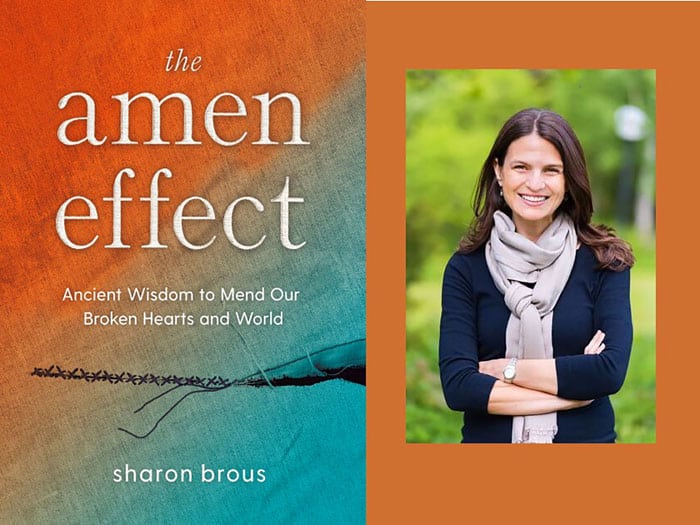
“It’s a hard time for this bookto come into the world,” Rabbi Sharon Brous said.
She was discussing her recently published debut book, “The Amen Effect: Ancient Wisdom to Mend Our Broken Hearts and World.” When she set out to the write the nonfiction work, she did not anticipate the events of Oct. 7, when Hamas attacked southern Israel in an unprecedented assault, significantly altering the Jewish community and beyond.
“It’s a time when a lot of people who would be open and receptive to the message are not interested in hearing from Jews. And it’s also a time in which I think the wisdom is more relevant and more necessary than it was when I wrote it.”
So, “it’s a hard time” Brous said again, during a recent phone interview. “It’s a time when a lot of people who would be open and receptive to the message are not interested in hearing from Jews. And it’s also a time in which I think the wisdom is more relevant and more necessary than it was when I wrote it.”
Published on Jan. 9 by Avery, an imprint of Penguin Random House, “The Amen Effect” is, essentially, a guide for how to manage times of hardship and fully embrace moments of joy. The book unfolds over eight chapters, along with a section devoted to how to put the lessons of Jewish texts and Brous’ interpretation of them into daily practice.
Brous named the book after a sermon she delivered approximately ten years ago at IKAR during the High Holy Days. She continued to give the talk at communities across the country and saw how much it resonated. Eventually, she realized she had the foundation for a book, though it was a while before she began writing.
Her day job, meanwhile, continues to be serving as spiritual leader of IKAR. The mid city-based progressive egalitarian congregation began in 2004 as an experiment in worship. Over the past two decades, IKAR has become the rare synagogue success story. It has thrived by offering a spiritual home to those who care equally about citywide efforts to support the unhoused as they do about davening mincha or ma’ariv.
While Brous’ new book charts her two-decade journey as the community’s founding senior rabbi, “The Amen Effect” is not a memoir. Nor is it, Brous says, a “grief book,” though Brous shares several experiences of serving congregants during the most vulnerable and challenging moments of their lives — at shivas, in hospital rooms, at gravesides. In fact, the book’s cover art features a torn garment, a nod to the ritual performed during mourning.
Incorporating the rabbinic literature of the Mishnah, Brous’ book argues the greatest gift we can offer someone we care about is simply showing up for them — an idea illustrated by the recitation of the Mourner’s Kaddish: The mourner publicly recites the ancient prayer, and a community indicates its support by responding, “Amen.” Whether one understands the literal translation of the prayer’s obscure Aramaic ultimately matters little.
“What matters,” Brous writes in an early chapter, “is that a brokenhearted person stands up in a prayer service and reveals his grief, out loud and in public, and the community responds with love and presence.”
Throughout her rabbinate, the rabbi-author has occasionally stirred controversy by expressingpolitically progressive views in her sermons. A few years ago, addressing hundreds of worshippers at her communi-ty’s High Holy Day services, she made a Jewish case for reparations for slavery. Ad-ditionally, when speaking about Israel, she frequently calls for empathy for the Pales-tinians while offering criticism of Israel’s right-wing leadership. During the Trump administration, she opined about the threat of white supremacists and the undermining of American democracy.
But after Oct. 7, she, like many others on the political left, was taken aback by the responses of those who were silent in the face of Hamas’ atrocities against Israel. She reiterated that concern during her interview with the Journal.
“I have been very vocal about rejecting the narrative that the victims of rape and abduction and murder are responsible for the horrific atrocities that were committed against them,” Brous said. “I also understand that there is a mass movement of young Jews right now who feel brokenhearted over this war and over the deepening entrenchment in an impossible status quo.”
Emphasizing her point about the unacceptability of placing blame on Israel, Brous spoke of Vivian Silver, a Canadian Israeli peace activist murdered on Oct. 7 at her home in Kibbutz Be’eri.
“The concept that Vivian is responsible, by virtue of being an Israeli Jew, for the atrocities against her is immoral and something that I cannot, and could not, stand for,” Brous said.
Written before Oct. 7, the book is concerned with matters of faith and heart facing people in their everyday lives. Brous offers insights, for example, gleaned from encounters with congregants who lost their two children — ages 14 and 17 — in a horrific car accident. To another congregant, who recently lost his father, she attempts to explain the helpful role the Jewish liturgy can play in the grieving process. Then there’s an individual who’s suffering from embarrassment due to a recent job loss and is retreating from the community.
Along the way, leaders at IKAR, including longtime executive director Melissa Balaban, Brous’ colleagues in the rabbinate, and her family lift her up, making it possible for her to serve as a caregiver to others. In many ways, Brous said, “The Amen Effect” is for them.
“I’m really excited to get the book out,” she said. “It’s kind of a love-letter to our [IKAR] community. There are a lot of stories of love and loss, drawing on all I’ve learned pastoring to this beautiful community over the past 20 years.”

Indeed, as IKAR enters its 20th year, its founding rabbi expressed excitement about all that’s ahead for the congregation, including transforming parts of a recently acquired property on La Cienega Boulevard into 60 units of supportive housing for the city’s unhoused population.
“We’re excited about developing something that’ll be helpful for the city of Los Angeles,” Brous said.
With the new year upon us, champagne and fireworks have given way to less joyous realities, like cold and flu season. Most of us will end up with a cold or two, if not something worse, this winter. The good news is that you can protect yourself. Unfortunately, hazards remain — including some posed by healthcare providers.
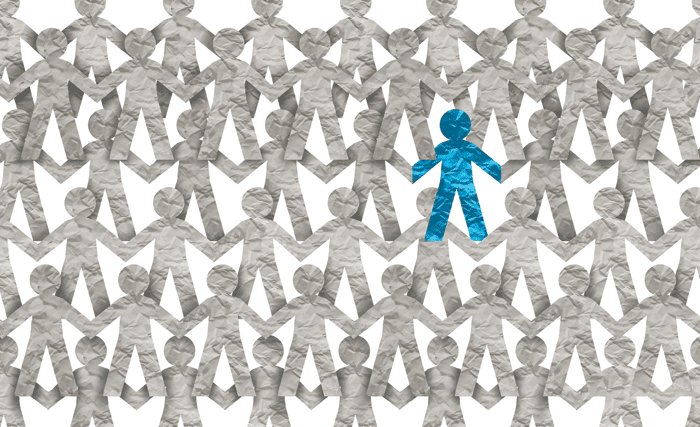
Despite folk tales, you can’t catch a cold from being cold. Colds are viruses that are transmitted from person to person. My college professor of Organizational Behavior once suggested that colds and flu circulate during winter due to holiday stress that weakens immune systems, making us vulnerable.Knowing that we had an Argentine student in the class, I asked him whether cold and flu season in Argentina occurred in summer with the holidays or in the winter. It didn’t help my grade in the class, but his reply made the point: “In the winter.”
The Los Angeles County Department of Public Health’s surveillance shows our current risk for winter viruses. Data at the end of December tracked circulation of four. The most common was rhinovirus (aka the cold), followed by flu and COVID-19 running neck and neck, and then RSV (Respiratory Syncytial Virus). Vaccination is available for everyone for two of the four, COVID-19 and flu. Neither vaccine is 100% protective, but each reduces the risk of the illness and its severity. The RSV vaccine is available for children and those over age 60. The adult vaccine reduces risk by about 80% over two years. I took it myself and noted only a half day of mild arm soreness. I’ll take that over a full-fledged viral illness any day.
Although many are sick just from hearing about COVID-19 vaccines, it’s still worth mentioning that the current vaccine is not a booster to the prior ones, but a new vaccine based on the Omicron variants now circulating. Those who tolerated prior vaccines and who don’t see conspiracies in vaccines can get it now. The county’s current data show that COVID cases are increasing, so nonskeptics should act soon. We also have some treatments for some viral illnesses that actually work. Paxlovid reduces the severity of COVID-19. Tamiflu has a mildly beneficial effect on influenza when initiated in the first 48 hours. Unfortunately, there are still no specific treatments for colds. The treatments are supportive measures such as Tylenol or Advil, a cough suppressant, decongestants, rest and lots of fluids.
You don’t need to see a doctor for cold symptoms, although many do. Unfortunately, some doctors prescribe antibiotics for colds. For occasional patients, like those with asthma or other vulnerabilities, an antibiotic may make sense. But doctors prescribe too many antibiotics that won’t help and that can cause side effects such as diarrhea, yeast infections and antibiotic resistances that may reduce future antibiotic effectiveness. This is even true of the beloved and ubiquitous Z-Pak (azithromycin), which can’t cure a cold. While the antibiotic is generally well tolerated by most healthy patients, the FDA issued a “black box warning” for the drug due to its risk for heart rhythm issues in vulnerable patients.
So, why do doctors over-prescribe antibiotics?
My experience suggests that when a doctor doesn’t know the patient, there is a tendency to “carpet bomb” treatments intended to cover every conceivable outcome, no matter how unlikely. This is less likely when the doctor knows you and can be confident that you will call or message if things aren’t going well. To be fair, many urgent care doctors, particularly those affiliated with primary care programs, use antibiotics appropriately, as they know that the patient’s doctor will review their report and that follow-up options are in place.
The bottom line for cold and flu season isn’t complicated: Keep up to date on vaccinations. If you get a cold, treat it with rest, fluids and over-the-counter medicines. Get tested if you suspect COVID-19 or the flu. Don’t go to work or social occasions when sick. Check in with your doctor if you’re not getting better or if you’re unsure what to do. Be skeptical of using antibiotics for viral syndromes. If you need treatment, try to use a doctor or system that knows you. If you follow the basics, you’ll be more likely to have a healthy start to 2024.
Dr. Daniel Stone is Regional Medical Director of Cedars-Sinai Valley Network and a practicing internist and geriatrician with Cedars Sinai Medical Group. The views expressed in this column do not necessarily reflect those of Cedars-Sinai.
A fierce debate has erupted in the mainstream Jewish community over Diversity, Equity and Inclusion (DEI) programs, which have proliferated in colleges, high schools, private companies, governments and nonprofits. Some want to engage-and-influence these programs so that Jews are better represented in the mix of oppressed groups deserving protection, some want to end what they deem a badly flawed model of diversity, and others want to reform these programs to make them less ideological and more supportive of viewpoint diversity. While there are voices in mainstream organizations urging the latter two options, most major Jewish organizations cling to engage-and-influence. It’s an understandable but lamentable error.
Moving away from engage-and-influence would, of course, necessitate a painful tradeoff for the Jewish community. In the short term, engaging coercive DEI programs allows us to influence the way these programs portray Jews. In the long term, however, engaging DEI programs props up an illiberal ideology on which these programs are based and spreads antisemitic sentiment. As tempting as engagement may be, the Jewish community must prioritize genuine and durable structural change that ameliorates antisemitism over activities like DEI that appear advantageous at the present moment but carry lasting costs.
A Bureaucracy Run Amok
DEI first took shape in the workplace in the late 1980s, designed to increase the representation of minorities and create more inclusive work cultures. Given America’s persistent racial disparities and unfinished business of civil rights, there was a clear need for diversifying the places Americans work and study. I recall walking around the financial district of Boston just over a decade ago, noticing the bands of white men clad in Brooks Brothers suits going to lunch. You could pick out the alpha male, the boss, from the stratified formation. One doesn’t have to be a management guru to imagine the homogenous work cultures in these financial institutions. I suspected it wouldn’t be easy to be a nonconforming black man or a woman among the professional classes in such companies, if such opportunities were even extended. It’s understandable why many people, particularly from traditionally underrepresented minority communities, would champion the promise of DEI.
Yet from the get-go, DEI went beyond diversification and insisted that participants adopt specific perspectives on race and racism, such as Robin DiAngelo’s shibboleth of “white women tears” (white women lamenting how hard racism is on them) or Ibram X. Kendi’s dictum that all social disparities are a function of discrimination. In this worldview, those who disagree with such pronouncements are at best “fragile” and defensive, and at worst privileged or racist. Indeed, DEI is not merely a set of prescribed practices to make institutions more inclusive, but a comprehensive diagnosis of why such disparities exist in the first place, a picture of reality that leaves little if any room for disagreement. The National Association of Diversity Officers in Higher Education, for example, states that “an anti-racism framework serves as a conceptual tool to examine the institutional and systemic practices necessary to confront systemic racism.” The Association claims to know the precise nature of the problem as well as the solutions for overcoming it.
Some DEI programs divide people up into racial “affinity groups” that provide people of color a space to reflect on their oppression and racialized white people a space to come to terms with their complicity in white supremacy and the requirements of allyship. It’s hard to imagine how this brings people together. Such practices are especially damaging to children who are being socialized into racial division. Some DEI programs have forced Jews into white affinity groups even when they don’t identify as white and denied Jewish employees’ requests to create separate Jewish affinity groups. A Chinese-American friend complained to me that at work she was placed into an Asian-American affinity group with two Iranian-American women with whom she didn’t feel the slightest cultural affinity. Far from fostering diversity, these programs virtually guarantee social polarization and resentment. While some people may feel supported by racial affinity groups, others don’t want to be told what racial group they belong to or to profess their complicity in white supremacy. In defining the world in rigid categories and insisting others do the same and even define their own identities accordingly, DEI, with few exceptions, is constitutionally averse to perhaps the most important form of diversity—viewpoint diversity. It’s no wonder that these programs provoked a backlash.
Not only is such diversity training polarizing, studies show that DEI programs don’t even achieve their stated goals.
Not only is such diversity training polarizing, studies show that DEI programs don’t even achieve their stated goals. According to Musa al-Gharbi, Paul F. Lazarsfeld Fellow in Sociology at Columbia University, “a robust and ever-growing body of empirical literature suggests that diversity-related training typically fails at its stated objectives.” The training does not improve organizational morale, increase collaboration, or improve hiring, retention or promotion of minority candidates, he states, and often does the very opposite. Yet this research is widely ignored by institutions that have signed on the DEI dotted line. In a 2018 research paper, sociologists Frank Dobbin and Alexandra Kalev wrote, “We have been speaking to employers about this research for more than a decade with the message that diversity training is likely the most expensive, and least effective, diversity program around.” Notwithstanding its original aspirations, DEI has become the bureaucratization of an ideological approach to diversity that simplistically divides the world into oppressed and oppressors, and seeks to bring along its participants, sometimes in agreement, often in silent protest.
designer491/Getty Images
DEI and the Jews
DEI programs also fuel antisemitism. Dr. Stanley Goldfarb, a former associate dean and professor at University of Pennsylvania’s Perelman School of Medicine and founder of Do No Harm, watched with dismay as DEI radicalized Penn’s campus culture. “At the heart of DEI is a simple binary: the world is divided between oppressors and the oppressed,” he stated. “Proponents of DEI cast white people as oppressors and black people as the oppressed. While they apply this frame primarily to America, they often apply it to Israel, too. Apparently, Israel is a bastion of Jewish whiteness, with a racist commitment to shattering the lives of nonwhite Palestinians.” To be sure, Jews have reached the height of numerous fields, and Israel is a successful and thriving country. This makes the category “oppressor” seem applicable to those who buy into the ideology, but Jews have also been an embattled minority, subject to centuries of persecution. The simplistic oppressed-oppressor framework so common in DEI cannot cope with the complexity of the Jewish experience, and defaults into placing Jews into the white oppressor box. Dr. Tabia Lee, the former head of DEI at the Silicon Valley-based De Anza College, wrote that she was “told in no uncertain terms that Jews are ‘white oppressors’ and our job as faculty and staff members was to ‘decenter whiteness.’” (In full disclosure, Dr. Lee now runs a project funded by my organization, the Jewish Institute for Liberal Values).
Indeed, there have been numerous instances of DEI programs and officers hostile to Jewish concerns. A Title VI complaint filed by the advocacy organization StandWithUs, against the once Jewish-friendly George Washington University, stated “Jewish and Israeli students in the Program’s mandatory diversity course were singled out for repeated and persistent harassment.” Dr. Lara Sheehi, an assistant professor of psychology at GW, chastised Jewish students for their privilege and invited antisemitic speakers, including one who said “that good deeds done by Jews and Israelis are done to mask sinister activity.” The University of Maryland placed Jazmin Pichardo, an assistant director of diversity, as head of a committee charged with addressing rising campus antisemitism. The university ignored Pichardo’s anti-Zionist Facebook posts. Sima Shakhari, a University of Minnesota Gender studies professor, who denied that Hamas committed sexual violence on October 7th, is, according to the Times of Israel, a leading candidate for a senior position at the school’s DEI department.
Tammi Rossman-Benjamin, Executive Director of the Amcha Initiative, an organization dedicated to investigating and educating about antisemitism in higher education, in a piece titled “Why DEI Programs Can’t Address Campus Antisemitism” in the journal Sapir, writes that the lack of clarity around the definition of antisemitism and the refusal of many to view anti-Zionism as a form of Jew-hatred, will lead many DEI officers to simply dismiss anti-Zionist harassment as a form of prejudice against Jews. “If scholars of antisemitism can’t even agree on a definition of antisemitism, how can DEI officials be expected to understand what antisemitism is and to create effective programming to address it?” she asked. As we’ve seen in the above examples, many haven’t and won’t.
The authors argue that the sheer volume of DEI staff expressing anti-Israel attitudes is so out of proportion as to constitute antisemitism.
A Heritage Foundation report, “Inclusion Delusion: The Antisemitism of Diversity, Equity, and Inclusion Staff at Universities” by Jay Greene and James Paul, shows how the increase in DEI staff at universities (the average University now has 45 such professionals on staff) was destined to engender hostility toward Jews and Israel. The authors argue that the sheer volume of DEI staff expressing anti-Israel attitudes is so out of proportion as to constitute antisemitism. To measure antisemitism among university DEI staff, they examined the Twitter feeds of 741 DEI personnel at 65 universities to find their public communications regarding Israel. For comparison purposes, they looked at the same set’s tweets about China. The report found that “Those DEI staff tweeted, retweeted, or liked almost three times as many tweets about Israel as tweets about China.” Of the tweets about Israel, 96 percent were critical, while 62 percent of the tweets about China were favorable. The report concludes that “university DEI staff are better understood as political activists with a narrow and often radical political agenda rather than promoters of welcoming and inclusive environments.”
In the aftermath of the October 7th massacre in Israel, Tablet Magazine writer Armin Rosen reported that he “called or emailed over a dozen equity divisions at prominent colleges and universities to ask whether they had released any statements, held any events, or created any new programming for Jewish students since the Hamas rampage of October 7 and the wave of campus unrest that followed. The answer is no—of course not.” Rosen concludes that “These bureaucracies are not burning through institutional capital in order to salve the anxieties of Jewish students, because helping students was never the point. Their ambitions are of a different order: DEI embodies the moral authority of a larger system for distributing status and power. It doesn’t care about actual human beings—and as we’ve learned since the massacre of October 7, it especially doesn’t care about Jews.”
And then there’s the second letter of the acronym: “E,” denoting “Equity” and its implications for diaspora Jews. Ibram X. Kendi defined Equity in his best seller “How to be an Antiracist”: “Racial inequity is when two or more racial groups are not standing on approximately equal footing.” Discrimination that produces equity, Kendi assures us, is anti-racist. According to noted Black economist at Brown University Glenn Loury, this understanding of equity can generate resentment against successful groups. Loury stated that, “One consequence of a fixation on group disparities understood to be the necessary consequence of oppression or racism is that the groups that do well will come under suspicion. Their success will be thought to be the flip side of the disadvantage of the groups that do poorly. If African Americans are underrepresented in this or that venue because of systemic racism, and Jews are let’s say overrepresented in those very same venues, how can it be otherwise but that the over-representation of the Jews is somehow the bitter fruit, the necessary consequence of that very system of oppression that excludes African Americans?” The Jewish community is already feeling the effects of this version of equity that has taken so many institutions by storm. Jacob Savage, citing too many examples to dismiss, writes in Tablet that “Jews are being disproportionately purged from liberal institutions because Jews disproportionately exist within those institutions.”
Even those in the mainstream Jewish community dedicated to engaging DEI acknowledge that DEI programs have been tone deaf or downright hostile to Jewish concerns.
Even those in the mainstream Jewish community dedicated to engaging DEI acknowledge that DEI programs have been tone deaf or downright hostile to Jewish concerns. “There are shortcomings in the lens that DEI has adopted to do its inclusion work,” Sara Coodin, the American Jewish Committee’s director of academic affairs, told Jewish Insider. “It’s not a lens that was ever constructed with the Jewish community, our history, our needs in mind, so we are seeing now what those shortcomings yield. They yield a community unable to respond to the current moment and to antisemitism in a meaningful way.”
Over the past few years, numerous mainstream Jewish organizations have entered the DEI space to ensure that antisemitism is taken seriously and firmly implanted in the canon of societal oppressions. Adam Neufeld, Chief Impact Officer at the ADL, stated “one of our core asks for all colleges is that DEI policies and trainings include antisemitism—both classic forms and more contemporary Israel forms of antisemitism.” Neufeld stated “and now it’s only more clear that that’s necessary … [DEI framework] can be applied in an antisemitic way but I think it can also be applied in a way that respects and brings light and makes people understand antisemitism.”
Although I adamantly oppose the dominant form of DEI, I well understand the temptation to insert the Jewish story into the hierarchy of oppressions. One Jewish college professor recently shared with me that he asked the university president to appoint him to his college’s DEI committee so he knows “what’s going on in the school and can make sure that Jewish students are being taken care of.” He expressed some ambivalence, however, about his role, sharing that “we have all the racial affinity groups, including a Jewish affinity group.” I asked the professor if he’s paying a “price of admission” for being part of the program. “Oh I know exactly the price I’m paying,” he replied, without hesitation. “I’m going along with efforts to repress Jewish student activism. In one campus building, we have flags of every country representing every student from abroad except Israel, even though there are several Israeli students. We don’t press the matter because we sense that antisemitism is right beneath the surface—a sleeping tiger.” How do you feel about participating in a program that maintains racial affinity groups, I asked. “That’s a problem for me too,” he responded.
At a Jewish communal event at which I spoke a year ago, a mother of two high school students said “I agree with you that the DEI at my kids’ school is divisive, but if I just argue for dropping it no one will listen to me, I’ll be shut out of the discussion, and they’ll continue to do DEI without addressing antisemitism. The best I can hope for is a commitment to including antisemitism.” The woman had a point. Unless she pressed the matter, the DEI program would almost certainly overlook, if not target, Jews. At that time, I didn’t have the heart to suggest that she cut her losses and oppose the DEI program. Instead, I suggested that she apply what I called “The Batshit Crazy Test”: “Is the DEI practiced by the school batshit crazy, or just a little crazy?” I asked. If it’s just a little crazy, perhaps you can work with it to get Jews included but if it’s batshit crazy, I think the only response must be to fight it.” She looked at me with resignation. “It’s really batshit crazy.” Her kids’ schools had embraced the “white supremacy culture” framework, promoted by the National Education Association, the country’s largest teachers union, that holds that norms like being on time to work or school are “white supremacy values.” I later found out that my kids’ school system had adopted it as well.
If we are to make headway in the fight against antisemitism, the Jewish community must take the long view and seek to weaken the ideologies and institutions that produce it.
Having given talks to dozens of mainstream Jewish organizations in the past year, I’m convinced that many Jews now see the dangers of coercive DEI. Two prominent former Jewish executives recently urged the Jewish community to shift away from coercive diversity programs. Abe Foxman, who headed the Anti-Defamation League (ADL) for nearly three decades, told JewishInsider that DEI “cannot be fixed.” DEI, he stated, is “based on a faulty premise … that all white people are oppressors and all people of color [are] oppressed.” Foxman said such practices result in “bias, illiberalism, reinforced, legitimized and institutionalized antisemitism in many institutions.” “DEI,” he stated, “was developed to eliminate bias but sadly it created bias.” David Harris, the former CEO of the American Jewish Committee, stated that “DEI has evolved into a mammoth, ideologically-driven presence on many campuses, some of which have literally hundreds of staff working exclusively in this space.” He said, “Accordingly, I don’t believe that outside efforts, however well-intentioned, that nibble around the edges or simply seek to add Jews to the DEI agenda, address the heart of the problem.” While neither of these two leaders are currently at the helm of their organizations, their remarks have clearly gained support and, I have on good authority, are being actively discussed and debated. As long as the current divisive form of DEI remains dominant, it will stoke resentment and fuel antisemitism. If we are to make headway in the fight against antisemitism, the Jewish community must take the long view and seek to weaken the ideologies and institutions that produce it.
End or Reform DEI?
Free Press founder and former New York Times columnist, Bari Weiss, argues that the best path forward is to end DEI altogether. “The movement that is gathering all this power does not like America or liberalism … It demonizes hard work, merit, family, and the dignity of the individual. An ideology that pathologizes these fundamental human virtues is one that seeks to undermine what makes America exceptional,” she argues. “It is time to end DEI for good. No more standing by as people are encouraged to segregate themselves. No more forced declarations that you will prioritize identity over excellence. No more compelled speech. No more going along with little lies for the sake of being polite.” She later added on X: “Lots of organizations claim to be defending young Jews on campus. Simple litmus test: do they oppose DEI? If not, do not take them seriously,”
While some assert DEI bans violate academic freedom, colleges do, in fact, have every right to abolish DEI bureaucracies just as surely as they can cut a Rugby team or basket weaving program. Unlike the opinions of individual professors, DEI as an institution is not protected by academic freedom. The central claims of DEI about systems of oppression and privilege are protected by academic freedom and should be permissible in the classroom, but the bureaucratization of these claims is not covered by and, in fact, undermines academic freedom by shutting out dissenting voices. So while I strongly oppose red-state bans on the teaching of “divisive concepts” (such as Critical Race Theory) in state universities, and doubt such bans pass constitutional muster, Florida, Texas and other states are on firm ground in eliminating DEI departments in state-funded universities. This past December, Oklahoma became the latest to do so when its Governor Kevin Stitt (R) signed an executive order prohibiting DEI at state agencies and public universities. Additional governors and legislatures will likely follow suit.
Frederick Hess and Jay Greene point out that short of an outright ban, “state legislators could consider capping the size of DEI bureaucracies … Legislators might stipulate that total DEI staff at an institution should never exceed the number of staff dedicated to supporting students with special needs. Or they might stipulate that institutions should have no more than one DEI employee for every 150 or 200 tenured faculty members. This would at least reverse the steady growth of these staff.” In a recent compromise, Wisconsin Republicans reached an agreement with the Democratic governor whereby Republicans agreed to provide pay raises for university staff in exchange for Democrats agreeing to freeze all DEI hiring and cutting a third of the current DEI staff.
Some argue that an outright ban of DEI is infeasible, especially in blue states, and that reform is the better path forward. New York Times columnist David Brooks cites the appeals for reform of Eboo Patel, the founder and president of Interfaith America, who has spent years building bridges on campuses. “Patel doesn’t believe we should try to “end D.E.I.,” Brooks states. “That’s not going to happen anyway.” Patel argues that society is at a “paradigm-shifting moment when we can replace a destructive form of diversity, equity and inclusion with a better form—one that actually includes people, instead of excluding them.” Patel proffers that the far better framework for diversity is pluralism, which “starts with a celebration of the fact that we live in one of the most diverse societies in history. The job of the university is to help young people from different backgrounds learn to work and live together.”
Those interested in liberal alternatives to standard DEI can pick from options already on the shelf, such as Chloe Valdary’s “Theory of Enchantment,” which seeks to “cultivate unity … with a diversity and inclusion program that teaches love,” or Karith Foster’s “Inversity” model, which similarly strives to “take division out of diversity by shifting the focus from what separates and divides us to what we have in common … understanding our value, our worth and our connection to humanity.” Both call what they do DEI, even though it’s at odds with standard DEI practices. A friend’s wife is a partner at a law firm who managed to put antisemitism on the firm’s DEI agenda. Far from being an ideologically-driven program, the law firm’s entire approach features monthly speakers at voluntary luncheons and discussions that now include antisemitism. “It’s hardly batshit crazy,” she informed me, chuckling. “We’ve even hosted a speaker who challenged DEI.” If these pluralistic models of DEI become the new normal, we will be able to worry much less about DEI’s role in fanning the flames of antisemitism.
A shift away from the coercive model of DEI is already underway in many corporations. I recently spoke about the state of corporate DEI to a Jewish DEI consultant who has become weary of his field, not least because so many of his fellow DEI professionals were either callous or hostile to Jewish concerns after October 7th. “The former VP of Diversity has now been demoted to assistant director of human services,” he said. He told me that many corporations have backed away from the DEI commitments they made after George Floyd’s death, either because the programs proved divisive or because in the wake of the recent Supreme Court affirmative action decision, DEI no longer affords protection against discrimination lawsuits and can even be a legal liability. The American Alliance for Equal Rights, for example, this past August sued Fearless Fund, an Atlanta-based venture capital firm for discrimination for limiting its grant program to businesses owned by Black women. The Alliance also sued two law firms, claiming that their diversity fellowship programs discriminated against white candidates. DEI-oriented advertising and public programming also proved catastrophic for certain companies, such as Budweiser and Disney, further diminishing DEI’s appeal in the eyes of company execs. DEI programs are thus rapidly shrinking in size and scope, and hiring is way down in the corporate sector. Might DEI similarly contract at universities and in other sectors?
Undoubtedly, ideologically-charged universities are a tougher nut to crack than corporations and law firms. Danielle Allen, a political philosopher and scholar of public policy at Harvard, explains how a pluralistic vision of DEI went off the rails at Harvard, a cautionary tale for future reform efforts. In 2018, she was one of three co-chairs of Harvard’s Presidential Task Force on Inclusion and Belonging. Critical of divisive DEI programs, Allen said that the task force “grounded the work in a broad commitment to pluralism. We wanted a diversity of views on campus, and we recognized that the sources of diversity are myriad. We cared as much about viewpoint and religion as any other source of diversity.” But their recommendations were largely ignored. “The 2020 murder of George Floyd and intense surge of anti-racism work that followed it,” she explained, “led to the adoption of vocabularies and frameworks that made it difficult for a forward-looking pluralism to make headway … the racial reckoning of 2020 lost sight of that core goal of a culture of mutual respect with human dignity at the center. A shaming culture was embraced instead.” Based on this account alone, it’s easy to see how future efforts to institute a moderate form of DEI could be derailed by the existing DEI professional class, who won’t readily relinquish their cherished pieties. Nevertheless, the best bet is to try to reform and retrench DEI in blue states and private universities, and to try to end it in state-funded universities in red states.
ericsphotography/Getty Images
Stuck in the Jewish Dilemma
The Jewish community’s DEI quandary pits the community’s short-term interests—ensuring antisemitism is taken seriously in a particular institution in the here and now—against its longterm interests: fostering a more open and less ideological and antisemitic society. If October 7th has taught us anything, however, it’s that seemingly expedient compromises with illiberal and antisemitic forces will only come back to haunt us. For too long, we put up with and reconciled ourselves to radical identity politics and extremists preaching about “decolonialism.” We convinced ourselves that we had to play in “the only game in town.”
Many Jews now understand that a progressive ideology fueled antisemitism. They can see the role that DEI programs played in reinforcing the dogma. The ground has softened for a change in approach. In a sermon in December of 2023, Rabbi Joshua M. Davidson, a prominent progressive reform rabbi of one of America’s preeminent congregations, Congregation Emanu-El of New York, states “many adherents view progressivism today as the facile sorting of people and nations into two boxes: oppressor or oppressed, and many of them place Israel and Jews in the first box.” While he excoriates DEI departments for their failure to take antisemitism seriously, he stops short of calling for a total rethinking of this approach to diversity. Likewise, when I asked one top Jewish professional leader about the possibility of moving away from DEI, he responded “What’s wrong with varied approaches from Jewish organizations? Why shouldn’t some organizations engage DEI so that it addresses antisemitism and others oppose it? Wouldn’t a good cop-bad cop approach be optimal?”
The good cop-bad cop approach is a cop-out. It’s time for Jewish organizations to oppose coercive DEI.
If major Jewish organizations actually put in place such a division of labor, I might reluctantly conclude it’s the best we can do. But they’re not dividing their labor. They all want to be the good cop and thus cluster around an engage-and-influence approach. The lessons of October 7the haven’t fully set in, as mainstream Jewish organizations are still stuck in their own histories and political identities. At this point, none are willing to use their political capital or jeopardize their longstanding alliances with progressive groups. The good cop-bad cop approach is a cop-out. It’s time for Jewish organizations to oppose coercive DEI.
David Bernstein is the founder of the Jewish Institute for Liberal Values (JILV) and the author of “Woke Antisemitism: How a Progressive Ideology Harms Jews.”
In the wake of the war in Israel, numerous men left their homes to join the IDF in the fight against Hamas, leaving their families behind. Recognizing the challenges faced by spouses managing both work and childcare alone, Rabbanit Naomi Ansbacher started MEALuim, an online platform connecting Israeli communities of IDF reservists with individuals or communities abroad.

Ansbacher, a mother of six and a communal leader in Jerusalem, established the website where people worldwide can choose a family size and duration to supply warm kosher meals to families in Israel. This provides a much-needed break from cooking for the parents left at home.
“Those who live in England, USA or Australia for example, want to help, but they can’t cook a pot of soup and bring it to their neighbor whose husband is away in the battlefield. But they can still help in another way,” Ansbacher said. “This week, we provided meals to 1,400 people which are approximately 500 families, and next week we have 800 families and a long waiting list. We try to accept the ones who didn’t get help yet and those who didn’t get a release date from the IDF. We try to target communities who get the least amount of help. In Lod, for example, there is the highest percentage of army reserves.”
The name of the nonprofit organization is a play on words: “Miluim” in Hebrew means, “reserves.” As the war continues, Ansbacher told the Journal, the families’ struggles become harder and harder.
“At the beginning of the war, there was a lot more support, and as time goes by, people become used to the situation and offer less help,” she said. “I remember that at first, when we asked families, ‘What do you need? How can we help you?’ they said, ‘We are fine.’ Now, we see more families who are asking for help, and those meals we provide really help lift up their spirits and give them energy that they are not alone.”
Ansbacher’s nephew, Amichai Israel Weitzen, 33, died during the first week of the war, leaving behind a wife and five children. He courageously joined the alert squad of Kibbutz Kerem Shalom to protect the community, engaging in combat against numerous terrorists who crossed the fence. After six hours of intense fighting with Hamas, Weitzen and his friend Yedidia Raziel, who fought alongside him, lost their lives.
“They managed to fight until the IDF arrived,” his aunt said. “They were true heroes.”
No matter how much she cooked, it wasn’t enough to meet the growing challenges faced by those around her.
After the shiva, Ansbacher returned home to find that numerous members of her community had been enlisted in the IDF. In response, she took on the responsibility of cooking for neighbors and friends who were now left to care for their children on their own. As the number of men called up from the reserve increased, the demand became overwhelming. Despite her continuous efforts in the kitchen, the scale of the need seemed insurmountable for Ansbacher. No matter how much she cooked, it wasn’t enough to meet the growing challenges faced by those around her.
“One day I said it doesn’t make sense, there are many people abroad who would love to help,” she said. “And that’s how the idea was born.”
In the first two weeks after she launched MEALuim, Ansbacher didn’t sleep much. There was a lot of work to do like establishing the website, connecting families in Israel to those abroad and arranging the food orders and deliveries.
“It was very challenging,” she said.
“My professional oversight of 1200 volunteers at Tzohar also showed me how many families were lacking support and Tzohar understood that we needed to step up and use our communal connections and expertise to service this community of miluim families.”
The families, who are grateful and appreciative, are being identified through the army – which supplies the names and addresses – but also through direct requests. MEALuim gives the recipient families the chance to send a video message as well.
Knowing their families are being taken care of puts the soldiers’ minds at ease during a stressful time. And now, with the war expected to last for months to come, it’s important to continue supporting the families and show them that the Jewish community in Israel and abroad support and love them.
Rutgers University lifted their suspension of the Students for Justice in Palestine (SJP)-News Brunswick chapter on Jan. 19; the chapter will be on probation for a year.
A university spokesperson told Fox News, “Rutgers typically issues an interim suspension of organizational activity when a student organization is facing multiple conduct complaints. The conduct case involving the Students for Justice in Palestine chapter at Rutgers-New Brunswick has been resolved and the interim suspension of organization activity is over.” Following their reinstatement, three members of the SJP chapter held a press conference issuing a series of demands to the university. According to The National Desk, these demands included ceasing ties with Tel Aviv University and urging University President Jonathan Holloway to issue a statement condemning Israel’s “genocide” against the Palestinians.
Harvard’s Controversial Pick to Co-Chair Antisemitism Task Force
Harvard University’s decision to select Jewish history professor Derek Penslar as the co-chair of the Presidential Task Force to Combat Antisemitism has stoked controversy due to some of his comments on Israel and antisemitism on campus.
Among Penslar’s critics include former Harvard President Lawrence Summers and hedge fund manager Bill Ackman. Summers argued in a Jan. 21 post on X that Penslar “is unsuited” for the position because he “has publicly minimized Harvard’s antisemitism problem, rejected the definition used by the U.S. government in recent years of antisemitism as too broad, invoked the need for the concept of settler colonialism in analyzing Israel, referred to Israel as an apartheid state and more. While he does not support BDS he has made clear that he sees it as a reasonable position.”
A university spokesperson defended the selection of Penslar, telling The Harvard Crimson that the Jewish studies professor is “deeply committed to tackling antisemitism and improving the experience of Jewish students at Harvard.”
Iran Envoy Placed on Leave Will Teach Yale Class on Israeli-Palestinian Conflict
Robert Malley, the Biden administration’s Special Envoy to Iran who has been placed on leave by the State Department over allegedly mishandling classified information, will be teaching a class on the Israeli-Palestinian conflict at Yale University this semester.
Malley told The Yale Daily News on Jan. 19 regarding the “Contending with Israel-Palestine” course: “In the wake of Oct. 7, I questioned whether it still made sense or whether it would be best to wait. Ultimately, I concluded, in coordination with the School, that it had become even more important to try to create an environment where students could learn more about this topic and engage with others in thoughtful, respectful conversations.”
As previously reported by the Journal, Malley was one of the chief negotiators involved in forging the 2015 Iran nuclear deal that the Trump administration exited in 2018. Malley was placed on leave in June, which was reportedly due to allegedly mishandling of classified information. Malley told Fox News that he expects “the investigation to be resolved favorably and soon.” The Yale Daily News also noted that in 2008, Malley resigned from Barack Obama’s presidential campaign after having discussions with members of Hamas.
Map in NY Elementary School Classroom Labels Israel as “Palestine”
A classroom in PS 261, a public elementary school in Brooklyn, reportedly featured an “Arab World” map that does not feature Israel on it, instead labeling the geographic area as “Palestine.”
The Free Press reported that the teacher of the classroom is Rita Lahoud, who is teaching the the “Arab Culture Arts” program that is bankrolled by the Qatar Foundation International (QFI). According to the Free Press, Qatar’s ruling family owns QFI.
New York City Department of Education spokesperson Nathaniel Styer initially told The Free Press on if the map will remain in the classroom: “Why would it not be? This is a map of countries that speak Arabic.” Styer later told the outlet: “We are committed to fostering a welcoming environment here at NYCPS that supports all cultures and communities. As soon as we were made aware of concerns regarding the map it was removed.”
Education Dept. to Investigate SF, Oakland School Districts
The Department of Education announced on Jan. 16 that the San Francisco Unified School District (SFUSD) and Oakland Unified School District (OUSD) are being investigated over allegations of antisemitism.
JTA reported that among the antisemitism controversies that the districts have faced since Oct. 7 included the Oakland teacher’s union “voting on a measure calling for an end to U.S. aid to Israel” and SFUSD reviewing “a contract with a local anti-Zionist group that had organized a walkout for Palestinians and another protest.”
A spokesperson for OUSD told JTA that the district protects “all students, and harassment of anyone is never acceptable.”
Volunteers at a recent Repair the World event assemble hygiene kits. It was one of many acts of service promoted by the organization. Courtesy of Repair the World
Repair the World Los Angeles—which mobilizes Jewish young adults to address urgent city needs through volunteering and learning—hosted a community Shabbat dinner during its “Martin Luther King Jr. Weekend of Service,” held from Jan. 12-15.
The effort was coordinated in partnership with a member of the Los Angeles Repair Advisory Council and with spiritual activist and community organizer Yehudah Webster, among others. Participants learned about and practiced the Mussar approach of connecting to and cultivating Jewish ethics, while examining Martin Luther King Jr.’s leadership in shaping society.
“This was honestly one of the best, most meaningful Jewish events I have been to in L.A.,” a participant said. “I learned more about a few friends in one night than seeing them at nearly a dozen other events combined.”
More than 100 Repair the World events were held throughout January in cities including Los Angeles, Chicago and Boston, with attendees preparing meals, distributing clothing, coming together for Shabbat dinners and building an outdoor cooking station for asylum seekers. At a recent local gathering, Repair the World, in partnership with the Jewish Federation of Los Angeles and Homeless Outreach Program Integrated Care System (HOPICS), assembled 500 hygiene kits to be distributed to city neighbors experiencing homelessness.
“Young Jews and their peers want to care for their most vulnerable neighbors and lean into the Jewish value of justice—tzedek,” Repair the World Chief Program Officer Shana Bloom said. “Particularly after the last few months, service experiences are a powerful way to build relationships across lines of difference for the common cause of supporting access for communities of color and other marginalized groups.”
Carol Ann Schwartz, the 28th national president of Hadassah, The Women’s Zionist Organization of America, speaks on Jan. 21 at her installation ceremony. At left, past National President Marcie Natan, who officiated at the installation. Courtesy of Hadassah
Carol Ann Schwartz of Cincinnati, Ohio, was installed on Jan. 21 as the 28th national president of Hadassah, The Women’s Zionist Organization of America, the largest Jewish women’s organization in the country.
The installation ceremony was held during the organization’s annual midwinter meetings in West Palm Beach, Florida. Schwartz, who was elected at Hadassah’s annual business meeting in July, succeeds Rhoda Smolow of Great Neck, New York.
“More than 30 years ago, I became involved with Hadassah in my hometown of Cincinnati,” said Schwartz, whose first official act as national president was to lead Hadassah’s recent solidarity mission to Israel amid the ongoing war with Hamas. “When I was nominated last July, I understood the weight of the responsibility as well as the honor. It is through our members’ and donors’ strength and determination over the generations that Hadassah has become a pillar of Israel, Jewish life and women’s empowerment, committed to healing in every sense of the word.”
Additionally, Viviane Kovacs of Searingtown, NY, was installed as Hadassah’s national treasurer, succeeding Michelle Hubertus of Short Hills, NJ, who was installed as the newest of six national vice presidents on Hadassah’s national board.
Hadassah, which has nearly 300,000 members, donors and supporters, is focused on critical issues including ensuring Israel’s security, combating antisemitism and promoting women’s health care.
Rabbi Joel Nickerson. Courtesy of Wilshire Boulevard Temple
Wilshire Boulevard Temple (WBT) has named Rabbi Joel Nickerson as its new senior rabbi.
Nickerson, a member of the congregation’s clergy since 2019, succeeds Rabbi Steve Leder, who has served at WBT for nearly four decades.
Nickerson’s appointment—making him the tenth senior rabbi of WBT since its founding as Congregation B’nai Brith in 1862—becomes effective Sept. 1. He was selected following a national search that, according to WBT, identified “a dozen prospective candidates. Four were interviewed and considered by a search committee…comprising a cross-section of the congregation.”
“Finding a successor to Rabbi Leder has been a critical effort,” WBT President Scott Edelman said in a statement. “His impact on the temple and the broader community are extraordinary and will be felt for generations to come.”
To make for a seamless transition, Leder will not be departing from the synagogue immediately; instead, the current senior rabbi will work with Nickerson throughout this year to help him become familiar with the role. After September, Leder will become a part-time member of the clergy team for an additional two years.
“From this day forward, the most important mission in my rabbinate is the success of Rabbi Nickerson,” Leder said in a statement.