fbpx

December 6, 2023

The Limits of Hope

Hope is not a strategy. 

The aphorism has been appropriated over the years by Hillary Clinton and Rudy Giuliani, by Mitt Romney and Madeleine Albright, by film director James Cameron and football coach Vince Lombardi. The association with one or more of the individuals on this list may devalue the concept for you altogether.  

But while hope and optimism are essential components of a successful strategy, they do not comprise a sufficiently sturdy platform for any high-risk endeavor. As President Biden and his advisors plot their course through the turbulence of Middle East history, diplomacy and warfare in the months ahead, it is becoming increasingly worrisome that their emerging plan is relying excessively – and perhaps solely — on hope for its potential success. 

Let’s applaud the Biden-ites for their confidence, and let’s agree that there are no easy answers for either resolving the Gaza conflict or fashioning a more responsible post-war governing structure. But let’s also recognize that the White House is currently placing a great deal of hope on some very thin geopolitical reeds for accomplishing these two goals. Optimism is always welcome (and in exceedingly short supply in that part of the world these days), but let’s also test Biden’s thinking for its realism too.

In the days since the collapse of the weeklong truce, the president has clearly decided to dramatically ramp up U.S. pressure on Israel to increase its humanitarian efforts and develop more attention to protecting non-combatants as their offensive into Southern Gaza escalates. But Hamas embeds its terrorists within civilian populations and uses schools, hospitals and mosques to disguise its weaponry. No American or Israeli military leader has been able to satisfactorily explain how any efforts to protect Gaza’s residents will not at the same time make it easier for Hamas to avoid detection.

These are two admirable goals: Protect the people of Gaza who are not involved in the fighting while successfully prosecuting a war against a band of terrorists, murderers and kidnappers. But pursuing either of these goals lowers the chances for success of the other, and there is no obvious strategy for increasing protections for civilians without simultaneously compromising efforts to neutralize Hamas.

Once the war does conclude, the makeup of a governance structure for Gaza is even murkier. Israel wants no part of an ongoing stewardship for the area, given the economic and security risks that would be required. Egypt and other Arab nations have just as little interest in taking on the responsibility, recognizing that Hamas and its Iranian allies would happily designate them as a hostile occupying presence. Which leaves us with vague allusions to how the United Nations and/or Palestinian Authority would somehow step into such a demanding leadership role — a task for which neither organization has previously shown even the slightest ability to effectively assume.

The most likely outcome is some type of multi-national consortium, funded by Saudi Arabia and other gulf nations and ostensibly led by a Palestinian Authority (PA) front group with little credibility and less influence. But the PA is widely (and correctly) viewed as ineffectual and corruption-ridden, is not trusted by either Israel or Hamas, and would quickly be undermined by both. Once again, the only apparent fallback plan is hope.

A similar challenge confronts Biden back here at home. As he prepares for his reelection campaign, one of his greatest challenges has been his inability to motivate young people, Black and Latino voters and other progressive interests. 

A similar challenge confronts Biden back here at home. As he prepares for his reelection campaign, one of his greatest challenges has been his inability to motivate young people, Black and Latino voters and other progressive interests. These are precisely the same groups who are most virulently opposed to his support for Israel, and the pro-Palestinian protests that are now a regular feature of his campaign events will only continue to grow.

The president’s advisors admit that the divisions within the Democratic party regarding the Middle East are creating a challenge for his campaign. But they point to these same voters’ anger over abortion rights and distaste for Donald Trump as sufficient incentive to convince them to turn out next November. Or so they hope.


Dan Schnur is the U.S. Politics Editor for the Jewish Journal. He teaches courses in politics, communications, and leadership at UC Berkeley, USC and Pepperdine. He hosts the monthly webinar “The Dan Schnur Political Report” for the Los Angeles World Affairs Council & Town Hall. Follow Dan’s work at www.danschnurpolitics.com.

The Limits of Hope Read More »

Hiding From Tradition

With so much dangerous antisemitism taking hold around the globe, Jewish institutions are critical for the safety and continuity of the Jewish community as threats continue to grow. Regrettably, there are significant numbers of Jewish institutions and groups that have succumbed to progressive forces similar to those found in the mass media and on college campuses and have not been steadfast in supporting Israel since the tragic and horrific behavior of Hamas on Oct. 7th. As such, I am truly pleased to be able to write that New York City’s historic 92nd Street Y on the Upper East Side of Manhattan was and now appears again to be a place “founded nearly 150 years ago to serve the Jewish people” and become a center anchored on “Jewish values and American pluralism” and has firmed demonstrated this position since the Israel-Hamas war. 

While the statement that the 92nd Street Y is a Jewish institution may not initially seem noteworthy, it is critically important to understand the recent history of the Y, the behavior of its leadership, which I saw firsthand, and its recent and crucially important change in institutional position.  

Specifically, when I moved to New York some years ago, I was thrilled by the chance to become part of the many New York institutions and traditions, particularly the 92nd Street Y. The Y was a nationally renowned center of Jewish culture and education; nearly every day the Y would host events and classes to fulfill their mission. But within the last five years, I became a more active participant at the Y and I noticed a problem; being overtly Jewish was not encouraged in the name of inclusivity and diversity. While all are welcome at the Y, there was a clear effort to downplay and minimize Jewish traditions and ideas and a mention of celebrating the Sabbath or other Jewish rituals was often met with glares and unwelcoming remarks.

After more than a handful of these experiences, my feelings were hard to describe and jumping all over the place. I was moving from anger to shock, from embarrassment to shame, and from empathy to rage. I essentially had to apologize for being Jewish and self-censor my ideas; I felt judgment and guilt for wanting to discuss and share my ideas and values about community, family and faith, which have been deeply influenced and informed by decades of Jewish learning in what was supposedly a Jewish center.

It turned out that I was not alone. Many young Jewish families told me that they felt unwelcome as the Y lost its reputation for cultivating Jewish values and community. The Y’s seeming progressive shift mirrored what had been happening on college campuses and across numerous industries. The idea that being Jewish was in and of itself problematic had gained traction. Some told me they thought that the Y was effectively gone as a central Jewish institution. 

These strange times coincided with the Y having its first non-Jewish CEO, Henry Timms. This is not to cast doubt on the qualifications of a non-Jewish CEO. But a non-Jew leading a major Jewish institution raises legitimate questions about the character and mission of the Y. When Timms won a “disruptor award,” it was not mentioned that the Y was a Jewish organization. For the Aspen Ideas Festival, the former CEO was mentioned as the executive director of a “cultural and community center in New York City that creates programs and movements fostering learning and civic engagement.” This is despite the fact that the official government filings note that the Y’s explicit mission is to “serve the Jewish people … within the context of Jewish values.” While the former CEO was a visionary and worthy of praise in many respects, where was his focus on the Y’s central mission of serving the Jewish community? The erasure of the Y’s Jewish mission is hard to swallow. 

Culture comes from the top. It should have been clear that Judaism was not as central to the Y as enumerated. A non-Jewish leader is not the issue. Organizations are right to bring in whoever is the best fit. Instead, it is the retreat from its core mission that is the Y’s problem. In a pluralistic world with many cultural or faith-centric institutions, having a CEO who deeply shares in the particular culture and history of the organization should not be a problem; it should be a virtue. So many American Jews are not only connected to Israel but also the lessons and legacy of the Holocaust; we share collective rituals and a deep understanding of life-cycle events; we all mourned the Tree of Life massacre in 2018; and we have a pintele yid—a common thread that ties Jews together even when we are quarrelsome, fractious and divided. Not only did the former CEO not share in this history and culture, but also he did not regularly celebrate it or even note it in his public biographies, and this speaks to the larger culture of the Y under his leadership and the minimization of Judaism itself within the organization.

The recent actions and appointment of the new CEO, Seth Pinsky, give me great hope for the future of the Y and Jewish life in New York.

Thus, the recent actions and appointment of the new CEO, Seth Pinsky, give me great hope for the future of the Y and for Jewish life in New York. In response to the October massacre in Israel by Hamas and rising antisemitism, Pinsky made it clear that the Y is indeed a “Jewish institution” that embraces Jewish values. This is a bold and positive step forward considering the Y’s very recent past. Pinsky asserted that the Y will continue to welcome a diverse set of perspectives to its campus, including those who are critical of Israel. However, there is a red line: “If you actively call for the destruction of the State of Israel, or question its legitimacy, then you’re welcome to have that opinion in the world, but we’re not going to give it a platform.” Jews participating in the Y’s varied events should not have to worry about blowback for supporting Israel and its right to exist; this should be a foundational truth and position in a Jewish space. 

Fortunately, the Y has stood by this position despite public criticism and resignations and, as a consequence of its recent rebrand, the Y now proclaims that “As a proudly Jewish organization, 92NY creates meaningful, relevant, and joyous Jewish experiences for all those who want to connect with Jewish life and finds new ways to bring our rich tradition into dialogue with the modern world.” Pinsky affirmed that the Y is indeed genuinely a place that supports Jews and Judaism in a host of ways. Another top leader at the Y echoed this sentiment by noting, “We actually consider it a win if someone comes to us to explore their Jewish identity, feels affirmed and confident and authentic in their Judaism.” This is a palpable shift in just a few short years.

The 92nd Street Y looks like it is finally on the right track. With a new leader, the Y appears to be genuinely embracing its mission to serve as a cultural and social center open to all but anchored on Jewish values and identity. More importantly, in today’s world of so much antisemitism, the Jewish community needs its institutions to gather, process, mourn and share its collective stories and shared histories. The Y was founded to serve the Jewish community at a time when the Jewish minority had few places to turn. We are living in a similar time. The Jewish community needs its institutions now. While they can be open and welcoming to all, they must remain deeply informed and committed to supporting the Jewish community.


Samuel J. Abrams is a professor of politics at Sarah Lawrence College and a senior fellow at the American Enterprise Institute.

Hiding From Tradition Read More »

Kohanim Around the World Sends Blessing to Israeli Soldiers

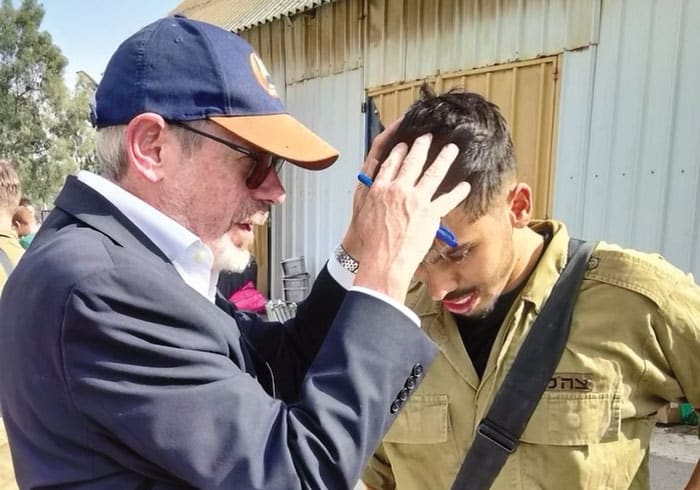
Saul Teplitsky, an Orthodox Jew from New York, did everything he could to support Israel after the Hamas attack on October 7th. He donated money to various organizations aiding Israel and urged his community to contribute necessary items to the IDF. However, he felt it wasn’t enough. Then, an idea struck him: Why not bless the soldiers heading to Israel for the war effort?

Having heard about a friend’s son joining the IDF, he had an idea: Visit the airport and see if there are any Israel soldiers who are making their way back to Israel.  And so, he visited Newark Airport and encountered a young Israeli soldier on his way to Israel with 27 duffle bags for his unit. Approaching the soldier, he sought permission to give the Birkat Hakohanim (The Priestly Blessing and God’s blessing for the Children of Israel). The soldier agreed, and as a Kohen, Teplitsky recited the biblical blessing (Numbers 6:24-26): “May the Lord bless thee and protect thee. May the Lord shine his face toward thee and be gracious unto thee. May the Lord lift his face toward thee and give thee peace.”

“After I finished giving him the blessing, he had tears in his eyes and said that this blessing is better than any gear he’s going to wear to protect him,” Teplitsky said.

Teplitsky then noticed other Israeli soldiers at the airport and proceeded to bless them. “They were all very appreciative,” he recalled. “I went back home and opened a WhatsAapp group of Kohanim and an organization called: ‘Kohanim on Call’,’ thinking we would bless five people a day. In three weeks we had 1,500 Kohanim, and gave 15,000 blessings.”

These Kohanim hail from around the world, including countries like Brazil, Italy, Hong Kong, South Africa, and the U.S. They encompass Jews from across the denominations, but all share a belief in the power of the ancient blessing.

“Each Kohen receives a name of a soldier and his mother’s name, then records the bracha (blessing) and sends it to the soldier,” explained Teplitsky. In many cases, parents or family members of soldiers fighting in Gaza request the blessing.

The blessing is believed to provide protection and ward off harm or evil. The Kohen places his hands over the head of the person being blessed and recites the biblical words.

The Torah assures that God promised protection to the children of Israel when they exited Egypt and appointed Kohanim to bless them.

“Our goal is to bless all 350,000 soldiers in Israel.” – Saul Teplitsky

“Our goal is to bless all 350,000 soldiers in Israel. Every day we are getting new names, and our list already has thousands of names, so we are trying to recruit more Kohanim to help us in this mission.”

Since launching this unique “Blessing project,” Teplitsky has been working 18 hours a day between his day job as a business owner and organizing blessings for Israeli soldiers. 

The growing WhatsApp group prompted him to open a new platform, making the process quicker and easier for everyone involved. 

If you would like to submit a name of a soldier to receive a blessing, please submit at:  https://tinyurl.com/KohensOnCallForm. 

If you are a Kohen (Cohen) who wants to join the group and give a blessing, please register at: https://tinyurl.com/Kohanim-registration

Kohanim Around the World Sends Blessing to Israeli Soldiers Read More »

Jewish Pride Is the Answer to Antisemitism

As Israel battles Hamas U.S. Jews are experiencing an alarming rise in antisemitism. On college campuses, students have been shocked by the hatred that has been unleashed, some are afraid to wear Jewish stars. A local rabbi who has been active in human rights campaigns over the years told me, “I don’t know who my friends are any more.” Here in Orange County, Jewish leaders have been battling with progressive activists in the Democratic party who have been promoting anti-Israel resolutions.   

American Jews feel a sense of unease, but there is also good news.  Compare the response of U.S. Jews in the Holocaust to today. Despite reports of death camps in Europe the Jewish establishment led by Rabbi Stephen S. Wise refused to protest. They feared that demanding President Roosevelt act to protect European Jews would spark antisemitism in the U.S. Finally in 1943, four years after the war’s onset, 400 bearded orthodox rabbis marched on Washington, D.C. a few days before Yom Kippur.  Establishment Jewish leaders convinced  President Roosevelt not to meet the delegation, telling him  “these rabbis are irrelevant.”  Today, Jews are not being silent. Two weeks ago, there was a wall-to-wall coalition of 300,000 Jews standing proud in the National Mall, telling the world that American Jewry supports Israel.

In the grassroots there is a great Jewish awakening, akin to the burst of Jewish pride after the Six-Day War. A survey of Chabad rabbis reports an explosion of Jewish commitment. Jews are coming out of the woodwork, synagogues are seeing a rise in attendance. According to Merkaz Stam, a tefillin seller in New York, sales are up by 60%.

Hanukkah will be the test for U.S. Jews anguishing over a rise of antisemitism. Is this the time to hunker down or is this the moment to show Jewish pride? 

Hanukkah will be the test for U.S. Jews anguishing over a rise of antisemitism. Is this the time to hunker down or is this the moment to show Jewish pride? The city council of Moncton, New Brunswick, banned the Menorah because of the war in Gaza. Public uproar prompted them to recall that decision.  The local rabbi, Yitzchok Yagod, reports that  many Jews not involved in the  community woke up and protested.  In Williamsburg, Virginia, the 2nd Sundays Art Festival canceled the menorah lighting.  In response, Mendy Heber, the local Chabad rabbi, plans on increasing activities.   

In the ’70s, when Chabad began to put up menorahs in public places, many liberal Jewish groups reacted with angst. They cajoled, criticized and eventually began to sue. “It’s a violation of church and state, Menorahs belong at home not at City Hall,” they claimed. The real clash, however, was not over church and state. That was a ruse for something deeper—whether we should subdue our Jewish identity in the public, or as Chabad argued, act with Jewish pride. As the great Professor Arthur Hertzberg, who headed the American Jewish Congress that  battled Chabad  in court over Menorahs, told me before his passing, “We believed you should be a Jew at home and a citizen on the street.“ The Rebbe [the Lubavitcher Rebbe Rabbi Menachem Mendel Schneerson], he added “believed that if we would be Jews on the street we will be a better Jews at home. The Rebbe was right and we were wrong.”

The same holds true today. The answer to antisemitism is not to remove your mezuzah and hide your chai. It’s to stand strong  and proud. Yes, some have withdrawn behind locked doors and armed guards. Chabad rejects this agenda. This should be the moment for the Jewish community to stand up with a positive message of self-esteem.  Instead of reducing  Menorah lightings, we need to  make more. Thousands of celebrations will be held., in shopping malls, city halls and sports stadiums. 

A few days ago, the first Menorah was erected in Gaza. Soldiers pushed aside the rubble in the former Hamas stronghold in Bet Lahiya and lifted up the Menorah for all to see. Chabad is putting up another 30 Menorahs in Gaza, to ensure that soldiers spread all over can participate in the holiday celebrations. In addition,  tens of thousands of kits will be handed out to soldiers on the front lines.

If they have the courage to light a Menorah in Gaza, it behooves us to show our solidarity with them.  Join a celebration, be it  at the National Menorah opposite the White House, or one of the thousands of others in cities and towns all over the country. Light your Menorah in doorways and windows. Jewish pride is the greatest response to antisemitism.


Rabbi David Eliezrie is the president of the Rabbinical Council of Orange County, author of “The Secret of Chabad” and the upcoming “Undaunted: The story Rabbi Yosef Yitchchak Schneerson.” 

Jewish Pride Is the Answer to Antisemitism Read More »

Zusha to Play a Benefit Concert for Israel During Hanukkah

On December 13, Zusha, a popular Hasidic soul and folk band, is going to perform a house concert in Bel Air benefiting Israel. Proceeds from the event, which is being hosted by Daniela and Andrew Hirsch on the sixth night of Hanukkah, will benefit Jewish National Fund – USA and its Israel Resilience Campaign. The “Light and Unity” concert is set to feature the performance from Zusha, speakers, a menorah lighting, sufganiyot, food trucks and beer and wine. 

“This event emerged from a desire to not only raise our community’s spirits but also to make a tangible impact on an issue that’s deeply affecting us all,” the Hirsches said. “It’s a chance for us to come together, lifting each other up while contributing meaningfully to a cause that lies heavy on our hearts.”

Jewish National Fund-USA’s Israel Resilience Campaign includes evacuating 10,000 residents from Gaza border communities to safer areas.

Jewish National Fund-USA’s Israel Resilience Campaign includes evacuating 10,000 residents from Gaza border communities to safer areas, providing evacuees with toiletries, bedding and clothing, offering psychological treatment to victims and rebuilding devastated communities.

“JNF recognizes the need for immediate relief and has managed to direct each dollar received for the Resilience Campaign directly to emergency efforts in Israel,” the Hirsches said. “We aim to provide substantial financial support to our brothers and sisters in Israel who have endured so much during recent tragedies, as well as assisting in those that are actively serving to defend Israel.”

Tickets to the event are $100 minimum, but the Hirsches hope to raise more to support the Jewish State. Along with their friend and designer Raz Miyara, who created the event flyer for free, they are giving their time and energy to the cause and encouraging others to do the same.

“By participating, we’re not only strengthening our bonds but also actively benefiting local Jewish and Israeli businesses,” the Hirsches said. “This is a celebration of unity, resilience and community spirit.”

The couple chose Zusha – a band with millions of plays for their songs and videos online – to perform because of their blend of energy and depth. 

The Hirsches

“Their music, rich with meaningful lyrics from Psalms and Torah, is delivered with a fresh, modern edge,” they said. “This combination not only touches the soul but also resonates with a broad audience, making them a perfect fit for our event’s atmosphere and objective.”

The Hirsches aim to transform the darkness into light at a time when Jews in Los Angeles and abroad are contending with record levels of hate following the Oct. 7 massacre in Israel. They believe that with their event, they can bring about harmony among the Jewish community, which is more important than ever.

“In the face of rising antisemitism globally, we see the celebration of Hanukkah, a festival symbolizing Jewish pride, as especially relevant,” they said. “Emphasizing ‘Parsumei Nissa,’ the concept of publicizing the miracle, we aim to harness Hanukkah’s energy and lessons to demonstrate the vibrancy and unity of the Jewish nation to the world. Our message is clear: Am Yisroel Chai. The Jewish people are alive, well and more united than ever.”

To reserve your tickets to the “Light and Unity” concert, visit TinyURL.com/lightandunity.

Zusha to Play a Benefit Concert for Israel During Hanukkah Read More »

This Year in Jerusalem!

There is a new phenomenon emerging in the Jewish world.

But first let me tell you a story. We were scheduled to take 44 LA Dads to Israel in November on a 200-person Mission. Then October 7th happened, and the trip did not. But I was determined to go to Israel like those tales you hear about, of people running to Israel during the Six Day War and/or Yom Kippur War. For 50 years I wondered why people would do that? And now I understand. I didn’t want to be anywhere else.  So, using my platform at Aish, we quickly attracted a diverse group of students, supporters and just plain folk from across North America. We marketed a six-day trip that promised they would make “an enormous contribution to Israel”. And contribute they did in money and in random acts of kindness. Within two weeks, we had attracted two busloads. The group never complained or looked at their watch. They just rolled up their sleeves and said, “put me to work”. They had no fear, rather an unlimited reservoir of empathy.  The Inbal hotel in Jerusalem limited the group’s size because displaced families had taken up the rest of the capacity. 

Aish LA Rabbi Aryeh Markman and Aish Washington D.C. Former Board Member Debra Berman

Yes, the security issue weighs like an anvil over everyone’s heads both there and here.  We all felt that Jerusalem was probably the safest city in the world.  Let me ask you, who would you rather entrust your life with all things being equal:  The IDF or the LAPD?  Guns were in plain sight everywhere, and ironically, I never have felt more secure. 

It’s time to blanket Israel with Solidarity Missions. I am imploring you to create your own within your circle of influence. It’s the next wave of what Jews do and need to do!  Right now, the Jewish Quarter and Ben Gurion airport are ghost towns. Cabbies complained of few riders. 

Why us? Why now?

Because the entire country is in trauma from the pressures of the war.  Everyone has relatives and friends on the Fronts, in the Reserves and so many are injured, captured, still missing, or killed.  We North Americans were the emotional support for an exasperated populace. Everywhere we went people said “Thank you for coming. It means so much to us.” I was giving out hugs and everyone took one….as they told us of their drama and heroics. Just our presence spoke volumes. 

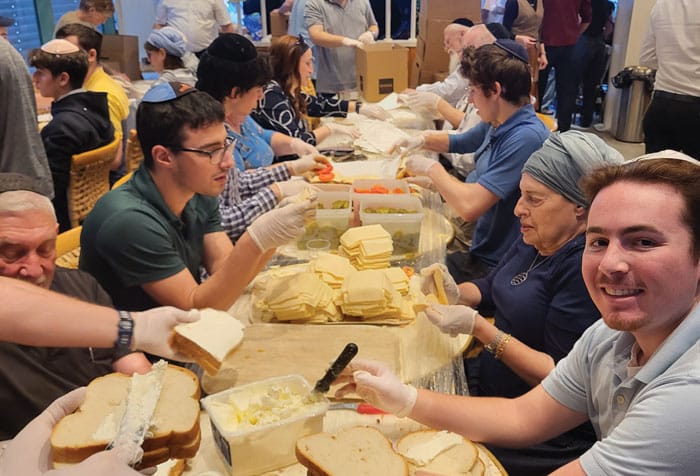
Beit Shemesh Aroma Café transformed into an IDF kitchen with volunteers making 10,000 sandwiches for lunch.

How about the argument that we should have just donated the trip expense instead and not come? Are you kidding?  We easily dumped $400,000 on the economy and additionally donated somewhere north of $350,000 along the way. Including an air force squadron of Drones, which seems to be the essential Chanukah gift for anyone in the Reserves.

If for no other reason, you must experience the overwhelming unity that currently glues the country together. I had no idea where Israelis stood on politics or religion. It never came up in conversation. There was one task at hand; defeat the enemy and support each other in the process. 

If for no other reason, you must experience the overwhelming unity that currently glues the country together. I had no idea where Israelis stood on politics or religion. It never came up in conversation!  There was one task at hand; defeat the enemy and support each other in the process.  

As I promoted the trip for two nonstop, sleepless weeks I only had a vague idea of what we would do and the impact we would make.  Here are the activities we did, and I suggest you do the same or a variation of:

  • Find a shiva or military funeral. Yep.
  • Listen to relatives of the captives.
  • Visit wounded soldiers. We spontaneously walked into Hadassah Ein Keren and said we were there to help.
  • Throw a barbeque for an IDF base. We did for 700 soldiers on a transit base five miles from Gaza.
  • Harvest the abandoned fields. Nothing like getting Eretz Yisrael under your fingernails.
  • Make sandwiches/food for the IDF. At the Aroma Café we were a 10,000-sandwich conveyor belt just for one lunch for the Reserves.
  • Visit Shura Rabbanuit Army base to learn how they identify bodies and how they dealt with the deluge of 1200 in one day. 
  • On the same grounds, saw the hundreds of IDF Torahs in the world’s largest ark. And dance one hakafah/circuit with a torah rescued from the Holocaust for the Simcha Torah that couldn’t be celebrated. 
  • Visit the displaced families in hotels and bring toys for the children.
  • Don’t forget letters for the soldiers who literally pin them up in their barracks.
  • Drop off Shabbos food at the homes of families whose fathers are at the Front. 
  • Listen to stories of bravery and near misses from the survivors who had no idea of the magnitude of the onslaught. They fought, outnumbered, with guns against RPGs, defending hundreds at a time. 
  • And of course, dance and pray Friday night at the Kotel. You must celebrate life and our purpose for being. It will lift us to triumph over, yet another challenge brought on because we are the Light unto the very dark Nations. 

On Shabbos we visited with the venerable 89-year-old Chicago born, Rabbinical Historian, Author, Lecturer; Rabbi Berel Wein, who made aliyah 26 years ago.  He summed up the current situation as “We are living in biblical times, and we will eventually vanquish our enemies.” The Q&A continued as we thirsted for answers to the new era that has been ushered in. 

Bottom line: Get on a plane. You will make a difference and encounter an Israel that is a taste of the Messianic Age and an Israel that is united in love and purpose.


Aryeh Markman is the Executive Director of Aish LA.

This Year in Jerusalem! Read More »

We Are Yisrael

“We look like we’re strong. We look like we’re doing ok, but the truth is, we are just pieces of ourselves.”

It hurts to hear her utter these words. 

I’ve heard her say so much over the past 54 days, but never this. I listened to her speech before the U.N. and at the rally in D.C. and in her recent audience with the Pope in Rome. 

I’ve seen her and her husband again and again on social media. And long before the nightmare began, long before becoming the thing she least wanted to be in the world – the face of the families of the hostages – she was our neighbor and friend. The son she is fighting for was at our oldest daughter’s bat mitzvah in Jerusalem.

Throughout it all, Rachel’s voice never wavers. She is always on point. She is clear, prophetic even. And she is strong — Jewish mother strong. She is fierce and she is tender.

Rachel Goldberg is all of those things. Her husband, Jon Polin, is all of those things. 

And also, they have been torn apart, they are in pieces, they are—in some ways—shattered. But in spending time this week with Jon and Rachel and other families of those held hostage, “shattered” really doesn’t seem to be the right word. Shattered means broken beyond repair. Shattered means impossible to be put back together, to be made whole. Shattered means unable to function.

And — looking at these families from the outside — I see extraordinary strength, I see deep love, I see compassion and tenderness and goodness and grace and dignity. To me, they are not shattered. They are not broken.

To be sure, they are in deep pain — pain I cannot fully understand. They are living, Rachel reminds us, on a different planet altogether, one she calls the “planet of tears.” 

But clearly they are not broken. Notwithstanding how they might feel, they are, objectively, not shattered. 

And part of the reason, I think, is because of us — the collective us. Their friends. Their family. And their extended family — Am Yisrael. 

I heard it again and again over the past few days and in my previous visit from the families of hostages, the bereaved families who have lost children, the parents who are worried sick about their sons and daughters in the army. Again and again they told me that our love, our concern, our letters and packages and phone calls and texts — these things give them strength. These things help them continue to function. These things help them to hold onto hope. These things enable them to experience unimaginable pain, unimaginable heartbreak, without actually coming fully and irreparably undone, without breaking into pieces, fragmenting onto the floor.

We are Am Yisrael, a people that takes its name from the Torah portion we read this past Shabbat. Jacob wrestles with the angel and gets a new name:

“Your name shall no longer be Jacob, but Israel, for you have striven with beings divine and human, and have prevailed.” (Genesis 32:29)

We are often told that we are “God wrestlers” — we are the descendants of Jacob, the one who strives with beings divine and human. But the root of the word Yisrael has another nuance that helps me understand this difficult time. It can mean to persist or to persevere. 

We are the people that persist, that persevere, that hang in there with God day after day, year after year, century after century.

This is our strength, our superpower. Somehow, despite everything we’ve experienced, despite everything we’ve been through — from pogrom to massacre to genocide — we persist. Together, we are in pain but we are not broken. 

This is our strength, our superpower. Somehow, despite everything we’ve experienced, despite everything we’ve been through — from pogrom to massacre to genocide — we persist. 

Together, we are in pain but we are not broken. Together, as a people, we are hurting but we are not shattered.

We are Am Yisrael.


Rabbi Yoshi Zweiback is the Senior Rabbi of Stephen Wise Temple in Los Angeles, California.

We Are Yisrael Read More »

The Red Cross Has Become a Glorified Uber Driver

Following the Holocaust, the International Committee of the Red Cross openly admitted they failed to help and protect Jews from extermination by the Nazis.

On October 7th, as Hamas terrorists massacred 1,400 people in southern Israel and took at least 240 hostages, the Red Cross is – yet again – missing in action.

It should not go unnoticed that the barbaric October 7 massacre was the single largest mass murder of Jews since the Holocaust. Today, the perpetrators might be different, but Hamas is just like the Nazis, in both their agenda and brutality. Perhaps the only difference is, whereas the Nazis sought to cover up their heinous crimes, Hamas was doing so gleefully, using ‘go-pro’ cameras and streaming theirs on the internet in real time.

Of the 240 hostages Hamas kidnapped into the dungeons of Gaza, at least 40 were children, many mercilessly torn apart from the clutches of their parents’ arms, like Ela and Dafna Ziv, 8 and 15, who were abducted from Nahal Oz and pulled from their beds in pajamas, but not before first witnessing their father being executed.

The youngest captive is Kfir Bibas, who was a mere 9-months-old when he was taken from his home. Together with his brother Ariel, 4-years-old, they remain the only children left in captivity, their fate, including that of their mother Shiri, still unknown.

Many of the hostages are also elderly, and sick, in need of urgent medical attention, while at least 10 have been reported executed in captivity.

For the abundance of clarity, if it still needs to be reiterated, babies and grandmothers, are not prisoners of war, but hostages, and that the taking of hostages is a grave war crime and gross violation of international humanitarian law (IHL), including under Article 8(2) of the Rome Statute, the International Convention Against the Taking of Hostages (1979), as well as the Fourth Geneva Convention of 1979.

Under IHL, pending the release of the hostages, Hamas must treat each one with dignity, provide necessary medical care and information as to their whereabouts and condition. They have violated every single one of these obligations, while further engaging in psychological warfare and torture, through their degrading propaganda videos.

Although the Red Cross has condemned the taking of the hostages and called for their release, the stark reality is they have absolutely nothing to show for it.

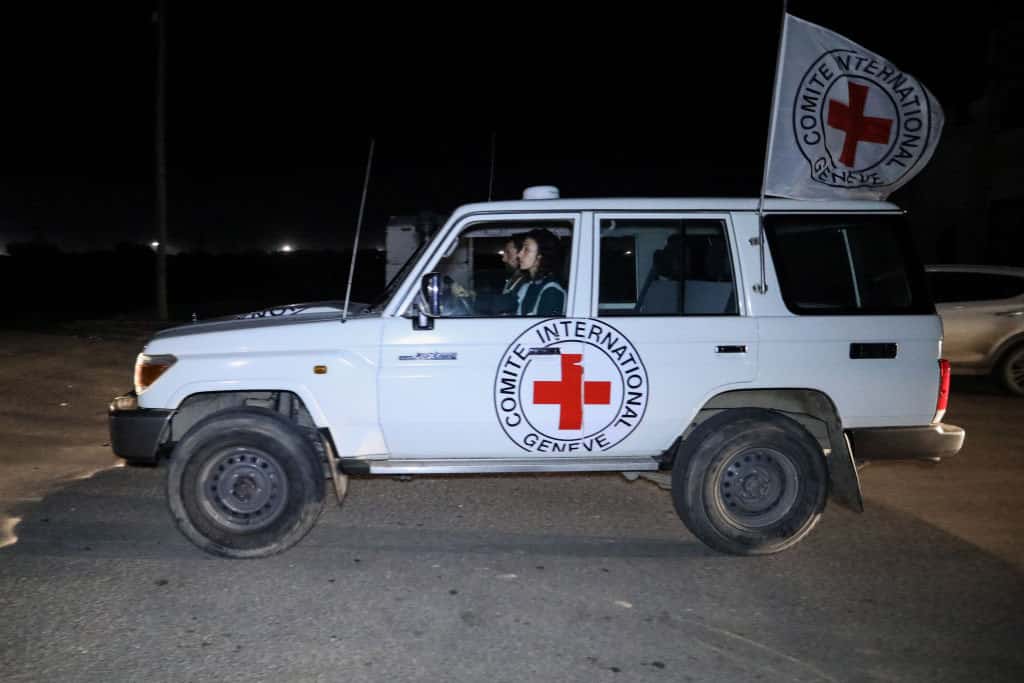
They have not seen a single hostage in captivity, have not obtained any proof of life, cannot tell us where they are located, the condition they are in, or if they need medical assistance. The Red Cross’s role has effectively been relegated to no more than a glorified Uber driver.

Although about 100 hostages have now been released (with at least another 137 remaining), it has not been because of the Red Cross, but in spite of their absence and utter ineffectiveness.

One of the released hostages, Elma Avraham, 84, is now fighting for her life. At a press conference following her return, her children heartbreakingly described how the Red Cross abandoned their mother, saying how the family even traveled to the Red Cross office to provide them with her mother’s medicine, but the Red Cross refused to take it. Elma’s children said the Red Cross “did nothing” to help their mother, asking “Why are they even there if they don’t do anything?”

The fact that the Red Cross is dealing with a ruthless enemy that does not abide by any rules or norms of international law is not an excuse and does absolve them of their mandate to provide “humanitarian protection and assistance for victims of armed conflict.” Nor is it enough to merely politely ‘call’ for their release.

The Red Cross still has nothing to show as Hamas have been cruelly holding the bodies of IDF soldiers Hadar Goldin and Oron Shaul, taken captive during a humanitarian ceasefire in the 2014 war with Israel.

It has nothing to show as Avner Mengistu, a 37-year-old Israeli civilian with mental health issues, has been held hostage by Hamas also since 2014, or Hisham al-Sayed, a Bedouin Israeli, who is seriously ill and has been held hostage in Gaza since 2015.

And the Red Cross had nothing to show the entire time IDF soldier Gilad Shalit, was held captive in Gaza for almost 6 years, until finally his release in 2011.

The reality is, when it comes to Israeli lives, the Red Cross has embarrasingly little to show, full stop.

Of the 240 hostages Hamas took captive, following the October 7th massacre, at least ten are believed to have been also American nationals.

The United States is by far the single largest state donor to the Red Cross, in 2022, contributing almost $700 million.

Perhaps Congress ought to be asking where that tax money is going, why the Red Cross been unable to see even a single hostage, or, for that matter, why they ignored the irrefutable evidence right under their noses that Hamas was using Shifa hospital in Gaza as their terrorist headquarters.

Almost eight weeks after the October atrocity, they are unable to even provide proof of life of the youngest of the hostages, 10-month-old Kfir Bibas.

The Red Cross prides itself on being unwaveringly neutral, but when it comes to Israeli lives, the Red Cross are unwaveringly absent.


Arsen Ostrovsky is a human rights attorney and CEO of the International Legal Forum. You can follow him on Twitter (‘X’) at: @Ostrov_A.

The Red Cross Has Become a Glorified Uber Driver Read More »

Is Ireland Pro-Palestine Because It Has So Few Jews?

During my years as an undergraduate in Montreal, a time that coincided with the peak of the folk revival era, I was drawn to Irish music and songs such as “Black Velvet Band” and “Down by the Sally Gardens” and singers like Tommy Makem and the Clancy Brothers. I am sure that it was affinity-based, at least in part, on my appreciation for the struggles for national survival experienced by both the Jewish people and the people of Ireland.

It is therefore with dismay that I have witnessed the growing antipathy toward Israel expressed by the Irish media and the Irish government in recent years. Articles with titles such as “Why Ireland hates Israel” (Jerusalem Post, 2022) and “Ireland’s criticism of Israel has made it an outlier in the EU. What lies behind it?” (The Guardian, 2023) are common. On November 15th, after the October 7 Hamas massacre and the Israeli reaction, the Irish legislature narrowly defeated a motion to expel the Israel ambassador, as well as a motion to refer Israel to the International Criminal Court.

A recent article by Terry Glavin in the National Post quotes Niall Holohan, a retired Irish diplomat, saying in an interview published in The Guardian, that it is in the Irish psyche to side with the underdog. However, Glavin sees that there is something else going on: the long history of antisemitism in Ireland.

As if to prove Glavin’s point, in the same interview Holohan refers to the small size of Ireland’s Jewish population, stating that the lack of Jewish influence, “has given us a freer hand to take a more principled position.” In other words, too many Jews prevents a government from acting with principles. Holohan’s remarks aroused outrage and accusations of antisemitism.

My interest was piqued. Why does Ireland have such a small Jewish population? According Avi Kumar (JNS, 2023), the Jewish community in Ireland is declining, numbering only 800 in a total population of 5.3 million. (The number increases to about 2500 if Jewish expats—temporary residents, mainly Israelis working in the technology sector—are added.

Antisemitism likely has something to do with the low numbers. At an early point in James Joyce’s novel “Ulysses,” Garrett Deasy (a minor character and headmaster of the school where Stephen Dedalus, a main character, teaches) jokes to Dedalus that Ireland is the only country that has not persecuted the Jews. Why? Because they never let them in!

Obviously, some Jews did get in, particularly in the late 1800s, after Russian pogroms. Some, such as Robert Briscoe (Lord Mayor of Dublin) and Chaim Herzog (sixth President of Israel) became prominent figures. But when times were most desperate for the Jews of Europe, Ireland`s response was a shameful one.

In 1938, representatives of 32 countries met in the French spa town of Ēvian-les-Bains to find a solution to the Jewish refugee crisis precipitated by the antisemitism unleashed in Germany in 1933 and in Austria in 1938. Hundreds of thousands of Jews were stateless. The conference, an initiative by President Roosevelt, was an abject failure. With the exception of the Dominican Republic (in the end only 700 Jewish refugees found sanctuary there), no country agreed to accept Jewish refugees.

Ireland, a British Dominion until 1949, was not initially invited to the Ēvian conference, but asked to attend, not with the intent of helping to solve the problem, but solely to exercise its independence in foreign affairs. The Irish representative, Francis Thomas Cremins, referring to the refugees as unfortunate creatures, stated bluntly that the Irish were content to have been invited, but were not able to help alleviate the crisis (see “The Jewish Trail of Tears”).

His efforts to save Jews were contrary to official Irish policy.

Robert Philpot (The Irish Times, 2017) describes the efforts of the Irish essayist Hubert Butler to bring Jewish refugees to Ireland during World War II. Butler attended the Ēvian conference and what he witnessed disgusted him. His efforts to save Jews were contrary to official Irish policy. Some of the refugees went on to other destinations, so the number saved is uncertain, but estimates range from 100 to 300.

To Philpot, Butler`s actions, at least to some extent, rescued Ireland from eternal shame. But another, and more important message, is that before condemning Israel, the Irish government should reflect on the role Ireland played, along with many others, in convincing the Jewish people of the need for an independent Jewish state.


Jacob Sivak, a Fellow of the Royal Society of Canada, is a retired professor, who taught at the University of Waterloo.


Is Ireland Pro-Palestine Because It Has So Few Jews? Read More »

Congress Questions College Presidents on Campus Jew-Hatred

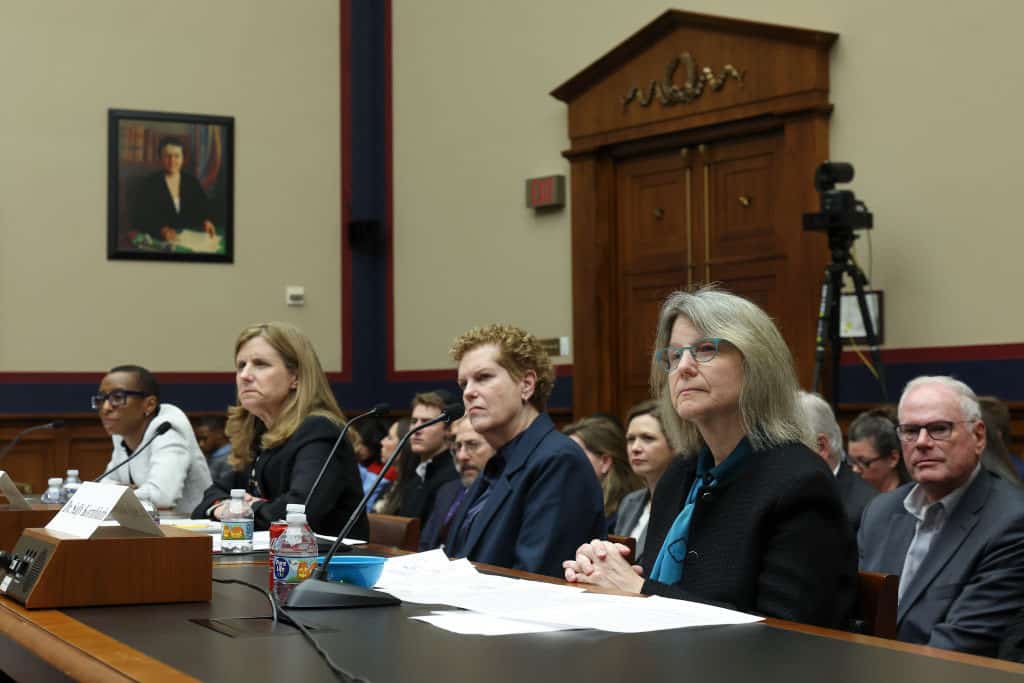
Appearing before the House Committee on Education and the Workforce, the presidents of three major universities: Harvard’s Claudine Gay, University of Pennsylvania’s Liz Magill and Sally Kornbluth of the Massachusetts Institute of Technology (MIT) were asked if calling for the genocide of Jews was against the colleges’ conduct of conduct.

None of them answered the question, instead saying it depended on the context and the result of any specific investigation.

Magill said if the speech turns into conduct it could be harassment.

“Conduct meaning committing the act of genocide?” Elise Stefanik of New York, the fourth ranking House Republican,asked. “The speech is not harassment? This is unacceptable, Ms. Magill. I’m going give you one more opportunity to for the world to see your answer. Does calling for the genocide of Jews violate Penn’s code of conduct when it comes to bullying and harassment. Yes or no?”

“It can be harassment,” Magill said.

“The answer is yes,’” Stefanik said.

Gay said it can be if it is targeted at an individual and depends on the context.

“It does not depend on the context,” Stefanik said. “The answer is yes and this is why you should resign. These are unacceptable answers across the board.”

The college leaders cited the importance of freedom of speech and the need to allow views that they don’t agree with. But speech that creates a hostile environment where one does not safe to get an education. The presidents said they can condemn speakers of events but don’t censor them. A major issue are the chants of “From the river to the sea, Palestine will be free” and calls for “Intifada, revolution” as being the only solution.

“The best way to fight negative speech is more speech,” Kornbluth, who is Jewish, told the committee.

While reports of antisemitism since the Hamas attack on Oct. 7 has been widespread, these three colleges have gotten much of the media attention. At Penn, there were threats against the campus Hillel, antisemitic messages were projected onto campus buildings and an event called Palestine Writes Literature Festival included a remote appearance by former Pink Floyd guitarist Roger Waters, who has a long track record of using antisemitic tropes; earlier this year he appeared at a concert in Berlin wearing a Nazi-type uniform. At Harvard, when Gay condemned the phrase “from the river to the sea” 100 professors criticized her condemnation. Thirty-one Harvard groups signed a document calling Israel as “entirely responsible” for the Hamas attack of Oct. 7. Harvard and MIT are under investigation by the U.S. Department of Education for allegations of civil rights violations linked to antisemitism.

At MIT, pro-Palestinian protestors did not leave an area reserved for pedestrians, despite threats of suspension. In a statement, Kornbluth said that the students would not be suspended from classes because of collateral consequences such as “visa issues.

When asked why they were not suspended, Kornbluth told the committee “we strive for outcomes that are proportional to the transgression.”

Democratic Pennsylvania Congresswoman Susan Wild asked Magill if students who called for calling for intifada, global revolution was an example of hate speech or speech that would incite violence.

Magill said the video of the chants was “hard to watch” and “disturbing” and said it was “hateful speech” that should be condemned but said whether it rose to incitement to violence was “a much more difficult question.”

Jim Banks (R-Ind.) asked why the Palestine Writes Literature Festival included antisemite Roger Waters, Magill told him there was no place for antisemitism and she had called out some of the invited speakers, but it was a free speech issue.

Banks said Penn regulates speech it doesn’t like, and brought up lecturer Ahmad Almallah, who led students in chanting “intifada was the one solution.”

“Why does that professor still have a job at your university?” Banks asked, who added that her university is a hotbed of antisemitism.

“You’re largely responsible for it,” Banks said, referring to Almallah.

Lisa McClain (R-Mi.) asked Gay if any action was taken against students who mobbed a Jewish student and why pro-Palestinian protestors occupied University Hall for 24 hours with professors promising them no disciplinary actions would be taken. Gay did not answer.

“I love the lip service,” McClain said sarcastically.

She later scolded the administrators — “we deserve answers … not rhetoric.”

None of the three presidents could name a single instance in which any students was disciplined for antisemitic behavior. In 2022, when City University of New York (CUNY) Chancellor Felix Matos Rodriguez chose not to appear before a city council hearing on antisemitism at CUNY, his representatives who did appear could also not name a single example of a student being disciplined for antisemitism.

Asked why she decided not to receive a briefing by an Israeli official regarding the facts of Oct. 7, Magill said she gets many invitations and had to mind her calendar.

Julia Letlow (R- La.) said a female Jewish student at MIT told her she had to leave a study group because a student said the women at the Nova festival “deserved to die because they were partying on stolen land.”

Letlow said the lack of action by college presidents was disheartening.

“I am embarrassed,” she said.

Asked what was being done at MIT, Kornbluth said there “have been lunches” and said a police presence helped avoid physical confrontations.

California’s Kevin Kiley (R-Lake Tahoe) asked Gay if she could look Jewish parents who were considering sending a child to Harvard they would be safe from antisemitic attacks and she could not answer. Kiley told Gay that her “parsed statements” made it appear she holds the position that “forces of antisemitism are a constituency that needs to be catered to.”

“Should the federal government keep shoveling money and privilege to institutions like yours that fail so profoundly in their mission?” –Brandon Williams (R-N.Y.)

Brandon Williams (R-N.Y.) asked Gay: “should the federal government keep shoveling money and privilege to institutions like yours that fail so profoundly in their mission? … How did you arrive here if education is your mission and antisemitism is your result?”

He asked the same of Magill and said he was embarrassed to be a graduate of the University of Pennsylvania.

Gay said Harvard denied a request to put up the Israeli flag because it is against school policy, but said her immediate predecessor, Lawrence Bacow, allowed a Ukrainian flag to be flown after Russia invaded the country.

Virginia Foxx (R-N.C.), the committee’s chairwoman, told the university presidents they had work to do and must protect students and speak out against hate that has become fashionable

“That’s your job as a campus president,” Foxx said. “That means being willing to risk your job to speak truth clearly, consistently and unapologetically, even when the Jew haters turn their hate to you. We’ll now be watching, and I genuinely hope for the sake of our nation, you will rise to meet the challenge.”

Congress Questions College Presidents on Campus Jew-Hatred Read More »