fbpx

October 26, 2023

An Interview with Yaniv Iczkovits, Author of ‘The Slaughterman’s Daughter’

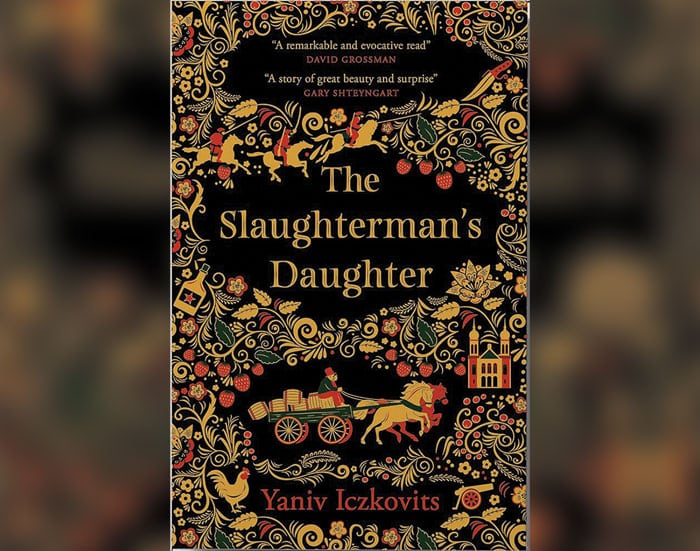
I sat down with Yaniv Iczkovits, author of “The Slaughterman’s Daughter,” an exuberant, picaresque tale of a daring 19th-century heroine, Fanny, and the colorful cast of characters she meets along her journey. I wanted to know if he set out to write a feminist story, who inspired him, and what role his philosophy Ph.D. plays in his fiction. Below, some answers. (This interview has been condensed and edited for space and clarity.)

Jewish Journal: The quest of the hero is traditionally a male genre, so what made you decide to give this quest to Fanny? Would you call it a feminist story?
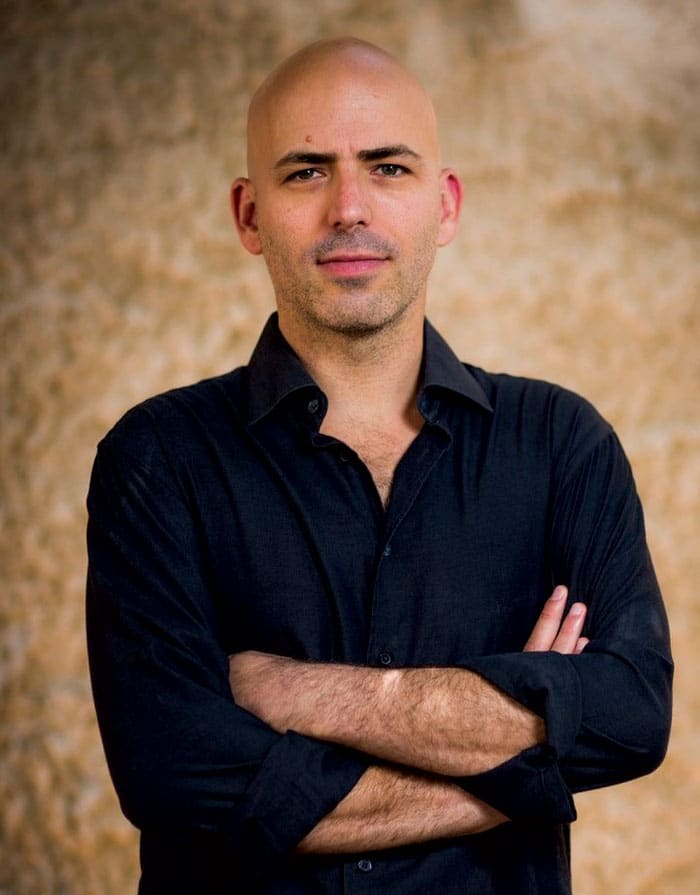
Yaniv Iczkovits: When I decided to write this story, I knew that the protagonist needed to be a woman. Reading advertisements in newspapers [from 19th-century Russia], it was clear that no man would ever think even think of going on this journey. Because the Jewish tradition is very …  it really plays into men’s favor. They could leave their families, and thousands of Jewish men did at that time, and they were not penalized in any way. So— a woman should do this journey. 

Whether it’s a feminist…well, I think what Fanny is doing is very similar to what [her brother-in-law] Zvi-Meir did. He left his family, and he’s supposed to be the villain because he left them, and they’re very poor. But she is doing the same to her family, even though she’s doing it for a more righteous cause.

I’m not sure whether it’s feminist, but I do think that she is like: OK, I know that I’m going to somehow damage my children, but yeah, I’m going for it. Why not? If men can do it, why not me? [laughs] It’s almost wishful thinking or even a prayer that more women will take control of things because we all see what’s going on with men leading—politically, religiously, socially—so wo-men taking over, it’s basically one of the main solutions that I can offer humanity.

Fanny is different [from the male characters]. Whenever she acts with violence, it’s almost because she doesn’t have a choice. She has a sense of doubt, remorse, thinks maybe I’m wrong and maybe I shouldn’t have gone through this journey, whereas for the men, violence is almost the nature of things, the world has to be manipulated by violence and power. 

JJ: Who are the writers that inspired you?

I feel like Israeli literature is very heavy. Humor is not one of its merits. It’s not plot driven but, usually,  psychological. So, I was looking for something else. Yiddish writers were always my favourite.” –Yaniv Iczkovits

YI: I feel like Israeli literature is very heavy. Humor is not one of its merits. It’s not plot driven but, usually,  psychological. So, I was looking for something else. Yiddish writers were always my favourite. Sholem Aleichem and Mendele Mocher Sforim and Bashevis Singer and Isaac Babel and Zalman Shneour…this is how I started to write the book. I was wondering what Sholem Aleichem read when he woke up in the morning, like what sort of newspapers did he read? Because I thought: OK, Sholem Aleichem, he lives in the shtetl, conditions of life are hard, and nevertheless his fiction is full of humor and sarcasm and irony. So, what were his sources of inspiration? This is how I came to Hamagid and Ha-melitz [the first Hebrew newspapers] and found advertisements of these desperate women. 

There is something in the Yiddish that was lost in Hebrew, not only the humor. It’s a Weltanschauung, a way of seeing the world. You can laugh at the world, make jokes, complain, but in the Yiddish culture, you don’t have the power to change it, so you need to accept it. Accept things as they are and do your best to not be in despair when things go wrong. We always have the dilemma of doing something to change, like a tikkun — you know the book in Hebrew is called Tikkun [repair, as in Tikkun olam, repairing the world]?

The problem that I think the Yiddish writers had is that when they depicted characters that were not Jewish, they were stereotypical. You see it in Berdyczewski and Sholem Aleichem, and also in Russian writers like Dostoevsky and Tolstoy, when they had Jewish characters, which verge on antisemitic. When I wrote (the character) Novak, I read Gogol, Dostoevsky, Turgenev…it was important for me to try to build Novak like a real Russian character, not a stereotypical stupid goy. 

The main challenge was language. It all started with: How would I write it? In what language would I write this book? At the end of the day, the solution is a mixture. When we have the shtetl scenes, they’re more influenced by Sholem Aleichem and Bashevis Singer. In the Crimean war, I tried to be more like “War and Peace”; for the taverns, it’s Gogol.

JJ: Can you tell me about your research process?

YI: It was about finding the right resources. There are a lot of books about the shtetl, but not many books about daily life, so a huge inspiration was Eva Hoffman’s book “Shtetl.” When I wrote about the Crimean War, I wanted books about how soldiers felt sitting in the trenches. What did they eat? I found diaries that led me to other diaries that led me to other diaries. I don’t think I read one book about the Crimean War to learn the political or military aspects. 

I was very troubled about the geography, as well. I was writing about swamps and rivers and trees and animals, so I went to Belarus before the book was published. To my surprise, when we landed in Motal, it looked very much the same as the shtetl of the 19th century. Laundry in the river, restrooms in the backyard …many things hadn’t changed. It was good that I went there, and I fact-checked the distances, but the most important part was seeing those shtetls without Jews. You can feel something missing. The absence is present.

JJ:   Is that because you know?

YI:  I don’t think so. There’s something there, and I’m not talking about the abandoned synagogues or people telling you “This was a Jewish house.” Something in the atmosphere makes you feel the absence. 

JJ:  I saw that you were in another life you were a philosopher. What kind of philosophy did you study? Is it embedded in your fiction?

YI: I studied philosophy of language and wrote a book about Wittgenstein. When I started writing fiction, the bon ton was: if you have something to say then write philosophy or an essay, but fiction is showing and not telling, it’s about an emotional process. If you want to say something about the world or ideas, then it needs to be reflected in the characters, plot etc. I accepted this in my first and second books, but then I was thinking that the novels I like to read most are not like that. I cannot escape from my philosophical urge to say things, like Umberto Eco, or José Saramago, writers I adore. Also, I know that the bon ton is to be minimalist, but I can’t help it, it’s one of my pleasures to go into the story and substories and have more characters. 

Indeed! And one of my pleasures to read! At the end of our conversation, Iczkovits told me what he’s working on now: a novel about three friends from Transylvania who, in search of a missing sweetheart, return to their origins, retracing, in reverse, their deportation;, and a television adaptation of Isaac Bashevis Singer’s “The Slave” (presenting a “lost world,” much like “The Slaughterman’s Daughter”). I can’t wait for both.

Yaniv Iczkovitz will be the Scholar in Residence at Temple Beth Am on Feb. 16-18. For more information, visit: https://www.tbala.org/learning/scholar-in-residence-weekend/


Karen E. H. Skinazi, Ph.D, is Associate Professor of Literature and Culture and the director of Liberal Arts at the University of Bristol (UK) and the author of Women of Valor: Orthodox Jewish Troll Fighters, Crime Writers, and Rock Stars in Contemporary Literature and Culture.

An Interview with Yaniv Iczkovits, Author of ‘The Slaughterman’s Daughter’ Read More »

New York Community Bake Sale for Asif: Culinary Institute of Israel

On October 11, the Jewish food community came together for a bake sale and community hug at the Maker’s Studio in Chelsea Market in New York City. 

Cookbook author Adeena Sussman, who wrote “Sababa: The Cookbook,” was planning to have a signing and event in Chelsea Market at Seed+Mill. However, in light of the attacks by Hamas in Israel on October 7, Sussman and Rachel Simons, the owner and founder of Seed+Mill, decided to pivot. They partnered with Naama Shefi, founder of Jewish Food Society, to create an experience that would nourish the community’s heart and soul. 

“The past week has been searingly painful, shocking and very lonely,” Simons told the Journal. “The opportunity to bring people in our industry together for a literal and metaphorical hug was so important.” 

Sussman, Simons and the Jewish Food Society, a nonprofit that celebrates Jewish identity through culinary heritage, reached out to members and friends of the Jewish food community to bake and sell products to support the effort. 

Participants included celebrity cookbook author Jake Cohen, Gadi Peleg of Breads Bakery, Elyssa Heller of beloved Brooklyn sandwich shop Edith’s, food blogger Chanie Apfelbaum, restaurateur Einat Admony and author and “spice king” Lior Lev Sercarz. 

“It was inspiring to see our community pull together so quickly and so effectively,” Shefi told the Journal. “Food connects us all. It’s how we communicate with each other, it’s our solace in moments of sorrow, it’s our outlet of expression and it’s ultimately how we can show up for the people who need us right now.” 

Cohen sold his famous date brownies and copies of his new cookbook, Peleg sold his unique take on a black-and-white cookie, Heller sold her caramel chocolate chip cookies, Apfelbaum sold hawaij gingersnaps, Admony sold copies of her cookbook and cupcakes donated by BCakeNY, Lev Sercarz sold his famed spices and cookbooks and Seed+Mill sold tahini brownies and blocks of halva.

All funds raised during the event went to emergency feeding efforts in Israel through Jewish Food Society’s partner organization: Asif: Culinary Institute of Israel. Virtually overnight, Asif turned its multi-level facility into an emergency feeding operation, preparing meals for displaced Israelis and families/communities affected by the attacks. 

“There was no world in which I wouldn’t have been there,” Cohen told the Journal. “I dropped everything to bake and take part because our New York community needed to gather to mourn. We needed to show up for our Israeli brothers and sisters through the incredible pivot Asif has made on the ground.”

Nearly 400 people turned out with less than a day’s notice. Out of an abundance of caution for everyone involved, the event was not widely advertised. In fact, a special request was made to not distribute the flier; all outreach was conducted through personal networks. 

Donations were traded for tickets, which were then redeemed inside for baked goods, cookbooks and swag. The team of Mesiba, an Israeli restaurant in WIlliamsburg, served batched cocktails and wine.

“Food is the heart of the Jewish community, and the experience really brought us all together in the most sincere way.”
– Chef Eli Buli

“The bake sale was such a meaningful event for Mesiba to take part in, especially for me on a personal level,” Chef Eli Buli of Mesiba told the Journal. “Food is the heart of the Jewish community, and the experience really brought us all together in the most sincere way. We hope to do more events like this, under hopefully better circumstances, in the future.” 

Heller also felt strongly about contributing to the efforts of the Jewish Food Society and Asif.  

“This fundraiser was a way to bring people together to celebrate our contributions to the Jewish culinary world but also create a place of support for everyone when a lot of Jewish people feel isolated,” she said. “To make sure that people have access to food during such a difficult time stands at the core of our values, so we just had to help.” 

Over the course of the two-hour event, $27,000 was raised for Asif. Those first donations supported 2,000 meals for families who had evacuated to Eilat. As of press time, the effort has raised around $50,000. 

“To see so many people in a room, embracing, crying, sharing stories of tragedy and also some of hope was a reminder that this feeling isn’t new for the Jewish people,” Simons said. “As the grandchild of two Holocaust survivors, I was proud to help organize the event.” 

She continued, “We will not be silent, we will not be intimidated. We will stand up and speak the truth. I hope this is the first of many community events that bring us together with a shared message of hope, strength and unity.”

New York Community Bake Sale for Asif: Culinary Institute of Israel Read More »

The Tetragrammaton Is a Four Letter Word

I never had faith
So how could I lose it?

I suppose it accumulated
As a subtle longing
Incrementally
Like tallit coffee stains,
Wedding benschers,
Bnei mitzvah kippot—
Inescapable residue of baruchu, shema, and Hallelujah.

Today,
I open the siddur and
The unexpected, uninvited hope has vanished in the night,
Slain.
Dragged down to Sheol
On a motorcycle.
Leaving me nothing but the helpless, naked
Words
Sustainer, life-giver, supporter, healer, redeemer.

Who, indeed, is like you
Four letter word?

The Tetragrammaton Is a Four Letter Word Read More »

Campus Watch October 26, 2023

Two Pro-Palestinian Protesters Allegedly Attempt to Steal UC Berkeley Student’s Israeli Flag

Two people can be seen on video allegedly attempting to steal a student’s Israeli flag during a pro-Palestinian rally at the UC Berkeley campus on October 16.

Stop Antisemitism posted a video of the incident to X, formerly known as Twitter on October 19, claiming that the two protesters assaulted the student. Dan Mogulof, assistant vice chancellor for executive communications at UC Berkeley, said in a statement to the Journal that according to university police, “the targeted student did not, in his report to police, allege that he was struck. He did allege that force was used in an effort to take his personal property, an Israeli flag, which would be robbery or attempted robbery. Those are serious crimes.”

Mogulof also said that “the campus and the police department are taking this very seriously. We are working to identify those involved. We have a long-standing commitment to ensuring appropriate consequences are imposed when laws are broken and/or the Code of Student Conduct is violated.”

Cornell Professor Apologizes for Calling Hamas Terror Attack “Exhilarating”

Cornell University Professor Russell Rickford issued an apology on October 18 for calling the Hamas terror attack “exhilarating” at a pro-Palestinian rally on October 15.

Writing to The Cornell Daily Sun, Rickford stated: “I apologize for the horrible choice of words that I used in a portion of a speech that was intended to stress grassroots African American, Jewish and Palestinian traditions of resistance to oppression. I recognize that some of the language I used was reprehensible and did not reflect my values … I am sorry for the pain that my reckless remarks have caused my family, my students, my colleagues and many others in this time of suffering. As a scholar, a teacher, an activist and a father, I strive to uphold the values of human dignity, peace and justice. I want to make it clear that I unequivocally oppose and denounce racism, anti-semitism, Islamophobia, militarism, fundamentalism and all systems that dehumanize, divide and oppress people.”

UC Davis Professor Threatens “Zionist Journalists”

A UC Davis professor appeared to threaten “Zionist journalists” in an October 10 social media post.

Screenshots of the post on X shows an account purportedly belonging to UC Davis Assistant Professor of American Studies Jemma DeCristo stating: “One group of [people] we have easy access to in the US is all these zionist journalists who spread propaganda & misinformation they have houses [with] address, kids in school they can fear their bosses, but they should fear us more.” The post then featured emojis of a knife, axe, and blood drops. As The Forward has noted, DeCristo’s UC Davis page appears to have been taken down. DeCristo’s purported X account has also been moved to a private setting.

University Chancellor Gary May issued a statement on October 19 denouncing Decristo’s posts. “I find the comments revolting in every way, and I disagree wholeheartedly with them. Regarding DeCristo’s employment status at the university, May said that “the status of complaints lodged against faculty members are confidential personnel matters, so we are unable to publicly comment on the steps we are taking.”

Columbia Professor Blasts University President As “Coward” Over Response to Pro-Palestinian Protests

Columbia University Professor Shai Davidai blasted his university in a viral video on October 18 for failing to denounce “pro-terror student organizations.”

Speaking at a vigil for the Israelis being held hostage by Hamas, Davidai shouted that the “pro-terror student organizations” view his seven-year-old son and two-year-old daughter as “legitimate target[s] of resistance” because they’re Israeli. “President Minouche Shafik of Columbia University, you are a coward,” he said, calling out Shafik’s silence on the matter. Davidai later said that he “would never send [my daughter] to Columbia … because I know that she will not be protected there because the president of the university allows pro-terrorists to march on campus.”

Michigan State Suspends Employee Over Hitler Image on Videoboards Before Football Game

Michigan State University (MSU) announced on October 22 that an unnamed employee has been suspended over an image of Adolf Hitler being shown on the football stadium’s videoboards before the October 21 football game.

The Associated Press reported that the videoboards were streaming The Quiz Channel, which featured a series of 40 questions. One of the questions asked where Hitler was born, and Hitler’s image was displayed alongside the question. The employee is being paid in the interim while the school investigates the matter. The school did not vet the video in its entirety before it was shown on the screen and will stop relying on third party content for videoboard content.

Interim University President Teresa Woodruff issued a statement apologizing over the image being displayed calling it “unacceptable.”

Campus Watch October 26, 2023 Read More »

Ode to the Executioners

Who are you
Artisans of Death —
Hiding fast now
as cowards do so well,
in the unforgiving
shadows
of your terrible, gruesome
reality
finding refuge beneath ground
in the dark entrails
of earth’s cavity —
taking hostage with you
the innocent,
the frail
the elderly —
Who are you
master retailers of
hatred
purveyors of sorrow and
misery —
whose loathsome insigna
this time do you wear —
Who are you,
who now stand REJOICING
at the sight of
our pain,
gleefully
reveling at the sound of our
soul shattering,
unspeakable
numbing
GRIEF

Your HATE of us now
splattered
bright red
spreading as large
scarlet tears
unto the streets of our lives,
in the sanctity of our homes
over sunlit desert sands
which,
just yesterday
welcomed
peace and love,
echoes of music and
youthful, dancing feet …
whose blissful joy and laughter
have now vanished at dawn
when terror fell from the
heavens
sweet, young voices
now forever
gone —
silenced
by hellish
gusts of gun
fire

The Allah you proclaim
AKBAR –
the one you hold
Captive
to your Mephistophelian
dark deeds,
the one behind whom
you hide your
murderous,
bloodied hands
and whose name
you have
Shamed
Abused
Usurped
Soiled
does HE
command you
to rape,
torture,
burn,
terrorize
slaughter ?

Your Allah
my Elohim
our Divine,
silent interlocutor
we MUST believe
is a God of
mercy,
forgiveness,
compassion,
tolerance
and love —
He dwells deep within
each and every
one of us
But YOU,
artisans of Death
have banished Him
from your lives —
by brandishing His name
as a sword above your
heads,
by chanting His name
while killing
maiming
burning
raping –

Behind the walls of blinding rage
you have erected,
in the dark dungeon of
Hate you have fashioned,
in the Hades-like
nebulous void,
where your souls
now reside
no light
no hope
no love
can ever enter
and
there
GOD
SITS –
WEEPING

Ode to the Executioners Read More »

A New York Jewish Woman in an Arab Neighborhood

On the morning of Oct 7th before the full extent of the horror was understood, I walked to my local Arab-owned grocery store in Jaffa, Israel, where I live. As I walked, I saw frightened and tear-stained faces of Arabs huddled together, watching the news and talking. I didn’t see anger or protests from my Arab neighbors. I saw pain and sadness.

I am a Jew and a New Yorker by birth, and an Israeli by choice. I am politically conservative, and I moved to Israel at age 60, leaving behind my home, my friends, my language and, six months later, my husband.

I was greeted with the beginning of COVID, and following a grueling year finally settled in Jaffa. Jaffa is a mixed Jewish and Arab area, but I would say the population is about 60 or 70 percent Arab. It is a beautiful port city where the architecture still reflects the Turkish occupation and the Greek influence. I live right off the beach, and it’s truly magical.

It’s true, Jaffa has had a dark history: More than one hundred years ago in 1921 there were Arab riots against Jews, and many died. But today Jaffa stands as a living testament as to what is possible.

When there was “trouble” here two years ago, the violence was not caused by locals. In fact, the moment the entrances to the city were closed at 4 p.m. every day to nonresidents, suddenly the violence stopped. No one who lives in this neighborhood wants to burn a car that belongs to their own mother, or burn garbage on their brother’s front door. My Arab neighbors are store owners, doctors, mechanics, social workers. They are both Muslims and Christians, and no one supports Hamas.

So let me answer a question I have been asked over and over again: “How are the Arabs? Aren’t you scared to live in Jaffa surrounded by so many Arabs right now?”

Let me be clear: In the neighborhood of Jaffa, we are all scared. Here, it is not a battle of Arab against Jew, light versus darkness. Here, we all want the same things, and we all see what happened on October 7 as an impediment to all of the things we work so hard for.

This is still Israel, and we are at war. I am not naïve, and when the pro-Hamas rally happened in the early morning hours this past weekend, I was well aware that I am not in Kansas anymore. But, again, those involved in the rally were not the Arabs of this neighborhood; they came from outside of our community to stir up trouble here. They left and the mission was unsuccessful.

I walk my dog Margot, a large Doberman, with pepper spray (mostly to protect both of us from aggressive stray dogs), and on the day of the rally when two Arab men who were clearly part of the pre-dawn pro-Hamas rally looked menacingly at me on the very quiet street at 5:00 a.m. , Margot with full teeth let them know they should make wise choices. But I’m not afraid because I know that I, a Jewish woman, have many Arab friends in this neighborhood.

I walk past the mosque in front of my building every morning during the call to worship, and it’s very quiet: not many people praying. The area is not terribly religious. You might think: “You’re crazy to walk at 4:45 a.m.!” But I am not crazy: I know my neighborhood and if I yelled there would be 30 Arab neighbors that would descend on whoever dared bother me in seconds.

These are the things that surprise my friends when they ask how I’m doing right now, surrounded by so many Arabs.

There is a sad energy in Jaffa, not a violent one. In the past few years I have learned so much about the Arabs that I live with: Don’t say no to food or coffee—it’s a capital offense, and besides, it is the best food and coffee you will ever have. I am from NYC. What do I know?

On the second day of the war I packed up a car full of food and supplies to go to a base in the north, all donated by Arab stores and store owners—all of it! I got hugged and blessed by Allah.

These are stories of light that need to be told, and maybe now is not the time, but I have a child in the ground, and I know grief. I do not want to get lost in it again or I will die. Right now, as so much pain and horror is unfolding around us, I want to pay attention to what gives me hope.

Right now, as so much pain and horror is unfolding around us, I want to pay attention to what gives me hope.

Yesterday, I saw one Arab street cleaner at dawn sitting on the ground to pray. The sun was rising over him and the sight gave me incredible hope. Sure, there was great suspicion toward me when I moved in but I was quickly accepted into the community and this is an area of great energy; no one wants it destroyed.

In Jaffa, as a Jew, I am home. Israel is unequivocally the Jewish homeland, but my Arab neighbors are our cousins. Of course, not everyone is kind, but it’s the exception here rather than the rule. I will never apologize for coming home, and no, I am not scared.

My love for my Arab neighbors in no way diminishes my Zionism. It completes it.


Nancy Jacobs has been a respected commercial animation agent for over 40 years. She is known for bringing award-winning talent to agencies and brands—as well as telling you what vitamins you need to take (even if you never asked).

A New York Jewish Woman in an Arab Neighborhood Read More »

First Week of the War

Ignorance fills the souls of my school,

happiness explodes in the hallways,

but all I think about is my home,


Israel, the place I truly come from,

where even after so many years

enemies still hunt us on our land.


Hamas isn’t after walls but people.

They are here to murder our women,

our children, even our dogs.


So what’s next? Hatikvah on the ramparts,

our hope will carry us through hardships.

Yet another war… We shall prevail.


Tatiana Rebecca Shrayer, a sophomore at the Brookline High School in Massachusetts, is the author of the collection “Searching for Bow and Arrows.”

First Week of the War Read More »

Rabbis of LA | Rabbi Yanky Kahn: Two Dozen Rabbis Invest Week in Humanitarian Mission

Hours before he and two dozen Chabad rabbis would depart on a humanitarian mission to Israel, there’s scarcely any space in the happily cluttered living room of Chabad of the Valley’s Rabbi Yanky Kahn.

Besides the last of stuffed suitcases, partially opened containers were filled with helmets requested by IDF troops.  The latter intrigued Rabbi Kahn’s young sons.

“We are going to Israel to show support for our brothers and sisters,” the rabbi said. “We are going to visit the soldiers, the hospitals, we are going to visit people who are wounded. We are going to be with the survivors.

“We are going to bring financial help, spiritual help. We have tefillin, toys for children, a lot of equipment for the soldiers, just to show them that we are all one. We are really all one family.”

While the mercy mission was organized by Rabbi David Eliezrie of Yorba Linda, Kahn, a father of four, had been planning a similar trip since Hamas attacked Israel.

An easy decision?  “Absolutely. I got my wife Hindy’s decision. She said ‘Absolutely, 100%.’”

There’s an intensely personal aspect to the trip, he told the Journal. “This girl’s father, Nachamia Lavi, was killed in a terrorist attack in Yerushalyim. My mother keeps close track of survivors of terrorist attacks. She helps them. So when I was in Israel in 2022 I went to her house to visit her as a close family friend, and I will go for the sheva brachos when we are in Israel.”

The 43-year-old rabbi said that the trip’s goal is “to help the soldiers – but really to help the community. To go out there and show that we are one family while also trying to help them long-term financially. I want to bring support, even for all the children stuck at home, hundreds of thousands of children at home. I bring a little toy, and I have asked people to donate arts and crafts toys.”

That way, he calculates, while their mothers are busily handling responsibilities around the home, their children can stay in place, doing arts and crafts toys for hours.

But really, his reason for going is “just to help the whole country.”

Glancing around the closely packed front room in Valley Village, he explained how all of this luggage and equipment came together in mere days. “People have spent tens of thousands of dollars to make this happen,” the rabbi said. “It shows the beauty of the Jewish people.”

There was not enough time to itemize the supplies, but Rabbi Kahn tried. “We have lifesaving equipment for soldiers who have made lists of what they want. We have helmets for soldiers, a whole list of what they want: Helmets, toothbrushes, babywipes (because there are no bathrooms there), underwear, socks.”

Of course there are persons to thank. He mentioned Sarah Jacobs, Adina Finn and Yaron Boganim, community members from Chabad of Encino.  “They literally have helped fill cargo planes of stuff,” Rabbi Kahn said. Looking around the impressive stockpile in his living room, he said these are just leftovers. 

“These people also have taken leadership in the shipping we have been doing,” the rabbi said. “So many people in the community have donated a lot of money, and Chabad is spending a lot of its efforts also.”

He said that people really have stepped up in a variety of ways. The rabbi  alluded to large sums of money that have been contributed, along with time and dollars that have been invested in obtaining equipment from manufacturers and other suppliers.

“What’s meaningful and rewarding about this trip,” he explained, “is to bring hope and inspiration to the people who lost loved ones.” 

“What’s meaningful and rewarding about this trip,” he explained, “is to bring hope and inspiration to the people who lost loved ones. I want to give them a hug and try to make the world a better place for them. I mean, I really love the soldiers.”

Born in Italy, Rabbi Kahn was brought up in London and came to the United States 20 years ago, when he was 23. 

The San Fernando Valley, he said is beautiful. “That,” he said with a wide smile, “is where I met my wife, a Valley girl. We had options to move to South Africa and to Venice, Italy. We chose the Valley because while we had options to be Chabad emissaries, we chose to be emissaries here.”

As an emissary of the Lubavitcher Rebbe, he said, “I will bring everything he has taught us – hope and future and doing mitzvahs.”

From a traveling perspective, Rabbi Kahn noted that each member of the two-dozen party – including Rabbi Mordechai Einbinder, Rabbi Mayer Greene and Rabbi Jonathan Herzog,  among others — will be responsible for five suitcases.

Then, Rabbi Kahn said, “I want to make sure everything gets into the right hands.”

Rabbis of LA | Rabbi Yanky Kahn: Two Dozen Rabbis Invest Week in Humanitarian Mission Read More »

The Teacher is Devoted to Hamas

Lara Sheehi is a faculty member at George Washington University who has never made any secret of her love of Hamas. On May 22, 2021, she tweeted: “If you see this and STILL entertain for even a split second that Hamas is a terrorist entity, there is literally zero hope for you, your soul, or your general existence as an ethical human being in this world.” 

It is a case of unqualified devotion. And her commitment to Hamas includes equally unqualified condemnation of all those on earth who do not share her passion. Her rejection of those who even consider the possibility that Hamas is a terrorist group leaves no room for debate or discussion. 

Within a few days of the October 7 massacre, Sheehi doubled down on her support for Hamas. Even Berkeley Hamas supporter and faculty member Judith Butler had second thoughts and condemned the assault. But not Sheehi. She immediately endorsed the massacre on Instagram, where she posts as psychoanalyst and activist. 

In the weeks since the Hamas murder spree, Sheehi has signaled that she likes posts contesting reports of Hamas violence, and she endorses competing claims: “The Zionist entity has a long history of sexual violence against Palestinian women.” She decries “the claims of mass rape used to siphon off support from the Palestinian resistance.” She urges widespread statements asserting that “the State of Israel is engaged in a war of extermination against the Palestinians,” that the October “armed resistance … is not only Hamas’ but that of the entire Palestinian people.” She also declared her support for George Washington U’s Students for Justice in Palestine chapter and castigated GWU’s president Ellen Granberg: “How dare you call our mourning a ‘celebration of terrorism.’ How dare you slander the names of our martyrs as terrorists.”

Nonetheless, she has been able to get away with continuing as 2023 president of the influential Division 39 of the American Psychological Association (APA), the Society for Psychoanalysis and Psychoanalytic Psychology. Protests to APA leaders from a number of clinical psychologists who are past and present members of that and other APA divisions were simply ignored. Some prominent APA members embrace Sheehi’s love for Hamas and the hatred of Israel it embodies. APA leaders realize her presidency ends in December 2023. They are waiting out the protests until they become moot. But the APA will long be identified with the antisemitic Division who endorsed a pogrom. I participate in group discussions among Jewish psychologists who confirm their unsuccessful efforts to get meaningful responses from the APA leadership.

There is no getting past this APA scandal if the organization’s leaders simply bury their heads in the sand. But matters may get worse before long.

There is no getting past this APA scandal if the organization’s leaders simply bury their heads in the sand. But matters may get worse before long.

For several years, Sheehi has taught a course that all students, including Jews and Israelis, in GWU’s graduate program in psychology are required to take. She taught the course in fall 2022 and may teach it again in fall 2024. Jewish students will have to suffer through lectures by a faculty member who shares the blood lust of the Hamas murderers.

For GWU administrators to assign her a required course itself amounts to harassment of Jewish students and support for terrorism. If this plan goes forward, line administrators from the program through the upper administration should be pressed to resign. Public demonstrations should demand Sheehi’s removal from any required course. GWU is already under investigation by the Office of Civil Rights in the Department of Education, accused of endorsing Sheehi’s retaliation against her Jewish students. But the case against GW will become more serious now that Sheehi has embraced the worst violence against Jews since the Holocaust.

Sheehi is an assistant professor who is being considered for permanent academic tenure. The university is entirely within its rights to take Sheehi’s support for a bestial massacre into account when reviewing her case. 

Sheehi is an assistant professor who is being considered for permanent academic tenure. The university is entirely within its rights to take Sheehi’s support for a bestial massacre into account when reviewing her case. Her academic publications embody her radical anti-Zionism. Her love of Hamas is part of her professional profile. Promoting terrorism is not part of academic freedom.


Cary Nelson’s “Israel Denial” (Indiana) includes a detailed chapter on Puar. His “Hate Speech and Academic Freedom” (Academic Studies Press) is forthcoming.

The Teacher is Devoted to Hamas Read More »

Do Jewish Women’s Lives Matter? The Unsettling Silence in the Face of Violence.

I have dedicated my studies and work to ending gender-based violence. I worked as a counselor for domestic violence victims, an advocate for survivors of rape and an educator teaching about consent and healthy relationships. 

This passion for violence prevention is greatly influenced by my grandparents and their survival of the Holocaust. Their stories of resilience and determination instilled in me a deep sense of responsibility to work towards preventing violence in any form. 

The reaction to the largest massacre of Jews since the Holocaust has left me deeply disheartened. When Hamas attacked on October 7, chief among their crimes was mass sexual violence. A morgue worker told the Daily Mail, “there is evidence of mass rape so brutal that they broke their victims’ pelvis — women, grandmothers, children.”

The feminist advocates are silent. The sexual violence organizations are absent. Scrolling through my feed I even saw accounts question the legitimacy of these sexual violence reports. 

And yet, the feminist advocates are silent. The sexual violence organizations are absent. Scrolling through my feed I even saw accounts question the legitimacy of these sexual violence reports. 

As a Jewish woman, this is unbearable. As an advocate, this is unethical. Gender-based violence and feminist organizations that I follow have been overwhelmingly absent in response to the violent treatment of Jewish women. When organizations did speak out, at best they issued vague condemnations of general violence. At worst, they aligned themselves with the fight for Palestinian “liberation.” Where is the outrage?

This reaction sends a very clear and painful message: Jewish women’s lives do not matter. 

Jewish women were subjected to unspeakable horrors. But instead of finding global support, their stories were silenced or met with skepticism. As a domestic and sexual violence advocate, we are taught that questioning a survivor’s experience is one of the most harmful reactions you can have. Ignoring the report is even worse. 

Yet, that is exactly how leaders in the field have reacted to Hamas’s assault. The silence and doubt has left me not only feeling isolated, but betrayed. 

As advocates, we work to create a world where survivors are believed, supported, and empowered. But where is that belief and support when Jewish women need it most? In this distressing time, I remember that the story of Jewish womanhood is one of strength and resilience. I grew up honoring Miriam, Moses’s sister, at Passover, who led the Israelites to freedom through song and dance while crossing the Red Sea. I read about women resistance fighters in Hitler’s ghettos in the book “The Light of Days.” In graduate school, I wrote about Simone Veil, a Holocaust survivor who championed abortion rights in France. My maternal grandmother was a hidden child during World War II and my paternal grandmother achieved sobriety at 70.

In the wake of the October 7 massacre, Jewish women can, and will, follow in the footsteps of the brave and resilient Jewish women who came before them. 

In the wake of the October 7 massacre, Jewish women can, and will, follow in the footsteps of the brave and resilient Jewish women who came before them. The global community may not mobilize to defend us, but we know our worth. 

I am a proud Jewish woman. The fight against gender-based violence is universal, and it is essential that organizations and advocates unite to support all survivors, including Jews. My two Israeli nieces, aged 3 and 1, represent the future generation of Jewish women. As an aunt and an advocate, I want them to grow up in a world where their worth is celebrated, their voices are heard, and their safety is ensured. I want my nieces to know that their identities as Jewish women are sources of strength and pride. It is my hope that they will be able to live with unwavering confidence that the world respects and values them.


Ellie Greenberg is a graduate student at the University of Washington studying social work and education.

Do Jewish Women’s Lives Matter? The Unsettling Silence in the Face of Violence. Read More »