fbpx

October 26, 2023

A Bisl Torah – Silent, Screaming Cries

When Hannah prayed to God for a child, her lips moved with no sound emerging.

Her prayers were heard.

Her prayers were answered.


Their voices are hard to hear.

Their prayers pierce, tear, pummel our souls.

Revealing gaping holes.

Mouths moving.

No sound.

We hear their prayers.

May their prayers be answered.


Mothers, fathers, grandparents, friends, teenagers, children, babies.

Deepening pools of pain.

Despair.

Unbridled angst.

No one sleeps.

Longing to hear their voices yet again.

Cries emerge from the darkness.

Silent cries.


Silent, screaming, echoing cries.

Weeping for a parent’s embrace.

Whimpering for favorite pajamas.

When do I get to go home?


Silent, screaming, echoing cries.

When can I sleep in my bed?

See my sister?

Eat my grandma’s challah?

Play at the park?

Go on a date?

Listen to music?

When do I get to go home?


Silent, screaming, echoing cries.

When can I feel the warmth of the sun?

Go swimming in the sea?

Sing?

Dance?

Laugh?

Dream?

When do I get to go home?


When will my voice be heard?

God, do you hear me?

Will you answer my prayers?


Their Cries.

Silent to the ear.

Deafening to the heart.


We hear your prayers.

Shared, linked, prayers intertwined.

We hear your prayers.

Hearts joined as one.

We hear our prayers.

Cries that God can’t ignore.


God, hear our prayers.

May our prayers be answered.


Amen.


Rabbi Nicole Guzik is senior rabbi at Sinai Temple. She can be reached at her Facebook page at Rabbi Nicole Guzik or on Instagram @rabbiguzik. For more writings, visit Rabbi Guzik’s blog section from Sinai Temple’s website.

A Bisl Torah – Silent, Screaming Cries Read More »

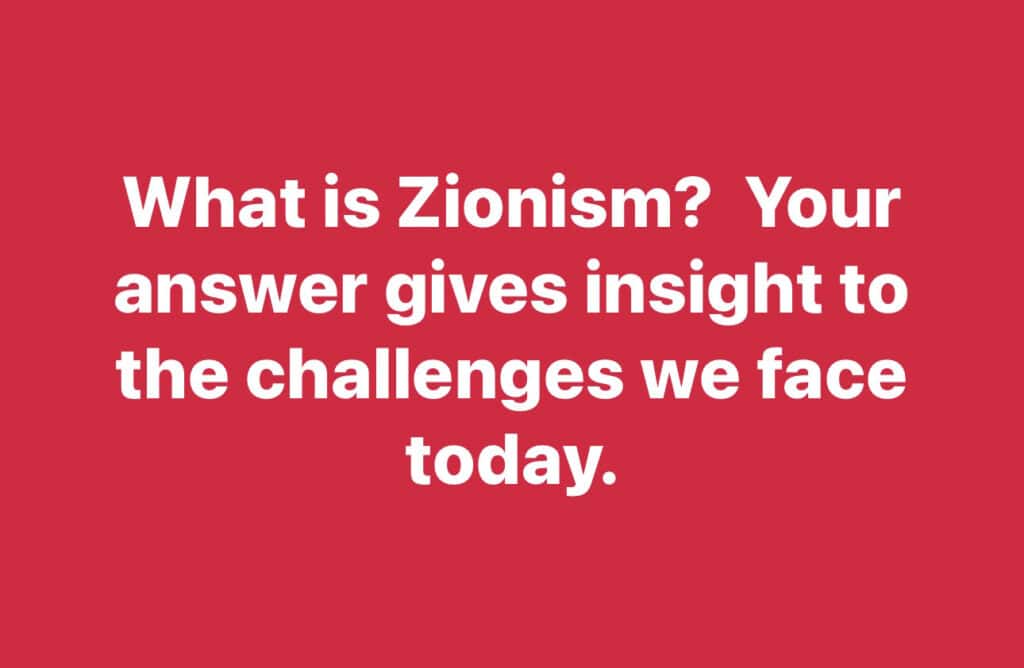
A Moment in Time: “What IS Zionism?”

Dear all,

Modern Antisemitism is rooted (in part) in an early 1900’s forged document known as the Protocols of the Elders of Zion. In short, the Protocols portrayed Jews as conspirators who mapped a plan to rule the world. When the Nazis rose to power, they used the Protocols as proof that Jews are a threat to society.

Today, we find that many around the world have been indoctrinated with the same lies about Zionism.

Today, therefore, is our moment in time for clarity. What is Zionism?

Zionism is the dream for Jews to have a safe homeland.

Zionism is the refuge for Jews all over the world.

Zionism is the belief that Jews should have a place for self-determination.

Zionism is a place where religious and secular Jews can live side by side with democracy as a core value.

Zionism is the right for Jews to defend ourselves against invaders.

And let me be clear….. One can be a Zionist AND believe in the right for Palestinian autonomy. It’s not one or the other.

Don’t allow haters of Israel to define Zionism. This is our voice. This is our dream. This is our home!

With love and Shalom,

Rabbi Zach Shapiro

A Moment in Time: “What IS Zionism?” Read More »

Israeli American Siblings Revolutionize Dating with Loop, a New Matchmaking App

The Zucker siblings, Lian, 32, and Adam, 28, have modernized old-time Jewish matchmaking with Loop, a matchmaking app for users 18+, regardless of culture, gender, religion or observance level. Rather than endlessly swiping through options on standard dating apps like Hinge and Bumble, Loop’s quality matches emerge from mutual friend introductions and recommendations.

Lian and Adam, who were born in Israel to Israeli parents, were raised in Los Angeles. About a decade ago, Lian moved to New York City, while her brother and co-founder, Adam, currently splits his time between NYC and the Bay Area. They created Loop after finding dissatisfaction with their own dating app experiences.

“My dating journey before Loop was dominated by swipe-based apps,” Lian told the Journal. “I flick my thumb and receive another profile in what seems like a bottomless pit of options … nearly every dating app that emerged was largely a derivative of that volume-based paradigm. Potential romantic candidates are plucked out of the ether and presented without social context … No other generation has had to approach dating like a game of roulette. Why should we? It [was] time for a shakeup.”

He continued, “With Loop, we’re not building something inherently new but rather bringing a thousand-year-old tradition into the modern age, giving it the necessary digital ‘facelift’ to make it accessible and appealing to our generation.”

“With Loop, we’re not building something inherently new but rather bringing a thousand-year-old tradition into the modern age, giving it the necessary digital ‘facelift’ to make it accessible and appealing to our generation.” 

Users can actively participate in the app’s matchmaking process. They create profiles, describing themselves and their relationship preferences. They then connect with and invite people they know to expand their Loop network, instead of swiping left and right through arbitrary profiles.

Both parties can set up friends by making personalized introductions, increasing accountability and intentionality in the dating process. To start a conversation between matched individuals, both parties must mutually accept the match. Single users can also request introductions to friends of friends they see on the app.

“Anyone can be a matchmaker and make a life-changing introduction for someone they care about,” Lian said. “Matchmakers help singles enter [their] first interaction with a level of trust that can meaningfully improve outcomes.”

Loop encourages users to continually build their networks to widen the pool of potential romantic connections. Once singles enter a relationship, they switch their status on the app but maintain the role of matchmakers.

Lian and Adam aspire to transform the dating experience into a more inclusive and connected journey, alleviating the inherent loneliness that often accompanies the quest for love.

“We believe that the more support you have along the dating journey, the better,” Lian said. “Friends can often not only make valuable introductions but also [act as] great sounding boards, helping [us to] challenge our assumptions and biases, encourage us or [simply] listen.”

Matchmaking is deeply rooted in Jewish culture, but Loop serves a diverse range of individuals, including Jewish, Christian, Asian, Indian and Muslim, through social media and word-of-mouth. Currently, the app has attracted tens of thousands of active users. Currently, the Zuckers are forging partnerships with organizations, such as Friends of the Israel Defense Forces (IDF), Olami and Chabad to propel the growth of their user base to new heights.

In Loop’s future, users can anticipate enhanced features, particularly the ability to organize custom in-person events within the app. This new feature will enable singles to meet new people, expand their Loop network, and facilitate additional setups before and after the physical meetups.

Loop can be used as a way to foster community and connection, bringing light to the world as we continue to contend with the devastation of the Israel-Hamas war.

“It’s our absolute honor that Loop has become so popular in the Jewish community across observance level and across geography,” Lian said. “Adam and I are both proud Jews and our appreciation for matchmaking is deeply ingrained in Jewish culture … [as well as] many [other] cultures and religions.”

Israeli American Siblings Revolutionize Dating with Loop, a New Matchmaking App Read More »

American Christians Standing in Solidarity with Israel

We Jews understandably feel that we could use a few more friends in the world right now, so it’s heartening to know that we have more than 10 million of them in the ranks of Christians United for Israel (CUFI.org). Founded in 2006, CUFI is the largest pro-Israel organization in the United States, whose mission is to “educate and empower millions of Americans to speak and act with one voice in defense of Israel and the Jewish people.”

Their efforts are manifested through college campus education, media outreach, church programming, tours of Israel and lobbying efforts in Washington DC. These lobbying campaigns have included urging the Trump administration to reopen the U.S. Embassy in Jerusalem and urging the U.S. to cut off funding of the United Nations Relief and Works Agency (UNWRA) for its anti-Israel influence in the Middle East.

Currently, they are committed to ensuring that anti-Israel forces in Congress do not hold up resupplying Israel’s Iron Dome missile defense system.

Historically, Jews have often been skeptical of Christian support for Israel, suspecting it might camouflage a hidden agenda to convert us to their faith. However, CUFI is intentionally non-conversionary.

Randal Neal, Senior Director of Engagement for CUFI, acknowledges, “It’s true that for many Christians, the word ‘Israel’ in the Bible is understood to mean ‘the Christian Church,’ which would supersede God’s covenant with the Jewish people. I myself was taught this in Bible study but I never believed it. Virtually every week, archeology finds in Israel substantiate the Bible and prove the Jewish people have been there for thousands of years. Jews are not occupying someone else’s land. They are in their ancient homeland. Today, our members and leaders are praying for the Jewish people and the State of Israel. We believe it’s our duty as Christians to stand by God’s first-born, our elders.”

Virtually every week, archeology finds in Israel substantiate the Bible and prove the Jewish people have been there for thousands of years. Jews are not occupying someone else’s land. They are in their ancient homeland. – Randal Neal, Senior Director of Engagement for CUFI

CUFI’s ongoing educational, political, and social media campaigns are intended to broadcast the reality of Israel as a humanitarian democracy. Their videos about Israel and its remarkable achievements have been credited by the Israeli Ministry of Tourism as “the best resource available to communicate the true heart of Israel.”

CUFI has college student representatives on more than 300 campuses nationwide, from community colleges to Ivy League universities. “We’re trying to get the woke people on campus to wake up,” Neal said. “The Jewish people are historically the most oppressed people on the planet but are the one group college students try to oppress. They advance blatant lies and we stand with facts on the ground.”

This involves painstaking efforts to build relationships and walk these students through the facts. “Our student members take them for coffee and talk to them, letting them vent their own narratives,” Neal explained. “It’s a slow process because there is a lot of emotion, but the anti-Israel students are invariably misinformed. Our students are amazing and brave and know they are the side of the truth. I’ve never been prouder of these students. They operate with commitment and moral clarity.”

Since CUFI’s sole purpose had already been to educate and advocate for Israel, I asked Neal what has changed since October 7. “What’s changed is the level of urgency. Many churches that supported Israel but didn’t feel a need to express it outside the church now realize they must be more vocal and go public with their support,” he said. “Some took it for granted that their support was known, but now, congregations want to be counted on record as standing with Israel.”

After October 7, CUFI was deluged with requests for additional educational and spiritual resources. Within a few days, the organization had prepared a digital resource package for pastors, including information and prayer points, including a suggestion to add Psalm 122, for a worship service called “Israel, You’re Not Alone.” Neal said that thousands of churches have already participated in this campaign, which will be ongoing. More churches are also taking CUFI’s Israel Course, designed to teach about Israel biblically and historically, the roots of Christian antisemitism, and why and how Christians can support Israel and the Jewish people.

CUFI members have been rushing to bone up on their Israel knowledge to prepare to advocate on her behalf. On October 9, a church in central Oregon called, apologizing for having not prioritized a teaching event about Israel. They asked CUFI to schedule one ASAP, so Randal Neal changed his travel plans and led the event, held in a packed church with close to 250 in attendance. When word got out, another church about an hour north urgently requested its own event and also brought an SRO crowd from several area congregations. Neal estimates that tens of thousands of Christians have already attended these events.

In these presentations, Neal explains why Christians should support Israel, as well as how they can do so. The presentations include Jewish roots of the Christian faith, “often including 1,800 years of antisemitism under the banner of Christendom.” Neal also oversees a cadre of many CUFI coordinators and trained volunteers who run such events across the country.

Since the terrorist invasion, CUFI also launched a daily Middle East Update, published on its website, with information gathered by the organization’s full-time analysts, one of whom began working nearly around the clock to keep its leaders informed. Neal said that before any information is published, it is thoroughly vetted by the analysts’ connections with sources within the IDF, think tanks, and other trusted contacts within Israel. “The work of these analysts is virtually flawless,” Neal boasted. These daily briefings are viewed by many people outside the group’s own 10 million-plus strong membership, adding to its impact.

CUFI has also launched an emergency campaign to support the needs of first responders in Israel, with 100 percent of the funds going to the first responders’ needs. As of October 24, the fund had raised more than $2 million. Many pastors are also planning solidarity events as an encouragement to the Jewish people and to Israel.

When CUFI members and pastors ask for more relevant and tangible actions they can take, Neal is ready with an answer. “We tell them it begins with prayer that God will bring this to an end and restore stability, discernment, and favor, with minimal casualties of the innocent. We pray that our own leaders in the U.S. will have the resolve to do what’s right. Being pro-Israel does not mean being anti-Arab. But there is no moral equivalency here.”

While CUFI has had to cancel several planned trips to Israel with pastors, college students, influencers and other members, “we will be among the first to resume our solidarity missions as soon as we are able,” Neal promised. During Operation Protection Edge in Gaza in 2014, CUFI sent pastors from every state to Israel.

“We are on the side of blessing the State of Israel and the Jewish people,” Neal said. “We have drawn a line in the sand and lock arms with our Jewish brothers and sisters. We are heartbroken and outraged and will stand in solidarity with you.”


Judy Gruen is the author of several books, including “The Skeptic and the Rabbi: Falling in Love With Faith.” Her next book, “Bylines and Blessings,” will be published in February 2024.

American Christians Standing in Solidarity with Israel Read More »

Jewish Students Locked Inside Library as Anti-Israel Protesters Banged on Doors

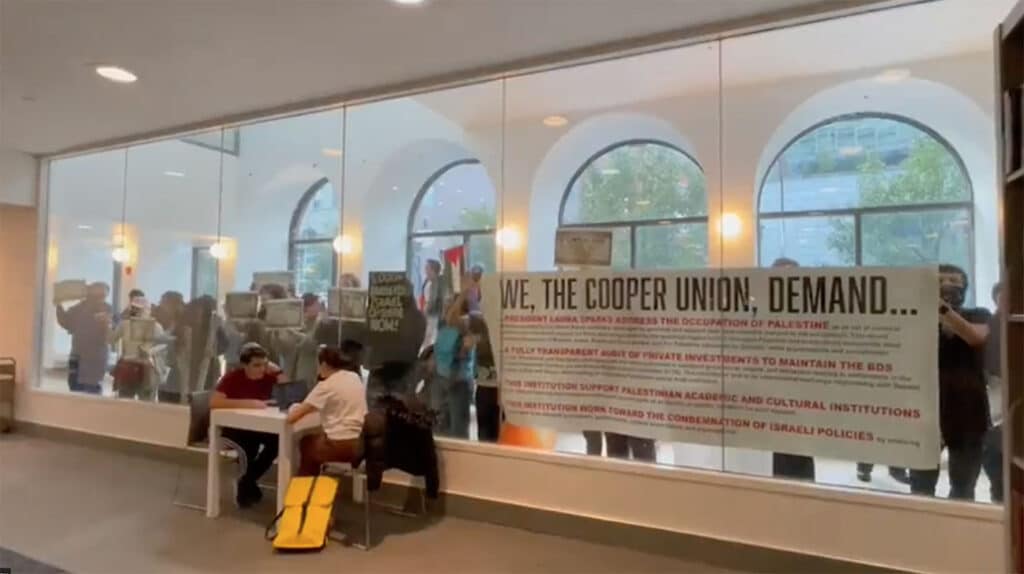
Videos have been circulating on social media showing Jewish students at The Cooper Union in New York City on Wednesday locked inside the school’s library while anti-Israel protesters were banging on the building’s doors, though the school claims that the library was simply “closed” for 20 minutes.

Banging can clearly be heard in the videos as well as chants of “Free Palestine” and anti-Israel signs being held up in front of the glass windows. Media reports state there were 11 Jewish students in total in the library and the protesters were also chanting, “Globalize the intifada!”

A student who spoke to The New York Post anonymously said: “When they started banging on the door, my heart started pounding. I was crying. I think if the doors weren’t locked — I don’t know what would have happened. I don’t want to speculate what would’ve happened. It just makes me too nervous. I was absolutely terrified in that moment.”

CBS News New York spoke to another anonymous student who described the incident as “tense.” “People were nervous,” the student said. “They were specifically acting very aggressive in those spaces where outwardly Jewish students were sitting.”

The New York Times also spoke to an anonymous student who said that a college staffer locked the library doors when they heard the protesters coming and that it took a half hour for the protesters go back outside.

Jeffrey Lax, a professor at the City University of New York, posted on X, formerly known as Twitter, that his nephew was one of the students who was “barricaded in its library as pro-Hamas animals banged on and tried to get into the library —  to do what with them? … They then went to a see through glass area, continued to taunt the Jewish students, banging on the glass and chanting things like ‘Globalize the Intifada,’” Lax wrote. “Heroically, though I will not share his name right now, my nephew refused to escape through tunnels when security came to free them. He insisted on marching right out front so he would be seen. All of the harassed Jewish students appear to be safe. WE MUST NOT STAND FOR THIS!”

Anti-Defamation League New York / New Jersey Director Scott Richman posted on X, “I sat with these @cooperunion students tonight & was shocked by the details. Anti-Israel protesters went past security in search of the president, & then harassed these students by pounding on the glass windows & door while chanting anti-Israel slogans.” Richman added in a subsequent that he will discussing with the school’s president, Laura Sparks, “to understand how she will deal with this serious and egregious act of antisemitic intimidation, how she will respond to the apparent security lapse that led to this and how she will protect her Jewish students going forward.”

ADL CEO Jonathan Greenblatt posted on X, “This intimidation of students is appalling — what is @cooperunion doing to keep its Jewish students safe as they let anti-Zionist attitudes clearly permeate their campus? Administrators must speak out against this — enough is enough.”

Kim Newman, the college’s media relations manager, said in a statement to the Journal on Wednesday regarding the incident: “The Library was closed for approximately 20 minutes while student protestors moved through our building. Some students who were previously in the Library remained during this time. All students have now dispersed.”

A spokesperson for the New York Police Department told the Journal that there was a protest of around 90 students that day and “some students went into the school and remained inside for approximately 25 minutes. Community Affairs Officers were present while the demonstration took place inside. The school staff allowed the demonstration to take place. The students dispersed after the incident. No property damage was reported, no criminal reports were filed and no threats of physical violence were made. Additionally there were no injuries reported.”

NYPD Chief of Patrol John Chell said in a Thursday press conference that there were “no direct threats” to the Jewish students inside the library. “The students were not barricaded. The doors were open but closed,” he said. “A school administrator thought it was prudent to close the doors and place private security as the protesters were coming down the stairs.”

Chell explained that in front of Cooper Union, there were 70 pro-Palestinian protesters and 20 pro-Israel counter-protesters. Twenty of the pro-Palestinian protesters went inside the school to protest the president’s office; as they were coming back down the stairs, a school official decided to “close the library doors, we’ll put one of our private security and let the protesters pass. For about roughly 10 minutes, approximately 10 minutes, they were banging on the doors of the library and banging on some transparent windows that you see into the library.”

After the protesters left, the Jewish students inside were asked if they wanted an Uber ride and the students replied, “no, we feel safe, we’re good, and they all left,” Chell said.

Pro-Palestinian students denied targeting Jewish students, telling CBS New York that they were protesting “the school’s one-sided stance and participation in the occupation of Palestine. We planned to peacefully protest outside the building before walking in and continuing our protest outside the president’s office. We concluded our protest by calling out our demands through the hallways of the entire foundation building.”

The pro-Palestinian students continued: “When we reached the library, we were told that it was closed so we continued chanting outside the glass window of the library. Many different students of all backgrounds were in the library at the time. We would like to make it clear that our protest was not targeting any individual students or faculty, but the institution itself. We would like to reiterate that we DO NOT under any circumstance condone antisemitism and many members of the protest were Jewish.”

New York Governor Kathy Hochul (D) posted on X on Wednesday evening, “State officials are in close communication with local law enforcement regarding protests on the Cooper Union campus tonight. Antisemitism and all forms of hate and intimidation are unacceptable and have no place in New York State.”

UPDATE: Cooper Union said in a statement on October 26, “ The devastation and loss of life in Israel and Gaza are a cause of deep pain and anger for people around the world and in our own community. While we support our students’ right to peacefully protest and express themselves, a walkout on Wednesday reached an unacceptable level when protesting students entered a campus building and disrupted the learning environment. Cooper is a place of shared learning, and we must uphold our commitment to ensure that all students, faculty, and staff feel safe on our campus. While there is room for productive debate and dissent here, there is no place for any discriminatory, hateful, or threatening acts of any kind.”

They added: “We are reaching out to all of our affected communities to listen to and address their concerns. We are reviewing reports and footage from yesterday’s events and will initiate any necessary actions consistent with our policies. We have increased our security and are working with NYPD and our external security partner to make sure our students, faculty, and staff feel safe and protected.”

Jewish Students Locked Inside Library as Anti-Israel Protesters Banged on Doors Read More »

“Everyone Was Screaming”: Tulane Jewish Students Assaulted at Pro-Palestinian Rally

At least three pro-Israel students from Tulane University were assaulted during an off-campus pro-Palestinian protest near the university on Thursday. The Journal spoke to a Jewish student who witnessed the assault, saying that “everyone was screaming” and that it was “really scary.”

FOX 8 reported that video footage posted to social media shows two unidentified males in a pickup truck, one holding a Palestinian flag and the other ready to burn an Israeli flag. At this point, per FOX 8, some pro-Israel counterprotesters confronted them. The man holding a Palestinian flag swings the flagpole at one of the counter-protesters and a fight broke out. Tulane University issued a statement later in the day explaining that two students were assaulted at the protest and sustained minor injuries, and two people were arrested; more will come as video footage is being reviewed.

The Journal spoke with a student who witnessed the incident. They wished to remain anonymous due to safety concerns. They said the Jewish community on campus had initially decided to not counterprotest, instead making brownies the night before to hand out to students and planned to hand out Israeli flags far away from the protest. “It became very clear that that wasn’t really doable,” the student said. “We can’t keep them away from what was going on when it was so hateful and in our faces really … slowly people started to accumulate.” The student described the location of the protest as being “technically off-campus” because it was on a public sidewalk, but “students who were walking to and from class had to walk through this” since the sidewalk separates two different parts of Tulane’s campus. The student also contended that most of the pro-Palestinian protesters were students from nearby Loyola University New Orleans and members of the New Orleans community, and that only “a small minority” of the pro-Palestinian protesters were actually Tulane students.

At first, the pro-Israel students stayed on the opposite side of the street during the protest, singing “Hatikvah” and playing music by Israeli singer Omer Adam, the student said, adding they were trying to remain apolitical and simply celebrate Israel and Judaism. And then the truck came.

The student told the Journal that the truck passed through the street both ways about seven times, and described the two males on the back of truck as appearing to be of middle school or high school age. When the truck stopped, one of the males in the back pulled out an Israeli flag and then a lighter. “That was kind of, I think, for a lot of people a trigger moment,” the student said. “So a kid ran up and — no assault whatsoever — he just took the flag away from the guy … didn’t want to see his flag being burned. And all of a sudden, these grown men came running from their side and the kid on the truck with the flag beat the kid … that took the Israeli flag away.

“And that’s when a couple Tulane students went to defend him and help him,” the student continued. “And all of a sudden, this grown man comes with a giant megaphone and hits my friend in the head while this other grown man is punching him, all at the same time. We brought him off to the side, and he’s bleeding … eventually the Tulane emergency services came.” The student’s friend who got hit in the head and the pro-Israel student who took the flag away — who the student described as a “friend of a friend” — are two different people. Mounted police showed up afterwards.

The student called the incident “the most extreme” antisemitism they had ever experienced. “Everyone was screaming,” they said. “It was really scary … I went over to the side and was freaking out a little bit.”

The student stayed at the protest for about another hour or hour-and-a-half after the incident. “Every time a car drove by, I was nervous that the window was going to roll down with a gun,” the student said. “It was nothing like I’ve ever experienced.”

The student added: “I typically feel safe on Tulane’s campus … the past week has definitely been very intense.”

UPDATE: Tulane University Michael A. Fitts, Senior Vice President for Academic Affairs and Provost Robin Forman and Senior Vice President, Chief Operating Officer and Treasurer Patrick Norton issued a statement Wednesday evening saying that three Tulane students were assaulted during the pro-Palestinian protest and police have made “several arrests.”

“We condemn and are outraged by today’s violence and the hateful language and rhetoric we heard,” Fitts, Forman and Norton said. “It is counter to everything we stand for at Tulane. What started out as a peaceful demonstration unfortunately devolved into a violent incident and a dark day for our community.We are continuing to increase security on campus and assisting our students in any way we can. We are also actively preparing for any additional demonstrations and activity. We will be encouraging students to avoid participating in any further demonstrations off campus given the involvement of outside disruptors and the possibility of escalation.”

They added that “the actions of some of the protestors, many of whom were not affiliated with Tulane, were violent, deplorable, deliberately provocative and exploitative of the profound sorrow and anger so many of us have been experiencing over the last few weeks. They were also completely counter to Tulane’s values of practicing mutual respect when debating ideas and promoting viewpoints, especially with those with whom we disagree the most.”

Fitts, Forman and Norton stressed that “was not sanctioned by Tulane University and was not approved in any way by our university. It was staged on public property and attended by many who were not affiliated with our university. However, everyone who committed an illegal act on this day will be held accountable for their actions. In addition, all students are accountable to the Code of Student Conduct.”

They concluded: “Tulane has always found strength in our unity. We must now lean on our common humanity and the Tulane spirit to find a path forward during these challenging times. Symbols and acts of hatred, antisemitism, deliberate provocation and preying upon the fears of others are not part of who we are.”

“Everyone Was Screaming”: Tulane Jewish Students Assaulted at Pro-Palestinian Rally Read More »

David Lehrer, Longtime Los Angeles Jewish Community Leader and Civil and Human Rights Advocate, Dies at 75

With heavy heart, the family of David A. Lehrer, a longtime leader in the Los Angeles Jewish community and outspoken advocate for civil and human rights, has announced his death on October 25, 2023. Lehrer unexpectedly collapsed at home and could not be revived. He had recently celebrated his 75th birthday.

Lehrer had served for 27 years in a variety of leadership positions within the West Coast office of the Anti-Defamation League, joining the ADL in 1975 as Western States Civil Rights Counsel and rising to become Director of the Pacific Southwest Region, a post he held for 16 years. His accomplishments there include drafting California’s first hate crime laws, helping lead the legislative efforts to outlaw tax-subsidized discriminatory private social clubs, and confronting extremist groups across the West.

Shortly after leaving the ADL in 2002, Lehrer and veteran civil-rights activist Joe Hicks formed Community Advocates, a Los Angeles-based nonprofit advocacy organization dedicated to forging partnerships and improving relations among the region’s various ethnic communities. They published articles, led programs and helped develop educational curricula aimed at promoting tolerance. Mayor Richard Riordan served as chairman of Community Advocates.

After Hicks’s death in 2016, Lehrer independently continued his Jewish community and human-relations advocacy. In 2017, alarmed at the election of Donald Trump and a corresponding rise in intolerance directed against Latino immigrants and Muslims—and the failure of established Jewish organizations in Los Angeles to speak out against such prejudice—Lehrer and other Jewish community leaders formed Jews United for Democracy and Justice. Since then, the group has become known for “America At A Crossroads,” its weekly online discussions of topical issues with a range of leading experts, anchored by prominent Los Angeles-based journalists. Several hundred of the programs, many introduced by Lehrer, are archived and available on the group’s YouTube channel.

Lehrer graduated Phi Beta Kappa from UCLA with a B.A. in Political Science, and received his J.D. from UCLA Law School in 1973. In addition to his civil rights work, he served as an appointee of Mayor Richard Riordan as a member and President of the Los Angeles Board of Library Commissioners, overseeing the City’s $90 million public library system.

Lehrer, a lifelong resident of Los Feliz, was an active longtime member of Temple Israel of Hollywood, and will be greatly missed by all who knew, worked with, and loved him.

He is survived by his wife Ariella, and his children Eli (and Sari) Lehrer, Jonah (and Sarah) Lehrer, Rachel Lehrer (and Adam McClelland), and Leah Lehrer (Annie Clark); his sister Shelah (and Jonathan Lehrer-Graiwer), brother Michael (and Mia Lehrer) and nine grandchildren, Jude, Teddy, James, Caroline, Rose, Isaac, Louisa, Billie Jean, and Delilah.

In lieu of flowers, donations may be made to Community Advocates, Inc. at https://www.cai-la.org/donate

David Lehrer, Longtime Los Angeles Jewish Community Leader and Civil and Human Rights Advocate, Dies at 75 Read More »

Far From Perfect – A poem for Parsha Lech Lecha

And Abram said to Sarai, “Here is your handmaid in your hand; do to her that which is proper in your eyes.” And Sarai afflicted her, and she fled from before her. ~ Genesis 16:6

I
We didn’t treat them well,
from the very beginning –

This mother of all Ishmaelites.
Nothing is excused, but

the seeds of this divide
go back to her, before

her name became holy.
The lesson here is we are related

to our greatest enemy.
Makes it awkward at the barbecues

and is why we kept sending
food, medicine and electricity.

You may always argue with your family
but they are still family.


…and God appeared to Abram, and He said to him, “I am the Almighty God; walk before Me and be perfect. ~ Genesis 17:1

II
God tells Abram to be perfect.
What a standard to have to live up to.

I never got the letter hey in my name
thanks to my parents’ intuition.

That’s why whenever someone calls to me
it’s a four-letter word.

I couldn’t be further from perfect.
I can’t even see perfect

in the distance.


Rick Lupert, a poet, songleader and graphic designer, is the author of 27 books including “God Wrestler: A Poem for Every Torah Portion.

Far From Perfect – A poem for Parsha Lech Lecha Read More »

Annie Korzen: Becoming An Accidental Influencer, Living Life and Simple Recipes

Octogenarian Annie Korzen never expected to become a TikTok sensation. The actor, writer and humorist has more than 400,000 followers on TikTok and more than 2 million likes.

“I thought my target audience was people like me: urban, Jewish … intellectual, educated women over 50,” Korzen told the Journal.

She was wrong.

“My audience is young people of all colors and all religions,” said Korzen, who discovered that “young people are looking for someone who’s honest and authentic and has some wisdom to share.”

Korzen, who turns 85 in November, is the author of “The Book of Annie: Humor, Heart, and Chutzpah from an Accidental Influencer.”  Her decades-long career in TV, film and theater include a recurring role on “Seinfeld,” a center-stage spot touring with The Moth and years as an essayist.

“For my life and my career, I’ve been told that I’m too Jewish-looking, and, as a woman, that I’m too opinionated and I’m too outspoken,” she said. “And now I have a whole new audience who tells me that I’m beautiful, which I’ve never heard before, and that my opinions are meaningful and inspiring.”

She adds, “Everything I’ve been criticized for … is bringing me to a whole new audience and a whole new kind of success.”

Korzen believes her secret to success is her philosophy of saying “Why not?” to any opportunity that comes her way. It’s also how she ended up on TikTok.

When Korzen mentioned to her 30-year-old friend Mackenzie Morrison that she’d like to find a larger audience, Morrison said she belonged on that platform.

“I thought, ‘Me on TikTok. What a ridiculous idea! No one wants to see this little old Jewish lady on Tiktok,’” she said.

Morrison told her, “Trust me, you will go viral.”

Korzen said, Okay, why not?

“I discovered you never know what the consequences are of any action you take,” she said. “The only thing you do know is, if you don’t take any action, the consequences are zero.”

On TikTok and in her book, Korzen talks about how she sees the world. She covers relationships, marriage, motherhood, food, thrifting, the list goes on and on.

“The greatest remark I got from a follower was, ‘I do not understand how I relate so closely with a Jewish woman from New York who is in her eighties. I am an Afghan boy of 16,’ she said. “That just thrilled me.”

It’s especially gratifying, since there’s been so much traditional disrespect for Jewish women, between the yenta, the naggy wife and the Jewish mother.

“We’ve become an unfairly defined stereotype,” Korzen said. “There is a lot of dignity and value in Jewish women in being warm and nurturing and opinionated and curious about the world.”

When asked what she hopes people get from the book, Korzen said she would like to inspire others to be themselves and to be open to other kinds of people and cultures.

“I was born in the Bronx, where the motto was, ‘Stick with your own kind.’ And I’m very happy that I disregarded that,” she said.

When you reach out to others, there are all kinds of riches to be discovered.

“We can’t just keep in our own little world.”

In addition to her philosophy of “why not?” Korzen says “living life” is a way to get out of any problem.

“I’m at an age where I experience a lot of loss and change,” Korzen said. “I deal with that by reinventing things in my life, finding new friends, finding younger friends who are not gonna leave me as quickly as the ones my own age.”

She adds, “You have to be proactive and again, say, ‘yeah, why not?’ to anything that’s suggested. … If you can be your honest, authentic self without hurting anybody, then that’s the only way to be.”

Korsen, who explains that she is obsessed with food, prefers simple when it comes to cooking.

“One of my things is salsa for everything,” she said. “Think about what’s in salsa: it’s tomato, chilis, garlic, onion, cilantro. You have all those flavors.”

Some of her favorite recipes are:

Meatloaf: Combine one pound of ground turkey or ground beef with a container of salsa. Put it in a loaf pan. Bake in the oven at 350 degrees for 45 minutes or until done.

“You’ll have the best, tastiest meatloaf ever,” Korzen said.

Gazpacho Soup: Take last night’s leftover salad, put it in the blender with a container of salsa, and you’ve got perfect gazpacho

“What’s in your salad? Lettuce, cucumber, tomato: all the kinds of veggies that you put in when you’re making gazpacho for real,” she said. “Whip it up, and you’ve got a great, cold, nourishing and healthy, vegetarian soup.”

Quesadilla: Take the taco-sized soft tortillas you find in the supermarket. Put in salsa, American or any other orange cheese, a piece of sliced turkey and sauteed onions. Fold it over and stick it in the oven.

“Five minutes later I have the most delicious quesadilla ever,” she said. “And simple, simple, simple.”

Read more about Annie Korzen. Follow @akorsen on TikTok.

For the full conversation, listen to the podcast:

Watch the interview:


Debra Eckerling is a writer for the Jewish Journal and the host of “Taste Buds with Deb.Subscribe on YouTube or your favorite podcast platform. Email Debra: tastebuds@jewishjournal.com.

Annie Korzen: Becoming An Accidental Influencer, Living Life and Simple Recipes Read More »

Medicare Part F

The Biden administration’s announcement of ten high-cost Medicare drugs slated for price negotiations reminded me that the program’s part D drug benefit should be termed “Medicare F” for the way it fails seniors like my patient Bill.   

The problem started with the program’s approval in 2003. Passed under President George W. Bush, its Republican authors complied with Pharma’s insistence on prohibiting Medicare from negotiating drug prices. Instead, the program delegated negotiations to numerous private Part D plans, none with sufficient economies of scale to bargain effectively.   

Bill is an 85-year-old immigrant who has done well for himself and his family. He raised five children along with his wife, who passed away seven years ago. He thought he had sufficient retirement income to maintain a home and cover medical expenses. But then he developed an Ozempic problem. Taken along with the generic drug metformin, Ozempic controlled his diabetes. That was great except for Ozempic’s $10,500 annual price tag. Under his part D plan, Bill’s share was about $4600. That was a deal breaker for a retiree on six other prescription drugs.  

Novo Nordisk, the drug’s producer, has an assistance program for low-income patients, but Bill failed to qualify, though he’s far from affluent. Prior to his most recent appointment, he stopped using the drug. His blood sugar control rapidly deteriorated. We then started an older drug from a different class but so far it hasn’t worked.

Prices negotiated by Medicare on this year’s drugs won’t go into effect until 2026.  

As Ozempic ranks tenth for total Medicare drug expenditures, you might think that the Biden administration’s price negotiations would rescue Bill from his Ozempic problem. You’d be wrong. Under the process set out by the Inflation Reduction Act, only ten drugs that were approved at least seven years ago can become eligible for negotiation. Ozempic becomes eligible in 2024. Worse yet, prices negotiated by Medicare on this year’s drugs won’t go into effect until 2026.  

The baby steps Medicare initiated to assist seniors in the future have long since been taken elsewhere. In France for example, the government routinely negotiates drug prices. Not surprisingly, French drug costs are less than half of what U.S. consumers pay. A study in 2017 showed that if Medicare paid French prices on just six drugs it would have saved $5.5 billion. 

Pharma fails to appreciate the break it gets from the go-slow approach that negotiates prices after seven fat years, then allows two more before negotiated prices take hold. The drug companies have filed multiple lawsuits to block negotiations. Although I’m not a lawyer, their legal arguments make little sense. They argue that negotiations violate their rights under the Fifth Amendment, which prohibits the taking of private property without just compensation. Common sense dictates that Medicare, the purchaser, should help set the prices it pays. The fact that negotiation was delegated to private Part D plans would not make it unconstitutional for the program to assume that role itself. The process should be no different than the drug price negotiations the government currently conducts for its Veterans Administration system.  Pharma’s legal arguments seem less about legal drug pricing and more about prolonged judicial processes that keep profits flowing.   

Drug companies also claim that reduced profits might curtail future research needed to create novel drugs. Consider Bristol Myers’ Eliquis, a drug approved in 2012 that is now Medicare’s most expensive. It brings in about $9 billion annually. The company earns enough to pay its CEO, Giovanni Caforio, nearly $20 million annually. One might ask Caforio, whose fellow Pharma CEOs earn similar salaries, when is enough, enough? Negotiated prices won’t reduce profits to zero. And, if the companies want to mitigate the hit to their U.S. profits, they might negotiate better deals elsewhere so that Americans like my patient Bill no longer subsidize patients in Europe.  

Doctors and patients understand and respect the value of the life sustaining drugs that Pharma produces. Still, that cannot justify Pharma practices that save lives with one hand while blocking access with the hand that grasps for every dollar of profit. We can only hope that the Biden administration will fight effectively for consumers and that the courts will speedily inform the drug companies that price negotiations are a standard business practice in the U.S. In the interests of the patients and the public, it’s time to bring Pharma to the table.


Daniel Stone is Regional Medical Director of Cedars-Sinai Valley Network and a practicing internist and geriatrician with Cedars Sinai Medical Group. The views expressed in this column do not necessarily reflect those of Cedars-Sinai.

Medicare Part F Read More »