fbpx

October 12, 2023

Antisemitism, Agnotology and Canada; Enmity with Russia Has Justified the Unspeakable

Last month, Crown Prince of Saudi Arabia Mohammed bin Salman underlined the growing rapprochement between Saudi Arabia and Israel. As the world awaits the Kingdom entering the Abraham Accords, the Saudis have quietly lain antisemitism to rest just at the same moment that the Western Alliance courts, evades and sometimes celebrates antisemitism and far from here arms Neo-Nazis. Today Israel and Saudi Arabia face the maniacal retaliation for daring to approach peace from the rabidly Islamist Iranian theocracy in the unfolding conflict of Hamas invading Israel and Hezbollah poised to do the same. Almost forgotten is the obscenity of the Canadian Parliament hailing a veteran Nazi: enmity with Russia justifies even the unspeakable.

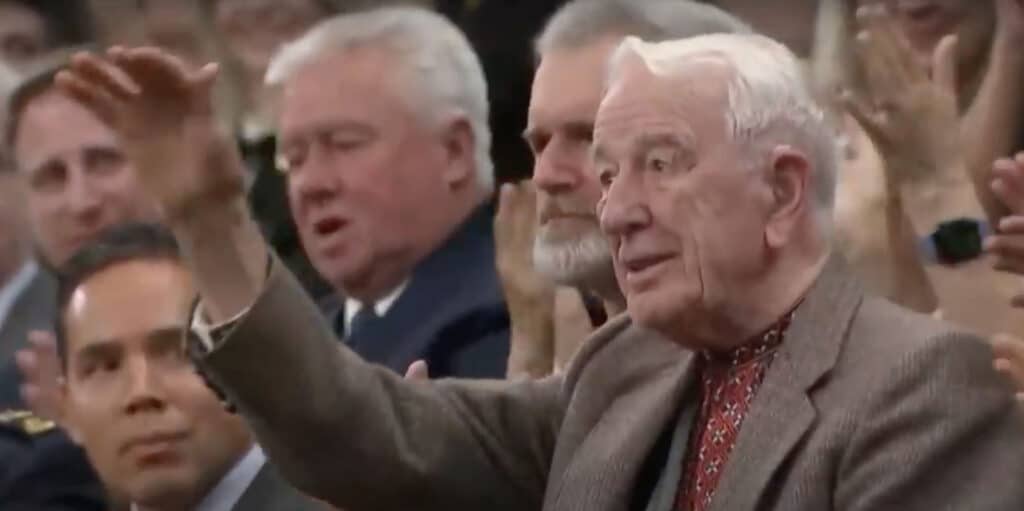
The unspeakable has happened: the standing ovation by  Canadian parliament for Yaroslav Hunka, Ukrainian veteran of the Waffen-SS Galicia Division. Hunka was lauded in full view of Zelensky (himself applauding with emotion) saluted as a warrior who had fought against the Russians.

The events have ignited an uproar in Canada. The Canadian Speaker of the House promptly resigned; Canada – already struggling with the Deschenes Commission ( a 1985 inquiry into 800 cases of people suspected of being Nazis accused of war crimes and crimes  against humanity, much of which remains redacted) is now facing intensified calls to unseal the record and  release the names of hundreds of Nazis provided sanctuary in Canada after World War Two, even as  Canada repeatedly denied entrance to fleeing Jews on the SS St. Louis. Former Canadian Prime Minister William Lyon MacKenzie had  withheld entry to the Jews on board by saying ‘ None is too many” condemning many of the Jewish passengers to death in concentration camps as the ship returned to Nazi Europe.  Around the world millions wonder, Canada, what the heck happened?

I called my friend in Toronto, Shael Rosenbaum- grandson of four Polish Holocaust survivors, leads  Canada’s Yad Vashem in Toronto. I needed to know what the Canadian Jewish community and Canada’s Holocaust survivor community were feeling.  I knew Shael would know- almost 200 members of Shael’s family were murdered in the Holocaust.

Shael’s grandparents survived multiple concentration camps including Auschwitz, Dachau and Bergen Belson.  The vast majority of his maternal ancestors were murdered in Treblinka. Others were shot in the forests around Staszow by the Einsatzgruppen. Shael is alive only because his maternal grandparents were saved by a Righteous Among the Nations designated Catholic Polish woman in Staszow, Poland (hidden with 14 other Jews in a cellar) while his father who lost most of his family in Auschwitz was born after the Shoah in a displaced persons center in Straubing Germany.

Today Shael’s philanthropy is devoted to preserving the memory of the Shoah and  tolerance building.  Shael’ s day job is as property developer. Ironically, some of his developments are within 50 miles of Toronto where monuments to Ukrainian divisions -similar to the Waafen SS Galicia- still stand (one such monument stands in Oakville Ontario and another in the province of Alberta- testament to Canada willful blindness to its long history of accommodating Nazis and Nazi collaborators in plain view

In  World War Two  Russians were fighting alongside the Western Allies in pitch battle against Nazi Germany and Naziism. Russia is estimated to have lost 27 million lives in this war. In WW2 there was no battle for ‘Ukrainian Independence’ at that time- the Ukrainians were fighting under German command until the end of World War Two .

This escaped all  officials hosting the 98 year old Nazi veteran. Apologies including from Canadian Prime Minister Justin Trudeau – have contorted around the unwavering demonization of Russia, again evading the parliamentarians’ revisionist history which amounts to Holocaust denial- currently under consideration for criminalization in Canada.

Worse, Hunka was honored  almost on the exact date of the 82nd anniversary of the 1941 Babyn Yar Massacre- arguably the most horrific single event during the Holocaust when, over several days, almost a hundred thousand Jews were driven into a ravine hundreds of feet deep, shot, and left to die- the worst single atrocity against the Jews committed  during the Holocaust.

Shael reminds me that throughout the  55000 oral testimonies recorded of Holocaust Survivors in both visual and audio recordings at the USC Shoah foundation, survivors repeatedly underline the ruthlessness of such Ukrainian divisions as those that committed the Babyn Yar massacre- divisions similar to the one Hunka belonged to. Survivors in their testimonies repeatedly distinguish the Ukrainian Nazis for their particular relish in the execution for Jews as a blood sport.

As  national chair of the Canadian Yad Vashem Society, Shael reminds me that there were certainly honorable Ukrainians who sheltered Jews from the Holocaust. Just under 2700 Righteous Among the Nations honorees exist from Ukraine- awarded the extraordinary honor bestowed on those who sheltered one jew or multiple jews from murder – their valor verified by deep research performed by Yad Vashem and the State of Israel.

Ukraine has long avoided acknowledging its participation in World War Two instead choosing to take the role of victim or hero but never perpetrator.

Certainly both  Ukraine and Russia have been responsible for countless acts over centuries targeting Jewish citizens including the programs that occurred in the late 19th century and early 20th century in Russia under the Romanov imperial dynasty and led to the mass exodus of Jews out of Russia.   Those that escaped these genocides settled in surrounding nations including Ukraine Poland and Western Europe or traveled across the Atlantic to north and South America.

The Jewish people who settled in Ukraine continued to face a constant threat. Many lived in small towns known as Shtetels and were very religious and quite insular often subject to attacks by non-Jewish Ukrainian neighbors. As the second world war began Ukrainian citizens viewed Russia and the Red Army as perpetrators and the Nazis as allies and liberators. In this way the Ukrainians who fought in the second world war were fighting for and with the Nazis both directly and indirectly.

But Ukrainians were not mere bystanders- countless Ukrainians were ‘Hitler’s Willing Executioners” as Daniel Goldhagen has identified- the Holocaust would be impossible without mass participation of wide swathes of society well beyond the Nazis themselves.  Before the Wansee Conference on the Final Solution in January 1942, most of the Jewish people murdered with killed by members of the Einsatzgruppen. These mobile killing squads were comprised mostly of German Nazis but also contained Ukrainian troops. More than one quarter of all Jewish people murdered in the Holocaust died at the hands of the Einsatzgruppen.

As the Final Solution reached full force there were six extermination camps created in Occupied Poland. Three of the camps- Belzek, Sobibor and Treblinka ( where so much of  Shael’s family was lost)- were responsible for the murder of 1.5 million individual Jewish lives. Many of the soldiers operating these camps originated in the Ukraine. The well-known trial and story of Ukranian Nazi collaborator Ivan Demjanuk and his time at Sobibor ( eventually convicted as an accessory to the murder of 28,060 murders) is just one such example.  Today over  76 years after the end of the War, Nazis remain honored actively in Ukraine. During national holidays it is common to see people dressed in full SS regalia. Stefan Bandera who is a Ukrainian Nazi collaborator is still celebrated as a hero.

So how does Canada explain itself?

Former Federal justice minister for Canada, Irwin Cotler points to the ‘ failure of indifference and inaction’ over Canada’s history with Nazis contributing to the parliament’s ignorant recognition of the Nazi veteran. Numerous commentators also point to ignorance, as if there is a void concerning the greatest crime against humanity ever committed. What Cotler  and other commentors overlook is the deliberate manufacture of ignorance- agnotology as it is known to those who study the culture and manufacture of ignorance.

Robert Proctor, Stanford University’s eminent historian and author of “ Agnotology: The Making and Unmaking of Ignorance’ observes  while  it is sometimes true that ignorance is where knowledge has not yet penetrated; other times ignorance is deliberately manufactured and even reclaimed from known truths. We like to think of ignorance as a void, an absence of information, a lack of knowledge, but structural ignorance can also be manufactured, cultivated and nurtured consciously and unconsciously for deliberate purposes.

The secrecy of the Deschenes Inquiry for instance is a deliberate act to keep Canadians from knowing their own history of  providing sanctuary to Nazis.  Canada’s profound ignorance demonstrated in  parliament  is also  borne of a deliberate and sustained lack of Holocaust education resulting in a  horrific perpetuation of antisemitism and another denial of Jewish history.

From the inception of the Russia Ukraine conflict the loss of human life has been accompanied by the casualty of reason and the deliberate manufacture of ignorance- secrecy is not only in the national interest, it is vital in sustaining ignorance. This can be true for all wars while they are waged and all too often long after.

Both sides have accused the other of both Nazism and Antisemitism. Fearing accusations of pro-Russian propaganda, complexity and nuance do not play well on tv for the 3 to 5 minute slots between commercials. The  deep investment in a black and white narrative which claims Russia is unadulterated evil and Ukraine is purely good is exactly the reason why the Canadian parliament found itself in an untenably obscene position.

Jewish advocacy groups around the world see what we see. Indeed, many of them are our colleagues and dear friends. Unfortunately, they have placed themselves in the same black and white construct– Russia is evil, Ukraine is good. This bind  has left them  powerless to defend the memory and lives of Jewish people today who are forced to bear witness to yet more Holocaust distortion and denial. Once again  Jews alive today, and the memories and legacies of Jews murdered in the Shoah and other genocides are  doubly silenced.

We must  acknowledge we are deliberately withholding complex truths surrounding Russia and Ukraine. Speaking truthfully and with complexity does not empower Putin. Quite the opposite, it restores our own moral fabric.  Speech is the first defense of the memory of the Jewish lives and other lives lost in the Shoah. Speech is the first step to defending an endangered Global Jewry, their history and the world’s shared history that has carried us through the inferno of the Holocaust and since.  Ignorance, far from bliss, is an abyss, the author of genocides and all too often the willing executioner of the voiceless.  Islam has a specific directive on the duty of a Muslim to speak up against injustice as the bare minimum of faith. Join me and do the same.

Antisemitism, Agnotology and Canada; Enmity with Russia Has Justified the Unspeakable Read More »

Trailblazing L.A. Shoe Brand Tieks Models How Companies Can Support Israel Following Hamas Attacks

Following Hamas’ attack on Israel last week, a  Los Angeles-based shoe brand, Tieks, has found a unique way to raise funds for overwhelmed hospitals in Israel – and send a clear message to the corporate world on how to provide support.

The company, which is known for making ballet flats with unique designs and colorways and has a very loyal online fan base of millions –launched on October 10th a week-long virtual fundraiser, titled “Tieks for Israel,” in which several of its most exclusive flats will be raffled to collect money for Israeli hospitals. Tieks confirmed that 100% of the proceeds will go to Israel.

The Tieks for Israel campaign was launched with a strong message of support for Israel, declaring #NeverAgainIsNow.

Within the first day of going live, Tieks for Israel has already seen heartwarming success – it has raised more than $80,000, a Tieks representative said.

The Tieks for Israel fundraiser features nine of the brands’ most unique and collectible flats, some of which are limited-edition or the first of their kind. These include the Magick, Midnight Blue, Sapphire Croc, Tiek Blue Classic, Black Ostrich, Tyrian, Seafield Check, Arabian Night, and Desert Croc styles. Such styles are either past styles, limited editions, or brand new and often sell out within hours.

The fundraiser will run through Monday, Oct. 16 at 6 p.m. PDT., and all proceeds will be donated to hospitals in Israel.

For Tieks founder and CEO Kfir Gavrieli, the fundraiser is deeply personal.

“As a proud Jew and Israeli, the recent attacks by Hamas hit close to home,” said Kfir Gavrieli, CEO and founder of Tieks.

Gavrieli credited Tieks’ loyal fanbase for standing with Israel in the wake of Hamas’ deadly attacks, which have killed more than 1,200 civilians, as of Oct. 10.

“I am honored to see the Tieks community stepping up and showing solidarity with Israel in such a meaningful way,” said Gavrieli. “Through the proceeds, we will be able to help support the overwhelmed Israeli hospitals and healthcare workers treating the victims of Hamas’ barbaric attacks targeting innocent men, women, and children. When we launched this campaign there were no other companies stepping up to support the Israeli terror victims. I hope that other brands will follow suit and show their support for Israelis, who are mourning after this horrific mass murder– the darkest day in Jewish history since the Holocaust.”

This is not the first time Tieks has sought to unite its customer base to help the victims of conflict abroad. Last April, Tieks organized a similar virtual event that auctioned off exclusive Tieks styles to raise funds for Ukrainian refugees following Russia’s invasion. The auction, named #TieksForUkraine, raised nearly $90,000 to support World Central Kitchen’s work to help war-affected Ukrainians. As a result, World Central Kitchen, an NGO founded by Chef José Andrés, was able to provide tens of thousands of meals to individuals in Ukraine and all eight border crossings from the country, including Poland and Hungary.

To participate in the Tieks for Israel fundraiser, visit this link.

Trailblazing L.A. Shoe Brand Tieks Models How Companies Can Support Israel Following Hamas Attacks Read More »

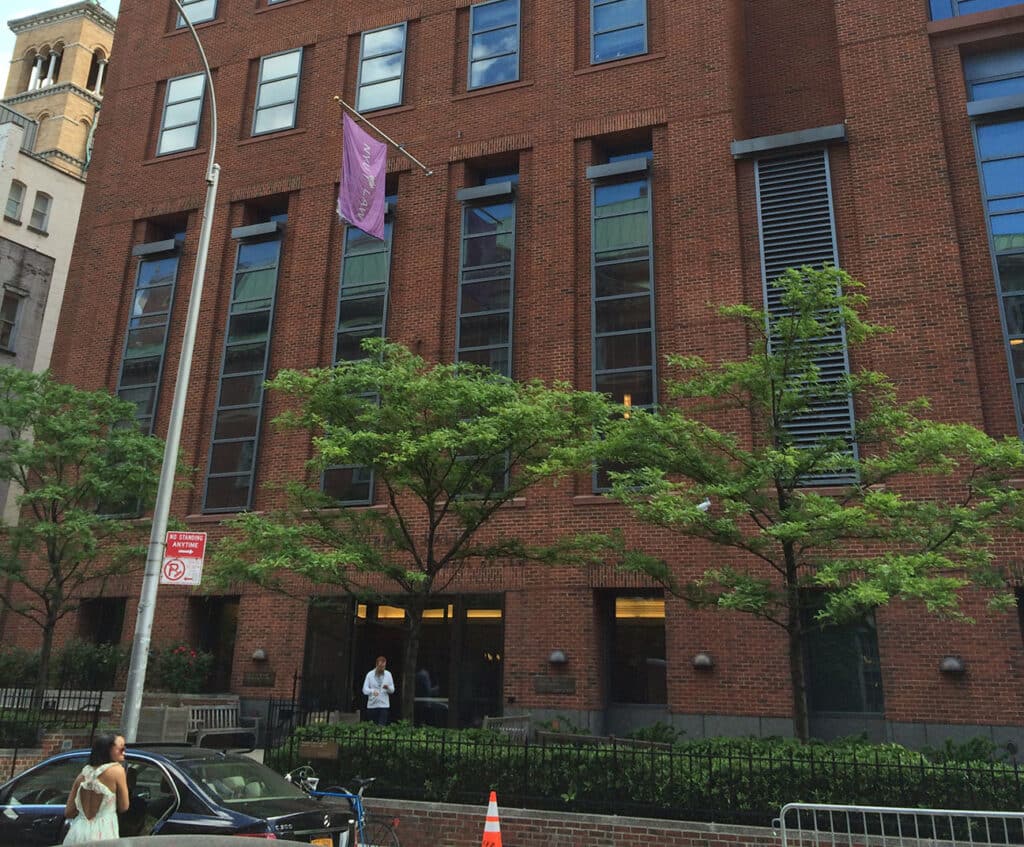
NYU Law Student Bar Association President Loses Job Offer After Blaming Israel for Hamas Terror Attack

New York University (NYU) Law’s Student Bar Association (SBA) president is facing widespread criticism and apparently lost a job offer at a law firm for stating in a newsletter that Israel was to blame for Saturday’s Hamas terror attack.

The Atlantic’s Yair Rosenberg shared a screenshot of the newsletter on X, formerly known as Twitter. SBA President Ryna Workman, who uses they/them pronouns, stated in the newsletter that they have “unwavering and absolute solidarity with Palestinians in their resistance against oppression toward liberation and self-determination.” “Israel bears full responsibility for this tremendous loss of life,” Workman wrote. “This regime of state-sanctioned violence created the conditions that made resistance necessary. I will not condemn Palestinian resistance.”

Workman said they are instead condemning “the violence of apartheid” as well as “settler colonialism,” “military occupation,” and “trapping thousands in an open-air prison.” “Palestine will be free,” Workman’s newsletter concluded.

“The elected student president of the NYU Law School Bar Association just sent out a message refusing to condemn Hamas’s mass slaughter and effectively cheerleading it,” Rosenberg posted on X. “Imagine being a Jewish student at NYU Law School who doesn’t know if their kidnapped grandmother is alive and seeing the head of your equivalent of the student council saying ‘grandma had it coming.’”

The Winston & Strawn LLP law firm announced in a statement posted to social media that “a former associate published certain inflammatory comments regarding Hamas’ recent terrorist attack on Israel and distributed it to the NYU Student Bar Association.” “These comments are profoundly in conflict with Winston & Strawn’s values as a firm,” the law firm continued. “Accordingly, the Firm has rescinded the law student’s offer of employment.” Workman’s LinkedIn account, which appears to have been deleted, reportedly stated that Workman was a summer associate at Winston and Strawn.

Winston & Strawn added: “As communicated yesterday to all Winston personnel, we remained outraged and deeply saddened by the violent attack on Israel over the weekend. Our hearts go out to our Jewish colleagues, their families, and all those affected.”

Workman’s newsletter was met with pushback from NYU. “Some of you may have seen a message from the president of the Student Bar Association regarding the horrific conflict in Israel and Gaza,” NYU Law Dean Troy McKenzie said in a statement. “This message was not from NYU School of Law as an institution and does not speak for the leadership of the Law School.  It certainly does not express my own views, because I condemn the killing of civilians and acts of terrorism as always reprehensible. The attack on Israel and the subsequent and ongoing hostilities have made this a period of extreme pain and distress for many members of our community.  Since the weekend, I have worked with administrators to provide support to students, faculty, and alumni who have been affected by this crisis.”

NYU is also distancing itself from Workman’s newsletter, as NYU spokesman John Beckman told The New York Post: “Acts of terrorism are immoral. The indiscriminate killing of civilians and hostage-taking, including children and the elderly, is reprehensible.  Blaming victims of terrorism for their own deaths is wrong.”

The SBA said in a statement on Tuesday that they “did not write, approve, or see” Workman’s statement before it was published. “SBA did not hold discussions about whether to issue a public statement about the conflict or the content of any potential statement,” the SBA said. “The ‘Message from the President’ reflects their personal views and does not represent the views of SBA as an organization or any of its officers. Under the SBA Constitution, our directive is “[t]o provide an effective medium for the expression of student’s views,” and we regret that today’s Message distracted from this mission.”

The SBA added that they have begun the process to remove Workman from her position and they will be holding a hearing sometime between October 17-24 on the matter.

They also said: “As a result of today’s statements, multiple students have received significant targeted harassment and death threats. We are horrified by these vile personal attacks and threats to students’ safety. The doxxing of any NYU Law student is unacceptable and disturbing. We urge NYU Law’s administration to do more to protect students’ privacy and safety in the face of targeted harassment.”

Representative Ritchie Torres (D-NY) denounced Workman’s newsletter in a post on X. “If you are speaking to an Israeli mother whose child has been beheaded, I cannot think of anything more callous and cruel than telling a grieving mother: you had it coming. You and your people brought the beheading upon yourselves,” Torres wrote. “That is essentially what the President of the NYU Law Student Bar Association has done.”

The Simon Wiesenthal Center also posted on X, “Whatever happened to personal responsibility for our actions, the rule of law, basic human decency. Providing cover for the #HamasTerrorist murderers of babies? Should be beyond the pale but for some not when it comes to Israelis.”

Workman did not respond to the Journal’s request for comment.

NYU Law Student Bar Association President Loses Job Offer After Blaming Israel for Hamas Terror Attack Read More »

Israeli Columbia Student Assaulted By Suspect Tearing Down Flyers of Israelis Abducted by Hamas

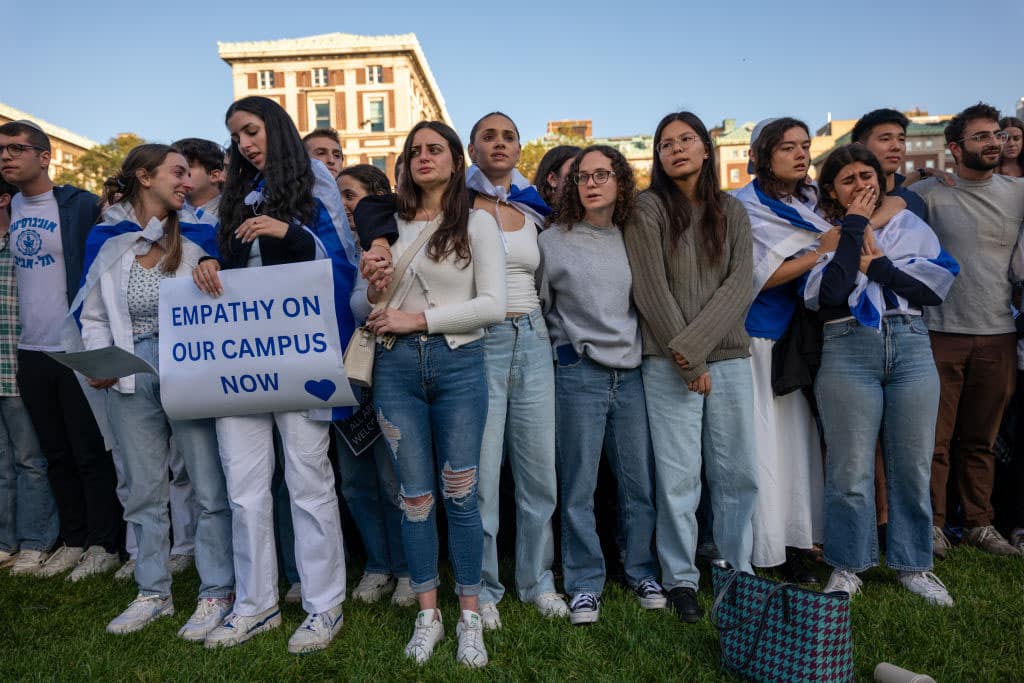
An Israeli student at Columbia University was reportedly assaulted on Wednesday by a suspect who was tearing down flyers that showed the names and pictures of those who were taken hostage by Hamas.

The Columbia Daily Spectator spoke with the 24-year-old Israeli School of General Studies student who was assaulted––referring to him solely by the initials “I.A.”––as well as a friend of his who requested anonymity and the New York Police Department (NYPD) on the matter. While I.A. and others were putting up the flyers that morning, the suspect––a 19-year-old female––allegedly joined in, saying she was Jewish. But later in the day, I.A. and four other students noticed that the suspect, with a bandana around her face, was tearing down the flyers.

“When they approached her, I.A. said the suspect screamed obscenities toward the students and hit I.A. with a stick,” the Spectator reported. “I.A. said he defended himself when the suspect allegedly tried to punch him in the face. After the incident, I.A. said that one hand was bruised and his ring finger on the other hand was broken.”

The suspect has been arrested and charged with one count of assault. The Spectator report did not specify if the suspect is a student at Columbia or not.

I.A. told the Spectator that he is staying away from the campus for the time being because he doesn’t feel safe, especially with pro-Palestinian protests scheduled for Thursday. He urged other Jewish and Israeli students to also think about steering clear of campus.

“We were all kind of shocked that this stuff can happen on our own campus, which should be a safe haven,” I.A. told the student paper. “We don’t know how to handle the situation, let alone that our families and friends are going through the worst nightmare, and we are mentally in the same ship with them. And now we have to handle the situation that campus is not a safe place for us anymore.”

Anti-Defamation League New York / New Jersey posted on X, formerly known as Twitter: “We are horrified to hear that an Israeli student at @Columbia was reportedly targeted and assaulted on campus last night. At a time when Israel has experienced the worst terrorist attack in its history, it is appalling that Israeli and Jewish students are expressing concern about their physical safety on college campuses. Columbia must immediately investigate and respond.”

Jewish Insider Executive Editor Melissa Weiss also posted on X, “What has for years been the intimidation of Jewish students has become physical.”

Allison Josephs, who formed the nonprofit Jew In the City, posted on X, “My Alma mater, the place that gave a platform to [former Iranian President Mahmoud] Ahmadinejad. The moral bankruptcy you promote has real life consequences. Nazis were highly educated too.”

The New York Times reported that the university is closing off public access to the campus on Thursday; university spokeswoman Samantha Slater told the Times that the university did so in order “to help maintain safety and a sense of community through planned demonstration activities.”

Slater declined to comment to the Journal on the assault of I.A. and referred the Journal to the NYPD.

Israeli Columbia Student Assaulted By Suspect Tearing Down Flyers of Israelis Abducted by Hamas Read More »

A Bisl Torah – The Future is Watching

As a result of Adam and Eve eating fruit from the tree of knowledge, the Torah tells us that “the eyes of both of them were opened….” They were stripped of their blissful naïveté, aware of their nakedness and vulnerability.


On October 7th, 2023, as Hamas initiated an unprovoked assault of terror on the Israeli people, innocent mothers, fathers, children, elderly and others, we thought the world’s eyes were finally opened. How can anyone deny this evil? Through social media, we witness first hand what many who lived through the Second World War did not. So many statements in the 1930s and 40s claim not knowing what was happening in the gas chambers thousands of miles away. Not one person in 2023 can claim the same. We bear witness to this week. We bear witness to human beings unable and unwilling to see the face of God in the person standing before them. And we will remember who chooses to speak out and who chooses to close their eyes.


The silence is palpable. And the silence is dangerous. Perhaps even worse than the rhetoric spewed by those trying to justify the actions of Hamas. The justifications are disturbing and yet, they quickly reveal where there is opportunity for discussion and with whom discussion will forever be off the table.


No, the true fear lies in those that continue to close their eyes, buried heads in the sand. Those that say, “I’m not taking sides.” Those that think this atrocity doesn’t impact them. Adam and Eve’s eyes were opened. It was a punishment to be able to discern the difference between good and evil. And yet, the discernment is what allows human beings to be God’s beacons of peace.


The future will retell the actions of this moment. And may future generations say of each of us, “Their eyes were open. They spoke up. And thank God they did.”


Shabbat shalom


Rabbi Nicole Guzik is senior rabbi at Sinai Temple. She can be reached at her Facebook page at Rabbi Nicole Guzik or on Instagram @rabbiguzik. For more writings, visit Rabbi Guzik’s blog section from Sinai Temple’s website.

A Bisl Torah – The Future is Watching Read More »

Biden’s ‘Rules of War’? Not in World War II

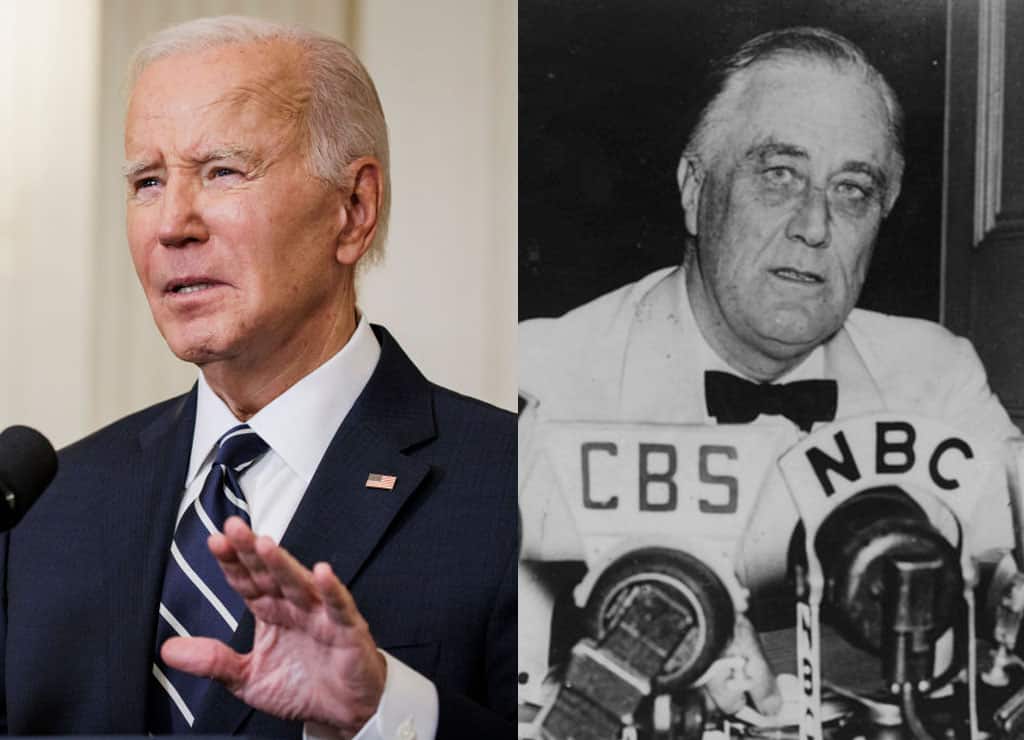
In recent days, President Biden has twice publicly cautioned Israel to observe “the rules of war” when it strikes back at Hamas terrorists. He appeared to be referring to the importance of avoiding civilian casualties in Gaza. But exactly how far does he expect Israel to go in limiting its actions because of the presence of civilians?

The president’s description of Hamas as “pure, unadulterated evil” places the current conflict squarely in the category of a good-versus-evil conflict, like World War II. With regard to civilian casualties, the position of the United States and its allies in World War II was that civilian deaths were an unfortunate but inevitable consequence of their war of self-defense. Israel’s approach to the issue is similar.

Beginning in March 1944, the Americans and British carried out extensive attacks on railways across France, Belgium, and western Germany in advance of the June 6 D-Day landings. The breadth of the air strikes made it inevitable that there would be some civilian casualties; they averaged about 100 per bombing.

On May 7, British Prime Minister Winston Churchill told President Franklin D. Roosevelt he was concerned about “the number of Frenchmen killed in the raids on the railway centers in France.” Churchill estimated that the total number of French civilian deaths in the operation would reach 10,000, in addition to tens of thousands of injured. The British leader asked FDR to “consider the matter from the highest political standpoint,” because his war cabinet was unanimously convinced that continuing the bombings would “leave a legacy of hate” toward the Allies among the French populace.

Roosevelt responded: “However regrettable the attendant loss of civilian lives, I am not prepared to impose from this distance any restriction on military action by the responsible commanders that in their opinion might militate against the success of [the upcoming D-Day landings] or cause additional loss of life to our Allied Forces of invasion.”

On October 31, 1944, British planes targeted the Gestapo’s Danish headquarters, on the campus of the University of Aarhus. The target was situated in the dormitory buildings, which were flanked by civilian hospitals on both sides. Nonetheless, the raid proceeded in broad daylight, because it was militarily advantageous to do so. Most of the bombs hit their mark but several stray bombs hit another campus building which was under construction, killing ten workers. Likewise, a British bombing raid on Gestapo headquarters in Copenhagen the following year destroyed the building, but some bombs accidentally hit a nearby school, killing an estimated 125 civilians.

The U.S. carried out bombing strikes on German oil factories in and around Auschwitz during daylight hours, when military planners had every reason to believe the factories would be filled with Jewish slave laborers. Civilian casualties were inevitable but the administration felt that harm to the Jewish prisoners was justified in order to achieve America’s war aims. For the same reason, U.S. bombers were sent to strike the V-2 rocket factory in the Buchenwald concentration camp in broad daylight, when it could be assumed that Jewish prisoners would be in the factory. Nearly 400 of them were killed in the bombing.

Not only was the Roosevelt administration willing to risk killing Jewish civilians in order to strike those military targets—it even was willing to endanger the lives of Allied POWs. About 1,400 British servicemen were imprisoned in Auschwitz beginning in the autumn of 1943, and six hundred remained there as of the summer of 1944, working as slave laborers in the oil factories. The U.S. and British governments were well aware that the POWs were there; in fact, the Red Cross regularly brought them food packages. One of the POWs, Charles Coward, smuggled information to the British government about the mass-murder process that was taking place in the Birkenau section of the camp. But the presence of the POWs did not deter the daylight air strikes on factories where British prisoners might be working. As a result, thirty-eight of the British prisoners were killed, and many others injured, in the American bombing on August 20.

In some instances, the U.S. and its allies went further and undertook deliberate attacks on enemy civilians in order to advance the war effort.

Beginning in February 1942, the British undertook what was known as “area bombing,” which meant attacking civilian areas in order to undermine the German public’s morale. The United States assented to this approach and participated in many of the most famous strikes on civilian targets. The British-American bombing of Hamburg in July 1943 left 40,000 dead, and the attack on Dresden by U.S. and British bombers in February 1945 killed tens of thousands more.

This approach was sometimes employed on the Pacific front as well. The Roosevelt administration’s firebombing of Tokyo in March 1945 caused over 100,000 civilian fatalities. The Truman administration selected two Japanese civilian centers as the targets of its nuclear bombs, leaving approximately 135,000 dead in Hiroshima and 64,000 in Nagasaki.

Israel does not deliberately kill enemy civilians, but one of the principles of its military actions in built-up areas such as Gaza resembles that of the Allies in World War II—that strikes against the enemy must proceed even if there are civilian casualties.

Will President Biden support Israel taking an approach comparable to what the United States did in World War II? Or will he expect Israel to do as he says, not as the U.S. has done? The answer will become apparent soon.


Dr. Medoff is founding director of The David S. Wyman Institute for Holocaust Studies and author of more than 20 books about Jewish history and the Holocaust. His latest is America and the Holocaust: A Documentary History, published by the Jewish Publication Society & University of Nebraska Press.

Biden’s ‘Rules of War’? Not in World War II Read More »

How Could This Have Happened

In its War of Independence, Israel lost 3,600 soldiers and 2,400 civilians. It was close to 1% of the Jewish population. The war lasted from November 1947 to July 1949. So, 6,000 casualties in more than a year. 

In the Yom Kippur War, year 1973, 2,800 soldiers were killed. The war lasted for about a month. 

In the Second Intifada, 1,115 Israelis were killed, 785 of which were civilians. The wave of terrorism lasted for about three years. 

Last Saturday, Israel lost more than 1300 civilians and soldiers in one day — the deadliest day in Israel’s history.

In Israel we’re seen the realization of a nightmare that every human, every parent dreads: A killer in the living room, a terrorist infiltrating the sacred space of the private home, pointing a gun to a child’s head, abducting an elderly woman and, to add insult to injury,  broadcasting it all live from the sofa of the victims. 

Some writers suggested that it was Israel’s “Pearl Harbor” or Israel’s “9/11.” But in the macabre contest of surprise horrors, the massacre of Simchat Torah was much worse than these two. Considering the countries populations, 1300 Israelis compares to more than 45,000 Americans – much more that the number of Americans killed in either the Pearl Harbor attack or the 9/11 attack. Moreover, while these two surprise attacks were horrifying in magnitude, both were contained to a military installation (in the first case) and prominent buildings (in the other). In Israel we’re seen the realization of a nightmare that every human, every parent dreads: A killer in the living room, a terrorist infiltrating the sacred space of the private home, pointing a gun to a child’s head, abducting an elderly woman and, to add insult to injury,  broadcasting it all live from the sofa of the victims. 

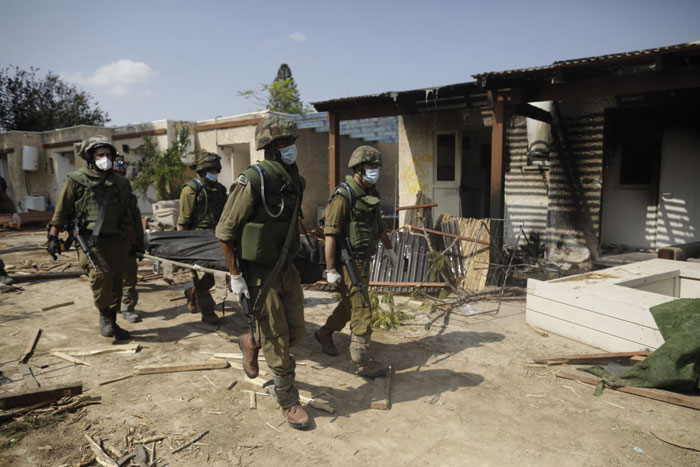
Roi Idan, a photographer in Kfar Aza, took pictures of the first wave of Hamas attack: A group of terrorists that used motorized paragliders as their way of reach from within the Gaza Strip to Kfar Aza, about 2 kilometers from the security fence. You can see some of these photographs but on Tuesday, when this story is written, Roi’s whereabouts are not known. He took the shot and rushed back home. The terrorists got there not much later. They killed his wife, Smadar, in the living room. He was out carrying his 3-year-old daughter. It is likely that he was injured. A neighbor took the child from him, and was later abducted, along with her own children, to Gaza. Meanwhile, at home, Roi’s other two children, 9 and 6, hid in a closet. They survived. Would you call them the lucky ones?

It was ghastly, and heartbreaking, and that was just the first day.

How could this have happened?

Hamas assailants knew how to disrupt Israel’s communications, they knew where they’d find vulnerable entry points, they knew where young Israelis were having a party and could easily be slaughtered or captured — sitting ducks in the shooting range of merciless terror. 

The short story is simple: Hamas was able to plan and execute a masterful, ruthless, attack. Israel’s intelligence did not notice the preparations. Israel’s military forces, in the area near Gaza, were neutralized for many hours by the exact design and execution of a meticulous plan. Hamas assailants knew how to disrupt Israel’s communications, they knew where they’d find vulnerable entry points, they knew where young Israelis were having a party and could easily be slaughtered or captured — sitting ducks in the shooting range of merciless terror. 

Women react at a scene where a rocket fired from the Gaza Strip hit a street in Ashdod, Israel on October 9, 2023. Amir Levy/Getty Images

Since Israel did not know what was coming, and did not even imagine such a scenario, it was ill prepared and slow to react. Confused policemen, soldiers and civilians fought heroically and died defending others. Trembling families hid in shelters, crying for help that in many cases was too late to arrive. Sporadic acts of bravery were the exception to the rule of chaotic muddle: No help in sight, for hours, even days. These acts of heroism proved, not for the first time, that Israelis are often much better than their institutions.  

Yair Golan is one such Israeli. He is a 61-year-old retired General. He is a former MK – that is, a politician of leftist tendencies. In recent years he was occasionally a divisive figure, making statements that portrayed Israel’s actions in negative light. In 2016, as vice chief of the IDF, Golan made a highly controversial speech. On Holocaust Remembrance Day, Golan said that he sees similarities between Nazi Germany of the 1930s and Israel today when it comes to “signs of intolerance and violence.” He was repudiated by politicians, mocked by pundits and called to resign. And that was before he became a leftist politician, so you can easily imagine the names he was called as a politician.

But earlier this week, Israelis learned to appreciate Golan as the fearless patriotic man he is. On Saturday, when the IDF was still in a state of shock, Golan put on his gun, his well-worn uniform, and drove south, into the war zone. His goal: To rescue civilians. He found and rescued two youngsters hiding under a bush, not far from the many bodies of dying festival attendees. He responded to calls of people crying that their loved ones were under fire. “Give me his location, and I will bring him back,” was his response to a call from an Israeli journalist. He brought the journalist’s son back, and many others. The next day, you could read tweets by many Israeli right-wingers, such as this one: “I feel personally obligated to apologize to Golan. He is brave and a hero who risked his life and rescued 6 people yesterday. I underestimated him and belittled him … I have now learned a very important lesson.”

How could this have happened?

The detailed story is longer than these pages would allow, more complicated, and often controversial. This story will haunt Israel for many years to come, and is likely to be investigated by committees, debated by historians, and affect Israel’s political landscape and social fabric. But it is much too early to comprehensively deal with that story, and Israel is much too busy to deal with it, as it has a war on its hands. It is impossible to investigate a “mechdal” — the Hebrew world coined to describe the negligence and dereliction of duty of the pre-Yom Kippur War – while engaging in war. So, the public, as eager as it is to get answers now, and point fingers at the men in charge now, and get rid of those guilty of negligence now, might have to wait. When the cannons are heard, the muses are silent. When the cannons are heard, a final account must be postponed. 

How could this have happened?]

In retrospect, it’s clear that Israel failed to appreciate the level of professionalism and planning Hamas is capable of (probably assisted by Iran and Hezbollah).

In retrospect, it’s clear that Israel trusted its security fence more than any fence deserves to be trusted. With civilians living so close to the border, more forces were needed to defend the perimeter when the fence was breeched. In retrospect, Israel assumed that Hamas rule in Gaza, as radical and brutal as it might be, was a tolerable arrangement. It never assumed it was an ideal arrangement, but considering the other options, Israeli governments repeatedly chose to let Hamas be. General Yaakov Amidror, former security advisor to Prime Minister Netanyahu, candidly acknowledged that he, along with most government and military officials, made a tragic mistake. “I thought that Hamas, because of its responsibility and because it’s not only a terror organization, but also an organization with ideas about the future, a small branch of the Muslim Brotherhood, is more responsible, and I learned in the hard way that it is not so, that a terror organization is a terror organization”.

In retrospect, warnings about Israel’s weakening deterrence, because of social ruptures and political cynicism, were not taken seriously enough … it’s clear that Israel trusted its security fence more than any fence deserves to be trusted.

In retrospect, warnings about Israel’s weakening deterrence, because of social raptures and political cynicism, were not taken seriously enough. And of course, it is difficult to draw a clear line that connects the social upheaval to the Hamas attack. And yet, the timing is telling, and also the fact than when the political establishment is investing most of its energy on repeated election cycles, judicial reforms and other nonsensical initiatives, it does not have the energy to invest in more important fields of operation. In retrospect, it was obvious to assume that advancing talks with Saudi Arabia could become a trigger for disruptive terrorism. Israel was so focused on the upside of possible normalization, that it forgot to take care of the dangerous downside. 

What else? The IDF was busier than ever in the West Bank. Some Israelis would argue that this was the natural response of the IDF to tensions in Judea and Samaria, others would argue that this was a result of having a hardline right-wing government that skewed Israel’s actual priorities. Then again, this is one of the debates that Israelis had before the war. Debates smack of politics, and better shelved for the time being.

Until the war is over.

The cabinet instructed a wounded, shocked military to destroy the military and governmental capabilities of Hamas and Islamic Jihad in Gaza. It is an instruction that’s more precise that those issued in previous rounds of fighting against Hamas. Since Israel’s pullout from Gaza in 2005 and Hamas’ takeover in 2007, successive governments followed a similar script: Deter Hamas — but do not destroy Hamas. Why? For two main reasons. One: Destroying Hamas could be difficult and costly. Two: Destroying Hamas raises a follow-up question that must be answered — Who, then, is going to rule Gaza?

Israel’s calculus changed last Saturday. It changed because the cost paid for not dethroning Hamas was so high, that it makes the prospect of paying a price to take Hamas down seem lower. It also changed because Hamas as a ruler is no longer seen as the lesser of possible evils. Hamas is so evil, that Israel decided to make last week’s attack “the last time that we can allow Hamas to be strong enough to attack Israel,” as Amidror said.

That is the strategy, from which tactical decisions are derived. It started with clearing Israel’s south from all terrorist infiltrators and securing the border against more infiltrations. It continued with building the IDF forces to their full capacity — Israel called up for reserve duty around 300,000 men and women, and all of them packed their bags and answered the call. In fact, more Israelis than the units expected showed up. 

The manpower is needed to fight the war in Gaza and bolster Israel’s defense on the northern border. That is, because it is getting ready for the long-feared scenario of a two-front war — one in Gaza against Hamas, and one in Lebanon, against the much more powerful Hezbollah. On Monday, settlements along the northern border were evacuated as a precaution. Short exchanges of rocket and mortar fire erupted. A party of militants crossed the border and opened fire at soldiers. The infiltrators were killed, as was an IDF officer.

Israel’s strategy is to avoid a two-front war —  but that would ultimately be Hezbollah’s role to decide whether it stays on the sidelines or enter the fray and make the war a much larger affair for all parties involved.

Such news will be the norm in the coming days and weeks, and in such situations, it is crucial to separate the signal from the noise. Israel’s strategy is to disarm Hamas in Gaza, eliminate it as a security threat (not necessarily as a civilian ruler). Israel’s strategy is to avoid a two-front war — but that would ultimately be Hezbollah’s role to decide whether it stays on the sidelines or enter the fray and make the war a much larger affair for all parties involved. 

If Hezbollah decides to join in, Israel’s conduct of operation would be devastating for Lebanon. The operations of the Second Lebanon War, in 2006, were often restrained because of international pressure, including pressure by the Bush administration, whose Secretary of State, Condoleezza Rice believed that Lebanon could be a truly democratic state that would be an example for other Middle Eastern countries. Clearly, her vision did not bear fruit, and Israel concluded that next time – namely, maybe now – the attempt to differentiate between Hezbollah-controlled targets and Lebanese-controlled targets should not be repeated. Hezbollah controls Lebanon, some of it directly, some of it indirectly. So, a war against Hezbollah is a war against Lebanon, with all the implications that conclusion carries. 

A man passes the scene where a rocket fired from Gaza Strip hit a building in Tel Aviv on October 7, 2023, Amir Levy/Getty Images

The Biden administration issued several warnings this week, whose aim is deterrence of Hezbollah and its sponsor, Iran. It also sent an aircraft carrier to the region as clear sign of skin in the game. By and large, Biden was a beacon of light in this dark week, and Israelis — while not always great fans of Biden and the Democratic party — did accept his clear statements and quick response with great appreciation. With American backing, Israel feels stronger, can project more power, and have more room to maneuver. It is good for Israel, and strangely, also for many of its enemies. When Israel feels secure, it is easier for its government to make clearheaded decisions. And this often means less bloodshed. 

Israel’s most difficult tactical problem is what to do with the many — more than 100 — Israelis that were taken to Gaza as hostages. Can you bomb an area in which Israeli civilians might be kept? Can you risk their lives by going after Hamas leaders? Holding to the captives makes Hamas look bad, but it’s an undeniable bargaining chip that the organization is going to use. Last time it did — with just one abducted soldier — Netanyahu made a highly controversial decision to release hundreds of terrorists in exchange for Gilad Shalit. The fact that Hamas currently has many captives, including elderly women and young children, is going to complicate things in multiple ways.

As the war moves forward, the enemy is going to reveal its own cards; it is going to make Israel pay in an attempt to wear out Israel’s current mood of determination.

This is just one of these places in which strategic goals meet a complicated reality. As the war moves forward, the enemy is going to reveal its own cards; it is going to make Israel pay in an attempt to wear out Israel’s current mood of determination.

This is where politics comes in, and Netanyahu’s decision — late, hesitant, unconvincing — was to expand his cabinet to a special national unity “war cabinet.” For Israel to be able to deal with what’s coming — the hurdles of war, the catastrophes of war, the fatigue of war — it must preserve this sense of determination and shove to the side all previous disagreements and grievances. This is a tall order, as no Israeli can easily forget the events of the previous months, the societal rupture, the irresponsible talk about internal civil war. So, this must be said: Netanyahu was forced by Hamas to lead Israel into war when confidence in him is very low. Complicating things further, it is also not a time in which Israelis have great confidence in their military, whose performance last Saturday was meager. 

So, Israel goes to war determined to win, but also highly suspicious of its political and military leadership. It is determined to win because its citizens know — they’ve just witnessed — what a loss means. It doesn’t mean having to compromise, it doesn’t mean negotiations, it doesn’t mean new arrangements, of disengagement. It means a pitiless slaughter of our families. It means terror in its most brutal form. TERROR. 

Amir Levy/Getty Images

This is not the time for more horror stories of survivors. It is, of course, impossible to avoid them, and it is impossible not to give the survivors an opportunity to share with us what they went through. You can’t help but cry with them. But at the same time, the cabinet and the military must shield themselves from these stories. They must develop a certain degree of imperviousness to the incessant flow of chilling news about yesterday and think about tomorrow. 

This is not a good time for therapy, which will surely be needed. This is not an appropriate time for pointing accusing fingers at guilty actors, which will surely come. It is time to remember that Israel does not conclude an event – it is merely starting it. The most difficult day in Israel’s history is behind us, and very difficult days — hopefully not equally difficult, or more difficult — are still ahead of us. When Israel was taken by surprise in the Yom Kippur War the stories of the horrors were heard, but not immediately, not while the battalions were still on the battlefield. Some stories waited for the days after the war, some waited for years, even decades, until they were told. 

Because one can’t cry and win at the same time


Shmuel Rosner is senior political editor. For more analysis of Israeli and international politics, visit Rosner’s Domain at jewishjournal.com/rosnersdomain.

How Could This Have Happened Read More »

Forbidden Fruit

Whether the forbidden fruit

really was a tasty apple

is a question, although moot,

with which a lot of scholars grapple.


The fact that in Old French the word

for every fruit was “pom” became

the word for “apple,” may have blurred

the Hebrew word for it, the name

p’ri” Frenched “apple”. This occurred,

allegedly, around the year

twelve hundred C.E., but I dig

a fruit that to me would appear

more likely and more juicy: fig,

fruit growing on a tree. Its leaves

God used to clothe the naked sinners,

both Eve and Adam, primal thieves

whose fatal flaws were figgy dinners.


The Bible Author blames a snake,

and there’s a fresco in Pompeii

that mug-shots one for this mistake,

depicted climbing a fig tree,

serpent decorating, I presume,

a Jewish house before Vesu-

vius erupted, causing doom,

early era of Jesu.


In “Fruit of the Fall,” JRB, Fall 2023, reviewing Temptation Transformed: The Story of How the Forbidden Fruit Became an Apple by Azzan Yadin-Israel, Philip Getz writes

Back in 1997, a horticulturist at Washington State University named Bruce Barritt placed pollen from a Honeycrisp on the stigma of an Enterprise apple flower. Twenty-two years of testing later the Cosmic Crisp apple was released, to great acclaim. The New York Times described it as “dramatically dark, richly flavored and explosively crisp and juicy,” almost sinfully good, one might say. 

This wasn’t the first time apples burst cosmically onto the cultural scene. In twelfth-century France, apples began showing up in Christian depictions of “the Fall of Man,” everywhere from the Cathedral of Notre Dame to illuminated Bibles and psalm books. These red and gold apples supplanted the previous identification of grapes and figs as the forbidden fruit with which the serpent tempted Eve and Eve tempted Adam. Grapes and figs are low-hanging fruit, biblically speaking. The Land of Israel, for instance, is described as “a land of wheat and barley, of vines, figs, and pomegranates, a land of olive trees and honey” (Deut. 8:8)—but not of apples, not here or anywhere else in the Bible. Where did they come from? This is the central question of Azzan Yadin-Israel’s scrumptious scholarly morsel of a book, Temptation Transformed…..

As Yadin-Israel has already shown us earlier, figs and grapes are almost natural choices, given their ubiquity in the Bible, the association of grapes and wine with sin, and the place of fig leaves in the story. The entrenched ecclesiastical tradition identifying these fruits with the Fall would, arguably, be enough to keep them in the picture(s) even in lands to which they were not agriculturally suited. Regardless, Yadin-Israel is a master of philological and iconographic detective work, and the joy of this beautiful little book is in following his reasoning as he thinks through words (in a daunting number of languages) and images.

Much as Rashi did in the very time and place in question, Yadin-Israel eventually finds answers in the Old French. The generic word for fruit in Old French, pom, derives from the Latin pomum, which had been the Latin word commonly used to translate the similarly generic Hebrew peri. But in the twelfth century pom began specifically to designate apples. French readers of the Latin then projected this new meaning of pom onto its linguistic ancestor pomum, thereby transforming the generic fruit into their vernacular pom: a tempting apple.


Gershon Hepner is a poet who has written over 25,000 poems on subjects ranging from music to literature, politics to Torah. He grew up in England and moved to Los Angeles in 1976. Using his varied interests and experiences, he has authored dozens of papers in medical and academic journals, and authored “Legal Friction: Law, Narrative, and Identity Politics in Biblical Israel.” He can be reached at gershonhepner@gmail.com.

Forbidden Fruit Read More »

The Massacres of October 7 Exposed the Robotic Cruelty of the Anti-Israel Left

The idiots couldn’t see the difference. They treated October 7 like just another terror attack. You know, one of those attacks where a few Israelis get killed. When those attacks happen, the idiots have their marching orders: What did you expect? These are freedom fighters resisting the Zionist occupation! The colonialist Israelis had it coming!

Only this time, of course, it wasn’t one of those “attacks where a few Israelis get killed.”

This time, it was the biggest Jewish slaughter since the Holocaust.

This time, it was a barbaric invasion of Israeli towns and private homes where babies were murdered and mutilated; where families were burned alive; where rave dancers were raped and slaughtered; where children were murdered in front of their parents; where more than 1200 Jewish lives were extinguished and many thousands wounded.

So, how did the idiots react to these massacres? Like icy, cruel robots, they followed their usual marching orders: The Israelis had it coming!

I can give you dozens of examples; you’ve probably seen a whole bunch yourself. For now, just meditate on the headline of this statement from the leftist Jewish Voices for Peace, in response to the biggest massacre of Jews since the Holocaust:

“The Root of Violence is Oppression.”

Think about that. Babies are being murdered in front of their parents, 260 party-goers are raped and slaughtered, and this “peace” group is focusing on the oppression of the rapists and murderers.

Notice the sanitized language: “Following 16 years of Israeli military blockade, Palestinian fighters from Gaza launched an unprecedented assault, in which hundreds of Israelis were killed and wounded, and civilians kidnapped.”

These are not terrorists or murderers or even militants. They are “fighters” reacting to 16 years of a “military blockade” with an assault in which Israelis were “killed.”

Then they explain that “Israeli apartheid and occupation — and United States complicity in that oppression — are the source of all this violence.”

In other words, the source for families being burned alive is “oppression.” Of course!

The anti-Israel class has never looked so clueless and callous. The atrocities of October 7 have exposed them for what they are: anti-Israel robots. The roots of their anti-Israel bias are so deep they can withstand a hurricane of Jewish destruction.

Any public or private figure who has failed to unequivocally condemn this unspeakable massacre of Jews deserves condemnation themselves.

But you don’t have to be anti-Israel to look callous. Heads of universities, Hollywood players, political leaders, media influencers, leftist Zionists—any public or private figure who has failed to unequivocally condemn this unspeakable massacre of Jews deserves condemnation themselves. There are plenty of groups who have unequivocally condemned the massacres; but there are also plenty who haven’t. Which group are you in?

Indeed, habits die hard. The reflex to treat Jews differently is hard-wired into the mainstream. Jews are powerful. Jews are successful. Jews have the strongest nation in the Middle East. Given all that, how can they ever be victims?

The reflex to treat Jews differently is hard-wired into the mainstream. Jews are powerful. Jews are successful. Given all that, how can they ever be victims?

The massacres of October 7 have shaken this hard-wired reflex. Suddenly, the usual arguments in favor of Palestinians and against Israel look not just callous and ill-timed but stupid and hardly relevant.

Many elites are so used to the chic victim cachet of the Palestinian cause, their heads are reeling with cognitive dissonance from Palestinian terrorists murdering and mutilating 1200 Jews in their homes and bedrooms. What will happen now to their cherished Palestinian cause– the cause they can always count on to keep them in the right clubs?

As if the failure to condemn weren’t bad enough, there is a more perverted dimension to the response of the anti-Israel class. You see this especially on college campuses, where hateful agitators actually double down on their anti-Israel activism. In fact, as I write this, a “National Day of Resistance” organized by Students for Justice in Palestine (SJP) is taking place on campuses across the U.S. Jews get massacred and it’s the Jewish students who are on the defensive. It’s as if the greater the massacre of Jews, the greater the victim status of Palestinians.

With Israel now fighting back in Gaza, the anti-Israel left is waiting for the right moment to regain the initiative, and that moment will surely come: Israel is killing civilians! The bombings must stop! And so on.

But regardless of where this war goes, let’s never forget the robots. Let’s never forget those who kept quiet. Let’s never forget those who blamed Israeli “oppression” for the biggest massacre of Jews since the Holocaust. Let’s never forget the Jew haters who couldn’t take a five-second timeout from their Jew-hatred to ponder the slaughter of Jewish babies.

When humanity called, they remained robots.

The Massacres of October 7 Exposed the Robotic Cruelty of the Anti-Israel Left Read More »

A Moment in Time: “I Lift My Eyes to the Mountains”

Dear all,

In the new reality we are in as Hamas terrorists have raped our homeland, Israel, I’ve tried to start my weekly Moment in Time 1000 times. I want to write something profound. I want to share something you may not have thought of. I want to inspire you with hope or determination or comfort.

And I’ll admit. It’s been hard.

There was an incredible moment of light this week, shared by our member, Leah Potok. She received this photo from a friend in which the sun illuminated the clouds, forming a Jewish star. It reminded me of the 121st Psalm, which begins, “I lift my eyes to the mountains, what is the source of my help? My help comes from Adonai, Maker of Heaven and earth.”

The photo was like a message from God. It gave me incredible peace. And it reminded me:

Yes, let’s lift our eyes. But let’s also look to one another.

Please, please – be present for those who need a hug.

Be receptive to those who need an ear.

Be loving to those who feel alone.

Be there, BE THERE for our community, who needs YOU.

With love and shalom,

Rabbi Zach Shapiro

A Moment in Time: “I Lift My Eyes to the Mountains” Read More »