Dept. of Education to Investigate SUNY New Paltz Over Antisemitism Allegations
The Department of Education’s Office of Civil Rights (OCR) has decided to launch an official investigation into the State University at New York (SUNY) New Paltz over allegations that two Jewish students were excluded from a sexual assault survivors’ student group.
The Louis D. Brandeis Center for Human Rights Under Law and Jewish on Campus (JOC), jointly filed the complaint with OCR on behalf of the students last year; as the Journal previously reported, the complaint stated that the New Paltz Accountability (NPA) group “excluded” and “publicly vilified” the two students.
Denise Katz-Prober, director of legal initiatives for the Brandeis Center, said in a statement that the launching of the investigation “sends a clear and unequivocal signal to SUNY New Paltz as well as universities across the country that they take anti-Zionist discrimination and harassment seriously.”
El Camino Community College Commencement Speaker Accuses Israel of “Killing and Torturing Palestinians”
El Camino Community College’s commencement speaker accused Israel of “killing and torturing Palestinians as we speak” during her commencement address.
The speaker, Associated Students Organization President Jana Abulaban, said: “I gift my graduation to all Palestinians who have lost their lives and those who continue to lose their lives every day to the oppressive, apartheid state of Israel, killing and torturing Palestinians as we speak.” Abulaban, who was born in Jordan and identifies as a Palestinian, denied that her speech was antisemitic, telling The New York Post that her speech was aimed at the Israeli government, not the Jewish people. She also said she was “inspired” by Students for Justice in Palestine (SJP) activist Fatima Mousa Mohammed’s recent commencement address at the City University of New York (CUNY) Law. Abulaban will be transferring to UCLA this fall.
NJ Rep Gottheimer Calls for Education Dept. to Investigate CUNY
Representative Josh Gottheimer (D-NJ) called on OCR to investigate the City University of New York (CUNY) over “the persistent attacks against Jewish and pro-Israel students that have emanated from CUNY recently.” Such an investigation could put CUNY at risk of losing federal funding.
Gottheimer referred to the CUNY Law commencement address given by Fatima Mousa Mohammed in May as “the latest in a long list of hostile attacks against Jewish students on CUNY’s campuses.” Mohammed’s speech had connected “Israel to colonialism, oppression, racism, and even white supremacy,” Gottheimer argued. He also noted that the CUNY Law Student Government Association passed a pro-Boycott, Divestment and Sanctions (BDS) resolution that was later endorsed by the faculty and some CUNY students have “been known to frequently chant ‘Zionists out of CUNY’ at rallies and public events.”
“Students deserve to feel safe on their campuses,” Gottheimer wrote. “I ask that the Department and OCR review CUNY’s violations of Title VI [of the Civil Rights Act] to discern whether they have forfeited their right to receive federal funding.”
Stop Antisemitism Calls for NY Gov to Remove CUNY Chancellor
Stop Antisemitism Executive Director Liora Rez issued a letter on June 9 to New York Governor Kathy Hochul (D) to remove City University of New York (CUNY) Chancellor Felix Matos Rodriguez from his position.
Rez wrote that Rodriguez failed to denounce the CUNY Law’s 2022 commencement Nerdeen Kiswani, who founded the pro-Palestinian organization Within Our Lifetime that “has held rallies calling to ‘globalize the Intifada,’ and have resulted in the physical assaults of innocent Jews on the streets of [New York City].” And Mohammed’s speech––which both Rodriguez and the CUNY Board of Trustees have subsequently condemned as “hate speech”––was, according to the Council on American-Islamic Relations (CAIR), “submitted, examined and pre-approved by CUNY in written form and in verbal recording.”
“Chancellor Rodriguez has proven that he cannot be trusted to uphold his pledge ‘to champion student equity’ when it comes to Jewish students, and therefore must be removed,” Rez wrote.
Connecticut College Criticized for Appointing Former SFSU President As Interim President
Connecticut College is being criticized for appointing former San Francisco State University (SFSU) President Leslie Wong as interim president of Connecticut College given the antisemitic controversies that happened at SFSU under Wong’s 2012-19 tenure.
One controversy that occurred under Wong was the barring of Hillel from a 2017 “Know Your Rights” campus fair. The university acknowledged the fair organizers deliberately excluded Hillel; a lawsuit was subsequently filed against the university, resulting in a settlement. Wong also initially refused to say in 2017 if he would welcome Zionists to campus, and then subsequently apologized for those comments.
Connecticut College Hillel Co-President Davi Schulman, who’s also an undergraduate student, told Jewish Telegraphic Agency (JTA): “I find it unbelievable that Connecticut College chose to hire an antisemitic interim president right after our previous antisemitic president resigned.” The college’s previous president resigned after she was scheduled to hold a fundraiser at a club with a reported history of antisemitism and racism. In a statement to JTA, the college called Wong “a nationally respected leader” committed to diversity, equity and inclusion who handled the controversies at SFSU “professionally.”
On June 27th, my 72nd birthday, it will be 12 years since I was first labeled as old. Women tell me that I had 20 years on them. They say they’ve been considered old since they reached 40.
The first sign of my perceived old age wasn’t my body, my graying hair or a feeble mind. It was the words spoken by my clients in the nonprofit world, about half of them representing Jewish organizations. During my 50s there had been a generational change, and the new guard was younger than me. They preferred to work with people of their own generation. And occasionally, some of them brazenly questioned that at my age what could I possibly know about technology and its application to marketing?
I soon understood that ageism in America is the last acceptable and at times embraced form of discrimination, even by those who are the first to call out any other kind of discrimination. I myself was probably as guilty of it when I was younger, as a new generation is now. It’s inherent in American culture.
And sad to say, it is also inherent in the way the organized Jewish community operates. In Jewish life, whether it comes from the central Sh’ma prayer — v’shinantam l’vanecha — and you shall teach them diligently to your children, or whether it is the fear that young people may consider the offerings of the Jewish community irrelevant, the focus on the next generation has become a relentless, and often an exclusionary, passion. Through the massive amounts of free money that support young Jews’ social interaction, start-up nonprofits, and their Jewish travel experiences, young Jews are given the message that they are special. The embrace and the easy money tells them that in a changing world, they may have better answers to the complicated problems facing Jewish life than those with years of experience. (Unfortunately, not a lot of that money goes into lowering the cost of Jewish education.)
Today, I maintain only one client, who I have worked with for 35 years.
Chabad.
Say what you want, but they are absolutely, undeniably, the most successful Jewish organization on the planet. And they care. When my father died at 99 1/2, on the second night of the shiva, several Chabad rabbis who had flown out from Brooklyn rolled in. They came, they told me, “because your father died and we knew we had to be with you.”
Right now I am working with 15 Chabad women who lead day schools around the country. They are riveted on building the best and most affordable Jewish day school system.
Right now I am working with 15 Chabad women who lead day schools around the country. They are riveted on building the best and most affordable Jewish day school system, just as Chabad groups have professionally built Chabad Houses all over the world as well as Chabad on Campus, the Jewish Learning Institute and many other Chabad institutions and programs that have touched countless people around the world.
They have a great sense of humor, even about themselves. I often joke with Chabadniks that they are the McDonald’s of the Jewish world. You can find them wherever you go.
I maintain my relationship with Chabad because they are always willing to do the ultimate work of marketing, which is delivering to those you serve. They go far beyond what other organizations want to believe are the instant, magic answers: branding and social media. In all my years of experience, I have yet to see a nonprofit that has succeeded based on those tactics alone. Unlike products and service companies, nonprofits don’t have hundreds of millions of dollars to pour into the branding activities that are required for success.
Chabad understands, even if at times they themselves don’t recognize it, that the real work of nonprofit marketing and communication is in the creation of ideas of engagement. It’s in their DNA. Stopping women to ask about Shabbat candles and asking men to lay Tefillin, for example. These aren’t only mitzvot; they are strategic marketing tactics that bring them into personal contact with the Jewish people. When I work with them, it’s a challenge of Jewish idea creation. And then they take off with vision and commitment until they succeed.
I love them for their passion for the Jewish people and for doing mitzvot. I love them that they are willing to take their families and move to Uzbekistan, Nepal, or Guatemala and know that they are there for life to build a Jewish community.
There is another reason I work with them: I love these people. I love them for the fact that I can be honest and open about what I disagree with and don’t believe in.And they, in return, can be honest and open with me. And still love me. I love them for their authenticity in loving every Jew. I love them for their passion for the Jewish people and for doing mitzvot. I love them that they are willing to take their families and move to Uzbekistan, Nepal, or Guatemala and know that they are there for life to build a Jewish community. Of course, because they are orthodox, that audience has to be Jewish, according to Halacha (Jewish law).
If the Jewish world’s most successful organization wants to continue working with me, I am honored. It means a lot; it also means that I am not that old and irrelevant. Okay, maybe old.
Gary Wexler woke up one morning and found he had morphed into an old Jewish guy.
If I asked you to describe your idea of a typical college president, I doubt that the word “humility” would be among the first adjectives that come to mind.
But let me tell you a story.
One day the phone rang in the president’s office, and it was a reporter from the school newspaper. She said that the community wanted to know more about the president; specifically, what the president did during his leisure time. The president was intrigued by this idea and invited her to come by his office the following Sunday afternoon. It turns out that this president was an avid fisherman, and he kept a rowboat at a lake 45 minutes from campus.Sunday arrived and the two of them drove to the lake, went out on the boat, and the reporter observed as the president cast his line, which immediately caught on some floating debris. The reporter rolled her eyes, thinking, “some fisherman,” until the president handed her the fishing rod, stepped out of the boat, walked on top of the water, disentangled the line, walked back on top of the water, and climbed into the boat.The rest of the afternoon was uneventful.
The story about their little fishing trip was due to appear in the school paper the next morning and the president excitedly went out to the lobby of his office as soon as the papers arrived. There it was — a three-word headline in bold, large print: PRESIDENT CAN’T SWIM.
In other words, a presidency, as is the case with many other high-profile jobs, can be much more humbling than you might imagine.
Nonetheless, in any leadership position, it is always helpful to have friends and family who keep you grounded — reminding you not to succumb to the fanfare and to instead constantly work toward personal and professional improvement. And for me, religious observance can be the most humbling of all.
People of deep faith discover so much joy at houses of worship — friendship, inspiration and serenity are just three of the things that congregants embrace. But what I love more than anything else is the sense of humility I find each Shabbat. I look around at the other regulars and I am awe-struck with how they are able to pray so much better than I can; I listen to the clergy and lay leaders provide a d’var torah that analyzes the weekly parsha and offers a deeper insight than I could have ever attained on my own; and despite my ongoing language studies, I struggle each week to translate the texts with my disappointingly rudimentary Hebrew.
But at the same time, I almost always leave synagogue with an enhanced confidence in myself and in humanity.I feel empowered to try to do something that might help repair our broken world.But does a boost in confidence necessarily come at the expense of humility?I think not.
Believing in oneself doesn’t mean you have to be self-important. To the contrary, it can instill in us the responsibility to serve. One of the most memorable lines I ever heard from a commencement speaker came at Williams College in 2006, from the choreographer and teacher of African dance, Chuck Davis. In a magnificent commentary about arrogance and service, he said that the only time it is acceptable to look down on someone is when you are reaching out your hands to lift that person up.
C. S. Lewis said, “Humility is not thinking less of yourself, it is thinking of yourself less.” We should go through life confident about our talents, but never believe that the world revolves around us.
The writer and theologian C. S. Lewis said, “Humility is not thinking less of yourself, it is thinking of yourself less.” I love those words. We should go through life confident about our talents, but never believe that the world revolves around us.
Judaism provides an exquisite roadmap to fulfillment.It teaches us to take pride in our abilities, without being arrogant.It challenges us to give back to the community, but not out of a sense of superiority.It reminds us to be thankful for the joys in our lives, rather than take them for granted.
May we all approach life with humility, with a deeply ingrained desire to serve, and with an abiding gratitude.
Morton Schapiro is the former president of Williams College and Northwestern University.His most recent book (with Gary Saul Morson) is “Minds Wide Shut:How the New Fundamentalisms Divide Us.”
Bella Levison wants to “bake the world better, one cookie at a time.”
The 14-year old started Bella’s Cookies in December, and donates the proceeds of each month’s sales to a different charity. Levison absorbs the ingredients and overhead costs, so all sales go to the organizations.
Bella Levison Photos by Michal Levison
“Every month I have different flavors,” Levison told the Journal. “[In June], I chose to raise money for the Trevor Project because it is Pride Month and I wanted to raise awareness.” The Trevor Project is a suicide prevention nonprofit that provides 24/7 crisis support to LGBTQ+ youth. The June cookies are rainbow chocolate chip, rainbow pinwheel, crispy oatmeal, honey almond sesame, blueberry and a flourless brownie cookie. Levison uses organic flours, pasture-raised eggs, fair trade chocolate and sugars; some of her cookies are vegan and/or gluten-free.
People can by a half dozen or a dozen cookies (there’s a pick-up service from her home in New Jersey) or just make a “doughnation.” For non-locals, there’s merchandise on the site, as well.
Levinson raises at least $500 every month, and she has been receivingsupportive feedback. “[People] think it’s an amazing idea, that I’m really helping the community and that it’s really inspirational,” she said. “It allows me to use my passion for baking for something good.”
Levison started cooking when she was around 10 months old. “I remember standing in the kitchen, learning how to cook scrambled eggs and ravioli with my dad, which is always a great memory.” She attributes her Jewish values and a family love of cooking to this endeavor. “For all the Jewish holidays, when I was in the kitchen cooking with my family, I was always in charge of baking the dessert,” she said. “One of the main desserts for all the different holidays was cookies.”
Levison likes to experiment with different flavors. “I love the brown butter chocolate chip cookies because they are a way to elevate a simple cookie,” she said. “They are also super tasty.”
Levison values the time she spends cooking and baking with her family. “I think [it’s what] made me love cooking,” she said. “I also love the smell of fresh cookies in the oven.” She also loves that she is inspiring younger kids to do similar things. She believes anyone can make a difference by finding a way for their own interests to benefit others. “Originally, I didn’t think I could do anything helpful with baking, but now I raise money by selling these cookies,” she said. “It makes me so happy.”
Kindness pays off. Something as little as a cookie will make a big difference.
TOFFEE
12 Tbsp unsalted butter
1½ cups light brown sugar, lightly packed
2 tsp salt
Water, as needed
COOKIE DOUGH
2 cups unsalted butter
8 ice cubes
1½ cups granulated sugar
1½ cups dark brown sugar, packed
4 tsp espresso powder
4 tsp kosher salt
1 tsp baking soda
4 large eggs
4 tsp vanilla extract
5 cups all-purpose flour
12 oz semi-sweet or dark chocolate,
chopped
Maldon or flaky sea salt, for sprinkling
MAKE THE TOFFEE
1. Line a baking sheet with parchment paper.
2. In a medium nonstick saucepan over medium heat, melt the butter, brown sugar and salt, stirring until well mixed. If there are grainy lumps, add a couple splashes of water and stir until smooth. Continue to cook, stirring constantly, until the mixture reaches 290°F, about 10-15 minutes.
3. Pour the toffee onto the prepared baking sheet and spread out slightly with a spatula. Freeze until ready to use, about 30 minutes.
MAKE THE COOKIE DOUGH
1. Add the butter to a medium nonstick pot over medium-high heat. Cook, stirring occasionally, until the butter turns dark brown and smells nutty. Watch that the butter does not burn. Remove the pot from the heat.
2. Add an ice cube to the butter and slowly let it melt. It may froth and bubble. Add the remaining ice cubes and gently stir until melted.
3. In a large bowl, combine the granulated and brown sugar, espresso powder, salt and baking soda.
4. Pour the brown butter into the sugar mixture and mix until combined.
5. In a small bowl, whisk together the eggs and vanilla. Pour into the sugar and butter mixture and whisk until glossy and smooth.
6. Add the flour and fold with a rubber spatula to incorporate until the dough has no visible flour streaks.
7. Remove the toffee from the freezer (it should be a frozen disc) and break it into chunks that will fit inside a gallon zip-top bag. Double bag the toffee and seal both bags. With a rolling pin, break the toffee into small pieces.
8. Fold the crushed toffee and chopped chocolate into the dough until evenly distributed.
9. Using a large ice cream scoop or a ½ cup (65 g) measure, scoop the dough onto a parchment-lined baking sheet. Wrap the baking sheet in plastic wrap, but leave a small opening at the corner of the tray. Let the dough rest in the refrigerator for at least 36 hours. This will allow the flavor to develop and the dough to dry out a little as it rests, which will result in less spread when it bakes.
10. When ready to bake, preheat the oven to 325°F (163°C). Line two baking sheets with parchment paper.
11. Arrange the cookies on the baking sheets, leaving at least 2 inches (5 cm) of space between the cookies and away from the edges of the pan.
12. Bake until the cookies are golden brown with crispy edges, but still slightly soft in the center, 18-20 minutes.
13. Immediately sprinkle the cookies with flaky sea salt. then let cool completely. The cookies will be very soft at first but will set after they are fully cooled.
The cooking bug can bite you at any age. Cooking is creative, educational and fun.
Ezra Hon Photos by Naomi Kaye Honova and Jan Hon
Ezra Hon, 6, started cooking around age 2. He began by helping his parents with food prep, such as chopping and grating. “Our family does a lot of cooking,” Ezra’s mom, Naomi Kaye Honova, told the Journal. “Ezra’s dad bakes bread twice a week plus challah, which is something Ezra often makes himself.” When asked why he loves to cook, Hon said, “It’s really fun to mix ingredients and then eat everything at the end.”
While Hon loves homemade pizza, (“I love to eat a bit of the dough and also spread the tomato sauce and mozzarella on top,” he said), he wanted to share his recipe for matzah and charoset. They’re, “tasty and they go really well together. One is crunchy and one is soft.”
Ezra’s Homemade Matzah and Charoset
Matzah:
3 cups flour
1 cup water
Mix three cups of flour and one cup of water. Make sure it’s not too sticky.
Make the dough into some balls. Then roll them out into different pieces with a rolling pin.
Poke holes in the dough with a fork. Make sure it’s not too thick or too thin.
Heat up the oven to 356°F.
Watch the oven very carefully so it doesn’t rise like bread. It should look light brown on the top. Then you have to let it cool down.
Charoset:
1 cup walnuts
5 small dates
1 apple
1 tiny tsp of cinnamon
1 cup wine
Pinch of salt
Chop the walnuts and dates into very small pieces. Do the same thing with the apples.
Put it all into a frying pan together with some cinnamon. Pour in some red wine and cook the charoset on the stove until everything is cooked pretty well and is nice and mushy and warm. You could also add a tiny bit of salt.
Then, pour everything into a blender. Turn on the blender till it’s nice like a paste. Let it cool down before you eat it. If you don’t eat all of it, you can keep the rest in the fridge.
“Spread the charoset on your matzah to make a yummy sandwich,” Hon said..
Sophia Nigri Photo by Faith Kramer
Sophia Nigri, 13, started helping her mom in the kitchen at age 3. “I was allowed to begin using the stove, oven and knives alone at age 9,” Nigri told the Journal. “Then I just started cooking and baking more and more.” Nigri says she loves to cook because it’s therapeutic, satisfying to do manual activities and she gets to “eat the delicious result!”
Many of Nigri’s recipes blend Jewish Lebanese flavors because her dad is Sephardic Lebanese. She creates both kosher and nonkosher versions. “For my bat mitzvah, I took challah baking classes,” Nigri said. “At one of my classes, the rabbi’s wife mentioned that challah is like making a Jewish focaccia because for both, we need to be patient and let the dough chill and rise.”
A few weeks ago, Nigri tried her first focaccia at home, inspired by, AlexandraCooks.com, whose quick tips helped her. It worked perfectly. But “I felt the recipe needed a ‘flavor-up,’” she said. “I had recently made rosemary olive oil with fresh rosemary from our garden immersed in Greek olive oil and I wanted to use it instead of just plain olive oil.”
Nigri changed the plain rock salt to Himalayan pink salt; she also sliced Greek olives into the dough. “It turned out so delicious that I decided to make it again on a family trip ,” she said. “I had to adapt my own adaptation, because some of the ingredients were missing.”
Sophia Nigri’s Focaccia
Tips
– Make sure to let the dough rise overnight (at least 12 hours). I recommend making the dough in the mid-afternoon and only remove it from the fridge the following day.
– Don’t forget the second rise: After the dough has been put into the baking tray, let it sit at room temperature for at least 2 hours before going into the oven.
– Be creative and make flavored olive oils with different herbs to enhance the flavor.
– Pop it in the oven as soon as you are done dimpling the dough.
Ingredients
Flour: all-purpose flour | 4 cups (500 g)
Yeast: active dry yeast (10 g or whole
packet)
Salt in dough 10 grams (2 tsp) of salt for
every 500 grams (4 cups) of flour
Water: 2 cups (455 ml) There is a lot of
water in this dough ( I learned it needs
88% hydration to make the focaccia
nice and airy)
Olive oil: Greek olive oil flavored with
fresh rosemary. The rosemary has
to marinate in the olive oil for at least
a week
Toppings: Himalayan coarse pink rock
salt, finely chopped rosemary and
sliced Greek olives
Whisk flour, salt and yeast together. Add water. Use a silicone spatula to mix together.
Slick dough with rosemary olive oil.
Cover bowl plastic wrap and put it into the fridge immediately. Let sit for at least 12 hours. Then remove.
Put into a baking pan (I prefer a rectangle 9×13 inches, but I have made it by dividing the dough into 2 pie pans also). Make sure the dough is
Let it rise at room temperature for at least 2 hours.
After the 2nd rise, add desired toppings, dimple the dough: stick your fingers into the dough making little holes.
Put it into a preheated oven at 425°F for approximately 25 to 30 min, until golden brown.
“It tastes VERY DELICIOUS when fresh out of the oven,” Nigri said. “But be careful and let it cool enough for about 10 minutes before trying it so you don’t burn your tongue.”
Evan and Charlie William Photo by Rachel Riederman
Charlie William, 3 ½, loves to cook because “It’s fun,” he told the Journal. “It makes me so happy.” His favorite things to cook — and eat — include spinach with chili, spicy peppers and pasta, as well as baked ziti, which he pronounces “taziti.”
A staplein William’s home is lemon blueberry pancakes, a recipe his dad, Evan William, has honed for years. “The two of them will scuttle downstairs early on a weekend morning while I sleep in,” his mom, Rachel Riederman, food stylist, photographer and author of “Once Upon a Rind in Hollywood,” told the Journal. “With Charlie standing on a chair, they measure and mix the wet and dry ingredients, ensuring the gift of golden pancake-making is passed on to the next generation.”
Riederman said their recipe for super tall and fluffy pancakes with a golden crust is fantastic for a lazy Sunday morning at home and never fails to wow guests.
Evan’s Lemon Blueberry Pancakes
Inspired by Martha Stewart’s recipe. Makes 5-6 fluffy 5” diameter pancakes.
1 cup all-purpose flour
2 tsp baking powder
2 Tbsp sugar
1/2 tsp salt
1 large, room temperature egg
3/4 cup milk (measure out first to bring
to room temp)
1 Tbsp melted unsalted butter (let cool
slightly)
Zest of 1/2 lemon
1/2 cup frozen or fresh blueberries. (Wild
Blueberries are preferred as they are
smaller. If using frozen, defrost in a
bowl of room temperature water.
Change water a few times until thawed.
Drain and gently pat dry).
In a medium mixing bowl, whisk together flour, baking powder, sugar and salt. Set aside.
In a large mixing bowl, beat egg, then whisk in milk, butter and lemon zest.
Add 1/3 dry mix to wet ingredients and whisk until partially combined. Repeat two more times with the remaining dry mix. When all the dry mix is almost combined, add blueberries and mix a few more times so that flour is thoroughly combined and blueberries are evenly mixed into batter. Don’t over-mix! Small lumps are okay. Set batter aside to rest.
Preheat the griddle to 350° F, then grease with vegetable oil. When the griddle comes to temp, scoop approximately 1/4 cup batter onto the griddle for each pancake. Flip when the bottom is golden brown. Remove from the griddle when the second side becomes golden brown.
Serve with salted butter and maple syrup.
Tips:
– Let kids help measure out ingredients and mix. It takes a little longer, but is a lot of fun!
– If it’s your first time using your electric griddle or heating a griddle over a stove, bring to temp. and make a small “test” pancake. Adjust heat if needed so pancakes don’t brown too quickly; otherwise, the insides will not cook through.
– Double the recipe so there are leftovers, pancakes freeze well for enjoying later.
Mug Cake Photo by Talia H
Talia H, 13, started cooking at age 4, when she made thumbprint cookies with her mom. She really likes food and said, “It tastes better when you make it yourself.” Talia said it’s nice to make a concoction that tastes good. Her favorite recipe is for mug cake, because it’s adaptable.
“You can add stuff to it and make it taste however you want,” she said. “It’s flexible and fun.”
Talia’s Vanilla Mug Cake
¼ cup and 1 ½ tsp flour
2 Tbsp granulated sugar
¼ tsp baking powder
1 ½ Tbsp oil
3 Tbsp milk
½ tsp vanilla extract
1 tsp sprinkles and or whipped cream/frosting (optional)
Mix together the flour, sugar and baking powder in a microwave safe mug.
Then add the oil, milk and vanilla extract to the dry ingredients and mix them all together.
Add sprinkles, if you like.
Bake in the microwave for 1 minute and 30 seconds. Then add on whipped cream or frosting, if you like.
For Father’s Day, let’s celebrate Dad with some savory recipes and the food memories to go with them.
“My father used to make the best matzah brei,” Deborah Charnes, author of “From the Boxing Ring to the Ashram: Wisdom for the Mind, Body and Spirit,” told the Journal. Charnes said her dad was not a fancy cook. A Physical Education major and “coach of everything athletic,” he enjoyed savory food and his dishes were not bland.
“He fondly recalled the best French onion soups he tasted while serving in France in the aftermath of World War II,” Charnes said. “I think he relished taking a bit of that French flair into making matzah brei.”To make his special treat stand out, he bathed his matzah pieces in sautéed onion. “Most importantly, he served his signature dish with pride and a big smile on his face,” she said. “Likewise, he gobbled it down with gusto.”
“Knowing my dad, he probably bought the Manischewitz matzah boxes on sale post-Passover.”
While he never used a recipe, Charnes recreated it below. She added, “Knowing my dad, he probably bought the Manischewitz matzah boxes on sale post-Passover. He would make the matzah brei with lots of onions, year-round.”
Savory Matzah Brei
1 large onion, thinly sliced
salt and pepper, to taste
4 pieces of matzah, broken into bits
6 large eggs, whisked with a table fork
2 Tbsp butter (he never would have
used oil or margarine)
Melt the butter in a frying pan over medium heat. Toss in the onions with salt and pepper. Sauté till golden, or even darker!
In the meantime, place the matzah bits in a big bowl with the whisked eggs. Let them sit for several minutes to soak up the liquid a bit.
Add the matzah egg mixture into the pan with the sizzling onions, and stir briskly to prevent the egg mixture from congealing and becoming like a frittata.
Serve fresh from the skillet, and savor every morsel.
Like his father and grandfather, Ziggy Gruber is a deli man. Gruber’s grandfather, Max, opened his first deli on Broadway, The Rialto Deli, in 1927. “Our Stuffed Cabbage is an old family recipe that I learned from my Grandfather Max, and he got it from his mother, Rachel.” The chef/owner/deli maven of award-winning Kenny & Ziggy’s New York Delicatessen Restaurant & Bakery in Houston, Texas, told the Journal. “This is a very traditional Hungarian recipe that we always shared as a family.
Part New Yorker (he was born and raised there), part entertainer and part Texan, Gruber moved to Houston more than 20 years ago. Still, his food memories are vivid. His grandmother and grandfather always cooked together and, growing up, he would join in.
“On Sundays I would go to their house on the Lower East Side and cook this and other dishes for the extended family to have dinner together,” he said. Sometimes it was Gruber’s job to core the cabbage, sometimes he peeled the leaves, sometimes he rolled them.
“Whatever they had me do, I did it,” he said. “These times with them were special to me then, but mean even more now that I am an adult and they are no longer here.”
Kenny & Ziggy’s Stuffed Cabbage
1 large cabbage, whole
1 medium cabbage, chopped
2 cups sauerkraut
Sauce
2 28 oz cans chopped tomatoes
2 Tbsp tomato puree
2 cups onions, roughly chopped
2 cups brown sugar
1 Tbsp paprika
1/2 cup white vinegar
1/4 tsp sour salt
3 to 4 cups water
Place all sauce ingredients in a pot and bring to a boil.
Mix all stuffing ingredients and set aside.
In another large pot, bring water to boil. Core out the large cabbage and blanche in the boiling water until soft; remove from water and remove each individual leaf.
Place 6 ounces of meat mixture on each cabbage leaf and fold the sides to the center and roll up, like an egg roll.
Layer the bottom of a disposable half-pan with half of the chopped cabbage, then layer with one cup of sauerkraut. Place cabbage rolls on top then add remaining shredded cabbage then remaining sauerkraut.
Pour sauce on top, cover tightly and place in a 300-degree oven to bake for 3-1/2 to 4 hours. Makes 6-8 stuffed cabbage rolls.
Melissa Altman-Traub’s father loved chili with beans.
“I remember when I was doing my dietetic internship in Cincinnati and he visited how much he enjoyed having the famous chili from Skyline 5 ways,” Altman-Traub, a registered dietitian nutritionist, told the Journal.While Skyline served chili over spaghetti, topped with shredded cheddar cheese, onions and kidney beans, Altman-Traub’s version is vegan and Kosher.
“Feel free to use different types of beans,” she said.
Slow Cooker Vegan Chili
1 teaspoon olive oil
½ medium onion, diced
1 red bell pepper, chopped
1 orange bell pepper, chopped
1 clove garlic, minced
18 ozs canned diced tomatoes, with juice
15.5 oz low sodium pinto beans
15.5 oz low sodium kidney beans
2 tsp chili powder
½ tsp oregano
¼ tsp cumin
2 green onions, green parts only, sliced
Add all of the ingredients to the slow cooker and place the lid on top. Set on high. Cook for about 4 hours. Portion the chili into 4 bowls and top each bowl with sliced green onions.
Perhaps over the years of reading our column in the Jewish Journal, you’ve noticed the photo credit of Alexandra Gomperts?
Well, that’s Sharon’s daughter! She’s been alongside us Sephardic Spice Girls for the past three years, becoming our official food photographer at the age of 15. Well, I should say 15 going on 30.
We learned fast to back off and let her take the lead. We would wait for her to come home from school so she could photograph our food.
It would take her a quick minute to lay everything out and get the money shot.
One of the most talented photographers I know, she has an eye for capturing the essence of what Sharon and I do. She is quick to tell us to take things out of the frame and she knows how to create pleasing arrangements.
When we were teens, the latest craze was sushi. Teenagers in this day and age have ever more sophisticated palates and are exposed to so many cultures. Alexandra is no exception — she loves ikura and boutargue, a good sourdough with olive oil and balsamic vinegar, an iced matcha and a hot chai.
She is our taste tester and is the first to tell us what needs more acid, what needs more spice. If it’s too sweet or not salty enough.
I love walking into Sharon’s kitchen on a Sunday afternoon and finding Alexandra making potatoes for her friends and cousins.
The one ingredient that will always brings a smile to her face — the lowly potato. I love walking into Sharon’s kitchen on a Sunday afternoon and finding Alexandra making potatoes for her friends and cousins.
I have a lot of love for all of Sharon’s children, but Alexandra has captured my heart.
I am in awe of her talent and maturity. She’s simply one of the coolest teenagers I know.
I hope that being part of the Sephardic Spice Girls project has been a valuable experience.
That she will keep cooking and experimenting. I can’t wait to see all her accomplishments. I will miss you Alexandra but I’m so excited for your future. Congratulations!
—Rachel
When our second daughter was born, Alan and I named her Alexandra Malka in memory of Alan’s paternal grandmother Queenie. She was adored and spoiled by her husband Grandpa Arthur and her three sons. She lived in a mansion filled with antiques. (I will never wear it—but I still have her mink stole. I love using her navy blue evening clutch and I take great pleasure in displaying her exquisite needlepoint creations.) She had a household staff and when her little bell tinkled, one of her uniformed staff would rush to see what she needed.
After a few months of looking after our very demanding and imperious newborn, I became quite cross with Alan. “How could you let me name her after your grandmother?” I asked.
When Alexandra was a year old, I had a serious conversation with her. I told her that she should disregard whatever Grandma Queenie had told her in Heaven about tinkling bells and attentive household help. It helped a little.
When Alexandra was five years old, we flew to Israel to celebrate the bar mitzvah of Alon, the son of my cousin and party planner extraordinaire Daniella Clifford Wolf (@eventsbyella). One of the great pleasures of spending Pesach in Israel is the incredible variety of kosher food and many restaurants.
Unfortunately, Alexandra developed pneumonia soon after landing, which made her very tired and she was completely uninterested in food. Every time we went to a restaurant, Ariel, Gabriella and Shevy happily tried different foods. Alexandra only wanted potatoes. French fries, mashed potatoes, roasted potatoes, hash browns and home fries. Only potatoes. That love for potatoes followed us back to Los Angeles. Soon after, we started calling her the “papas queen,” a reference to the Spanish word for potatoes.
Over the years, whenever I wanted to make Alexandra happy, I would make roasted potatoes. I would preheat the oven to 400°F, sprinkle olive oil on a baking sheet, place potato and sweet potato wedges in rows, sprinkle them with garlic powder, kosher salt and freshly ground black pepper and bake until the potatoes and sweet potatoes were crispy on the outside and soft and creamy on the inside.
Over the years, Alexandra would sit on a stool at the kitchen counter and help me in the kitchen. She would peel and chop vegetables, make salad dressings and marinate steaks and prepare sauces for my chicken dishes. Of course, she took over the potato roasting and hers are super crispy and out of this world good.
This week, she graduated from Shalhevet High School and soon enough, she will go to the MTVA Seminary in Jerusalem. Rachel and I will miss our photographer. Alan and I will miss the girl that we also call “the best hugger in the business.” But we are so excited for Alexandra’s next adventure.
—Sharon
Alexandra’s Skillet Potatoes
1/4 cup avocado or vegetable oil
1 yellow onion, cut in thin slices
1 purple onion, cut in thin slices
6 medium Yukon gold potatoes, in 1-inch dice
1 tsp turmeric
1 tsp paprika
1 tsp garlic powder
1 tsp Trader Joe’s Everyday Seasoning
Kosher salt
Freshly ground black pepper
Preheat oven to 400°F.
In a large ovenproof skillet, warm oil over medium heat.
Add the onions and sauté until soft and translucent.
Add the potatoes, sprinkle the spices, salt and pepper over the potatoes, then sauté for 5 minutes.
Place skillet in the oven for 20 minutes, or until potatoes are golden and fork tender.
Sharon Gomperts and Rachel Emquies Sheff have been friends since high school. The Sephardic Spice Girls project has grown from their collaboration on events for the Sephardic Educational Center in Jerusalem. Follow them on Instagram @sephardicspicegirls and on Facebook at Sephardic Spice SEC Food. Website sephardicspicegirls.com/full-recipes.
One verse, five voices. Edited by Salvador Litvak, the Accidental Talmudist
Caleb hushed the people before Moses and said, “Let us by all means go up, and we shall gain possession of it, for we shall surely overcome it.” – Num. 13:30
This week’s parsha features the infamous story of the sin of the spies. I’ve been told this story in parsha class many, many times. I know it by heart and I know Caleb and Joshua are two of the spies that stand up to the others. However, actually taking time to read the story, it’s a bit different than what I remember. Our pasuk highlights Caleb’s heroic words. He silenced the group and reassured them that they can conquer the land and God will help them. Caleb is the one who stands up to the spies. Joshua doesn’t react until the complaint turns into a rebellion. And yet they both receive praise and the reward for their bravery.
Caleb is portrayed as an independent leader, whose faith in God, in the nation of Israel and in the land of Israel is beyond any doubt or question. Joshua, in contrast, is not a leader by his own merits alone, but rather by virtue of his mentor, Moshe. His actions in the episode of the spies are a reflection of his loyalty.
Joshua’s bravery is subtle and the message is self-evident: be loyal and align yourself with people who are like-minded and have good values. Caleb, on the other hand, highlighted for me a unique and nuanced message, of speaking up in moments when the people around us, even our leaders are silent.Caleb is described as having a “different ruach.” I read this not as spirit, but a voice. Caleb found his unique voice and the courage to speak up.
Rabbi Dr. Jason Weiner Cedars-Sinai; Knesset Israel
Not all commentaries read this verse in accordance with our translation. For example, Rabbeinu Efraim offers a startling insight by reading the verse as “Alah (rather than Aloh) Na’aleh.” Thus, instead of “by all means let us go up,” the Torah is stating that “he went up,” referring to the angel Michael who already went up to Canaan before us (“Alah”), and therefore the land is ready for us to easily enter it (“Na’aleh”).
This fascinating and unique interpretation explains why Caleb was so confident about the Jews’ ability to enter the land. It was not their strength or strategic insight that would enable successful conquest, but rather the fact that they had already been there, metaphysically. Consequently, their “return” to the land would not be as challenging as if they were entering Canaan alone for the first time.
This idea reminds me of the way basketball players first imagine themselves making a perfect free throw before taking a shot.
I get nervous before doing something for the first time, but usually once I’ve done it, I can repeat it with more confidence and success on subsequent attempts. Perhaps the message of Caleb’s confidence here is that even when we are asked to do something for the first time, if it is a worthy action, we receive some sort of Divine, angelic support saying to us, “I’ve prepared the way, we’ve been there before, and therefore you can do this.” Next time you’re afraid to try something new, know that if what you’re doing is a mitzvah, see it as though you’ve already accomplished it before, and there is Divine protection leading you forward.
Rabbi Natan Halevy Kahal Joseph Congregation
The powerful inhabitants of Canaan intimidated the spies, causing their spirit to be weakened, and doubting Hashem’s power. They conveyed their fear to the nation, making them doubt Hashem, which was a grave sin. In sharp contrast, Caleb was empowered through his visit and became strongly connected to Israel. Caleb emphasized the importance of our faith in Hashem in the conquest of Israel. A land which is a spiritual entity and unlike any other physical land.
He cried aloud saying: “Is this the only thing the son of Amram has done to us?!” — The nation assumed he would disparage Moses, whom they were upset with when they heard the spies’ statements. They kept silent to hear his disparagement. Caleb said: “Did he not divide the Red Sea for us, and bring down the Manna for us, and collect the quails for us?!”
WE CAN INDEED GO UP — even to heaven, if Moses were to say “Make ladders and go up there,” we should listen to him because we would be successful in all his words and in all he bids us do. The Canaanite nations will not be able to stand up against us.
With his words ‘Go up’, Caleb alluded to the nation’s connection with the spiritual power of the Shechina, Hashem’s divine presence which creates all of reality and is embodied in the land of Israel. Caleb embodied these aspects and thus merited to enter the land 40 years later, settling in Hebron, the city of our patriarchs.
Rabbi Nicole Guzik Sinai Temple
Caleb is usually lauded as one of the spies who does not share a false report about who inhabits the land. And while this is praiseworthy, one has to wonder about his approach in trying to tame the crowd. B’nai Yisrael is swept up in waves of complaints. Perhaps the question isn’t, why does B’nai Yisrael fall prey to their own insecurities? The question may be, why doesn’t Caleb seek different ways of persuasion? Doesn’t Caleb realize B’nai Yisrael isn’t in a position to hear anything at all?
The scene is a perfect lesson in any familial debate. There are moments in which our loved ones are present, open to differing thoughts and opinions. And then, there’s the opposite. The moments in which we must evaluate when and where our views will best be expressed and internalized.
Sforno, the Italian commentator, explains that Caleb silences the cries of the people. They’re scared, frightened, unable to think past the terrors that await them in an unknown land. Would Caleb have been more successful if he had listened first, offering his opinion second?
Sometimes we feel as if we might explode if our views aren’t immediately offered. And yet, the Torah reveals an often-overlooked lesson: taking stock of the situation and environment is just as important as expressing one’s thoughts. For in that analysis, the assessment of when and where to speak may eventually lead towards settling in a Promised Land.
Rabbi Shlomo Yaffe Congregation Bnai Torah, Springfield, MA
The Talmud (Sotah 35A) says (in paraphrase): “Caleb silenced”: He silenced them [the spies so that the people could hear what he was going to say] “to Moses”: to hear what he would say about Moses. He cried out, “Is this the only thing the son of Amram has done to us?” Anyone listening might have thought that he intended to disparage him, and since there was resentment in their hearts against Moses because of the spies’ report, they all became silent so they could hear his defamation. But, instead (once he had their full attention – the people anticipating more calumny) he said, “Didn’t he split the sea for us, bring down the manna for us…?” Therefore, “of course he can lead us to the Land and enable us to acquire it!”
Although Caleb’s strategy was ultimately unsuccessful, we learn an important lesson from here: Caleb obviously disapproved of the people’s attitude towards Moses, and G-d. Nevertheless, he started off by acknowledging the mental and emotional place they were in. This goes deeper than mere strategy – it is about understanding where another(s) is holding, and what their fears and conceptions are. Once one acknowledges that he /she genuinely can “stand in their place” — then that connection allows for the potential to move the other(s) in a different direction. Caleb didn’t change the minds of the People of Israel on that occasion — but he did show us the necessary path for creating positive change in others for all time.
Summer’s arrival signals the end of another year of hard work, growth and perseverance for children worldwide. And while our readers at the Journal are typically adults, we have always understood the irreplaceable value of children as the eternal heart and soul of our peoplehood, and more importantly, our Jewish continuity.
While the Journal has always aimed to capture the pulse of the Jewish community in Los Angeles and beyond (we even feature a weekly motto on each cover that says, “Open Your Community”), we believe it’s time to open the experience of Jewish journalism to the next generation.
We’re thrilled to welcome you to the Journal’s inaugural “Our Youth Issue,” in which many of the writers are, you guessed it, youth.
Last month, we asked for submissions from Jewish children between elementary and high school-age levels, and were thrilled to have received so many responses. From food to sports and civic action; Zionism to Shabbat and Jewish identity; warnings about technology, to why kids should try to engage in conversation with adults at the dinner table, the topics that are featured in this first-of-its-kind issue reflect the thoughts, dreams and struggles of our greatest Jewish natural resource: our children.
We were inspired by the wisdom of the late Lord Rabbi Jonathan Sacks, z”l, who observed, “To be a Jewish parent is to make space for your child, as God makes space for us, His children” (“Covenant and Conversation: Genesis”).
The Journal is honored to make space for these passionate young minds. We hope you enjoy their insights and contributions as much as we did.
The Meaning of Friendship Circle
»byLeeba Farkash
Photo by Mushka Lightstone
Friendship Circle is an organization powered by the mission statement, “Be Somebody who makes everybody feel like a somebody.” Each individual was carefully placed in this world with intent, and we all have enormous capabilities to contribute.
Every day is a new opportunity, filled with power, potential and meaning. Each individual matters, and holds tremendous purpose. My involvement in Friendship Circle began three years ago when I moved to L.A. for high school. Living away from home, I was looking for positive ways to fill my time, and an opportunity to give. Joining Friendship Circle as a volunteer appeared to be a meaningful way to contribute, focus on leaving my individual world, and creating space for others.
I wasn’t the one changing their lives, but rather they lit up mine.
Soon after, I came to recognize that these kids were truly the ones holding the powerful impact. I wasn’t the one changing their lives, but rather they lit up mine. Each child is unique and special in their own way. My kids taught me the power of true human connection, unconditionally caring for another and limitless kindness. The sensitivity and compassion they display is awe inspiring.
One of the most powerful lessons I received was learning to listen — not just hear, but to really listen and to open my heart, connect and relate to others on a deeper level. These children express love with no bounds. They are genuine and authentic. There is no getting caught up in the insignificant, shallow surface level.
Friendship Circle is truly the happiest place; the joy and positivity are contagious, spilling into every aspect of my life. The constant expression of gratitude is what has left a lasting impact. At times the world is flawed and doesn’t always treat these individuals with the compassion everyone deserves. They shine their wonderful light, but for some it’s too bright. Yet they don’t diminish themselves; they express their love and beauty. They build up people’s worlds with their kindness and grace.
In just a few days, I’m graduating and moving forward to the next chapter, but as I reflect, my heart is filled with gratitude. Thank you for welcoming me into this space that knows no judgment or negativity. Friendship Circle reveals within, and empowers people to express their loving, nurturing nature. It offers inspiration through allowing us to give of ourselves. I’m forever grateful for my Friendship Circle family.
Leeba Farkash, 17, recently graduated from Ohel Chana High School and is looking forward to spending a year at seminary in Israel beginning this fall.
Exploring My Identity
»byEva Pretsky
This past year, my eighth-grade class at Pressman Academy participated in a special partnership program with a school in Selma, Alabama. Every Tuesday during our lunchtime,, we met on Zoom with a group of students from R.B. Hudson Steam Academy in Selma. We talked about our different identities, cultures and life experiences. Week after week, we were able to know a little more about one another. The culmination of the program was a four-day trip to the Southern United States. Together with the R.B. Hudson eighth-graders, my Pressman class traveled to Selma, Birmingham and Montgomery, where we learned about the civil rights movement.
This trip was a whole new experience for me. For the first time, I met peers from a different culture and way of life. I not only learned about the important history of the South, but I also learned about myself and came to terms with different parts of my identity.
I live in a Jewish bubble. I go to a Jewish school, Jewish summer camp, and attend synagogue often. All of this has shaped me into identifying strongly as a Jew. Because of this, oftentimes when I meet non-Jewish people, I can’t help but feel different and in the minority. I have to explain to my non-Jewish friends on my swim team why I don’t celebrate Christmas or Easter, and why I miss so many practices in September. I live in such an insular Jewish community, and I feel like a minority in the outside world.
However, the experiences during the civil rights trip opened my eyes to some new parts of my identity. On the first day of the trip, we heard from a foot soldier who participated in the 1965 march from Selma to Montgomery. She pointed out to me and my classmates that even though we are Jewish, the color of our skin is still white. She told us that when someone sees us, they see a white person. She went on to say that the Black kids can’t hide. They can’t change the color of their skin. For the majority of the trip, we were in cities that were predominantly Black.
There were many experiences throughout this trip that emphasized our “whiteness.” This was a new way of looking at myself.
While I was learning about a new culture and identity, so were the students from R.B. Hudson. They had never met Jewish people before. We had fun teaching them about our beliefs, culture and religion even though some concepts were hard to explain. But truly, in the Southern United States, our Jewishness didn’t matter. We were white people. I was just another white person.
Another experience that stuck with me was a conversation I had with our security guard, who is also Black. We were visiting the EJI National Memorial for Peace and Justice in Montgomery, Alabama. Our guard kept on asking whether he would have survived had he lived in the past when Black people were lynched because of the color of their skin. This was disturbing to think about, and it’s unimaginable, too. Also, the lynching was part of his history and not mine. I had to ask myself, what role would I have played had I lived in the past?
Had I lived in the 1960s, I hope that I would have joined the civil rights movement. I am proud to be associated with strong Jewish leaders like Rabbi Abraham Joshua Heschel and Rabbi Jacob Pressman (after whom my school is named), who marched arm in arm with Dr. Martin Luther King Jr. Also, several hundred Jews stepped up to picket, ride freedom buses, register Black voters, and offer their professional expertise to help where needed. The Jews were upstanders, and although my whiteness felt uncomfortable for me, especially after learning all about the terrible events of racial violence from the past, there are also reasons for me to feel proud to be Jewish.
Being Jewish does matter because of the Jewish activists who participated passionately in the civil rights movement.
I returned home from the South with two new perspectives. On the one hand, a lot of the time I felt guilty when learning about all the horrible acts of brutality that so many white people committed against black people during slavery and the civil rights movement. This made me come to terms with the color of my skin, which is not something I had done before. Yes, I am Jewish. But on the outside, I am white. For the first time, I felt like I was in the majority and that my minority identity didn’t matter. On the other hand, being Jewish does matter because of the Jewish activists who participated passionately in the civil rights movement. Thank you to our teacher, Rabbi Chaim Tureff, who created this extremely special experience for me and my class that helped me to gain a new outlook on who I am.
Eva Pretsky just graduated from eighth grade at Pressman Academy and will be attending Milken Community School for high school.
The Value of Eating Healthy From a Young Age
»byAaron Tanenbaum
The Barksdale Group for Horace Mann Elementary School
As a Torah-observant Jew, I believe it’s my responsibility to take care of my body, just as it is to follow the kosher laws. If my body is in good shape, then I can do mitzvot to my fullest.
Every person grows up making different food choices. I learn from my parents, from my friends, from my Jewish traditions and from the ads that I watch on YouTube. But not every food is created equal. Some foods are healthy and some foods are not. Sometimes it’s not clear which is which.
You might think that eating peanut butter and jam and drinking juice boxes at school means that you are eating healthy. In fact, you are just filling your stomach with sugar.
How do you know if you’re actually eating healthy, to be able to serve G-d in the way that the Torah commands? Sometimes it’s obvious and sometimes it’s a learning process.
Healthy foods are foods like fresh fruits, vegetables, fatty fish and whole grains, which contain the vitamins, minerals and plant molecules that are important for the development of our brains and our bodies. Unfortunately, most kids in the U.S. eat a diet called the “SAD,” which stands for “Standard American Diet.” Although the foods in this diet often taste great, they’re high in processed ingredients, refined carbohydrates, refined fats, added sugars and salt.
I don’t like to be told by a food company what to put into my body. Every Sunday, my brother and I go with my dad to the Larchmont Village farmers market in Los Angeles. We sample the fruits at each stand. We fill our basket with different colors of produce, depending on the season. And we talk to the farmers about how they grow their crops.
By doing this ritual every week, in the same way that we keep Shabbat regularly, we feel very involved with our food. We’ve learned that you can eat healthy and still enjoy your food.
By doing this ritual every week, in the same way that we keep Shabbat regularly, we feel very involved with our food. We’ve learned that you can eat healthy and still enjoy your food. For example, some of the foods that we love to eat include lentil pasta, baked wild salmon, sushi rolls with veggies, homemade kale chips, homemade almond milk and even the occasional Jamba Juice.
Sometimes, people ask me if I feel like I’m missing out by not eating junk food. They think I don’t enjoy my food. In fact, eating healthy means I have access to a wide variety of the richest and most healthful foods in the world. It actually makes me feel abundant, because of all the opportunities that it opens up to me.
You don’t have to wait until you’re in your 20’s to eat healthier. You can start right away by adding one or two fresh and nutritious foods into your diet. A small change makes a big difference!
Eating healthy means I’m eating closer to what kids ate over a hundred years ago: fresh whole foods that were grown on local farms or packaged foods produced by small food companies with wholesome ingredients that we recognize.
Eating healthy food is about being connected to your food and your family and being aware of what goes into your body. I get peace of mind from knowing that I’m not putting something into my body that doesn’t belong there. I also feel good after eating a well-balanced meal.
Eating healthy also means that I get to be a partner with my parents: Besides picking out my fruits and veggies, I also help choose recipes. I help cook. And I discuss the ingredients on packaged food labels. I don’t just eat healthy; I think healthy.
Being a kid doesn’t mean you have to eat Wacky Mac, chicken nuggets and pizza. You can eat healthy kid-friendly foods that are enjoyable and tasty too. And it’s not about becoming vegan or vegetarian, either. We eat plenty of meat! (Our mom is Argentinian.) It’s about eating the right foods, and occasionally enjoying a treat.
Choosing to eat this way has changed my life for the better. While I can’t say for sure that I’ll always eat this way, I enjoy the creativity and learning experience that comes with it. Besides, just as I can’t imagine a Shabbat without going to synagogue, I can’t imagine a Sunday not going to the farmers market with my dad and brother.
Aaron Tanenbaum, 10, is a rising sixth grader at Beverly Vista Middle School.
Meeting the President and Making a Commitment to Give Back
»byAnderson Traugott
Anderson Traugott, age eight, as interviewed by her mother, I Am a Voter creator and co-founder Mandana Dayani.
Mandana Dayani: Anderson, could you please introduce yourself and share a little bit about who you are?
Andy Traugott: Hi, my name is Anderson and my nickname is Andy. I am almost 9 years old and I am going to the fourth grade in the fall. I have one younger sister named Miller. She is five years old. My closest friends’ names (not family) are Payton, Lu, Adley, Alexa, Ryan, Aitana, Sunny, Rachel, and so many more. I am Jewish, I have a dog named (Jack) Bauer, and I live in Los Angeles. I love to write. I want to be president.
MD: What is your favorite thing about Judaism?
No matter what people have done to us we always find the good in people.
AT: Well, no matter what people have done to us we always find the good in people. People have hurt us in so many ways and we have always powered through it. We are unstoppable. We are powerful. I also love Shabbat dinner and my grandmother’s cooking. She makes the best tadig [crispy Persian rice] in the world.
MD:You have come with me to voter registration events since you were four, and have been involved in activism and volunteering for most of your childhood. Why do you believe that giving back to your community and activism are important?
AT: Because people have fought for my rights so that I could go to school, so that I could follow my dreams, and make my life a good and happy place. In a community, we push each other up so that we can all do what we want in life. And in so many other places in the world women and Jews don’t have the same rights me and other people in America do so, when I become an adult, I am going try to fight for other people’s rights. My biggest dream is that everybody in the world can have the same rights.
MD:In December, you and I had the opportunity to attend the White House Hanukkah party with our friends, Noa Tishby, and her son, Ari. During the event, President Biden gave an amazing speech about the growing threats of antisemitism, and invited you and Ari to join him on stage. You were able to ask him a question and shared a special moment. Can you share what your experience was like meeting and speaking with the President?
AT: After President Biden invited me up on stage, he said some beautiful words. When he was done, he came to shake my and Ari’s hands. He shook Ari’s first and then mine and when he came to shake my hand, I said “I have a question. I want to be president. How did you become president?” Then President Biden asked to turn the microphone on again and repeated my question to everyone there. Then the president said, “When you decide you want to be president, you don’t do it to become president. You do it so you can make a difference, and for the people you care about, and the people you want to help. Who are those people?” I said, “You, you, you, you, you, you, you, you, you, you, you, you and you” and pointed to the crowd. Everyone started laughing. It was a fun night.
MD: The following day, the president shared a video of you both conversing on his social media. How did that make you feel?
AT: Right there, something changed my whole perspective of life. I felt amazing. I felt a burst of excitement like I could do anything I wanted. If President Biden believes in me, then I better believe in myself.
MD: Tikkun Olam and tzedakah are an important part of Judaism. How do you envision yourself continuing to make a difference and giving back to the community as you grow older and become an adult?
AT: I want to dedicate my life to fighting for other people’s rights by protesting, organizing groups of people to come together and standing up for what’s right. I want to be an author. I want to write a children’s book called “I Got This.” It’s going to be about a little girl who wants to save the world and be a superhero. And an adult book called, “We Have a Voice that Deserves to be Heard.” It would teach adults how to stand up for what’s right. My gut says that one day, we will live in a world where we are all equal. Where we can be ourselves and who we are, because if you can’t be yourself, then what’s the point?
MD:What are your hopes and aspirations for the future? What do you wish for personally or for the world around you?
AT: I hope we can live in a world where everyone has the same rights and is equal. I hope that we can all power through all the bad things in life. Each of us is made exactly how we are supposed to be made because God made us. Don’t forget we all have a voice that deserves to be heard!
Anderson (Andy) Traugott lives in Los Angeles and is a rising fourth grader.
The Post-COVID World is Becoming Less Familiar with Human Interactions
»byCamryn Banafsheha
Dbanaphotography
Sitting in a restaurant, I began to look around—a room full of people, full of stories to share and conversations to be had, yet every single person’s head was facing downward, the glare of their cell phones reflecting back up.
While technology rapidly advances and takes over the world, quality time is diminishing. It is more often one finds people interacting with phones rather than with each other.
After two consecutive years of virtual life in lockdown, we have become more dependent on the resources and entertainment that technology provides. During the years of quarantine, we turned to our phones and computers to connect us because at the time, that was the only option available. However, as we returned to normal, many people carried on with an attachment to devices rather than readjusting to traditional human interactions.
I spoke with a learning resource specialist named Jennifer (who asked for only her first name to be used), who said that dependence on technology can be difficult to prevent after the pandemic, especially among students. “I think that during COVID, we really had to rely on technology for the human connection aspect and I think for students, when you do that for a year, it’s really hard to come out of that habit of relying on technology,” Jennifer said.
This generation is one of the first to witness such a drastic wave of technological innovation by living alongside the internet and social media. The positive resources that technology provides — easy communication, high efficiency levels, and connection despite distance — have greatly benefited society. However, when technology is misused and priceless real-life connections are replaced, a large sense of humanity is lost.
Although there are many unknown factors due to the newness of technology, it is crucial to research and discuss beyond the surface level. The immediate joy that comes from scrolling through social media will not last, but the long term physical and mental effects will.
As technology continues to grow, it becomes increasingly important to educate this generation about its impacts. Although there are many unknown factors due to the newness of technology, it is crucial to research and discuss beyond the surface level. The immediate joy that comes from scrolling through social media will not last, but the long term physical and mental effects will.
“That’s the reason why those apps are made – to give you that instant gratification, that serotonin surge — because it makes you feel good and happy,” Jennifer said. “It’s an easy way to interact, so the more students understand that, the better.”
Technology is here to stay. Therefore, it is important to acknowledge the valuable benefits that it offers. However, I believe that it is important to find a balance, for it is when technology takes over our lives that negative effects appear.
Camryn Banafsheha is a rising ninth grader at Harvard-Westlake.
Bursting “The Bubble”
»byTamar Scheinfeld
JCMCC Inc. Photography
Living in the Jewish “bubble” has been a defining aspect of my life, shaping my experiences, relationships, and worldview. Surrounded by a close-knit community, immersed in Jewish traditions, and attending schools where Judaism is interwoven into every facet of education, I have thrived within the comforting embrace of this unique environment. However, as college admissions approach, a wave of realization washes over me. Soon, I will be stepping into the “real world,” and my Jewish “bubble” life as I know it will come to an end.
From my perspective, the Jewish “bubble” has been a nurturing cocoon, offering a sense of security and belonging. Interacting with fellow Jews, celebrating Jewish holidays, and engaging in discussions steeped in Jewish history and values have been the fabric of my everyday life. It is within this “bubble” that I have found a community that extends beyond mere acquaintanceship, forming bonds that transcend time and distance.
As the prospect of leaving the Jewish “bubble” looms, a mixture of excitement and trepidation engulfs me. While I look forward to the opportunities that lie ahead in the wider world, I also grapple with the challenges of navigating terra incognita. The college experience promises encounters with people from diverse backgrounds, cultures, and beliefs — a departure from the relative homogeneity of the Jewish “bubble.” It will require me to step outside my comfort zone, engage in dialogue, and encounter the unfamiliar.
Preserving my Jewish identity in the face of this changing landscape becomes a paramount concern. I understand that being a minority voice amidst the cultural tapestry of college life may present unique challenges, yet it also offers a chance to share my Jewish heritage with others. By seeking out Jewish organizations, connecting with Hillel divisions, and participating in multicultural and interfaith dialogues, I can bridge the gap between my Jewish identity and the wider college community. In doing so, I contribute to the mosaic of diversity while remaining rooted in my own cultural and religious heritage.
Leaving the Jewish “bubble” does not mean abandoning the values and teachings that have guided me thus far. Rather, it presents an opportunity to carry those principles into the wider world, where they can resonate beyond the confines of a specific community. The Jewish “bubble” has instilled in me a commitment to kindness, justice, compassion, and tikkun olam (repairing the world). As I step into the world beyond, I can integrate these values into my interactions, championing causes I hold dear and working towards creating a more just, loving, and caring society.
While the transition may evoke a sense of loss for the familiar rhythms of the Jewish “bubble,” it also holds the promise of personal growth and expanded horizons. As I prepare to embark on this transformative journey, I am reminded of the resilience and adaptability inherent in the Jewish spirit.
The Jewish “bubble” has provided me with a solid foundation, equipping me with the tools necessary to navigate the complexities of the wider world with courage, compassion, and caring.
The Jewish “bubble” has provided me with a solid foundation, equipping me with the tools necessary to navigate the complexities of the wider world with courage, compassion, and caring.
As college admissions draw nearer, I recognize that bursting the “bubble” is not a rupture but a transformation — a progression from the known to the unknown, from the insular to the expansive. It is an invitation to engage, explore, evolve, and enact. As I venture into the world beyond, I carry with me the memories, teachings, and values cultivated within the Jewish “bubble,” embracing the possibilities, adventures, and opportunities that lie beyond its boundaries. It is a time to embark on a journey of self-discovery, to bridge divides, and to contribute my unique Jewish perspective to the rest of humanity. However, in the end, I can leave the Jewish “bubble” and enter the world beyond, but it can never and will never leave me.
Tamar Scheinfeld is a rising senior at YULA Girls High School.
Why I Stay at the Dinner Table
»byShoshanah Hini-Szlos
I’m not going to lie: I’ve always been a little nosy and curious to find out what adults are talking about. I used to try to not fall asleep in my bed at night, just to overhear what my mom and dad would discuss after they thought my sister and I were fast asleep. What was happening? Who was involved? Was there a surprise? I had to know.
By the time I was 10 years old, I had lost interest in adult conversations, especially since they revolved around politics, people I didn’t know, and/or topics I didn’t care for. In fact, after most meals that we ate as a family, I could not wait to be excused. I would scarf down my mom’s delicious food, barely give details about my day, and would request to leave as soon as I finished the blessings after meals. I had better things to do: Read, do my homework (sometimes), draw, or often, just do nothing at all.
I found talking to adults, even my own parents, to be uneventful and even a little boring. I mean, how much could I say about my day at school? Most of what I did in school was sit down and listen to adults.
Home was where I could wind down, flop down, and I just needed to be left alone. I was tired. Even at the two Shabbat meals (Friday dinner and Saturday lunch), which are always the highlight in our household, with my mom’s amazing cooking, guests like family and close friends, and lots of treats and soda, I found myself casually sneaking away from the crowd as soon as I devoured my appetizers and main course. Obviously, I showed up again for dessert, but somewhere in between, as I tried to be incognito. I would lock eyes with my mom, who always begged for a hug or a snuggle — anything — even offering to keep me hostage on her lap, just to keep me around the table in between courses. But I kept slipping away.
Then COVID-19 happened, and all of a sudden, we found ourselves with no one to host, not even our grandparents. My mom was devastated! Who would compliment her on her potato bourekas, homemade fried eggplant, and jalapeno dip? At the dinner table, our parents stopped asking us about our day, because they were sitting next to us the whole day!
In fact, at the beginning of the lockdown, my parents appeared to avoid us after dealing with a long day of Zoom learning and chasing after us to sit down and focus. If they had the “hoseleh” (“bandwidth” in Persian) to sit with us, they barely made eye contact; they were too preoccupied with the printer paper being out, worksheets to print, and whose turn it was to Lysol (I use that as a verb) the whole house again.
Help! I thought. My sister and I were no longer the focus of the conversation. My mother and father were foaming at the mouth from fatigue, sometimes offering us milk and cereal for dinner (clearly violating the Sephardic code of toiling over one’s children with individualized, intricate meals for 120 years); my companions were my younger sister, our dog, and our four birds, none of whom had any interest in my day at all!
As COVID-19 slowly progressed, my parents gave up on worksheets, videos and fake PE (physical education) exercises at home, and instead something amazing happened. They started to sit with us again at meals, telling funny stories and sharing cute animal videos, even offering to play card games at the table. I started to love the attention I received while we ate. I wanted to stay in my seat, because it felt natural and above all, it was surprisingly fun! I was the one asking my parents tons of questions and even playing random games we invented like “Wheel of WhatsApp,” where we would video call a random contact in our parents’ phones, just to say “Hi.”
Soon, I stopped asking to be excused from the table.
We are not allowed to have any devices while we eat during the week, and Shabbat restrictions help us to remove ourselves from all electronics once a week, so we have less distractions.
Fast forward to today, and I am a teen. I still choose to linger around the dining table, even though I have to juggle assignments and tests for my demanding classes. Thank G-d, my mom and dad have guests again. The adults are often surprised that my sister and I like to hang around and actually talk to them. We are not allowed to have any devices while we eat during the week, and Shabbat restrictions help us to remove ourselves from all electronics once a week, so we have less distractions.
I still devour my mom’s amazing ghormeh sabzi stew, but I listen to the funny stories between bites. I love hearing about Torah, the beautiful acts of kindness people do for one another, updates about politics, and awful dad jokes.
I pay attention now, and get to see my parents in a different light, not just as the people who are obsessed with my sister and I. They engage with others as friends, siblings, and even aunties and uncles. I receive plenty of attention and praise from the guests, just for staying in my chair and making eye contact. I guess my generation does not always connect this way, and the adults are pleasantly surprised when we seem to be interested in the conversation, even if we’re not always contributing to what’s being said. There are plenty of conversations that I am not allowed to hear, but at the dinner table, I get to be the observer and the participant, and that’s perfect for me!
Shoshanah Hini-Szlos is a rising eighth grader at a yeshiva day school in LosAngeles.
Judaism and Two Iconic Sports
»byElijah Gidanian
JCMCC Inc. Photographers
According to the Encyclopedia Britannica, “Soccer is the world’s most popular team sport.” In basketball, there are five players that pass and dribble the ball while the other players try to stop the others from shooting the ball into their basket.
In soccer, people can only use their legs, feet and head to move the ball. Players try to kick the ball into the other team’s net while defending their own. In my opinion, soccer is better than basketball because it is more popular, and it also has an ultimate international competition, the World Cup.Also, people can play in more places and conditions because players only need a ball and do not need a hoop.
There is debate about which sport is better, and some may also wonder which sport better upholds Jewish values. In soccer, there are 11 players, and usually more than 10 substitutes. The referees can give out yellow and red cards. The yellow cards are for tripping other players, and for complaining excessively to the referees.
Respect is a big value in Judaism and in this sport, players must respect the referees or there will be a serious consequence.
Respect is a big value in Judaism and in this sport, players must respect the referees or there will be a serious consequence. There are also goalies to protect each goal, and they can use their hands. If at the end of the 90-minute game, the score is tied, there is a penalty shootout out of five penalty kicks.
Hard work is another big value in Judaism, and in soccer games, the players have to be patient to make a single goal.
Consider basketball: The players can take no more than two-and-a-half steps when they aren’t dribbling the ball. If a person is shooting the ball and their defender hits their hand or goes in their landing space, that’s a foul.A technical foul is for unsportsmanlike tactics, like disrespecting officials, which also upholds the Jewish value of respect.
In basketball, the three-point shot has been getting more popular recently. Players are practicing the shot more and more, and teams are scoring more with it. In basketball, the Jewish value of practice is also key, but in this sport, they don’t need as much patience for shots, because more are made in one game.
Even though basketball and soccer are both great sports, soccer is better than basketball because it is more popular, it has an ultimate competition, and people can play in more places. More people play soccer than basketball. Additionally, the World Cup has more viewers and players than the NBA finals. Soccer is so popular that almost every country in the world calls it football.
Furthermore, soccer upholds the Jewish values of sportsmanship at a higher level.After receiving two yellow cards indifferent soccer matches, players are banned from playing in the next match. However, in basketball, after receiving sixteen unsportsmanlike technical fouls, players are suspended from the next game.
In conclusion, soccer is better than basketball because it is much more popular and also better for upholding certain Jewish values.
Elijah Gidanian is a fifth grader who enjoys playing both basketball and soccer; he originally wrote on this topic as part of a school assignment to write a persuasive essay.
The Cantor and Me
»byBea Treves
There is no mitzvah too small. Even one kind word can make a difference. I am a nine-year-old from Mercer Island, Washington. My family and I go to Herzl Ner Tamid synagogue for Friday night Shabbat services.
My favorite time of the week is when I got to sing with my cantor. He always looks at me during Kabbalat Shabbat and I especially enjoy when he points to me during Romemu.
Being Jewish is so much more than going to synagogue. It’s also about doing as many mitzvahs as I can. Since I am nine years old, I can do a lot of mitzvahs with my family. And so many people do mitzvahs for me.
Our cantor always let the children go on the bima for V’shamru. On kids’ night Shabbat, he let me start the Barchu with him. This is a mitzvah because it’s an act of kindness to give children a chance to lead a prayer. He made us feel welcome by coming over to us and saying “Shabbat Shalom” at the end of the service. These little mitzvahs have made me feel confident and happy.
When our cantor got really sick, everyone wanted to help. I also wanted to help. I made cards, and went with my mom to bring some food. I learned that a mitzvah can be very small, like just bringing paper plates for Passover. We felt more like a community because everyone wanted to pitch in and help however they could. This is because he did so many mitzvahs for everyone. His kindness was like a boomerang!
I thought that all of these mitzvahs would bring a miracle. I don’t even want to say what happened because that is too painful. I don’t understand why he is in heaven singing with the angels, instead of singing with us in shul. I feel sad and overwhelmed. I miss him. I am crying a lot.
This means that a mitzvah cannot save someone’s life, but it’s how we get through sadness together and honor those who have done so much for us.
This means that a mitzvah cannot save someone’s life, but it’s how we get through sadness together and honor those who have done so much for us. I still think that doing mitzvahs are important because it makes me feel good inside, and I hope it helps others feel cared for.
This is one of the hardest experiences of my life, and I don’t know how I am going to get through this and feel happy again, especially in shul. Maybe by doing more mitzvahs, I will find a way to be happy again and by singing his melodies I will feel connected to him always.
Dear Cantor Kurland, I love you and miss you so much. You feel like family to me.
Love, Bea.
Bea Treves is a fourth grader at Northwood Elementary School on Mercer Island. She enjoys helping her family get ready for holidays, and most recently wrote her own Passover Seder skit, which she performed with her friends at our family Seder. She enjoys making challah and learning modern and biblical Hebrew at home. Bea also loves going for long runs, biking, swimming, going to camp, and spending time with friends.
The Clubhouse
»byJolene Zackary
JCMMC Inc. Photographers
Have you heard of the Clubhouse, a Jewish Home in Los Angeles? The Clubhouse is an afterschool program for disabled kids. The Clubhouse program benefits not only kids with disabilities, but also their families. Also, the Clubhouse promotes inclusion, so everyone feels more comfortable. Oftentimes, people treat disabled children with discrimination. Discrimination is problematic because disabled people do not feel as confident. For example, some places refuse to offer ramps for people with physical disabilities. As a result, disabled people don’t have access to travel.
The Clubhouse is brilliant; no one discriminates against the kids. The Clubhouse invites all the Jewish schools to come and be a part of the Clubhouse’s message. Some of the schools are Maimonides Academy, Hillel, and Yavneh Hebrew Academy, and other schools. One exciting Clubhouse event happened on Sunday, June 4th. There was a moon bounce park, puppy party, horseback riding opportunities, and so many more enjoyable activities.
The Clubhouse helps a lot of people. A lot of kids with disabilities go there (it is very popular). It is really kind of people to come to the clubhouse to help out because it helps a lot of kids. Have you ever come to the Clubhouse to hang out? The Clubhouse gives kids with disabilities confidence to be themselves, which is brilliant.
The Clubhouse helps a lot of people. A lot of kids with disabilities go there (it is very popular). It is really kind of people to come to the clubhouse to help out because it helps a lot of kids. Have you ever come to the Clubhouse to hang out? The Clubhouse gives kids with disabilities confidence to be themselves, which is brilliant.
Jolene Zackary is a rising sixth grader at Gindi Maimonides Academy.
Thank You, Clubhouse
»byLibby (last name withheld upon request)
Here at Clubhouse, we have activities and we have birthdays. On Sunday we have dogs. One time, we had duct tape with a teacher and we have fun on Monday, when it’s aerobics. Tuesdays, it’s scrapbooking. Wednesdays is dancing. On Thursday, it’s challah baking.
We sometimes go outside and play ball and chill with our buddies, and we had a mock wedding and two kids got to be a chosson (groom) and a kallah (bride). We have so much fun and we had a family fun day on Sunday, June 4. Uncle Moishy was there and it was so much fun.
At the challah bake, they bring toppings and it’s sorted by Bais Yaakov girls. Sometimes, it’s someone else that does it and she brings chocolate chips, caramel chips, sprinkles and many more and she brings pans and we get to decorate however we like.
On Sunday, we have dogs that are puppies and we get to hold them and it’s a fun activity. For aerobics, Bais Yaakov girls come and they make up dances and we get to dance with them. Sometimes, we make up our moves dancing with a dance. It’s fun and we can request our own songs, and the teacher give us an opportunity to do so.
It’s been two years that I have done Clubhouse and I love it. Thank you for giving me the chance to give back.
Doing Clubhouse is so much fun and the directors are really nice. They have an amazing gift that they give to us. It’s been two years that I have done Clubhouse and I love it. Thank you for giving me the chance to give back.
On Lag b’Omer, we went to Link seminary, where we did a marshmallows and chocolate bonfire, then we roasted marshmallows. One time, we had a concert and it was so much fun. At the end of each day, we have a kumtzit (musical gathering) and we go on the bus. We have chol hamoed trips to Knott’s Berry farm and everyone enjoyed it.
Libby is a Clubhouse participant with Down syndrome. She attends Clubhouse every day and helps out with everything!
It’s Not a Joke
»byRebecca Davidson
*This article contains mentions of suicide, self-harm, depression and various mental health issues.
“I swear, if I don’t get an A on that test, I’m going to kill myself.
“If my parents ask me about my essay again, I’m going to slit my wrists!”
“Wrist check, wrist check!”
“This class will be my thirteenth reason why.”
These are all so-called harmless statements I have heard from my peers. And when someone hears these words and expresses concern, the young person often responds dismissively with, “Calm down, I was just joking.”
But it’s not a joke. Mental health challenges, including suicide and depression, are very real. Mental health is something that approximately one-in-three teens struggle with by the time they reach 18. Mental health is something that not only needs to be talked about, but also needs to be less stigmatized.
This is why I wanted to write an article about the importance of taking mental health challenges in teens seriously. If you don’t know me, I like to do things as best as I can and when I learned that the Jewish Journal was creating its first “Our Youth Issue,” I knew I wanted to write about mental health.
I immediately created a short survey (14 questions) about mental health support for teens in schools across the U.S., and I sent it to about 100 teens on social media. I don’t know most of these kids personally, but I wanted to share the results with you:
I received 41 responses from kids between the ages of 13-18 across the U.S. Eighty percent of them attend public schools and the other 20% attend private schools. Mental health was talked about in 73% of the schools, 90% of the kids reported that mental health was stigmatized and thought that schools could offer more support. This is important because unfortunately, suicide is the second-leading cause of death among people age 15 to 24 in the U.S (according to an article published by uclahealth.org on February 23, 2023).
Reach out to kids or teens and young adults you know, not because they “look” depressed but because you can never tell when someone is suffering.
Clearly, this is an important issue and apparently one that impacts a lot of people. Even if you don’t think you know someone struggling with mental health, you can do something to help. Reach out to kids or teens and young adults you know, not because they “look” depressed but because you can never tell when someone is suffering.
A lot of teens are afraid to get help because mental health is not talked about in their everyday life, and that can even include at school. I was talking to some friends, all at different schools, and a lot of them said that mental health is talked about in their schools, but it is not taken seriously by the school or students.
Kids are teased if they go to the counselor or referred to as “one of those kids.” Unfortunately, this is the reality in a lot of schools, even Jewish schools. Even when schools offer counseling support, it is often a mixed experience — the student has someone to go to, but that student is seen as different and weird. They might be seen as using it to get out of class or to only have someone to talk to about random things.
I read an article from the Jewish National Fund, which is an organization that has served people of all faiths in Chicago, Israel and across the globe. They are inspired by Jewish values, committed to eradicating hunger, isolation and inequities, and uplifting all people to find health, harmony, unity, prosperity and peace (www.juf.org/news). A few things from that article about mental health stood out, such as, “Serious depression and mental illness are not moral failures. They should not be stigmatized. These are illnesses and can be dangerous if not treated.” And, “In Judaism, it is a mitzvah to treat illness and take care of ourselves.” Also, I read that “And you shall greatly guard your lives” (Deuteronomy 4:15) is a commandment of the Torah. Thus, it is a mitzvah to go to the doctor to attend to ailments. This is not only true of physical illness, but also of mental illness.”
Mental health is something that needs to be talked about more and with compassion, understanding and support so it gets de-stigmatized. This can help the people who are struggling get the help they deserve. There are a lot of things you can do, but the most important one is to know that mental health is very real. No, it is not a joke.
Rebecca Davidson is a rising ninth grader at Harkham Gaon Academy. She is 14 years old and is very passionate about mental health issues.
Chesed: So Much Better than Scrolling Social Media
»byDavid Gerendash
Leo’s Best Pictures Production
Last summer, I had the opportunity to participate in an incredible project that taught me so much about myself and the importance of chesed (acts of kindness). My older brother, Josh, and his friends organized an event where they surprised their math teacher at YULA Boys High School with a car. This was a big deal because their teacher commuted from Santa Clarita using scooters and public transportation which took him four hours roundtrip.
When I first heard about this project, I knew I wanted to be a part of it because I knew it would bring joy to the community and a person who deserved it. I went to different restaurants around town asking for gift cards to raffle off. I’ve always been very outgoing and knew that this would be the perfect way for me to get involved. I ended up collecting very generous donations from La Burger Bar, Star Juice, Delice, Pizza Station, Jeff’s and UCLA.
When I first approached restaurants, I didn’t know how they would react, but I knew that the worst thing they could say was “no.” Even still, I felt a little nervous as I went to ask them, but I knew that this was for a good cause and that these businesses would hopefully see that. When I asked for donations, I was so pleasantly surprised that most said “yes.” I was proud of myself for taking the risk and grateful for the restaurants’ commitment to their community.
This taught me the importance of chesed and getting outside of my comfort zone for my community. As I asked more restaurants and received more donations, my confidence grew and I became more relaxed and better at asking. This taught me a very important lesson about chesed: The more you do it, the easier and more natural it becomes.
I also realized how important it is to be part of a community that shares your values. The way that these restaurants and businesses responded taught me that they also believe in the importance of tzedakah.
When an entire community gets behind a cause, it can have an incredible impact on an individual’s life.
When an entire community gets behind a cause, it can have an incredible impact on an individual’s life. It also gave me more appreciation for what my mom, Daphna, is doing at The Change Reaction. This philanthropic organization helps people who are going through a rough time. The Change Reaction was essential to this project by matching donations up to $10,000. Their pledge motivated me by making me feel that the goal was achievable. It also made me feel even more supported and empowered.
This experience made me realize that doing an act of chesed isn’t just about improving the lives of others; it also makes you feel happy and proud. Over the past year, I have encountered many opportunities to do acts of chesed, but not all of them were large life-changing gestures.
It is important to remember that some acts of chesed can be small and that’s okay, because the point of chesed isn’t to get on the news. The main idea of chesed is to strengthen the relationship that you have with Hashem by helping others. Whether on the basketball court or on the street you can always act in a way that embodies chesed.
In my experience, chesed can be as simple as picking up someone from the opposing team when they fall, or being respectful when you win or lose the game, which doesn’t even require you to take much action.
In a world where social media is becoming a larger part of all of our lives, chesed is even more important. Social media encourages narcissism by making you feel that you’re at the center of the universe. This may trick you into seeking validation from strangers, instead of Hashem.
Chesed is the best way to break out of this imaginary world by experiencing the feeling you get from doing something that contributes to your community. I promise that it will make you feel a lot better than just scrolling on social media.
I challenge all of the people reading this, especially my fellow teenagers, to prioritize acts of kindness and find small ways to make chesed a part of your daily life. This way we can make the ultimate Kiddush Hashem (sanctifying G-d’s name) and act in a way that makes Hashem proud. Our community will benefit enormously from this way of thinking and acting.
David Gerendash is a graduating eighth grader at Harkham Hillel Hebrew Academy. To see his chesed in action, please watch the dude.be nice video, which documents the fundraiser at Students Surprise Awesome Teacher with New Ride!
Embracing Israel: A High School Perspective
»byAviv Pilipski
Lacey Wood Photography
“My name is Aviv. My dad is Israeli and I was born in the U.S. I am a high schooler, and I love Israel.” As an introduction to an Israeli friend, I would consider this as mediocre insight as to who I am, and what I believe. As an introduction of myself to someone I have never met before … well, I think we can all agree, it is not exactly the most sociable conversation starter.
It is no secret that in coming to terms with any identity, especially as a teenager, there are inherent ups and downs. Some might feel ashamed of the differences between their ethnically-tied or religious practices at home and that of American society. Others might feel ashamed of a language barrier, or their family’s ability to conform in social situations. In regard to navigating the Israeli narrative in America, I feel that it is one of the more difficult paths, as not only does having Israeli heritage check all the “boxes” above, but it manifests in something I have come to know as the inside/outside dichotomy: Essentially, the feeling of being caught between societal respectability and pride in one’s culture which manifests in the playing of distinct roles in distinct settings, including:
The Coward: This personality trait, unfortunately, manifests itself in the majority of Settings including conversations with teachers and/or non-Jewish peers, social outings, and in the presence of people I deem “respectable.” As “the coward,” I find myself not willing to comment on Israel, leaving conversations that turn political, or even going as far as to deny my affiliation in truly compromised situations.
This reaction leaves me not only guilty, but also ashamed that I am unable to defend a state that many of my family members call home.and a place I adore.
This reaction leaves me not only guilty, but also ashamed that I am unable to defend a state that many of my family members call home, and a place I adore. As much as I would like to be a voice of objectivity, and even more generally, fulfill my quest toward authenticity, I sometimes find myself unable to do so.
Under the veil of conformity, I find myself relieved of the burden of deviating from the “norm.” With the weight of societal conformity on my shoulders, I find my inner suppressed by my outer, hence, “the coward” identity.
The Proud: As my “outer” becomes more and more dense, I find my “inner” further aching to shed the mask of conformity and I find myself seeking liberation. Unfortunately, however, the part of me who seeks to educate, tear down false stereotypes, and take part in level-headed conversation rarely appears. Only at rallies or Shabbat dinners does this side of me appear. Only in the few pockets of society where the fear of potential isolation vanishes, do I feel comfortable enough to be outwardly proud of my identity and take a proper stance as someone who embraces Israel.
There is no denying that being proud is hard. Taking a stance, and by extension, taking a social risk is truly difficult, and in the face of fear, this proud character remains my “inner” self.
The Unsure: In the age of social media, short-form content, and the climb of generative AIs in popularity, there is no denying that hate is one of the only voices that is consistently amplified. So often, I am exposed to unhindered, blatant, misinformation about not only Israel, but also the Jewish people at large. When scrolling innocently on social media, I am repeatedly led to believe that what I see is true, and this phenomenon fuels the skeptical side of me: the part of me that doubts and makes me question Israel’s role on a larger global scale. At times, some of the more disconcerting and sinister content I consume even fuels hatred.
However, most of the time, I am led to discover that the majority of what I see is a complete construction and alteration of reality. Yet, somehow, even after repeating the same pattern endlessly, this echo chamber of hate and anti-Israel rhetoric that the internet harbors still manages to convince me that it is I who is mistaken, and I who should feel ashamed.
Unfortunately, this inner versus outer vacillation is not an isolated experience, but one shared by many of my Israeli-American peers and friends. Embracing this narrative is one of challenge and choice, and in many cases, empathy and compassion rarely surface. I find that despite this, however, my inner perseveres, and no matter what, I try to be an agent of action in my community, and love Israel.
In most instances, the daily drive for one’s inner to further break through the outer is enough, and I encourage you to do the same, regardless of what your authentic narrative might be.
Aviv Pilipski is a rising junior at Harvard-Westlake School and is a member of Harvard-Westlake’s Jewish Club and Jewish Family Alliance.
Pizza and Prayers: How My Youth Group Changed Me
»byElla Bilu
The first time I walked into a youth event at my synagogue, I was met with screaming, running elementary schoolers, overwhelmed and frazzled twenty-something staff members, several steaming hot pizzas, and games like Tic-Tac-Toe scrambled everywhere. It was a Saturday night, we had just concluded Havdalah, and we were ready to embark on one of the first events of the year: game night.
As I found myself surrounded by tens of kids whose names I barely knew, my stomach filled with worry. But quickly, my distress was put at rest as some girls in my Hebrew school class, whom I had only known for a few weeks, approached me and asked if I wanted to play Connect 4. Despite our lack of familiarity, these girls extended their friendship, making me feel instantly more welcome. What I came to learn after that night was that those girls’ friendliness was not unique in a youth group setting. Rather, it was the precedent.
For Jews across the globe, Jewish youth organizations represent a source of community. Whether it be your first event or your 30th event, it is impossible not to feel the collective sense of friendship and pride in being Jewish. That sense of community has never faded, and it has kept me coming back for years.
After leaving my Jewish day school after third grade, there was a noticeable hole in my Jewish life — a hole comprised not of Jewish education, but of Jewish friendship and fun. While my parents enrolled me in the local Hebrew school, they took an additional step in ensuring the development of my Jewish life.
They sent me United Synagogue Youth (USY) events. By showing up to those extra hours at my synagogue for food and activities, I learned more about my religion and culture while having fun with my friends. Together, we screamed as one of us landed on Gimmel while playing dreidel, we laughed as we watched our synagogue’s rendition of the Passover story, and we said goodbye as we departed on separate buses at weekend Shabbatonim.
I began to lead prayers and games for 20 kids, I helped clean up after traditional pizza dinners, and I approached anyone and everyone who looked like they wanted a friend. I was no longer the little girl sitting in the corner alone, waiting for someone to come over and talk to her.
As I grew older and I stopped attending weekly religious school, my involvement in USY shifted. Youth group was now the only time and place in my life where I could be unapologetically and authentically Jewish. With that, and my older age, came a new, confident persona. I went from being the loud, energetic child that eagerly looked up at the older kids to being the seemingly confident and cool older kid. I began to lead prayers and games for 20 kids, I helped clean up after traditional pizza dinners, and I approached anyone and everyone who looked like they wanted a friend. I was no longer the little girl sitting in the corner alone, waiting for someone to come over and talk to her.
Similarly, as my involvement in USY shifted, my reasoning for being a USY member shifted as well. While at its core, USY has always been a place for Jewish joy, it simultaneously is also a place for Jewish development and growth. In eighth grade, I joined my chapter’s USY board, which transformed my outlook on USY and leadership. Through my time on board, I have learned the ins and outs of event planning, I have learned how to lead tens of kids through icebreakers, and I have even learned how to lead a board of several teenagers.
This fall, I will begin my second year as the president of my chapter’s USY board. As I am ready to embark on another year in USY, I cannot help but reflect on what joining the youth group has done for me.
From the people I have met to the activities I have done to the skills I have learned, USY and Jewish youth events are invaluable to me. If I could go back to that little shy girl in the corner and tell her anything, it would be, “Stick with it. You will have a lot of fun.”
Ella Bilu is a rising junior at Westridge School in Pasadena and the president of her synagogue’s United Synagogue Youth chapter.
gossamer sunsets
»bySophia Wong
Harvard-Westlake School
i have lived
ten thousand days
like crumbling sandstones,
but i am still locked
from these cloud-fallen gates,
my mouth agape, as i fell to my knees
every time i looked at the
kissing fantasy,
i saw broken promises
to my loneliness.
the sky,
swollen with love,
my gazing eye
believed for a moment
there weren’t slashed memories,
as if fragmented branches
wouldn’t shatter the sky,
as if my halo wasn’t just
one big bullet hole.
as if God’s hand could remove
my blood marked glasses
as if these hands didn’t hold
prayers like the most delicate flame
of falling stained roses.
hidden in shattered tears, i am
welded with bullet holes
ingrained these grainy memories
forever, etched in the pain
of the thousand ghosts
that follow us.
i am alive –with closed eyes–
i open myself
to the darkness.
falling in this divinity,
i didn’t know yet
that the moon died each night
to let the sun breathe.
i didn’t know yet,
the fluorescent wings
of daylight
would still be flapping, laughing,
i didn’t know yet,
those empty promises
& grazing bullets
would become the thorns
that grew my rose.
i am rising.
i didn’t know yet
that ten thousand
gossamer thoughts, dreams & lifetimes
would wash over this planet
like the breathless curse
of waves in this never ending
sea of time.
i didn’t know yet.
all i had,
was one breath.
Sophia Wong is a rising freshman at Harvard-Westlake High School.
Shelach: Ten Shadows of Doubt
»byNellie Javaherian
I am a wanderer, but I am not lost
I am wandering because I am paying a cost
I am wandering because I heeded your cause
I am a wanderer, but it’s all your fault
Your assembly was the twelve spies
Twelve whom Moses chose from twelve tribes
He sent you to explore and report of the land
And unbeknownst, he sent you to misunderstand
So you brought back fruits larger than life
And you looked around as those giants died
But instead of recognizing God’s glorious hand
You twisted the truth, and you twisted His plans
“Milk and honey,” you carefully replied
But “mighty and fortified,” was still your cry
You argued for our fright with a passion so grand
Maybe that’s why we ceded your demand
We wailed and wailed throughout the night
But our ignited fear burned a bit too bright
A Divine, pent-up Rage sweeping through the camp
As we blissfully fell further into misery’s grasp
If it wasn’t for Moses, we would have died
God wanted us gone for all of our lies
Our lack of faith would no longer stand
But he came forth and softened His command
Instead, we were banned from entering inside
Inside the holy land, the one before our eyes
A chance that perhaps one day, our children will have
A chance you took away that I’ll never get back
I am a wanderer, but I am not lost
I am wandering because I still pay this cost
I am wandering because I took heed to your cause
I am a wanderer, and it’s all your fault
The meraglim spread lies that not only sealed their own fates, but those of others, as well. Refrain from
choosing to believe in lies, even if they’re louder than the truth.
Nellie Javaherian, 17, is a rising senior at YULA Girls High School.
Understanding Humpty
»byHank Schoen
Woo Y. Sim Photography
I can’t help but wonder why Humpty was sitting on a wall,
And why they had to call him Dumpty
Just because he might have been lumpy
Or clumsy
Or shapeless,
His body not quite defined.
If he wobbled like an egg,
If he spun like the earth
At an angle, not perfectly aligned—
So what? What could be more cruel
Than the demand that we all conform
To a single shape perfectly outlined?
I see him now on the playground yard
Trying to stay out of the way
So he won’t get bullied,
Isolated, sitting alone on the wall
While his classmates are fighting over a ball.
An egg, with its gushy insides
And only a fragile shell to protect it
Is not meant to balance on a wall,
And no one even noticed him fall.
His body was broken,
But his heart, that fragile thing,
Most of all.
Those kingpins of the class,
The popular kids who believe so foolishly
in their own power can’t possibly help.
Overweight, clumsy, wobbly, and broken,
Down in the dumps
Dumpty,
The power lies within him alone,
Brave, persevering Humpty
Hank Schoen is a soon to be senior at Harvard-Westlake High School.
Bagels: Why Do We Eat Them? And What Makes a Good One?
»bySophie Schwarz
Bagels originated in Poland, with the first historical example of them being in 1610. The word. “bagel,” is a derivative of the Yiddish word “beygal,” roughly translating to “ring.” For Polish Jews in the early-17th and 18th centuries, bagels became a staple food due to their basic ingredients and ability to vary in flavor based on the ingredients at hand.
During America’s waves of immigration beginning in the 1870s, Polish Jews arrived in New York City and brought the bagel industry with them. The bagel market grew in New York, mostly established by the Bagel Bakers Local 338. This group of bakers also helped establish the International Beigel Bakers Union to support bakery workers earning minimum wage in difficult working conditions.
By 1915, Local 338 created contracts with 36 bakeries in New York City, ultimately beginning New York’s love and craving for bagels. Today, bagels vary in size, texture, and even in taste based on where they are baked, and the tactics used to bake them.
A “good bagel” is based on one’s personal definition of what makes a good bagel. I asked some friends what their go-to bagel is, and got a variety of responses. My friend Leah says that the best bagel order is an “egg bagel toasted, with chive cream cheese.” Ella enjoys a cinnamon raisin bagel with “pounds of cream cheese.” Lexi thinks that a toasted egg bagel with half-melted cheddar cheese and half butter is the best. Lelah and Hayley enjoy a more classic bagel —an everything toasted with cream cheese and tomatoes. Sammy loves Pop’s Bagels, a bagel shop in Santa Monica, and enjoys hers with lox, cream cheese and eggs. Personally, I enjoy a bagel with a crunchy exterior, and a chewy, toasted interior topped with light cream cheese, lox (Hank’s house lox is the best!) and cucumbers.
Bagels are also widely associated with Jewish people and culture, predominantly because they have been eaten by Jewish people throughout history. They became a convenient food for Jewish immigrants arriving in America’s rising industrial cities in the 1900s, and remained one of the focal foods eaten today.
Living in Los Angeles, I struggle to find good bagels and anxiously await my trips to New York for the best ones.
Living in Los Angeles, I struggle to find good bagels and anxiously await my trips to New York for the best ones. But I have found a few L.A. bagel shops with delicious bagels: Hank’s (Studio City), Pop’s Bagels (Santa Monica), Yeastie Boys (Silverlake), and Courage Bagels (LA).
So, next time you crave a bagel, remember that Jewish history plays a role in them, and that there are so many varieties so you’re bound to find one you enjoy!
Sophie Schwarz is a rising senior at Cleveland Humanities Magnet, and when she’s not writing, you can find her baking, reading, hanging with her family or eating bagels.
Experiencing Yom Ha’Zikaron and Yom Ha’atzmaut in Israel
»byHannah Barash
This past April, I had the opportunity to go to Israel with my school. I was lucky enough to be in Israel during Yom Ha’Zikaron and Yom Ha’atzmaut.
This was very memorable for me because there was such a drastic change throughout the entire country.
On Yom Ha’Zikaron, my classmates and I joined a school in Israel for an assembly. As we gathered, I noticed kids were talking and laughing, but as soon as they heard the siren, they stopped; everyone immediately put their heads down and stood in silence. This was very memorable for me because there was such a drastic change throughout the entire country.
Later in the assembly, students shared their stories of loved ones who passed in combat. These stories brought tears to many people’s eyes. As we walked back to the hotel, we noticed all the stores were closed and the usual busy streets were desolate.
On the morning of Yom Ha’Zikaron, we walked out onto the street, and waited for the siren. When the siren went off, people got out of their cars, stood on their balcony, and stepped out of stores. The whole street was still and quiet. It was crazy to think that everyone throughout Israel was doing the same thing as me.
In the evening, Yom Ha’atzmaut started. My classmates and I walked over to a park to celebrate. As we were arriving, we heard music playing and saw kids running around. We bought foam spray which is a very popular thing to do on Yom Ha’atzmaut. We ran around the park spraying each other. This was my favorite night in Israel.
On the morning of Yom Ha’atzmaut, we went to the crowded beach in Tel Aviv to watch the plane show. There were so many people; they were playing music, playing volleyball, swimming in the ocean, and just relaxing. My friends and I hung out in the sand to watch the plane show. I thought it was so fascinating how quick the change is between the two days.
In conclusion, these two days made me feel connected to Israel. I’m so grateful I got to be a part of Yom Ha’Zikaron and Yom Ha’atzmaut.
Hannah Barash, 14, is a rising ninth grader at Milken Community School.
Saturdays at Shul
»byJacob “Jakey” Dadfarin
Our Saturdays are different from the rest of the week. Saturday is Shabbat and we go to shul (synagogue) as a family. We go to see the Torah and ask Hashem for anything we need.
We dress in special clothes, not what we wear to school. Where we go, the adult men wear suits usually. When we get to shul, I go with my dad to get siddurs. Those are the prayer books that have the Shabbat prayers.
We go sit down and I say my Shema. Once I’m done, I go find my mom on the women’s side. She usually has a snack for my siblings and me. My grandparents and uncles and aunts come sometimes, too. It’s nice to sit all together.
Sometimes my friends from school come or even friends from other schools. We explore together, go on the playground and go visit our parents in the shul. We know when they are doing the Birkat Kohanim we go back to our parents and get a blessing. We stand under our fathers’ tzitzit and face the Cohens. We cover our eyes, but sometimes I peek. My youngest brother doesn’t like his head covered, so he doesn’t always come.
The people who work there are very nice and sometimes they give us cholent before the adults. The other adults who know us offer us candy. We always ask our parents before accepting. Also, if there’s a wedding or a bar mitzvah, people throw candy during the Torah reading. We like to compete and see who can get more, but at the end we share with the people around us. My mom says it’s too much candy.
The rabbi gives a speech also. He talks about the parasha and things in the news. I recognize some of the story, but I don’t always hear the whole speech. After services, we go outside and hear Kiddush and eat grape juice and cholent. My brother usually has an egg also.
Some weeks we go to other shuls; it can be different experience, but there is always a Torah wherever we go. After services we walk home together and talk about what we want to do the rest of the day. I like to race my brothers home. I usually win.
Jakey Dadfarin is a first-grade student at Gindi Maimonides Academy. In his free time, he enjoys basketball, watching “Wild Kratts” and going to synagogue with his family.




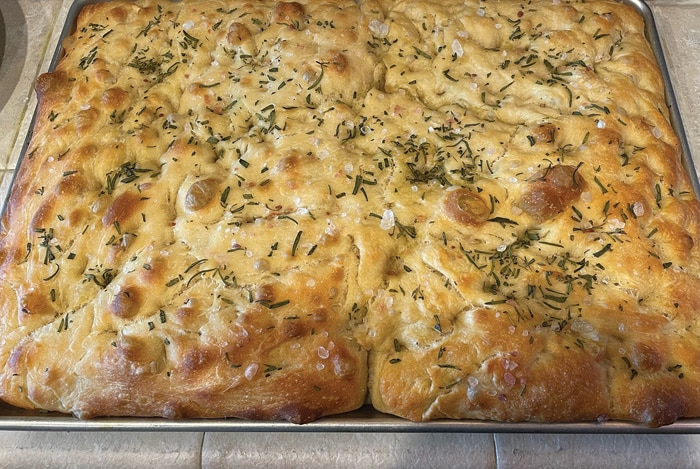
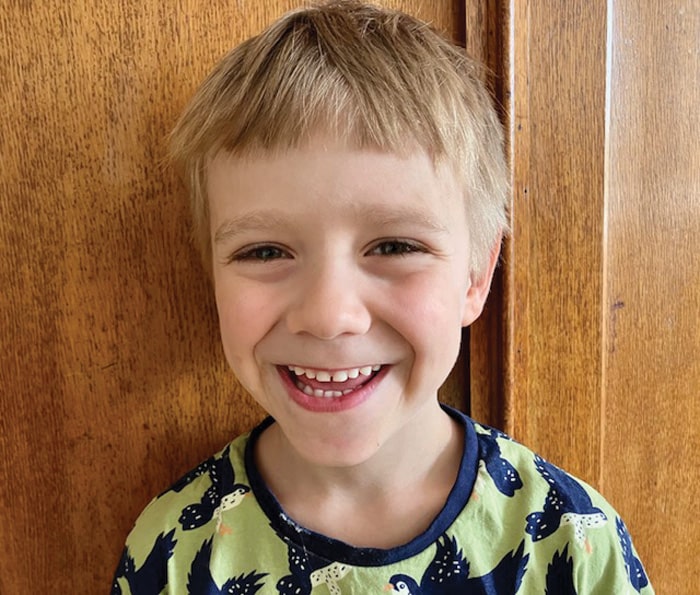
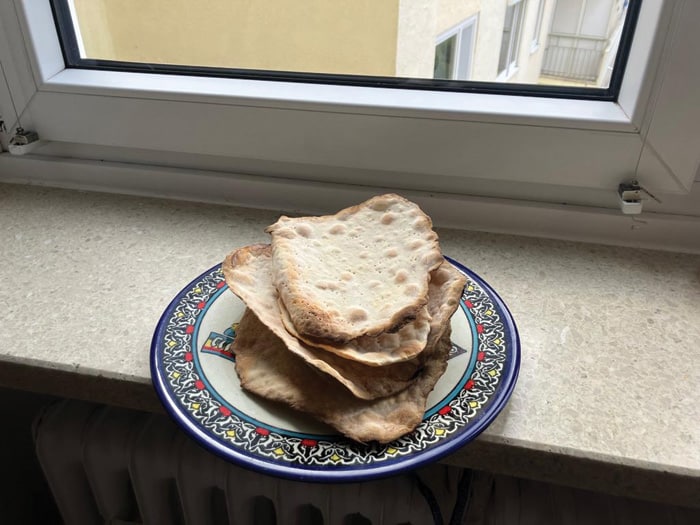
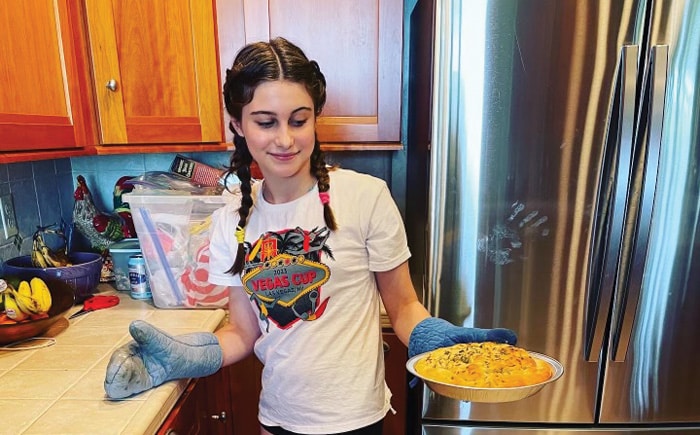


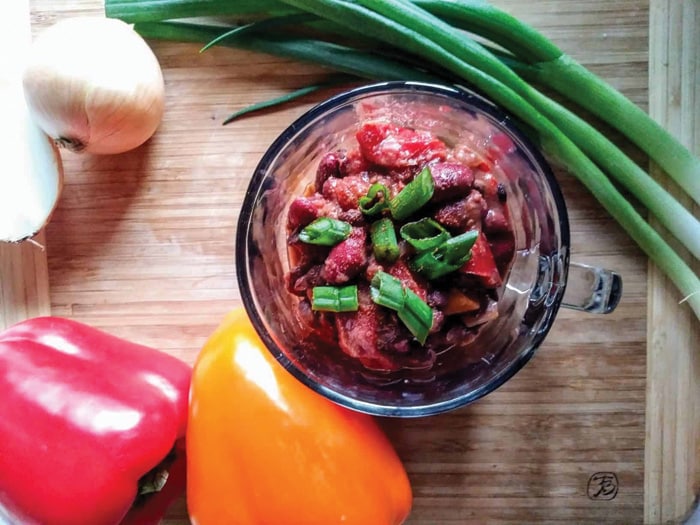




 This past year, my eighth-grade class at Pressman Academy participated in a special partnership program with a school in Selma, Alabama. Every Tuesday during our lunchtime,
 Anderson Traugott, age eight, as interviewed by her mother, I Am a Voter creator and co-founder Mandana Dayani.


 Here at Clubhouse, we have activities and we have birthdays. On Sunday we have dogs. One time, we had duct tape with a teacher and we have fun on Monday, when it’s aerobics. Tuesdays, it’s scrapbooking. Wednesdays is dancing. On Thursday, it’s challah baking.
 *This article contains mentions of suicide, self-harm, depression and various mental health issues.

 The first time I walked into a youth event at my synagogue, I was met with screaming, running elementary schoolers, overwhelmed and frazzled twenty-something staff members, several steaming hot pizzas, and games like Tic-Tac-Toe scrambled everywhere. It was a Saturday night, we had just concluded Havdalah, and we were ready to embark on one of the first events of the year: game night.
 I am a wanderer, but I am not lost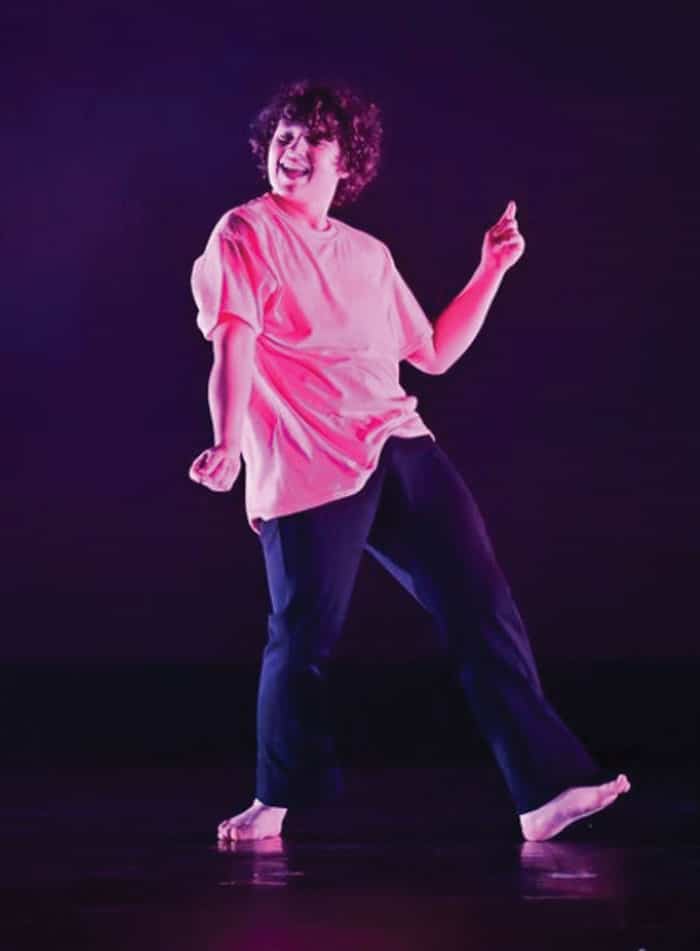
 Bagels originated in Poland, with the first historical example of them being in 1610. The word. “bagel,” is a derivative of the Yiddish word “beygal,” roughly translating to “ring.” For Polish Jews in the early-17th and 18th centuries, bagels became a staple food due to their basic ingredients and ability to vary in flavor based on the ingredients at hand.
 This past April, I had the opportunity to go to Israel with my school. I was lucky enough to be in Israel during Yom Ha’Zikaron and Yom Ha’atzmaut.
 Our Saturdays are different from the rest of the week. Saturday is Shabbat and we go to shul (synagogue) as a family. We go to see the Torah and ask Hashem for anything we need.