fbpx

June 15, 2023

We’re All in This Together – A poem for Parsha Shelach

One rule applies to the assembly, for yourselves and for the proselyte who resides [with you]…
–Numbers 15:15

We’re all in this together –
Whether you were born here
or sent here on a plane from Florida.

We’re all in this together –
Whether you have a blue book
with stamps in it that says where you’ve been

or your book is a different color
or, for some reason, they refused to
put stamps in your book.

We’re all in this together –
No matter who we love, or if
we forget to use the desired pronouns.

We’re all in this together –
When the water runs out
and the planet won’t stop coughing.

We’re all in this together –
Whether we have all the money or
none of the money, our bellies work the same.

All I can say is, when they build the space ark
to send us to the new place, there better be
seats for everyone.

The native, the invader, the proselyte
The ancestors, the children, the seeds
of those yet to come.

We’re all in this together.
We all offer the same fire –
The one with the pleasing fragrance.

Or at least we should.


God Wrestler: a poem for every Torah Portion by Rick LupertLos Angeles poet Rick Lupert created the Poetry Super Highway (an online publication and resource for poets), and hosted the Cobalt Cafe weekly poetry reading for almost 21 years. He’s authored 27 collections of poetry, including “God Wrestler: A Poem for Every Torah Portion“, “I’m a Jew, Are You” (Jewish themed poems) and “Feeding Holy Cats” (Poetry written while a staff member on the first Birthright Israel trip), and most recently “The Low Country Shvitz” (Poems written in Georgia and the Carolinas – Ain’t Got No Press, May 2023) and edited the anthologies “Ekphrastia Gone Wild”, “A Poet’s Haggadah”, and “The Night Goes on All Night.” He writes the daily web comic “Cat and Banana” with fellow Los Angeles poet Brendan Constantine. He’s widely published and reads his poetry wherever they let him.

We’re All in This Together – A poem for Parsha Shelach Read More »

Fighting Anti-Semitism With Punch Lines

There’s something nerve wracking about stand-up comedy. A poor soul is up on stage with no notes, no back up, nothing. It’s one human in front of strangers who have come to laugh. In this contrived setting, there’s nothing incidental or spontaneous, which in real life is often the source of the biggest laughs— the unexpected ones.

Here, on stage, the laughs are expected, and both sides, the comedian and the audience, know it.

Now, take all that nerviness and add a deadly serious idea—the world’s oldest hatred. That was the awkward vibe I felt Wednesday night at the start of “The Roast of Anti-Semitism,” a live show featuring top comedians, from Elon Gold and Jeff Ross to Modi, Howie Mandel, Rachel Bloom and many others, that packed the house at the Saban Theatre in Beverly Hills.

“There is a long, rich Jewish tradition of confronting anti-semitism with direct humor and comedians have always been front-line fighters in the war against hatred,” is how the promoters introduced the show on their website. “There are people that argue that making light of prejudice, or turning purveyors of it into absurdities, robs hatred of power. With today’s disturbing rise of anti-semitism, comedians are ready to fight back.”

The problem, of course, is that comedy doesn’t usually work well with pre-determined agendas. Comedy is difficult enough as it is.

The difference with this show, however, is that the crowd was primed and ready. These were hardly strangers. Many of them have been involved for years, in one way or another, with “the fight against anti-semitism,” a fight that has been deadly serious. On this night, you could feel that the crowd was ready for something different, not just because they wanted to laugh, but because they’re tired of losing. After all, despite all the serious fighting, all they keep hearing is that antisemitism is “worse than ever.”

The first two performers, Elon Gold and Jeff Ross, set the tone for the show. It’s not just that they had the crowd in stiches—it was their mojo. They were modeling a winning body language that empowered the audience in its long and frustrating “fight” against an ancient and pesky disease.

Comedians, by definition, can never show weakness. Bravado is their shtick. When Gold took on white supremacists who chant “Jews will not replace us,” he didn’t fight back with condemnations or calls for “more education.” He fought back with punch lines.

When he said to haters, “We don’t want to replace you, we just want to put braces on you … we just want to manage your portfolio … we want to place you in a 30-year fixed low interest mortgage … we want to fit you for glasses, heal you, teach you, inspire you, make you laugh, represent you in a divorce and she replaces you,” he made the haters look like losers.

Indeed, the notion that haters are losers is a deeply empowering one, especially if you are not a hater. It suggests that haters are the ones with the problem, that haters are the ones who deserve all the crushing ridicule we can heap on them.

The notion that haters are losers is a deeply empowering one, especially if you are not a hater.

Jeff Ross followed Gold with a hysterical, freewheeling set that even poked fun at Jews, honoring, like Gold, the long Jewish tradition of being able to laugh at ourselves. He then took the gloves off with an original song, “Don’t fuck with the Jews.”

That word may come off as vulgar, but his underlying idea was smart and timely. Stop apologizing for your success, he was telling his fellow Jews in the audience. Own it. That’s where your power lies. There should be a price to pay for messing with the Jews, and there’s nothing wrong with that.

The show didn’t pretend to be a substitute for the traditional ways the Jewish community fights anti-Semitism. Rather, it suggested the right body language for the fight—as winners, not whiners. And if any group knows how to play like winners, it’s the comedians.

In a sense, the show went beyond its billing. It didn’t just roast anti-Semitism, it roasted anti-Semites. And it roasted them not with fear or yelling but with good-old fashioned punch lines that ought to make them nervous.

Fighting Anti-Semitism With Punch Lines Read More »

RAD: The Modus Operandi of BDS

The Boycott, Divestment, and Sanctions (BDS) movement is the latest weapon in the ongoing war against Israel that has been waged since the state’s founding in 1948.

However, the boycott call of Israel is nothing new. It was initially launched before the State of Israel came into existence when the Arab League called for a total boycott of Palestinian goods. Back then, “Palestinian goods” were Jewish goods.

The boycott has continued since then. For instance, in 1967, after the Arab countries again failed to destroy Israel in a war of annihilation, the Arab League called for a boycott of Coca-Cola since it sold its products in Israel, banning the sale in all Arab countries. Clearly, the boycott movement hurts Arabs more than Israelis, as the Arab world suffered through decades of RC Cola and Pepsi while Israelis enjoyed the real thing.

It’s important to understand that the boycott isn’t about the West Bank and Gaza, as its pre-dates the 1967 war. It’s about all Palestinian territories, and for them, this includes all the land between the River Jordan and the Mediterranean Sea. Like the so-called “refugee problem,” the boycott is a political weapon utilized by the anti-Israel movement seeking to overturn the results of the 1948 War of Independence and dismantle and destroy the State of Israel.

The latest manifestation of this concerted campaign came in 2001, at the infamous United Nations hosted “World Conference on Racism” in Durban, South Africa, in September of that year. It was supposed to be an anti-racist forum, but it devolved into what observers deemed a forum of hate.

Keep in mind this was on the heels of President Bill Clinton-sponsored Camp David and Taba negotiations, where Israeli Prime Minister Ehud Barak accepted the Clinton parameters for a two-state solution, and Palestinian leader Yasser Arafat turned down the deal and launched the Second Intifada. President Clinton told Arafat then, “You are leading your people and the region to a catastrophe,” and later remarked, “I still didn’t believe Arafat would make such a colossal mistake.”

To prepare for the Durban Conference, leftist anti-Israel NGOs from Europe and elsewhere got together in Iran earlier in the year to plan their assault. Then in South Africa, outside the conference halls, thousands marched in anti-Israel demonstrations, holding signs that read “Hitler Should Have Finished the Job.” At the same time, booths sold copies of “The Protocols of the Elders of Zion,” and the Arab Lawyers Union distributed caricatures of Jews with hooked noses and fangs dripping with blood, clutching money. Jewish human rights activists were physically threatened, with mobs screaming: “You don’t belong to the human race!”

Inside the NGO forum of the conference, the participants, which included groups such as Human Rights Watch and Amnesty International, released a formal declaration that called for a complete boycott, divestment and sanctions of Israel, deeming the country to be a “racist apartheid state,” guilty of “genocide.” The declaration also called for the reinstitution of UN resolution 3379, deeming Zionism to be racism.

Needing a local Palestinian face for the movement, these anti-Israel NGOs found what they were looking for in Palestinian academic and activist Omar Barghouti, who has become the movement’s figurehead. In 2005, the BDS movement was officially launched under the guise of the Boycott National Committee (BNC), a conglomerate of “civil society” organizations that includes American and EU-designated terrorist groups Hamas, Palestinian Islamic Jihad, and the Popular Front for the Liberation Palestinian (PFLP), along with several of their front groups.

The boycott movement has now reinvented itself to use the language of critical social justice theory, which is so salient in Western discourse today. To people in the West, BDS presents itself as a social justice movement, an LGBTQ+ rights movement, an environmental movement, and a women’s rights movement. They co-opt any progressive cause, whether blaming Israel for George Floyd’s death or climate change. BDS claims that to stand in “solidarity” with progressive causes is to support the Palestinian cause. Never mind that BDS cleverly obscures their true motives—that their real aim is Israel’s demonization and eventual elimination.

To further these aims, the modus operandi of the BDS movement can best be described as reductive, adaptable and discursive, or by the acronym RAD. It is critical for organizations countering the BDS movement to understand how they operate in order to push back against them effectively.

Taking each element of this in turn, by being reductive the BDS movement wants to change how the Palestinian-Israeli conflict is discussed. It’s not a conflict; it’s genocide. Don’t dare talk about peace; it’s apartheid. It’s not a complicated situation; it’s settler-colonialism and ethnic cleansing.

BDS is trying to establish the narrative and control the rules of discourse. They try to shut down speech and silence people in a move right out of the woke leftist playbook.

BDS is trying to establish the narrative and control the rules of discourse. They try to shut down speech and silence people in a move right out of the woke leftist playbook. They are not interested in discussing history, nuance, or facts, but rather reducing the conflict to a few simple buzzwords that are meant to demonize Israel. The partition plan of 1947 and the Gaza coup in 2007 require discussion, but genocide and apartheid are easily understood. They are evil, just like Israel.

For instance, vocal anti-Israel BDS activist Mohammed el-Kurd recently stated on a webinar that he is not interested in discussing what the term apartheid really means or if Israel’s conduct meets the definition, he just wants Israel labeled with the “negative connotation it carries in the psyche of the public.”

The BDS messaging is also adaptable. The anti-Israel movement effectively weaponizes this language by co-opting the ills of any country and forcing people to see the Israeli-Palestinian conflict through that lens. In South Africa, Israel is an apartheid state; in America, Israel is a racist state and just another example of white people repressing people of color; and in Australia, where Aboriginal rights are so salient, Jews in Israel are simply the colonizers of the indigenous Arab population. In Europe, members of the BDS movement understand that antisemitic beliefs are still deeply held by many Europeans, even if below the surface. Just as the term “antisemitism” was coined to sanitize anti-Jewish bigotry in the late 1800s, “anti-Zionism” has now become an acceptable form to express this hatred. BDS pushing an anti-Zionist narrative in Europe finds a receptive audience there.

BDS is fungible. Whatever the worst thing a country has done in its history, whatever a country’s most loathsome qualities, Israel is doing it now.

For instance, labeling Israel as a settler colonial state is central to this new paradigm. The Jewish state is a foreign body, a cancer inserted into the Arab Middle East that must be excised. Unfortunately, the boycott movement and its supporters genuinely believe this to their core and preach it in their teachings. They have convinced themselves that Jews are not really from the Land of Israel, and, like the Afrikaans of South Africa, they will eventually give up the country and hand it over to the Palestinians. Even more troubling for those who genuinely want peace and a resolution to the conflict, these people think that victory is close at hand. Israel will fall if they can just hold on for a few more weeks or months. This is the Middle East’s big lie: a willful misunderstanding of who Jewish Israelis are and rejection of the Jewish peoples inalienable ties and attachment to the Land of Israel. According to a recent Palestinian poll, two-thirds say Israel will not celebrate the centenary of its establishment, and the majority believes that the Palestinian people will soon recover Palestine and return its refugees to their homes. Why make peace, why engage in dialogue, when Israel will be eradicated soon?

Finally, BDS is a discursive process that does not require its adherents and supporters to rely on facts but just to continuously make accusations. So anti-Israel activists simply ramble from one charge to the next. “The policing in America is Israel’s fault, George Floyd’s death was Israel’s fault, Jews have no connection to the land of Palestine, Jesus was a Palestinian not a Jew, Middle Eastern Jews are merely  a religious group and just Jewish Arabs, Jews from Europe are fake Jews and are really Khazars, Zionists caused the Holocaust to establish Israel, Israel is an apartheid state, Israel is a Nazi state, hundreds of Israeli laws are racist, Israel is responsible for Jeremy Corbyn’s ouster from the UK Labour party, the refugee issue is Israel’s fault, Oslo collapsed due to Israel, Israel keeps rejecting peace, before the Zionists came along, Arabs and Jews lived peacefully together as equals, etc.”

The goal is to keep Israel constantly on trial and in a position to defend itself, whether there is any validity to the claims made or not.

As British General Sir Ian Hamilton stated: “Propaganda is inverted patriotism, draws nourishment from the sins of the enemy. If there are no sins, invent them! The aim is to make the enemy appear so great a monster that he forfeits the rights of a human being.”

The BDS movement understands this intimately. While it claims to advocate for Palestinian rights, its far more concerned with the delegitimization and undermining of the very existence of the State of Israel. BDS proponents often employ manipulative rhetoric and misleading narratives to sway public opinion, painting a distorted picture of the Israeli-Palestinian conflict. Its deeply deceptive tactics hinder meaningful dialogue and compromise and perpetuate a cycle of hostility and division, ultimately impeding the prospects for a peaceful resolution to the conflict. BDS is anything but rad.


Ari Ingel is an attorney and the Director of Creative Community For Peace. You can follow him on Twitter at @OGAride.

RAD: The Modus Operandi of BDS Read More »

Student Loan Debt, AI and the Extinction of the American Middle Class

As millions of student loan borrowers are forced back to repayment on September 1, the Biden Administration will preside over the largest wave of mass defaults in the nation’s history, which will reverberate into every sector of the economy from housing to travel to retail.

As American Jews, at what point do we stop to assess the collateral damage that the coalescence of crippling student loan debt and the advancement of AI in all facets of the economy will have on America’s working and middle class?

According to Goldman Sachs economists, as many as 300 million full-time jobs around the world could be automated in some way by the newest wave of artificial intelligence that has spawned platforms like ChatGPT, rendering the worker obsolete in a world where they are no longer relevant yet paralyzed by debt. Moreover, these economists predict that 18% of global work can be computerized, with the effects felt the deepest in more advanced economies. Further, as AI goes multimodal with the ability to draw on audio, pictoral and alphanumeric data to execute processes, even the current generation of ChatGPT could soon be made obsolete. With the return to repayment of the most burdensome and least protected type of debt experienced by now four generations, how will 45 million middle- and working-class Americans navigate the advent of automation while simultaneously being crushed by insurmountable student loan debt?

Consider this: Nearly 60% of all borrowers weren’t making payments on their loans even before the pandemic.

Since the Reagan administration first delivered deep cuts to higher education funding with the belief that the government shouldn’t be “funding intellectual curiosity,” the American middle class has shrunk to the point that it is otherworldly to recall that during the 1970s, a middle-class family could own a home, own a car, take a yearly vacation, and send their children to college on one salary. Further, as college tuition has soared far past the rate of inflation, 45 million Americans spanning four generations of all demographics are trapped in a vicious 2T student debt trap, uniquely stripped of the constitutional right of bankruptcy present in every other type of consumer debt. The newly passed debt ceiling deal has codified the end of the student loan payment pause, which has been a lifeline to millions of middle- and working-class Americans as they grapple with the additional $500 a month caused by inflation. Tack on student loan debt plagued by compounded interest and negative amortization, and the average borrower will now have to cover the costs of inflation plus an average of $400-$500 a month in student loan debt resulting in an extra $1000 a month that will never materialize. Moreover, according to the Department of Education, in 2019 nearly 60% of all borrowers weren’t making payments on their loans with the staggering statistic of a borrower defaulting every 26 seconds and that was before the pandemic.

The newly passed debt ceiling deal has codified the end of the student loan payment pause, which has been a lifeline to millions of middle- and working-class Americans as they grapple with the additional $500 a month caused by inflation.

Once this lending system is turned back on, that number will easily reach 80%, collapsing any purchasing power of the middle and working class. In essence, due to the false promises of trickle-down economics where the money never actually gets to the workers who keep the corporations profitable, the fault lines of what defines a middle-class life in America today will continue to be eroded by a lifetime of indentured servitude devoid of any consumer protections and with technology that will render what is left of the hollowed out middle class essentially extinct.

As the daughter of a legendary English teacher, I am reminded of the character Willy Loman, the protagonist of Arthur Miller’s “Death of a Salesman,” in which Willy, a career salesman, symbolizes the ordinary man in American society. His slow demise acts as a representation of the ordinary person leading a fruitless life in a flourishing nation that has left him behind. Willy ends up committing suicide after realizing that there is no place for him in a rapidly changing world where his skills are outdated and devalued. As a committed Jew, I am reminded of the timeless wisdom of Rabbi Joseph B. Soloveitchik Z”L as he so keenly observed that the “feeling of isolation is very destructive. It has the power to crush man’s body and spirit, silence his spiritual powers, and stop up the wellsprings of his inner creativity.”

Ironically, the tragic words of Willy Loman ring just as true today as they did in 1949: “You can’t eat the orange and throw the peel away—a man is not a piece of fruit.”


Lisa Ansell is Associate Director of the USC Casden Institute.

Student Loan Debt, AI and the Extinction of the American Middle Class Read More »

For a Native New Yorker Living in LA, Recent Wildfires Are a Wakeup Call

On June 6, New York City’s air quality index was measured at 200 (considered a “very unhealthy” level of pollution) due to wildfire smoke that had spread east from central Canada. As a native New Yorker now living in Los Angeles, I anticipated such an event was more likely to occur in my new state rather than where I grew up. This week, the true horrors of climate change are really hitting home for me.

What my family and friends are currently experiencing back east is nothing new to Californians. I have personally spoken with several Californians who, due to increasingly bad fire seasons, already had a stockpile of N-95 masks before the pandemic even started. What is a constant fear here became a reality in my home state, as wide-spread masking in New York City has made a comeback due to the dangerous conditions.

The number of fires across Canada, along with their emergence early in the season, mark a significant increase from prior years. The scorched area is already 10 times larger than what is typical this time of year, and the risk of fire is expected to remain unusually high throughout the summer. It’s as if these fires are nature’s way of sounding the alarm and alerting us to the devastation that will continue if we don’t take steps to mitigate our environmental footprint.

Of course, some say that climate change isn’t cause for alarm because climates change regularly. While that is true, it’s the long-term trend that distinguishes climate change from natural weather variability and crosses the line into chaos and uncertainty. What else could explain why California just saw one of its rainiest winters in years while New York barely got a drop of snow?

In recent years, the term “climate change” has more accurately turned into “climate crisis” because, quite frankly, the planet is at the end of its rope and has very little slack left to give. From our extraction of natural resources to copious carbon emissions to failed conservation policies, our actions have consequences.

But not all hope is lost. There are organizational and multinational efforts to take action. Currently, the National Resources Defense Council (NRDC) is attempting to urge the Environmental Protection Agency (EPA) to finalize the most ambitious carbon limits possible. Meanwhile, California and Mexico are working to address sewage and other toxic waste that are polluting waterways. Along with the Canadian-American joint effort to fight the recent wildfires, this demonstrates that the endeavors to protect our environment must reach across borders.

Unfortunately, elected officials seem more interested in maintaining power and helping their funders profit than they are in addressing the crisis at hand. They protect the status quo instead of finding innovative ways to transition to clean energy sources. They claim that their constituents will lose jobs without these power plants but fail to acknowledge that they have the power to create new jobs in clean energy fields. We need to call them out and push them to act not just to protect some abstract future, but also to protect us right now.

I’m calling on my cohort of like-minded, climate conscious individuals—Jews and non-Jews alike—to be that positive difference.

I’m calling on my cohort of like-minded, climate conscious individuals—Jews and non-Jews alike—to be that positive difference. We must work to protect our air and water quality at the local, state and national levels. This means urging the EPA to pass stricter measures when it comes to emissions limits, and supporting legislation in California like Senate Bill 252, which calls for statewide divestment from fossil fuels.

Let’s pressure our leaders to work for us, not against us. Who’s with me?


Hannah Pomerantz is a Jewish Center for Justice Summer Fellow and rabbinical student at Hebrew Union College-Jewish Institute of Religion.

For a Native New Yorker Living in LA, Recent Wildfires Are a Wakeup Call Read More »

A Bisl Torah – Summer Magic

As summer begins, so does the loosening of rigid schedules and regularly programmed calendars. Later sunsets lean into what feels like longer days, infused with the nostalgia of bbqs, baseball games, park visits, beach trips and endless visits to the ice cream store.

I find myself seeing summer magic in the smallest of things: blooming jacarandas, impromptu car rides down the coast, checking off items on our family bucket list, and watching every single Marvel movie.

Often, we assume it’s the life altering moments that create the biggest impact: births, deaths, weddings, transitions from one stage to the next. While these moments are clearly woven with deep meaning and purpose, it can also be the seemingly insignificant experiences that cause one to realize how wonderful life really is.

It is yet another way of choosing life. Ibn Ezra, Biblical commentator explains that choosing life is choosing to love. He clarifies by stating that the purpose of life is choosing to love God. And who are we to discriminate between the God-given big and small moments that have been placed before us? Living is loving the vividness of the sky during a majestic sunset. Living is loving the boundless joy fixated on a child’s face as he learns a new fact or silly joke. Living is loving the mundane along with the holy.

Summer is a time to take in God’s magic. Slow down. See what God has placed before you. Love. And Live.

Shabbat Shalom

Shabbat Shalom

Rabbi Nicole Guzik is a rabbi at Sinai Temple. She can be reached at her Facebook page at Rabbi Nicole Guzik or on Instagram @rabbiguzik. For more writings, visit Rabbi Guzik’s blog section from Sinai Temple’s website.

A Bisl Torah – Summer Magic Read More »

Federation Real Estate Dinner, Ziegler School Ordination, New Friends of ELNET Leadership

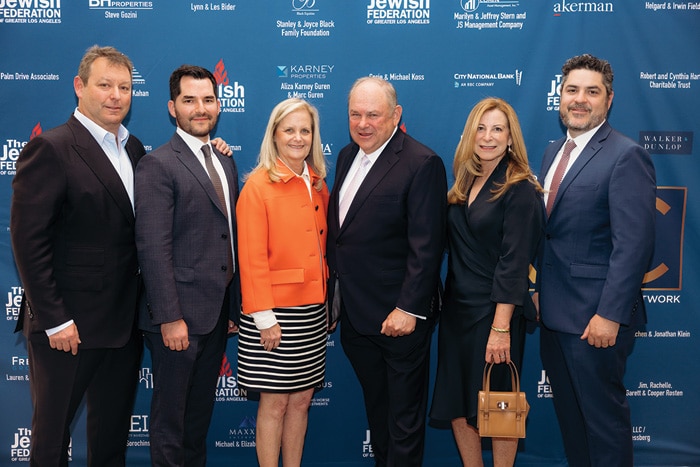
The Jewish Federation of Greater Los Angeles held its Real Estate and Construction (REC) Network Dinner at the Beverly Hilton.

The June 1 event honored the life and philanthropic legacy of Robert Hart, founder, CEO and president of TruAmerica Multifamily.

“Bob represents everything that is good about his profession and the Jewish community of Los Angeles,” Jewish Federation of Greater Los Angeles President and CEO Rabbi Noah Farkas said in a statement. “Bob is not just a titan and leader of his industry. He also understands deeply the importance of giving back and helping build community. We are blessed to be able to call him a friend. His impact on our Jewish community will be felt for generations to come.”

Hart — who has raised tens of millions of dollars to improve the lives of others in his community, sits on the board of governors for City of Hope and is a member of the board of directors of Chrysalis — said he was honored to be recognized by the Federation.

“I’m truly humbled to be receiving this honor from The Jewish Federation,” he said. “I’ve had the honor and responsibility of leading the fundraising endeavors this year for the Real Estate and Construction Network of The Jewish Federation. I support the inspiring work and community outreach of The Jewish Federation because I have seen firsthand the impact of its programs and initiatives.”

The L.A. Federation’s REC Dinner is the premier gathering of real estate professionals in Los Angeles. The evening focuses on the power of philanthropy and efforts to uplift those in need in the Los Angeles community with all proceeds raised going to support the L.A. Federation’s philanthropic work.  


American Jewish University Ziegler School of Rabbinic Studies’ newest ordained rabbis.
Courtesy of American Jewish University

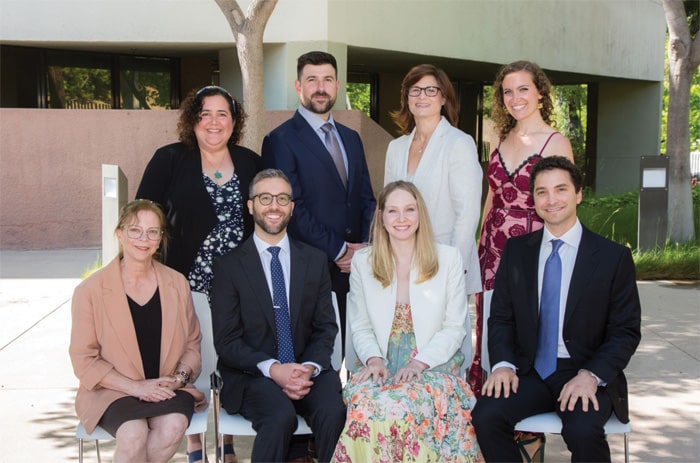
On May 22, the Ziegler School of Rabbinic Studies at American Jewish University (AJU) held an ordination ceremony for its 2023 class, comprised of nine new rabbis, during an inspiring in-person ceremony on AJU’s Familian Campus in Los Angeles.

Josh Jacobs, Hannah Jensen, Candice Levy, David Mendelson, Shanee Michaelson, Piotr Mirski, Alexandra Rosenbaum, Samuel Rosenbaum and Rachel Turkienicz were ordained as Conservative rabbis. 

According to AJU, these graduates are serving the Jewish people and satisfying the need for rabbis by working in various communities throughout North America.

“There has been a shortage of rabbis in our world, and I am profoundly honored to witness our Ziegler graduates stepping up to fill this vital role,” Ziegler School Dean Rabbi Bradley Shavit Artson said. “As I observe these students blossom into leaders, equipped with profound knowledge of Jewish wisdom and teachings, my heart swells with immense pride. I hold unwavering confidence that this next generation of rabbis will not only meet the needs of the Jewish community but also pave the way for a thriving and forward-thinking Jewish future.”

The Ziegler School is one of two rabbinic schools in North America affiliated with the Conservative movement.


Robert Flesh. Courtesy of Friends of ELNET

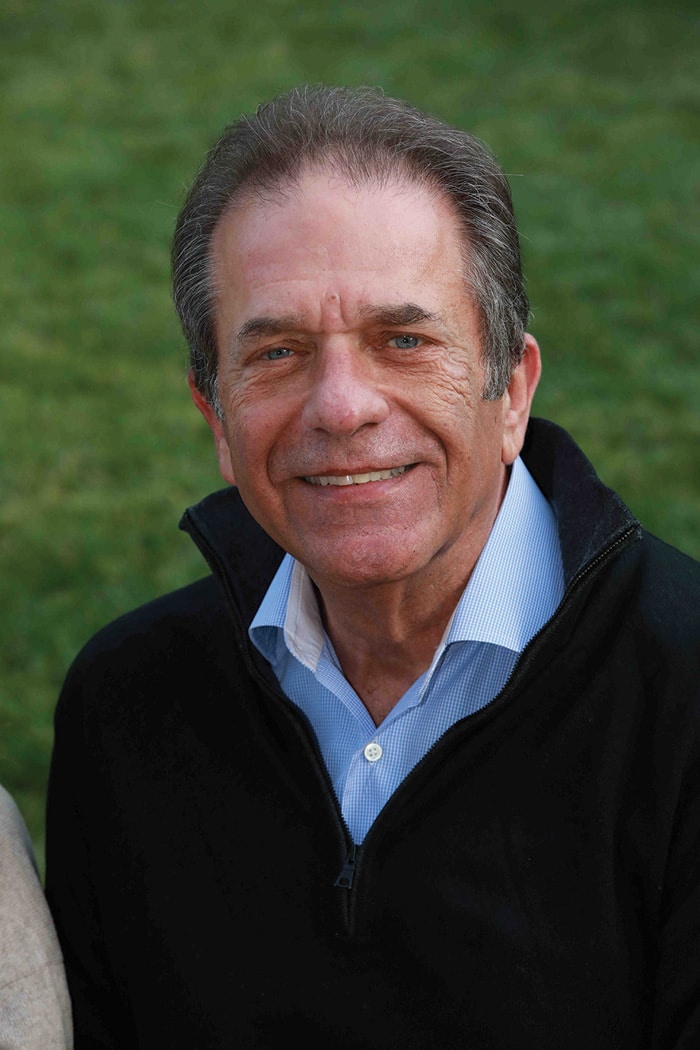
On May 9, the Friends of ELNET board of directors voted to make Robert Flesh the chairman-elect of the board.

Flesh serves on the boards of several real estate companies and philanthropic organizations. He is a past president of Sinai Temple and a member of its board of directors. He is active in interfaith unity efforts; Jewish and Israel-based institutions; and organizations focused on education and at-risk youth. Flesh has served on several community boards and commissions. 

 ELNET is the premier organization dedicated to strengthening Europe-Israel relations based on shared democratic values and strategic interests.

The organization also recently hosted its third International Policy Conference, from May 8-10, in Paris. The conference brought together influential policymakers and leading public opinion-makers from Europe, Israel, the U.S., and Arab countries to discuss and impact the shaping of Europe’s Middle East policy and Europe-Israel relations.

Federation Real Estate Dinner, Ziegler School Ordination, New Friends of ELNET Leadership Read More »

A Moment in Time: “God, Are You There?”

Dear all,

Not long ago, I picked up a phone and called God. I got voice mail. So I simply asked, “God – are You THERE?”

The next morning, I saw that God had returned my call with a text. It simply asked, “Zach – are YOU there?”

In life, so an extent we are all looking for that which is beyond.

And in life, we also can affirm our moment in time to be present.

With love and shalom.

Rabbi Zach Shapiro

A Moment in Time: “God, Are You There?” Read More »

Your Call Is Very Important To Us

Friends often ask me to help fix a frustrating problem they are having with customer service, when calling them has failed. Given that I just went through this today I’ll finally create a “how to” that has rarely failed me:

Step 1. Call and tell them your issue/what you need and expect from them. If resolved, stop here. If not…. You have two and a half options:

Step 2: Option A. You ask for the supervisor. Sometimes your issue will be resolved by the supervisor, or by them before they even get the supervisor on the phone.

Step 2: Option B. You end the call, call again, and start over with another agent. Yes, they work for the same company but the difference in how they resolve things can be night and day.

Step 2: Option B alternative. You end the call and call again at an entirely different time of day. This will often result in you reaching an entirely different call center (or an entirely different country).

Step 3. If all avenues above fail, and it’s a large company, tweet @ them. This will usually result in them asking to DM you to resolve your issue. You will almost always get a good resolution at that point.

If none of that works you should decide if you are taking your business elsewhere, as it shows you their ability or desire to resolve issues. I have found the most frustrating places to deal with are airlines and insurance companies. But more often than not if you do what I said you will find a better outcome than you’re used to.

And keep in mind that when they offer you a solution you have nothing to lose by telling them NO and insisting on what you are looking for. They will either get you that better offer or you can always fall back on what they did offer. It’s not going to be rescinded.

Two short examples from this week:

-Amazon was supposed to send me some items the next day. They were still not here six days later. I pressed the function to call me on the app and I was talking to them within seconds. They apologized and promised to solve it by ensuring it arrived the next day. I said that’s not good enough and it should be free, they said they agree and it was now free. It took me no arguing, just maintaining that that’s what needed to be done.

-I called my Health Flex Card, which emailed me a request for documentation. I know historically that calling them is easy and friendly and within minutes they find what they need and don’t require me to locate and send them documentation. I called on this one instance and the person said it requires documentation from the doctor. I told her that they usually find what they need on the phone to save me time. She told me not only could she not solve it, but there were three other claims that also needed documentation. I knew something was off because I’m familiar with their EASY customer service. I said thank you and hung up. I called again this morning and the usual chipper, pleasant type now answered the phone and within two minutes was able to fix all claims on the phone. When I explained to her that she was a rock star (always start off friendly, because “you catch more flies with honey than vinegar”) but why-oh-why did the person last night not have a clue, she explained that after 5pm it goes to a different call center who are not specialists, so they wouldn’t know how to fix this. Calling at the right time was all I needed to do.

Feel free to share if you find this helpful.

Your Call Is Very Important To Us Read More »

Punctuation Marks in a Biblical Declaration of Independence and Dependence

Punctuation marks are myriad,

but my favorite is the period.

Commas tend to be divisive,

colons help the indecisive,

both abhorrent when abundant,

somewhat usually redundant.

Colons and the semicolon

mark the pause that you have stolen

from the period you needed,

till by them you were stampeded.

Exclamation marks expressive,

tend, I think, to be excessive;

questions marks like necromancers

tend to fool us with their answers.

Surrounded by parenthesis

words make far less emphasis;

in England where they’re known as “brackets,”

they hide the words in little packets.


Commas, my first subject I

will now try to demystify,

and, commenting on common commas,

call them the enemies of promise,

which, slowing down the sentence flow,

don’t stop it totally, although

the interruptions they provide

often spoil the verbal ride.

If you’re smart you may enliven

apercus with help of hyphen;

like a name that’s hyphenated,

thoughts that follow should be feted. 

Quotation marks are full of lies,

and useful when you plagiarize,

from names to which you don’t allude

and surely by them may be sued,

but let me say now in conclusion:

only periods foil confusion,

better than all other marks

when you’ve concluded your remarks.


Post Scriptum


Without addition to this poem of

what I’ll discuss below, inverted nuns,

I add what parenthetically I love,

fantastically tripping with run-ons,

a punning P. S. to this verse,

referring to the Torah’s only punctuation:

the two inverted nuns that both reverse

the expectations of the Hebrew nation

heading for the Promised Land,

Jews then all doomed instead to wander

in the wilderness, for their demand

for meat more than for Israel fonder.


While taking from the Ark a scroll

we say one verse, and putting back

the scroll one more. The first one’s goal

is scoring Torah, which we lack

the moment that we have returned

the scroll, made suddenly sad Jews,

as we were when we gravely burned

for meat, and Israel’s team would lose,

like teeth with meat that‘s not been flossed.


Inverted nuns tell us despite

bad fortune, goals should not be lost,

and stand like upside nuns, upright,

while bracketing with our dependence

on God a Torah book, its seventh,

denunciating Independence,

dependent on a force that’s heaventh.


Num. 10:35-36 states in a text that is parenthesized by two inverted nuns:


לה  וַיְהִי בִּנְסֹעַ הָאָרֹן, וַיֹּאמֶר מֹשֶׁה:  קוּמָה יְהוָה, וְיָפֻצוּ אֹיְבֶיךָ, וְיָנֻסוּ מְשַׂנְאֶיךָ, מִפָּנֶיך           35nd it came to pass, when the ark travelled  forward, that Moses said: ‘Rise up, O LORD, and let Thine enemies be scattered; and let them that hate Thee flee before Thee.’


לו  וּבְנֻחֹה, יֹאמַר:  שׁוּבָה יְהוָה, רִבְבוֹת אַלְפֵי יִשְׂרָאֵל.  36 And when it rested, he said: ‘Return, O LORD, unto the ten thousands of the families of Israel.’


My punning P. S. contains the phrase “gravely burned for meat,” a wordplay on the fate of the Israelites after God fulfilled their desire for meat in Kibroth-hattaavah, Graves of Desire, Num 11:33-34:

.

לג  הַבָּשָׂר, עוֹדֶנּוּ בֵּין שִׁנֵּיהֶם–טֶרֶם, יִכָּרֵת; וְאַף יְהוָה, חָרָה בָעָם, וַיַּךְ יְהוָה בָּעָם, מַכָּה רַבָּה מְאֹד.            33 While the flesh was yet between their teeth, ere it was chewed, the anger of the LORD was kindled against the people, and the LORD smote the people with a very great plague.

לד  וַיִּקְרָא אֶת-שֵׁם-הַמָּקוֹם הַהוּא, קִבְרוֹת הַתַּאֲוָה:  כִּי-שָׁם, קָבְרוּ, אֶת-הָעָם, הַמִּתְאַוִּים.         34 And the name of that place was called Kibroth-hattaavah, because there they buried the people that desired.


Rabbi Joseph Soloveitchik explained that the reversed nuns in Numbers 10 reflect the reversal of fortune from the preceding era when all the Israelites, including Moses, thought they were about to enter the land of Israel. This era changed tragically into one in which they wandered for forty years in the wilderness. Whereas the two verses are also intriguingly analyzed by Rabbi Immanuel Bernstein in “When Letters Face Backwards: Examining the Parsha of “Vayehi Binsoa ha’Aron ” (see outorah.org/p/71085/), I suggest in my poem’s post scriptum  stanza that the reason that we recite the first of these two verses before we take the Torah scroll from the Ark is because we are happily anticipating  our entry into  an era in which we are fully devoted to the Torah. , Whereas the reason we recite the last verse before returning  the Torah scroll to the Ark is because we feel we need God’s support since we have not yet reached this idyllic era and the entire  Jewish people have failed  to do in most eras of our history. Explaining the parentheses enveloping these two verses, the Talmud in bShabbat 115b-116 identifies them as the seventh book of the Torah. This inspires me to think of this seventh book of the Torah as a biblical version of Israel’s “Declaration of Dependence,” in which the second part is an explicit reference to our continued dependence on God in all our efforts to defeat our foes.


Gershon Hepner is a poet who has written over 25,000 poems on subjects ranging from music to literature, politics to Torah. He grew up in England and moved to Los Angeles in 1976. Using his varied interests and experiences, he has authored dozens of papers in medical and academic journals, and authored “Legal Friction: Law, Narrative, and Identity Politics in Biblical Israel.” He can be reached at gershonhepner@gmail.com.

Punctuation Marks in a Biblical Declaration of Independence and Dependence Read More »