fbpx

May 11, 2023

The Unique Challenges of Infertility in the Orthodox Jewish Community

Rebecca* is a wife, a mother, and a practicing Orthodox Jew. She is also among the 11 percent of women in the United States who have experienced infertility.

The trajectory of infertility looks different for every couple. For Rebecca and her husband, whose family now includes three young children, their journey included a paradox familiar to those within the Orthodox community.

They had the advantage of a closely knit, built-in support network near their home in New York; however, infertility often remains a taboo topic within the community. Its sufferers tend to keep their struggles as private as possible. For Rebecca and her husband, finding support meant forging a different path through the maze of infertility.

The maze began, she said, with a common but complex endocrine condition. Polycystic ovary syndrome (PCOS) is a disorder affecting menstrual cycles and other reproductive hormones that often leads to fertility issues. When she was diagnosed with PCOS as a teenager, Rebecca’s doctor gave her a prescription for metformin, which is often considered for use in combating insulin resistance, a condition common in PCOS patients.

A few years later, Rebecca married. From the beginning, she and her husband Jacob* struggled to conceive. This can be especially difficult to conceal within an Orthodox Jewish community, where couples are expected to marry and conceive at a relatively young age (the average age of one’s first marriage is 22-24 among Orthodox Jews, and 29-31 among the general U.S. population).

Even within the U.S. Jewish population, the differences in family demographics are stark. A 2021 Pew survey revealed Orthodox Jews are five years younger, on average, when they give birth to their first child (23.6 compared to 28.6 among non-Orthodox Jews). Rebecca and Jacob waited three years to become parents. That was considered “late” within their community.

Couples who must wait longer, Rebecca said, “don’t so much keep it private. The rumors are so strong―either marriage problems, illness, or infertility―you’d have to say something. I know a few people who waited way longer than I did, but they did not keep it private.” Not wanting to arouse suspicion, Rebecca hid her struggle. She told only one friend and one cousin who had experienced infertility herself.

Rebecca and Jacob ended up using a nonprofit support services agency, Refuah Helpline, to find a reproductive endocrinologist within the Orthodox community who could prescribe a treatment regimen that conformed with written and oral Jewish laws. They were relatively fortunate in their first attempt to conceive. A timed intercourse cycle resulted in a successful, healthy pregnancy.

As a practicing member of the Orthodox community herself, their doctor was able to provide specialized, culturally-competent care to the couple, pairing her medical expertise with her unique knowledge of Orthodox tradition and law. This provided Rebecca and Jacob with an additional layer of comfort and support throughout the process.

A year and a half later, wanting to conceive again, Rebecca and Jacob returned for assistance. This time, they were unable to conceive through timed intercourse. Here too, their struggle was pronounced because of the cultural expectations around family building within the Orthodox community. Most Orthodox couples have at least three children. Families with 10 or more children are not uncommon.

After undergoing intrauterine insemination (IUI) treatment, Rebecca ultimately conceived again and gave birth to twins. The struggle was worth it, she said, and she appreciates the rare degree of specialized support and understanding she received during her journey to motherhood.

For Orthodox couples who need the assistance of fertility treatment to conceive, navigating the relationship between religious law and medicine can be challenging. “Our scholars have to interpret the law that exists, match it with the medical law that exists, and match it with a solution,” Jacob said. “It’s complicated, but from a lawyer’s perspective, sometimes you can find a middle way, a loophole, to make things work.”

For Orthodox couples who need the assistance of fertility treatment to conceive, navigating the relationship between religious law and medicine can be challenging.

In addition, certain common fertility-related procedures are not always an option for Orthodox couples. Something as simple as semen analysis, for example, may be prohibited or require special permission from a rabbi in order to comply with Jewish law. Fertility treatments like IUI and IVF also require an “observer” from within the Orthodox community to be in the fertility clinic’s lab during certain procedures or stages of the process, to make sure the chain of custody while handling a specimen is not broken.

The procedures Rebecca and Jacob underwent were all common among couples trying to conceive. Rabbis familiar with Orthodox law are abundant. Yet finding a rabbi with some knowledge of infertility issues and Jewish law was something this couple did not take for granted.

“Some people unfortunately never end up having kids because their rabbi didn’t allow certain things,” Rebecca said. “Find a rabbi who understands your personal situation. If it’s just a Jewish law issue, there’s a way to work around it.”

*Names have been changed at the couple’s request.


Dr. Ilana Ressler, a Reproductive Endocrinologist with Illume Fertility, is board-certified in Obstetrics and Gynecology, and in Reproductive Endocrinology and Infertility, in Connecticut and New York.

The Unique Challenges of Infertility in the Orthodox Jewish Community Read More »
Holocaust Hero Attacked in Leading History Journal

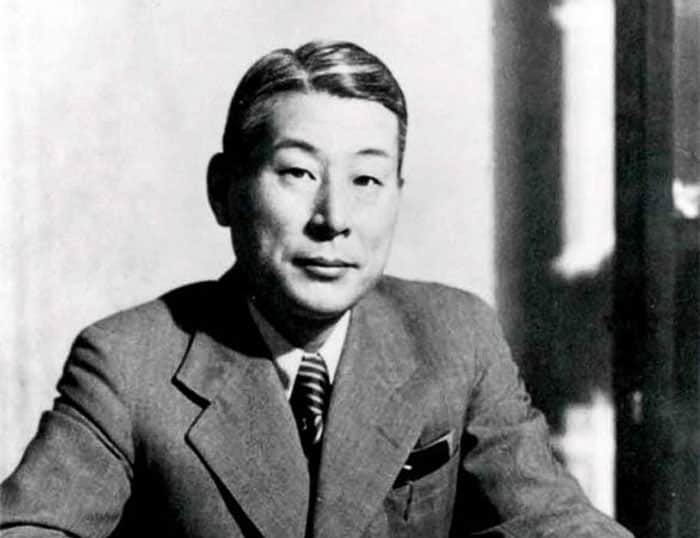
An article in the latest issue (March 2023) of the American Historical Review, a prominent scholarly journal, questioned the record of Holocaust rescuer Chiune Sugihara and strongly criticized Yad Vashem for honoring him. Holocaust scholar Dr. Rafael Medoff interviewed Dr. Mordecai Paldiel, the former head of Yad Vashem’s Department of the Righteous Among the Nations, about the controversy.

Q:  Prof. Rotem Kowner, of the University of Haifa, claims in his article that the Jewish refugees in Lithuania whom Suighara saved did not face any “immediate physical risk” from the Germans, because Lithuania was under Soviet occupation. The implication is that Sugihara’s assistance didn’t really save their lives. However, the U.S. Holocaust Museum’s Holocaust Encyclopedia points out that when the Soviets took over Lithuania, there was “a wave of arrests” of Jews by the Soviet secret police.

Paldiel: The assertion that the Jewish refugees in Lithuania did not expect to fall under Nazi rule is not borne out by historical data. In fact, many expected a German-Soviet war could break out at any time. They saw the Nazis conquer France, Belgium and Holland just a few weeks earlier. There were long lines of Jewish refugees in front of the Japanese consulate in the Lithuanian city of Kaunas, pleading for visas to allow them to leave the country as fast as possible. Of course these formerly Polish Jewish refugees were in danger, from both the Soviets (who threatened them with expulsion to Siberia unless they adopted Soviet citizenship) and the Germans (who, as pointed out by Zerach Warhaftig, who headed the Jewish Agency Palestine office in Lithuania, were expected to invade soon).

Q:  According to Kowner, Sugihara’s efforts constituted only “a minor episode” in the Holocaust. Is that a fair assessment?

Paldiel:  Affording over 3,000 Jews, mostly refugees in Lithuania, the possibility of escaping danger is not a minor episode, it’s a major episode, something of great significance.

Q:  Kowner’s article claims that Sugihara’s rescue work was somehow mixed up with Japanese intelligence activities. Kowner also claims that Sugihara’s family was motivated by “financial concerns” in publicizing his story.

Paldiel:  Actually, the fact that he was sent to Lithuania principally for intelligence work places Sugihara on an even higher moral pedestal. He suddenly assumed the role of a large-scale rescuer of Jewish refugees, an activity that was totally foreign to what he was assigned to perform. As to the charge of financial profits by Sugihara’s family as the main motive for publicizing his rescue activity, that is mere petty speculation and beneath accepted scholarly standards. There is no justification for taking cheap shots at Sugihara’s family.

Q:  Prof. Kowner repeatedly refers to the publicity about Sugihara as “the cult of Sugihara” and claims that his supporters are engaging in “collective worship” and are depicting him as “saintlike.” Is there any basis to such an accusation?

Paldiel: There’s no place for this kind of sneering rhetoric. It makes one wonder why Kowner seems to be personally so uncomfortable with the recognition of Sugihara’s good deeds.

Q: According to Kowner, unnamed “memory agents” in Israel, Japan and Lithuania “have overplayed Sugihara’s deed and inflated his grit for their own ends.” Have Sugihara’s actions been exaggerated?

Paldiel:  I have not seen any serious source exaggerating what Sugihara accomplished or inflating the number of Jews he saved. If some careless pundit or some high school student’s report accidentally got some number wrong, that’s not evidence of some conspiracy to overstate what Sugihara did.

Q: Prof. Kowner’s major accusation is that the recognition of Sugihara’s actions was part of a scheme in the 1980s by Israel’s “right-wing government,” under Menachem Begin, because it had “a greater focus on past victimhood” than previous Israeli governments.

Paldiel: It’s superficial and misleading to claim that Begin was “focused” on “victimhood” and that it somehow led to Sugihara’s recognition. It’s even less convincing when one remembers that Sugihara was declared a ‘Righteous Among the Nations’ in 1984, when Yitzhak Shamir, not Begin, had succeeded Begin as prime minister a year earlier. During the fight for Israel’s independence, Shamir had been a leader of the Stern Group, which emphasized Jewish strength and action, not “victimhood.”

Q:  One of Kowner’s major accusations is that Yad Vashem should not have honored him because under its own criteria for the “Righteous Among the Nations,” the person had to have risked his or her life to save Jews.

Paldiel:  Kowner is mistaken. Yad Vashem had already decided, prior to Sugihara’s candidacy, that with regard to diplomats and other senior government officials, they do not need to have risked their lives, but rather risked their professional status by disobeying instructions from above, The number of people affected by their efforts also is a factor that is considered in these cases.

Q:  Kowner claims that Yad Vashem, as a “state agency,” was “eager to cooperate” with the Israeli government and conspired with it “for the sake of extending the thrust of its past victimhood and improving its international relations.” Does that accusation conform with your experiences?

Paldiel:  I was involved in the Sugihara matter when it was taken up by Yad Vashem from start to finish. I was the one who completed the investigation of his actions, and I was still head of the Department of the Righteous Among the Nations when it was decided to recognize Sugihara. The question of relations between Israel and Japan never entered the discussions insofar as Yad Vashem was concerned; we acted solely based on the criteria for honoring diplomat,s per criteria already previously established when discussing diplomats who aided many Jews with visas.

Q:  Yet Prof. Kowner insists that the decision must have been made on the basis of political and diplomatic considerations.

Paldiel: I was present at the relevant meetings. He wasn’t there. That included the decisive debate on Sugihara’s candidacy, which was headed by Supreme Court Justice Moshe Bejski. The sole question was the level of personal or professional risk that Sugihara took in not following rules and regulations by his Japanese superiors. Political considerations by the Israeli Foreign Ministry on relations with Japan had no part, and were not even mentioned in the debate by the Commission for the Righteous—the sole sovereign authority to decide on the Righteous title—on the question of whether Sugihara qualified for the title. There is no mention of this in the verbatim record of the Commission proceedings.

Q:  According to Kowner, the final discussion within Yad Vashem’s commission concerning Sughihara was “highly charged.” What do you think of that description?

Paldiel: Again, an exaggeration. There was one member who opposed it, but for a different reason, and not because he felt that he did not qualify, and one who abstained on a questionable legalistic point. All of the other twenty commission members voted in favor.

Q: Kowner’s major claim is that “official Israel, through Yad Vashem” ignored its own rules and criteria, because it prioritized “extending the thrust of its past victimhood and improving its international relations.”

Paldiel:  Sugihara’s recognition by Yad Vashem was not caused by any relinquishing of its criteria. Eighteen years earlier, in 1966, Portuguese diplomat Sousa Mendes was awarded the ‘Righteous’ title even though he faced no risk to his life when he afforded transit visas to thousands of Jews. His recognition was based on different criteria established for diplomats and senior officials who aided Jews.

Here’s another relevant example. Poland broke diplomatic relations with Israel in 1967, and that break lasted until 1990, but it didn’t stop Yad Vashem from adding thousands of Poles to the list of “Righteous Among the Nations,” based solely on established criteria for this honor, with no political considerations attached. It had nothing to do with an alleged improvement of relations with Poland, since those relations did not even exist.

During those twenty-three years, communist Poland continuously lambasted Israel as a tool of American imperialism, and carried out an antisemitic drive against its remnant Jewish community, forcing thousands to flee the country. That had no impact on Yad Vashem’s work with regard to the Righteous Among the Nations from Poland. In fact, my colleagues and I had to find back channels to reach Polish honorees, because the Polish government refused any formal relations with Israel, and no connections with Yad Vashem.

When Poland restored relations with Israel in 1990, it was not because of Yad Vashem’s honoring of Polish rescuers of Jews, but as the outcome of the fall of communism in that country, and Poland abandoning its previous hostility toward Israel. In 1984, hundreds of Poles were awarded the Righteous title, with no political strings attached. The same principle prevailed that same year with regard to Sugihara’s recognition.

Q: What about Kowner’s suggestion that the Israeli Foreign Ministry put pressure on you or your colleagues at Yad Vashem over Sugihara?

Paldiel: During my entire processing of the Sugihara case, I was never told, nor ever heard, of any pressure by the Israeli Foreign Ministry to have the case approved for the benefit of better relations with Japan—only to have it accelerated since the man was still alive but at a very advanced age. The recognition of Sugihara had nothing to do with political considerations, such as improving Israel’s international relations. Yad Vashem made the correct decision, and Sugihara was a genuine hero.

Holocaust Hero Attacked in Leading History Journal Read More »

Rashida Tlaib Holds Nakba Day Event in Senate Building

Representative Rashida Tlaib (D-MI) held her Nakba Day event after all on May 10 inside a Senate office building.

Jewish Insider reporter Marc Rod tweeted that the event took place in the Senate Health, Education, Labor and Pensions (HELP) Hearing Room, a committee chaired by Senator Bernie Sanders (I-VT). Rod, who attended the event, tweeted that Sanders sponsored the event; The New York Post noted that a source told them “that Senate committee chairs are responsible for approving rooms used for events.” However, The Jerusalem Post reported that Sanders was not at the event.

Initially, the event was going to be held in the U.S. Capitol Visitor Center until Speaker of the House Kevin McCarthy (R-CA) canceled it. But McCarthy does not have any jurisdiction over a Senate building, Rod noted. Sanders told Rod, “Members of the United States Congress in a democratic society have a right to hold a meeting, and I think it’s outrageous that Speaker McCarthy threw them out of a room they had reserved.”

Rod also tweeted that at the “standing room only” event, Tlaib accused “Israeli police of a ‘sustained campaign of terror’ at the Temple Mount.” She also said during the event that, according to The New York Post, “The nakba never ended. Each year our country sends billions to explicitly maintain an apartheid state and support ethnic cleansing without a second thought.” Additionally, Tlaib said that “no child should ever have to worry what will fall from the sky,” per The Jerusalem Post.

Representative Cori Bush (D-MO) also attended the event, per Rod.

In response to McCarthy’s tweet announcing the cancellation of the event, Tlaib tweeted: “Let the headlines read ‘McCarthy tries to erase Palestine but fails.’”


Senator Bill Cassidy (R-LA), ranking member of the HELP Committee, told Rod that he “wholeheartedly” objected to the use of the committee’s room “for this divisive event.” “The Capitol Ground should not be used as a pedestal to legitimize anti-Semitic bigotry,” he said. A GOP spokesperson also told Rod that Cassidy “was unaware and not consulted in the Chair’s decision to permit the use of the committee room for this event.”

The New York Post reported that they have a source close to Senate Majority Leader Charles Schumer (D-NY) saying that the Senate Majority Leader was not aware that the Senate building was being used for the event.

Senator Jacky Rosen (D-NV) denounced the event in a statement to Rod, “As Americans celebrate the 75thanniversary of the founding of Israel, calling the establishment of the world’s only Jewish state a ‘catastrophe’ is deeply offensive, and I strongly disagree with holding the event on Capitol Hill. Israel was founded as a refuge for the Jewish people seeking millennia of antisemitic persecution and violence. Let me be absolutely clear: the United States is and will always remain a stalwart ally of the State of Israel.”

Anti-Defamation League (ADL) CEO Jonathan Greenblatt tweeted, “It is disgraceful that @SenSanders allowed this event by @RepRashida to be held in our nation’s Capitol. Real conversations are needed around a path to peace, but not with groups & individuals who espouse antisemitism. We call on the Senate to condemn this event.”

William Daroff, CEO of the Conference of Presidents of Major American Jewish Organizations, tweeted: “It is outrageous that the hallowed halls of Congress would be used to promulgate the false narratives + historical revisionism of Israel-haters. Clearly they are more interested in demonizing the Jewish State than fostering understanding and common ground in the pursuit of peace.”

Dumisani Washington, founder and CEO of Institute for Black Solidarity with Israel, tweeted: “With an official #Nakba (anti-Israel) event being held at the State Capitol today, the US government now fully reflects the antisemitism on its college campuses and universities — where these ‘Progressive’, Israel-hating political leaders are being produced.”

Israellycool Israel Advocacy Executive Director David Lange tweeted, “Remember, this was happening as millions of @BernieSanders’ fellow Jews were under attack from Islamic Jihad rockets being fired from #Gaza. Bernie, you are a DISGRACE!”

Israeli Minister of Diaspora Affairs Amichai Chikli tweeted in response to Tlaib, “Let’s remember together the founding father of the Palestinian national movement, the mufti Amin al-Husseini. A mass murderer and the architecture of the ‘Nakba.’” He went onto outline the relationship between al-Husseini and Adolf Hitler before concluding: “In 1946 the Holy War Army was established under the auspices of the Mufti and the Supreme Arab Committee of the Arabs of Palestine, it was the main fighting force in the first stages of Israel’s War of Independence, happily this army established by an ally of the Nazis was destroyed but its sick ideology is still with us.”

Rashida Tlaib Holds Nakba Day Event in Senate Building Read More »

Jewish Public Interest Law Firm Demands Transparency on Ethnic Studies Content from Hayward Unified School District

Why do so many California school districts ignore the explicit requirements of California law? That’s the question that our public interest law firm, The Deborah Project, is asking after filing requests for public documents from dozens of California school districts so we can learn what they teach their students about Ethnic Studies and in particular about Zionism, Israel and her neighbors. The California Public Records Act requires public agencies such as school districts to turn over responsive documents sought by the public.  But in too many cases, our requests have been either completely ignored or we’ve been told the district has no responsive documents when we know that’s not true.

We just put our question to someone very important: a California judge.  We’ve asked the Superior Court in Alameda County to compel Hayward Unified School District to answer the Public Record requests we sent months ago—requests they’ve completely ignored.

Hayward’s failure to answer us at all sure can’t be because they’re not teaching abut this subject. We know they signed a “consulting” contract with an organization publicly committed to teaching wildly antisemitic and demonstrably false claims about Israel, her neighbors, and the ages-old Jewish commitment to the land of Israel. That content is not permitted in California public school curricula.

Here’s the context: California, after a tortuous and fraught battle in which its citizens engaged at an extraordinary level, passed a mandate in 2021 that in order to graduate, all public-school students must take at least one class in ethnic studies. The battle was over the content of what constituted ethnic studies:  should all students learn respectfully about all of California’s cultures? Or should they learn what its proponents called the “liberated” view that four groups are victims of white supremacy and everyone else is a racist perpretrator of that white supremacy?  And in particular, should all of California’s kids learn that Zionism is a recent invention of white Jews, used to justify the genocide of Palestinian Arabs and the theft of their “sovereign territory?” Or should they learn the truth: that the Jewish commitment to Zion, and to Jewish sovereignty in the land of Israel, has been chiseled into the Jewish bible, its prayerbook, its calendar and its rituals for thousands of years?

As the Ethnic Studies law was finalized, proponents of a liberated curriculum setting out the divisive view of Ethnic Studies were outraged not only when the most antisemitic parts were removed when the law was passed, but also when the California government explicitly forbade the teaching of that “liberated” content. Signing the law to put the Ethnic Studies mandate into effect, Governor Newsom said the antisemitic ideas “will not see the light of day.”

Though it’s clearly illegal, a small but zealous minority is soliciting California’s school districts offering to be hired as “consultants”—sometimes to the tune of tens of thousands of dollars per district—so they can instruct teachers on how to teach exactly the material that California law forbids.

Because the antisemitic material is clearly illegal under California law, a key part of the “liberated” playbook is to hide what they’re doing from the public.  To ensure that parents, the public, and responsible school adminstrators don’t find out when this illegal and racist content is taught, and then put a stop to it, liberated leaders instruct their fellow travelers to “fly under the radar” and “close their door” when they teach children that Zionism is an exercise in white supremacy—even though most of Israel’s Jewish population are people of color.

That’s why the Deborah Project—a public interest law firm devoted to fighting antisemitism in education—is conducting a campaign across California to flush the “liberated” materials out into the open. And it’s why we’ve initiated the first lawsuit to press this important step toward transparency in public education.

In the beginning of January, Hayward received the standard Deborah Project Public Records requests, seeking documents related to the district’s teaching about Ethnic Studies in general and the antisemitic material in particular, and about the District’s retention of outside consultants to help in this effort. When the Ethnic Studies law was under debate, Hayward passed a resolution supporting the inclusion of the content California ultimately banned as antisemitic. More recently, HUSD signed a contract awarding tens of thousands of taxpayer dollars to leading proponents  impermissible “liberated” curriculum content.

So Hayward clearly has documents responsive to our Public Records requests. Hayward’s official response to our requests?  Nothing. After a short administrative instruction as to whom we should send our request, the communication stopped dead. They’ve just stonewalled us completely from the beginning of January until now despite our repeated efforts to prod a response.  So we had no choice but to go to court, demanding that HUSD be ordered to open its files and reveal what it’s doing.

Unresponsiveness in the face of pushback against antisemitism seems to be a feature, not a bug, at Hayward. For over a decade the district had on staff an English teacher named Henry Bens, whose curriculum included a 42-page tract purporting to reveal the Jewish plot to achieve world domination; instructed his students that the Jews stole Judaism from Black people, and who routinely gave the Heil Hitler salute in front of his class.

Not surprisingly, students and teachers complained to HUSD about such hateful lunacy. But nothing was done until the matter finally hit the news media.  In February, Bens was suspended from teaching – though Nazis everywhere will be relieved to know that he was put on “administrative leave,” rather than having been fired.  HUSD’s website reveals https://mehs-haywardusd-ca.schoolloop.com/staff he’s still in the same HUSD position today that he had been in for over ten years.

Hayward administrators’ toleration of their Heil Hitler-ing teacher Bens and his race-hatred filled worldview is troubling on its own. Perhaps the same people responsible for that are the ones who hired liberated consultants to teach Hayward teachers how to teach Ethnic Studies.

For now, those administrators are still behind closed doors.  But with the prosecution of our effort to enforce the public’s right to know about teaching materials at Hayward, these people, and the content they’re pushing on Hayward students at public expense, won’t be under the radar for too much longer. They’re very much on our radar screen, and soon those materials will be fully out in public. Which is where all public-school teaching materials belong.


Lori Lowenthal Marcus is the Legal Director of The Deborah Project www.deborahproject.org .

Jewish Public Interest Law Firm Demands Transparency on Ethnic Studies Content from Hayward Unified School District Read More »

Print Issue: Brothers for Life | May 12, 2023

CLICK HERE FOR FULLSCREEN VERSION

Print Issue: Brothers for Life | May 12, 2023 Read More »

Israel Rockets Iron Dome

Breaking the Cycle: Why Humanity Is The Only Path Forward In The Israeli-Palestinian Conflict

T.S. Elliot might have reconsidered his famous line, “April is the cruelest month” had he dropped by Sderot in the south of Israel today. It appears that the dozens of rockets fired into Israel this April were only a small preview of the hundreds that are raining down from Gaza as I write this.  

Israel’s supporters who are pointing to the importance of the Israeli Defense Forces (IDF) operation to counter terror groups are overlooking the elephant in the room.  Civilians on both sides are caught in the crossfire. This is what happens when radical leaders anywhere prioritize holding onto power over all else. Sure it is complicated, and of course Israel must defend itself from terrorists. But what is painfully absent is leadership from all sides asking how can we put an end to this cycle of violence. 

Sure it is complicated, and of course Israel must defend itself from terrorists. But what is painfully absent is leadership from all sides asking how can we put an end to this cycle of violence.

That answer starts with acknowledging that there are conflicting truths. I am a deeply patriotic Israeli. That is the truth. No less true is the fact that I passionately believe in the freedom and dignity of Palestinians. Just as I advocate for the well-being of my country, I have consistently advocated for reconciliation and peace. We must advance that truth with the same certainty that we vehemently condemn anyone who suggests that Palestinian rights can or should be attained through the mass murder of Israeli civilians.

We must advance that truth with the same certainty that we vehemently condemn anyone who suggests that Palestinian rights can or should be attained through the mass murder of Israeli civilians.

Which brings us to the question, why did we initiate this recent operation? After 104 rockets were fired two weeks ago in April, Israel responded with a delayed action, focusing on eliminating top leaders of the Palestinian Islamic Jihad. This approach however proved ineffective in the past, as we undertook a similar operation nine months ago.

The Palestinian Islamic Jihad should not be confused with Hamas; they are two distinct terrorist groups. While the former relies on funding from Iran, it is well known that both groups share resources and collaborate closely in their attempts to terrorize Israeli civilians. Despite Israel’s statements claiming Hamas was not involved in this round, Hamas itself claimed responsibility for some of the rocket attacks. Israel did not want Hamas to fully engage because, contrary to what Prime Minister Netanyahu is saying publically, he too wants this round to end quickly.

That is why he reached out to Egypt, requesting assistance in negotiating a ceasefire.

With a ceasefire likely, the question that must be asked is what did we achieve? Yes we eliminated three top leaders of a vicious terrorist group.  It may be hours or days, but they will soon be replaced by equally violent leaders. Meanwhile, through this operation, several Palestinian women and children were killed in our attacks. Even apologists for the lives lost have to acknowledge that Israel’s image has suffered significant damage internationally. In addition, millions of Israelis have sought refuge in bomb shelters, causing substantial economic damage in the paralyzed south. If that weren’t enough, each Iron Dome rocket costs over $50,000.

Above all, this operation has widened the divide between Israelis and Palestinians, intensified tensions, and left Israeli Arabs feeling more isolated. And no one living in the south or center feels any safer, including my parents and my grandmother in Tel Aviv. No one wishes more than me that this operation had achieved something to promote peace and security. Regrettably, it did not. What it did do is further draw focus away from finding ways to improve the situation. 

Just as Palestinians must reject the dehumanization of Jews and the hateful ideology of their leaders, Israelis and Jews must openly state that Palestinians deserve a life free from fear, and the opportunity to lead fulfilling lives.  

Just as Palestinians must reject the dehumanization of Jews and the hateful ideology of their leaders, Israelis and Jews must openly state that Palestinians deserve a life free from fear, and the opportunity to lead fulfilling lives.  

It should not be controversial to affirm that, for the sake of our children and the future of our land, we must recognize each other’s humanity, acknowledge our own faults and resist hate.


Breaking the Cycle: Why Humanity Is The Only Path Forward In The Israeli-Palestinian Conflict Read More »

Table for Five: Behar-Bechukotai

One verse, five voices. Edited by Salvador Litvak, the Accidental Talmudist

You shall not make idols for yourselves, nor shall you set up a statue or a monument for yourselves. And in your land you shall not place a pavement stone on which to prostrate yourselves, for I am the Lord, your God. – Lev 26:1


Rivkah Slonim
Rohr Chabad Center, Binghamton University

This verse, Rashi teaches, addresses the Jew indentured to a gentile owner who may erroneously believe that since he has providentially been put in this position, he, like his master, may engage in actions prohibited by the Torah. God therefore explicitly forbids him from making idols etc. 

When the sixth Lubavitcher Rebbe was arrested and exiled from his home for nurturing Jewish life in communist Russia, a crowd of Jews risked gathering at the train station to bid him farewell. In that momentous, parting talk, the Rebbe said: “… All the peoples of the earth should know that only our bodies were delivered into exile and servitude, not our souls. We must openly declare that concerning our religion, Torah, mitzvos, and Jewish customs, no one can tell us what to do …” 

Rabbi Jonathan Sacks related that as a young university student, he came to see the Lubavitcher Rebbe with the intention of interviewing him. But the Rebbe switched roles on him, asking him many questions about Jewish life in Cambridge and what he was doing to enhance it. Unprepared, Sacks tried to defend himself, saying, “In the situation in which I currently find myself …” 

The Rebbe uncharacteristically cut him off mid-sentence with a statement that changed his life: “No one finds himself in a specific situation. You got yourself into a certain situation and you can put yourself into another.” Believing that we can be enslaved by anyone or thing is in itself, a form of idol worship.


Salvador Litvak
Writer, Director, Accidental Talmudist

Rambam says, “… [eradication of idolatry] is the principal and first objective of the whole Torah.” (Moreh haNevuchim 3:29) The Torah was given when humankind was so steeped in idolatry that God finally said, “Enough.” Eventually, most people — and certainly the Jews — stopped bowing to idols. So if the Torah is primarily about eradicating such practices, has it somehow become less relevant today? 

Emphatically, no. 

Adam, Eve and their near descendants knew they owed thanks for everything in their lives to God. Idolatry crept into the world via a tragic misconception that certain objects were God’s intermediaries. Therefore we thought, let us show respect to those intermediaries. We initially built temples to the moon and stars as a token of esteem to God, and soon forgot they were not intelligent forces in themselves. David Guttman says, “This whole process started with an intellectual quest that got derailed … mystical ‘scientific secrets’ followed … One shaman now outdoes the next in a runaway proliferation of rituals, rules and general outlandish forms of worship.”(Avodah Zarah as Falsehood, Hakirah.org p.129) 

Guttman explains that idolatry exists today in practices which hold that mysterious spiritual forces surround us and they can be harnessed without deference to our Creator. Peruse mass media and you’ll find countless examples of reliance on affirmations, manifestations and karma. God’s command that we eradicate false idols is thus more relevant today than ever. 

May we triumph in this quest through love, awe and gratitude to the Holy One who gives us everything! 


Ilan Reiner
Architect and Author, “Israel History Maps”

At first glance, this might seem like a repetition of the commandment given to us in other places in the Torah. With one exception – the words “in your land”. The parashot of Behar-Bechukotai are all about the holiness of the Land of Israel. Since it, and the Jewish people living there, belong to Ha-
shem, they can’t be sold permanently. If you respect the land and the people who work it — you will thrive. Otherwise, the land will vomit you out! 

It would seem only logical to have, in between these mitzvot, a repetition of the commandment against making idols, as idols definitely would desecrate the land that should be holy. However, in our verse, a new type of idol-worshiping is introduced: the pavement stone that’s meant for the worshippers to prostrate themselves. This pavement stone is set in a specific place and relates to that location. It should not be moved, as opposed to idols, and has a strong connection to the land in which it’s placed upon. 

The “anti-idolatry” decree here is different from other instances. This is a warning not to transform the land and the prosperity that comes from the land, into idols and pavement stones that we might end up worshiping! The holiness of the land comes from the Mitzvot we do in the land. The Torah wants us to attribute our successes to Hashem and not come close to associating them to idols and foreign gods. By doing so, we can further thrive in the land of Israel.


Rabbi Josh Warshawsky
Itinerant Musical Rabbi and Composer

This whole double parsha is filled with possibility. Choices to be made. Here we see again the instruction against making idols. We’ve just seen this message twice before. In Acharei Mot we learned not to copy the practices of Egypt or Canaan (Lev. 18:3) and in Kedoshim we learned not to turn to or make Gods for ourselves (Lev. 19:4). What is different here? “In your land.” 

The additional verse not to place these idols in our land is instructive: It’s not just about you. It’s not just about your personal practice and the things you make for yourselves. What is happening in your land is your responsibility. In the Talmud we learn, “Whoever is able to protest against the transgressions of their own family or community and does not do so is held responsible for their family or community. Whoever is able to protest against the transgressions of the entire world and does not do so is held responsible for the entire world (BT Shabbat 54b).” 

As we see when we read on, the choice is ours, and the very safety of the world hangs in the balance: “I will grant your rains in their season, so that the earth shall yield its produce and the trees of the field their fruit (Lev. 26:4).” This Shabbat, how can we open our eyes beyond just ourselves, to do something about the idolization and false worship within ourselves and the community around us?


Rabbi Dr. David Mescheloff
Co-founder Israel Rabbis Forum

Why in the World Did Your Rabbi Do That? You can’t figure it out? Welcome to the club!!!

The Talmud reports (Megillah 22b): Rav (leading early third century sage) once happened to visit the town of Bavel when the community, in great distress, declared a public fast. During the public prayer, everyone bowed face down on the floor, but Rav did not! The Talmud asks, “Why?”

First attempt: The synagogue floor was stone. The verse “And in your land you shall not place a pavement stone on which to prostrate yourselves” means one may not bow on a stone floor anywhere other than in the Jerusalem Temple. Then why did everyone else bow?

Only the floor in front of Rav was paved stone! So why didn’t he move from there? He didn’t want to trouble everyone to have to rise out of respect for him…

Second attempt: Maybe the thing was this: what the Torah forbids is fully prostrating oneself on the stone floor, with arms and legs stretched out. That’s what Rav didn’t do. But just bowing is permissible, and that’s what everyone else did. Then why didn’t Rav just bow, like everyone else?

Rav didn’t want to change his customary practice of full prostration. But doing it on the stone floor was forbidden.

Third attempt: Maybe the thing was this: a distinguished person may not prostrate himself completely unless he’s confident his prayer will be answered. So prostration would have been disgraceful for Rav.

Table for Five: Behar-Bechukotai Read More »

Dear Tabby: Mother’s Day Edition

For some reason, Jews seem to have a deep, vibrant and often, complicated relationship with their mothers. Personally, I am apt to agree with a quote that may or may not have been rightly attributed to Sigmund Freud: “If it’s not one thing, it’s your mother.” In the most recent edition of “Dear Tabby” (a mostly-useful advice column), readers asked important questions about motherhood, raising children and in one case, escaping the house for a few hours. To submit a question to “Dear Tabby,” email deartabby@jewishjournal.com and rest assured that names will remain anonymous. 

Dear Tabby, 

I have three kids, all under the age of five, and I hate when friends or family send me articles about “work-life balance.” Does this actually exist?

Thank you, 

Overwhelmed in LA

Speaking of coffee, ensure there’s a clean mug in the shower at all times.

Dear Overwhelmed,

When you’re a mother, a work/life balance is actually attainable. Here are a few tips to help ensure that your life is more organized, productive and manageable, like an assembly line at a missile factory in an oppressive foreign state: In the mornings, wake up 30 minutes before your kids. In fact, wake up four hours before them. Just to be safe, get out of bed at 3 a.m. to give yourself enough time to take care of things and enjoy a cup of coffee before you-know-who wakes up. 

Speaking of coffee, ensure there’s a clean mug in the shower at all times. Stash a can of instant coffee in the cabinet beneath the sink. Run the shower on high heat so you can make yourself a nice, hot cup of coffee while you’re in the shower. You can sip coffee with one hand while lathering your scalp with shampoo with the other. Just don’t mix up the half-and-half and the hair conditioner.  

And as your day progresses, make sure to skip meals, skimp on water intake and maintain a generally disheveled appearance. If you appear well-fed, hydrated and elegant one day, and completely disordered and scruffy the next, there will be visible imbalance. As you’ll recall, our aim is for you to enjoy more balance in your life, not less. 

Dear Tabby,

Do you have any advice on raising children in this climate? It must be hard in Los Angeles, with so many temptations. Just raising children in L.A., rising antisemitism, and trying to raise them in a Torah world scares me. I don’t have kids yet. I just like asking people who have kids.

Thanks,

Just Asking

Dear Asking, 

You’ll never be able to fully control matters outside of your home, whether related to antisemites in the streets or inappropriate billboards just feet from your kids’ school that frighten them (or inspire them to ask if they can leave the house dressed only in their underwear, too). However, you do have some control over external matters, such as enrolling your children in a Jewish school, even if you must apply for financial assistance, rather than a public one, ensuring that they don’t arrive home and apologize for being “white and privileged” (I’ve heard so many instances of this). You can also block inappropriate content on their phones and devices. But you cannot keep your hands over their eyes or ears, which means you must prepare them for the world at large. Teach them how to identify inappropriate people and content. Help them understand that avoiding such things is a matter of self-love and protection, rather than deprivation. And above all else, ensure that your kids feel safe to speak with you openly about what they see, hear and experience. Take it from me. Before I learned to speak English as a kid in the 90s, I refused to ask my parents about pop culture content. That probably explains why I unknowingly repeated the lyrics of “The Humpty Dance” to every teacher, friend and custodian in South Beverly Hills. 

Dear Tabby, 

Is it bad that for Mother’s Day, all I want is to just get in the car and spend the day/night in a hotel by myself? I just want to drive on the freeway alone and sleep in a bed by myself, and have someone else make the bed in the morning. Is that wrong?

Thanks,

Constant Bed-Maker

Dear Maker of Beds,

You’re not wrong. Motherhood is indescribably beautiful and miraculous, but I hear Palm Springs is lovely this time of year. 

Happy Mother’s Day


Tabby Refael is an award-winning writer, speaker and weekly columnist for the Jewish Journal of Greater Los Angeles. Follow her on Twitter and Instagram @TabbyRefael

Dear Tabby: Mother’s Day Edition Read More »

Challah and Soul: Bridging the Gaps Through Conversation and Food

Blacks and Jews have way more in common than we have differences,” Shonda Isom Walkovitz, co-founder of Challah and Soul, told the Journal. 

A main commonality? Food.

Co-founders Judi Leib and Walkovitz started Challah and Soul to connect Black and Jewish communities through food and storytelling.

“When we started itemizing things we had in common, food came up right away,” — Judi Leib

“When we started itemizing things we had in common, food came up right away,” Leib told the Journal. “We started tagging foods that were the same or from the same origin, such as matzah ball soup and chicken and dumplings. gribenes and cracklins, cholent and gumbo.”

Challah and Soul believes that by breaking bread and sharing stories, they will educate, unite and restore allyship between both communities. 

The duo was brought together by Hadassah of Southern California in 2021, and immediately realized they had mutual goals. 

Walkovitz is the founder of Bucks Happy Farm in the Lucerne Valley. She was able to turn sand into soil and begin successfully growing food in the desert. Leib came to Challah and Soul with 40 years of food service experience, working in every aspect of the industry; she has always loved food history. 

“We initially talked about doing a one-off women’s luncheon,” Leib said. “It became obvious that more was needed. That there was healing, education and understanding that needed to happen between our communities.”

Ultimately, they founded Challah and Soul as a nonprofit and began hosting events.

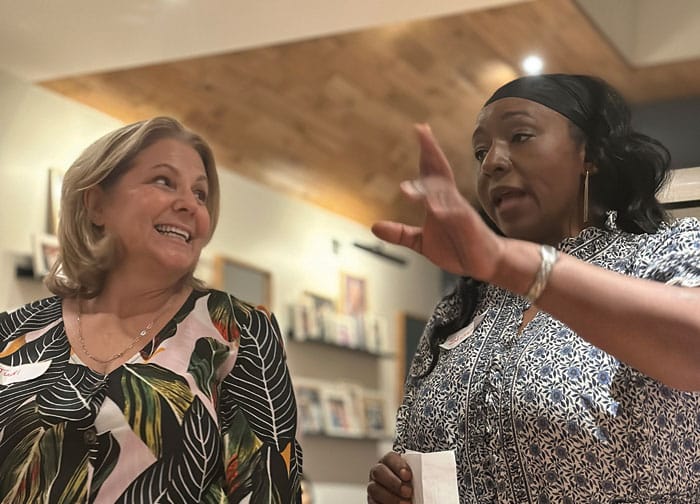
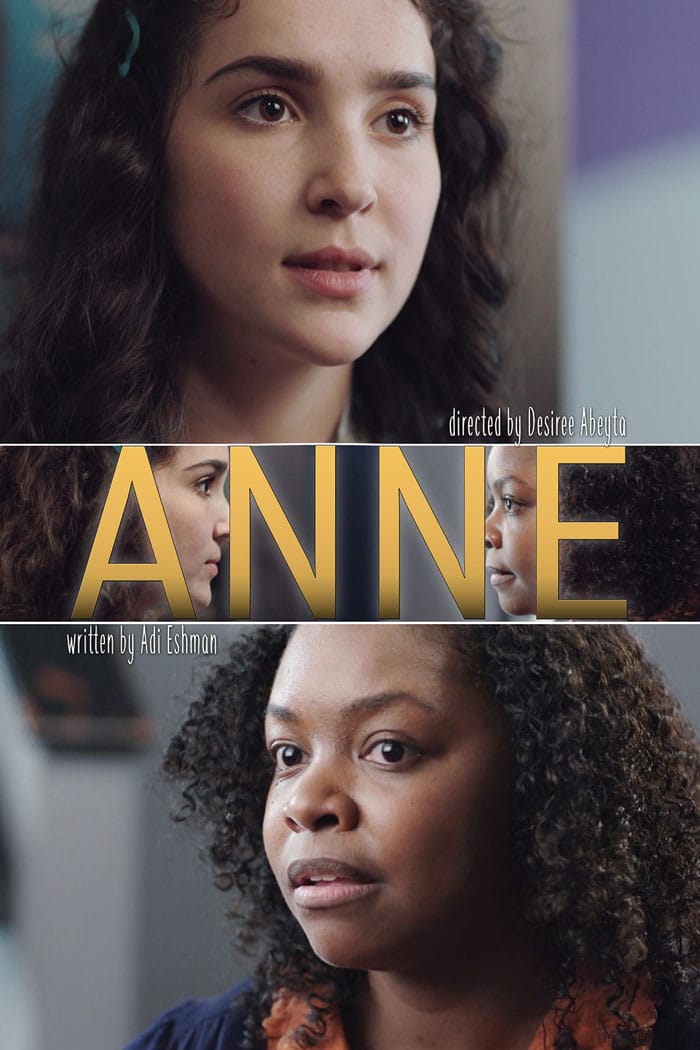
Most recently, they held a screening of the short film, “Anne,” at the Milky Way Restaurant in the Pico-Robertson neighborhood of Los Angeles on April 27, along with a dialogue about the issues that are raised in the film. 

“Anne,” a short film written by Adi Eshman, is about two young actresses auditioning for the role of Anne Frank. One is a white Jewish woman and the other is a Black christian woman. 

“Each attendee was given a small journal and encouraged to answer the prompt ‘What does being a minority mean to you?’” Walkovitz said.

While they were doing introductions, they asked attendees to share their thoughts on that question. 

“Most went right to the subject of color, as they walked into a room,” Leib said. “Certainly a person of color is not given the same pass that a white Jewish person is until the conversation starts.”

After dinner and conversation, they screened the 11-minute film.

“The overarching opinion was that while Anne Frank was a real person, her plight has become representative of so much more than just her story,” Leib said. “For Shonda and I, we felt the film perfectly encapsulated our mission that Blacks and Jews have way more in common than we do differences.”

Next, there was a panel with Rev. Zedar Broadous, Jan Perry, Rabbi Naomi Levy and filmmaker Eshman.

“I was excited about the idea of a panel that included a rabbi, a Black pastor, a politician and [me],” Eshman, who found the audience Q&A especially interesting, told the Journal.

He explained that people commented that the film resonated with them for different reasons. 

“Some said that they enjoyed it because it raised relevant issues around casting in Hollywood today, and who gets to play what part,” Eshman said. “Others enjoyed how it raised uncomfortable questions, and let the audience decide for themselves what the answers would be.”  

Eshman felt positive and hopeful that people could engage with one another on difficult, thorny topics. 

“I loved how people brought up their own experiences with antisemitism and racism, and related it to their experience of watching the film,” Eshman said. “And I appreciated how open and vulnerable the audience was in a room full of strangers.” 

 Challah and Soul wants to restore unity between the Black and Jewish communities, which is especially important in these challenging times. 

“The rise of racism and antisemitism in our country certainly got our attention,” Leib said. Other commonalities include mutual oppressions and slavery. 

“There needs to be brave conversations, without judgment, and education of our common plight,” Walkovitz said. “We believe in good food and honest dialogue without restraints to facilitate meaningful relationships and change.”

To learn more about Challah and Soul, email challahandsoul@gmail.com or follow @ChallahAndSoul on Instagram.

For more on “Anne,” or to arrange a screening, reach out to Adi Eshman at adieshman@gmail.com.

Challah and Soul: Bridging the Gaps Through Conversation and Food Read More »

Shabbat is Near

Senator Joe Lieberman was once asked how he found the time to observe Shabbat given his extremely busy schedule. He replied that it was Shabbat that enabled him to have the peace, and to gather the energy, to maintain that schedule during the rest of his week.  

That was very much the case in my own career, which included 22 years in what some people call “one of the toughest jobs in the world” – president of a college or university.

How many college graduates even know the name of the current president of their alma mater? Not many, I would guess. One reason: the jobs turn over so quickly these days.

A recent article titled “Portrait of the Presidency: They are less experienced than ever — and eyeing the exits” pointed out that college presidents have on average been in their jobs for fewer than six years, down from eight and a half in 2006. A majority of presidents don’t expect to be in office much longer, and not because they have other presidential ambitions. Fewer than a quarter of those looking to leave are hoping to move on to another presidency.  Most of the rest, it seems, have had quite enough.

Yes, a college presidency can be a challenge — with angry students eager to express their outrage, entitled tenured faculty, out-of-control parents, politicians treating you as a convenient target, and so much more. But I never regretted that career choice. The intellectual stimulation, the chance to change lives for the better, and the salary and perks make a college presidency an extraordinary experience.  

Discovering the joys in your job while maintaining a sustainable work/life balance is a formula for enjoying one’s life regardless of profession. Without a grounding in your life, it is hard to keep up either your strength or your sanity, and for me, much like Senator Lieberman, that grounding comes from my Judaism.

When the inevitable challenges arose, some of my own making and some not, I would remind myself that Shabbat was never more than six days away. 

During my years as a president, attending services provided an essential structure to my life. When the inevitable challenges arose, some of my own making and some not, I would remind myself that Shabbat was never more than six days away. Even when the good times were rolling (faculty winning Nobel Prizes, attracting transformative philanthropy, trips to March Madness, etc.), the humility that came from worship was invaluable. 

Other college presidents would regularly note with curiosity that during a long presidency at Williams College followed by an even longer one at Northwestern, I never lost my enthusiasm for the job. I was blessed to be able to rely on a loving family and supportive friends, and on the inspiration gained from Shabbat dinners and going to synagogue. That gave me the resolve not just to face what was coming next, but to find the joy in it.

Of course, there are myriad ways to invigorate ourselves other than through religious observance. Reading great books; enjoying nature; keeping in shape; volunteering in the community; reveling in the love of friends and family; any of these can help us to savor life. But we all need something to help us thrive despite the obstacles, real or imagined, in our way. For me, those other possibilities supplemented the strength associated with faith, but never replaced it. 

The discipline of building my schedule around Shabbat continues to keep me going in my post-presidential years. Having an abiding religious faith helps me approach my new life with the same sense of wonderment as in the past.  

There is an old joke that a college president is like the person who mows the lawn in a cemetery – there are lots of people under you, but nobody is listening. Nonetheless, when I speak with former college presidents, many seem to miss it. They laugh when they report that few people find them as brilliant, interesting, and good looking as when they were in office. But there is a real sadness there – that life has passed them by. Faith can be a brilliant antidote to melancholy.

Hope to see you in shul.


Morton Schapiro is the former president of Williams College and Northwestern University.  His most recent book (with Gary Saul Morson) is “Minds Wide Shut:  How the New Fundamentalisms Divide Us.”

Shabbat is Near Read More »