fbpx

March 30, 2023

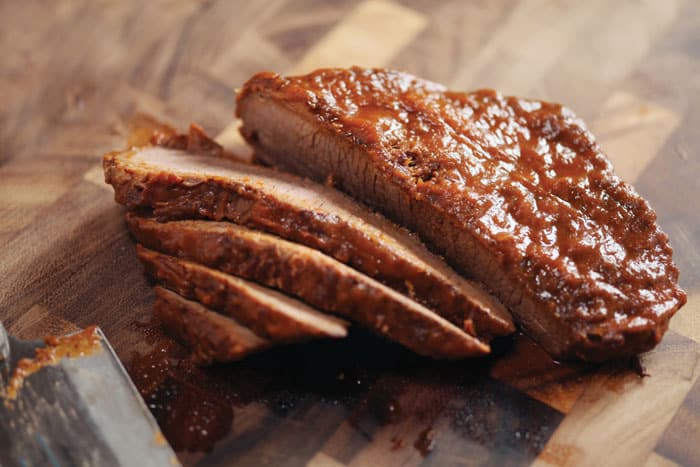
What Makes These Briskets Different from All Others?

You got your Brisket for Passover. Now what? 

We asked a variety of chefs for their best brisket tips.

Pitmaster Jakob Miller, founder of the Barbecue Pals blog, believes the key to making brisket moist, juicy, and delicious is patience and attention to detail.

Miller learned to cook the perfect brisket for his granddaughter’s bat mitzvah.

“I spent days researching and experimenting with different recipes until I found the perfect one,” Miller told the Journal. “I slow-cooked the brisket for hours until it was tender and flavorful, and my family couldn’t stop raving about it.”

Miller says, don’t be afraid to experiment with different seasonings and cooking methods until you find the recipe that works for you.

Jakob Miller’s Brisket

1 (3-4 pound) beef brisket
2 tablespoons olive oil
1 onion, diced
3 cloves garlic, minced
2 cups beef broth
1/2 cup red wine
2 Tbsp tomato paste
1 Tbsp Worcestershire sauce
1 Tbsp honey
1 tsp smoked paprika
1 tsp dried thyme
Salt and pepper to taste

Preheat your oven or smoker to 300°F.

Season the brisket with salt and pepper.

Heat olive oil in a Dutch oven or large oven-safe pot over medium-high heat. Brown the brisket on both sides and remove from the oven.

Add onion and garlic to the pot, and cook until softened, stirring occasionally. 

Then add beef broth, red wine, tomato paste, Worcestershire sauce, honey, smoked paprika and thyme. Stir until well combined.

Return the brisket to the pot and spoon the sauce over it. Cover the pot with a lid and transfer it to the oven. Cook for 3 to 4 hours, or until the brisket is tender and the internal temperature reaches 190°F.

Remove the pot from the oven and let the brisket rest for 10 to 15 minutes before slicing and serving.


Josh Kreitzman, second generation owner of Prime Time Butcher, says the best brisket starts with a USDA prime brisket. 

“Don’t be afraid to leave a good amount of fat covering on the top; it only enhances the taste of the meat and gravy,” Kreitzman told the Journal. “You will trim that fat off once the brisket is cold and all the fat will come to the top of the gravy.” 

Kreitzman said the cooking process should take around 3 hours at 325 degrees. You will know when it is done when it’s “fork tender.” That means the fork comes in and out of the meat without much resistance). 

“The most important aspect of the cooking is that you slice it tip to tip against the grain,” he said.

Jodie Morgan, CEO and co-owner of Covenant Winery in Berkeley, CA, says to be sure to use enough onions. 

“They reduce, and they add a tremendous amount of flavor,” Morgan told the Journal.  “I often use as many as 6 large onions for a 3-pound brisket.

Morgan also says:

• Make sure your bay leaves are fresh. Nothing is worse than using a faded, old bay leaf.

• I use juniper berries, which add a lovely aromatic edge.

• For the braising liquid, I use a blend of (dry) red wine and chicken stock. The wine’s acidity softens the meat and the chicken stock adds richness.

• A small amount of tomato paste (1 – 2 tablespoons) thickens the sauce, which will also make a fabulous gravy for mashed potatoes.

“Finally, what really makes any dish special is your wine accompaniment,” Morgan said. “Fruity (but dry) red wines like Zinfandel or Pinot Noir are terrific. More robust Cabernet Sauvignon and Syrah will also make excellent pairings.” 


In Debbie Kornberg’s household, making brisket is a collaborative effort. She oversees the seasoning and saucing of the brisket. Her husband is responsible for smoking, cooking and slicing it. 

“What makes our brisket so delicious is that we season and smoke/BBQ it first before cooking it in the oven overnight,” Kornberg, chef, owner of SPICE + LEAF and cooking teacher, told the Journal. This locks in all the flavor and juices of the brisket, so it does not dry out.

“Picking the right kind of meat also makes a difference.” she said. “We like to use Top of Rib, it is a thinner cut of meat and while it does have some fat in it, it is not too marbly. Some people may prefer a 2nd cut brisket which has more marbled fat in it.”

 Kornberg adds, seasoning the brisket with spices is important and helps tenderize the meat. The secret ingredient in her SPICE + LEAF dry rub is the coffee! 

 “The next important factor is the sauce,” Kornberg said. “The brisket will sit in the sauce while it is cooking overnight, so flavors matter. The key here is to make sure the brisket is covered in the sauce, so it does not dry out and to let it cook at a low temperature slowly.”

Passover Brisket
By Rabbi David and Debbie Kornberg

3 lbs. Top of Rib

Spice Blend:
SPICE + LEAF Smok’in Good Espresso BBQ Rub (kosher certified by EarthKosher, not certified kosher for Passover)

Or create your own Kosher for Passover version. Combine the following spices in bowl and mix well:

5 heaping Tbsp smoked paprika
5 heaping Tbsp minced onion
3 and 1/2 Tbsp ground coriander
2 Tbsp ground coffee
1 Tbsp granulated garlic or garlic powder
1 tsp sea salt
1 tsp granulated sugar
½ tsp ground black pepper

Spiced Tomato Sauce
1 can of tomato sauce, 15 oz
1 ¼ cup of red wine
3 Tbsp brown sugar
15 garlic cloves, chopped.
½ tsp ground ginger
¼ tsp ground cumin

1. Crust both sides of brisket with Smok’in Good Espresso BBQ Rub. Let marinate for at least 4 hours to overnight in the refrigerator.

 2. When you are ready to smoke meat on the grill, preheat the oven to 225°F.

  3:  Option 1:  Use a smoker like a Trager or a Big Green Egg and set the temperature to smoke. Let meat smoke for about 50 minutes to an hour.

Option 2: Use a BBQ charcoal grill. Spread out coals evenly on the grill, light charcoal and let go for a good 20 to 30 minutes so the grill is not too hot. Place seasoned brisket on grill, cover grill and let it cook for 20 to 25 minutes on each side.

4. While meat is cooking on a smoker or BBQ grill, prepare sauce. Using a medium size bowl, place all sauce ingredients into a bowl and whisk everything together well. Set aside.    

 5. Make sure the oven is preheated to a temperature of 225°F. Place meat into a baking pan. Cover with spiced tomato sauce. Add water to ensure the meat is fully covered with liquid.

 IMPORTANT: Cover brisket with the heavy-duty aluminum foil. Break off a piece that will be big enough to cover the entire pan with a good seal. Using a thermometer with a probe (preferably one with an alarm component, so it alerts you when it’s done), poke a small hole into the foil and insert into the thickest part of the brisket.

  Set the thermometer alarm to reach an internal temperature of 200 degrees and place the brisket into the oven. This is a long process and can take eight or more hours. 

Note: If you are really running out of time, you can increase the oven temperature to 230 to 250°F to help the process along but watch the thermometer closely. Also, increasing the temperature may dry out the brisket.

 6. Once the brisket has reached an internal temperature of 200°F. Remove from the oven and let rest for at least one to two hours. The brisket will continue to cook which is good, and hopefully will get to an internal temperature of 203°F, which is the magic number.

7. Using an electric knife, slice meat into half-inch slices and place back into sauce so it does not dry out. Cover with foil. Keep warm until ready to serve.

Once cool, you can also either place it into the refrigerator or freezer. Reheat at 250°F and ensure the meat is covered in sauce to avoid the brisket drying out.

Chag Pesach Sameach!

What Makes These Briskets Different from All Others? Read More »

In American First, Manhattan Jury Indicts Donald Trump, Who Promptly Invokes Soros

A Manhattan grand jury has indicted former President Donald Trump in connection with his role in a payoff to an adult film star about their sexual encounter, making history and prompting Trump to once again invoke the name of a Jewish billionaire who is at the center of antisemitic conspiracy theories.

The indictment Thursday means a former president will be arrested, an American first. Trump has called for protests in that event, which could come as soon as next week. Jewish security watchdogs have been on the alert for violence. Trump’s similar calls for protests to overturn the 2021 election culminated in the deadly Jan. 6, 2021 insurrection by his supporters at the U.S. Capitol.

Within minutes of the news of the indictment leaking to media including The New York Times, Trump, who is running for a second term in 2024, repeated his claim, now made daily in his campaign fundraising emails, that Jewish billionaire George Soros was behind the charge.

“Manhattan DA Alvin Bragg, who was hand-picked and funded by George Soros, is a disgrace,” Trump said in emails to reporters and in social media postings. “Rather than stopping the unprecedented crime wave taking over New York City, he’s doing Joe Biden’s dirty work, ignoring the murders and burglaries and assaults he should be focused on.”

Soros, a Hungarian-born Holocaust survivor and financier, has been at the center of countless conspiracy theories for decades, and was the target of a 2018 bomb scare carried out by a pro-Trump antisemitic attacker. He featured prominently in the conspiracy theories embraced by the gunman who massacred 11 worshippers at a Pittsburgh synagogue in 2018.

Florida Gov. Ron DeSantis said on Twitter he would not extradite Trump if Bragg tried to force the issue, and mentioned Soros twice, which stood out because he did not name Trump or Bragg in his statement.

“Florida will not assist in an extradition request given the questionable circumstances at issue with this Soros-backed Manhattan prosecutor and his political agenda,” he said.

Bragg is among a number of liberal prosecutors backed in recent election cycles by Color of Change, a political action committee that Soros has funded. He was the largest donor to the group in the most recent election cycle, giving it $1 million out of the $4 million it raised. Beyond that relationship, there is no evidence that Soros is pressing any legal case against Trump.

Jewish groups that track antisemitism and Jewish security said they have been keeping an eye on Trump’s recent calls for protests in the lead-up to his indictment but noted that so far those posts have not attracted the groundswell of support that followed his past appeals. It is unclear whether the indictment or looming arrest will further galvanize Trump’s supporters.

There are multiple investigations into Trump, including by state officials in Georgia into election interference and by federal authorities into the role he played in spurring the Jan. 6 violence by rioters who believed his falsehoods about the 2020 election, and into his alleged mishandling of highly classified documents.

The details of the indictment are not yet public,. One possible crime Bragg might be investigating is whether Trump falsified records to cover up his payment to Daniels, which was made through his former lawyer Michael Cohen.

In American First, Manhattan Jury Indicts Donald Trump, Who Promptly Invokes Soros Read More »

Twitter Fact Checks Rashida Tlaib Tweet Accusing Israeli Gov’t of “Violent Apartheid”

Twitter provided a fact-check of a March 25 tweet from Representative Rashida Tlaib (D-MI) accusing the Israeli government of “violent apartheid” over an inaccurate representation of a video.

Tlaib’s was quote-tweeting a since-deleted March 24 tweet from the Institute for Middle East Understanding (IMEU) claiming that Israeli soldiers were attacking “Palestinians celebrating the first day of the holy month of Ramadan in occupied Jerusalem. This is Israeli apartheid.” “This is the violent apartheid government of Israel,” Tlaib wrote in her tweet. “Don’t look away.”

However, below Tlaib’s tweet is Twitter’s context box saying: “The context of this video is that the Israeli police were separating a fight among Palestinian teenagers at the Damascus Gate in Jerusalem.” One of the citations is to a Jerusalem Post article saying that the teenagers had started fighting before police arrived and that the claim that Israeli soldiers were attacking the teenagers came from Palestinian media.

Democratic Majority for Israel called for Tlaib to take down her tweet. “It’s false and dangerous,” they tweeted. “The police didn’t attack the Palestinians; they stopped them from attacking each other. This is just the latest in your pattern of using false reports to delegitimize and demonize the world’s only Jewish state.”

“Don’t look away,” AIPAC similarly tweeted. “This is a member of Congress promoting a dangerous, anti-Israel lie that incites further conflict and violence. Even after proven false, she still hasn’t taken down her post. Why is @RashidaTlaib adding fuel to the fire instead of calling for calm and peace?”

“Another day, another blatant anti-Israel lie by @RashidaTlaib – and no one in House Democratic Party leadership will hold her accountable,” the Republican Jewish Coalition tweeted.

Stop Antisemitism called Twitter’s fact check of Tlaib’s tweet “a perfect start to the week.”

Tlaib’s office did not immediately respond to the Journal’s request for comment.

Twitter Fact Checks Rashida Tlaib Tweet Accusing Israeli Gov’t of “Violent Apartheid” Read More »

Manna, Again – A Poem for Tzav

…and Moses made the entire ram [go up in] smoke on the altar.

Ain’t no party like a priestly induction party –
You want to lead the people, you gotta get
with the insides of the ram.

The diaphragm, the liver and the kidneys.
Blood everywhere! Moses is the entertainment.
Causes the whole thing to go up in smoke!

He was the David Blaine of his day!
A pleasing fragrance for all!
I wonder if they think about this when they

do barbecue, homegrown smokers
in the backyard, you know they’re
thinking about the Bible when

the lines are out the front door
to sample the goods.
You can smell the holiness for miles!

Delicious, delicious! All for the Lord.
Not me, of course. I’m a vegetarian.
All I get is manna every single day

raining out of the sky (just six of those days.)
I appreciate the sustenance, but
couldn’t a soy chicken fall from above

maybe just on Thursdays? I promise I won’t
mix it with dairy if that makes a difference.
All I know is, no matter what connection

I have to the Cohen family, I’m going to
pass on this job opportunity.
I don’t think I can take the hazing.


God Wrestler: a poem for every Torah Portion by Rick LupertLos Angeles poet Rick Lupert created the Poetry Super Highway (an online publication and resource for poets), and hosted the Cobalt Cafe weekly poetry reading for almost 21 years. He’s authored 26 collections of poetry, including “God Wrestler: A Poem for Every Torah Portion“, “I’m a Jew, Are You” (Jewish themed poems) and “Feeding Holy Cats” (Poetry written while a staff member on the first Birthright Israel trip), and most recently “I Am Not Writing a Book of Poems in Hawaii” (Poems written in Hawaii – Ain’t Got No Press, August 2022) and edited the anthologies “Ekphrastia Gone Wild”, “A Poet’s Haggadah”, and “The Night Goes on All Night.” He writes the daily web comic “Cat and Banana” with fellow Los Angeles poet Brendan Constantine. He’s widely published and reads his poetry wherever they let him.
Manna, Again – A Poem for Tzav Read More »

Russia Detains WSJ Reporter

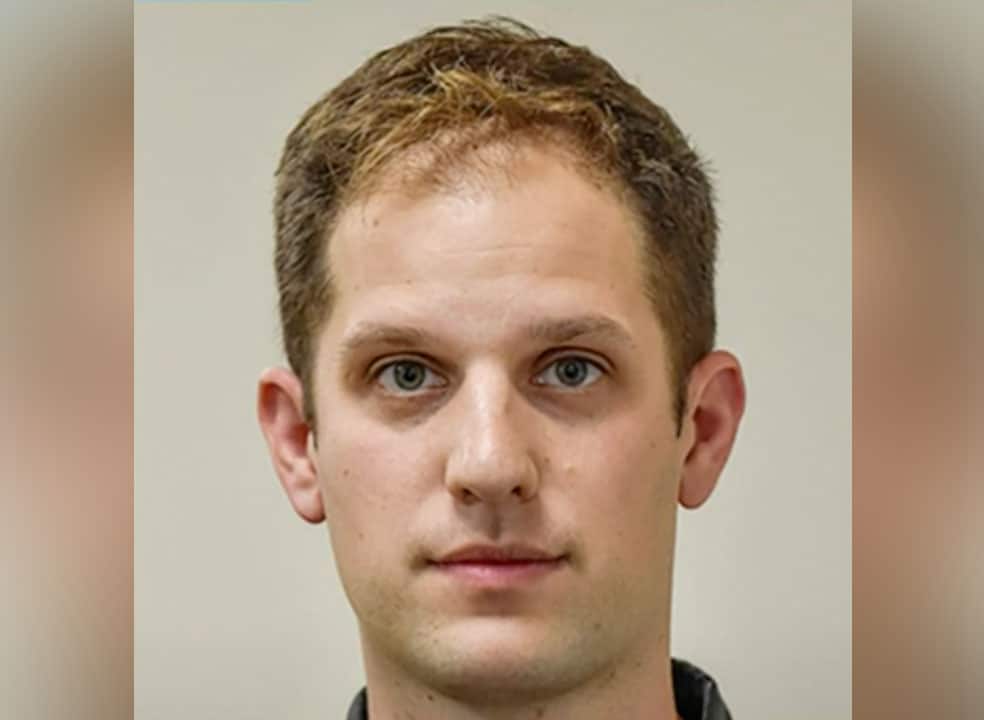
The Russian government has detained Wall Street Journal reporter Evan Gershkovich on charges of espionage until May 29.

Russia’s Federal Security Service (FSB) alleged that Gershkovich was attempting to obtain “information about the activities of one of the enterprises of the Russian military-industrial complex that constitutes a state secret” while acting under “instructions from the American side.” The Wall Street Journal responded in a statement, “The Wall Street Journal vehemently denies the allegations from the FSB and seeks the immediate release of our trusted and dedicated reporter, Evan Gershkovich. We stand in solidarity with Evan and his family.” Kremlin spokesperson Dmitry Peskov declined to answer a question from CNN on if the move was in retaliation to the United States recently arresting a Russian on espionage charges. Gershkovich is being held in Yekaterinburg, which is more than a thousand miles east of Moscow.

Secretary of State Antony Blinken said in a statement that they are “deeply concerned” about Gershkovich’s arrest and have been in contact with the Wall Street Journal on the matter. “In the strongest possible terms, we condemn the Kremlin’s continued attempts to intimidate, repress, and punish journalists and civil society voices.”

White House Press Secretary Karine Jean-Pierre said in a statement that the State Department is working to provide “consular access” to Gershkovich and that the White House has been in touch with both the Wall Street Journal and Gershkovich’s family. “The targeting of American citizens by the Russian government is unacceptable,” she said. “We condemn the detention of Mr. Gershkovich in the strongest possible terms.” Jean-Pierre urged American citizens residing or visiting Russia to leave immediately.

Stop Antisemitism noted in a tweet that Gershkovich is Jewish. “Our thoughts are with Evan’s family during this time and trust [Biden and Blinken] will do everything possible to free him,” they wrote.

Rabbi Rick Jacobs, President of Union of the Reform Judaism, tweeted that Gershkovich is being “held hostage by a modern Pharaoh. He’s a proud member of Moscow’s Jewish community. As you celebrate freedom this Passover please join me in setting a place for Evan at your table.”

Russia Detains WSJ Reporter Read More »

Print Issue: Can We Bring Civility Back? | March 31, 2023

CLICK HERE FOR FULLSCREEN VERSION

Print Issue: Can We Bring Civility Back? | March 31, 2023 Read More »

Civility Starts With Humility

As Israel was burning in rage last week over the judicial overhaul and as 500,000 Israelis hit the streets after the firing of the defense minister, it struck me that all of that trauma could have been avoided by a few members of Knesset saying: “OK, enough. We can’t afford a civil war. The government should just pause the overhaul and negotiate.“

Why did it take them so long to utter those simple words? Because for 13 long weeks, their minds were flooded with one thought: They were 100% sure that they were 100% right.

We all go through that in our lives — the feeling of certainty about one issue or another. But we’re not in charge of a government. Our actions don’t impact the lives of millions.

What triggered the most intense civil strife in Israeli history was a few political leaders who were 100% sure that their plan to overhaul Israel’s judicial system was 100% correct. This feeling of certainty was so intoxicating that for three long months, it made them ignore the raging fire that had engulfed their society.

It never occurred to them that winning an election does not necessarily give a party the right to draft a constitution that gives that party maximum power—and then ram it through without any debate. They were so sure of themselves that anyone who disagreed with that view was 100% wrong. There was no middle ground.  

 But let’s grant, for the sake of discussion, that those pro-overhaul voices were indeed 100% right, which is why they dug in their heels despite the demonstrations. That would be like seeing your children in a horrible fight and instead of calling for a ceasefire, you escalate the fight by taking sides based on who you think “is right.” What kind of victory would that give you?

In the middle of an ugly family fight that is spinning out of control, who the hell cares who’s right and who’s wrong? Confronted by such human destruction, all one should care about is calming things down and reminding both sides that they’re still one family.

Let’s not kid ourselves: the Jews of Israel, just like the Jews of America, have never acted like one big family. We’ve been fighting and arguing for as long as I can remember.

 What is happening in Israel, however, is not just fighting and arguing. The provocative judicial overhaul is the equivalent of writing a new legal system for the whole country that establishes the fundamental rules of how power will be shared. The governing coalition decided that a slim majority in the Knesset gave them the power to do all that.

 In the face of such a revolution, a significant segment of the population rose up and demanded to be heard. This included President Isaac Herzog, who advanced a good-faith proposal to negotiate a fair compromise and was rejected out of hand.

 But let’s go back to my key point: Let’s grant that Herzog was 100% wrong and those pushing for the overhaul were 100% right. Were those supporters happy to see Israeli society tear itself apart? As they watched their country burn, were they comforted by the feeling of being right?

The harrowing events of the past few months in Israel have demonstrated the price we pay for the absence of humility. I don’t know about you, but when I see my brethren in Israel at each other’s throats, I find zero consolation in “being right.”

It was only when things got so bad after Prime Minister Benjamin Netanyahu fired Defense Minister Yoav Gallant, and hundreds of thousands of enraged Israelis hit the streets, that the “100% right” crowd in the coalition were shocked into the realization that maybe they went too far.

By the time Bibi finally announced a delay, I imagine this thought crossed his mind: “It doesn’t matter if I think my side is right, if it leads to a civil war.”

Instead of ending up on the brink of a civil war, a little humility three months earlier might have led to a civil and constructive debate on the hugely important issue of Israel’s legal system and how best to reform it. 

Instead of ending up on the brink of a civil war, a little humility three months earlier might have led to a civil and constructive debate on the hugely important issue of Israel’s judicial system and how best to reform it. 

As Karen Lehrman Bloch writes in this week’s cover story, “civil discourse is essential for a functioning democracy. It’s not icing on the cake: it’s part of the cake itself. And when civility is lost, so is a part of our humanity.”

As we enter the days of Passover, when we commemorate our ancestors’ liberation from slavery to freedom, it’s good to remember that we can also be enslaved by certainty. 

As we enter the festival of Passover, when we commemorate our ancestors’ liberation from slavery to freedom, it’s good to remember that we can also be enslaved by certainty. When that certainty alienates us from others, a little humility and civility can liberate us and bring out our best selves.

Civility Starts With Humility Read More »

Passover in Auschwitz, 1943: When Ashkenazi Jews Used a Sephardic Haggadah

“It was a long, dark and frightening night.” Readers may mistake these words as coming from the pen of Elie Wiesel, but they are actually from the testimony of Joseph Kotlianski, a Jew from the town of Volkovysk in Belarus. These words are part of his chilling but moving memory of one long Passover night he endured in Auschwitz.

Kotlianski’s story begins a few days before Passover, on Shabbat HaGadol, the Shabbat immediately preceding Passover. On Shabbat HaGadol – the Great Shabbat – Jews read a special Haftarah (prophetic portion) that concludes with God sending Elijah the Prophet to announce the coming of the Messiah. We read this portion because of our belief that the Messiah will come sometime around Passover.

But on that Shabbat HaGadol in 1943, no Messiah came to Auschwitz. Instead, a large transport of Greek Jews arrived, and for them, this Shabbat was not so “Gadol.”

“On that ‘Shabbat HaGadol,’ the Nazi murderers began to burn the Greek Jews in the gas chambers” tells Kotlianski.

As was the practice of the Nazi murderers, they stripped the Jews of their clothing and confiscated their belongings. Kotlianski and a few others somehow got access to some of the confiscated belongings of the Greek Jews. Amongst the few articles of clothing stuffed in their suitcases, they found matzot and raisins for Passover.

Kotlianski and his friends hid these few precious matzot and raisins and were determined to use them for a seder on the night of Passover.

“Six of us in my cell block decided to hold a Passover Seder. Lights out was 9:00 p.m., and we planned to hold our Seder at 10:00 p.m. We were quiet and very careful, well aware that we were risking our lives.”

They snuck out of the cell block holding the precious few seder items in their trembling hands:

“We were able to take two matzot and some raisins brought by the Greek Jews. We soaked the raisins in water, so that they gave a semblance of wine for our seder.”

There was one more sacred item Kotlianski was able to take: “In a pile of books brought by the Greek Jews, we found an old, tattered, worn out Passover Haggadah.”

When I read this part of his story, I pictured that “old, tattered, worn out Haggadah” from Greece. It most probably resembled the beautiful Sephardic Haggadot from Greece shown to me by the Greek Holocaust survivors that I was privileged to know throughout my life.

Some of those Haggadot had charming drawings of the “Four Sons,” others artistic depictions of each character in “Had Gadya.” The Hebrew font was in beautiful block print, and alongside it there was the Ladino (Judeo-Spanish) translation, also in Hebrew letters. I imagine that it was this kind of Sephardic Haggadah that Kotlianski and his friends used at their seder that night in Auschwitz.

“So we sat at our concrete ‘Seder Table,’ looked at one another, and with tears of anguish and pain, we recited the blessings over the raisins in water – our wine that night – and the blessings over the matzah. We read portions of the Haggadah…and we cried.”

They had no salt water reminding them of the tears we wept in Egyptian bondage, but their own tears took care of that. They had no bitter herbs to eat. Auschwitz and the Nazis were their bitter herbs.

They had no salt water reminding them of the tears we wept in Egyptian bondage, but their own tears took care of that.

They had no bitter herbs to eat. Auschwitz and the Nazis were their bitter herbs.

I wonder if they were able to decipher the Judeo-Spanish and chant Had Gadya in Ladino – “Un Kavretiko.” Maybe they did, and when they came to the stanza about the Angel of Death, they beheld his murderous ways before their eyes.

The transport of Greek Jews that arrived on Shabbat HaGadol was quite large, and the Nazi murderers could not kill all of them on that Shabbat.

“So the remainder were killed that Passover night. While we recited the blessings from their Haggadah, we saw the smoke coming from the chimneys of the gas chambers, as the Nazi murderers burnt the Greek Jews.”

Indeed, the Angel of Death was present that night, inscribed in that Sephardic Haggadah and actively murdering Jews in the gas chambers.

“So it was,” tells Kotlianski, “that on that Passover night, at the very hour when they were murdered, those sacred Greek Jewish martyrs left this world while we fulfilled the mitzvah of the Passover Seder with their matzot, raisins and one Haggadah.”

On that dark night, Had Gadya ended with the Angel of Death. God did not come and slaughter the Angel of Death. On that night, while six Ashkenazi Jews held a seder using matzot baked in Greece and a Sephardic Haggadah, the Angel of Death slaughtered the Greek Jews … and their Ashkenazi brethren cried bitter tears.

Let us not allow their sacred memories to be slaughtered. Eighty years later, on this coming Seder night, as we sit down at our comfortable Passover Seder tables, let all of us — Sephardim and Ashkenazim together – tell this sacred Passover story, reminding us that we are all one people.


Rabbi Daniel Bouskila is the director of the Sephardic Educational Center and the rabbi of the Westwood Village Synagogue.

Passover in Auschwitz, 1943: When Ashkenazi Jews Used a Sephardic Haggadah Read More »

Healthy Eating During Passover

Judaism is packed with food customs. Passover is no exception. 

“The Seder itself overflows with traditional foods, recipes passed down through families and desserts that evoke our childhoods,” Michael Tanenbaum, founder of the website Consciously Kosher, told the Journal. “Then it’s literally eight days of eating [those same foods].”

The problem is that many of the traditional Passover foods are simply not healthy for many people. 

Perhaps you have dietary restrictions due to a preexisting health condition. Maybe excessive matzah, and processed store-bought Passover food, mess with your system. Or, you just might tend to overeat. 

But this Passover, it doesn’t have to be this way. Did you know there are ways to eat healthy during the holiday? 

Tanenbaum said it’s as simple as avoiding the “bad” foods and eating tons of the “good” foods. Here’s how he breaks it down:

The “bad” foods: The four main ingredients to avoid on Passover are foods with cottonseed oil, MSG, white sugar and potato starch. Potato starch foods in particular are devoid of nutrients and will spike your blood sugar.

Specifically, avoid all jarred gefilte fish (cottonseed oil, potato starch, MSG), soup mixes (MSG), Bissli (MSG), mayonnaise (cottonseed oil), potato chips (cottonseed oil) and nearly all kosher l’pesach yogurts, which have dozens of grams of sugar per serving. Passover cereals, like Crispy-O’s, have a very high simple carbohydrate and sugar content, and those infamous candied fruit slices are full of sugar, dyes and artificial flavors.

Hint: Read the ingredient labels very carefully. Avoid any products that contain cottonseed oil, MSG, white sugar and potato starch.

The “good” foods are those that are in their natural form, such as fruits, vegetables, almond flour and quinoa. Minimally processed foods, like certain yogurts and cheese, are also good. Keep in mind thatsome healthy foods don’t require Passover certification, while others do. 

If you’re Ashkenazi, there’s an astonishing array of fruits and vegetables that can be eaten that are not kitniyot. If you’re Sephardic, then you are even luckier, because you can eat rice, beans and tons of other healthy ingredients, like amaranth and buckwheat.

Rather than buying processed and premade foods, you can make your own gefilte fish, soup stock, pastries, macaroons and other desserts. You can even make your own mayonnaise using avocado oil. It  takes 10 to 15 minutes. 

Hint: Time is not infinite, so you can’t make everything yourself. But even tackling a few of these can transform your health and your holiday.

If you are gluten-free, try oat matzah. Also, there are a lot of familiar foods you can make with almond flour or coconut flour. 

Two years ago, my wife and I came up with Passover sliders. The little buns are made of almond flour and psyllium. They really mimic the texture of real bread. Along with the savory cumin-flavored burgers, a slice of avocado, some lettuce and a handful of bell peppers, it’s a delightfully fun meal.

To go healthy this Passover, Tanenbaum suggests going light on matzo products, as well as Passover foods in general. Instead, eat lots of fresh fruits, vegetables and nuts. 

“Rather than seeing healthy food as yet another restriction in a holiday filled with them, this is an opportunity to explore new ways of eating that will carry forth into the rest of the year,” Tanenbaum said.

For more tips and food guides, download Tanenbaum’s “Consciously Kosher Guide to Passover” ebook on ConsciouslyKosher.com/passover-ebook.

The Matzo Ball, Reinvented (with Almond Flour)

2 cups almond flour (not almond meal)*
4 eggs
1/8 cup water (optional: use club soda for more fluffiness)
1/2 tsp dill weed
1/2 tsp dried mint leaves
1/2 tsp Himalayan salt
1/2 tsp garlic powder

*Please note: The flour used in this recipe is the Kirkland brand from Costco. Brands vary in consistency. It also matters whether the product is almond flour or almond meal.

In a medium bowl, beat eggs with all ingredients except almond flour. Stir in almond flour. 

Refrigerate for 30 minutes to an hour.

Wet your hands with a little bit of water. Shape batter into 1-inch balls.

Add balls to a pot of cooking chicken soup about 20 minutes before the soup is done. Let simmer for 20 minutes.

Initially, the flavor will feel unfamiliar. Let the experience sink in. It is liberating.

Healthy Eating During Passover Read More »

A Moment in Time: Sticking Your Neck Out

Dear all,

Our family visited the Los Angeles Museum of Natural History last weekend. As I looked at this depiction of dinosaurs, with their long necks, it make me think about times we stick our necks out for people or for causes.

It’s not always easy.

It can make us vulnerable.

It can put on on the defense.

It can cause us to be under a microscope.

And … it can also put us on the right side of history.

We can’t stick our necks out all the time (lest we become extinct ourselves). But perhaps there will be a significant moment in time when we do. And so we think deeply about what’s important to us. And we act accordingly so that the world can be a better place.

(Sigh – when we got home, Eli shared that he wanted to see a real dinosaur. He then asked me if I knew any when I was a little boy.)

With love and shalom,

Rabbi Zach Shapiro

A Moment in Time: Sticking Your Neck Out Read More »