fbpx

January 12, 2023

The Twenty-First Century: The New Normal

The analysis and data introduced here are designed to provoke a conversation on the “state of our community” as we experience the full impact of the pandemic, understand the evolving and transformative economic forces, and manage the shifting demographic realities. In the first part of this survey, we examined many of the factors that contributed to the rise of the Jewish century, as well as those factors that may undermine the American Jewish experience going forward.

The American Jewish community is undergoing a profound structural reorganization and social reorientation. The full implication of these changes will take years to fully comprehend.

The pace of change regarding social trends and economic indicators, for example, is significantly more dramatic than we might have anticipated between 1945 and 1980, a 35-year spread. One cannot predict, for example, transformative moments—such as the founding of the State of Israel (1948) or the Six Day War (1967). But the impact of these powerful events transformed the Jewish story. With this in mind, one must ask the “what if” question when it comes to the uncertainty of the global scene and the potential implications for the Jewish future.

Projections about the Jewish future are not unusual. For example, in the 1950s prominent Jewish historians were asked about the impact of suburbanization and the availability of television on Jewish life. These scholars offered a doomsday analysis. While their predictions did not materialize, the idea of imagining the future has become a Jewish hobby!

There are other “indicators” that would seem to be important in any consideration of the Jewish future. Based on my work, I see the “new normal” of the 21st century involving a number of significant developments.

Jewish Political Index

How politically influential will Jews remain? How might we define “power” in this context and as part of this emerging time frame? What will mid-century Jews be concerned about, and how will they express or carry out their political interests? Possibly more intriguing might be the question of how hospitable America will be to its Jews over the course of the next three decades. Will the world community see a continuous rise in antisemitism? If so, the Jewish future may well be compromised by a return to self-protection and the downsizing in many places of a visible Jewish public presence within the world. If the world faces further global tensions including wars and the climate crises, what will be the particular impact on Jews, both here and abroad?

The Jewish Condition

With these critical elements as a backdrop, it will be important to understand both the external and internal challenges that are likely to define the condition of Jewish life as we move deeper into this century. As has been noted in both this essay and the prior one, we are living in a fundamentally different political and cultural environment than the one that defined our historical past.

There are many questions that as a community we will need to address. What will be the patterns of denominational and institutional connections? There is most certainly the possibility that various legacy organizations will cease to be in play, with other organizations or models of organizing replacing these institutions. In this new era, religion will play a profoundly different role in shaping the lives of spiritual seekers and in providing alternative forms of community. No doubt, the racial and cultural diversity of our community will reflect the broader demographic changes of our society. We may need to determine the criteria or measures for “being Jewish,” and consider whether the “who is a Jew?” question may reappear as a major theme in light of the changing social characteristics and generational realities.

The character and substance of the American synagogue, as we understand it today, will be fundamentally different. If the United States follows the pattern of religious decline that has framed the post-Second World War European experience, there may be more synagogues operating as museums than as religiously active communities of believers. Yet, as we have noted, there are often cycles of renaissance within religious communities that lead to a rebirth of faith and practice. How much of Jewish life will operate as a virtual reality, as we move beyond institutional connections to an “individualized” Judaism?

Is it likely with the rise of the virtual synagogue we will see the presence of “national synagogues” that will dominate the Jewish religious space? Earlier this year, Ron Wolfson and I wrote about the on-line offerings provided by several major congregations during the pandemic that now provide a global Jewish reach.

Is it likely with the rise of the virtual synagogue we will see the presence of “national synagogues” that will dominate the Jewish religious space?

The track forward will see the realignment of American Judaism into a series different constellations, with the emergence of a triumphant and strong Orthodox community, the recalibration of various liberal Jewish expressions, and a growing segment of America’s Jews self-identifying outside of traditional organizational labels.

21st-century American Judaism will reflect many of the operational traits that are present in the general society. Affiliation, membership and denominationalism will become relics of an early era and in their place we are more likely to experience an increased focus on selective engagement, as folks resist formal affiliation and membership-based models in favor of single-issue causes and individually-directed boutique organizations.

We are likely to see the growth of privatized Judaism, which means: personalized Jewish professional entrepreneurial services, offered by rabbis and other professionals involving a “fee for service” model; the expansion of online “individualized” Jewish learning sites, creating a significant virtual marketplace of educational, cultural and social experiences. As people focus more on the self than the communal, we will see an increase in such personalized offerings.

In light of the patterns noted above, the downsizing, mergers and closures of Jewish institutions represent another outcome. This trend will be evident among synagogues and membership organizations. In an effort to expand and replace revenue sources, communal agencies and religious institutions will experiment with ways to generate new income streams. This will likely include the growth of Jewish-institutionally operated for-profit business models, as a way to manage costs.

Will the impact of these demographic and structural changes produce two “American Judaisms,” one traditional and one liberal, each offering various religious choices, as we move away from the 19th-century model of “denominationalism” (Reform-Conservative-Orthodox) to a 21st-century framework defined by practice, principle and performance?

Jewish Demographics

One question is what will be the composition and character of the Jewish population of the U.S. Our numbers and character be significantly altered, as converts come to Judaism with varied backgrounds and upbringings, creating a distinctively “new Jew” with minimal memory or connection to the unfolding of the Jewish historical past. By contrast, our community will be enhanced, even rejuvenated, by the entry of Jews by choice.

Inter-group and Inter-religious Relations

The place and status of Jews in America will likely change as our numbers and political influence are likely to decline. Historically, Jews have been dependent on their access to power and on building relationships with other ethnic and racial partners. The construct of these connections will be altered, due to changing power dynamics within this nation and to the shifting position of Jews within the broader society.

In a period where religion is perceived as losing its standing in society, are we likely see a growing set of accommodations and relationships with other religious cultures?  Most certainly, we should also be vigilant for a possible era of religious tension with a return of various expressions of anti-Judaism as faith communities compete for influence and members by promoting their ideological and theological differences.

Israel-Diaspora Relationship

The tenor and focus of this partnership, in my view, is core to Israel’s future. Israel’s role in the world, and more directly within the Jewish world will represent a critical element in defining the Jewish future. But the larger issue may be the survival of Israel. This scenario itself is challenging, upsetting and beyond our comprehension. Yet as Israel faces continuous challenges to its physical security, can the Jewish State survive the rise of radical Islam in all of its various forms, including the introduction of nuclear weapons?

If allowed to fulfill its mandate, Israel could be the economic engine and culture centerpiece of the Middle East, developing partnerships across the region with neighboring states that would benefit from its technology and in turn contribute to the rebuilding of the Arab world.

Beyond the external military threats to the Jewish State, one must also look elsewhere to ask how best Israel and its supporters can effectively manage and respond to the growing political challenges, whether directed by governments, influenced by public opinion, or framed by efforts to discredit and marginalize “Zionists” and others who support and defend Israel.

Jews on the Move

As with much of Jewish history, we will continue to monitor the movement of Jews. Indeed, the shifts in population are tied to such characteristics as economic opportunity, the threat of antisemitism, political uncertainties, and, in our own times, the impact of climate change. What will be the impact of such transitions on the health and welfare of Jewish life in various communities?

One of the key barometers will be the financial health of the Jewish community, as we monitor distinctive business and fiscal trends that are likely to impact Jewish life. In a changing global economy with the expected advances in technology and communication, we will see the continued re-distribution of Jews to various “knowledge” centersHadarnd new organizing models, such as Hazon.

I believe that the global economic picture will have a profound impact on where Jews will live and how their lives and social experiences will be reshaped.

I believe that the global economic picture will have a profound impact on where Jews will live and how their lives and social experiences will be reshaped. This suggests a further decoupling of Jews from their core communities, as an even more disjointed, virtual community emerges. No doubt an increasing part of the Jewish community will be “privatized” as economic forces will create more incentives for a business model to replace the volunteer framework. As technology advances, the virtual world will increasingly be the dominant form of communication and personal engagement, further isolating in-person contact and changing the meaning of “community.” These economic and social factors are currently contributing to how business and nonprofit institutions are reorganizing. Historically hierarchical and rigid in their structures, organizations are becoming flatter, more agile structures that allow work teams to be more responsive to change and as a way to demonstrate transparency and openness.

Rethinking the Idea of Community


There is a growing realization that “communities” are no longer organized around geography, but along values; group members are not neighbors, but co-adherents. Self-selected virtual communities have replaced organic neighborhoods, and echo chambers have replaced the public square.

Yuval Levin, writing in “The Fractured Republic,” observed that “American civil “society has been weakened by a century-long assault from hyper-consolidation, followed by hyper-individualism, leaving it ‘not well positioned to turn subnational identities into interpersonal communities.’” Levin further argues: “Promoting social-capital habits that increase solidarity in this era of nationalist tendencies in policymaking and in-group hyper-definition in cultural habits will likely result in ever more balkanization and isolation.”

Ideally, the value of community is that it delivers key benefits to its participants and on occasion frames collective action. The essential strengths of traditional communities involved the development of leaders for the greater good, the advancement of social, cultural and human services and the promotion of a sense of security, continuity and collective action. Communities serve as gateways allowing members to better manage and process social change and as a delivery system for messaging and the articulation of needs.

Moving forward, the focus on civic engagement and political participation may represent only one element of the emerging communal model. We are in the process of reinventing the concept of community, just as we are reimagining its many different forms of expression.

What are we learning? “Community” today represents a variety of different forms of organizing and connecting people. Older models of community are giving way to these newer iterations. But critics of this traditional organizing format are arguing that the existing system benefited those already empowered and connected. The essential question then becomes how we reach out to engage those not part of such organizing systems.

An important example of this traditional model is the interlocking directorships and networked systems that defined the Jewish communal model of the late-20th century. This level of connectedness represented a core ingredient that enabled the community to effectively process and manage its agenda. Going forward, communities will have different organizing priorities. In some cases, the focus will be framed around meeting the psychological and emotional needs of its participants, while in other settings such structures will be deployed to manage single issue priorities. We can identify short-term community organizing models that are constructed and then disbanded once the desired results have been achieved.

The question that many organizers and sociologists are posing has to do with both the “purpose” of a particular community and its “outcomes.” In other words, what is it designed to produce or achieve?

The traditional communal model is rapidly disappearing. The loss of a shared and focused agenda, rapidly changing constituencies and the evolving roles of institutions are contributing to the change in how Jews will understand their organizing options.

The Jewish story has always been about such transitional moments. The great shifts in the Jewish historical timeline reflect how “community” is created and reinvented over time.

The Jewish story has always been about such transitional moments. The great shifts in the Jewish historical timeline reflect how “community” is created and reinvented over time.

In earlier publications, I address both the external (societal) elements as well as the internal (communal-based) factors that are contributing to this phenomenon. The idea of community and the value of the collective are being replaced by an overarching attention to individualism. The increasing importance of the individual remains a core challenge to communal organizers.

As the community transitions, the idea of a holistic, integrated communal model has given way to a new constellation of distributed power. Traditional organizing principles are being challenged and, in some instances, discarded. The concept of membership and the idea of affiliation with and loyalty to denomination, among other organizing tools, are giving way to a more open and competitive market space. Boutique models are being introduced, framed around alternative organizing principles and delivery models.

Here then are some of the characteristics that will help to drive the next generation of Jewish community-building principles:

We will need to rewire the communal enterprise. Twenty-first-century Jews are asking both new and old questions, while demonstrating their distinctive passions and individualist behaviors.

The idea of a holistic, integrated communal model is giving way to a new constellation of distributed power.

Rather than reflecting a coherent community, our Jewish institutions will increasingly operate in pods, aligning with groups that share similar religious and political interests and who are likewise comfortable in forming collaborative arrangements of engagement and action.

External threats, including political disruptions, antisemitic behaviors, and health/pandemic outcomes, will likely provide the only basis for any articulation of a communal or shared connection. In the absence of a vital Jewish public square, we will likely encounter multiple and diverse expressions of Jewish identity.

The changing communal mindset is producing a culture of experimentation. A new creative robustness is generating personalized, individuated Jewish initiatives, led by a mix of generational actors and innovative organizing models. This new presence is comprised of a broad set of single-issue institutional expressions, with particular attention directed to specific sectors of our community; among these operational voices are activists giving specific attention to the broader social issues of race and ethnicity, sexual orientation and generational preferences.

Social media represents an opportunity to create new avenues of connection and engagement with non-affiliated individuals and religious seekers in expanding the reach of religious and communal messaging.

These and other organizing principles will emerge to reshape the Jewish communal marketplace. In the decades ahead, the imprint of entrepreneurial leadership, creative visioning and nimble funding strategies will define the Jewish public square.

Both within the Jewish world and the civic arena, many organizing options are being explored as ways to recalibrate social engagement, civic activism, and communal participation. As innovation and experimentation dominate both the public square and the Jewish marketplace, the search for community has begun.

Writing about the “state of the Jews” is a time-worn tradition. Examining the implications of this past one-hundred-year Jewish experience in the context of how we embrace the new realities of the 21st century creates a different story about an unchartered Jewish future.

May the Jewish journey continue!


Steven Windmueller is an Emeritus Professor of Jewish Communal Studies and currently serves as the Interim Director of the Zelikow School of Jewish Nonprofit Management at the Jack H. Skirball Campus of HUC-JIR, in Los Angeles. His writings can be found on his website, www.thewindreport.com.

The Twenty-First Century: The New Normal Read More »
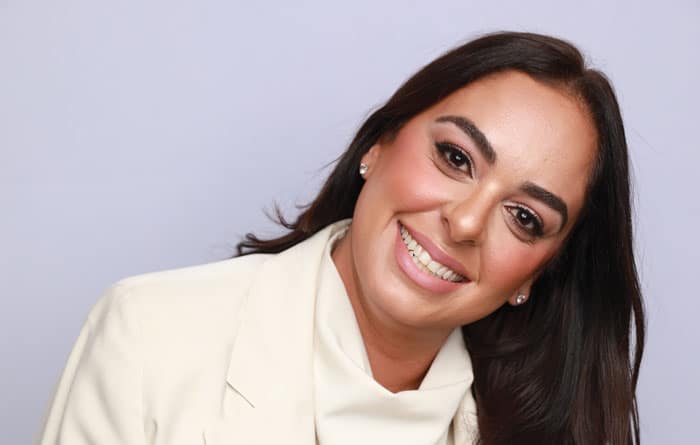
New Sephardic Temple President Has Big Ambitions

As the first woman elected president of the Sephardic Temple, Roxana Eli may have been congratulated a little differently than a man would have been. In the days leading up to her formal inauguration on Jan. 15, “a lot of people have approached me,” quickly adding, “in a nice way.” 

“They say ‘You realize you are very young’ … You realize you have two young children’ … You work full time … Are you really ready for this?’”

Roxana (“call me Roxy”) shrugged. “One thing I can tell you about me: Becoming president does not scare me. I thrive living on the edge. After all, I am a trial attorney.”

What edge? “I work under pressure on a daily basis,” she said while standing behind the desk of her handsomely appointed Encino office.

Eli’s hearty laugh and brimming confidence are constants in her never-met-a-stranger personality. She lavished praise on her predecessor at the temple, Former President Raymond Yashouafar.

“Working alongside Raymond the last two years, being his senior vice president, he was hands-down phenomenal,” she said. “Great at everything he did. Extremely prompt in responding to everybody. He kept me in the loop on everything – that was the most important thing he did.”

Two years ago, Eli had a different attitude. “If someone had asked then, I would have been hesitant to accept the position of senior VP, which I knew led to the presidency.” 

She explained the weighty transition. As a member of the board at the Sephardic Temple, attorney Eli had become vice president of legal matters. Then “something happened that really angered me,” she said. “I had put in so much time and effort. Then this. I was frustrated. Being on the board, many things occur that get heated and passionate… In August 2020, I submitted my resignation from the board.” 

She didn’t call it a miracle, but then something unexpected happened. “Once my anger subsided,” she said with a smile, “next thing I know they are inviting me to a nomination committee meeting to decide who we are going to nominate to the new board.”

Mystified, Eli wondered why she had been invited. 

“We knew Raymond (Yashouafar) was going to be the next president. It is an unspoken thing that the senior VP becomes the next president. I said ‘let’s get down to business. Who is going to be senior VP?”

Silence. Eli asked again, “so who is the senior VP?” She laughed as she recalled the scene. They were like, ‘Well!’” 

Clearly, she was being offered the position. Eli suspected board members were joking. “Very funny,” she told them.  “We are serious,” she was told. “No thank you,” she replied. 

Eli spent the next five minutes “telling them they were nuts,” she said. “I said I had too much going on.” Finally, she partially surrendered: “In fairness, give me time to talk it over with my husband,” she told them.

It took the couple a month. 

But for three reasons, she agreed to become President Eli. “One main reason,” Eli said, “was that I would be working alongside Raymond, and we had the same vision.” The second persuader was “that if I had been so angry about certain things not changing, now I would have the potential to make those changes. I really am passionate about the temple. So I figured, what better way?”

“The third and most important reason is for my girls. They are 8 and 6. I want them to look up to me. I knew this would be great for them — to see their mom [as] the president of this beautiful congregation.”  

– Roxana Eli 

Roxana Eli the mom saved the best, the most persuasive, for last. “The third and most important reason is for my girls,” said the beaming mom. “They are 8 and 6. I want them to look up to me. I knew this would be great for them — to see their mom [as] the president of this beautiful congregation. I want them to be inspired, to do whatever they want to do.”

When Eli was growing up in the ‘90s, her family first belonged to Nessah when it was on Franklin Street in Santa Monica. Then they moved to Brentwood and joined the Chabad shul across the street.

Were her Sephardic roots emphasized during her childhood? “I didn’t have a clear one-step place that would be our temple,” said Eli. “Honestly, the only place I felt that was Chabad.”

In 2010, when she married David Eli, “we wanted to be part of a synagogue together,” she said. “We went to a few. When we came to Sephardic, immediately we felt this is the place where we want to be.”

Involvement began shortly after her older daughter was born in 2014. “This was such a homey, family environment,” Eli said. “I loved it. When I came to Sephardic, everyone welcomed [me] with open arms.”

 At the temple, Eli hopes “to make fun programming for not only the young parents, but also for youth,” she said. “One challenge all synagogues face is that once their bar and bat mitzvahs are over, they are gone. Working alongside Rabbi (Refael) Cohen, I want to not only make programs for youths, but also to make this a place where parents want to come. We have a wonderful community. Many people don’t know that.”

She continued, “I want to expose them to ‘let’s all meet each other.’ I am planning to have events at my house. I would like all who have joined within the last year to come to a meet-and-greet at my house, just to engage.”

New Sephardic Temple President Has Big Ambitions Read More »

Mrs. Maisel Meets the Son of Zion: Joshua Cohen’s “The Netanyahus”

From New York City to the Catskills to Miami Beach; from the luftmensch-professor father on Mrs. Maisel’s side to the meddling, overbearing Jewish mother on Mr. Maisel’s; add in some brisket and a few Yiddishisms here and there, and bam! — you’ve got Amazon Prime’s Jewish schtick conglomerate, “The Marvelous Mrs. Maisel.”

Joshua Cohen’s Pulitzer-Prize-winning “The Netanyahus,” stuffed with the history of Revisionist Zionism and thin-slicing an anecdotal (apocryphal?) episode from the family of the yet again (!) and longest-reigning prime minister of Israel, is not dissimilar. Sure, it takes place in an upstate New York venue that is not the Borscht Belt, and the underlying questions about the place of the Jew in America and the nature of Jewish historiography are serious ones, but the almost slapstick humor and reliance on Jewish stereotypes makes Cohen’s work feel like a literary equivalent to the shmaltzy television series. 

Cohen’s campus novel centers on a Ruben Blum, the assimilated son of the Jewish Bronx who is “the first Jew ever hired by Corbin College.” This description immediately calls to mind the introduction to Coleman Silk, the protagonist of Philip Roth’s campus novel “The Human Stain” (2000) who, we’re told, was “among the first of the Jews permitted to teach in a classics department anywhere in America” and “the first Jewish dean of faculty at Athena College.” (Also suggesting shades of “Stain,” with a twist, Cohen’s Blum declares: “for my generation, a Jew would be lucky to pass as white”). Ruben is married to Edith, the only humanized female character in the book, and they have a daughter, Judith. Judith’s main role is to obsess over her Jewish nose, which she gets “fixed,” causing psychological harm to her family in so doing. (What was it that the Algonquin Round Table wit Dorothy Parker reportedly quipped about Jewish comic Fanny Brice? “She cut off her nose to spite her race!”) In this focus on the female Jewish nose, Judith evokes another Roth character, Brenda Patimkin in “Goodbye, Columbus” (1959), and the endless sexist permutations trotted out in Jewish cultural productions ever since. In the margin of my copy of “The Netanyahus,” I scribbled the name of Tahneer Oksman’s 2016 study of women and Jewish American identity: “How Come Boys Get to Keep Their Noses?”

The first half of Cohen’s novel is mostly about the Blums — their family life, visits from their parents (representing a battle royale of “The Yekkes” vs “The Yiddishers”), the genteel antisemitism that creeps into Ruben’s campus life on a near daily basis. The year of 1959 bleeds into 1960 and at last, the title characters, the Netanyahus, arrive. 

The Netanyahus, or “Yahus,” as Blum calls them, show up in a clown car, all five of “die ganze mishpocha” (Cohen’s words). The patriarch, Ben-Zion, is a literal borves professor (my grandmother’s words; promising I would end up barefoot is how she tried to warn me away from academia). His wife Tzila is bitter and conniving. Their three boys, Yonatan, Benjamin and Iddo, are vilde chayes (my words—but it’s exactly as wild animals that Cohen depicts them). They are so badly behaved that I admit I felt slightly better about my own kids, who were loudly squabbling in a hotel lobby this morning; at least none of them flipped over a television. 

Of course, much is known about the future lives of the elder two Netanyahu boys. Yonatan went on to become Yoni, a man who died a hero in the 1976 Raid on Entebbe (most of us have seen at least a couple of films based on the event). Benjamin went on to become King Bibi, leader of the most right-wing government in Israel’s history. It’s only Iddo that has mostly flown under the radar (a “sweet nice guy” according to Cohen’s appendix).

In the novel, poor nebbuch Iddo is seven and still in diapers. These are, I should add, Pampers, and they peel open and shut. I note these details because they’re terribly odd, as the company wasn’t yet in existence at the time of the narrative, and the replacement of pins with tape for diapers would have been well over a decade away. But apparently disposable diapers suggest a good metaphor for affluent, consumerist American life, a sharp contrast to Israel still in its salad years. Complains Tzila to Edith:

“This is what I like about America, the disposing things … The disposing cups and plates and bowls. The disposing pampers … Washers, dryers. The machine for the dishes. When you want warm water, when you want hot water, you turn on the tap and it’s there so it burns you, no tanks you have to wait for; and in the summers, an air-conditioner, not a fan. In Israel these are luxurious goods and no one has them. But here in the States, you have it so easy.”

There are many keen observations in this novel, and not a few great lines, like when Blum describes the imagined shared beliefs of his coreligionists as a form of worshipping at “the Church of the Assumption.” 

Anachronistic analogy aside, it’s a keen observation about life in the U.S. — then and now. And there are many keen observations in this novel, and not a few great lines, like when Blum describes the imagined shared beliefs of his coreligionists as a form of worshipping at “the Church of the Assumption” or recounts his childhood as a tug-of-war between “the American condition of being able to choose and the Jewish condition of being chosen.” 

Presumably, for the judges of the Pulitzer Prize, it is these moments, and not the millionth self-hating Jewish girl-character trying to rid herself of her ethnic nose or brisket dinner (with kugel and tzimmes on the side) that make Cohen’s book so appealing.


Karen E. H. Skinazi, Ph.D, is Associate Professor of Literature and Culture and the director of Liberal Arts at the University of Bristol (UK) and the author of Women of Valor: Orthodox Jewish Troll Fighters, Crime Writers, and Rock Stars in Contemporary Literature and Culture.

Mrs. Maisel Meets the Son of Zion: Joshua Cohen’s “The Netanyahus” Read More »

A Moment in Time: “Slow Down, Daddy!”

Dear all,

While driving my kids to work this morning, Eli cried out, “Slow Down, Daddy, you’re speeding.”

He was right. I was, indeed, going just a tad bit over the limit.

As we watch our kids grow, Ron and I realize just how quickly time marches on. Eli’s comment, therefore, was much more of a reminder than a reprimand. How often do we rush through our day? How often to we forget to pause and savor a moment in time?

Paul Simon wisely shared, “Slow down, you move too fast. You’ve got to make the morning last” (Feeling Groovy). May we all create space to go just a little bit more slowly through our day!

Mind you – we hit traffic a little while later. That’s when both kids spoke up, “Daddy, can’t we go any faster?”

Sigh!

With love and shalom,

Rabbi Zach Shapiro

A Moment in Time: “Slow Down, Daddy!” Read More »

Red, Red Lines

What was the famous red-red stuff that Esau asked his Jewish twin to give him,

not feeling famished, as translators claim mistakenly, but feeling tired?

Tired of competing for the birthright, hoping Jacob would forgive him

for occupying first the birth canal—- no obstetrician had been hired.


Esau fearing that Jacob had against peace offers drawn a line whose color was

deep red, was telling Jacob that if he would cross his red, red line he would be willing

to make peace with him and give up his birthright.  Asked to forgive him, Jacob did, because

he trusted Esau, but by crossing his red line did not prevent much future killing


of Jews by Edomites, whose hearts  religion caused to harden,

obeying their religious orders with cruel acts it is impossible to pardon.

Zelensky too may feel compelled to cross a red line in order to deliver

to Putin peace, but can’t rush in to be the Russian former Red’s forgiver.


Gen. 25: 24-26 state:

כד  וַיִּמְלְאוּ יָמֶיהָ, לָלֶדֶת; וְהִנֵּה תוֹמִם, בְּבִטְנָהּ.       24 And when her days to be delivered were fulfilled, behold, there were twins in her womb.

כה  וַיֵּצֵא הָרִאשׁוֹן אַדְמוֹנִי, כֻּלּוֹ כְּאַדֶּרֶת שֵׂעָר; וַיִּקְרְאוּ שְׁמוֹ, עֵשָׂו.        25 And the first came forth ruddy, all over like a hairy mantle; and they called his name Esau.

כו  וְאַחֲרֵי-כֵן יָצָא אָחִיו, וְיָדוֹ אֹחֶזֶת בַּעֲקֵב עֵשָׂו, וַיִּקְרָא שְׁמוֹ, יַעֲקֹב; וְיִצְחָק בֶּן-שִׁשִּׁים שָׁנָה, בְּלֶדֶת אֹתָם.    26 And after that came forth his brother, and his hand had hold on Esau’s heel; and his name was called Jacob. And Isaac was threescore years old when she bore them.

Inspired by “Putin Has No Red Lines,” by Nigel Gould-Davies, senior fellow for Russia and Eurasia at the International Institute for Strategic Studies, NYT, 1/5/22:

“What are Putin’s red lines?”

This question, asked with growing urgency as Russia loses its war in Ukraine but does not relent in its aggressions, is intended to offer analytical clarity and to guide policy. In reality, it is the wrong question, because “red line” is a bad metaphor. Red lines are red herrings. There are better ways to think about strategy.

“Red lines” implies there are defined limits to the actions that a state — in this case, Russia — is prepared to accept from others. If the West transgresses these limits, Russia will respond in new and more dangerous ways. A red line is a tripwire for escalation. Western diplomacy must seek to understand and respect Russia’s red lines by avoiding actions that would cross them. Russia’s red lines thus impose limits on Western actions.

There are three flaws to this reasoning. First, it assumes that red lines are fixed features of a state’s foreign policy. This is almost never the case. What states say, and even believe, that they would not accept can change radically and quickly. In 2012 President Barack Obama said that Syrian use of chemical weapons was a “red line” that would invite “enormous consequences.” Yet when Syria killed hundreds of civilians with the nerve agent sarin the following year, as numerous watchdog groups reported, the U.S. response was muted. The Taliban’s return to Kabul in August 2021 — an outcome the West had spent two decades and trillions of dollars preventing — was the brightest of red lines, until, in the face of changing priorities and a different view of costs and benefits, it suddenly wasn’t.


Gershon Hepner is a poet who has written over 25,000 poems on subjects ranging from music to literature, politics to Torah. He grew up in England and moved to Los Angeles in 1976. Using his varied interests and experiences, he has authored dozens of papers in medical and academic journals, and authored “Legal Friction: Law, Narrative, and Identity Politics in Biblical Israel.” He can be reached at gershonhepner@gmail.com.

Red, Red Lines Read More »

Interfaith Services Happening at Temple Aliyah to Honor MLK

On January 20, Temple Aliyah in Woodland Hills will host their 23rd annual celebration of Dr. Martin Luther King’s legacy with an Interfaith Shabbat service.

The event, “Voices of Freedom: The Legacy of Dr. Martin Luther King,” starts at 8 p.m. This year’s theme is, “60 years since ‘I Have A Dream.’ Where are we today?” It features distinguished representatives of the Jewish, Christian, Muslim and Buddhist communities of the West Valley and from across Los Angeles.

The event’s purpose is to bring communities together to share music, spirituality and inspiration.

“We celebrate Dr. King, not only for his leadership in the civil rights movement and his struggle for racial justice, but for his significant role as an interfaith leader,” Congressman Brad Sherman (D – Sherman Oaks) told the Journal. “[Dr. King] strove to actively engage people from all faiths towards the common good and who provided a strong vision of how interfaith cooperation can lead to the creation of a more peaceful and just world.”

The service starts with the liturgy and features music from LIFE choir (H.B. Barnum, director); WOE Worship Team; Mizmor Shir Adult Choir (Temple Aliyah); Ven. Master Shantha Sobhana; Hazzan Mike Stein and Family; Gospel artists DeBorah Sharpe-Taylor, Charlotte Crossley and Toni Malone; Kolot Tikvah Choir (Our Space LA); the Miracle Project; DeToledo High School and Imam Mahomed Khan.

“We begin with the voices of our youth and our neuro-diverse community, then, we sing our prayers in original gospel style,” Hazzan Mike Stein of Temple Aliyah told the Journal. “In between our different faith leaders talk about Dr. King and how he affected their communities.” The service wraps with a benediction chanted by a Buddhist monk.

This year’s speakers include Pastor Michael J. Fisher of the Greater Zion Church Family in Compton, Pastor Najuma Smith-Pollard from the Word of Encouragement Church, Pastor Ben Banner of Woodland Hills Presbyterian Church, Rabbi Richard Camras from Shomrei Torah Synagogue, leader of the Ezzi Masjid in Woodland Hills and Temple Aliyah’s Rabbi Stewart Vogel.

Prepandemic, between 800 and 1,000 people attended the festivities. Last year, attendance was around 400. People from local churches, Compton and other parts of the city bring their families and come to sing. 

This annual celebration is the brainchild of Neal Brostoff, who was musical director of Temple Aliyah before Stein arrived in 2000. “We started working with Andraé Crouch z”l with his church and choir to create a community event,” Stein said.

While it was originally a regular Friday night service with additions by Crouch’s choir, when Stein arrived, they began to integrate the choir into their liturgy. 

“After a number of years, I decided to write original gospel music that mixed Middle Eastern and gospel styles,” Stein said. 

When asked what it means to be part of this event, faith and community leader Imam Mahomed Khan told the Journal, “God loves unity. It’s a great statement of support to attend a Shabbat interfaith service. The haters will never divide us.” 

An event like this serves to strengthen the bonds of brotherhood and sisterhood between faiths, he believes. 

“Moses was put in the middle of a desert to die a slow and torturous death; divine intervention saved him,” Khan said. When he returned from exile, Moses came to Pharaoh not to take revenge but to wake up Pharaoh’s moral conscience. 

“The message of MLK and Moses is what we want to promote,” Khan said. “Through our bonds we work together by defending the other. If the Jewish community is a victim of antisemitism, the Muslim community stands up and vice versa. The faith community stands up together and finds ways to serve each other’s community.”

Stein said for this gathering what means the most is showing up, standing in solidarity with other faith communities and showing that you care about one another.

“It is up to us as faith leaders to show our community that we can live in peace and understanding and have each other’s back.”
– Mike Stein.

“It is up to us as faith leaders to show our community that we can live in peace and understanding and have each other’s back,” Stein said. “For me, it fulfills the commandment to love your neighbor as yourself. Tikkun Olam, to repair the world.”

Stein explained that these interfaith communities delight in getting to know each other; they maintain relationships throughout the year. They work together to help the hungry by making sandwiches and also express support when a house of worship is attacked. 

They find out that they have a lot in common. 

“The more we get together and know each other, the more we distance ourselves from stereotypes, language and actions that create boundaries,” Stein said. “The dream is that we walk out of the synagogue full of hope, and that we carry that hope throughout the year. When we hear about acts of hatred we feel that the hatred is directed not just against others, but that we are all victims. And that we must stand together.”

To learn more about the MLK interfaith Shabbat, go to TempleAliyah.org or call 818.346.3545 x105.

Interfaith Services Happening at Temple Aliyah to Honor MLK Read More »

Rabbi Yitz Jacobs: The Aish Baal Teshuva Who Never Left

Rabbi Yitz Jacobs went to synagogue a few times a year growing up in Long Island. He had a bar mitzvah and thought that God was a big bearded man in the sky. He didn’t know much about Judaism.

Then, right after Jacobs found out he’d been accepted to law school, he decided to go on a free trip to Israel. This meant deferring school for a year. When he told his non-Jewish dean, he was surprised at the response.

“My dean’s eyes lit up and he said, ‘You’re going to a yeshiva?’” Jacobs said. “He said his best students had yeshiva training, and he encouraged me to go. He also said not to forget to come back after the year was over.” 

With that encouragement, Jacobs went to Israel with Aish HaTorah, where he learned traditional Jewish teachings. 

“It was a whole new world of Jewish thought,” he said.

Jacobs realized that even though he wasn’t observant, he still was very inherently Jewish. 

“I started to understand I had a Jewish filter, and as I was looking through life I was collecting the Jewish ideas and discarding non-Jewish ideas,” he said. “I didn’t even know I was doing it.”

Jacobs enjoyed learning at Aish so much in that first year that he decided to defer law school a second year. And then a third. 

“I finally dropped out of law school and continued on at Aish with the idea that I would become a rabbi,” he said.

What Jacobs connected to was reconciling science and Torah, something he discovered through classes with Dr. Gerald Schroeder. 

“Religion seemed barbaric and antiquated when it came to science,” he said. “Dr. Schroeder had a whole class and several books on Judaism and science. He reconciled the two with such beauty, elegance and perfection.”

Jacobs also learned about this topic through the Discovery Seminar, one of the starter programs for students at Aish. 

“It shook my disbelief, so to speak,” he said. “It gave me permission to believe. I got the answers I needed every single time.”

Jacobs ended up staying for six years and getting ordained through Aish in 2002. Now, he works at Aish Los Angeles teaching classes, counseling, learning with people, hosting Shabbatons, going on trips to Poland and teaching the Discovery Seminar himself. He helps young Jews learn more about their religion and heritage and connect to it in an authentic and personal way. 

According to the rabbi, many young Jews gravitate towards diving deeper into Judaism these days because they are feeling lost. 

“They feel like they don’t have anything rooting them in life,” he said. “A culture and tradition can do that. Where you come from is super important. So is having a relationship with God. They can gain a positive outlook, find out that everything happens for a reason and embrace and grow from challenges they face. It’s the healthiest way to live.” 

However, it isn’t always so simple to connect. 

“There are a million roadblocks,” Jacobs said. “One is the family. It’s unfamiliar and it feels threatening, which is understandable. Also, in our culture, belief in God looks ridiculous. However, it is coming back around, even in the scientific community.”

When his job gets tough, Jacobs doesn’t want to give up. He turns to his favorite Jewish teaching from Rabbi Hillel found in Pirkei Avot to get the strength to keep going: “If I am not for me, who will be for me? And when I am for myself alone, what am I?”

”A guiding force in my life is to help people grow and invest in themselves and figure out what they truly want. Then, they can be a big giver out there in the world.”

“People really need to focus on self-work and growth before they can create relationships and make choices in their lives,” Jacobs said. “They need to invest in themselves. A guiding force in my life is to help people grow and invest in themselves and figure out what they truly want. Then, they can be a big giver out there in the world.”

Fast Takes with Yitz Jacobs

Jewish Journal: What’s your favorite Jewish food?

Yitz Jacobs: My mom’s matzah ball soup.

JJ: If you could travel anywhere in the world, where would you go? 

YJ: I lived in Israel for six years and it’s filled with people I love, so I would just go there.

JJ: What historical Jewish figure would you want to talk to?

YJ: Yaakov, since my last name is his name. He had such a high level of prophecy and he knew what was going on at the end of days. I would like to know if he could tell me where are we and what’s happening and what will happen next.


Rabbi Yitz Jacobs: The Aish Baal Teshuva Who Never Left Read More »

The Jewish Role in Shaping America

“In the mid-19th century,” Rabbi Dr. Stuart Halpern writes in this week’s cover story, “James G. Birney, a former slaveholder hailing from Danville, Kentucky, recognized the societal scourge that was the slave trade and decided to do something about it.”

Birney accepted the nomination for president from the Liberty Party in 1840, with a platform that “demand[ed] the absolute and unqualified divorce of the general government from slavery, and also the restoration of equality of rights among men, in every State where the party exists, or may exist.”

What is noteworthy about the little-known Birney is that, as Halpern writes, he “looked to the Hebrew Bible to depict his own fight for emancipation. The logo of the Liberty Party was a biblical tree, the Cedar of Lebanon. As the Book of Kings describes, King Solomon used cedars from Lebanon to construct the Temple in Jerusalem.

“In case the symbolism was too subtle for its supporters, the party made the theology behind the image explicit. It ran campaign ads with images of the tree, accompanied by the slogan taken from Psalm 92, ‘the righteous shall … grow like a cedar in Lebanon.’

“The imagery of the Jewish Temple, the site from which justice was to, in the words of the prophet Amos, ‘well up as waters, and righteousness as a mighty stream,’ served to shape the fight for a more righteous and just America.”

What is also noteworthy is that Birney’s Liberal party was the ideological precursor of the newly formed Republican party, which nominated for president in 1860 a man named Abraham Lincoln.

The moral predecessor of America’s Great Emancipator, in other words, was a man who was deeply influenced by the Torah we read in synagogue every Shabbat.

As you’ll see in Halpern’s essay, there are multiple examples of the Jewish influence in the founding of our nation. The Jewish story, he writes, “helped shape America’s moral language of liberty and articulate its highest national ideals.”

              At a time when we are so bitterly divided, when political affiliation has become synonymous with civil warfare, when a pessimistic movement to redefine American history based on the sins of our past keeps gaining steam, this Jewish take on the American story could not come at a better time.

At a time when we are so bitterly divided, when political affiliation has become synonymous with civil warfare, when a pessimistic movement to redefine American history based on the sins of our past keeps gaining steam, this Jewish take on the American story could not come at a better time.

A crucial ethos of the Jewish tradition is that life is a never-ending work in progress. What brings people and nations together are shared ideals and striving toward a common destiny, even if people may differ on how best to get there.

In recent years, we’ve witnessed a fraying of these bonds in America, as a growing movement has disseminated the idea that the founding documents of our nation are irrevocably flawed, incapable of providing true justice and genuine progress. Instead of working within the system, this new movement would rather work to take it down.

This view of America downplays the incredible progress our country has made since the scourge of slavery left an indelible stain on our history.

The net result is that we’re fighting over the very soul of our nation. Are we the America that is irredeemably flawed, or the America that is a constant if imperfect work in progress? Are we the bitter and resentful America of the 1619 Project, or the optimistic America of the shining city on a hill — the America that millions of refugees are desperate to enter?

This fight over our story is fundamental and consequential. As President Barack Obama said in 2014, at a ceremony commemorating the 50th anniversary of the passage of the Civil Rights Act, “The story of America is the story of progress.”

This is also the Jewish story, a story that embodies an eternal faith in the possibility of a better future, guided by the collective wisdom of our tradition. The U.S. Constitution, the Bill of Rights and the Declaration of Independence are America’s Torah. Just as the Torah, with its balance of principle and flexibility, has sustained the Jews for millennia, so have America’s foundational documents sustained the country for nearly 250 years.

As Rabbi Halpern elaborates in his essay, this Jewish-American bond will be explored this spring at a conference convened by Yeshiva University called “Restoring the American Story.” The crux of the conference will be to examine how America’s foundational documents were inspired by the Hebrew Bible.

As Rabbi Halpern elaborates in his essay, this Jewish-American bond will be explored this spring at a conference convened by Yeshiva University called “Restoring the American Story.” The crux of the conference will be to examine how America’s foundational documents were inspired by the Hebrew Bible.

It’s hard to think of a better antidote to antisemitism: A conference on the mystic bonds between Judaism and a country, flawed as it is, that is still a beacon of hope for all those dreaming of a better life.

James G. Birney will surely be there in spirit.

The Jewish Role in Shaping America Read More »

Campus Watch Jan. 12, 2023

Former HRW Head Denied Harvard Fellowship Over His “Anti-Israel Bias”

Former Human Rights Watch (HRW) Executive Director Kenneth Roth was a denied a fellowship position at Harvard University’s John F. Kennedy School of Government over his “anti-Israel bias.”

The Nation reported on January 5 that Roth was offered the position by Kennedy School Carr Center for Public Policy Executive Director Sushma Raman in May and Roth accepted it the following month. However, Kennedy School Dean Douglas Elmendorf overruled the in July, concluding that Roth’s tweets showed that he is biased against Israel. Roth, now a visiting fellow at the University of Pennsylvania, told The Nation that Elmendorf has “no backbone whatsoever.” The school told The Nation that they “do not discuss our deliberations about individuals who may be under consideration” for such positions.

Education Dept. Delays Regulation Codifying IHRA for a Year

The Department of Education’s Office of Civil Rights (OCR) announced on January 4 that they are delaying a regulation codifying the International Holocaust Remembrance Alliance (IHRA) definition of antisemitism for civil rights investigations for at least another year.

The Algemeiner and Politico both reported on the delay of the regulation, but noted that OCR Assistant Secretary for Human Rights Catherine Lhamon wrote in a letter that “the rise in reports of anti-Semitic incidents, including at schools, underscores of addressing discrimination based on shared ancestry and characteristics.” 

Kenneth L. Marcus, who founded the Louis D. Brandeis Center for Human Rights Under Law and served as the Assistant Education Secretary for the Office of Civil Rights during the Trump administration, told Politico that while he was “disappointed” at the delay, he was “pleased” that Lhamon is utilizing the “bully pulpit” to fight antisemitism on campuses. 

SFSU Prof Rabab Abdulhadi Wins Middle East Studies Award

San Francisco State University (SFSU) Professor Rabab Abdulhadi was a co-recipient of the Middle East Studies Association’s (MESA) 2022 Jere L. Bacharach Service Award on December 2.

MESA’s website lauded Abdulhadi’s for “her deep commitment to Palestinian Studies, in relation to not only gender, sexuality, feminist, and queer studies, but also others.” The Canary Mission watchdog noted in a January 8 press release that Abdulhadi had attempted to hold a webinar featuring former Popular Front for the Liberation of Palestine (PFLP) member Leila Khaled in 2020 on Zoom that was ultimately deplatformed. Canary Mission also noted in a January 9 Twitter thread that Abdulhadi once said that SFSU welcoming Zionists to campus was a “declaration of war against Arabs, Muslims and Palestinians.” “The award says as much about @MESA_1966 as it does about @AbdulhadiRabab,” Canary Mission tweeted.

Canary Mission Report Says SFSU Palestinian Org Is “a Generator of Anti-Semitism”

Canary Mission released a report on January 9 stating that SFSU’s General Union of Palestinian Students (GUPS) “has been a generator of anti-Semitism” since its inception in 1973.

The report stated that GUPS SFSU was part of an international organization headed by the Palestine Liberation Organization (PLO) and has since had a “long history of promoting and supporting terrorism.” Recent examples include tweeting “rest in peace to our martyrs” after Israel launched strikes against the Palestinian Islamic Jihad terror group in 2019 and praising Leila Khaled as being “a fierce woman resisting colonial powers and oppression.”

Additionally, the report noted that GUPS SFSU had a couple of social media posts in 2019 warning against the normalization of Zionism, stating: “Zionism is NOT allowed on our campus!” Abdulhadi is a faculty advisor to GUPS. 

Rutgers SJP Hosts Panel Calling for Universities to Divest from “Israeli Apartheid”

Rutgers University New Brunswick’s Students for Justice in Palestine (SJP) chapter cohosted an event on November 18 titled “Divestment From Israeli Apartheid At The University Level.”

Walter Holzberg, Campus Advisor for CAMERA on Campus, wrote in a January 2 op-ed for The Algemeiner that one of the panelists falsely alleged “that Israel appropriates Palestinian water in the West Bank and destroys water infrastructure; that Israel has laws dictating where Arabs can and cannot live; and that Israel constructed segregated roads in the West Bank” and another called Israel “a white supremacist effort in its inception.” Panelists also argued that Israel was engaging “pinkwashing,” the allegation that Israel touts their record of gay rights to hide their violations of Palestinian rights.

“Panels like this only further contribute to Rutgers’ reputation for being a hostile campus for Jewish students,” Holzberg wrote. “Since this event, the SJP chapter at Rutgers has called for retracting the IHRA definition of antisemitism; yet another attempt to marginalize Jewish voices.”

Campus Watch Jan. 12, 2023 Read More »

Albondigas: A Classic of Andalusian Cuisine

Oh, how I loved Ramadan when I was a little girl! In Casablanca I attended a Catholic girls school. I had a beautiful blonde teacher and the nuns who ran the school were actually warm and kind. The school was just down the street from our home, so every day at lunchtime, I would come home and my family would eat a hot meal prepared by my mother. We would bask in the sun on our balcony and then my mother would walk me back to school. Those were glorious days, when my mother would hold my little hand as I skipped alongside her.

During Ramadan however, the girls brought their lunch to school and we would all eat together. This was the early ’70s, so we would have those retro pale green glass bottles of ice cold Coca Cola. The nuns would walk around opening bottles for the little girls. After lunch, my classmates and I were sent to play in the schoolyard. The change in routine was so exciting!

But for my mother this caused suffering and worry. My mother was serious about food and her mission in life was to feed us and feed as well. How could she do that when she couldn’t give me a hot lunch?

In Casablanca, the Jewish community was predominantly French Moroccan, but there were also Spanish Moroccans that came from cities that had once been Spanish colonies like Tangier and Tetouan and Larache, where my family had lived for five centuries since the Expulsion from Spain. Besides the obvious difference of speaking Spanish, the Spanish Moroccans also had a different cuisine. One of the delicacies was Albondigas, the Spanish version of meatballs. The name comes from the Arabic word al-bunduq, which derives from the Greek word for hazelnut, suggesting that the meatballs are of the same shape and size as hazelnuts. They can be traced back to the Islamic influence of the Arab invasion of the Iberian Peninsula in 711. Despite the expulsion of the Moors and the Jews in 1492, this Arab-influenced dish remains a star of Andalusian cuisine until today.

My mother was expert in the art of making Albondigas. She stewed these delicious meatballs with peas or with potatoes or with a spicy tomato sauce. Sometimes she made them round and other times she made flat little patties. Other times she would form a broiled liver and meat mixture into small little torpedo shapes and stewed them in a spicy cumin and preserved lemon tomato sauce. And other times she stuffed the torpedo shaped meatballs with pieces of hard boiled egg and simmered them with onions and peas.

My mother knew that albondigas con patatitas (little pieces of potato) were my favorite. The meatballs and potatoes were simmered in a rich saffron sauce and they were just so flavorful.

So what did my mother do to relieve her worry that I wasn’t having my usual hot lunch during Ramadan?

She would make me the most delicious Albondiga sandwich on crisp fresh baguette. She would slather the bread with Savora mustard. (And if you haven’t heard of Savora mustard, it’s a unique condiment made of mustard seeds, cinnamon, Cayenne pepper, nutmeg, curcuma, cloves, celery, garlic, tarragon, vinegar and a touch of honey. The recipe dates back to 1899 and the French love it. Savora is a great accompaniment to meat, fish and vegetables.) Then she would nestle the meatballs in the sandwich and wrap it tightly in paper. I can still feel the love she put into my lunch.

—Rachel

Besides the obvious difference of speaking Spanish, the Spanish Moroccans also had a different cuisine. One of the delicacies was Albondigas, the Spanish version of meatballs.

Rachel and I are huge fans of one skillet meals. This Albondigas recipe is truly easy to throw together. Adding potato starch to the ground beef makes them really moist, light and flavorful. And it only requires a little patience to allow the meatballs to simmer in the fabulous saffron-infused broth. Have fun with this recipe and add your own twist with vegetables you love. I would serve it with fluffy grains of basmati rice or perhaps a baguette, like Rachel’s mom did.

—Sharon

Saffron Meatballs

1 pound ground beef
1 small yellow onion, grated and drained of liquid
2 garlic cloves, grated
4 tablespoons potato starch
1 egg
1 teaspoon cumin
1 teaspoon coriander
2 teaspoon salt
1/2 teaspoon pepper

Place all the ingredients in a large bowl, then mix to combine well.
Line a baking sheet with parchment paper.
Form mixture into small meatballs, then set aside.

Stew
1 pinch of saffron threads
1 cup hot water
1 chicken consommé cube
1 large onion, finely chopped
1/4 cup extra virgin olive oil
5 small golden potatoes, peeled and diced
Salt & pepper
1 cup cilantro, for garnish
1 teaspoon cumin, optional

  • Soak saffron in water, let sit for 10 minutes, add consommé to saffron water and stir until dissolved. Set aside.
  • In a large skillet, warm olive oil over medium heat. Add onions and sauté for 10 minutes until caramelized.
  • Add the garlic to the skillet and sauté for 2 minutes.
  • Add the meatballs and sauté for 5 minutes.
  • Turn the meatballs to brown evenly, then add the potatoes.
  • Pour saffron water over the potatoes and meatballs, then add the salt and pepper. If more broth is desired, add more water.
  • Give the pot a good shake so the meatballs and potatoes don’t stick to the bottom, (using a spoon will break the potatoes), cover and simmer until the potatoes are fork tender.
  • Sprinkle chopped cilantro and cumin on top.

Sharon Gomperts and Rachel Emquies Sheff have been friends since high school. The Sephardic Spice Girls project has grown from their collaboration on events for the Sephardic Educational Center in Jerusalem. Follow them on Instagram @sephardicspicegirls and on Facebook at Sephardic Spice SEC Food. Website sephardicspicegirls.com/full-recipes

Albondigas: A Classic of Andalusian Cuisine Read More »