fbpx

December 29, 2022

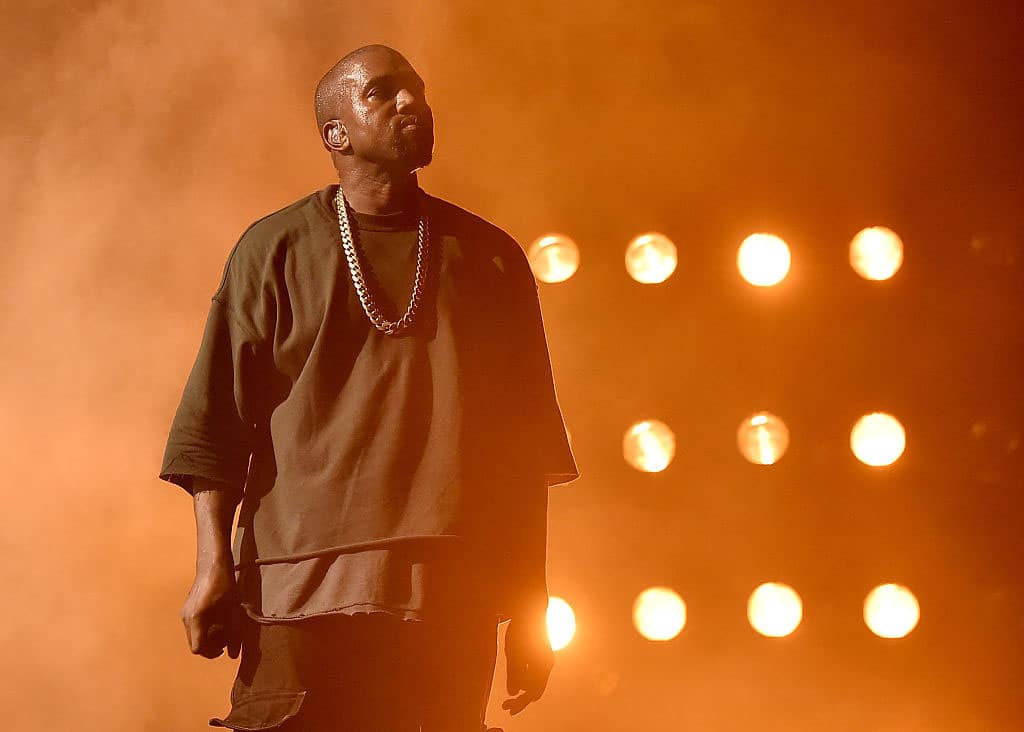
Kanye West at Forefront of Antisemitism in 2022, Jewish Rights Group Says

Celebrities led by American rapper Ye (formerly known as Kanye West) and social media giants were responsible for promoting a highly public wave of antisemitism in 2022, the Simon Wiesenthal Center (SWC) said Thursday as it published its Top 10 worst antisemitic incidents over the past 12 months.

Global stars with millions of followers posted age-old anti-Jewish tropes on social medial platforms such as Twitter, Facebook and Instagram, the organization found, even as those platforms failed to tackle the problem effectively. It listed “The Influencers” as the first of its top 10.

SWC, a human rights organization that exposes and combats antisemitism around the world, announced its findings at a press conference held by Rabbi Abraham Cooper, its associate dean and director of Global Social Action, at the Jerusalem Press Club. The organization singled out Ye for his repeated antisemitic comments and his freely expressed praise for Hitler.

Ye’s comments were “parroting Louis Farrakhan,” Cooper said Thursday, echoing the SWC round-up, which branded Nation of Islam leader Farrakhan as “America’s godfather of hate” who is responsible for keeping “anti-Semitic screeds … afloat for decades.”

The rapper “used his unparalleled social media influence to morph these historic tropes into a firestorm of real-time anti-Semitism – absorbed by millions, and inspiring acts of hate against Jews living and dead,” the organization said.

Speaking to The Media Line after the press conference, Cooper branded West “an accelerant” of antisemitism. “The man had access to over 50 million people when he snapped and started his still-continuing tsunami of hate against the Jewish people,” he said.

“What the white supremacists did … is they pre-positioned themselves on Twitter before Kanye West, [which is] something that just happened a few weeks ago,” he said.

“It was already a horrible year in antisemitism, but they were ready for someone like a Kanye West to come, and they were so fast to take advantage of it, that they’re now marketing sweatshirts with swastikas and Stars of David with the swastika embedded in there.”

Cooper told The Media Line that Ye’s comments were “only a dream for someone like Farrakhan, who basically wrote these talking points [such as] Hitler was great, unleashing extremist groups within the African-American community.”

The rabbi said during the press conference that “the monetizing of antisemitism,” was one of the greatest concerns. He showed images of clothing bearing the Star of David intertwined with the Nazi swastika.

The International Holocaust Remembrance Alliance (IHRA) definition of antisemitism, adopted by dozens of countries and organizations around the world, includes “drawing comparisons of contemporary Israeli policy to that of the Nazis.”

“We have to fight very hard to make sure [monetization] doesn’t become mainstream, so that someone’s going to get on a United Airlines flight wearing the swastika and say what’s wrong with that?” he said.

Cooper said at the press conference that the free availability of social media has been “a bonanza for extremists.”

Companies such as Facebook and Twitter must “throw these people back in the gutter,” the rabbi said. He pointed out, however, that those who are banned from social media migrate to Telegram, an instant messaging service where encrypted channels and comments are not moderated. Telegram appears as number 10 on the SWC list.

“Unfortunately, Telegram isn’t going anywhere,” Cooper told The Media Line. He said that while “we have a chance at pushing… the social media companies to change and upgrade the way in which they deal with the extremists,” such an opportunity does not exist with the unmonitored messaging platform.

“Right now, I see Telegram as an open-ended sewer that we’re going to have to be dealing with for a long time to come,” he said.

The center also highlighted former US President Donald Trump’s meeting with Ye and white nationalist Nick Fuentes at the former president’s Florida golf resort Mar-a-Lago in November. Trump obfuscated about this meeting, SWC said, and “failed to condemn Fuentes or fully explain why he met with Kanye West who was running amok with anti-Semitic vitriol, until he was pushed to do so by his former vice president, Mike Pence, and others.”

But by then, SWC wrote in its report, “the damage had been done.”

Other political entities also came under fire Thursday, with the United Nations Human Rights Council appearing as second on the SWC list. The entry mentioned in particular Italian lawyer Francesca Albanese, who was earlier this year named as the UN’s Special Rapporteur on the Situation of Human Rights in the Palestinian Territories and who was forced to apologize for tweets containing slurs against Jewish people.

SWC branded Albanese as “a walking anti-Israel encyclopedia,” who engaged in “anti-Semitic screeds,” including claims that a “Jewish lobby” controls the United States.

The US Ambassador to the Human Rights Council Michele Taylor previously castigated Albanese for the comments, which she said were “outrageous, inappropriate, corrosive and degrades the value of the UN.”

Even so, SWC pointed out, “no action has been taken by the UN to sanction or remove Albanese from this sensitive post.”

“When it comes to antisemitism,” Cooper said Thursday, “there should be no politics.”

The rabbi also slammed American university campuses – number seven on the SWC list – which he said had become a hostile environment for Jewish students and academics alike.

“Today Zionism is a dirty word on most campuses in the US,” Cooper told reporters, referring to the Jewish people’s aspiration for a homeland. He cited “open attacks” and “aggressive” support on campuses for the Boycott, Divestment and Sanctions Movement against Israel.

“That’s why a definition for antisemitism is important,” Cooper said, referring to the IHRA definition that describes as antisemitic: “holding Jews collectively responsible for actions of the state of Israel,” “denying the Jewish people their right to self-determination” and “applying double standards by requiring of [Israel] a behavior not expected or demanded of any other democratic nation.”

Cooper also raised the attack at a synagogue in Colleyville, Texas on January 15, in which a British-Pakistani man armed with a gun took four people hostage during Shabbat services. SWC placed the incident at number five on its list, and said that there were many unanswered questions surrounding the attack, including who funded his travel from the UK to Texas, why he chose a synagogue and who was really behind the hate crime.

The rabbi said that the attack “shrieked terrorism,” and it had led SWC to ask FBI Director Christopher Wray to create a special task force on antisemitism. According to SWC, Wray himself acknowledged that 63% of all religion-based hate crimes in America targeted Jews, even though they only make up a little over 2% of the US population.

“What happened in Texas was an act of terrorism, not just a hate crime,” Cooper told The Media Line. “This is someone who came from thousands of miles away. Whether he was trained or not, there are so many open-ended questions about that particular incident that opens a whole another area of concern and fear for the Jewish community,” he said.

“So, what has transpired now in the United States [is that] there aren’t enough police, there’s not enough training, not enough money from the taxpayers,” Cooper concluded.

Dr. Abbee Corb, digital terrorism consultant for SWC, told The Media Line that the formation of networks and communities of hate are among the most concerning recent developments. Alongside this is the “cross-pollination of groups that are coming together in the online environment: keyboard cowboys are being emblazoned by each other, groups are coming together who might not normally have come together. But the community building, that to me is the most problematic thing and it is increasing tenfold. In the past year it has gone up dramatically; it’s very very scary, especially in the Telegram environment where everything is encrypted, some of the communities are members only. It’s a very scary development.”

Corb says that people who see such activity online should contact the SWC, or local law enforcement.

She also says that parents should be “active and proactive” and should be “knowledgeable” about what their kids are doing online. She urges parents to monitor their children’s online activity, and suggests that they use their laptop computers in a more public area such as the kitchen as opposed to in their bedrooms. And if parents see their children looking at hate material online, Corb recommends using it as a teachable moment: “Exploit the negative for a positive.”

Kanye West at Forefront of Antisemitism in 2022, Jewish Rights Group Says Read More »

A Harvard President’s Pogrom Warning

If American Jews “decide to remain apart,” antisemitism will rise to the point that “blood will be spilled,” one of America’s most prominent educators reportedly warned, one hundred years ago this week.

That blunt and menacing demand was made by the president of Harvard University, A. Lawrence Lowell. It’s a reminder that the intense antisemitism in America in the 1920s was espoused not only by street corner bullies, but among some leading figures in the academic community as well.

Lowell was said to have uttered his threatening words in a conversation with Harvard alumnus Victor Kramer when the two shared a train compartment in late December 1922. A few weeks later, Kramer recounted the conversation at a Manhattan meeting, and a New York Times correspondent who was present reported it on January 15.

“President Lowell takes full credit for the plan to limit the number of Jews who are seeking admission into Harvard,” Kramer said. “It is his view that so long as the Jewish people decide to remain apart, as a distinct entity in American life and not merging in a social way by intermarriage with the Gentiles, just so long will prejudice continue and even grow worse.”

“President Lowell also asserted that a Jew can not be an American, for to be an American, in his opinion, one must be that and nothing else,” the Times reported. “President Lowell predicted that within twenty years we will see in the United States the same conditions that now exist in Central Europe, where blood is spilled as a result of anti Semitism… His advice was that the Jews drop their faith.”

The next day’s Times carried a statement from Lowell that he “denied having said the things attributed to him,” claiming that Kramer had “grossly misrepresented” his views. Kramer, however, stood by his account, citing two witnesses who sat next to them and heard Lowell’s statements.

The theme of the attributed remarks—that Jews themselves are to blame for antisemitism, and responses to Jewish behavior could get much worse—was consistent with Lowell’s previously expressed opinions. In fact, a letter Lowell wrote to another alumnus in 1922, along these same lines, had been quoted in the Times the previous June.

“The anti-Semitic feeling among students is increasing, and it grows in proportion to the increase in the number of Jews,” Lowell wrote then. “If their number should become 40 per cent of the student body, the race feeling would become intense…All this seems to me fraught with great evils for the Jews, and very great peril for our community.”

That was why Lowell went to the Harvard Board of Overseers in 1922 with his proposal to reduce the number of Jewish students on campus, which was about 25% of the student body. Until then, admissions had been determined on the basis of merit, that is, grades and test scores. Lowell and the board devised new criteria that would allow “careful discernment of differences among individuals,” as Lowell put it.

Henceforth a Harvard admissions officer could reject an application based on the applicant’s “character.” Also, the applicant would be required to state his “race and color” and “religious preference,” and would have to explain if either of his parents had ever changed their names—so that the admissions officer would know whose “character” required special scrutiny. Applicants from New York City were classified according to whether their family name and photograph indicated they were Jews; they were classified as “J1” (definitely Jewish), “J2” (probably Jewish), or “J3” (possibly Jewish). Thus Jews could be singled out for rejection without anybody having to say the reason was that they were Jews.

Franklin D. Roosevelt, who served on the Harvard board in the 1920s, later boasted of his role in this episode. He and his fellow-board members decided that “the number of Jews should be reduced one or two per cent a year until it was down to 15%,” President Roosevelt explained to Henry Morgenthau, Jr., the only Jewish member of his cabinet, in 1941. “You can’t get a disproportionate amount of any one religion.”

Lowell and FDR also shared an indifference to the plight of Jews in Nazi Germany. In his book The Third Reich in the Ivory Tower, Prof. Stephen Norwood described Lowell’s rejection of an offer by a charitable foundation in 1933 to pay the salary of a refugee scholar from Nazi Germany if Harvard would hire him. Lowell accused the foundation of trying “to use the College for purposes of propaganda.”

James G. McDonald, the League of Nations High Commissioner for Refugees from Germany, requested an appointment with Lowell in March 1934. Lowell’s secretary told McDonald—according to his diary— “that he wasn’t interested in German refugees,” and “that he was tied up the whole day,” so therefore “couldn’t see me.” But when Hitler’s foreign spokesman, Harvard graduate Ernst “Putzi” Hanfstaengl, visited the campus three months later, Lowell found the time to have a friendly meeting with him.

Although a century has passed since Lowell, FDR, and their colleagues acted against the admission of Jewish students, Harvard is only just beginning to come to grips with this dark chapter in its history. Three years ago, following publicity about Lowell’s anti-Jewish policies (and policies hostile to other minorities), the faculty deans decided to take down a portrait of Lowell that was hanging in Lowell House, an undergraduate dormitory. The building itself, however, continues to bear his name. One wonders what sort of revelation it would take for Harvard to finally do something about that.


Dr. Medoff is founding director of The David S. Wyman Institute for Holocaust Studies and author of more than 20 books about Jewish history and the Holocaust. His latest is America and the Holocaust: A Documentary History, published by the Jewish Publication Society & University of Nebraska Press.

A Harvard President’s Pogrom Warning Read More »

I Love a Good List Poem – A poem for Parsha Vayigash

And these are the names of the children of Israel who were coming to Egypt.
-Genesis 46:8

I love a good list poem.

Seventy souls came from the land
we were shown down to Egypt –
The sons, a daughter or two –

Egypt was never a good idea
but, when climate dries the land
it’s time to move.

The plight of the Colorado River
must sound so familiar to
our ancestors.

Everybody and their mother
makes the trip, though, as is
the custom of the patriarchy

the mothers aren’t mentioned.
It’s okay, you migrate to Egypt
I’ll sit here in the dust.

Wear a sweater.
I love a good list poem and
everyone is mentioned by name

(except the wives.) Even Muppim
is there, I assume he was the
forebear of Kermit.

I’d like to tell you more, but it’s
really just a roster. Which, if you’ve
ever been on tour bus in Israel

makes sense as before the
gas pedal gets pressed, after
you’ve set foot on rocks the

Romans kicked around, you
need to count off, make sure
all your souls are present before

you head off to the Naot factory
or to crawl through a cave or touch
your fingers to a retaining wall.

Every soul must be accounted for.
Even the ladies, if for some reason
you don’t want to mention their names.

Remember, it’s always a good idea
to go to Israel. But never to leave.
Especially not to Egypt.

You’ll see.


God Wrestler: a poem for every Torah Portion by Rick LupertLos Angeles poet Rick Lupert created the Poetry Super Highway (an online publication and resource for poets), and hosted the Cobalt Cafe weekly poetry reading for almost 21 years. He’s authored 26 collections of poetry, including “God Wrestler: A Poem for Every Torah Portion“, “I’m a Jew, Are You” (Jewish themed poems) and “Feeding Holy Cats” (Poetry written while a staff member on the first Birthright Israel trip), and most recently “I Am Not Writing a Book of Poems in Hawaii” (Poems written in Hawaii – Ain’t Got No Press, August 2022) and edited the anthologies “Ekphrastia Gone Wild”, “A Poet’s Haggadah”, and “The Night Goes on All Night.” He writes the daily web comic “Cat and Banana” with fellow Los Angeles poet Brendan Constantine. He’s widely published and reads his poetry wherever they let him.
I Love a Good List Poem – A poem for Parsha Vayigash Read More »

Table for Five: Vayigash

One verse, five voices. Edited by Salvador Litvak, the Accidental Talmudist

Joseph could no longer control himself before all his attendants, and he cried out, “Have everyone withdraw from me!” So there was no one else about when Joseph made himself known to the brothers.  – Gen 45:1


Rabbi Benjamin Blech
Professor of Talmud, Yeshiva University

Joseph is the only one of our Biblical ancestors honored with the additional title of “Tzadik” – Jewish tradition refers to him as Yosef the righteous one.

How did he earn this unique tribute? Perhaps the key is this story. Victimized by his own brothers, sold into bondage by his own family, enabled then by virtue of special talent as well as divine favor to gain great power as second in command to Pharaoh, Joseph makes the difficult decision counselled in contemporary times by Nelson Mandela: “When a deep injury is done to us, we never heal until we forgive.”

But there is one additional part of the story that is even more relevant: Before Joseph revealed his identity to his brothers, he sent everyone else out of the room. Because Joseph would not commit the sin of publicly slandering his own family.

We live at a time of growing anti-Semitism. The ancient and inexplicable hatred of Jews has more than enough disciples; there is a striking absurdity when Jews feel obliged to join the chorus of anti-Israel and anti-Jewish invective. When Ben and Jerry, ignoring all other evildoers of the world, justify their singling out of Israel as the only ones deserving of their boycott with the response that they can’t be accused of being anti-Semites because “they themselves are Jewish” – they ignore the unfortunate reality that some of the worst anti-Semites of history were Jews!

Joseph understood – the sins of our own are best kept in the family!


Miriam Yerushalmi
CEO SANE; Author, Reaching New Heights series

The Lubavitcher Rebbe taught that a sign that teshuvah is complete is that when placed in a situation similar to the one where you previously failed, you succeed in doing right. Yosef arranged a situation where Binyamin, the youngest brother—their father’s last treasured connection to his favorite wife and son—was at risk: Would the others give him up as they given up Yosef, or would they give their lives for their innocent brother? Yehudah, by offering himself in his brother’s stead, to spare their father the crushing pain of losing this son as well, completed the rectification of their earlier act of un-brotherly harshness.

This was not a revelation that could be made in front of others. This was not even between Yosef and his brothers—it was between the brothers and Hashem. Yosef had no desire to punish or shame his brothers. He did not want them to be mired in negativity or feelings of despair that perhaps Hashem had not forgiven them. “Yosef could no longer hold himself back” from proving to them—not to himself—that they had indeed overcome their jealousy and purified their souls.

Yosef hoped the brothers’ feelings toward him had changed, not because he wanted them to love him, but because he wanted them to love themselves. Whether as a spouse, a parent, a teacher, or a friend, our hope is that our loved ones will pursue teshuvah for themselves—as if “there is no one else about”—for the sake of their souls.


Aliza Lipkin
Writer and Educator, Maaleh Adumim, Israel

Joseph’s brothers conspired to kill him, stripped him naked, and threw him in a pit as he screamed for his life. He was sold as a slave, imprisoned, and estranged from his family for 20 years. Most people would seek revenge.

Joseph was unique in that not only did he not take retribution for the years of suffering he endured, but conversely took extra care not to embarrass his brothers.

Rashi says Joseph could not bear the Egyptians standing beside him to witness the brothers being embarrassed when he revealed himself to them.

Despite the fact that Joseph suffered tremendously at the hands of his brothers and was in the position to exact punishment, he did not. Even more so, when he could barely contain himself and was bursting to reveal his identity to his brothers, he held it in until his attendants left the room. His sensitivity to their feelings at that moment came before his deep-seated pain.

Joseph displayed monumental growth and transformation in his anticipation and consideration of his brother’s feelings. When he was 17 and shared his lofty dreams with them he was egocentric and oblivious to their hatred and jealousy. During his years as a slave and a prisoner, he chose to learn to be a more caring considerate person instead of mulling over their actions and stewing in anger. In doing so he ended up second to the king, saving countless people from starvation and bringing his family back together in peace and harmony.


Rabbi Mari Chernow
Senior Rabbi Temple Israel of Hollywood

The Torah breaks from its usual reticence about emotion in this scene. Joseph’s outburst is raw, dramatic, and as the text tells us, irrepressible. What causes this sudden departure? Let’s look to the preceding verse, the climax of Judah’s plea before Joseph. Judah begs Joseph to release Benjamin from jail, explaining, “For how can I go back to my father unless the boy is with me? Let me not be witness to the woe that would overtake my father.”

Jacob still favors one son – Benjamin – over the others. This is clear from other verses in Judah’s speech. It is the very same favoritism that set the family on a painful trajectory of envy, conflict, and estrangement. All these decades later, Jacob has not changed.

And yet, Judah has. He is a father himself now. He has had years to reflect on his role in selling Joseph to strangers. Or he has simply decided to heal.

Our tradition is unyielding in its belief that growth and transformation are possible. Here Torah teaches that there are times when we can change even when no one else does.

In verse that follows, Joseph outright sobs. His grief, relief, heartache, compassion and regret are more than he can bear, and more than the Torah can ignore. So too is his realization that Judah has taught us how to survive – and thrive- in a world filled with flawed human beings. We need not wait for them to change. Healing and hope can be ours.


Nicholas Losorelli
Third Year Ziegler Rabbinical Student

Through all the heartbreak and confusion from Canaan to Egypt, Joseph made the best out of a bad situation. He rose to the highest possible position next to Pharoah, and overcame impossible obstacles. However, his comfortable Egyptian existence was completely turned on its head, when the very brothers who betrayed him, and robbed him of his past and future, showed up on his extravagant Egyptian doorstep.

Joseph put his brothers through the wringer, and whether it was revenge, a test, or part of a larger divine plan, Joseph couldn’t deny his truth or keep up this Egyptian charade any longer; e broke, revealing himself to his brothers. After having long ago shut the door on the possibility of ever being who he once was, that long-lost truth was given the possibility of expression once more.

Writing this on a sunny winter day in Jerusalem, I find myself reflecting on how my own life has led me on a winding, confusing, and beautiful path leading me to our spiritual home, for the academic year. There have already been so many moments where that which craved expression within me, finally found its moment, here in Israel. The possibilities of Jewish expression in Israel have opened my heart in a way that I have yet to feel elsewhere, and while this land is complicated, to say the least, it is still an extraordinary expression of that undeniably Jewish impulse to honor that same deep truth that Joseph could no longer deny.


Table for Five: Vayigash Read More »

A Moment in Time: “Yes – It’s OK to Offer the Shehechiyanu on the Last Night of Chanukkah!”

Dear all,

Whenever we come to a new opportunity in Judaism, we offer the Shehechiyanu, a blessing of thanksgiving.

We offer this for personal achievements (birthdays, anniversaries, dedicating a new home).

We also offer this for Jewish Holy Days and Festivals. Traditionally, we only recite this blessing on the first night of these observances. So for Chanukkah, while there are typically two blessings at the time of candle lighting, there is also the third, the Shehechiyanu, on the first night.

This year, my mom wasn’t surrounded by all her children and grandchildren until the last night of Chanukkah. “Zachary” she asked, “Even though it’s the last night, can we offer the Shehechiyanu?

While I’’m certain that Rabbis Hillel and Akiba might have spent pages arguing about this in the Talmud, our family just erupted into a loud singing of the blessing.

You see – there are times when personal circumstances outweigh traditional paradigms. And this moment in time was one of them,

So yes! Offer the blessing and observe the Festival at their set time. And also be receptive to harnessing light whenever and wherever you can!

(And – most important, I know enough not to say “NO” to my mother!)

With love and shalom,

Rabbi Zach Shapiro

A Moment in Time: “Yes – It’s OK to Offer the Shehechiyanu on the Last Night of Chanukkah!” Read More »

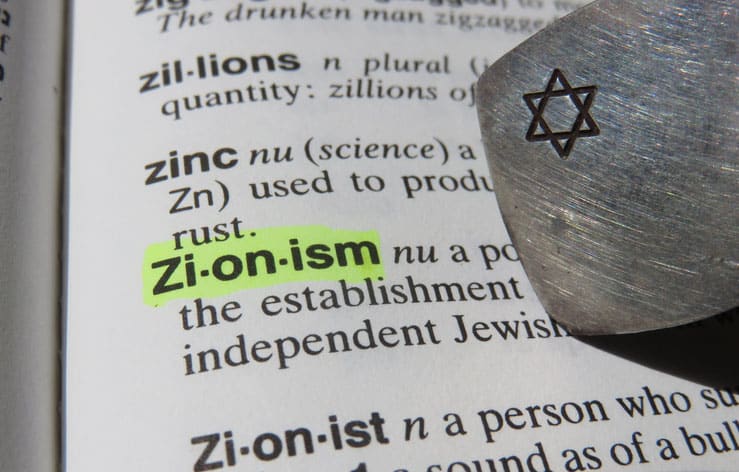
The Anti-Zionist Card

Use of the anti-Zionistic card

makes life for Jewish Zionists most tough,

and therefore, some say, should be barred,

for puffing with a racist hateful huff.


“We are not anti-Semites,” players may

say poker-faced. “All that we hate is Zion.”

Don’t listen to a wokey word they say.

They need to get a life, as did not Brian,


and not, while cross though not upon a cross,

mislead the world by sounding like a saint.

The alienating card’s an albatross

that hovers round them since they really ain’t


hearts bleeding bloodlessly for Palestine,

in their antagonizing anamnesis,

thank God, just like an unexploded mine,

their love affair with hate, not Jesus.


Round all these players we should all run circley,

though it may be impossible to square

the Californian circle that’s in Berkeley,

and tell them that their arguments aren’t fair.


In “At Berkeley Law, a Debate Over Zionism, Free Speech and Campus Ideals: A student group, Law Students for Justice in Palestine, barred supporters of Zionism from speaking at its events. The outrage — and legal misunderstandings — grew from there,” NYT, 12/21/22, Vimal Patel writes:

On the first day of the fall semester, Erwin Chemerinsky, the dean of the law school at the University of California, Berkeley, learned that a student group created a bylaw that banned supporters of Zionism from speaking at its events.

Mr. Chemerinsky said he rarely used profanity but did so in that moment. As a constitutional law scholar and co-author of a book about campus free speech, Mr. Chemerinsky said that he knew the group, the Berkeley chapter of Law Students for Justice in Palestine, had the legal right to exclude speakers based on their views.

But he also knew the bylaw, which eight other student groups also adopted, would be polarizing within the law school and used as a cudgel by forces outside of it.

In hindsight, he said, he underestimated the response. The story “went viral in a way that I could have never possibly imagined,” he said.

The controversy, pushed along online by conservative commentators, hits two of the pressure points in campus politics today. The bylaw was adopted as antisemitism is rising across the country. And some critics of academia have cast left-wing students as censors who shout down other viewpoints, all but strangling, they say, honest intellectual debate.

That collision of issues all but guaranteed a tense debate over free speech, even if a broad swath of speech experts say that student groups are allowed to ban speakers whose views they disagree with.

“A student group has the right to choose the speakers they invite on the basis of viewpoint,” said Mr. Chemerinsky, who is Jewish and a Zionist. “Jewish law students don’t have to invite a Holocaust denier. Black students don’t have to invite white supremacists. If the women’s law association is putting out a program on abortion rights, they can invite only those who believe in abortion rights.”

Mr. Chemerinsky said that excluding speakers based on race, religion, sex or sexual orientation would not be allowed, but he noted that the student groups were excluding speakers based on viewpoint. True, he said, many Jews view Zionism as integral to their identity, but such deep passions do not change the law.

Other legal experts noted that the controversy showed just how mangled the understanding of the First Amendment had become, even at a place like Berkeley, the epicenter of the 1960s free-speech movement. The debate, they said, should focus on whether these bans align with the academic ideal of open, intellectual debate. Even if student groups can prohibit speakers, should they? And should such bans be codified — formally adopted with a bylaw?


Gershon Hepner is a poet who has written over 25,000 poems on subjects ranging from music to literature, politics to Torah. He grew up in England and moved to Los Angeles in 1976. Using his varied interests and experiences, he has authored dozens of papers in medical and academic journals, and authored “Legal Friction: Law, Narrative, and Identity Politics in Biblical Israel.” He can be reached at gershonhepner@gmail.com.

The Anti-Zionist Card Read More »

A Bisl Torah — Have a Merry Life

My family spent Hanukkah and Christmas Day skiing in Big Bear. It was hard for me to watch so many people working on their holiday. From the people fitting us for our helmets to those helping us on and off the ski lifts, the mountain was filled with employees.

One gentleman was giving us directions and I couldn’t help but remark, “We appreciate that you’re helping us today. Is it hard for you to work on Christmas?” He quickly responded with a big smile, “I don’t believe in Merry Christmas. I believe in having a merry life.”

I also smiled. I know that for many, working on significant holidays cause disappointment and loneliness, and is often, a financial necessity. But this man also taught me that holidays serve as a reminder of experienced everyday blessings. The man wasn’t minimizing the holiday. He was emphasizing the importance of being grateful for the rising and setting sun, the ability to breathe in a brand-new tomorrow, and the gift of offering love whenever, wherever possible.

How Jewish. In our morning blessings we recite the words, “Elohai Nishama, SheNata Bi Tehorah Hi.” Translated, the soul that You, my God, have given me is pure. In other words, today is filled with endless opportunities. Today, I can choose to start with positivity or negative self-talk. Today, I enter this world prepared to give, living life with an open-heart. God gives me a pure soul. The least I can do is give thanks by living with integrity, purpose, intention, and righteousness.

The gentleman on the mountain lives a merry life. May our secular new year start in a similar fashion: filled with simcha and emunah—a lot of joy and an abundance of faith.

Shabbat Shalom and Happy 2023


Rabbi Nicole Guzik is a rabbi at Sinai Temple. She can be reached at her Facebook page at Rabbi Nicole Guzik or on Instagram @rabbiguzik. For more writings, visit Rabbi Guzik’s blog section from Sinai Temple’s website.

A Bisl Torah — Have a Merry Life Read More »

Israel’s 37th Government Sworn In

Israel’s thirty-seventh government was sworn in on Thursday, the culmination of a weeks-long political process following the victory of Prime Minister Benjamin Netanyahu’s right-religious bloc in the Nov. 1 national elections.

Netanyahu, Israel’s longest-ever serving leader, takes the reins for his sixth term in the Prime Minister’s Office, to which he returns following a year-and-a-half hiatus.

His Likud Party will lead a 64-member coalition in the 120-seat Knesset, that comprises the Religious Zionism Party (RZP), Otzma Yehudit, Noam, Shas and United Torah Judaism.

High-ranking appointments include Defense Minister Yoav Gallant (Likud), Foreign Minister Eli Cohen (Likud), Justice Minister Yariv Levin (Likud), Finance Minister Bezalel Smotrich (RZP), Public Security Minister Itamar Ben-Gvir (Otzma Yehudit) and Interior Minister Aryeh Deri (Shas).

In a speech to the Knesset on Thursday, Netanyahu said his new government would focus on three main goals.

First, he said, it would prevent Iran from “developing an arsenal of atomic weapons that will threaten us and the whole world.” Second, it would develop Israel’s infrastructure and deliver “a flourishing economy to every part of Israel.” Third, it would expand “the circle of peace with Arab states with the goal of ending the Arab-Israeli conflict.”

Occasionally interrupted by catcalls from the opposition benches, Netanyahu said, “I hear the opposition’s eulogies about the end of state, the end of democracy—members of the opposition, to lose an election isn’t the end of democracy, it’s the essence of democracy.… And I ask that you cease to rebel against the elected government.”

Ahead of the transfer of power, former Prime Minister Yair Lapid delivered a parting shot at the incoming coalition, calling it a “government of destruction” and vowing to return to power.

“This is not the end, this is the beginning of the fight for our beloved country,” Lapid said in a Facebook post. “We are fighting for the future of our children and we will not stop until we topple the government of destruction and return [to power],” he added.

Netanyahu’s government on Wednesday published a list of policy guidelines that includes a vow to promote settlement throughout the country.

“The Jewish people has an exclusive and inalienable right to all parts of the Land of Israel. The government will promote and develop the settlement of all parts of the Land of Israel—in the Galilee, the Negev, the Golan Heights and Judea and Samaria,” the document states.

It also reinforces a commitment to strengthening the status of Jerusalem, which by law is Israel’s unified capital.

The guidelines outline the incoming government’s desire to “preserve the Jewish character of the state and the heritage of Israel,” while “respecting the practices and traditions of members of all religions in the country in accordance with the values of the Declaration of Independence.”

The government also intends to maintain the status quo on issues of religion and state that has been in effect for decades, including with regard to the holy places.

Israel’s 37th Government Sworn In Read More »

New Government in Israel: Meet Reality

Consider the irony: The most conservative-religious coalition in Israel’s history is also the first one to make a gay couple eligible to be buried alongside the nation’s greats on Mount Herzl. Amir Ohana of the Likud party, the new Speaker of the Knesset, is married to a male spouse. As Speaker, he will receive a burial plot for both him and his spouse. We wish him a long life, after which he will make history. The flowers go to the ultra-Orthodox parties who made it possible.

A new government begins its march through Israel’s treacherous political waters. A new government begins its term with an advantage: It has enough votes to survive for a full term and implement its plans. But there is also a disadvantage: Very little good will from all those who did not vote for it. In fact, there is apprehension, there is tension, there is more than a grain of desperation, and there is readiness to push back against some of this government’s plans with full force.

Only time will tell which plans becomes actuality that merit a push back. Only time will tell if the opposition can truly master an effective push back.

But let’s begin with the basics. Two months ago, Israel went to the polls for a fifth time in less than four years, having failed to elect a mix of parties that could form a durable coalition. The fifth was a charm—64 seats were allocated to four parties who vowed to form a rightwing-religious coalition. These are Likud, with 32 seats, Religious Zionism with 14, Shas with 11, and United Torah Judaism with seven. One ruling party, three religious parties. It is a relatively coherent group, but also a group with very little room for maneuver. Every member is needed for every vote; every party is essential to the mix. No party has a viable substitute for the current coalition. Whether they like each other or not, they are stuck together. For how long depends mostly on their ability to govern and keep the group intact.

Do they like each other? Consider the following fact. Even though the elections were two months ago (a long time), even though the structure of the coalition was determined by the voters with no alternatives for anyone, and even though all members of the coalition vowed to join what ultimately became the new government, it took Prime Minister Netanyahu more than two months to complete the task.

There are two reasons for this. First, the other members of the coalition may like Netanyahu, or at least have respect for him, but they do not trust him. A long history of leading his partners astray left its mark on all potential allies. As a result, they want everything in cash, upfront. Promises and commitments no longer work for the PM. Second, with a decisive victory after four years of instability came a great appetite. The leaders of the coalition see an opportunity to make great things in a short time, to change Israel’s course. They have no patience and show very little restraint in their quest to move fast, go big, get what they want.

Netanyahu, the man In charge, had to navigate a delicate course: He wanted this government to form and had no other government he could form; he wanted to advance some of the bold plans that his allies were pushing for; he also wanted to avoid overreaching, and make sure that the government will not be biting off more than it could possibly chew; and he is the one with the experience, the one who knows what could happen when a government acts hastily, without regard to social, political and international realities.

Add another layer of complication, an elephant in the room: Netanyahu is a man on trial, and is likely to remain on trial for many months, or years. One doesn’t have to be highly suspicious of his intentions and motivations to understand that such a situation must have some measure of influence on his calculations. Surely, he wants Israel to be a thriving country. Surely, he wants to keep Israel safe and leave a legacy of a great leader. And yet, the trial poses a risk of jail time. Not even a saint could carve a way forward without leaving some room for this fact to be factored in as he makes decisions.

Netanyahu’s first term as Prime Minister was in 1996. That’s a long time ago. Looking at the photo taken on the day that long-forgotten group was sworn in one realizes that only one of them survived: Netanyahu. You can easily find the photo, and see for yourself. Alongside the then young Netanyahu sits President Ezer Weitzman, long gone. Then there are the ministers, very few in comparison to the mammoth government that was sworn in last week. The less stable Israel’s governments become, they larger they are. Handing portfolios is no longer about wanting politicians to implement policies; it is about wanting politicians to have something to lose, to keep them loyal.

On the right side of the 1996 photo is Yuli Edelstein. Last week, Edelstein, former Health Minister, former Speaker, a man who seems to still entertain the idea of one day succeeding Netanyahu, was notified that he will get no ministry to manage. To his left in the photo is Tzahi Hanegbi. He did not even run, but will get an influential job as National Security Advisor. He is no longer a political player, but Netanyahu needs his sound advice, moderation and experience.

The list is long, and there’s no need for further detailed elaboration. Natan Sharansky is retired. Refael Eitan is dead. Moshe Katzav first became President, then was jailed for rape, then retired. Eli Yishai lost the battle for Shas and left. Benni Begin is retired. Dan Meridor is retired. Many members of the 1996 government became, with time, Netanyahu’s greatest critics. But he was shrewder, crueler, more determined and more charismatic than all of them. They perished, he stayed. As a young PM with older peers, he became an older PM (73 years old) with mostly younger peers. And these new peers, many of whom have little experience and even less patience to make their mark, are making Netanyahu’s life difficult.

Netanyahu learned some of his lessons the hard way—hard for him and hard for the citizens of this country. More than a quarter of a century ago, the then inexperienced new PM ordered the removal of a few inches of rock in Jerusalem, opening an exit from the Western Wall tunnels. This sparked bloody riots, forced Netanyahu to rush back to Israel from a visit to Europe, and precipitated a dramatic crisis. He thought he was making a bold yet small decision. The result was 17 dead Israeli soldiers and close to a hundred dead Palestinians. The result was also a weakened Netanyahu. A direct line can be drawn from his rush decision in the fall of 1996 to the Hebron Agreement he was forced to sign in January of 1997. One could argue that this agreement, opposed by some of Netanyahu’s rightwing allies, was the beginning of the end of his first short-lived government.

So Netanyahu knows that for a PM and a government, even small plans, presumably of little consequences, can produce dramatic results. And his partners have no small plans. They have only big ones—a blueprint for a revolutionary term of government. That’s why the opposition is so nervous and desperate.

Itamar Ben Gvir speaks to the press before a party meeting on November 28, 2022 in Jerusalem, Israel. (Photo by Amir Levy/Getty Images)

The new Homeland Security minister, Itamar Ben Gvir, plans to control the Border Police on his own. He intends to detach it from the main police force and use it to implement his ambitious plans to restore order in the Negev Desert. The new Finance Minister intends to legitimize and formally legalize distant outposts in the West Bank, a move that has the potential to open a rift with an already suspicious Biden administration. The new Justice Minister, Yariv Levin, plans to alter the way justices are elevated to the Supreme Court, and make it more political. Levin is one of Netanyahu’s most trusted allies. He managed the coalition negotiations for him and sat as the interim Speaker to pass the urgent laws that the coalition was committed to passing even before the government is sworn in.

Among these laws is one that makes Shas leader Aryeh Deri serve as a minister. Deri was tried, convicted and jailed in the nineties for bribery. He had to wait seven long years before rejoining the political arena as a full member. Then, last year, he was in trouble, again, for tax evasion. A plea bargain saved him from having to serve more jail time, but whether he could become a minister without having to wait until after the cooling period, again, was not clear. To make it clear a law was passed that makes it legal for him to be a minister. On January 5, the Supreme Court is slated to consider the legality of this new legal construction. An especially large group of 11 justices will hear the case.

Deri is a leader of an ultra-Orthodox party and the agenda of such parties for the coming term is also ambitious: They want more funds to keep their schools running, without having to submit to a curriculum mandated by the state. They want to make sure that further attempts to force their youngsters to join the IDF do not materialize. In fact, this is one of the meeting points of two agendas. Levin in Justice believes that the legal system is too powerful and uses its power to limit the government’s ability to implement its plans. The Haredi politicians agree. A law to absolve Haredi men from the draft was struck down by the court because it violated equality. The ultra-Orthodox would thus push any law that would make it impossible for the court to strike down a new draft law.

Aryeh Deri during a parliament session on November 28, 2022 in Jerusalem, Israel. (Photo by Amir Levy/Getty Images)

The power of ultra-Orthodox legislators is one of this government’s weaknesses. Many voters who wanted the incoming coalition voted for it because of its promise to provide security, tame Arab violence and reign in the court. But these voters, some of which are secular or traditional or even moderate Orthodox, did not intend to hand the Haredi leaders a license to overhaul Israel’s culture. Thus, when last week it was suddenly revealed that the government plans to pass legislation that could potentially lead to discrimination against minorities, the outcry was loud.

In fact, this is a case worth examining in more detail, as it can be a prelude for many such plans.

The idea, still part of the coalition agreement, is to delete the part in the anti-discrimination law that makes it illegal to decline providing service to someone on religious grounds. Americans are familiar with this type of controversy, which not so long ago revolved around whether a bakery owned by a religious person must bake a cake for a same-sex wedding. But it is also about other things. For example, interviewed on the radio, Minister Orit Strock of the Religious Zionism party said that when the change is made, doctors could refuse to provide medical treatments that contravene their religious beliefs if there’s another doctor that could provide the same treatment.

This ignited a storm of resistance and condemnation—and some threat of action. One bank declared that it would not hand loans to institutions or businesses that discriminate on such basis. Legal offices declared that they will not represent such businesses. Municipalities, hospitals, universities, organizations, all expressed indignation and vowed action. Can the coalition still pass such legislation? Maybe. But what would be the price, and what would be the reaction, and what other plans could such controversy spoil? Netanyahu was quick to declare that no one is going to enact discrimination on his watch. Other speakers were sent to clarify the true intentions of the proposed change.

That was all too little, too late. The government hit a brick wall. It was facing its first reality check. The opposition scored a small victory. True, the jury is still out, the coalition agreement still declares an intention to alter the law, but it wouldn’t be a surprise if this idea is buried alongside many other such ideas. The dynamic is familiar to all careful observers of politics. In a democracy, a new government comes with many plans, and implements, if it’s lucky, just a few of them. There’s always a more urgent crisis to handle, there’s always this or that legal or bureaucratic obstacle, there’s public opinion and international pressure, as well as budgetary constraints. An experienced politician would not let such spoiled plans ruin his day. An experienced politician knows that plans are made to be reexamined and reconsidered based on circumstances. But a government with an impressive cadre of high-ranking inexperienced leaders could be challenged by the all-but-guaranteed frustration it will encounter.

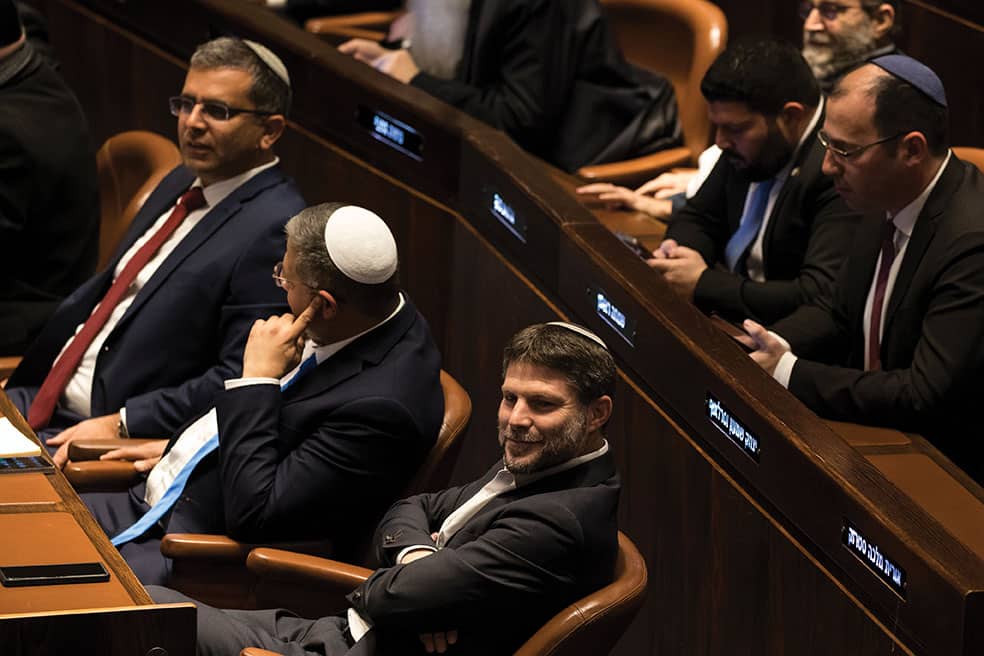
Designated Minister of Finance Bezalel Smotrich reacts at the Israeli parliament during a new government sworn in discussion at the Israeli parliament on December 29, 2022 in Jerusalem, Israel. (Photo by Amir Levy/Getty Images)

Examples? The coalition agreement vows a change to the Law of Return. It vows such change will be quick. And change is possible, but quite far from guaranteed. The outcry over the discrimination clause proved that not all plans of all members of the coalition could pass a reality check.

Again, history could be a good teacher. More than a decade ago, Netanyahu shelved a proposed conversion law because of a call he received from Washington. Congresswoman Nita Lowey was on the line. She told him the law caused her to worry. “She is concerned,” the spokesperson explained, “that this bill would alienate Jews around the world and risk weakening the sense of unity within the Diaspora that is critical to Israel’s security.” Netanyahu knew that a worried Lowey was not good for Israel. A Democrat from New York, she was a member of a Conservative synagogue, but also a member of the powerful House Appropriations Committee and chair of the State and Foreign Operations Subcommittee.

The PM is wiser as a political survivor than all his partners, and he knows that the trick is to make a change as dramatic as one can without letting a dangerous genie of resistance out of a bottle. In 2011, he watched with horror as hundreds of thousands of Israelis marched in demand of social justice. Luckily for him, that movement, as charmingly young and photogenic as it was, did not have a clear agenda with which to force the hand of the government. And yet, Netanyahu remembers how such eruptions of protest and indignation can take a country by storm. Netanyahu knows that next time he might not be so lucky. Thus, he will try to convince his partners to prioritize and be careful—to do what they can without handing the opposition another easy victory.

This will not be easy for him to achieve because, as has already been said, his partners have a large appetite and they don’t trust him. When he tells them that they must be careful, they suspect that he doesn’t truly want to implement their agenda—not because of tactical reasons (let’s not wake the opposition) but because of strategic reasons (Netanyahu was never quite enthusiastic when proposals to tame the court came to the fore). Hence, he will preach moderation, and his partners will try to force his hand. He will deliberate and delay, while his partners will make political threats and push even harder.

What would be the result? Last week, the time for bold promises ended, and the time for responsibly managing a state with many challenges began. A mature opposition would take a “wait and see” approach before it panics. A mature coalition would wipe the slate of grand plans clean and act responsibly.

In short, we need all our politicians to be mature. Is this a naïve proposition or a realistic expectation?

New Government in Israel: Meet Reality Read More »

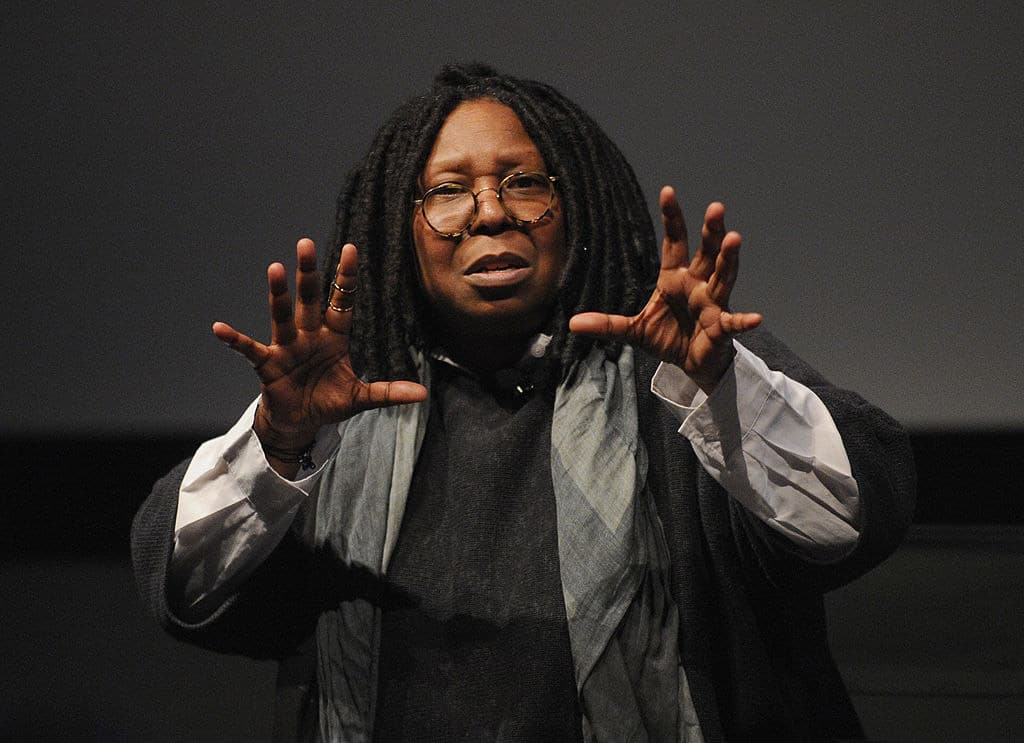
Whoopi Goldberg’s Warped View of the Holocaust

Whoopi Goldberg is back in the habit of making ignorant and offensive statements about the Holocaust. Last weekend she once again appeared to insist that the Holocaust was not about race, despite the undeniable fact that the Nazis literally killed more than six million Jewish men, women and children because they believed (it was literally enshrined in the Nuremberg Race Laws) that Jews were racially inferior and needed to be exterminated. These new comments come only months after she “apologized” for dismissively referring to the Holocaust by saying “This is white people doing it to white people. Y’all go fight amongst yourselves.”

This time the apology took only a few days, with Whoopi now explaining that although it sounded like she was repeating her positions, in actuality she was just inartfully explaining what she had gotten wrong in her earlier comments. But even taking that at face value and assuming she did not intend to double-down, she still made it abundantly clear to the reporter that in her opinion the reaction to her earlier comments was completely overblown. But it wasn’t, and the lesson bears repeating.

Some people (Goldberg among them, at least for a time) believe that racism is not racism unless it involves discrimination based solely on the color of a person’s skin. In fact, racism is the belief that innate inherited characteristics biologically determine human behavior. In the United States, for example, laws protecting against discrimination based on race, including everything from the Civil Rights Act of 1866 to Title VI and Title VII of the Civil Rights Act of 1965, have all been held to apply to discrimination against Jews, as a race, and courts consistently reiterate that antisemitic harassment and discrimination against Jews amounts to racial discrimination. Even during the Holocaust itself, the United States immigration laws (namely the Johnson-Reed Act) treated Jews as a distinct racial group—and a less desirable one at that. And in terms of what racists actually think, when white nationalists marched in Charlottesville in 2017, they yelled “Jews will not replace us.”

Whether or not Jews should be considered a separate race may be an interesting philosophical question, but the fact of the matter is that the Nazis were not and are not the only ones who believed and still believe that Jews are a different race and should therefore be treated differently—and worse. Racial discrimination takes place when bad people treat other people badly because of their perception of that other person’s race. That type of hate is wrong whether or not Whoopi or anyone else agrees with the racists’ categorizations. There is no zero-sum game when it comes to discrimination, and it is possible for there to be more than one kind of racial prejudice. Goldberg’s “purity” of discrimination test is both silly and wrong; one can be against both antisemitism (anti-Jewish racism) and anti-black racism at the same time, without diminishing either of them in any way, or cheapening the memory of the Holocaust.

To say that the mass extermination of Jews was just two groups of white people fighting completely minimizes the atrocity and pain of millions of innocent human beings who were systematically exterminated for their perceived racial inferiority.

To be clear, it is not debatable that the Nazis killed the Jews because of race. They openly did not care whether the Jews they killed were religious or only culturally Jewish (as most German Jews were, as a matter of fact). They cared only about the purity of their blood. To say that the mass extermination of Jews was just two groups of white people fighting completely minimizes the atrocity and pain of millions of innocent human beings who were systematically exterminated for their perceived racial inferiority. But the strange insistence that it could not have been about race, and even the casual downplaying of why comments like that matter, also speaks unintentional volumes about how antisemitism persists.

In a time of rising anti-Jewish sentiment, Goldberg’s reiteration of her beliefs—even if, as she says, she didn’t mean to repeat them per se, and only meant to explain why her position was still eminently reasonable if wrong—is problematic because the comments reflect a deeper issue. Despite the fact that this one “position” of hers stands somewhat alone for being uncommonly easy to disprove and uniquely (obnoxiously) ignorant, it still reflects the consistent and dangerous antisemitic pattern of othering Jews in whatever way is necessary so that they are not worthy of societal protection.

Here is an example of how this form of othering works using Whoopi’s not so innocuous comments. Within living memory, an entire one-third of all world Jewry was murderously annihilated explicitly because of their race. You would think that qualifies Jewish people for protection when discrimination is based on their perceived race. But now, when anti-racism is finally in vogue, Jews across the country are being gaslighted and told that they do not fall under the umbrella of that conversation about discrimination, and that their struggles should not be part of that discussion, because they are not actually a race. This same idea plays out all the time on the international level as well. As James Wald has noted, “In the past Jews were rendered alien to the West by being orientalized. Today, Jews are rendered alien to the Middle East by being redefined as European.”

The takeaway from Goldberg’s interview is that she does not seem to understand why some comments are objectionable, which is not entirely surprising: “Goldberg” of course was born Caryn Elaine Johnson, and in an act of cultural appropriation that would be shock-and-cancel-worthy if it involved any other racial or ethnic group, took on the stereotypically Jewish stage name Goldberg to help ensure her success—you know, because Jews run Hollywood. But instead of just parroting that she now knows the Holocaust was about race (even as she  continues to explain to reporters why reasonable people might disagree), it is important that she finally understand why it was about race and why that matters, so that she stops making these casual “mistakes” and spreading her misconceptions.


Dr. Mark Goldfeder, Esq. is an international lawyer and Director of the National Jewish Advocacy Center.

Whoopi Goldberg’s Warped View of the Holocaust Read More »