fbpx

December 26, 2022

For the Sake of Israel, Let’s Root for Houdini Bibi

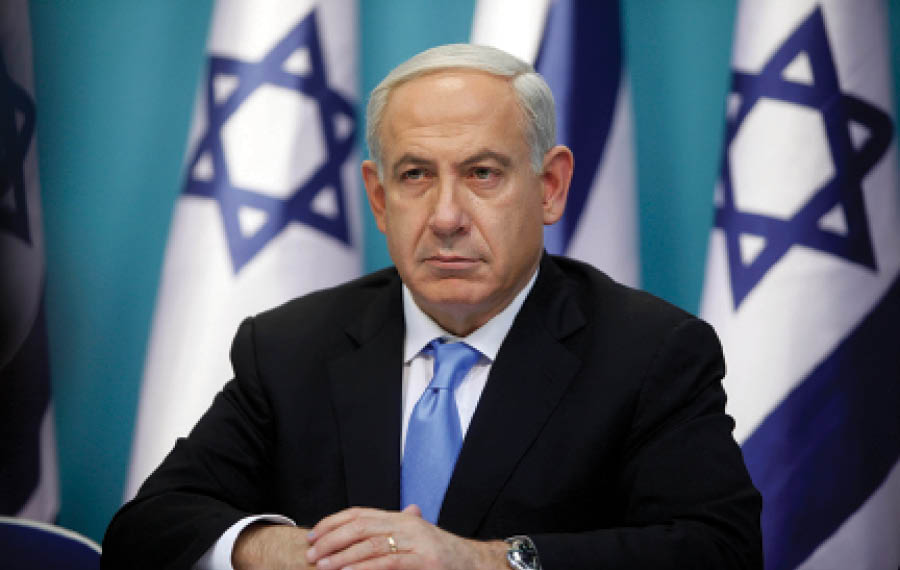
As the state of Israel approaches its 75th birthday this spring, the festivities will likely be overshadowed by nasty infighting within its right-wing coalition, not to mention heated opposition from the Jewish and Israeli mainstream. In the midst of these confrontations, incoming Prime Minister Benjamin “Bibi” Netanyahu will be solely responsible for containing the damage he himself has created by making divisive agreements with extremist parties.

Bibi made these agreements because he needs these extremist parties to secure his majority coalition and regain his position on top of Israeli politics. Did he pay too high a price for regaining that power? That will depend on how well he can tame the tiger he’s unleashed.

One reason Bibi’s been on top for so long is that he’s a brilliant and ruthless politician. He knows how to get power and keep it, even if it means walking back on agreements. The Israeli political landscape is littered with politicians who have been hoodwinked by Netanyahu.

As much as I’ve never liked that part of Bibi, I must confess that, right now, I’m rooting hard for that version of Netanyahu—you know, the Bibi who can deftly disentangle himself from agreements and promises.

I’m rooting, in other words, for Houdini Bibi.

Houdini Bibi knows the value of maintaining good relations with Israel’s #1 ally. He knows that the extremist positions he’s been forced to accommodate during coalition negotiations will undermine Israel’s standing with the Diaspora and the West, as well as his own legacy.

As a secular Jew himself who puts pragmatism ahead of ideology, he also knows that the great majority of Jews don’t support extremism of any kind. Notwithstanding his reassurances that he’s got “both hands on the wheel,” he’s aware that Jews around the world are alarmed by the deals he’s made with his extremist partners.

To recap, here’s a quick rundown of these agreements from the Times of Israel:

“[Bibi’s Likud] has coalition agreements with Otzma Yehudit that will see far-right lawmaker Itamar Ben Gvir appointed national security minister with an expanded portfolio that covers the national police force and the Border Police’s West Bank division; Religious Zionism far-right leader Bezalel Smotrich will become finance minister, empowered with far-reaching powers over civil policy in the West Bank; and Avi Maoz, of the Noam party, which espouses homophobic views and policies, is slated to take control over an Education Ministry unit in charge of approving external educational vendors, who play a critical role in public school programming.”

On the religious front:

“Ultra-Orthodox coalition partner Shas will retake control of the Religious Services Ministry, which will play a role in appointing the state’s next chief rabbis, as well as give it a chance to quickly roll back a rabbinic court appointment reform program implemented by former minister and liberal Orthodox Jew Matan Kahana.

“The party will also gain control over municipal community centers. This move is both in line with the party’s focus on serving underprivileged and rural populations, as well as providing a vehicle to implement traditional Jewish and religious programming in community centers, according to Shas party sources.

“United Torah Judaism, led by Knesset newcomer Yitzhak Goldknopf, has made a host of demands to firm up Orthodox control over religious matters and exert religious oversight on secular matters.

“Various proposals have included stopping energy generation on Shabbat and expanding gender-segregated beaches, both of which Netanyahu has publicly nixed; increasing stipends for religious study; including a Chief Rabbinate representative on any panel weighing permits for work on Shabbat; forming and funding bodies to provide answers to the public on questions of Jewish law; allowing hospitals to ban hametz, or leavened wheat products, on Passover; requiring more religious studies in the state’s secular school system; and weighing the closure of the new Reform department in the Diaspora Affairs Ministry.”

Get the picture? This is extremist gluttony from ideologues who couldn’t care less about the concerns of Israel’s mainstream, let alone Israel’s relations with the Diaspora or the Biden Administration.

Bibi knows all this. He knows he’s agreed to things he must walk back. Maybe he’s done this so often in the past he assumes he can do it again.

The problem is that these extremist partners are not suckers. They know Bibi’s tricks. They don’t trust him, which is why they’ve insisted on maximum clarity in the agreements. If they don’t get what they want, they can always threaten to leave the coalition and Bibi loses his majority.  Immoveable object versus irresistible force. At the very least, we are guaranteed high drama over the next few weeks and months.

Expect a lot of bureaucratic finagling to buy time—like the setting up of committees to study this or that extremist idea. Expect also an effort by Houdini Bibi to rise above the fray and raise the stakes. We’re already seeing this by the leak of a classic Bibi ploy—agree not to annex disputed territory (a key demand of extremist partners) in return for Saudi Arabia joining the Abraham Accords.

In the end, though, Houdini Bibi won’t be able to pull his magic unless he can show his extremist partners that he can do without them. And that can only happen if he can convince centrist parties who can’t stand him to join his coalition. As difficult as that sounds, it’s probably not as difficult as getting uncompromising ideologues to compromise.

The real drama will start when Bibi concludes that it’s impossible to govern with extremist partners. That’s when we’ll see if Houdini Bibi still has a few tricks up his sleeve.

For the Sake of Israel, Let’s Root for Houdini Bibi Read More »
A Wish List for the Day After Hanukkah

Now that Hanukkah has concluded, and we have put away our Menorahs and the awkward holiday greetings for our Gentile friends and neighbors until next year, there is still some unfinished business for us to consider. Before it’s too late, let’s distribute one last round of presents on what we’ll call the ninth day of the Festival of Lights:

For Jewish and pro-Israel college students: a safer and more welcoming campus environment than most universities provide for them. In the likely circumstance that such a gift is not deliverable, the next best present would be a more effective and much better-coordinated support system that helps these young people confront the enormous challenge they face every day. While the rest of us can retreat to the safety of our homes, our offices and our country clubs, we send these teenagers and twenty-somethings onto the front lines to stand up to a highly professionalized and lavishly funded group of anti-Zionists and anti-Semites. We can do better.

For Bibi Netanyahu and his supporters: a sustainable coalition government that includes Israeli centrists like former allies Benny Gantz, Gideon Sa’ar and other members of their National Unity Party. Netanyahu’s current alliance with the Religious Zionist Party and other ultra-conservative leaders will be a precarious arrangement for its entire existence, continuously vulnerable to extremist threats from within and to continued violence from the Palestinian territories and their supporters. How much better — and safer – for Netanyahu and the country he again leads to have a more stable foundation on which to build a government.

For Latinos, Blacks, Asian-Pacific Islanders, evangelicals, Persians and other communities whose concerns are overshadowed in American politics: a  stronger partnership with the American Jewish community. There was a time when Jews played an integral role in this nation’s civil rights movement, but over the last several decades those relationships have largely withered. While the rising numbers of anti-Semitic incidents is a cause for justified alarm and requires a powerful response, our community is not large enough to succeed as a unilateral force. The current outreach efforts are piecemeal and insufficient: one or more of the national Jewish organizations must make such bridge-building into a much higher priority.

For the women of Iran, the Uyghurs of China and other oppressed voices around the world: much more visible and forceful support from American Jews and the state of Israel. It is a mystery that the international #MeToo movement has not embraced the cause of the brave women of Iran. It is unsurprising but extremely discouraging that the Arab world has abandoned their fellow Muslims in the northwest Xinjiang region of China in exchange for the financial largesse of the Chinese government. Most of all, it’s difficult to understand why the Jewish people, who have faced such persecution over the millennia are not willing to stand with others who find themselves facing such ugly bigotry and discrimination.

For the many American Jews who commendably involve themselves in our nation’s politics: a reminder that effectively fighting anti-Semitism requires a willingness to confront our own partisan allies. Partisan politics is fueled by selective outrage: we’re much more inclined to overlook unacceptable behavior when it comes from a member of our own political party. But virulent anti-Zionism from the left and equally lethal blood-and-soil nationalism from the right represent equally grave threats, and the willingness of both Democratic and Republican leaders to either minimize or deny anti-Semitism from within their ranks is becoming even more dangerous. We must stop justifying such behavior – on either side of the aisle.

For Israelis who are unaware that many diaspora Jews have adopted different religious and cultural customs in their own countries, a lesson in compassion and empathy that will help them understand that Israel is a homeland for all Jews no matter where we live.

And for diaspora Jews who have forgotten the dangers that the people of Israel face on a daily basis, a corresponding lesson in compassion and empathy that will allow help us understand the steps that Israelis must take to protect themselves, their families, and our homeland.

A Wish List for the Day After Hanukkah Read More »

The Real Woke Jews

As members of the progressive Jewish left continue to raise their fists while marching on behalf of movements that largely hate Jews and really despise Israel—Black Lives Matter, especially, but alarming elements within the LGBTQ community, virtually any campus-wide crusade, and, of course, the remnants of Occupy Wall Street—a beachhead of cultural pride and resuscitation has been erected this week in lower Manhattan at the Museum of Jewish Heritage.

(The extreme Jewish right suffers from its own misdirected alliances as apologists for the Jan. 6 riot, Donald Trump’s Jew-hating Thanksgiving feast, and America First fanatics who detest immigrants and have no love lost for Jews who, they believe, are the architects of the Great Replacement.)

Given the irreversibly cockeyed fringes of the radicalized left and right, in what direction should Jews be looking for both solidarity and sanity?

The annual festival, Yiddish New York, opened right before Christmas and will close out 2022 with a sampling of the old-world Jewish culture of Eastern Europe and the Pale of Settlement (what is now Ukraine). It will involve the new world, too. Yiddish made its way to the Lower East Side of Manhattan and served as the household language for many American Jews well into the 1960s.

Visitors to the festival can, both live and virtually, discover Yiddish with the world’s finest exemplars of the language and culture, including scholars, folklorists, dancers, actors, visual artists, curators, authors, activists and, especially, the excellent musicians who have, for decades, showcased the lush melodies and bouncy rhythms of klezmer music.

Indeed, the festival kicked-off with a viewing of Eleanor Antin’s 1992 Yiddish silent film, “A Man Without a World,” featuring an original score, played winningly live on stage, by its composers—Alicia Svigals, the world’s foremost klezmer violinist, and the pianist Donald Sosin.

If you are fixated on the identity politics of others, and wonder whether Jews should be represented on the continuum, then Yiddish is the place to start. All throughout the 19th and 20th centuries, Jews living in Europe, Russia and the United States produced a rich and varied fusion of literature, music, dramatic arts and scholarship.

It is an aesthetic culture that largely emanated from Poland. Of course, we know what happened there, and why most Jews today remain mute and largely ignorant of their mother tongue. The Holocaust claimed the lives of three million Jews; a staggering 90% of the Jewish population of Poland was killed. The largest number, by far, of Jews in the world was in Poland. Six million in Europe were killed, more than half of which were fluent Yiddish speakers.

Not just the Jewish people were consumed in those flames. Jewish culture was a casualty, too.

After the Holocaust, in 1948, Israel became the cornerstone of Jewish life. Almost instantly, the new nation spelled the death knell of Yiddish as a spoken language. It pulled a switcheroo with the more liturgical, but less lyrical, Hebrew. Ever since then the number of Yiddish speakers has been in decline.

A most precipitous one, at that. In New York City alone, between 1885 and 1914, there were over 150 Yiddish language publications. Today there are fewer than 10 nationally.

Yiddish New York is not alone in safeguarding and promoting the language and culture. Other entities are committed to the cause, such as the Yiddish Book Center, and the National Yiddish Theatre Folksbiene, with its phenomenally successful run of “Fiddler on the Roof,” in Yiddish, on Broadway. And for scholarship, there is the YIVO Library & Archives Collections.

It’s all God’s work. Someone has to do it. After all, his Chosen People, especially in America, are doing a terrible job accepting the responsibility that comes with the title.

In this mecca of multicultural diversity in which we live, where different identities, languages and rituals are celebrated, Jews have lagged miserably behind.

Others have lustfully reclaimed their cultural history. Jews, however, seem to recoil from the old world of Yiddish culture. Everything about it reminds them of their grandparents or great-grandparents—the poverty, insularity, and unsophistication that once and still does define immigrant life in America. Rather than embrace that past, Jews are apparently embarrassed by it.

No other immigrant group assimilated so seamlessly into the American mainstream as did Jews. The endgame was becoming true Americans; the trick was to lose the Yiddish accents and Jewish mannerisms. Don’t flaunt the rituals. Discard the religious symbols and garb. Anglicize the names. Join the right clubs (start playing golf). Bash Israel as a dastardly human rights violator. Donate to the ADL so it can vindicate the rights of the transgender.

Oh, and get nose jobs.

The language of the Jews, despite its literary pedigree, actually became a running joke in Hollywood: with agents and moguls referring to one another as either machers and mensches, schleppers and schmucks.

When you add rampant intermarriage to this cross-cultural homogenization of Jewish life, it is no wonder that Jews have diluted themselves into a delirious oblivion. How can a proudly authentic Jewish identity possibly survive amid all this self-obliterating immersion? It should come as no surprise that Jews are now grouped as blandly privileged and dreadfully oppressive white people. Assimilation is the new Scarlet A, and Jews have been wearing it all too well.

How can a proudly authentic Jewish identity possibly survive amid all this self-obliterating immersion?

Meanwhile, Yiddish was allowed to die even as Jews took lessons learning Arabic and Mandarin Chinese. The once mother tongue received a tongue lashing from the very people it was created to ennoble and protect. Jews probably know more about the Apache Indians of the Great Plains than they do of East European Jewry and Yiddish culture.

After decades of wanting to be someone else, Jews may not quite know who they are anymore. The preservation of a once flourishing Jewish culture has never been a priority. Instead, Jewish artists continued to write novels, pen plays, paint canvases, and make films, but with themes, images and plots devoid of Jewish soul.

Perhaps that’s why Jews are so agreeable in demonstrating their woke bona fides. They have no other bona fides to claim, aside from dancing the hora at weddings and ordering smoked salmon on their bagels. Nothing anchors them to the Jewish people other than some twisted notion that tikkun olam commands that they save the world for everyone except Jews.

Which begs the question: After all this cultural thinning and Israel bashing, are Jews still even Jews?


Thane Rosenbaum is a novelist, essayist, law professor and Distinguished University Professor at Touro University, where he directs the Forum on Life, Culture & Society. He is the legal analyst for CBS News Radio. His most recent book is titled “Saving Free Speech … From Itself.”

The Real Woke Jews Read More »

The Four Bills of the Apocalypse?

When I was sixteen, chairing my high school’s Young Democrats of America chapter and struggling to cope with Donald Trump’s recent election victory, my equally traumatized aunt shared with me words of wisdom that I still cling to in moments of political turmoil. “The pendulum always swings back,” she said, as we huddled on her studio apartment floor wondering if our country was indeed the same one that raised us or if the rise of Trumpism signified the turning of a dark corner with consequences for decades to come. Fortunately for us, the American pendulum indeed “swung back” in 2018, 2020, and some may even say it remained to the left in 2022. When it came time to watch the Israeli election results this past November, the first Israeli election in which I participated, I remembered my aunt’s words and told myself that no matter how nauseating the result, like America, Israel was a vibrant democracy, and the pendulum would swing back to a reality I could stomach in due time. 

Yet as we all know, the worst came to be. The left-wing Meretz party did not pass the Knesset’s electoral threshold, Yair Lapid’s Yesh Atid party failed to chip away at Likud’s boastful numbers, and the splitting of the Arab Joint List all but handed a comfortable parliamentary majority to hard-right nationalists and religious fundamentalists. “The pendulum will swing back; the pendulum will swing back,” I have been muttering under my breath with every scandalous Jerusalem Post headline that taunts me from the computer screen. My quixotic mantra was working for a short while, that is until four new law proposals were put forth by the incoming Netanyahu government, four new laws which it will depend upon to first obtain and then to maintain power.

The first of these laws is what Israelis are calling the “Deri Law.” In simple terms, this law would reverse a previous Basic Law (part of a list of laws that serve as Israel’s de-facto constitution) that forbids convicted felons from holding a minister position in government. Aryeh Deri, the leader of the Sephardic ultra-Orthodox party Shas, was convicted of bribery in 2000 when he served as Israel’s Interior Minister and was given a three-year prison sentence. In 2018, he was further indicted for fraud, breach of trust, money laundering and tax violations. In an early 2022 plea bargain, he resigned from the Knesset, only to be re-elected as Shas’ leader and thus a powerful figure in Netanyahu’s new government this autumn. However, in order to bestow upon Deri the title of minister, the Knesset must vote in favor of undoing the previous law, a move that many in the opposition this week have said would amount to “state-sanctioned corruption.”  

The second of these laws is what has come to be known as the “Smotrich Law,” named after Bezalel Smotrich, leader of the Religious Zionist list. The Religious Zionists came in third for total votes in the current Knesset, bringing newly amplified far-right voices on Israel’s West Bank policy into government. Smotrich, a character who has previously advocated for the separation of Arab mothers and Jewish mothers in Israeli maternity wards, is poised to become not only the new Minister of Finance, but also “a minister in the Defense Ministry” (rather than Defense Minister) with direct oversight of Jewish settlements and Palestinian construction in Area C of the West Bank, land where Israel exercises both civil and military control. Such a purview is ideal for Smotrich, who quite openly envisions a future where Jews in the West Bank have national and political rights and Palestinians do not. Legislation is needed to legitimize such a position in the defense department. By the time you are reading this, it is highly likely that both the Deri Law and the Smotrich Law will have been passed into Israel’s list of Basic Laws, as they are scheduled for a first reading on Monday, December 26.  

The third of law of concern is what is known as the “Ben-Gvir Law,” and it is perhaps the most foreboding in Israeli left-wing circles. Should they get their way, the new government will bestow upon Itamar Ben-Gvir of the Otzma Yehudit party the never-before-seen title of “Minister of National Security,” which would grant Ben-Gvir authority over the Israeli Police, pulling higher rank than the commissioner. Ben-Gvir, a radical who has never missed a racist provocation in this country and advocates a Kahane-esque style of defense against Arabs, will be entrusted with overseeing police investigations and proceedings against those who may have broken the law. He is already causing chaos by accusing those who value the independence of the police, such as those in the opposition and Deputy Attorney General Amit Marari, of being traitorous leftists and even terrorist sympathizers. As a gift to the Religious Zionist list, the Ben-Gvir law will also transfer authority on Jewish settlement security from Israel’s military to Israel’s police, which opens a Pandora’s Box of human rights violations deserving of an entirely separate opinion column. As of now, the Ben-Gvir law is set to be partially passed before the swearing in of the new government in early January, while the rest of it is set to pass sometime after.  

The final law has so far been discussed as the “judicial override law,” or the “legislative override law,” but I think it can be best characterized as the “Netanyahu law,” as it is the main priority for the leader of this conglomerate of controversies. Netanyahu wants to ram through the Knesset a law that would allow the parliament to override a Supreme Court decision by a simple majority of sixty-one votes. In other words, if the Ben-Gvir law threatens the autonomy of the police, the Netanyahu law threatens the autonomy of what Professor Alan Dershowitz calls “the jewel in the crown” of legal systems, the Israeli Supreme Court, and their power to review legislation that contradicts Israel’s Basic Laws. This law does more than just give the Knesset full autonomy in enacting legislation and therefore a green light to throw out whatever Basic Laws the majority finds inconvenient (the only other democracy that allows a legislative override to a constitution is Canada); but it is also a symbolic strike against a 1970s-era illusion of a powerful left-wing Ashkenazi elite in Israel, an illusion that Netanyahu’s base enjoys rallying against each election cycle.  

Clearly, the introduction of these four laws and the probability that they will pass the Knesset with flying colors renders my mantra of “the pendulum will swing back” more fanciful. Will these laws, as alarmists on the Israeli left would like us to believe, give way to an upcoming apocalypse of national legitimacy? I try to make a habit of not listening to hysterics, yet there is no running from the fact that not only do these laws contradict how I would like to see Israel bend on policy, but also they threaten how millions of people with my beliefs view the State of Israel as a whole: a democracy that functions under the rule of law. These laws alter the foundation of the Israeli government’s system of checks and balances and open the floodgates to criminals and provocateurs deciding the future of the only Jewish civilization on earth.   

These laws alter the foundation of the Israeli government’s system of checks and balances and open the floodgates to criminals and provocateurs deciding the future of the only Jewish civilization on earth.  

In Tablet Magazine this week, author Matti Friedman penned brilliant advice on how those who value Israel’s status among the family of nations are meant to interpret this wave of depressing news. He first informs us that although things may look bleak, the vote breakdown between right-wing and center-left wing parties in Israel remains virtually the same, and that it is only the petty squabbling and revenge fantasies of our politicians that has skewed politics away from what most Israelis want. Nevertheless, he writes that the current crisis is still meant to be taken seriously, and that it will certainly make things more difficult for defenders of Israel in the Diaspora in differentiating between valid criticism of a state and masked antisemitism. “The way to do so is to ask if a critic is trying to make Israel better, or trying to make it disappear,” Friedman writes.  

I can only end this article by heeding Friedman’s words, and by encouraging Zionists in Israel and in the Diaspora to stay true to their principles of Jewish self-determination, while simultaneously holding those who wish to advance a warped and deplorable version of our self-determination accountable.

Holding these two ideas in our heads at the same time, at this moment, is of paramount importance.  


Blake Flayton is the New Media Director and columnist for the Jewish Journal.

The Four Bills of the Apocalypse? Read More »

Escaping Abuse: How Lerai Koppel Became a Fugitive

Last week, eight and a half years after she took her three children and fled to Israel, Lerai (Leah) Koppel landed back in LAX and was arrested by LAPD on charges of kidnapping. A few hours later, with her attorney and her son Adam by her side, she signed a pre-arranged deal admitting to a misdemeanor in exchange for having the 2014 kidnapping charges dropped, allowing her to avoid jail time. In a phone interview the day before she boarded the plane to return to the U.S., Koppel recounted how she went from being a hard-working mom with a successful career as a teacher, to a fugitive.

“My ex-husband abused us for years; it was an emotional, verbal and physical abuse. I filed numerous police reports, had restraining orders, but nothing helped. I stayed at a shelter for thirty days after he had threatened my life, our dog was found dead, and he said that I am going to be next. A homicide detective told me that this things never end well and I should leave. At one point he even pointed a gun at my sons and threatened to kill them. They told me, ‘Mom, if we need to, we will defend ourselves against him.’ They urged me to leave and I agreed; I saw no other way.”

Koppel, 60, packed a couple of suitcases and filled them with clothes and police reports that documented years of severe abuse and bought a one-way ticket to Israel for her and her children: Adam (14), Zach (13), and Amy (10).

Soon after, her ex-husband opened a criminal case against her and demanded that the kids be returned to the U.S. “I came in front of a panel of seven judges, and they all said it’s a black-and-white case and that they won’t extradite me back to the States. Once Israel realized my ex was dangerous, they backed me up all the way. They understood my life is in danger,” said Koppel.

While Israel did give the father of the three children the opportunity to see them under supervised visitations, he declined to do so. “He didn’t feel he had done anything wrong and didn’t want to go through intervention or have any of that.”

Years passed and Koppel found work as an English teacher. “I didn’t know what to do and how to make a living, and someone said, ‘You can teach English to Israeli kids,’ and so I did. They came to my home, sat by the kitchen table, and learned English with me. It was a stark difference from the job I used to have back home—I trained teachers and worked with the school district—but it was fine. I had to make a living and support my kids.”

On November 2 of this year, she finally felt secure enough to travel, and decided to go on a vacation to Greece. She went on a cruise with her youngest daughter Amy, now 18, and older daughter, Stephanie (35) from a past relationship.

“I knew that I was on the Interpol red list and checked from time to time to see if I still appeared there, but couldn’t find my name anymore and thought that the red notice was removed,” she admitted. “I didn’t consult with an attorney, but at that point all my kids were adults, I had an Israeli passport, and my ex-husband had passed away a year ago in October due to alcohol abuse. My son Adam was told by one of his father’s sisters that he drank himself to death; he was a heavy drinker.”

Taking all that in mind, Koppel felt she could finally put the past behind and relax a little. However, once she arrived in Greece, she was politely asked to step aside and was put on hold.

“A police officer took me to the police station and immediately realized that something didn’t make sense. The case was from 2014, my kids were adults, it didn’t add up. He felt so bad he decided to come to court with me. He said he doesn’t usually do this, but it all seemed wrong and he wanted to help.”

The judge realized it was an unusual case and agreed to release her for the time being until the case could be resolved. “I was told I can’t leave Greece and needed to sign in at the local police station every Monday. I went to the hotel and waited to see if they’ll decide to extradite me back to the USA.”

The dream vacation that became a nightmare still had some redeeming moments. “I have to say that I met amazing people, like George, the police officer and his family who brought me food, coffee, and tea throughout my stay. His family came with him to visit me, we sat and drank coffee together; we all became fast friends. He also encouraged me to get out of the hotel and see the island. He told me, ‘Try to take care of yourself.’ There were days that were really, really hard. I didn’t know what was going to happen and George and his family kept encouraging me that things will work out. In a way it reminded me of the beginning time in Israel, when I just arrived and everyone were so helpful and welcoming, but at the same time, it was scary because I didn’t know what’s going to happen, and am I going to be extradited or not.”

Six weeks after the ordeal began, it ended with the Greek judge’s decision to let Koppel return to Israel. It was so unexpected that Koppel and her attorneys, in Israel and the U.S., still don’t know what to make of it.

Attorney Jim Tierney, Koppel’s high school friend who represents her, said in an interview with the Jewish Journal that it’s a mystery why the Greek authorities decided to release Koppel despite the Interpol warning. “The DA in San Bernardino also asked me how come she was not extradited back here, but I really don’t know. I guess they realized this is not an ordinary case; they received all the documents detailing what entailed and decided to let her go.”

Back on safe land, Koppel had a hard decision to make: remain in Israel for the rest of her life, or go back to the U.S. and fight the case against her. She decided to do the latter.

Back on safe land, Koppel had a hard decision to make: remain in Israel for the rest of her life, or go back to the U.S. and fight the case against her.

“We have an agreement in place with the DA for her to return here and appear in court on Thursday,” said Tierney. “LAPD will arrest her once she arrives at LAX and then she will go directly to San Bernardino court in Victorville. The deal is that she will enter a non-contest plea to a reduced charge, a misdemeanor, which means that she doesn’t admit any wrongdoing but wants to resolve the matter without dragging it in court. They want this matter to be resolved.”

Koppel first met Tierney through his girlfriend (now his wife) who was her best friend back in 1979.  They kept in touch with her throughout the years and when Koppel started having problems with her husband and needed an attorney, Tierney was the obvious choice.

Koppel wants to stay in the U.S., where her sons are currently living. Her son Adam is at West Point Military Academy and Zack is an army ranger who is deployed in Kuwait. Amy, now 18, had returned to the States for the first time in order to plead with the DA to remove the charges against her mom. “She traveled back when I was still in Greece,” said Koppel. “She met with the DA, explained the situation and how everything I did was in order to save their lives, but he said that although he understands, I still need to face the consequences of my actions and go to court.”

Tzvika Gabriel, an attorney with Keep Olim (a non-profit organization that supports new immigrants to Israel), who had been helping Koppel ever since she moved to Israel, believes not only that Koppel should not face criminal charges, but also that she should be compensated for the mishandling of her case by the Californian authorities. “This was sheer negligence,” he said.

The day before she boarded the plane that took her back to the U.S., Koppel went to Jerusalem, said a prayer and placed a little crumpled piece of paper between the cracks of the Western Wall. “This is the first thing we did when we got to Israel: We went to the Western Wall and asked God to help us, and by the grace of God, people have been protecting us ever since. You can go crazy thinking why did this happen to us, why were we victimized like that again and again? The last few days were so dark and hard, but the beauty of humanity gives me hope. So many people have been good so good to me and my kids, and I forever will be grateful to them.”

Escaping Abuse: How Lerai Koppel Became a Fugitive Read More »