fbpx

April 13, 2022

We Came Here with Nothing

“The Star of David is a part of me,” says 16-year-old Soheil to his Islamist gang friends in a Berlin suburb. They have discovered that he is Jewish and are not pleased. But Soheil stands his ground, proudly wearing his Persian grandmother’s Star of David and studying his heritage at the local synagogue. He doesn’t understand their hatred, but it fuels a love for his people that eventually leads him to run the IDF’s European Desk.

Of the ten films shown at the 24th New York Sephardic Jewish Film Festival last week, “Wet Dogs,” (2020), based on Arye Sharuz Shalicar’s remarkable life, was the most poignant for me. That the German teachers at his high school in the early ‘90s were aghast at the slightest sign of antisemitism made it even more so.

The film festival was held at the Moise Safra Center, which has become my second home. Hosted by charismatic opera singer/actor David Serero, the festival just elevated the warmth, vibrancy, and soul that the center provides to Judeans on the Upper East Side of NYC.

Serero also directed and produced the inspired jewel of the festival: the award-winning documentary “The United States of Elie Tahari.” Born in Jerusalem to Persian parents in 1952, Tahari lived in a refugee camp and then a kibbutz before arriving in NYC by himself in 1971. The 19-year-old couldn’t speak any English, had $60 in his pocket, and had to sleep on benches in Central Park. But through hard work, determination, and a lot of chutzpah, Tahari went on to build a billion-dollar fashion empire.

“I’m very grateful to this country,” says Tahari in the film. “The American flag is a symbol of freedom—the freedom to express ourselves.”

It all started with his invention of the tube top — yes, that was Tahari — which enabled him to create his signature line of iconic, elegant chic. “I make quiet clothes so the beauty of the woman can shine through,” says Tahari.

But from the beginning, the money he made was sent back to his family in Israel, until he could afford to bring them here. “It’s all about the family,” says Tahari.

A version of Tahari’s story — “We came here with nothing” — runs through most of the films. It is familiar to nearly all Jews because it is very much our story—the Jewish immigrant story. But for some reason it’s not the story that others tell about us. In that story, we are merely the beneficiaries of “Jewish privilege.”

Tahari, the self-made fashion mogul, turns that oxymoron on its head: “I had a lot of challenges, and that makes you strong.”

“In Your Eyes, I See My Country” (2019) follows the journey of Israeli musicians Neta Elkayam and Amit Hai Cohen as they travel for the first time to Morocco, where their grandparents were born. They grapple with feelings of dual identity — with feeling at home in Morocco — while they attempt to heal the wounds of exile carried by their parents.

The filmmaker, Kamal Hachkar, sees the film as a way to build bridges between cultures, a goal of the American Sephardi Federation (ASF), which sponsored the festival.

As many Ashkenazi Jews (myself included) are just beginning to trace our ancestors’ exile from the land of Israel — feeling zero connection to our grandparents’ birthplaces (in my case, Russia) — many Sephardim feel a deep desire to connect with the cultures of their families’ past.

“In Search of Ladino” (1981) explores the songs and memories of Ladino-speaking Holocaust survivors in Israel. Ladino, also known as Judeo-Spanish, upheld the culture of many Sephardic Jews for generations. The film festival in general offers a panoply of languages—Hebrew, Yiddish, Ladino, French, German, Arabic—cultures, and music, as well as aspects of Judean history that are not well known, like the fact that 46,000 Greek Jews were sent to concentration camps.

Amir Arison, who stars in NBC’s “The Blacklist,” is one of six winners of this year’s ASF Pomegranate Achievement Award. “What unites us is that we’re one people of survivors for millennia,” Arison said at the award ceremony. “I’m honored to be part of a tribe that has survived. I know I am up here because I stand on the shoulders of my great-grandparents. The fact that I have the freedom to pursue a life in the arts is not lost on me.”

It is precisely this pride in being Jewish — in understanding what it means to be part of a people that was forced into exile from our homeland — that makes the Safra Center so special. You can’t replace that pride with other people’s pride; that pride needs to be nourished, and it’s something the Sephardic world has mastered.

Perhaps before we can begin to truly heal the world, we first need to heal our own souls. We’re never going to be able to do that fully; we’ve been through too much. But understanding that Judeans embody a beautiful, complex mosaic — that precisely what has led to hatred and persecution is also our greatest strength; that assimilation and conformity erodes our souls — is a lesson that is needed now more than ever.

The Sephardic Film Festival shows the power of film to help that process. “Art is our one true global language,” said Caroline Aaron, who plays Shirley Maisel in “The Marvelous Mrs. Maisel,” upon accepting her ASF Pomegranate Award for Lifetime Achievement on Stage & Screen. “It knows no nation, favors no race, and acknowledges no class. It speaks to our need to reveal, heal, and transform. It transcends our ordinary lives and lets us imagine what world is possible.”

I watched the final film on the day of the Tel Aviv terrorist attack. Perhaps the greatest lesson we can teach is that creativity and innovation will always transcend hate. And that only light can inspire the vision to create.


Karen Lehrman Bloch is editor in chief of White Rose Magazine.

We Came Here with Nothing Read More »
I Don’t Want a “New Normal” if it Means Not Leaving the House

It’s fashionable these days to talk about a “new normal” after we come out of the biggest and longest crisis of our time. After two years of a physically isolating pandemic, we’re often told, it’s not realistic to expect that we can just go back to the way things were. For one thing, we’ve picked up too many new habits.

One of those new habits—perhaps the decisive new habit—is simply staying home. Pretty much everything now comes to us— through Zoom, Amazon, Instacart, Uber Eats, streaming, etc. An enormous industry of convenience is now dedicated to keeping us safely snuggled in our own homes.

Because we’re so used to applauding and buying any upgrade in convenience— “easier and simpler than ever!”—it’s hard to notice when the trend starts to own us. In addition, the pandemic’s imperative to “stay safe” has made that slippery slope even less noticeable. After all, we could always tell ourselves, it’s not that we want to stay home, it’s that we have to stay home.

The problem is that when we get so used to the incredible convenience of staying home, every little outing comes under sharp scrutiny.

The problem is that when we get so used to the incredible convenience of staying home, every little outing comes under sharp scrutiny.

Do I really need to schlepp in traffic and then look for parking? Do I really need to schlepp to this event to socialize with people I don’t know? Do I really need to schlepp to a restaurant when we can just order in– or to a theater when we can just see the film on our big screen? Do I really need to schlepp to a synagogue when I have a choice (in the non-Orthodox world) of many great services on Zoom? And so on.

Post-COVID, the silent enemy of civilized society may well be the Schlepp Factor.

In a revealing op-ed in The New York Times, Michal Leibowitz recounts how she has to force herself to do “the kind of stuff that takes me out of my one-bedroom apartment and into human society.”

Describing a recent synagogue outing, she writes: “I stood when everyone else stood, sat when everyone else sat, sang when everyone else sang. I made awkward small talk with my seat neighbor and high-tailed it home before the socializing began in earnest.”

She adds, however, that “once I was safely ensconced on my couch and my frozen feet were slowly turning back to pink, I found I was glad I had gone.”

Leibowitz captures the ambivalence of the moment. We know it’s good for us to get back out there and socially engage, but a silent voice keeps reminding us how much easier and more comfortable it is to just stay home.

“It’s the way I’ve felt almost every time in recent months that I’ve compelled myself to get out of the house,” Leibowitz writes. “It’s how I felt after I dragged myself to badly soundtracked group fitness classes, several cheesy parties and one lovely weekend retreat… Going out and interacting with people again feels as if it’s going to be difficult — and it often is, at least a little — but I am always glad I did it.”

Of course, for plenty of people there is no ambivalence. They’re glad to go out from the get go. They have embraced with a vengeance the return to in-person gatherings of all sorts. For those social creatures, the forced isolation was probably a form of psychic torture. But they’re just being true to their human race: How could our species have survived without the indispensable instinct to gather in person to solve countless problems and nourish one another in countless ways?

Perhaps the best argument to leave our homes is that it’s not just good for us, it’s also good for others. Think, for example, of the millions of elderlies in our society who have been mired in loneliness since the pandemic hit. Isn’t it good for them if we force ourselves to go out and offer them some company?  

Think of the millions of elderlies who have been mired in loneliness since the pandemic hit. Isn’t it good for them if we force ourselves to go out and offer them some company?

This current “stay at home” moment, brought on by a perfect storm of a deadly pandemic and the astonishing convenience of a delivery industry, is really an anomaly when seen through the millennia of human existence.

But anomaly or not, it’s our current reality. Will ever-growing convenience own us and keep us further isolated? Or will we make that extra effort to get back out there and socially engage, as we have since time immemorial?

On Friday night, at Seder tables around the world, the great majority of Jews will get back out there and socially engage, in person, in real time, without Zoom or Uber Eats.

If we can go back to our “old normal” levels of social interaction, we can stop convenience from conquering our humanity.

Here’s my wish for a Fifth Question: “What will I do over the next year to re-engage with people and communities in person, especially to help cure the disease of loneliness, as we are doing here tonight?”

It’s true that we can never stop technological progress, but if we can go back to our “old normal” levels of social interaction, we can stop convenience from conquering our humanity.

I Don’t Want a “New Normal” if it Means Not Leaving the House Read More »

Brooklyn Subway Shooting Suspect Ranted Against “F—ing Jews” in YouTube Videos

A suspect in the Brooklyn subway shooting on April 12 reportedly had antisemitic and racist rants in various YouTube videos prior to the shooting.

The shooting resulted in 29 people wounded––10 of whom were shot––but the injuries are not believed to be life-threatening. Police have named Frank James, 62, as a suspect in the shooting, and he was arrested on April 13. James has addresses in both Wisconsin and Philadelphia.

Various reporters have found YouTube videos appearing to show James depicted him promulgating “violent, bigoted tirades,” according to The Times of Israel (TOI). Both Rolling Stone and The Algemeiner noted that in a 2017 video titled “they hate jew,” James said that he has “utter contempt that all the f—ing Jews I’ve dealt with show me at the end of the day.” He alleged that Jews “will smile in your f—ing face while stabbing you in the back in a heartbeat” and then ranted that the Holocaust hasn’t “humbled” Jews, saying that Jews “are still arrogant and still feel they’re superior or something above Black people.” “Those motherf—ers don’t contribute s— to life on this Earth but s—, piss, pollution, death and destruction,” James added.

TOI found a separate video in which James compared Black Americans’ /reliance on “other men” for the production of necessary goods and service to the Jews in the Warshaw Ghetto. “Men who would see us dead if the situation called for it wouldn’t hesitate to kill us,” he said. “We depend on these people, and that makes no sense.” James added that “all they got to do is surround the area you live in with tanks, don’t let nobody in or nobody out… They did it with the Jews in the Warsaw Ghetto. They surrounded them with troops and s—, and they held them in there and they starved them to death.” And in another video uncovered by TOI, James says that people “should be exterminated” over environmental devastation, calling it an “American Auschwitz.”

Other videos reportedly show James criticizing New York City Mayor Eric Adams policies on mental health and homelessness, with James claiming that he is “a victim of [Adams’] mental health program” and is “full of hate, full of anger, and full of bitterness.” He also claimed that the Russian invasion of Ukraine would eventually result in a race war in the United States and that he “should have gotten a gun, and just started shooting mother—ers,” The New York Post reported.

Adams called James’ video rants “unacceptable,” telling Pix11: “We are not going to accept people disputing any problems with the government to use violence of this nature.”

The Anti-Defamation League tweeted that their analysis of James’ videos show that he “is a disturbed individual who has expressed bigotry and hate towards a range of people across ethnicities, religions, and sexual identities.” “Although his hatred is not primarily directed at Jews, James has at times ranted about alleged Jewish power, and claimed that Jews contribute to the ills of society. Our team will continue to dig into his background.”

ADL CEO Jonathan Greenblatt tweeted, “Horrified to learn that the alleged culprit behind the Brooklyn subway attack expressed virulent, ugly antisemitism among other rants online, and somehow was not detected by the platforms. Astonishing that this remained online. Our hearts go out to those affected by this tragedy.”

Brooklyn Subway Shooting Suspect Ranted Against “F—ing Jews” in YouTube Videos Read More »

Poll: 63% of American Jews Approve of Biden Presidency

A new poll released by the Jewish Electoral Institute (JEI) on April 13 found that 63% of American Jews approve of President Joe Biden.

The recent JEI poll surveyed 800 American Jewish voters from March 28-April 3. Sixty-three percent of respondents said they approved of Biden’s presidency, while 37% said they did not. Sixty-one percent also said they would vote for a generic congressional Democrat, while only 26% said they would vote for a generic congressional Republican.

On the issue of inflation, 32% blamed it on “profiteering” by corporations, 31% said inflation was the result of supply chain disruptions and 23% said “increased government spending” was to blame. Regarding Critical Race Theory, 68% said they agree with the Democratic Party’s view that “we should not allow politicians to censor teachers from teaching the complete facts about historical topics like slavery and racism” while 27% said that they agreed with the Republican Party view that “we should ban critical race theory in our schools because it divides our country, teaches kids to be ashamed of America, and tells white kids they should feel guilty.”

Other issues about which respondents were asked included the Iran nuclear deal and antisemitism. Sixty-eight percent said they supported re-entering the deal while 32% are opposed. On antisemitism, 45% said they trust Democrats more to fight antisemitism, while 20% said they trusted Republicans more on the issue.

Jewish Democratic Council of America (JDCA) President Halie Soifer hailed the poll results as a victory for Democrats, writing in an email to supporters that “President Biden’s approval rating (63%) is 21% higher with Jewish Americans than the American electorate generally (42%), and his approval is 9% higher among Jewish Americans than President Obama’s was in 2015, when it was 54%.” She added Jewish support for Republicans “remains abysmal, with 73% viewing the GOP unfavorably.” “Donald Trump’s unfavorability rating is even higher, at 77%, and 79% of Jewish voters hold Trump responsible for January 6th. On foreign policy, 72% approve of Biden’s handling of the war in Ukraine, and 68% support the U.S. re-entering the Iran nuclear deal.” 

Soifer then declared that “the Democratic Party continues to be the political home of Jewish American voters because the Democratic Party’s policies and values reflect those of Jewish Americans. Jewish voters not only continue to strongly identify with the Democratic Party but are also driven by their intense and growing opposition to the Republican Party and its leadership. While some may twist the results of this poll to attack Democrats, the numbers tell a different story.”

Republican Jewish Coalition (RJC) President Matt Brooks argued in a statement that the poll actually showed that “thoughtful Jewish voters are coming to realize that “the Biden presidency has been a disaster for this country,” pointing to a 12% decline in support for a generic congressional Democrat among Jewish voters from a JEI poll the year before. That previous JEI poll from May 2021 found that 68% of American Jews would support a congressional Democrat, and that 80% of American Jews approve of the Biden presidency.

“These results are especially striking considering that the questions and question order in JEI’s poll are skewed to produce pro-Democrat results,” Brooks said. “When a reliably Democratic outfit publishes a poll showing such an embarrassing drop in Jewish support for Democrats, you can just imagine what an unbiased poll of the Jewish community would show.” 

Poll: 63% of American Jews Approve of Biden Presidency Read More »

Rabbi Uziel’s Passover Question: Why Be Jewish?

On the Jewish night of big questions, Former Israel Chief Sephardic Rabbi Ben-Zion Meir Hai Uziel had one big question for all of us: Why be Jewish?

In asking this question, he reached out to all Jews – religious, secular, Sephardi and Ashkenazi, old and young, in Israel and in the diaspora – urging us to use the Seder as a symposium exploring the meaning of Jewish identity:

Mah Nishtanah – what makes this night different – reflects a much larger question we ask on Passover: what makes being Jewish so different? It is this question that must occupy us the night of Passover around the table. All of the symbols of the Seder – the foods, the customs, the texts – are not here to represent themselves as individual ideas or concepts, rather they all point to the much larger issue of what it means to be a Jew.

Rabbi Uziel’s vision of Mah Nishtana looms much larger than the traditional chanting by our children of the four questions in the Haggadah. While it’s symbolically beautiful to initiate the youngest ones at our Seder to ask questions, Rabbi Uziel has all of us asking a much bigger Mah Nishtanah. In his words:

Mah Nishtanah is less a question about what makes this night different, but more so a question about what makes us different as Jews?

Imagine that. A Passover question asking us to contemplate what makes us different as Jews? It is customary in many circles to use the Passover narrative and the Seder to express what makes our “master story” so global and universal. Themes of homelessness, sensitivity to the suffering of others, wars all over the world and the stories of other peoples are often invoked as the themes which will make our Seder more meaningful. While all of those are important messages, do we ever use Passover as an evening to ponder what makes us different and unique as Jews?

Rabbi Uziel was no stranger to homelessness, suffering and war. Born in Ottoman Palestine in the Old City of Jerusalem in 1880, he lived through two world wars, the Holocaust and terrorism and war in the Land of Israel. Throughout these global events that cost humanity millions of lives, he always demonstrated sensitivity to the suffering of others, while also reaffirming his own Jewish identity and uniqueness.

“Why would Passover, of all holidays, be the night when we especially engage in the Mah Nishtanah of being Jewish?” he asked. “Because Passover represents the birth of Judaism. It’s the night when we engage in our roots and origins, not to study the past, rather to contemplate our present and our future.”

Are we bold enough to understand Jewish identity on its own terms and merits? Can our Passover Seder ask our kids to talk about what makes them proud to be Jewish?

Can we use our Seder this year to ask Rabbi Uziel’s Mah Nishtanah about Jewish identity and uniqueness? Are we bold enough to understand Jewish identity on its own terms and merits?

Can our Passover Seder ask our kids to talk about what makes them proud to be Jewish?

In order to facilitate this discussion, here are four new Mah Nishtanah questions that evoke the spirit of Rabbi Uziel’s big Jewish question:

1. Mah Nishtanah – What makes up our national character as a Jewish nation?

2. Mah Nishtanah – What makes our philosophy and worldview different and unique?

3. Mah Nishtanah – Why is being Jewish special in today’s world?

4. Mah Nishtanah – What is the value of Jewish identity, today and in the future?

In a world where Jewish organizations spend enormous amounts of time and financial resources trying to strengthen Jewish identity, it would behoove all of us – old and young, Sephardi and Ashkenazi, secular and religious, in Israel or in the diaspora – to address Rabbi Uziel’s big Jewish question at our Seder.

The way he frames it, Mah Nishtanah is the biggest question we can ask.

Hag Sameah.


Rabbi Daniel Bouskila is the Director of the Sephardic Educational Center and the rabbi of the Westwood Village Synagogue. 

Rabbi Uziel’s Passover Question: Why Be Jewish? Read More »

Jewish National Fund and Israel Bonds Spotlight Israeli Fashion

In early April, Israel hosted Kornit Fashion Week Tel Aviv 2022, the first in-person Fashion Week since the start of the pandemic. In a historic moment, groundbreaking designs from not only Israel, but also the United Arab Emirates were on display.  

In the spirit of Fashion Week, and to showcase the country’s top designers as well as fundraise for Israel, Jewish National Fund-USA (JNF-USA) and Israel Bonds hosted a virtual event for Women for Israel  (WFI) members in LA called “Israeli Fashion: Past, Present & Future.” It took place Wednesday, April 13.  

During the program, Galit Reismann, the founder of TLVstyle, educated participants on the history of Israeli fashion and where the fashion world stands today.

“I want women and men to see, learn about and appreciate the sheer creativity of Israeli fashion designers, whose work is dramatic, exciting and ultimately wearable.” – Sara Cannon 

“We want to introduce people to the thriving, creative segment of Israeli society that we don’t usually hear about,” said JNF-USA WFI Greater LA Chair Sara Cannon. “I want women and men to see, learn about and appreciate the sheer creativity of Israeli fashion designers, whose work is dramatic, exciting and ultimately wearable.”

In her work, Reismann promotes upcoming Israeli designers to international audiences by holding events and providing fashion tours around Tel Aviv for visitors. 

In her work, Reismann promotes upcoming Israeli designers to international audiences by holding events and providing fashion tours around Tel Aviv for visitors. 

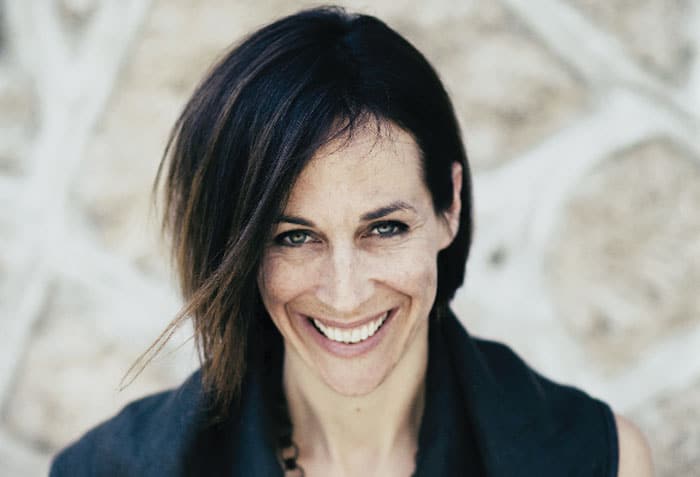
Galit Reismann
Image courtesy of Jennifer Milton

Her goal is “to showcase our unique spirit among our creators in Israel, motivated by their strong connection to their place, culture and the planet,” she said. “I enlighten our journey with fashion stories from the early days of the country [up to the modern] fashion scene, emphasizing topics such as entrepreneurship, slow fashion and sustainability.”

Cannon ran Art and Fashion Missions in Israel along with President Emeritus, JNF-USA Los Angeles Board of Directors Alyse Golden Berkley, and went on several of Reismann’s boutique tours. The Art and Fashion Missions were so successful that JNF-USA is planning another one for January of 2023. 

“[Reismann] taught us about Israeli fashion history and took us to designer studios where we could talk to designers, see firsthand how the creative process worked and then actually shop,” said Cannon. “She has immersed herself in the fashion world and is one of their most articulate and dynamic promoters.”

JNF-USA National Campaign Director Sharon Joy said that as the leading philanthropic organization for the state of Israel, it’s important for JNF-USA “to produce Positively Israel programs that open people’s eyes to all of the incredible aspects of Israeli society – from fashion and food to arts and entertainment. These are all part of JNF-USA’s infrastructure investments in communities, enabling Israel’s 21st century pioneers to relocate to and thrive in the Negev and Galilee regions.”

Working together on the event, Israel Bonds Western Region Women’s Division Chair & JNF-USA WFI Luncheon Co-Chair Laura Stein said that the two organizations ran their Double Mitzvah program, where participants buy a Bond, which is then donated to a charity.

“[It’s] a two-for-one way to help Israel. Israel Bonds support the budget of the state of Israel, and JNF-USA supports programs in Israel that have a meaningful impact. By buying a Bond for JNF-USA, you are helping both important efforts in one act.”

Jewish National Fund and Israel Bonds Spotlight Israeli Fashion Read More »

This Mobile Matzah Factory Will Come to You

On a bright pre-Passover spring afternoon at Chabad of North Hollywood, there stood the 50 happiest children in the neighborhood. 

Why were they so happy? 

Chabad’s mobile Martin Ackermann Model Matzah Factory, with CEO Rabbi Aron Teleshevsky at the controls, had just wheeled onto the grounds on Chandler Boulevard.

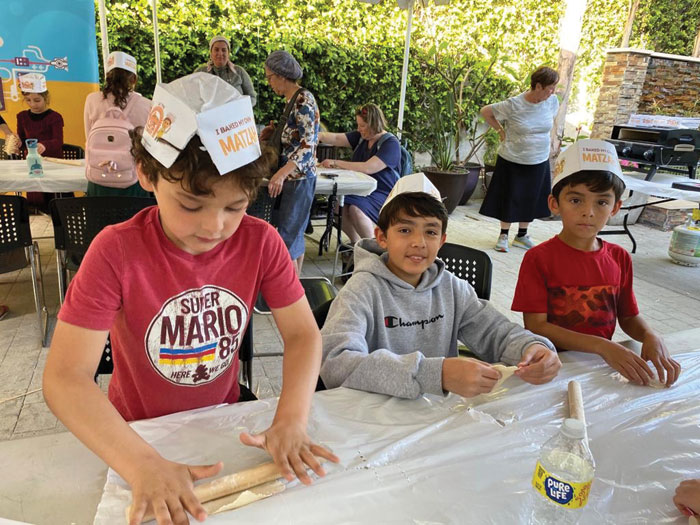
Students from Chabad of North Hollywood’s Hebrew school, ranging from 5 to 12 years old, were about to make their very own matzahs, with Teleshevsky’s necessary assistance, of course.

“What is so powerful about this occasion,” said Rabbi Yitz Abend, “is that it allows children to have a hands-on understanding of what it means to have matzah.” 

The aroma emanating from the portable stove could be smelled in the air. There isn’t any replacement for an in-person experience.

Abend said if you are just buying matzah from a market, you won’t understand what goes into the process.

The rabbi said, “One of my earliest memories in school is going to the matzah factory. I meet teens all the time who tell me, ‘Oh, rabbi, I always loved the matzah bakery.’ It was a highlight of their year.”

Before the children arrived, Abend told a visitor, “Remember: this is a mobile model matzah factory, not like the real bakeries that we have in Israel, in New York and Ukraine.”

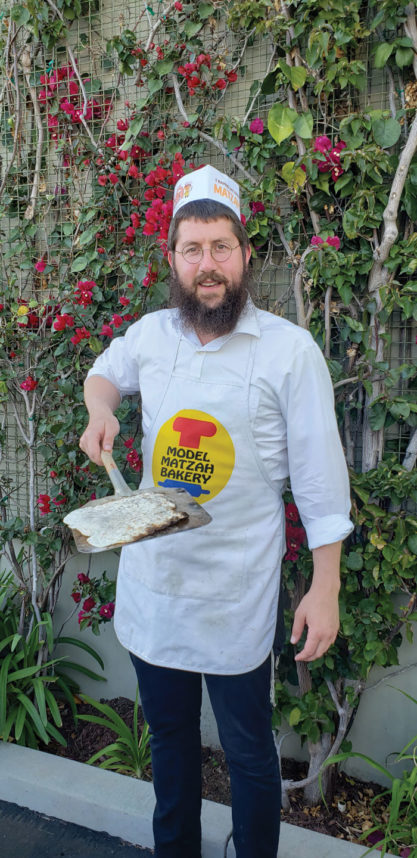
Rabbi Aaron Teleshevsky. Photo by Ari L. Noonan

In Los Angeles, the matzah factory concept dates back about 40 years, and matzah-making during the Passover season has been on wheels for about a half-dozen years, Teleshevsky said.

Starting shortly after Purim and continuing for three weeks, the native Australian goes to Jewish neighborhoods in Los Angeles, making about 60 stops. Since he doesn’t do it on Shabbat, this averages to about three stops daily.

Outgoing and jovial, Teleshevsky said, “I had the great merit of taking over the Chabad Matzah Factory 10 years ago,” two years after landing from Australia.

“I am the Matzah Man,” he said. “Matzah factories are here and probably in every city where there is a Jewish population in the world. The idea is to create, harness and inspire the already present spirit of arousal and energy that people feel around holidays, especially Passover, Rosh Hashanah and Yom Kippur.”

Teleshevsky’s personality and his easy-flowing interaction with the students make it clear he and the Martin Ackermann Model Matzah Factory were a match made in Chabad heaven.

“What I like best about doing this is the enthusiasm, the smiles, the looks on the kids’ faces. Amazing to see their excitement, the joy and their energy.”

The Matzah Factory went mobile for the most basic of community reasons, a founding principle of Chabad: to reach more people.

“This is an opportunity to reach more people. Very few pre-schools came to us before we became mobile.”  – Aron Teleshevsky

“There are only so many people who will come to a Chabad House,” said Teleshevsky, who is based at Chabad of Playa del Rey. “This is an opportunity to reach more people. Very few pre-schools came to us before we became mobile. Once we started this, we reached them. Similarly, there may have been families who were not comfortable bringing their children to Chabad for whatever reason.”

The Gayley Avenue Westwood quarters of Chabad was the home of the Matzah Factory for decades.

“We are not about labels, not about having a power struggle,” said Teleshevsky in the spirit of Chabad. “Let’s get the kids educated. Whatever it takes. If you want us to come to you, we will.”

The mobile Martin Ackermann Model Matzah Factory came by its name about five years ago.

Teleshevsky said, “Craig Ackermann, a lawyer, community activist and lover of the Jewish people, Jewish children, has dedicated the matzah bakery on an annual basis to the memory of his father, Martin, who was passionate about Jewish continuity.” 

And every Passover, hundreds, even thousands, are grateful.

This Mobile Matzah Factory Will Come to You Read More »

Eighteen Ways to Build Your Marriage

Walking down the aisle to the chuppah nearly thirty-five years ago, my hands were shaking so badly I nearly dropped my bouquet. The day before, a married friend who noticed my barely hidden panic had taken me aside and said, “Don’t worry. You’re making the right decision.” 

She was right. I had made the right decision. When Jeff and I were dating, we clearly saw the tangible and intangible benefits of a Torah life: inviolable family time (with no computer or phone distraction) is ensured by Shabbat and holiday observance. Children and adults gain self-discipline through mitzvah observance. Ideally, everyone learns to check their egos and prioritize doing things for others and for God.

We live in complicated, anxious, confusing times. This makes the transcendent benefits and moral clarity of Judaism that much more indispensable in marriage and family life.  

These are the ideal outcomes, but nothing is foolproof. We live in complicated, anxious, confusing times. This makes the transcendent benefits and moral clarity of Judaism that much more indispensable in marriage and family life.  

Like any other couple who has been blessed with a happy marriage, we’ve also worked for it. We’ve faced serious challenges and weathered rough patches. We’ve raised four children and survived their teenage years. We’ve both changed. Each of us has been taken by surprise when old, unresolved emotional baggage suddenly demanded a hearing. With God’s help, our deep love, shared values, long-term vision, and commitment to one another have seen us through. Making time for laughter, music, and kick-back relaxation also helps.  

The following 18 marriage-boosting philosophies have helped us enormously and allowed us to provide a model for our children to follow in their own marriages. We learned many of these at the outset from our Torah teachers and from observing interactions among more experienced married friends. Neither of us bats 1,000, but we do okay. My list could be longer, but eighteen is “chai” — life. May your marriage be blessed with a long and beautiful life.  

1. Love is a decision. You may have fallen in love during the heady days of a new romance, but sustained love is a conscious choice of renewal each and every day. 

2. Don’t keep score. Marriage is not a transactional relationship. Good marriages are nourished by a perpetual cycle of giving, being willing to receive, and giving back. Stopping to receive and feel replenished is not the same as “taking.”

3. Make space. Husbands and wives have different needs for togetherness. Honor and encourage one another’s need for reasonable personal space, whether for privacy, friendships, hobbies or new endeavors.

4. Accept your spouse. Commit to loving the person as they are now, not the person you’d like to “make them” into.

5. Build up your spouse.  Cheer and encourage them in their successes and efforts. No one outgrows the need for encouragement.

6. Bring kedusha into your marriage. Building a life based on Jewish values and observance– Shabbat, kashruth, holidays, chesed, tzedakah and other mitzvot builds a shared mission, vision, and spiritual satisfaction. It reminds us and  teaches our children that values are not up for grabs according to the latest societal fad.  

7. Put the “you” before “I.”  As much as possible, put your spouse’s needs and desires above your own, but not to the point of exploitation.

8. When arguing, put the “I” before “you.” Avoid sentences that begin with the often accusatory “you,” a word often followed by “never” or “always.” Try to see your spouse’s point of view; few issues are black-and-white. 

9. Marriages require daily care. Love notes hidden under a dinner plate or on the car dashboard; little gifts “just because,” and other small messages of love and affirmation nurture your relationship in ways that pay huge dividends. 

10. Complacency rots your marriage from the inside. You paid careful attention to thoughtfulness, courtesy and presenting your best self during courtship. Don’t get lazy after marriage. No one is owed or deserves lifelong love and commitment if you pull a “bait and switch.” Small courtesies such as saying “please” and “thank you” and stopping what you’re doing to greet your spouse with a smile when they come home show you still care. 

11. Men and women have different needs. Most men have a strong need for their wives to show that they respect them; most women have a strong need for their husbands to demonstrate love. There are many other differences, so let’s stop fighting the obvious. 

12. Carry your relationship with you wherever you go. Think about your husband or wife when you are apart and anticipate something you’d like to do together when you next have the opportunity, whether going out to dinner, listening to music, playing a game with the whole family. Call or text during the day just to say, “I’m thinking about you.” 

13. Schedule time together. Whether it’s a weekend away or even a walk in the neighborhood, you can’t have “quality time” unless you make actual time. 

14. “Listen with your face.” Too many of us are walking around with our phones in a death grip. Honor your spouse with your full attention — phones on silent and out of view. As one young child urged her father who was supposedly listening to her but staring at a screen, “Daddy, listen with your face.”  

15. Show appreciation. Thank your spouse for their efforts on your behalf or on behalf of the family. It’s not enough to think gratitude — say it out loud.

16. If it’s important to your spouse, it should be important to you.  

17. If your marriage needs help, get it. Don’t delay when conflict or inner turmoil is bringing your relationship down. Yes, therapy is expensive, but nothing is more costly than a divorce, especially if there are children involved. 

18. The best gift you can give your children is a good marriage. A child’s emotional foundation is built on the sense of security and stability they experience in their homes. Healthy marriages also teach children how to grow up and build healthy marriages of their own.


Judy Gruen’s latest book is “The Skeptic and the Rabbi: Falling in Love with Faith.”

Eighteen Ways to Build Your Marriage Read More »

Rosner’s Domain: Will Netanyahu Win the Fifth Election?

Israel is in a political crisis – again. The short story is this: one Knesset Member left the 61-member majority coalition, and thus the majority is gone. This doesn’t necessarily mean that Israel is about to have a new election tomorrow or very soon, but it does cast a long shadow over the ability of the current government to survive more than a few more months. The politicians are gearing up in preparation for such a scenario, and so, the question must be asked: What happens if there’s a new election? Following are a few pointers for those who want to follow Israel’s political upheaval closely. An early guide to the perplexed; an early guide for Israel’s fifth election in three years (this sounds awful, doesn’t it?).

Here’s an early guide to the perplexed; an early guide for Israel’s fifth consecutive election (this sounds awful, doesn’t it?).

An election doesn’t necessarily mean a decision. Why? Because the “blocs” are still close to a tie. There may well be a situation where no one will have a viable option to form a coalition. But this is too early to say for several reasons. 1. It is not clear who will run in a new election. The parties we see now are not necessarily the parties that will run when the time comes. 2. It is not clear who will decide to boycott whom in the next term. For example: Will Defense Minister Gantz from Blue and White vow not to sit with Netanyahu? To keep his voters, he might need to say such a thing. To sound honest and realistic, he might decide not to say such a thing (because one of the few options for a stable coalition would be Gantz joining the right-wing bloc). 3. And don’t forget: we have learned from Naftali Bennett that promises such as this (I will never sit with X) don’t always have merit. 

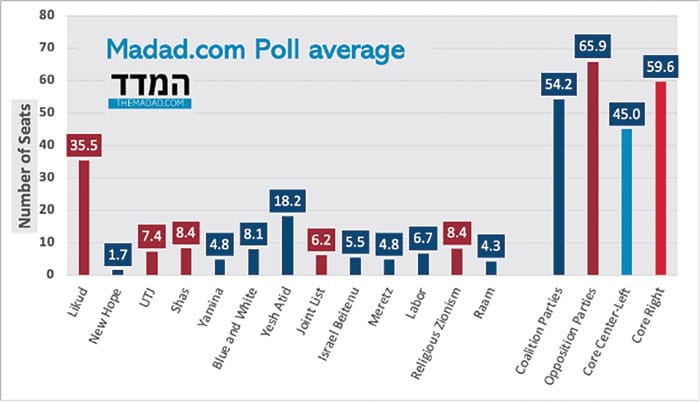
The right is not far from a (small) majority. The “core right” consists of four parties: Likud, Religious Zionism, Shas and United Torah Judaism. In six of the last ten polls this bloc gets 60 seats or more. Sixty is not a majority, but it is close. So it certainly seems possible that the right-religious bloc will get there. Especially if the other option would be election number six. And of course, a caveat is needed here: today’s polls are not tomorrow’s polls. Still, when Netanyahu calculates his chances, polls are the tool he has at his disposal. And this tool tells him that betting on a new election would not be an unreasonable gamble.

Religious Zionism is strengthening. Almost everyone who voted for the party intends to vote for it again, and there are also additional voters who consider this party as an option. This could mean a coalition more to the right than previous Netanyahu coalitions. 

Yamina and New Hope are in jeopardy. These two parties might not be able to survive solo. Justice Minister Saar and his friends in New Hope will be looking to hook up with someone, maybe Gantz. Bennett and his Yamina gang will probably disperse. And what about Bennett himself? This is an interesting question. More than a few politicians believe that being the Prime Minister for a year or so is going to be his last political hurrah (at least until he makes a future “comeback”). 

Arab voters, still a mystery. In all polls, the Joint List and Raam simply get the same number of seats they have today, plus or minus a seat. More than anything, this indicates the difficulty of pollsters in deciphering what Arab voters intend to do. The battle between the two Arab parties — the one that joined the coalition and wants to play the Israeli political game as a full participant, and the one that insists on remaining on the sideline as a permanent naysayer — will be one of the most interesting battles of the next elections.

Raam presented Arab voters with an alternative, not only in words but also in deeds. It is a member of the coalition, influences it, changes the Jewish-Arab conversation. Israeli Arab voters will have to decide whether this precedent is worthy of an attempted repeat. Of course, there is no guarantee that a repeat is an option. Maybe the right-wing bloc will win, and Raam will not be asked to take part in a coalition. And yet, the alternative was presented sharply, and from now on it will be fascinating to watch the internal political game among Arab voters, a game that will take place in places where polls are harder to decipher.

Something I wrote in Hebrew

Why did MK Idit Silman ditch the coalition? Her excuse was a debate over the demand of some Israelis to let people have non-Kosher-for-Passover food in hospitals during the holiday. Referring to this debate I wrote the following paragraph:

Yitzhak Rabin did not hesitate to give Shas control over matters of religion and state, in order to gain a stable government. Since then, the basic situation of the center-left has not changed and the deal is always the same deal: government in exchange for Orthodox control of religion and state matters. You want to oust Netanyahu? You will have to accept a ban on chametz in hospitals. You want chametz in hospitals during Pesach? You will have to find a majority that does not include Members of Knesset from the religious bloc. This is not a debate about who is right, or who has more support, or what the public wants. It’s a simple power game. MK Silman is not as radical as the ultra-Orthodox MK’s, but still wants the same basic deal. When she didn’t seem to get it, she decided to jump ship. 

A week’s numbers

Here we go again: Themadad.com has no choice but to reinstate its weighted polls average. Remember: 60 seats + one is what a coalition must have. 

A reader’s response:

Ari Goldblum asks: “Do you still think that the IDF can operate in the West Bank the way it did twenty years ago?” Answer: Read the news coming out of Jenin in the last couple of days (in short: yes).


Shmuel Rosner is senior political editor. For more analysis of Israeli and international politics, visit Rosner’s Domain at jewishjournal.com/rosnersdomain.

Rosner’s Domain: Will Netanyahu Win the Fifth Election? Read More »

The “Jewish Mark Twain”

“Life is a dream for the wise, a play for the foolish, a comedy for the rich, a tragedy for the poor.”—Sholem Aleichem

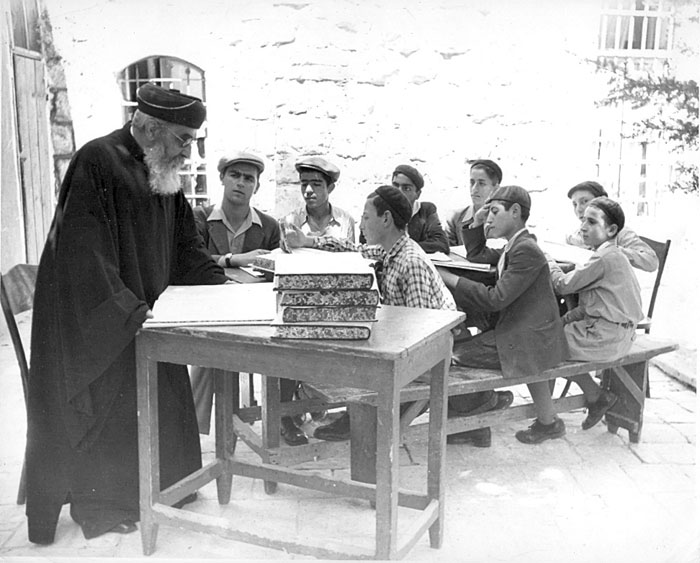
Sholem Aleichem’s “Fiddler on the Roof” is a story of the Judaism of Eastern and Central Europe, and of the “shtetl,” the town or village granted and demarcated for the Jewish population in those areas. At the time in which the story is set (late-19th and early-20th centuries), the union of the vast territories of Russia, Ukraine, Poland, Lithuania, Belarus and Moldova was known as the Pale of Settlement (“Chertá Osédlosti” in Yiddish). The Pale of Settlement was created by Tsarina Catherine the Great in 1791 in order to enclose in some way the Jews who were beginning to form a bourgeoisie, although in some cases they were also engaged in farming.

One of those places where the world of the shtetl and Yiddish language and culture flourished was in Ukraine, far removed from German enlightened Judaism and perfectly alien to the world of Ladino and Sepharad. There, a play about the daily life of a small Jewish merchant, part of the nascent local bourgeoisie, known as Tevye “the milkman,” was immortalized to this day.

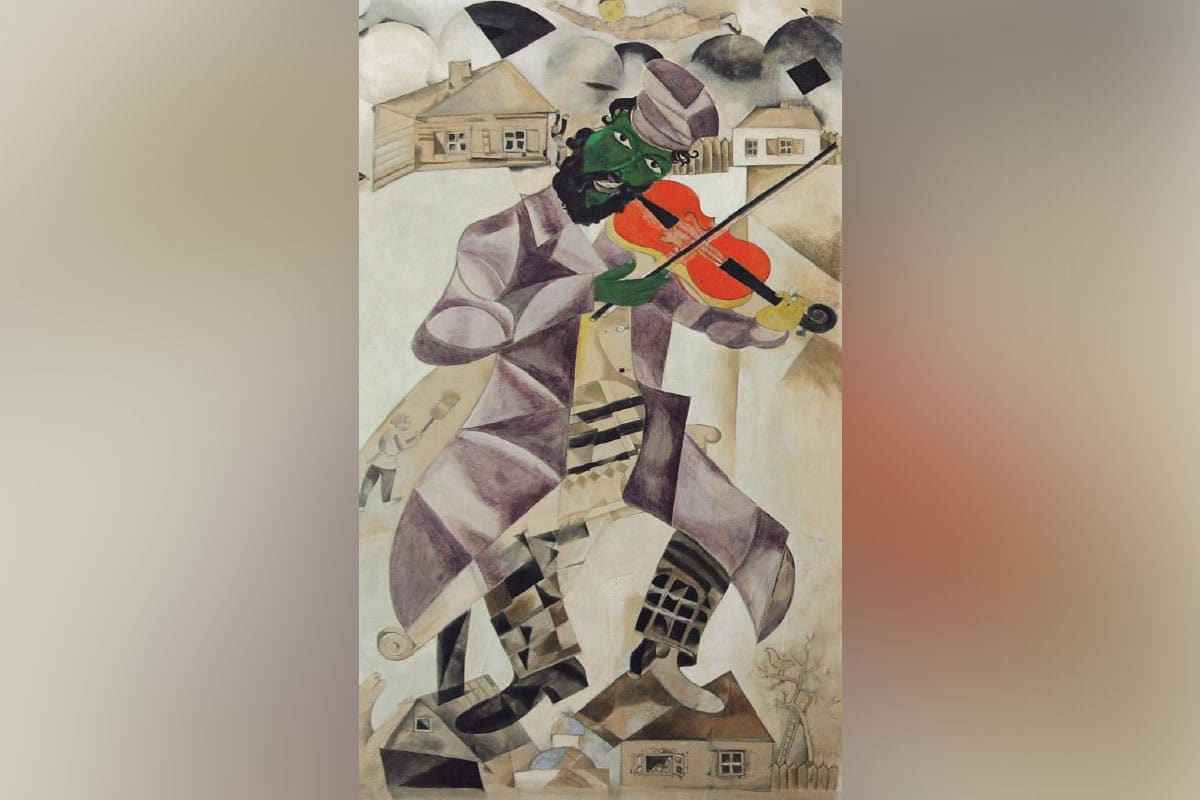
“The Green Violinist, 1923-24, Marc Chagall, Solomon R. Guggenheim Museum, New York.

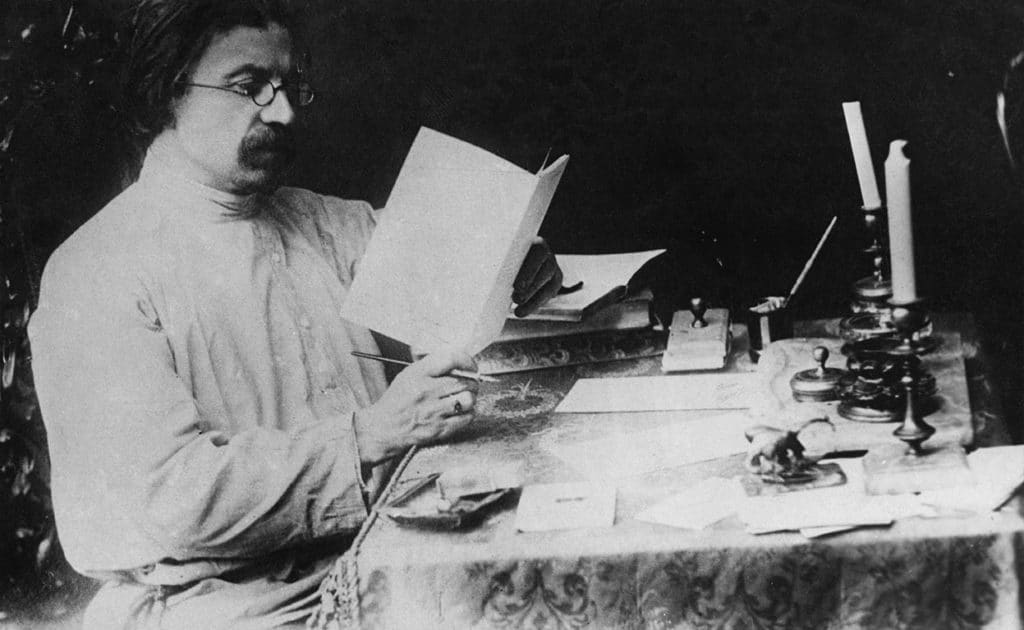
Sholem Yakov Nokhuomovich Rabinovich, better known as Sholem Aleichem, was born in an old town in the Kiev Oblast. Pereiaslav, which had its name altered by the Soviets in 1943, was renamed Pereiaslav-Khmelnytskyi after Bohdan Khmelnitskyi, a Cossack ally of Alexander I’s Russia, the first “Hetman” (ruler in Poland, Ukraine and the Grand Duchy of Lithuania) of the Cossack Hetmanate (Ukrainian-Cossack state). However, in 2019, the Ukrainian parliament reinstated the city’s original name, to disassociate it for obvious reasons from a Russian-edged past, though this fact is evidently still in dispute.

The city, which is known as a “living museum” because of its history and number of museums, was once home to a Jewish community, dating back to at least the 17th century, with a written record from 1620, in which the city’s residents complained to King Sigismund about the Jews’ commercial boom, given that they were limited, as in most cases, by restrictions on the use and development of the land. It is striking that the only evidence proving the existence of the Jewish community in Pereiaslav mentions an antisemitic event. But just as there was a considerable Jewish population throughout this area of Central and Eastern Europe, there was always a latent antisemitism among the very people among whom the Jews lived.

Under the pseudonym or nom de plume of Sholem Aleichem, Hebrew for “peace be with you,” Sholem Rabinovich was by no means oblivious to this reality, despite having been among the letters from a very young age and having been born into a bourgeois (though later impoverished) family and then having married his ward Olga (Hodel) Loev, daughter of one of the few Jewish landowners.

Aleichem wrote his first novel at the age of 15, a Jewish adaptation of Daniel Defoe’s most famous novel, “Robinson Crusoe.” Although he had idealized writing in Russian or Hebrew, he later turned to Yiddish after analyzing its better accessibility to the Jewish masses and of course realizing that his world was the shtetl. Aleichem’s stint in the world of journalism is no less irrelevant than his work, for from 1879 he became a local correspondent in Kiev for the renowned Hebrew newspaper “Ha-Tsefirah” (“The Epoch” in Hebrew), the first newspaper published in Hebrew in Poland, founded in Warsaw by Ḥayim Zelig Słonimski and published between 1862 and 1931. The main purpose of this weekly was to report news about Jews in the area and to provide general information, including articles on natural sciences and the latest inventions.

In turn, from 1880 to 1883 Aleichem served as crown rabbi in Lubny, a position in the Russian Empire that consisted of being an intermediary between his community and the imperial government. The court rabbi was responsible for civil duties such as the registration of births, marriages and divorces. The main requirement for this position was to be able to communicate in Russian without any problems. Also, the crown rabbis were considered agents of the state, not real rabbis, and were generally not educated and had no knowledge of Jewish law.

Although he was a Yiddish writer and not really connected with the Haskalah (Jewish enlightenment), he was not far removed from it either. In 1881 and 1882 his articles focusing on Jewish education appeared in Ha-Melits, the main medium for disseminating Haskalah. Aleichem was, of course, a “maskil,” a Hebrew and Yiddish scholar, an “enlightened one.”

Similarly, Aleichem’s official work was released in 1883, when he was 24 years old, with “Tsvey Shteyner” (“Two Stones”), his first Yiddish story, using the Sholem Aleichem nom de plume for the first time. In this first work he fictionalizes his romance with his future wife. The story ends with the suicide of the two young protagonists. Indeed, his works are characterized by a personal, intimate and reserved style, as well as by his preoccupation with everyday affairs, and by a strong connection with Ukraine.

Indeed, his works are characterized by a personal, intimate and reserved style, as well as by his preoccupation with everyday affairs, and by a strong connection with Ukraine.

In Ukraine, Aleichem lived in different cities such as Kiev, Lviv and Odessa, which was home to a large Jewish community until the days of the Shoah. He also traveled and lived in the small Jewish villages of Ukraine before moving with his family to the United States in 1905, after having been ruined by his bad economic decisions of speculation on the Kiev stock exchange. It was about this episode in his life that he wrote his account of speculation “Der spekulyant” (“The Speculator”), depicting his own tragic experiences. In New York he was very well received by the press and by Jewish and American society. Earlier he tried his hand at the theatre. He premiered his drama “Tsezeyt un Tseshpreyt” (“Scattered and Dispersed”) in Warsaw, which was successfully performed on the Polish stage, but could not be performed in Ukraine, due to misgivings on the part of the Russian authorities. It did not go well in the United States, so much so that he had to return to Europe afterward, although later he did return to New York. It was there that he was dubbed the “Jewish Mark Twain.”

In 1888 Aleichem founded a literary almanac modeled on the most important European literary magazines, but in Yiddish, under the name “Di yidishe folks-bibliotek” (The Library of the Jewish People). This became a milestone in the history of modern Yiddish literature and helped Aleichem to gain recognition throughout Europe and even in the United States. However, after the publication of the second volume in 1889, he went bankrupt and had to bring this valuable project to an end.

Aleichem never stopped writing, and thanks to him, Yiddish gained cultural, artistic, literary and academic status, as well as crossing national and artistic borders, reaching its apex after his death with “Fiddler on the Roof.” In this story of Tevye “the milkman,” Aleichem creates an imaginary place that is Kasrilevka, which will timelessly represent the figure of the archetypal shtetl. The prototype of Kasrilevka was the Ukrainian village of Voronkov, where Aleichem grew up.

Aleichem never stopped writing, and thanks to him, Yiddish gained cultural, artistic, literary and academic status, as well as crossing national and artistic borders…

“If I Were a Rothschild” (“Ven ikh bin Roytshild”) is a monologue written by Aleichem in 1902 with reference to the iconic figure of the Rothschild family as the epitome of European Jewish wealth. This would posthumously inspire the centerpiece of “Fiddler on the Roof,” the most important Jewish theatrical and cinematic work, after his death. “Fiddler on the Roof” is also a metaphor for the people of Israel in exile in the face of the many changes and challenges that fate throws at them over time and places. Aleichem’s Yiddish and Jewish colleagues and friends supported him and his family with donations, among them IL Peretz, Jacob Dinezon, Mordecai Spector and Noach Pryłucki, until on May 15, 1916 Aleichem departed his material shtetl for an immaterial one due to tuberculosis.

His funeral was the largest ever seen in New York City, more than 150,000 mourners accompanied the writer’s coffin from his home in the Bronx to the Ohab Tzedek synagogue in Harlem, down Fifth Avenue to the Lower East Side and finally to Mt. Nebo Cemetery in Cyprus Hills, Queens. The New York Times reported not only on the nature of the funeral, but also on Aleichem’s request not to be buried “among the aristocrats and the powerful,” but “among the people themselves.” Moreover, he wanted to be buried in Kiev next to his father’s gravestone. And, despite the significance of his death and funeral as a historical event, the man, the writer, the symbol, died virtually alone, isolated, poor and ill.

Sholem Aleichem is more than a classic; he is a symbol of the Jewish people and its survival. Aleichem’s memory lives on: In Ukraine there are several streets in different cities named after him, plus the symbolic statue in Kiev. In Israel, in the city of Natanya, there is a statue of him, plus the number of streets named after him in the Hebrew country. In Moscow there is another statue and in New York a street is named after him. On Broadway he is remembered as the writer of one of the most important musicals in its history. He is therefore a universal figure who should also remind today’s world that peace is possible. He was Jewish, but also Ukrainian. He lived through antisemitism, specifically the pogroms, which prompted him to emigrate. His legacy is invaluable for European Judaism, Israel and world culture.


David A. Rosenthal is a political scientist, journalist and international analyst. Follow him on Twitter @rosenthaaldavid.

The “Jewish Mark Twain” Read More »