And Moses brought Aaron and his sons forward and bathed them in water…and clothed them with tunics, girded them with sashes, and bound them up with high hats -Leviticus 8:6 and 8:13
I don’t remember the first time I was old enough
to decide what I was going to wear.
I know, for the longest time, it wasn’t up to me and
I’ve seen the photographic evidence to back this up.
Little outfits to make me seem like I was a little man
(not much has changed in that department.)
Including knit booties I had barely taken a breath
in this world before they were stuffed onto my feetsies.
I can only imagine being anointed with bath water
far more often than I would have preferred and
without being asked for my permission.
(Can you imagine this flying in our current age?)
I don’t know what to think of the top-hats Moses put
on Aron’s sons…were they doing a play about Lincoln?
That feels anachronistic but when the entire Torah
was already written while the events were still happening
I guess anything is possible. Now my son is big enough
to make his own decisions about how to adorn his body.
Though I’m not sure the wisdom has fully formed as
the only color that leaves his room is red and it feels
like a conscious decision born of not wanting to
spend the time over a thoughtful curation.
You can pay people now to pick your clothes and
even put them on your body as if you were personally
being documented by Downton Abbey. I hear Prince Charles
has someone who irons his shoelaces and I do like
to believe everything I read. The clothes make the man
and the woman. The clothes make the priest.
Moses…tell me what to wear. I don’t have time to
think about these things anymore.
Rosatom, the chief state-run nuclear energy company in Russia, will reportedly rake in billions of dollars under a newly forged Iran nuclear deal.
The Washington Free Beacon reported that Rosatom scored a $10 billion contract from Iran to broaden the size of the Bushehr nuclear plant in Tehran; the new agreement will provide exemptions for Russia to work with Iran on expanding their nuclear capability under the original 2015 nuclear deal. As evidence for this, the Free Beacon cited an unnamed State Department official as well as the department’s spokesperson Ned Price.
Former State Department Special Adviser to Iran Gabriel Noronha told the Free Beacon, “Rosatom’s projects in Iran are crucial to the company’s future financial viability—that’s exactly why we should shut them down by disrupting their foreign contracts—especially those with a regime like Iran. We’re doing the opposite. The United States should sanction Rosatom for its involvement in Russia’s war on Ukraine, but in classic fashion, we’re giving them full sanctions immunity that will stabilize Rosatom’s finances.” The Free Beacon subsequently reported that Republicans in both Houses of Congress are introducing bills to prevent the Biden administration from implementing waivers for Rosatom, with Senator Ted Cruz (R-TX) telling the conservative outlet that the Iranian government will exploit the waivers “to build up Iran’s nuclear program with the express intention of eventually developing nuclear weapons to inflict destruction on America and our allies.”
The Simon Wiesenthal Center tweeted, “US talks a good game about punishing Russia. But we rely on Russian interlocutor for Iran Nuke deal and greenlight $10billion for Russia to build nuclear sites for Iran? No wonder enemies mock us and friends and allies very very worried.”
US talks a good game about punishing Russia. But we rely on Russian interlocutor for Iran Nuke deal and greenlight $10billion for Russia to build nuclear sites for Iran? No wonder enemies mock us and friends and allies very very worried. https://t.co/cSz2bnrRm1
With reports of a new Iran deal coming soon, the pending agreement is facing scrutiny. Twelve House Democrats sent a letter to the Biden administration on March 10 stating that they are “highly concerned” over the coming deal, citing reports that it would remove the terrorist designation from the Islamic Revolutionary Guard Corps (IRGC) as well as sanctions on members of Iranian Supreme Leader Ayatollah Ali Khamenei’s office. “It is hard to envision supporting an agreement along the lines being publicly discussed,” they said.
Price said on March 17 that a new deal is “close” but they’re “not there yet,” though he sounded optimistic that “the remaining issues can be bridged,” The Times of Israel (TOI) reported. The TOI report also noted that Iran is transforming their uranium “into a type that is less easily recovered and diluted so that it can then be removed from the country” despite warnings from Britain, France and Germany against doing so.
“Can we expect Iran to adhere to a new deal if it continues its march toward military nuclear capability in the midst of negotiations?” the American Jewish Committee tweeted.
Iran is taking dangerous additional steps to enhance its nuclear program in blatant disregard of warnings from the West.
Can we expect Iran to adhere to a new deal if it continues its march toward military nuclear capability in the midst of negotiations? https://t.co/EqDpRXwgGr
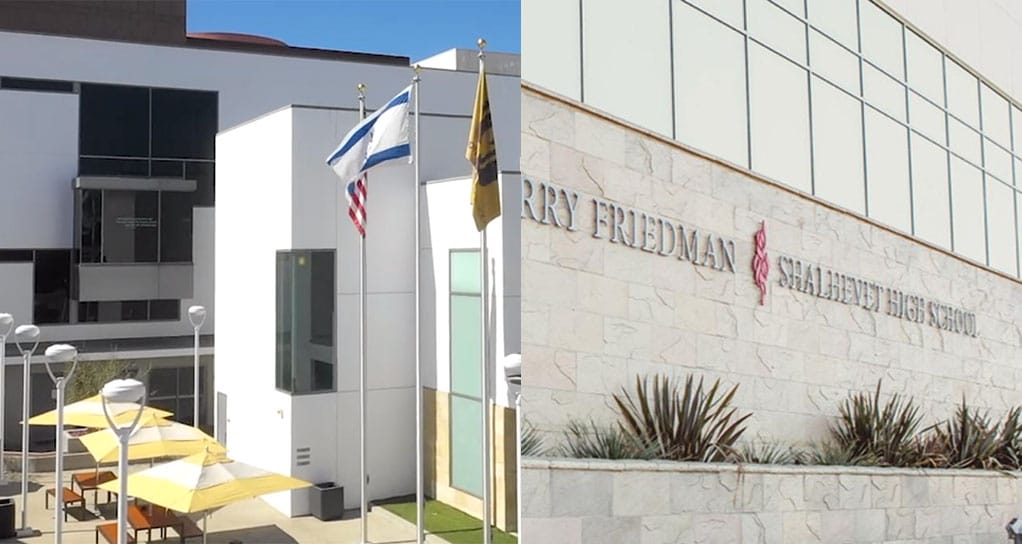
I received two kinds of responses to my op-ed yesterday, where I complimented the heads of school at YULA Boys and Shalhevet High School, Rabbi Aryeh Sufrin and Rabbi David Block, for how they reacted to a grossly inappropriate attempt at Purim humor directed at Shalhevet by some YULA boys and their enablers.
The first kind of response was to thank me for trying to lower the heat and anger in the community. I did that by focusing on the elevated, “very Jewish” reaction from the leaders of YULA and Shalhevet, who are ultimately responsible for what happens under their watch. Sufrin showed contrition; Block reaffirmed menschkeit.
I was moved by Sufrin’s heartfelt apology, where he fessed up that members of his community “have caused pain and anger, at a time when our community should be most unified,” and his “determination to rectify wrongs and to never allow the same situation to repeat itself. We are full of regret and remorse; in the coming days, weeks and months, we will get to the hard work of building character to ensure our behavior is equal to our values.”
I was moved also by how Rabbi Block took the high road, reminding his community that “We’re mensches, ALWAYS,” expressing pride in “who we are – our values, our conversations/dialogue, and especially our LOVE and support of every single student/Jew/person,” and exhorting his community that “we don’t respond to grossness with grossness.”
The positive responses I got were grateful that I focused on two leaders who showed some wisdom in the midst of heated emotions.
The second kind of response I got was that I didn’t express enough outrage and seemed to gloss over the actual offenses. Although I did call the YULA boys’ behavior “highly inappropriate” and wrote that it was “hardly the first instance of such mocking,” that wasn’t enough to capture the genuine anger felt by some members of the Shalhevet community.
To those who feel I didn’t fully capture the communal anger and should have gone further in calling the perpetrators to task, all I can say is, that wasn’t the point of my op-ed. The point was to focus on the leadership of both schools, and specifically, the how, not the what, because if we don’t get the how right, the what has no chance.
That’s why I found it useful to look at how the two heads of school responded, which I considered thoughtful and very Jewish, and which set a good example for all of us. I especially followed Rabbi Block’s advice to not “respond to grossness with grossness.”
It’s not a coincidence that the Jewish Journal has been named “best Jewish paper in the country” for two years running. One reason we’re beloved in the community is that we go easy on feeding anger. Poetry, beauty, philosophy, culture, Torah, storytelling and diversity of thoughtful commentary are just as important as covering community disputes. And when we do cover disputes, we try to do it with sensitivity and without pouring too much oil on the fire. One of our key goals is to elevate the communal conversation. That’s why, a few weeks ago, when I saw several disputes breaking out throughout the community, I wrote, “Five Simple Rules to Prevent Communal Fighting.”
Above and beyond my beliefs, if there’s one thing my kids took from their Shalhevet education, it was to be, as Rabbi Block says, a mensch—ALWAYS.
There is plenty to say about the offenses directed at Shalhevet because they are considered “too liberal” by some members of traditional Orthodoxy. I know all about it: I sat on the board of Shalhevet for years and took a few arrows myself. I even wrote a cover story once praising Open Orthodoxy, so I have longtime empathy for modernizing Orthodoxy. But above and beyond my beliefs, if there’s one thing my kids took from their Shalhevet education, it was to be, as Rabbi Block says, a mensch—ALWAYS.
Of course, it’s easy to be a mensch when we don’t have any axes to grind. It’s when we’re offended and have the truth on our side that it becomes more difficult. How does one stay a mensch when you’re 100 percent right? How does one stay a mensch when you see a deeply offensive Purim video by the YULA boys and their enablers? How does one stay a mensch when you feel that your co-ed Orthodox high school has been constantly undermined by Orthodox Jewish day schools?
It’s easy to be a mensch when we don’t have any axes to grind. It’s when we’re offended and have the truth on our side that it becomes more difficult.
That’s the point—it’s difficult to stay a mensch when we’re offended. Maybe that’s why, when Rabbi Block wrote “Be a mensch—ALWAYS,” he put ALWAYS in all caps. He knows how difficult it is, when we’re caught in the throes of conflict, to keep our menschkeit.
But there’s another benefit to keeping our menschkeit—it helps us see better. When we’re angry and sure of ourselves, we only want to see stuff that confirms what we already know. At that point, something like Rabbi Sufrin’s expression of contrition becomes an inconvenient distraction. Maybe that’s why a few Shalhevet parents told me they “don’t really trust” Sufrin’s apology. Had they taken his extended apology at face value, they would have had to recognize the immense Torah value of contrition. Instead, some were simply angry because he hadn’t fired anyone on the spot yet.
The fact that some readers may be angry about something or another does not mean I should match their anger. In fact, I see my role as the opposite. The more anger I see in the community, the more I feel a responsibility to tone down the heat and introduce a little light.
It doesn’t take courage to be angry; it takes courage to stay a mensch when everyone around you is angry.
We should be encouraged that our two heads of school have taken a thoughtful first step. They seem to understand that when it comes to resolving conflict, it starts with the how as much as anything else.
As I wrote at the beginning of my piece yesterday, it’s in “how we handle” our inevitable stumbles and blunders and conflicts that Judaism really shines. There’s a long road ahead to heal the wounds in our community. The nerves are raw, the anger deep. We should be encouraged that our two heads of school have taken a thoughtful first step, and give them a chance to build on that. They seem to understand that when it comes to resolving conflict, it starts with the how as much as anything else. As I said above which merits repeating, if we don’t get the HOW right, the WHAT has no chance.
When we gather at our Shabbat tables tomorrow night, we will all have a choice: do we allow our passions to get the better of us and express our anger and do leshon harah because we know we’re justified; or do we reflect on the many benefits of remaining, in the most stressful situations, a mensch—ALWAYS.
During the Festival of Purim, Jews read Megillat Esther, the biblical scroll that recounts the survival of our people from near annihilation in ancient Persia. The story teaches about how one man (Haman) wanted to kill all the Jews because of his hatred toward one particular man (Mordechai). The story also teaches how one woman (Esther) found the right moment to stand up, speak out, and ultimately reverse the plan.
For the Jewish People, Purim is our story of recognizing the right audience, place, and moment to make our voices shatter darkness.
It’s not always easy.
How do we know who will listen with a full heart?
How do we know where our safe spaces are?
And how do we know when the right opportunity is?
When the world is filled with chaos – our voices mean something, and we can make a difference,
Yes, finding the right moment in time can be a challenge. So we keep our focus, recognize our vision, and reshape the future though our perseverance.
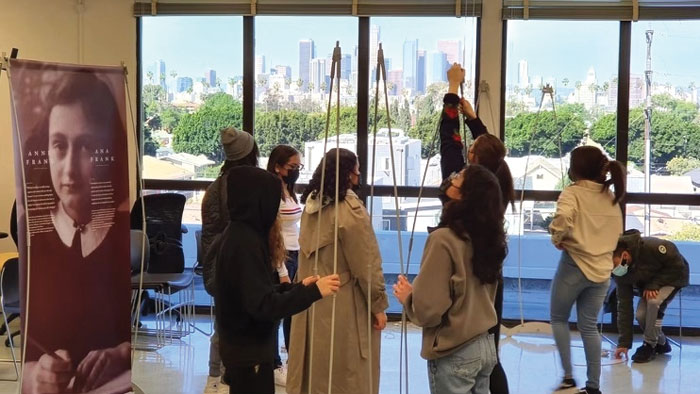
Students at Theodore Roosevelt High School in Boyle Heights served as peer guides of “Anne Frank: A History for Today,” an international traveling exhibition.
Designed for ages 11-18, the exhibition tells the story of Anne Frank in the context of the Holocaust. A partnership between Roosevelt High School and Anne Frank LA, among other groups, brought the exhibit to the high school. While Boyle Heights was once the center of Jewish life in Los Angeles, today the area is largely Hispanic. Because of the area’s rich and diverse history, the leadership at Anne Frank LA thought the school was an ideal venue for the exhibition.
“The team at Anne Frank LA agreed it was the perfect school to launch this inspiring pilot program,” Anne Frank LA Co-Founders Margrit Polak and Harvey Shield said in an interview. “Our hope is that visitors to the exhibit will learn not to be bystanders when confronted with intolerance and hatred in their own lives.”
On Feb. 25, Roosevelt High School students participated in a training session on how to be effective docents for the exhibit. Trainers flown in by Anne Frank House, a museum based in Amsterdam, worked with them, including Jan Erik Dubbelman. At Roosevelt High, almost entirely Hispanic, many of the students had never seen images of the Holocaust or heard of Anne Frank before assembling the exhibit panels and beginning the training.
“Watching the student guides take their peers through the exhibit made the experience of learning about Anne Frank, World War II and the Holocaust more impactful,” a Roosevelt High School teacher said.
On Feb. 26, a preview of the exhibition and ribbon-cutting ceremony were held at the school. Local leaders in attendance included Los Angeles County Supervisor Hilda Solis, Holocaust Survivor Trudie Stroebel and LAUSD Board Member Mónica García.
“The response was extremely positive,” Polak said. “We spoke to several student peer guide parents who thanked us for the opportunity Anne Frank LA gave their children, and one of our speakers, Trudie Stroebel, shared that she was born in the Ukraine. Everyone was moved by her story and the unfortunate coincidence of Russia’s recent and horrific invasion of Ukraine was not lost on anyone.”
A nonprofit, Anne Frank LA is dedicated to promoting the legacy of diarist Anne Frank through educational programs, exhibits and cultural events in Los Angeles.
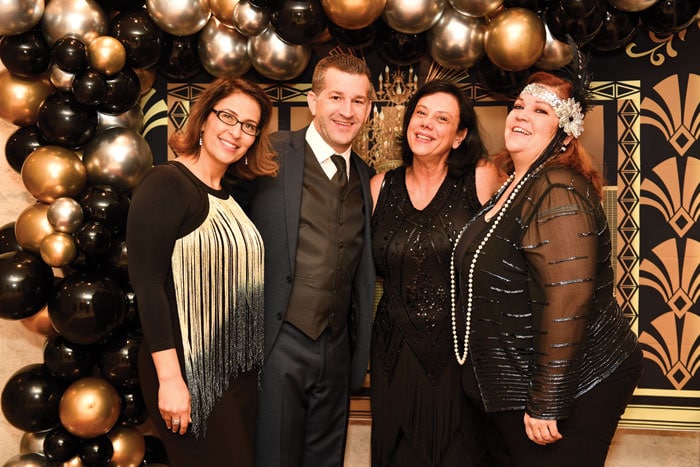
From left: Sephardic Temple Preschool Directors Assistant Elham Azzizi, Temple Director of Operations Avi Levy, Preschool Executive Director Eva Wysocki and Temple Executive Assistant Melissa Thompson. Courtesy of Sephardic Temple
On March 5, after two years of the inability to celebrate due to COVID-19, the Levy Family Early Childhood Center of Sephardic Temple finally got together to put on their gala. It was only fitting to choose the theme, “The Roaring 20s.”
The temple felt alive again as the preschool parents, alumni and temple members came back to Sephardic Temple for a night of festivities. The gala is an annual fundraiser for the preschool, put on by the PTA President Carolyn Afari and preschool Executive Director Eva Wysocki.
Stepping out of your car, you could smell the aroma of the food, hear the music and anticipate the exhilarating night ahead. There was no denying the enthusiasm that spread from being able to celebrate the school again. The temple’s every corner was filled with silent auction items, sport memorabilia and dancing. In addition, this year it was only appropriate to invite Charlie Chaplin, whose walking style and gestures could make anyone laugh.
More than any other year, the community needed the gala to reconnect, laugh, and dance.
The Levy Family Early Childhood Center is a part of Sephardic Temple Tifereth Israel, a modern synagogue in the Sephardic tradition.
“Next year, the congregation is thrilled to dedicate its gala to its preschool’s 10-year anniversary,” Wysocki said. “Through the pandemic it’s our Sephardic tradition and faith that allowed our school continued to grow and prosper.”
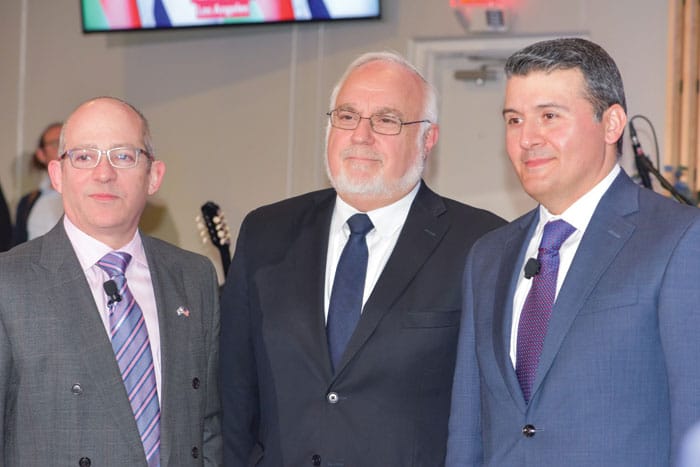
From left: Consul General of Israel in Los Angeles Hillel Newman, Simon Wiesenthal Center Rabbi Abraham Cooper and Consul General of Azerbaijan in Los Angeles Nasimi Aghayev. Courtesy of the Consulate General of Israel in Los Angeles
The Consulates General of Israel and Azerbaijan held a joint event on March 6 to celebrate the 30th anniversary of the establishment of diplomatic relations between Azerbaijan and Israel.
Attended by over 300 guests, the celebration at Valley Outreach Synagogue in Calabasas included a discussion between Consul General of Israel in Los Angeles Hillel Newman and Consul General of Azerbaijan in Los Angeles Nasimi Aghayev.
“For the last 30 years, Azerbaijan and Israel have successfully proved that Muslims and Jews can be friends and brothers and do wonders working together,” Aghayev said.
“The Israel-Azerbaijan relationship can be a model for regional relations and even global relations,” Newman said. “This relationship demonstrates that the conflicts today are not between religious or ethnic groups but between moderates and radicals.”
Valley Outreach Synagogue Rabbi Ron Li-Paz added, “Now more than ever, the example of the relationship between a Muslim-majority country in the Caucasus, Azerbaijan, and the Jewish homeland, Israel, is extraordinarily powerful. All of us need to know that these friendships are possible and beneficial.”
Rabbi Abraham Cooper, associate dean of the Simon Wiesenthal Center, highlighted his numerous visits to Azerbaijan. Recalling his first visit in 1972, Cooper said that even under the Soviet Union, the Jews in Azerbaijan enjoyed freedom to preserve their identity, culture and religion.
The event featured a video-message by George Deek, the Israeli ambassador to Azerbaijan; a short film on Azerbaijan-Israel friendship and a film highlighting a recent visit by Los Angeles faith leaders to Azerbaijan.
The celebration concluded with a joint musical performance.
Tufts Students for Justice in Palestine (SJP) announced a pledge to boycott various student organizations on campus “that normalize or benefit Israel.”
The Algemeiner reported on March 15 that the pro-Palestinian student group wrote about their pledge in a March 14 op-ed in the student magazine Tufts Observer. Tufts SJP argued that the Boycott, Divestment and Sanctions (BDS) movement aims to “to make it economically and politically unviable for [I]srael to continue its violent occupation and colonization of Palestinian land by compelling governments, institutions, and corporations to withdraw their support for apartheid [I]srael. It can be practiced on a personal level, by boycotting [I]sraeli goods and companies that are complicit in [I]sraeli colonization, on an institutional level, by demanding that institutions divest their holdings in corporations that help maintain [I]sraeli colonialism, and on a governmental level, by advocating for states to impose sanctions on [I]srael for its actions.”
As it pertains to Tufts, such boycotts include Sabra and Pillsbury products as well as student groups like “Tufts Friends of [I]srael (FOI), Tufts J Street, or TAMID, as well as not choosing to study abroad in [I]srael or participate in Birthright, not taking the Visions of Peace course, and not participating in the Tisch Summer Fellowship with the Anti-Defamation League (ADL),” the op-ed stated, calling for students to sign their pledge in support of their boycott efforts.
Tufts spokesperson Patrick Collins denounced the pledge in a statement to The Algemeiner, saying: “The university rejects the BDS movement, elements of which we believe are rooted in antisemitism. We strongly oppose this renewed campaign at Tufts. It is particularly disappointing that the Students for Justice in Palestine have chosen to ask fellow students to boycott not just companies but other student groups on campus.”
ADL New England Regional Director Robert Trestan wrote in a March 15 letter to Tufts President Dr. Anthony Monaco that they view the SJP Tufts boycott pledge as a matter of “grave and urgent concern” because it “effectively creates a litmus test that could be used to restrict Jewish students from full participation in the many facets of student life at Tufts and is likely be used to target and harass them. Creating lists of names of students who either support or, through omission, don’t support the anti-Israel SJP agenda divides the campus and effectively shuns Jewish students who will be forced to either hide their personal views or risk being ostracized and excluded from campus life.” Trestan urged Monaco “to proactively and publicly reassure Jewish students on campus that they will not be targeted or ostracized from full participation in all aspects of campus life.”
ADL CEO Jonathan Greenblatt tweeted that the Tufts SJP boycott pledge “is a process that shamefully extends the already unacceptable economic and academic boycott of Israel to a *literal boycott of students.*” He asked in a subsequent tweet if “any other country on earth [is] attacked this way at @TuftsUniversity.” “This is hate dressed up as protest, classic antisemitism masquerading as social justice,” Greenblatt added. “@sjptufts’ demands force Jewish students either to distance themselves from Jewish involvement and hide their personal views, or risk exclusion and ostracism on campus. I am a @TuftsUniversity alum & feel deep, deep shame to see the student body bullied by a bigoted minority & how the administration is incapable of basic leadership. Sad how my alma mater has lost the plot and abandoned any pretense of fairness.”
This is what #antisemitism looks like in 2022: an @sjptufts “BDS Pledge” designed to marginalize and malign Jewish students. It is a process that shamefully extends the already unacceptable economic and academic boycott of Israel to a *literal boycott of students.* https://t.co/3qoMFhSBth
And yet is any other country on earth attacked this way at @TuftsUniversity? Is there a movement to boycott nations who obliterate their neighbors? jail democracy activists? fund terror activities?
This is hate dressed up as protest, classic antisemitism masquerading as social justice. @sjptufts’ demands force Jewish students either to distance themselves from Jewish involvement and hide their personal views, or risk exclusion and ostracism on campus.
I am a @TuftsUniversity alum & feel deep, deep shame to see the student body bullied by a bigoted minority & how the administration is incapable of basic leadership. Sad how my alma mater has lost the plot and abandoned any pretense of fairness. Pax et Lux? Mortuus est in Tufts.
Jewish On Campus (JOC) noted in a tweet that in their op-ed, SJP Tufts used a lower-case “i” in their spelling of Israel “to belittle and delegitimize the very existence of Israeli identity.” “SJP’s call to isolate and boycott clubs which normalize Israel places an antisemitic litmus test on Jewish students to renounce their Zionism to be accepted, inherently differentiating between ‘good’ and ‘bad’ Jews,” JOC added. “Even worse, SJP calls Zionism—the right for the Jewish people to return to their homeland—a white supremacist ideology, directly equating ninety percent of Jews to people who seek to destroy them. Tufts SJP has asked Jewish students to revoke part of their Jewish identity or face boycott. It is unacceptable for a university club to ask Jewish students to [shed] part of their religious & ethnic identity in light of a fundamentally complex geopolitical conflict. We call on @TuftsUniversity administration to condemn the litmus test given to Jews to disavow the connection to their ancestral homeland.”
In a statement to the Journal, Collins said that SJP does play “an important role” in discussions about the Israeli-Palestinian conflict, but “their most recent campaign is divisive and harmful.” He added that “President Monaco has reached out to the student leaders of the organizations targeted by SJP” to eventually meet with them. “Unfortunately, the tensions we’re seeing at Tufts are playing out across campuses nationwide. In response, over the past year and with the support of the Board of Trustees, we have implemented initiatives to promote awareness, education, and elimination of antisemitism. We are working with external experts to conduct trainings, and we have elevated conversations about awareness, education, and prevention of antisemitism.”
SJP Tufts did not respond to the Journal’s request for comment.
On March 18, 1922, the first bat mitzvah was held. A 12-year-old girl named Judith Kaplan Eisenstein became the first American girl to enjoy that rite of passage. Since then, nearly one million girls and women, including about 20,000 American girls annually, have marked their bat mitzvah.
To honor this centennial, the Society for the Advancement of Judaism (SAJ) is holding a reenactment celebration on March 17, which will include participants such as Rabbi Sandy Sasso, the first female Reconstructionist rabbi and author of a children’s book about Kaplan Eisenstein, and Chief Program Officer at Moving Traditions, Rabbi Tamara Cohen.
Kaplan Eisenstein was the daughter of the founder of SAJ, Rabbi Mordecai Kaplan. Two years prior to his daughter’s bat mitzvah, women earned the right to vote, and Kaplan believed that Judaism needed to evolve and give women the opportunity to have a coming of age ceremony as well.
The first bat mitzvah was “the beginning of women taking their full place in Jewish life and thus celebrates not only what Judith did when she stepped forward to read Torah, but also highlights all the contributions of Jewish women since.” – Rabbi Lauren Grabelle Herrmann
The first bat mitzvah was “the beginning of women taking their full place in Jewish life and thus celebrates not only what Judith did when she stepped forward to read Torah, but also highlights all the contributions of Jewish women since,” Rabbi Lauren Grabelle Herrmann, creator of the 100th Anniversary Bat Mitzvah celebration told the Journal. “It marks a moment when courageous people like Mordecai and Judith Kaplan took a risk, stepped forward and advanced the future of Judaism and the Jewish people, making our community more welcoming and inclusive of all voices.”
In the weeks leading up to the event, SAJ launched a video diary for Kaplan Eisenstein on Instagram, featuring a Jewish teen actress, Dylan Tanzer. In the vein of the highly popular “Eva.Stories,” a video diary reenactment of a girl in the Holocaust, the Instagram account features Tanzer in a room that looks straight out of the early 20th century, talking about how much she loves to read books and discussions she had about theology with her father.
“If God were an old man sitting up there, I can’t believe in Him,” she says in one post. “[Papa] agreed with me! He said God is not an old man. God is like electricity. You don’t see it, but it works.”
The SAJ is also encouraging women and girls to share their bat mitzvah stories with the hashtag #BatMitzvahat100. Actress Sandra Bernhard posted a photo of herself from her bat mitzvah on Instagram and wrote about how it took place on Purim at a packed house at Beth El Congregation in Phoenix. She gave a speech about feminism and “sang a beautiful Haftorah” she said.
The SAJ and the Jewish Women’s Archive are offering resources like historical background materials, ritual suggestions and study sheets to synagogues around the U.S. so they can hold their own commemorations.
Today’s bat mitzvahs are very different from the first one, where Kaplan Eisenstein learned that she would read verses from the Torah and have a bat mitzvah the night before it happened, according to Herrmann.
“No months of training, [and] no shopping or party planning,” she said. “Judith also read her verses from the men’s section — yes, the first Reconstructionist synagogue initially had a men’s section (how times have changed), and [she] stood a bit of a distance from the Torah.”
In egalitarian communities, Herrmann said there is now no difference between bat and bar mitzvahs. “Girls hold the Torah, read and chant from the Torah, lead the congregation in prayer and teach Torah. As someone who grew up in a non-egalitarian synagogue where different and lower expectations were placed on me, and where I was not allowed to chant from the Torah scroll or lead during a Shabbat morning service, I am so grateful that the vast majority of girls do not have to experience feeling inferior or that their voices mattered less in the Jewish community.”
Though the Jewish community has come a long way over the past 100 years, there is still more work to be done – and we can be change agents if we want, according to the rabbi.
She said, “With this anniversary, we have the opportunity to both lift up the history and voices of women and to stretch ourselves to think about how we can, like Judith and her father, knock down the barriers that still stand in the way of full participation in Jewish life.”
When the Second Intifada was still happening in 2003, Suzanne Weilgus made a decision: She was going to aid struggling Israeli entrepreneurs.
“Ben Yehuda Street in Yerushalayim was empty,” Weilgus said. “No tourists, no shoppers. Stores had to close. So we brought the stores to America.”
Before the Intifada ended, Weilgus, searching for an imaginative, inclusive project that would be permanent, founded ACHI, American Communities Helping Israel. From 2005 until the pandemic, ACHI was an ambitious movement encouraging Americans to “Think Israel, Buy Israel.” They would hold in-person fairs in New York and New Jersey. Once COVID struck, ACHI turned into an online marketplace with more than 150 Israeli vendors participating.
Seeking to be inclusive in her promotion of Israel, Weilgus developed projects for Americans of all ages.
“We are about putting Israel in the hearts and minds of this generation and future generations.”– Suzanne Weilgus
“We are about putting Israel in the hearts and minds of this generation and future generations,” she said.
Pre-pandemic, the ACHI team promoted the concept in many synagogues as well as schools.
“We went to schools and taught kids how important Israel was,” Weilgus said. “We had something called the klee (Hebrew for vessel). We called this the newest category of Judaica, the only new one in this century. A klee is simply a dish that stands dedicated on your table, in your office, in your synagogue. You make what we call the Klee Commitment, filling it with products from Israel.”
Weilgus said klee also stands for the three divisions of Jews, namely Kohen, Levi and Israel, because “achdut (unity) is so important – to work together to make it work.” A klee can be homemade or purchased.
The ACHI team created the hashtag #MyKlee, encouraging people to post pictures on Facebook and Instagram of their klees, filled with goods from Israel.
“Every time you go shopping,” said Weilgus, “fill it with a product from Israel. In this way, we are changing BDS (the anti-Israel Boycott, Divestment and Sanctions movement) to Buy, Display and Support Israel.”
When Weilgus and her partners visited East Coast schools, they explained to children what the BDS campaign is, how BDS activists are trying to damage Israel’s economy and what students can do to help.
Her widening pro-Israel campaigns were a heavy load for the former teacher, hospital administrator and businesswoman. She ripped a page from the smart promoter’s handbook by seeking like-minded partners.
Weilgus recruited lifelong friends Gloria Gordon, Rochelle Zupnik, Dr. Lynda Zentman and Tova Taragin by telling them, “You have to come on this ride with me. There’s a lot to do.” The friends were classmates at Yeshiva University High School in New York, and all of them are now senior citizens.
Each woman has a different talent. “We have become like sisters,” Weilgus said. “It is wonderful.”
According to the founder, the last thing the Jewish world needs is another organization asking people for money.
“But people will do actions,” she said. “And people love to shop. Many companies, about 50 stores, were kept alive. They were able to feed their families because of these fairs.”
When COVID struck, the fairs stopped – and the tourism also came to a halt in Israel. That’s when ACHI went online. The website features products in a range of categories, including Judaica, art, jewelry and skincare.
“In Israel, Judaica is very different from here,” said Weilgus. “It ranges from very traditional to very modern to very hip-hop, very fun. You have all varieties of Judaica items [like] candlesticks, challah covers, Kiddush cups [and] everything you possibly could need to celebrate any Jewish holiday. The variety is incredible. It’s the biggest thing we do.”
Weilgus wanted to emphasize the ACHI enterprise is about supporting Israel, without it being charity.
“This is not about giving tzedakah,” she said. “We have so many different vendors, and the number grows every week. We want you to find something you can buy and enjoy.” n
Most Americans of a certain age still remember where they were when John F. Kennedy was killed in November 1963. But nearly all Iranian Jews who were alive on the eve of the Iranian Revolution remember May 9, 1979—the day that Habib Elghanian, Iran’s most prominent Jewish leader, was brutally executed. His murder, unimaginable before the Revolution, was a critical event that delineated the beginning of the end of 2,700 years of continuous Jewish presence in the country that, until 1935, was known as Persia.
That May evening in New York City, seven-year-old Shahrzad Elghanayan was asleep in bed when her family heard news of her grandfather’s death via a shortwave radio broadcast of news from Iran. Elghanayan, an award-winning journalist who currently serves as a senior photo editor for NBC News, captures the vibrant life and unjust demise of her legendary grandfather in the meticulously well-researched book, “Titan of Tehran: From Jewish Ghetto to Corporate Colossus to Firing Squad—My Grandfather’s Life” (Associated Press).
“While our black shortwave [radio] droned on in the cold marble bathroom, my grandfather’s bullet-riddled body languished in the prison morgue, with a cardboard sign around his neck. It read: ‘Habib Elghanian, Zionist Spy,’” Elghanayan writes. The next day was the one-year anniversary, or yahrzeit, of the death of her grandmother, Habib’s wife, whom the family called Nikkou Jan. As Elghanayan notes, “The family began mourning my grandfather… even as it was marked by my grandmother’s yahrzeit.”
Shahrzad, her brother, and their mother and father moved to the United States in 1977 because her father, Karmel, didn’t want to raise the children in Iran. In 1975, four years before the Islamic Revolution that brought Ayatollah Ruhollah Khomeini to power and transformed Iran into a fanatic theocracy, Iran’s secular leader, Shah Mohammad Reza Pahlavi, arrested her grandfather and imprisoned him for months, using Habib as a scapegoat for the country’s economic corruption. But Khomeini, a decade before gaining power in Iran, already had his eye on Habib.
In an April 1964 speech, Khomeini told followers that Habib embodied what he considered Iran’s biggest problem, and outlined that his (Khomeini’s) objective for Iran was Islam.
“It [Islam] is the country’s independence … the entire country’s economy now lies in Israel’s hands; that is to say it has been seized by Israeli agents.”
In her research, Elghanayan found a footnote to Khomeini’s speech that read, “The Thabit Pasal and Elqaniyan families were among those mediators of world Zionism who resided in Iran.”
In her research, Elghanayan found a footnote to Khomeini’s speech that read, “The Thabit Pasal and Elqaniyan families were among those mediators of world Zionism who resided in Iran.”
Only five years old when she left Iran, Elghanayan didn’t have a chance to grow close with her paternal grandfather, but after his execution, the injustice of his death stayed with her. And then, on November 18, 2010, Elghanayan read a front-page article in The New York Times that changed everything. The story focused on a computer virus called Stuxnet that sabotaged some of Iran’s nuclear capability. Hackers, presumably from Israel, had left a strange number in the program: 19790509. That was the date that Habib Elghanian was executed in Tehran.
“Had Israel kept my grandfather’s execution on a secret list of wrongs against Jews that it would never forget?” writes Elghanayan in the book.
Shortly after, she left her job as a news photo editor for the Associated Press (AP) and began the decade-long research and writing process that took her to Ohio, California and Israel to interview over 30 people who knew Habib, including relatives, business partners, community leaders, historians, diplomats, activists and other experts on Iran. “The New York Times article showed what a long shadow my grandfather still cast decades after his execution, and that was the spark,” Elghanayan told the Journal. Her mission was invaluable: “Digging for every shred and shard” about Habib’s life. “I set out to resurrect my grandfather’s bullet-shattered life with glistening new veins,” she writes.
Habib Elghanian was the first Iranian civilian executed after the revolution, and he was also the first Jew.
Habib Elghanian was the first Iranian civilian executed after the revolution, and he was also the first Jew. Part-millionaire businessman and part-community leader, he was an Iranian Andrew Carnegie who modernized the country beyond recognition. He gave generously to charities in Israel, including Magbit, but also helped countless causes in Iran.
A self-made entrepreneur who grew up in Tehran’s ghettoized Jewish quarter, in an area Elghanayan calls sar-e-chal, or “the edge of the pit,” Habib (born “Habibollah,” or “God’s beloved,” in 1912), began trading second-hand clothing and watches as a youth. Together, he and his six brothers worked their knuckles bare to earn anything that would extract them from poverty, disease and, on a few occasions, violent riots inside Tehran’s mahalleh, or Jewish ghetto. After decades of hard work, Habib became a pioneer in fields ranging from mining and real estate to construction and aluminum. But it was the plastics industry and his company, Plasco, that made him among the most accomplished businessmen and philanthropists in twentieth-century Iran. Habib introduced the plastics industry to the country and changed the Tehran skyline, constructing Iran’s first private-sector high rise, known as the Plasco Building, in 1962. Thanks in part to Habib Elghanian, Iran transformed from a country that imported goods to one that manufactured them.
But he also assumed the role of a secular leader who, beginning in 1959, spoke on behalf of 100,000 Iranian Jews. Habib’s accomplishments brought indescribable pride to the country’s Jewish community. Out of the 5,000-6,000 Jews who lived in Tehran’s Jewish quarter, his parents were among the poorest. Habib overcame World War I, a famine, typhus and cholera outbreaks, and a worldwide influenza pandemic. He was a luminous symbol of modern Iranian Jewry, and access to education changed his life. Habib attended the first Iranian school for Jews, the Alliance Israélite Universelle, where he and most Iranian Jews received a secular education in addition to a Jewish one.
In this way, he and tens of thousands of other Iranian Jews enjoyed greater assimilation and felt truly at home in Iran. This might explain why Habib decided to stay in Iran even after the fanatic violence of the revolution. Friends and relatives begged him to leave, but he stubbornly responded that he was a proud Iranian; Iran was his homeland.
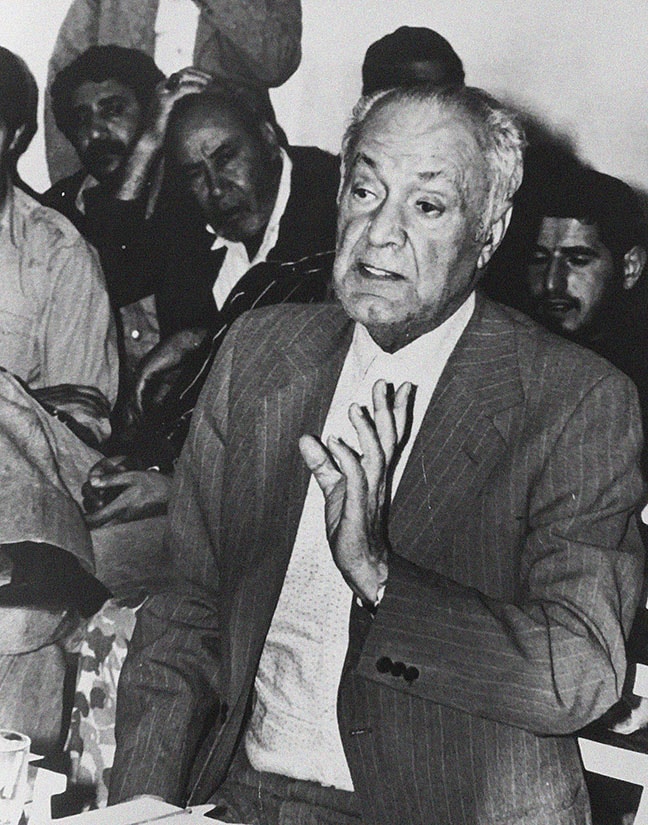
Habib was arrested in March 1979 and tortured in prison; the last image Iranians saw of him was one published in newspapers all over the country: Pleading for his life at a sham trial that lasted 20 minutes. The legendary titan — larger-than-life, amiable and always impeccably dressed — appeared small and meek in the throes of what his granddaughter calls “a killing machine fueled by irrational, vengeful cruelty, its movements running counter to logic, decency and custom.”
Habib Elghanian at his 1979 sham trial in Tehran.
Habib, whose extraordinary business acumen was matched by his philanthropy, was charged with being a “Zionist spy,” shot and buried without any ceremony in Tehran’s Beheshtieh cemetery, with just enough men for a minyan.
Even attending his funeral could have put mourners at risk of being accused of Zionism, which, after the revolution, was and remains punishable by death. The car carrying Habib’s body drove past his iconic Plasco and Aluminum buildings one last time. It was driven by Mikail Loghman, a lifelong friend and director of Beheshtieh Jewish cemetery. The guard who delivered Habib’s body from the morgue demanded compensation for each bullet.
The way in which Elghanayan details her grandfather’s gruesome death is at times gut-wrenching, but her career in journalism proved indispensable to her painful research.
“Shortly after I started working at the AP, I was on the war desk during the Iraq War in 2003,” she told the Journal. “As a news photo editor, I’ve seen a lot of graphic images of death not only from conflict zones but also from natural disasters. If you want to be a good journalist and tell victims’ stories, you can’t let your feelings paralyze you. You have to push beyond that, knowing that you’re telling the world their story and memorializing the victim.”
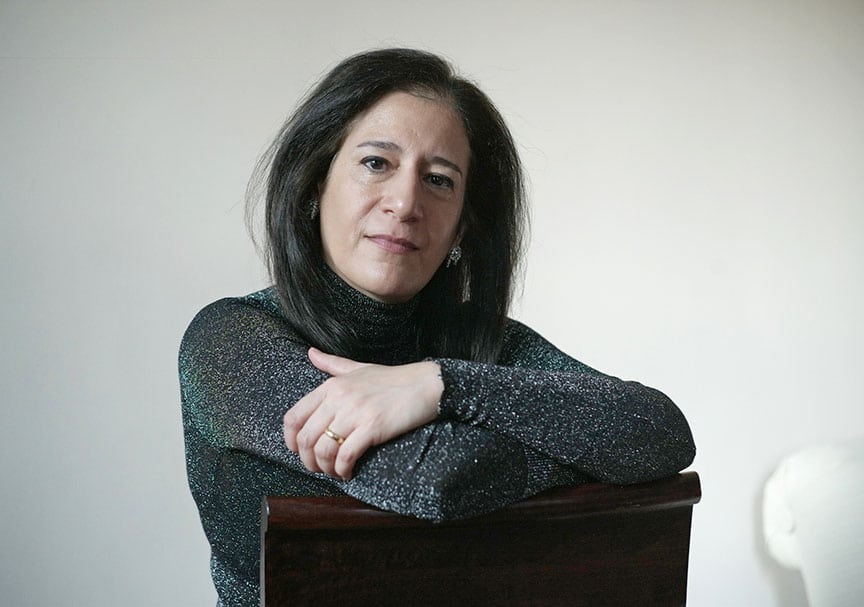
“Titan of Tehran” author Shahrzad Elghanayan. Photo by Patrick Sison
Elghanayan and her family may have left Iran in time, but some of Habib’s closest relatives were still in the country when he was executed. His son, Fereydoun (Fred), along with Fred’s wife, Eliane, and their son immediately went into hiding and needed a way to escape. Elghanayan’s description of the fallout of her grandfather’s murder reads almost like a hard-to-put-down thriller.
Iran’s Jews were terrified upon hearing news of Habib’s death, as they found themselves at risk of being associated with Israel and Zionism. One radio broadcast declared about Habib, “This alien spy was of great value to his overlords.”
There was nothing to do but for a delegation of Jews to visit Khomeini himself. That delegation included the late Hakham Yedidia Shofet, who founded Nessah Synagogue in Beverly Hills. During the meeting, Khomeini assured them that Iran’s Jews “had nothing to do with those bloodsucking Zionists.”
Differentiating between “good” and “bad” Jews is a dangerous antisemitic distinction that has only increased worldwide in the four decades since Habib was murdered on charges of “friendship with the enemies of God.” Jews in Iran today still have to denounce Israel and some are paraded around the country during anti-Israel rallies, holding hateful signs condemning Zionists (they don’t have much of a choice otherwise and still fear for their safety).
Readers will undoubtedly be moved by several alarming themes in “Titan of Tehran” that are as relevant today as they were in 1979: First, the death of Habib Elghanian was a reminder of the seemingly irreparable gap between the public and the private. A country’s large-scale revolution resulted in the death of thousands of individuals—fathers, mothers, brothers, sisters, children and in Habib’s case, a cherished grandfather. The public may have moved on, but their loved ones still remain shattered. The night of Habib’s execution, Peter Jennings made a seemingly cursory announcement on “ABC’s World News Tonight” in which he said, “Elsewhere overseas today, there were more executions in Iran.” Her grandfather’s life and death, and the metaphoric death of Iranian Jewish history in Persia/Iran, were seemingly reduced to those two simple words (“more executions”).
The book is also a reminder that more than ever, Jews worldwide need their ears to the ground. Jewish and pro-Israel advocates who are sounding the alarm about those who nefariously distinguish between Jews and Zionists should refer to Habib’s murder. It was an arguable reminder of the dangers posed by antisemites who claim their only grievances are with Israel.
Finally, Elghanayan’s research is a testament to the suffering of the late-twentieth-century wandering Jew from the Middle East. Neither “white” nor associated with the Holocaust, these Jews are a reminder that at a time when most Americans were enjoying the pop culture of the 1980s, tens of thousands of Jews were fleeing for their lives from Middle Eastern dictators (as well as the former Soviet Union).
The Iranian government stripped Elghanayan’s family of citizenship. “Without our passports, we became stateless refugees overnight—even though Iran belonged to us as much as we belonged to Iran,” she writes. We need more voices and stories, like those of Elghanayan. In killing Habib Elghanian, the regime also killed the future of Jewry in Iran. His granddaughter has proven skillful and invested in bringing Habib’s story back to life.
“Gathering the facts and putting them down on paper is cathartic because clarity is comforting and writing is an active form of grieving,” Elghanayan said. “The fuel in this case was that I was rebuilding his life and death and that even though he was alone, the story would be with readers. They can also sit with the pictures of him at his trial where he’s fighting for his life, see what the firing squads at the prison courtyard looked like, and the photo of him after he died.”
Habib was the ultimate symbol of Iran’s most important asset: its own people. He was also the ultimate symbol of the people’s inevitable demise. But for Elghanayan, yearning for Iran is akin to a “toxic romanticism,” as she unequivocally declares, “Iran is no longer mine … I belong to America and … America belongs to me.”
The book will resonate with all readers, but should especially be read by American leaders contemplating our foreign policy toward Iran; by Jewish communal professionals seeking inclusivity of Persian and other Mizrahi Jews; and especially by college students, as well as young Iranian American Jews who were born in the U.S. but whose parents escaped Iran.
Ultimately, Elghanayan’s research is a heartening act of love. Few people know as many details about their parents’ lives as Elghanayan has uncovered about the life of her legendary grandfather.
Not wanting to abandon his own community, Habib didn’t live to see the mass exodus of Jews from Iran, an exodus that was triggered primarily by his execution. In January 2017, the most iconic physical legacy of Habib Elghanian—the Plasco Building, the tallest building in Iran— was consumed by a fire that killed over 20 firefighters. It fell to the ground in a torrent of flames and destruction.
The Plasco fire was a reminder of life in Iran under the regime: It destroys far more than it has ever built.
Tabby Refael is a Los Angeles-based writer, speaker and civic action activist. Follow her on Twitter @RefaelTabby
We recently hosted 50 young adults in our backyard, making hamantaschen. I started the evening giving one of the reasons why we eat this triangular-shaped pastry.
Hamantaschen are also known as “oznei-Haman”. Translated as the “ears of Haman.” We have some really odd rituals. But eating “Haman’s ears” makes sense when you understand the essence of Purim.
Haman rose in leadership, plotted to kill the Jews, and organized a parade in which he would be praised through the streets. And yet, v’nahafoch hu—everything is turned upside down. Instead, Mordecai rises in leadership, Queen Esther saves the Jews, and Haman’s plot transitions into his own demise. Purim reminds us that the details of our lives aren’t meant for someone else to read. The details of our lives are meant for us to write and rewrite. The holiday teaches that there is always room to flip the script.
My favorite part of the Megillah is when Mordecai reminds Esther that perhaps, she was put into a royal position for a time such as this. She was born for this moment. She took the fate of her people into her hands and constructed a story she deemed worth telling.
We all witness moments in which we can either watch the story unfold or grasp the pen, and change the ending. We were born for moments like these. Moments in which we take steps in determining our fate. Moments in which we make a difference—for ourselves and others.
On Purim, we eat the “ears” of the person that vowed to destroy the Jews. A reminder that we hold real power in our hands if we choose to heed our calling. You were born for this moment. The question is whether you’ll choose to become the author of your own story.
I hope so. Those are usually the best stories to read.
Chag Purim Sameach
Shabbat Shalom
Rabbi Nicole Guzik is a rabbi at Sinai Temple. She can be reached at her Facebook page at Rabbi Nicole Guzik or on Instagram @rabbiguzik. For more writings, visit Rabbi Guzik’s blog section from Sinai Temple’s website.

 Los Angeles poet Rick Lupert created the Poetry Super Highway (an online publication and resource for poets), and hosted the Cobalt Cafe weekly poetry reading for almost 21 years. He’s authored 25 collections of poetry, including “God Wrestler: A Poem for Every Torah Portion“, “I’m a Jew, Are You” (Jewish themed poems) and “Feeding Holy Cats” (Poetry written while a staff member on the first Birthright Israel trip), and most recently “The Tokyo-Van Nuys Express” (Poems written in Japan – Ain’t Got No Press, August 2020) and edited the anthologies “Ekphrastia Gone Wild”, “A Poet’s Haggadah”, and “The Night Goes on All Night.” He writes the daily web comic “Cat and Banana” with fellow Los Angeles poet Brendan Constantine. He’s widely published and reads his poetry wherever they let him.