When the Second Intifada was still happening in 2003, Suzanne Weilgus made a decision: She was going to aid struggling Israeli entrepreneurs.
“Ben Yehuda Street in Yerushalayim was empty,” Weilgus said. “No tourists, no shoppers. Stores had to close. So we brought the stores to America.”
Before the Intifada ended, Weilgus, searching for an imaginative, inclusive project that would be permanent, founded ACHI, American Communities Helping Israel. From 2005 until the pandemic, ACHI was an ambitious movement encouraging Americans to “Think Israel, Buy Israel.” They would hold in-person fairs in New York and New Jersey. Once COVID struck, ACHI turned into an online marketplace with more than 150 Israeli vendors participating.
Seeking to be inclusive in her promotion of Israel, Weilgus developed projects for Americans of all ages.
“We are about putting Israel in the hearts and minds of this generation and future generations.” – Suzanne Weilgus
“We are about putting Israel in the hearts and minds of this generation and future generations,” she said.
Pre-pandemic, the ACHI team promoted the concept in many synagogues as well as schools.
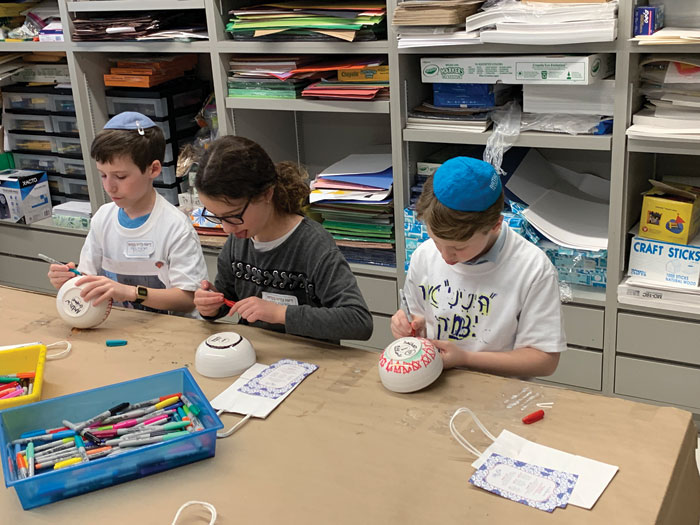
“We went to schools and taught kids how important Israel was,” Weilgus said. “We had something called the klee (Hebrew for vessel). We called this the newest category of Judaica, the only new one in this century. A klee is simply a dish that stands dedicated on your table, in your office, in your synagogue. You make what we call the Klee Commitment, filling it with products from Israel.”
Weilgus said klee also stands for the three divisions of Jews, namely Kohen, Levi and Israel, because “achdut (unity) is so important – to work together to make it work.” A klee can be homemade or purchased.
The ACHI team created the hashtag #MyKlee, encouraging people to post pictures on Facebook and Instagram of their klees, filled with goods from Israel.
“Every time you go shopping,” said Weilgus, “fill it with a product from Israel. In this way, we are changing BDS (the anti-Israel Boycott, Divestment and Sanctions movement) to Buy, Display and Support Israel.”
When Weilgus and her partners visited East Coast schools, they explained to children what the BDS campaign is, how BDS activists are trying to damage Israel’s economy and what students can do to help.
Her widening pro-Israel campaigns were a heavy load for the former teacher, hospital administrator and businesswoman. She ripped a page from the smart promoter’s handbook by seeking like-minded partners.
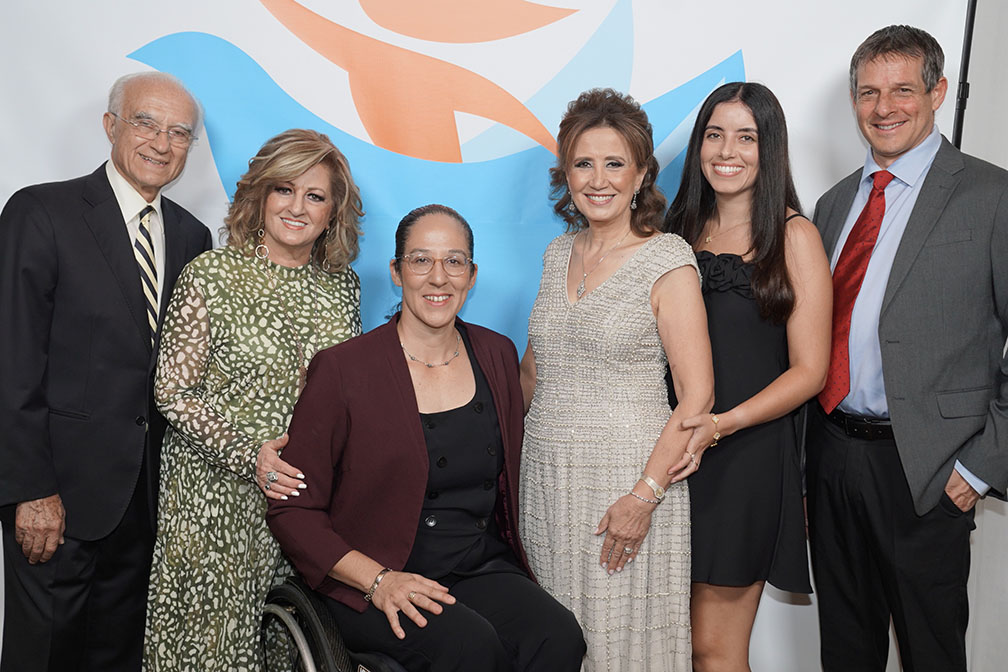
Weilgus recruited lifelong friends Gloria Gordon, Rochelle Zupnik, Dr. Lynda Zentman and Tova Taragin by telling them, “You have to come on this ride with me. There’s a lot to do.” The friends were classmates at Yeshiva University High School in New York, and all of them are now senior citizens.
Each woman has a different talent. “We have become like sisters,” Weilgus said. “It is wonderful.”
According to the founder, the last thing the Jewish world needs is another organization asking people for money.
“But people will do actions,” she said. “And people love to shop. Many companies, about 50 stores, were kept alive. They were able to feed their families because of these fairs.”
When COVID struck, the fairs stopped – and the tourism also came to a halt in Israel. That’s when ACHI went online. The website features products in a range of categories, including Judaica, art, jewelry and skincare.
“In Israel, Judaica is very different from here,” said Weilgus. “It ranges from very traditional to very modern to very hip-hop, very fun. You have all varieties of Judaica items [like] candlesticks, challah covers, Kiddush cups [and] everything you possibly could need to celebrate any Jewish holiday. The variety is incredible. It’s the biggest thing we do.”
Weilgus wanted to emphasize the ACHI enterprise is about supporting Israel, without it being charity.
“This is not about giving tzedakah,” she said. “We have so many different vendors, and the number grows every week. We want you to find something you can buy and enjoy.” n