fbpx

March 16, 2022

Celebrating Or Ami’s Cantor Doug Cotler

Doug Cotler’s heart and soul is woven into the fabric of Congregation Or Ami in Calabasas, where he has been cantor for the last 25 years. In June, the Grammy Award-winning composer and musician, who fuses the contemporary with the spiritual, will retire from the synagogue he founded. His career and music will be celebrated on Saturday night, March 26, at the Or Ami ONE Concert at Viewpoint Performing Arts Theatre in Calabasas. He will also receive the Inaugural Ner Tamid Lifetime Achievement Award.

Cotler blends traditional Jewish melodies with modern popular music to teach, inspire, heal and entertain. He has recorded six albums of original Jewish music and published two songbooks containing the songs from four of his recordings. 

His music spans from the meaningful to adult-contemporary songs with Jewish themes, “Jewish Bluegrass” and humorous songs for kids of all ages. At Shabbat and High Holiday services and in his concerts around the country, he helps his audiences see the humor in life’s challenges, the meaning in each shehecheyanu moment and the hope when all seems lost.

“From the moment I co-led a Shabbat service with him over 20 years ago until now, working alongside Cantor Doug Cotler has been a continuing and inspiring education in kedusha (holiness), menschlichkeit (compassionate kindness) and simcha (unbounded joy),” said Or Ami Rabbi Paul Kipnes. 

A third-generation cantor, Cotler, 72, and his wife, Gail, live in Woodland Hills. They have two sons: Kyle, a rabbi and cantor in Chicago, and Noah, a computer security engineer in Woodland Hills.

Cotler’s cantorial training started at the age of nine; he grew up in Oxnard and would often sub for his father at the Ventura County Jewish Council. His professional career began at 14 – he sang in synagogues, at Jewish Community Centers throughout Southern California and at synagogues as part of his “work-study” program at St. John’s College in Santa Fe, New Mexico. 

His first professional gig was with Mason Williams (best known for his 1968 hit, “Classical Gas”) and the Santa Fe Recital in the early 1970s. Coltler left the tour after his father’s sudden passing to take over cantorial duties at his congregation in Northern California. During that time, he started really studying music. A year and a half later, he moved to Los Angeles. 

“Cantor Doug Cotler has been a source of meaning, depth and musical innovation since he stepped onto his father Cantor Ted Cotler’s bimah to sing in his stead after his father’s untimely passing,” Kipnes said.

It was Cotler’s Hollywood “big break” that enabled him to make such an impact though his heartfelt Jewish music. 

Cotler wanted to be a rock star. He and his writing partner Richard Gilbert spent years trying to make it as songwriters in the late 1970s and early 1980s. They’d write a song, demo it and then take it into Hollywood to try to sell it. Like any great Hollywood story, the duo decided to give this “rock and roll business” one more year, writing songs they thought would sell. 

“We must have written 20 songs that year,” Cotler told the Journal. “About the thirteenth or fourteenth song, this one publisher said, ‘You know, I’m having lunch with this guy who is looking for songs for this movie. This song might be good,’” Cotler said.

The song “Manhunt” was put on the soundtrack to “Flashdance.” It became an international hit and won a Grammy.

“I stopped writing rock and roll, and asked the question, ‘What would it sound like if John Lennon or Paul Simon or Billy Joel or Bob Dylan wrote Jewish music for the synagogue?’” – Cantor Doug Cotler

“With this cushion from ‘Flashdance,’ I stopped writing rock and roll, and asked the question, ‘What would it sound like if John Lennon or Paul Simon or Billy Joel or Bob Dylan wrote Jewish music for the synagogue?’” said Cotler. 

In 1986, Cotler wrote a song about the Shema called “Listen.” He then wrote “So Many Questions” (about the Barchu prayer) and “Standing on the Shoulders” (about the Avot v’Imahot prayer).  

Cotler made a cassette album of his songs and sent out 500 free copies to rabbis all over the country. Rabbi Danny Freelander, the program director at the Reform Movement/Union for Reform Judaism, heard “Standing on the Shoulders.” He called up Cotler and said, “I want to make it the theme of our biennial convention.” 

“[In 1991] I sang the song in front of 5,000 people,” Cotler said. “And that’s what started my career as a Jewish singer songwriter nationally. I found that the songs I wrote – these interpretations of prayers – were really evocative and meaningful and useful in worship. But when I started concertizing, they were too intense. So I started writing all these parodies and funny songs to fill out my concert.” 

While being on the road was exciting and fun, Cotler is a family man. When he was ready to be home, he created a home at Or Ami.

“Or Ami is my family. The synagogue is intimate and intense and deep and incredibly meaningful. So the occasion of my retirement is pretty bittersweet.”
– Cantor Doug Cotler

“Or Ami is my family,” Cotler said. “The synagogue is intimate and intense and deep and incredibly meaningful. So the occasion of my retirement is pretty bittersweet.”

Kipnes said that when working together with Cotler and Rabbi Julia Weisz, they “weave a tapestry of words and music and meaning without even uttering a word. Although his legacy of music and meaning-making is deep and abiding, our congregation will need time to process the loss of this incomparable spiritual leader. Yes, I too will need time to process this, for Cantor Doug is my friend and partner in prayer.”

One aspect of the synagogue that Cotler hopes will continue is their group of young song leaders, called the Madrichei Shir.

“We do 30, 40 b’nai mitzvahs a year,” he said. “I get to hear the kids sing. I identify maybe one or two incredible singers when they’re 12 and 13 years old, and then start working with them.”

Some work at the religious school, some lead services and some sing during the High Holy Days. A few of them could go on “American Idol” or “America’s Got Talent.” Some have gone on to try for careers on Broadway. 

“It it’s an incredible legacy,” Cotler said. “It’s one of the amazing things that Or Ami has done musically. I think that will continue. I hope it does.”

Celebrating Or Ami’s Cantor Doug Cotler Read More »

Yes, I Can Take Your Call Now

Last week I served a sour cream coffee cake—sans the sour cream. These cakes usually turn out well, but this flat, sad-looking thing literally refused to rise to the occasion. This is what happens when you forget a key ingredient, in this case, sour cream. 

In my defense, five grandchildren were underfoot, three of whom had insisted on helping. The girls, seven and nine, are already experienced bakers — I should have left it to them entirely. But also supervising three rambunctious grandsons, ages five, four, and two, was one distraction too far. No one complained, however. The cake still had oil, sugar, chocolate, and a landslide of confetti sprinkles further sinking the cake, courtesy of the four-year-old.

I confess that even as I bask in the glow of my family, I feel impatient to return to my writing work, pushed off for yet another day. 

I love these Sundays and the joyful chaos they bring, culinary and otherwise. But I confess that even as I bask in the glow of my family, I feel impatient to return to my writing work, pushed off for yet another day. When I was a young mother raising our four kids, I knew there was no such thing as a true “work-life balance.” The kids and their needs came first. I managed the house, cooked, shopped, prepared for Shabbat and holidays, drove carpool and to all the kids’ appointments and activities. I exercised, attended Torah classes, and set aside a little quiet time with my husband. I thought: When the kids are all grown up, then I’ll be able to work so much more!

What was I smoking? Now as an older mom and grandmother of eight, I acknowledge there’s still no real work-life balance and there never will be. It’s the best problem in the world to have adult children and even children-in-law who call and want to talk, sometimes about significant life and career issues. What Jewish mother wouldn’t kvell being constantly asked for her opinion? Sometimes, I’m asked to babysit, not only because I offer very favorable rates but can often locate lost pacifiers even in a dark room. I conduct FaceTime Story Time with a two-year-old with an insatiable appetite for books. I still manage the house and cook. Now I’m also planning for Pesach like a general coordinating a foreign invasion: two sets of married kids and their children will bunk down in every spare room. I can already hear the clarion complaint, “There’s nothing to eat!” after I’ve spent a fortune on kosher for Pesach food.

But I love to work, which causes some conflict. Sometimes I summon the courage to create stronger boundaries around my work life and email my kids, announcing with great solemnity the hours when I will not be available and my phone will be on silent. But lacking the discipline to leave the phone in another room, seeing one of my kid’s names on caller ID triggers a highly reactive and emotional mom response — and I cave. What if they really need me? And how nice it always is to hear their voice! 

Ditto for the family WhatsApp. I’m a sucker for any new incoming photo or video of my grandchildren doing something cute. If it’s really cute, such as our ten-month-old granddaughter demonstrating her new skill of making loud, smacking, kissing noises, I may actually binge-watch. I admire my friends who protect their worktime with militaristic zeal. But they will never be the first to watch the latest video of their grandkids dancing and laughing, wearing nothing but skivvies.  

On Friday nights we sing an ode to the Jewish woman, “Eishet Chayil,” written by King Solomon. She was one multitasking momma, negotiating real estate deals, weaving and selling linen garments; giving tzedakah, making sure everyone was well-clad and well-fed. I also willingly work with my hands, but at the computer, not wielding a spindle. I “gird my loins” and maintain strong arms through exercise, the better to heft babies, small children, and heavy pans of brisket. Our foremothers’ lives were in many ways unrecognizable compared to our own, but none of us have ever had “work-life balance.” We juggle our duties as the days and nights require, our family’s interests at heart. And like the “Eishet Chayil,” we look to the future with confidence and laugh.


Judy Gruen’s books include “The Skeptic and the Rabbi: Falling in Love with Faith.”

Yes, I Can Take Your Call Now Read More »

A Springtime Luncheon with Chef Shimi Aaron

For Rachel and I, interviewing Chef Shimi Aaron at last week’s WIZO Queen Esther Purim Luncheon was like reuniting with a long-lost brother. The three of us sat on a stage in the courtyard of the Luxe Sunset Boulevard Hotel in Bel Air. We were bathed in warm sunlight, olive branches waved in the slight breeze, water flowed in the fountain behind us. As Chef Shimi spun tales of his Israeli childhood, we were transported to the kitchen of his Egyptian-born grandmother Allegra. 

Chef Shimi told us how he regularly skipped school to be with his grandmother in her kitchen. He told us how they made kubbah (meat-stuffed dumplings) together. He told us how she gave him an education in spices and a love of feeding people. He told us that she never revealed the secret of his truancy and their rendezvous in her kitchen. 

When Los Angeles Times restaurant critic Bill Addison discovered Chef Shimi’s babka, he bestowed upon him the title Babka King. In his review in the Times, Addison raved about the “beautiful, ornate babka” and the fillings of “chocolate ganache and hazelnuts or halva and pecans, rolled and cut to reveal striations and then twisted into curvy braids, sometimes scattered with rose petals and candy citrus zest.”

While babka is an Eastern European food that is very popular in Israel, Chef Shimi revealed that the rose petals and candy citrus zest are an ode to his grandmother Allegra. “She always smelled of rose water, because she couldn’t afford perfume. And she was always collecting orange peels to candy.” 

While meeting Chef Shimi Aaron is like being with a long-lost brother, attending WIZO events is like being with family. For the past six years, Rachel and I have been inspired by the growth of the Western Region of the Women’s International Zionist Organization under the invincible leadership of Gina Raphael and Rinat Newman. They lead a group of wonderful women dedicated to the cause of helping the less fortunate in Israel. Many of them are transplants from Israel, Australia and South America, places where WIZO has a long and storied history. Over the years, these women have managed to raise substantial sums of money to support the day care centers, senior centers, youth villages, homes for battered women and other social services that WIZO provides in Israel. 

For Rachel and I, one of the joys of being involved in this worthy cause is making friendships with so many admirable women. Breaking bread around the table leads to wonderful conversation and connection. Of course, over this lunch created by Chef Shimi, we tore fluffy freshly baked pita and dipped into his earthy hummus studded with whole garbanzos. He made the most satisfying sweet and sour stuffed onions served over a bed of dreamy, creamy labne. He served a whole grilled eggplant, smashed and splayed and smothered with tahini dressing and scattered crushed walnuts. His coarsely chopped Israeli salad was bright and crunchy and so refreshing.

The Babka King crowned our Queen Esther luncheon with an exquisite serving of chocolate ganache babka served with vanilla ice cream and garnished with citrus candy and little pink rosebuds. 

Of course, the Babka King crowned our Queen Esther luncheon with an exquisite serving of chocolate ganache babka served with vanilla ice cream and garnished with citrus candy and little pink rosebuds. 

If imitation is the sincerest form of flattery, Chef Shimi should be very gratified by this week’s recipes—grilled eggplant with tahini and crushed walnuts and rough Israeli salad. 

We were inspired by the fresh simplicity and perfect combination of flavors. We hope you will be too. 

Eggplant with Tahini and Crushed Walnuts

2 large eggplants
1/3 cup avocado oil or vegetable oil
1/2 teaspoon garlic powder
Kosher salt and pepper
1/2 cup crushed walnuts
1 teaspoon za’atar

Tahini Sauce
1/3 cup tahini
1/2 lemon, juiced
3 tablespoons cold water
1/2 teaspoon garlic powder
Salt and pepper

  • Preheat the oven to 400°F.
  • Cut the eggplant in half lengthways, leaving the green stalk for decoration.
  • Use a sharp knife to create a diamond shaped pattern on the cut side of each eggplant half, without cutting through to the skin.
  • Place the eggplant halves, cut side up, on a baking sheet lined with parchment paper.
  • Drizzle the oil over the eggplant, then sprinkle with garlic powder, salt and pepper.
  • Roast for 30 to 35 minutes until the flesh of the eggplant is golden brown. Remove from the oven and set aside to cool.
  • Combine the tahini paste with lemon juice, water, garlic powder, salt and pepper to form a smooth thick dressing.
  • If the dressing is too thick, slowly add water to thin out.
  • To serve, drizzle tahini over the eggplant, the sprinkle with crushed walnuts.

Rustic Israeli Salad

One bunch basil, washed and dried
Six radishes, thinly sliced
Two Persian cucumbers, sliced on a diagonal
3 plum or Roma tomatoes, quartered lengthwise
8 assorted mini bell peppers, seeded and thinly sliced
3 stalks green onions, chopped finely
1 lemon, juiced
1/4 cup olive oil
Kosher salt
Freshly ground black pepper

• Arrange vegetables on a large platter or in a bowl.

• Dress with lemon juice, olive oil, salt and pepper. 


Sharon Gomperts and Rachel Emquies Sheff have been friends since high school. The Sephardic Spice Girls project has grown from their collaboration on events for the Sephardic Educational Center in Jerusalem. Upcoming events include a Sharsheret Passover Cooking Webinar. Follow them on Instagram @sephardicspicegirls and on Facebook at Sephardic Spice SEC Food. Website sephardicspicegirls.com/full-recipes

A Springtime Luncheon with Chef Shimi Aaron Read More »

YULA Boys Mess Up and YULA Leader Fesses Up

The Jewish way is not to pretend that people should never make mistakes. Our Talmudic tradition recognizes the reality that human beings will always mess up. It is in how we handle these inevitable stumbles where Judaism really shines.

A recent episode involving students at YULA Boys High School gave me a chance to consider this principle. In a poor attempt at Purim humor, some YULA students made fun of their fellow students at Shalhevet High School, an Orthodox co-ed school that has a more “liberal” reputation than the more traditionally Orthodox YULA, which has a separate campus for boys and girls.

This is hardly the first instance of such mocking. For many Orthodox Jews, a co-ed Orthodox school feels like an oxymoron. I’ve had kids at both YULA and Shalhevet. I’ve spoken at both schools. Both schools are dynamic and terrific. They each serve a purpose; they both enrich the community.

I’ve had kids at both YULA and Shalhevet. I’ve spoken at both schools. Both schools are dynamic and terrific. They each serve a purpose; they both enrich the community.

All this to say that it was highly inappropriate for the YULA boys to mock Shalhevet. In our new world of social media, these blunders can quickly spread and take on a life of their own. Next thing you know, you have thousands of people in the community breathlessly talking about “the terrible thing that happened.” I’ve received several emails imploring me to go negative and cover the episode as if we were a tabloid. This only furthers the gossip and leshon harah. It’s the junk food of conversation—tastes great but leaves plenty of indigestion.

What I find more useful and interesting is the courageous response yesterday from the head of school at YULA Boys, Rabbi Arye Sufrin.

Instead of getting defensive, he fessed up to the “highly inappropriate and insensitive behavior” and explained how it violated the school’s standards and principles.

“I am deeply saddened to have to write this letter to the YULA community,” he wrote. “Today, our pillars, especially that of character development, was compromised by highly inappropriate and insensitive behavior that was unfortunately disguised as a poor attempt at humor. These actions are not a reflection of our school’s mission and views, and they constituted a Chillul Hashem.”

His letter goes on about using the episode “to reflect, introspect, and educate our Yeshiva.” Sufrin takes pride in that “we, at YULA, hold ourselves to the highest standard,” while admitting that “today YULA did not live up to that expectation,” and for that, he adds, he is “truly sorry.” His message “applies to everyone, whether they are students or staff, or whether they were involved or not.”

In short, a Jewish leader sees an embarrassing mistake from people under his wing, takes responsibility and uses the experience as a teaching and learning opportunity. Isn’t that the Jewish way?

A Jewish leader sees an embarrassing mistake from people under his wing, takes responsibility and uses the experience as a teaching and learning opportunity. Isn’t that the Jewish way?

Meanwhile, over at Shalhevet, head of school Rabbi David Block also took the high road. Writing to his own community, he advised that “we don’t respond to grossness with grossness. We’re menches, ALWAYS.” Block expressed pride in “who we are – our values, our conversations/dialogue, and especially our LOVE and support of every single student/Jew/person.”

We should all be proud as a community that, confronted with a difficult situation, two leaders rose to the occasion and set a very Jewish example. Now it’s up to the community of both schools to take the lead of their leaders and, instead of settling for anger and leshon harah, find constructive and unifying ways forward.

“Purim is a Chag known for coming together for simcha and celebration,” Rabbi Sufrin wrote at the end of his letter. “So it is especially sad and disheartening that today’s events occurred. The actions of members in our community have caused pain and anger, at a time when our community should be most unified. A central tenet of Teshuva is charata, remorse and regret. It quickly moves, however, to a determination to rectify wrongs and to never allow the same situation to repeat itself. We are full of regret and remorse; in the coming days, weeks and months, we will get to the hard work of building character to ensure our behavior is equal to our values.”

Ensuring that our behavior is equal to our values is a good message for all Jews in all places.

Chag sameach.


YULA Boys Mess Up and YULA Leader Fesses Up Read More »

Attack on Ukraine Summons Haunting Echoes of the Past

As the world watches in horror as millions of Ukrainians resist, take shelter or flee from Russian attacks, news reports stir up connections to a haunting past. For many, images of fear and flight from places like Lviv, Kyiv, Donbas, Odesa and Babi Yar summon echoes of the unspeakable inhumanity of the Holocaust.

These vignettes from testimonies in USC Shoah Foundation’s Visual History Archive bring just a few stories from these places to light. The words of survivors, as they often do, reach forward through time.

Tainted Miracles in Odesa

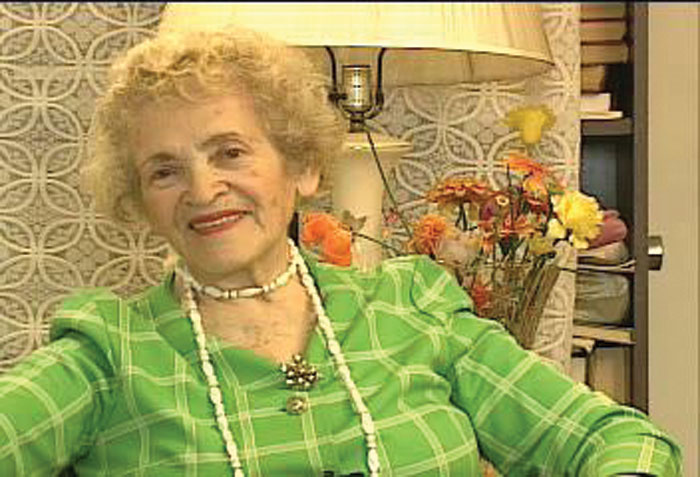
Helen Helfant

To Helen Helfant, Odesa felt like a godsend.

In 1940 Helen and her husband had staged a daring midnight escape from Nazi-occupied Warsaw into Soviet-occupied territory. But they were arrested and banished to a settlement in the forests of the remote Soviet autonomous Republic of Komi, where for four long winter months, they spent their days chopping trees and passed their nights in a windblown shack, fueled only by a daily ration of 600 grams of bread and a bit of watery soup.

Helen and her husband were again able to escape, this time in the spring of 1941 when they trekked into the dense forests of Komi, and then beyond.

“We crossed Russia from the north to the south, mostly running on foot, and partially by train,” Helen said in testimony recorded in 1995. Within a few weeks, they had covered 2,500 kilometers.

“We crossed Russia from the north to the south, mostly running on foot, and partially by train,” Helen said in testimony recorded in 1995. Within a few weeks, they had covered 2,500 kilometers.

“And then we reached Odesa … It was like a miracle, because over there was a warm climate. That is what we were crying in a fantasy, just to reach a warm climate, because we were so much frozen in the Siberian town,” she said.

Helen and her husband both found jobs, and a widow rented them a room in her apartment.

But then, just a few months after they arrived, on June 22, 1941, Hitler attacked the Soviet Union and Helen’s husband was conscripted into the Red Army.

“And Hitler started the bombardment of the city. It was such a beautiful city, Odesa. I will never forget, a beautiful city. And he was destroying the city part by part, again the same thing like in Warsaw, a repetition of Warsaw. There was no light, no water, there was nothing to eat,” she said.

One night, Helen joined a line outside a warehouse to get sugar, oil, bread – whatever the communist government might be offering. She stood in the snaking line from 10 p.m. to 6 a.m., but then realized she had forgotten to bring a jar with which to carry some oil. She asked someone to hold her place in line while she ran back to her nearby apartment.

When she returned 15 minutes later, the line had been decimated.

“It was a terrible bomb that they threw on this line. When I came down, I didn’t recognize anybody – there were hands and legs and heads. The whole line, about 800 people, got killed. If I wouldn’t go for this bottle, I would have got killed the same,” she said. “I don’t believe in miracles, but somehow, it happens in life things that you can’t imagine how it happened.”

Horror in Kyiv

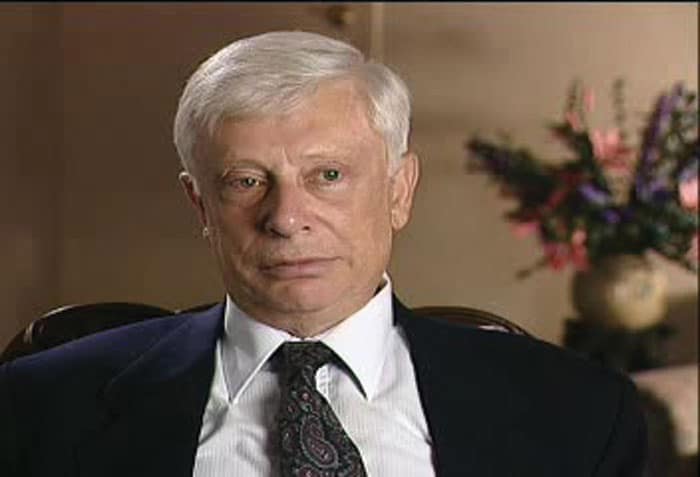
Samuel Orshan

Samuel Orshan lived with his parents, his younger brother, and a large extended family in a Kyiv neighborhood near what was known as the Jewish Market.

He was 11 years old on June 22, 1941, when Germany launched a massive attack on the Soviet Union.

“There was bombing all around us,” Orshan recalled in his testimony. “We lived not far from a big factory and they bombed that factory, so we could hear the explosions, too.” 

The attacks went on for months. Samuel remembered standing on the roof to watch the explosions as his mother screamed for him to come down to the bomb shelter.

One night in August 1941, Samuel’s father, who was serving in the air defense unit of the Red Army around Kyiv, showed up with a truck and told the family to pack. 

One night in August 1941, Samuel’s father, who was serving in the air defense unit of the Red Army around Kyiv, showed up with a truck and told the family to pack. He had spent the previous month planning how to get his family to safety before the city fell under Nazi control. That night he drove his family to the cattle train that would evacuate them, and left to rejoin his army unit.

Samuel, his mother and brother were sent to the city of Kizlyar, in today’s Republic of Dagestan, and then to a nearby farming village. Samuel cared for his brother while his mother worked in a hospital. By the end of September 1941, they heard that Kyiv had fallen to the Germans and received the news that Samuel’s father was missing in action.

A few months later, a neighbor from Kyiv turned up injured in the hospital where Samuel’s mother worked as a nurse. He told them that immediately after the Nazis occupied Kyiv, in September 1941, all of the Jews in Kyiv and the surrounding areas had been rounded up and forced to march to Babi Yar, a ravine near the old cemetery. He said he had seen Samuel’s father there before managing to slip away from the human column and hide in a courtyard. Almost no one else managed to escape the ensuing massacre, the neighbor said. 

As the German army advanced south in 1942, Samuel’s family was evacuated to Tbilisi, the capital of Georgia. There they were housed in a large hall with more than a dozen other families. Samuel’s mother found work while his brother started kindergarten. Samuel tried to talk his way into a military academy, but instead had to settle on trade school.

In December 1943, the Red Army recaptured Kyiv after a prolonged battle with German forces. Samuel, then 14, knew what he had to do.

“I couldn’t stay anymore in Tbilisi. I wanted to go home and fight Germans,” he said.

He left his mother and brother and headed for Kyiv—nearly 2,000 kilometers away—by hopping trains and hitching rides with sympathetic military transports.

He arrived in battle-scarred Kyiv in the spring of 1944. To his great disappointment, the army would not take a boy as young and lanky as Samuel. So, instead, he lived with an aunt and uncle and again enrolled in a trade school.

Samuel later learned that about 20 members of his family—including his father—were among the 34,000 Jews killed at Babi Yar over a two-day period in September 1941.

Waves of War in Lviv

Alex Redner

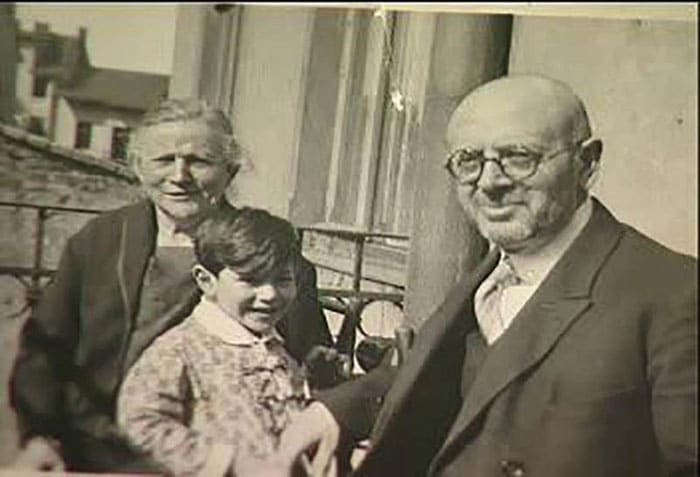
As a young boy, Alex Redner lived through three waves of occupation in his native Lviv (then Lwów, part of the Second Polish Republic): A German invasion followed swiftly by Russian occupation in 1939; another German invasion in June, 1941; and then Russian liberation and occupation in July, 1944. 

Before all that, Alex had enjoyed a good life. His father was a respected doctor, with patients from many backgrounds. Alex had an older sister, Emily, and a large extended family.

Alex was 11 when Hitler invaded Poland on September 1, 1939.

Alex was 11 when Hitler invaded Poland on September 1, 1939. “We had hundreds of refugees fleeing from west to east, and the roads were simply filled end to end with people trying to run away,” he said in his testimony.

“We had hundreds of refugees fleeing from west to east, and the roads were simply filled end to end with people trying to run away,” he said in his testimony.

Within a few days the German military campaign had reached Lviv, which was on the far eastern side of Poland. 

“We had daily bombing of German planes. We were practically living our days and nights in a basement shelter,” Alex said.

On September 17, 1939, Germany handed Lviv to the Soviet Union as part of a secret pact between Hitler and Stalin, and the city, with its large populations of Ukrainians, Poles, Jews and Russians, came under Soviet control.

Lviv rapidly filled with refugees from Poland who wagered that life under Stalin would be better than under Hitler. The Redners made room in their apartment for friends, relatives, and even strangers seeking shelter. 

Then, on June 22, 1941, German planes bombed the city and on July 1, its troops occupied Lviv. 

“From the very first day, it was an abysmal situation. It was like being thrown from a normal life down in the pits and becoming a rat trapped in the bottom of a pit. That was that big of a change,” Alex said.

Nazi attacks on the city’s Jews began immediately. Alex and his family were able to evade several roundups and deportations, but his grandfather was killed. The family lived in and out of hiding using false papers and spent many months in the Lviv ghetto. When the Red Army liberated Lviv in July 1944, they were hiding in a village 20 miles from the city.

When they went back to Lviv – one of only a handful of Jewish families to return – they found that their apartment had recently been vacated by Germans. The Redner apartment became a stop for the many Jewish refugees who arrived in Lviv.

“I remember that we had, day after day, people with a tea in hand telling us the story how they eventually escaped, and they came back to Lwów. And we didn’t have any good news for anybody,” he said. 

The Redners left Lviv in 1946, and Alex made his way to France, where he met his wife, then moved to Uruguay, where his parents were living. He and his wife and two daughters ended up in Pennsylvania.

When he gave his testimony in 1995, he had these cautionary words.

“I think that the lesson that we all should remember is that we are surrounded by a very dangerous world,” he said. “If Hitler succeeded to make out of Germany a nation of criminals in a little time, through a very shrewd effort of propaganda, that same thing can be done in very many other places, in much less time, with the help of television and modern technology. … We should be prepared to somehow deal with it the moment it happens.”


Julie Gruenbaum Fax, former senior writer for The Jewish Journal, is a writer and content creator for USC Shoah Foundation. She is working on a book on her grandparents’ Holocaust experience.

Attack on Ukraine Summons Haunting Echoes of the Past Read More »

Why Did the Judean Hills Fire Grow So Large?

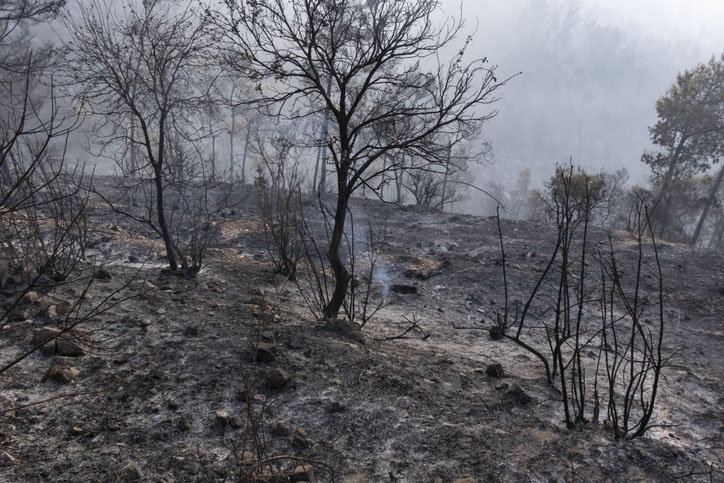
Even more than six months after last August’s raging fire that spread throughout the Judean Mountains, the damage remains quite evident in the landscape. The fire consumed about 11,000 dunams (2,718 acres) of forest, killed thousands of animals, caused extensive property damage, and took 1,500 firefighters 52 hours to put out the blaze.

The majority of the fire spread across two forests: the Forest of the Martyrs and Sataf Forest; two forests located along the Western fringes of Jerusalem that the JNF-KKL had designated as “flagship forests”. This means that these forests in particular were the focal point of the organization’s fire prevention management efforts––forestry practices like buffer zones adopted in the aftermath of the Mt. Carmel forest fire disaster.

If fire prevention measures were applied to the two most heavily charred forests, what went wrong? In a new research article published in the journal, “Ecology and Environment”, experts from the JNF’s Forestry Division and the Volcani Institute analyzed the extent of the fire and the firefighting efforts to understand what worked and what failed in order to improve forest fire prevention practices for the future.

Use the Buffer Zones

In 2013 and 2014, the JNF’s Forestry Division published long-term multi-interface management plans aligned with the principles of forest management theory for the two forests. Part of these plans involved the preparations necessary for reducing the risk of fires due to the forests’ highly susceptible topographies––steep slopes, deep river channels, and dense plots of coniferous trees; three landscape features that increase the chances of high intensity forest fires.

“The first major action taken was the construction of buffer zones around the settlements,” explains Dr. Yagil Osem, researcher in the Volcani Institute’s Department of Natural Resources and one of the authors of the article. “The intention was to thin the vegetation in the outline of strips around a settlement with an emphasis on thinning flammable and tall trees. Doing so can decrease the fire to such an intensity that the fire brigade can more easily stop and extinguish it by the time it reaches a settlement.”

According to Osem, the fire in the Judean mountains showed that a buffer line could sometimes stop the fire by itself without firefighters before tearing through a settlement. This was the case when the fire approached Eitanim, a settlement area that remained completely untouched while the forest surrounding it completely burned.

The journal article therefore emphasizes buffer zones around settlements to be one of the most effective protective tools against raging forest fires. In addition to Eitanim, localities such as Tzuba, Shoeva, and Beit Meir that had buffer zone infrastructure also remained unharmed by the fire. By contrast, localities without a buffer zone such as Ramat Raziel and Givat Ya’arim, did experience severe burning damage.

So, why weren’t buffer lines established around these settlements as well?

Osem explains, “In all the areas that were under the management of the JNF and the Nature and Parks Authority, buffer lines were set up around the localities, but in the areas of the regional councils, however, the operation was not carried out properly.”

Considering the areas that were severely damaged and the areas that were left unaffected, the August fire and the current state of the Judean Hills have finally begun turning the heads of Israel’s policymakers who have until now not arranged a budget appropriate to the scale of the issue.

“A government decision was issued this past February that includes the allocation of a budget for the establishment of proper buffer zones around localities,” Osem adds.

Lack of Coordination With Firefighters

In addition to the effective buffer lines established around the settlements, fire preventative measures were also made within the forests themselves. One such preparation was the establishment of a system of buffer lines designed to delimit a burning area, prevent the passage of that fire from one area plot to another, and enable fire brigades to feasibly reach different areas to safely carry out firefighting operations.

“Firefighters can deploy on the buffer network and stop the fire, but if they don’t use the network as part of their strategy, the buffer lines are almost useless,” Osem explains. “The intensity of the fire decreases near them, but then it passes them and moves on,” Osem explains.

With the exception of a few isolated cases where firefighters did use these buffer lines effectively, they were hardly used in the case of the August fire.

Why was this the case? Osem explains, “Overall, the buffer lines were not part of the firefighters’ agenda. We haven’t yet reached a point where firefighting brigades are being trained on how to navigate them and use them to their advantage.” This gap has led the authors of the article to recommend establishing a cooperative network between relevant entities regarding how best to combat a raging fire in the region.

“In collaboration with the National Security Council, the National Emergency Authority, and other entities, Israel’s National Fire and Rescue Authority promotes the establishment of buffer zones as an important requirement for the protection of localities,” said Dr. Shai Levy, Chief of Collection and Research in the National Fire and Rescue Authority, in response to the journal article. “The location of the buffer zones is no less important than their width, so a comprehensive vision is needed to achieve maximum efficiency. The strategy of fighting fires in forests and open areas takes into account the use of low-flammable areas, such as buffer zones, roads, etc., to create stop lines as part of the operational combat plan.”

Prevent a Fire or Let the Forest Grow?

Another preparation taken on in the forest involves thinning appropriate numbers of tall and flammable pine trees and low-occupying vegetation. According to the article, about 40% of the forest (except for the buffer areas), had received thinning treatments, but it was mainly for the expressed purpose of cultivating trees and encouraging the development of mixed, healthier forests rather than reducing the risk of fire.

At the same time, goat grazing, which helps dilute forest floor vegetation, almost exclusively took place in buffer zones due to the lack of available herds. But even after these thinning measures were implemented, the researchers note that much of the forest area still contained a high density of flammable coniferous forests.

“There is a dilemma here,” says Osem. “On the one hand, we don’t want to completely dilute the forests because of the fire risks because forests provide many ecosystem services––whether in terms of landscape, carbon fixation, or recreation for the general public. On the other hand, we do not want to foster a scenario allowing mega-fires to erupt.”

The article also identifies the climate crisis to be another significant factor responsible for the increased risk of out-of-control forest fires as it is causing frequent instances of extreme dehydration of the vegetation.

A Worthwhile Investment

Since it is impossible to completely prevent the development of forest fires, the authors of the article propose a new approach involving the thinning of pine tree cover in the topographic areas that are most prone to accelerating a forest fire. This can preserve forests while simultaneously preventing enormous fires from developing like the one that erupted last summer.

“We need to build a mosaic of areas that combine several different plant formations––dense areas, tall trees, understory vegetation, groves, orchards, and more; all in different spots so that each area may play a different role,” explains Osem. “Without this type of approach, we can expect fires to blaze across thousands of densely packed acres without stopping. But if this alternative planting strategy is implemented, firefighters would be able to contain fires to a limited area of ​​only a few hundred acres.” Osem also notes that forest-dwelling animals would then have routes by which to escape.

“Although forest fires are natural, we have to invest money in planning and caring for the forest in order to maintain the countless roles it plays to prevent mega-burning, which in the end will always cost much more than the amount invested in its prevention,” Osem concludes.

Why Did the Judean Hills Fire Grow So Large? Read More »

Matisyahu On His New Self-Titled Album, Future Plans, Phish, Fatherhood & More

Matisyahu first became a household name with 2006’s “Youth” album. A follow-up to his acclaimed “Live At Stubb’s” live release, “Youth” featured the single “King Without A Crown” and was certified gold — over 500,000 copies shipped in the U.S. — within a month of release.

Plenty more success would follow for Matisyahu with future albums, as “One Day” – an unofficial anthem for the 2010 Olympics – from 2009’s” Light” helped yield another gold-selling album for the New York native. To date, he has sold over 5 million career physical albums, and has over 500 million total career streams across all global platforms. He has topped Billboard’s Reggae Album charts 4 times, and 4 of his last 5 studio albums have landed in the top 20 on the Billboard 200. Matisyahu is a founding signatory of the Black-Jewish Entertainment Alliance and the Creative Community For Peace.

2022 is yet another busy year for Matisyahu. March 25, 2022 brings the release of his self-titled album via Fallen Sparks/Thirty Tigers, as distributed by The Orchard. It was produced and co-written by the Columbian-born, Brooklyn-based pop and electronic duo Salt Cathedral. Recent hit single “Keep Coming Back For More” is a look at the birth of the New York native’s daughter Esti River. The title of third single “AM_RICA” is a spin on the Hebrew phrase “Am Reika,” which roughly translates to “empty nation.”

On March 14, 2022, I had the pleasure of interviewing Matisyahu again, as embedded below. Beyond talk about his new album, we discussed his time living in Los Angeles, Phish and some of the other bands who inspired him, Jewish musicians of note, and future career plans.

More on Matisyahu can be found online by clicking here, here and here.


Matisyahu On His New Self-Titled Album, Future Plans, Phish, Fatherhood & More Read More »

Rabbanit Alissa Thomas-Newborn Leaving Position at B’nai David-Judea

In 2015, Rabbanit Alissa Thomas-Newborn became the first female clergy member of an Orthodox synagogue in Los Angeles. During her time at the shul, she worked with a variety of populations, helping members of all ages connect to their spirituality and practice. Now, she’s leaving her position to move to the East Coast with her husband, Akiva Newborn, and their daughter Ella, to work as a chaplain at New York Presbyterian-Columbia University Irving Medical Center.

“I feel very blessed to have been in the LA community,” Thomas-Newborn said. “LA is both a very large and a very small community. When I first came here, it was tough, but once I really built relationships with people, I felt so embraced and supported. I was lucky to have had relationships with people in the Orthodox community, as well as other dominations and faiths.”

According to the rabbanit, one of the most meaningful aspects of her work was the mental health awareness events and Shabbatons she held. At the first Shabbaton, there were two families who had been great friends for years, and in that space, they learned they each had a sibling with mental health issues.

“They actively reflected on that moment and how that was a part of themselves they have never shared with anyone else,” she said. “When people say ‘How are you doing?’ at kiddush, they can be themselves when they answer and be part of the community. The shul is there to make us feel like it’s an extension of our family.”

One event that stood out to Thomas-Newborn happened during a Shabbat kids’ program. Every Shabbat, the Torah is taken out for the children to see. “There was a little girl who didn’t get to see it, and she came up to me crying,” she said. “I said ‘Let’s do it again.’ We took out the Torah together and opened it up and looked inside. She was so incredibly happy and joyful to be near it. That was such a privilege to be part of that with her and for a child to feel that connection to Torah.”

A job that Thomas-Newborn was tasked with was building up the young professionals community at the shul. “When I started, it was a very small group of people, and now it’s almost at 100 people,” she said. “We recently had a Friday night minyan and it was full of joy and singing and felt like life was back to normal.”

Before joining BDJ, the rabbanit received her semicha from Yeshivat Maharat as well as graduated Magna Cum Laude from Brandeis University. She is a Board Certified Chaplain (BCC), and did her original chaplaincy training at New York Presbyterian. Along with working at the hospital, she’s going to be publishing a Shabbat guidebook for families with babies and toddlers within the year and looking into part-time pulpit work.

“I feel very blessed to have been in the LA community.” – Thomas-Newborn

“I love pulpit work,” she said. “I cherish it. I’m sad to leave it and didn’t want to let that go. It’s really important for female Orthodox leaders to continue to work in pulpits because there aren’t that many of us.”

In a speech to his congregation about the rabbanit’s departure, Rabbi Yosef Kanefsky, senior rabbi at BDJ, said, “We will be experiencing a difficult parting of ways. Each one of us, without even a single exception will miss your passion, your pastoral insight and care [and] your Torah.”

According to Kanefsky, over the coming months, his shul “will be engaging in a deep and broad process through which we will arrive at a specific vision for the future of our female clergy position,” he said. “We will begin the process of searching for the person who will fill that position.”

For Thomas-Newborn, working in the Pico-Robertson community was a wish fulfilled. “I’m from Redondo Beach, and my dream was always to live in Pico because that’s where the kosher food and all the good shuls were,” she said. “There are a variety of ways in which I was able to live my dream.”

Even though her departure is bittersweet, she is looking forward to a new start.

“I’m very sad because I love this community so much and I’m so connected to it,” she said. “But I’m hopeful for what’s in the next chapter for myself and my family.”

Rabbanit Alissa Thomas-Newborn Leaving Position at B’nai David-Judea Read More »

Shalhevet Girls Basketball Team Has a Historic Season

Shalhevet Firehawks Varsity Girls Basketball won the 2022 California Interscholastic Federation State Regional Championship, beating Victory Christian Academy in Chula Vista 62-52. For the first time in Shalhevet Girls Basketball history, they played in the California State Championship Game on Friday, March 11. Though they lost 38-27 to the San Domenico Panthers, the coaches, players and administration are optimistic about this past season and what lies ahead for the team.

“To say that this has been a historic year is an understatement,” said Talia Tizabi, team captain and a senior at Shalhevet. “The fact that we not only won the CIF Regionals but ultimately made it to the California State Championship game is a lesson to any Jewish kid that they should never limit their dreams or potential. It is possible to go all the way.”

During the season, there was plenty of adversity that could have stopped the team from getting so far. According to coach Ryan Coleman, in a preseason tournament, they lost two starters within five minutes of each other to season-altering injuries. Senior Jessica Melammed suffered a torn ACL and missed the entire season, and Junior Talia Tibi suffered a dislocated kneecap and missed the entire regular season. Yalee Schwartz missed six weeks because of torn ligaments in her ankle.

“The bright side of all of the injuries was that we had other players develop aspects of their game that they would not have otherwise had a chance to do,” Coleman said.

To prepare for games, the team practiced nearly every day after school. They also spent hours watching film and finding areas to improve both as a team and individually said Tizabi, who has been playing basketball since she was five and played for Pressman Academy as well. “We cultivated excellent teamwork through team bonding off the court, including team dinners and celebrations.”

“We cultivated excellent teamwork through team bonding off the court.” – Talia Tizabi

According to Head of School at Shalhevet Rabbi David Block, the team is unique not only because they are skilled, but also because of the Jewish pride they have.

“I don’t think any other Orthodox schools have ever made it this far,” he said. “It’s a huge moment. Our players proudly embrace their Judaism, and when they play with grit and character as they always do, that creates a tremendous Kiddush Hashem (sanctifying God’s name). How often do commentators spend significant time on a game’s broadcasts talking about the importance to the teams to get back home before Shabbat? It’s a special thing to see and hear.”

The first week of April, the team is going to begin offseason training and workouts and then dedicate the spring and summer to improving. “Although we will be placed at least one division higher than we were last year, our team will remain hungry to fight for another opportunity at another special postseason run,” said Coleman.

Block said that he hopes Shalhevet students will be inspired by the team’s wins, and it’ll motivate them to accomplish their goals.

“As long they want it, care deeply about it and put in the effort, the ceiling is much, much higher than they might have thought. And we can live Torah [and] Jewish values even beyond the walls of our own school or classroom. We do it every time we step onto the court and show how successful we can be, and with integrity and character throughout.”

That certainly rings true for Tizabi, whose Judaism guides her on the court.

“I take pride in the Jewish values that have been instilled in me and I feel that we need to demonstrate these values both as players and fans, especially when things don’t go as we would like,” she said. “Whether it is showing referees the respect they deserve, helping up opposing players when they fall or always shaking hands with the other team, our team acts with dignity as we represent both Shalhevet and the larger Jewish community. I am proud of the way our team has conducted themselves. We wear our jerseys with a red Magen David with pride.”

Shalhevet Girls Basketball Team Has a Historic Season Read More »

Sierra Club to Continue Israel Trip After Initial Cancellation

After initially canceling their trip to Israel amidst pressure from pro-Palestinian activists, The Sierra Club will reportedly continue with their trip to the Jewish state.

Dan Chu, president of The Sierra Club, announced in a March 15 statement that the environmental nonprofit will “update our schedule soon to offer new outings to Israel later this year.” “Recently, the Sierra Club hastily made a decision, without consulting a robust set of stakeholders, to postpone two planned outings to Israel,” he said. “The process that led to this was done in ways that created confusion, anger, and frustration. Let me be clear: the Sierra Club’s mission is to enjoy, explore and protect the planet, and we do not take positions on foreign policy matters that are beyond that scope. We do not have a deep understanding or knowledge necessary to do so, nor is it our place to do so. Furthermore, we have and always will continue to loudly condemn anti-semitism and any and all acts of hate. We are committed to working more intentionally, thoroughly and thoughtfully so we can prevent this from happening again.”

He added that the organization will be conducting “a holistic review of our outings process to better guide the destination of our trips and the itineraries of them” and will “create future outings to Israel and other countries around the world that are strongly aligned with our conservation policies and our core values.” 

The Jewish News of Northern California (The J) had initially reported on March 11 that The Sierra Club had canceled their trip to Israel later in the month after a coalition of progressive activists lobbied them to do so. Since then, there has been “an outpouring of public statements and open letters from Jewish and pro-Israel organizations” and “representatives of Jewish advocacy organizations and state politicians met virtually with Sierra Club officials Monday afternoon,” per The J.

Rabbi Abraham Cooper, Associate Dean and Director of Global Social Action Agenda at the Simon Wiesenthal Center, told The Times of Israel (TOI) and The J that The Sierra Club Vice President Ross Macfarlane called him and apologized over the initial cancellation. Macfarlane said that the decision should have been reviewed by the board and that he doesn’t want the environmental nonprofit to become embroiled in “anti-Israel activity,” Cooper said.

“We appreciate that the Sierra Club acted quickly to reverse the announced cancellations of trips to Israel which placed the famed American conservation organization directly into the crosshairs of BDS, anti-Israel, and anti-peace zealots,” Cooper told TOI. “The Jewish community needs to awaken to the fact that extremist anti-Israel and antisemitic organizations will continue to try to insert their anti-peace poison pill into the mainstream of American corporate culture as they have already done on American campuses.”

Anti-Defamation League CEO Jonathan Greenblatt tweeted that he was “encouraged by the conversations I’ve had with @SierraClub leadership over past 24 hours. They made the right call to reverse their decision to cancel trips to Israel. If we want to be able to continue correcting the wrongs that we see, #OpenDialogues and teachable moments will always be key.”

StandWithUs Israel Executive Director Michael Dickson tweeted, “Well done @SierraClub on seeing the light! I’m sure your Israel trips will be amazing, eye-opening and relevant to the goals of your mission.”

Creative Community for Peace Director Ari Ingel tweeted, “After initially being duped by BDS [Boycott, Divestment and Sanctions] misinformation, they [The Sierra Club] now understand what BDS is really about.”

Sierra Club to Continue Israel Trip After Initial Cancellation Read More »