
Print Issue: Why Was There No Operation Warp Speed For Therapeutics? | Jan. 28, 2022
Print Issue: Why Was There No Operation Warp Speed For Therapeutics? | Jan. 28, 2022 Read More »


Decision-makers in Israel continue to set targets for reducing greenhouse gas emissions, with the aim of mitigating the climate crisis. It has recently been suggested that methane gas emissions (the second most important greenhouse gas affecting global warming, after carbon dioxide) from the natural gas industry in Israel are 50 times higher than estimated by the Ministry of Energy (the Ministry of Energy rejected these claims). Now, measurements conducted in one of the landfills in Israel raise real concerns that there are significant discrepancies between the reports of methane emission estimates from landfills reported to the Ministry of Environmental Protection, calculated on the basis of accepted international models, and the extent of actual emissions.
Organic waste that is landfilled undergoes anaerobic decomposition in the absence of oxygen, and therefore emits a flammable gas mixture called “landfill gas”. Landfill gas usually consists of about 50% methane and about 50% carbon dioxide, and a small fraction with other gases. Because methane greenhouse gas heats the atmosphere tens of times more than carbon dioxide, landfill gas is sometimes burned to reduce greenhouse gas emissions from landfills, or even used to produce energy. Methane is also a secondary air pollutant, which causes the formation of ground-level ozone air pollution.
In the abovementioned measurements, conducted last summer by SP Interface, led by Dr. Daniel Madar, it was found that the amount of methane emitted from the landfill is 6 times greater than the emission estimates reported by the landfill to the Ministry of Environmental Protection. The measurements were performed using satellites of the Canadian company GHGSat, which measure high-resolution and high-precision methane emissions. “These are preliminary results from a small number of measurements – but the satellite company has continued to measure the methane emissions in the landfill every week for the past six months,” says Madar. “The full data were not passed on to us, but the company hints that the situation remains quite similar to that reflected from the first measurements.”
Data on emissions from Israeli industry to air, land and water are collected at the Pollutant Release and Transfer Register (PRTR) in the Ministry of Environmental Protection. When there are existing and available technologies for measuring air emissions and when the emitted material is important (for example, measurements of heavy metals or benzene that are hazardous to health), the emissions are measured in the facility and the results are reported to the PRTR (sometimes data on one pollutant include both measurements and modeling).
In other cases, when it is expensive or very complicated to measure pollutant emissions into the air, and / or when the emitted material is of less importance; Companies are not required to directly measure the extent of the emissions themselves, but are required to use criteria set by the Ministry of Environmental Protection to assess emissions. This is usually on the basis of accepted international models of pollutant emissions from known industrial or agricultural processes.
Regarding landfills, the extent of emissions is calculated based on parameters such as the amount of landfilled waste, composition, climatic effects, and treatment methodologies for landfilled waste (e.g., whether landfill gas collected and burned from waste is collected and burned). “The emission assessment criteria are based on the calculation of an accepted international model that the Ministry of Environmental Protection submits to landfills – this make it possible for the state to collect the information according to estimates, without performing actual complicated measurements at each facility separately,” says Madar. “It is important to emphasize that this is not an improper procedure -, and that this is also what is performed in other developed countries.”
“Because landfills are big, evolving and complex facilities; because until a few years ago there were no practical technologies for maybe because landfills emissions are of lesser concern in the EU due to the low fraction of landfilled waste there; and maybe because up until lately greenhouse gas emissions were of less importance compared to acute air pollutants- globally, landfills air emissions are estimated based on models and are not measured.”
Naturally, estimates of air emissions based on models, often cannot be completely accurate. The surest way to understand the extent of pollutant emissions into the atmosphere is to measure them directly. Today, in contrast to the past, there are already methods for measuring methane emissions from landfills with high accuracy. The preliminary results found by SP Interface were collected and analyzed using the satellites of the Canadian company GHGSat, which are able to cover a very large area of about 100 square kilometers, reach a high resolution of about 25 meters, and which take into account different climatic, weather and geographical conditions.
“We trust the satellites that the measurements they perform reflect reality, they undergo regular calibrations and verifications by measuring controlled methane emissions at known rates,” Madar emphasizes. According to him, it is not obligatory to use only satellites to get a better understanding of the situation on the ground. “Emissions can also be measured by other new technologies. For example, In parallel with the satellite measurements, we also performed ground measurements using thermal cameras by the Israeli company Opgal, designed to detect methane emissions. These measurements also showed methane emissions from the landfill with similar characteristics.”
“Assuming that our initial satellite measurements are accurate, it means that the models of the Ministry of Environmental Protection do not accurately reflect reality,” says Madar. “These models were developed from experiments in the laboratory and in the field, but the conditions of the experiments are limited in scope and duration, and they cannot reflect all types of landfills, and all complex conditions that develop within different landfills. Sometimes models are inaccurate and should be improved, or should be replaced with new measuring technologies when these are available.”
“The bigger problem will be if these high emissions that we measured in this single landfill also exist in other landfills in Israel. In such a situation, the actual volume of emissions of all greenhouse gases in Israel can be tens of percent greater than the volume of emissions calculated today. We will be happy to find out that we are wrong and that our initial measurements do not represent the situation, but in order to know this, we have to measure more methane emissions from landfills in Israel.”
The researchers passed the measurements they made to the Ministry of Environmental Protection. “The experts at the Ministry of Environmental Protection were very surprised by the data – they understand the problem and the implications of it, and said they are examining the issue and discussing it,” says Madar. “However, the Ministry of Environmental Protection has not yet told us if they intend to start actually measuring the emissions from the landfills.”
Methane is emitted from production, transportation and\or use of coal, oil and natural gas; from growing cattle and rice and, as mentioned, of the activity of waste landfills. In landfills, methane is emitted when the microscopic creatures that live in it decompose the organic matter in the waste anaerobically (without oxygen). “A ton of methane heats up the atmosphere much more than a ton of carbon dioxide, although it is less stable and most of it decomposes in the atmosphere within 20 years.” Says Madar.
According to him, until recently, many ignored the effects of methane. “Most scientists used to look at atmospheric warming on a 100-year scale – in such a period of time, each ton of methane warms the Earth 35 times more than carbon dioxide.” However, in a shorter period of 20 years, methane warms the atmosphere 85 times more than carbon dioxide.”
According to Madar, therefore, when it comes to solutions to reduce the climate crisis in the short term, every small step taken to reduce methane emissions will be of great benefit. For example, if we want to reduce greenhouse gas emissions by 50% by 2030 to limit global warming to 1.50c degrees above the average temperature before the Industrial Revolution, we must reduce methane emissions on a large scale. “Any avoided ton of methane will have a much greater impact in the near future than preventing the emission of a ton of carbon dioxide,” he says.
According to the report that the United Nations Intergovernmental Panel on Climate Change (IPCC) published last August, a third of global warming is due to methane emissions – therefore, reducing carbon dioxide emissions alone will not be enough to mitigate the effects of the climate crisis. In Israel, according to data from the Ministry of Environmental Protection, about 77 percent of methane emissions come from direct landfilling of organic waste without prior treatment (and this may worsen if the initial measurements mentioned here are found to represent reality).
Following the publication of the latest IPCC report and ahead of the Glasgow Climate Conference in autumn 2021, Israel has joined a US-European initiative to mitigate and reduce the effects of the climate crisis, which includes a goal to reduce 30 percent of methane emissions by 2030. “When we reach the target year, we may find that we emit 3 or 5 times more methane than we thought we emit today” he concludes. This is why methane emissions from a large number of landfills in Israel should be measured over time, and not just evaluated.”
“Understanding the scope of the problem will make it possible to direct sufficient resources to address it. Indeed, the Ministry of Environmental Protection’s 2020 waste treatment strategic plan includes a massive reduction in the amount of waste landfilled, but it will take at least a decade to achieve, while there are techniques that can be applied today in landfills to reduce methane emissions from waste that has already been landfilled.”
A number of articles have recently been published claiming that the amounts of methane emissions from landfills, according to a calculation based on remote sensing measurements, are higher than a calculation according to the USEPA’s LandGEM model. In general, according to the MPSL methodology, measurement is more accurate than using a model based on emission factors, and should therefore be preferred. However, currently the most available and advanced tool for calculating landfill emissions is the LandGEM model.
The Ministry of Environmental Protection is not aware of any regulatory requirement abroad for landfills to report their emissions using remote sensing measurements. If such a methodology is published, the ministry will work to examine it and adopt it. We emphasize that greenhouse gas emissions from landfills are one of the high emission factors and should therefore be reduced. Implementing the Ministry of Environmental Protection’s waste strategy is the right way to reduce landfill waste as well as the greenhouse gas emissions that result from it.
The article was made by Zavit – Science & Environment in Israel
The Hidden Methane Emissions Read More »

I recently came across a paper I wrote in rabbinical school. My theology professor Rabbi Neil Gillman, may his memory be a blessing, would ask each senior rabbinical student to describe the God they believe in. As I reread my paper, I realized that while I experience a development in each of my relationships (family, friends, community members), how little attention I have given to my evolving relationship with God. Perhaps it is time for me to revisit that assignment. How many of us take the time to evaluate our relationship with God?
An exercise you might consider: when was the last time you experienced God? What does the experience feel or look like? Some might experience God in the ways Bnai Yisrael did at the foot of Mount Sinai: A divine revelation accompanied with thunder, lightning and the blasting of shofarot. Loud, present, a visible recognition of an intervening God. A moment in which you say to yourself—this is God, I know it. Or you might experience God like Elijah. An inner voice reminding you of your purpose, encouraging you to get up and face the day. A small, still voice that may be harder to hear, but fills you with an unbridled strength. A voice you have a very hard time ignoring or pushing away.
Of course, your experiences with God may be entirely different, difficult to describe, or beyond definition. We are encouraged to check in with our loved ones, assess our relationships and even evaluate ourselves. Yet, to expect a connection with God, we must do the holy work. A spiritual check-in. A check-up: where and when does God fit in my life? What is the description of the God you believe in?
Check in with the Holy One. May your relationship with God continue to evolve, deepening your roots of faith and expanding your sense of wonder.
Shabbat Shalom
Rabbi Nicole Guzik is a rabbi at Sinai Temple. She can be reached at her Facebook page at Rabbi Nicole Guzik. For more writings, visit Rabbi Guzik’s blog section from Sinai Temple’s website.
A Bisl Torah – A Godly Check-in Read More »

As January blows in a tidal wave of Omicron here in California and across the nation, I am blowing out—and trying to keep time with my slippered, WFH foot: one and two and three and four and one and two and three and four. After almost forty years, I’m learning to play the flute again.
It’s not like I was a prodigy the first time. Like most people who played an instrument in the middle school band and took a few lessons, I quit without a second thought. I thought the flute was a pain—practicing got in the way of my preferred 1983 activities, like working on my bangs, hanging out at the arcade and watching MTV.
During the first wave of the pandemic, inspired by all the baking and crafting, I purchased a flute, but only picked it up once or twice. During 2020, my main escape ended up being writing essays and painting badly. I called it “hate paint.” When working from home, schooling from home and watching the fabric of our democracy fray from home simply got to be too much, I’d grab my paintbrushes and flee to the backyard, wildly slopping streaks of orange and yellow and blue paint onto the side of our garage. It wasn’t pretty. Hate paint wasn’t about creating anything—it was about getting the yuck that was inside me out where it couldn’t hurt anyone.
Finally the vaccine came, then boosters and a few months of getting back into the world, adjusting gratefully to our new normal. Kids went back to school and did dances and soccer games and recitals and we all gingerly stepped back in, gun shy but grateful. In fact, before this most recent surge, we were able to celebrate my daughter’s 18th birthday, my husband’s 50th and even the winter holidays with our small extended family. Each occasion was extra special; we were keenly aware that we were lucky to be out in the world, hugging, laughing, breathing the same air with the people we loved, without the fear of getting anyone sick.
Then, Omicron.
I am not as angry this time, though I probably should be since there’s lots to be angry about and it’s a privilege not to be. Instead, this round, maybe it’s the exhaustion but I find myself searching for joy wherever I can find it, like oxygen. This time, it’s not about getting something out, it’s about bringing light in. My fifteen-year old son Finn, who re-discovered the piano during the first wave, has taken to the drum set a neighbor kindly passed along to him, his enthusiasm luring my daughter back to the piano and my husband to the guitar with renewed passion. A few weeks ago, all of this music led me to unpack the flute and order an elementary school music manual: “Essential Elements for Band, Flute Book 1.” It was delivered last week and already I’m up to page 7, which means I’ve remembered how to play four notes and taught myself one new one: E flat. Thanks to the manual and more concentration than I’ve had to garner in awhile, I now have a repertoire—”Hot Cross Buns,” “London Bridge” and “Clair De Lune.” I am primed and ready to play a three-minute set for an audience of preschoolers, but it doesn’t matter because the only person I’m playing for now is me.
Playing an instrument makes your brain happier than even just listening to music, which is great for your mental health too. Playing makes for better communication skills, less anxiety and decreased agitation.
If all of this makes you think you should dig out your old middle school flute (or trumpet, clarinet, tuba) the research agrees with you: playing an instrument makes your brain happier than even just listening to music, which is great for your mental health too. Playing makes for better communication skills, less anxiety and decreased agitation.
We can all use that right about now.
And even though it’s been just a week or so, when I take a break from work, stand up and play a couple notes from “A-Tisket A-Tasket,” I have to say, I do feel better. The counting, the focus, the mastery of even a tiny thing seems medicinal. Yoga but without the sweat. Heart lifting. So, go on and do it, take out that old, neglected instrument. I think you’ll find it’s got more to offer you now than it ever did in middle school.
Geralyn Broder Murray is a Northern California-based writer whose work has appeared in Newsweek, USA Today and Shondaland. www.GeralynBMurray.com @GeralynBMurray

February is Jewish Disabilities Awareness, Acceptance and Inclusion Month (JDAAIM), which raises awareness about disabilities within the community and encourages inclusion. This year, to commemorate JDAAIM, Jewish National Fund-USA (JNF-USA) is holding a national virtual event, “Leaving No One Behind,” on January 31. The event is going to feature Oscar-winning actress and bestselling author Marlee Matlin, who is Jewish and deaf, as the keynote speaker.
“JNF-USA has been the leader in Jewish philanthropy and a natural partner for me in my goal to pass along the lessons of tikun olam I learned from my parents, my teachers and my mentor, Henry Winkler,” said Matlin, a trailblazer who was the only deaf actress to win the Oscar, told the Journal. “In particular, I am proud of their commitment towards the Jewish deaf and disability community as exampled by their support of Special in Uniform in Israel.”
JNF-USA is the leader in raising funds for people with disabilities in Israel. The organization’s initiatives include Special in Uniform, which incorporates young adults with disabilities into the Israel Defense Forces (IDF) and ADI Negev-Nahalat Eran, a state-of-the-art rehabilitative village in the Negev Desert that’s home to more than 150 children and young adults with complex medical conditions and severe disabilities.

It also runs LOTEM, an organization that makes nature accessible for people with disabilities in Israel, and Red Mountain Therapeutic Riding Center, which is in the Negev Desert and provides equine therapy to people with developmental, emotional, neurological, behavioral and/or learning disabilities.
“People with disabilities make up the world’s largest minority group, and it’s important for individuals and organizations across the country to raise awareness and foster inclusion for people with disabilities and special needs in February during Jewish Disabilities Awareness, Acceptance and Inclusion Month, and all year long, to ensure no member of our community is left behind,” said JNF-USA National Campaign Director Sharon Joy.
According to Joy, every year, JNF-USA raises millions of dollars to support Israel’s population, including people with disabilities, so that they can fully experience the wonders and beauty of their country.

Playwright David Mamet, a JNF-USA Disabilities Task Force Member based in L.A. who will also speak at “Leaving No One Behind,” told the Journal the task force “leads the world in raising funds and awareness to improve the lives of these individuals and their families. My family and I have benefitted from their work. I urge you to support them.”
Joy said that over 1,000 people are expected to join JNF-USA for the kickoff event, which will showcase information about the organization’s disability programs. Local sponsors include Young Israel of Century City, Beth Jacob Congregation and Young Israel of North Beverly Hills, and all gifts that are given to JNF-USA toward JDAAIM are going to be matched, up to $1 million, through February 28.
“The tenet of tikkun olam is one of the foundations of Judaism and [reminds] people out there, both Jews and non-Jews alike, of our dedication to reaching out to all people regardless of their abilities.”
— Marlee Matlin
For Matlin, participating in the JNF-USA event is important because it highlights the commitment Jews “have had historically towards inclusion of those that society has overlooked and marginalized,” she said. “The tenet of tikkun olam is one of the foundations of Judaism and [reminds] people out there, both Jews and non-Jews alike, of our dedication to reaching out to all people regardless of their abilities.”
To register for the event, visit jnf.org/JDAAIMkickoff.
JNF-USA Highlighting Jewish Disabilities Awareness With Marlee Matlin Event Read More »

Almost two weeks have passed since we first heard about a synagogue under attack in Colleyville, Texas. Sadly, we don’t need any more reminders about how rising antisemitism in America and around the world threatens our safety and security. We understand all too well that the Jewish community must be ever vigilant.
In some ways, moments like these are old hat for us. What is new is the speed with which we hear about it and respond. I learned about the situation just after Shabbat morning services. A colleague in Austin texted me that Beth Israel “in Colleyville, TX is being held hostage live on Facebook – you can hear Charlie Cytron-Walker talking with the gunman.” Within hours, we had sent a message of solidarity and hope to our community.
When we see ourselves as part of a People, part of the global Beit Yisrael (House of Israel), we experience these traumas collectively. Even if we didn’t personally know those taken hostage, we can see ourselves in that sanctuary. We can imagine our beloved clergy being called to display the calm, non-anxious presence of Rabbi Cytron-Walker.
Part of what helps me manage the anxiety that comes with being a Jew is the knowledge that we are here because previous generations faced similar challenges (and many far worse) and persevered.
Part of what helps me manage the anxiety that comes with being a Jew is the knowledge that we are here because previous generations faced similar challenges (and many far worse) and persevered.
My cousin, Rabbi Eliezer Davidovits, served as the head of the rabbinical court in Stranyan, Slovakia during the first half of the 20th century. In 1942 he was murdered by the Nazis but not before he memorialized much of his Torah in a manuscript that was rescued by his daughter after the war. This is how I came to learn a lesson about resilience from a relative who died twenty-seven years before I was born.
The Torah tells us that Yitro, Moses’s father-in-law, “heard all that God had done for Moses and for Israel…” (Exodus 18:10) Yitro was a Midianite priest who, according to Rabbinic tradition, later converted to Judaism precisely because of what he heard about our deliverance. The question my cousin asks is what specifically did Yitro hear that inspired him to become a Jew?
His answer is suggestive for this moment especially. He notes that a verse in Psalm 136 praises God for parting the waters of the Red Sea into “many partings,” using the plural form. My cousin teaches that the miracle at the Sea of Reeds happened for all of us as a collective but in a unique fashion for every Israelite. As our ancestors entered the sea, a special opening was created for every person. We all crossed over together but each in their own way, on their own path.
What a powerful metaphor for what it means to be a Jew. We have a shared history and a common destiny and at the same time, each of us experiences what it means to be a Jew in unique ways.
We all respond to challenging moments like these differently. Some of us, after hearing about an event like Colleyville, decide to show up to synagogue in person the following week for worship. Others post about their feelings on social media or process them with friends or a therapist. There are many ways to respond, many ways to move forward in the face of such hatred. What’s not an option – at least not a good one – is to give up. As Professor Deborah Lipstadt, the President’s nominee as special envoy to monitor and combat antisemitism, wrote last week in the New York Times: “We are resilient because we cannot afford not to be. That resiliency is part of the Jewish DNA. Without it, we would have disappeared centuries ago. We refuse to go away. But we are exhausted.”
We are tired of having to respond to antisemitic flyers, synagogue shootings, anti-Israel rhetoric, and daily aggressions about Jewish power or wealth. We are tired but we will not go away. We will get through this challenging moment. We will cross over to the other side. We will continue to be brave and resilient together, each one of us in her or his own way.
Rabbi Yoshi Zweiback is the Senior Rabbi of Stephen Wise Temple in Los Angeles, California.
Crossing Over Together Read More »

One verse, five voices. Edited by Salvador Litvak, the Accidental Talmudist
If, while breaking in, the thief is discovered, and he is beaten to death, there is no bloodguilt in this case. If the sun shone upon him, there is bloodguilt in that case; he shall surely make restitution. If he lacks means, he shall be sold for his theft.
-Ex. 22:1-2
These psukim teach us that self-defense is permitted. In looking at the words “if the sun shone upon him” the Talmud raises the question: “Is the sun only going to shine on them? Rather, If the matter is as clear to you as the sun that they don’t wish you peace, kill them. But if not, don’t kill them.”
Just because something is allowed does not mean it should be done. While Jewish law allows violence to keep an evil from occurring, it also mandates that the minimal amount of violence be used to accomplish one’s goal. Each human life is precious, made in the image of God. And therefore, when we are in a position in which killing “the thief” is the only way to survive, we are not to celebrate the end of an enemy’s life. In Pirkei Avot, Shmuel haKatan repeats: “Do not rejoice at your enemy’s downfall.”
All of this to say: Judaism is a tradition that teaches us to hold two values at once.We should protect ourselves and our families at any cost, and we should also care for those who aim to harm us and our families. We should defend ourselves, and we should do so while inflicting minimal damage to those who wish ill upon us. This notion feels like a necessary intervention in an increasingly polarized world.
We live in a moment of black-and-white thinking, a time in which complexity and nuance often fall to the wayside. Judaism asks us instead to hold contrasting truths at the same time, and to remember that even a matter as critical as self-defense is not always simple.
These verses are fraught with confusion, especially in our times where there is so much anger and uncertainty on both sides of the aisle when it comes to issues of law and order.
The commentaries and Talmud elucidate the understanding that, depending on the situation, one may kill an intruder. If there is justified fear, a possibility of danger and the unknown, it appears to be permissible. The Ramban understands that if one were to literally come at night, we may kill them because they are reasonably coming to kill you whereas one who comes during the daytime is not willing to kill you, since once they have been discovered they will run away.
Similarly, the Alter Rebbe discusses the idea that one is willing to sin before God but is much more careful with their actions around other people. This idea that we show one side of ourselves around some people and another around other people is all too often the case with domestic abuse. Whether it is verbal, emotional or physical abuse, the spouse (usually the husband) is often seen as a glowing example of the ultimate great guy. Whereas in reality, their spouse lives in constant torment and pain.
As a child survivor and married to a spouse who experienced domestic abuse, I have seen the pain of my mom z’l, and wife’s torment. If you are experiencing domestic abuse, please contact thehotline.org.
Protecting Life is a core Jewish value. In this simple case, the Torah is giving legal and ethical guidance we can still learn from today. Rabbi Shimon Yitzchaki (“Rashi”), the foremost commentator on the Torah, states “from here we learn that if someone comes to kill you, get up and kill him first.” The Jewish approach to self-defense is neither reluctant nor frowned upon. When there is even implied deadly intent, the Torah justifies taking the assailant’s life.
However, if it is clear as day that the perpetrator will not cause harm – “as the shining sun brings peace,” this is not justified.
Looking at the human components: If it is unknown if the home-invader may be coming to cause harm, there is a range of emotional and cognitive reactions we could expect to see, including some that could result in killing the perpetrator. On the other hand, if it is known that the person would not cause harm, the reactions are limited to simple emotions such as pride, hatred, or anger.
The Torah here shows compassion so a self-defender need not cope with the trauma of a wrongful killing, should the home-invader have unknown intent. This care is not extended to one who acts out of an emotional outburst.
In modern times, we often find “misplaced compassion,” which works against the everyday Good Guy. Yet here we have this ancient wisdom – which the world could use more of with each passing day.
Why such different outcomes for the same crime?
The day thief is just a thief. The night thief acts with bad intent. Willing to sneak in the dark, we can assume he’s like Dostoevsky’s underground man, a wretch capable of anything, and so we may act to preempt him, even kill him. Shoot first, ask questions later.
The contrast illustrates Torah’s revolution in justice, an extension of its phonetic alphabet-granted ability to document, for the first time in history, the inner life of human souls. Its omniscient Author can peer into psyches and motives, the first-person intimate, and specify penalties to fit not just the apparent circumstances of an act but the intentions of the actors.
The night tunneller represents a whole class of malevolents, troglodytes whose sincerest intentions don’t match their behaviors, dissemblers, imposters, con-men, and liars. The Talmud tells us, God “hates him who says one thing with his mouth and another in his heart.” Maybe even plain everyday sarcasm and irony lies on the road to villainy, subverting trust, burgling innocence, eroding simplicity, tunneling under the foundation of truth. Isaiah says, “Woe to those who say bad is good and good, bad.”
On the other hand, who doesn’t have an outer and inner life in less than perfect accord? How do we measure the distance between what’s in our heart and what comes out our mouths? This is the calculus of the soul, our daily personal struggle with the metaphysics of good and evil.
Because the laws of Mishpatim, such as this week’s verse, constitute the major portions of civil and criminal law in the Torah, now is a good time to try to unpack the relationship between the written law (Torah) and the oral law (Talmud). It is sometimes assumed that the oral tradition is no more than the authorized interpretation of the written law. But, not so quick. As the great scholar Yeshayahu Leibowits points out, and I am paraphrasing:
It is not the literal meaning of the verse which guides the Jew in observing the Torah and the mitzvot, but the world of the oral law … What is unique about halachic (or rabbinic) Judaism is that it recognizes the autonomy of the oral law and in truth it is the oral law which determines and decides rules based on its own criteria. Furthermore, this process is supported and insisted upon by the written Torah. This is a basic principle of faith in the historic Judaism of Torah and mitzvot.
I find it interesting to note the strong comparisons between the Torah and our own US Constitution. George Fletcher, Professor of Law at Columbia University, describes the Constitution as a secular holy text! Both are interpreted through a body of law – the oral law versus case law and both have final courts of appeal – the Sanhedrin versus the Supreme Court. On the other hand, there is no historical evidence of Democrats or Republicans attempting to pack the Sanhedrin.
Table for Five: Mishaptim Read More »
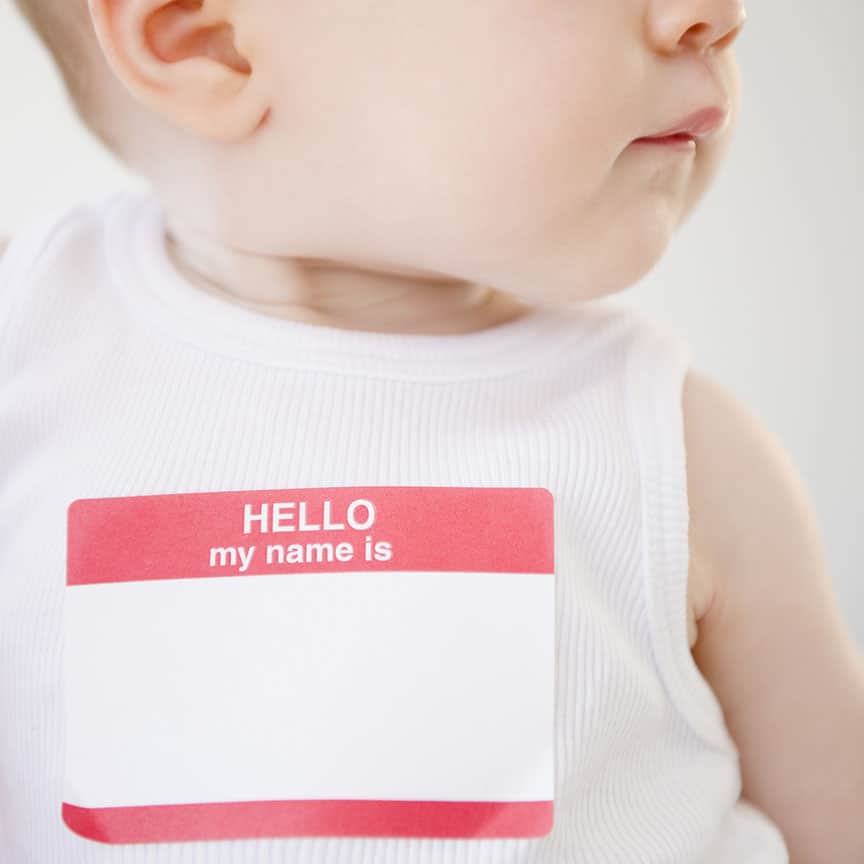
When I was six months pregnant with my first child, a friend approached my husband Daniel and I and told us that her four-year-old son Cameron had an interesting dream the previous night.
“Cameron dreamt you’re having a girl, and her name is going to be Sophia,” she said.
Daniel and I didn’t know the gender of our child. We had a boy’s name picked out, but couldn’t come up with a girl’s name.
“Sophia,” I said. “That’s beautiful.” Daniel agreed.
I learned that when it comes time to name a child, an angel will whisper their name in your ear. So when I gave birth to a baby girl, Daniel and I knew that Sophia, or Tzofia, was her name. In Hebrew, it means “watcher” or “wisdom of God.”
Our rabbi pointed out that the word tzofiya is in “Eishet Chayil,” the song for women we sing every Friday night. Starting when Tzofia was a newborn, whenever we reached that part of the song, we joyfully yelled her name. Nowadays, Tzofia, who is two, loves our Friday night ritual.
This wasn’t the first time that a name came to me in a fateful way. When I was converting to Judaism, I was having trouble picking out a Hebrew name. Then, our friend Seth Glass told me one day, “Your name should be ‘Ora,’ because it means ‘light,’ and you are full of light.”
I loved it. Plus, Seth is not only a gifted musician, he’s also very spiritual. I knew he was onto something.
“The names we are given at birth aren’t accidental. They are to some extent prophetic. They capture our essence. They are the keys to our soul.” – Rabbi Benjamin Blech
When I got pregnant, again, this past spring, Daniel and I chose not to find out the gender of our baby. His wonderful grandmother Elaine had just passed away, and we decided we wanted a name that was spiritually significant and also honored her memory. We picked Ella if we were having a girl. Also, we know only one woman named Ella, and she is incredibly sweet.
The story doesn’t end there, though.
When I was seven months pregnant, our friends Sam and Jordan and their five-year-old daughter Batya, Tzofia’s best friend, came to visit us for the High Holy Days. We were walking to shul when Jordan said, “Batya woke up this morning and said that if you have a girl, you should name her ‘Ella.’”
Daniel and I literally gasped.
“Are you kidding me?” I said. “That’s the name we picked out!”
When I had our baby girl on December 28, we named her Ella, of course. But we couldn’t figure out a middle name.
“What about Batya?” Daniel said.
It only made sense. Batya, our little “angel,” predicted the name, and we love her and her name, too. The parsha the week that Ella was born was Shemot, where Pharaoh’s daughter Batya rescued baby Moshe. It all clicked.
After Daniel went to shul for the official baby naming, I called my mom, who is a nurse, to tell her our daughter’s name.
She replied, “Ella? That’s what I wanted you to name her.”
“Huh?” I said.
“Yeah, I always liked that name. I had a patient once named Ella, and she was a very nice woman.”
“Did I tell you I liked the name Ella?”
“No, you never mentioned it,” my mom said.
Two weeks after this happened, I was having another conversation with my mom when the name Ella came up again.
As we were getting off the phone, my mom said, “Oh yeah, I wanted to confirm this with your aunt before I told you, but it turns out, your great-grandmother’s middle name was Ella.”
Once again, I couldn’t believe it.
In Judaism, a name is very powerful. Neshama is the Hebrew word for “soul,” and the middle two letters, shin and mem, form the word “shem.” This means “name” in Hebrew.
“The names we are given at birth aren’t accidental,” writes Rabbi Benjamin Blech. “They are to some extent prophetic. They capture our essence. They are the keys to our soul.”
I’m grateful to God for giving us wonderful daughters with meaningful names. Our daughters are the biggest blessings in our life. If God gives us a third child, I’m confident another “angel” will whisper his or her name. And I can’t wait to hear what it will be.
Kylie Ora Lobell is the Community and Arts Editor for the Jewish Journal.
An Angel Will Whisper the Name Read More »

Almost everyone knows those actors of the 1950’s and 60’s who rose to fame and fortune on Broadway, on the silver screen and on network television. Marilyn Monroe, Ethel Merman, Elizabeth Taylor, Doris Day, Lucille Ball, and Carol Burnett just to list a few, became household names to millions of Americans. Their lives, open to public scrutiny, were often punctuated with rocky marriages, substance abuse, and in some cases, suicide. They lived in luxurious Bel Air mansions or extravagant New York penthouses, and were instantly recognized when they went out in public. But what about the thousands of actors who never became “stars”; those talented people who worked on the sidelines as auxiliary characters and made a modest living in a variety of movie and television roles, but whose names are not recognized by the public?
Think of the expendable crew member on Star Trek who is killed by alien lasers, the invisible doorman on “Rhoda,” the annoying customer in Marty’s butcher shop, Pharaoh’s general in “The Ten Commandments,” or the human resources director on “The Big Bang Theory.” All are necessary roles in the flow of the show, but rarely do these hardworking actors receive the recognition they so rightly deserve.
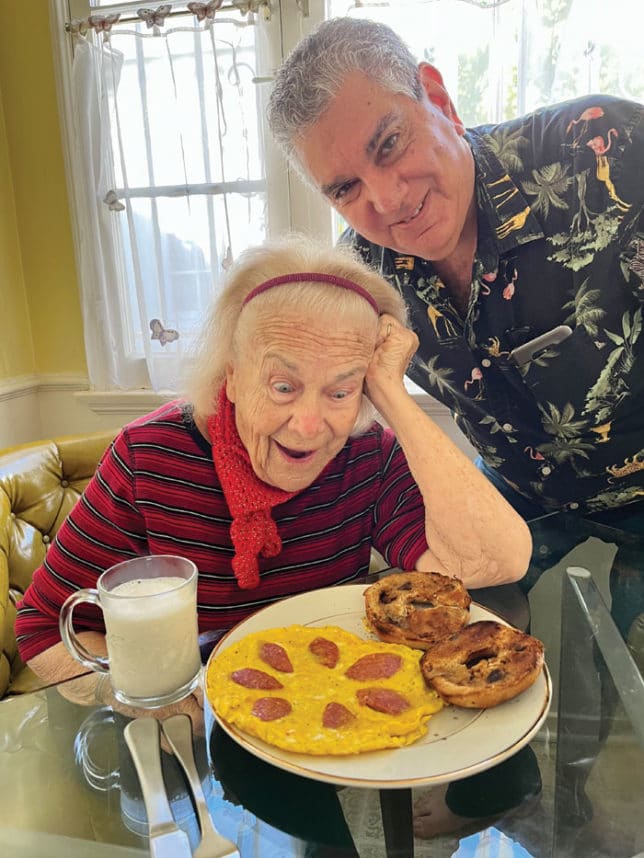
During a recent trip to Los Angeles, my wife and I had the opportunity to meet one of these unsung heroes of the entertainment industry, Ms. Helen Geller, a feisty 94-year-old veteran of Hollywood’s Golden age.
During a recent trip to Los Angeles, my wife and I had the opportunity to meet one of these unsung heroes of the entertainment industry, Ms. Helen Geller. We had the honor of being guests of this feisty 94-year-old veteran of Hollywood’s Golden age. She lives in the Pico-Robertson neighborhood in a one-story home that is reminiscent of a 1950’s sitcom. Every available surface is lined with tchotchkes and every wall is plastered with photographs and awards. Helen welcomed us with open arms. Our accommodations consisted of a wood-paneled bedroom filled with souvenirs from every decade starting from 1940. Hats, dresses and furniture from the 40’s, LP’s and photograph albums from the 50’s and 60’s, a non-working boom box from the 1970’s, VHS tapes from the 1980’s, DVD’s and CD’s from the 90’s and a very out of place flat-panel TV that might only be a few years old.
Helen Gould was born in Rochester, New York on November 6, 1927. She was the twin sister of Herbert Gould and the youngest of eight children. Her name was never recorded on her original birth certificate. Instead, the document lists her name as simply “Baby Girl Gould” and she explained that many of her friends still call her Bee-Gee to this day. After much discussion between her siblings, who decided that their new sister’s name must also begin with “H,” they eventually chose Helen. In Rochester, Helen had fond memories of George Eastman, founder of the famed Eastman Kodak Company. According to Helen, Eastman would provide shoes, free dental care and even new violins to the less fortunate citizens of the area. Summers were often spent in a “Communist” camp in Canada where campers would receive free room and board in exchange for learning Communist doctrine and folk songs.
 The family packed up the car and made the journey along Route 66 to Los Angeles in 1936. Helen’s first “gig” in acting was when she performed a singing and dancing act with her twin brother in a school amateur contest. As a child actor, she had bit parts in a couple of B-movie Westerns starring Gene Autry and Smiley Burnette. “All we had to do was sit on the fence of the corral and smile,” Helen explained. She attended Hollywood High School and graduated from Los Angeles Community College.
Helen was part of the “Meglin Kiddies,” a well-known troupe of acting, music and dance performers, consisting of children up to the age of 16. The acting and dance studio would provide players for many well-known motion pictures and radio shows, and graduates included Shirley Temple, Jane Withers, Jackie Cooper and Judy Garland.
Helen was a huge fan of actress and singer Deanna Durbin. One Sunday evening in November 1936, Helen’s family got tickets to the “Texaco Town” radio show starring Eddie Cantor. One of the guest stars on the show was thirteen-year-old Deanna Durbin. When Deanna sang in her beautiful operatic voice, Helen was enthralled. She has seen and re-seen every Durbin movie and is a lifelong member of the Deanna Durbin Society.
Helen performed at the Mayfair Supper Club where she was known as the “French Chanteuse.” The opening act was a young comedian by the name of Dick Van Dyke. At the Mayfair she would belt out tunes made famous by Edith Piaf (“La Vie en Rose”) and Nat King Cole (“Darling,” “Je Vous Aime Beaucoup”). Although she never learned to speak the language, she was able to sing the tunes with perfect pronunciation and a very believable French accent. During our stay with Helen, she enchanted us with her versions of those songs.
Helen was active in the Hollywood dating society, but she adamantly refused to succumb to “couch casting”. She turned down a leading role in a film when the director asked her to come to Palm Springs with him. She met the love of her life, Irving Geller, on a blind date. Helen had been working as a Navel Material Inspector and one of her co-workers, Pauline, was Irving’s sister-in-law. Pauline arranged the introductions. Irving had served under General Patton as a machine gunner and was a recipient of the Purple Heart. This was quite a contrast with his day job as a violinist and Associate Concertmaster of the Los Angeles Philharmonic. Together they had two children, Valerie, a world class first-chair violinist and maestra, and Paul, a production manager in the entertainment and music industry. Their marriage lasted until Irving’s death in 2011.
Helen was active in the Hollywood dating society, but she adamantly refused to succumb to “couch casting”. She turned down a leading role in a film when the director asked her to come to Palm Springs with him.
Helen’s resume includes acting on radio, live theatre and television. She performed in “The Tale of the Allergist’s Wife” alongside Valerie Harper. She played Yente the Matchmaker in countless runs of “Fiddler on the Roof” and sang “A Gal’s Got To Do What A Gal’s Got To Do”, as Hazel Hunt in the West Coast premiere of the musical “Radio Gals” at the Pasadena Playhouse. She was in the cast of the summer stock production of “The Music Circus” at the Broadway Sacramento Theatre.
You may have seen Helen as a patient on the TV series “ER” or the comedy “Scrubs.” She was often cast as a habit-wearing nun, and her most memorable role was playing Sister Joselia in an episode of “Frasier.” She also appeared in such popular shows as “The Nanny”, “Will and Grace” and “The Practice.” Helen was Grandma Tessie in the short-lived sitcom “Bette” starring Bette Midler. She recently appeared as a mischievous granny in a Pizza Hut commercial.
Helen wrote and performed a couple of parody songs: “Shonda on a Honda” about an observant Jewish girl who rides her motorcycle through the streets of Brooklyn and “High Colonics,” a tune about being on the receiving end of a dreaded enema. She was happy to perform these ditties for us during our visit with her. She is able to converse in perfect Yiddish and she enjoys listening to Klezmer music.
At 94 years old, Helen has retired from the stage and screen. She continues to entertain family and friends and we spent a very enjoyable week reminiscing about her acting days, the people she met and the stories of a Hollywood from long ago. I sat with Helen as we watched old movies on Turner Classic Movies and reruns of the “Dick Van Dyke Show” and “I Love Lucy” on the Decades channel. Helen was able to share valuable insights and colorful anecdotes about almost every scene. Every morning we would prepare Helen’s special drink, which she called a “Baverka,” made from caramel coffee creamer and boiling water. In the evening we would join her for some Manischewitz Elderberry wine. We were privileged to meet this wonderful lady from Hollywood’s golden age and hope we can be here to celebrate her 100th birthday.
Paul J. Starr is a recently retired systems analyst who has lived his entire life in Montréal, Canada. On Sunday mornings he is “living the dream,” hosting a two-hour Internet radio show featuring music from the 50s and 60s called “Judy’s Diner.”
Shonda on a Honda – The Helen Geller Story Read More »