fbpx

January 27, 2022

Legal Hot Takes – A poem for Parsha Mishpatim

I
You shall not pervert the judgment of your poor man in his lawsuit.
Exodus 23:6

I tried to buy a lawsuit once
but they wanted to upsell me
with the law-shoes and the law-tie.

II
But in the seventh [year] you shall release [the land]
and abandon it; the poor of your people shall eat [it]
Exodus 23:11

My back yard lemons are ready for you
my neighbors, my friends
Let your iced teas be forever garnished
Let this Sabbath of the land
garnish all that is yours.

III
Three times you shall slaughter sacrifices to Me during the year.
Exodus 23:14

The one good thing about
The Temple being rubble is
I don’t have to mix myself up
in the entrails of my finest lambs.
Or decide which one gets to go.

IV
You shall not cook a kid in its mother’s milk.
Exodus 23:19

I never do
I never would
There was a time once
when I did
But not now
Not anymore
Not ever


God Wrestler: a poem for every Torah Portion by Rick LupertLos Angeles poet Rick Lupert created the Poetry Super Highway (an online publication and resource for poets), and hosted the Cobalt Cafe weekly poetry reading for almost 21 years. He’s authored 25 collections of poetry, including “God Wrestler: A Poem for Every Torah Portion“, “I’m a Jew, Are You” (Jewish themed poems) and “Feeding Holy Cats” (Poetry written while a staff member on the first Birthright Israel trip), and most recently “The Tokyo-Van Nuys Express” (Poems written in Japan – Ain’t Got No Press, August 2020) and edited the anthologies “Ekphrastia Gone Wild”, “A Poet’s Haggadah”, and “The Night Goes on All Night.” He writes the daily web comic “Cat and Banana” with fellow Los Angeles poet Brendan Constantine. He’s widely published and reads his poetry wherever they let him.

Legal Hot Takes – A poem for Parsha Mishpatim Read More »

“Womb of Diamonds” Details the Life of a Syrian Woman in Japan

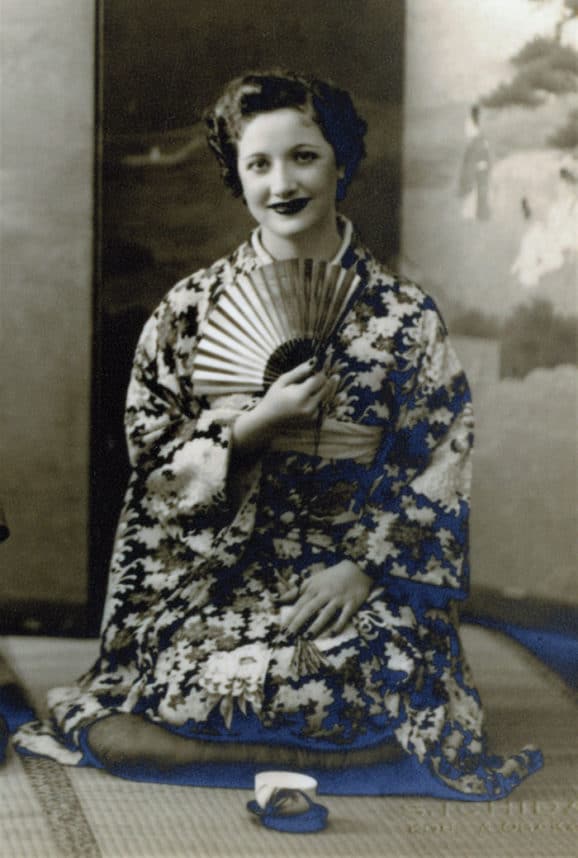
When Ezra Choueke was in his early 30s, he started interviewing his grandmother, Lucie Choueke, about her life. She was in her 80s and lived in Japan, which was only a three-hour flight from China, where Ezra was working at the time. 

“I needed some stress relief from working in a global business and this gave me the ability to shift my focus for a few hours a week,” he said. “My grandmother was in a different place in her life, but we actually had a lot in common. She was accustomed to business challenges, and was managing three successful businesses at the time, but wanted to tell her story to someone she trusted.”

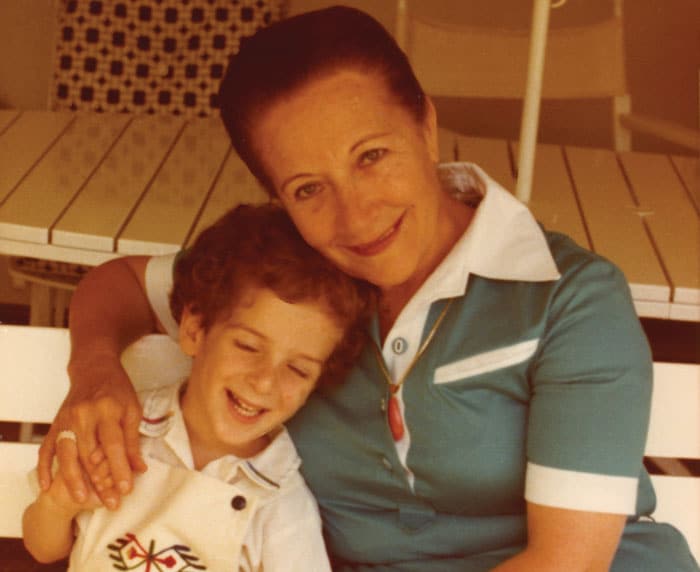
Lucie Choueke
(Photos courtesy Ezra Choueke)

Ezra didn’t set out to write a book, but after hearing his grandmother’s fascinating stories, he knew he had to publish them. Now, they’re available in a new biography called “Womb of Diamonds: A True Adventure From Child Bride Of Syria To Celebrity Businesswoman Of Japan,” which was released in late 2021.

The book details Lucie’s life, starting from when she was a child growing up in Aleppo, Syria. In her hometown, people used chickpeas instead of wedding invitations, and the souk, the market, was a magical place. 

When she was just 13, she faced her first huge challenge: She was forced into marriage to a 29-year-old man and taken to Kobe, Japan to help him run his business.

Aside from being in an arranged marriage, she was also in Japan during World War II, where there were food shortages, bombs going off and homes being destroyed. 

The hardships didn’t stop there. Aside from being in an arranged marriage, she was also in Japan during World War II, where there were food shortages, bombs going off and homes being destroyed. The country was a member of the Tripartite Pact with Nazi Germany and Italy, which Ezra said was worrisome for the Jewish community in Japan. 

Ezra Choueke with his grandmother Lucie

“At the same time, [Japanese diplomat] Chiune Sugihara issued transit visas to save many European Jews from certain death by giving them a way to escape Europe and Russia. This was encouraging, to say the least, for the Jews of Japan. Many of these refugees ended up in Kobe for an extended period with no destination country that would accept them.”

According to Ezra, during the war, his grandmother had to adapt by changing her behavior, making decisions for her family, choosing her words carefully and coexisting with the population at large.

“All of this [was] not to convince the Emperor Showa of anything in particular, but to instill the people around her and the police with a general feeling that she was not their enemy,” he said. “I believe a positive aspect of this is anyone can imagine themselves in the situation.”

Despite the turmoil going on around her, Lucie became a successful businesswoman, family matriarch and respected member of her community. In the book, Ezra details how she started a black market business after the war to keep food on the table and officially took control of her family’s business interests around the mid-1980s, when her husband fell ill. 

“As Japan matured economically, she continually reinvented herself,” he said. “She [passed] on this knowledge with details such as how roasting a chicken in its own fat can help in property management and how to efficiently remove the bugs from rationed rice.”

Lucie passed away in November of 2019, seven days shy of her 100th birthday, and was still living in Japan. There, the family has a museum, the Choueke Family Residence, that they open for special events and charities. The family still lives in Kobe part-time.

Ezra, who was named after his grandfather, lives in Los Angeles now. Reflecting on the process of writing the book, he said it was very easy to interview his grandmother because she had a photographic memory and loved to talk. And, of course, she had a lot to say.

“She wanted to discuss her life without bowing to the opinions she had been forced to respect at a younger age.”

“She wanted to discuss her life without bowing to the opinions she had been forced to respect at a younger age,” he said. “She was finally able to express her joy, pain, anger and gratitude with a freedom from cultural restriction and peer pressure. And, by doing so, she could provide some insight to younger generations.”

“Womb of Diamonds” Details the Life of a Syrian Woman in Japan Read More »

Mickey Fine Pharmacy Providing the Community With Vaccinations

After months of waiting for government approval and vaccine deliveries, the husband-and-wife team behind Mickey Fine Pharmacy, Jeff Gross and Gina Raphael, have finally been able to start offering vaccinations. 

According to Gross, he and his team of pharmacists have registered between 5,000 and 6,000 vaccinations in the past 10 months. 

“We are doing more vaccinations than the chain stores,” said Raphael.

Mickey Fine, a chain of pharmacies around Los Angeles with a main location in Beverly Hills, is unique in its field.

“A lot of pharmacies have been dabbling in vaccinations,” said Gross. “But only a very small number of pharmacies across the county have created a dedicated vaccination center [like we have].”

“Only a very small number of pharmacies across the county have created a dedicated vaccination center [like we have].”
— Jeff Gross, Mickey Fine Pharmacy

While Raphael pointed out that Shabbat is her husband’s only day off, Gross said he deploys “at least two dedicated pharmacists a day doing vaccinations. The chains are asking the pharmacists to fill prescriptions and to do vaccinations. It’s bad enough the pressure they put on [them] just to fill prescriptions. Now they are adding vaccinations onto their plate. Our pharmacists are just dedicated to doing vaccinations. That’s all.”

Gross’s pharmacists can attend to more than 100 vaccinations a day.

He has heard rumors that a fourth dose for the immunocompromised may soon gain approval. One of his biggest frustrations is when news outlets speak about the vaccine because the pharmacy gets inundated with phone calls. 

With the Omicron surge in the past month, there has been an extra push for people to get their booster shots as well, Raphael said.  

In this business, there seems to be no time to kick back and relax. However, Gross, a father of three, enjoys helping children with getting over their fear of shots. Recently, a young girl named Charlie came in with her parents and didn’t want to get her second shot.

Photo by Ari L. Noonan

Gross said, “She went to her pediatrician’s office for her second shot. They couldn’t vaccinate her. She made it so that they chose not to do it. They went to a second place for a shot but couldn’t do it there, either.”

He spent an hour going back and forth with Charlie, he said.  

“‘I said, ‘Charlie, who is stronger, you or me?’ I said, ‘You are.’ I said, ‘Who is more stubborn?’ I said ‘I am. My job is to help you get through the vaccination.’ There was lots of screaming, lots of explaining. I was trying to use different kinds of techniques. After about an hour, as a last-ditch effort, I said, ‘My pharmacist is leaving. We are going to have to do this now.’”

Charlie’s father held her tight, and she started making a scene. Gross told her she had to sit down, close her eyes and count to five. 

“We did it,” he said. “When I finally got her vaccinated, then she said, ‘It’s no big deal.’ From now on, this child never again is going to be afraid of needles.”

Gross received a beautiful letter and picture from Charlie after that.  

“She was like, ‘I can’t thank you enough,’ and then brought me [a] picture,” he said. “I have put it up in the vaccination area.”

Photo by Ari L. Noonan

Gross recalled the long months that passed before the vaccines arrived at Mickey Fine on Roxbury Drive. He said they were not able to service the community that was first eligible to be vaccinated because the vaccines took so long to get there. 

“By the time we did get access, it was age 50 and over when we first got it, and then it dropped to 18 when we started actually having quantity.”

Gross and Raphael, a marketing specialist, were determined to make deep inroads from the time the pandemic arrived.

“When the pandemic first happened, we brought in special masks from Israel that actually kill germs upon contact,” Raphael said. 

The pandemic has taken a toll on the staff of 20 at the Roxbury location, because the store is open seven days a week. They’ve hired four pharmacists to cover shifts and give vaccinations.  

“I have been beyond blessed with dedicated staff that have the same [or] similar passion of being there for our clients,” Gross said.

In the 1950s, the Roxbury Drive store was known as Schwab’s Pharmacy, a sister store to the glamourous Schwab’s on Sunset Boulevard. In 1962, Mickey Fine bought it. Ownership changed hands a few years later, when Fine sold it to Ted Buchalter. In 1994, Mel Gross, Jeff’s father, acquired it. But when he died less than 10 years later, Gross and Raphael purchased it from his widowed mother and expanded it to several locations.

Raphael and Gross have three daughters, all adopted from China; the two older ones have worked at the family store. 

“Right before Covid, I started studying Daf Yomi” said Raphael, who goes to Young Israel of North Beverly Hills with her family. “I study the Talmud every day with 500 women across the globe with an amazing rabbanit online.

“It has truly been our Judaism that has given us hope and belief to see this through.”

Despite the difficulties, Gross is motivated to keep working hard because it’s his goal to help people. 

He said, “I am doing this because I want to make a difference in people’s lives. Every day.”

Mickey Fine Pharmacy Providing the Community With Vaccinations Read More »

Or Ami Announces the Myron and Nancy Dembo Social Justice Initiative

On January 18, Congregation Or Ami in Calabasas announced the creation of the Myron and Nancy Dembo Social Justice Initiative, a $130,000 endowment, which will enable the synagogue to expand their education and advocacy efforts. 

Known nationally for its social justice work, Or Ami has earned two prestigious North American Fain Social Justice awards. Community members volunteer in its social action efforts, which are done on the local, state and national level. 

“As the national conversation becomes increasingly polarized, the need to create and deepen coalitions of compassion and justice multiplies,“ Or Ami’s spiritual leader, Rabbi Paul Kipnes, told the Journal. “Congregation Or Ami is very appreciative of the generosity of the Dembos.”

According to Kipnes, the endowment funds an initiative that’s going to teach people how to transcend the impulse toward separation. Instead, it will encourage partnership and coalition on the most important issues nowadays. 

“We will train adults and young people to be value-based advocates and activists,” he said. “We will create a culture that wants to and knows how to get things done. We will embed these actions in the wellspring of Jewish texts and tradition from which our commitment to justice and compassion flows.” 

Nancy and Myron Dembo

Longtime social justice advocates in the Los Angeles Jewish community, the Dembos are cornerstone members of Or Ami’s Sukkat Shalom organizing team, which addresses housing insecurity in Southern California. They live in Tarzana, have been married for 56 years and have two grown daughters, Debbe and Lisa, along with two grandchildren, Taylor, 11, and Brayden, 13.

“Throughout our lives we have observed many social problems in society,” the Dembos said. “In many ways, the COVID pandemic highlighted these disparities in healthcare, food insecurity, housing and even the explosive growth of antisemitism.”

“We hope our endowment may be used to influence other similar donations in social justice and related areas by other congregants.”
— Myron and Nancy Dembo

They said they believe that social justice is the key to our democracy. “Or Ami has the potential to lead nonprofit organizations in education, training and social action. We hope our endowment may be used to influence other similar donations in social justice and related areas by other congregants.”

When asked about the impact of this donation, Kipnes said, “We start small; $130,000 is a lot of money, but [it] isn’t millions. It doesn’t take millions of dollars or millions of people to change the course of history. Torah teaches that the exodus from Egypt began with a request by two people, Moses and Aaron, to one person, Pharaoh, for an opportunity to go pray in the wilderness. A simple ask, it grew and grew until our people’s oppression was disrupted and our future transformed.”

According to Kipnes, his congregation hopes to emulate Moses, who at first organized with his brother and sister, and then with the elders and then group by group until everybody was ready to go. 

“Person by person, group by group, we will educate, organize, inspire and act, until the world more closely approaches the prophetic vision of wholeness and holiness.” 

In the past five years, Or Ami has created interfaith partnerships to address societal problems; developed a series of mental health and wellness programs for teens and mentoring activities for at-risk youth; donated a van to help the unhoused; ran trainings on racial diversity, equity and inclusion; and sent large delegations of congregants to Sacramento and Washington, D.C. to advocate on the pressing issues and more.

“Our five-year partnership at Or Ami has impacted us in many ways,” the Dembos said. “We feel that we finally found a Jewish home that was responsive to members of our community and wider society. We have been inspired by Rabbis Paul and Julia [Weisz], Cantor Doug [Cotler], our temple staff, as well as you, devoted members of our board, who spend numerous hours helping to maintain our congregation.”

They continued, “[It] gives us great pleasure to know that long after we are gone, our congregation will have continued support in its quest for tikkun olam—repairing the world.”

Or Ami Announces the Myron and Nancy Dembo Social Justice Initiative Read More »

London Man Arrested for Assaulting Two Jewish Men

A man was arrested in London on January 26 after assaulting two Orthodox Jewish men earlier that day.

The assault, which can be seen on security footage, shows the two Jewish men leaving a bakery in the London Borough of Haringey when the assailant says something to them, and then punches them repeatedly. Both Jewish men were struck in the head and fell to the ground, suffering bruising, a fractured hand and an eye injury. They were taken to the hospital for treatment and subsequently released.

The assailant was later arrested; the only publicly released information about the individual is that he is 18 years old, according to The Jewish Chronicle.

British Prime Minister Boris Johnson condemned the assault in a tweet. “I’m appalled by this despicable footage, and I thank police for making a swift arrest,” he wrote. “This attack is a terrible reminder, on Holocaust Memorial Day, that such prejudice is not consigned to history, but remains a very real problem in society. We must stamp out antisemitism.”

https://twitter.com/BorisJohnson/status/1486744531299184642?s=20&t=ZEISg9D7GtUZ61A1N_38sA

Jewish groups also weighed in. “This was a dreadful, violent and unprovoked attack against two Jewish men peacefully going about their business,” Board of Deputies of British Jews President Marie van der Zyl said in a statement. “Our thoughts are with the victims and our thanks go to the Police and Shomrim for their swift intervention and Hatzola for their diligent care. The perpetrator must face the full force of the law.”

The American Jewish Committee tweeted, “We are horrified by the vicious and unprovoked assault on two Jewish men in London. We pray for the victims’ full recovery and call on @MetPoliceUK to do everything in its power to bring the perpetrator of this shocking antisemitic attack to justice.”

Writer and Tel Aviv Institute Fellow Hen Mazzig tweeted, “I live near where this hate crime against Orthodox Jews happened. It’s terrifying. It is not so different than the gangs who pummeled Jews on the streets of Germany in 1935. Every day Jews are reminded that we are not truly safe, any time or anywhere.”

London Man Arrested for Assaulting Two Jewish Men Read More »

Hidden Heroes: How Young Jewish Women Fought the Nazis

To read more articles from The Media Line, click here.

(The Media Line)They were young, intelligent and, thanks to their “Aryan” features, were able to slip sight unseen in and out of ghettos and Gestapo offices, while carrying out some of the most dangerous missions of the anti-Nazi Jewish resistance.

Bela Hazan Yaari, Tema Sznajderman and Lonka Korzybrodska – all members of the pioneering HeHalutz Zionist youth movement – smuggled people, documents, weapons, ammunition and money between ghettos in Nazi-occupied Europe during WWII.

Though they were starved, weak, and sometimes tortured, the trio bravely risked their lives on numerous occasions to save others. But their story, and the stories of hundreds of other women who were in the Jewish resistance during the Holocaust, have long remained in the shadows.

Yoel Yaari, the son of Bela Hazan Yaari, is hoping to change that with an upcoming in-depth book that will tell the amazing untold stories of Hazan and her comrades.

The story begins in 2017, when Yaari, a professor in neurodegenerative diseases at the Hebrew University of Jerusalem, made a visit to the Auschwitz-Birkenau Museum in Poland.

During his tour of one of the museum’s permanent exhibitions, he was surprised to find a mugshot of his mother displayed in an exhibit dedicated to Polish prisoners who had died in the camp. What’s more, the name beneath her photo was wrong.

“I had to solve this, [find out] how it happened – and then I started investigating,” Yaari told The Media Line. “I started discovering new things about my mother as well as about everything else that happened around her.”

A mugshot of Bela Hazan in Auschwitz that was taken on November 14, 1942. (Auschwitz-Birkenau Memorial Museum)

“All my life I was really not so interested in that period,” he recounted. “My mother unfortunately didn’t talk much and we didn’t ask her, like many second-generation people who are reluctant to ask questions.”

Born in 1922 in Rozhyshche, Poland (now Ukraine), Bela Hazan escaped to Vilna in Lithuania when World War II broke out. After Nazi Germany occupied Vilna in 1941 and began murdering the city’s Jewish population, Hazan –who had Aryan-like features – assumed a Polish identity.

For the rest of the war and during her activities in the resistance, she was known as Bronislawa Limanowska. Her friends, Tema Sznajderman and Lonka Korzybrodska, also took on Polish names, becoming Wanda Majewska and Kristina Kosowska, respectively.

Together with other leading members of the underground, the three women played a critical role as couriers by smuggling critical information, weapons and more between the Jewish resistance movement’s chapters in Vilna, Lida, Grodno and Bialystok.

Once news of the Nazis massacring Jews in the Vilna ghetto came to light, they also helped to rescue some 50 Jews there.

“These three women organized an escape from the ghetto in Vilna to the ghetto in Bialystok, together with other people in the movement,” Yaari noted. “My mother was in charge of smuggling babies from Vilna to Bialystok.”

To further conceal her Jewish identity, the 18-year-old Hazan acquired a crucifix, Christian prayer book and visited church on a regular basis. She was assigned the task of finding a safe house in Grodno for couriers who were traveling from Vilna to Warsaw.

“The couriers, who were mostly women, were traveling, passing information, smuggling people, arms and ammunition, as well documents,” Yaari explained.

The year was 1941. Thanks to her proficiency in a number of languages, Hazan began to work as an interpreter for the Gestapo in Grodno, a highly dangerous position that nevertheless afforded her the opportunity to steal official papers and documents that she then relayed to her comrades. The resistance used these precious items to create forged documents, travel papers and IDs for their members.

One of the Gestapo members where the young woman worked became infatuated with her and invited her to the Gestapo headquarters’ Christmas party. Tema Sznajderman and Lonka Korzybrodska tagged along.

It was during that party that the Gestapo took the trio’s picture, an iconic black-and-white photo that now hangs on the wall of Israel’s Yad Vashem Holocaust Memorial, in a section dedicated to female couriers.

“Of these three women, only my mother survived; the other two women perished during the Holocaust,” Yaari said.

In June 1942, Hazan was sent to Warsaw to track her friend Lonka, who had disappeared while carrying out a mission for the resistance. During this trip, she was also asked to smuggle weapons and information. However, at the Malkinia border crossing on the way to Warsaw she was found out and arrested by the Gestapo, who suspected her of being a member of the Polish underground.

Hazan was tortured, interrogated and sent to a notorious nearby prison known as Pawiak, where she at last found her longtime friend Lonka.

Bela Hazan, top right, with her mother, brother and four sisters. Hazan’s family all perished during the Holocaust. Photo is dated circa 1936. (Courtesy Yoel Yaari)

It was not long before the two young women were sent to Auschwitz-Birkenau. Yaari’s mother, who had some experience in medical settings, became a nurse in the women’s camp hospital. From there, she smuggled medicines to treat Jewish inmates.

“The hospital in Birkenau, as well as in the main camp Auschwitz, was also the center of the resistance groups,” Yaari related. “I don’t want to generalize, but my mother says that, in her barracks, the Polish nurses did not treat the Jewish women who were sick.”

One of Hazan’s greatest acts of resistance came a short while later.

Both Hazan and Kozybrodska became ill with typhus, a common ailment in the camp, and were hospitalized in the same bunk. While Hazan managed to recover, her friend was not so lucky and her illness gradually worsened. She died on April 13, 1943.

“Lonka died in my mother’s arms,” Yaari said. “Her last words that she told my mother were ‘you will survive and you will tell our story.’”

Others in the women’s camp, who were unaware of Lonka’s hidden Jewish identity, recited Christian prayers for her and placed an icon of Jesus on her corpse.

Risking her life once more, Hazan went to the chief SS doctor and begged him to be able to carry her friend’s body to the morgue herself so that it would not be disposed of in the usual unceremonious way. After the SS doctor reluctantly agreed to her request, Hazan carried Lonka’s corpse on a stretcher to the morgue and waited until she was alone.

“My mother couldn’t bear that her best friend was dying as a gentile, not as a Jew,” Yaari said. “My mother stayed with her, immediately removed the icon of Jesus and said Kaddish so that she could die as a Jew.” Kaddish is the Jewish mourners prayer.

It may sound incredible, but this was not the end of Hazan’s heroic exploits during the war.

In the spring of 1945, Hazan and 1,000 other women were sent from the Birkenau camp to the Taucha women’s forced labor camp near Leipzig, which was part of Buchenwald. As the Allied forces made their approach, the SS evacuated the camp and took all able inmates on a death march.

Hazan was left behind with Dr. Alexander Herman, a Jewish doctor from Prague, to tend to 140 sick inmates in the infirmary.

But the Nazis were not finished with Taucha yet. A mobile killing squad was headed straight for the remaining inmates in order to ensure that none of them made it to the Allied forces alive.

Hazan, Herman and other prisoners quickly put a plan into action, managed to rescue the 140 sick inmates and facilitate their escape into nearby American-held territory.

Months after liberation, Hazan wrote about her experiences and provided one of the earliest testimonies of Jewish resistance against the Nazis, but it was not published until decades later in 1991 in Hebrew as a book titled “They Called Me Bronislawa.”

“She was so courageous; it’s just unbelievable,” Yaari said. “But she never spoke about it. These stories are unknown and, people like my mother, only now are these stories coming [to light].”

Hazan died in 2004 in Jerusalem, having never received recognition for her bravery. It was only in 2019 that she was posthumously awarded B’nai B’rith International’s Jewish Rescuer’s Citation, which honors Jews who rescued other Jews during the Holocaust.

Many other young women also were part of Jewish resistance groups during WWII.

Bela Hazan, sitting second from left, at a summer camp of the HeHalutz youth movement. Photo taken in August 1939. (Ghetto Fighters’ House)

Dalia Ofer, a professor emeritus of Holocaust and East European studies at the Hebrew University of Jerusalem, is one of the leading scholars with expertise on women in the Holocaust, and has published several important books on the topic.

“When you talk about younger women, many of them were part of the resistance,” Ofer told The Media Line. “They started as couriers to find and bring information. It was not easy to get information about what was going on from one ghetto to another. These women, because they were young and some of them were beautiful, could go out of the ghetto more easily, posing as Poles or Ukrainians.”

According to Ofer, in many ways it was simpler for women to get around during WWII because they were not as immediately identifiable as Jewish.

For his part, Yaari hopes that his book will be published by December this year, in time for what would have been his mother’s 100th birthday. Initially it will be in Hebrew, though he plans to have it translated into English as quickly as possible.

“It describes the portrait of my mother and also many other women,” he said. “There are many women whose function in the camps is absolutely not known in the standard historiography of Auschwitz. I’ve read almost 1,000 testimonies over the years and [examined] different stories to bring out a completely unknown story.”


Hidden Heroes: How Young Jewish Women Fought the Nazis Read More »

Flyers Stating “The COVID Agenda is Jewish” Found in San Francisco, Miami, Denver

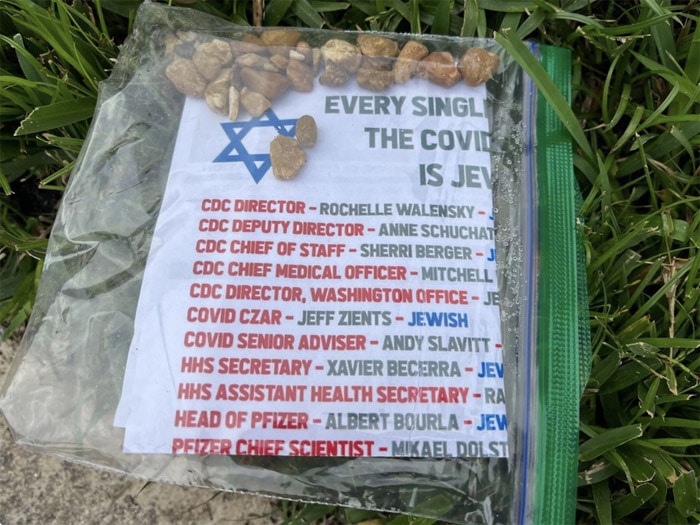
Several flyers saying that “every aspect of the COVID agenda is Jewish” were found in San Francisco, Denver, and southern Florida during the weekend.

The flyers were found on doorsteps throughout the Pacific Heights neighborhood in San Francisco in plastic Ziploc bags, as well as throughout Florida’s Miami Beach and Surfside and the Country Club area of Denver on January 23.

Local politicians denounced the flyers.

“This kind of antisemitic hatred has no place in our city,” San Francisco Supervisor Catherine Stefani said in a statement. “I’ve been in touch with the San Francisco Police Department and intend to see these individuals held accountable. Our communities have been terrified by the rise in hate crimes, and we must do everything we can to stand against it wherever it occurs.”

Miami Beach Mayor Dan Gelber tweeted that antisemitic flyers were found “in hundreds of homes.” “As a precaution we’ve increased patrols in our neighborhoods and at religious institutions,” he wrote, adding that “there is no place for this in our community & we will do all we can to make that point clear.”

Jewish groups also weighed in.

“These fliers are an attempt to intimidate and harass Jewish communities around the United States,” the Anti-Defamation League tweeted. “We appreciate the strong condemnation from local leaders and police forces. We must all #ActAgainstAntisemitism.”

https://twitter.com/ADL/status/1486060050124840965

The Simon Wiesenthal Center also tweeted that “lurid Covid conspiracy theories against Jews + Asians proliferate on social media and across communities in USA.”

Flyers Stating “The COVID Agenda is Jewish” Found in San Francisco, Miami, Denver Read More »

Man Arrested for Allegedly Selling Gun to Colleyville Terrorist

A man was arrested on January 26 for allegedly selling a gun to the terrorist behind the Colleyville, TX hostage crisis.

The man, identified as 32-year-old Henry “Michael” Williams, reportedly told FBI agents that he sold a semiautomatic Taurus G2C pistol to Malik Faisal Akram, 44, on January 13, two days before the crisis took place. Williams is also believed to have told the FBI that Akram said he was going to use the gun to coerce someone who owed him money. Williams has a prior record of aggravated assault with a deadly weapon in 2005 and attempted possession of a controlled substance in 2013.

“Federal firearm laws are designed to keep guns from falling into dangerous hands,” U.S. Attorney Chad E. Meachem said in a statement. “As a convicted felon, Mr. Williams was prohibited from carrying, acquiring, or selling firearms. Whether or not he knew of his buyer’s nefarious intent is largely irrelevant — felons cannot have guns, period, and the Justice Department is committed to prosecuting those who do.”

Williams appeared in court in January 26 and will have a detention hearing on January 31.

Two men were also arrested in Manchester on January 26 in connection to the hostage crisis but have not been charged with anything.

Akram held four people hostage at Congregation Beth Israel on January 15, including the synagogue’s rabbi, Charlie Cytron-Walker. After 11 hours, the hostages escaped unharmed after Cytron-Walker threw a chair at Akram. Akram was subsequently killed in a firefight with the FBI. Akram held the four men hostage because he was hoping to free Pakistani neuroscientist Dr. Aafia Siddiqui, who is serving an 86-year prison sentence in a Forth Worth prison. Siddiqui, known as the “Lady of Al-Qaeda,” was convicted in 2010 for attempting to kill United States soldiers and FBI agents in Afghanistan. 

Man Arrested for Allegedly Selling Gun to Colleyville Terrorist Read More »

Agnon’s Nobel Prize Partner: The Holocaust Poetry of Nelly Sachs

When S.Y. Agnon took the stage in Stockholm in 1966 to receive the Nobel Prize in Literature, he did not do so alone. That year, the Nobel Prize Committee awarded the prize to two Jewish writers: Agnon, and the German-Swedish Jewish poet and playwright Nelly Sachs.

While Agnon’s literature was written in Hebrew and focused on the Jewish experience in the pre-WWII diaspora and then in Israel, Sachs wrote her poems and plays in German, and her primary focus was the dark experiences of the Jewish people during the Holocaust. Sachs was fortunate to escape Nazi Germany (together with her mother) and flee to Sweden in 1940, just a week before they were scheduled to report to a concentration camp.

During the Nobel Prize ceremony in 1966, Sachs remarked that Agnon represented Israel, “whereas I represent the tragedy of the Jewish people.”

During the Nobel Prize ceremony in 1966, Sachs remarked that Agnon represented Israel, “whereas I represent the tragedy of the Jewish people.”

One of Sach’s most powerful poems, “O the Chimneys,” evokes the tragedy that her life represented:

O the chimneys
On the ingeniously devised habitations of death
When Israel’s body drifted as smoke
Through the air—
Was welcomed by a star, a chimney sweep,
A star that turned black
Or was it a ray of sun?

O the chimneys!
Paths of freedom for Jeremiah and Job’s dust—
Who devised you and laid stone upon stone
The road for refugees of smoke?

 O the habitations of death,
Invitingly appointed
For the host who used to be a guest—
O you fingers
Laying the threshold
Like a knife between life and death—

 O you chimneys,
O you fingers
And Israel’s body as smoke through the air!

Both Sachs and Agnon escaped the horrors of the Nazis, and lived to tell the tragedies and stories of the Jewish people. Their writing was celebrated with the world’s highest honor. Today, on International Holocaust Remembrance Day, we are left to wonder how many other Sachs and Agnons there were among the six million and more who perished. How many other would-be Nobel prize-winning writers and scientists were reduced to “smoke in the air” in the chimneys of the Nazi death camps? How many others—who had the potential to inspire, to uplift, to heal and to cure—“drifted as smoke”? O the Chimneys.

“The tragedy of the Jewish people” that Sachs wrote about was, indeed, a tragedy for all of humanity.


Rabbi Daniel Bouskila is the Director of the Sephardic Educational Center and the rabbi of the Westwood Village Synagogue. His monthly column on Agnon appears on the first Thursday of the month. 

Agnon’s Nobel Prize Partner: The Holocaust Poetry of Nelly Sachs Read More »

A Moment in Time: A Hug Makes Everything Better

Dear all,

A few days ago, Maya was crying about something, and I couldn’t figure out why. It was Eli who came to the rescue and gave her a hug. Maya’s tears turned into giggles.

Indeed, sometimes a hug makes everything better.

The hug doesn’t erase the problem. It’s not a blueprint for an action plan. And perhaps tomorrow there will be tears again.

But a hug is a way of saying “Hineini/ Here I am.”

A hug lets someone know you care, and that you are present. You may not have a solution, but you do have a soul – and you want to allow your spirit to give light to the darkness someone else is experiencing.

Give someone a hug (even if it’s a non-physical one in these strange times we are in). It will make a huge difference. And it only takes a moment in time.


With love and Shalom,

Rabbi Zach Shapiro

A Moment in Time: A Hug Makes Everything Better Read More »