fbpx

December 23, 2021

Do You See The Fire? – A poem for Parsha Shemot

Who am I that I should go to Pharaoh, and that I

should take the children of Israel out of Egypt?
–Exodus 3:11

We’re starting a new book today.
We’ve read it before, we already know
how it ends.

This is the one set in the narrow place.
The one about the baby, turned prince,
turned shepherd, turned reluctant hero.

How does a shepherd defeat a nation and
still get the sheep home in time for dinner?
How did I drive a stick-shift home

from Mid-Wilshire in 1987?
How did I manage to scrape a razor blade
across my face without causing permanent damage?

How did a poor child who never knew money
find himself paying a handyman to fix the sprinklers?
How does anyone born without language

eventually write a poem?
If you can put a foot in front of the other
If you can learn to eat when you’re hungry

If you can master email, text and emoji
when once these things didn’t exist
Then all you have to do is notice

when the Bush is on fire
To marvel at how it is not consumed.
If that is you

If that is your curiosity
Then you are the one who
can take us to the promised land.


God Wrestler: a poem for every Torah Portion by Rick LupertLos Angeles poet Rick Lupert created the Poetry Super Highway (an online publication and resource for poets), and hosted the Cobalt Cafe weekly poetry reading for almost 21 years. He’s authored 25 collections of poetry, including “God Wrestler: A Poem for Every Torah Portion“, “I’m a Jew, Are You” (Jewish themed poems) and “Feeding Holy Cats” (Poetry written while a staff member on the first Birthright Israel trip), and most recently “The Tokyo-Van Nuys Express” (Poems written in Japan – Ain’t Got No Press, August 2020) and edited the anthologies “Ekphrastia Gone Wild”, “A Poet’s Haggadah”, and “The Night Goes on All Night.” He writes the daily web comic “Cat and Banana” with fellow Los Angeles poet Brendan Constantine. He’s widely published and reads his poetry wherever they let him.

Do You See The Fire? – A poem for Parsha Shemot Read More »

How to Lose an Election: An Open Letter to President Biden

Hey Joe. Remember when you won the election on the image of being a regular guy, a friend of the middle class, someone who would make us feel better about ourselves and our country? So why is it that your Republican friends are touting that they stand shoulder to shoulder with the average American family? Somehow, the party of trickle-down economics—architects of the largest tax cuts for the wealthy and harshest cuts to social programs in over 30 years—have built an image of standing up for the little guy. Clearly something’s gone wrong, and you need to step out of your comfort zone to talk directly and clearly to the American people, who are desperate to feel like someone is in charge and is going to lead us out of this mess rather than kowtowing to President Manchin.   

It’s the holiday season, and let’s remember, you’ve created more jobs in a shorter period of time than any president in the last 30 years. Unemployment is at a historic low, Black and Latino unemployment is the lowest it’s been in 25 years, there are more jobs available than people to fill them, wages have increased for the first time in 10 years, and the U.S. COVID-19 vaccination rate is, well, admittedly the lowest of the G7 nations, but we’re still well on our way to herd immunity. Plus, remember that American Rescue bill? Our rapid-fire news cycle doesn’t, so you need to talk about it. And for goodness’ sake, tell you friends on Capitol Hill to stop bringing up your predecessor. The hearings are all well and good, but they don’t distract everyday folks from noticing how it’s getting more and more expensive to fill up their gas tanks.

But that scenario is over and done with, and if you can’t show Americans exactly how your administration is helping them here and now, don’t hold out for their support next November.

When voters went to the polls in 2020, there were countless pressing issues. The housing crisis, the fight for healthcare, ever-widening economic inequality, race relations, immigration, national security, student loan debt, climate change—all of which were exacerbated by the COVID-19 pandemic. As a result, there were people voting blue purely to avoid a second Trump term. But that scenario is over and done with, and if you can’t show Americans exactly how your administration is helping them here and now, don’t hold out for their support next November.

So what’s the playbook? You need to lead by example; make us proud of what we’ve accomplished and where we’re going. The latest Civiqs polls report that “[in] five key swing states—Georgia, Florida, Arizona, North Carolina and Pennsylvania—voters disapprove, rather than approve, of the job Biden is doing by a 10-point margin or greater.” But these same states strongly approve of the incoming funds from the Infrastructure Investment and Jobs Act, so it’s clearly a matter of keeping the messaging strong rather than letting Republicans take credit for policies they voted against. Next year’s midterm elections favor the GOP regaining the House, which would mean nothing but obstruction for the rest of your term, and even worse odds for the 2024 presidential election.

Republicans are not playing by the old rulebook to which Democrats insist on clinging. Look at the slew of new voter restrictions in nineteen states, rampant gerrymandering in redistricting plans, and coordinated opposition along party lines. Democrats cannot keep holding out for an imagined bipartisan world of fuzzy feelings and common goals. They cannot keep moving toward the center while the right keeps moving their goalpost. These tactics speak of a party that’s trying to please everyone—but in reality, they’re only betraying their own voters while failing to win over those from the important middle.

If you want an example of how the Democratic party can strengthen its position, simply look at California. After Governor Gavin Newsom survived a recall election—which came down entirely to residents voting along party lines—he immediately focused on fulfilling the policy goals that the majority of people had voted for rather than placating nonexistent centrists. The day after the election, he hit the ground running with bills to build more housing and has followed up with high-profile moves such as convening a reproductive freedom advisory group, expanding Medi-Cal to achieve near-universal healthcare, and funneling the state’s $31 billion budget surplus into infrastructure (and possibly even new stimulus checks). Most recently, he made headlines with his not-so-subtle dig at the Texas abortion ban by using their same legal precedent to ban assault rifles and even sue manufacturers. In short, voters who chose to keep Newsom in the governor’s seat this past summer feel like that decision had an actual impact on their quality of life.

Democrats just need to do the same on a national scale, and there are three easy ways to do so: first, there must be a unified message of hope and staunch support for everyone to enjoy this glorious imperfect experiment that is our democracy.

Democrats just need to do the same on a national scale, and there are three easy ways to do so: first, there must be a unified message of hope and staunch support for everyone to enjoy this glorious imperfect experiment that is our democracy. But good messaging is nothing without good policy to back it up, and two issues that will resonate well with voters should be your main focus—the Child Tax Credit and the expansion of Medicare. Beneficiaries would certainly never forget, while any naysayers who might disapprove would suffer zero negative repercussions. Moreover, the Child Tax Credit has been in place for nearly a year, and Medicare expansion is the most popular part of Obamacare. In other words, “Biden and Democrats on Capitol Hill might not have been praised by voters for adding the new benefit, but they almost surely will be blamed if the money abruptly stops flowing.”

Lastly, just because we’re a democracy doesn’t mean you have to treat the job like a PR gig. Rather than acting like someone you’re not, own your image—laugh at yourself, laugh at your critics, and go after the goals that you promised voters. Manchin, for all his faults and desire to be in the limelight, is just being himself, and he gets the respect of his voters for it. So why not try the same strategy? Americans gravitate toward authenticity, and we respect leaders who are unapologetically themselves.

Regrettably, Democrats seem to have grown complacent under a two-party system. All the resistance hashtags and fundraising emails in the world aren’t a substitute for concrete policy, and voter apathy isn’t a failure of the people so much as their representatives. At some point, it’s not enough to simply oppose the other party’s ideas—you have to offer your own, and you have to actually deliver.


Seth Jacobson is the founder and principal of JCI Worldwide, a Los Angeles-based communications and research firm. He spent several years in the Carter and Clinton administrations in positions focused on economic development, foreign policy, and media relations. He is a frequent lecturer on policy and public affairs at Pepperdine University and UCLA.

How to Lose an Election: An Open Letter to President Biden Read More »

A Bisl Torah: What is Your Final Destination?

With the end of the secular new year comes the self-imposition of life decisions. Whether it is a birthday, anniversary, or holiday, certain points in time encourage renewal, cessation, and reflection. One can’t help but ask the question, “Am I walking towards the right direction?”

Recently, I had the opportunity to analyze footsteps on the beach. I took several pictures, wondering about the paths belonging to those that created the imprints. There were no patterns. Quite the opposite. Overlapping lines, intersecting chains, differing directions, circles, indiscernible beginnings and ends. A reminder that we can’t say with certainty, “I know which way my path will unfold.”

However, the prophet Micah does reveal a particular path to follow. Micah 6:8 teaches, “And what does the Lord require of you? Only to do justly, to love mercy, and walk humbly with your God.” While we may not know exactly “where” we are going, the road is buffered with strong stanchions. A walk accompanied with faith, humility, empathy, and love is a walk worth taking.

Don’t worry if your path seems filled with curves and dead ends. Our GPS forgot to mention that the pathway of righteousness is the ultimate destination.

Shabbat Shalom


Rabbi Nicole Guzik is a rabbi at Sinai Temple. She can be reached at her Facebook page at Rabbi Nicole Guzik. For more writings, visit Rabbi Guzik’s blog section from Sinai Temple’s website.

A Bisl Torah: What is Your Final Destination? Read More »

There’s No Jewish Future Without Jewish Pride

I have Jewish friends in academia who frown at the idea of saying, “I’m a proud Jew.” They see pride as something simplistic and unsophisticated, what a tribal Jew might express at a rally.

Also, in their view, Jewish pride depends on Jewish action. If they’re passionate about repairing the world, for example, this makes them proud of that Jewish action. But when Jews do something very wrong, this makes them feel the very opposite of pride—more like shame.

It’s similar with Israel. As long as they see Israel as oppressing the Palestinians, they can never bring themselves to express Zionist pride. They may be pro-Israel, but they see too many problems to ever express pride. With so much repairing of Israel to do, what Israel needs is rebuke, engagement, protest. Those are useful, action-oriented sentiments. Pride, on the other hand, feels like an empty indulgence: Who can think of pride when there’s so much to fix, so much to be ashamed of?

For many Jews, pride feels like an empty indulgence: Who can think of pride when there’s so much to fix, so much to be ashamed of?

This cold, conditional mindset has been deadly to the health of American Judaism. Its deadliness, however, has been well camouflaged, as it comes under the guise of that noble Jewish value of self-criticism.

Self-criticism is indeed noble, but when it becomes a fetish or a reflexive dogma, it can suffocate the visceral bonds that are essential to the lifeblood of a community or a relationship.

Take the love of a parent for a child. More often than not, it’s unconditional. The child may make plenty of mistakes, but that doesn’t stop a parent from expressing their unconditional love. That unconditional aspect is crucial to the health of the relationship.

Jews who instinctively express Jewish pride fall into that category. There may be things that Israel does or that Jews do that they can’t stand—and they will express their rebukes– but none of that stops them from expressing their Jewish pride.

That pride is rooted not in the transient winds of the moment but in the timeless echoes of the past.

Jewish pride is rooted not in the transient winds of the moment but in the timeless echoes of the past.

I’m a proud Jew not because Israel did something great yesterday, or because a Jewish organization did something cool last week, or because I just read an inspirational sermon. I’m a proud Jew because I belong to an extraordinary people with a tradition that has sustained us for thousands of years. It is that very existence, that sense of belonging to something remarkable, that is the deepest source of my unconditional pride.

Within American Jewry, that puts me in the minority. Expressing unconditional pride in being Jewish, especially when Jews are seen as the supreme example of so-called white privilege, is simply not cool. It’s a lot cooler to be a Jew who bashes Jews or bashes the Jewish state whenever it stumbles.

This single-minded reflex to throw shade on one’s people ends up not only stifling Jewish pride, but also disseminating Jewish shame. When pretensions of “tough love” express the tough without the love, it is shame that invariably comes through, not pride.

Is it any wonder we have turned off so many young Jews? When they turn one way, they see much of the world bashing the Jews and Israel. When they turn the other way, they see many of their own people doing the same thing.

When chronic Jewish critics do express pride, it is often pride about their freedom and duty to criticize, which they consider a key part of their Jewish identity. (What’s noteworthy is that they will check this self-criticism at the door when it comes to their political parties. That’s evidently a bridge too far).

Throw in the fear of antisemitism, the pitched battles around politics, the anxieties around the pandemic and so many other communal ills, and it’s clear that “Jewish pride” is hardly ascendant in the Jewish conversation. When conditions are unpleasant and you see pride as conditional, what is there to be proud about?

It’s naive to think that “education” is the magic solution. We don’t need a Jewish day school education to feel pride that we’re part of an amazing people with an amazing story. What we need, more than anything, is to see other Jews around us expressing their own pride in their Jewish identity, whether it’s cool or not.

Pride is the immune system that makes the collective Jewish body function better, that enables us to absorb and deliver self-criticism without lethal side effects.

Pride will never be as sexy as self-criticism. But pride is the immune system that makes the collective Jewish body function better, that enables us to deliver and absorb self-criticism without lethal side effects.

In recent years, the fear of antisemitism has lit a fire under many Jews. That fear may be real, but it’s based on a negative. Pride is rooted in a positive and is built to last. Walking through life as a proud Jew is the ultimate antidote to fear and disconnection.

Walking through life as a proud Jew is the ultimate antidote to fear and disconnection.

The Jewish establishment has generally gone where the money is, and fear is where the money is. It’s easier to fundraise when fighting fear than when building pride. That crisis model, however, is not sustainable.

Jewish leaders and donors who are serious about keeping the Jewish flame alive for the long-term would do well to pivot to “Jewish pride” as their next rallying cry. We have enough creative innovators in our community to make the Jewish pride movement concrete, real and meaningful.

We can’t afford to wait for pride to just happen based on changing conditions. Pride is a kick-off point, not an end result. Without pride, why should Jews care about their Jewish identity? And if so many Jews don’t care about their identities, where’s the Jewish future?

The Jewish future starts with the ancient idea of Jewish pride. As you’ll read in our cover story by Blake Flayton titled, “Proud Jews Walking,” Jewish pride is the spark that leads to greater things and keeps the Jewish flame alive.


There’s No Jewish Future Without Jewish Pride Read More »

Penn Homecoming 2021 at AKA Rittenhouse Square

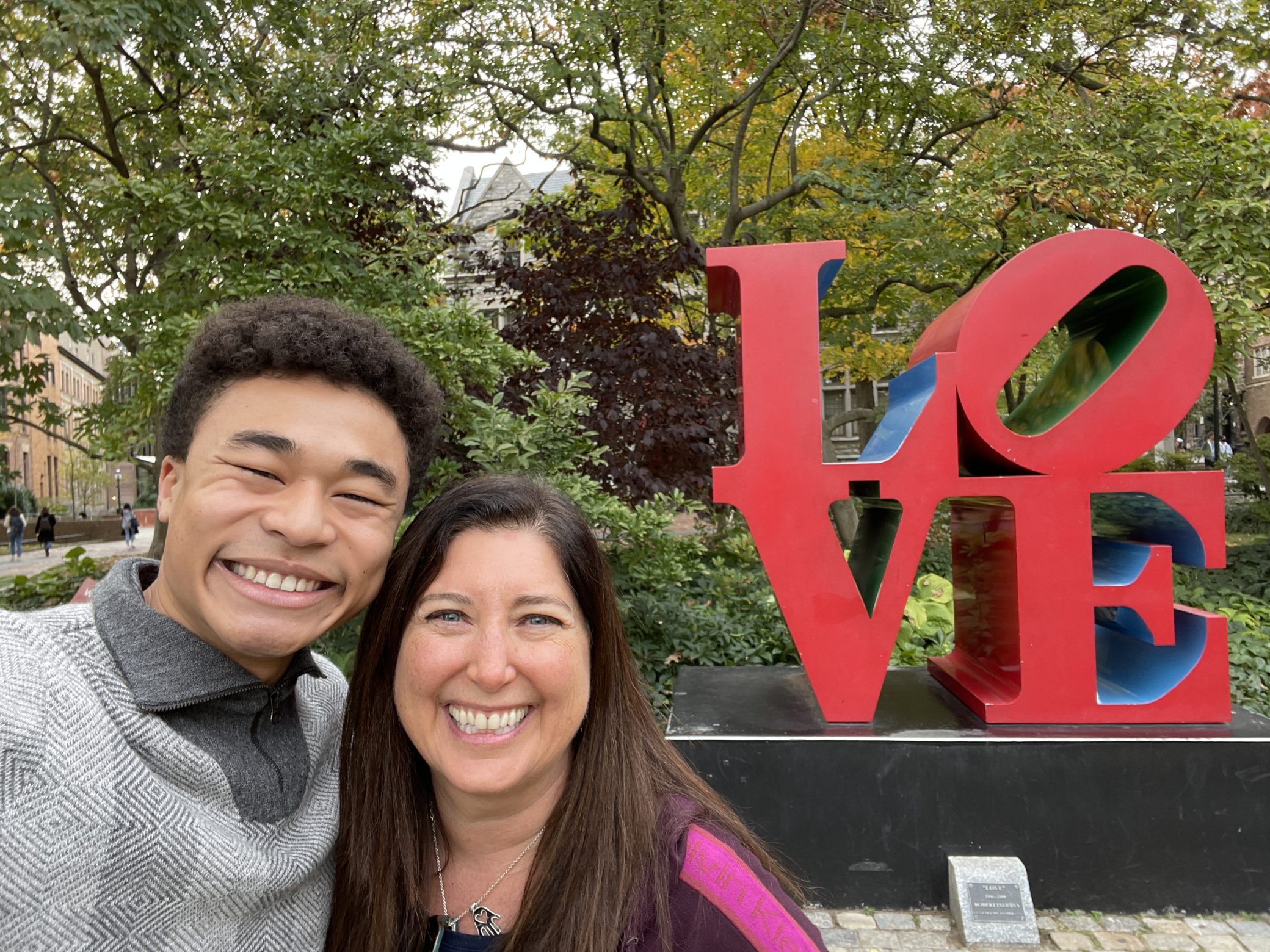
The best part of going to the University of Pennsylvania was the lifelong friends I made. We stayed together for homecoming in Nov 2021 at AKA Rittenhouse Square. It is luxurious with a perfect location. We went across the street to The Love restaurant and walked to campus for the football game.

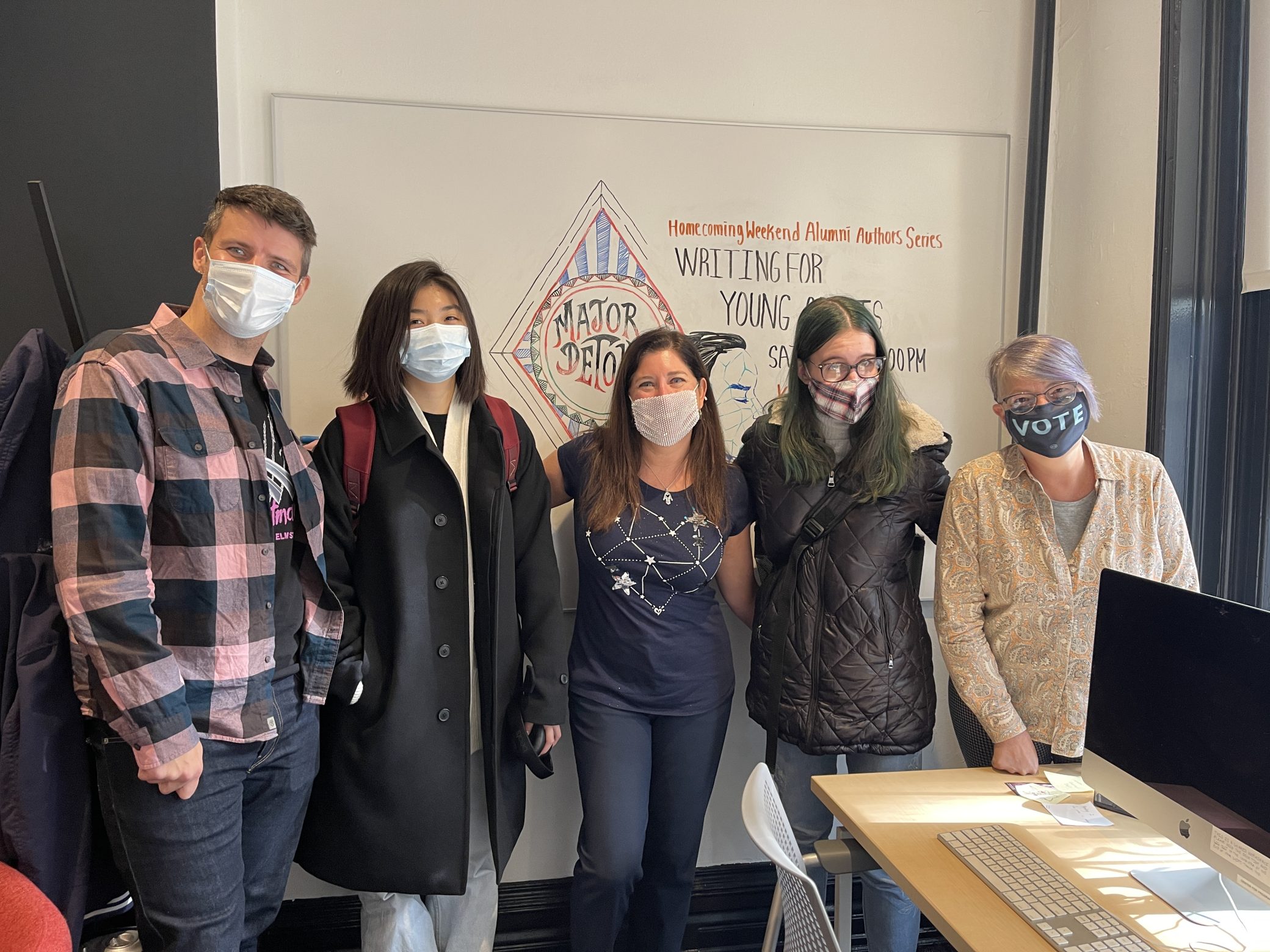
I spoke at RealArts@Penn, part of the Kelly Writers House, with students who are aspiring writers.

Masaki Law (2024) and Lisa Niver (1989)

Penn Homecoming 2021 at AKA Rittenhouse Square Read More »

“I Am That I Am”


While
the Second World War, the one the Jewish people darkly to fire lost,
was raging,
it occurred.

I refer to,
if you didn’t realize,
the Holocaust,
the cause of which is blurred
by men who don’t admit its impetus was killing all the Jews,
a rationale that’s not
been obsoleted by those whom it’s not the fashion to accuse
of wishing that the plot
had been successful, and the Jews had vanished from the earth, instead
of fighting for a state
in wars where, unlike World War number Two, they can’t by foes be led
like sheep to slaughter.

Hate
of Jews that was a one rationale of World War Two
was not defeated,
as Jews were when like cattle
six million of them to their death were led. They won’t be obsoleted,
since heirs now fight the battle
that they could not while World War number Two was being fought, and they,
by allied forces spurned
since those self-same future winners of the war all looked away,
were shot and gassed and burned.

Nec tamen consumbatur, yet the bush was not consumed.
That’s why God said to Moses: “View
the fire,” implying even Jews condemned to burn would not be doomed,
mirabile dictu.
I hope that it’s not  blasphemous to parsingly presume
“I am that  I am,” the spell
God spoke to Moses in a fire the bush did not consume,
applies to Jews as well.

***

My poem is not just a consideration of the Holocaust but in response to Yehuda Amichai’s poem describing his relationship to the Second World War, quoted in “The Ethics of Protective Edge,” JRB, Fall, 2014:

“Even my loves are measured by wars…”:

I am saying this happened after the Second
World War. We met a day before the
Six-Day War. I’ll never say
before the peace ’45–’48 or during
the peace ’56–’67.

Nec tamen consumebatur is the motto of the Church of Scotland.


Gershon Hepner is a poet who has written over 25,000 poems on subjects ranging from music to literature, politics to Torah. He grew up in England and moved to Los Angeles in 1976. Using his varied interests and experiences, he has authored dozens of papers in medical and academic journals, and authored “Legal Friction: Law, Narrative, and Identity Politics in Biblical Israel.” He can be reached at gershonhepner@gmail.com.

“I Am That I Am” Read More »

Table for Five: Shemot

One verse, five voices. Edited by Salvador Litvak, the Accidental Talmudist

[Pharaoh] said to his people, “Behold, the people of the children of Israel are more numerous and stronger than we are. Get ready, let us deal shrewdly with them, lest they increase, and a war befall us, and they join our enemies and wage war against us and depart from the land.”
-Exodus 1:9-10


Rivkah Slonim
Associate Director, Chabad of Binghampton

Commentaries puzzle on God’s promise that the seed of Abraham, Isaac and Jacob would be as numerous as the stars of the sky and the granules of the earth. After all, Jews have never accounted for more than 0.2 percent of the world’s population. 

Yet our impact and influence have been huge, causing our enemies—ancient and contemporary—to fear that we will “take over.” The fifth Lubavitcher Rebbe explained that Pharaoh’s true fear was of the Jews’ inherent holiness—being spiritually ”numerous and strong.” He was particularly unsettled by the possibility that they would wage war against “us;” that the Jews would seek to go beyond subduing and transmuting Egyptian culture that was steeped in immorality and idolatry. Pharaoh feared an “increase;” an attack on himself as the embodiment of the very root of all evil — egocentricity — which eclipses God consciousness. 

Pharaoh therefore launched a “shrewd” assault: attacking their spiritual state rather than their bodies. Boys would be cast into the Nile (the iconic Egyptian deity); more insidiously, Jewish girls would be made to live immersed in Egyptian culture. By suffusing the Jews in Egyptian mores he hoped to defuse — if not completely obviate — their spiritual prowess.


Rabbi Abraham Lieberman
Judaic Studies, Shalhevet HS

The Lekach Tov (Rabbi Toviah ben Eliezer, 11th century) points out that until this verse the Jewish people had been referred to as Bnei Yisroel, the Children of Israel (Yaakov), from here and on, as Am Bnei Yisroel, the Nation of Israel. When one searches Tanakh to see the usage of this exact phrase with these 3 words in the same order, an interesting point emerges, namely that this is the only place in all of Tanakh where it is found. Twice later on (Shemot 3:10,7:4) Hashem will use the phrase AMI Bnei Yisroel, My People the Nation of Israel. 

I believe the significance can be easily understood in light of our history, and the verse becomes a prophetic outlook into how anti-Semitism develops. Jews are in a foreign land, they are viewed as “too numerous and too mighty.” Logically the enslaved Hebrews cannot be a larger or mightier group than the local Egyptian rulers, but their unity creates the impression that indeed they are. They have not committed any crimes or wrongdoing, yet the phobia-driven impression of them siding with an invading enemy fuels this fear. Echoes of Haman, and later of all antisemitic tracts are already hinted to these verses. National interests, throughout our Diaspora, living in so many lands, have always created limiting and sometimes harsh measures against us. The Rabbinic teaching of “Maasei Avot Siman L’Banim”, the acts that our forefathers went through are repeated with their children, comes true again.


Rabbi Nicole Guzik
Sinai Temple

When Pharaoh prophesied that the children of Israel would overcome him, his control tactics were cunning. According to Ramban, Pharaoh knew the Egyptians would disagree with drastic measures against the Hebrew slaves. And so, first came an innocuous levy, then secret orders to midwives to murder Jewish baby boys and subsequently, court vengeance against those who publicly murdered the children. In other words, Pharaoh was exacting his plan to keep both the Hebrew slaves and some Egyptians assuming the worst had already occurred. Pharaoh built an empire cemented with bricks of trust and fear. 

Pharaoh’s “shrewdness” directly aligns with symptomology associated with abusers. Most abusers do not start by first, physically hitting someone else. Abuse often begins with a series of tactics to maintain power without taking responsibility. Whether it is through isolating the person, taking over of finances or property, wielding influence by insinuating incompetence, the abused person may find it hard to “flee” because it seems like the worst is over. Just like Pharaoh, the home is interwoven with trust and fear. 

Later on, the Hebrew slaves blame Moses and Aaron for the added work Pharaoh assigns to their daily tasks. Pharaoh evades condemnation. In the eyes of the abused, it may be difficult to discern who is manipulating whom. The Torah opens our own eyes to how often, the manipulated do not know how and when to leave. May we all have Moses’ patience and act with courage and compassion, leading those we love towards unshackled paths.


Rabbi Elchanan Shoff
Rabbi, Beis Knesses Los Angeles

The Jews are different. Difference means competition: competing ideas, values, and thoughts. Jews are not identical to Egyptians, and thus a great potential source of trouble – they could join our enemies! We could be overthrown! There is a great misconception that many have; namely, that shalom, peace, can only exist between people who are like-minded. In the book of Job, God is described as “making Shalom in His heavens.” The commentaries explain that the heavens have fire and water and yet they coexist. You see, shalom is the mechanism of two things coexisting, even when they have very different natures and styles. A kettle, says the Talmud, when seen in a dream represents peace. A kettle allows water and fire to coexist, and even work together! 

Sometimes, it’s worth withholding your opinion, and wiser to pretend to agree with a relative’s political positions. Not every Thanksgiving dinner should be an ideological debate. But staying quiet and not expressing your feelings is not shalom at all! It’s avoiding conflict, surely a noble thing to do at times. Shalom is when we can express ourselves, be ourselves, even when different, and there’s place for everyone. It allows for harmony. “Torah scholars increase peace in the world,” say our sages. “When they argue about Torah they are like enemies but they love one another even more once they finish studying.” Bullying people into silence or toeing a party line will never bring us shalom. Shalom allows us to live together, and still remain unique.


Rabbi Michael Berenbaum
Professor of Jewish Studies and Director of Sigi Ziering Institute, American Jewish University

Ben Bag says: “Turn it over and turn it over for everything is in it.” Avot 5:22 is sometimes cited by traditionalists to declare secular knowledge unnecessary; everything that one needs to know is in the Torah. My experience was different. As a Yeshiva student, I came to serious secular learning, yet it empowered me to understand the Torah even more. 

Hegel wrote the dialectic of the Master and the Slave. The more enslaved the Master keeps his servants, the less he does for himself, the less capable he becomes. Gradually, the slaves’ capacity grows, and the master’s capabilities diminish. So the Master gradually loses power as the slave becomes empowered. 

When I read this for the first time, I thought of this verse in Shemot when Pharaoh teaches his people to become fearful that the Israelites will become more numerous and join with the enemy as a fifth column, His advice: nithachmah, deal shrewdly with them. Intuitively, Pharaoh understands that the slaves’ growing capability — which he craves and needs — poses a danger to his empowerment. 

Hegel’s concept of dialectic also enabled me to understand the Red Heifer, whose sprinkled ashes enable the Priest to purify the impure, while contaminating him. From Newton’s principles to Hegel’s dialectic, we came to understand that for every action, there is a reaction; in Newton’s case, an equal and opposite reaction. Certainly, one cannot purify without contact with the impure. Seen this way, the hok [non-rational law] of the Red Heifer is not quite as irrational as traditionally understood.

Table for Five: Shemot Read More »

A Moment in Time: The Day is Short, and the Task is Great

Dear all,

In Pirkei Avot, Rabbi Tarfon teaches: “The Day is Short, and the Task is Great” (2:20).

December 21 was the shortest day of the year in the Northern Hemisphere. Even though it marks the official start of winter (darkness), it also marks the shift when the sunlight hours begin to increase again!

That means that each day presents us an additional moment in time to make a difference.

The possibilities are truly endless. If we blink our eyes, the opportunity to harness a moment will be forever gone. How are we going to capture it? How are we going to use our soul-print to bring goodness into the world?

With love and shalom,

Rabbi Zach Shapiro

A Moment in Time: The Day is Short, and the Task is Great Read More »

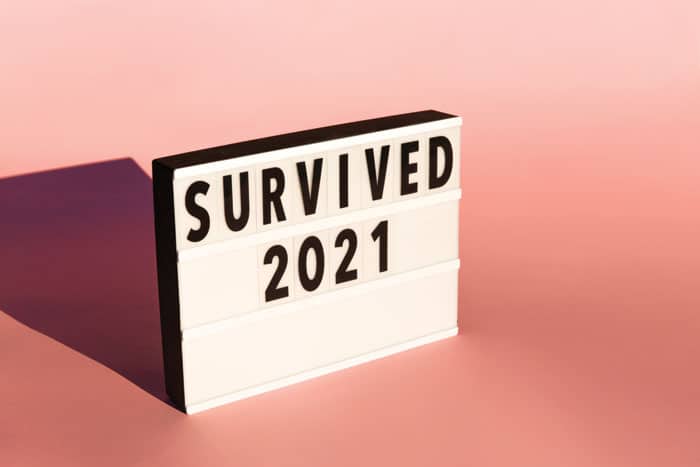
2020 Was Terrible. Was 2021 Worse?

During the madness of 2020, I wrote a column wondering whether that year would go down as our longest, most exhausting ever.

“It’s not hyperbole to wonder if we’ll ever see another year like 2020,” I wrote.

“We kicked off the year with the impeachment of a U.S. president…Then, we were invaded by a lethal virus that shut down most of the planet…[Then] a cruel act of police violence set off what The Washington Post called ‘the broadest protest movement in American history.’ And lest we forget, we have a presidential election coming up in November that many consider the most consequential of our times.

“Epic on top of epic on top of epic. When do we catch our breath?”

Last year’s Hanukkah miracle of a COVID vaccine and the election of a decent moderate like Joe Biden gave us hope that maybe, just maybe, 2021 would be the year we would catch our breaths and lick our wounds.

Sadly, and incredibly, it looks like 2021 has outdone even the epic madness of 2020.

First, on January 6 we saw the stunning invasion of the U.S. Capitol by Trump supporters. Then, the miracle vaccine ended up being weaponized and politicized and, in many ways, divided our nation. Clumsy and incompetent management from our government, draconian mandates, misinformation on social media and new variants like Delta and Omicron poured oil on the national fire.

Meanwhile, after a triumphant President Biden declared on July 4th that America had achieved “independence” from the coronavirus, we still ended up with more COVID deaths in 2021 than in 2020. 

Our souls were dying, too. The invisible cost of the pandemic is the alarming rise in loneliness, isolation and depression, especially among the elderly, but also among teenagers, where we’ve seen a troubling rise in suicides. This only got worse in 2021.

We’re now beyond COVID exhaustion. We’re sick and tired of being sick and tired.

We expected so much more from 2021. But miracles like the COVID vaccine and Zoom turned out to be more complicated than we thought. We now have a virus that is making itself at home, mutating so brilliantly that it is matching our own resilience.

This hasn’t stopped the riveting news cycle. In the wake of an explosion of violence across major cities, the “Defund the Police” movement that started in 2020 morphed into “Please Bring Back the Police” in 2021. Why? Because fear is bipartisan. 

You know that’s true when even the wokiest mayor of the bluest of cities, San Francisco, calls for “more aggressive policing.” 

Similarly, the well-meaning goal of eradicating racism morphed into the erosion of the great American ideal of a colorblind society, where one is judged by the content of one’s character rather than the color of one’s skin. Today, you risk being called a racist simply for mentioning that.

The fear of being called a racist, or any kind of bigot, only got worse in 2021, making a joke of the First Amendment. Twitter mobs bullying those who say the “wrong” things are effectively using their free speech to silence the speech of others and, at times, even “cancel” their careers. Is it any wonder so many people are choosing to keep their mouths shut?

In the Jewish world, our temples continued to tremble. With the Delta variant and now Omicron, the return of large crowds to our temples is a distant dream. Most people in non-Orthodox streams are perfectly happy attending services from home via Zoom, especially if they see it as the safe choice. 

The problem is that people who stay at home tend to not renew their memberships, or donate as much, which is exacerbating the dilemma for congregations: The more they improve their online programming, the more they encourage congregants to stay home. The limitations of the online model will shake and challenge the organized Jewish world in the coming year and beyond.

What is not getting old is that the most effective antidote to Jew-hatred, as Blake Flayton argues in our cover story, is to replace fear with pride, double down on your Jewish identity and be a “proud Jew walking.”

The stubborn and ancient virus of antisemitism continued to thrive in 2021, fueled by the obligatory bashing of the only free democracy in the Middle East, Israel. Yes, this is getting old. What is not getting old is that the most effective antidote to Jew-hatred, as Blake Flayton argues in our cover story, is to replace fear with pride, double down on your Jewish identity and be a “proud Jew walking.”

So, is 2021 a worse year than 2020? Perhaps in the sense that we expected so much more from 2021. Miracles like the COVID vaccine and Zoom turned out to be more complicated than we thought. We now have a virus that is making itself at home, mutating so brilliantly that it is matching our own resilience.

Our world continues to be upside down, where testing negative is a positive, where Israel is attacked beyond reason, where loving America must be hush-hush and hugging a grandparent is dangerous to their health.

All I can say is, thank God for silver linings. I find that the crazier things get on the outside, the more I focus on the inside stuff that matters most— family, friends, good health, walking with Jewish pride and watching Curb.

Happy New Year and Shabbat Shalom.

2020 Was Terrible. Was 2021 Worse? Read More »