Rising Crime, Jewish Pride, Elon Gold and Lots More
Rising Crime, Jewish Pride, Elon Gold and Lots More Read More »
Let’s say I’m an architect and my latest creation is finished and in public view. Then someone walks by and hates it. Even worse, they say they are offended by it. Should I never work again and should I be publicly vilified? According to some, the answer is yes.
I am a stand-up comedian. I deliver punchlines. They call them punchlines because they are supposed to pack a punch. As you know, a punch can hurt. But today, that is no longer acceptable to many people, mostly the young and well-educated.
For more than 40 years, I’ve performed in some of the nicest theatres including in front of the Chagall windows at the Knesset. I even performed one night at the foot of the bed of a dying man. I am a road-dog clean comic. Early on, I did curse and talk more explicitly about things, but I found I didn’t like doing that and the audience agreed.
Both on stage and off, I try not to offend or demean any person or group. I try. I don’t always succeed. (I’m waiting for my wife to sue me because of my wife jokes). And except for one occasion, I have never ever asked another comic to stop saying anything even though I have been repulsed by many things I’ve heard.
Back in Cleveland in the 1980s, a comedian who performed before me launched into a full-on racist act, with one “N-joke” after another. And if that wasn’t bad enough, much of the audience was clapping and laughing. In many cases, stupid breeds stupid. I complained to the club owner, and he fired me.
Next time, if you don’t like one of our jokes, instead of cutting the brake lining on our cars, do the world a favor and stay home and knit some earmuffs.
The audience has always been in control of what a comic keeps in or throws out of their act. The audience controls the act simply by the laughs they give or don’t give. The audience is our barometer. But these days, it’s not only about them laughing or not laughing. It’s about power and control. If someone thinks you offended them, they want you to stop. If you don’t, they often decide it is because you are a bad person and you need to be publicly punished.
Some people will get right in your face. They act as if you’re trying to inject them with rodenticides. In gentler times, it was enough of a statement to simply walk out of a show. Now those who don’t appreciate the humor feel the need to get more personal.
Thirty years ago, I used the word “retarded” as in “that was a retarded thing to do.” After my show, a woman politely approached me and asked if I could find a different word to use. She said her son had Down Syndrome and that the word “retarded” hurt. I never used that word again. She didn’t try to cancel me. She just said it caused her pain and I understood.
Those gentler, more civil days are long gone. We now live in an age where groups tell us what we can and can’t say. And if someone doesn’t follow those rules, that person must be banished. And the punishments by these know-it-alls are severe. Everything from getting someone fired to marching outside a person’s show or home to internet shaming to death threats. These people are what I call “Self-Proclaimed Parents of the Universe.” These were the tattletales and the old bullies when I was growing up. These chronic whiners, who have never written a joke, cause more pain than almost any word I or anyone I know might utter. They are the fly you can’t get out of your house.
This is new behavior. Until recently the comedy audience had one job and only one job. That was to come and laugh. Comics are laughter merchants. Most of us just want to make people happy. And in turn, that makes us happy. Next time, if you don’t like one of our jokes, instead of cutting the brake lining on our cars, do the world a favor and stay home and knit some earmuffs.
Mark Schiff is a comedian, actor and writer.
The Punchless Punchline Read More »
For decades, I’ve enjoyed buying fake designer purses. In Los Angeles, there was a stall in downtown’s Santee Alley that specialized in selling faux purses that actually looked real, and beginning in college, I bought $10 “Gucci” bags from that vendor with regularity and zest. But now, thanks to rabid crime — the likes of which I’ve never seen in this city — for the first time, I’m afraid to wear my fake designer bags on the streets of LA.
Go ahead and laugh. Or sneer and accuse me of privilege. Sticks and stones can break my bones, but I’m pretty sure a revolver pointed at me and my fake purse can do much more damage.
I wasn’t always this anxious. I used to enjoy coffee with friends on Melrose Avenue and place my faux Chloé purse right on the table, in full display of every unimpressed passerby and skeptical pigeon on the street.
I wasn’t always this anxious. I used to enjoy coffee with friends on Melrose Avenue and place my faux Chloé purse right on the table, in full display of every unimpressed passerby and skeptical pigeon on the street. But after a string of recent armed robberies of sidewalk diners on Melrose, I don’t even feel safe sitting at a sidewalk cafe and enjoying a cup of coffee that costs more than my purse.
This isn’t hyperbole. The LAPD recently released statistics showing that armed robberies have increased by 75 percent in the past year in the Wilshire and Hollywood divisions. Neighborhood groups, fed up with violent crime, are installing license plate readers because business owners as well as customers are so anxious.
“It’s never been this bad ever,” Krystal Thomas, owner of Cosmo and Donato, told FOX 11 News. “We’ve been on Melrose for about 30 years. This change has been really violent and sporadic.”
In August, a dispute over a shoe raffle resulted in the shooting and killing of an employee at the Fairfax District’s Shoe Palace. The employee wasn’t even involved in the argument. The poor man was outside the store, trying to break up the dispute.
That’s one of the more extreme examples of violent crime at local businesses. But as far as I’m concerned, there’s a particular sense of helplessness and anxiety about sitting at a sidewalk cafe, and suddenly finding yourself confronted with a gunman who demands your wallet, phone and jewelry. It truly lends itself to the question, Is nowhere in LA safe anymore?
Of course, much of the city is still safe (like Ross Dress for Less and some public bathrooms). I, for one, have taken to wearing a decoy fanny pack that only contains old receipts and feminine hygiene products.
Of course, much of the city is still safe (like Ross Dress for Less and some public bathrooms). I, for one, have taken to wearing a decoy fanny pack that only contains old receipts and feminine hygiene products, and stuffing important items, like my phone, keys, credit cards, tissues, hair clips, pens, notepads, snack bags, lens wipers and tweezers in my pockets. I’m bulging at the sides, but no one can tell if I’m sitting.
I try not to think in extremes. I rely on statistics and reason. But news of certain crimes strike at your jugular and render reason irrelevant. On November 28, a Hancock Park mother was robbed as she stood outside her home after walking her baby in a stroller. On December 3, guests were robbed at an outdoor holiday party in Pacific Palisades. It’s a sad day when Angelenos are getting mugged walking their babies or at parties. I didn’t imagine things could get any less safe until I learned that a physical therapy office in Beverly Hills was recently held up at gunpoint by several armed men. Yes, a physical therapy office. In Beverly Hills.
I’ve been to many such offices in the area for pregnancy and postnatal-related muscular issues. Physical therapy offices are supposed to be spaces to work on healing, and to heal safely, under the supervision of professionals. Many elderly people and those who’ve suffered injuries from various accidents frequent such spaces. A physical therapy office is the last place where someone should be robbed.
But the worst crime in recent Beverly Hills history was the murder of wife, mother, grandmother and philanthropist Jacqueline Avant on December 1. Aariel Maynor, 29, of Los Angeles, allegedly tried to rob her home and is accused of killing Avant. The family’s security guard was there at the time; Maynor is also accused of attempting to kill the guard.
This forces me to ask the one question that everyone is thinking, but no one will say: If Jacqueline Avant was killed in her own home in the presence of a security guard, what chance do the rest of us have to stay safe?
It should be noted that, according to the Washington Examiner, hours after Avant was murdered, Los Angeles District Attorney George Gascón “distributed a fundraising letter seeking to overturn a law that would keep her [alleged] killer in prison.”
My heart broke for the Avant family, and the murder has served as a huge wake-up call for Beverly Hills residents, many of whom told local news sources that they are now spending tens of thousands of dollars to upgrade their home security systems. Others are arming themselves.
There’s a dark air of skepticism about law enforcement and the criminal justice system in LA that I’ve never witnessed before. One woman, who asked to remain anonymous, told me that she was recently chased down the street on Westwood Boulevard by a homeless man who was wielding a small knife and screaming, “I’m gonna kill you!” When I asked the woman if she contacted the police, she responded, “What for? They wouldn’t have done anything about it.”
Last week, Jamie McBride, head of the LAPD police officers’ union, said in a televised interview, “My message to anyone thinking about coming to Los Angeles, especially during the holiday season, is don’t. We can’t guarantee your safety. It is really, really out of control.”
In next week’s column, I’ll describe my family’s terrible experience with robbery in the past six months, and analyze why crime spikes in Beverly Hills pose such a unique problem for that city. For now, I have to find a faux-diamond engagement ring with a center stone just small enough that few robbers would be interested in swiping it. Does anyone know how late the jewelry stalls in Santee Alley are open?
Tabby Refael is a Los Angeles-based writer, speaker, and civic action activist. Follow her on Twitter @RefaelTabby
Am I Being Paranoid or Just Really Cautious? Read More »
One verse, five voices. Edited by Salvador Litvak, the Accidental Talmudist
Now Joseph’s brothers saw that their father had died, and they said, “Perhaps Joseph will hate us and return to us all the evil that we did to him.”
-Genesis 50:15
Are you a pessimist or an optimist? How have you been responding to our current uncertain times?
In this week’s parsha, as the Joseph cycle comes to its conclusion at the end of Genesis, we see the brothers return once again to their stance of pessimism, fear, guilt, and lies in the face of uncertainties in their times. Sadly, despite all that has happened, they still don’t trust Joseph. With the Hebrew word “Lu” (“perhaps”) they choose to imagine the worst possible future, one in which Joseph takes revenge on them after the death of their father. In contrast, Joseph himself has prevailed against all obstacles, rising to unimaginable heights, with his trust in others and his unyielding optimism.
Rashi notices that the word “Lu” is unusual in our verse, with no other example of this usage in the Torah. Elsewhere “Lu” is sometimes used to denote a petition or hope. Outside of the Torah, Naomi Shemer’s song “Lu Yehi” (originally conceived as a Hebrew version of the Beatles’ “Let it Be”) famously uses this word to dream of the possibility of peace after the Yom Kippur War.
As we continue to confront this pandemic, will we imagine a future with the “Lu” of pessimism and fear, or with the “Lu Yehi” of optimism? As the lyrics of Andrew Lloyd Webber explain: “We all dream a lot – some are lucky, some are not / But if you think it, want it, dream it, then it’s real / You are what you feel…”
Would Joseph take revenge against his brothers after the death of Jacob?
It is remarkable that in Jewish tradition we are commanded to imitate God in all ways except one: “Vengeance is mine” says the Lord (Deuteronomy 32:35). Morality, according to Maimonides, is defined as emulating the Almighty. The sole exception is the biblical edict against the taking of revenge; that is reserved for divine justice alone.
Why? As the Rabbis put it, a man who desires revenge should dig two graves – one for himself. Vengeance, in the words of Anne Lamott, is “like drinking rat poison and then waiting for the rat to die.”
In a remarkable post-Holocaust story, Allied soldiers wanted to give a gift to a group of young survivors who had endured the tortures of hell at the hands of captured Nazi officers. They handed the boys baseball bats and invited them to go inside and “get your revenge – our soldiers will look the other way and no one will document this.” With no words exchanged between them the now free Jewish prisoners stared at their shivering former oppressors and then spontaneously put down their bats. In recording the incident one of them explained: We walked back to town determined to rebuild our lives as Jews. We refused to allow the Nazis their final victory – the victory of bestiality over our humanity.
Joseph intuitively understood that revenge is best left to the Lord. That may well be the reason he is the only one of the patriarchal family granted the greatest accolade – Yosef HaTsadik, Joseph “the righteous one.”
“Ein mukdam u’meuchar b’Torah” — “there is nothing early or late in the Torah” — meaning sometimes things appear out of order, but we can learn from those purposeful placements. The most striking part of the verse, “And the brothers of Joseph saw that their father had died,” is that just a few verses earlier, they had surrounded their dad in his last moments and buried him in elaborate fashion. So why is this verse in this place?
There are members of a family who act as connector pieces. They plan gatherings, invite distant cousins, call the often forgotten great-uncle on his birthday. That person might not be everyone’s favorite, but they convene. Joseph was his family’s connector. Not through phone trees or networking apps, but through relationships with his siblings and father. The family stays together because of Joseph’s quintessential role.
When Jacob died, that changed. Rashi said that Joseph no longer invited the brothers to his table, for example. The reason for convening family changed for Joseph when Jacob died. Does he owe anything to them any more? Is there any reason for family gatherings without Jacob around? The brothers seemingly only notice months later the impact of their father’s death, explaining the placement of our verse.
My father says that when someone dies, they have been plucked out of a boat mid-river; and everyone remaining changes their position and task to keep the boat moving and balanced on the water. What must we do to convene, connect and balance the people close around us?
If we look deeply, ultimately every choice we make is based in either faith or fear. It is a spiritual truth that the two cannot exist in the same space at the same time: the more of one, the less of the other. The remedy to acting out of fear is to increase our embracing of faith, and in so doing, deepen our conscious relationship with God.
This lesson was forgotten by Joseph’s brothers after their father’s death. They remembered the hurts they had caused Joseph, and rather than having faith in their brother as well as God, they were scared and expressed that fear to Joseph in this verse. Joseph’s answer of “Have no fear!” (50:19) a few verses later is a reminder to all of us to always have faith in the Eternal One and in each other.
In these times when the entire world seems to be locked in cycles of fear, it is more important than ever that we remember these words of Joseph. The world is in chaos, people are being ostracized out of fear, and it seems as if much of society is even trying to inculcate our children into a fear-based psychology.
But we are Jews, and we must remember to be lights to the world by embracing faith: faith in God, each other, and our Jewish communities to do what is right and true to Jewish teachings.
May we all choose faith over fear in every moment; and see our faith rewarded with joy, good health, and peace.
When Joseph’s brothers, fearing for their lives, relayed a message to Jospeh asking for forgiveness and explaining that G-d was very much alive, they were telling Joseph what he already understood.
Instead of expressing bitterness at his brothers for their cruelties, Joseph amazingly chose to use the moment to comfort and inspire them. Joseph said, “You planned to do bad things to me, but G-d had already intended that what you did to me should happen for good reasons: to make things like they are today, so I can provide food for more people.”
Like every human, Joseph had to climb out of a pit and make his own way up and out, but unlike most, he never blamed anyone else for the episodes in his life that were not ideal. Just as years later, Mordechai tells Esther, “Who knows whether it was just such a time as this that you have attained the royal position!” Joseph was perhaps the first to know that every one of our steps is lovingly directed and carefully arranged by Hashem.
“No detour is random, and every stop along the way has a purpose,” writes Rabbi Yaakov Bender. Joseph was made great because he provided food to Egyptians and Jews, but the real nourishment he shared with others was his firm belief in hashgacha pratis: that everything we experience is part of a Divine Plan that helps us to best fulfill our missions that most benefit K’lal Yisroel and create a home for Hashem.

Table for Five: Vayechi Read More »
Welcome to the Firsts of Firsts! In the first official episode of Schmuckboys, the dynamic trio will talk you through their relationship status of the week, how the stigma around dating has changed post-covid, first dates after a break up, first dates after covid and first dates in general! And to finish it off, some useful pieces of advice for first dates from each of your hosts.
Before a virus devastated attendance at synagogues and other Jewish places, it was fashionable to bemoan the communal obsession with “building campaigns.” I did plenty of it myself, talking about the value of “soul estate” over real estate, or, if you prefer, software over hardware.
The idea was that Judaism survived the past 2,000 years not by erecting cathedrals but by focusing on Torah and education. Our arrival in America, however, flipped the script somewhat, as Jews took full advantage of the freedom to build as they wish. And build they did, with donors happy to have their names engraved on building walls.
Education, community, prayer and other important facets of Jewish life were all delivered through buildings that turned into status symbols and barometers of success. This real estate became so valued that the backlash in favor of “soul estate” was inevitable.
Now, the script is flipping again, as Jewish buildings are losing their value not because of the prominence of a philosophical idea, but because people are afraid to catch a deadly virus. Coincidentally, technology has enabled many people to feel they’re getting all the Jewish “software” they need by staying at home.
That is what we call a perfect storm.
The COVID pandemic has taken something already vulnerable—our buildings—and, with the help of technology, is trying to finish them off. I’m dramatizing, of course, to make a point, but you get the picture. Our society is experiencing a pandemic-driven confluence of factors that is undermining commercial real estate in general, and Jewish buildings are caught up in the storm.
But, you ask, if Jewish “software” is the most important thing, and technology like Zoom is delivering it in a way that feels meaningful to people, then what’s the problem?
The problem is that this software revolution is keeping us physically apart.
Judaism and Jews survived and thrived for so long not just by focusing on ideas like education and Jewish rituals, but also by observing these rituals together—in person. We learned together, we prayed together, we played together, we danced together, we celebrated Jewish holidays together, we did everything together, as part of communities.
The Jewish neighborhood of Casablanca in which I grew up was the ultimate example of this warmth and togetherness, which is also historically true for thousands of Jewish communities throughout the Diaspora. Our ancestors never had to worry about a good WiFi connection when planning community events.
While technology is breaking geographical barriers, by keeping us physically apart, it is erecting human barriers. What good is a global audience to a local community that feels isolated?
Zoom may have made Judaism more global, which is tremendously exciting, but let’s not overlook the high cost at the local level. While technology is breaking geographical barriers, by keeping us physically apart, it is erecting human barriers. What good is a global audience to a local community that feels isolated?
It’s popular these days to cry out that Judaism “must reinvent itself,” but this ignores the fact that technology is already reinventing Judaism. When I hear rabbis and leaders talk about reimagining Judaism through technology, I roll my eyes. “It’s already doing it for you,” I want to tell them.
The reinvention of Judaism will not happen by going forward but by going backward. We must go back to the days when meeting in person was the natural thing to do, when “community” meant gathering in person rather than on computer screens.
The reinvention of Judaism will not happen by going forward but by going backward. We must go back to the days when meeting in person was the natural thing to do.
Ironically, the younger generation that we’re always afraid to “lose” is a lot more open to gathering in person. Why did “West Side Story” not do well at the box office despite great reviews? Because, according to analysts, it appealed to an older audience that is more reluctant to leave their homes.
The biggest threat to the future of Judaism, then, is not an obsession with real estate but an obsession with staying at home—with virtual living. Communities can’t sustain themselves with virtual models. If the most popular Jewish ritual of the new century is to experience your Judaism virtually, much of mainstream Jewry risks vanishing.
Orthodox Jewry will survive, partly because it doesn’t allow technology on Shabbat, but what about other denominations? Their decline would represent a big loss to the diversity of American Jewry, and I say this as someone who belongs to an Orthodox synagogue.
If we want our diverse Judaism to survive and thrive, we must find ways to turn Jewish gathering places into the new jewels of our communities.
If we want our diverse Judaism to survive and thrive, we must find ways to turn Jewish gathering places into the new jewels of our communities. I’ll let others weigh in on making these Jewish places as enticing and meaningful as possible. The point is this: Computer screens don’t build communities; gathering places do. Pandemic or no pandemic, gathering places are the antidote to virtual living. They keep us human.
How crazy and ironic that the biggest mitzvah a Jew can do these days is to leave their home and enter a Jewish place, without worrying about whether there’s WiFi.
Who Knew? It Turns Out Real Estate is Really Important to the Future of Judaism Read More »
The Tehran Times, an Iranian state-run newspaper, issued a threat against Israel with the headline “Just One Wrong Move!” and a map of targets for Iranian missile attacks.
The Wednesday edition of the Times stated that an “intensification of Israeli military threats against Iran suggest that the Zionist regime has forgotten that Iran is more than capable of hitting them from anywhere.” The map published in the Times showed several targets in Israel as well as in Lebanon and the West Bank.
Read Iran's severe warning to Israel in tomorrow's edition of Tehran Times.
Also, read about the latest status of #ViennaTalks.
Visit https://t.co/8hi3EBzDY8 to read more. pic.twitter.com/7LFv3aCHs7
— Tehran Times (@TehranTimes79) December 14, 2021
Associate Dean and Director of Global Social Action Agenda at the Simon Wiesenthal Center Rabbi Abraham Cooper said in a statement, “Iran has just explicitly threatened Israel through its Tehran Times mouthpiece. The Simon Wiesenthal Center urges all countries involved in Vienna talks with Iran – led by the United States, UK, Germany, France – to publicly denounce Iran for the regime’s threats and support for terrorism across the region.”
“If there is no pressure for regime change by the world’s most powerful democracies, they must at least link any further softening of sanctions to behavioral change by the Mullahcracy,” he added. “Iran is already threatening its neighbors with nuclear blackmail and one way or other will have nukes soon. That will create a sure path to catastrophic war. Why are our leaders silent when Israel and the Gulf States are continually threatened with annihilation by the Iranian regime?”
StandWithUs tweeted that the paper showed that “The Iranian regime has made their aim very clear: They want the State of #Israel destroyed.” They added: “The Iranian regime is a threat to world stability. When will the world wake up?”
The Iranian regime has made their aim very clear: They want the State of #Israel destroyed. Their threats even made it to the front page of the 'Tehran Times' on Wednesday morning.
And on the map published, they even threatened to attack Lebanese and Palestinian cities. (1/2) pic.twitter.com/1h8RITRqdi
— StandWithUs (@StandWithUs) December 15, 2021
The Iranian regime is a threat to world stability.
When will the world wake up? (2/2)#Israel
— StandWithUs (@StandWithUs) December 15, 2021
Iranian Americans for Liberty Executive Director Bryan E. Leib tweeted, “This is who President Joe Biden is negotiating with. Makes me sick. Should make every American sick.” He added in a later tweet: “I view this front page headline, coupled with everything else from the Islamic Republic as a declaration of war against Israel. I wouldn’t be surprised if Israel is in the process of launching strategic strikes against [Iranian] nuclear targets as I type this.”
Today's front page of a Regime-affiliated newspaper in Tehran – "Just One Wrong Move".
This is who President Joe Biden is negotiating with. Makes me sick. Should make every American sick.
Shame on you @POTUS! pic.twitter.com/nb3zib2Z50
— Bryan E. Leib (@BryanLeibFL) December 15, 2021
Enough is enough. I view this front page headline, coupled with everything else from the Islamic Republic as a declaration of war against Israel.
I wouldn't be surprised if Israel is in the process of launching strategic strikes against IR nuclear targets as I type this. https://t.co/bAcvKR3jbh
— Bryan E. Leib (@BryanLeibFL) December 15, 2021
The satirical Mossad Twitter account tweeted to Twitter, “Is threatening genocide of our people a common practice on your platform?”
Hey @Twitter. Is threatening genocide of our people a common practice on your platform? https://t.co/8sW0NJAt4h
— The Mossad: The Spies Who Loved You (@TheMossadIL) December 15, 2021
Emily Schrader, Founder and CEO of Social Lite Creative, noted that the Times map also had Palestinian and Lebanese targets. “Israel, don’t mess with Iran or they’ll fire rockets at …your enemies?” she wrote.
Iranian newspaper publishes map threatening Israel with rocket attacks with pins placed on potential targets, including Palestinian and Lebanese targets 😂
Israel, don’t mess with Iran or they’ll fire rockets at …your enemies? pic.twitter.com/jBx3YjsVg7
— Emily Schrader – אמילי שריידר امیلی شریدر (@emilykschrader) December 15, 2021
The Tehran Times threat comes amidst negotiations in Vienna between Iran and the United States as well as various Western countries to persuade Iran to re-enter the 2015 nuclear deal; then-President Donald Trump exited from the deal in 2018. Since then, Iran has ramped up its nuclear capacity to 60% purity, just below the 90% threshold needed to build nuclear weapons.
Iranian State-Run Paper Threatens to Destroy Israel: “Just One Wrong Move!” Read More »
The new Academy Museum of Motion Pictures is presenting a six-week program, “Emigres and Exiles in the Studio System,” spotlighting the Jewish immigrants—many of whom came from Vienna—who built the film industry in the early 20th century.
The series kicked off with a two-day symposium, “Vienna in Hollywood: The Influence and Impact of Austrians on the Hollywood Film Industry, 1920s-2020s,” that featured panel discussions by scholars, filmmakers, writers and composers from the United States and Austria.
“In the early 20th century, the nascent film industry in Hollywood was largely built by Jewish immigrants from Eastern and Central Europe, including many Austrians from regions of the former Austro-Hungarian Empire,” a statement from the museum said. “In the 1920s, Austrian artists including actor-director Erich von Stroheim and composer Max Steiner came to the U.S. seeking better opportunities in the American film industry.”
As Nazism spread in Europe in the 1930s and 1940s, many immigrants from Austria and around Europe settled in L.A. Among those immigrants who would soon create a major impact on the film industry were Billy Wilder, Hedy Lamarr, Peter Lorre, Paul Henreid, Sam Spiegel and Vicki Baum.
The two-month-old Academy Museum sees the series as part of their mission to focus on all facets of the film industry, concentrating on the classical era of Hollywood.
“We’re deeply committed to telling the stories of the Jewish founders of Hollywood, of our film industry.” – Bill Kramer
“We made a commitment to have one [exhibit] always focused on classical-era Hollywood founders,” said Bill Kramer, director and president of the museum. “We constantly want people coming back, and we’re deeply committed to telling the stories of the Jewish founders of Hollywood, of our film industry.”
What Kramer finds especially interesting about the museum’s collection is “that there is a depth of connection between classical era Hollywood [and] pre-cinema leading up to the Lumiere Brothers, all the way up to present day international cinema, adding, “everything is linked together in terms of legacy, craft areas, executives, how films are built and distributed and stories we tell.”
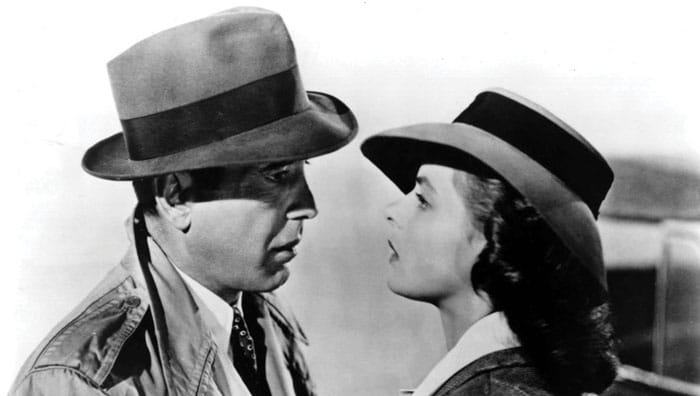
The “Vienna in Hollywood” symposium will be followed by a film series showcasing Austria’s “Emigres and Exiles in the Studio System.” The opening night selection was “Casablanca,” directed by Budapest-born Michael Curtiz with the score composed by the Austrian-born Max Steiner.
Tickets for the films are no more than $10 and moviegoers get to view them in the museum’s new, state-of-the-art Ted Mann Theater.
Additional films to be screened in the series include “A Midsummer Night’s Dream” (directed by Austrian Max Reinhardt), “Dishonored” (directed by Austrian Josef von Sternberg) and “Sunset Blvd.” (directed by Austrian Billy Wilder).
The museum’s plan is that every few months it will take a deep dive into a different aspect of film history. There is a wealth of material to draw from; the museum has access to the over 13 million film artifacts the Academy has been collecting since the late 1920s.
“I hope that we are introducing visitors to different films, eras, genres and artists that they haven’t heard of before,” Kramer said. “I think we’re doing it in a way that feels exciting, inviting and accessible.”
More information on screenings can be found on the Academy Museum’s website, AcademyMuseum.org.
Early Hollywood Jewish Filmmakers Get Spotlight at Academy Museum Read More »
Moshe Dadon, the Israeli owner of the Encino-based market popularly known as Mr. Kosher and formally known as Ventura Kosher Meat & Poultry, has had— on more than one front—a rough time operating his business during the pandemic.
“It has hurt us badly,” Dadon, who purchased the store in 2009, more than 40 years after its 1968 founding, said.
Starting at the beginning of the pandemic, people have been afraid to come into his store. The first week, there was a big panic. “They bought everything,” he said. “A week or two later, when their freezers and refrigerators were filled, they were terribly afraid to come to the store and buy more.”
This created a new challenge for Dadon’s small and already overwhelmed staff.
With nationwide fears compounding, Mr. Kosher’s customers – influenced by large food retailers such as Ralphs — began telephoning in their orders in large numbers for the first time.
“This presented a new problem for us,” Dadon said. “Customers would have to come to the parking lot to pick up their food. We would have to take the food out to them.”
One obstacle was that people wanted to use their credit cards, causing workers to have to make multiple trips to each customer.
“It was a headache at the beginning, and it still is going on today.” — Moshe Dadon
“It was a headache at the beginning, and it is still going on today,” said the owner. “Some people just don’t like to leave their cars.”
Before the pandemic, “our customers came inside to shop,” Dadon said. “They might be buying bread, but they would go from shelf to shelf and remember they are low on cheese and would buy some. That’s how it worked. Not now, though.”
Anyone who has traveled Ventura Boulevard in the Valley, or any other retail neighborhood during the past 21 months, and glanced at the scores of stores posting “Help wanted” signs understands one of Dadon’s chief frustrations.
“The biggest obstacle in the last six months has been the lack of available workers,” he said. “There are no workers willing to work. Some may not be interested in working because they are getting money from the government. But otherwise I don’t know why. I am not sure what is happening. I don’t know who is qualified and who is not. But I do know it is hurting my business.”
Right now, Dadon is short two or three employees, which is a big deal.
“In my small store, to be short two guys is a lot,” he said.
Reflecting on the good old pre-pandemic days, Dadon recalled, “when workers came here to work, they stayed.”
Before the coronavirus, nearly every week, jobseekers would inquire about vacancies. “I would have to say ‘Sorry’ because when workers came in those times, they stayed. Now, this is not the case.”
Dadon was one of many business owners who wasn’t shocked to hear about “The Great Resignation,” where millions of workers quit their jobs in record numbers this past fall. In September, it reached a high of 4.4 million.
“We don’t have enough employees, I think, because they hear, somehow, from a friend or a cousin, about a family member receiving a check for free, and they want one too,” he said.
Additionally, the supply chain crisis at the ports of Long Beach and Los Angeles and low inventory, traced to a shortage of delivery drivers, are also affecting Dadon’s store.
“My business is very small,” he said. “The government must find a way to stimulate people to become interested in working again. If the government will stop the stimulus money, I believe the workforce will go back to the way it was before.”
Encino Kosher Market Owner Talks Challenges of Operating During the Pandemic Read More »
I woke up and switched on the news to consume my morning cup of steaming hot fear and terror, before seeing a friend’s Instagram story that showed the words “Delta” and “Omicron” can be rearranged to spell “Media Control” (seriously, try it). Two weeks ago I reluctantly had my flu jab. Last week I also had my COVID booster shot so that I could keep my mother happy, even though my antibodies are sky-high in the wake of getting COVID (which I caught during the summer, shortly after receiving that second vaccine), which means my antibody level vastly exceeds anything that can be achieved by a vaccine.
Two weeks after the flu jab and five days after the booster jab, I am now in bed with the flu, which continues to inspire my absolute confidence in these injections. At least there is lots of time to catch up on streaming content.
I’m beginning to wonder if a large portion of shares in Big Pharma are owned by Netflix, Amazon Prime, HBO and Disney+.
The UK Sunday Times just reported that 90% of COVID sufferers requiring the most care are unvaccinated, and an unvaxxed friend of mine in Cleveland, Ohio just spent two weeks intubated in an induced coma. She is now back at home and gradually recovering.
In bed and delirious with more post-vaccine sickness, there has been time to decipher many more anagrams. “Media Control,” an anagram of “Aimed Control,” can be rearranged to read “Monica Retold,” which reveals that the new virus strains are basically a PR campaign for “American Crime Story: Impeachment.” Monica Lewinsky was a producer on FX’s new series about Bill Clinton, although perhaps the words “Bill,” “on” and “Monica” shouldn’t appear in the same sentence. I have started watching the program, and look forward to the bit where they address the incident with that dress, and aim to scrub off incriminating stains from Monica’s reputation.
If you rearrange “Monica Retold,” which could also be a “Friends” spinoff retelling all 10 seasons from Monica’s perspective, you nearly get “Doctor Melania.” That would be a brilliant Trumpian conspiracy theory if it wasn’t missing one letter “A.” CNN will probably claim that her final letter was given to the Russians in return for a stolen election, even though the whole story has now been revealed as a hoax.
Ironically there is no decent anagram for the word “anagram”, although you can rearrange the letters of “anagram” to spell “Gan Mara.” In Hebrew that translates to “Garden of Bitterness” which, even more tenuously, leads us back to the bitter effects of “Delta” and “Omicron.” Those words can be rearranged to spell “Locate Nimrod.” Nimrod was the great grandson of Noah. The biblical Book of Micah (5.5) refers to Eretz Nimrod, the “land of Nimrod”, although nowadays it is difficult to locate. This covid-variant anagram goes to conclusively prove, well, absolutely nothing.
We can also get to “Micro Taloned,” which is a does-what-it-says-on-the-box description of those horrible little covid cells under the microscope revealing their nasty talons. “Moonlit Race” would be the way that vaccines were smuggled across borders at night, “Molar Noticed!” is the joyful cry of a British dentist who finally discovers a tooth in the decaying mouth of yet another orally-unhygienic native who has never heard of dental floss. The winner, however, is my sister who untangled the letters of the two new-and-improved virus strains to form the words “Erotic Almond.”
On that note of saucy fruit, I’m going back to bed with Monica and Bill.
Marcus J Freed is an actor, writer, filmmaker & marketing consultant. www.marcusjfreed.com @marcusjfreed
Satirical Semite: Conspiracy Theory Read More »