fbpx

December 15, 2021

Breaking the Historical Line

Had Blücher been a little late at Waterloo,
or Cleopatra’s nose been just a little shorter,

as speculated counterfactually by Blaise Pascal,
or had there been a lot of Jews, not just a few,
Napoleon and Mark Anthony would have been

seen as heroes, and the Jewish people as a bigger rascal.

If from Jerusalem God had not turned back all the forces of Sennacherib,
the history of the world would never have included
its fundamentally important three

monotheistically inspired, mostly intolerant religions,
of which Monty Pythonic members of them all regard the others

as stool pigeons,
treating those that aren’t their own as being as deluded
as those misogynists who seem to wish that God to Adam

would give back a rib.


Willian H. McNeill, late University of Chicago Professor History, once stated that the failure of  Sennacherib’s forces  to capture Jerusalem-shaped the history of the world far more than any other historical event he knew. According to the Sennacherib Prism in the British Museum they were only able to “shut up Hezekiah in Jerusalem like a bird in a cage,” phraseology which Rabbi Meir Soloveichik has pointed out echoes the way that before the exodus God hovered over the houses of the Israelites in Egypt like a mother bird, preventing the destruction  of the Israelites’ firstborn while He destroyed all the Egyptian firstborn.


Gershon Hepner is a poet who has written over 25,000 poems on subjects ranging from music to literature, politics to Torah. He grew up in England and moved to Los Angeles in 1976. Using his varied interests and experiences, he has authored dozens of papers in medical and academic journals, and authored “Legal Friction: Law, Narrative, and Identity Politics in Biblical Israel.” He can be reached at gershonhepner@gmail.com.

Breaking the Historical Line Read More »

You Shall Be a Blessing

The Torah introduces what looks like a dying father’s parting words to his beloved children. Jacob gathers his offspring and begins to offer individual prophecies, what is later described as blessings. However, our contemporary understanding of blessings clouds our ability to comprehend the scene. Usually, when we bless someone, our words include wishes for good health, the ability to experience joy, and a capacity to garner inner strength. Other may bless with long age, the opportunity to see peace, and potential to find renewed faith. But Jacob’s words to his first three children are biting, seemingly angry and filled with contempt. Blessing in the ways we have grown accustomed? Certainly not. Instead, Jacob’s reproach seems self-serving. A shaming critique so that he is able to leave this world without regret.

And yet, is this exactly what the Torah is trying to teach? Not to wait until our deathbed to have our hardest and most anguishing conversations? At a recent doctor’s appointment, I was surprised when the receptionist asked if I had a medical directive. My appointment was routine. And yet, part of the pre-exam was asking about my pre-planning, ensuring that even during the seemingly mundane moments of life, we should be setting the stage with our wishes, desires, hopes and dreams. Not deferring until we take our final breaths to engage in the most vital of heart-to-hearts.

What needs to be said to a loved one or friend that has since, gone unsaid? What advice, guidance, or words of wisdom do you need to get off your chest? Words that will otherwise eat away unless offered during your lifetime? What should be said now instead of in rushed whispers, when it might end up being too late? What can be said so that our loved ones have a chance to respond?

The name of the parsha is Vayechi. Translated, “And Jacob lived.” Our words live on for generations to come. May our words be shared in a way that are considered blessings. Timely pearls that allow for future memories of appreciation, gratitude, and love.

Let us all be a blessing. Amen.


Rabbi Nicole Guzik is a rabbi at Sinai Temple. She can be reached at her Facebook page at Rabbi Nicole Guzik. For more writings, visit Rabbi Guzik’s blog section from Sinai Temple’s website.

You Shall Be a Blessing Read More »

Crime Fighting is Back

There are two ways that voters decide their position on issues of public policy: They either ask themselves “what does this policy do for me?” or “what does this policy say about me?” New York Times columnist Ezra Klein refers to these two approaches as “transactional politics” vs. “expressive politics.” One of the most important aspects of any political or policy debate is the way that voters prioritize these two questions. 

For example, an extremely wealthy individual who supports higher taxes is making that decision expressively, based primarily on what that decision says about them. An up-and-coming entrepreneur may come to the opposite conclusion because the practical benefit of lower taxes is more significant than for someone whose economic status is more secure. We saw a widespread reconsideration of this balance on education-related matters during the pandemic last year, when many parents who had long been philosophically committed to public education chose instead to enroll their children in charter or private schools.

These competing priorities are now reframing the debate over public safety and criminal reform. Last summer, after the tragic deaths of George Floyd and Breonna Taylor, large numbers of angry Americans took to the streets to express their dissatisfaction with law enforcement they saw as being overly repressive to minority communities. For those who live in those communities and have faced police brutality, these marches were the essence of practical, transactional politics. For many others for whom mistreatment from the police was not a frequent occurrence, their protests in solidarity with those who had been mistreated were grounded primarily in expressive politics.

A year later, much has changed. Many American cities have seen dramatic increases in the number of homicides committed in their jurisdictions. A high-profile murder here in Los Angeles of a prominent philanthropist has galvanized public attention, as has an ongoing spate of flash mob and “snatch and grab” robberies in which retail stores throughout the state have been victimized by increasingly brazen robberies. We are reminded regularly that the overall crime rate is still much lower than was the case in the late 20th century, but the overall feeling of danger and vulnerability is palpable.

The result has been a noticeable shift in the public discussion of these issues. Most of California’s political leaders, including Governor Gavin Newsom and the mayors of most of the state’s largest cities, are devoting more time and attention to law enforcement resources than they did last year in the aftermath of the protests. Even though only a small number of activists on the left ever embraced the totality of the “defund the police” slogan in a literal sense, the sentiment caused many local governments to redirect funding from police and sheriff departments into preventive, community-based programs. That impetus has now largely disappeared, as those same elected officials now scramble to reinforce existing law enforcement capacity in their communities.

Across the country, Republican and centrist Democratic candidates are racing back toward crime-fighting platforms that have been out of fashion for some time. 

These shifting attitudes will almost certainly shape the 2022 election season. Los Angeles District Attorney George Gascón was elected on a progressive reformist agenda just months after Floyd’s death. Now he may be facing a recall campaign. Across the country, Republican and centrist Democratic candidates are racing back toward crime-fighting platforms that have been out of fashion for some time. Meanwhile, left-leaning Democrats are nervously watching as public sentiment turns against the gains they thought they’d achieved last year.

As we’ve discussed many times before, American Jews occupy a unique place on the national political landscape, combining widespread economic success with pronounced ideological liberalism. Public safety and criminal justice issues can pose an especially difficult change to these types of voters, because they frame the expressive and transactional aspects of politics in stark relief. 

Many voters of all ethnicities and religions want to provide assistance and support and second chances to those who are less advantaged. They also want their families and communities to be safe. The challenge is balancing and prioritizing between those necessities, and then deciding which of the two is more important.


Dan Schnur is a Professor at the University of California – Berkeley, USC and Pepperdine. Join Dan for his weekly webinar “Politics in the Time of Coronavirus” (www/lawac.org) on Tuesdays at 5 PM.

Crime Fighting is Back Read More »

Rabbis of LA | Michelle Missaghieh: The Lifelong Learner and Teacher

Rabbi Michelle Missaghieh, Temple Israel of Hollywood’s (TIOH) associate rabbi for the past 25 years, believes that a big part of her job as a rabbi is not only to educate others, but to keep educating herself as well.

“I really am a voracious learner,” she said. “If I’m going to teach, it’s really important for me as a rabbi to also learn more.” 

Missaghieh, the daughter of a Persian father who immigrated to the United States from Iran in the 1950’s and an Ashkenazi mother, had an uphill battle when it came to her education. She is dyslexic, and while learning English was hard enough, learning Hebrew for her bat mitzvah was even tougher. 

“After my bat mitzvah, I said I was quitting, and my parents said, ‘Oh no you’re not,’” she said. “I stayed at my synagogue in their youth group in high school and loved it.”

When she was a teen, Missaghieh decided that she wanted to become a rabbi. She’d met Rabbi Nina Mizrahi, one of the first 100 female rabbis who was ordained by the Reform Movement. “I saw her and I thought she was beautiful and she was a rabbi, and that put everything together for me,” she said.

After becoming ordained at Hebrew Union College – Jewish Institute of Religion in 1996, Missaghieh took on the role of associate rabbi at TIOH, where she’s been ever since. During this time, she’s continued her learning, serving as a Hartman fellow at the Shalom Hartman Institute for three years while she had two young children. Today, she still studies with Hadar and the Jewish Institute for Spirituality, and she studies weekly with a chavruta. 

At TIOH, she teaches older adults and day school and conversion students, and she trains volunteers on how to perform tahara, which involves washing a Jewish dead body. After taking a class on tahara at a conference, Missaghieh put into place a program where her own congregants do tahara for free for TIOH members getting buried at Hillside Memorial Park, Mount Sinai Memorial Parks and Mortuaries and Eden Memorial Park. So far, she’s taught more than 40 people how to conduct this meaningful ritual. 

“It is extremely humbling and beautiful,” she said. “When I do tahara for someone who has passed, I really get a sense that their body is the shell that housed their soul, and that the body in front of me is not the person anymore. It really is a deep privilege to be able to care for them with dignity and gentleness.” 

Another area of Missaghieh’s work that she particularly enjoys is teaching converts. When she first started working with Senior Rabbi Emeritus of TIOH John Rosove, he told her that she was going to be working with conversion students.

“I didn’t know what I was doing. I had no idea why people would even want to convert to Judaism, and not because I don’t love it. But that’s because it’s mine.”

“I didn’t know what I was doing,” she said. “I had no idea why people would even want to convert to Judaism, and not because I don’t love it. But that’s because it’s mine.”

She quickly learned that Judaism just clicked for some people, who felt they were meant to be Jewish. “The midrash that says we were all at Mount Sinai made sense,” she said. “I love teaching these students because they’re so excited and passionate and committed. It’s exciting for me to watch them blossom as ‘young Jews’ learning about our tradition, and it makes me really appreciate everything we have to offer.”

Missaghieh said her mission ties into her passion for education: She hopes Jews use what they learn to find themselves.

“I want people to own their Jewish path and to take hold of the reins of their journey, to see the depth that our teaching and tradition has to offer them, and for those teachings to bring them a sense of community, awe, holiness, wonder and gratitude.”

Fast Takes With Michelle Missaghieh

Jewish Journal: What’s your favorite Jewish holiday?

Michelle Missaghieh: Passover, hands down, because of all the rituals, the singing, the storytelling and the intergenerational nature of it. I love the Seder. 

JJ: What do you do when you have a day off? 

MM: I read. I loved the book I recently finished called “Homegoing” by Yaa Gyasi.

JJ: Who is your role model?

MM: Ruth Bader Ginsburg. I love her brilliance and her ability to see things from all perspectives. She was a working woman in a time when it was difficult to break through the glass ceiling. 

JJ: What’s the best place you’ve ever traveled to?

MM: I really enjoyed Bali because I loved learning about the religion and going to the Balinese temples. I also went to Iran when I was five. I still remember being in the Muslim bazaar in Tehran and the famous mosque in Isfahan.

JJ: What’s your favorite word in Hebrew?

MM: “Olam,” which often is translated into “world.” But it also means “hidden” and “forever.” It’s such a good word. 

Rabbis of LA | Michelle Missaghieh: The Lifelong Learner and Teacher Read More »

Ritchie Torres, Benny Gantz Highlight IAC Conference

Representative Ritchie Torres (D-NY) and Israeli Defense Minister Benny Gantz were among the notable speakers at the Israeli American Council (IAC) 2021 National Summit.

The conference, which took place at The Diplomat Hotel in Hollywood, FL from Dec 9-11, attracted more than 3,000 attendees and pro-Israel activists at the group’s first conference since the COVID-19 pandemic began. 

Torres, speaking to IAC Board Chairman Naty Saidoff, noted that “the amplification of anti-Zionism on platforms like Twitter” resulted in a spike in antisemitism in May. “The rhetoric that we use has real-world consequences,” he said. “As public officials we should be mindful of the words we use.” He added that accusations of Israel being an apartheid state that engages in ethnic cleansing are inflammatory.

The progressive Democrat went on to explain that he grew up poor in the south Bronx, raised in public housing by a single mother working a minimum wage job to make ends meet. Torres first entered politics as a housing organizer; at the age of 24, he won an election for New York City Councilmember despite having no money or political experience. Torres credited his victory to constantly knocking on doors.

He recalled how 15 years ago was “the lowest point of my life” because he had dropped out of college, fell into substance abuse and felt suicidal; now, he’s a member of Congress. “America is the land of opportunity and the land of second chances and my story is living proof,” Torres said to an approving audience.

Torres called New York City “ground zero” for a strain of democratic socialism that is anti-Israel. He pointed to the fact that in 2020 the Democratic Socialists of America (DSA) circulated a questionnaire asking candidates if they would pledge to not travel to Israel; and if they would support the Boycott, Divestment and Sanctions (BDS) movement. “One need not be Jewish or Israeli to see the antisemitic double standard against Israel,” Torres said, asking “why is there only a BDS movement against Israel?” and not against Iran, China and Myanmar. “[If] selective outrage is not explained by antisemitism, then what is it?” he said.

“The notion that Israel’s existence should be subject to debate is outrageous and offensive and the BDS movement should be relegated to the fringes of American politics.” – Ritchie Torres (D-NY)

Torres added: “The notion that Israel’s existence should be subject to debate is outrageous and offensive and the BDS movement should be relegated to the fringes of American politics.”

The congressman recalled the “vitriol” he encountered from the left after he traveled to Israel as a councilmember. Torres said he was accused of supporting “apartheid” and of “pinkwashing,’ the term used by pro-Palestinian activists accusing Israel supporters of touting the Jewish’s state’s record on gay rights to deflect from their treatment of the Palestinians. Torres recalled meeting at a rally a person wearing a “Queers for Palestine” shirt. When he asked her if she supports Hamas, she said she did because they “represent the liberation of the Palestinian people.” “That to me is a definitive sign of the stupidity and moral absurdity [of BDS],” Torres said. He added that he has faced “intimidation and harassment” on Twitter as well as death threats over his support for Israel. “It takes a toll, but I think I’m doing the right thing,” Torres said.

Gantz, the keynote speaker, lauded the fact that the conference provided an opportunity for Israelis and Americans to “gather in celebration of our bond” and “reflect on our challenges and opportunities that lie ahead in doing together,” thanking the IAC for their “ongoing investment in deepening United States and Israel’s ties.” He also paid homage to the late philanthropist and GOP megadonor Sheldon Adelson, calling him “a beacon of light in the darkness and a vision for hope.”

The defense minister said he is concerned about “two challenges” to the Jewish story, with the first being that “support for Israel can no longer be taken for granted.” “We must walk together, my friends, to empower the Jewish identities of our youth and ensure their ties to Israel,” Gantz said. “They are the future of Israel and the future of our diasporas and communities.”

The second challenge was “antisemitism presented as anti-Zionism.” “The oldest form of hatred has been given a makeover and it is now being fueled with the head of social media and the spread of misinformation,” Gantz said, adding that “the work of Israel’s government alone is not enough” and urged the Jewish community to “stay united” in the face of rising antisemitism. “Our stars of David must never be hidden beneath our shirts. Our kippot should never be removed for fear of verbal or physical attacks. And our flags of Israel should always be waved proudly.”

Gantz also called for uniting “with our friends and allies around the world” and declared that the “the United States is and will always be the strongest ally of the State of Israel.” “Every [U.S.] president… has and continues to support Israel to this day and for this we are very grateful,” he said.

“Israel is the only country in the world that has another country, Iran, seeking its destruction and building the means to do it. As Israel’s minister of defense, I will never let it happen” — Israel Defense Minister Benny Gantz

The defense minister went on to call Iran “the biggest threat to global and regional peace and stability” and “a complete threat to our way of life and our shared values.” Israel, he continued, is “the only country in the world that has another country, Iran, seeking its destruction and building the means to do it. As Israel’s minister of defense, I will never let it happen,” he vowed. Gantz urged the international community to “stand together and act forcefully against Iran’s hegemonic aspirations and nuclear program for the sake of global and regional peace.” 

Photos by Noam Galai

He touted the fact that the Iron Dome intercepted 90% of the Hamas missiles fired at Israel during the conflict in May and gave a shoutout to one of the technology founders of the Iron Dome, who was in the audience. “Nothing is more Jewish [than] defending human lives,” Gantz said.

Along with multiple breakout sessions and panels dealing with a wide array of issues facing the Jewish world, the conference also featured video speeches from House Majority Leader Steny Hoyer (D-MD) and Kevin McCarthy (R-CA). “I am proud that my party, the Democratic Party, continues to take a stand against antisemitism,” Hoyer said, adding that he was also proud to work with his Republican colleagues to provide enhanced security and cooperation with Israel. “Israeli-American cooperation is central to overcoming the world’s greatest challenges.”

McCarthy similarly touted “America’s unbreakable ties with Israel,” calling the Jewish State “a critical ally and a model of democracy in an unstable region.” He said that Israel is constantly under attack from terrorists like Hamas as well as constant denunciations from the international community. “We cannot allow for that,” he said. McCarthy noted that he has visited Israel five times with 189 members of Congress and urges others to go on such trips.

Miriam Adelson also paid homage to her late husband, Sheldon Adelson, the major funder of the IAC. “I miss him more and more each day. He was irreplaceable.” She said she took comfort in seeing the “bright eyes and smiles” in the audience. “You are Sheldon’s living legacy.”

Ritchie Torres, Benny Gantz Highlight IAC Conference Read More »

The Jewel of the Iraqi Kitchen—Ruby Red Kubbah

Rachel and I spend a lot of time talking about food. We reminisce about all the amazing meals we’ve eaten. We make lists of recipes we want to try. We consider what produce is in season and we plan our cooking calendar around all the Jewish and American holidays.

Every so often, during one of these sessions, Rachel will mention the delicious red kubbah soup that she first tasted in a little restaurant by the Machane Yehuda Shuk in Jerusalem. She always tells me “We should really make it!” 

In Hebrew this soup is called kubbah selek (beet kubbah) or kubbah adom (red kubbah) and in Arabic it is called kubbah shwandar. 

A classic Iraqi dish, kubbah shwandar is a vibrant magenta beet broth with meat-filled semolina dumplings. The soup is rather simple to make. The stock is made with sautéed onions and celery and lots of sliced beets. Then it’s flavored with fresh lemon juice, sugar and salt and pepper giving it a wonderful sweet and sour flavor. My grandmother always made her stock with a big beef neck bone, but a beef bouillon cube or two add just enough flavor. The actual kubbah, however, is a little more delicate and time-consuming. 

I spent hours of my childhood in the kitchen watching my grandmother make kubbah. Soak the semolina and farina for the casing. Put it in the fridge for a half hour, so it becomes easier to work with. Chop the onions and parsley. Mix with the meat and seasonings. Roll the dough in balls, flatten and stuff and form perfect balls. Over and over and over. 

Why bother with all that work when I’m blessed with a mother who still makes wonderful kubbah? I never perfected the art of making kubbah. 

This summer, Rachel and I pitched a few recipe ideas to a kosher foodie magazine called Fleishigs. They said yes to the kubbah! So, we spent a Sunday testing recipes and making kubbah. We were happily surprised—we succeeded in making gorgeously round, fluffy, tasty kubbah. And our recipe was published in Fleishigs. 

In the Middle East, cooking and baking usually involves the company of other women. Recently, Rachel and I shopped for all the ingredients and schlepped to the kitchen of our good friend and cooking whiz Esther Avrahamy and invited master chef and caterer Jazmin Duek to join us as well.

Esther pulled out an old well-used recipe book with lots of Post-it notes sticking out of it. When I saw the cover, I was overcome with emotion. “Awafi” (health or bon appetit in Iraqi Arabic) was published over thirty years ago. 

It was a labor of love by Millie Gabbay and the sisterhood of the Sephardi Synagogue in Sydney, Australia, where my extended family were congregants for many years. My great-uncle Nuri and Auntie Tina were very invested in preserving all the old Iraqi recipes in the book. They bought boxes of the book to Los Angeles, but I was young and single and never bothered to keep a copy. It was wonderful to see her well-worn copy after so many years. 

That day, we compared notes on making kubbah, we laughed, we cried from the onions and we used our hands to pat together some fabulous kubbah. 

Our lucky families enjoyed this beautifully vivid red soup and flavorful kubbah for dinner (served over steamed white rice, of course!) — Sharon

Semolina Kubbah

For the filling
1 pound ground beef
1/2 cup finely chopped Italian parsley
1 medium onion, grated
2 teaspoons baharat
1 teaspoon kosher salt
1/2 teaspoon pepper

For the dough
1 cup farina
1 cup semolina
1 cup warm water
1 teaspoon kosher salt
1/2 teaspoon pepper

  • In a large bowl, combine ground beef, Italian parsley, grated onion, baharat, salt and pepper. Set aside.
  • In a large bowl, combine farina and semolina, water, salt and pepper until incorporated.
  • Cool in refrigerator for at least 30 minutes.
  • Wet palms with water and roll the dough mixture into walnut-sized balls and place on a tray lined with wax paper.
  • Flatten each dough ball into your palm and place a large teaspoon of filling in the center.
  • Gently gather the sides of the dough to cover the filling and delicately pinch closed and roll into a ball.
  • Place the stuffed kubbah balls on a tray, loosely cover and leave in the refrigerator for at least 4 hours.
  • Gently drop balls to the pot of boiling beet soup and cook about 25 minutes.
  • Raw kubbah can be frozen for up to 2 months.

Sweet and Sour Beet Soup

3 tablespoons olive oil
1 large onion, diced
8 stalks celery, chopped
8 medium beets, peeled and sliced
into thin half moons
10 cups water
3 lemons, juiced (3/4 cup juice)
2-3 tablespoons sugar
2 beef bouillon cubes
1 teaspoon kosher salt
1 teaspoon freshly ground black pepper

  • Heat oil in a large stock pot over medium heat.
  • Add onion and sauté until soft and translucent, about 5 minutes.
  • Add celery and beets and sauté for two minutes.
  • Add water and bring to a boil.
  • Add lemon juice, sugar, salt and pepper and cook for 15 minutes.
  • Reduce heat, then gently place kubbah into the boiling soup and simmer in a covered pot for about 25 minutes.

Rachel Sheff and Sharon Gomperts have been friends since high school. They love cooking and sharing recipes. They have collaborated on Sephardic Educational Center projects and community cooking classes. Follow them on Instagram @sephardicspicegirls and on Facebook at Sephardic Spice SEC Food. Website: sephardicspicegirls.com/full-recipes

The Jewel of the Iraqi Kitchen—Ruby Red Kubbah Read More »

Rosner’s Domain: The Trump and Bibi Dance

Donald Trump is the media gift that keeps on giving. For four years, he was the erratic U.S. President that Israelis grew to appreciate. At times, he was almost too good to be true. So it was easy for them to forget, or ignore, his many deficiencies. He was unserious – but it worked to Israel’s benefit. He was unlearned – but on our side. He was blunt and unpredictable – but Israel was mostly in the camp that gained when Trump would shock the world with another abrupt policy shift.

He was a dangerous bully, but Israelis often ignored this fact, because of his tendency to be our dangerous bully in a region full of Israel-hating bullies. When the U.S. is Israel’s protector, you might want it to be a bully. Joe Biden is not a bully. That’s bad – but has its advantages. It’s bad because Iran is not afraid of him. It’s good because Israel doesn’t need to fear his wrath. Biden is predictably reliable, and is unlikely to surprise Israel with a move that will dramatically alter the current trajectory of world trends. 

Last week, an interview in which Trump bashed former Prime Minister Netanyahu was published in Israel and was quoted around the world. As is the usual Trump tradition, the former President was all over the place, contradicting himself at times, contradicting reality at times, and rambling freestyle. 

Two headlines got the main attention of those who bothered to read the interview. Trump said that Netanyahu’s congratulatory message to Biden, when Biden was elected president, came too quickly after the election. “He was very early. Like earlier than most. I haven’t spoken to him since. F**k him,” Trump told his interviewer, journalist Barak Ravid. Trump also said that Israel did not want peace as much as he expected. “I [had] thought the Palestinians were impossible, and the Israelis would do anything to make peace and a deal. I found that not to be true”.

His first assertion is simply not true. Netanyahu was hardly the first world leader to congratulate Biden. In fact, he was criticized at the time for waiting too long. In making such a claim in such a manner, what Trump really did was to reaffirm Netanyahu’s instinct to go slow – and then make a decisive, congratulatory move. He needed to go slow, because the worst possible scenario would be an erroneous congratulation to Biden if Trump ultimately won. He then needed to congratulate Biden because, well, does that really need an explanation? 

The other feature of Trump’s tirade is more important. It will be used by those who tend to argue that the absence of peace is Israel’s fault. You see, it isn’t just suspicious figures such as Jimmy Carter and Barack Obama who make Israel seem guilty of rejectionism. Now it is Israel’s best friend making this accusation.

It was good for Israel to have Trump as an ally in the White House, but there was always a measure of uneasiness about this friendship. 

That’s the price of playing with fire, or, in this case, playing with erratic arsonists. It was good for Israel to have Trump as an ally in the White House, but there was always a measure of uneasiness about this friendship. Israelis could see that he wasn’t the most knowledgeable leader. They could see that he is the kind of man who can easily flip, for no clear reason, or because of personal grievances. Was it worth it? Well, neither Israelis nor their government had much choice. Trump was president, and Israel is not in a position to refuse the friendship of a U.S. President, and certainly not his advantageous policies. 

As for the rest, what Trump truly did is help Netanyahu prove two things. 

First, Netanyahu was hardly in Trump’s pocket. Netanyahu is presented in the interview as someone who often rebuffed the President’s ideas, dragging his feet and becoming noncommittal. True, this happened when Netanyahu wanted to prevent certain advancements in the diplomatic process with the Palestinians, and you might be one who thinks such advances are necessary. But the point is that Netanyahu was not doing Trump’s bidding. He was doing Israel’s bidding. He worked closely with the US President to advance Israel’s interests and was shrewd enough to be able to stop when Trump had ideas that Netanyahu felt were inconsistent with Israel’s interests. 

Second, Netanyahu did not tie Israel to Republican party causes, as some people accuseUS Presidentd him of doing. Did he prefer Trump over Biden? Sure. Did he wait cautiously to congratulate Biden when the US election was still contested? Yes, he did. Did he follow Trump into the rabbit hole of conspiracy and chaotic behavior? No, he didn’t. Netanyahu has his own full sack of negative traits, but he is no Trump.

Something I wrote in Hebrew

Last week we asked why many Israelis no longer see Tanach as a vital component of the high-school curriculum. This week we discovered that Tanach isn’t alone:

Tanach is not the only profession on which many would give up. Many more would give up literature – you know, Agnon, Dostoevsky, “War and Peace,” Alterman, all those who are not on Netflix (Jane Austen is probably the exception). Respondents to our survey allocated an average of nearly two hours to Tanach. What the seculars reduced, the religious added. But literature does not have protection. Religious people do not particularly want literature. Secularists do not particularly want literature. So if you are looking for a profession whose main characteristic is not polarization but attrition in all sectors – a profession that many Israelis do not understand why you need to study – literature is a better example than the Bible. 

A week’s numbers

Last week we asked why many Israelis no longer see Tanach as a vital component of the high-school curriculum. This week we discovered that Tanach isn’t alone:

A reader’s response:

I keep getting questions about Israel and Iran. Here’s one from Andy Brower: “What’s the difference between Netanyahu and the new Prime Minister on Iran?” My answer: both see Iran as a dangerous threat; both see American policy as naïve and problematic; both do not have a clear path forward if the talks fail to produce a positive result. So – not much difference.


Shmuel Rosner is senior political editor. For more analysis of Israeli and international politics, visit Rosner’s Domain at jewishjournal.com/rosnersdomain.

Rosner’s Domain: The Trump and Bibi Dance Read More »

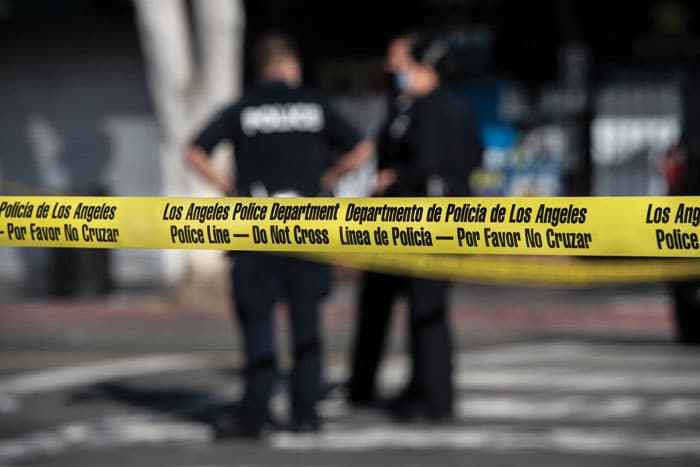
Crime Is on the Rise in L.A. How Is the Jewish Community Responding?

On December 1, paroled felon Aariel Maynor allegedly killed philanthropist Jacqueline Avant, wife of music executive Clarence Avant and mother-in law of Ted Sarandos, Netflix co-CEO, in her Beverly Hills home. He then allegedly burglarized a second home and accidentally shot himself in the foot. 

Maynor has an extensive criminal record and was released this past September after spending years behind bars for robbery with enhancements for being a prior convicted felon. He has been charged with Avant’s murder. 

While the murder shocked the nation, it is the latest in a string of brazen crimes taking place not only in Beverly Hills, but also in Los Angeles at large. On November 22, 20 thieves did a “smash-and-grab” robbery at The Grove, and earlier this month, robbers with guns broke into a holiday house party in Pacific Palisades, stealing phones and jewelry from guests. 

On December 5, the Instagram account Street People of Los Angeles posted a video of suspects entering a physical therapy office in Beverly Hills and taking a Rolex from a doctor. Police arrested 14 suspects who were allegedly responsible for retail robberies last month, but all of them were released because of zero-bail policies. 

According to Los Angeles Police Department Chief Michel Moore, homicides have increased about 50% since 2019 and aggravated assaults have risen about 16%. Additionally, Moore said around 200 robberies were reported during the first week of December. And according to USA Today, more than 150 follow-home robberies have occurred in L.A. in the past year. This involves suspects following residents to their homes and then robbing them, sometimes at gunpoint. 

Moore blamed the criminal justice reforms that have taken place over the past year and a half on the increase in crime. “Two years ago, a person arrested would be in custody and set to be arraigned in 72 hours,” he told ABC7. “Today, that process is, with the zero-bail, that person is in and out back in the community and their next court appearance is an arraignment that’s four or five months out.”

In a Beverly Hills town hall on December 12, newly appointed Chief of Police of the Beverly Hills Police Department Mark G. Stainbrook said that in the community, property crimes are down 7% from 2020, but violent crimes are up.

“In 2019, there were 82 violent crimes in the city. In 2020, there were 111 and in 2021, there were 132, so there has been an upward trend in violent crimes.”

According to Stainbrook, people are coming from places as far away as Northern California and Riverside and into Beverly Hills to commit violent crimes. 

“We tend to see the same people come into the City of Beverly Hills from other regions and commit these crimes,” he said. “This is a regional problem.”

The Jewish community has certainly felt the effects of the crime wave. “There has absolutely been an uptick in crime,” said Rabbi Yossi Eilfort, founder of the nonprofit Magen Am, which provides security in local Jewish neighborhoods. “December 6 was a record for us in terms of how many calls our patrols received.”

“In the last six to eight weeks, the trend has totally reversed and crimes are coming back up ” — Rabbi Yossi Eilfort, Magen Am

Eilfort said he’s heard of three people within two miles of his home who were held at gunpoint during the first week of December. These victims had something stolen from them, like a watch, a vehicle or items from their home. “To see this happening as much as it is is a sad sign of the times. We had a very clear improvement in crime in our area when we started this patrol [earlier in 2021], and in the last six to eight weeks, the trend has totally reversed and crimes are coming back up.”

Magen Am operates a licensed, armed patrol, staffed primarily by U.S. and IDF veterans, in the Fairfax, Melrose and Hancock Park districts — where much of the crimes have been happening — to protect residents. They offer security for synagogues and schools in other Jewish communities, like Pico-Robertson, and host self-defense, situational awareness and firearms training classes as well. 

“I really feel like politics and government entities that are supposed to be representing the public are playing politics with our safety and putting in policies that are not in the best interest of the community,” said Eilfort. “Someone needs to be held accountable for what’s happening.”

More and more members of the Jewish community are fed up and scared for their safety. Liora (she wouldn’t give her last name), who has lived in Pico-Robertson for most of her life, has had her family’s cars broken into twice, even though they’re in her condo building’s secured garage. And this past summer, in the middle of the day, she went out for two hours and came back to discover that her front door was heavily damaged; luckily, her lock was able to hold and deter the thieves.  

“They did it with the knowledge that anyone could enter the hallway at any moment and catch them in the act,” she said. “The audacity level of these criminals is horrifying, and it seems like the police have their hands tied and can’t do enough to stop this.”

Since then, she’s installed a Ring camera by her front door, but if she’s away from home for too long or she gets a notification that someone is near her door, she gets anxious. “We make sure to double check our car doors at night, but it’s still a bit nerve wracking knowing that there are people out there who have no problem coming into the building and causing damage and taking our things, even if they may be caught,” she said.

Another Pico-Robertson resident, Dan, experienced crime firsthand when thieves stole items from the back of his truck on his block earlier this year. However, he said, “It’s not the first time we’ve been the victims of theft. What I can say is that being robbed is a horrible feeling. It exposes how vulnerable we all are and for me is such a disappointment in the actions of other people. Our house was badly robbed in 2016 and it still haunts us.”

When the protests and riots were taking place in L.A. during the summer of 2020, protestors stole and destroyed over half a million dollars worth of merchandise from the Dr. Martens store on Melrose Ave, which 81-year-old Persian Jewish immigrant Ned Harounian owned. The thieves subsequently burned what was inside. Other Jewish businesses in the same neighborhood, like Ariel Glatt Kosher Market, Syd’s Pharmacy, Fish Grill and Go Couture were also attacked. 

More recently, on November 15, a kosher restaurant on Pico Boulevard, Holy Grill, was burglarized. The suspect stole $30,000 worth of items, including laptops, passports and IDs. 

Ella Nahmias, whose husband owns the restaurant, told the Journal, “I’m still trying to pull myself together,” and called the scene “a little intense.”

Sam Yebri, a community leader and attorney who is running for Los Angeles City Council in the 5th district – which includes Pico-Robertson, Fairfax, Century City and Westwood – said that as a lifelong Angeleno, it seems like L.A. has never felt more lawless. 

“It comes up in every conversation I have with friends and residents in the district as part of my campaign for city council. It’s obviously a serious concern for the Jewish community, especially our schools, synagogues and businesses. People are scared and frustrated and increasingly angry that City Hall and the county have failed to keep us safe. We’re fed up with that.”

Yebri pointed to the unintended consequences of policies that have been advanced in the criminal justice system as well as an increase of guns on the streets and overworked police officers as contributing to the problem.

Yebri pointed to the unintended consequences of policies that have been advanced in the criminal justice system as well as an increase of guns on the streets and overworked police officers as contributing to the problem.

“According to the City Controller, sworn LAPD officers are performing 460 jobs that could be performed by unarmed non-sworn city employees,” he said. “Restructuring these responsibilities is the fastest way to deploy more police officers to fight this surge of violent crime in our city.”

From Eilfort’s perspective, there is a general negative attitude towards law enforcement, and now the police are less likely to get involved “because the population looks at them as the bad guys,” he said. “These police officers could get criminally or civilly charged [when responding to a call], so how do you expect them to do their job?”

Also, because of more relaxed policies, Eilfort said, “I could imagine officers are getting frustrated if they’re on the ground arresting the suspect and seeing them released before they finish the paperwork. I’ve heard this a number of times. Everyone is deflecting that it’s someone else’s fault. Someone has to step up.”

Many L.A. residents are blaming Los Angeles County District Attorney George Gascón for the rise in crime, citing his policies like preventing prosecutors from putting sentence enhancements in place, enacting cash bail for non-violent crimes and seeking the death penalty. In a news conference on December 8, the district attorney – who is facing a second recall effort – said he is not responsible for the increase in robberies and homicides. 

“We’re trying really hard to use the science that is currently available, the data that is currently available, to do our work,” he said, according to ABC7. “And I’m not going to be intimidated by political rhetoric.”

L.A. Sheriff Alex Villanueva, an outspoken critic of Gascón, supports the recall of the district attorney and criticized Proposition 47, which reduced a number of crimes from felonies to misdemeanors, as one of the reasons why Gascón is failing.

L.A. Sheriff Alex Villanueva, an outspoken critic of Gascón, supports the recall of the district attorney and criticized Proposition 47, which reduced a number of crimes from felonies to misdemeanors, as one of the reasons why Gascón is failing, according to KTLA. 

“Then he comes into office and decides not to even prosecute the misdemeanors,” Villaneuva said. “So, you’re doubling down on a really bad idea and now we’re seeing the consequences of it.”

L.A. is not alone in its fight against crime. According to FBI data, the number of murders surged by nearly 30% nationwide in 2020 compared to 2019. It was the largest single-year increase ever recorded in the U.S. While property crimes dropped 8% from 2019-2020, the violent crime rate overall, including murder, robbery, assault and rape, rose by around 5%. 

However, Jeff Asher, a data consultant who looks at crime rates, told NPR, “In the ‘90s, New York and Los Angeles accounted for 13.5% of all murders nationally. Last year, it was under 4%.”

Though crime is up, Jewish community organizations and leaders are empowering citizens and providing them with security and the information they need to stay safe.

The Jewish Federation of Greater Los Angeles’ Community Security Initiative (CSI) has trained 2,156 staff in 64 schools to protect against potential threats and visited over 400 sites at Jewish institutions to perform vulnerability assessments as well as offer safety guidance and resources. 

The Jewish Federation of Greater Los Angeles’ Community Security Initiative (CSI) has trained 2,156 staff in 64 schools to protect against potential threats and visited over 400 sites at Jewish institutions to perform vulnerability assessments as well as offer safety guidance and resources. 

Activist and Senior Project Coordinator at the Los Angeles Bureau of Street Services Adeena Bleich is speaking out and encouraging people to create block watches, take self-defense courses and get to know their neighbors.

“Another great thing to do is help revitalize major corridors by working with your Council office and neighborhood associations to apply for street improvement grants, which will add in pedestrian lighting and fix sidewalks and curbs and make the overall area safer,” she said. “People can also create a walk safely program among neighbors they know so that anyone who feels unsafe to walk alone can message for a walking partner.”

Eilfort, who is running a situational awareness class through Magen Am on December 22, is going to cover dangerous circumstances to avoid, how to read someone’s body language and combat profiling, which is profiling based not on race or class, but whether someone fits into a certain place at a certain time. He said that by learning situational awareness, keeping doors locked, not leaving a new bike or stroller in the front yard and carrying pepper spray and a flash light are good practices to stay protected.

“I tell people that Magen Am can’t be responsible for everyone’s safety,” he said. “Everyone has a responsibility to themselves and their own family, and they need to improve their awareness and security best practices.”

Crime Is on the Rise in L.A. How Is the Jewish Community Responding? Read More »