fbpx

July 22, 2021

Spiritual Parenting: The Gift of a Reprimand

Judeo-Christian theology espouses an immanent, loving God, a celestial coach rooting for each individual’s spiritual growth. Scripture is filled with reminders of this abundant love, with prayers and rituals offering myriad opportunities for returning God’s grace with grateful service. On the other hand, Biblical stories are rife with descriptions of disastrous cause-and-effect chain reactions resulting from arrogance, indifference and infidelity. God’s love includes challenging us with real life responses to our choices. The secret of true love is tough love, the presence of consequences. But it all starts with love.

Children have a tough time appreciating the gift of a reprimand. Parents have a tough time doling them out. We’d rather be friends with our kids than parents to our kids. We selfishly don’t want to disrupt a meal, spoil an outing or cancel a vacation. But if we’re not going to be the parent, who is? One Sunday, when my oldest son Max was fifteen, he woke up in a dreadful mood. He emerged from his room with a sullen expression and heaped insult on each family member. I reluctantly had to draw the line when he slammed his brother Jesse’s laptop on his fingers. The punishment? His lifeline to the world, a new cell phone, was promptly snatched away and hidden. This didn’t bode well for the outing we had planned that day. Max ensured all of us suffered until he was having too much fun on his bike to remember his resentment.

Our kids go berserk when we reprimand them. Thankfully, they are usually considerate of others and know when they are crossing the line. They have also learned when to steer clear of their mother just by reading the look on her face. But when we have to lay down the law, we let them freak out in their room during the requisite “time out.” Strangely, afterwards, they are especially sweet and loving. I think they intuit that structure in their lives is crucial for them to flourish. If Jesse smashed Max’s fingers in the computer, Max would expect swift justice. They have learned from their middle school peers that those who are spoiled rotten turn out just that way: rotten.

Parents must be prepared to punish, but only as a last resort. Better to have rewards and positive reinforcement doled out in a calm, unruffled manner. Maintaining tranquility in the heat of battle requires that parents have an arsenal of anger management techniques like reframing and deep breathing. We must be the adult in the situation! Child-raising expert Rabbi Shlomo Wolbe describes children’s two mutually exclusive modes: learning, characterized by a relaxed state that facilitates real change, and obedience, a nervous and rebellious state inhibiting real change. Punishment may seem effective initially, but it flips children from learning mode into obedience mode, stifling long-term improvement. A vicious cycle results from frequent punishment since increasingly harsher measures must be imposed, further stunting the internal growth needed to effect long term change. Calmly dispensed reprimands teach children methods to handle their own anger with peers and eventually, with their own families.

In the book, “In Forest Fields,” Rabbi Shalom Arush recommends that we feel gratitude for the trials we face, because in the long run, life’s problems bring us closer to God. Part of God’s role as Father in Heaven requires dispensing love in the form of discipline or rebuke (wait till your father gets home!) Just like I had to take away Max’s phone to make my point, so, too, does God give us pause for thought when it’s necessary to reorient our actions. By intervening, I show my son love. To ignore the problem would be cruel. Richard Bach sums it up in his artful book, “Illusions”: “To love someone unconditionally is not to care who they are or what they do. Unconditional love, on the surface, looks the same as indifference.”

Sometimes our parents’ love can take on strange forms. My folks are a daily presence in my life and their involvement is welcome and cherished. My father has taken upon himself the job of worrying for me. It’s quite a relief I don’t have to worry for myself since my dad does such a good job of it. Many of our conversations evolve from small talk about day-to-day matters to an analysis of all the problems in my life. It took me years to understand that my father isn’t trying to wreck my good mood. He shows his love by ensuring I remain focused on what needs doing for my family. His broken record repetition regarding the uncertainty of my finances is the way he communicates love, hidden in the “garment” of worry.

How many parents show their love in the “garment” of screaming, paranoia or nagging? My mom still admonishes that I might break a finger while skiing or skateboarding. “And then what?” she adds accusingly. She still reminds me to take my jacket because it might get cold. I love it! Some only see the silver lining of their parents’ love after they have left the earth. I remind myself that my parents’ caveats and tantrums represent their abiding affection.

We don’t ask for tests; we don’t seek problems. They do a perfectly good job finding us. Divine reprimands may appear in the form of soul-crushing setbacks like financial disasters, illness and breakups, God forbid. Of course, it is difficult to appreciate a loving Universe when one is in the depths of despair. Overly helpful friends may advise that God only tests those whom God loves. Some might explain how God is counting on us to grow. In the thick fog of despondency, we are typically blind to the opportunities in any so-called “reversal of fortune.” Our appreciation of God’s hand within the reprimand is directly proportional to the health of our divine relationship. Patience is essential to interpreting our holy reprimands. It may even take years, but likely a silver lining will appear. For those oblivious to God’s presence, setbacks are just bad luck. Sometimes it takes an enlightened guide to coach us out of the trough, to “lift our eyes” to a vision of healing, consolation and even victory. We must be that coach for our vulnerable children.

Max eventually recovered from having his cell phone confiscated. He experienced real consequences for his irresponsible behavior. Subconsciously, he realized his parents love him enough to do something seemingly odious for his own good. The Ten Commandments are divided into two tablets, one side detailing responsibilities between us and God and the other side, our interpersonal human relations. Surprisingly, the law of respecting parents is on the God side. The reason? Appreciating our parents’ love (and their tough love) is a stepping-stone to appreciating God’s love. The gift of a reprimand served to bring me closer with my son, and the two of us closer to the Creator.


Sam Glaser is a performer, composer, producer and author in Los Angeles. He has released 25 albums of his music, he produces music for various media in his Glaser Musicworks recording studio and his book The Joy of Judaism is an Amazon best seller. Visit him online at www.samglaser.com.

Spiritual Parenting: The Gift of a Reprimand Read More »

In Memory of Ruth Pearl, Mother of Slain Journalist Daniel Pearl

To understand a mother’s love is to know the story of Ruth Pearl.

Ruth, as many called her, knew before anyone that her son’s life was in danger.

On January 23, 2002, she awakened in her home in California with a startling dream and wrote an email to her son, Danny, warning him to be careful, thousands of miles away in Karachi, Pakistan, where he was staying with his wife, Mariane, at a home I had rented on Zamzama Street. Danny and I were friends from our work together at the Wall Street Journal. Alas, later that evening, Danny slipped into a taxi for an interview from which he never returned.

Five weeks later, the FBI learned militants had slain Danny. It was a mother’s nightmare come true. Ruth would outlive her child. Born Ruth Rejwan in Baghdad, Iraq in 1935, Ruth Pearl died this week, 19 years later.

But what Ruth did over these 19 years is testimony to a mother’s love and her character and grace. “My beautiful, wise, generous, loving mama who overcame the traumas in her life with strength and vitality and dedication to helping others died today,” her eldest daughter, Tamara, wrote to friends.

But what Ruth did over these 19 years is testimony to a mother’s love and her character and grace.

In June 1941, as a six-year-old girl in Baghdad, born in the capital of Iraq to one of the city’s Jewish families, Ruth witnessed a massacre, the Farhud, when at least 180 Jews were killed by locals, wreaking chaos during a power vacuum. “It was like a movie,” she recalled in an interview, watching looting and violence. As bullets flew, her father led her family to the cellar. “I had nightmares,” she said, for decades.

She met her husband, Judea, at Technion, the Israel Institute of Technology. With her passing, he wrote, “I’ve lost my dear wife this afternoon, my northern-star and my college sweetheart.”

Her son, too, loved her deeply. In the summer of 1994, Danny picked La Tomate, a local restaurant in D.C., to take her out to dinner when she was visiting, and he amused her all night with tales from his life, a soft smile on her face all evening. By the winter of 2002, theirs was to be an ordinarily sweet family story, with Mariane and Danny expecting their first son, Adam. Instead, Ruth was catapulted with her family to the global stage.

That year, Ruth and Judea began the Daniel Pearl Foundation to celebrate Danny’s devotion to journalism, music and friendship. Ruth built an honorary board with dignitaries like foreign correspondent Christiane Amanpour and Pakistani humanitarian Abdul Sattar Edhi. But she kept her eyes set on emerging journalists she wanted to uplift and sponsored fellows from Muslim countries. The fellows worked in the newsrooms of the Jewish Journal and other media outlets, including The Wall Street Journal. “We felt this way we are opening their eyes to the fact that Jews and Muslims are not that different,” said Ruth, in an interview. She began Daniel Pearl World Music Day, with concerts to mark Danny’s birthday, October 10. She coauthored with Judea a book, “I am Jewish,” with testimonials from Jews around the world. She built friendships with journalists from the land where her son took his last breath. “Indeed, she was a North Star for all of us,” wrote Ammara Durrani, one of the many Daniel Pearl Foundation fellows from Pakistan that Ruth welcomed into her home like family.

Last spring, as the COVID pandemic kept families in their homes, Ruth heard the news that judges in the Sindh High Court in Karachi had decided to free the four men convicted in Danny’s murder. Ruth and Judea had a decision to make. Would they appeal the decision? They decided immediately to appeal, but that was no small task. While frail and sick, breathing through oxygen tubes, Ruth sat in a Zoom meeting with a notary public to deliver to the Pakistan Supreme Court the power-of-attorney documents that her lawyers needed to represent her in court. The lawsuit was filed with her name first and then her husband’s name: “Ruth Pearl and Another vs. The State…”

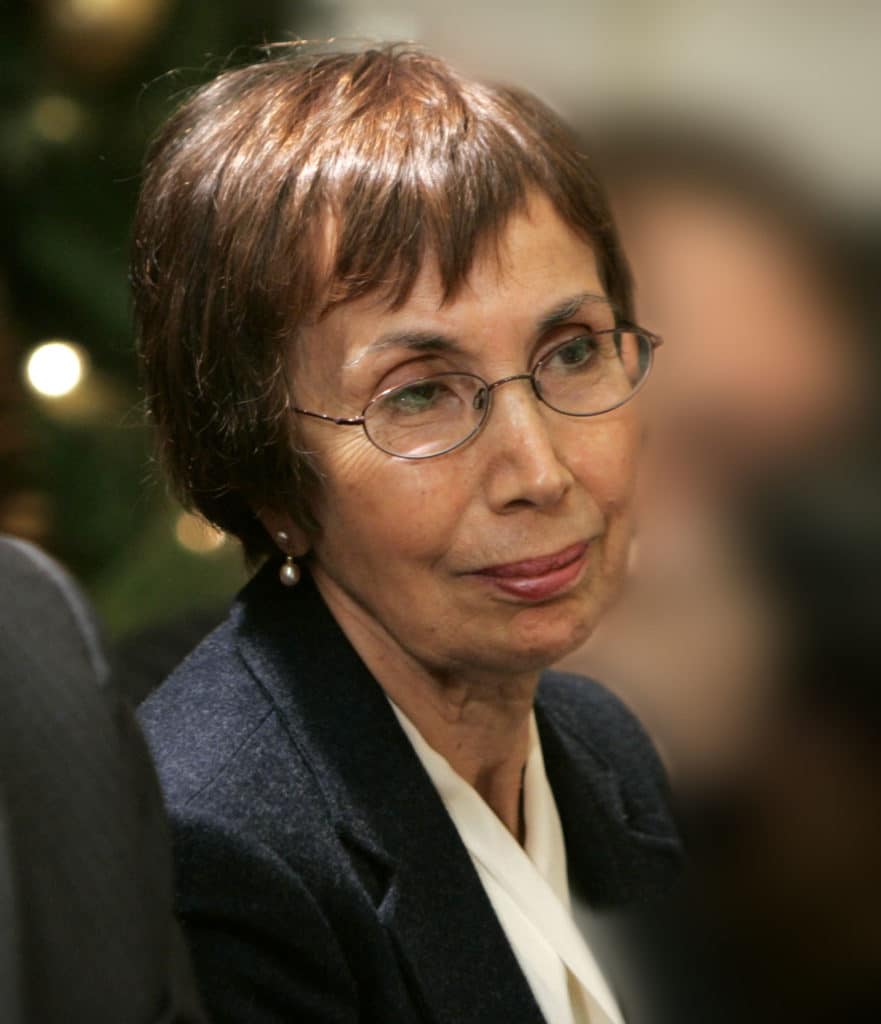
Days later, she slipped into a jacket with a gentle white trim, put on her glasses and—with as much energy as she could muster—she recorded a video appeal for justice and told the world, “There’s not a single day that we don’t miss our son.”

She only had the energy to record 37 seconds of words, but those 37 seconds brought tears to the eyes of friends and strangers around the world because they captured something profound: a mother’s love and the grace and courage that was the life of Ruth Pearl.


Asra Q. Nomani is cofounder of the Pearl Project, an initiative dedicated to realizing justice for Wall Street Journal reporter Daniel Pearl. She can be reached at asra@asranomani.com.

In Memory of Ruth Pearl, Mother of Slain Journalist Daniel Pearl Read More »

A Bisl Torah: After the Storm

During our last evening in Philadelphia, a massive storm hit our geographical area. Even before the rain poured down, an unexpected gush of wind caused the electricity to go out. Within seconds, hail fell from the sky. The storm was over in minutes, but the aftermath was astounding.

Throughout Elkins Park, large trees were split in two. Branches strewn about. A tree damaging a neighborhood home. Electricity yet to be restored. Such a quick storm, so much clean up waiting to take place.

As I looked at some of the irreparable harm, I thought about inflicted wounds between people, behaviors caused in seconds, lifetimes spent cleaning up the damage. Words of unacceptance, emotional abuse, rejection, the shutting down of someone’s experience or intended path. Giving the cold shoulder, deflating an idea, ignoring instead of inquiring. Our actions often feel minimal. “I barely said a thing. What did I say?” And yet, it’s the quick shut of a door that causes the loudest reverberations. A blur of words and bout of anger; a passing storm that feels impossible to forget.

Perhaps you remember the Hasidic story of the man that is told to repent for his gossiping. The rabbi asks him to take a pillow into the middle of the city, tear open the pillow and let the feathers within fly all over the town. The man abides and returns after the completed task. The rabbi smiles and responds, “Now…go and collect the feathers.” The man is dumbfounded, knowing the secondary task is impossible. One word, action, tear of the pillow, a quick, thundering storm.

Be aware of the hailstorms created with even one block of ice. Like a splitting tree, our words and actions hold the power to destroy. But miraculously, just like the sun after blinding rain, we also hold the gift to replenish and seeds to restore.

Shabbat shalom


Rabbi Nicole Guzik is a rabbi at Sinai Temple. She can be reached at her Facebook page at Rabbi Nicole Guzik. For more writings, visit Rabbi Guzik’s blog section from Sinai Temple’s website.

A Bisl Torah: After the Storm Read More »

Olympics Opening Ceremony Director Fired Over Past Holocaust Joke

The director of the opening ceremony in the upcoming Olympics was fired on July 21 due to a past Holocaust joke.

In 1998, Kentaro Kobayashi did a comedic sketch where he says to his partner about paper dolls: “The ones from that time you said, ‘Let’s play the Holocaust.’”

“We found out that Mr. Kobayashi, in his own performance, has used a phrase ridiculing a historical tragedy,” Seiko Hashimoto, Olympic Organizing Committee President, said in a statement. “We deeply apologize for causing such a development the day before the opening ceremony and for causing troubles and concerns to many involved parties as well as the people in Tokyo and the rest of the country.”

Kobayashi also apologized over the matter. “I would like to apologize to those who were offended. I apologize for any offense I may have caused. I think it was a time when I couldn’t make people laugh as much as I wanted, and I was trying to attract people’s attention in a shallow way.

“As a person whose job is to entertain people, I should never make people feel uncomfortable. After that, I realized that it was not good for me, and I had a change of heart.”

Associate Dean and Director of Global Social Action Agenda at the Simon Wiesenthal Center Rabbi Abraham Cooper said in a statement, “Any person, no matter how creative, does not have the right to mock the victims of the Nazi genocide. The Nazi regime also gassed Germans with disabilities. Any association of this person to the Tokyo Olympics would insult the memory of six million Jews and make a cruel mockery of the Paralympic.”

The American Jewish Committee also tweeted, “We appreciate the decision of @Tokyo2020
organizers to quickly dismiss Kobayashi as show director. Antisemitism has no place in sports.”

The Olympics, which are scheduled to begin on June 23, have seen a number of officials resign over controversial remarks; for instance, composer Keigo Oymada, whose music was going to be used for the opening ceremony, was forced to resign after bragging about his record of bullying in school.

Keio University Economics Professor Sayuri Shirai told CBS News “that Japan’s largely insular, homogenous society has bred a lack of awareness about ethnic, religious, national, and gender issues.”

Olympics Opening Ceremony Director Fired Over Past Holocaust Joke Read More »

Vaetchanan Unscrolled: A Sin of Senselessness

In Parashat Vaetchanan, Moses recounts the giving of the law at Mount Horeb, or Sinai. “The LORD spoke to you out of the fire; you heard the sound of words but perceived no shape—nothing but a voice” (Deuteronomy 4:12).

Elsewhere in the portion, Moses recalls how he pleaded with God to be allowed into the holy land. God denied his request, and as if to add salt to the wound, told Moses, “Go up to the summit of Pisgah and gaze about … Look at it well, for you shall not go across yonder Jordan” (Ibid 3:27).

Parashat Vaetchanan thus centers itself around two unique sensory experiences.

For the Israelites, an experience of hearing without seeing.

For Moses, an experience of seeing without touching.

The difference in the quality of these experiences (for the Israelites, all-encompassing immanence; for Moses, unbreachable distance) is evidence of how the organs of our senses shape our perception of reality, each in its unique way. Experientially, vision is a casting forward of the gaze. Looking upon a star in the sky, for instance, we do not feel that our eye has been touched by a drop of light from the heavens—though indeed this is what has occurred. Rather, we feel that our eyes have sailed out into the deep dark, encountering the star where it is.

Sound, on the other hand, feels as though it comes to us. For this reason, it is the thunder that frightens young children during a storm—not the bolt of lightning that lights up the horizon.

Our senses are not, then, unbiased reporters of reality as it is in itself. The world is created for us through the senses—it flashes into being upon our retinas, it is given voice in our ears, it acquires taste and scent in the throat and in the nostrils, and finds form and texture against our fingertips.

Imbued with primal creative power, our senses are thus a clear example of how we are created in the image of God.

After Moses tells of these two incidents, he moves onto a separate but deeply connected matter. He warns the Israelites in stark terms, perhaps the most stringent in the entire Torah, against making graven idols or even artistic representations of anything on earth. The fashioning of an image—something that resembles one of God’s creations, but which is devoid of subjectivity and soul—is portrayed here as a unique spiritual danger.

Idols are described as that which “cannot see or hear or eat or smell” (Ibid 4:28). In a portion that emphasizes the divinely creative power of the senses, idolatry is revealed as a sin of senselessness.

In a portion that emphasizes the divinely creative power of the senses, idolatry is revealed as a sin of senselessness.

Idols are senseless. And the danger they present to us is that we will become senseless as well. As we are warned in Psalm 115, “all who trust in them, shall become like them.”

Moses predicts that the Israelites will someday stray. They will chase after inert gods, idols of wood and metal. God, however, will remain close at hand, ready to receive them in repentance.

“If you search there for the LORD your God, you will find Him, if only you seek Him with all your heart and soul” (Ibid 4:29).

Herein lies the great paradox of this portion. Idols, insensate, can be perceived only through the senses. The living God, on the other hand, is best perceived through the organ of the heart.

Perhaps this is the hidden reason why the Israelites listened and didn’t look—why Moses looked but didn’t touch.

Deprived of one sense, the heart was awakened to that which cannot be perceived by the senses alone.


Matthew Schultz is the author of the essay collection “What Came Before” (2020). He is a rabbinical student at Hebrew College in Newton, Massachusetts.

Vaetchanan Unscrolled: A Sin of Senselessness Read More »

Life in the Murder Cities — A poem for Torah Portion Vaetchanan

Then Moses decided to separate three cities on the side of the Jordan towards the sunrise, so that a murderer might flee there, he who murders his fellow man unintentionally, but did not hate him in time past, that he may flee to one of these cities, so that he might live
     Deuteronomy 4:41-42

This is where they got the idea
for Australia.
This is what happened before they invented
the word manslaughter.
This is for when you make a mistake and
there must be consequences.
This is where the rich white collar
criminals go.
This is for all is not forgiven but we understand
     there were circumstances.
This is all to be set up before anyone
crosses the river.
This is to let you know that not everyone
will be crossing the river.
This is, wait there are three cities? How many
people are accidentally murdering
other people?
This is for will they have their own separate
sports leagues?
This is for future youth fields trips to
the murder cities.
This is for hi, we’re Bill and Susan Murderer
     We moved in next door.
     It’s so nice to meet you.
This is for no one is better than anyone else
in the murder cities.
This is for why can’t we be equal like the people
     in the murder cities?
This for let’s have brunch in the murder city.
     I recommend the manslaughter omelet.
This for I’m glad I don’t live there but the music
at nights in the murder cities
it’s like nowhere else.
This is for I hear they elected Cain mayor
unanimously.
This is for are there separate cities for robbers?
How about Jaywalkers?
This is for I guess we’ll defund the police since
all the criminals live on the
other side of the river.


God Wrestler: a poem for every Torah Portion by Rick LupertLos Angeles poet Rick Lupert created the Poetry Super Highway (an online publication and resource for poets), and hosted the Cobalt Cafe weekly poetry reading for almost 21 years. He’s authored 25 collections of poetry, including “God Wrestler: A Poem for Every Torah Portion“, “I’m a Jew, Are You” (Jewish themed poems) and “Feeding Holy Cats” (Poetry written while a staff member on the first Birthright Israel trip), and most recently “The Tokyo-Van Nuys Express” (Poems written in Japan – Ain’t Got No Press, August 2020) and edited the anthologies “Ekphrastia Gone Wild”, “A Poet’s Haggadah”, and “The Night Goes on All Night.” He writes the daily web comic “Cat and Banana” with fellow Los Angeles poet Brendan Constantine. He’s widely published and reads his poetry wherever they let him.

Life in the Murder Cities — A poem for Torah Portion Vaetchanan Read More »

Ben & Jerry’s Parent Company Says They Are “Fully Committed to Our Business in Israel”

The CEO of Unilever, the parent company to Ben & Jerry’s, said on July 22 that they are “fully committed to our business in Israel.”

Alan Jope, the CEO, reportedly told investors on call, “Unilever remains fully committed to our business in Israel” and that Ben & Jerry’s July 19 announcement that they will no longer manufacture and sell products in the “Occupied Palestinian Territory” was a decision made by them and their board.

“It is not our intent to regularly visit matters of this, where sensitivity has been a long-standing issue for Ben & Jerry’s,” Jope said.

Jope’s remarks come after Ben & Jerry’s independent board released a statement saying they took issue with the aspect of the July 19 announcement stating that they “will stay in Israel through a different arrangement.” The board alleged that Unilever inserted that line in there without approval from the board, in violation of their agreement.

Avi Zinger, the CEO of Ben & Jerry’s Israel, told the International Legal Forum on July 22 that he has received “thousands of calls” since the July 19 announcement about how they can support the Israel branch. He called the July 19 decision a “war” against Israel and the “Jewish people.” “We have to fight it together. We have to join our effort to make sure that the global company understands that Israel is not something they can play with, not something they can try to hurt. There is a price for it.”

Two New York towns have stated that they will enforce their anti-Boycott, Divestment and Sanctions (BDS) movement laws against Ben & Jerry’s and Unilever; Texas Comptroller Glenn Hegar has said he is investigating whether Texas can enforce its anti-BDS law against them.

Los Angeles City Councilmember Paul Koretz issued a letter to Ben & Jerry’s on July 21 condemning their decision and urging them to reconsider. “The campaign against the Ben & Jerry’s factory in Israel calls its location a ‘settlement,’ when it is in fact an internationally recognized part of Israel. It’s clear this isn’t really about Israeli settlements, but about opposing Israel’s existence.”


Ben & Jerry’s Parent Company Says They Are “Fully Committed to Our Business in Israel” Read More »

“The Fewest of All Peoples”: The Improbable History of the Jews

“How odd / Of God / To choose / The Jews.” William Norman Ewer’s mocking verse, written in the 1920s, has sparked multiple responses. But Ewer is correct that there’s something odd about the Jews; why would God choose such a tiny nation? One would think that “in a multitude of people is a king’s honor” (Proverbs 14:28), that bigger is better, and larger nations are far more deserving of the Biblical covenant.

Medieval Christian polemicists would offer this exact argument; the fact that the Jews were a small nation of diminished circumstances proved they had fallen from God’s good graces. Echoing the words of Haman, they would contend that a strange nation that is scattered and dispersed must be unworthy of distinction. Meir ben Simeon of Narbonne, in his 13th-century defense of the Jews, Milkhemet Mitzvah, repeats an attack he had heard from a Christian: “Why do you not leave the Jewish faith? Indeed you see that the Jews have been in exile for a long time and day by day decline. You see, concerning the Christian faith, that the Christians become more exalted day by day and that their success has been notable for a long time. You would live among us in great honor and high status, instead of living, as you now do, in exile, degradation, shame and calumny.” These polemicists argued that the Jews were too small to be significant, and were a dying, disappearing people who had been rejected by God.

Reading the Tanakh offers the opposite conclusion: the Jews were always meant to be a small nation. A verse in this week’s Parsha says so explicitly: “The Lord did not set His love on you nor choose you because you were more in number than any other people, for you were the fewest of all peoples” (Deuteronomy 7:7). Already in the Book of Genesis, the choice of Avraham makes it clear that the Jews were meant to be a small nation. When God makes covenants with Adam and Noach, they were at that time the ancestors of all mankind; those covenants were universal. By contrast, when Avraham and Sarah are appointed to their mission, they are a childless couple, just two people in a world of developing empires and states. Clearly, this is a preview of the future, when their descendants will be one small nation among many.

Being the “fewest” has forged the culture and character of the Jewish people. In order to survive, a small nation needs to be different, and have a different personality. Avraham was a true iconoclast, one who shattered the idols of his era; the Midrash tells us that it was as if the entire world was on one side, and Avraham was on the other. Avraham understood that his mission was not to blindly follow the masses, but to search for a more refined vision; his descendants would need to do the same. In their comments to our Parsha, Rashi and Ramban add two other qualities that a small nation will need: humility and chutzpah. Humility will be needed to endure difficulties and defeats, and not be broken by that hardship. Chutzpah will be needed to defy those who insist Jews convert; they would have to refuse to bow their heads to the demands of the powerful. Being a small, exiled, and persecuted nation requires a unique vision and personality. And that would have been impossible unless the Jews would be willing to embrace smallness, and learn that the way forward is “Not by might nor by power, but by My Spirit” (Zechariah 4:6). They would need to dig down deep inside to find a way to compensate for their demographic shortcomings. The challenge of being a small nation has transformed the Jews; and being the fewest among the nations might actually be the secret to Jewish survival.

The challenge of being a small nation has transformed the Jews; and being the fewest among the nations might actually be the secret to Jewish survival.

Jewish history astonishes many observers, who cannot understand how this tiny nation has held on. Mark Twain put it best, at the end of an article for Harper’s Magazine in 1898:

“To conclude. —If the statistics are right, the Jews constitute but one per cent. of the human race. It suggests a nebulous dim puff of star-dust lost in the blaze of the Milky Way. Properly the Jew ought hardly to be heard of; but he is heard of, has always been heard of … He has made a marvellous fight in this world, in all the ages; and has done it with his hands tied behind him. He could be vain of himself, and be excused for it. The Egyptian, the Babylonian, and the Persian rose, filled the planet with sound and splendor, then faded to dream-stuff and passed away; the Greek and the Roman followed, and made a vast noise, and they are gone; other peoples have sprung up and held their torch high for a time, but it burned out, and they sit in twilight now, or have vanished.

The Jew saw them all, beat them all, and is now what he always was, exhibiting no decadence, no infirmities of age, no weakening of his parts, no slowing of his energies, no dulling of his alert and aggressive mind. All things are mortal but the Jew; all other forces pass, but he remains. What is the secret of his immortality?”

One doesn’t know what the secret is; perhaps it is supernatural, or perhaps not. But I would argue that embracing from the outset that they will be the “fewest of all peoples” has shaped the Jewish soul, and has forced Jews to use their ingenuity and character to overcome challenges. That has made the Jews antifragile, and allowed them to continue to thrive during chaotic times.

The Jewish story is the story of the power of small, about a small nation that gets very good at beating the odds. And this story is inspiring to anyone, Jewish or not, who faces challenges, and feels that they are too feeble and limited to overcome them.


Rabbi Chaim Steinmetz is the Senior Rabbi of Congregation Kehilath Jeshurun in New York.

“The Fewest of All Peoples”: The Improbable History of the Jews Read More »

Palestinian Authority’s Hussein Al-Sheikh Tells The Media Line PA Is Ready for Direct Talks With Israel

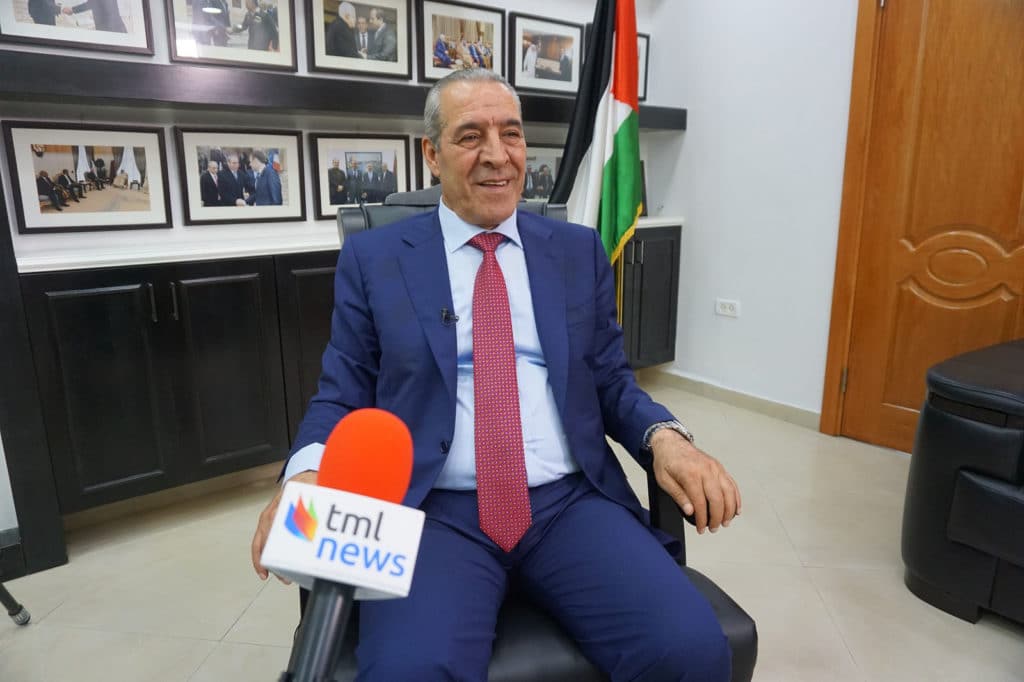
(The Media Line) Civil Affairs Minister Hussein Al-Sheikh is one of the leading figures in the Palestinian Authority hierarchy and is one of President Mahmoud Abbas’ closest advisers. Al-Sheikh is the point person to Israel in all security matters and chairs the dialogue between the Palestinian government and the United States administration.

Al-Sheikh, who rarely gives public statements and has not given a full interview in some years, sat down with The Media Line’s Felice Friedson in his Ramallah office for this exclusive conversation that included the current political situation, the next steps in jumpstarting the Israeli-Palestinian peace process, and the American role in the conflict and internal security issues.

Born in Ramallah in 1960, Hussein Al-Sheikh is the longtime head of the General Authority of Civil Affairs. As head of the Coordination and Cooperation Committee, he is the point person for contacts with Israel regarding civilian matters in the Palestinian territories. He also represented the Palestinian side on the Trilateral Gaza Reconstruction Committee following the 2014 Gaza War.

He’s a member of the Palestinian National Council, the PLO Central Council, and the Fatah Central Council, and chair of the dialogue with the US administration.

From 1978 to 1989 Al-Sheikh was imprisoned in Israel. He is married with two sons, four daughters, and five grandchildren.

PA Civil Affairs Minister Hussein Al-Sheikh speaks with The Media Line’s Felice Friedson in his office in Ramallah. (The Media Line)

The Media Line: Thank you so much for taking the time with The Media Line.

Hussein Al-Sheikh: Thank you, and you’re welcome.

TML: It’s difficult to find a newspaper story about the Palestinians that at some point doesn’t say: “The Palestinians are at a crossroads.” What choices must Palestinians make now?

Hussein Al-Sheikh: First of all, I think that the Palestinian situation is very complicated. The people are under occupation. The people living under the Palestinian Authority since 1994 are not experiencing independence or liberty. For these reasons, the tasks are complicated, between the desire to reach the strategic aim to build a Palestinian state and to build an Authority that is considered preliminary to building this state, and the situation is necessarily complicated – even more so than some might think. We are not in a normal situation and not in an independent state. We are an Authority without authority, without sovereignty. The overall sovereignty is held by Israel concerning land, air, water, borders and everything. So this is the small basis on which we are trying to build. Unfortunately, it is as if you are digging in stone to build a state on this basis and this big ambition for the Palestinian people is to build a Palestinian country that is stable, democratic, free and living alongside Israel.

TML: The Oslo Accords are 27 years old. They were not intended to last so long. Why did they?

Hussein Al-Sheikh: Oslo was considered a solution to a problem. It was considered to be an introduction to the possibility of reaching a final end to the Israeli-Palestinian conflict and I think that there is a big difference between postponing and solving the conflict. There are parties on the Israeli side that are still not absolutely sure there is an urgent need to find a historic solution to the problems between the Israelis and the Palestinians. They believe that postponing the conflict is better than arriving at a historic end to the conflict; I think this theory is wrong. It is better for us to go with the Israelis beyond the interim agreements in the Oslo Accords. We were supposed to move forward to the historic final stage of ending negotiations where then finally the Palestinian people and the Israeli people live together, in close proximity, in two states. The Palestinian people have a right to live in an independent state. Our children and grandchildren have a right to live freely and also to decide their future away from the Israeli occupation. So I think this is the main reason that Oslo changed from being an interim agreement to a permanent agreement in the eyes of Israelis.

TML: The course was routine from administration to administration until President Trump came along and erased conventional wisdom. For four years there was minimal communication and increasing acrimony between Ramallah and Washington. Although it is too early to tell, do Palestinians look optimistically right now to the new Biden Administration?

Hussein Al-Sheikh: We went through a very difficult period under President Trump. I think that the main problem we had with the previous administration is the issue of repudiation of international legitimacy (meaning UN Security Council resolutions) and also the Trump Administration’s disavowing of all the previous American administrations’ views. Whether they were Republicans or Democrats, they mainly concentrated on international legitimacy and the two-state solution. Accordingly, when this new administration came, the administration of President Biden, and after the phone call that took place between President Biden and President Abbas, I think President Biden spoke about very important principles with President Abbas that we might consider to be a type of road map for us and for the Americans. This concerns how it is possible for us to move forward from now. He spoke about the status quo on Haram al-Sharif, Sheikh Jarrah, the residents of east Jerusalem, stopping settlement expansion, and stopping the unilateral measures. We agree on all these principles with President Biden; it will be a road map for us and the Americans with the Israeli side. And because of this, the new American administration gives us hope. We started now building a relationship and restoring the relationship with President Biden’s administration. We are in daily contact with the administration. There are committees formed between us and the new leadership. They have already started working.

We agreed to start with what are called CBMs – confidence-building measures – between us and the new administration and between us and Israel.

TML: Has President Biden’s appointment of Hady Amr, the deputy assistant secretary for Israel and Palestinian affairs, made a difference already? He was just here. Mr. Hady Amr.

Hussein Al-Sheikh: I think so. Since his appointment, we have had a number of calls, contacts and meetings. The new administration has a broad understanding of the nature of the Palestinians’ present situation and Mr. Hady Amr is playing a very positive role in his constant contact between himself and the Israeli government. We agreed in principle that we need first to change the atmosphere between us and Israel. We spoke about the bilateral dialogue with the new administration and the Palestinians. At the same time, we spoke about the trilateral dialogue between the USA, Israel and the Palestinians.

We agreed to go in two parallel lines. I believe that this path is fruitful in terms of creating new facts and a new atmosphere, helping everyone to enter into a new phase. We agreed to start with what are called CBMs – confidence-building measures – between us and the new administration and between us and Israel.

What is demanded from me as a Palestinian, I am ready to do. What is required of Israel to do? What is required from the USA is to help support that. I think the administration showed its readiness to do this.

The second stage is to find the framework for the nature of conflict resolution between Israel and the Palestinians, which is or should be focused mainly on international legitimacy and legal decisions that refer to two states for two peoples living in peace and security in a stable, cooperative and prosperous environment between the two states. A Palestinian state and an Israeli state. This is the plan that we agreed on with the new administration and we are working on it right now.

(L-R) Palestinian Authority President Mahmoud Abbas, Civil Affairs Minister Hussein Al-Sheikh, and Egyptian President Abdel Fattah el-Sisi meet in Cairo, 2017. (Courtesy)

TML: In speaking about confidence-building measures, because there’s been a lot of trust lost on both sides, can you point to very specific things that the administration has discussed that you are trying to implement?

Hussein Al-Sheikh: With regard to the bilateral matters between us and the Americans, the first issue was the American Consulate in east Jerusalem. When Secretary of State Mr. Anthony Blinken visited Israel and Palestine, he declared frankly and honestly that he would reopen the American Consulate in east Jerusalem. I think this step is positive, courageous and bold and it helps return the natural and normal relationship between the USA and the Palestinians. On the contrary, most of the CBMs are between us and the Israelis, between me and the Israeli government. Israel is occupying the West Bank, Jerusalem and the Gaza Strip for so many years. There is a reference to the details of the CBMs, which are aiming to create a new atmosphere between us and the Israelis like the Paris Protocols. This we signed 26 years ago. Does it make sense that there is an economic agreement that lasts 26 years without any modification?

If there is incitement, let us set up a trilateral committee made up of the Israelis, American and Palestinians to discuss these issues; from the Palestinians’ side, I am ready to do that.

TML: You spoke about confidence-building measures and there’s been an erosion of trust on both sides. Can you speak to some of the very important facts on the ground that are being asked that will help to change the status quo?

Hussein Al-Sheikh: We said from the beginning that there were bilateral matters between us and the American administration because of the complications that have occurred in the four years of the Trump Administration. We can re-establish the relationship between us and the new administration. Maybe what is required from us are some actions from our side and at the same time, it is also necessary for the American administration to undertake some actions from their side. For example, there is a law that was passed in 1987 in the US Congress, stating that the Palestine Liberation Organization is still considered a terrorist organization.

How come this law still remains and how does it make any sense at all? Israel doesn’t consider the PLO a terrorist organization. How come after American sponsorship of the Oslo Accords and signing them, this law still remains in force? In Washington, DC, the American Congress still considers the PLO a terrorist organization.

This in my opinion needs a discussion with the American administration and the American Congress.

On the other hand, there is a law in America called the Taylor Force Act. This law punishes the Palestinian Authority for supporting prisoners, which is said to incite violence. We said to the American administration that we are ready to discuss all these matters in a bilateral committee and we can also establish a trilateral committee with Israel, the Americans and the Palestinians all taking part.

If there is incitement on the Palestinian side, is there no incitement on the Israeli side? For example, the Lehava organization in Israel publicly calls for “death to Arabs.” Is this considered a terrorist or non-terrorist organization? Is it an organization that practices racial discrimination and racism and calls for the death of others? If there is incitement, let us set up a trilateral committee made up of the Israelis, Americans and Palestinians to discuss these issues; from the Palestinians’ side, I am ready to do that.

What is also required from the Americans is there must be change. And many CBMs also need to come from the side of Israel.

I noted the Paris Protocol. It is 26 years old. It does not make any sense to continue this economic protocol, which is restricting Palestinian commercial and economic development. Israel is also controlling the issue of water, the issue of Area C in the West Bank, which constitutes 63% of the total West Bank land area. Israel is not permitting the Palestinians to establish any rural project in Area C. Does this make sense? There is the issue of the Palestinian prisoners, sick people needing medical care, women, the elderly.

I can also mention in the context of the same topic: the institutions of the Palestinian Authority in Jerusalem, which remain closed.

The list of CBMs is long. In that regard, we have now started talks with the Israelis and also between us and the Americans.

If Israel would approve to hold the elections in East Jerusalem, the Palestinian president would issue a decree to hold the election immediately in East Jerusalem and the West Bank and Gaza Strip.

TML: One of the questions that we’ve heard from the Americans as well as from Israelis has to do with Gaza and the bifurcation between the West Bank and Gaza, the control, the security control that you are in charge of. What do you say to Israelis and Americans concerned that if elections were held tomorrow, Hamas could win?

Hussein Al-Sheikh: First of all, unfortunately, the Palestinian situation has become more complicated since 2007. After Hamas took over the Gaza Strip by force even though Hamas won in the democratic election of the parliament in 2006, we handed over the government to Hamas as it won the election. But unfortunately, what happened in 2007 happened and this had great repercussions on the internal Palestinian situation. So we had long conversations with Hamas and the rest of the Palestinian organizations to reach a formula for reconciliation between us and Hamas and the other Palestinian organizations to reunify the Palestinian geography, which includes the West Bank and the Gaza Strip and Jerusalem.

But, unfortunately, so far up until this moment, this ongoing discussion did not achieve the desired goal.

Months ago, we decided to go to elections hoping it to be the shortest way to solve the internal Palestinian problem and that the same time to strengthen the democracy in Palestinian political life. We believe in pluralism and free expression and the smooth transfer of power by peaceful means. This is the basis and foundation of the Palestinian political system and this is the ambition of the upcoming Palestinian state. This is the way it should be. Unfortunately, we faced a major obstacle, which is the issue of Jerusalem and the refusal of Israel to hold the elections in east Jerusalem as it did in 1996, 2005 and 2006. Thus, unfortunately, it put an obstacle in the way of holding these elections and this caused a big problem, disabling the election process, whether we are talking about the presidential or the legislative parliamentary elections.

We are still looking for a solution to this issue. I say frankly now if Israel would approve to hold the elections in east Jerusalem, the Palestinian president would issue a decree to hold the election immediately in east Jerusalem and the West Bank and Gaza Strip.

TML: You work very closely with President Abbas. He’s not young. Some will say they’re kind of surprised he’s still running. Does there need to be a change of guard? Do young people need to come in? Would you look at the position? Some have thrown your name out in the ring.

Hussein Al-Sheikh: First of all, I wish health and long life to the president, Abu Mazen. I believe that Abu Mazen is among the most historic figures of the Palestinian people and founders of the Palestinian state from the 1950s until now. I was and still am wishing that the agreement with the Israeli side on the final status formula under Mahmoud Abbas’ presidency can be reached.

First of all, because he has wisdom and it is my absolute belief that the path of the negotiations is the shortest and the closest path to the two-state solution and at the same time, President Mahmoud Abbas has the historic legacy and leadership charisma that entitled him to sign the historic agreement between us and the Israelis.

I constantly say even to the Americans what I always and forever say to all the Israeli officials, that we now have a historic opportunity.

Regarding the younger generation, I say yes. We believe completely that there is a necessity for leadership across the generations. May these new generations come forward to occupy important positions in the Palestinian political system – in the political, economic and social aspects. Without this, it means the calcification of this Palestinian political system and the chance of development will be downgraded. If the new generation desires it and new thoughts to give the youth a chance to rule and manage this Palestinian political system and to build the Palestinian future for the upcoming generation, this is a good thing for the future.

Minister Hussein Al-Sheikh with Palestinian Authority President Mahmoud Abbas. (Courtesy)

TML: So in short, you’re not running?

Hussein Al-Sheikh: No, I am not running. I think that President Abu Mazen is the best candidate now.

TML: What will it take to engage younger than 50-year-olds in the Palestinian Territories in the future? In politics?

Hussein Al-Sheikh: First of all, it is required to strengthen democracy in the Palestinian political life and at the same time it is required essential to change the nature of the Palestinian political life. We are, though, not living in a stable political system.

Until now, we are under occupation. It is a very, very complicated situation for you seek from one side to give a simple description of the nature of the political system that you want, that is to say, a pluralistic democratic system governed through the ballot box, giving freedom of expression, giving all generations and ages a chance, but at the same time, you have to interact with daily procedures from the Israeli occupation on the ground: the continuation of settlements, house demolitions, arrests, destroying Palestinian homes, farming restrictions, economic restrictions. In this situation, it is difficult to put out a plan, as if you are walking in a straight line. Concerning this issue, it is a zig-zag plan and sometimes there are big obstacles.

But I think, without giving this new generation the real opportunity to express themselves in making a choice, first about the nature of the system and who should be in the system, there are a lot of problems. The only way to do that is an election. This is the only way that leads people to the democratic style and the democratic way in their political lives.

The proof that Palestinian society is democratic and applies democracy even under occupation is that we are applying democracy in universities and in trade unions like the doctors’, engineers’, and lawyers’ unions. We have elections for municipal councils. All municipal councils in the West Bank are elected.

TML: You recently met Marwan Barghouti in prison. Did you ask him not to run for the presidency?

Hussein Al-Sheikh: I did not ask him not to run in the election. Marwan is my friend. I have known Marwan for 43 years. I have a personal relationship with him besides the organizational and political relationship. I visited Marwan in prison in order to agree with him first on the Fatah movement unity in the confusion over the election of the Palestinian Legislative Council. I agreed with my brother Marwan on that.

We did not talk at all about the presidential elections and I did not ask him not to run in the elections at all. We did not discuss this subject. The only subject raised was that of the main issue between him and me – to keep the unity of the Fatah party so Fatah runs as one unified list in the Palestinian Legislative Council elections.

Fatah Central Committee members at the Seventh Fatah Congress, Ramallah, 2016. (Courtesy)

TML: As minister and head of the General Authority of Civil Affairs as well as being head of the Coordination and Cooperation Committee, you’ve been the lead liaison between Israel and the Palestinian Authority. Not an easy task. Was there ever a time when you felt that if security cooperation wasn’t existing, what would happen if there wasn’t cooperation between Israel and the Palestinians despite the political situation?

Hussein Al-Sheikh: First of all, Israel is the one that occupies my land and not any other country in the world. Thus, it is asked of me to know how to deal with this Israeli conflict. Usually, negotiations happen between opponents and enemies. The one who occupies my land is Israel. Thus, who is the party that I should negotiate with? By necessity, Israel. Thus, the relation with Israel, coordination with Israel, coordination with the Israeli government is a necessity. In fact, although Israel is an occupation force, talks with Israel and coordination with Israel are very essential to search for prospects for solutions between us. The Israeli government controls all aspects of Palestinian life. It controls the air we breathe, the water we drink, the ability of our citizens to have movement, the people, the economy, crossings and borders, etc. Thus, coordination with the Israeli government is a matter of fact and necessity. It is true that it is tiring and exhausting and sometimes we might pay the price on a personal level.

But I think that there are necessities that are forcing the Palestinians and the Israelis to maintain necessary coordination either in a positive atmosphere or a negative one. For the coordination might work well during good times and be very positive when it works well between both parties. Having said that, coordination might also protect the negatives. It might force you toward a state or stage that you don’t want your people to be a part of. This is what drives me and the Israel government. I believe that the Palestinians have made a big commitment with these agreements for coordination. The one who did not abide by these agreements, unfortunately, is the Israeli government.

TML: The media is filled with reports of the accumulation of weaponry here in the Palestinian areas. Whose holding those weapons? And are you concerned about it? Is it a crime? Is it civil unrest? As head of the civil authority that you are chairing, what do you say?

Hussein Al-Sheikh: I think any weapon other than those held by authorized Palestinian security forces is an illegal weapon. Such weapons can never be given any legitimacy. Weapons of chaos and disorder threaten Palestinian society. The weapon of chaos and disorder can develop a set of phenomena that destroy the social, cultural and educational structure of the Palestinian people. The big question is: Where do these weapons come from? For that reason, I confirm that the opinion of the Palestinian Authority on this matter is quite clear. No legitimacy for any weapon other than those legally authorized to be held by the authorized personnel of the Palestinian Authority. The Palestinian security establishment has a task and that task is to protect the Palestinian citizenry and to give them security, safety and stability. This is the first national mission stipulated in the Palestinian Basic Law. This is the primary security mission. Some are trying to portray the task of the Palestinian security establishment differently. That is absolutely not true. The Palestinian security establishment is primarily to protect the political system and Palestinian society and to protect Palestinian citizens and their properties and to protect the Palestinian right of expression and the freedoms associated with that. This is its mission.

Any weapon other than those legitimately and legally held by the Palestinian security establishment I think is illegal. Anyone who breaks this rule should be held accountable and judged according to the principles of law and order.

It was a sad and unfortunate accident. Maybe a mistake occurred during the action of law enforcement. Even if he was wanted by the judicial system, there is nothing to justify the matter whatsoever. … What happened can’t ever be acceptable even in the time of lawlessness, but this could happen anywhere in the world. … We apologize for what happened and wish to learn lessons from it.

TML: What can you tell us about the recent death of the activist Nizar Banat? There are so many stories floating. It is an internal story. It is an important story to share.

Hussein Al-Sheikh: First of all, I would like to pay my condolences and respects to his family and apologize to them for what happened. It was a sad and unfortunate accident. Maybe a mistake occurred during the action of law enforcement. Even if he was demanded by law or wanted to appear for justice, there is nothing to justify the matter whatsoever. I, in the name of President Abu Mazen and in the name of the Palestinian Authority, from the first day gave our apologies in this matter and we consider it a tragedy. What happened can’t ever be acceptable even in the time of lawlessness, but this might happen in any country in the world. A mistake like this can happen in America, in France, in any other country in the world. It is important that there are procedures in place accordingly concerning matters of law and order and to judge who did wrong in this matter. There is no other way to deal with this and to attempt to right this wrong. Only by learning from what happened and following the right procedures of law and order, we can judge then who had a hand in this case. I repeat again, unfortunately, such a thing might happen in any country, in most democratic countries in the world, but certainly, I repeat and say, it is a tragic and unfortunate incident. We apologize for what happened and wish to learn lessons from it.

TML: You were active during the Unified National Leadership, it was of the uprising, during the First Intifada. You went on to a more diplomatic track. Do you believe that diplomacy is the only answer? And to put aside the weapons and put aside the fighting?

Hussein Al-Sheikh: I do believe that the shortest way is always fruitful. What is the mission of any leader? His mission is to look for the shortest road, lowest price, to achieve the ambitions of his people. The Palestinian people want to end the occupation, want their dignity, want to be live in an independent country, side by side with Israel. The mission of any Palestinian leader or official is to lead the people along the shortest path, at the lowest price. I believe that – we still believe that – until now the shortest path and lowest price for that goal is direct negotiations with the Israeli government. The Israeli people must be convinced that they can’t forever remain occupying another nation.

There are more than 5 million Palestinians living in the West Bank, Gaza and east Jerusalem.

The biggest question facing the Israeli people is how can this occupation remain forever? Occupying 5 million Palestinians now living in the West Bank, Gaza and east Jerusalem.

How is that still possible today?

Israel has obvious choices and we say to them frankly: Either the two-state solution that we believe in or one state which means one person, one vote or apartheid, Israel will remain a country that forever practices racism and occupies another nation.

Therefore, the responsibility of any leader who wants to lead his people to the best to choose for them always the shortest way that costs the least price which is diplomacy.

Prisoners at Junaid Prison, near Nablus, in the West Bank, 1984. Hussein Al-Sheikh is in the top row, 2nd R. Palestinian leader Jibril Rajoub is in the same row, 3rd L. (Courtesy)

TML: The new Israeli government: Are you optimistic? Do you feel that you’ll be able to have dialogue? What broke down with Prime Minister Netanyahu?

Hussein Al-Sheikh: We are obliged to live with hope. We always need to maintain the feeling that today is better than yesterday, and that tomorrow will be better than today.

We are obliged to live on this hope and let us export this hope to the Palestinian people.

Unfortunately, long years passed under the leadership of the former prime minister, Benjamin Netanyahu. The situation was hard and according to my own estimation, Mr. Netanyahu never believed in peace with the Palestinians and he is not a partner for peace. Truthfully, Netanyahu was against Oslo and Oslo’s agreement and so he was seeking to destroy these agreements that were signed in 1994. I don’t prefer talking about the past a lot because it became history, but because there is a government in Israel, we have to engage it properly.

It is true that there is a wide gap in the views held among the partners taking part in the current government. The various parties making up the government are holding diverse opinions.

We are hoping for stability in this government and that this government will seriously seek to change the general atmosphere to an approach of more positive practical procedures that might restore the confidence between the Palestinians and the Israelis. Change in the West Bank and in Jerusalem and the Gaza Strip is needed. We wish for the new government to take big steps forward in this matter to give hope to the Palestinian people and that the opportunity still exists for mutual understanding and to reach a solution between the Palestinians and the Israelis. My personal opinion is that going forward, it could not be worse than the period of Netanyahu’s rule in Israel.

Minister Al-Sheikh displays photos in his office of important diplomatic and political meetings over the course of his long career. (The Media Line)

TML: Hussein Al-Sheikh, the man. Not an easy job. Worrying about security and relationships with governments and trying to build to what you hope will become Palestine. How does that impact you and your family?

Hussein Al-Sheikh: First of all, I believe in the right of my people to freedom and independence. I spent all my life in this job and maybe it affected my family, negatively and positively. The positive aspect may be that I am a well-known personality, but on the negative side, unfortunately, they were affected and paid a price for something that they don’t own or have any relation to.

Those who disagree with me politically have the right to criticize me personally – a natural right – and to give their opinion on my performance, but that doesn’t give them the right absolutely to interfere in my family and my house and my children and their lifestyle.

That has to do with or is related to the educational mentality and culture we have. For that reason, if my children were affected negatively all those years, I apologize to my children, but my children are part of the Palestinian people, they live the conditions all are living and I am happy with my children and my grandchildren. I am very happy and proud of them and I wish that they choose their lifestyle as they want to – not as some want them to be. They are free to live as they wish. I choose my lifestyle to be in this direction. That is ok and I might pay the price for this choice, but it is not permitted under any circumstance to reflect on my house and family. I wish for them a happy good life and that they might choose the way they wish, as I said before.

Minister Al-Sheikh shows a photo of his family to The Media Line’s Felice Friedson in his office in Ramallah. (The Media Line)

TML: Do you think we’ll be having this same conversation in five years?

Hussein Al-Sheikh: I hope not. I hope there is a change and that we will take on something different and hope it will be more positive. As I have always said, we are living on hope in this aspect. I am naturally optimistic and I totally believe that tomorrow is going to be better than today. Some may think that the Palestinians’ status, no matter how much time has passed, even if one comes back after a year, will be the same.

No! I believe that every day brings change. We must believe that this change will come and that this change will be for the better, surely for the better. I hope that in the next period, the situation will be different in a positive way.

TML: Minister Hussein Al-Sheikh, thank you so much for this comprehensive interview and for your insight into the workings of the Palestinian Authority and to go behind the scenes a little bit into what you do on a daily basis.

Palestinian Authority’s Hussein Al-Sheikh Tells The Media Line PA Is Ready for Direct Talks With Israel Read More »

Returning to the Jerusalem of Azerbaijan after 34 years

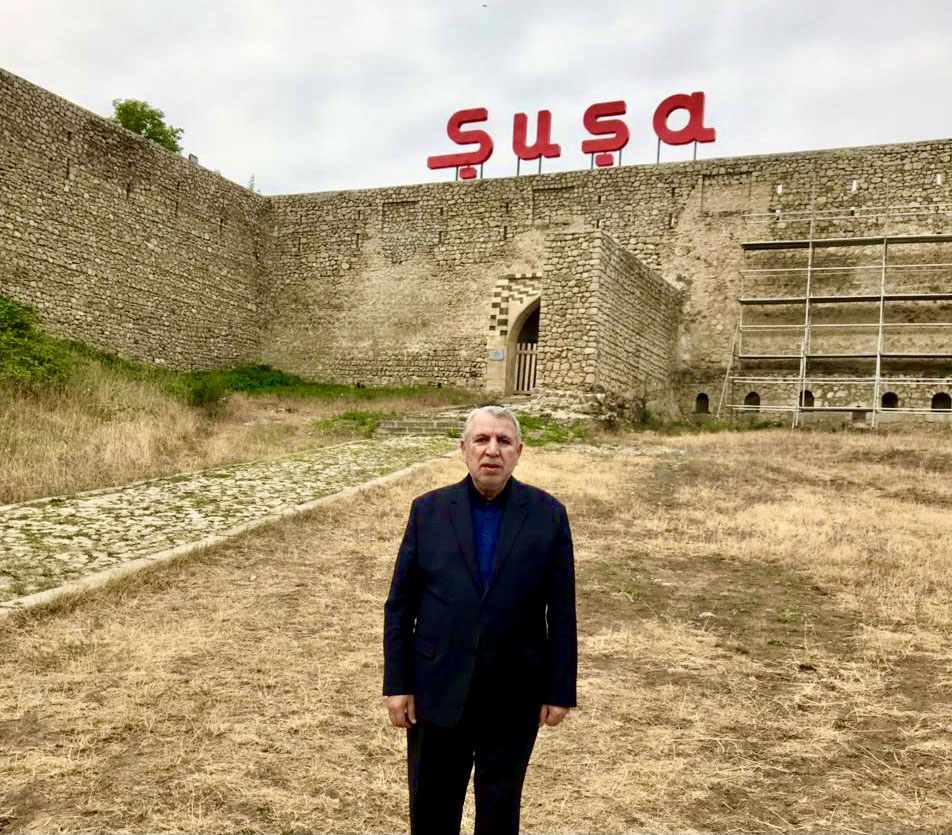
I have just returned from a visit to the City of Shusha in Azerbaijan’s Karabakh region. The last time I visited Shusha was in 1987, before the Armenia-Azerbaijan war. Before that, I visited Shusha at least once a year, as an employee of Soviet Azerbaijan’s Ministry of Light Industry. Stopping in various towns and cities to administer my work duties, Shusha was always the highlight of my journey to Karabakh; this predominantly ethnic Azerbaijani city is considered the cultural and spiritual capital of Azerbaijan, similar to what Jerusalem is for Israel and the Jewish people. The energy and character of the city was consummately bursting, nurtured by the artists and artisans that have always populated this picturesque hilltop city. 

Founded by Azerbaijani ruler of Karabakh – Panah Ali Khan – in 1752, Shusha has been the birthplace of many great Azerbaijani composers, singers, poets and writers – a cradle of Azerbaijani culture and one of the cultural centers of the entire region; so much so that it was called the “Conservatory of the Caucasus”.

Ethnic Armenians lived peacefully and abundantly in Azerbaijan’s Karabakh region, where for much of time and even under Soviet reign, residents enjoyed a relatively prosperous lifestyle, living peacefully together with their ethnic Azerbaijani neighbors. This was changed when members of ultraradical Armenian parties from Armenia and its diaspora decided to make Karabakh part of Armenia and thus started a conflict that would kill and wound tens of thousands of people and ruin the lives of millions for decades to come.  

On May 8, 1992, Shusha was invaded by Armenia. Its entire Azerbaijani population was killed or expelled. They became part of over 800,000 Azerbaijani civilians who were forced out from their homelands as Armenia invaded around 20 percent of Azerbaijan’s sovereign territory. 

Every year since 1992, all Azerbaijanis would say “Next year in Shusha”. This sacred dream finally came true in 2020, when Azerbaijan liberated Shusha and other territories from Armenia’s U.N.-condemned occupation

On this reunion visit after 34 years apart, I drove into Shusha as part of a delegation of faith leaders from Azerbaijan, representing the various denominations of Islam, Judaism and Christianity. Upon first sight, my heart sank, and I was glad not to be the one behind the wheel. The damage inflicted by nearly three decades of brutal occupation has left the beloved capital of Azerbaijani culture in immeasurable disrepair. To see a city that I knew so intimately for many years so utterly changed, entire buildings demolished into dust, and entire streets and homes leveled, was something I will never forget. But I will also never forget the inspiration I saw in the landscape – the lush, green abundance that overwhelms Shusha in a feeling of liveliness and hope. My fellow faith leaders prayed in their respective houses of worship, the Christians in one of the two churches that we visited, and the Muslim leaders, both Shia and Sunni, in two mosques of Shusha.

The very idea of Shia and Sunni Muslims praying together is practically scandalous in almost every other part of the world, but in Azerbaijan we have a warm tradition of it, which blends seamlessly with our broader commitment to celebrating what is beautiful and peaceful about all religions, and creating a space for it that is sacred, safe and enduring. This explains how Azerbaijan has had a thriving Jewish population for over 2,000 years, and today as I lead the Mountain Jewish community of Baku in this era of limitless possibility, the values that have led us here are perhaps more important today than ever before. The churches and mosques that we visited are undergoing extensive restoration, and the rest of the damage to Shusha wil be repaired as well, but I wonder how we can repair the damage of war and hateful savagery, and if such reparations are even possible. 

Before ending our visit to Shusha, we discussed the possibilities for eternally honoring Albert Agarunov, Azerbaijan’s National Hero, within Shusha. Albert was a Mountain Jew from Baku, who volunteered for the Azerbaijani Army in the early 1990’s to protect his beloved Azerbaijan from the invading army, and was considered a remarkable marksman and tankist, an unmatchably brave soldier, and a warm and caring friend. Albert was one of the last men standing in Shusha, before it was overtaken, and he lost his life because he left the safety of his tank to navigate the driver around the dead bodies strewn across the streets in Shusha. Albert was posthumously awarded the highest honor for a military hero by Azerbaijan, the title of National Hero, and is buried at the  Martyrs’ Lane. In 2019, his statue was unveiled in Baku on a street that was named after him.

Home now in Baku, I can’t wait to go back. And as I reflect on this visit, my prayer is that all of the beauty will fully return to Shusha, the beauty that is the landscape and architecture, its rich colors, sounds and aromas, and amazing diversity – and that it will return as a true center of culture.

Returning to the Jerusalem of Azerbaijan after 34 years Read More »