fbpx

April 15, 2021

Rosner’s Torah Talk: Tazria-Metzora with Jonah Sanderson and Noah Pollock

Noah Pollock and Jonah Sanderson attend the Academy for Jewish Religion in California. Pollock was drawn to be a chaplain from reading stories from his grandfather, Rabbi Hillel Silverman, telling about his time in the Navy as a chaplain. Jonah Sanderson’s goal as Jewish clergy is to bring suicide prevention, and disability advocacy into outreach spaces.

This week’s double parashah – Parashat Tazria-Metzora (Leviticus 12:1-15:33) – features rules concerning the purity and impurity of women and the horrible disease of Tzaraat.

Previous Torah Talks on Tazria and Metzora:

Rabbi Mark Sameth

Alan W. Bright

Rabbi Elie Weinstock

Rabbi Joshua Aaronson

Rabbi Hillel Skolnik

Rabbi Jonathan Aaron

Rabbi Sheldon Lewis

Rosner’s Torah Talk: Tazria-Metzora with Jonah Sanderson and Noah Pollock Read More »

An Independence Day They Will Never Forget: ‘Not Like the 4th of July’

(The Media Line) For new olim, or immigrants to Israel, their first Independence Day in the Jewish state, which falls this year on April 15, will be one they will never forget. While immigrants face challenges moving to a novel country – a new language, new customs, and even a new measurement system, celebrating the holiday in their chosen country represents a major milestone in their new lives as Israelis. Another difference some immigrants from the United States experience is that the holiday, known as Yom Haatzmaut, has a different feeling than America’s Independence Day.

One of the reasons for the difference in Independence Day experiences is that in Israel, Yom Hazikaron, Israel’s Memorial Day, falls immediately before Yom Haatzmaut. The joy of Independence Day comes as a result of those who gave their lives for the country and they are remembered on the somber day before.

“Yom Haatzmaut doesn’t compare at all to the Fourth of July. It’s a whole other feeling of gratefulness,” Emma Caplan, 23, who immigrated to Israel in December from Connecticut and now lives in Tel Aviv, told The Media Line.

“After the siren went off, I didn’t want to say anything for a few minutes. I was still processing,” she continued referring to the two-minute-long morning siren that sounds on Yom Hazikaron, where people stop what they are doing and pause to remember those who had died.

Yom Haatzmaut doesn’t compare at all to the Fourth of July. It’s a whole other feeling of gratefulness.

“It’s crazy how much it affected me and I don’t have a personal connection to someone in the Israeli Defense Forces or someone who has died to defend Israel. It was just eye-opening at ulpan [Hebrew language course], you could tell it really impacted our teacher and someone who lost his friend in the IDF came and sang a song to remember him … he was crying.”

For Sam Haleva, 23, who made aliyah, or immigrated to Israel, about six months ago from New Jersey to Ramat Gan, army service was a major factor in his move. He will be part of Air Force project management developing a new drone using aerospace engineering.

“I’m being drafted in [several] months and that was a big part of becoming an Israeli citizen,” he told The Media Line.

While Haleva is marking Israel’s Independence Day the way he would in America by going to a few parties and having a good time, he too feels that Yom Haatzmaut is distinct from American Independence Day.

“The Fourth of July is much less personal because it was so long ago. In Israel, there are people who fought in the War of Independence and remember it,” he said. “When you’re abroad, Yom Haatzmaut is different because it’s not something the whole country celebrates. It feels like a real holiday.”

For Caplan, who is celebrating by seeing her Israeli-American friends and going to the beach, marking Israel’s Independence Day in America was a different experience.

“I grew up in a town with quite a lot of Jews, but they still were not a majority so you didn’t really celebrate it. My parents would bring it up the day of and we would talk about it … I went to Hebrew school for years, but I felt like I never really learned about Israeli culture and I’m so grateful to experience it now,” she said. “I’ve never been in Israel for Yom Hazikaron or Yom Haatzmaut. I feel so special … to have the opportunity to celebrate as it reminds me of my Jewish roots, how important it is to keep Jewish traditions going.”

Celebrating Yom Haatzmaut in America was limited to our emotional longing to be in Israel. This year, we will be emotional that we made it.

For Naami Ganz, 32, who immigrated in August with her husband and five kids from Baltimore, Maryland to Moreshet, part of a larger collection of communities in the north called Misgav, Yom Haatzmaut fulfills her long-time desire to live in the Jewish state.

“This Yom Haatzmaut, we will be reflecting on the dream that became a reality for us. We feel extremely privileged to have been able to pick up and live in the land that [God] intended for us,” she told The Media Line. “Celebrating Yom Haatzmaut in America was limited to our emotional longing to be in Israel. This year, we will be emotional that we made it.”

Her kids have been wearing blue and white, the colors of Israel’s flag, all week and there have been holiday-themed activities at school. Her kindergartener will perform a dance with her class on Yom Haatzmaut eve in front of the community and Ganz has been asked to light a torch in honor of those who immigrate to Israel.

“This is a time when we all come together and unite over the shared sacrifice that everyone who chooses to live here experiences,” she said. “From people who serve in the army, to those who have lost their loved ones in acts of terror, to those who chose to leave their lives behind and start anew in the land of the Jewish people.”

Ganz says that the reward of living in Israel has outweighed any challenges she and her family have had.

“Despite their struggles and their own personal adjustments, our kids are grateful to be here. They connect with Israel and are proud to call it home,” she said. “The older ones have even thanked us for bringing them here.”

“We knew aliyah was going to be hard, between learning the language and a new culture, but what we didn’t appreciate beforehand was the fact that we would need to relearn everything, even old skills we thought we had in the bag,” she added. “From silly things like adjusting to the metric system … to learning how to drive stick shift, moving to a new place where no one knows you … is like having the ground being pulled out from beneath you.”

“The thing that keeps us going is the knowledge that this is where we are meant to be,” she said.

On Yom Haatzmaut, Ganz is planning to attend a barbeque, a traditional Israel Independence Day activity, in Gush Etzion in the West Bank at the home of her brother-in-law, the director of a gap-year program for young adults with special needs called Darkaynu.

Hosting a barbeque on Yom Haatzmaut makes me feel like I am officially Israeli.

Zvi, 30, who made aliyah in September from Northern California, will be hosting a barbeque at his new Jerusalem apartment.

“Hosting a barbeque on Yom Haatzmaut makes me feel like I am officially Israeli,” he told The Media Line.

For Zvi, Israel Independence Day is the fulfillment of the dreams of his great-grandfather, for whom he is named.

“He always dreamed of a Jewish State, but he died before that became a reality,” he said. “Even though he died before I was born, I feel like I knew him in a way through all the stories my grandfather would tell. He couldn’t fulfill this dream of his, but I can do it for him.”

For Caplan, whose grandfather died a week after she was done quarantining after moving Israel, living in the Jewish state is a way to honor him now.

“He always loved and was a big supporter of Israel, his best friend was Israeli,” she said. “He knew I was making aliyah before he got sick and he was always so proud that his granddaughter was going to become Israeli.”

An Independence Day They Will Never Forget: ‘Not Like the 4th of July’ Read More »

Saving the History of Soviet Jewry Before it Disappears

Protests. Sit-ins. Boycotts. Marching in the streets. A political rally on the National Mall attended by a quarter million people.

It may sound like a description of the past year, but this activism actually took place in the 1970s and 1980s, as part of an international movement to pressure the Soviet government to allow Jews to safely emigrate from the USSR. That movement was one of the most well-organized and effective advocacy campaigns in recent history.

Throughout the first decades of the Cold War, Jews in the former Soviet Union were isolated, largely unable to practice their religion, move freely or even communicate with the outside world. And although Jews outside of the country were vocal with their protests, the Jews inside the Soviet Union were far from silent.

From the 1960s onward, Soviet Jews began exploring the possibilities and perils of living as practicing Jews in the country — or leaving. Although small numbers of Jews were permitted to depart in the 1970s and 1980s, countless applied. Every person who requested to leave the Soviet Union risked losing employment, privileges, social status and connection with friends and family. Jews whose applications to leave were refused earned the label “Refusenik.”

From 1989 to 1994, about 1.5 million Jews left the Soviet Union and established new communities in Israel, the United States and Germany, expanding the Russian-speaking diaspora. This influx had an immediate impact on the local communities where they settled, infusing their adopted homes with new cultural traditions, Russian cuisine, music and a unique Jewish identity that resulted from years of isolation and systemic repression.

Courtesy Wende Museum

But when the USSR collapsed in the early 1990s, media attention on the lives of former Soviet Jews began to dwindle. Important stories of rebellion, survival and emigration have been lost to time. But the past is now becoming history. Driven by a renewed interest in Russia and themes of protest and social justice, a new generation of scholars and specialists are seeking to understand the significance and contributions of the Russian-speaking Jewish diaspora.

A new generation of scholars and specialists are seeking to understand the significance and contributions of the Russian-speaking Jewish diaspora.

Although a large collection of documents related to the American movement to free Soviet Jews is safely ensconced in the American Jewish Historical Society in New York, other archives related to the Soviet Jews themselves — such as the Samizdat (“underground”) materials that were secretly produced and distributed — are scattered around the world. Mainly in Russia and Israel, these documents hide under beds or in closets and linger in private collections.

The scattered nature of these documents raises numerous conservation concerns. Above all, critical materials remain inaccessible to those who need and want them. Without these primary sources, scholars cannot write books and articles, and museums cannot curate exhibitions, making it difficult to “spread the word” about one of the most important movements of the 20th century.

Fortunately, our organization, the Culver City-based Wende Museum of the Cold War, is working with former Refusenik Aleksander Smukler to preserve a collection of important underground Russian-language Jewish periodicals, which provide unique insight into the grassroots movement from the inside. These materials will be made accessible to everyone through the museum’s online collections and exhibitions, including this fall’s exhibit, “Jewish Life in the Soviet Union,” featuring the photography of Bill Aron and Yevgeniy Fiks and underwritten by Edward B. and Peggy J. Robin.

The Wende Museum is now seeking archives, documents, photos and materials related to the experiences of Russian-speaking Jews who left the Soviet Union in the 1970s and 1980s. They will have a permanent home in the museum archives and online alongside oral history interviews with Refuseniks, which have been made possible through the Fiona Chalom and Joel Aronowitz Historical Witness Project.

Ensuring the preservation of at-risk and endangered collections can foster understanding of a significant chapter in Jewish history, one that changed the demographics and character of communities around the world, including in the United States. After all, history is not just what happened before. It is also the story of how we got to where we are, and who we are.


Justinian Jampol is executive director of the Wende Museum and Edward B. Robin is former chairman of the National Conference for Soviet Jewry. For more information about the project or to donate materials, please contact the Wende’s head of collections Christine Rank, crank@wendemuseum.org.

Saving the History of Soviet Jewry Before it Disappears Read More »

Serious Semite: Prince Philip and the Jews

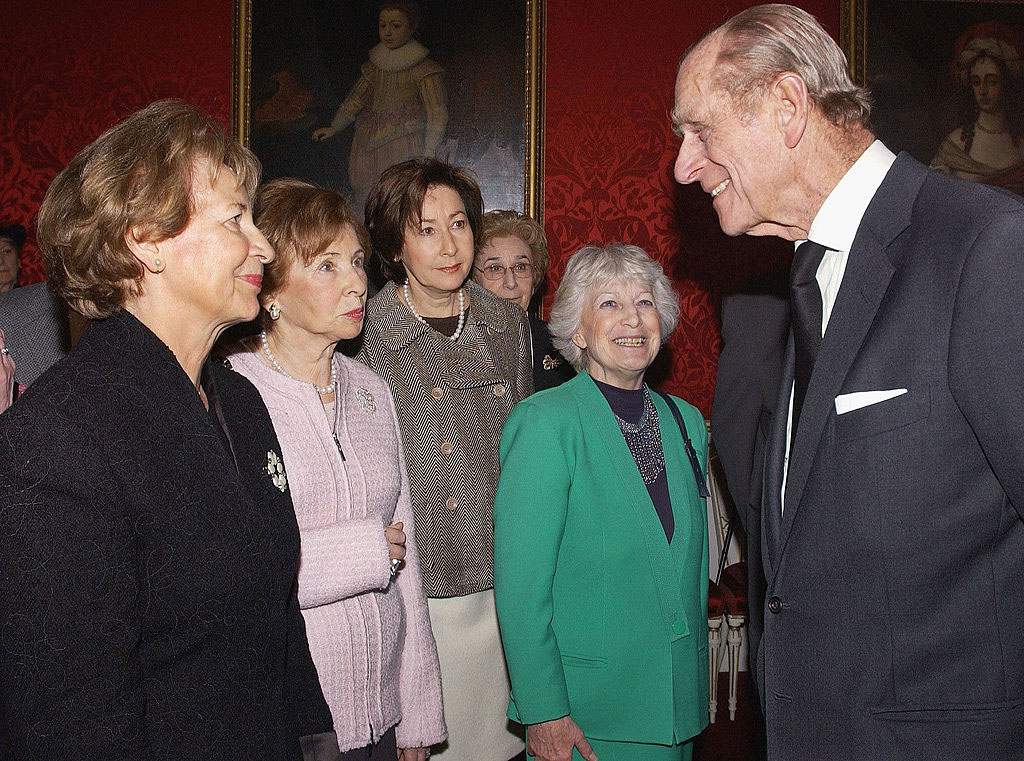
Britain is not a very Jewish country. Unlike America, where there is a separation between church and state, Queen Elizabeth is head of the church and head of state. Although there were attempts to prove the Jewish ancestry of Prince William’s wife, Catherine, whose mother’s maiden name was Goldsmith, it came to naught. The strongest Jewish connection within the royal family was Prince Philip, Duke of Edinburgh, whose funeral takes place this Saturday.

Philip was the first royal family member to visit Israel in 1994 when his late mother, Princess Alice of Greece, was celebrated by Yad Vashem as a Righteous Among the Nations for saving Jews during the Holocaust. Prince Philip said, “we did not know.. that she had given refuge to the Cohen family… I suspect that it never occurred to her that her action was in any way special.”

The Duke’s conviction against anti-Semitism began at a young age. As a 12-year-old boy, Prince Philip witnessed Nazi attacks while studying at a German school founded by Kurt Hahn, a Jewish refugee who had left the country due to Nazi persecution. “The anti-Semitic frenzy was gripping the members of the National Socialist party in Germany in those days,” he said. A case in point was when a Jewish boy was held down and had his head shaved. Prince Philip gave his cricket cap to the boy to cover his head. “It [was] a small and insignificant incident,” said the prince, “but it taught me a very important lesson about man’s capacity for inhumanity.” Reading his words makes me proud to be British.

Reading his words makes me proud to be British.

This compassion continued throughout his life. For example, British Chief Rabbi Ephraim Mirvis told BBC Radio about the time when he and his wife were hosted by the Queen and Prince Philip at Windsor Castle. Prince Philip took Rabbi Mirvis and showed him a Torah scroll in the royal library that had been gifted to the Queen, and he asked about Rabbi Mirvis about the Torah. It had been rescued from former Czechoslovakia and was originally intended to be part of a Nazi museum of exterminated people. (This was the reason that Jewish landmarks in Prague were not destroyed. The Germans had no idea they would be the ones ending up in a museum.)

Part of what made Prince Philip’s kindness towards the Jews so extraordinary were his family connections to Nazis. Three of Prince Philip’s sisters married Nazis. His sister Sophie’s husband, Christoph von Hesse, belonged to the SS, and their son was named after the Fuhrer. Prince Philip’s great Uncle Ernst’s funeral in 1937 was bedecked with swastikas and Third Reich banners. Equally disturbing, Queen Elizabeth’s uncle, the former King Edward VII, and his wife Wallis Simpson, were photographed meeting with Hitler and senior Germans.

Nevertheless, Prince Philip was part of the British Royal Navy and fought the Nazis during World War II, even fighting a brother-in-law in one battle. Since then the British royal family has done everything it can to distance itself from these Nazi connections, including banning his sisters from attending his wedding to Elizabeth in 1947.

Despite his death, Prince Philip’s connection to the Jews lives on through his descendants. His son, Prince Charles, has strong associations with the Jewish community and was friends with the late Chief Rabbi Lord Jonathan Sacks. When Lord Sacks passed away, Prince Charles said that the country “lost a trusted guide and an inspired teacher. I, for one, have lost a true and steadfast friend.”

It is British tradition that citizens receive a telegram from the Queen on their 100th birthday. Since Prince Philip died at 99, two months short of his birthday, he will never receive the telegram from his wife. She is instead the mourning widow, and the nation mourns with her. Following the national seven-day mourning period prior to the funeral, the Queen will apparently also maintain a further 30 days of mourning, just like the Jewish custom of shloshim. The nation and the Jewish community mourns with her.


Marcus J Freed is an actor, author and business consultant. www.marcusjfreed.com @marcusjfreed

Serious Semite: Prince Philip and the Jews Read More »

Treating The Pandemic Mind

Health care providers are only beginning to address the mental health pandemic that spread in tandem with COVID-19. In the past year, we’ve suffered the loss of gatherings with friends and families, workplace interactions and social events like birthday parties, bar/bat mitzvahs, weddings and funerals. Many developed anxiety or depression associated with this isolation: A recent JAMA study demonstrated that clinical depression, which affects about 10% of U.S. adults during normal times, may be three times more prevalent during the pandemic.

In considering the mental health pandemic’s severity, it is critical to distinguish “clinical depression” from the public’s use of the term. Clinical depression is more than just profound sadness (though it is often that too). Clinical depression produces functional impairments such as sleep disruption, impaired appetite, reduced concentration and can cause loss of interest in activities we usually enjoy. Along with anxiety, its fellow traveler, depression robs us of the capabilities we need to navigate the complex challenges of modern life. The threat of a deadly infection, loss of social interaction and financial stress have pushed many of us to the edge.

These psychological syndromes can masquerade as physical symptoms, like digestive upset, muscle achiness, headaches and more. Those affected often fail to recognize or even suspect a mind-body connection. After thirty years in clinical practice, I’m still amazed by the severity and diversity of the physical symptoms of psychosocial stress.

About one in seven American adults now take a medication for depression, primarily SSRIs (selective serotonin reuptake inhibitors, such as Prozac, Zoloft, and Lexapro). These drugs increase brain levels of serotonin, the brain’s critical “feel right” hormone. In good times, some say SSRIs are overused.  But given the increased prevalence of psychological illness during the pandemic, SSRIs may be substantially underprescribed.

Therapists and other practitioners generally recognize that in this imperfect life, the edge offered by antidepressants makes a difference for many.

Patients cite many reasons to avoid SSRIs. They may suspect their doctor thinks the problem is “all in their head” or that physicians are pill pushers with delusions that a simple pill can solve a maze of life problems. That’s not what doctors think when prescribing SSRIs. We realize that addressing life’s great challenges can be profoundly difficult, even with the full panoply of one’s personal resources. Without sleep, proper diet and energy, all life’s problems seem transformed into insurmountable mountain peaks. The magic of SSRIs lies in their ability to restore the subjective feeling of life going well by bringing back appetite, energy, normal sleep habits and a positive outlook. The pills don’t solve life’s problems, but they restore the personal resources you need to address your problems. They also reinforce personal resiliency. I tell my patients that they allow life’s “slings and arrows” to bounce off, rather than scoring direct hits.

I had a recent office visit with “Judy,” whose story I modified to protect her privacy. She recently began experiencing intractable muscle achiness. She had seen an outstanding rheumatologist, but the treatment was falling short. The rheumatologist readily agreed to my suggestion to try an SSRI to address her underlying stress. Judy resisted. Although she was dealing with financial issues and the stress of her daughter’s recent illness, she denied the possibility of a mind-body connection. She didn’t see herself as “an anxious person.”

I’ve learned not to disagree with my patient’s personal self-assessments, so I didn’t remind her that 15 years ago, Judy had become so anxious that her day-to-day functioning became impaired. I simply suggested that even if only 20% of the problems were due to anxiety, reducing that component might make the symptoms more tolerable. To my surprise, after a week of consideration, she relented and started a trial of a small dose. Because SSRIs take three to four weeks to kick in, we’re waiting to see the results.

Of course, there are alternatives to SSRIs. I encourage patients to seek psychotherapy, exercise, cultivate the activities that they usually enjoy, spend time outdoors and meditate. Although these practices improve mental well-being, they may seem like additional obstacles for depressed patients, who may feel too depleted to take any initiative. Taking a pill is just easier. I remind patients that their common concern about drugs being “an escape” does not apply. They don’t take SSRIs to escape their true self but to reclaim their best self. With life’s normal rhythms restored, the SSRI can be weaned off. When life improves, no “extra credit” is awarded for getting there without the help of medication.

SSRIs aren’t panaceas. They don’t solve all our problems and never will. But they often help and do so with minimal risk of minor side effects. As cheap generics, they offer one of life’s great bargains. Psychotherapists nowadays don’t see SSRIs as competition to counseling as some once did. Experience revealed SSRIs as tools that improve patients’ functioning along with their ability to act effectively on therapist’s advice. Therapists and other practitioners generally recognize that in this imperfect life, the edge offered by SSRIs makes a difference for many. They don’t yet belong in our drinking water, but for many, SSRIs help restore precious quality of life in these profoundly challenging times.


Daniel Stone is Regional Medical Director of Cedars-Sinai Valley Network and a practicing internist and geriatrician with Cedars Sinai Medical Group. The views expressed in this column do not necessarily reflect those of Cedars-Sinai.

Treating The Pandemic Mind Read More »