fbpx

March 17, 2021

White Supremacist Propaganda Nearly Doubled in 2020 to Most in a Decade, ADL Says

(JTA) — Last year, the United States saw the most white supremacist propaganda in a decade, with thousands of flyers, bumper stickers, banners and other propaganda reported across the country, according to the Anti-Defamation League.

The ADL’s report, published Wednesday, counted 5,125 pieces of propaganda distributed by 30 white supremacist groups across 49 states in 2020. That’s almost double the number recorded in 2019.

The vast majority of the propaganda the group tracked came from one Texas-based group that uses traditional American patriotic language and imagery in its materials — including the phrase “America First,” used by Donald Trump and his supporters.

The rise in propaganda may be attributable to the presidential campaign and election, according to the ADL, a leading anti-Semitism and extremism watchdog. In the months leading up to the vote, government officials and groups including the ADL warned repeatedly of extremist activity surrounding the vote.

Those warnings came to bear with the Jan. 6 insurrection at the U.S. Capitol, which led to five deaths. (That event, and the white supremacist groups and symbols present there, was not included in the 2020 tally as it took place in 2021.)

But while the “charged political climate” may have been conducive to propaganda, propaganda did not significantly increase as the election neared, and much of the content of the propaganda was unchanged from previous years and did not reference the vote or COVID-19, said Jessica Reaves, the editorial director of the ADL’s Center on Extremism.

“We can’t know for sure what moves the needle when it comes to propaganda numbers,” she said.

Reaves said the pandemic had a “mixed” effect on white supremacist propaganda efforts. COVID-19, she said, “may have slowed distribution on college campuses, while it’s possible lockdowns provided white supremacists with more cover and anonymity to post in cities and towns.”

Despite the overall increase in white supremacist propaganda, the ADL found that it dropped by more than half on campuses, to 303 last year from 630 incidents in 2019.

The ADL said the largest white supremacist event of 2020 was a flash demonstration in Washington, D.C., in February, before the pandemic became the dominant national issue and the election campaign heated up.

The vast majority of the propaganda in 2020 — 80% — came from a Texas-based white supremacist group called Patriot Front, which employs red, white and blue in its materials and plays on traditional American patriotic language.

One of the group’s stickers reads “Life, liberty and the pursuit of victory.” Another features a map of the continental U.S. and says “Not stolen, conquered.” A third says “America first,” the slogan with anti-Semitic roots that was adopted and popularized anew by former president Donald Trump.

In November, the group held a 100-person march down a main boulevard in Pittsburgh, a city that has become a pilgrimage spot for white supremacists two years after the deadly 2018 synagogue shooting there.

Just like in 2019, the only state without reports of white supremacist propaganda was Hawaii.

White Supremacist Propaganda Nearly Doubled in 2020 to Most in a Decade, ADL Says Read More »

$600M Worth of Food To Be Thrown Away in Israel During Passover

(The Media Line) Israelis will spend an estimated $2.3 billion on food over Passover. Of this, some $600 million worth, or 240,000 tons, of food will be thrown away, the majority from private homes.

“Think before you buy; it will save you money and help avoid food waste,” Leket Israel − The National Food Bank, says.

The weeklong holiday kicks off with the Seder celebration on Saturday night, and with it comes a series of family visits and large communal meals. However, Passover features an additional phenomenon: increased food waste.

On average, each Israeli household will spend $766 on food for the holiday, of which $99 will end up in the trash, Leket Israel says. Private households are expected to throw away approximately $360 million worth of food, while the waste generated by the entire market will tally an estimated 240,000 tons, worth up to $600 million, according to the country’s largest food rescue organization.

Gidi Kroch, Leket Israel’s CEO, suggests that the waste during Passover has cultural roots.

“There are cultural things involved,” he told The Media Line. “Our culture or heritage says that we have to have a lot of food on the table so no one is short on food, and it’s also a part of our value of hospitality, hachnasat orchim, that you have a lot of food on the table, and when you have a lot of food on the table you generate a lot of waste because, usually, you don’t eat everything.”

Kroch emphasizes that the majority of waste is generated in private homes. Because of bad shopping habits and marketing ploys, “you end up buying a lot more than you intended and you end up cooking more than you need, and at the end of the day it’s thrown away.”

Leket Israel, however, is unable to collect food from households, because “there are food safety issues,” he explains.

The second-largest source of waste during Passover comes from hotels. This also has to do with a desire for food and drink to be plentiful, Kroch suggests.

Sharona Lahav is the food and beverages manager at U Coral Beach Club, a hotel in Eilat, and this is her 10th year working for Fattal Hotels – a large Israeli chain. “Food is always left over, always,” she told The Media Line.

The hotel always prepares more food than is strictly needed for the registered guests, she explains. And in the past, she says, the hotel could not donate food because of Health Ministry regulations, and “then, a lot of food really was thrown out,” especially surrounding peak periods such as Passover.

In 2019, food worth almost $6.2 billion was wasted in Israel, according to a report produced by Leket Israel jointly with the Environmental Protection Ministry, and based on a model developed by BDO Israel, a large accountancy firm. This amounts to 2.5 billion tons of sustenance, almost half of which could have been saved, according to the report.

The Israeli public’s expenditure on food is exceptionally high, Leket Israel and the ministry’s report said. Approximately 17% of the average family’s consumption basket goes for food. Still, 465,000 households in Israel experience food insecurity.

Leket Israel saved 18,500 tons of fresh produce, as well as 2.4 million meals, in 2020, the NGO says. The food was then distributed to the organization’s partners, and ended up helping a quarter of a million people in need. The organization’s largest supplier is the IDF, donating 50,000 meals a month.

Gideon Ben Ami runs Pesia’s Kitchen, an organization that delivers 1,000 meals a day to those in need, mainly in southern Tel Aviv. Leket Israel supplies Pesia’s Kitchen with rescued food and assistance, amounting to some 500 tons of food annually.

“We created this organization to fight chronic hunger in our backyard, in southern Tel Aviv,” Ben Ami told The Media Line. “We help the communities that are in need in that area, be it the elderly, women’s shelters, the children of refugees, the homeless, women who are involved in drug use and prostitution,” he explains.

Leket Israel not only passes on rescued food to the organization, it helps it to rescue food from “companies that feed their employees, which have cafeterias, and where there is a lot of leftover food. Companies like Google, like Waze, the Electric Corporation.”

Pesia’s Kitchen has “teams that go out to collect this excess food, excess cooked food, which is brought directly to homeless shelters,” for example, Ben Ami says. In this way, food that was left over from lunch at Google’s cafeteria will be brought hot to those in need, to be served for dinner.

If all excess food in Israel was rescued, “there would be no hunger here, and the same is true for the entire world,” Ben Ami says.

$600M Worth of Food To Be Thrown Away in Israel During Passover Read More »

Beverly Hills City Council Passes Vote of No Confidence In LA District Attorney

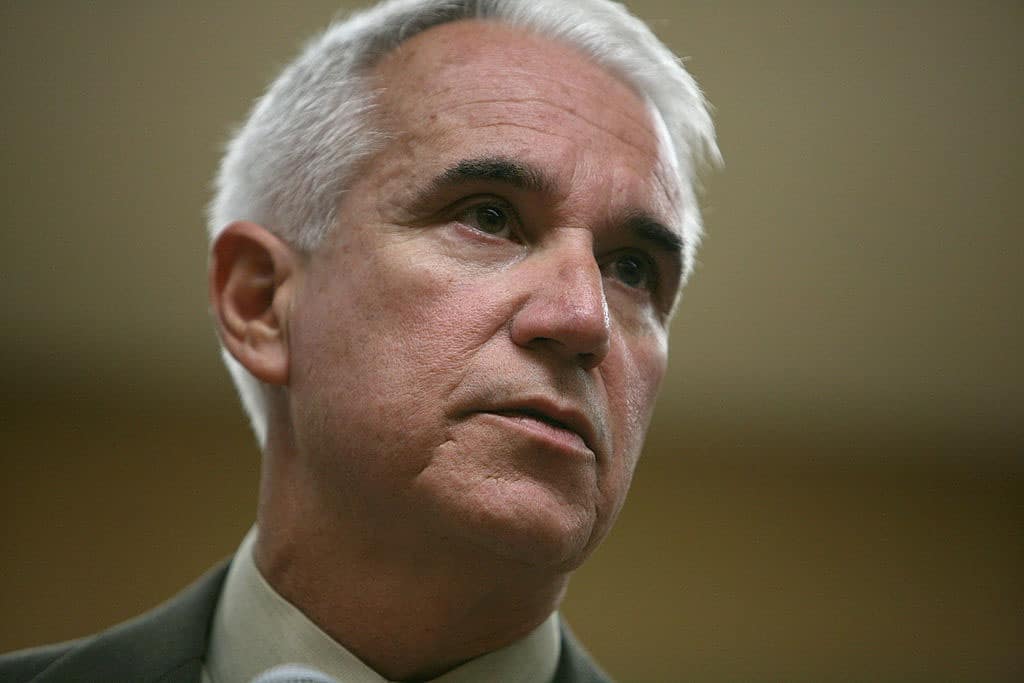
The Beverly Hills City Council passed a resolution on March 16 expressing a vote of no confidence in Los Angeles County District Attorney (DA) George Gascón.

The resolution passed by a margin of 3-2 and was brought at the request of Mayor Lester Friedman and Councilmember Lilli Bosse. The resolution stated that Gascón’s new directives, which include dismissing various misdemeanor charges and eliminating sentencing enhancers, “contradict state laws” and “the legislative ballot initiative process to prevent and prosecute crime and protect the general public.” The resolution calls on Gascón to nix all of his new directives.

The resolution calls on Gascón to nix all of his new directives.

“Safety and security is job one,” Friedman said in a statement. “By disregarding the actions of criminals, we are undermining the work of our women and men in law enforcement. The laws which DA Gascón is ignoring were democratically passed and need to be enforced.”

The Santa Clarita City Council also passed a vote of no confidence into Gascón on March 9. Councilman Jason Gibbs said at the time that the resolution demonstrates “the serious concerns we have within this community.”

Anti-Defamation League Los Angeles Regional Director Jeffrey Abrams has previously expressed concern about how Gascón’s directive eliminating sentencing enhancers will affect hate crime sentencing; alternatively, Bend the Arc: Jewish Action has signed a letter expressing support for Gascón’s directives show how “we can no longer police and cage away the many social ills produced by inequality, racism, and poverty: the root causes of crime.”

Prior to the vote, a special advisor to Gascón said in a statement to the Journal that the DA’s directives will help achieve the goal of “enhancing public safety, increasing equity, expanding victim services and strengthening police accountability.”

The vote comes as Gascón is reportedly considering reducing or eliminating the Hardcore Gang unit in the DA office altogether. When Fox11 reporter Bill Melugin asked Gascón about it, he replied that he’s looking “at where resources can be moved.”

Beverly Hills City Council Passes Vote of No Confidence In LA District Attorney Read More »

Book Review: A Beginner’s Guide to America

Roya Hakakian, the renowned Iranian American Jewish author, poet and journalist, has some advice for immigrants arriving with bursting suitcases to airports, en route to America: “Your mind, too, is bursting with all that you have been told about America. Keep the suitcases, but discard the knowledge. In fact, even before going through the last set of metal detectors to get on a plane to your final destination, place your views of America — along with your shoes, keys, coins, and cell phones — in the gray rubber bins, and leave them there.”

Hakakian’s new book, “A Beginner’s Guide to America: For the Immigrant and the Curious” (Knopt, 2021) is a magnificent and hilarious collection of advice designed to counsel newly-arrived immigrants and to help those born in America see it from an immigrant’s point of view. Incidentally, Hakakian’s counsel includes how to navigate all things American, from television and public transportation to the American school system and romantic liaisons (with one chapter aptly titled “Your First American Romance: A Few Warnings”).

“What I say in this book is what no one told me when I first arrived, when all I heard was about practicalities, and nothing about how to understand or cope with the whirlwind of emotions that had swept me up and in whose eye I remained for a long time,” Hakakian writes.

If anyone knows about the immigrant experience, it’s Hakakian, who was a teenager during the 1979 Islamic Revolution in Iran and who was admitted to the United States as a refugee in 1985 (at Brooklyn College, she tape-recorded her professors’ lectures because she didn’t speak English, and even studied poetry under famed writer and poet Allen Ginsburg).

“We hear all the time about who immigrants are, but it’s rare when we hear from immigrants themselves, especially not just what it was that drove them out or brought them here but [also] how it is that they see this country,” Hakakian told the Journal.

“We all have to perform certain civic duties,” she continued, “and I thought, This is my civic duty. Talking to people. Bringing them close to the immigrant experience in a way they can see that the overwhelming majority are coming here with the best of our hopes and aspirations to build happy and hopeful lives.”

Hakakian begins the book with a powerful message for immigrants: “You will receive many gifts during your time here, but the greatest of them all is America herself, lying before you beyond the revolving doors of the airport. She will surely break your heart, but the heartbreaks, like the joys, are not in the scripts you have been handed.”

She describes “A Beginner’s Guide to America” as “part memoir, part reportage, and part … work of imagination,” and begins with the immigrant’s first moments in the United States, tempering the emotional weight of redemption with the charming realities of being un-assimilated: “You will be a resident alien,” Hakakian quips, “able to live and work in the United States, though for the foreseeable future you will feel the alien far more acutely than the resident.”

Characteristic of her sharp but tender wit, Hakakian manages to infuse meaning and humor into even the most mechanical aspects of immigration, going so far as to assure, “Your once distant dream will soon be real and laminated.”

Hakakian demonstrates a formidable ability to deconstruct minute details of the American experience on deeply personal level, addressing the reader as “you” and imagining the questions and yes — judgments of America — that might run through an immigrant’s mind. She has a keen understanding of immigrants’ struggles to maintain a connection to their former country while reconciling with a deep, even desperate hope to assimilate as quickly as possible.

One of Hakakian’s incomparable strengths is that she advises rather than dictates. In anyone else’s hands, the book might be condescending and even patronizing. But Hakakian knows exactly how to use everything she’s learned in America in the past three-and-a-half decades.

As an Iranian refugee, I resonated with “A Beginner’s Guide to America” — so much, in fact, that I wish the book had existed when my family and I came to the United States in 1989. There were many questions I had about the American experience, including why Americans seemed to celebrate a different holiday each month through enthusiastic consumerism and whether they ever ate anything that didn’t come in a can or a microwavable box (not that I ever complained about Chef Boyardee Ravioli or Pop Tarts).

Hakakian is masterful at noticing the small things, and, as the book demonstrates, it’s in the small things upon which the foundations of becoming Americanized are formed, brick by assimilated brick. Take, for example, bargaining — an artform which, in many regions of the world, is a normalized and wholly expected dance between vendor and customer. But, as my family and I soon learned, in America, bargaining, at stores anyway, doesn’t exist.

It’s in the small things upon which the foundations of becoming Americanized are formed.

In the three decades since I’ve been in the United States, I’ve come to learn that what Americans lose in not being able to bargain on the price of an item at Target and what they gain in being able to return their microwaves, computers and half-eaten bags of cookies rather effortlessly. Hakakian no doubt agrees. Getting a refund, she says, is “the surest sign of America’s greatness” and ultimate evidence that “anything is possible because a one-time decision need not be destiny.”

“A Beginner’s Guide to America” is Hakakian’s most humorous book to date. Her other works include a 2004 memoir, “Journey from the Land of No” and a 2011 non-fictional retelling of the assassinations of Iranian opposition leaders in Berlin titled “Assassins of the Turquoise Palace.”

“I believe in the significance of humor in writing,” Hakakian said. “Being funny is the closest you can get to being a reader. It’s the fundamental quality of Jewish writing, and some of the best Jewish writers are people who, even in the darkest moments of their own narratives, manage to work in humor. It’s how I manage to enjoy my own writing.”

Hakakian began writing the manual for immigrants in 2016, during the height of heated rhetoric about immigration by then-presidential candidate Donald Trump. As president, Trump ordered a travel ban against some Muslim-majority countries, including Iran, and ordered record low refugee admissions. “I really disliked the Trump immigration rhetoric,” Hakakian said. “Personally, I found it offensive, especially when other immigrants — Jews who had come here as refugees themselves — banded with Trump to say that they agreed with his immigration policies.”

“A Beginner’s Guide to America” shines many lights on this country’s idiosyncrasies (and even moments of downright cruelty by American-born citizens against immigrants), but Hakakian strikes a critical balance between admiration and criticism, achieving a love letter to America that nevertheless isn’t blind to the country’s imperfections.

“I think criticism is engagement,” Hakakian said. “Lack of criticism means you’ve given up, or that the entity doesn’t deserve your attention. I look at criticism as a way of contributing and engaging. If I’m critical, I’m engaged, and that’s because I care. And I’m committed to do the leg work.”

Hakakian has been engaged in American civic affairs for decades. She previously was a member of the Council on Foreign Relations as well as a visiting fellow at the Wilson Center for International Scholars. She was also a founding member of the Iran Human Rights Documentation Center and served on the board of Refugees International.

In the book, Hakakian’s America is one of mostly good and decent people who show generosity in their own unique ways. In a chapter titled “On Squirrels and Americans,” she writes about American philanthropy. Back in the old country, she notes, “You used to give a coin or two to the poor of your city, or drop a banknote in the collection box at your place of worship, or help a neighbor or friend with a loan.” In America, things are different: “But these were a few small exercises at best. Here, people give regularly, Squirrels collect acorns, and Americans raise money.” Americans, in fact, have “book drives, blood drives, food drives, turkey drives…They raise and raise. They cannot help themselves.”

In “A Beginner’s Guide to America,” Hakakian paints a portrait of the immigrant experience through both the cruelty and generosity of Americans vis-a-vis immigrants. In the end, the immigrant’s contributions to this country outweigh all else, as she writes, “America cares little about what you have done, only what you will do once you are here.”

Ultimately, the immigrant experience is a deeply tangible, even tactile experience encompassing how one feels rather than what one thinks or sees.

“It’s a rite of pass to change countries…a huge transformation,” she said. “You don’t remember the physical details [of arriving in America]; what you were wearing or what day of the week it was. What you remember is the emotional detail and how those events left you feeling. And that’s what I think no immigrant ever forgets.”


Tabby Refael is a Los Angeles-based writer, speaker and activist. Follow her on Twitter @RefaelTabby

Book Review: A Beginner’s Guide to America Read More »

Ethnic Studies, the Third World Liberation Front and my Grandmother

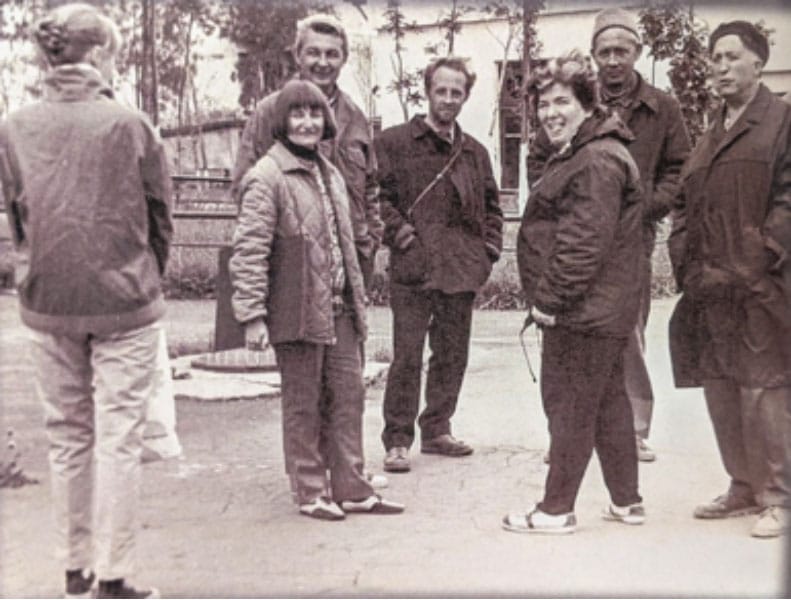
In 1979 my grandmother, Tsilya Reitburd-Mendzheritsky, was taken to a Soviet prison in Dmitrov, a small town about an hour from her home in Moscow. The KGB — Soviet Russia’s infamous spy agency and Putin’s former employer — put her in a cell with hardened criminals. They figured Tsilya’s cellmates would rough her up, she would beg for it to stop, and then they would make her talk. They were disappointed to find her getting along quite nicely with her new friends and moved her to a different cell with only one other person. She immediately identified her new companion as a snitch and revealed nothing. The KGB released her after failing to extract anything of use but later sent “muggers” to assault her.

Why all the fuss over my grandmother?

Courtesy of author

She was guilty of a serious crime by KGB standards — fighting for her people’s right to exist as proud Jews, free of the discrimination and repression they faced at the hands of the Soviet authorities.

In 1965, a young Elie Wiesel visited the Soviet Union as a reporter and found “a country in which its Jewish citizens were… afraid to discuss Jewish subjects or Jewish people” and “lacked fundamental knowledge of Jewish things” yet still wished to remain Jews. The Soviet regime was so committed to denying Jews a positive sense of identity that my father didn’t know he was Jewish until he went to school. He found out at six years old, when his teacher singled him out as a Jew in front of the class.

As such, Tsilya, her husband Emil and their fellow activists initially focused on legalizing education about Jewish history, traditions, culture, language and Zionism as a liberation movement. The inevitable opposition of the Soviet authorities propelled the struggle of Jews to leave, landing many of them behind bars as political prisoners. Tsilya got on the KGB’s radar by smuggling in literature that was banned by the regime, among many other risks she took for the cause.

My grandmother’s struggle lasted decades, until the Soviet Union collapsed and she was allowed to immigrate to Israel. She passed away in Jerusalem on June 27th, 2020, at the age of 95. Since then, I’ve been thinking a lot about how her life relates to mine.

One of those connections is my work at StandWithUs and involvement in the debate over California’s proposed Ethnic Studies Model Curriculum (ESMC) for K-12 public schools. I’ve spent nearly two years working with colleagues, students, community members and partners from all over California to submit critical feedback about various drafts of the ESMC. In the process, I’ve learned many things that remind me of my grandmother’s story.

Ethnic studies is an academic field that grew out of the Third World Liberation Front (TWLF), a student movement formed at San Francisco State University (SFSU) in 1968. TWLF wanted “a university that was more diverse, less Eurocentric and ready to prove that it valued people of color and their perspectives.” After intense strikes and protests that lasted for months, SFSU established the first ever College of Ethnic Studies in 1969.

Fast forward over 50 years, and this is how California’s State Superintendent presents the case for ethnic studies:

Our schools have not always been a place where students can gain a full understanding of the contributions of people of color and the many ways throughout history — and present day — that our country has exploited, marginalized, and oppressed them. At a time when people across the nation are calling for a fairer, more just society, we must empower and equip students and educators to have these courageous conversations in the classroom.

Despite the many differences between the United States and the U.S.S.R., I often think of my grandmother when I listen to ethnic studies advocates. She risked her life in the face of anti-Semitism so Jews could learn about who they were and develop pride in their identity. In aiming to empower communities of color against racism, ethnic studies isn’t so different from what she was fighting for.

Ethnic studies is an academic field that grew out of the Third World Liberation Front (TWLF), a student movement formed at San Francisco State University (SFSU) in 1968…I’ve learned that the movement which inspired ethnic studies promoted some of the same destructive ideas my grandmother fought so hard against.

And yet, I’ve also learned that the movement which inspired ethnic studies promoted some of the same destructive ideas my grandmother fought so hard against. The “Liberation Front” in TWLF’s name was taken directly from the communist “National Liberation Front of Southern Vietnam” — also known as the Viet Cong. The oppressive actions of the Viet Cong created a refugee crisis with thousands of people escaping to California. TWLF also drew significant inspiration from Mao Zedong, the communist dictator of China whose actions killed tens of millions of his own people and led millions more to flee. According to a firsthand account from a TWLF activist, “there was no such thing as not having [Mao’s] Red Book” on hand during the movement.

In a 1969 speech, a prominent TWLF leader said, “it is up to us to make the revolution, to break the system, to smash it, shatter it, and destroy it, as brother Lenin said.” In another speech, he “attacked Jewish people as exploiters” of Black people and “called for ‘victory to the Arab people’ over Israel.”

Vladimir Lenin was the founder of the Soviet Union. This was the anti-Semitic regime that imprisoned my grandmother for wanting to live as a proud Jew. It was a dystopia so bleak that my parents decided to leave behind everything they knew in search of a better life.

How could a movement dedicated to uplifting marginalized voices be so blind to the oppression my family and so many others faced?

Unfortunately, this question remains all too relevant today. On March 18, the California State Board of Education will cast its final vote on the Ethnic Studies Model Curriculum. The first draft of the ESMC reproduced many of the same blatant biases TWLF promoted back in 1968. While the current version is significantly better, numerous problems remain.

The ESMC rightly includes strong guidelines about teaching multiple perspectives and promoting critical thinking. And yet, it instructs schools to tell students about TWLF’s positive role in creating ethnic studies, without mentioning a critical word about the movement.

This may seem like a minor detail in a curriculum over 800 pages long, but it reflects a bigger problem: Ethnic studies focuses on critiquing the many biases and blind spots of American institutions. Yet what is happening as ethnic studies integrates itself into our institutions of public education?

Ironically, it is institutionalizing its own set of uncritical narratives and biases. That starts with TWLF — the origin story of ethnic studies.

There is no question that TWLF fought for a just cause: the inclusion of communities of color and their stories in our education system. There is also no question that TWLF leaders promoted anti-Semitism and celebrated oppressive dictators responsible for tens of millions of deaths.

Both of these things are true and do not cancel each other out. This is also not particularly unique. Individuals, movements and institutions can and often do have good ideas about some issues and bad ideas about others.

Ethnic studies should help students see that complex reality, instead of simply replacing one set of biases with another. On March 18, California’s State Board of Education can choose to sanitize TWLF or tell the whole, messy story. Let’s hope they do the right thing.


Max Samarov is Executive Director of Research and Strategy at StandWithUs.

Ethnic Studies, the Third World Liberation Front and my Grandmother Read More »

Cornel West Says Harvard Denied Him Tenure Because of His Views on “Israeli Occupation”

Cornel West, a philosophy scholar and progressive activist, is claiming that he was denied tenure at Harvard University due to his views on the Israel-Palestinian conflict.

West announced on March 8 that he was leaving his position as a philosophy and African American studies professor at Harvard and will be teaching at Union Theological Seminary full time, where he is currently a professor emeritus. He had threatened to leave Harvard in February when they declined his request for tenure.

West, a supporter of the Boycott, Divestment and Sanctions (BDS) movement, has maintained that his pro-Palestinian views were the reason for Harvard denying him tenure. He told Haaretz that “the neoliberal hegemony in the universities is still very reluctant to have a robust, respectful, free dialogue on what’s going on, past and present, when it comes to Israeli and Palestinian issue.” A student petition has also been circulating denouncing Harvard’s decision not to give West tenure over West’s criticism of “the settler colonial violence of Israel’s occupation of Palestine.”

Rabbi Jonah Steinberg, director of Harvard Hillel, wrote in a March 12 email to community members that West “egged” on the students into promulgating “anti-Jewish libels” in the petition.

“Student leaders who have signed the petition likely do not realize how the words ‘Israel’s occupation of Palestine’ are used to suggest that the entire country of Israel is illegitimate, and perhaps they are not sensible of how eliding ‘white supremacy, racial capitalism, Zionism, and the military-industrial complex,’ as the petition does, is a dangerous ethnic slander,” Steinberg wrote, adding that it was ludicrous for West to suggest that his views on the Israel-Palestinian conflict had anything to do with Harvard’s decision.

West told the Harvard Crimson, the university’s student newspaper, that he didn’t think his support for Senator Bernie Sanders’ (I-Vt.) 2020 presidential campaign or his support for the Black Lives Matter movement would be considered controversial by Harvard, but he thinks his “support of this critique of Israeli occupation is a plausible hypothesis, given what I know about earlier candidates who have been denied.” He added that while he shares Steinberg’s concerns about anti-Semitism, such charges shouldn’t “trump a serious discussion about the Israeli-Palestinian situation.” West has also claimed that the university eventually relented to public pressure and told him they were open to giving him tenure, telling the Crimson: “You can’t impose and force people to respect you in that sense. That’s another reason why I knew I had to go.” The university declined to comment on that allegation to the Crimson.

Steven Lubet, a law professor at Northwestern University, wrote in a March 3 RealClearEducation article that Harvard had offered West a 10-year contract and a significant raise in salary, but West insisted on tenure even though his position was not eligible for tenure. West has claimed that a faculty committee had recommended that West be considered for a tenured position, but the university denied the recommendation. University Spokesman Jonathan Swain has told The Boston Globe that the committee’s sole jurisdiction was to review West’s reappointment to his current position; the committee told the Crimson that Swain was “technically accurate” but didn’t provide the full context of the report.

Harvard had offered West a 10-year contract and a significant raise in salary, but West insisted on tenure even though his position was not eligible for tenure.

Lubet also noted that West had previously left Harvard in 2002 after then-university president Larry Summers questioned West’s scholarship and wanted to see if the professor had engaged in grade inflation; West had questioned the university’s commitment to affirmative action. West called Summers “the Ariel Sharon of American higher education” at the time.

“With nothing even resembling evidence, West has no doubt that shadowy friends of Israel just had to be responsible for his rebuff by the Harvard administration,” Lubet wrote. “That might make sense only to someone intensely committed to West’s worldview; his conclusion would otherwise be recognized as an unsupported non-sequitur.”

Boston Globe columnist Michael A. Cohen similarly wrote in a March 16 Substack piece, “Many political commentators are critical of the Israeli occupation and its behavior toward Palestinians (and it’s also true that some defenders of Israel have sought to silence criticism of the Jewish state). But then again, not many commentators have, like West, accused then-President Barack Obama of being a ‘war criminal’ because his administration supported Israel. Not many have, during ‘robust’ and ‘respectful’ conversations, accused Israel of ‘state terrorism’ and branded the Israeli Prime Minister, Benjamin Netanyahu, a ‘war criminal’ who seeks not just to promote the occupation of the Palestinian people but their ‘annihilation.’”

West’s colleagues appear to be supportive of him. Harvard Anthropology Professor David Carrasco told the Crimson that the West controversy “seems to be unmasking something troubling in our beloved university. The question is why is it that from one side of the mouth we hear support for African American studies and scholars while the other side of the mouth refuses to address Cornel West’s request and this situation directly.”

Ciarra Jones, a former student of West’s, also wrote in a Medium post that she was “deeply dismayed and outraged by Harvard University’s denial of Professor West’s tenure,” stating that “in Professor West’s classroom I could exist freely as a Black woman without the acute sense of hypervisibility and alienation.”

She later added: “Marginalized faculty are our lifeline. They see us when no one else does and they validate our intelligence and worthiness. Further, they hear us because at one point, they were us. Navigating graduate school as a Black scholar is arduous. We need cheerleaders and confidants. We need affirmation. We need Black faculty like Professor West.”

Cornel West Says Harvard Denied Him Tenure Because of His Views on “Israeli Occupation” Read More »

The Museum Seeking to Represent All Jews

In the years before 2020, if you wanted to see an exhibit at a museum, you generally had to purchase a ticket — and a plane ticket if the museum was abroad. But the virtualization the pandemic forced has allowed many museums to bring their work straight to your screen.

The Museum of the Jewish People (ANU) in Tel Aviv did just that on March 17, 2021, providing an English-language virtual tour of its collection. Previously known as Beit Hatfutsot, ANU underwent a ten year, $100 million expansion. The museum now has exhibits dedicated to the diversity of modern Jewish culture, Jewish history, the universality of the Torah and the evolution of the synagogue. The museum deliberately changed its name to ANU to “reflect its enhanced focus on the global Jewish experience.”

Museum Board Chair Irina Nevzlin opened the event by sharing her personal background. Nevzlin grew up in the Soviet Union and due to anti-Semitism didn’t find out she was Jewish until she was in elementary school. As she learned more about her identity, the feeling of “being part of something bigger than myself” continued, leading her to ANU.

Nevzlin shared that despite there being many museums about Jews, there was no one single place that told the story of the Jewish people from the perspective of success and resilience. ANU, she shared, seeks to create a story that “represents everyone,” not from a perspective of victimhood but from one of success. Knowing your story, she concluded, makes you stronger.

Knowing your story makes you stronger.

Chief Curator Orit Shaham Gover explained the three pillars of the museum: pluralism, celebration of life and culture, identification. Accordingly, the museum was structured “backwards,” from current culture to history to the foundation. The museum opens with several screens allowing visitors to meet Jewish individuals and families from a variety of ethnic groups and countries.

Gover played a short video explaining the 72,000 square foot exhibition space, which mixes art installations, 20 synagogue models, hundreds of artifacts and over 50 original films. The museum spent 15 million dollars in interactive technology, which allows visitors to “cook” with famous Jewish chefs and study Talmud. Visitors can also download an app that can overlay their family tree with exhibits on prominent Jews they are somehow related to. Some of those prominent Jews include Sigmund Freud, Adam Sandler, Maimonides, the Marx Brothers and Leonard Cohen.

Some of the objects the museum featured: a pendent from Mashad Iran, which women used to distract authorities from the Jewish texts they smuggled under their clothing; a Torah case from Cochin community in southern India; ID certificates from Jews at post-World War II displaced persons; Gene Simmons’s guitar; famous Yiddish writer Isaac Bashevis Singer’s typewriter; a Megillat Esther from a family expelled from Spain.

The museum’s staff expects that visitors will have to make multiple trips to see all the exhibitions. CEO Dan Tadmor concluded by emphasizing the ability physically visit the museum and invited all online participants to experience the museum in person when able to do so.

The Museum Seeking to Represent All Jews Read More »

Luck of the Irish: Iraqi Sweet & Sour Salona

When Vivian met Nik she was charmed by his Irish accent and was amazed to find out that there were Irish Jews.

Jewish history in Ireland began over a thousand years ago, when five Jews brought a gift to Toirdelbach, the king of Munster, but they were soon sent back to where they came from. By 1232, there was a small community of Jews living in Dublin, with King Henry III granting the Treasurer and Chancellor of the Irish Exchequer “custody of the King’s Judaism in Ireland.” Following the expulsion from Portugal in 1497, a number of Sephardic Jews settled on the south coast of the Emerald Isle. Ireland’s first synagogue was built in 1660, near Dublin Castle. During the Great Famine, many Jews donated generously to famine relief and according to a Dublin newspaper, Baron Lionel de Rothschild and his family donated a sum far greater than the joint contributions of the Irish landowning aristocracy, which included the Devonshires, the Fitzwilliams and the Herberts. By 1891, the number of Irish Jews had swelled 300% to 1,506 members.

In 1892, Nik’s great grandfather was 20 years old when he left his home in Lithuania, determined to reach the “goldene medina.” A bottle of vodka was inducement enough for the border guard to look the other way as he escaped over the border into Belarus. He begged rides, slept in barns and worked for meals, as he trudged 792 miles through Belarus and Poland to get to the German seaport of Hamburg. There he found his way aboard a vessel, but it was only at sea that he found out that the boat was headed for England, not America. In Liverpool, he boarded another ship sailing west, but this ship was bound for Ireland and that’s where he stayed.

Arriving as the penniless Moshe Helman, he was renamed Maurice Elliman by immigration officials and like many other hard-working and entrepreneurial immigrants he became a successful citizen of his new country. He started as a grocer and became a big player in the entertainment industry. He married Leah and together they had children, many grandchildren and many, many great grandchildren.

A century later, his great-grandson Nik landed in the Big Apple after winning the green card lottery through the Morrison Act. A short time after his arrival, a friend Nik had met on a BBYO tour of Israel introduced him to a friend of hers, Liz. Liz had met Vivian on the SEC Hamsa trip when Neil Sheff was their brave and fearless counselor. Liz invited Nik to a Sephardic Educational Center event organized by Vivian, then-president of the New York chapter. They met and “the rest is history!”

Throughout the years of their marriage, Nik and Vivian and their four children have always celebrated Passover with his family in Dublin. For the first night Seder, Nik’s mother makes an incredible spread. The first course is a fish cocktail featuring cod and a homemade mayonnaise in the cocktail sauce. The main course includes sweet and sour salmon, poached salmon, fried plaice (a delicious white fish) and fried fish balls. There are lots of salads: carrot and raisin salad, mushroom salad, potato salad and a big mixed green salad. The desserts are mouthwatering: Sacher Torte, Lemon Pavlova, oranges in a Cointreau caramel sauce, homemade ice creams and fresh fruit.

Inspired by that incredible menu, we share with you Sharon’s grandmother’s recipe for Salona, Iraqi Sweet and Sour Fish. The sauce is a tangy, spicy, sweet combination of fresh lemon juice, pomegranate syrup and curry. Adding layers of onion, tomato and garlic make this white fish recipe all kinds of delicious. Perfect for a light meal on Passover or any time of the year.

On this St Patrick’s Day, we share it in honor of our wonderful friends, Nik and Vivian (who comes from an Iraqi Jewish family. And in honor of Sharon’s grandparents and parents, who share March 17th wedding anniversaries (1943 and 1964, respectively).

May we all be blessed with the luck of the Irish!


Salona, Iraqi Sweet and Sour Fish

2 pounds white fish fillets (cod, sea bass, bream)
2 large onions, sliced into rings
4 large tomatoes, sliced into rings
4 large garlic cloves, finely chopped
1 tablespoon paprika
1/4 teaspoon curry powder
Salt and pepper to taste
Oil for sautéing

The Sauce
3 lemons, juiced
1 tablespoon pomegranate molasses or maple syrup or honey
2 tablespoons tomato paste
2 tablespoons sugar
1 tablespoon curry powder
1 tablespoon turmeric
1/4 teaspoon red chili pepper flakes

Over medium heat, mix all the sauce ingredients in a small saucepan and bring to a boil.

Simmer gently for about 5 minutes, stirring occasionally.

In a heavy-bottomed pan, sauté onions over medium heat until they are soft and translucent, then set aside.

Cut the fish fillets into large chunks, then brush with olive oil and sprinkle with curry powder, paprika, salt and pepper.

Pour a light layer of oil in the pan and arrange the fish on the bottom.

Layer onions and garlic on top of the fish.

Place the tomatoes over the onions, then add the sauce on top.

Cover and simmer gently for about 25-30 minutes.


Rachel Sheff and Sharon Gomperts have been friends since high school. They love cooking and sharing recipes. They have collaborated on Sephardic Educational Center projects and community cooking classes. Follow them on Instagram @sephardicspicegirls and on Facebook at Sephardic Spice SEC Food.

Luck of the Irish: Iraqi Sweet & Sour Salona Read More »

Overdue Haircut

“Haircut twenty dollars” read a sign in a barber’s window during the covid-19 epidemic,
in Columbus Avenue, Manhattan. It added: “Overdue haircut, twenty-seven.”
Overcharging for corrections that are overdue is similar to a polemic
against the doctrine that you must repent immediately if you want to get to heaven.

I’m a supporter of Augustine’s Hippo prayer, which said: “Lord, make me chaste, but please not now!”
Premature avoidance of khumras is a sacred cow to which I don’t kowtow.
I suppose that means that I am less a Nazirite than an oenophilic hypocrite,
long on wine, on hair far shorter than on literary offenses I compulsively commit,

less pro procrastination than anti antisemitism,
regarding just the latter of the two above a barbarism.


Inspired by the NYT Metropolitan Diary, 3/14/21:
Barber Shop Window
Dear Diary:
Sign seen in a barber shop window on Columbus Avenue:
Haircut $20
Overdue Haircut $27

A ‘khumra’ is the prohibition or obligation in Jewish practice that exceeds the bare requirements of halakha.

Gershon Hepner 3.15.21


Gershon Hepner is a poet who has written over 25,000 poems on subjects ranging from music to literature, politics to Torah. He grew up in England and moved to Los Angeles in 1976.  Using his varied interests and experiences, he has authored dozens of papers in medical and academic journals, and authored “Legal Friction: Law, Narrative, and Identity Politics in Biblical Israel.” He can be reached at gershonhepner@gmail.com.

Overdue Haircut Read More »

Table for Five: Vayikra

One verse, five voices. Edited by Salvador Litvak, the Accidental Talmudist

And He called to Moses, and the Lord spoke to him from the Tent of Meeting, saying… – Lev. 1:1


Lt. (res.) Yoni Troy
Israel Defense Forces officer

Why begin the third book of the Torah with this eight Hebrew-word seemingly banal sentence?

This supernatural Godly encounter with flawed human beings touches upon a basic question: Why not create a perfect universe? Why create one with such flaws?

G-d wants us to be the completing factor. Throughout the Bible, G-d seeks a partnership with humanity — to challenge us to improve ourselves and create a better world.

Each one of us was created in our own way, born into certain situations with certain abilities. While this creates a lot of conflict, when harnessed correctly the mix can lead to perfection. If we use our strengths to help others rather than hurt them, we can create a synergy overcoming our weaknesses.

In the army, every job is essential to keep Israel safe. Some jobs are considered to be more prestigious such as pilots and commandos. However, without the cooks and mechanics the army could not function. As it is in the army, so too in civilian life and throughout the world: each country, culture, religion offers its unique contribution.

G-d’s call to Moses symbolizes the great connection between G-d and humanity. This connection continues through each of us. While Moses already took the receiver-of-the-Torah slot, each one of us has our own special way to do G-d’s bidding. We each can offer a unique contribution. While G-d’s summons today may seem less direct, by remaining attentive we will hear The Call to fulfill our destiny.


Miriam Yerushalmi
CEO SANE; Counselor; Author

In the wilderness, the Tent of Meeting was the special place G-d would rest His presence to speak to Moshe Rabbeinu. It was set up beyond the border of the main camp, distanced from the home-tents of the people. At times, even Moshe would not enter this tent, but spoke with G-d at its doorway. Although the Bnei Yisrael were able to look at the doorway, it was not possible to “sneak a peek” into that tent and catch a glimpse of the Holiness it contained, unless one was invited to do so.

Similarly, the people’s tents, which of necessity were set up fairly close to each other, were also arranged in a way that prevented uninvited scrutiny from the neighbors. Why would that be? Why would the Tent of Meeting be inaccessible for the casual viewing of the people? Perhaps one reason is that, had they seen the G-dly perfection within that tent, they would have continually compared every other tent to it, and found them all wanting.

According to the Baal Shem Tov, “not looking into one’s neighbor’s tent” means that the Jews did not scrutinize their neighbors’ faults. The way to develop ahavas Yisroel, to come to love your friend as you love yourself, is by not looking at their faults. Look into your own tent, and work on your own shortcomings. But don’t be too hard on yourself–realize that G-d speaks to each of us from within our own tent, and His holiness resides there, too!


Rabbi Nolan Lebovitz
Adat Shalom

The third book of the Torah begins with God calling out to Moses. As compared to the rest of the first Hebrew word – VaYikra – the Aleph is always written in a smaller size, making it pronounced.

Our people’s Exodus and our communal effort to build the Tabernacle has proven successful in the previous book, and now the institution is ready for personal interactions with God. The first interaction is of course between God and Moses. Each year at this time I wonder, “What did Moses say prior to this verse that prompted God’s call?”

We strive for a prayer experience in which we, as individuals, receive a call back from the large Aleph, the Oneness of the universe. Rabbi Abraham Joshua Heschel acknowledged the personal nature of prayer in his book Man’s Quest for God (1954). The transition from communal structure in Exodus to personal worship in Leviticus is a tension we have lived with as Jews from antiquity through today.

Sometimes my prayer is for Israel, for our people or for our national homeland, and sometimes my prayer is personal, for my family or for myself. Sometimes my prayer feels heard and sometimes perfunctory. As Heschel argued, the key is to keep praying. Sometimes the Aleph will feel large, and sometimes small. Through prayer we try to connect the small Aleph of our self to the larger Aleph that joins us all together, as one.


Dini Coopersmith
Speaker, Israel Trip Director, www.reconnectiontrips.com

When the call initially comes for Moshe, it is anonymous – “He called to Moses.” Only afterward is it more specific – “the Lord spoke to him, saying….”

The Baal Shem Tov refers to the statement of the Zohar (3rd part, 126):”every day a heavenly voice rings out, saying ‘return, my naughty children.'” Like the proverbial tree that falls in the forest, he asks: why don’t we hear this heavenly voice? and if we don’t hear it, is it really happening?

This is the hidden voice of God that comes to each and every one of us, through the events and circumstances of our lives. Saying: “return to me, return to your true self.” We can choose to listen, grab hold of that voice, make a positive change, meet the challenge, or we can ignore that still small voice within, which directs us toward an Infinite source of wisdom and insight.

What a shame if we ignore this heavenly voice, thinking: Maybe this isn’t God, maybe people are to blame, this is a meaningless event, just a hassle that I have to overcome. Moshe teaches us that when that call comes, we listen, even if life’s twists and turns are confusing. The details will become clear later on.

As we close a strange Covid year, let’s tap in to the insights we have gained. Let’s listen to that inner heavenly voice, exhorting us to find our true selves, to grow and connect to God through all events and become great.


Rabbi Lori Shapiro
Open Temple

The Book of Leviticus departs from the Biblical narrative as the scribal voice shifts. Our text illustrates this idea, weaving “Something spoke to Moses,” a phrase that splinters or dilutes the relationship of Moses and God through this non-specific pronoun, and replaces this formerly explicit and intimate relationship with God as a nebulous “He” or “It”. The ambiguous pronoun construction continues, “and God said to him at the Tent of Meeting.”

Just who is the subject speaking to Moses? And who is God speaking to? The scribe answers the question by directing us to the temporary “construction site” – the Ohel Moed, a space that only permitted the Priestly class as the gathering place within. In this subtle, seemingly throw-away verse with ambiguous grammar, we discover the transmission of authority — moving away exclusively from God to Moses — and passing it over to the Priests standing by, eager to scribe their expressions of holiness to follow in this Priestly Book of Torah.

Table for Five: Vayikra Read More »