fbpx

October 19, 2020

Want Moshiach? Have More Women at the Table

Last October, I was pushing our baby stroller on La Cienega Boulevard when an Orthodox man driving a “Sukkah-mobile” (a car with a small sukkah strapped to the roof) drove by, blaring the song, “Moshiach! Moshiach! Moshiach!”The ear-splitting sound could be heard by every person and pigeon within a three-mile radius. I hadn’t heard such loud music emanating from a car since rapper Tupac Shakur was shot to death in 1996; ever the Tupac fan, I forced my mother to blast his music on the ride home from middle school.

You had to give the guy credit. The Chabadnik, not Tupac.

His public zeal did inspire me to think about the concept of Moshiach — the Jewish messiah during whose era there finally will be world peace. And that evening, something happened that made me think Moshiach would arrive sooner rather than later.

That night (October 16, 2019), I spoke on a panel organized by Israel Policy Forum (IPF) Atid, which engages young professionals and millennials with Israel. The event was the kickoff of IPF Atid’s Women, Peace, and Security (WPS) channel, a new initiative that aims “to advance women’s involvement, expertise, and leadership in Israeli-Palestinian peacebuilding and Jewish communal affairs.”
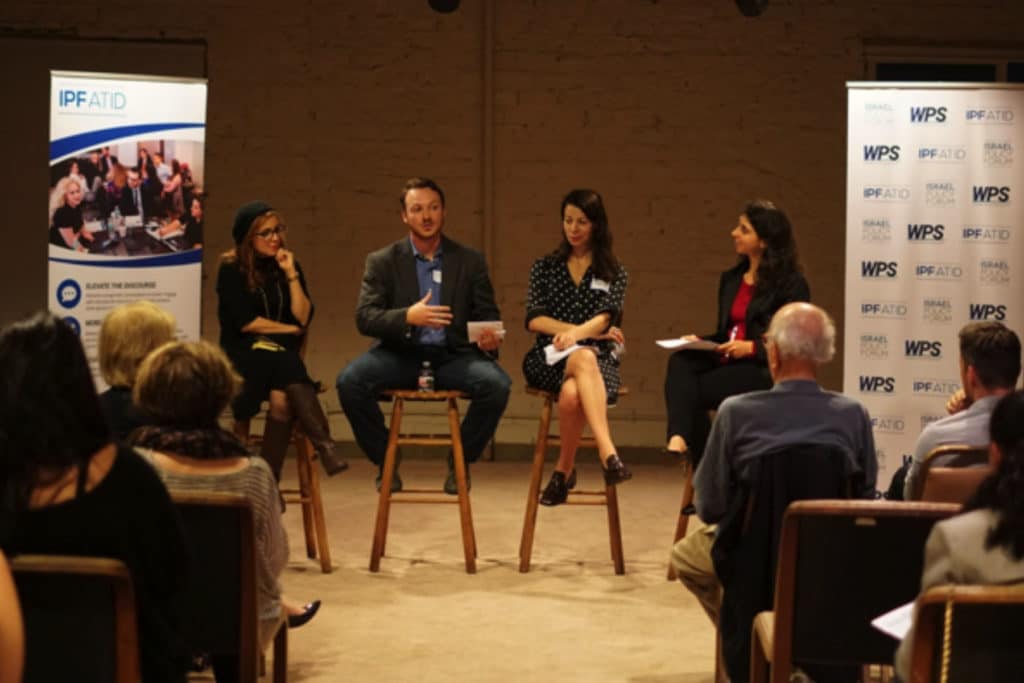
Photo courtesy of Tabby Refael

There was no doubt about it: Moshiach was coming — because two out of the three panelists were women. Even the moderator was a woman. I know a women’s initiative sponsored the panel, but such numbers still were nothing short of miraculous. If you regularly participate in the Jewish (and even non-Jewish) speaking circuit, you’ll probably agree.

For years, I’ve seen event flyers with the names and faces of men. Old men. Young men. Men who were indispensable experts. Men who weren’t fit to address the issues. When I attended such events, I saw brilliant women on stage — too bad they were only tasked with introducing the men. Do events solely have to be organized by women’s initiatives (like the IPF panel) to at least include an equal number of female speakers?

During the IPF panel, Dr. Shira Efron, Special Advisor on Israel at the RAND Corporation, cited studies that all pointed to one thing: women are sorely needed in peace and conflict negotiations. But they’re also sorely underrepresented:

In 2000, the UN Security Council unanimously adopted Resolution 1325 to “ensure increased representation of women at all decision-making levels… for the prevention, management, and resolution of conflict.” But a 2018 study from the Georgetown Institute for Women, Peace, and Security found that women made up only 8% of negotiators in peace processes, 5% of witnesses and signatories, and 2% of mediators.

That underrepresentation is a shame, since research has shown a 35% increase in peace and reconciliation agreements lasting for at least 15 years when women are involved. In a March 2018 World Bank blog titled “Can Gender Equality Prevent Violent Conflict?”, World Bank consultant Catalina Crespo-Sancho argued that “gender equality is a key ally in the prevention of violent conflict,” adding, “The larger the gender gap … the more likely a country is to be involved in inter- and intrastate conflict and to use violence as a first response in a conflict setting.”

WPS Chair Rachel Wallace, who moderated the discussion between Efron, IPF Atid National Director Adam Basciano, and myself, noted that in the past few decades, Israeli-Palestinian peace negotiations have only included two women: Israeli politician and diplomat Tzipi Livni and Hanan Ashrawi, Member of the PLO Executive Committee. How is it that one of the longest-lasting, devastating conflicts in the world has involved diplomatic efforts by just a few women?

Maybe I just answered my own question. Maybe if the task of pursuing peace was primarily led by Israeli and Palestinian women, this brutal conflict would have ended decades ago (although Ashrawi’s documented hatred for the Jewish state and refusal to condemn Palestinian terrorism hasn’t exactly fueled good faith negotiations between both sides).

I’m not suggesting that panels should feature women without regard to their biases and, in some cases, their violent racism. Case in point: A recent San Francisco State University (SFSU) virtual event on Sept 23 featured Palestinian plane hijacker Leila Khaled as a guest speaker. In the case of the SFSU event, that was one female speaker we could have done without.

During the IPF panel, I spoke about my experiences as former Director of Academic Affairs at the Consulate General of Israel and as co-founder and former Executive Director of 30 Years After, a prominent Iranian-American Jewish civic action organization. I recalled that I often brought my father to listen to my talks and that event organizers (who’d often never met me) would enthusiastically shake my father’s hand and ask him if he needed anything before he went on stage. One strike against women.

Clearly, the man next to me was old enough to be my father. In fact, he was my father. Many organizers would then point to me and say, “And this must be your wife!” One strike against Middle Eastern-looking men.

It’s difficult for women to be involved in policy and diplomacy. Whether due to discrimination or the fact that many women around the world are expected to tend to home and children before a career—whether in Africa, America, or the Middle East—the seats at the proverbial table are almost always filled by men.

In a May 2020 cover story in this paper, titled “How Gender Diversity at the Highest Levels is Impacting — and Improving — the World,” Associate Director of AJC Washington Susan Sloan quoted Réka Szemerkényi. Szemerkényi, the first female Hungarian Ambassador to the United States, saw in women a crucial balance of heart and mind: “You can only be successful professionally if you use your brain to full capacity, but the bravery of adding heart is something that I think makes a difference,” she said.

Adding heart always makes a difference. In terms of war and conflict, no one feels the effects of devastation more than women, who tend to villages that have been decimated, comfort survivors who’ve seen the unspeakable, and most importantly, mold and teach their own children about peace, hate, and healing. And so, it is women who are needed. Women who will bring us closer to peace.

We already have the opportunity to get one step closer to Moshiach: The historic Abraham Accords between Israel, the United Arab Emirates, and Bahrain have ushered a previously inconceivable era of peace and teamwork. These states now are collaborating on everything from food and water security to film and TV production. There’s no reason why women can’t and shouldn’t be involved at every level of this commendable cooperation, which will improve the quality of life for tens of millions of people.

As for me, I don’t know when I’ll ever sit on a panel that’s 66 percent female again, but if it happens soon, you may find me on La Cienega Boulevard, clapping my hands and blasting “Moshiach! Moshiach! Moshiach!” from my sensible minivan.


Tabby Refael is a Los Angeles-based writer, speaker and activist.

Want Moshiach? Have More Women at the Table Read More »
Ariel Zwang Named First Woman CEO at JDC

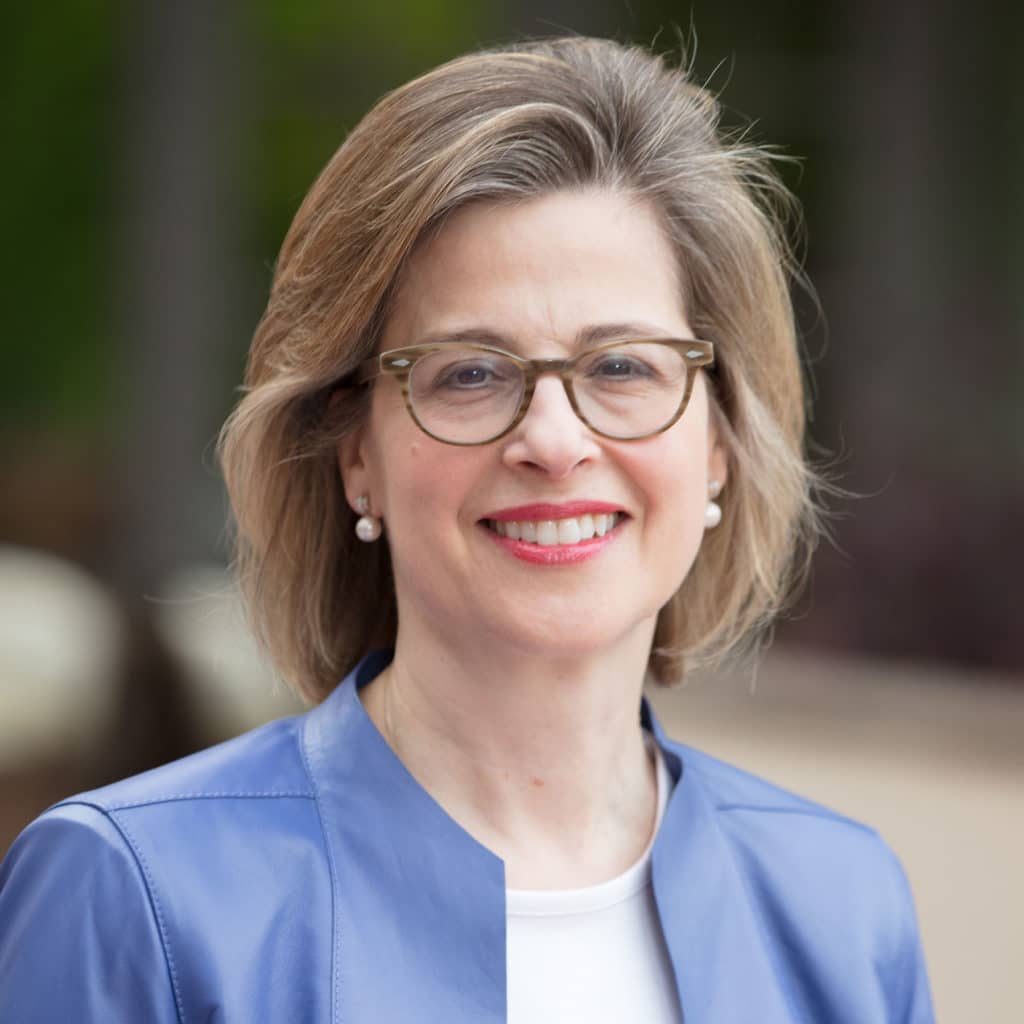
Ariel Zwang has been named the newest CEO at The American Jewish Joint Distribution Committee (JDC). Announced Oct. 18, Zwang will be the first woman to hold this position for the Jewish humanitarian organization.

Zwang brings along 25 years of experience and was the CEO of Safe Horizon, one of America’s leading social service agencies; executive director of New York Cares, New York City’s largest volunteering organization and a White House Fellow in the Department of Housing and Urban Development.

She starts her work with JDC on Jan. 2. Zwang was unanimously nominated by JDC’s search and executive committees.

“We couldn’t be more thrilled to welcome Ariel Zwang as JDC’s next CEO. We know her dynamic skillset and lifelong dedication to improving lives and building Jewish life, at the heart of JDC’s mission, will be critical to her success in leading an organization that’s played a key role in the history of the Jewish people for more than a century,” JDC President Mark Sisisky and interim CEO Darrell Friedman said in a joint statement to the Journal. “Our world faces unprecedented challenges and JDC’s support of Jews, Jewish communities, Israelis, and others in dire need is more critical than ever before. Ariel’s outstanding talents and values-driven leadership will strengthen our ability to achieve this goal and move us forward into another century of service as the 9-1-1 of the Jewish world.”

For more than 100 years the Jewish organization has aimed to provide aid to Jews in need and form strong Jewish connections in 70 countries.

During her 12 years at Safe Horizon, Zwang transformed the organization and doubled the size, and enhanced the financial, operational, programmatic and strategic health of the organization while developing strong relationships with philanthropic leaders and government officials. She also raised millions in funding from individuals, foundations, corporations and governments.

“I’ve spent my career working on behalf of those who don’t have all the basics that every human being deserves. And I have also lived my life knowing that that we Jews are all responsible for each other, no matter the circumstances. So it is a tremendous privilege to join JDC, which has saved countless lives over the past century and more, and unite my professional and personal passions,” Zwang said in a statement. “Building the future of the global Jewish people, support for those in economic distress, including the elderly and Holocaust survivors, and working with Israel to provide opportunity for its vulnerable – is profoundly meaningful to me. JDC performs these miracles every day, and I am eager to work with its Board, staff, funders and partners to continue this work and position JDC for another 100 years of strength and impact.”

“I’ve spent my career working on behalf of those who don’t have all the basics that every human being deserves. And I have also lived my life knowing that that we Jews are all responsible for each other, no matter the circumstances.” — Ariel Zwang

Zwang also holds an undergraduate degree from Harvard College, an MBA from Harvard Business School, and resides in Manhattan with her husband, Gordon Mehler, and their daughters.

“Ariel is a rare leader whose integrity, dedication to mission, and sense of purpose will benefit JDC as it continues its impactful work around the world,” Hadassah CEODr. Janice Weinman said. “As someone who leads an international Jewish organization, I know she offers that combination of strength, heart, vision, and insightfulness needed to guide JDC, unify people behind its work, and undoubtedly propel it to new heights.”

The Jerusalem Post reported that Zwang’s announcement comes following months of tension in the JDC during the search.

“Some alleg[ed] that Sisisky and the executive board allegedly interfered in the selection process,” according to the Post. “Indeed, the process was marred by delays, a lack of transparency and a change in the selection process, as well as complications caused by the coronavirus pandemic.”

For more information, please visit the website.

Ariel Zwang Named First Woman CEO at JDC Read More »

The Fragility of Art During COVID-19

I’m sure most my singer colleagues will agree: to sing for a live audience is hushed and sacred in the best of times.

In COVID times it’s more so.

What’s added, what’s new, is how fraught it is. What’s new is how fragile it is.

Because it can and might be snatched away from us all at any second.

I want so much to tell you all what it was like to sing a world premiere in Cologne this week, with an audience, in the middle of a pandemic.

And I keep not finding the words but basically what I want to say is: in these times, live singing is not really singing anymore.

To be clear: singing is an enormous privilege and gift in any time. It just is. There is not a second I am asked to sing where I don’t want to get down on my knees and thank G-d that others want to hear me sing.

And still the thing I want to tell you is this:
It felt sad.
There, I said it.

Not the gig itself. No, no the gig itself was filled with outrageously talented, kind collegues, who expertly banded together to tackle the brilliant new score by Michael Wertmueller, composer I cherish. I was bursting with pride for the whole team.

But the act of singing your heart out to a massive hall, with only 50 audience members, so spread out that all you see are empty red plush chairs: it made me want to cry.

I cannot speak for all, but I think I can confidently say, no singer becomes a singer to get rich.

We become singers because of The Conversation.

The Magical Conversation between performer and public, where you can feel them with you, you can feel when they are in your palm. The conversation that allows you transcendence and beauty and unity with thousands of people all at once.

Without it: it’s just little, mortal you, hollering into a dead black hole.

To be clear: I’m not suggesting we just give up, as the Met did and just shut doors, and refuse to think creatively. Hell no.

It is, as ever, crucial to support creative programming and to find ways to sing safely in these times. We must find ways to keep singing until a vaccine come, to not let the art form die, to not let our musicians die.

And it the same time, I think it’s important to be honest about what it can feel like to howl into a void.

Today, as our Jewish heritage encourages us, I am holding these two truths, joy and sorrow, at once.

The Fragility of Art During COVID-19 Read More »

FOX News Comes to Germany in Time for Elections

In February 2019, Germany’s independent Jewish monthly, Juedische Rundschau, published an open letter to then Ambassador to Germany, Richard Grenell, pleading with him to help concerned Germans launch a “European FOX News.”

“Dear Mr. Grenell,” read the letter. “Seventy-five years after World War 2, we need another American program to bring democracy back to Germany! We need a ‘European Fox’ News. Please help us! Help us save diversity of opinion in Germany and save our endangered German-American friendship!”

The letter describes an anti-Trump German media cartel whose biased coverage has inspired the majority of Germans to name Trump, a recent Nobel Peace Prize nominee, the “greatest threat to world peace” in a December 2018 YouGov poll – ahead of the leaders of Iran, Russia, North Korea, and China.

It is unclear what came out of the letter—or if it ever reached Grenell—who left his German post in June after three months of simultaneously serving as both Ambassador and Acting Director of National Intelligence. These days, Grenell, can be seen on the Republican campaign trail and on FOX News as a regular commentator on the 2020 elections.

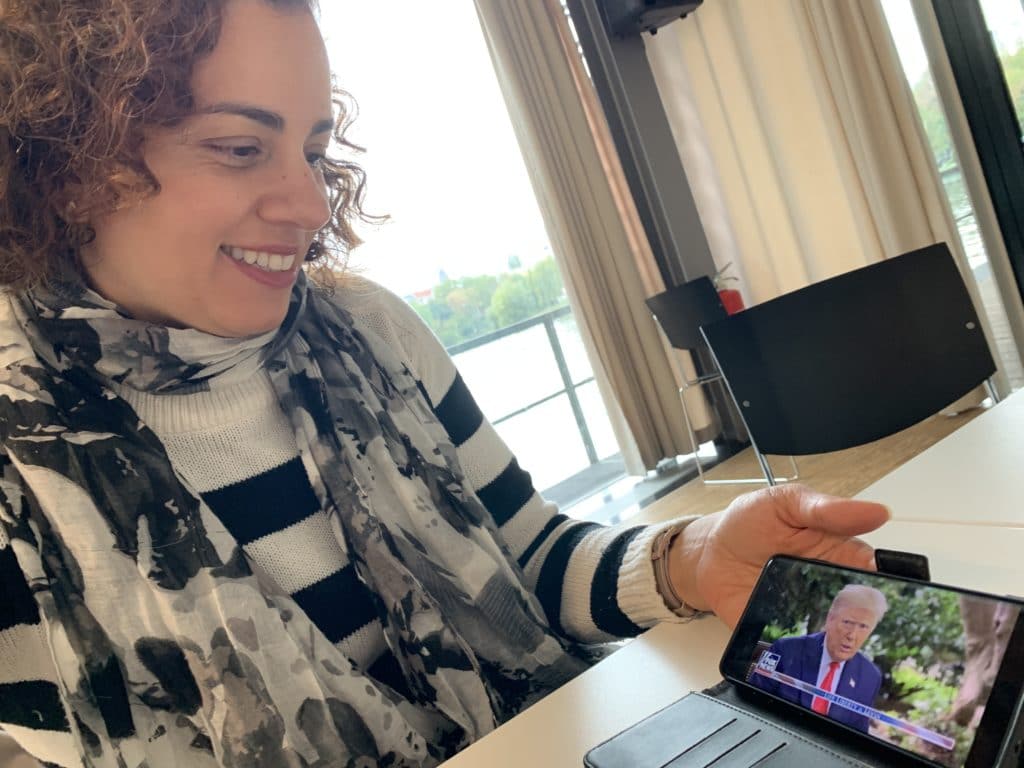
But the Jewish newspaper’s wish may have come true—partially. While FOX confirmed they have no plans to develop a European version, the live American broadcast and an on-demand catalogue of its most popular shows are available since September 17 across all major streaming devices for $7 a month. FOX News is still not available in Germany as a news channel alongside CNN and BBC World, and there is no indication if and when it might be.

“We are constantly working with cable and satellite companies around the world to ensure anyone who wants content from FOX News Media can access it,” said John Fiedler, Executive Vice President, Digital Product and Technology, FOX News Media and FOX Corporation, in an e-mail interview. “Since we are not currently available in Germany, we made sure it was one of the first countries we debuted the Fox News International platform.”

The FOX News International app is also available in Mexico and UK, with more countries to follow.

The German media’s characterization of FOX might lead one to conclude that the news network is the media arm of the Republican National Committee. In covering the German expansion, Focus online called the news station “Trump’s favorite” and categorized it as “right-wing conservative to right-wing extremist.” The financial newspaper Handelsblatt called Fox “the ram of the Republicans.”

However, Trump himself is not always a fan of Fox. He railed against the network on Twitter in April, writing, “Fox News just doesn’t get what’s happening. They are being fed Democrat talking points, and they play them without hesitation or research.” He criticized the moderator of the first debate, FOX’s Chris Wallace, for bias against him.

Still, all in all, FOX is considered America’s mainstream conservative option, one that makes pro-Trump and pro-American Germans envious.

“It will find an audience, because almost all Germans speak English,” said Dr. Rafael Korenzecher, publisher of Jüdische Rundschau, a pre-War Jewish newspaper he revived to give a conservative alternative to German media, including state-funded Jewish outlets. “But FOX News’ real breakthrough will only be achieved with a German-language offering.”

He cites Russia Today as a precedent of foreign news media coverage entering the German market in the vernacular, but “FOX Deutsch,” he said, would have a much more captive audience and advertising market.

Benjamin Wolfmeier, press secretary for Republicans Overseas Germany and an independent pollster, found a way to watch FOX in the past, thanks to his tech-savvy husband. A new user of the app, he said the streaming quality is better than the “boot-legged” alternative, but he had trouble streaming the first presidential debate, presumably from an overload of viewers, although FOX News reported no issues with the platform.

“But it worked very well when President Trump presented his judge for the Supreme Court,” Wolfmeier said.

The app also won’t work for Americans in Germany who have not switched the region of their app store to Germany, so American tourists might be left in the FOX dark. But Wolfmeier thinks there is adequate demand for the American network among many Germans, an audience accustomed to German dubbing of English-language programs.

“I think many people prefer to watch it in the original and not translated, and then you only have CNN in Germany, and you have the conflict because they’re anti-Trump in a big, big way.”

Strehl hopes to watch FOX’s live stream alongside CNN during an election “watch party” he’ll host at his Hannover home in the middle of the night. As much as he doesn’t like CNN’s reporting, on a technical level, it has some advantages, particularly for a pollster.

“CNN has much better maps,” Wolfmeier said. “They do a much better job in that. They show better what went on years ago, in the districts, and who can win the state.”

According to FOX’s Fiedler, the timing of the roll-out before the election was fortuitous. It recorded its highest day of German downloads across iOS platforms on the day of the first presidential debate.

“We did not tie it specifically to the election; however, we certainly expect the election to drive interest in the product.”

This article first appeared in German in Die Achse Des Guten. 

FOX News Comes to Germany in Time for Elections Read More »

Face Masks at Jewish Preschool? That’s it, That’s the Torah

This school year my son’s Jewish preschool is teaching the 3 and 4 year old students the entire Torah. Each morning from 9am-Noon they arrive at school after answering a Covid questionnaire, have their temperatures checked, put on their face masks and wash their hands. They each in their own little way are doing everything they can to keep one another, their families, their teachers and our community safe from this lethal pandemic. And that’s the whole Torah. The rest, as Rabbi Hillel says, is just explanation.

Have you heard the midrash about the man who wanted to learn the entire Torah standing on one foot? Rabbi Shammai dismissed him, but Rabbi Hillel answered him easily, ‘What is hateful to you, do not do to your neighbor. That is the whole Torah; the rest is the explanation of this’. In 2020 billions of people on this Earth are all praying for a single thing – an end to this pandemic and the health of those in its clutches. To wear a mask is the single kindest, most considerate way of caring for one another. To selfishly (and often illegally) leave home without one is hateful to your neighbor. To do so and to claim it is somehow a Jewish right not to need one, is a chillul hashem an act in violation of the Torah and God’s name.

I of course wrestled with the decision to send my son back to school this year, and ultimately made the choice knowing what was right for our family and his social emotional growth. I also wasn’t optimistic that this would ‘all be over’ in a few months and realized we needed to create a sustainable way to continue to educate our children in pandemic times. Knowing our school was taking every possible precaution brought a sense of relief to the decision but more so than that I saw how they were teaching our children a fundamental value of Judaism in their approach – that sacrifices like masks and other protocol was all worth it to save a life.

On one of our first parent Zoom calls about the plans for the school year I asked why it was they were bothering with a seemingly endless list of precautionary changes – having separate play spaces and sensory bins, having Shabbat singing outside etc. Wouldn’t the kids all inevitably exchange some germs and shouldn’t we just accept the pros and cons of ‘podding’ up as a preschool class? In answer to my confusion our administration told me this – the goal first is to do what we can to protect our children, but second it is to educate them. Part of that education is that in a global pandemic, we act differently. We cover our faces, we stay home with a sniffle and we wash our hands whenever we can. Our children are learning to be compassionate and caring members of the community through each of these actions even if there might be small missteps along the way. 

Thank you to all the educators and communities teaching the whole Torah this year.


Marion Haberman is a writer and content creator for her YouTube/MyJewishMommyLife channel and Instagram @MyJewishMommyLife page where she shares her experience living a meaning-FULL Jewish family life. Haberman is the author of Judaism and pregnancy book “Expecting Jewish!” She is also a professional social media consultant and web and television writer for Discovery Channel, NOAA and NatGeo and has an MBA from Georgetown University.

Face Masks at Jewish Preschool? That’s it, That’s the Torah Read More »

The AJC Survey of Jewish Americans: Trump Voters, Biden Voters, and Israel

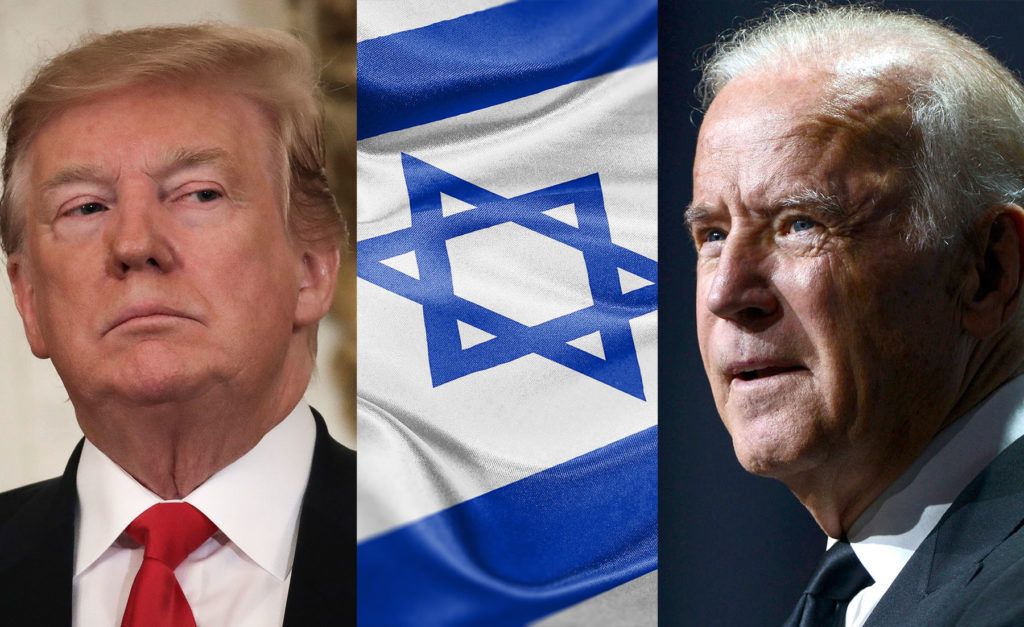
One week ago, a Pew survey informed us that 70% of Jews intend to vote for Joe Biden in the Presidential election. Today, the American Jewish Committee released a survey that tells us—well, pretty much the same. According to the AJC, it is not 70% but rather 75% of Jews who intend to vote for Biden (however, such a difference can easily be the result of sampling decisions).

Most Jewish voters believe that Biden will better handle COVID-19, terrorism, anti-Semitism, and Iran. But Israel is an exception: close to half of all Jews surveyed by the AJC believe that Trump is better suited to strengthen the relations with Israel (42%). And among Orthodox Jews, most will be voting for Trump. That is not a surprise. Many of them voted for him four years ago and voted for Mitt Romney in 2012.

Shrewdly, or suspiciously (you decide), the AJC did not ask directly whether Israeli is factored in as a major voting issue. Thus, we don’t know whether the more a voter sees Israel as a major issue, the more likely he or she is to support Trump over Biden. And yet, the crosstabulations provided by the AJC give us more than a hint.

When it comes to Israel-related issues, the contrast between Trump and Biden voters is clear. The more one values Trump on U.S.-Israel relations and on Iran, the more likely he or she is to support the president. The Orthodox, for example, are the only Jews of whom a majority believe that Trump is better on Iran. Among Conservative and Reform Jews, a majority believe that Biden is better. The same is true for U.S.-Israel relations. A majority of Conservative and Reform Jews believe Biden will be better for the relationship. That’s a high bar — and they think Biden will cross it. Orthodox Jews harbor no such hope.

What comes first: does one first need to believe that Trump is better on Iran and only then decide to support him, or do those who support Trump also believe that he is better on Iran? Here is one nugget that could help us decide: When Trump supporters were asked if the president is better than his opponent on “uniting the country,” a majority of them said no. We can take this as proof, or maybe half proof, that Trump supporters are no fools. They don’t support him because they believe that he is better on every single issue. They support him because they see him as better on the things that matter to them.

Trump supporters are no fools. They don’t support him because they believe that he is better on every single issue. They support him because they see him as better on the things that matter to them.

So, although we don’t know for sure how Israel is factored into Jewish Americans’ voting decisions, we can make an educated guess: the crosstabulations tell us that Trump voters, much more so than Biden voters, see the importance in being connected with Israel. More than half of Trump voters see the connection with Israel as very important to their sense of Jewishness; among Biden voters, it is less than half. Among Biden supporters, close to half (46%) see the connection as unimportant; among Trump supporters, it is less than a quarter. Israel can only hope that the gap between Trump and Biden supporters will manifest itself as a gap between Trump and Biden themselves.

The AJC Survey of Jewish Americans: Trump Voters, Biden Voters, and Israel Read More »

The New York Times’s Silence on Anti-Semitism

On October 17, 2020, in recognition of the 25th anniversary of Louis Farrakhan’s Million Man March on Washington, Dr. Natalie Hopkinson of Howard University published an op-ed in the New York Times about the women who worked behind the scenes. D.C. Mayor Marion Barry’s fourth wife, Cora Masters Barry, who was interviewed for the piece, was instrumental in the success of the event.

The subtitle of the op-ed is straightforward: “Behind every great feat in the public record lies an untold story of the unsung foot soldiers.” Less straightforward, however, is the paper’s omission of Farrakhan’s virulent anti-Semitism.

On Twitter, a Jewish reader expressed sadness about the article’s silence on Farrakhan’s anti-Semitism. Dr. Hopkinson replied, “You know what makes me sad? Literally a million people involved in this essay. You dont [sic] center the marchers. You dont [sic] center the Black women who are named and linked. You dont [sic] even center Farrakhan. You center yourself and your feelings. Exactly the problem with history.” The Times reader responded, “I’m quite sure it’s possible to center black empowerment without completely disregarding the valid complaints of another minority group.” Hopkinson retorted, “Somehow among a million possible concerns, you believe yours are supposed to jump to the top. That is called privilege.”

https://twitter.com/NatHopkinson/status/1317908612086419457

A concern that anti-Semitism isn’t being taken seriously in an op-ed in the New York Times is called privilege?

Farrakhan (and those of his followers who think what he says about Jews is true) believe some pretty outlandish things about Jews: According to Farrakhan, both legal abortion and sharecropping “can be traced to the Talmud;” Jews are responsible for racism and slavery (along with “pervasive rape culture…sex trafficking and prostitution”); and the federal reserve is run by “a family of rich Jews.”

In 2018, Farrakhan even teamed up with Michael A. Hoffman II, a Holocaust denier who calls the gas chambers of Auschwitz-Birkenau “fake” and refers to Jews as Satanic –– something Farrakhan has also called Jews. In a speech he gave on July 4 this year, Farrakhan addressed the Anti-Defamation League’s CEO Jonathan Greenblatt by saying, “you are Satan, and it is my job now to pull the cover off of Satan so that every Muslim — when he sees Satan ­— picks up a stone, as we do in Mecca.”

It’s “called privilege” to think that kind of thing should be noted in an op-ed in the New York Times.

For a people who amount to less than a quarter of one percent of the world’s population, Jews are the focus of a lot of hatred, often disseminated in the form of conspiracy theories. Unsurprisingly, Farrakhan covers many of them in his diatribes. (You can find them on the Anti-Defamation League’s website.) Here are a few:

  1. Jews as deviants: “The Jews were responsible for all of this filth and degenerate behavior that Hollywood is putting out: turning men into women, and women into men.”
  2. Jews as too-powerful: “In all of these cities on a Jewish holiday, business stops because they are the masters not only in America’s cities but in cities throughout Europe and the Western world.” “Did you know that Jesus had a real problem with the Jewish community? They had power, the rabbis of that day, over the Roman authorities just as they have power today over our government.”
  3. Jews as bloodthirsty: “In Jewish tradition, in the Talmud, the way they recognize that you are really from God — they poison you. And if you withstand the poison and remain alive — that to them is the witness that you are from God.”
  4. Jews as global oppressors: “the International Jew is affected by the rise of socialism, it is in their DNA to fight anything that will raise the common man. This is why they fight any voice that the little man will listen to.” “You that think you have power to frighten and dominate the peoples of the world. I am here to announce the end of your time.”
  5. Jews as enemies of the good: “Do you know that the enemies of Jesus were the Jews of his day and the Roman authorities? That wasn’t 2000 years ago alone. That’s today!”
  6. Jews as imposters: “You that think that those who refer to themselves as Jews are the real Children of Israel? No. [you are] promoting a deceptive lie.” “You’re not a native Palestinian, no you’re not. You didn’t originate there … the Ashkenazi European, he has no connection at all to the Holy Land. None!”

Along the same lines, Hopkinson wrote in another disturbing tweet, “[People] who have become white should not be lecturing Black [people] about oppression” (emphasis added). Note the familiar themes: the imposter/outsider who is actually an oppressor with privilege and power, an enemy of the good…

In uncertain times and for people who are anxious or feel powerless, conspiracy theories can be an attempt to make sense of a bewildering and chaotic world. Because of the conspiratorial nature of these theories, they are extremely hard to debunk. Efforts to disabuse people of them are often seen as part of the conspiracy. The long history of anti-Semitic conspiracy theories not only makes them resistant to refutation, but in some cases, makes them difficult to discern.

This was painfully illustrated in April 2019, when the New York Times published in its international edition what should have been recognized as a blatantly anti-Semitic cartoon. As Times columnists Bret Stephens described it:

“Here was an image that, in another age, might have been published in the pages of Der Stürmer. The Jew in the form of a dog. The small but wily Jew leading the dumb and trusting American. The hated Trump being Judaized with a skullcap. The nominal servant acting as the true master. The cartoon checked so many anti-Semitic boxes that the only thing missing was a dollar sign.”

Stephens interpreted the publication of the cartoon not as “a willful act of anti-Semitism” but “an astonishing act of ignorance of anti-Semitism — and that, at a publication that is otherwise hyper-alert to nearly every conceivable expression of prejudice, from mansplaining to racial microaggressions to transphobia.”

The same can be said of the glaring omission of Farrakhan’s anti-Semitism in the recent op-ed. Imagine what the Times might have done if, instead of an anti-Semite, the article had revolved around a well-known racist. It’s hard to imagine that the editorial team would have let that pass without a mention.

Imagine what the Times might have done if, instead of an anti-Semite, the article had revolved around a well-known racist.

Consider, for instance, what happened when Bret Stephens cited data about Jewish accomplishments from a peer-reviewed academic paper that he, his editors, and fact-checkers learned only later had been co-authored by someone who later made racists comments (and is now deceased). In response, Times editors redacted every word that had been derived from that paper. And in the note that now appears above that column, the Times’s editors took pains to say that — despite the fact that Stephens had only quoted data (like the proportion of Nobel Laureates and chess masters who are Jewish) — “it was a mistake to cite it uncritically.”

I disagreed with that. But it’s noteworthy that the same paper that rushed to redact data when it came from a morally polluted source has no problem publishing an op-ed that mentions the unrepentant, virulently anti-Semitic Farrakhan seven times — without even hinting at his anti-Jewish bigotry.

As with the cartoon, it’s likely not a willful act of anti-Semitism. But it’s an even more astonishing act of ignorance.


Pamela Paresky, Ph.D., is a writer for Psychology Today, author of A Year of Kindness, and was the chief researcher and in-house editor for the New York Times bestseller, The Coddling of the American Mind. She serves as Visiting Senior Research Associate at the University of Chicago’s Stevanovich Institute on the Formation of Knowledge and Senior Scholar at the Network Contagion Research Institute where she researches extremism and anti-Semitism. Follow her on Twitter @PamelaParesky

The New York Times’s Silence on Anti-Semitism Read More »