Some reflections on the difficulty in navigating darkness and light during these pandemic times.
How do we manage our lives during the Coronavirus crisis? How do we keep our sanity? How do we use this quarantine to bring out the best in ourselves? Tune in every day and share your stories with podcast@jewishjournal.com.
The coronavirus pandemic has given rise to some of the most complex and significant medical-ethics dilemmas in recent history, namely the question of triaging ICU care and, by extension, who shall live and who shall die.
This was a question previously thought to be only the stuff of theoretical classroom debates. As society begins to contemplate how to readjust to the new normal, and eventually lift isolation, new and similarly challenging ethical questions will arise.
One being debated now has not yet received much discussion, but I believe requires our community’s attention. It revolves around the rush to develop a vaccine. While it could take well over a year before any vaccine is available, the ethical issues likely will be here much sooner.
While it could take well over a year before any vaccine is available, the ethical issues will likely be here much sooner.
One reason developing a vaccine takes so long is that researchers have to randomize test subjects into two groups. Group A gets the vaccine; group B gets a placebo. Researchers wait and see if more people from group B get sick than those in group A. If that happens, it is a sign that the vaccine is effective. However, it can take many months before researchers get their answer because, in its simplest form, this kind of study depends on waiting for people to be naturally exposed to the virus, which takes even longer amid social distancing.
A video monitor inside the Medical Health and Coordination Center at the California Department of Public Health shows the number of Coronavirus COVID-19 cases around the world on February 27, 2020 in Sacramento, California.(Photo by Justin Sullivan/Getty Images)
To speed up things, an alternative is to do something called a “challenge study.” In a challenge study — just like the traditional study above in which some people are given an experimental vaccine and some are not — everyone in the study is deliberately exposed to the coronavirus. Researchers then compare the two groups: the vaccine versus the control. Running a study in this manner could save several months (and thousands, if not millions of lives). However, to expose people to the coronavirus makes this a much riskier study. Some may get very sick and a few may die.
When it comes to engaging in risk in general, Judaism obligates us to attempt to help those in need, such as jumping into a river to save someone who is drowning.
How does Jewish law and values guide us in this? When it comes to engaging in risk in general, Judaism obligates us to attempt to help those in need, such as jumping into a river to save someone who is drowning. But the degree of risk one is required (or permitted) to take to save life is a matter of debate. The general consensus is that although one is not obligated to put his or her life at risk to save another person, it is praiseworthy to do so — unless there is a significant risk; in which case, doing so may be forbidden. The rabbis encourage us to make a cost-benefit analysis of the level of risk versus the amount of good that can result.
For example, kidney donation, which carries some risk, is encouraged but not required, whereas bone-marrow donation, which carries negligible risk, may be viewed as obligatory when performed to save a life. For that reason, I believe once plasma donations from those who have recovered from the coronavirus is shown to be safe and effective in treating current coronavirus patients, it can be seen as an expectation of Jewish law that those who have recovered must make such blood donations if they are able to.
The benefit of attempting to save the entire society (known as “hatzalat harabim” or “saving the many”) is given even more weight in Jewish law. For example, Queen Esther risked her life by approaching Achashverosh since it was to save the entire community. Similarly, the Talmud relates that in the city of Lod, the Roman emperor’s daughter was murdered and the Jewish community was blamed. The emperor threatened the Jews with mass execution unless they could produce the murderer. To save the Jewish people, two innocent brothers, Lilianus and Pappus, stepped forward and falsely confessed to the crime. Only they were executed by the Romans, sparing the rest of the Jewish community. Many rabbinic authorities permitted voluntary self-sacrifice to rescue the broader community, based on Esther and the Talmudic praise for these righteous brothers.
A one-dose bottle of the measles, mumps and rubella virus vaccine. (George Frey/Getty Images via JTA)On the other hand, other rabbinic authorities argued that although saving the community is a very high value, and one should engage in small risk to attempt to do so, these stories do not prove that one who is not currently in any danger may opt to risk his or her life for the sake of the community, since the brothers in Lod and Esther would have died along with their community anyway.
It would certainly be permitted for a Jew to serve as a participant in a challenge study associated with rapidly developing a vaccine for the coronavirus, and even a very pious act.
This brings us back to the “challenge study.” I believe the lesson here is that it certainly would be permitted for a Jew to serve as a participant in a challenge study associated with rapidly developing a vaccine for the coronavirus, and would be a very pious act. This is even according to the stricter opinion, since the level of risk for those in such a study is relatively low — only young, healthy people are accepted, and they receive careful medical oversight — and because everyone in the world is at risk for contracting the coronavirus; despite the study, they already were at some risk just by living in society. Entering the study simply makes it happen in a controlled setting and can significantly benefit the entire society, and thus is a mitzvah.
The Jewish community should endorse such protocols, and if a Jew has the opportunity to enter such a study, he or she should enthusiastically do so.
Rabbi Jason Weiner is senior rabbi and director of spiritual care at Cedars-Sinai Medical Center.
Israeli Prime Minister Benjamin Netanyahu and Blue and White Party leader Benny Gantz on April 20 signed an agreement to form a unity government.
Under the agreement, Netanyahu will serve as prime minister for 18 months, and then Gantz will take over at the position for another 18 months. Gantz will serve as defense minister during Netanyahu’s remaining 18 months as prime minister.
Netanyahu tweeted in Hebrew, “I promised the State of Israel a national emergency government that would work to save the lives and livelihoods of Israeli citizens. I will continue to do everything for you citizens of Israel.”
Gantz similarly tweeted, “We prevented fourth elections. We will protect democracy. We will fight the coronavirus and take care of all Israeli citizens.”
Yesh-Atid leader Yair Lapid criticized the deal for allowing Netanyahu to choose the representatives to the Judicial Selection Committee, the committee responsible for appointing judges to the Israeli courts. Lapid accused Gantz of agreeing “to allow the criminal defendant to appoint the judges that will judge on his matters.”
Netanyahu was indicted on charges of corruption in February; his trial will begin on May 24.
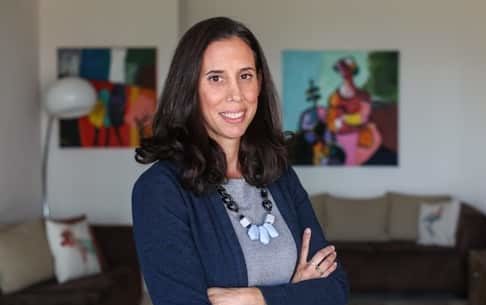
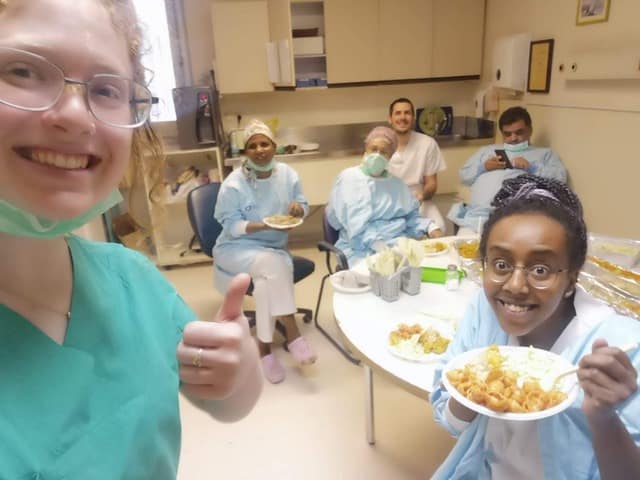
When Adi Karmon Scope first put out a call for volunteers to help with personal chores at the homes of doctors, nurses and other medical staff on the frontlines of the COVID-19 battle, she never imagined how successful the project would become.
A month after that initial posting on Facebook, Karmon Scope’s Adopt a Doctor program has amassed some 4,000 active volunteers and has triple that number of followers on social media.
The initial idea, which Karmon Scope launched with fellow entrepreneurs Aviad Shlain, Tal Laufer and Ruth Polachek, was based loosely on her current startup, called Crowdtasking. Volunteers would ensure all the personal needs of the medical staff were met — from home-cooked meals to dog walking and baby-sitting — by building their own social networks. Doctors would know they had a “very, very personalized safety net” so they could concentrate on the business of healing people, Karmon Scope said.
Adi Karmon Scope; Photo courtesy of Avishag Shear-Yeshuv
“I was looking at Italy and Spain, and I knew that we would be facing extreme uncertainties and unknowns,” she said. As such, she added, Adopt a Doctor was predicated on agility and flexibility. “Its decentralized nature and distant managerial approach are the secret to its success.”
Since then, Adopt a Doctor has morphed into Adopt a Hospital; today, there are volunteer networks in place for 20 hospitals around the country. The project’s volunteer network has tentacles and takes care of every need, from catering for the entire medical staff to sourcing and providing personal protective equipment (PPE) to departments in need. Major food conglomerates, including Tnuva, Coca-Cola, Strauss and Nestle, have donated millions of shekels worth of food to hospital workers through Adopt a Doctor.
“[Adopt a Doctor’s] decentralized nature and distant managerial approach are the secret to its success.”
“There are a hundred things that are being taken care of in parallel that I don’t even know about,” Karmon Scope said.
Photo courtesy of Adi Karmon Scope
Adopt a Doctor also takes care of healthcare professionals’ mental health. A professional service team offers emotional consultations for doctors and nurses. One doctor told Karmon Scope he was on the verge of an emotional breakdown until he spoke with a mental health professional through Adopt a Doctor. “He said, ‘I give people air all day long, but you guys gave me air supply.’ ”
Karmon Scope said the spirit of kindness, creativity and generosity generated by the project has overwhelmed her, but admitted she’s also overwhelmed by how much the system lacks resources. “I’m split between being happy and wondering what the day-after plan is. What then?” she said. “Do doctors go back into this? Are we dropping the ball?”
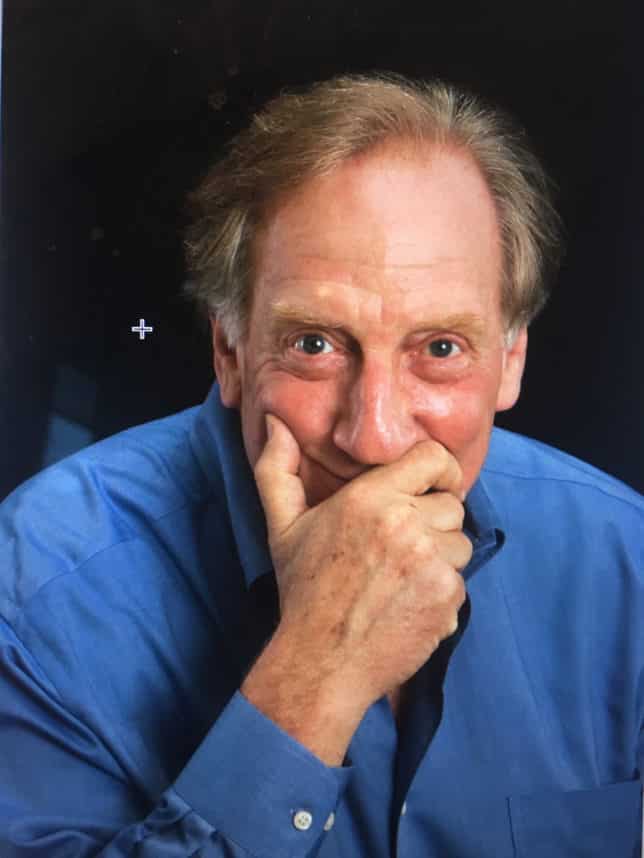
You may not be familiar with writer Alan Zweibel, but you definitely know the comedy legends who have delivered his jokes. As a double Emmy winner for “Saturday Night Live” (1975-80), he created characters and sketches for Gilda Radner and her castmates, and went on to co-create “It’s Garry Shandling’s Show” (1986-90); win a Tony Award for Billy Crystal’s Broadway hit “700 Sundays” (2005); and collaborate with Larry David, Martin Short and many others.
In funny anecdotes and bittersweet reminiscences of the late Radner and Shandling, Zweibel chronicles his experiences in the comedy business in his 11th book, a memoir titled “Laugh Lines: My Life Helping Funny People Be Funnier” (Abrams Press, April 2020). Dedicated to his late sister Franny, it has a foreword by his longtime friend Billy Crystal.
“It’s my story and how I got to be who I am now, and a history of comedy from the Catskills and ‘SNL’ through ‘Curb Your Enthusiasm’ to ‘Here Today,’ the new movie I just made with Billy Crystal − all the stuff I had the privilege and good fortune to do,” he told the Journal. Zweibel said he hadn’t planned on writing the memoir, but Shandling’s death in 2016 “touched a nerve. I wanted to write down everything I could remember about our relationship.”
Although it wasn’t his intent, he thinks that publishing it in the midst of a pandemic might provide respite from dire news. “With the number of cases and deaths going up every day, people are hoping for a diversion, something that has nostalgia to it that will make them laugh,” he said.
Of Polish and Russian Jewish heritage, Zweibel was born in Brooklyn and raised on Long Island in a Conservative, kosher home, attending Hebrew school five days a week. He grew up “steeped in Jewish humor,” idolizing Mel Brooks, Carl Reiner and Woody Allen, and listening to his parents’ comedy albums, Allan Sherman’s “My Son, The Folk Singer” and “You Don’t Have to Be Jewish” among them.
“Being funny helped me make friends. I wrote notes to teachers about why we shouldn’t take a test. They still failed me − but they laughed while they were doing it.” — Alan Zweibel
Somewhat of a jokester, Zweibel made classmates and teachers laugh in grade school, and stepped up his game as the new kid at Hewlett High School. “Being funny endeared me and helped me make friends,” he said. “I wrote notes to teachers about why we shouldn’t take a test. They still failed me − but they laughed while they were doing it.”
Photo by Robin Zweibel
He recalls going to the Catskill Mountains with his parents, where he’d sneak into the hotel nightclubs to see Alan King, Totie Fields and Red Buttons perform standup. After college, he wrote jokes for other Catskills comedians, at a princely $7 a pop. He has his mother to thank for that. She approached comedian Morty Gunty after seeing him in a club, telling him about her son, the aspiring comedy writer, and got Gunty’s phone number. Zweibel soon was writing for Gunty and his Catskills cronies. “But they were my parents’ age. It wasn’t what I wanted to write about,” Zweibel said.
Armed with his unsold jokes, Zweibel hit the New York comedy clubs, hoping to get an agent or a manager. Two life-changing things happened. He met fellow Long Islander Billy Crystal, and they’d ride into the city together, critiquing each other’s sets on the way home and forming a friendship that continued as both moved west. They were officemates at Rob Reiner’s Castle Rock Entertainment in the 1990s and remain close. He’s “Uncle Billy” to Zweibel’s kids.
As for the second event, “Lorne Michaels saw me bomb onstage, but he liked my material and hired me to be a writer on ‘Saturday Night Live,’ ” Zweibel said. His starting salary was $325 per show. “It wasn’t without its pressures. We had to put on a live show every week,” he said. “But it was a lot of fun, and my friendship with Gilda lasted beyond the show.” So has his relationship with a production assistant named Robin Blankman. Now parents of three grown children and five grandchildren, they celebrated their 40th anniversary in November.
In a career full of highlights, some projects stand out for Zweibel, in addition to the aforementioned work. These include “Bunny Bunny” (1994), his “platonic love story” about Gilda Radner (it may get a new production); his Thurber Prize-winning novel “The Other Shulman” (2005); his children’s book “Our Tree Named Steve” (2005); his collaboration with Dave Barry and Adam Mansbach on “A Field Guide to the Jewish People” (2019); and the haggadah parody “For This We Left Egypt?” (2017).
He also has had his share of disappointments, including the “great embarrassment and defeat” that was the movie “North” (1994). But having seen his father and mentors such as Buck Henry and Herb Sargent suffer career ups and downs, “I didn’t let it paralyze me,” he said. “You just ride it out and keep going.”
Turning 70 in May and looking forward to going on a book tour once the COVID-19 crisis ends, Zweibel is “grateful that I have been given the opportunity to do what I’m doing.” He hopes that “Laugh Lines” readers come away having learned that “a nice guy who has faith in himself and good friends and a wonderful, supportive wife can have good fortune in life.”
He may have worked with a pantheon of household names, but it doesn’t bother him that he hasn’t reached that level of fame, and in fact, he did not seek it. “In order to become famous, there’s a certain degree of sacrifice that I wasn’t willing to make,” he said. “I didn’t want to get on stage every day, Pittsburgh one night and St. Louis on another. It was never my desire to do that. I like writing, the craft of writing. If the words work, that’s how I get off.”
“Laugh Lines” is available through Amazon and other retailers.
Each year since 1988, the March of the Living has brought together thousands of people from around the world — survivors, families, teens — to honor the victims of the Holocaust by walking the three kilometers from Auschwitz to Birkenau. The physical experience is the point — a refutation of the death marches Jewish prisoners were forced to undertake, and an opportunity for new generations to see, feel and experience the Nazis’ most notorious death camp.
This year, as the coronavirus pandemic rages, the physical march, which was scheduled for April 21, has been canceled. Instead, there will be a virtual march. The survivors, a resilient bunch, will join digitally. They want to continue to share their stories, even if they can’t be physically together in Poland. And you can join, too, to show survivors we will always walk beside them, in whatever form that takes.
But this year’s virtual march is forcing us to reckon with an unavoidable fact: In the not-too-distant future, there will be no survivors left to march. We still will march to honor their memories, but we will be without that living connection to history. That is when the shape of our community will change, and the meaning of the Holocaust will change.
This year is a test, then. What will we do when the survivors are gone? What strategies do we have in place to ensure their presence remains, that their stories still are told?
This is what I spend my days thinking about as executive director of USC Shoah Foundation. Since our founding a quarter of a century ago, we have sought to keep alive the memory of the Holocaust and to develop empathy, understanding and respect through the video testimonies we’ve recorded from more than 52,000 survivors.
IWalk places survivors’ stories in the locations where they actually happened, building a physical connection to history.
We’re constantly looking for new ways to harness technology to tell those stories. That’s why we developed “IWalk,” a new app that not only tells survivors’ stories, but accounts for the importance of physical spaces.
Like all our work, the starting point of the app is survivor testimonies, recorded for future generations. Like the March of the Living, IWalk places those stories in the locations where they actually happened, building a physical connection to history.
Using the app — available for free download on Apple and Android devices — people visiting important sites of Holocaust history will hear from survivors at the places where they were prisoners. Right now, there are tours available with survivor testimony in Kyiv and Krakow, in Budapest and Bratislava. There are many more coming. We’d planned to use this year’s march to film survivors telling their stories at Auschwitz and Birkenau.
Ed Mosberg has participated in the March of the Living for more than 20 years. Last year, he marched alongside his two doctors as he’d recently been diagnosed with blood cancer. Mosberg has given a 360-degree “Testimony on Location” in 23 sites across Poland and Austria. Those stories are available online; you can walk the streets where the Krakow Ghetto once stood with him in virtual reality. And that testimony is available as an IWalk. When you visit Krakow, your GPS will know where you are and bring up his story. Or from your own home, you may choose Krakow in the app and select the walk where you’ll see Mosberg standing in the street.
This technology is one way we’ll make good on our promise to future-proof survivors’ stories.
This Yom HaShoah, we’re happy to be able to meet online, to commemorate and reflect together. Our generation and those that follow can go to the places where the Holocaust happened — whether that means physically traveling there or being transported virtually — and the witnesses, through their testimonies, will be alongside us to tell us how it was. No pandemic can block this physical and virtual bridge.
Stephen D. Smith is Finci-Viterbi executive director of the USC Shoah Foundation and the UNESCO Chair on Genocide Education.
It was not easy, but they finally signed the agreement. Benjamin Netanyahu and Benny Gantz agreed to form a government. Likud and Blue and White will become partners, joined by two Charedi parties, two members of Labor, two former members of Telem, and one member of Gesher. Yamina, the right-religious party, is likely to stay out of the coalition. With six members, four of whom believe that they deserve to be ministers, there is not enough room for this party (and its too big of an ego). More than 30 ministers will sit at the table — politicians with a strong incentive to keep the coalition of about 70 together. At least for a while.
A few notes on the agreement:
1. Gantz is slated to become the next prime minister after 18 months with Netanyahu at the helm. Blue and White lawyers spent much of their time devising a legal framework that will prevent Netanyahu from denying Gantz his right. Can this legal safety net hold? It is too early to know, but very few people believe that Netanyahu intends to let the general be prime minister. And while there’s no doubt that Gantz hired good lawyers, the political system has a way of circumventing legal obstacles. What happens in 18 months will be determined by the political calculations and the preponderance of power at the time of decision. Agreements between politicians are no more than suggestion.
2. Remember the many pundits who claimed — pretending to know — that Netanyahu will “never sign” the agreement, and does not want unity? They were wrong. But that will not stop them from pretending to know what’s coming next. Why were they wrong? They were thinking with their ideology, not their information. The truth was simple: Netanyahu wanted to keep his options open until the last minute and then decide. When the moment arrived, he calculated that a year and a half of certainty is better than four years in doubt, because even though Likud rides high in the polls, going into an election with 20% unemployment is risky. Too risky.
3. Blue and White agreed that Netanyahu could initiate annexation of parts of Judea and Samaria in the early summer. The assumption concerning this move ought to be similar to the one about unity. Netanyahu wants it, and also understand that there are risks involved. He will not make a final decision until the actual time comes. If circumstances allow — the coronavirus crisis, relations with the Trump administration and other factors – Israel might be on track to annex parts of the West bank.
4. The debate concerning the legal system and its responsibilities was one of the main stumbling blocks during the round of negotiations. Within Likud (and Yamina) there are people who believe that the time has come for reforming this system. Blue and White decided to play defense and use the issue as an excuse to join the government (we must save the court). Ultimately, the parties reached a compromise for a simple reason: Netanyahu never made the fight against the court his highest priority. In fact, for many years he was one of the most conservative leaders within Likud when it comes to the court. Similarly, Gantz is not fully convinced that all complaints against the legal system are completely off the mark. This was more a fight over pretense than content.
5. At least in theory, Netanyahu just signed the date of his own expiration. Psychologically speaking, this could be a significant step.
6. And no fourth election. That’s the main thing. Israel needs a year or two of quiet.
1. Does anti-Semitism ever decline? Reading the annual reports of organizations that deal with this phenomenon might give you the impression that no — it never does. One year it rises because of political developments. Another year because of a war in the Middle East. This year it is spiking because of the coronavirus. The haters can always find something to blame on the Jews. There are always Jews that rightly worry about such haters. There is always an organization whose mission is to prove that anti-Semitism is an urgent problem.
Today is Holocaust Memorial Day in Israel, and data on anti-Semitism is all over the airwaves. “2019 witnessed a rise of 18% in major violent cases compared to 2018,” declares a report by the Tel Aviv University Kantor Center for the Study of European Jewry and the European Jewish Congress. What can we do with such information?
Another organization, Fighting Online Antisemitism (FOA), argues that “since the spread of the corona[virus] epidemic worldwide, there has been an increase in content distribution of Anti-semitism in the online space.” FOA found 303 pieces of anti-Semitic content on social media in a month. It removed “at least” 40 of those. I am not sure what these numbers mean, why the FOA believes this is an increase (and compared to when), and how removing 40 tweets or posts saves the Jewish people. But I commend the organization on fighting the good fight.
2. According to a 2019 FRA report, 41% of Jews aged 16-34 have considered emigrating from Europe because of anti-Semitism over the last five years. The Israeli government can make aliyah a bit more attractive, but the economics of the coronavirus era limits its capabilities. Jewish organizations can work to ease the departure of Jews from problematic places, but their tendency is to stay and fight, and not surrender to harassment. While I believe in many countries this is a futile fight (I am on the record stating that France’s Jews have no choice but to move to Israel), I can easily sympathize with the sentiment.
3. A few months ago, I listed my 10 rules for dealing with anti-Semitism in America. One of them was that anti-Semitism is not the result of a lack of strategy. When we get reports that tell us anti-Semitism goes up or down (well, never down), our tendency is to look for bureaucratic solutions. We envision a world body that can direct the fight, or an office that can push for more resources and coordination.
The sad truth — and Holocaust Memorial Day is not a bad time to be reminded of it — is that anti-Semitism is not a problem that the Jews can fix by having a more efficient bureaucracy. It is a problem from which the Jews suffer, and from which they can offer certain escapes, be it aliyah or self-defense. But much like with the coronavirus, this is not something that the Jews control. We do not hold the key to stopping the plague. Nor do we hold the key to stopping anti-Semites from using the plague to incite hate.
4. Looking back at other things I wrote about Holocaust Memorial Day, I came across this point, probably still controversial:
The complete annihilation of the most significant community of Jews, the demise of the old center of Jewish life, created a vacuum that needed to be filled. And Israel fast became the main, if not the only, prospective candidate to fill this civilizational void. Israel became the place in which Jews would reform an essential center of gravity.
5. In the book I wrote about Israeli Judaism (with Prof. Camil Fuchs) we discuss the similarities and differences between two Jewish days of mourning, Yom Ha’Shoah (Holocaust Memorial Day) and Tisha B’Av. When the Israeli parliament drew the laws for Tisha B’Av, it used Yom Ha’Shoah as a template. And yet the result was very different. Here is a paragraph from the book:
Tisha B’Av, like Yom Hashoah, was declared a day of national mourning, during which entertainment venues are prohibited from opening. But while the respective laws are similar, there is a vast difference between these two dates in the consciousness of Israelis: Four out of five Jews in Israel say they “feel sad” on Yom Hashoah (78%)… Yom Hashoah is a day on which the left (77%), the right (77%), and the political center (79%) all feel sad… The situation on the other national day of mourning, Tisha B’Av, is quite different. More than half of the Jews in Israel (55%) feel that Tisha B’Av is a “completely regular day.” This is true of almost all Jews who identify as totally secular (97%), a large majority of somewhat traditional secular Jews (84%), and also half of the traditionalists (50%). The same goes for most of the political center (75%) and a large majority of the left (91%).
Why is this important? The destruction of Jerusalem happened many years ago, and the Holocaust is relatively fresh in our memory. What we learn from the difference between the ways Jews treat these two dates (in Israel) is that time matters. In other words, as the last survivors begin to reach the end of their long lives, we face a challenge. Remembering is not easy. Mourning is cumbersome. To keep Holocaust Memorial Day as meaningful tomorrow as it is today, we must reinvent it for the next generation.
The number of anti-Semitic violent crimes documented worldwide last year rose to 456 cases, an 18% increase over 2018 and the highest tally since 2014, the European Jewish Congress said.
EJC and the Kantor Center for the Study of Contemporary European Jewry presented the data on Monday in a report, the Annual Report on Antisemitism Worldwide 2019.
More than a quarter of the cases that are classified in the report as violent were threats. The rest involved actual physical violence, including 242 cases of vandalism, 21 cases of arson and 62 assaults on people, with about a quarter of them involving a weapon.
The data were not aggregated according to country, though the report does include many Western countries and countries with large Jewish populations.
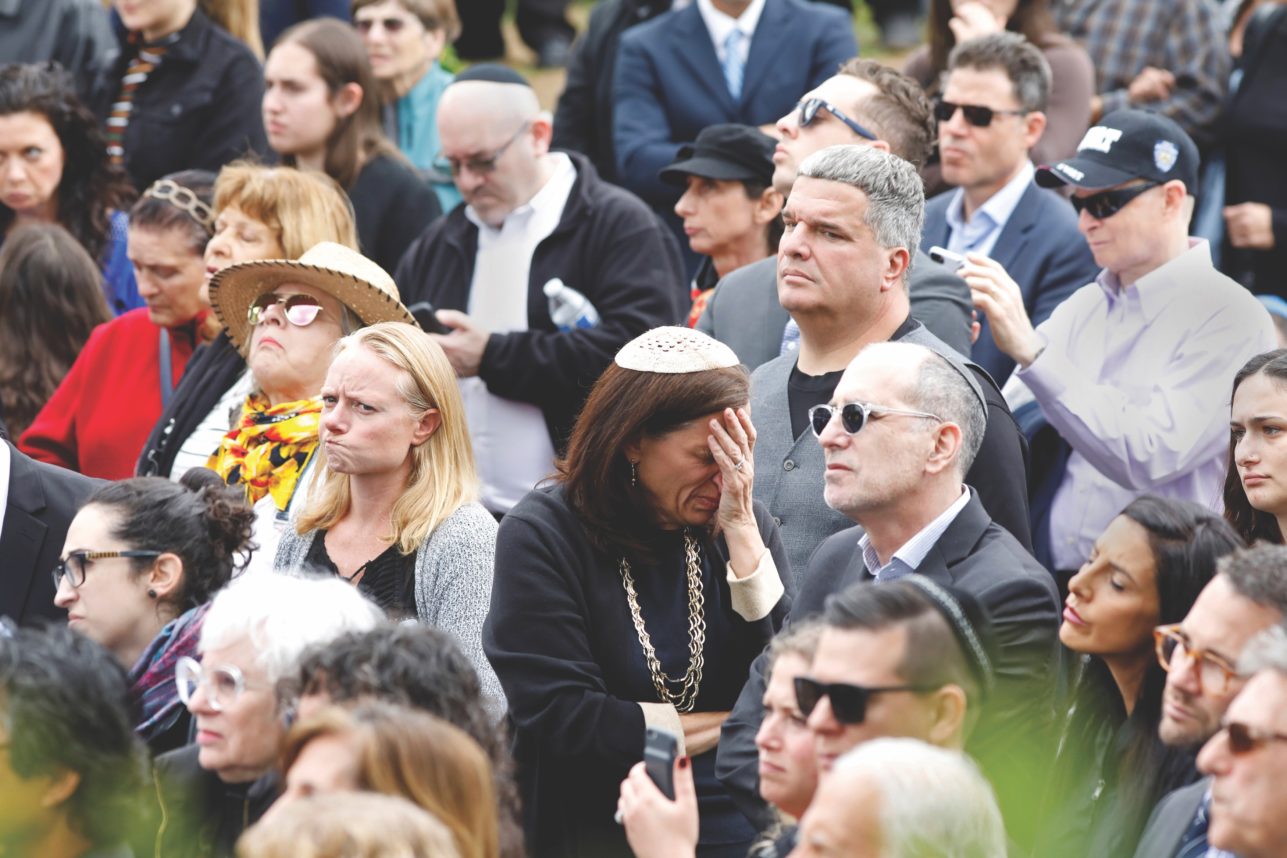
A crowd watches on screen the funeral for Lori Gilbert-Kaye, the sole fatality of the Saturday synagogue shooting at the Congregation Chabad synagogue in Poway, north of San Diego, California, U.S. April 29, 2019. REUTERS/John Gastaldo
“Not only have the numbers increased substantially but the worst types of attacks grew, which should be extremely disturbing for leaders and authorities around the world,” EJC President Moshe Kantor wrote in a statement about the report.
“Since the beginning of the COVID-19 pandemic, there has been a significant rise in accusations that Jews, as individuals and as a collective, are behind the spread of the virus or are directly profiting from it,” Kantor said. “The language and imagery used clearly identifies a revival of the medieval ‘blood libels’ when Jews were accused of spreading disease, poisoning wells or controlling economies.”
Q: When you direct in film, do you prefer actors always give you the same performance in a scene or do you like actors to give you some variety in takes so you have something different when you head to the editing room?
Thanks for keeping your creativity and ours alive by dialoging today! I don’t feel there’s a better time to be a creative artist and connect with what artists inspire: emotional intelligence, spiritual awareness, empathy, and personal consideration of the human condition.
As a director, my responsibility before production is to get everyone on the same page. I expect the actor to share in the thought and understanding of the moment, but would never expect the human behavior to be identical in each take. As long as all of the elements are in place, it’s celebrated that subtle differences will arise as the actor lives in the moment take to take. These differences are what makes it most interesting for my process in the editing room.
Personally, I actively empower actors because I understand the craft. I would never think of an actor as a puppet. There are founding theorists of directing like Vsevolod Meyerhold for example, who fashion the actor as an “uber marionette”. But I believe the best art comes from mutual respect for each participant’s craft, followed by collaboration. Having said that, the actor is responsible to an understanding of the writer and director’s and maybe even the showrunner’s vision.
The trick is to be responsive in real time and responsible to repeating the moment. The director’s job is to communicate and implement the vision, and then create an environment where you can play your part. Your part is to play a human being. Human beings don’t do the same thing exactly the same way twice. If you have an allergy and you sneeze, the sneeze will be a little different each time, even if it’s in reaction to the same element.
A great moment for an actor is when something happens organically. When that happens, the moment is truthful. This is most satisfying for the actor and the audience alike. You can’t come to that by performing an idea of what someone tells you to do. When given an action, you have to go within your toolbox to figure out how to get there. Then something occurs, and if it’s inspired the director says, let’s keep that. Do it like that every time.
But if you just repeat the result the director liked, it won’t feel human to you or anyone watching. You must include in your process the impulse that got you to the result. The director may only ask for one ‘hilarious sneeze’. But you didn’t come to that sneeze playing the end result; you came to it thinking of what it feels like to be allergic, what you’re allergic to, how that affects you truthfully, and then you sneezed. That work has to be done every time. If you just repeat the result, the acting will be empty, not entertaining, and not believable. The craft requires that you go back to the impetus each time.
This does mean that the result will be slightly different each time, just like in real life. But the director’s job is to craft the scene so that you are both on the same page about each specific circumstance. This in itself will adjust the tone and the moment of the ‘sneeze’. Then it’s your craft that allows you to get there organically to deliver it every time.
“You cannot create results. You can only create conditions in which something might happen.” ― Anne Bogart
“It seems that the greatest difficulty is to find the end. Don’t try to find it, it’s there already.” – Sophia Coppola
Please send your specific questions about the art of acting to staytuned@gmail.com and Kymberly will respond to a different question each week! There are no invalid questions, as long as they pertain to your craft and life as an actor.
Kymberly Harris is an actor’s director. She specializes in character-driven stories, whether the genre is drama, comedy, thriller, or action. Her extensive experience as a method acting coach to professional actors of all ages has led actors to seek her out to direct them towards their best performances in film, television, and theatre projects.